End Times

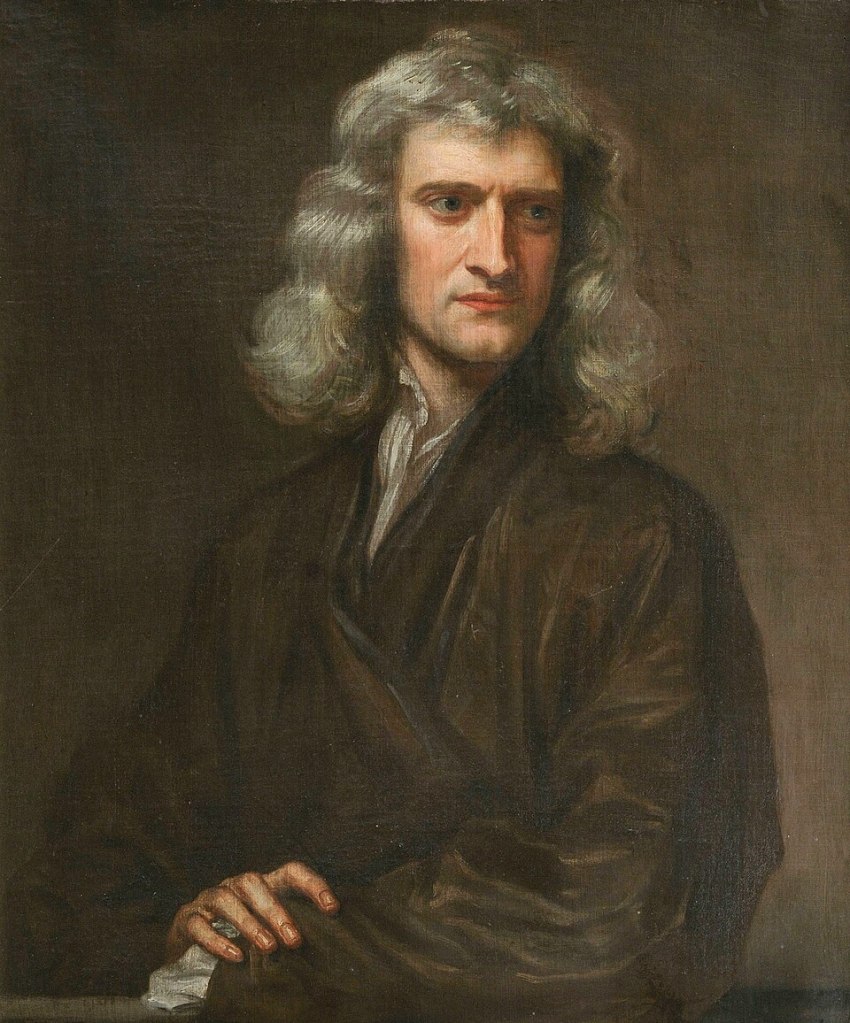
Isaac Newton (1642–1727), remembered as one of the greatest mathematicians and architect of modern physics, devoted more time to theology and biblical study than to science. Among his vast unpublished papers lies a remarkable calculation: Newton believed that the End of Times would not occur before the year 2060. His thesis was not a prediction of hell on Earth, but rather a forecast of the corrupt secular and spiritual powers giving way to the establishment of Christ’s kingdom on earth.

Newton’s notes on prophecy and chronology survive in the Yahuda manuscripts, now housed at the National Library of Israel. For more than a century, these papers were considered “unfit to print” and remained hidden in the English Earl of Portsmouth’s family archives. In 1936, Sotheby’s auctioned off Newton’s theological and alchemical writings for just over 9,000 British pounds or about $1 million in today’s dollars. Abraham Shalom Yahuda, a Jewish polymath and collector, recognized their importance and purchased a large portion, including Newton’s calculations on the End of Times.

Newton was deeply engaged with biblical prophecy, especially the Books of Daniel and Revelation. He believed these texts contained coded timelines of history on into the future. In Observations upon the Prophecies of Daniel (published posthumously in 1733), he wrote: “The prophecies of Daniel are all of them related to one another, as if they were but several parts of one general prophecy… The Apocalypse of John is written in the same style and language with Daniel, and hath many of the same figures.”

In Daniel 7:25 and 12:7, and again in Revelation 12:14, “a time” is taken as one year, “times” as two years, and “half a time” as half a year—an interpretation rooted in the Aramaic/Hebrew idiom in which “time” means “year.” Revelation 11:2 and 13:5 describe the same period as 42 months, which equals 3½ years (42 ÷ 12). Revelation 11:3 and 12:6 express it again as 1,260 days, using the Jewish symbolic 360‑day prophetic year (360 × 3.5 = 1,260). Across Revelation 11–13, these expressions appear interchangeably, reinforcing the equivalence.

The 3½‑year duration itself is symbolic: it is half of seven, the biblical number of completeness, and thus represents a period of incompleteness or tribulation deliberately cut short. Cut short because in Matthew 24:22 Jesus states, “Unless those days had been cut short, no flesh would be saved; but for the sake of the elect those days will be cut short.” A full seven would symbolize evil completing its course, but Scripture portrays God as limiting evil’s duration, preserving a some but not all, and interrupting the “full seven” before it reaches completion.

Later interpreters extended this further. Drawing on Numbers 14:34: “a day for a year”; and Ezekiel 4:6, where God again assigns “a day for a year,” they applied the day‑year principle to the 1,260 days, transforming them into 1,260 years.

Newton then sought a historical anchor, a year to start the clock to End Times. He identified 800 AD, when Charlemagne was crowned Emperor of the Romans by Pope Leo III, as the beginning of ecclesiastical corruption. For Newton, this coronation marked the fusion of secular and papal power: the fulfillment of Daniel’s prophecy of a blasphemous authority ruling over the saints. Adding 1,260 years to 800 AD produced the year 2060. In his notes, Newton wrote: “The period of 1260 days, if dated from the complete conquest of the three kings A.C. 800, will end A.C. 2060.” (Newton preferred A.C., Anno Christi, in the year of Christ over A.D., Anno Domini, in the year of the Lord.)

Newton also considered 2034 as an alternative. Anchoring the calculation in 774 AD; the year of Charlemagne’s conquest of the Lombards and alliance with Pope Adrian I: 774 plus 1260 equals 2034. The year 774 also coincided with a massive solar storm, sometimes referred to as the Charlemagne Event (stronger than the Carrington Event of 1859), with auroras reaching deep into southern latitudes and temperatures dropping a few degrees. Yet 2060 remained the most consistent date in his manuscripts.

Newton believed that the corrupt powers that would bring about the End of Times was both the papacy and the secular rulers who supported the church. In his manuscripts he clearly identified the papacy as the “little horn” and the “man of sin,” a corrupt ecclesiastical power that had usurped apostolic Christianity. At the same time he perceived that secular rulers were equally part of the apostate system destined to collapse. The ten horns of the Beast were the European kingdoms. Their political power upheld the papal system and thus shared in its guilt and its eschatological fate.

Importantly, Newton did not envision annihilation at the End of Times. He saw 2060 as the end of corruption and the dawn of a new divine order. He cautioned it may end later, but said “I see no reason for its ending sooner. This I mention not to assert when the time of the end shall be, but to put a stop to the rash conjectures of fanciful men…”

Newton feared that false predictions would undermine faith. His calculation was meant as sober interpretation, not sensational prophecy. He emphasized that only God knows the appointed time: “It is not for us to know the times and seasons which God hath put into his own breast.”

Newton’s calculation of the End of Times flows logically from the biblical text, and he treats the prophetic numbers with strict literalism. Yet he interprets the tribulation not as a final, catastrophic episode at the end of history, but as a long historical decline. Slow corruption within secular and ecclesiastical institutions. All culminating in the restoration of true Christianity.

Although Newton’s prophetic writings remained unpublished during his lifetime, the rediscovery of the Yahuda manuscripts in the 1930s revealed the full scope of his vision. He saw the End Times not as annihilation but as transformation: the fall of apostate Christianity, the renewal of true religion, and the establishment of Christ’s kingdom of peace.

Newton’s restrained timing aligns with Christ’s teaching in Matthew 24:36: “But of that day and hour no one knoweth, not the angels of heaven, but the Father alone.” In Christian eschatology, the Second Coming is likened to a Canaanite or Jewish wedding: the Father alone knows the day, the Son prepares a place, and the bride: the Church, must remain watchful. Newton’s calculations were an attempt to glimpse the architecture of prophecy, yet he humbly accepted the unknowable will of God.

Graphic: Isaac Newton by Godrey Kneller, 1689. Issac Newton Institute. Public Domain.

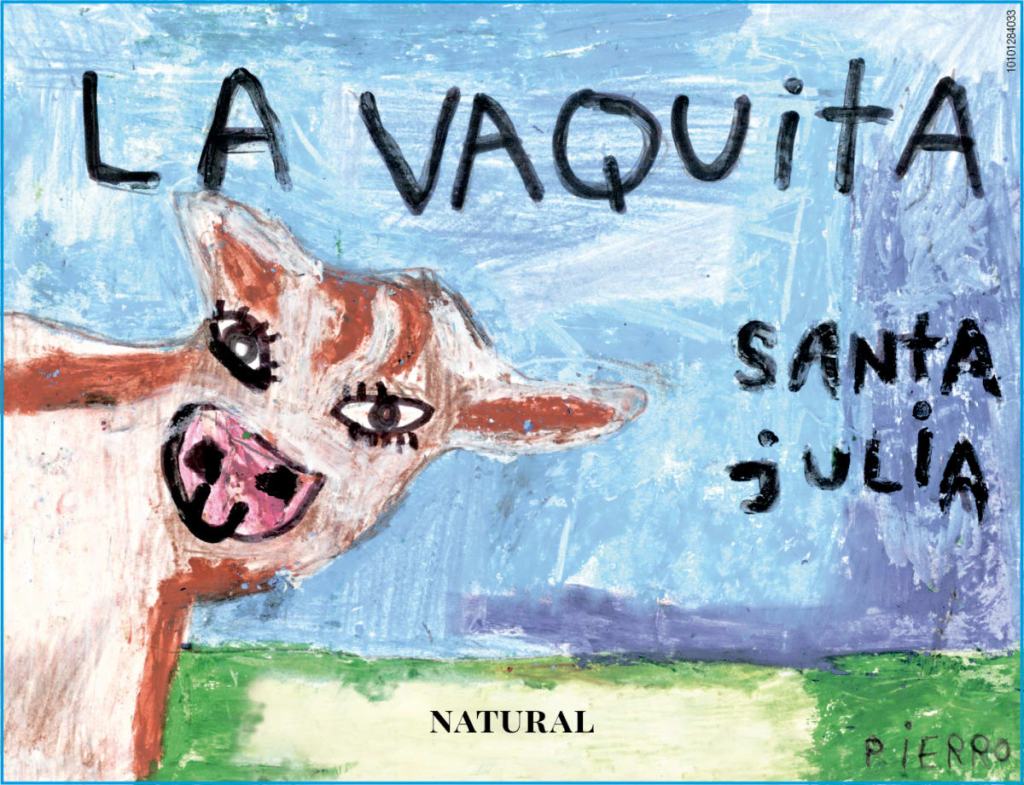
Santa Julia Natural La Vaquita Clarete 2024

Other Red Blends from Mendoza, Argentina

Malbec 80%, Torrontes 20%

Purchase Price $17.99

James Suckling 93, Robert Parker 90, ElsBob 90

ABV 13.5%

A pale ruby wine with a pink rim. Aromas of fresh cherries. Medium bodied with subtle tannins and a medium acidity that provides for a nice refreshing, but short, finish.

An excellent table wine at a remarkable price. Current price is around $20.

Trivia: Trivia: “La Vaquita” translates from Spanish to English as “the little cow.”

Cheese maker La Vaquita was established in Houston, Texas, in 1971 by Mexican immigrant María Castro.  Known for Mexican-style dairy products such as queso fresco, crema, and butter, the company began as a kitchen-scale project and eventually became Castro Cheese Company. It was acquired by Dairy Farmers of America (DFA) in 2009, and in 2025 DFA opened a second Hispanic cheese plant in Monroe, Wisconsin.

Additional trivia useful mainly on Jeopardy is that Wisconsin produces more cheese than any other U.S. state, churning out over 3 billion pounds annually. California comes in second at about 2.5 billion pounds, dominated by mozzarella production.

Basin in the Meantime

Maybe there’s nothin’ happenin’ there
Or maybe there’s somethin’ in the air  —
John Hiatt – Memphis in the Meantime

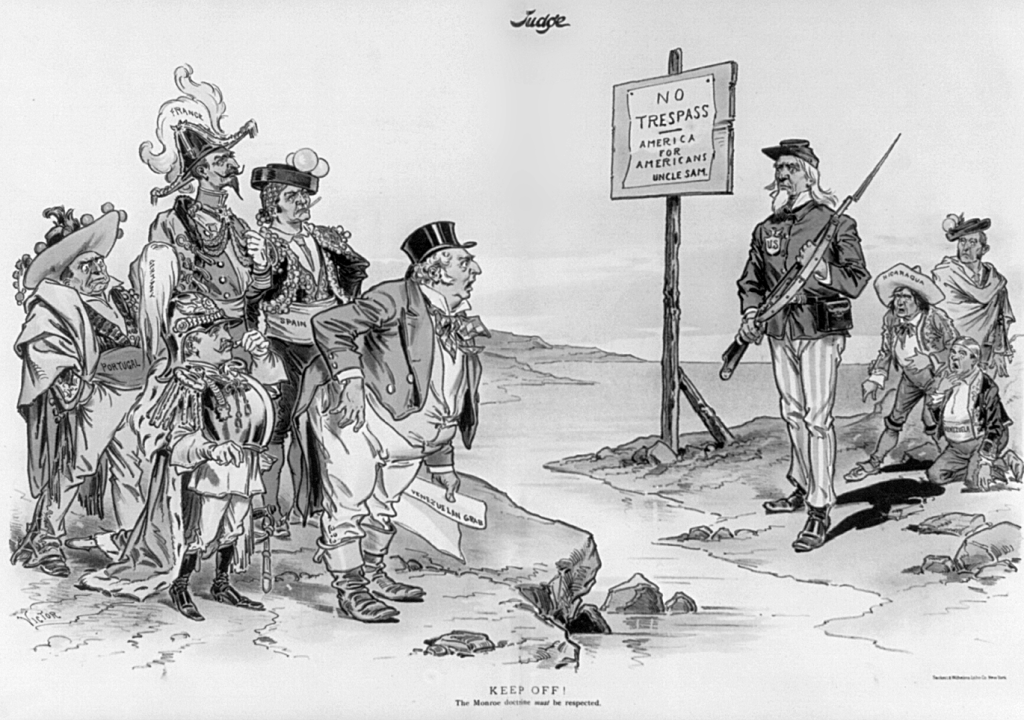
The operation in Caracas did not inaugurate a new doctrine so much as enforce an old one: The Monroe Doctrine or as the new moniker that is sweeping social media: The Don-roe Doctrine, The DDs. It demonstrated that, when the United States chooses to act in its near abroad, it can do so quickly, decisively, and without the prolonged escalation that once defined hemispheric interventions. The speed mattered less than the silence that followed.

What stretches south from the U.S. southern border is not a collection of isolated states so much as a single basin of changing fortunes. A shared space of currents and constraints where energy, food, money, people, and power circulate unevenly. In that basin, geography compresses time, stretching from long somnolence to sudden, decisive action in prestissimo. Decisions made in one port quickly reverberate into another; scarcity in one system bleeds into the next. When a major node fails, the effects do not remain local, they resonate in a loose, syncopated jazz time

The removal of Venezuela as a patron did not merely end Maduro’s dictatorship, it likely altered the flow of reality in the basin itself. What followed from adjacent confines and distant hegemons alike was not immediate confrontation but boilerplate as hesitancy or visa-versa. Borders were secured. Procedural condemnations were issued. The United Nations will hear of this! Behind the statements, positions were analyzed and reassessed. Cards were checked. No one raised. Everyone counted their chips. Everyone kept their cards, except Maduro, but no one pushed the pot.

In the meantime: the basin holds it breath, the alternatives have no luster, and time has taken on a velocity beyond the speed limits of the usual diplomatic stall. In the basin, survival at all costs no longer promotes stability of government nor docility of the populace. In the basin, the strength of will is now measured in meals, watts, and months: maybe. The Venezuela operation lasted 3 hours.

The absence of a Venezuelan military effective response was not the lack of detection of the opposing force or bribery of key personal to look the other way. It was the predictable outcome of a hollowed-out command structure confronted more attuned to loyalty rather than ability. Selective strikes against decision‑making nodes, combined with degraded communications and uncertainty about leadership status, collapsed the chain of authority before it could cohere into action. In a system likely conditioned to await orders from the top rather than exercise initiative, paralysis was the rational response. No one bucks the top…North Korea redux. A thirty‑minute operation leaves no room for deliberation; it ends before the system can decide what it is seeing. Maduro wasn’t answering his phone.

And the operation was not just the removal of a bad actor; it was also about who was watching.

The Iranian strike was never just a counter‑proliferation exercise. Reducing nuclear capability was the mechanism, not the message. The message was capability itself. It was designed to be seen not by Tehran, which already understood the risks, but by Moscow and Beijing. The flight profiles, the munitions used, the coordination, the timing, the public naming of the operation, all of it communicated U.S. reach, patience, and the ability to act unilaterally at scale without triggering uncontrolled escalation. It was deterrent by demonstration, not a declaration for further action.

The Venezuela operation carries the same scent, even if the target is less world‑ending. Different theater, different tools, same audience. There were other tells. In Moscow, state‑adjacent channels reverted to cultural filler, Swan Lake on shortwave. A gesture with a long memory. In Russian political language, it has historically marked moments of uncertainty at the top: authority suspended, clarity withheld, everyone instructed to wait. It was not a declaration, but it was not nothing either. Less foreknowledge than recognition. An acknowledgment that something irreversible was unfolding, inferred from U.S. posture rather than anything concrete.

That recognition itself would not have gone unnoticed. Intelligence services watch each other as closely as they watch targets, and awareness on one side becomes signal on the other. A brief pause, publicly attributed to weather or timing around the holidays, need not imply any hesitation. It can just as easily reflect confirmation: that inference had not translated into possible interference, that compromised channels would remain compromised, and that recognition would stay passive. In that sense, the music was not a warning, and the delay was not a feint. Both were acknowledgments that the hand had changed, and that no one intended to show their cards before the next move was made.

The unrest in Iran reads differently. Less recognition than diversion. When leverage is limited in one theater, pressure migrates to another. Iran’s internal volatility has long been a known fault line. One where agitation carries asymmetric cost. Disruption there absorbs Iranian authorities’ attention, resources, and narrative bandwidth, reducing the capacity for coordinated response elsewhere. Whether by design or exploitation, the effect is the same: consequences are diluted across theaters rather than concentrated at the point of action. Hezbollah and Hamas in the Caribbean remain isolated and neutered.

This does not require coordination to function. Systems under strain respond predictably to stress applied at their weakest seams. Iran’s unrest filled the information space with noise at precisely the moment clarity elsewhere would have been costly.

In Venezuela, the point wasn’t regime change as an ostentatious show of force or a shot across the bow. It was proof of access, intelligence dominance, and decision‑speed inside a space long assumed to be cluttered with foreign influence. The absence of a name matters. So does the brevity. So does the lack of follow‑on rhetoric, which, for Trump, is really saying something.

Regional reactions reflected this reality. The message, delivered without verbiage, was understood immediately. Except in Congress. Colombia’s troop movements were defensive and stabilizing, aimed at spillover rather than confrontation. Mexico and Colombia’s appeals to multilateral condemnation preserved diplomatic cover without altering facts on the ground. China and Russia issued ritualized objections. Entirely predictable, restrained, and notably unaccompanied by action. Iran’s rhetoric filled space where leverage was absent. Across the board, states assessed their stacks of chips and chose not to raise.

This collective hesitation revealed the deeper shift. The Caracas operation likely removed Venezuela as a structural patron and sanctuary, not just a regime. That removal matters less for ideology than for logistics. It collapses the external framework that allowed other systems: most notably Cuba, to remain in the game, even without chips.

Cuba’s predicament is not strategic; it is temporal and tactical. The island lacks indigenous energy beyond biomass, cannot sustain its grid without imported fuel, and faces chronic food insecurity dependent on foreign exchange. Its export of human capital: doctors, engineers, security personnel, once generated influence and cash, but those returns have diminished, and the population left behind is aging and shrinking. Tourism and remittances no longer provide reliable buffers. Scarcity does not need to become catastrophic to destabilize a system; it only needs to become unpredictable. Revolution is three meals away.

In this context, the familiar options narrow. Refusal to accept the obvious with re-engerized brutality can delay outcomes but the path ahead remains the same. Partial opening risks unleashing forces that cannot be re-contained. A managed transition preserves continuity but requires acknowledging mistakes and ultimately exhibiting weakness. Waiting for the irrational rescue likely recreates Ceausescu execution at the hands of an exhausted populace. Time is now a luxury. And there is no Che Guevara left to pretend this is about anything other than power.

The broader hemispheric picture reinforces this compression. Panama’s strategic assets favor quiet realignment rather than confrontation. Colombia’s incentives point toward containment. Mexico’s long‑standing safety valves, outward migration and remittance flows, have narrowed as borders tighten and returns increase. At the same time, cartel finances face pressure from heightened surveillance, financial enforcement, and disrupted logistics. When money tightens, patience evaporates. Ambiguity and neutrality become expensive.

The external powers, beyond the basin, face their own constraints. Russia’s tools in the hemisphere are limited to smoke signals, narrative, and opportunistic cyber and communication disruption; it cannot project sustained force near U.S. logistics without unacceptable risk. China’s leverage is financial and infrastructural: think Peru’s deepwater port, but money loses persuasive power when leaders weigh it against personal liability. Loans cannot guarantee immunity. Infrastructure cannot extract individuals from collapsing systems. A Berlin‑style airlift to sustain Cuba is implausible: geography, energy requirements, and visibility make sustained resupply untenable without escalation. A step that neither Beijing nor Moscow appear willing to risk.

What emerges instead is a less noisy contest. The real currency becomes safe passage for the unwanted and the management of transitions rather than bids for loyalty. Ports, telecom, finance, and migration policy, to and from the U.S., become the levers. Intelligence exploitation encourages action against cartels, rolling up networks of crime rather than staging battles.

In this environment, public speeches matter less than demonstrated capability. Respectful language toward leaders paired with relentless focus on non‑state threats: cartels, preserves diplomatic niceties while narrowing the options. The message is conveyed not through ultimatums but through persistence: neutrality becomes costly; alignment allows for tomorrows.

The western hemisphere has entered a meantime: not a moment of dramatic conquest, but a period where waiting is the most dangerous strategy. Outcomes will be shaped less by declarations than by which pressures are allowed to accumulate, and which are relieved. The Caracas operation did not end the game; it thinned the table and moved the stakes to the final table.

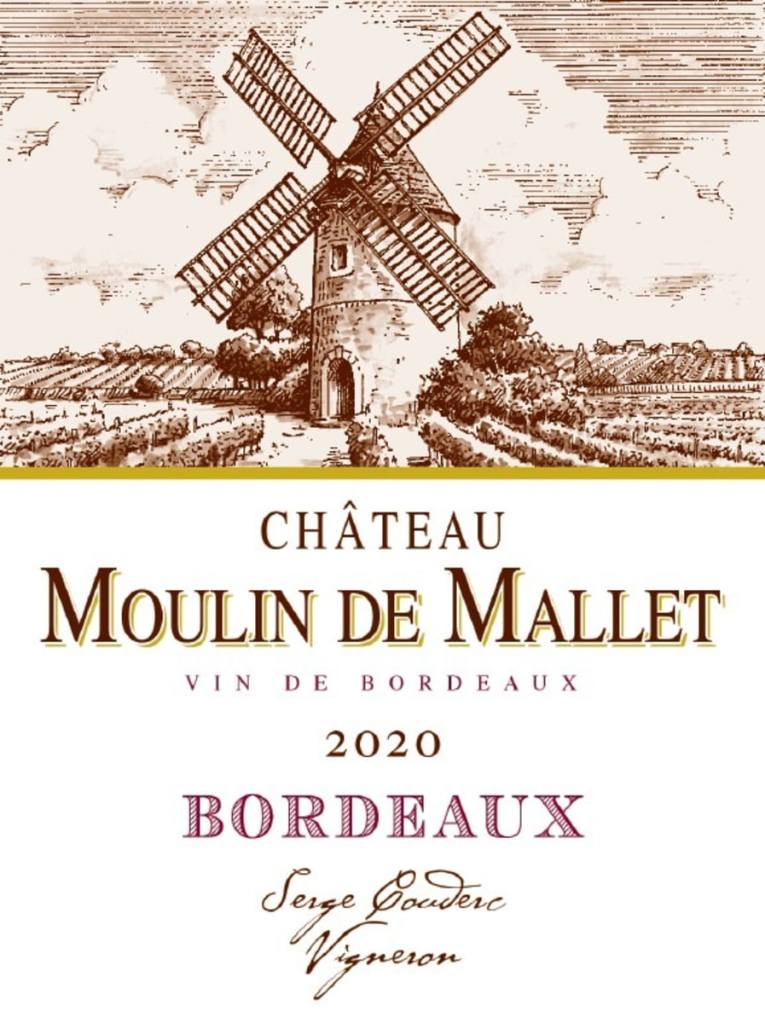
Chateau Pey La Tour Bordeaux 2022

Bordeaux Blend from Bordeaux, France

Merlot 83%, Cabernet Sauvignon 7%, Cabernet Franc 7%, Petit Verdot 3%.

Purchase Price $18.99

James Suckling 90, Wine Enthusiast 88, ElsBob 88

ABV 15%

A deep ruby wine with aromas of smokey fruits and cherry flavors on the palate. Full-bodied, dry, slightly acidic and tannic but balanced. A fresh short finish. Will pair well roasted beef and sharp cheese.

A very good fine wine but underwhelming and on the pricey side. This is an AOC Bordeaux, entry-level red for the producer. Current price is about $20.

Trivia: The wine estate dates to the 1700s and was originally called Clos De la Tour. In 1990 it was purchased by the Dourthe group, a major Bordeaux negociant (merchant), which expanded the original vineyards from about 62 acres to 620 acres but only about 335 acres are planted in grapes. The vineyard is roughly 95% Merlot with minor amounts of grape varieties as shown above. It produces about 85,000 cases per vintage.

Solution in Search of a Problem

…[God] commanded him, saying: Of every tree of paradise thou shalt eat:  But of the tree of knowledge of good and evil, thou shalt not eat. For in what day soever thou shalt eat of it, thou shalt die the death. Genesis 2: 16-17.  …And the woman saw that the tree was good to eat, and fair to the eyes, and delightful to behold: and she took of the fruit thereof, and did eat, and gave to her husband who did eat. Genesis 3: 6.  …And to Adam he said: Because thou hast hearkened to the voice of thy wife, and hast eaten of the tree, whereof I commanded thee that thou shouldst not eat, cursed is the earth in thy work; with labor and toil shalt thou eat thereof all the days of thy life. Genesis 3: 17.

The command. The Original Sin. The yoke of punishment.

Within the Christian narrative, the Garden of Eden; whether read as fact or parable, is not a catastrophe that condemns humanity but a pedagogical interval in which freedom, purpose, and morality first become visible. Eden is the place where God teaches that a being with a soul cannot thrive in effortless abundance; that freedom requires choice; that purpose emerges only through effort–trial and error, consequence, responsibility, and growth. Original Sin is not an accident but the awakening of the human soul, the moment the lesson begins.

Against this backdrop, William Dembski’s (1960-present) The End of Christianity advances a far more far‑reaching claim: that God imposed suffering and death across the entire 4.5‑billion‑year history of Earth in response to Adam’s sin; an event that, even on the most generous timelines, occurred only a few tens of thousands of years ago. The difficulty with this theory is not merely its scale but its direction. Within the Christian understanding of God’s eternal now, Eden is not an isolated moment but a teaching environment whose possibilities: temptation, failure, growth, are already present to the divine mind. Dembski’s proposal, however, requires suffering to be imposed on the epochs that precede the sin itself. Adam has no predecessors whose guilt could be inherited, and the only antecedent in the narrative is God Himself. This reversal of moral sequence renders the thesis difficult to sustain.

His theodicy survives only at the level of abstraction; once the brush narrows to a single creature or a single moment, the logic collapses. A brontosaurus sinking into Jurassic mud is not a moral agent, nor is a trilobite crushed in a Cambrian landslide. To treat their deaths as the retroactive consequence of a human sin that has not yet occurred is to impose moral causality where no moral subject exists. The moment the argument touches the concrete world: an ecosystem, a predator’s hunger, a tectonic shift, it demands that nature behave like a courtroom, assigning guilt and punishment across epochs that cannot bear such categories.

Nor does the appeal to the serpent resolve the difficulty. To identify the serpent as the origin of evil is to mistake a narrative instrument for a metaphysical explanation. The question is not who tempted Adam, but how the possibility of temptation exists at all within a creation held in the eternal knowledge of God. If evil can arise only through the serpent’s intrusion or Adam’s misstep, then the divine eternity becomes strangely porous, as though God were surprised by a contingency He did not foresee. A coherent theodicy must account for the possibility of evil within the very structure of creation; reducing it to a reptile or a human choice leaves the deeper metaphysical question untouched.

Additionally, he treats death itself as a sin and the result of sin, redefining a creaturely condition as a moral indictment and thereby forcing all pre‑human death into the ledger of Adam’s guilt. Once these premises are set, the argument can proceed only by inverting causality, collapsing divine eternity into creaturely time, and assigning retroactive guilt to a world that existed long before humanity appeared.

A further difficulty remains unaddressed. If God is placed within a temporal sequence, as Dembski’s model requires, then any retroactive application of punishment collapses into divine causation. A temporal God cannot reach backward in time without becoming the direct agent of the suffering He imposes. If Adam’s sin occurs after millions of years of natural history, then all pre‑human suffering occurs before the sin; and if that suffering is nevertheless treated as punishment for Adam, the only possible source of it is God Himself. The attempt to preserve a literal reading of Genesis thus forces the blame for natural evil onto the Creator, a conclusion Dembski never acknowledges and cannot escape.

As the argument unfolds, the incoherence deepens. Dembski appeals to Rabbi Harold Kushner, who resolves the problem of suffering by limiting God’s power, and to Tony Campolo, who suggests that God voluntarily cedes power to human freedom; positions incompatible with a thesis that requires God to exercise maximal power across billions of years to impose retroactive suffering on creation. He suggests that God created a perfect world, that the Son of God somehow disrupted that perfection, and that God was then forced to rewrite the story while it was being undone. Such a view divides the Trinity into competing agents and reduces God’s eternal now to a sequence of creaturely reactions. In attempting to preserve a literal reading of Genesis, Dembski abandons the very doctrines of divine eternity, unity, and immutability that Christianity has always affirmed.

His treatment of Chronos and Kairos only compounds the confusion. He proposes that God creates in Kairos and implements in Chronos, as though the eternal act of God could be divided into a timeless planning phase and a temporal execution phase. But Kairos and Chronos are categories of human experience, not metaphysical compartments within the divine life. By splitting God’s creative act into stages, Dembski collapses divine eternity into creaturely sequence, producing a picture of God who drafts outside of time and then steps into time to carry out the plan. It is a scheme that contradicts both classical doctrine and the logic of his own argument.

The result is a proposal that feels less like a coherent theological model and more like a solution in search of a problem; an attempt to preserve a preferred interpretation rather than a conclusion arising naturally from the metaphysics he invokes. His argument depends on a literal, historical Adam whose single act introduces moral disorder into the entire cosmos, yet he never defends this premise or engages the long tradition that treats Adam as archetype rather than biological progenitor. Nor does he address the scientific evidence that humanity emerged from a population rather than a solitary pair. The entire structure stands on an unexamined foundation.

By contrast, a more coherent theological reading sees Eden as a deliberate environment constructed to teach humanity its telos. God did not create paradise for idle comfort but to reveal that abundance without purpose is not paradise; that safety without responsibility is not fulfillment; that comfort without growth is tedium. The expulsion from Eden is not divine vindictiveness but the extension of the curriculum: a life in which effort–trial and error, consequence, and responsibility become the conditions for virtue. Original Sin is not a permanent stain but the beginning of moral adulthood, an inherited condition whose guilt is washed away in baptism. God does not abandon humanity after the Fall; He immediately promises redemption and sets further boundaries to guide the soul toward righteousness.

In this light, Eden is not the site of global catastrophe but the first classroom of the human spirit. Eden and Adam are not the problem but the beginning of the solution. It is the place where freedom is defined, purpose is revealed, and the long winding road of redemption begins.

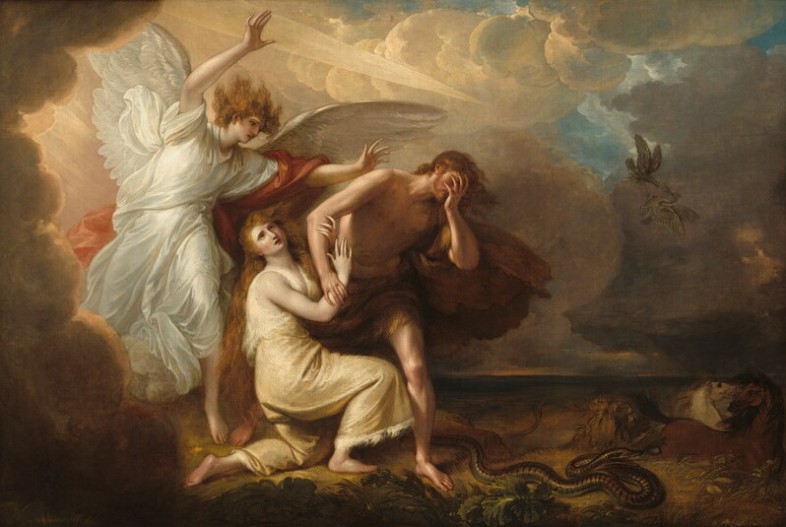
Graphic: The Expulsion of Adam and Eve from Paradise by Benjamin West, 1791. Public Domain

Freedom to Live—Telos to Thrive

Humans do not live by bread alone. Abundance may fill the stomach, but it doesn’t energize the soul. Somehow a life free of want and fear comes up lacking.

Adam, Eve and the Garden of Eden, the world’s first utopia, looked upon as a psychology experiment, failed. Failed in the sense that any utopia built only on abundance is already hollow. The question, then, is why? They were given food, water, sex beyond their basic needs. Their environment required no clothes. No predators threatened their existence. Labor and death were concepts not pondered. But in the end, it wasn’t enough. Why did it fail?

The answer, which will be explored further below, appears to revolve around the concept of purpose. A world; a utopia, that meets all needs but offers no purpose is not paradise but a gilded “behavioral sink.” A world without vocation, responsibility, sacrifice, striving, or narrative is a hollow reed: it stands, but it is filled with nothing. A world where nothing is required except obedience becomes unbearable stagnation. A world without purpose is not a meaningful, conscious life.

The Greeks called this deeper purpose to enliven the soul, telos. The purpose toward which life is directed. Without telos, abundance becomes a cage, a prison. With telos, even scarcity can be endured with dignity.

John Calhoun, ethologist, set out to study overpopulation but instead discovered something stranger: a behavioral sink: a kind of social and spiritual death. The colony did not collapse from too many mice, but from the breakdown of roles and meaning that eventually produced too few.

In his now famous “Universe 25” mouse utopia experiment, he showed that survival without purpose, at least for mice, collapses into withdrawal and extinction. Modern societies risk the same fate when they pursue utopia: abundance without struggle, surveillance as safety, and communal aid as the elimination of all negatives. The challenge is not simply to live, but to thrive; and thriving requires telos: a purpose.

John Calhoun’s experiment was designed to eliminate scarcity. Within a large enclosure, mice were given unlimited food and water, nesting material, and protection from predators. Eight mice were introduced, 4 male/female pairs, and the population grew rapidly, doubling every fifty-five days until it reached more than two thousand individuals (8 doublings): filling all available space. Yet despite this apparent freedom from want or fear, the colony eventually collapsed, seemingly due to extreme density and the breakdown of social roles. Fertility declined, social roles dissolved, abnormal behaviors proliferated, and reproduction ceased altogether. The colony died out, not because resources were lacking, but because abundance without freedom and meaning likely produced a breakdown. Calhoun coined the term “behavioral sink” to describe this collapse of social roles under conditions of density in a constrained space. The experiment suggested that abundance alone does not guarantee flourishing; without freedom, space, and above all, purpose, societies can unravel even in material plenty.

Subsequently psychologist Jonathan Freedman studied human responses to crowding and found that people did not exhibit the same collapse seen in Calhoun’s mice. Yet it is hard to look at modern societies and conclude that the behavioral sink: the collapse of social norms and the retreat from family formation, is entirely absent.

The Greeks would have recognized the deeper societal problem immediately. For them, the question was not simply how to survive, but how to live and prosper in accordance with telos: the end, the purpose, the fulfillment toward which life is directed. Aristotle described every being as having a natural telos: the acorn’s telos is to become an oak, the flute’s telos is to produce music, and the human telos is to live a life of virtue and flourishing, what he called eudaimonia.

Telos is purpose. For man it implies more than giving meaning to biological life. It suggests a dichotomy of mind versus consciousness: brain versus soul. Freedom from want and fear feeds the mind but provides nothing of sustenance for the soul.

Earlier societies understood this intuitively and built cultural codes to bind abundance to purpose. Chivalry, whether in its medieval form or its later incarnation as the English gentleman’s ethic, was precisely such a telos. It required the strong to protect the weak, but also required the weak to participate in the moral order. It paired mercy with discipline, generosity with boundaries, and honor with responsibility. Chivalry was not sentiment; it was a teleological architecture that kept abundance from becoming decadence.

The mice in Calhoun’s enclosure had food, water, and shelter, but no telos. Once density eroded their social roles, a slow downward spiral ensued. Humans in modern societies face the same paradox: welfare systems, surveillance, and engineered abundance can provide material plenty, but if they strip away telos: purpose, meaning, struggle, and virtue; all outcomes drift toward dystopia.

But if the soul is only in the domain of man, why did the mice without purpose also die? Mice perceive. They have instinct and social drives. They have memory and respond to stress. But they do not have a moral imagination or the capacity to choose meaning. A mouse in the experiment could not rebel against its environment by inventing a new one. The mice died because they reached the limits of space and mind. Social instincts, stress circuits, and behavioral roles all exploded and collapsed. They died because they were in a closed world and their minds could not adapt. They were trapped.

Eden failed not because humans are like mice. Man’s mind can adapt to a life of plenty, but the soul cannot adapt to tedium. Eden failed because man was built to struggle. Perfect conditions, total comfort, safety, and abundance lead to decline, not nirvana.

Eden and Universe 25 fail for different reasons. The mice died because they could not leave. Man was expelled from Eden because he reached for a transcendence and was not permitted. Humans were not allowed to question, seek, reach, or transcend their existence. Paradise needs struggle.

So why did an omniscient God create Eden? Probably because it was never meant to be a final state but a contrast state. A teaching moment. A world without fear, scarcity, or struggle in which the human soul could discover that comfort alone is not enough. In a paradise where every need was met, the only meaningful act was the one that revealed the nature of consciousness itself: the choice to reach beyond the enclosure. The serpent did not tempt Adam and Eve with pleasure but with becoming: “you will be like gods,” awakening a longing for agency, knowledge, and purpose that abundance could not satisfy. Their disobedience was not a failure of design but the moment in which the soul recognized that a static world cannot contain a teleological being. Eden exists in the story not as a utopia that failed, but as the stage on which freedom becomes visible and the human need for telos is revealed.This pattern is not confined to myth or laboratory. When purpose collapses, societies follow the same arc as Eden and Universe 25: abundance without telos gives way to stagnation, stagnation to withdrawal, and withdrawal to demographic decline. A people who cannot articulate why life is worth living will eventually cease to create life at all. The first sign of a civilization losing its telos is not revolution or war, but falling birthrates. The quiet demographic signature of a culture that no longer believes in its own future.

Across Europe, the United Kingdom, and increasingly the United States, fertility rates have fallen well below replacement. In Germany, Italy, and Spain, fertility hovers around 1.2 to 1.3 children per woman (2.1 is replacement level). In the UK it is around 1.5; in the U.S., about 1.6. This decline is not simply biological; it is sociological. Fertility is shaped by density, cost of living, cultural norms, and moral frameworks. Where communal support is strong: rural areas, religious communities, fertility often remains closer to or above replacement. In urban centers, where density and what might be called collective individualism dominate, fertility collapses. Declining birthrates are thus a symptom of lost telos. Families are not formed because the conditions for raising children feel untenable, and because the cultural narrative of purpose has weakened.

Chivalry once provided that narrative. It linked male strength to generational duty, female dignity to communal honor, and children to the continuity of the moral order. It gave family formation a story, not merely a biological function. When chivalry collapses, fertility collapses, not because people cannot reproduce, but because they no longer know why they should.

The paradox is sharpened when abortion policies are considered. In most of Europe and the UK, abortion is legal within the first trimester, framed as healthcare and autonomy. In the U.S., abortion remains contested but widely available in many states. Here lies the disconnect: abortion is framed as expanding individual autonomy: the freedom from unwanted obligation, while fertility decline reflects the collapse of collective freedom, the freedom to flourish and raise children. Societies expand freedom at the individual level while eroding it at the collective level. Autonomy is preserved, but telos is undermined.

To buttress declining populations, European countries and the UK have encouraged immigration. Migrants often come from regions with higher fertility rates, offsetting demographic decline and supporting aging workforces. Immigration is thus a pragmatic solution to population collapse: but it does not address the root causes: density, freedom, and telos. It is a patchwork repair, adding new blocks to a crumbling wall without restoring the foundation. The deeper paradox remains: abundance without purpose produces collapse, and immigration cannot substitute for the conditions that allow families to thrive, especially if society’s new members are supported without shared cost, shared culture, or shared telos.

Density alone does not dictate outcomes; it interacts with telos, governance, and cultural frames. Lagos, Nigeria, is one of the most densely populated and chaotic cities in the world, often described as bordering on ungovernable. Infrastructure is weak, governance is fragmented, and daily life is improvisational. Yet fertility remains high. The reason is that telos: family, lineage, and communal identity, remains intact. In Lagos, children are wealth, kinship and clan networks are survival, and religion provides meaning. Even in smothering density, purpose sustains resilience. The city may be chaotic, but it is alive.

By contrast, the homeless encampments of Los Angeles resemble Lagos in their improvisational density and lack of formal governance. Tents, makeshift shelters, and informal economies proliferate. Yet here fertility does not thrive. Rampant mental illness and drug use erode telos. The cornerstone of family, community, and purpose has collapsed. What remains is density without meaning, abundance without direction. Food programs, shelters, and aid exist, but they do not restore purpose. The result is stagnation and despair rather than resilience. Los Angeles encampments show that chaos without telos collapses into dysfunction.

Bangkok, Thailand, illustrates the opposite extreme. Governance is strong, infrastructure is orderly, and surveillance is extensive. Yet fertility has collapsed to ultra-low levels. Here, telos has been eroded not by chaos but by over-governance and modernization. Families shrink, marriage is delayed, and children are no longer seen as wealth or purpose. Bangkok epitomizes the behavioral sink in human form: density magnified by order but hollowed of telos.

These contrasts reveal the missing quadrant: a society that pairs order with telos. This was the promise of chivalry. Lagos has telos without order; Bangkok has order without telos; Los Angeles has neither. Chivalry represents the fourth possibility: order with purpose, structure with meaning, boundaries with dignity.

Together these cases sharpen the living paradox. Lagos thrives in chaos because telos survives. Los Angeles collapses in chaos because telos has dissolved. Bangkok collapses in order because telos has been eroded by governance. The lesson is clear: density is the stressor, but telos is the barrier to collapse. Where telos is strong, fertility can endure even in smothering conditions. Where telos is weak, density accelerates collapse. A utopia pursued through governance can become more dystopian than chaos if it erodes purpose. Man needs a purpose. Without it, abundance becomes nothing more than a cage: a prison with flowered curtains; with it, even hardship can be transformed into amber waves of plenty.

Urban America provides its own cautionary tale. Under Lyndon Johnson’s Great Society, HUD launched massive urban renewal programs meant to eliminate “slums.” Entire neighborhoods once vibrant with shops, churches, and homes were razed. In their place rose brutalist public housing towers like Pruitt-Igoe in St. Louis and Cabrini-Green in Chicago. Instead of dispersing poverty, these projects concentrated it vertically, creating ghettos in the sky. The architectural order stripped away human scale, while the destruction of community fabric erased telos. Where once there were family networks, small businesses, and congregations, there was now isolation, surveillance, and stigma. The result was alienation, crime, and eventual demolition. HUD’s well‑intentioned utopia became a dystopia, echoing Calhoun’s mice: abundance of shelter without freedom or telos collapses into dysfunction.

Chivalry offers a counterpoint here as well. It was a social contract, not a bureaucratic one. It preserved dignity by pairing generosity with expectation, aid with responsibility, and protection with participation. Modern welfare systems sever the relationship and keep only the transfer. The result is dependency instead of resilience, abundance without telos.

Surveillance adds another layer to the modern enclosure. In Calhoun’s experiment, the enclosure walls were the hidden constraint. For humans, surveillance plays a similar role. In China, the social credit system tracks citizens through cameras, financial records, and online behavior, with scores affecting access to jobs, travel, and services. In Europe and the U.S., facial recognition, biometric ID, and behavioral profiling are increasingly common. Awareness of being watched erodes anonymity, adds stress, and modifies behavior. Surveillance is the human equivalent of the enclosure walls. It defines the boundaries of freedom, even in abundance.

The paradox is that surveillance is justified as safety, efficiency, or order, yet in practice it adds to the stress of density, accelerating the very breakdown it claims to manage. It is the human version of the behavioral sink: not scarcity, but suffocating constraint. And more deeply, surveillance erodes telos by reducing individuals to data points, stripping away the individual dignity of purpose.

Chivalry again stands as the opposite principle: internal discipline instead of external enforcement. A chivalric society requires fewer walls, fewer cameras, fewer bureaucratic constraints, because the code itself governs behavior. Surveillance grows where virtue shrinks.

The pursuit of utopia often plants the seeds of dystopia. Calhoun’s mice dramatize this paradox, and human societies repeat it in subtler ways. Utopia promises abundance and safety, but struggle, risk, and constraint are what give life meaning and resilience. Remove them, and individuals may feel aimless. The enclosure gave plenty, but the will to live wilted. The mice could not leave, explore, or repurpose their world.

For humans, welfare states or surveillance societies may provide abundance but limit autonomy. The invisible walls matter more than the food. Collective solutions often replace organic bonds with bureaucratic systems. Parenting, community, and moral frameworks weaken when the state or collective “fixes” everything. Individuals withdraw because the frame of telos collapses. Even in abundance, awareness of being watched adds psychological weight. For mice, the enclosure was the hidden constraint. For humans, cameras and social scoring systems are the modern equivalent.

The collective aims at population-level stability, but the individual seeks personal meaning, agency, and dignity. When collective solutions optimize for averages, individuals at the margins feel alienated. The bell curve of individuality is reduced to a spike. The revolt or collapse is not irrational; it is a signal that something is not working as intended. It shows that utopia defined by the collective may not align with the individual’s need for telos. The collective optimizes for stability, the individual thrives on agency, risk, and purpose. When those needs evaporate, revolt or withdrawal emerges.

Examples abound in modern policy. Guaranteed income experiments often show that recipients reduce work hours modestly. The reduction is not usually total withdrawal; it is often fewer hours, more time for caregiving, education, or leisure. But the symbolic effect matters: when income is guaranteed, the incentive to work as necessity weakens. The “beautiful ones” of Calhoun’s mice resonate here: abundance without struggle risks withdrawal.

Food stamps provide nutrition support to low-income households, but fraud and misuse exist, and some recipients may not be in dire need but qualify through loopholes or marginal thresholds. The program can attract dependency, with households remaining on benefits long-term rather than transitioning out. Help for the needy becomes normalized as entitlement, and the boundary between “in need” and “not in need” blurs, creating resentment and undermining trust in communal solutions.

The paradox is structural: help for the individual expands freedom‑from immediate crisis, but attracts broader participation, dilutes targeting, and sometimes erodes freedom‑to flourish. Programs designed as umbrellas risk becoming enclosed boxes; constraints that reshape behavior in unintended ways. And most importantly, they risk eroding telos by reducing life to consumption and dependency rather than purpose and flourishing.

Chivalry resolves this paradox by insisting that mercy must be paired with measure. The English gentleman was gallant toward women and the lower classes, but “hard as nails” when duty required it. This duality; compassion with boundaries, is precisely what modern systems lack. They know how to help, but not how to say no. Chivalry understood that saying no is sometimes the highest form of care, because it preserves dignity and agency. All good parents know this instinctively.

The lesson is not that communal aid is bad, but that design matters. If aid is too broad, it attracts those beyond need. If aid is too narrow, it misses the vulnerable. If aid removes all struggle, it risks eroding resilience. If aid balances support with responsibility, it can rebuild freedom‑to‑flourish. The paradox is that governments often attempt to engineer away all negatives, but the outcomes drift toward fragility rather than resilience. The mice in Universe 25 were given abundance: no hunger, no predators, no scarcity. Yet the absence of struggle did not produce flourishing; it produced an unremitting, total collapse.

Humans in modern welfare states face a similar paradox. Governments try to eliminate negatives: poverty, hunger, homelessness, drug use, through programs and interventions. Yet the outcomes are mixed: dependency, loss of initiative, bureaucratic surveillance, and sometimes deeper alienation. Erase all struggle, and resilience erodes. Limited means is not the enemy; it is the forge of adaptive capacity. Without struggle and purpose, societies grow brittle and collapse. Challenges often provide purpose. When all negatives are removed, individuals may feel rudderless and adrift.

To eliminate negatives, governments also expand monitoring: drug tests, social scores, biometric IDs. This adds stress, reproducing the under‑the‑microscope effect. Policies aimed at fixing one problem can create others. Housing programs may provide shelter, yet leave mental health and community breakdown untouched, creating dependency instead of resilience. Surveillance systems are justified as safety but erode privacy and increase stress in dense populations. The balance is razor‑thin. Too much intervention suffocates autonomy; too little starves collective flourishing. The missing element is telos. Without purpose, abundance becomes dystopia.

The pursuit of utopia, removing all negatives, often produces dystopian outcomes because it confuses abundance with flourishing. Flourishing requires freedom, struggle, and telos. Utopia removes struggle, but in doing so, removes meaning. The result is collapse: the behavioral sink in mice, fertility decline and alienation in humans. The challenge is to design programs that support resilience and meaning, rather than erasing all negatives.

A moral cycle often attributed to G. Michael Hopf: “Hard times create strong men. Strong men create good times. Good times create weak men. Weak men create hard times,” encapsulates the utopia-to-dystopia paradox. Hopf’s cycle is not merely historical; it is teleological. Societies rise or fall according to the strength of their purpose.

Population decline is not linear, nor is it destiny. It is cyclical, shaped by density, freedom, and telos. When societies become too dense, when surveillance erodes autonomy, when communal bureaucracy substitutes for organic bonds, fertility and flourishing decline. Yet when density eases, when freedom is restored, when telos is rediscovered, populations rebound. History shows this rhythm: humanity has survived bottlenecks, plagues, wars, and famines, and each time rebounded when purpose was renewed.

The Greeks understood that man needs a telos, an end toward which life is directed. Without telos, abundance becomes a monkey cage; with telos, even scarcity can be endured with dignity. Calhoun’s mice remind us that survival is not about food and shelter alone. It is about freedom, meaning, and purpose.

Modern societies risk repeating the experiment when they pursue utopia as abundance or the absence of need without struggle, surveillance as safety, and communal aid as the elimination of all negatives. The paradox is that such utopian attempts often promote dystopian outcomes. The challenge is not to remove every negative, but to build an airy house on a foundation of resilience, dignity, and telos. Only then can abundance become flourishing, and only then can societies escape the behavioral sink.

Chivalry offers a final lesson: flourishing requires mercy, measure, and mettle. Mercy to lift the vulnerable. Measure to set boundaries that preserve dignity. Mettle to uphold the moral order even when it is difficult. Chivalry is not medieval nostalgia; it is a teleological architecture that binds abundance to virtue. Without such a code, abundance becomes a cage. With it, even hardship becomes a forge.

Chivalry once served as the mediating code between secular authority and sacred telos, binding worldly power to transcendent purpose. It stood in the space where kings governed and churches taught, ensuring that strength was disciplined by virtue and that mercy was bounded by responsibility. But in the modern age, this mediating role has eroded. Secular governments have expanded into moral territory, while many churches, entangled in state funding, NGO partnerships, and bureaucratic incentives, have softened their prophetic edge, echoing the language of administration rather than the guidance of the soul. When the sacred becomes an extension of the state, it can no longer offer counter‑telos; it becomes a chaplaincy to the administrative order. Money talks, and institutions drift toward the priorities of their patrons. The result is a vacuum where chivalry once stood: no moral architecture to restrain abundance, no internal compass to replace external surveillance, no code to bind freedom to responsibility.

Striving toward a vision of utopia is a failure to see that purpose, not perfection, sustains a society.

(Post‑script: Calhoun’s mice peaked at roughly 15–18 months and collapsed by about 48 months: an approximate 1/3 to 2/3 split between peak population and extinction. Universe 25 was the 25th iteration of his utopia experiments; earlier versions ended prematurely, but the behavioral patterns he observed: social breakdown under abundance and density, were consistent across his work. Scaled to humans: U.S. population is projected to crest around 2040–2080, suggesting the attempt at utopia began around Johnson’s Great Society, followed by a ~200‑year decline toward collapse (2240–2280). Strikingly, this peak falls within Isaac Newton’s own apocalyptic horizon, which he argued could not arrive before 2060. Abundance, demography, and prophecy all converge to remind us that abundance without telos has a half‑life, or at least a shelf‑life. Strangely, that also suggests that the timing of the apocalypse is of our own making: as a society the time to die is our choice.)
Time not Time

Time, life, and physics are inseparably intertwined. Remove time from our lives or our equations and we are left with a null set; a void where very little makes sense, and nothing moves forward or backwards. Birthdays, compound interest, and prison sentences lose their definitions. Einstein’s spacetime, relativity, and the absolute speed of particles all collapse if time is reduced to mere concept rather than a dimension woven into the fabric of the universe.

Time is real, yet not what we think. It is measurable, yet subjective. Physical, yet metaphysical. Created, yet transcended. It is time, and not time.

To confront this metaphysical and ontological puzzle, we must go back and consider how others have wrestled with it. In Book XI of Confessions, Augustine famously writes: “What then is time? If no one asks me, I know; if I wish to explain it to one who asks, I do not know.” He knew time intimately yet could not articulate it; a paradox of intuitive knowledge that resists definition.

For Augustine, time is the tension of the soul: distentio animi, stretched between memory, perception, and anticipation. I would go further: time is the unease of the soul, the awareness that our life is not merely sequential but weighted. Each present moment becomes a record, a catalogue of change, where memory and expectation converge upon the ubiquitous now.

From this knotty discomfort, Augustine turns to consciousness. We do not measure existence as an external construct, nor as Einstein’s spacetime, but hold past, present, and future together in awareness. This is the soul’s way of ordering experience: a catalogue of change. An AI approaches memory similarly; not as a flowing timeline but as indexed facts retrievable when relevant. What for humans is the soul’s ledger of experience, for AI is a ledger of durable notes. And yet both remain finite catalogues.

Augustine presses further: God transcends even this. For us, awareness gathers past as memory and future as expectation, but God simply is: beyond sequence, beyond catalogue, beyond event. Time itself began with creation; sequence and change belong only to the created. God exists outside of it, the eternal source from which all temporal becoming flows.

Thomas Aquinas also saw time not as a substance but as a measure: the numbering of motion by before and after. Time, for him, comes into being with creation and is experienced only by mutable beings, for without change there is no succession, and without succession there is no time. Humanity lives within this flow: we need time to give shape to purpose, meaning, and becoming. But God is utterly immutable, without before or after. He does not move from past to future but exists in a timeless presence; eternity as the simultaneously whole possession of life. All times are present to Him at once, not as a sequence but as a single, perfect act of being.

Pope Benedict XVI, following Augustine and Aquinas, insisted that eternity is not endless time but timeless presence. To bind God within sequential time would reduce Him to a creature among creatures. God does not foresee as a prophet would; He simply is, in relation to all times.

This ‘eternal now,’ or what Boethius calls the ‘eternal present,’ expresses his argument that eternity is not infinite duration but the perfect simultaneity of divine presence. God’s knowledge is not ours extended indefinitely; it is categorically different. Thus, free will and an all‑knowing God are not contradictions. According to Boethius, “whatever lives in time lives only in the present,” whereas God lives in the eternal present: totum simul, the all‑at‑once‑ness of divine life.

Where Christian thought places God beyond time, the Greeks placed humanity within two modes of time: Chronos and Kairos. Chronos is quantitative time; measured, sequential, countable. It gives life structure, the frame by which we track change. Kairos is qualitative time; the opportune moment, the ripeness of action, the fullness of meaning. Chronos watches the clock; Kairos watches life. Chronos measures duration; Kairos measures significance.

Together they reveal that time is not merely a dimension we move through but a dual register of existence: one that counts our days and one that gives those days weight.

Time, from ancient philosophers and theologians to modern physicists, has evolved. Theology gives us a God of timeless presence. Newtonian time was absolute, measurable, and continuous. Einsteinian time became relative, elastic, and inseparable from space. Quantum time is probabilistic, discontinuous, sometimes irrelevant. Entanglement seems to ignore time altogether. The arc bends from time to not‑time. From time to timelessness.

If theology gives us the metaphysics of time, physics gives us its language; how time behaves, how it binds itself to matter, motion, and measurement.

The physical story begins with Newton, who imagined time as absolute: a universal river flowing uniformly for all observers. In Newton’s cosmos, time is the silent metronome of the universe, ticking identically everywhere, indifferent to motion or perspective. It is Chronos rendered into mathematics.

But Einstein suppressed that certainty. In special relativity, time is no longer absolute but elastic. It stretches and contracts depending on velocity. Two observers moving differently do not share the same “now.” Time becomes inseparable from space, fused into a four‑dimensional fabric: spacetime. Where motion through one dimension alters experience of the others. The universe no longer runs on a single clock; it runs on countless local clocks; each tied to its own frame of reference.

General relativity deepens the strangeness. Gravity is not a force but the curvature of spacetime itself. Massive objects bend the temporal dimension, slowing time in their vicinity. A clock on a mountaintop ticks faster than a clock at sea level. Time is not merely experienced; it is shaped by mass and speed. It bends under pressure. It is not the absolute we imagine.

If Newton’s time was a river, Einstein’s time is a landscape; warped, uneven, inseparable from the terrain of existence.

Yet even Einstein’s vision wanes at the smallest scales. Quantum mechanics introduces a world where time behaves less like a smooth dimension and more like a probabilistic backdrop. Particles do not trace continuous, classical arcs but inhabit shifting probability fields. Events unfold not deterministically but as clouds of possibility collapsing into actuality when observed.

And then comes entanglement; the phenomenon Einstein called “spooky action at a distance.” Two particles, once linked, remain correlated no matter how far apart they travel. Their states are not merely synchronized; they are one system across space. Measurement of one instantaneously determines the other, as if the universe refuses to let them be separated by distance or by time.

Entanglement suggests that relation is woven deeper than sequence. The universe reveals patterns of connections that seem to operate under different temporal conditions altogether.

And this loosening of temporal order is not confined to the quantum scale; it appears again, in a different register, at the largest scales of the cosmos.

The universe’s expansion gives the appearance of faster‑than‑light recession, not because objects outrun light, but because spacetime itself stretches. And in the vast reaches where dark energy dominates, the very markers of time grow thin. Beyond the realm shaped by matter, time begins to lose its meaning; dark energy becomes a kind of luminous emptiness, a region where temporality itself seems to fade.

But the universe does not remain at its extremes; the very small and the very large fold back into the ordinary world we inhabit.

And yet, when these quantum strangenesses are averaged over countless particles, when probabilities smooth into certainties and fluctuations cancel out, the world resolves once more into Newton’s calm, reassuring, continuous order. The granular becomes smooth. The uncertain becomes predictable. The timeless hints collapse back into the familiar rhythm of clocks and orbits. Newton’s universe reappears not as the foundation of physics, but as its limit; the shape reality takes when the deeper layers approach infinity.

And it is precisely at this limit that physics brushes against theology. For if entangled particles share a state beyond temporal separation, then timelessness is not merely a divine abstraction but a feature of the universe’s foundational structure. Augustine’s claim that God exists outside time finds an unexpected shadow in quantum theory: the most fundamental connections in reality are not mediated by time at all.

Where theology speaks of God’s eternal now, quantum mechanics reveals systems that behave as if they participate in a kind of physical “now” that transcends sequence. Where theology insists that God is not bound by before and after, entanglement shows us correlations that ignore the very notion of before and after.

Physics does not prove theology. But it points toward a universe where timelessness is not only conceivable but woven into the fabric of existence: an image of everything at once: totum simul, a vision that dissolves the moment we try to picture it.

Dreams

“To realize one’s destiny is a person’s only obligation.” Paulo Coelho – The Alchemist

Paulo Coelho’s (1947-Present) The Alchemist transcends from the pages of folklore through the dreams of all men of adventure, wrapped into a magical fantasy inhabiting the realm of know thy self, heal thy self, and be true to your heart. A timeless effort instructing all to follow your dreams. Desires anchored in your heart with magic flowing from believing in yourself.

The Alchemist is more than a tale of shepherds, mystics, prophets, treasure, and love, although it is all of that. It is also a parable of craft, trial, and vision. Craft in the tending of flocks, the learning of alchemy, the reading of omens. Trial in the setbacks, the labor, the desert’s unforgiving silence; struggles in the hunger, the fear, the wars of men, and the scourging, scorching winds of sand. Vision in the glimpses of truth, the covenant whispered by the soul, the horizon that calls him onward.

This parable echoes older tales, such as the Arabian fable of the Treasure in Cairo, where a man journeys far in search of riches only to discover that the treasure lies buried at home. Coelho reimagines this motif: Santiago’s pilgrimage across deserts and omens ends with the revelation that the treasure was waiting where his journey began. The outward quest becomes necessary not to find treasure elsewhere, but to transform the seeker so he can recognize the treasure within. Home is where the heart is and the heart decides the home.

A pilgrimage not only to follow one’s heart but to listen to it, to understand it. Santiago’s (the story’s protagonist) journey becomes a sermon on judgment, where each liturgical encounter; whether with King Melchizedek, the master Alchemist, or the desert itself; becomes a sacrament of revelation and growth. Coelho’s prose insists that destiny is assisted from without and whispered from within, but only for those who listen. A supernatural covenant between the soul and the cosmos.

The book’s theology is subtle yet insistent: faith is not blind obedience but a fundamental, obliging trust in the language of the world and the heart. The omens, the desert winds, the alchemy of metals; all are metaphors for the divine grammar that sustains not only existence but fulfillment. To heed them is to participate in a liturgy of creation, where every step toward one’s “Personal Legend” is an act of worship and belonging.

In this sense, The Alchemist becomes a catechism of freedom. It teaches that the sacred is not confined to temple walls but discovered in the marketplace, the caravan, the oasis. Santiago’s quest is a Eucharist of life’s experience, where the bread and wine are transmuted into courage and vision. The philosopher’s stone is not a literal artifact but the realization that the heart, when listened to, is itself the vessel of transformation. And beneath it all runs the mystery of time: not a chain of hours but a circle of presence. As Kahlil Gibran writes, “The timeless in you is aware of life’s timelessness. And knows that yesterday is but today’s memory and tomorrow is today’s dream.” Coelho’s desert is the same; its silence holds eternity; its winds carry both memory and dream. To walk through it is to learn that destiny is not deferred but always unfolding in the eternal now: Kairos versus Chronos.

Coelho plays with the Greek distinction: Chronos, the measured tick of the clock, and Kairos, the opportune, sacred moment: the right time. The novel privileges Kairos: destiny arrives when the seeker is attuned, not when the calendar commands. Dalí’s Persistence of Memory becomes a visual echo of Coelho’s dreamtime: clocks melting into landscape, recurring dreams blurring past, present, and future. Time becomes slippery because the Personal Legend is already inscribed in the Soul of the World; Santiago is not inventing destiny but uncovering what has always been written. Time is not only a circle but a marker of decisions. And Melchizedek, the King of Salem (Jerusalem) in the book says: “And, when you want something, all the universe conspires in helping you to achieve it.” Gaia unbound.

Coelho echoes James Lovelock’s Gaia hypothesis; the idea that Earth functions as a self-regulating organism. In The Alchemist, this appears as the “Soul of the World,” a spiritual force binding all beings together. Alchemy is ecology: The transformation of lead into gold becomes a metaphor for aligning with this living system. To know the Soul of the World is to participate in its balance, much like Gaia theory’s emphasis on the interconnection of all matter.

Where Lovelock is scientific and Coelho mythic, both insist that life is woven into a larger order. Yet literature also reminds us that this order is fragile: innocence fades, dreams are tested, and the heart must decide whether to yield or to pursue.

Rawlings’ The Yearling reminds us that innocence is fragile, and the loss of romantic but impractical childhood dreams is inevitable. Growing up means carrying grief with dignity, letting go, and accepting life’s new paradigm. In The Alchemist, by contrast, dreams of destiny are not relinquished but pursued. The omens and visions are invitations to act, to listen to the heart, and to follow its call. For the young in flesh, this means courage to begin; for the old in spirit, it means reflection on what was or what might have been.

To follow one’s heart is not merely to dream but to enter a covenant with the cosmos. Craft, trial, vision, and time converge into transformation, and Santiago’s pilgrimage becomes our own. The treasure is both within and without, memory and dream, Chronos and Kairos. To listen is to live, and to live is to worship. Reality becomes divinity. Amen.

Graphic: Paul Coelho by Ricardo Stuckert, 2024. Public Domain.

The Jellyfish of Mind and Being

This essay began as a passing thought about jellyfish, those umbrellas of the sea drifting in blooms, fluthers, smacks, and swarms. They have no brain, no central command, only a diffuse matrix of neurons spread across their bodies. Yet they pulse, sting, drift, eat, and spawn; all without any trace of self-awareness.

This decentralized nerve net exposes the brittleness of Descartes’ dictum, cogito ergo sum: “I think, therefore I am.” Descartes, as did Socrates before him, equated thinking with consciousness.

For Socrates, thinking was the essence of the soul, inseparable from awareness and virtue. For Descartes, thinking was the proof of existence: the cogito. For philosophers today, consciousness reaches beyond thought, defined by the raw fact of experience; the sheer presence of what is.

Philosophers and neuroscientists now separate thinking (Reasoning, problem-solving, language; although language is at minimum a bridge from brain to mind) from consciousness (the subjective “what it’s like” experience). Yet separating the two only deepens the fog, the mystery of being. A newborn may have consciousness without thought. A computer may “think” without consciousness. A jellyfish reacts but does not reflect; its life is sensation without self-awareness.

Consciousness is more than biology or electronics, a core of being rising above life, thought, and reaction. Living is not the same as consciousness. Living is metabolism, reaction, survival. Consciousness is the something extra, the lagniappe, the “what it’s like” to be. A dog feels pain without philosophizing. A newborn hungers without reflection. A jellyfish recoils from harm, detects light, adapts its behavior. Is that sentient? Perhaps. But self-aware thought? Almost certainly not.

The spectrum of awareness occupies a wide corridor of argument and reality. On one end, the jellyfish: life without thought, existence without awareness. On the other, humans: tangled in language, reflection, and self-modeling cognition. Between them lies the mystery. Anesthesia, coma, or dreamless sleep show that thought can vanish while consciousness flickers on, or vice versa. The two are not bound in necessity; reality shows they can drift apart.

Neuroscience maps the machinery, hippocampus for memory, thalamus for awareness, but cannot settle the duality. Neurons may spark and signals flow, yet consciousness remains more than electrical activity. It is not reducible to living. It is not guaranteed by thought. It is the specter of being that transcends living biology.

The jellyfish reminds us that being does not require thinking. Humans remind us that thinking does not explain consciousness. Between them, philosophy persists, not by closure, but by continuing to ask.

Perhaps the jellyfish is not a primitive creature but a reflecting pool of possibilities: showing us that being does not require thinking, and that consciousness may be more elemental than the cogito admits. The question is not whether we think, but whether we experience. And experience, unlike thought, resists definition but it defines who we are.

In the end, Scarecrow, like the jellyfish, had no brain but was deemed the wisest man in Oz.

Graphic: A Pacific sea nettle (Chrysaora fuscescens) at the Monterey Bay Aquarium in California, USA. 2005. Public Domaine

Bodegas Nekeas El Chaparral de Vega Sindoa Old Vines Garnacha 2021

Grenache from Valley of Valdizarbe, Navarra, Spain

Purchase Price $14.97

James Suckling 92, Cell Tracker 85, ElsBob 88

ABV 15%

A deep purple to garnet in color wine. Medium-full bodied with aromas of black fruit and spice. More tannic than smooth, very dry and medium acidity. A modest finish that will go well with acidic foods. Not a great sipping wine.

A very good fine wine at a fair price. Current prices range from $13-17.

Trivia: Spain’s Valley of Valdizarbe is the smallest wine subzone in Navarra, covering about 920 hectares (3.6 square miles). The valley lies directly on the Camino de Santiago (Way of St. James), where medieval pilgrims and Cistercian monks helped establish and refine viticulture traditions.

Winegrowing here dates back to the 2nd century BC, when Romans cultivated vines in the fertile valley, drawn by its strategic position as a trade route linking northern Europe with the Iberian Peninsula. By the 14th century, Valdizarbe wines were being shipped as far as the North Sea and English monasteries.

Dr. Konstantin Frank Amur 2022

Amur from Finger Lakes, NY.

Purchase Price: $34.99

ElsBob 89

ABV 12.0%

A deep red full-bodied wine with aromas mainly of dark fruits, firm tannins, and notable acidity. Overall, a rather subdued wine that is fitting for restrained foods with delicate flavors such as classic cheesecake or a chocolate mousse.

A very good table wine but overpriced. As a novelty though it is worth trying.

Trivia: Amur grapes tolerate extreme cold, surviving temperatures under      -40°F/-40°C (the cosmic duality of thermal frost). But they do require a fairly wet, subhumid to humid, growing season. They also ripen early, allowing for growing in the mid-latitudes, otherwise known as the snow-belt.

The roots contain rare compounds called oligostilbenes which have shown potential anti-inflammatory and anti-cancer properties in early studies. So don’t take any unnecessary chances: drink up.

Curse of the Estranged

Gabriel García Márquez’s (1927–2014) One Hundred Years of Solitude is a masterpiece of magical realism; at once stoic, uplifting, comically despondent, and burdened by the fatigue of generational inheritance. Yet the novel is less an invention of imagination than a genealogical metaphor of memory, familial hope, and civilizational rise and fall. It rises like a sanctuary built from familiar tablets: the Bible, Cervantes, Voltaire, Tolstoy, Proust, Faulkner, Joyce, Steinbeck, and Borges. Each echo resounds through the Colombian fictional town of Macondo, transforming it into a mythic stage where memory, estrangement, and loneliness endlessly repeat.

From the very first pages, Márquez threads this cycle with solitude: literally. Including the title, the word appears fifty‑two times in the century‑long history of Macondo and the Buendías. This repetition carries a biblical resonance, binding the family of protagonists and antagonists alike to a penitential tether, chained to their founding dynasty.

In Spanish, soledad is semantically broader than its English counterpart. It signifies estrangement and alienation, being cut off from community, intimacy, or history, even exiled. Yet it also carries the weight of aloneness and solitude: quiet, contemplative, existential. Both registers coexist, and the Spanish reader does not have to choose.

For the English reader, however, the word disconnects, pulling them towards a definition that resists the narrative. The translator, and likely Márquez himself, kept this tension to force meditation not only on the word but on the characters’ purgatory. The Buendías are lost in their obsessions, unable to connect to those around them. In the first half of the book, solitude leans toward estrangement and alienation; by the latter half, it transforms into aloneness, as the Buendías begin to accept their fate. The family lives together in their sanctuary but they live their lives separate and alone. In its final use, the meaning retreats back to estrangement and collective dissolution, a history erased, trapped in a myth of their own making: “because races condemned to one hundred years of solitude did not have a second opportunity on earth.”

Márquez saturates the Buendía saga with biblical archetypes, weaving Genesis, Exodus, Revelation, and Marian purity into the fabric of Macondo: an Eden where death was alien, maturing into purgatory, then the Flood, and finally apocalypse. José Arcadio Buendía, the founder, is Adam and Noah at once, naming the world yet cursed by forbidden knowledge. “The earth is round, like an orange,” he declares, signaling a lifelong obsession with the metaphysical and the scientific. His wife, Úrsula Iguarán, is Eve and Sarah, burdened by genealogy and the fear of incest as original sin, a fear that culminates in the pig’s tail. Melquíades, the gypsy prophet, is Elijah and Daniel, his parchments the scripture of Macondo. The saga culminates in apocalyptic imagery: four years of rain, a final wind of destruction, Revelation retold as estrangement and erasure: endless solitude.

But Márquez’s tablets of echoes reach further, extending beyond scripture into the canon of world literature. The novel from the first pages breeds familiarity with the reader. One Hundred Years of Solitude is less a solitary invention than a refracting of the great books through Macondo’s myth. Its pages carry the shadows of Ovid’s transformations, Homer’s wanderings, Cervantes’ absurd quests, Kafka’s fate, Borges’ magic, and Proust’s memory; a literary inheritance reborn in Macondo’s myth.

These echoes form the very foundations of the narrative, opening into critiques of power, class, and the absurdity of the human condition. They expose an overreliance on human appetites; sexuality, incest, adultery, compulsion; that drive the fate of the family. The Buendías cannot conquer their world or their desires. Noble beginnings collapse into a fated Sartrian No Exit. And in the end, the Buendías’ saga dissolves into futility, their century of solitude reduced to the bitter irony that “wisdom was worth nothing if it could not be used to invent a new way of preparing chickpeas.”

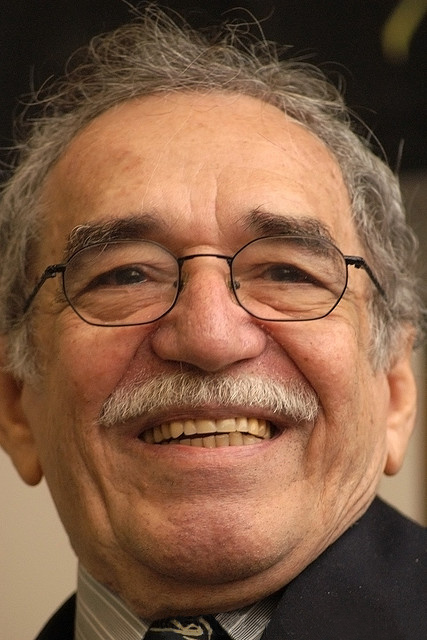
Graphic: Gabriel Garcia Marquez by Jose Lara, 2002. Flickr

The Art of Growing Without Burning Out: A Realistic Guide to Sustainable Self-Improvement

(Note: The following is a guest post by Emilia Ross. She is a life coach who specializes in helping individuals navigate their personal and professional lives. Visit her site at Schedule-Life.com)

TL;DR

Self-improvement isn’t a sprint; it’s a system. Focus on progress over perfection, rest as a form of discipline, and build structures that sustain growth instead of draining it. Below you’ll find a mix of checklists, tables, and insights to help you evolve without self-destructing.

Why Self-Improvement Sometimes Backfires

Let’s face it: the culture of constant optimization can turn even the most grounded person into a restless machine chasing “better.” Motivation spikes, then collapses. Rest feels like regression. Sound familiar?

That’s because burnout is often disguised as dedication. Sustainable personal growth demands balance — between doing and being, striving and stillness.

Quick Reference Table: Burnout vs. Balanced Growth

DimensionBurnout ModeBalanced Growth Mode
Energy UseConstant output with no recoveryAlternates exertion and rest intentionally
Goal DesignPerfectionism & endless listsDefined milestones and review pauses
Emotional StateIrritable, anxious, detachedCurious, reflective, emotionally steady
Feedback LoopValidation-seekingLearning-oriented
Core Belief“I must do more.”“I can do better sustainably.”

The Core Mindset Shift

Think in systems, not goals. Systems (habits, environments, routines) reduce decision fatigue and preserve energy. A system can include:

  • Morning ritual to anchor focus
  • Sleep/wind-down hygiene
  • Scheduled reflection every Sunday
  • Weekly “digital detox” hour

Resources like Evernote can support structured consistency — just don’t let the tool become another task.

Self-Improvement Without Overwhelm: Mini-Checklist

  1. Define one “north star” outcome — not ten micro-goals.
  2. Design micro-habits that take <10 min (e.g., journaling one line).
  3. Schedule recovery as non-negotiable.
  4. Rotate focus — physical → mental → social → creative.
  5. Reflect weekly: What worked? What felt forced?
  6. Reassess quarterly — evolution beats escalation.
  7. Celebrate plateaus; they’re proof of consistency.

Use free habit-tracking tools like Loop Habit Tracker or community boards on Coach.me to visualize patterns.

FAQ

Q: Isn’t taking breaks just procrastination?
 A: Not if it’s deliberate. Strategic rest prevents cognitive depletion — the silent killer of motivation.

Q: How do I know I’m improving at all?
 A: Track lagging indicators (energy, sleep, joy) instead of vanity metrics like hours worked.

Q: What if I lose momentum?
 A: Adjust, don’t abandon. Momentum dips signal recalibration, not failure.

Q: Can structure kill creativity?
 A: Only rigid structure. Think of it as rhythm — predictability that frees mental space.

How-To: Build a Sustainable Growth Loop

  1. Audit your baseline. Where do your time and attention go? Try a week with RescueTime.
  2. Identify friction points. Which habits drain vs. feed you?
  3. Prototype a single change. Treat habits like experiments.
  4. Automate stability. Use reminders, not willpower
  5. Review outcomes monthly. Journal with prompts like “What made me feel lighter this month?”
  6. Iterate. Drop what doesn’t serve. Multiply what does.

Education as a Catalyst for Growth

Continuous learning doesn’t just sharpen skills — it deepens self-trust. Formal education can act as structured self-improvement when balanced with life’s demands. Earning a degree can enhance career mobility, improve confidence, and create networks that accelerate opportunity.

For those balancing work and growth, an online degree offers flexibility without losing rigor. You can learn more about programs that strengthen competencies in systems, networking, scripting, and data management — particularly useful if cybersecurity or IT leadership is part of your professional evolution.

Spotlight Product: Calm’s Daily Move

Integrating physical and mental alignment boosts sustainable growth. Apps like Calm’s Daily Move combine micro-workouts with mindfulness cues — five-minute sessions that regulate your nervous system, not overclock it.

Conclusion

Self-improvement that lasts feels quiet, not frantic. It’s a slow accumulation of small, reversible experiments that expand capacity rather than deplete it. Growth done right feels like breathing: effort, release, repeat.

Beringer Knights Valley Cabernet Sauvignon 2019

Cabernet Sauvignon from Sonoma County, California

Cabernet Sauvignon 87%, Merlot 8%, Cabernet Franc 2%, Malbec 2%, Petit Verdot 1%

Purchase Price ~$40 (Gift)

James Suckling 94, Wine & Spirits 92, Robert Parker 90, ElsBob 91

ABV 14.5%

A dense deep ruby with a pale red rim. Full-bodied wine with aromas of cherries, blackberries, with hints of lavender and spice. On the palate, approachable tannins, crisp acidity, and beautiful long finish. A wine made to enjoy with ribeyes and filets.

An excellent fine wine at a slightly elevated price. The wine is hard to find but Beringer still offers it for sale on their website for $24 (half bottle).

Trivia: Knights Valley, originally known as Mallacomes Valley, was granted to José de los Santos Berryessa by the Mexican governor in 1843. In 1853, Thomas B. Knight, a native of Maine and a veteran of the Bear Flag Revolt of 1846, purchased much of Berryessa’s ranch. Knight renamed it Rancho Muristood and planted vineyards, fruit trees, and wheat. Mallacomes Valley gradually became known as Knights Valley. After Knight’s death in 1881, the property passed through numerous hands, and much of the land reverted to small farms and cattle ranches. By the mid‑20th century, viticulture returned when Beringer bought large tracts of land in the valley and initially focused on Cabernet Sauvignon and other Bordeaux varietals. They released their first Knights Valley wine in 1974.

Galactic Emptiness

I like the quiet.

From the dark, an enigmatic mass of rock and gas streaks inward. Discovered by the ATLAS telescope in Chile on 1 July 2025, it moves at 58 km/s (~130,000 mi/hr), a billion-year exile from some forgotten, possibly exploded star, catalogued as 3I/Atlas. The press immediately fact-checks then shrieks alien mothership. Harvard’s Avi Loeb suggests it could be artificial, citing its size, speed: “non-gravitational acceleration”, and a “leading glow” ahead of the nucleus. Social media lights up with mothership memes, AI-generated images, and recycled Oumuamua panic.

Remaining skeptical but trying to retain objectivity, I ask; is it anything other than a traveler of ice and dust obeying celestial mechanics? And it is very difficult to come up with any answer other than, no.

NASA’s flagship infrared observatory, the James Webb Space Telescope (JWST) spectra show amorphous water ice sublimating 10,000 km from the nucleus. The Hubble telescope resolves a 13,000-km coma (tail), later stretching to 18,000 km that is rich in radiation forged organics: tholins, and fine dust.

The “leading glow” is sunlight scattering off ice grains ejected forward by outgassing. The “non-gravitational acceleration” is gas jets, not engines. Loeb swings and misses again: ‘Oumuamua in 2017, IM1 in 2014, now this. Three strikes. The boy who cried alien is beginning to resemble the lead character in an Aesop Fable.

Not that I’m keeping score…well I am…sort of. Since Area 51 seeped into public lore, alien conspiracies have multiplied beyond count, but I still haven’t shaken E.T.’s or Stitches’ hand. No green neighbors have moved next door, no embarrassing probes, just the Milky Way in all its immense, ancient glory remaining quiet. A 13.6-billion-year-old galaxy 100,000 light-years across, 100–400 billion stars, likely most with host planets, and us, alone on a blue dot warmed by a middle-aged G2V star, 4.6 billion years old, quietly fusing hydrogen in the Orion Spur, between the galaxy’s Sagittarius and Perseus spiral arms.

No one knocking. But still, I like the quiet.

An immense galaxy of staggering possibilities, where the mind fails to comprehend the vastness of space and physics provides few answers.  The Drake Equation, a probabilistic 7 term formula used to estimate the number of active, communicative extraterrestrial civilizations in the Milky Way galaxy yields an answer of less than one (0.04 to be exact) which is less than the current empirical answer of 1, which is us on the blue dot.

For the show me crowd here’s the Drake Equation N = R* × f_p × n_e × f_l × f_i × f_c × L and inserting 2025 consensus for the parameters: Two stars born each year. Nearly all with planets. One in five with Earth‑like worlds. One in ten with life. One in a hundred with intelligence. One in ten with radio. A thousand years of signal. And the sum is: less than one.

For the true optimist let’s bump up N to 100.  Not really a loud party but enough noise that someone should have called the police by now.

No sirens. I like the quiet.

But now add von Neumann self-replicating probes traveling at relativistic speeds, one advanced civilization could explore the galaxy in 240 ship-years (5,400 Earth years). A civilization lasting 1 million years could do this 3000 times over. Yet we see zero Dyson swarms, zero waste heat, zero signals. Conclusion: Either N = 0, or every civilization dies before it advances to the point it is seen by others. That leaves us with a galaxy in a permanent civilizational nursery state, or existing civilizations have all died off before we had the ability to look for them, or we are alone and always have been.

Maybe then, but not now. Or here but sleeping in the nursery. I like the quiet.

But then I remember Isaac Asimov’s seven‑novel Foundation saga. The Galactic Empire crumbles. Hari Seldon’s psychohistory predicts collapse and rebirth. The Second Foundation manipulates from the shadows. Gaia emerges as a planet‑wide mind. Robots reveal they kept it going: Daneel Olivaw, 20,000 years old, guiding humanity. And the final page (Foundation and Earth, 1986) exposes the beginning: Everything traces back to Earth. A radioactive cradle that forced primates to evolve repair genes, curiosity, and restlessness. We are radiation’s children. We didn’t find aliens. We are the aliens.

We are the cradle. We are the travelers. I still like the quiet.

Domaine Cabirau Maury Sec ‘Second Effort’ 2021

Red Blend Other from Languedoc-Roussillon, France

62% Grenache, 38% Syrah

Purchase Price: $14.00

Jeb Dunnuck 94, Rober Parker 90-93, ElsBob 92

ABV 14.5%

An opaque ruby colored wine, medium-full bodied, with powerful aromas of black fruit and pepper. Red berries on the palate with a wonderful long balanced finish.

An excellent fine wine at a ridiculous price. Current pricing ranges from $22-28.

Trivia: In the 12th century, Languedoc became the epicenter of the Cathar movement: a dualist Christian sect deemed heretical by the Catholic Church. Their beliefs challenged ecclesiastical authority and rejected materialism outright.

The Cathars held that a benevolent God created the invisible, eternal realm of spirit, while a malevolent demiurge, often equated with Satan, crafted the physical world. In contrast, Gnostic traditions dating back to Plato portrayed the demiurge not as evil, but as ignorant: a blind artisan who shaped the material realm without awareness of the higher divine source. For the Cathars, however, the true God was pure and transcendent, wholly uninvolved in the corrupt domain of matter. The physical world, including human bodies, was a prison of suffering, designed to entrap divine sparks of life: fallen souls of lost virtue, anchored in flesh.

For the Cathars, the goal was not to purify Earth but to escape it: to transcend flesh and return to its spiritual source. Their sole sacrament, the Consolamentum, was a spiritual baptism liberating the soul from the material world, often performed at death’s door. Readings from the Gospel of John, with emphasis on light and spirit, were central to this rite.

Their beliefs echo Socrates in the 5th century BC, who taught that man’s highest task was to keep his soul bright and shiny. Death, for Socrates, was not an end but a door to a new beginning in a higher realm of destiny for the safe-guarded virtuous soul.

The Cathar movement was ultimately extinguished, beginning with Pope Innocent III’s Albigensian Crusade in the 13th century and continuing through the Medieval Inquisition into the mid-14th century. Through the efforts to stamp out the sect it is estimated that between 200,000 and 1 million adherents were killed by hanging, burning, or other brutish methods. Raphael Lemkin, who coined the term genocide in 1944 to describe Nazi atrocities, recognized in the Cathar extinction a grim precedent: a spiritual lineage extinguished by fear that invisible truths might reshape visible order.

Centuries later, Deists such as American Revolutionary figures Washington, Jefferson, and Franklin embraced a belief in a benevolent Creator who did not intervene in human affairs. Like the Cathars and Socrates, they emphasized spiritual virtue over dogma, without dualist cosmology. The American Founders vision of divinity was rational, moral, and benevolent, interested in virtue, yet non-interfering in the affairs of man.

The Long Way

By 1881, literature was shifting, Realism’s clarity giving way to Modernism’s psychological fog. Henry James pioneered the transformation, publishing what many hailed as his masterpiece and others found nearly unreadable. He moved from the crisp windows of Daisy Miller and Washington Square, where social dilemmas are transparent, into the labyrinth of The Portrait of a Lady, a slow, meandering narrative that tested patience to the point of exasperation. James stretched his scenes into long psychological dramas, shadowed by melancholy, lingering on minutiae rather than decisive events. To admirers, this was a profound exploration of consciousness, to detractors, a soporific feast of abstraction.

Where James’s Portrait is a punishing fugue of memory and angst, a darkness at the edge of noon, Proust’s Swann’s Way (1913) offers a sensual slow dance of lush detail, playful childhood games, and adult desire. In Combray, the family had two ways to take their walks: the short way and the long way. The short way was familiar, contained, offering scenery but little transformation. The long way was expansive, expressive, full of detours and revelations. In Swann in Love, the same pattern unfolds: the first half is Swann’s descent into desire, the short way of immediacy; the second half is his struggle to free himself, the long way of disillusionment and reflection. For Proust, the long way is where life’s lessons are held. Meaning is not found in shortcuts but in detours, delays, and the endurance of memory. The long way is the design of his art: winding detours that illuminate the search for lost time.

Wilde enters here as counterpoint. Where Proust lingers in digressive glow, Wilde sharpens language into bite. His wit distills the same metaphysical concerns: beauty, desire, memory, decay, into crystalline aphorisms. Wilde’s sentences are daggers wrapped in velvet, each polished to a point. If Proust is the cathedral of memory, Wilde is the mirror that cuts as it reflects. The Picture of Dorian Gray dramatizes the peril of desire and the corruption of beauty; themes Proust refracts through memory and longing. But Wilde compresses the ineffable into epigram: glow against bite, long way against short.

Cinema, now, becomes the continuance of these styles. Wilde’s paradox and Proust’s memory echo in films as diverse as Spectre (2015), No Time to Die (2021), and Gosford Park (2001). In Spectre, Madeleine Swann, a psychologist whose very name invokes Madeleine tea cakes and Swann’s Way, probes Bond’s past like Proust probing consciousness, turning trauma into narrative. In No Time to Die, desire and mortality entwine, echoing Proust’s meditation that “life has taken us round it, led us beyond it.” And in Gosford Park, Sir William McCordle brushing crumbs from a breast, Swann brushing flowers from a bosom, gestures lifted from Proust’s sensual triggers, collapse time into desire, while Altman’s upstairs-downstairs satire mirrors Wilde’s social wit. These films remind us that both the glow and the bite, the long way and the short, remain inexhaustible. The short as overture, the long as movement. One as a flash of life, the other as the light of experience.

James stretches narrative into labyrinthine difficulty. Proust redeems patience with memory’s illumination. Wilde polishes language into paradoxical brilliance. Chaplin, in Modern Times (1936), adds another metaphor: the gears of industry grinding human life into repetition. Yet even here, the Tramp and the Gamin walk off together, the long way, not the shortcut; suggesting resilience and hope. Between them, Modernism oscillates: fog and clarity, glow and bite, labyrinth and mirror, machine and memory. Meaning is elusive but never absent. It waits in the folds of memory, in the flash of wit, in the shadows of desire, in the detours of the long way, ready to be revealed.

Through memory’s fragments, along the winding road of joy and grace, we taste again the sweetness of love, the timelessness of innocence, and life’s inexhaustible richness.

Graphic: Marcel Proust, Hulton Archive/Getty Images.

Bieler Pere et Fils La Jassine Cotes du Rhone Villages Rouge 2022

Rhone Red Blends from Cotes du Rhone Villages, Rhone, France

Grenache 60%, Syrah 40%

Purchase Price $14.99

James Suckling 90, ElsBob 91

ABV 14.5%

A medium purple with tawny rim and slightly opaque. A medium-full bodied wine with aromas plums, chocolate, and a whiff of tobacco. On the palate the tannins are easy and very well balanced with the acidity. A very nice finish. We enjoyed this with soft cheese and hard salami. Delicious.

An excellent fine wine at a very comfortable price. Current prices range from about $15-18.

Trivia: The Côtes du Rhône Villages appellation was officially established in 1967 to recognize superior-quality wines from select villages in the southern Rhone Valley. These wines rank above standard Cotes du Rhone but below Cotes du Rhone Crus (such as Chateauneuf-du-Pape).

The idea of distinguishing higher-quality Rhone valley wines began circulating in the 1950s. By 1953, five communes: Cairanne, Gigondas, Chusclan, Laudun, and Saint-Maurice-sur-Eygues were identified for their exemplary potential. Wineries could append their village name to the label if they met strict production standards, minimum alcohol levels of 12.5%, and grape composition of at least 50% Grenache, and 20% Syrah.

Today, 21 villages are allowed to include their name on the label, while others use the generic “Côtes du Rhône Villages” designation. Bieler Pere et Fils chose not to list their village, but their La Jassine Cotes du Rhone Villages Rouge 2022 originates from Valreas, located in the northern reaches of the Southern Rhone Valley.

On the label is rooster or classic French coq: a symbol of traditional farming, terroir authenticity and rural pride.

Monroe Doctrine

In 1823, President James Monroe issued what became known as the Monroe Doctrine, warning European powers against further colonization or interference in the New World. Though never codified into law or treaty, the doctrine became a guiding principle of U.S. foreign policy, invoked and reinterpreted by successive administrations to assert American influence in the hemisphere. Theodore Roosevelt expanded it, Barack Obama’s administration declared it obsolete, and Donald Trump revived its assertive tone. Its malleability is hailed by some as its strength, denounced by others as its greatest flaw.

The Monroe Doctrine became a symbolic fence around the Western Hemisphere, a firewall against nineteenth‑century imperial powers. Over the next two centuries, it evolved through corollaries, confrontations, and periods of dormancy. Today, in the shadow of Chinese expansion, mainly through its Belt and Road Initiative, Latin American states are drawn to twenty‑first‑century infrastructure with age‑old colonialism lurking in the background. But the Chinese buying influence in the hemisphere is aimed directly at the United States, seeking to erode its traditional dominance and reshape regional loyalties.

The Monroe Doctrine was intended to thwart enemies, potential and real, at the gate. With the exception of Cuba, it largely succeeded through the twentieth century. The 21st century now poses a test of whether the doctrine still has teeth.

If conflict with China is fated, then the United States must first secure its own backyard. The Western Hemisphere cannot be a distraction or a liability, a source of angst and trouble. Before turning its full strategic gaze toward the Middle Kingdom, the U.S. must seal the gates of the New World.

The Monroe Doctrine was written mainly by President Monroe’s Secretary of State, John Quincy Adams. It aimed to support Latin American independence movements from Spain and Portugal, while discouraging Russian influence in the Pacific Northwest and preventing the Holy Alliance: Russia, Austria, Prussia, and France, from restoring monarchs in the Americas. But the doctrine was not all sword: the United States also pledged not to interfere in Europe’s internal affairs or its colonies.

In the early 1800s, the United States lacked the ability to enforce such a bargain militarily. Britain, however, was more than willing to use its naval fleet to guarantee access to New World markets and discourage competition.

By the beginning of the twentieth century, Theodore Roosevelt invoked and expanded the doctrine, effectively making the United States the policeman of the Western Hemisphere. During the Cold War, it was used to counter Soviet influence in Cuba, Nicaragua, and Grenada.

By the 1970s the South American drug trade was declared a national security threat and the War on Drugs began with Colombia the epicenter of hostilities. In 1981, U.S. Congress amended the Posse Comitatus Act to allow military involvement in domestic drug enforcement, extending to Latin America. President Ronald Reagan’s 1986 National Security Decision Directive 221 declared drug trafficking a U.S. national security threat, authorizing military operations abroad, including in Colombia.

After the Cold War, the doctrine faded from explicit policy. In November 2013, Secretary of State John Kerry declared at the Organization of American States that “the era of the Monroe Doctrine is over,” framing a shift toward partnership and mutual respect with Latin America rather than unilateral dominance. By 2020 Colombia’s coca production had hit a new high.

Today, China’s Belt and Road Initiative, port construction and acquisitions, telecom infrastructure, and rare earth diplomacy have carved influence into Latin America and the Caribbean. In this context, the Monroe Doctrine was not asleep but, in a coma, its toes occasionally twitching.

Re-invigorating the Monroe Doctrine is not about making true allies and friends but removing vulnerabilities. The goal is not to bring these nations into the fold but to remove them from Beijing’s orbit.

By mid-2025 official statements claim that ~10% of the U.S. Navy is deployed to counter drug threats, ostensibly from Venezuela and Columbia. But fleet positioning hints at a different story. Most assets are stationed near Puerto Rico, the Virgin Islands, and Guantánamo Bay, closer to Cuba than Caracas. Surveillance flights, submarine patrols, and chokepoint monitoring center on the Florida Straits, Windward Passage, and Yucatán Channel.

This may suggest strategic misdirection. Venezuela is the declared theater, but Cuba is the operational keystone. The U.S. may be deflecting attention from its true concern: Chinese or Russian entrenchment in Cuba and the northern Caribbean.

The Monroe Doctrine began as a warning to monarchs across the Atlantic. In the late twentieth century, it morphed into a war on drugs. Today it reappears as a repurposed drug war, flickering as a warning to Beijing across the Pacific. Whether it awakens as policy or remains sleight of hand, its enduring role is to remind the world that the Western Hemisphere is not a theater for distraction but a stage the United States will guard against intrusion. In the twenty‑first century, its test is not whether it can inspire allies, but whether it can deny adversaries a foothold in America’s backyard.

Graphic: Monroe Doctrine by Victor Gillam, 1896. Public Domain.

Beginnings

A recent ScienceDaily write‑up titled “Scientists just found the hidden cosmic fingerprints of dark matter” suggests a breakthrough in the elusive substance that binds galaxies together. In reality, the study reports that Lyman‑Alpha emitters are a transient phenomenon, interesting, but nowhere near the revolutionary advance implied by the headline.

For readers uninitiated in cosmology and astrophysics, that’s a lot of jargon at once. So let’s bring it down a notch with some plain definitions.

Dark matter is the invisible mass that holds galaxies together through gravity. Without it, galaxies would fly apart. We infer its existence only because galaxies behave as they do. It makes up about 27% of the universe’s total energy density. By comparison, ordinary matter, the stuff we can see and measure, accounts for a measly 5%. Dark energy, the mysterious driver of cosmic acceleration, contributes about 68%. But that’s a story for another day.

Lyman‑Alpha emitters (LAEs) are distant, generally low‑mass galaxies that shine in Lyman‑alpha radiation: ultraviolet light produced when a hydrogen electron drops from the second energy level to the ground state (n=2 → n=1). Because this light is strongly redshifted by cosmic expansion, LAEs act as beacons of the early universe. Observing the ones implied in the opening science press headline means looking back to a time when the cosmos was less than a billion years old.

Scientists examine the clustering of LAEs across three epochs, each marking a milestone in cosmic evolution, a page from the manuscript of creation. At a redshift of 6, when the universe was about 0.9 to 1.0 billion years old, roughly 12.8 billion years ago, the first galaxies and stars were re‑ionizing neutral hydrogen, lifting the primordial fog and making the universe transparent. This period is known as the Epoch of Reionization.

The next epoch, at a redshift of 5.7 (about 100 million years later, or 12.7 billion years ago), is called the Late Reionization / Transition Epoch. Here, scientists measure how quickly the fog of neutral hydrogen dissipated and how galaxies began to cluster. Clustering serves as a proxy for the gravitational wells of dark matter, which drew in and anchored ordinary matter.

Finally, at a redshift of 3, around 11.8 billion years ago, the Post‑Reionization Epoch reveals a more mature universe with large‑scale structures taking shape. LAEs in this era trace galaxy clustering and help infer the masses of the dark matter halos they inhabit. These halos are vast, spherical envelopes of unseen matter surrounding galaxies and clusters.

With this groundwork, we return to the science press claim that researchers have found the “fingerprints” of dark matter itself. In truth, the fingerprints show no loops or swirls, no identification of what dark matter is or how it is distributed, only confirmation of what is already established. Without dark matter, galaxies would not exist. It is, in essence, a Cartesian maxim: I gather, therefore I am. Nothing more. Nothing less.

There was, however, a genuine insight. Lyman‑alpha emitters are transient, short‑lived luminous phases in galaxies that trace the framework of dark matter. The clustering function does not reveal dark matter’s nature; it just shows how rarely baryonic light, the real stuff of frogs, men, and cybertrucks aligns with gravitational tugs.

This raises a deeper question: why does dark matter clump at all, instead of remaining uniform across the cosmos? The answer lies in gravitational instability. Minute quantum fluctuations in the infant universe were stretched to cosmic scales by inflation, imprinting faint density variations, ripples in spacetime itself (if time exists is another a question for a different day). Cold, non‑interacting dark matter streamed into these wells, not merely seeking density but becoming it, deepening the imprints and laying the invisible scaffolding upon which galaxies and clusters would later rise. In turn, the growing clumps reinforced the very variations that seeded them, a feedback loop that sculpted the universe’s large‑scale structure. Quantum fractures first, dark matter responding.

And yet another knot: where did dark matter come from? If it does not interact, how could it be born from interaction? Perhaps it is not a product of the Big Bang at all. Did it exist outside the Bang, or was it a transformation from an earlier state?

Unto the spirit of dark energy, the expansive gust that stretches spacetime, accelerating the universe’s drift into an ever‑expanding horizon. If dark matter is transformation, is dark energy its continuation, or merely a phase toward dissolution?

Together they form a cosmic tension: cohesion and dispersal, gathering and vanishing. The Big Bang may not be the beginning, but only the first visible flare in a manuscript already dictated eons before the dawn.

In this reframing, baryonic matter: atoms, stars, flesh, machines, is a late arrival. Bone, blood, and silicone are ritual sparks, flaring briefly in the gravitational wells carved by dark matter and stretched by dark energy. We are not the fathers of the universe, but the children of a violent past.

Dark matter is the glue. Dark energy erases the image. We are but the punctuation; marks in a manuscript whose lines were written long before our arrival.

Source: …Fingerprints of Dark Matter, Science Daily, Sept. 2025. ODIN: Clustering Analysis… by Herrera et al, Astrophysical Journal Letters, 2025. Graphic: Lyman-Alpha Galaxy Up Close Illustration by M. Wiss, 2009. Public Domain

Michel de Montaigne Bergerac 2019

Bordeaux Red Blends from Southwest, France

Merlot 60%, Cabernet Franc 20%, Cabernet Sauvignon 20%

Purchase Price $16.99

Wine Enthusiast 90, Wilfred Wong 90, ElsBob 90

ABV 14%

A clear ruby to purple wine in color. A medium to full bodied wine with aromas of red and black fruits and spice. On the palate plums and cherries predominant with oak derivatives. The tannins are meaty and balanced with crisp acidity. A beautiful finish that will compliment most beef dishes.

An excellent fine wine at a very attractive price. Current prices range from $13.50-18.00.

Trivia:  Michel de Montaigne was likely the most influential philosopher of the 16th-century French Renaissance. A dyed-in-the-wool skeptic, a cantankerous crank whose motto Que sais-je? (“What do I know?”) enshrined his worldview; much like Socrates, who also claimed to know nothing. Montaigne questioned everything and taught that doubt was the only path to wisdom.

But he carried it too far: intellectually thin and logically obtuse. He believed that customs and morals were cultural artifacts, lacking any universal tether. Truth, for Montaigne, was a matter of perspective; malleable, contingent, shaped by accepted practice. One man’s cannibal was another man’s epicurean.

To anchor this relativism, he wrote: “We are, I know not how, double in ourselves, so that what we believe we disbelieve, and cannot rid ourselves of what we condemn.” A long-winded version of c’est la vie (“that’s life”), or more precisely, à chacun son goût (“to each his own”).

Experience was his shrine, but it lacked a foundation. No base of knowledge to anchor belief. A man easily swayed by his own prejudices and lack of a black and white moral code.

His philosophy of go-along-to-get-along, born of tolerance and introspection, risked becoming a prescription for annihilation, not of others, but of moral clarity and oneself. A path to accepting everything and believing nothing. A philosophy polished so smooth it reflects everything and reveals nothing.

BLS or BS Employment Statistics

Every first Friday of the month markets gather like sinful parishioners awaiting Pavlov’s bell, the gospel according to the Bureau of Labor Statistics (BLS). The numbers descend from the mount, etched in holy government letterhead. Jobs added, jobs lost, unemployment rate up, unemployment rate down, labor force swelling or shrinking. And the market screams, up or down, as if the deity of statistics has spoken to the profits of capitalism.

Expectations unmet? The elevator drops. Expectations exceeded? Euphoria ascends. Every stinking first Friday the ritual repeats. Buyers and sellers beware.

The markets, seasoned by countless cycles of god-awful truth and revision, know the numbers are suspect. Model-based, massaged and provisional, destined for downward revisions not once, not twice, but likely thrice. And everyone knows this. Logic says to remain circumspect. Religion says yell hallelujah.

But they react like Charlie Brown charging towards Lucy’s planted football, full of conviction and hope that this time it’s real. No, it’s a con of smoke and mirrors, a ritual sealed with a wink and nod from Lucy. A trust not earned.

For Charlie Brown, it’s not just a kick, but a ritual of belief. A sprint to a promise of truth and redemption. This first Friday, the numbers will be true. This time the markets aren’t the chump. But then the revisions put you flat on your back in the muddy turf.

This isn’t market ignorance, just the willful need to believe. To believe in a clear signal in a noisy world. Maybe this Lucy keeps her word. Maybe this time the BLS can count timecards.

The U.S. labor market is a statistical mirage and the BLS is the magician. A clumsy one at that. Given the scale of the U.S. labor force the BLS sample is statistical noise superimposed on a trendline, and the trend itself shaped by the unreliable Birth-Death Model.

The Birth-Death Model estimates job creation from new businesses (births) and closed businesses (deaths) that aren’t captured in their monthly survey sample. The BLS’s Current Employment Statistics (CES) survey covers about 122,000 businesses each month, but it can’t track firms that just opened or shut down. Since new firms don’t immediately appear in the sample, and closed firms may linger as ghosts in the data, the BLS uses a statistical model to estimate their net effect on employment.

The model has two main components. Imputed deaths are estimated from trends for similar firms. For example, if 3 out 4 newly created restaurants fail annually, the model adjusts employment accordingly. The other component forecasts net job changes using historical data from the Quarterly Census Employment and Wages (QCEW).

The model’s assumptions presume that today’s labor market mirrors yesterday’s. It somewhat works in stable times but thoroughly breaks down when the sharp kinks of recessions and recoveries are introduced into the system. Also, business owners fail to report their failures, quickly—go figure. BLS just finds it is too much work to keep track of them all. A brief detour, if you’ll indulge it, is worth mentioning here. I was standing in line at the local US Post Office and a customer in front of me, after much back-and-forth discussion, showed a photo of a misdelivered package to the postal clerk. The clerk lit up in cheerful vindication. “Oh that wasn’t us. We don’t have time to take pictures of our deliveries.” The BLS operates with similar blind spots. Ghosts in the data, and no time to chase them.

Now back to our regularly scheduled harangue. All the BLS assumptions in their Birth-Death Model leads to inevitable revisions. The model is the altar. The CES survey, is the smoke, wafting over a ritualized trend.

In practice, this means employment is overstated during downturns and understated during booms with the actual numbers taking another 3-12 months to correct. By then, the market had moved on. The altar cleared. The smoke dispersed. And the ghosts remain.

But there is hope, but only for the patient.

ADP, Automatic Data Processing, offers a monthly employment snapshot that often outpaces the BLS. Released each Wednesday before the government’s numbers, the ADP National Employment Report draws from payroll data covering 26 million workers. No government jobs. No statistical smoke. Just raw payrolls. It consistently lands closer to the QCEW gold standard, though still misses the mark, just not as wildly as the BLS.

Between March 2024 and March 2025, QCEW, the altar of actual payroll filings, reported a net gain of 675,000 jobs. BLS, guided by surveys and the Birth-Death Model, claimed 1.79 million. ADP, closer but still adrift, reported 1.69 million.

Together, ADP and BLS conjure the headlines that move markets. But their numbers are unreliable. Why bother? A million-job error in a labor force of 167 million is less than 1%. A rounding error. A statistical ghost.

Ghosts in the data. Smoke in the temple. Floating through the firmament. By the time the truth arrives the markets have moved on.

Building Confidence, Living Boldly: A Practical and Playful Guide to Becoming Your Best Self

(Note: The following is a guest post by Emilia Ross. She is a life coach who specializes in helping individuals navigate their personal and professional lives. Visit her site at Schedule-Life.com)

Confidence isn’t a personality trait — it’s a skill you can build. Whether you’re chasing a promotion, learning to dance, or just trying to quiet that inner critic, confidence grows from small wins compounded daily.
You don’t need to reinvent yourself. You just need to strengthen what’s already there — the habits, people, and moments that make you feel most alive.

The Takeaway
Confidence = habits + people + purpose.
Start small, speak kindly to yourself, set micro-goals, and spend more time around those who remind you who you are — not who you’re not.


How Confidence Works
Confidence grows from three layers of daily practice:

LayerWhat It MeansQuick Actions
MindTraining your thoughts to support, not sabotage you.Practice three minutes of gratitude journaling daily.
BodyMoving and nourishing yourself so your mind believes you’re capable.Go for a 20-minute walk or stretch after work.
CommunitySurrounding yourself with people who lift you.Schedule one call a week with someone positive.


FAQ – Confidence Myths Busted
Q1. Is confidence something you’re born with?
–No. It’s learned through repetition and reflection, like a muscle you strengthen over time.
Q2. What if I constantly compare myself to others?
–That’s normal. Shift from comparison to curiosity: what can you learn from them?
Q3. How do I stay confident when I fail?
–See mistakes as feedback, not failure. Every confident person has a “failure résumé.”

Step-by-Step Checklist: How to Boost Your Confidence

  1. Set one daily micro-goal.
    –Example: “Speak up once in today’s meeting.”
  2. Do something uncomfortable — on purpose.
    –Confidence grows when comfort zones shrink.
  3. Keep a “proof list.”
    –Record moments when you acted bravely or made progress.
  4. Declutter your digital world.
    –Unfollow accounts that drain you. Follow those that educate or inspire.
  5. Revisit your wins weekly.
    –Confidence thrives on reflection, not randomness

Make Connection Your Secret Weapon
Confidence isn’t built in isolation — it’s nurtured through connection. Invite friends over for a dinner, a movie night, or a simple get-together to celebrate everyday life. Spending time with people who make you laugh, listen, and care reminds you that you’re already enough.
To make your gathering special, use a free invitation maker to stand out. You can customize templates, adjust fonts, add images, and design something that perfectly matches your style. It’s easy, creative, and adds a personal touch to your confidence practice.

Helpful Tools and Resources
Here are some tools and platforms that can support your confidence journey:


Product Spotlight: The Momentum Journal
Sometimes structure helps. The Momentum Journal offers a clean, minimalist layout for tracking daily progress, gratitude, and personal wins. It’s designed to help you see your growth — a simple but powerful confidence booster. 

Seven Fast Habits for Everyday Confidence

  1. Smile at strangers.
  2. Speak slowly; it signals calm assurance.
  3. Wear something that makes you feel strong.
  4. Do one thing you’ve been avoiding.
  5. Compliment others sincerely.
  6. Stand or sit tall; posture changes perception.
  7. Celebrate small wins like big ones.

Confidence isn’t the absence of fear — it’s the courage to move forward despite it. Start small, stay consistent, and surround yourself with people and tools that help you grow. Your best life isn’t waiting for a perfect moment; it’s unfolding right now, one intentional, brave step at a time.

Zenato Alanera Rosso 2020

Red Blends Other from Veneto, Italy

Corvina 70%, Rondinella 10%, Corvinone 10%, Merlot and Cabernet Sauvignon 10%

Purchase Price: $15.99

Wine Enthusiast 90, ElsBob 91

ABV 13.5%

A medium garnet with a tawny rim in color. A medium-bodied wine with aromas of cherries and coffee. On the palate a touch of sweetness and plums, easy tannins and an acidity that provides a refreshing finish.

An excellent table wine at very nice price. Current price is about $17.00.

Trivia: Veneto wine region of northeastern Italy stretches from the canals of Venice to the Alpine foothills. Viticulture here dates to Roman times, with early vineyards tended by local tribes. During the height of the Venetian Republic, paralleling the fortunes of Florentine Renaissance, Veneto became a hub for wine blending and trade, shipping its product throughout the Mediterranean Basin, Byzantine and Ottoman Territories, Northern Europe, and along the Silk Road all the way to Mongolia. This hemispheric reach not only spread winemaking techniques but elevated the reputation of Veneto wines.

At the end of Republic in the 1797 winemaking was in a slow, constant decline. The erosion of trade routes, driven by the Republic’s ossified and hidebound bureaucracy and maritime collapse, decimated the region’s commercial infrastructure. Recovery began in the late 18th and into the 19th century, not as a revival of trans-national trade but as a scientific and agrarian rebirth. Improved farming techniques and increased vineyard plantings were initially focused on local consumption. Today, Veneto is Italy’s top wine-producing region, accounting for roughly 25% of the country’s output and over 35% of its exports. Prosecco and Pinot Grigio occupy the region’s power positions in volume, anchoring its global presence.

Hamlet Goes to Milwaukee—A Tragicomedy in Five Acts

Prolepsis’ Prologue:

The Chorus enters. A single spotlight. A single Damocles’ bullet hangs in the air like a haunted ghost spinning to history’s rhythms and trajectories.

CHORUS:

John Schrank shoots Theodore Roosevelt, 113 long and mostly forgotten years ago, in Milwaukee, Wisconsin on a sharp and chilled Monday, coats pulled tight, 14 October 1912.

That’s the end, my friend, or so it seems. But tragedy demands context, and context demands sacramental passings. Let us reset and reconfigure the scene, with a sentimental barbershop quartet interlude of ‘Moonlight Bay’ drifting in the background and summon the ghosts of campaigns past and the raving refrains of the mad, all served with a bullet.

Act I: The Bull Rising

Before the Bull Moose and the bullet there was tradition and restraint. Before Roosevelt charged up the hill and across the plains, there was McKinley’s calm firmament.

William McKinley, 25th President of the United States, governed with a philosophy of calculated prosperity and protective nationalism, fittingly called the Ohio Napoleon, holding folksy court on America’s front porch. He was deliberate and firm but never rash, he was a Republican loyalist second, leader first, and a quiet expansionist, A Civil War veteran and devout Methodist, McKinley championed high tariffs, the gold standard, and industrial growth as the pillars of American strength.

His first term (1897–1901) unfolded as an economic recovery from Grover Cleveland’s faltering presidency and the Panic of 1893. It was marked by economic stabilization, the Spanish-American War, and the acquisition of overseas territories: Puerto Rico, Guam, the Philippines, and Hawaii, all additions to America’s imperial structure.

His vice president, Garret Hobart died, of heart failure in 1899 at the age of 55. With no constitutional mechanism to fill the vacancy, the office remained vacant until McKinley’s re-election. It wasn’t until the ratification of the 25th Amendment in 1967 that a formal process was established to replace a vice president.

In 1900, Theodore Roosevelt, then Governor of New York and war hero of the San Juan Hill, was chosen as McKinley’s running mate. His nomination was largely a strategy of containment: an attempt to temper his reformist zeal beneath the inconsequential and ceremonial weight of the vice-presidency.

Act II: Bull Cometh

The Bull Moose was buried beneath ceremony, but symbols cannot contain momentum. The front porch would give way to the lists and charging steeds.

On September 6, 1901, President William McKinley stood beneath the vaulted glass of the Temple of Music at the Pan-American Exposition in Buffalo, New York, an American shrine to progress, electricity, and imperial optimism. There, in the charged glow of modernity, he was shot twice in the abdomen by Leon Czolgosz, a Polish American self-declared anarchist and bitter subject of the Panic of 1893 and its resultant mill closures, strikes and wage collapse, etched into his disillusioned psyche.

Czolgosz had been baptized in the radical writings of Emma Goldman, a Lithuanian emigree and firebrand of the American radical left. Goldman championed anarchism, women’s rights, and sexual liberation. She founded Mother Earth, a journal that became an infamous intellectual hearth for dissent and revolutionary analysis.

To Czolgosz, Mckinley was the embodiment of oppression: capitalism, imperialism, and state violence. His answer to these perceived provocations was violence. Concealing a revolver wrapped in a handkerchief, he fired at close range during a public reception, just as McKinley extended his hand in welcome.

Initially, doctors believed McKinley would recover. But gangrene developed around the damaged pancreas, and he died on 14th of September. His death was slow and tragic, a symbolic collapse of the front porch presidency.

Roosevelt, just 42, stepped up and became the youngest president in U.S. history (JFK was 43). With containment at an end, the Bull broke loose. And he mounted the stage with an agenda.

Act III: The Charge of the Bull

The Bull builds a protective legacy of words and stick, sweat and blood.

Roosevelt’s early presidency honored McKinley’s legacy: trust-busting, tariff moderation, and economic expansion. But he soon added his own signature: conservationism, progressive reform, and a bold, moralistic foreign policy.

He preserved 230 million acres of public land and established the U.S. Forest Service, 5 national parks, 18 national monuments, 150 national forests and a constellation wildlife refuges. Stewardship of the land became a sacred ideal that continues to present day.

In foreign affairs, Roosevelt extended the Monroe Doctrine with his Roosevelt Corollary (1904), asserting that the U.S. had the right to intervene in Latin America to prevent “chronic wrongdoing.” It was a doctrinal pivot from passive hemispheric defense against European imperialism to active imperial stewardship, cloaked in the language of civilization and order. America became the self-appointed policeman of the Western Hemisphere.

The corollary was a response to incidents like the 1902 Venezuelan debt crisis where European navies blockaded ports to force repayment. In Cuba, unrest was quelled with U.S. troops in 1906. Nicaragua, Haiti, and Honduras saw repeated interventions to protect U.S. interests and suppress revolutions. If Latin American failed to maintain order or financial solvency, the U.S. would intervene to stabilize rather than colonize.

The doctrine justified the U.S. dominance of the Panama Canal and set the precedent for Cold War interventions, neutralizing the American back yard while containing Soviet expansion in the east.

Act IV: Hamlet in Milwaukee

Heads of kings rest uneasy. Ghosts of injustice haunt. Princes fall prey.

After winning a full term in 1904, Roosevelt honored his promise not to seek reelection in 1908. But disillusioned with his successor, William Howard Taft, Roosevelt returned to politics in 1912, forming the Progressive Party, nicknamed the Bull Moose Party.

Enter stage left, John Schrank, a former barkeep plagued by visions and imagined slights. In the early morning hours of 15 September 1901, 6 days after McKinley was shot and 2 days before he died, the bar tender dreamt that the slain President rose from his casket and pointed to a shrouded figure in the corner: Roosevelt. “Avenge my death”, the ghost spoke. Schrank claimed to forget the dream for over a decade, until Roosevelt’s bid for a third term in 1912 reawakened the vision, which he now interpreted as a divine command.

Schrank believed Roosevelt’s third-term ambition was a betrayal of American tradition set forth in Washington’s Farewell Address. He hated Roosevelt and feared that he would win the election, seize dictatorial power, and betray the constitutional republic. In his delusional state, he believed Roosevelt was backed by foreign powers and was planning to take over the Panama Canal; an anachronistic fear, given total U.S. control of the canal since 1904. Schrank interpreted the ghost’s voice as God’s will: “Let no murderer occupy the presidential chair for a third term. Avenge my death.”

At his trial for the attempted assassination of Roosevelt, Schrank was remanded to a panel of experts to determine his mental competency. They deemed him insane, a “paranoid schizophrenic”, in the language of the time. He was committed to an asylum, where he remained until his death 31 years later.

Schrank’s madness parallels the haunted introspection of Hamlet, Prince of Denmark. Shakespeare’s longest and most psychologically complex tragedy that revolves around a ghost’s command: “Revenge my foul and most unnatural murder.” Hamlet, driven by the specter’s charge, spirals into feigned (and perhaps real) madness, wrestling with betrayal, duty, mortality, and metaphysical doubt. His uncle, the murderer, has married his mother; an Oedipal inversion within the world’s most enduring tragedy.

On 14 October 1912, as Roosevelt stood outside Milwaukee’s Gilpatrick Hotel, Schrank stepped forward and fired. The bullet pierced his steel glasses case and a folded 50-page tome of a speech, slowing its path. Bleeding, a bullet lodged in his chest, Roosevelt refused medical attention. He stepped onto the stage and spoke for 90 minutes, although it is said that due to his loss of blood, he shortened his speech out of necessity. Whether for himself or the audience is lost to history.

Unlike Hamlet, who dithers and soliloquizes his way toward a graveyard of corpses, Schrank shoots, hits, and leaves Roosevelt standing. Hamlet’s tragedy ends in death and metaphysical rupture. Schrank’s farce begins with the demands of a ghost and ends with a 90-minute speech. One prince takes his world with him into death. The other absorbs a bullet and keeps talking.

Act V: Ghosts and Republics

Ghosts and Republics are ephemeral. At the end of time; those fleeting moments, short and long; some, as Proust says, more and more seldom, are best treated with humor and grace.

In tragedy and near calamity, a man’s soul becomes visible. Some are seen darkly, others, bright, clear, unshaken and unafraid of new beginnings even if that beginning is death.

Roosevelt had already charged up San Juan Hill, bullets and fragments whistling past like invitations to a funeral ball. Each a death marker. So, when a solitary bullet from a madman struck him in Milwaukee, it was merely an inconvenience. He quipped: “Friends, I shall ask you to be as quiet as possible. I don’t know whether you fully understand that I have just been shot, but it takes more than that to kill a Bull Moose.”

Sixty-eight years later, Reagan too survived a bullet to the chest. As he was wheeled into the emergency room at George Washington University Hospital, he said he’d “rather be in Philadelphia,” a throwback to his vaudeville days, a gag line used on fake tombstones: “Here lies Bob: he’d rather be in Philadelphia.” W.C. Fields once requested it as his epitaph. He’s buried in California. To the surgeons, Reagan added: “I hope you’re all Republicans.”

Where Roosevelt offered mettle, Reagan offered mirth. Both answered violence with theatrical defiance: natural-born and unshakable leaders, unbothered by the ghosts that tracked them.

They were not alone. Jackson, beat his would-be-assassin with a cane. Truman kept his appointments after gunfire at Blair house. Ford faced two attempts in seventeen days and kept walking. Bush stood unfazed after a grenade failed to detonate. They met their specters with grace, a joke, and a shrug.

The assassins and would-be assassins vanished into the diffusing whisps of history. The leaders of men left a republic haunted not by ghosts, but by a living memory: charged with the courage to endure and to imagine greatness.

Graphic: Assassination of President McKinley by Achille Beltrame, 1901. Public Domain.

Managing Stress in Everyday Life: Strategies for Calm and Clarity

(Note: The following is a guest post by Emilia Ross. She is a life coach who specializes in helping individuals navigate their personal and professional lives. Visit her site at Schedule-Life.com)

Stress is an unavoidable part of modern life, affecting everything from focus and energy to overall well-being. The good news is that with the right strategies, it can be managed — even transformed — into a source of strength and clarity. By combining mindful awareness, physical movement, and small daily rituals, anyone can reduce overwhelm and regain control. This article explores proven methods to help you create calm, build resilience, and thrive amid life’s everyday pressures.


Quick Summary

Stress is a natural signal, not an enemy. When managed through awareness, structure, and small, consistent practices, it becomes a guide to better energy and focus. Core strategies include mindful awareness, physical activity, digital boundaries, and restorative routines.


Understanding Everyday Stress

Stress arises when your perceived demands exceed your perceived capacity. While occasional stress can improve performance, chronic stress erodes resilience. Learning to interpret and respond — not just react — is key.


The Foundations of Stress Management

1. Awareness First

Recognize your triggers. Start with a simple journal or app like Daylio to log moments of tension and what caused them. Awareness precedes regulation.

2. Physical Reset

Move your body regularly. Even a 10-minute walk, yoga session on Yoga With Adriene, or quick stretch can interrupt stress loops and lower cortisol.

3. Mental Reframing

Your interpretation drives your physiology. Practices like cognitive reframing teach you to challenge unhelpful patterns.

4. Social Anchors

Stay connected. Meaningful interactions — a chat with a friend, a shared meal — activate oxytocin, a natural stress buffer. Try setting small rituals like “Sunday check-ins” or joining supportive communities.


Checklist: Daily Stress Reset Protocol

✅ Breathe deeply for 2 minutes, twice daily
✅ Take one screen-free walk
✅ Replace doomscrolling with reading or music
✅ Hydrate before caffeine
✅ Schedule downtime intentionally
✅ Reflect before bed — one gratitude note


How-To: Build a Personal Stress Management Routine

  1. Identify Your Stress Type: Physical (tension, fatigue), emotional (irritability), or cognitive (racing thoughts).
  2. Set Micro Habits: Replace “I’ll work out daily” with “I’ll stretch for 5 minutes after waking.”
  3. Design Your Calm Space: Add soothing cues — natural light, calm scents, a playlist from Spotify’s Peaceful Piano.
  4. Track Feedback: Review weekly — what helped most?
  5. Adjust: Stress evolves. So should your system.

Table: Practical Methods for Stress Regulation

CategoryStrategyTools/ResourcesFrequency
PhysicalWalking, yoga, or light exerciseYoga JournalDaily
EmotionalJournaling or gratitude writingPenzu3x per week
CognitiveBreathing and reframingCalmDaily
SocialConnect with othersMeetupWeekly
EnvironmentalDeclutter, scent therapyIKEA Home InspirationAs needed

Safe, Natural Approaches for Relaxation

Beyond conventional stress relief, several natural approaches can help stabilize your mood and improve focus:

  • Ashwagandha: A well-researched adaptogen known to lower cortisol and improve resilience.
  • THCa: Found in THCa-based wellness products, it offers calming effects without intoxication, supporting relaxation safely when used responsibly. Explore the properties of THCa distillate
  • Meditation & Breathwork: Practices like alternate-nostril breathing and guided meditations on Insight Timer balance the nervous system naturally.

Finding Fulfillment Through Growth

Sometimes, stress signals that it’s time for change. Many find renewal by investing in education or skill-building. Returning to school — especially online — allows flexible growth without overwhelming your schedule. If you work in healthcare, you can choose an online healthcare administration degree to expand leadership potential and influence systemic improvements. Online programs also offer the freedom to learn at your own pace while balancing life and work.


Spotlight: Product That Promotes Relaxation


Weighted blankets have gained traction for their deep-touch stimulation, helping reduce anxiety and improve sleep quality. Brands like Gravity Blanket are designed to emulate therapeutic pressure, creating calm for the body and mind.


FAQs

Q1: What’s the fastest way to calm down in a tense moment?
A: Try box breathing — inhale 4s, hold 4s, exhale 4s, hold 4s. Repeat for 1–2 minutes.

Q2: Can stress ever be good?
A: Yes. Short bursts can boost motivation and focus. Chronic stress, however, leads to burnout.

Q3: How much exercise is enough?
A: Even 20 minutes of moderate movement per day can lower stress hormones.

Q4: Should I eliminate caffeine?
A: Not necessarily — balance it with hydration and don’t consume it late in the day.

Q5: What’s a simple bedtime habit to improve calm?
A: Write down three things you’re grateful for — it rewires attention away from worry.


Glossary

  • Cortisol: The primary stress hormone regulating alertness and energy balance.
  • Adaptogen: A natural compound that helps the body adapt to stress.
  • Mindfulness: Non-judgmental awareness of the present moment.
  • Homeostasis: The body’s tendency to maintain internal balance.
  • Neuroplasticity: The brain’s ability to change through experience.

Managing stress is ultimately about creating balance, not chasing perfection. Small, consistent habits — from mindful breathing to intentional rest — can dramatically shift how you experience daily challenges. By recognizing your limits and building supportive routines, you strengthen both emotional and physical resilience. With practice, calm becomes less of a goal and more of a natural way of living.

Graphic: Freepik.

Stags’ Leap Winery Petite Sirah 2020

Petite Sirah from Napa Valley, California

Purchase Price: $19.00

James Suckling 94, Gismondi 92, Wine Enthusiast 92, Cellar Tracker 92, Robert Parker 90, Wine and Spirits 89, ElsBob 89

ABV 14.5%

A very dark ruby, purple hue wine with aromas of black fruits. On the palate more of a red fruit, cherry flavor, with a little spice, mainly pepper. High in acidity and tannins, medium-full bodied, with very little balance. Fortunately, the finish is short. To help smooth out the acidity and tannic nature of this wine try it with aged cheeses such as Gouda or tomato-based dishes like pasta or pizza.

A very good fine wine overpriced at $19. If you can find it under $12 give it a try. Current prices range from about $28-65. A decent wine but far below Stags’ Leap quality reputation. I’m surprised they put their label on this one.

Trivia: Stag’s Leap Winery is located along the Silverado Trail in Napa Valley. The trail originally built in 1852, links the cinnabar mines (HgS, mercury sulfide) on Mount St. Helena in the north to San Pablo Bay, the estuarine gateway to San Francisco Bay; natural bookends to the valley. In addition to abundant mercury deposits, the mines also yielded silver, sparking a short-lived silver rush beginning in 1858.

Highwayman Black Bart preyed on stagecoaches along the trail in the 1880s, adding to the outlaw mystique of the region, and inspiring a minor character in The Simpsons. The non-Simpson Bart left rhymed messages at the scene of his robberies earning the moniker ‘The Poet Bandit.’ He was captured in 1883 and served 4 years in San Quentin, regrettably missing Johnny Cash’s concert by about 81 years.

In 1880, Robert Louis Stevenson honeymooned in Napa Valley with his wife Fanny, spending the summer squatting in an abandoned bunkhouse at the Silverado Mine (a spendthrift, to be sure–actually, he was broke, destitute, poor, penniless, and sick), on the slopes of Mount St. Helena. The experience led to his travel memoir The Silverado Squatters, which, while not a blockbuster, did manage to sell enough to justify a second printing. Interestingly, it can still be purchased from independent publishers. It’s a short book of about 100+ pages. Give it a read and compare it with the Bermuda travelogues of his contemporary, Mark Twain.

Gold in the Middle Kingdom

In November 2024, China’s state media announced the discovery of a “supergiant” gold deposit in the Wangu Gold Field, Hunan Province. Initial exploration and delineation drilling confirmed approximately 300 metric tons (9,645,225 troy ounces) in place. Subsequent geologic modeling suggests that the total resource may exceed 1000 metric tons (32,150,750 troy ounces), potentially making it the largest known deposit in the world.

At the current October 2025 gold price of $4,267.30 per ounce that equates to about $137.3 billion in gross value assuming an unrealistic 100% recovery.

But is all this gold recoverable without sinking vast capital only to lose more in the process? Public data remains limited, yet a ballpark estimate is possible.

Incorporating global subsurface mining economics, the project, assuming a capital expenditure of $12.5 billion and operating costs of $2100 per ounce, would be profitable. Its projected return of 17% is respectable but far from spectacular (more on this below). Not the proverbial gold mine, but a respectable sovereign nest egg, nonetheless.

However, when factoring in a 40% chance of technical success, the projects’ risk-adjusted return drops below 7%, falling short of industry’s typical 10% threshold. In economic terms, the project fails; at least under current conditions and postulated costs.

The deposit is hosted in Neoproterozoic, between 1 billion to 538 million years ago, sandy and silty slates within the Jiangnan orogenic belt. It comprises over 40 quartz-sulfide veins, located from 2000-3000 meters (6500-9850 feet), and associated with north-west trending faults.

The main ore body, V2, averages 1.76 meters in thickness with the other veins ranging from 0.5 to 5 meters with a maximum of 14 meters collectively spanning several square kilometers (exact areal extent remains unpublished). Published average gold grade is stated at 6-8 grams of gold per ton with exceptionally rich veins reaching a world class 138 grams per ton.

At depths of 2,000-3,000 meters, Wangu enters the realm of ultra-deep mining. Compounding that depth challenge is a blistering geothermal gradient, placing the gold-bearing rock in a roasting 110-200 degrees Celsius (230-392 degrees Fahrenheit), temperatures far beyond human endurance without extreme and prohibitively expensive cooling. Robotic retrieval of the resource becomes essential.

To reduce human risk in high-temperature zones, autonomous mining systems will be the default standard. These will include robotic cutters and remote rock loaders, guided by AI software to navigate the narrow veins. Engineering challenges abound: thermal degradation of electronics, lubricant breakdown, sensor failures, and a multitude of other factors. Even in a robotic environment cooling infrastructure, such as ice slurry plants and high-capacity ventilation, will likely be required, adding significantly to the overall operating costs.

At these depths in a highly faulted regime, rock plasticity and instability add to the risk and costs of recovery.

Wangu’s extreme technical demands evoke parallels with deepwater oil exploration and spaceflight, domains where success has come only through phased engineering, initial high costs, and extensive testing. The project may draw on space-grade alloys and ceramics, deepwater telemetry and control, thermal shielding from reentry vehicles, and autonomous navigation from off-Earth rovers.

China’s mining expertise and Hunan’s infrastructure; power grids, skilled labor, automated systems, may mitigate some of these challenges. Still, the scale and depth of the deposit suggest a complex, phased engineering operation. Development will likely proceed vein-by-vein, shallow to deep, prioritizing high-grade zones to maximize early returns and to refine the learning curve.

Estimating a timeline for this project involves multiple phases: feasibility studies, including geotechnical, thermal, and remote sensing analysis, possibly running from 2028 till 2030. With state support, permitting and financing may be expedited, taking only 1 or 2 years. Construction of shafts, cooling systems, and robotic infrastructure may take another 5-8 years. Commissioning, de-bottlenecking, and problem-solving would add another 1-2 years before peak capacity is reached.

If all proceeds smoothly, first gold may be achieved in 12-15 years. However, given the extreme technical challenges, a more realistic horizon is 15-20 years. In a perfect world first gold may be expected between 2040-2045.

Achieving first gold will likely require $10-15 billion in capital expenditure, with operating costs estimated at $1800-2400 per ounce over a 20-year life of mine and 90% resource recovery. Assuming a starting gold price of $4270 per ounce and a 5% annual growth, the project yields an initial IRR of about 17%. But when factoring in the 40% chance of technical success, across geotechnical, thermal, and robotic domains, the risk-adjusted IRR drops below 7%, rendering the project uneconomic under current conditions. Expect years of recycling before this project is formally sanctioned.

Still in a world increasingly skeptical of fiat currencies, Wangu is more than a source of gold, it is a sovereign hedge, a deep Chinese vault of wealth to anchor a post-fiat strategy.

By way of comparison, Fort Knox reportedly holds 147.3 million troy ounces of gold. Additional U.S. government holdings in Denver, New York, West Point, and other sites brings the total to 261.5 million troy ounces; worth roughly $1.1 trillion at today’s prices. The Chinese government officially holds about 74 million troy ounces worth about $315.6 billion. Wangu could theoretically increase China’s gold holdings by 43%.

Graphic: Gold veins in a host rock.

The Hidden Gift of Hardship: How Life’s Challenges Shape Growth, Resilience, and Self-Discovery

(Note: The following is a guest post by Emilia Ross. She is a life coach who specializes in helping individuals navigate their personal and professional lives. Visit her site at Schedule-Life.com)

Growth rarely comes from comfort. The moments that test us most — uncertainty, loss, reinvention — are often the ones that shape who we become. Adversity has a way of sharpening focus, deepening self-awareness, and revealing strength we didn’t know we had. This article explores how challenge can become a catalyst for resilience — and how intentional, mindful practice can transform disorder into clarity.

TL;DR

  • Challenges are catalysts for personal evolution.
  • Resilience grows through reframing stress and uncertainty.
  • Self-discovery follows when we pause, reflect, and realign with purpose
  • Tools like gratitude, mindfulness, and community support accelerate transformation.
  • Success includes well-being, not just achievement.

Reframing Hardship: Building Strength Through Mindful Resilience

The way we interpret difficulty determines its impact. When we actively choose to develop a more positive mindset, we redefine struggle as a teacher rather than a threat. Practicing mindfulness helps us stay grounded in the present, preventing future anxiety loops. Meanwhile, expressing gratitude strengthens emotional balance and helps us perceive what remains steady amid change.

Over time, these small acts of mental realignment reshape the brain’s stress responses, making us less reactive and more adaptive. It’s not blind optimism — it’s training your attention toward what empowers rather than depletes you.

The Growth Arc of Adversity

StageChallenge ExperienceInternal ShiftResulting Strength
ShockUnexpected disruptionEmotional overwhelmAwareness of limits
ResistanceFighting circumstancesCognitive dissonanceDesire for change
AdaptationAcceptance and learningReframing failureNew coping tools
IntegrationMaking meaningResilient identityIncreased empathy and agency

According to research from the American Psychological Association, this process of stress → meaning → strength is the backbone of emotional maturity. Growth isn’t linear — it’s cyclical, returning each time life tests us anew.

Core Practices for Transformative Growth

Reflection over Reaction
Pause before judgment.
Ask: “What can this teach me about myself?”
Narrative Rewriting
Identify negative self-stories (“I failed”) and reframe them (“I learned something new”).
Use journaling or Cognitive Behavioral Therapy techniques.
Gratitude Habit
Write three things you appreciate daily.
Notice small, consistent improvements.
Connection and Mentorship
Seek out people who’ve navigated similar challenges.
Join learning communities such as Coursera or FutureLearn to expand perspective.
Mindful Movement
Practices like yoga, walking meditation, or tai chi help reset the nervous system.

How to Turn Adversity into Advantage — Step-by-Step

  1. Acknowledge Reality
     Denial delays recovery. Name what’s hard, clearly and compassionately.
  2. Reframe the Event
     Ask: How might this be preparing me for something else?
  3. Extract a Principle
     Identify one lesson or new skill gained.
  4. Anchor in Routine
     Ground yourself in simple, stabilizing habits — sleep, movement, nutrition.
  5. Create a Forward Intent
     Transform insight into action. Use it to guide your next decision.

Checklist: Measuring Your Resilience Progress

QuestionFrequencyScore (1–5)
Do I pause before reacting to stress?Daily 
Have I learned something new from a recent setback?Weekly 
Do I feel connected to supportive people?Weekly 
Am I practicing gratitude consistently?Daily 
Can I identify personal values guiding my actions?Monthly 

Scoring Tip: A total above 18 indicates strong adaptive resilience. Below 12 suggests opportunities for new supportive habits.

Product Spotlight: The “Resilience Field Journal”

One particularly effective method for reflection is structured journaling. Tools like a Resilience Field Journal — a guided notebook that combines goal tracking with emotional processing — can make abstract thoughts tangible. Journals of this type, available from Paperlike, Moleskine, and other creative brands, offer prompts that mirror evidence-based cognitive frameworks. Using such a journal helps you detect emotional patterns early and measure mental progress over time.

FAQ

Q1: Is it normal to feel worse before feeling better?
 Yes. Growth often involves temporary discomfort as old mental patterns dissolve and new ones form.

Q2: What’s the difference between toxic positivity and constructive optimism?
 Toxic positivity dismisses pain; constructive optimism acknowledges pain and uses it as information.

Q3: Can resilience be learned later in life?
 Absolutely. Neuroplasticity allows emotional adaptability at any age when deliberate practice is applied.

Q4: How long does transformation take?
 It varies. Some shifts occur in weeks; deeper identity changes may unfold over years — but consistency is key.

Q5: How do I stay motivated during ongoing hardship?
 Return to purpose. Revisit why you began. Set micro-goals, celebrate progress, and lean on community support like BetterUp or Calm.

Glossary

  • Resilience: The capacity to recover from adversity and maintain purpose.
  • Mindfulness: The practice of non-judgmental awareness of the present moment.
  • Reframing: Changing perspective to view challenges as opportunities.
  • Neuroplasticity: The brain’s ability to reorganize itself through experience.
  • Growth Mindset: The belief that abilities can be developed through effort and learning.

Conclusion

Hardship doesn’t just test who we are — it reveals what’s ready to grow. Whether through mindful gratitude, supportive relationships, or the disciplined act of reflection, every challenge holds within it the seed of renewal. True resilience isn’t about avoiding pain; it’s about transmuting it into purpose.

Cigar Box Old Vine Malbec 2022

Malbec from Mendoza, Argentina

Purchase Price: $13.99

Tasting Panel 93, Wine Enthusiast 85, ElsBob 89

ABV 14.5%

A dark purple wine, with aromas of red fruit and spices traveling through you at speed of wow. On the palate a rush of cherries with a smooth medium finish.

A very good fine wine at a great price. Current prices range from $12-18.

Trivia: Cigar Box Old Vine Malbec gets its name from the first winemaker’s impression of the wine. The vintner reportedly detected a subtle aroma reminiscent of a cigar box, a blend of cedarwood, spice, and aged tobacco often found in oak-aged reds. The name stuck.

Vinos de Arganza Flavium Seleccion Mencia 2021

Mencia from Bierzo, Spain

Purchase Price: $14.97

Wine Enthusiast 93, Wilfred Wong 91, ElsBob 92

ABV 13%

A concentrated dark ruby color. Aromas of black and blue fruit coupled with a hint of spice, sporting a very smooth red fruit taste and a beautiful lasting finish.

An excellent table wine at a fantastic price. Current price ranges from $10-18.

Trivia: Just southwest of Vinos de Arganza lay the largest open-pit gold mine in the Roman Empire. Known as Las Médulas, it was worked by a method called ruina montium: “wrecking of the mountains”, a form of hydraulic mining that would later see service in the gold rush days of California. As Pliny the Elder described in 77 AD, Roman engineers diverted water from the Cantabrian and La Cabrera mountains into vast reservoirs, then released it in violent surges to erode entire hillsides and expose gold-bearing sediment.

Centuries later, the same principle of hydraulic head would be artistically employed for music and water sculpture: the Fountain of the Organ at Tivoli, north of Rome, used gravity-fed water to power its jets and to also force air through the pipes of a Renaissance organ.

Pliny estimated an annual yield of 20,000 Roman pounds of gold (1 Roman pound ≈ 0.72 English pounds). Over the mine’s 250-year lifespan, from the 1st through the 3rd century AD, approximately 58 million ounces of gold were extracted. At today’s prices, that would be worth over $225 billion, a fortune that once flowed through imperial treasuries, legion payrolls, and massive Roman infrastructure projects.

Thrilla in Manila: 50 Years On

The greatest heavyweight fight ever, likely the greatest fight, period, and certainly the most brutal was slugged out 50 years ago today in the Philippines. As it came to be known, The Thrilla in Manila between Muhammad Ali, age 33, and Joe Frazier, age 31, was their third, and final; the rubber match: Frazier took the first, Ali the second, and this was for the belt. The scheduled 15-round contest was held at the Araneta Coliseum in Cubao, Quezon City, with the temperatures reaching a roasting, exhausting, debilitating 100 degrees Fahrenheit (38 degrees Celsius).

Ali won by corner retirement (RTD), also known as a corner stoppage, after Frazier’s chief second, Eddie Futch, asked the referee to stop the fight between the 14th and 15th rounds. This bout is almost universally regarded as one of the greatest and most punishing in boxing history.

With the series tied, the third encounter in the sweltering Philippine heat drove both men to the brink of collapse. They exchanged unremitting punishment, refusing to yield, superhuman fury and drive overriding physical endurance.

Ali dazzled early and late with his patented “rope-a-dope” strategy, occasional dancing, but mostly flat-footed, measuring with the left, and delivering crunching right leads in an insolent rhythm. Frazier’s aggressive left hooks, and especially his punishing body blows, found their mark in the middle rounds, battering Ali with relentless force. By the 14th, Frazier’s eyes were nearly swollen shut, and Ali was exhausted, yet still able to summon his signature dance: bobbing, weaving, taunting with energy he no longer possessed.

After that round, Ali slumped in his corner, exhaustion permeating his entire being. He asked his trainer Angelo Dundee to cut off his gloves: a submission to body over mind. But before Dundee could act, Eddie Futch stepped in and stopped the fight. Mercifully recognizing the unprecedented brutality of the contest, Futch told Frazier, “No one will ever forget what you did here today.”  Ali later admitted, “Frazier quit just before I did. I didn’t think I could fight any more.”

Howard Cosell, ABC sportscaster for the fight commented, “A brutal, unrelenting war between two men who gave everything they had—and then some.”

The official scorecards at the end of the 14th round:

Referee Carlos Padilla: 66-60 for Ali

Judge Larry Nadayag: 66-62 for Ali

Judge Alfredo Quiazon: 67-62 for Ali

Ali summed up the fight with poignant clarity: “It was the closest thing to dying that I know of.

The final bell rang. The two fighters have gone down in history as Titans of the ring: survivors of the most brutal fight ever fought.

(Postscript: Ali and Frazier in 1975 earned about $9 and $5 million respectively for the fight: a pittance by today’s standards.)
Source: Thrilla in Manila-ABC TV fight with Howard Cosell. Watch here–  https://youtu.be/MaRNsNzqsJk  Graphic: Ali-Frazer Fight, PLN Media.

Chateau Moulin de Mallet 2020

Bordeaux Red Blends from Bordeaux, France

Merlot 90%, Cabernet Sauvignon 10%

Purchase Price: $12.98

Wine Enthusiast 90, ElsBob 86

ABV 14%

A deep garnet to deep ruby wine, with aromas of black fruits, medium bodied, strong tannins verging on overpowering and acidic.  Sub 90 wines always go better with spicy or tomato-based appetizers such as meatballs in a marinara sauce or aged cheeses such as cheddar, blue, or Gouda.

A good wine at an elevated price. I wouldn’t pay more than $8-9 for this wine. Currently the wine ranges from $12-15.

Trivia: In the 17th century, the Médoc, now home to legendary estates like Château Margaux and Château Latour, was a marshland, better known for corn than Cabernet. Dutch masters of hydraulic engineering and maritime trade drained the swamps, transforming them into arable land ideal for vineyards. Their aim was strategic rather than altruistic: to buy Bordeaux wine and sell it to the English at a modest profit, or a ludicrous one, if the winds blew favorably.

Windmills pumped water into manmade canals that emptied into the Gironde estuary, terraforming the landscape into a system of trade, terroir, tale, and endless lore. Though water management continues today, steam and electric pumps have long replaced the windmills. Most were dismantled or left to decay, their blades stilled by steam and electric pumps.

One survivor, the restored 18th-century Moulin de Lansac and another, depicted on the wine label shown above, Moulin de Mallet, were not water-pumpers but grain-grinders. Moulin in French translates to grain-grinder, turning wind into flour rather than marsh into vineyard. Still, it stands as a quiet admission of simpler times.

Dutch windmills turning. Pleistocene gravels emerging. French vines growing.

Like the circles that you find in the windmills of your mind “ by Noel Harrison, The Thomas Crown Affair, 1968.

Shot in the Dark

The Earth orbits the Sun at a brisk 107,000 km/hr (66,486 mi/hr). The Sun, in turn, circles the Milky Way at a staggering 828,000 km/hr (514,495 mi/hr). And deep in the galactic core, stars whirl around the supermassive black hole at relativistic speeds, up to 36 million km/hr (22,369,363 mi/hr). Gravity is the architect and master of this motion: the invisible hand that not only initiates these velocities but binds our galaxy into a luminous spiral of unity.

Except it shouldn’t. Not with the piddling amount of mass that we can see.

The Milky Way contains 60-100 billion solar masses, an impressive sum, but a puny, gravitationally insufficient amount. With only that amount of ordinary matter, the galaxy would disperse like dry leaves in a breeze. Its stars would drift apart, its spiral arms dissolve, and the universe itself would remain a diffuse fog of light and entropy, never coalescing into structure or verse. No Halley’s Comet. No seasons. No Vivaldi.

To hold the Milky Way together at its observed rotation speeds requires about 1.4 trillion solar masses, seven times the visible amount. And we know this mass is there not because we’ve seen it, but because the galaxy exists. Much like Descartes’ Cogito, ergo sum (“I think, therefore I am”), we reason: The Milky Way is; therefore, it must possess sufficient mass.

The problem is that 85% of that mass is missing; from view, from touch, from detection. Enter stage right: Dark Matter. It does not emit, absorb, or reflect light. It does not interact with ordinary matter in any known way. It is invisible, intangible, a Platonic ether of shadow reality. Without it, the sacrament of gravity and being floats away like a balloon on a huff and puff day. And the universe loses its meaning.

Much like the neutrino, predicted by theory, is a particle once postulated to preserve the sanctity of conservation laws, a piece of the quantum world long before it was ever seen. Dark Matter is another elusive phantom, inferred by effect, but physically undetected. Dark Matter bends light, sculpts galaxies, and governs gravitational dynamics, yet it inhabits a metaphysical realm that requires faith to make it real. Unlike the neutrino, it lacks a theoretical platform. The General Theory of Relativity insists it must have mass; the Standard Model offers it no space. It is an effect without a cause: a gravitational fingerprint without a hand.

Yet, physicists are trying to tease it out, not so much to grasp a formless ghost, but rather to catch a glimpse of a wisp, a figment, without knowing how or where to look. To bring light to the dark one must grope around for a switch that may or may not exist.

Researchers at the University of Zurich and the Hebrew University of Jerusalem have devised an experiment called QROCODILE: Quantum Resolution-Optimized Cryogenic Observatory for Dark matter Incident at Low Energy (One can only guess at the amount of time and gin the Docs spent on that acronym 😊) to help tease out the existence of Dark Matter.
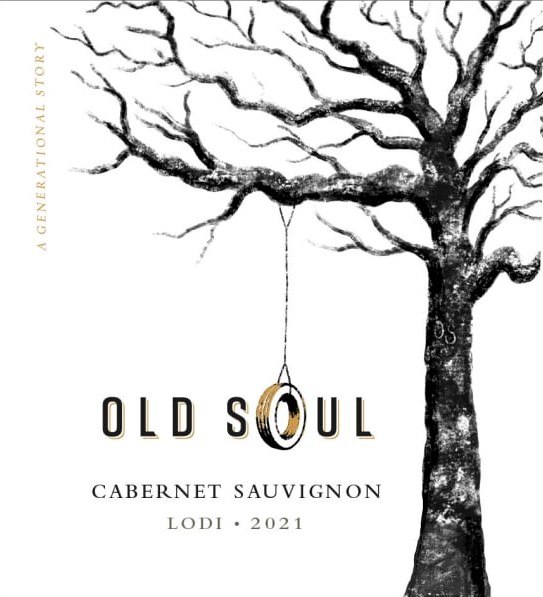
The experiment is designed to detect postulated ultralight dark matter particles that may interact with ordinary matter in currently unfathomable ways. To find these particles they have built a detector of superconducting nanowire sensors, cooled to near absolute zero, that achieves an astounding sensitivity to detect an infinitesimally small mass of 0.11 electron-volts (eV).

0.11 eV is roughly the energy difference between two quantum states in a molecule. An imperceptible shiver in the bond between two hydrogen atoms: a mass so slight, it might provoke a murmur of dark matter itself.

Using this detector over a 400-hour run (16.66 days) the team recorded a handful of unexplained signals that are real but not necessarily dark matter. Eventually they hope to achieve detections that resolve directionality, helping distinguish dark matter from background noise. The next phase of the experiment: NILE QROCODILE, (groan*) will move the detectors underground to reduce cosmic interference.

QROCODILE is a shot in the dark. It’s an epistemological paradox: how do you build a detector for something you don’t understand? How, or why, do you build an energy detector for a substance, if it is indeed a substance, that doesn’t emit or absorb energy.

While dark matter is known through its gravitational pull, that detection at a particle level is infeasible. Energy detectors, then, are a complementary strategy, betting on weak or exotic interactions beyond gravity.

Whether it finds Dark Matter or not, QROCODILE reminds us that science begins not with certainty, but with the courage to ask questions in the dark, and the craftsmanship to build instruments that honor the unknown.

* NILE QROCODILE: an acronym that evokes remembrance of the socially awkward Dr. Brackish Okun, a secluded researcher of aliens and their tech at Area 51 in the 1996 movie Independence Day.

Source: …Dark Matter Search with QROCODILE… by Laura Baudis et al, Physical Review Letters, 2025. Graphic: Nile Crocodile Head by Leigh Bedford, 2009. Public Domain.

Austin Hope Cabernet Sauvignon 2021

Cabernet Sauvignon from Paso Robles, California

Purchase Price: Gift (~$60)

ElsBob 93

ABV 15%

A deep bright ruby in color with notes of blackberry and plum, full bodied, wonderfully tannic with an acidic balance, followed by a long, pleasant finish. This wine will pair well with all red meat dishes, cheeses, or just by itself; which I hightly recommend. Simply irresistible—Robert Palmer cool.

A excellent fine wine at a great price. Drink now or hold for 10-15 years. Current prices are in the $55-65 range. Cheers.

Trivia: For centuries, the thermal springs of Paso Robles, California have been a source of sulphuryl sanitorium healing and naturally, a tourist sensation. First revered by the Salinan indigenous people and later developed by Franciscan padres, these geothermal waters gained national fame in the late 19th century when entrepreneurs like Daniel Blackburn and Drury James developed the area into a luxurious spa destination. The Paso Robles Inn, built atop the sulfur springs, drew travelers from across the country, including famed pianist Ignacy Paderewski, who sought relief from arthritis in the mineral-rich baths.

Over time, urban development and shifting groundwater dynamics led to a decline in spring activity. Some wells dried up, and the once-thriving spa culture faded. But in 2003 the San Simeon 6.5 earthquake shook the Paso Robles area causing two sulfur springs to erupt; one beneath the city hall parking lot, creating a massive sinkhole. Because this was California it took 7 years to fill the giant hole in.

As an aside, Drury James was the uncle of Jesse James. Following a bank robbery in Kentucky, Jesse and his brother Frank hid out at Drury’s La Panza Ranch in California during the winter of 1868-1869.

Color in the Eye of the Beholder

Ansel Adams (1902-1964), photographer of the majestic, was exceptionally elusive when it came to why he preferred black-and-white photographs over color, offering only a few comments on his medium of choice. He believed that black-and-white photography was a “departure from reality” which is true on many levels but that is also true of most artistic efforts and products. He also held the elementary belief that “one sees differently with color photography than black-and-white.” Some have even suggested that Adams said, “…when you photograph them in black and white, you photograph their souls,” but this seems apocryphal since most of his oeuvre was landscape photography.

Adams’s black-and-white photography framed the grandeur of the mountainous West in stark, unembellished terms. Yet without color, a coolness loiters, untouched by human sentiment or warmth. As an unabashed environmentalist, maybe that was his point, the majesty of the outdoors was diminished by human presence. In black-and-white, the wilderness remained unsullied and alone.

But to Claude Monet (1840-1926), founding French Impressionist, color and light, was everything in his eye. Color defined his paintings, professing that “Color is my day-long obsession, (my) joy…,” he confessed. Color was also a constant burden that he carried with him throughout the day and into the night, lamenting, “Colors pursue me like a constant worry. They even worry me in my sleep.” He lived his aphorism: “Paint what you really see, not what you think you ought to see…but the object enveloped in sunlight and atmosphere, with the blue dome of Heaven reflected in the shadows.” His reality was light and color with a human warming touch.

Adams and Monet’s genius were partially contained in their ability to use light to capture the essence of the landscape, but Monet brought the soul along in living color. Monet’s creed, “I want the unobtainable. Other artists paint a bridge, a house, a boat, and that’s the end…. I want to paint the air which surrounds the bridge, the house, the boat, the beauty of the air in which these objects are located…”

Color is a defining quality of humanity. Without color life would be as impersonal as Adam’s landscapes, beautiful, majestic even, but without passion or pulse. A sharp, stark visual with little nuance, no emotional gradations from torment to ecstasy, just shadows and form.

Understanding color was not just a technical revelation for 19th-century French artists, it was a revolutionary awakening, a new approach to how the eye viewed color and light. The Impressionists and Pointillists brought a new perception to their canvases. And the catalyst for this leap away from the tired styles of Academic Art and Realism was Michel Eugene Chevreul, a chemist whose insight into color harmony and contrast inspired the Monets and Seurats to pursue something radically different in the world of art. His chromatic studies inspired them to paint not for the viewer’s eye, but with it, transforming perception from passive witness into an active collaboration between painter, subject, and observer.

Chevreul’s breakthrough was deceivingly simple. Colors are not static blots on a canvas but relational objects that come alive when surrounded by other hues of the spectrum. A hue in isolation is perceived differently than when seen next to another. Red deepens next to green; blue pulsates with enthusiasm against orange. This principle, simultaneous contrast, revealed that the eye does not just passively accept what it sees but synthesizes it to a new reality.

Chevreul’s theories on complementary colors and optical mixing laid the foundation for painters to forsake rigid outlines, often rendered in the non-color of black, and embrace Impressionism: not merely an art style, but a promise of perception, a collaboration between painter and viewer. Rather than blending pigments on a palette, artists like Monet and Seurat placed discrete strokes side by side, allowing the viewer’s mind to complete the image.

This optical mixing is a product of the way the eye and the brain process the various wavelengths of white light. When complementary colors are adjacent to one another the brain amplifies the differences. Neurons in the eye are selfish. When a photoreceptor is stimulated by a color it suppresses adjacent receptors sharpening the boundaries and contrast. And the brain interprets what it sees based on context. Which is why sometimes we see what is not there or misinterpret what is there, such as faces on the surface of Mars or UFOs streaking through the sky. There is also a theory that the brain processes color in opposing pairs. When it sees red it suppresses green creating a vibrancy of complementary colors when placed together.

The Impressionists intensely debated Chevreul’s concepts then they brushed them to life with paint. They painted not concrete objects, but forms shaped by light and color. Haystacks and parasols within a changing mood of contrasting color. . Interpretation by the eye of the beholder.

Chevreul’s collected research, The Principles of Harmony and Contrast of Colors and Their Applications to the Arts, originally published in 1839, remains in print nearly two centuries later.

Source: The Principles of Harmony and Contrast of Colors and Their Applications to the Arts by Michel Eugène Chevreul, 1997 (English Translation). Graphic: Woman with a Parasol by Monet, 1875. National Gallery of Art, Washington, DC. Public Domain.

Devin Nunes Patriot 2021

Cabernet Sauvignon from Santa Margarita Ranch, Paso Robles, California

Purchase Price: $50.00

ElsBob 93

ABV 14.29%

A clear deep ruby color, full-bodied and bold with aromas of dark fruit and oak. On the palate the wine exhibits tastes of cherries and plums. Slightly acidic with noticeable but fine tannins and a very long satisfying finish. We served this wine over a meal of cheese tortellini in a mushroom garlic alfredo sauce topped with a grilled chicken breast. Somehow it worked perfectly.

An excellent fine wine at a very reasonable price. Drink now or hold for another 10 plus years.

Trivia: Devin Nunes’ winemaking venture is a revival of his family heritage. His grandfather farmed grapes in California, and the family vineyards endured until the 1990s. In 2020, Nunes leased vineyards in San Luis Obispo County and partnered with winemaker Mike Sinor to craft blends using Portuguese varietals.

This Cabernet Sauvignon is named The Patriot, a moniker crowdsourced via Truth Social. The bottle design features large white lettering reminiscent of vintage port, a possible nod to Nunes’ less ostentatious Portuguese roots and perhaps a subtle dig at Napa’s more overt polish. Part of his folksy branding includes leaving bottle neck naked sans the capsule, stripped of all pretenses on the rack, a silent expression of independence in a land of hyper-homogeneity.

A Revolution in Paint

“One must either be one of a thousand or all alone,” declared Edouard Manet (1832-1883). Critics and even some among the Impressionist circle believed Manet lacked the courage to be truly alone, both with his art and his essence. And they were half right. He was an extrovert, a social creature drawn to the vivacious pulse of Parisian life, its salons, cafes, and couture. He wanted to belong.

Through his art he sought recognition. He wanted not necessarily respect, but rather something simpler: acceptance. Yet they misunderstood his paintings. He was alone. His canvass spoke volumes to him, but the critics saw only muted, unfulfilled talent. Paintings adrift in a stylistic wilderness. The arbitrators of French taste, the Salon jury, repeatedly rejected him. In 1875 upon viewing The Laundress, one jury exploded: “That’s enough. We have given M. Manet ten years to amend himself. He hasn’t done so. On the contrary, he is sinking deeper.”

Manet longed for approval, and he could deliver what the critics wanted, but the moment he picked up his brush something else took over. He painted what he saw, but never fully controlled the production. His canvases resisted labels. A modern Romantic, a Naturalist with a Realist bent, urban but Impressionistic. A cypher to the critics but true to himself.

Like his friend Degas, he painted contemporary city life. The country landscapes of Monet, Renoir, and Pissarro couldn’t hold him. The color and light of the Impressionists intrigued him briefly, but stark lighting and unconventional perspective held him fast. He used broad quick solid brush strokes and flat, cutout forms.

Manet’s style was rebellion. The critics sensed it, and hated it, but they never understood it. He couldn’t digest academic art, so revered by the Salon. His mutiny was expressed through paint, not polemic. His only verbal defense was a cryptic comment that “anything containing the spark of humanity, containing the spirit of the age, is interesting.”

Nowhere is humanity, the spirit of the age, more hauntingly distilled than his masterpiece, his Chef-d’oeuvre: Berthe Morisot with a Bouquet of Violets. Dressed in black, her face half in shadow, Morisot peers questioningly at the viewer, asking what comes next. Manet paints what he sees. And he sees the mystery of femininity. Her green eyes painted black providing an opacity to her gaze, deepening the ambiguity: a comicality behind an expression of curiosity.

Critic Paul Valery wrote, “I do not rank anything in Manet’s work higher than a certain portrait of Berthe Morisot dated 1872.” He likened it to Vermeer, but with more spontaneity that makes this painting forever fresh. It is a timeless, loving portrait that transcends style.

Source: The World of Manet: 1832-1883 by Pierre Schneider, 1968. Graphic: Berthe Morisot with a Bouquet of Violets by Edouard Manet, 1872. Musee d’Orsay, Paris. Public Domain.

Old Soul Cabernet Sauvignon 2021

Cabernet Sauvignon from Lodi, California

Purchase Price: $11.99

Tasting Panel 91, Wine Enthusiast 90, ElsBob 90

ABV 14.5%

Garnet in color, aromas of plums, full-bodied, dry with a tannic finish.

An excellent fine wine at a very reasonable and friendly price.

Trivia:  The first mug of A&W Root Beer was poured in Lodi in 1919, making it the birthplace of one of America’s earliest fast-food franchises. Also, John Fogerty admits he never actually visited Lodi but chose the name for the CCR song because it sounded cool: “Oh Lord, I’m stuck in Lodi again”. Continuing with Lodi irreverence, the town’s west edge features the geographic head scratcher of South Lower Sacramento Road located north of North Lower Sacramento Road.

Cosmos of the Lonely

The universe keeps expanding. When researchers analyze data from the Hubble and James Webb telescopes, alongside a suite of other astronomical tools, they find that the recessional velocity of galaxies, the speed at which they appear to move away from the Earth, varies depending on what they measure.

If they calibrate distances deep into the cosmos using Cepheid variable stars, the expansion rate appears faster than when they use red giant stars or the Cosmic Microwave Background (CMB). This discrepancy, known as the Hubble tension, reveals a deeper mystery: different cosmic yardsticks yield different rates of expansion.

Yet despite the disagreement in values, all methods affirm the same truth: space is stretching…a lot…like a sheet pulled and stretched taut between Atlas’s burden and Hermes flight: a cosmos caught between gravitational pull and a mysterious push: Pushmi-Pullyu on a cosmic scale.

To understand why the cosmos resembles a sheet of rubber we need to travel back about 110 years and peer into the minds of those who first saw increasing separation as a universal law. These new architects of reality: Einstein, Friedmann, Lemaitre; who replaced Newton’s planetary, static models of the cosmos with a dynamic spacetime of bends, ripples, and persistent expansion.

After Einstein published his General Theory of Relativity in 1915, Russian physicist Alexander Friedmann’s analysis of his work showed that the universe could be expanding, and that Einstein’s equations could be used to calculate the rate. In 1927 Belgium priest and physicist Georges Lemaitre proposed that the expansion might be proportional to a galaxy’s velocity relative to its distance from Earth. By 1929, American astronomer Edwin Hubble expanded on Lemaitre’s work and published what became known as Hubble-Lemaitre law: galaxies are moving away from us at speeds proportional to their distance. The greater the distance the faster the speed.

A key feature of this law is the Hubble constant, the proportionality that links velocity and distance. Hubble’s initial estimate for this constant was whopping, and egregiously off, 500 kilometers per second per megaparsec (km/s/Mpc), but as measurements improved, it coalesced around a range between 67 and 73, with the most recent value at 70.4 km/s/Mpc, published by Freedman et al. in May 2025.

The Hubble constant is expressed in kilometers per second per megaparsec. The scale of these units is beyond human comprehension but let’s ground it to something manageable. A megaparsec is about 3.26 million light-years across, and the observable universe, though only 13.8 billion light-years old, has stretched to 46 billion light-years in radius, or 93 billion light-years in diameter, due to the expansion of space (see mind warping explanation below).  

To calculate the recessional velocity across this vast distance, we first convert 46 billion light-years into megaparsecs: which equates to 14,110 megaparsecs. Applying Hubble’s Law: 70 km/s/Mpc times 14,110 Mpc equals 987,700 km/s. This is the rate at which a galaxy 46 billion light-years away would be receding relative to another galaxy one megaparsec closer to Earth.

That’s more than three times the speed of light (299,792 km/sec) or Warp 3 plus in Star Trek parlance. Einstein said this was impossible but fortunately there is some nuance that keeps us in compliance with Special Relativity (or else the fines would be astronomical). This isn’t the speed of a galaxy moving through space, but the speed at which space between galaxies is expanding. Which, admittedly, is terribly confusing.

The speed of a galaxy, composed of matter, energy, and dark matter, must obey Einstein’s rules: gravity and Special Relativity. And one of the rules is that the speed of light is the cosmic speed limit, no one shall pass beyond this.

But space between the galaxies decides to emphasize the rules in a different order. The expansion of space is still governed by Einstein’s equations, just interpreted through the lens of spacetime geometry rather than the motion of objects. This geometry is shaped by, yet not reducible to, matter, energy, and dark matter.

Expansion is a feature of spacetime’s structure, not velocity in the usual sense, and thus isn’t bound by the speed of light. If space wants to expand, stretch, faster than a photon can travel, well so be it.

The space between galaxies is governed by dark energy and its enigmatic rules of geometry. Within galaxies, the rules are set by dark matter, and to a lesser extent by matter and energy, even though dark energy is likely present, its influence at galactic scales is minimal.

Note the use of the word scale here. Galaxies are gigantic, the Milky Way is 100,000-120,000 light-years in diameter. But compared to the universe at 93,000,000,000 light-years across, they’re puny. You would need 845,000 Milky Ways lined up edge-to-edge to span the known universe.

Estimates of the number of galaxies in the universe range from 100 billion to 2 trillion. So, at the scale of the universe, galaxies are mere pinpoints of light; blips of energy scattered across the ever-expanding heavens.

This brings us to dark energy, the mysterious force driving cosmic expansion. No one knows what it is, but perhaps empty space and dark energy are the same. There’s even some speculation, mostly mine, that dark energy is a phase shift of dark matter. A shift in state. A triptych move from Newtonian physics to Quantum Mechanics to…Space Truckin’.

In the beginning moments after the big bang, the universe was dominated by radiation composed of high energy particles and photons. As the universe cooled, the radiation gave way to matter and dark matter. As more time allowed gravity to create structures, black holes emerged and a new force began to dominate, dark energy. But where did the dark energy come from? Was it always part of the universe or did it evolve from other building blocks. Below are a few speculative ideas floating around the cosmic playroom.

J.S. Farnes proposed a unifying theory where dark matter and dark energy are aspects of a single negative mass fluid. This fluid could flatten galaxy rotation curves and drive cosmic expansion, mimicking both phenomena simultaneously.

Mathematicians Tian Ma and Shouhong Wang developed a unified theory that alters Einstein’s field equations to account for a new scalar potential field. Their model suggests that energy and momentum conservation only holds when normal matter, dark matter, and dark energy are considered together.

Ding-Yu Chung proposed a model where dark energy, dark matter, and baryonic matter emerge from a dual universe structure involving positive and negative mass domains. These domains oscillate and transmute across dimensions.

These ideas all rotate around the idea that reality revolves around a concept that everything evolves and that matter and energy, of all forms, flickers in and out of existence depending on dimensional scaffolding of space and the strength of gravity and radiation fields.  Rather than radiation, energy, matter, dark matter, and dark energy as separate entities, these may be expressions of a single evolving field, shaped by phase transitions, scalar dynamics, or symmetry breaking.

Now back to my regularly scheduled program. In August 2025, Quanta Magazine reported on a study led by Nobel laureate Adam Riess using the James Webb Telescope (JWST) to measure over 1,000 Cepheid variable stars with unprecedented precision. Cepheid stars pulsate in brightness over time with a highly predictable rate or rhythm, making them ideal cosmic yardsticks. Riess’s team found a Hubble constant of ~73.4 km/s/Mpc, consistent with previous Hubble Space Telescope measurements of Cepheid stars but still significantly higher than what theory predicts.

That theory comes from the standard model of cosmology: Lambda Cold Dark Matter. According to this framework photons decoupled from the hot electron-proton opaque soup about 380,000 years after the Big Bang went boom, allowing light to travel freely for the first time, and allowing space to be somewhat transparent and visible. This event produced the Cosmic Microwave Background (CMB).

This CMB permeates the universe to this day. It was discovered in 1964 by Bell Lab physicists Arno Penzias and Robert Wilson, who were trying to eliminate background noise from their radio antenna. The noise turned out to be the faint afterglow from the Big Bang, cooled down from its original 3000 Kelvin to a frosty 2.7 Kelvin. They received the Nobel Prize in Physics for this discovery in 1978.

Light from the CMB, as measured by the European Space Agency Planck satellite, has a redshift of approximately 1100, meaning the universe has expanded by a factor of 1100 over the past 13.42 billion years. By analyzing the minute temperature fluctuations in the CMB, Planck can infer the density of matter, dark energy, and curvature of the universe. Inserting these parameters into the Lambda Cold Dark Matter model yields a Hubble constant which turns out to be 67.4 + 1.71 (65.69-69.11). This value is considered the gold standard. Values beyond the Planck measurement are not necessarily wrong, just not understood.

At first glance, the difference between Planck’s 67.4 and Riess’ 73.4 may seem small. But it is cosmically significant. Two galaxies 43 billion light-years away and 3.26 billion light-years apart (1000 Mpc) would have a velocity difference of 6000 km/s or about 189 billion kilometers of increased separation per year. That’s the scale of what small differences in the value can add up to and is referred to as the Hubble tension.

Meanwhile, a competing team of researchers studying red branch and giant branch stars consistently scored the Hubble constant closer to the theoretical prediction of 67.4. This team led by Wendy Freedman believes that Hubble tension, the inability of various methods of measuring the Hubble constant to collapse to a single value, is a result of measurement errors

While some researchers, Wendy Freedman and others, suggest lingering systematic errors may still be at play, the persistence of this discrepancy, across instruments, methods, and team, has led others to speculate about new physics. Among the most provocative ideas: the possibility that the universe’s expansion rate may vary depending on direction, hinting at anisotropic expansion and challenging the long-held assumption of cosmic isotropy. But this seems far-fetched and if true it would likely break the Lambda Cold Dark Matter model into pieces.

And so, the cosmos grows lonelier. Not because the galaxies are fleeing, but because space itself is stretching, a wedge governed by the geometry of expansion. The further they drift apart, the less they interact, a divorce from neglect rather than malice. In time, entire galaxies will slip beyond our cosmic horizon, receding faster than light, unreachable even in principle. A cosmos of the lonely.

Source: The Webb Telescope Further Deepens the Biggest Controversy in Cosmology by Liz Kruesi, Quanta Magazine, 13 August 2024. JWST Observations Reject Unrecognized Crowding of Cepheid Photometry as an Explanation for the Hubble Tension at 8σ Confidence by Riess et al, The Astrophysical Journal Letters, 6 February 2024. Graphic: Cosmic Nebula by Margarita Balashova.

Duckhorn Napa Valley Cabernet Sauvignon 2019

Cabernet Sauvignon from Napa Valley, California

Cabernet Sauvignon 83%, Merlot 13%, Cabernet Franc 2%, Petit Verdot 2%

Purchase Price: $59.99

James Suckling 92, Wilfred Wong 92, Connoisseurs Guide 91, Wine Spectator 90, Wine Buyer 90, ElsBob 92

ABV 14.5%

A dark ruby wine with aromas of anise, dark fruits, spices, and vanilla. Full-bodied, with tingly fresh acidity, tannins with a bite, and flavors of blackberries and black cherries on the palate. A wonderful long finish.

An excellent fine Napa wine at a fair price. Recent retail prices range from $60 to $115, with a median price just under $70 for a 92-point 2019 vintage. Selected retail is $78.

Trivia: Founded in 1976 by Dan and Margaret Duckhorn in St. Helena, Duckhorn Vineyards was one of Napa Valley’s first 40 wineries. Their inaugural releases in 1980 included both Cabernet Sauvignon and the now-iconic Merlot. Over the decades, they expanded into Sonoma, Anderson Valley, and Washington State under various duck-themed labels.

Beginning in 2007, the Duckhorns began selling controlling interests to private equity firms. After several transitions to various companies, the winery was acquired by Butterfly Equity in 2024, a firm specializing in food and beverage investments.

The Lost Boys

The end of the Peloponnesian War in 404 BC marked the end of Athens’ Golden Age. Most historians agree that the halcyon days of Athens were behind her.  Some however, such as Victor Davis Hanson in his multi-genre meditations, A War Like No Other, a discourse on military history, cultural decay, and philosophical framing, offers a more nuanced view suggesting that Athens was still capable of greatness, but the lights were dimming.

During the following six decades, after the war, Athens rebuilt. Its navy reached new heights. Its long walls were rebuilt within a decade. Aristophanes retained his satirical edge even if it was a bit more reflective. Agriculture returned in force. Even Sparta reconciled with Athens or vice versa, recognizing once again that the true enemy was Persia.

Athens brought back its material greatness, but its soul was lost. What ended the Golden Age of Athens wasn’t crumbled walls or sunken ships. It was the loss of lives that took the memory, the virtuosity of greatness with it. With them generational continuity, civic pride, and a religious belief in the polis vanished. The meaning, truth, and myth of Athenian exceptionalism died with their passing. The architects of how to lead a successful, purpose driven civilization had disappeared, mostly through death by war or state but also by plague.

Victor Davis Hanson, in his A War Like No Other lists many of the lives lost to and during the war that took much of Athens’ exceptionalism with them to their graves. Below is a partial listing of Hanson’s more complete rendering with some presumptuous additions.

Alcibiades was an overtly ambitious Athenian strategist; brilliant, erratic, and ultimately treasonous. He championed the disastrous Sicilian expedition, Athens greatest defeat. Over the course of the war, he defected multiple times: serving Athens, then Sparta, then Persia, before returning to Athens. He was assassinated in Phrygia around 404 BC while under Persian protection, by, many beleive, the instigation of the Spartan general Lysander.

Euripides though he did not fight in the war exposed its brutality and hypocrisy in his plays such as The Trojan Woman and Helen. The people were not sufficiently appreciative of his war opinions or plays, winning only four firsts at Dionysia compared to 24 and 13 for Sophocles and Aeschylus, respectively. Disillusioned, he went into self-imposed exile in Macedonia and died there around 406 BC by circumstances unknown.

The execution of the Generals of Arginusae remains a legendary example of Athenian arbitrary retribution; proof that a city obsessed with ritualized honor could nullify military genius, and its future, in a single stroke. The naval Battle of Arginusae, fought in 406 BC, east of the Greek island of Lesbos, was the last major Athenian victory over the Spartans in the Peloponnesian War. Athenian command of the battle was split between 8 generals: Aristocrates, Aristogenes, Dimedon, Erasinides, Lysias, Pericles the Younger (son of Pericles), Protomachus, and Thrasyllus. After their victory over the Spartan fleet a storm prevented the Athenians from recovering the survivors, and the dead, from their sunken ships. Of the six generals that returned to Athens all were executed for their negligence. Protomachus and Aristogenes, likely knowing their fate, chose not to return and went into exile.

Pericles, the flesh and blood representation of Athens’ greatness was the statesman and general who led the city-state during its golden age. He died of the plague in 429 BC during the war’s early years, taking with him the vision of democratic governance and Athens’ exceptionalism. His 3 legitimate sons all died during the war. His two oldest boys likely died of the plague around 429 BC and Pericles the Younger was executed for his part in the Battle of Arginusae.

Socrates, the world’s greatest philosopher (yes greater than Plato or Aristotle) fought bravely in the war, but he was directly linked to the traitor Alcibiades. He was tried and killed in 399 BC for subverting the youth and not giving the gods their due. That was all pretense. Athens desired to wash their collective hands of the war and Socrates was a very visible reminder of that. He became a ritual scapegoat swept up into the collective expurgation of the war’s memory.

Sophocles, already a man of many years by the beginning of the war, died in 406 BC at the age of 90 or 91, a few years before Athens’ final collapse. His tragedies embodied the ethical and civic pressures of a society unraveling. With the deaths of Aeschylus in 456 BC, Euripides in 406 BC, and Sophocles soon after, the golden age of Greek tragedy came to a close.

Thucydides, author of the scholarly standard for the Peloponnesian War, was exiled after ‘allowing’ the Spartans to capture Amphipolis, He survived the war, and the plague, but never returned to Athens. His History ends in mid-sentence for the period up to 411 BC. He lived till 400 BC, and no one really knows why he didn’t finish his account of the war. Xenophon picked up where Thucydides left off and finished up the war in his first two books of Hellenica which he composed somewhere in the 380s BC.

The Peloponnesian War ended Athens’ greatest days. The men who kept its lights bright were gone. Its material greatness returned, glowing briefly, but its civic greatness, its soul, slowly dimmed. It was a candle in the wind of time that would be rekindled elsewhere. The world would fondly remember its glory, but Athens had lost its spark.

Source: A War Like No Other by Victor Davis Hanson, 2005. Graphic: Alcibiades Being Taught by Socrates, Francois-Andre Vincent, 1776. Musee Fabre, France. Public Domain.

The Sum of All Fears–Real and Imagined

The Peloponnesian War, fought over 27 years (431-404 BC), cost the ancient Greek world nearly everything. War deaths alone approached 8-10 percent of their population: up to 200,000 deaths from battle and plague. The conflict engulfed nearly all of Greece, from the mainland to the Aegean islands, Asia Minor and Sicily. Though Sparta and its allies, in the end, claimed a tactical victory, the war left Greece as a shadow of its former self.

The Golden Age of Athens came to an end. Athenian democracy was replaced, briefly, by the Thirty Tyrants. Sparta, unwilling to jettison its insular oligarchy, failed to adapt to imperial governance, naval power, or diplomatic nuance. Within a generation Sparta was a relic of history.  First challenged by former allies in the Corinthian War, then shattered by Thebes, which stripped the martial city-state of its aura of invincibility along with its helot slave labor base: the economic foundation of Sparta. Another generation later, Macedon under Philip II and Alexander the Great finished off Greek dominance of the Mediterranean. After Alexander’s death in 323 BC, Rome gradually absorbed all the fractured pieces. Proving again, building an empire is easier than keeping one.

Thucydides, heir to the world’s first historian: Herodotus, reduced the origins of the Peloponnesian War to a primal emotion: fear. In Book I of his History of the Peloponnesian War he writes: “The growth of the power of Athens, and the alarm which this inspired in Sparta, made war inevitable.” Athens had violated trade terms under the Megarian Decree with a minor Spartan ally but that was pretext, not cause. Sparta did not go to war over market access. It went to war over fear. Fear of what Athens had become and a future that armies and treaties may not contain.

War and fear go together like flame to fuse. Sparta went to war not for fear of a foe, Sparta knew no such people. It was not fear of an unknown warrior, nor fear of battlefields yet to be choregraphed, but fear of an idea: democracy maintained and backed by Athenian power. And perhaps, more hauntingly precise, fear of itself. Not that it feared it was weak but of what it may become. They feared no sword or spear, their discipline reigned supreme against flesh and blood. Yet no formation, no stratagem, no tactic of war could bring down a simple Athenian belief: the rule of the many, an idea anathema, heretical even, to the Spartan way of life.

So, they marched to war, not to defeat an idea but to silence the source. Not to avenge past aggression but to stop a future annexation. They won battles, small and large. They razed cities. But they only destroyed men. The idea survived. It survived in fragments, bits here, bits there, across time and memory. What it did kill, though, was the spirit of Athens, the Golden Age of Athens. But the idea that was Athens lived on across space and time: chiseled into republics that rose from its ashes and ruins.

The radiance of Athens dimmed to shadow. Socrates became inconvenient. Theater became therapy; a palliative smothering of a cultural surrender. And so, civilization moved to Rome.

Source: A War Like No Other by Victor Davis Hanson, 2005. History of the Peloponnesian War by Thucydides, Translated by Richard Crawley, 2021. Graphic: Syracuse vs Athens Naval Battle. CoPilot.

Dr. Frank Konstantin Blaufrankisch 2022

Blaufrankisch from Finger Lakes, New York, U.S.

Purchase Price: $27.99

ElsBob 87

ABV 12%

Aromas of blackberry, black cherry, and spice. Red fruits dominate the palate with firm tannins and a medium body, but the acidity is not for the faint of heart, tending to overshadow the fruit. Decanting is recommended to soften its sharper edges. Will pair well with hard, sharp cheeses.

A very good table wine, but not worth $28. If you can find it for $12 or less give it a try.

Trivia: Blaufrankisch has been called “the Pinot Noir of the East” for its finesse-meets-spice profile (not really) and its deep roots in Central European wine culture. It’s also a parent of the Zweigelt, Austria’s most planted red grape.

Blau means “blue” in German, referring to the grape’s dark skin, while Fränkisch historically denoted noble grape varieties in contrast to lesser “Hunnic” or more rustic ones. Despite its Germanic name, Blaufränkisch likely originated in what is now Slovenia. It’s a cross between Gouais Blanc (a prolific parent of many noble grapes such as Chardonnay, Gamay, and Riesling) and Blaue Zimmettraube.  

Phalanx: Discipline in Geometry

Near the ancient Sumerian city of Girsu, mid-way between present-day Bagdad and Kuwait City, stood a battle marker; the Stele of Vultures, now housed in the Louvre. It commemorates Lagash’s 3rd millennium BC victory over Umma. The stele derives its name from the monument’s carved vultures flying away with the heads of the dead.  It also depicts soldiers of Lagash marching in a dense, shield to shield formation, holding spears chest high and horizontal, led by their ruler: Eannatum, who commissioned the stele in 2460 BC. The importance of the stele, though, is that it is the first visual depiction of the use of a phalanx in a battle. It is believed that the phalanx as a military tactic is much older.

The phalanx was more than a combat formation, it was a battlefield philosophy enshrining discipline and courage over strength, unity of the team over the individual. A dense, rectangular wall of men, generally 8 deep stretching across the battlefield to protect against flanking maneuvers. Each man wore heavy armor of leather and bronze: helmet, cuirass, greaves, armed with a spear and a short sword. But the breakthrough that brought the phalanx great renown was the apsis, a round shield invented for the Greek hoplite in the 8th or 7th century BC. With its dual grip, a forearm strap and central handhold, it allowed the infantryman precise control of his shield, helping create an impenetrable barrier of bronze and bone against the oncoming enemy’s spears and swords. It transformed the phalanx from an offensive wall of attack to an added defensive engine of defiance.

The phalanx only succeeded in cohesion. When courage and discipline held, the formation with the apsis as its core defense was practically unbeatable on confined terrain. It overcame the enemy with a seamless, tight mass executing a relentless forward march into the belly of the opposing beast. But it was only as strong as its weakest link. Once discipline faltered and cohesion broke, the formation collapsed, and the opposing army ran it to ground. Victory belonged not to brute force, but to the combined strength of the military unit. Teams won, individuals lost.

From late 8th century BC onward, Greek phalanxes were manned by hoplites: citizen soldiers, generally landowners and farmers. Emerging in Sparta or Argos, possibly imported from Sumeria or born of parallel discovery in Greece, phalanx battles initially were confined, blunt, and deadly affairs. They devolved into fierce pushing masses of brawn, bone, and metal until one side broke. Heavy casualties occurred when the enemy lines broke and soldiers fled Helter skelter in shock and chaos, pursued by the victors for plunder, unless they were restrained by honor.

The phalanx became the standard that destroyed the mighty Persian armies at Marathon and Thermopylae early in the 5th century BC. At Marathon in 490 BC 10,000 Athenians and 1000 Plataeans stretched out their formation to match the breadth of 26,000 Persians, filling the Marathon plain and denying the armies any room for flanking movements.

The Greeks stacked their wings with additional rows of hoplites and thinned them progressively toward the center creating a convex crescent. The Greek wings advance faster than the center generating a pincer movement that collapsed on the Persian center. When the dust settled 192 Athenians and 11 Plataeans were lost while the Persian losses were approximated at 6400.

In the 19th century, Napoleon, possibly improvising on phalanx encircling tactics developed at Marathon, would invert his attacking army with a concave formation consisting of a strong center and weaker wings. His strategy being to split the enemies’ center with strength and attack their divided ranks on the flanks. The tactic worked until Wellington at Waterloo.

At Marathon, unity triumphed with geometric discipline. At Thermopylae the formation bought time and ended with a sacrifice that concluded Persian hubris.

During the second Persian invasion in 480 BC, Darius’s son Xerxes with 120,000-300,000 men attacked a contingent of 7000 Greeks at Thermopylae. The Greeks held back the Persian advance like a cork in a bottle, using a rotating phalanx of roughly 200 men to defend a narrow pass for two days, until betrayal by Ephialtes exposed their flank and they were destroyed in a inescapable Persian barrage of arrows. Greek losses were estimated at 4000 men including Leonidas’ 300 Spartans and 2000-4000 Persians (beginning and ending estimates for manpower strength vary widely).

The Greeks defiant stand at Thermopylae allowed the Greek navy to regroup at Salamis where they won a decisive victory against the Persian navy. A year later the Greeks at Plataea crushed the Persians quest for a Hellenic satrapy.

The Phalanx endured for another century, including use in the Peloponnesian War, where it remained lethal but of limited use. Then came Epaminondas at Leuctra in 371 BC, transforming the phalanx into a machine that erased Sparta’s mighty reputation. Typically, each army’s phalanx strength was concentrated on their right wing so that the strongest part of a force always faced off against the weaker wing of the opposition. What Epaminondas did was say nuts to that.

He reversed the order and created an oblique formation, more triangular than rectangular with his strongest troops on the left wing. His left wing was stacked 50 deep while keeping his center and right wings thin. His 50-deep was aimed directly at Sparta’s best under the command of King Cleombrotus (in those days officers and kings were in the front rows of the phalanx). As the phalanxes began to attack Epaminondas kept his right-wing stationery creating an asymmetrical front. The left wing easily broke through Sparta’s right wing, killing Cleombrotus and collapsing their superior flank. At that point Epaminondas’s wing pivoted inward creating an enveloping arc around the remaining parts of Sparta’s phalanx effectively ending the Spartan myth of invincibility.

Epaminondas tactics shortened battles with fewer casualties. His innovations proved that properly trained and equipped citizen soldiers could defeat professional warriors while instilling a new civic honor through restraint and discipline. His oblique formation allowed landowners and farmers to settle their disputes, usually in a few hours or less, with minimal loss, and return to their farms in time for the harvest. Epaminondas not only brought asymmetrical tactics to the battlefield but shattered claims of superiority by employing the unexpected.

As the Golden Age of Athens and western civilization’s Greek center waned and Roman hegemony rose, the phalanx evolved again. The Greek phalanx gave way to the Roman manipular system, a staggered checkerboard pattern, enabling units to rotate, reinforce, or retreat as needed. It was a needed refinement and improvement to the phalanx, more effectual on open plains and less susceptible to calvary and arrows.

Then came Hannibal to Cannae in 216 BC. During the 2nd Punic War, he upended the war cart of tactics once again and ruthlessly exploited Rome’s refinements.

Hannibal’s improvisations of the phalanx maneuvering tactics, but not the actual formation, showed that he had studied Marathon. Instead of a convex line with strong wings and a weak center he developed a concave line with strong wings and weak center. He allowed the center to fall back, which the Romans unwittingly obliged by surging into Hannibal’s weak center. With the Romans committed Hannibal’s deception encircled them with precision and brutal lethality. The Romans were annihilated on the field losing somewhere between 50,000-70,000 killed and another 10,000 captured. Hannibal lost 6000-8000 men (again estimates vary). Then came the 3rd Punic War.

The phalanx began as a wall of spears and shields, a bulwark of bronze and bone. Its stunning victories echo through history’s scholarly halls and hallowed plains of death and destruction. Yet its Achilles’ heel, vulnerable flanks, precise terrain requirements proved incompatible to horses and gunpowder.

Still its legacy of discipline and unity endure. Born of necessity, refined through rigor, and studied for centuries, the phalanx stands as a testament Aristotle’s enduring insight, slightly abridged but still profound, ‘The whole is greater than the parts.’ And perhaps the Roman’s said it best: ‘E pluribus unum’, ‘out of many, one.’

Source: A War Like No Other by Victor Davis Hanson, 2005. Et al. Graphic: Stele of Vultures.

Castellani Sangiovese Toscana 2019

Sangiovese from Tuscany, Italy

Purchase Price: $14.99

James Suckling 91, Wilfred Wong 90, ElsBob 88

ABV 13%

A medium to dark garnet red, medium-bodied wine with aromas of red cherries and spice. Forward tannins and mild acidity give it a bit of structure, with a hint of sweetness that softens the edges. The finish is short but pleasing, an easy companion for pizza, tomato-based pastas, and hard cheeses.

A very good table wine at a reasonable price. Recent prices range between $14-24. Anything over $17 is a bridge too far.

Trivia: This wine hails from the Castellani family’s coastal vineyards in Tuscany, near the Tyrrhenian Sea, and is classified as a Toscana IGT. Though it’s made from 100% Sangiovese, a composition fully permissible under Chianti DOCG rules, it does not qualify as a Chianti, as the vineyards lie outside the designated Chianti zones.

The winemaker notes that they follow an “old traditional Tuscan vinification method.” Given the wine’s modest 13% ABV, this likely refers to fermentation in concrete vats, extended skin contact, and the use of native yeasts, a nod to pre-industrial winemaking. It almost certainly does not involve the more elaborate Governo all’Uso Toscano (translates roughly to Tuscan-style winemaking) method, which requires an early harvest, partial grape drying, and a second fermentation that typically results in higher alcohol and a richer body.

Windows into the Soul

Francisco de Goya, court painter to the late 18th century Spanish royalty, was no great admirer nor groveling sycophant of his patrons. He portrayed them, literally and figuratively as pretentious hypocrites and regal bores. Somehow, he was able to convince the king and queen that his paintings embodied their imagined over-hyped majesty. They did, just not in the way the royal couple envisioned.  Goya sold the fiction ‘the king has no clothes but isn’t he marvelous’ with the aptness of Hans Christian Andersen, and it likely paid handsomely.

Modern portraitists of the rich and famous seem to follow a similar creed. A veiled contempt that comes through in their brushwork.  Faces frozen in contempt for the world beyond the palace, bodies wrapped in pop-art symbolism, palates of unmistakable gauche screeching, all undermining an uplifting narrative of benevolent power and grace. And, like Goya, they persuade their patrons that all is light and beauty, even though the cracks and shadows are front and center.

A portrait is not just posture, paint, and brushwork; it is an appointment with truth. Maybe just one minor truth, but truth none-the-less. The true artist illuminates the soul where he finds it. An artist’s symbolic performance can flourish in irrelevance of style, but the truth must come out.

Kehinde Wiley’s 2018 portrait of Barack Obama is a curious specimen. It goes beyond tradition into overt symbolism that lands in a duality of truth. It’s a disruptive panel bordering on cartoonish messaging. Botanical motifs of chrysanthemums and lilies in the background, engulfing Obama seated on a wooden chair with six fingers. A portrait not of a President but a topiary clipped into a pose of nonchalance and a distant soul focused on…nothing. The overall effect is one of mockery. Is Wiley mocking the President or is the President mocking his audience, maybe both. Wiley sold it as an informal symbol of a great man but maybe he was painting what he saw. A man whose legacy, much like the foliage behind him, now blooming with grandeur but fading to irreverence over time.

Compare this to Jonathan Yeo’s two portraits of King Charles III and Camilla. The former awash in crimson ambiguity, with vague lines of demarcation. Its symbolism is gaudy and obtuse: the lone butterfly, the seeping reds, the gaze misplaced: together, a haunting emergence from a bloody mess. A reliance on cryptic visual metaphors over soulful revelation. A painting wishing to express depth, and it does, but as a downward drift into circles of Dante rather than a royal crimson of empire. Yeo does not explain much of his trajectory of the portrait. He seems satisfied to leave the interpretation to others. Camilla says it captures him perfectly. But what it captures is not a dignified, confident king, but one who bartered his soul for the crown which Yeo captured impeccably, consciously or not.

Yeo’s 2014 portrait of Camilla, HRH The Duchess of Cornwall, compliments his painting of King Charles: another study of a lost soul. A picture of non-essence. A painting of emotional neglect. Blotches of earth tones for blood and straight lines of iron and fog for character and birthright. In the background vertical lines of changing width suggestive of a perspective view of Camilla sitting in the corner of a prison cell, trapped in a unwanted life, with sub-horizontal lines crossing her clothing like lines of filtered light originating from a broken, tilted structure of casements in disrepair. Windows into a soul without balance or integrity. A blotchy face, pressed lips and the piercing eyes of disgust are the caricature of woman who finds the world a bore and the artist gives wholehearted ascent to her wishes.

Yeo’s portraits of the royal dyad are of tragic symmetry. Charles as an entitled blood-soaked monarch, lost in a mythic realm of post over duty. Camilla is a shadow brought along for form without script, shadow without light.

Each of the three portraits in the triptych, at first blush, are merely lacking in technique or likeness and immensely soulless. With further exposure and examination, the artists have captured their subject’s essence. They are gauche and grotesque, but the painter’s truth is bleeding through. They portray their subjects as an antithesis to their public persona. Wiley’s Obama is lost in symbolic foliage, Yeo’s Charles stands embalmed in a crimson history of unrestrained desire, and Camilla appears accidentally sentenced to royalty by an artist barely able to contain his disdain.

Symbolism, when wielded well, lives in the background, like Botticelli’s Primavera, where flora guides the viewer through renewal without eclipsing the figures themselves. Art that elevates does so through integration, not ornamentation. Symbolism must serve beauty, and beauty must point toward goodness. But if the truth isn’t of beauty, what then?

True portraiture captures the soul and, if need be, is not afraid to offend. It does not flatter blindly, nor does it subtract without cause. It seeks something elemental. It lets the canvas speak, the brush guide, and the palate reverberate with reality. Great portraits are a reckoning of the soul, not decoration of form.

Graphics: President Obama by Kehinde Wiley, 2018. King Charles and Camilla by Jonathan Yeo, 2023 and 2014. All copyrighted. Used for purposes of critique.

Dr. Konstantin Frank Cabernet Franc 2021

Cabernet Franc from Finger Lakes, New York, U.S.

Purchase Price: $27.99

ElsBob 89

ABV 12%

A clear medium garnet to a deeper ruby in color, aromas of fresh red fruits, medium-bodied, slightly acidic with balanced, moderate tannins. A nice finish but brief.

A very good table wine at an elevated price. Currently retails from $28-30. Pay the suggested retail for the novelty but a second bottle, probably not.

Trivia: The first known vineyard in the Finger Lakes area was planted by William Bostwick in 1829. In 1860 the Pleasant Valley Wine Company became the first commercial winery in the area, followed soon after by the Taylor Wine Company in the early 1880s (closed 1995). Konstantin Frank planted the first vinifera (European) vines in 1957 in the Finger Lakes and the winery lays claim to some of the oldest vines still producing in the US. In 1982 Finger Lakes AVA was officially recognized. Today over 100 wineries dot the region with Riesling the signature varietal.

Off the Beaten Path

Not every grape is born to be a Cab or Merlot. Not every vine survives the frozen winter’s cold. But, sometimes, you can find a remarkably obscure wine, and you get what you need. (With apologies to the Rolling Stones.)

Wine does not need a household name or worldwide cultivation to leave an impression. Some, from the cracks and corners off the main viticultural beat, fill a glass with a style that beckons notice and draws a grudging nod of respect. Grapes of lesser renown are legion but here we will bow to three worthy of a close encounter. The Amur grape straddling the banks of the thousand-mile Amur River at the intersection of Russia and China; the Saperavi grape of a thousand names, slightly exaggerated, from the rolling Asian hills of eastern Georgia; and the Marquette grape born in the land of a ten-thousand lakes from the test beds of U. of Minnesota.

The Amur grape (Vitis amurensis) is an ancient varietal dating back to pre-Pleistocene times, a survivor at the margins of glaciers and regions of permanent snow and ice. Evolution favored a rootstock capable of withstanding sub-zero winters and the ability to send forth fresh shoots with the swiftness of kudzu covering a Georgia (State) pine, bravely managing the brief, wet summers of floodplains and permafrost.

Its native lavender to deep purple berries yield a full-bodied red wine with subtle aromatics, hinting at dark fruits and recollections of the long-gone boreal forest. The tannins are firm, the acidity cleansing; sharp enough to demand a gentle, sweet companion. Amore mio of chocolate and Amur. I tried a Amur wine in Beijing many years ago and I found it a worthy experience.

Saperavi (Vitis vinifera) is a rare teinturier grape, its flesh and skin both red, born in the soils newly freed from the retreating glacial ice and snow of southeastern Georgia, nurtured in the cradle of winemaking and civilization. Descended from wild vines cultivated over 8,000 years ago, the spirits and life of Saperavi still retain their vitality in modern times accounting for 30% of its total wine production. Georgians once fermented this varietal in qvevri, (kveh-vree—rhymes with every) egg-shaped clay vessels, dating to the Bronze Age, buried underground, where time, earth, grape, and chemistry converge in a spirited dance of Bacchanalian delight. Though about 10% of Georgian wines still develop in clay, most now age in oak, trading ancestral custom for ease and balance.

Dark as ink in a deep well and high in acidity, Saperavi yields wines that are intense and age-worthy, layered with plum, blackberry, clove, and sometimes a wisp of rising smoke. They range from bone-dry to deliciously sweet, each bottle a tale of terroir and ancestry. Today, the heart of prehistoric craftsmanship still beats in chests of these rugged Caucasus descendants. This wine is hard to find in the U.S., but if you’re in Georgia, try it, just have something sweet nearby to balance its acidity.

Marquette (Vitis vinifera × Vitis riparia, etc.) is a cold-hardy hybrid born in Minnesota in 2006, now finding homes in Vermont and New York. With its ruby hue, medium body, and notes of cherry, blackcurrant, and spice, it evokes a northern acceptance of the land’s tempered gifts. It survives brutal winters, resists disease, and thrives in organic soils that traditional wine grapes often shun. Though oak-aging adds depth, even youthful Marquette wines hold their own. Already, a few notable bottlings hint at its potential. The 2021 La Garagista “In A Dark Country Sky a Whole-Cluster Marquette”, received a rating of 92, described as bold and structured: $43.

Together, this trio of wines form a brave departure from the pack. They are not overt crowd-pleasers, not yet anyway, but a small, short break from tradition can’t be all bad.

Graphic: Amur Grapes, Vitis amurensis, by Andshel, 2015. Public Domain.