Vina Robles The Arborist 2022

Other Red Blends from Paso Robles, Central Coast, California

Syrah 52%, Petite Sirah 30%, Grenache 9%, Tannat 9%

Purchase Price: $19.99

Wine Enthusiast 91, James Suckling 90, Cellar Tracker 88, ElsBob 90

ABV 14.0%

A deep purple to deep garnet wine with aromas of red fruit and spice. The mouth feel is dominated by herbs and dark berries. Medium bodied with balanced tannins and acidity. A short but complete finish. Will pair well with chocolate.

A fine wine at a very reasonable price, typically found at retailers between $19–25.

Through the Grapevine: While this wine doesn’t exactly illustrate how modern scoring has shifted from its original purpose, probably just the opposite, but now seems a good time to clarify how I personally rate wines. I use the industry’s familiar terms, 90–93 as “excellent,” 87–89 as “very good”, but I also believe these words have been inflated to the point where they no longer match the sensory quality of the wines. When assigning a value, I return to the original meaning of Robert Parker’s 50–100‑point scale, where wines in the 70s were flawed, the 80s were decent, the 90s were very good, and only wines in the 95+ range were truly excellent. Over time, the language inflated to match the numbers, and the numbers inflated to match marketing needs.

When Parker created the 100‑point scale, or more accurately a 50-point scale, he intended it to be broad, honest, and fully used. Scores in the 70s and 80s were meant to be normal, sound, drinkable wines ranging from “average” to “very good.” These wines were meant to populate the central region of a normal gaussian distribution with the tails reserved for those far below and far above average. Only wines with real distinction, complexity, and character were meant to enter the 90–95 band, and the 96–100 range was reserved for truly profound bottles, and the truly expensive. In that framework, an 88 wasn’t a slight; it was a clear, respectable value that was good but not exceptional: average. The scale was designed to give consumers a realistic sense of quality across the entire market, not just the top end.

Modern wine criticism has collapsed Parker’s system upward. Scores below 85 are almost never published and below 90: rare, even though Parker explicitly defined them as perfectly drinkable. The practical scale now runs from 88 to 95, with 90 functioning as a marketing threshold rather than a qualitative one. Retail pressure, producer relationships, and consumer psychology have inflated both the numbers and the adjectives attached to them. “Very good” has become “excellent,” “excellent” has become “superb,” and the entire 80–89 range, once the heart of Parker’s system, has been reduced to a no‑man’s‑land that critics, and marketers, avoid. The result is a rating culture where words and numbers no longer align with their original meanings, and where the nuance Parker built into the scale has been replaced by commercial necessity.

In the end, a 10‑ or 20‑point scale would have produced far more clarity, but that’s not the world we live in.
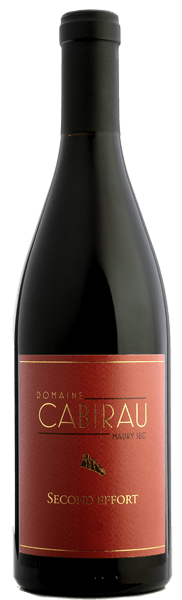

Domaine Cabirau Maury Sec ‘Second Effort’ 2021

Red Blend Other from Languedoc-Roussillon, France

62% Grenache, 38% Syrah

Purchase Price: $14.00

Jeb Dunnuck 94, Rober Parker 90-93, ElsBob 92

ABV 14.5%

An opaque ruby colored wine, medium-full bodied, with powerful aromas of black fruit and pepper. Red berries on the palate with a wonderful long balanced finish.

An excellent fine wine at a ridiculous price. Current pricing ranges from $22-28.

Trivia: In the 12th century, Languedoc became the epicenter of the Cathar movement: a dualist Christian sect deemed heretical by the Catholic Church. Their beliefs challenged ecclesiastical authority and rejected materialism outright.

The Cathars held that a benevolent God created the invisible, eternal realm of spirit, while a malevolent demiurge, often equated with Satan, crafted the physical world. In contrast, Gnostic traditions dating back to Plato portrayed the demiurge not as evil, but as ignorant: a blind artisan who shaped the material realm without awareness of the higher divine source. For the Cathars, however, the true God was pure and transcendent, wholly uninvolved in the corrupt domain of matter. The physical world, including human bodies, was a prison of suffering, designed to entrap divine sparks of life: fallen souls of lost virtue, anchored in flesh.

For the Cathars, the goal was not to purify Earth but to escape it: to transcend flesh and return to its spiritual source. Their sole sacrament, the Consolamentum, was a spiritual baptism liberating the soul from the material world, often performed at death’s door. Readings from the Gospel of John, with emphasis on light and spirit, were central to this rite.

Their beliefs echo Socrates in the 5th century BC, who taught that man’s highest task was to keep his soul bright and shiny. Death, for Socrates, was not an end but a door to a new beginning in a higher realm of destiny for the safe-guarded virtuous soul.

The Cathar movement was ultimately extinguished, beginning with Pope Innocent III’s Albigensian Crusade in the 13th century and continuing through the Medieval Inquisition into the mid-14th century. Through the efforts to stamp out the sect it is estimated that between 200,000 and 1 million adherents were killed by hanging, burning, or other brutish methods. Raphael Lemkin, who coined the term genocide in 1944 to describe Nazi atrocities, recognized in the Cathar extinction a grim precedent: a spiritual lineage extinguished by fear that invisible truths might reshape visible order.

Centuries later, Deists such as American Revolutionary figures Washington, Jefferson, and Franklin embraced a belief in a benevolent Creator who did not intervene in human affairs. Like the Cathars and Socrates, they emphasized spiritual virtue over dogma, without dualist cosmology. The American Founders vision of divinity was rational, moral, and benevolent, interested in virtue, yet non-interfering in the affairs of man.

Bieler Pere et Fils La Jassine Cotes du Rhone Villages Rouge 2022

Rhone Red Blends from Cotes du Rhone Villages, Rhone, France

Grenache 60%, Syrah 40%

Purchase Price $14.99

James Suckling 90, ElsBob 91

ABV 14.5%

A medium purple with tawny rim and slightly opaque. A medium-full bodied wine with aromas plums, chocolate, and a whiff of tobacco. On the palate the tannins are easy and very well balanced with the acidity. A very nice finish. We enjoyed this with soft cheese and hard salami. Delicious.

An excellent fine wine at a very comfortable price. Current prices range from about $15-18.

Trivia: The Côtes du Rhône Villages appellation was officially established in 1967 to recognize superior-quality wines from select villages in the southern Rhone Valley. These wines rank above standard Cotes du Rhone but below Cotes du Rhone Crus (such as Chateauneuf-du-Pape).

The idea of distinguishing higher-quality Rhone valley wines began circulating in the 1950s. By 1953, five communes: Cairanne, Gigondas, Chusclan, Laudun, and Saint-Maurice-sur-Eygues were identified for their exemplary potential. Wineries could append their village name to the label if they met strict production standards, minimum alcohol levels of 12.5%, and grape composition of at least 50% Grenache, and 20% Syrah.

Today, 21 villages are allowed to include their name on the label, while others use the generic “Côtes du Rhône Villages” designation. Bieler Pere et Fils chose not to list their village, but their La Jassine Cotes du Rhone Villages Rouge 2022 originates from Valreas, located in the northern reaches of the Southern Rhone Valley.

On the label is rooster or classic French coq: a symbol of traditional farming, terroir authenticity and rural pride.

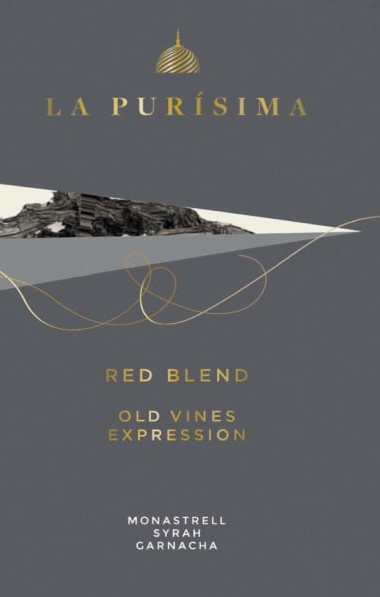
Bodegas La Purisma Old Vines Red Blend 2019

Red Blend Other (GSM) from Yecla, Spain

Monastrell (Mourvedre) 85%, Syrah 10%, Garnacha (Grenache) 5%

Purchase Price: $12.99

James Suckling 93, Wilfred Wong 90, ElsBob 89

ABV 14.5%

A dark cherry in color, medium to full-bodied, aromas of black ripe fruits with a touch of vanilla and spice. Balanced acidity and tannins with a strong, long finish.

A very good fine wine that retails around $11-19. Don’t pay more than $15 for this wine. Drink now or let it age for up to another 5 years. Cheers.

Trivia: Bodegas La Purísima is a cooperative of small-holding farmers in Yecla, Spain, united under the stewardship of María Teresa Ruiz González. Their old-vine Monastrell, over 40 years in age, thrives on 250 acres of sand and limestone soil. Grapes are picked by hand in late October, preserving the integrity of the fruit and the tradition behind the growers and the blend.

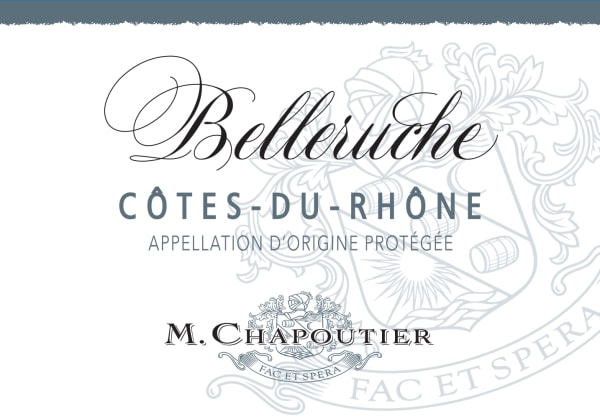
Maison Chapoutier Cotes du Rhone Belleruche Rouge 2022

Rhone Red Blend from Cotes du Rhone, Rhone, France

Mostly Grenache and Syrah

Purchase Price: $14.99

Wilford Wong 91,James Suckling 90, ElsBob 89

ABV 14.5%

A deep garnet in color, medium to full body, aromas of raspberry and pepper. On the palate it is full of red fruits, smooth, silky tannins, with a medium finish.

A very good fine wine at a fair price. I’ve recently seen this priced from $13-18. Likely close to peak quality, drink now. Cheers.

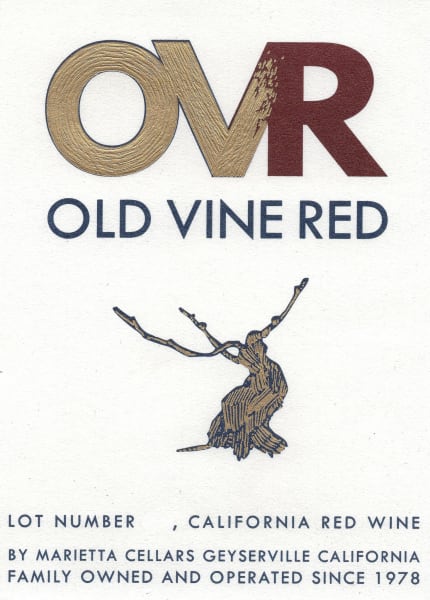
Marietta Cellars Old Vine Red Lot 74

Other Red Blend from Sonoma County, California

Vintages from 2019, 2020, 2021

Zinfandel (predominate), Syrah, Petite Sirah, Carignan, Grenache, Barbera

Purchase Price: $9.24

Robert Parker 93,Wilfred Wong 91, ElsBob 91

ABV 13.5%

A medium-to-dark purple wine with aromas of black fruits, a touch of earthy musk; medium bodied, supple but tannic, dry, with a medium finish. This wine will pair well with almost any food or as an afterwork refreshment.

An excellent table wine at a great price. I picked it up for under $10 but the lowest price I’ve seen lately is still a very reasonable $15.

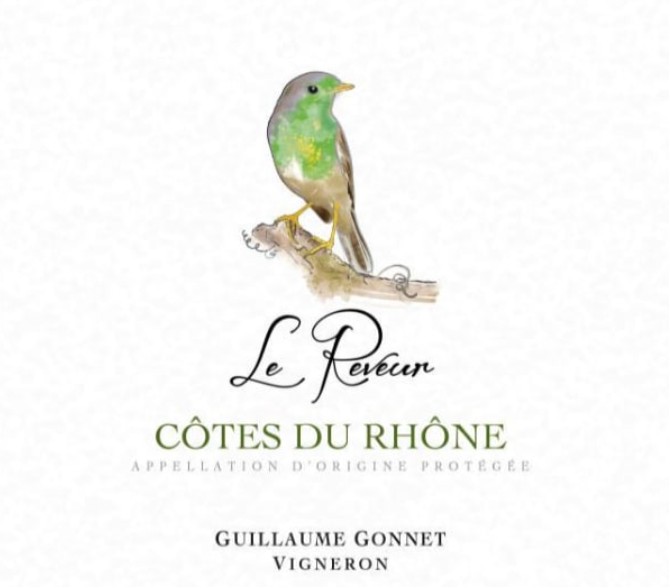
Guillaume Gonnet Cotes du Rhone Le Reveur 2022

Rhone Red Blend from Cotes du Rhone, Rhone, Franc

60% Grenache, 20% Syrah

Purchase Price: $10.99

ElsBob 88

ABV 14.5%

Aromas of red cherry and raspberry; full-bodied, dry, medium acidic, with a medium tannic finish. Will pair well with beef or game meat but this would be better served as the second bottle for an after-work social.

A very good fine wine priced a tad high at $11. I’ve seen it retail recently for $20+ which is too much for this wine.

Vina Zorzal 2020

Grenache from Navarra, Spain.

Purchase Price: $11.99

Robert Parker 92, ElsBob 88.

ABV 12.5% (table wine).

A clear ruby color, aromas of red fruits, medium bodied, with a short smooth finish. A nice wine but closer to a new world Pinot Noir than an old-world Grenache. Serve this with a traditional chicken and seafood Paella to bring out the wine’s subtle notes.

This is a very good wine but don’t pay more than ten dollars for it.

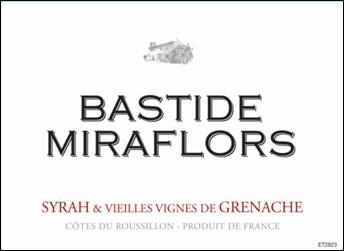
Domaine Lafage Bastide Miraflors Vieilles Vignes 2019:

Rhone Red blends from Cotes du Roussillon, Roussillon, South of France, France

Syrah 70%. Grenache 30%.

Purchase price: $13.99

Rankings: Robert Parker 91. ElsBob 91-93.

ABV: 14.5%

A pale to medium purple, full-bodied, with aromas of black fruit and pepper, high tannins and a very nice long finish. A great sipping red wine for your wine-thirty affair or pair with anything spicy, gamey, or blue and pecorino cheeses.

An excellent wine at a very good price. Buy a case, or two, and hold.

Pierre Dupond La Renjardiere Cotes du Rhone Rouge 2015

W Dupond 2015Rhone Red Blend from Southern Rhone – Cotes du Rhone, Rhone, France

60% grenache

20% syrah

10% mourvedre

10% cinsault

14.0% alcohol

Opened 17 Jan 2018

els: 8.6/10

Tastings: 88

The Cotes du Rhone wine region stretches along the Rhone River, beginning at Vienne in the north to Avignon, 125 miles to the south. The Central Massif defines the western boundary and the foothills of the Alps, the eastern boundary. The region is designated with 4 levels of distinction: at the bottom and the most basic are the Cotes du Rhone wines, this wine falls into that category, followed by 95 Cotes du Rhone-Villages, then, with another step up there are the 18 Cotes du Rhone-Named Villages and finally at the top are the 17 Crus. Cotes du Rhone wines must contain at least 40% Grenache as their main grape, followed by a minimum of 15% from the secondary grapes: Syrah and Mourvedre.  Accessory grapes, such as Cinsault, can not provide more than 30% of the total.

The La Renjardière is a 300 acre+ vineyard, just north of Chateauneuf du Pape and the city of Orange. The vineyards reside on the right bank slopes of the Rhone with soils consisting of sand, clay and limestone with round pebbles which make walking without shoes difficult, but provide a wonderful assist for drainage. The vineyard’s Mediterranean climate has growing season temperatures ranging from the high 40s at night to the low 80s °F during the day.

The wine has a dark ruby-red color with a nice garnet rim. It exhibits a medium but distinct nose of  cherry and strawberries. The tongue tells me that plums and black fruits are nearby. Tannins are easy, acidity isn’t overpowering, or in other words a balanced, mild wine with a medium to long finish, reminiscent of a young woman with small, but invitingly round breasts. The wine should be good for a few more years.

A good everyday red at a good price.  Serve with cheese, lamb, or pork.  Decant and aerate for one hour before drinking.

$12.99  wine.com