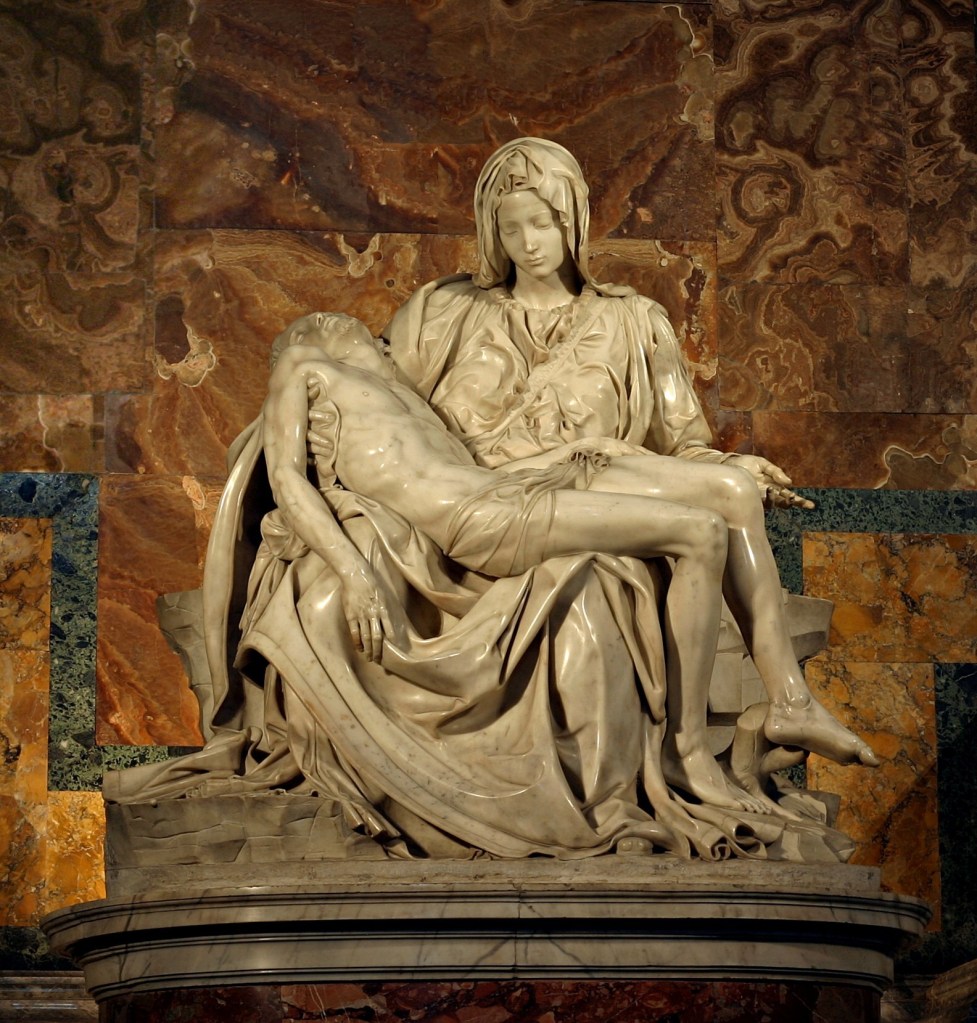
Death is a biological condition of life. Mortality is a fundamental fact of our existence: with life comes death.
The body dies when it can no longer sustain itself. Physicians may debate the precise moment, this minute or maybe the next, but the uncertainty is measured in seconds, not hours. What matters is not the exact time but the irreversible transition.
Of the roughly 115–120 billion humans who have ever lived, about 110 billion have died. Put differently, out of every sixteen people who have existed, only one is alive today. At present, roughly one out of every 135 people on the planet dies each year, somewhere between 53 and 68 million annually.
We die from disease, accidents, violence, starvation, drowning, substance abuse, fire, war, climate (heat or cold), and natural disasters. Yet the most common cause of death is simply age. About two‑thirds of all humans alive today will die of old age; in the developed world, the odds rise to ninety percent.
Old age begins when senescence, the slow accumulation of biological damage, overtakes the body’s ability to repair itself. This shift usually occurs in the seventies, when maintenance falls behind decay. From that point on, aging becomes the dominant threat to life.
For many, life and death are the whole story. Life begins, and it ends. No more, no less. For the atheist, the materialist, the Darwinist, death is not a mystery to ponder or a transition to prepare for. It is simply the termination of an organism: the cessation of function and future.
The Stoics, along with Socrates and Aristotle, saw virtue as its own reward. For them, the moral life was complete in itself, needing no promise of continuation beyond the grave. Marcus Aurelius acknowledged that life after death might take one of several forms: “either dispersion, or a change, or extinction,” yet he treated all possibilities as indifferent. What mattered was living rightly within the order of nature, not speculating on what lies beyond it.
A similar spirit, pun intended, appears in Confucian thought, where the focus rests entirely on the moral harmony of earthly life. Confucius taught that humanity’s proper concern is virtue within society, not the mysteries that follow death: “You do not yet understand life; how can you understand death?” he asked.
A similar renunciation of afterlife speculation appears in early Buddhism, though for different reasons. The Buddha did not deny rebirth, but he denied the existence of the very self that would be reborn. What continues, he taught, is not a person but a chain of conditions: craving, ignorance, momentum, none of which constitute an enduring identity. Questions about what happens “to us” after death are therefore misguided, because the “us” in question is a cognitive illusion. Like the Stoics and Confucius, Buddhism directs attention away from metaphysical hopes and toward the transformation of life in the present, but it does so by dissolving the very subject who might hope for anything beyond the grave.
I acknowledge these views, but they leave much without answers. For death is not only a biological event; it is a metaphysical boundary. To understand death, we must understand what it is not.
Biology can describe the failure of the body, but it cannot account for the conscious self that inhabited it. The death of the organism is measurable; the disappearance of the “I” is not. And it is the latter, not the former, that makes death a metaphysical event.
Human beings are more than cellular machinery. We are conscious, self‑aware, moral agents who love, choose, remember, hope, and fear. Whatever death is, it is not merely the cessation of heartbeat or brainwave. It is the end of embodied life for a being whose inner life: mind, self, soul, consciousness, cannot be reduced to physiology alone. Neuroscience can trace the brain’s machinery in exquisite detail, but it cannot locate consciousness within it, nor explain how matter alone could generate the first‑person experience of being a self.
This duality is not only metaphysical; it is moral. If consciousness were nothing more than the byproduct of a mortal brain, then every human value would collapse into biology. A purely biological organism seeks survival, reproduction, and pleasure; it has no reason to value truth, justice, beauty, or goodness. Evolution cannot produce a creature that willingly dies for a stranger, sacrifices advantage for principle or chooses suffering for the sake of meaning. Yet human beings do these things.
Nor is this duality contradicted by empirical observation. Biology has never located the source of consciousness within the brain. Damage to the brain can impair memory, language, or movement, yet the conscious self often remains intact. This persistence; this interior “I” that endures even when the machinery falters, suggests that consciousness is not generated by the body but expressed through it, and that the two together comprise the individual.
And if consciousness is not generated by the body, deeper implications follow. If consciousness does not arise from the body, then it cannot be confined to the body. It is not located in space, and it does not unfold in time. The body participates in consciousness; it does not contain it. And if consciousness is not temporal or spatial, then the death of the body cannot annihilate it. It is something more. It is the beginning of the soul.
This structure, a temporal expression of a non‑temporal reality, has deep theological precedent. In St. Paul’s Letter to the Hebrews, Christ’s sacrifice is described as occurring once in time yet possessing eternal presence and effect. A single historical event becomes the temporal manifestation of an act rooted outside of time. It is not repeated, because what is eternal cannot be repeated. It is not confined to a place, because what is non‑spatial cannot be localized. It is accessed, not reenacted.
Consciousness follows the same architecture: one embodied expression, grounded in a reality that does not begin or end with the body. Time is the realm of change, decay, and sequence; eternity is the realm of being. The soul is the bridge between them; the eternal dimension of the person expressed once in the temporal world.
But this raises a deeper question: If consciousness is not in spacetime, then what happens when the body, the interface between consciousness and the temporal world, fails?
This is where near‑death experiences become philosophically illuminating. They are, in a sense, the Myth of Er retold in modern form.
Near‑death experiences, taken even as phenomenological data rather than theological proof, reveal something striking. Their most remarkable feature is not the light, the peace, or the sense of transcendence; these can be explained by neurochemistry or symbolism. The striking feature is recognition.
People report meeting deceased relatives with clarity, identity, and immediacy. They do not search for them. They do not wait for them. They do not arrive at a place where others have been waiting. The encounter is instantaneous.
Instant recognition implies a mode of existence in which time does not unfold sequentially. If two conscious selves can meet the moment one crosses the boundary of death, then the initial post‑mortem state cannot be temporal in any ordinary sense. It is a mode of being in which persons are present to one another without delay, without distance, without sequence.
This is precisely what one would expect if consciousness is, as argued above, “not located in space, and not unfolding in time.” A timeless consciousness entering a timeless mode of existence would experience others not as arrivals but as presences.
The implications are profound. If consciousness persists without the body, then the body is not the fundamental reality of the person. It is the contingent expression of the person within spacetime. And if consciousness functions fully outside spacetime, then spacetime itself is not the ultimate structure of reality. It is the environment in which the soul experiences embodied life, not the domain to which the soul belongs.
Biological life is the soul expressed under temporal conditions; death is the soul expressed without them.
A mind conditioned by spacetime struggles with this, because it assumes that all existence must occur “somewhere” and “after” something else. But what the NDE literature suggests is a mode of being that is not spatial or sequential at all. This also explains why the first experience reported in many NDEs is not isolation but encounter. A timeless mode of existence would not require travel, waiting, or sequence; it would simply reveal what is already present. The immediacy of these encounters suggests that death is not movement into a new location but awakening into a new condition. The soul does not go anywhere; it becomes what it already is when the body no longer mediates its expression. In this sense, the soul exists beyond spacetime while simultaneously manifesting within it; two orders of reality, distinct yet interwoven, the eternal expressing itself through the temporal without being contained by it.
Quantum entanglement hints at a mode of unity that is not spatial, not temporal, and not divisible; a structure in which a single reality can be present in multiple locations without being contained by any of them. This is the closest physical analogy to how the soul may exist beyond spacetime while expressing itself within it.
Death is not the end of consciousness but the end of the constraints that shaped its earthly form. It is the moment when the temporal falls away and the eternal dimension of the person stands revealed.
But this is only the beginning. A timeless unveiling cannot complete the person. Recognition is immediate, but purification is not. Transformation requires sequence, and sequence requires time. The NDE reveals the first state of the soul: the unveiling. Purification is the second state: the transformation. Resurrection is the third state: the completion.
Death is not the opposite of life but its threshold, the necessary passage from embodied time to the timeless unveiling of the soul, and from there into the temporal purification that prepares the soul for its final union with an immortal body.
To see death clearly, it is helpful to say what it is not.
Death is not divine retribution. Death is not the price of sin rather it’s the natural boundary of finite life. Sin makes death fearful, not causal. From St. Paul in 1 Corinthians 15:54-56 he says, “Now the sting of death is sin: and the power of sin is the law”. A surficial reading of this verse finds sin causes death, or death is the price of sin. This makes death not only fearful but inevitable. And by extension entirely avoidable. Fearful because God is going to find you wanting; we are all sinners. Inevitable because that is the price of sin. And avoidable because without sin you will not die. All are a misreading of Paul.
The sting is to die in sin not that it is the cause of death. “The power of sin is the law” means the law exposes your guilt to God much the same way that the law of man exposes your presumed guilt to the to judge and jury.
Death has never been the punishment of God, nor the consequence of some ancient fault: original sin. It is simply the boundary of embodied life, the moment when what we have become is no longer hidden by flesh. The body falls away, and the soul stands revealed. That revelation; nothing more, nothing less, is what Scripture calls judgment. And judgment is the soul revealing its true state to God. God does not judge you; your soul determines its own fate, you judge you. Jesus was sinless and died, therefore death is not punishment.
Death is not caused by evil. Evil corrupts the soul, but it does not kill the body. Evil is the absence of good, the absence of God, and at death it reveals itself for what it is; a distortion of the soul’s true form.
Death is not an accident of fate. It is woven into the structure of our existence. Nature depends on death for renewal and continuity. Death is not chaos or disorder; it is lawful, patterned, and governed by the same symmetry that rules all physical processes.
Death is not the end of consciousness. The body and brain are mortal; consciousness is not. It may change form, but the capacity for awareness is not reducible to biological function.
Death is not meaningless. If death were meaningless, then so would be our finite biological life. Meaning arises because our souls continue, and they cannot continue without death. Death frees the soul to begin its transition into what its earthly life has shaped it to be.
For all our biological instincts toward survival, human beings carry an equally powerful intuition that life is preparing us for something beyond itself. Biology commands us to cling to life; consciousness teaches us to accept death. We fear it, resist it, postpone it, yet we also anticipate it, prepare for it, and in the end, most of us meet it with a strange readiness. This readiness is not biological; no organism is wired to welcome its own extinction. It arises from the deeper structure of consciousness itself, from the sense that our lives are not merely lived but shaped, formed, and oriented toward a further horizon.
This universal intuition, found in every culture and every age, is the clearest sign that the human story does not end at the grave. If death is a transition rather than an end, the natural question follows: a transition to what?
Across history, cultures have answered this with remarkable consistency. From the burial rites of the earliest hunter‑gatherers to the metaphysical systems of Greece, India, China, and the Abrahamic faiths, every major tradition has affirmed that something of the person endures beyond the dissolution of the body. The forms differ; reincarnation, resurrection, judgment, liberation, union, but the intuition is the same: death opens into another mode of being.
The Indigenous cultures of the Americas provide the clearest evidence that belief in an afterlife is not a product of cultural diffusion but a universal human intuition. Separated from the Old World for more than fifteen millennia, they independently developed burial rites, soul concepts, and post‑mortem journeys that mirror the earliest patterns of Egypt, Mesopotamia, and Greece. Yet their understanding of the soul was radically different: not an interior self or seat of consciousness, but a functional life‑force, often plural, relational, and without personal identity. In these traditions, something continues after death, but that “something” is not the conscious self. This is why resurrection; which requires a soul that is the self, never appears in the New World. The New World thus reveals both the universality of the afterlife intuition and the cultural specificity of the metaphysical structures that later produced resurrection in the Old World.
What varies is not the belief that something continues, but the nature of that continuation. Each tradition, each culture offers a different answer to the same metaphysical question: What becomes of the self when the body falls away?
It is to these visions of what lies beyond death that we now turn.
Ancient Egyptian religion was a vast polytheistic system with over 1,500 deities. Among them, Amun‑Ra, the sun god, and Osiris, ruler of the underworld, were central figures, with Isis as Osiris’s consort and one of the most revered goddesses. Belief in the afterlife was fundamental, and practitioners sought to remain in harmony with Ma’at: truth, balance, and cosmic order, while actively resisting chaos. In the Hall of Truth, Osiris presided over the judgment of the deceased, whose hearts were weighed against the feather of Ma’at to reveal their fidelity to this cosmic order. The essential idea was that Osiris oversaw the process, but the heart itself delivered the verdict, making Egyptian judgment a form of self‑revelation rather than divine sentencing.
Osiris’ judgment had three possible outcomes. The justified soul; one who lived in accordance with Ma’at, entered the Field of Reeds (Aaru), a perfected Egypt where the blessed lived eternally among the gods in peace, abundance, and a restored body. If a soul was not wicked but merely disordered, it was denied entry into Aaru and instead wandered the underworld, facing trials and purifications that might eventually lead to transformation. This state was not considered punishment but a corrective process. For the truly corrupt and self‑destroyed, the consequence was annihilation: no afterlife, no consciousness, and no torment, simply non‑being.
The Egyptians understood the “soul” not as a single entity but as a constellation of spiritual components: the ka (life‑force), ba (personality and mobility), ib (the heart as the moral self), ren (the name as enduring identity), sheut (the shadow‑double), and the sah (the spiritual body formed after death). These parts did not all continue automatically; death was a moment of disassembly in which the heart revealed the truth of the person. If the ib proved light and aligned with Ma’at, the ba and ka could reunite to form the akh, the transfigured, eternal self. If the heart was heavy, the soul’s components weakened, wandered, or dissolved, and in the worst case the heart was devoured, ending the person entirely. For the Egyptians, death was not punishment but passage; a metaphysical sorting in which only the harmonious elements of the person could reassemble into eternal life.
In Egypt, death was a passage judged by divine order; in India, it became a cycle governed by moral law. Hindu philosophy, emerging from the Vedic tradition, conceives existence as a continuum: birth, death, and rebirth bound by karma and dharma. The soul (ātman) does not perish but moves through forms until it attains moksha, a release from the wheel of becoming. Where Egyptian thought sought justification before divine judgment, Hindu thought sought escape from recurrence itself; the perfection of unity with the ultimate reality, Brahman.
Judgment in Hindu philosophy is not deferred to a heavenly tribunal but woven into the fabric of existence. Each life is both consequence and opportunity; every action, desire, and intention carries its own moral gravity, tipping the scale toward harmony or imbalance. Life itself becomes the tribunal; a living measure of one’s alignment with cosmic law. Death merely pauses the process before it resumes in another form, until perfect equilibrium is achieved and the soul is released into unity with the divine.
Liberation (moksha) is not reward but realization; the awakening of the soul to its identity with Brahman, the eternal reality from which all things arise. The perfected soul does not ascend to a heavenly realm but dissolves into the infinite, the boundaries of individuality and the mortal body falling away into pure consciousness. In this sense, moksha mirrors the Judeo‑Christian vision of heaven: the soul’s return to the infinite, yet it goes further. The self does not dwell with the divine; it becomes the divine. This statement isn’t meant as an act of ego but as the dissolution of ego. The individual isn’t claiming divinity but the realization that the individual is/was an illusion. The recognition that the individual was never separate, but a shadow cast by the infinite light of Brahman.
The soul that resists balance with Brahman does not fall into eternal damnation but into recurrence. Its judgment is lived, not decreed; suffering and rebirth are the universe’s way of restoring equilibrium. Even Naraka, the realm of torment, is not punishment but purification, a temporary crucible through which the soul learns what harmony demands. No soul is irredeemable; evil and ignorance are distortions, not essences. The universe corrects rather than condemns, and through karma and rebirth every soul moves, however slowly, toward restoration; torment is temporary, never permanent exile.
Leaving aside this eastern tradition for now and concentrating on western beliefs brings us back to life among the gods. Ancient Greek religion predates the eighth‑century BC Homeric poems by many centuries, with even earlier Minoan and Mycenaean traditions forming its foundation. Before Homer, local cults preserved their beliefs through oral practice rather than written doctrine. Homer’s epics did not invent Greek religion; they just consolidated and stabilized a diverse set of traditions that had been evolving from these oral traditions for generations.
Minoan religion (c. 2700–1100 BC), centered on Crete, revolved around powerful goddesses, nature spirits, and fertility cults. Mycenaean religion (c. 1600–1100 BC), on the Greek mainland, expanded on this tradition and included many of the Olympian gods familiar from later Greek life: Zeus, Hera, Poseidon, and others. Both cultures practiced elaborate burials and clearly assumed that the dead continued to exist in some form. But neither tradition shows evidence of moral judgment, reward, or punishment after death. Their afterlife was a continuation of existence in a diminished, non‑moral state.
By the Late Bronze Age, Mycenaean belief had developed into what becomes the prototype of Homeric Hades: a neutral, shadowy realm where all souls go regardless of virtue or vice. This early Greek afterlife is not a place of cosmic justice but simply the destination of the dead. The earliest textual appearance of the psyche: the Greek “soul”, also belongs to this period through Homer. In Homer, the psyche is merely the life‑breath that survives as a powerless shade in Hades, not a moral or immortal essence.
Only in the centuries after Homer does the psyche become a philosophical object: immortal, moral, and capable of judgment. Before Plato, Orphic and Pythagorean traditions transformed the Greek understanding of the afterlife. They introduced the idea of the soul as immortal, divine, and trapped in the body, undergoing cycles of reincarnation shaped by moral conduct. They taught that the soul is judged after death, rewarded or punished, and must be purified to escape the cycle of rebirth. These movements created the first moralized Greek afterlife, replacing Homer’s neutral Hades with a system of cosmic justice.
Plato inherits these ideas and gives them a philosophical architecture. In his hands, the soul becomes fully moral, truly immortal, and subject to cosmic judgment. The afterlife is no longer a shadowy continuation but a structured arena in which ethical choices determine the soul’s fate. This development reaches its clearest expression in the Myth of Er, where Plato presents a comprehensive vision of judgment, reward, punishment, and reincarnation; the first fully articulated moral afterlife in Western philosophy.
In this respect, Greek philosophy arrived at a structure broadly parallel to the Egyptian model, although by a very different intellectual route. As Greek metaphysics matured, Jewish theology was contemporaneously undergoing its own transformation, both of which were setting the stage for Stoic cosmology and the later Christian synthesis.
Early Jewish thought knew only Sheol, a neutral realm of the dead without judgment, reward, or punishment, closely paralleling the Greek Hades. In this earliest layer, all the dead; righteous and wicked alike, descended into the same shadowy underworld. But during the Second Temple period (516 BC–70 AD), Jewish theology underwent a profound transformation. As ideas of divine justice, moral order, and eschatological hope developed, Sheol did not evolve into new realms; it lost its function. The older, undifferentiated underworld dissolved as Jewish thought articulated a more morally structured vision of the afterlife.
Resurrection emerged as Judaism’s answer to the problem of justice: if God’s world is morally ordered, then death cannot be the final word. The righteous who suffered and the wicked who prospered must ultimately stand before God, and this requires that the dead rise so that judgment can be rendered in the fullness of embodied life. Jewish tradition therefore developed a two‑stage afterlife. At death, the soul enters an immediate spiritual state, experiencing either the nearness of Gan Eden or the purifying distance of Gehinnom; yet this is not final judgment, but the soul’s own condition revealed. True judgment awaits the resurrection in the World to Come, when body and soul are reunited.
In that final world, both Gan Eden and Gehinnom are emptied because their work is complete: purification has finished, disembodiment has been healed, and every soul capable of restoration enters the perfected, embodied life of Olam Ha‑Ba. The wicked who can be healed are purified and rise; the wicked who have destroyed their own capacity for the Good simply do not rise at all, for a soul that has unmade itself cannot be resurrected. It simply ceases to exist. In Judaism the soul is only immortal by participation in God.
Unlike Greek philosophy, which often treated the soul as separable, superior, or even imprisoned by the body, Judaism insisted that a human being is an indivisible unity. If judgment is the soul’s self‑revelation at death, then resurrection is not required for justice; it is required for wholeness. The resurrection of the body is therefore not an optional doctrine but the culmination of God’s moral order and the completion of human identity.
Across Egyptian, Hindu, Greek, and Jewish thought, a remarkably consistent anthropology emerges: human beings are composite creatures, a unity of body and soul. Whether this convergence arose through cultural exchange or independent insight is impossible to prove, but the structural duality is unmistakable.
When Christianity took shape in the first century, an extraordinary refinement of last things happened: Jesus’ resurrection changed the temporal meaning of resurrection within Jewish eschatology. Christianity enters history not as a new philosophy of the soul but as a claim about an event. The resurrection of Jesus becomes the axis around which the entire understanding of death, judgment, and the afterlife turns. In the earliest Christian imagination, Jesus is not merely raised; he is the “first fruits” of the general resurrection promised in Jewish apocalyptic hope. What Israel expected at the end of time has, in one case, has already happened. The future has broken into the present.
This single conviction reshaped everything.
The afterlife is no longer only a distant horizon. It becomes present and active, because the risen Christ is already alive, already reigning, already inaugurating the world to come. The intermediate state is transformed: the righteous dead are no longer waiting in Sheol for God’s final act. Through the Harrowing of Hell, Sheol itself is reinterpreted, not as the neutral realm of the dead, but as the territory Christ has invaded and emptied. Heaven becomes accessible because Christ has ascended; the righteous dead are now “with Christ,” not asleep in the underworld.
Early Christians did not treat death as a natural transition or a metaphysical necessity. Death is not a doorway into a higher state but the natural boundary of embodied life, the point at which the body falls away and the soul stands revealed. It is not the punishment of God nor the consequence of some primordial fault. Jesus himself was sinless and died; therefore, death cannot be retribution.
Yet Paul still calls death an “enemy.” Not because death was created as evil, but because sin has turned the moment of revelation into a moment of terror. Sin gives death its sting, and the law exposes that sting, making the soul fear what it will see when the body no longer hides it. The tyranny of death is experiential, not ontological: death becomes a tyrant only for the soul unprepared for its own truth.
Christ breaks this tyranny not by abolishing death, but by transforming what death reveals. For those who belong to him, death is no longer accusation but unveiling: a boundary like the edge of a rainbow: from one side nothing is visible, from the other everything is revealed.
In Philippians 1:21–23, Paul writes: “For to me, to live is Christ; and to die is gain… I have a desire to depart and to be with Christ, a thing far better.” To die is to enter a new mode of communion with Christ, superior to mortal life. In 2 Corinthians 5:6–8 he further explains that “while we are in the body, we are absent from the Lord… we would rather be absent from the body and present with the Lord.” The absence of the body is not annihilation but a provisional intimacy with Christ, awaiting the resurrection.
As Christianity develops in the Latin West, it builds a juridical and metaphysical system around sin, grace, and judgment. Yet beneath these developments lies the same fundamental conviction inherited from Judaism: the human person is incomplete without the body, and the final destiny of humanity is resurrection. Christianity’s distinctive claim is not the nature of the final state but that the resurrection has already begun in Christ, making the future world present in Him.
As a counterpoint, and a significant departure from Paul, Catholic teaching, and the argument of this essay; St. Augustine taught that death is the penalty of sin, inherited from Adam as divine punishment. Yet this position creates a deep theological contradiction: if death is truly the penalty of sin, then Christ, who was sinless, should not have died, and the baptized, whose original sin is removed, should not die either. Death cannot be the punishment of sin. It is the natural boundary of embodied life. Sin does not cause death; sin makes death fearful.
Augustine ultimately reaches the same eschatological ends as Paul, but by a radically different path. Where Paul understands sin as moral evil; the absence of good and the absence of God, Augustine relocates sin almost entirely into inherited guilt from Adam. In doing so, he effectively ignores the moral and spiritual reality of sin and replaces it with a juridical transmission of fault.
Aquinas takes several steps back behind Augustine and re‑enters the older philosophical tradition. Drawing on Aristotle, he treats the soul as naturally immortal and the intellect as ordered toward the vision of God. Death is not the catastrophic penalty of Adam’s sin but the natural dissolution of a composite being. Resurrection perfects nature by restoring the embodied person to the fullness of its form. In Aquinas, Christian eschatology becomes a synthesis of Greek psychology and Pauline theology, rather than an extension of Augustine’s doctrine of inherited guilt.
From its Jewish roots, Western Christianity develops a legal‑metaphysical architecture of the afterlife: self-judgment, purification, reward, or punishment grounded in the moral order.
In the Christian East, the framework is not juridical but ontological. The afterlife is understood as participation in divine life, not the outcome of a legal process.
The Cappadocian Fathers begin with the conviction that human nature is created for communion with God. Death is fragmentation, the tearing apart of body and soul, and resurrection is reintegration, the healing and restoration of human nature to its proper unity.
Later Maximus the Confessor deepens this vision. The human person is a microcosm and mediator of creation, the point where the material and spiritual realms meet. The telos of human nature is deification: participation in God’s uncreated energies. Eschatology is therefore not merely personal destiny but cosmic transformation, the transfiguration of all creation in and through Christ.
Gregory Palamas articulates this further through the essence–energies distinction. God’s essence remains inaccessible, but God’s energies, God’s life, light, and grace are fully participable. Heaven is thus participation in uncreated light, the same light revealed at the Transfiguration: “light from light, true God from true God.”
Hell, in this vision, is not divine retribution but the same divine presence experienced as torment by those who reject communion. The light that deifies the righteous, wounds the soul that has closed itself to God. Suffering is not imposed; it is the soul’s own resistance to the divine life.
Eastern Christianity therefore offers an ontological and pragmatic model of the afterlife. The human person becomes what it beholds. The soul discloses the truth of its life; its loves, its wounds, its distortions, just as in the Western tradition the soul is revealed at death. But whereas the West often interprets this revelation in juridical terms, as the basis for a moral verdict, the East understands it as the unveiling of the soul’s capacity (or incapacity) for communion with God. The same revelation, but a different metaphysical grammar.
Across East and West, Christianity shares a common framework. At death there is an intermediate state: conscious but incomplete. In the end there is a final resurrection: universal, bodily, definitive. Judgment is personal and cosmic. Heaven in the West is the Beatific Vision: the direct and unmediated sight of God’s essence in eternity. In the East it is Theosis, it is participation in divine energies. Hell in the West is the absence of God. In the East it is the misrelation to divine light. Moral life is essentially the same in the East and West: the formation of a person capable of communion with God.
To conclude, Christianity does not invent a new eschatology so much as it reinterprets Jewish eschatology through a decisive historical claim. The resurrection of Jesus inaugurates the final destiny of humanity within history; the moral and spiritual life becomes participation in divine life itself; and death, long regarded as the great enemy, is declared already defeated. Christianity’s innovations are therefore temporal, ontological, and soteriological. Transformations of Judaism’s deepest hopes rather than replacements for them.
Centuries later, Islamic thought attempts to present a coherent eschatological architecture that remains within the broad Near Eastern frame but without the pedagogical, logical, or the developmental dimension characteristic of the Judeo‑Christian tradition. It offers a distinct set of answers to questions about the soul, death, and the afterlife, but these answers rest on revelatory premises rather than demonstrable metaphysical proofs. Its eschatological framework is internally consistent, yet it neither resolves nor attempts to resolve the deeper philosophical questions that occupied Greek and Judeo‑Christian thinkers. Instead, it articulates a straightforward theological anthropology grounded in divine decree, moral accountability, and the finality of human character at death.
Islam does not treat death as a metaphysical rupture or the consequence of inherited guilt. Human beings are created finite; mortality is intrinsic to creaturely existence rather than a punishment. Adam’s lapse introduces moral consequences but does not alter human nature or the conditions of embodied life. These claims are theological affirmations, not philosophical demonstrations, and they function within the Quranic worldview rather than arising from independent argument. Each person bears responsibility for his own soul; he does not carry the burden of those who came before him.
Islamic anthropology distinguishes between al‑rūḥ (the divine spirit that animates life) and al‑nafs (the morally accountable self). This dual vocabulary describes different aspects of the human interior without positing a metaphysical dualism of substances. The rūḥ is the principle of life; the nafs is the locus of intention, desire, and responsibility. Islamic tradition treats the human person as a unified being whose identity persists beyond bodily dissolution, but it does not attempt to prove the persistence of personal identity through philosophical argument. It simply asserts it as part of the revealed account of human nature.
Death marks the transition to Barzakh, an intermediate state extending from burial to resurrection. Islamic sources describe Barzakh as a conscious interval in which the soul encounters a preliminary disclosure of its moral condition. The interrogation by the angels Munkar and Nakir is presented as revelatory rather than evidentiary: the questions do not determine the soul’s nature but expose it. Islamic theology does not offer a metaphysical explanation of how consciousness persists without the body, nor does it attempt to reconcile Barzakh with philosophical accounts of personal identity. It treats the intermediate state as a matter of divine knowledge and decree. From this point forward, the soul is what it is; there is no further growth or deeper communion with God.
Judgment is portrayed in juridical terms. Each person receives a record of deeds, and these deeds are weighed. Divine justice is perfect, yet divine mercy remains decisive. Islamic theology rejects inherited guilt, vicarious atonement, and the transfer of righteousness. Each soul bears responsibility for its own actions. These claims articulate a moral vision rather than a philosophical argument about the nature of justice; they presuppose a revealed moral order rather than deriving one. Judgment results in either Heaven or Hell.
Paradise and Hell are described in sensory and moral imagery. Islamic tradition treats these descriptions as real, though interpreters differ on the extent to which they are literal or symbolic. Paradise is the fulfillment of embodied flourishing or more simply, earthly pleasures. Hell is the state of estrangement from God. The tradition affirms the eternity of Hell for unbelievers, though classical and modern debates exist about the nature and duration of punishment. Again, these are theological positions, not conclusions reached through philosophical reasoning.
A distinctive feature of Islamic eschatology is the absence of post‑mortem transformation. The soul does not develop, heal, or change after death. Barzakh does not purify; resurrection does not transfigure. The soul at death is the soul that is judged. This finality reflects a theological commitment to moral responsibility in earthly life rather than a metaphysical argument about the impossibility of post‑mortem change.
In the Islamic model, death is not a transition of the soul but an interruption of life. The soul enters barzakh, a state of waiting in which its moral condition is fixed and unalterable. Nothing in this interval modifies the soul’s character, clarifies its understanding, or alters its destiny. Barzakh is not a realm of becoming; it is a metaphysical pause.
Resurrection, accordingly, is not a transformation but a restoration. The Quran affirms a universal bodily resurrection on the Day of Judgment: the body is reconstituted, the soul is reunited with it, and the human being stands before God as the same moral agent who died. The tradition does not offer a philosophical account of how bodily identity is preserved or what constitutes numerical sameness between the earthly body and the resurrected one. Instead, it treats resurrection as an act of divine power whose coherence rests on God’s ability rather than on metaphysical demonstration.
Taken together, Islamic eschatology presents a linear narrative of human destiny grounded in divine decree, moral accountability, and the finality of earthly character. It is a coherent internal structure, but its claims rest on revelation rather than philosophical demonstration. Like all theological systems, it answers certain questions by asserting limits: a few matters are explained, but most are simply declared. The result is a worldview in which death is a pause, judgment is decisive, and the soul’s ultimate state reflects what it has become within the constraints of earthly, mortal life.
Islam does not present its eschatology as the conclusion of a logical argument, nor does it offer a historical or philosophical pedigree for its claims. Its eschatology is structurally complete but epistemically ungrounded — a finished architecture without a blueprint. It is a system that is internally tidy but externally unanchored.
Philosophically, Islam represents a decisive alternative to the metaphysical developments of Judaism and Christianity. It affirms resurrection but rejects the idea that the soul is timeless consciousness. It affirms judgment but denies that judgment is the soul’s own unveiling. It affirms the afterlife but insists that it remains within the framework of space, time, and physical embodiment.
The difference reflects two models of divine-human relationship. Islamic theology is built on the commands of God; Judeo‑Christian theology is built on the teachings of God and His prophets. The Qur’anic God judges souls; the biblical God forms souls. The Qur’anic God commands; the biblical God instructs. The Islamic afterlife is static and retributive; the biblical afterlife continues the soul’s journey.
Placed alongside Judaism and Christianity, Islam preserves the moral clarity of resurrection while rejecting its metaphysical depth. It is precisely here, in the tension between restoration and transformation, that the philosophical necessity of resurrection becomes clear. If consciousness survives the body and enters another mode of existence, then the final question is not whether the soul endures, but why it should ever need a body again. After surveying the great traditions of Egypt, India, Greece, Judaism, Christianity, and Islam, a deeper pattern emerges: human beings are not merely souls trapped in bodies, nor bodies animated by accident, but composite beings whose identity is expressed through embodiment.
The Egyptians preserved the body because they believed the person required form. Hindus sought liberation from embodiment yet still described the soul’s ascent, purification, and realization. Greeks moved from powerless shades to moral souls. Judaism insisted that justice requires resurrection. Christianity proclaimed that resurrection had already begun. Islam affirmed resurrection but denied transformation.
Across these traditions, one truth recurs with remarkable consistency: the soul alone is not the whole person.
A disembodied consciousness may be aware, present, and unified, but it lacks the full structure of personhood. A person is not merely consciousness but also identity, memory, perspective, sequence, and narrative. These require embodiment, not necessarily biological embodiment, but a stable form through which the self can act, be recognized, and exist as a distinct individual.
A soul without a body is like a musician without an instrument. The musician exists. The music exists. But the performance does not.
This is why resurrection is not an optional doctrine or a theological flourish. It is the metaphysical completion of the human person. If death reveals the soul, resurrection restores the person. It reunites consciousness with form, identity with expression, presence with agency.
But this restoration is not a simple return. In Hindu, Jewish, and Christian theology the soul that survives death is not the soul that departed the body. If it undergoes purification, if it is clarified, healed, or transformed, then the soul that reunites with the body is not the same soul that once animated it. Purification implies change, and change requires sequence, and sequence requires time. A timeless realm cannot host transformation. Therefore the soul’s purification must occur in a domain where time is real, even if it is not mortal time. Purgatory, in this light, is not eternity but a different order of temporality: a realm where the soul can change without decay.
Thus the resurrected body does not merely receive its old inhabitant. It receives a purified soul, one capable of inhabiting an eternal mode of existence. And the body itself must be transformed to match it. The resurrected body gains what it lacked before: incorruptibility, immortality, and a mode of being compatible with a soul that has passed through purification. It regains, in perfected form, what humanity once possessed: Eden.
Resurrection is not the reanimation of a corpse. It is the emergence of the completed self: a purified soul united with an immortal body in a mode of existence neither component possessed before. It is the answer to the problem that disembodied consciousness cannot solve: how a person remains a person. But it also raises a deeper truth: the resurrected self is not merely the old self restored; it is the old self transfigured.
In this light, resurrection becomes the philosophical culmination of the entire inquiry. It is not merely a religious claim but the logical resolution of the metaphysics of consciousness. If the soul is eternal, and if the person is a unity of soul and form, then resurrection is the final harmony of what death temporarily separates, even if the harmony is not identical to the melody that began the song.
The traditions of the world intuited this in different ways. Christianity declared it explicitly: the future has already broken into the present, and the destiny of humanity has been revealed in the resurrection of Christ, the first fruits of what all persons are meant to become.
Resurrection is not a return to biological life. It is the completion, and transformation of human identity in a mode beyond decay, beyond time, beyond the limitations of mortal embodiment. It is, in the deepest sense, a return to Eden.
Once resurrection is understood as the completion of human identity, the great thinkers of the West can be seen not as inventing new doctrines but as interpreting the same metaphysical structure through different lenses. Each attempts to answer the same question: What does it mean for a person to exist beyond death?
Dante’s Divine Comedy is not merely medieval imagination; it is a metaphysical map of the soul’s condition when the body falls away. In Dante, judgment is not imposed but revealed. Hell, Purgatory, and Paradise are not external punishments or rewards but the soul’s own state made visible.
The damned are those who have become their vices. The saved are those who have become their virtues. Purgatory is the soul’s purification into what it was always meant to be.
Dante’s cosmos is the architecture of self‑revelation. Death unveils the soul; resurrection completes it. Dante’s genius lies in showing that the afterlife is not arbitrary but morally intelligible; the soul inhabits the shape it has chosen.
The Protestant Reformers stripped away the medieval scaffolding of purgatory, indulgences, and ecclesial mediation, returning to the raw Pauline insight: death is unveiling. The soul stands before God without delay, without ritual, without institutional intercession.
Luther and Calvin emphasized: the immediacy of judgment, the sufficiency of Christ, and the transparency of the soul before God. Yet even in their stark formulations, the metaphysical structure remains, death reveals the soul’s true state, and resurrection restores the person to embodied wholeness.
Kant approached the afterlife not through theology but through moral philosophy. For him, the existence of the moral law within us implies: the immortality of the soul, the existence of God, the ultimate harmony of virtue and happiness.
Kant did not claim to know the mechanics of the afterlife. Instead, he argued that morality itself requires a realm in which the soul can achieve the perfection it strives for but cannot attain in finite life. Immortality is a postulate of practical reason, the necessary horizon of moral striving.
Hegel saw history as the unfolding of Spirit (Geist) toward self‑knowledge. Individual death is not annihilation but the transition of finite spirit into the universal. For Hegel, the afterlife is not a place but a mode of participation in the Absolute. While Hegel’s metaphysics differs from traditional theology, he preserves the essential insight: the self is not reducible to the body, and death is not the end of the self’s meaning.
C.S. Lewis, writing in the twentieth century, returned to the ancient intuition that the soul becomes what it loves. In The Great Divorce and The Last Battle, he portrays the afterlife as the intensification of the soul’s chosen orientation. Heaven is reality becoming more real. Hell is the self-collapsing inward. Lewis’s contribution is existential clarity: the afterlife is not imposed; it is the soul’s own trajectory fulfilled. Death reveals; resurrection completes.
Across biology, metaphysics, NDE phenomenology, and the world’s religious traditions, a coherent, if not logical picture emerges. Death is the natural boundary of embodied life. It is not punishment, chaos, or annihilation. Consciousness is not reducible to the body but is a non‑spatial, non‑material reality that cannot be extinguished by biological death.
Near‑death experiences illuminate the soul’s native mode. Immediate recognition, integrated presence, and the collapse of sequence suggest that consciousness persists outside the spacetime conditions of mortal embodiment. Spacetime is the environment of biological life, not the ground of being. The soul expresses itself through the body but is not contained by it. Death unveils the soul. What we have become is revealed when the body falls away.
Yet the soul revealed at death is not the completed person. Across the world’s traditions, one intuition recurs: something of the person endures, and that endurance is morally structured. But the soul alone is not the whole self. A person requires identity, agency, memory, and narrative, all of which require sequence and therefore require time. A disembodied soul may be conscious, but it cannot be fully personal.
This is why the soul must undergo purification. And purification is not a timeless state but a temporal process, a sequence of change, healing, and clarification that requires a domain where time is real, even if it is not mortal time. The soul is prepared, shaped, and transformed for a mode of existence it could not inhabit before.
Resurrection is the completion of this process. The purified soul is reunited with a transformed, immortal body; a body no longer subject to decay, entropy, or death. The resurrected body gains what it lacked before: incorruptibility, permanence, and a mode of being compatible with a soul that has passed through purification. The union of purified soul and immortal body does not merely restore the old person; it brings forth the completed person, the self as it was always meant to be.
In this light, death is not the end of the human story but its unveiling. Consciousness does not vanish; it is freed. The body does not imprison the soul; it expresses it. And resurrection is not a return to mortality but the fulfillment of what it means to be human.
Biological life is the prelude. Death is the boundary. Purification is the transformation. Resurrection is the completion.
And consciousness: the soul, is the thread that runs through all three. A return to Eden.

 elsToday