A Synthesis of Quantum Foundations, Emergent Spacetime, and the Ontology of Correlation
Black Hole. (iStock, licensed)
Black holes and singularities are not features of spacetime: they are failures of the spacetime interface. They mark the points at which the spacetime interface ceases to be a valid representation of the underlying quantum relational structure.
Spacetime is not a fundamental arena but a representational interface that becomes valid only when a quantum state’s internal relational structure satisfies specific conditions. Three structural conditions jointly license a spacetime description: (1) entanglement must be sufficiently organized to support connected geometry; (2) entanglement must not be so dense as to erase locality through volume‑law scrambling; and (3) decoherence must suppress phase relationships enough to produce WKB‑stable classical histories. A separate rendering condition: the Higgs field’s vacuum expectation value, sets the classical mass spectrum and stabilizes decoherence once spacetime is licensed. When all conditions hold, a subsystem is forced into a classical mode of representation characterized by locality, geometry, causal order, and sequential time. The Big Bang is reframed as the relational event at which these conditions were first satisfied, rather than a temporal origin. The rendering model is then extended to examine cosmological parameters as interface requirements, classical end-time scenarios as failures of the interface (not the substrate), and the metaphysical implications of a universe whose deepest ontology is non-geometric, nonlocal, and non-temporal. Drawing on philosophical traditions from Plato to Bergson alongside modern quantum gravity, the paper concludes that reality is correlation: spacetime is the classical world’s shadow of a deeper relational whole, and the wavefunction is the universe.
The brain lives in time. Consciousness does not, and that difference changes everything.
The brain is a temporal, entropic organ embedded in spacetime; consciousness is a timeless, unified field that does not fragment, decay, or age. These two structures cannot belong to the same domain. This essay develops a formal two‑domain model: a timeless domain containing all outcomes at once, and a temporal domain in which the brain renders one outcome at a time.
Drawing on Bergson’s distinction between durée and spatialized time, and Proust’s demonstration that past experience can be recovered whole rather than in fragments, the essay argues that consciousness is not generated by the brain but translated by it. The translation occurs through a strict interface governed by five constraints: no energy transfer, no spatial dependence, no temporal sequencing, logical immiscibility, and one‑outcome rendering.
Quantum mechanics supplies the closest physical analogy we currently have: on one coherent reading, a non‑spatial Hilbert‑space structure is rendered into classical actuality through an incomplete interface that yields a single outcome and thereby produces probability. The model developed here proposes that the consciousness–brain interface is complete in the contrasting sense that the brain can render one outcome while preserving access to the unity of the whole.
If spacetime itself is emergent, as modern physics increasingly suggests, then the temporal domain is finite. When becoming completes its work, the timeless domain remains as the finished presence of all outcomes. This structure echoes what Jewish and Christian eschatology have long called ‘end times’: not destruction, but completion.
You are not your brain. You are the relation between a timeless field and a temporal organ, and experience is what that relation looks like from the inside.
I. The Ontological Gap
This essay begins with a simple ontological observation: Consciousness behaves nothing like the physical world that the brain inhabits. The brain is a structure embedded in spacetime, bound to sequence, causality, and entropy. It ages, it changes, it rewires, and eventually it dies. Everything about it is temporal. Yet the experiencer: the “I” that persists across every changing thought, memory, and mood, does not share those properties. Its continuity is given directly in experience: the subject does not appear in pieces but as a flowing whole.
This is not a puzzle about neural relationships. It is an ontological conundrum. Two things that occupy the same body appear to belong to different orders of reality. One is fragmented, local, and mortal; the other is unified, continuous, and apparently impervious to the very processes that govern everything else we know. Before any theory of consciousness can proceed, this asymmetry must be taken seriously as a structural fact, not explained away.
II. Experience and Memory
We are the sum of our experiences, but not the sum of our physical memories. Memory is a temporal, entropic function of the brain; experience is the continuous, non‑fragmenting field of consciousness. Memory is the brain’s record of experience, while experience is consciousness’s participation in reality. Memory can fail, distort, or vanish; experience cannot. We are shaped by every experience we live, not merely by the memories the brain manages to retain.
The difference is felt directly. Memory arrives in fragments: partial, lossy, subject to revision. Experience unfolds as a seamless whole while it is happening, regardless of how much the brain later preserves or loses. We remember discrete notes from a symphony that was lived entirely. The symphony was not discrete. The notes are what remains after the brain has done its work of reduction.
This is not a minor phenomenological observation. It is the first indication that consciousness and memory operate on different principles or levels and, therefore, in different domains.
III. Proust and Bergson: Two Witnesses to Duration
Marcel Proust understood this distinction intuitively and built the longest novel in Western literature around it. His great project in In Search of Lost Time was not to record memories but to re-enter experience. When the madeleine dissolves in tea, the past does not return as a fragment; it returns whole; an atmosphere, a room, a felt continuity, a field of consciousness recovered intact. What floods back is not a memory of Combray but Combray itself, as it was lived. Proust’s involuntary recollections are not neurological retrievals; they are reactivations of durée, the seamless flow of experience that the brain later fractures into discrete, lossy records.
The philosopher who gave that word, duree, its full force was Henri Bergson. Born in 1859 and writing at the height of European scientific confidence, Bergson was trained in mathematics, steeped in the physics of his era, yet convinced that the deepest features of reality could not be captured by equations or spatial diagrams. He was not a mystic, but he was not satisfied with the mechanistic worldview that dominated the late nineteenth century. His work sits at the boundary between scientific rigor and metaphysical honesty.
Bergson’s central argument is simple to state and difficult to absorb: the time of consciousness: durée, is not the time of physics. Physics measures time as a sequence of instants, a divisible line, a spatialized parameter that can be plotted on an axis. Consciousness lives time as an indivisible flow, a qualitative becoming, a continuity that cannot be cut into pieces without destroying its essence. The intellect, shaped by evolution to navigate matter, inevitably converts this lived flow into spatialized representations. We then mistake those representations for reality itself.
This is precisely what Proust refused to do. When he writes that “the past is hidden somewhere outside the realm, beyond the reach of intellect, in some material object,” he is pointing to the same structure Bergson identified philosophically: consciousness preserves what the intellect cannot. The madeleine works not because memory is stored in taste but because a certain configuration of experience bypasses the brain’s abstracting machinery and delivers duration directly. Proust is the literary proof of Bergson’s metaphysics.
Bergson also insisted that the future does not exist as a set of pre-formed possibilities awaiting selection. Possibilities, he argued, are retrospective abstractions; shadows cast backward by the intellect after an act has already occurred. Before the act, there is no branching structure, no probabilistic cloud, no menu of options. There is only becoming: an indivisible, creative advance that produces a determinate outcome and only then appears, in retrospect, to have been one of several possibilities.
Late in life, Bergson wrote that his reflections had brought him “closer and closer to Catholicism,” though he refused to convert during the rise of antisemitism in Europe, unwilling to abandon those being persecuted. His metaphysics is not explicitly theological, but it is unmistakably open to the idea that consciousness, creativity, and timelessness belong to a deeper order of reality than matter and spacetime. He was a philosopher who sensed; decades before physics caught up, that the classical world is not a fundamental reality nor one of infinite time.
IV. The Entropy Problem
This presents a structural stress or mess if you prefer. Spacetime enforces interruption, decay, and fragmentation. Within the temporal domain, every process is governed by entropy; the universal tendency toward dispersion. Anything subject to entropy cannot remain unified; left to its own devices, every organized structure dissolves into less organized states. A continuous, unified experiencer cannot, therefore, be a product of the temporal domain.
If consciousness exhibits properties that spacetime cannot produce or preserve; continuity without sequence, unity without physical binding, persistence without entropy, it cannot originate from structures embedded within spacetime. Its properties exceed what spacetime can generate or sustain.
This is why consciousness cannot be found inside the brain. It is not a physical object, not a neural pattern, not a biochemical process. It is the timeless field from which experience is drawn. The brain does not generate consciousness; it renders and localizes it. Much like a radio does not create the broadcast it plays, the brain does not create the awareness that animates it. The broadcast is non‑local and timeless; the receiver is local and temporal. They belong to different logical regimes, and because their rules are incompatible, they cannot be unified inside a single domain. They must remain distinct.
That distinction is not spatial: consciousness is not “over there” while the brain is “over here.” It is a separation of logic. Consciousness operates without sequence; the brain operates only through sequence. Consciousness is not bound by before and after; the brain is nothing but before and after. Consciousness does not age; the brain ages constantly. Consciousness does not fragment; the brain fragments with every injury, every chemical shift, every night of sleep. If consciousness were inside spacetime, it would inherit spacetime’s limitations. It would decay, interrupt, and dissolve. Identity would vanish. The continuity of the experiencer would be impossible. And yet here it is, given in every waking moment.
The entropy problem reveals a structural incompatibility: consciousness exhibits properties that cannot be generated or preserved by the classical, temporal domain. But this raises a deeper question: how can two domains with incompatible sets of rules interact at all?
Physics already contains the only known example of such an interface. The quantum and classical regimes coexist without sharing a common logic, yet they meet through measurement. This relationship provides the clearest physical template for understanding how a timeless domain can be rendered into a temporal one without being reduced to it.
To see how this works, we turn to the quantum analogy.
V. The Quantum Analogy
The following discussion does not claim that quantum mechanics is consciousness, nor that the quantum domain is the timeless domain of experience. The point is structural. Quantum theory already contains two regimes whose rule‑sets do not translate cleanly into one another, yet which interact through an interface that yields definite outcomes. This makes quantum mechanics the clearest physical example of a dual‑domain architecture; one in which incompatible descriptions coexist and nevertheless produce a coherent world.
On one defensible reading of the formalism, a quantum state is not an object in spacetime at all. It is a Hilbert‑space structure, the mathematical arena, encoding all allowable outcomes of a system at once plus the rules that govern this structure. Unitary evolution (Schrödinger’s equation…more on this below) preserves that structure perfectly. Measurement, by contrast, is a symmetry‑breaking projection: it renders a single classical actuality while discarding the rest of the quantum structure. Probability appears only at this interface. The quantum domain itself is deterministic and complete; the classical domain is fragmentary and sequential. Probability appears because the classical description cannot retain the full structure of the quantum state. The interface between the two is, at a minimum, incomplete.
It is tempting to imagine the quantum world as a smaller version of the classical world; tiny particles moving through tiny trajectories. This picture is false. Quantum entities are not miniature objects. They are excitations of fields defined by symmetry, not by spatial extension. Their properties are encoded in algebraic relations, not in shapes or locations. The classical world is the world of definite values, commuting observables, trajectories, and entropy. The quantum world is the world of superposition, non‑commuting observables, and global constraints.
These regimes are logically incompatible. The quantum domain is governed by the symmetries of Hilbert space and unitary evolution; the classical domain is governed by the symmetries of spacetime: locality, causal structure, and temporal sequence. Measurement is the interface between them, and it is not a neutral act. It collapses a richer domain into a poorer one. The classical world sees only the shadow of the quantum world, never the thing itself.
This dual‑domain structure provides a formal template for thinking about consciousness and the brain. The brain is classical: temporal, entropic, local, and fragmenting. Consciousness presents itself as unified, continuous, and non‑fragmenting. If consciousness belonged wholly to the classical domain, it would inherit classical limitations: interruption, decay, fragmentation. It would not persist as the same experiencer across the changing states of the brain. The quantum–classical interface collapses structure; the consciousness–brain interface, whatever its nature, does not appear to do so. The analogy is not identity; it is a demonstration that dual‑domain architectures are coherent within contemporary physics.
The quantum–classical interface shows how two incompatible rule‑sets can interact without unifying. But the analogy becomes far more concrete when we examine the phenomenon that most clearly exposes the mismatch between quantum structure and classical spacetime: entanglement.
Entanglement is where the deeper domain makes itself unavoidable.
VI. Entanglement, Symmetry, and the Nature of Possibilities
Entanglement is the clearest place where the quantum domain refuses to fit inside classical spacetime. In plain terms, entanglement is when two particles become so deeply connected that they behave like one thing, even if you pull them to opposite ends of the universe. Whatever you learn about one instantly tells you something about the other; not because a signal traveled, but because they were never truly separate in the first place.
This is not compatible with the symmetry structure of classical spacetime. Classical spacetime is organized by continuous symmetries: Poincaré transformations or diffeomorphisms; that treat locality and causal propagation as fundamental. Entanglement correlations violate the inequalities required by any local hidden‑variable theory that respects those symmetries. They are indifferent to distance. Trying to force them into a classical spacetime picture is what produces the sense of paradox.
A more defensible approach; common in quantum‑gravity, in attempts to unify quantum mechanics with general relativity, and in foundational work; is to treat entanglement as belonging to a more primitive domain whose governing symmetries are quantum rather than spatiotemporal. In that deeper quantum domain, the basic “things” are not particles in space but mathematical states living in Hilbert space: an abstract arena that holds every possible configuration of the system at once. Hilbert space is non‑spatial and conceptual; it is part of the mathematical structure of physics, not a physical arena. These states change according to a single rule (unitary evolution) that tells how the whole system unfolds as a perfectly coherent pattern. Because of this, the connections between parts of the system are global: they belong to the entire state at once and cannot be broken down into separate, independent pieces.
Spacetime geometry, locality, and even the appearance of time are not fundamental features of the quantum domain. They arise only when one looks at the global quantum state in a restricted way; by focusing on particular subsystems or by slicing the full state into pieces that resemble classical sequences. In other words, what we call “spacetime” is not built into the quantum world; it is what the quantum world looks like when viewed through certain coarse‑grained perspectives. Change the perspective, and the familiar features of spacetime change or disappear. The symmetries of emergent spacetime are therefore more restricted than the symmetries of the underlying quantum domain.
You do not need extra mechanisms to “explain away” non‑local correlations. You simply stop demanding that the quantum domain obey the symmetry principles of the classical arena it gives rise to. That single shift removes a great deal of unnecessary conceptual friction.
The physics we actually have supports this picture. Schrödinger evolution is deterministic and can be written in a fully stationary, timeless form for closed systems under Hamiltonian constraint. Entanglement lives naturally in that description: the global state contains all correlated outcomes at once.
Classical spacetime, measurement outcomes, and sequential experience obey a different effective rule‑set: locality, definite outcomes, an arrow of time.
Schrödinger’s cat is precisely where these two descriptions refuse to sit comfortably together. The unitary, entangled description of the closed system (cat + atom + environment) contains both “alive” and “dead” branches. The classical description insists on one definite macroscopic state. The interface between these rule‑sets is the measurement problem. No consensus solution exists.
This mismatch is empirical. It does not claim that the quantum domain is literally timeless, nor that it is the seat of consciousness. It simply notes that the quantum domain and classical spacetime obey different symmetry principles, and that entanglement makes this unavoidable.
Entanglement already shows that the quantum domain cannot be forced into the symmetry structure of classical spacetime. But it also reveals something deeper: the quantum state is not a collection of parts but a single unified whole.
This brings us to the structural heart of the analogy: the completeness of the timeless whole.
VII. Entanglement and the Completeness of the Timeless Whole
Entanglement reveals something deeper: the quantum formalism does not describe two systems but a single unified whole. A joint entangled state cannot be decomposed into independent parts without losing information. The correlations do not travel across space. They are revealed instantaneously, regardless of distance, from a domain in which all allowable outcomes of the combined system coexist in a single structured state.
The quantum formalism encodes the whole system at once. The classical world cannot decode it in full. Schrödinger’s equation evolves this unified structure with perfect precision yet contains no mechanism for extracting a single classical outcome without losing access to the rest. This incompleteness; this inability to render the whole while rendering a part, is the structural source of quantum probability. The apparent indeterminacy does not belong to the quantum domain. It belongs to the interface.
Einstein’s intuition reached exactly here. He insisted that nature could not be fundamentally probabilistic, that apparent randomness must signal incomplete understanding. Modern physics treats quantum probability as irreducible. But if the underlying domain contains outcomes rather than possibilities, if the global state is complete, then Einstein’s instinct was aimed at the wrong layer. The universe does not gamble; it reveals. What looks like probability from within the temporal domain is simply the classical interface’s failure to render the whole from which the outcome is drawn.
This is where the consciousness analogy becomes suggestive. The quantum–classical interface is incomplete: it collapses structure and introduces probability. The consciousness–brain interface, whatever its nature, does not appear to collapse or fragment the unity of experience. Consciousness remains whole while being rendered into temporal sequence. The analogy is not a claim of identity; it is a demonstration that dual‑domain architectures with incompatible rule‑sets already exist in physics, and that entanglement and the measurement problem provide the clearest example.
Whether consciousness–biology is an instance of such an architecture remains open. The quantum parallel does not prove it nor does it claim that consciousness is quantum or that Hilbert space is a model of mind. It shows only that dual‑domain architectures with incompatible rule‑sets are coherent and already present in physics.
With that structural template in place, we can now turn to the two domains that concern us directly: consciousness and biology.
VIII. The Two Domains
Any adequate account of the relationship between consciousness and biology must begin with a precise distinction between the domains in which they operate. These domains are not separated by distance or location. They are separated by logic; by incompatible rule sets, incompatible forms of order, and incompatible modes of existence.
The timeless domain is the field of consciousness itself. This is a metaphysical claim, not a physical one. Its role in this model is conceptual rather than empirical. It does not unfold in sequence, does not propagate through space, and does not decay. Nothing in it moves or changes, because change requires a before and after, and consciousness-in-itself has neither. It is the indivisible presence of all outcomes at once; a completed whole that does not fragment, age, or divide. In this domain, locality has no meaning, probability has no foothold, and entropy has no jurisdiction. It is not a place, not a state, not a moment in time. It is a mode of being: unified, non-local, and immutable.
The temporal domain is the world the brain inhabits; the realm of spacetime, where events occur in sequence, causes precede effects, and every process tends toward dispersion. Here, experience is rendered into local, measurable form. The brain localizes consciousness, translating one thread of the timeless whole into the lived sequence we call a life. In this domain, everything is fragmented: memories break, neurons die, signals propagate and dissipate, and every act is anchored to a specific moment and place. This is the domain in which free will operates, because free will requires becoming: the genuine creation of novelty through time.
These two domains cannot be unified. Their rules are incompatible, and this incompatibility is not a failure of symmetry but the preservation of their respective rules. Just as the quantum and classical worlds coexist without merging; each complete in itself, each ungoverned by the other’s logic: consciousness and biology coexist without unifying. The interface between them is not a collapse of separation into a whole but a mapping: a translation between two symmetrical systems whose rule sets cannot be made identical.
If these domains are to interact without collapsing into one another, the interface between them must obey strict, logical constraints.
IX. The Interface and Its Constraints
If a timeless domain and a temporal domain are to be coupled without being unified, the interface between them must satisfy strict, logical constraints. These are not design choices. They are the conditions without which the interface cannot exist without destroying one of the domains it connects.
The first constraint is non‑energetic interaction. Nothing is transmitted from the timeless domain into the temporal one, because transmission requires time, space, and energy, each of which belongs exclusively to the temporal domain. Information does appear in the temporal domain, but not through transmission; it is revealed through the interface, not sent across it. The interface cannot be a flow of anything. It must be a mapping, not a movement. This mirrors the quantum case: the wavefunction does not send a signal into spacetime when measurement occurs. It is rendered by measurement, and the rendering is not itself a physical transaction.
The second constraint is non-local correspondence. Consciousness does not occupy a location. It does not move through the brain and does not reside inside neural tissue the way a process resides in a processor. The brain performs a local biological act that corresponds to a non-local whole. This constraint prevents the interface from re-importing spatial metaphors into a domain where space has no meaning.
The third constraint is non-sequential translation. The timeless domain contains outcomes, not processes. It does not unfold or evolve. The mapping from timelessness to temporality is therefore not a temporal event; it cannot have duration, cannot occur “before” or “after” anything else, and cannot be described as a sequence of steps. The rendering is instantaneous in the logical sense: not fast, but outside of time altogether. A quantum measurement does not take time to consult the wavefunction; the classical outcome simply appears. The same logic governs the consciousness-biology interface.
The fourth constraint is logical immiscibility. The two domains must remain governed by their respective and incompatible rule sets. Consciousness cannot fragment, age, or become probabilistic; biology cannot become unified, non-local, or temporally complete. Any model that allows the domains to bleed into one another destroys the very distinction that makes experience intelligible. This constraint is the metaphysical parallel of the quantum-classical boundary: two symmetrical systems that cannot be made into one without losing what each contributes to the whole.
The fifth constraint is one-outcome rendering. The timeless domain contains all outcomes simultaneously, but the temporal domain can give presence to only one at a time. The interface must therefore reveal a single thread of the timeless whole at each moment without altering the whole itself. This is not collapse, not selection from a menu, and not reduction. It is the biological analogue of quantum measurement: the moment when one determinate actuality becomes present within the temporal sequence, leaving the rest of the whole intact.
Together, these five constraints define the only interface that preserves the integrity of both domains while allowing them to produce a single coherent experience.
These constraints define the architecture of the interface; the next question is how that interface actually operates.
X. The Translation Mechanism
The translation mechanism is the act through which a timeless whole becomes a lived moment. It is not a transmission; nothing crosses from timelessness into time. It is not a collapse; nothing in the timeless domain is altered. It is not a selection; the timeless domain contains no options from which to choose. It is, strictly speaking, a revelation: the process by which one completed actuality within the timeless whole becomes present within the temporal sequence.
Consider how classical measurement relates to the quantum analogy. The measurement does not extract information from the quantum domain. It renders one aspect of a timeless structure as a definite temporal event. The quantum state remains intact; the classical event appears. Nothing crosses the boundary; the two domains remain immiscible; and yet a single coherent result is produced. The translation mechanism for consciousness and biology operates by exactly this logic.
What the brain does, on this account, is perform the biological equivalent of measurement: it renders one outcome from the timeless domain of consciousness into the temporal sequence we call experience. Each neural configuration; shaped by development, learning, attention, and the accumulated history of the organism, corresponds to a particular rendering of the timeless whole. The rendering has no duration, no location, and no energy expenditure of its own. It is not an event within time; it is the interface through which time gains content.
This is where the consciousness-biology interface surpasses its quantum-classical counterpart. The classical world renders one outcome and in doing so loses access to the timeless whole, hence we are left with the non-exact idea of probability. The brain renders one outcome and preserves the whole. Consciousness remains unified, non-local, and complete throughout every rendering. The experiencer is never diminished by the act of experiencing. Probability is the residue of an incomplete interface. Experience is the expression of a complete one.
What emerges from this rendering process is not consciousness itself and not biology alone, but the lived stream we call experience.
XI. Emergent Experience
Experience is the ordered unfolding of these renderings through time. Each moment is a translation of one completed actuality into the grammar of temporal succession. Consciousness does not move through the brain; the brain moves through consciousness; touching one outcome after another, converting a timeless whole into a temporal narrative the way a reader moves through a text that existed in full before the reading began.
The timeless domain does not change, but the brain does. Neural activity is always in motion; always entropic, always reorganizing, always shaped by the previous moment’s outputs. Each new configuration of the brain corresponds to a different rendering of the timeless whole. As the brain changes, the thread it reveals changes with it. Experience emerges from this movement, and it belongs to neither domain alone. It is neither a property of consciousness nor a product of biology. It is the relation between them.
This relation generates the sense of continuity that defines a self. Consciousness is not continuous: it is whole. Biology is not unified: it is fragmented. Yet the translation mechanism binds these opposites into a single lived stream. Duration is not inside consciousness, and it is not a feature of the timeless domain. It is inside the rendering: the temporal stitching of discrete revelations into a narrative that feels seamless precisely because the timeless domain behind it is seamless.
Emergent experience is therefore the interface in operation; not the timeless domain, not the temporal one, but the ongoing translation between them. The brain’s traversal of the timeless whole is like a needle moving across a tapestry; the tapestry does not change, but the needle’s path creates a story. Experience is that story. It is the ordered sequence of outcomes drawn from a domain that contains no order and no sequence.
This account resolves three persistent puzzles in the philosophy of mind. Consciousness feels unified even though biology is not: the unity comes from the timeless domain the brain reveals, not from any biological integration. Experience feels continuous even though consciousness is not temporal: the continuity comes from the brain’s unbroken movement through the timeless whole, not from any property of consciousness itself. And free will feels real even though the timeless domain contains no unresolved possibilities: free will is the biological creation of new neural configurations that reveal new outcomes from the timeless whole. Novelty arises not because the timeless domain changes, it cannot, but because the brain does.
The “I” is not a substance. It is a relation: the ongoing correspondence between a timeless presence and a temporal organ. The self is the continuity produced by the brain’s traversal of a domain that contains no continuity. The story of a life is the ordered revelation of outcomes that were never themselves ordered. And consciousness; which does not change, does not age, and does not fragment, becomes the ground on which all change is experienced.
Proust knew this. The recovered past in In Search of Lost Time is not a reconstruction but a re-rendering: the brain, in a moment of extraordinary alignment between involuntary sensation and memory, arrives at a neural configuration that corresponds to an earlier thread of the timeless whole. Combray returns not as an image but as a presence; whole, atmospheric, immediate, because what returns is not a memory but an outcome from the timeless domain, re-revealed. The madeleine does not transport Proust backward in time. It re-establishes the translation.
XII. Spacetime, Eschatology, and the End of Becoming
Modern physics increasingly suggests, but not proven, that spacetime is not the base layer of reality. Leading theoretical frameworks; from loop quantum gravity to emergent spacetime proposals in string theory, treat spacetime as arising from deeper, pre-geometric structures rather than as a fixed backdrop in which physics unfolds. If this is correct, the quantum-classical duality is not a permanent feature of nature but a conditional one: it exists because spacetime exists, and it dissolves when spacetime is transcended.
The same logic applies to the structure developed here. If spacetime is emergent, then the temporal domain; the domain in which the brain operates and in which free will creates novelty through becoming, is emergent as well. When becoming finishes its work, the temporal domain does not collapse into nothingness. It completes. The timeless domain remains as the finished presence of all outcomes that becoming has produced over the entire span of its existence.
This is not a merely physical prediction. It is the metaphysical form of what several religious traditions have called “end times”, and the convergence is not accidental. Both Jewish and Christian eschatology, by different theological routes, arrive at the same final state: the end of temporal becoming and the emergence of a perfected, completed existence beyond time. Jewish thought, despite its relative resistance to systematic eschatology, nevertheless envisions an olam ha-ba, a world-to-come, in which the division between becoming and being is finally resolved. Christian eschatology names the same structure: a new creation in which time is not abolished but fulfilled, and all experience stands simultaneously present before its source.
From Abraham through the Greek classical period and into the time of Christ, the idea of a completed, timeless world-to-come was a logical argument only; a metaphysical necessity inferred from the nature of becoming. For nearly three millennia, no physical theory offered any structure that resembled it. Only in the 20th century did physics begin to produce concepts that rhyme with this ancient intuition: a timeless quantum domain, an emergent spacetime, a finite temporal span, and a collapse from possibility into completed actuality. What was once purely metaphysical began to acquire a faint but unmistakable physical analogue.
Neither tradition invented this idea from nothing. It follows as a structural, logical consequence of a universe in which time is not ultimate, in which becoming is finite, and in which the final condition of existence is a reunified, completed whole beyond the boundaries of spacetime.
Bergson spent his career circling this conclusion without fully reaching it. He knew that consciousness points toward something timelessness cannot be expressed through duration; that durée, however alive and creative, is not the last word. His struggle was structural: a temporal organism cannot fully conceptualize an atemporal mode of being any more than a two-dimensional surface can represent three-dimensional space from within itself. Modern physics now echoes the same horizon. The emergent nature of spacetime is the scientific form of the same intuition eschatology has preserved for millennia: that time is real and creative, but it is not the final architecture of existence.
XIII. Conclusion: The Relational Self
The relationship between consciousness and the brain is not a puzzle awaiting better neuroscience; it is a structure awaiting recognition: a meeting point between two domains that cannot be unified yet cannot be separated, each complete in itself, each requiring the other to produce the one thing neither can produce alone: experience.
One domain is timeless, unified, and complete: it contains all outcomes at once, without sequence or decay, the way a finished painting contains all its colors simultaneously, not as a sequence of strokes but as a completed presence. The other is temporal, local, and always in motion: it moves across that completed whole, revealing one outcome after another, translating the atemporal into the sequential, converting presence into narrative. Experience is not a property of either domain. It is the translation itself; the ongoing act through which a timeless whole becomes a lived moment and a lived moment points back toward a timeless whole.
This structure mirrors the deepest architecture of the physical world. The quantum domain presents a unified, non-local whole; the classical domain renders one outcome at each measurement. The classical interface is incomplete: it renders one outcome and loses the whole, producing probability. The consciousness interface is complete: it renders one outcome and preserves the whole, producing experience. In this sense, consciousness preserves what classical physics cannot; that unity is not constructed through aggregation but given as the ground; that continuity is not fundamental but emergent; that the whole is not assembled through time but revealed through it. But the quantum analogy is not an identity but a structural guide: it shows that two incompatible domains can interact coherently without unifying, and that a temporal sequence can be drawn from a timeless whole without diminishing it.
To call consciousness timeless is not mysticism. It is the recognition that the unity of experience cannot be produced by a temporal organ, and that something beyond spacetime must be doing the work that spacetime cannot do. To call the brain a rendering device is not reductionism. It is an acknowledgment that the brain’s extraordinary complexity is precisely what enables it to traverse a domain that does not move; that biological sophistication is the instrument through which a timeless whole becomes a particular life. To call experience emergent is not to dilute its reality. It is to locate its reality correctly: not in consciousness alone, not in biology alone, but in the irreducible relation between them.
The world we live in is neither purely physical nor purely mental. It is relational; constituted by the ongoing act of translation between two symmetrical systems whose rules cannot be made identical and whose interaction cannot be reduced to either. Experience is the translation. The “I” is the thread of that translation. And the meaning of a life is the pattern traced by a temporal organ moving, moment by moment, across a timeless whole that was always already complete.
Consciousness and biology are birds of a feather in the only sense that matters: neither can produce experience without the other. Biology provides the temporal thread through which consciousness becomes localized, and consciousness provides the unified field that biology alone cannot generate. They are not identical domains, but complementary ones: each incomplete without the other.
The self is the living proof of that complementarity: the single thread through which a temporal organism reveals, moment by moment, the presence of a timeless whole. When the temporal domain completes its work, becoming resolves into being: the timeless whole itself.
Appendix: Contexts for a Dual‑Domain Architecture
This appendix gathers the philosophical, literary, and scientific contexts that inform the dual‑domain model developed in the main text. It is not required for the argument itself, but it situates the model within a broader lineage of thinkers who have grappled with the tension between temporal sequence and timeless unity.
1. Bergson and the Metaphysics of Duration
Henri Bergson’s distinction between durée and spatialized time provides the philosophical foundation for the timeless domain described in this essay. Bergson argued that consciousness does not live time as a sequence of instants but as an indivisible flow: a qualitative becoming that cannot be cut into pieces without destroying its essence. Spatialized time, the time of physics, is a representation created by the intellect for practical navigation of the material world. It is not the lived reality of consciousness.
Bergson also rejected the idea that the future exists as a set of pre‑formed possibilities awaiting selection. Possibilities, he insisted, are retrospective abstractions: shadows cast backward by the intellect after an act has already occurred. Before the act, there is only becoming. This view aligns with the model developed here: the timeless domain contains outcomes, not options; completeness, not branching.
Bergson’s account shows that timeless unity is not an abstraction but a feature of lived experience that the intellect later fractures into spatialized representations.
2. Proust and the Literary Demonstration of Duration
Marcel Proust’s In Search of Lost Time offers the most sustained literary demonstration of Bergson’s durée. Proust’s involuntary memories do not return as fragments but as atmospheres: whole fields of experience recovered intact. The madeleine episode is not a neurological retrieval but a reactivation of lived duration, bypassing the brain’s fragmenting machinery.
Proust’s project parallels the dual‑domain model: the past is not stored as discrete data but preserved as a unified field of consciousness that can be rendered whole when the right configuration of experience opens the interface. Literature here becomes a witness to metaphysics, showing how consciousness retains what the temporal domain fractures.
Proust’s denial of Bergson’s influence underscores the point: durée is not a doctrine but a phenomenon that reveals itself independently to those who attend closely to experience.
3. Quantum Foundations and the Structure of Non‑Temporal Domains
The quantum analogy used in the main text is structural, not literal. It draws on a widely accepted feature of quantum theory: the mismatch between the symmetry principles of Hilbert‑space structure and those of classical spacetime.
In quantum foundations and quantum‑gravity research, several approaches treat spacetime as emergent from deeper quantum structures: Hilbert‑space states as non‑spatial, global objects; entanglement as non‑factorizable correlation; unitary evolution as deterministic and often expressible in stationary (“timeless”) form; emergent spacetime in Page–Wootters relational time, holography, and tensor‑network reconstructions.
These approaches do not claim that consciousness is quantum. They show that physics already contains a dual‑domain architecture: a non‑spatial, non‑sequential domain rendered into classical actuality through an incomplete interface. This structural parallel clarifies how two incompatible rule‑sets can interact without unifying. The quantum analogy is not an identity but a guide: it shows that a temporal sequence can be drawn from a timeless whole without diminishing that whole.
4. Schrödinger’s Equation and the Evolution of the Whole
Schrödinger’s equation is the rule that governs how a quantum system evolves. It does not describe particles moving through space the way classical equations do. Instead, it describes how the entire quantum state: the full set of allowable outcomes, changes as a single, unified structure.
In its simplest form, the equation is:
In this equation (wordpress does not render the equation letters accurately):
i = is the imaginary unit, the generator of rotation in complex space.
h = (h‑bar) is the reduced Planck constant, equal to h/2pi.
psi = Greek capital letter psi is the wavefunction, the complete quantum state.
H = is the Hamiltonian operator, which encodes the system’s total energy and internal symmetries.
This expression is often misunderstood. It is not a law of motion in spacetime. It is a law of coherence: a rule that tells how the whole quantum state unfolds according to the Hamiltonian. Several features of Schrödinger’s equation matter for the dual‑domain model developed in this essay:
It preserves the whole. Unitary evolution ensures that the quantum state never fragments, never loses information, and never collapses on its own. The entire structure remains intact, even when it contains mutually incompatible outcomes. This is why entanglement persists regardless of distance: the equation evolves the whole, not the parts.
It is deterministic and complete. Nothing probabilistic happens inside the equation. Every change in the quantum state follows exactly from the Hamiltonian. Probability appears only when the classical domain tries to render one outcome from the whole. The equation itself contains no randomness.
It can be written in a timeless form. In many contexts; especially in quantum gravity and systems under Hamiltonian constraint, Schrödinger evolution can be expressed without an external time parameter. The “flow” of the quantum state is internal to the structure, not a march through spacetime. This is one reason the quantum domain is often described as non‑temporal or pre‑temporal.
Its symmetries exceed those of spacetime. The Hamiltonian acts in Hilbert space, not in physical space. Its symmetries are algebraic, not geometric. This is why the quantum domain can contain global correlations that classical spacetime cannot accommodate.
Taken together, these features show why Schrödinger’s equation is central to the quantum analogy. It describes a domain that is unified, complete, non‑fragmenting, non‑local, and, in important senses, non‑temporal.
The classical world does not evolve according to Schrödinger’s equation. It receives one outcome at a time through an interface that cannot retain the whole. This mismatch: complete evolution vs. incomplete rendering, is the structural source of quantum probability.
Setting in Schrödinger’s equation reveals the quantum state as a complete, unified whole containing all allowable outcomes at once. Time evolution does not create new outcomes; it rotates this timeless structure in Hilbert space. This is the closest physical analogue to the timeless domain described in the main text: a completed whole from which the temporal domain renders one outcome at a time.
The consciousness–brain interface, as argued in the main text, is the contrasting case: a complete rendering that preserves the whole while revealing one outcome at a time. Schrödinger’s equation provides the clearest physical example of how a unified domain can evolve coherently without collapsing into the temporal sequence through which it is partially revealed.
5. Emergent Time, Becoming, and the Transition to Being
Several approaches in quantum foundations and quantum‑gravity research treat spacetime as emergent rather than fundamental. If spacetime, and therefore time, arises from deeper, non‑spatiotemporal structures, then the temporal domain may also be finite in scope. An emergent structure does not need to extend indefinitely; it can have a domain of applicability that begins, persists, and eventually completes its role. In this view, temporal sequence is not an infinite container but a limited mode of rendering drawn from a deeper, timeless whole.
Becoming: the creation of novelty, the unfolding of sequence, the work of free will, depends entirely on this temporal structure. It is the activity of a domain that renders one outcome at a time. If the temporal domain is finite, then becoming is finite as well. Its completion would not be another moment in a sequence but the cessation of sequence itself. What remains is not a final instant but the timeless presence of the whole: being rather than becoming.
This conclusion is metaphysical rather than physical, but it follows directly from the dual‑domain architecture developed in the main text. Becoming is the temporal expression of a timeless whole; when emergent time exhausts its scope, becoming resolves into being. The “end of time” is not an event within time but the dissolution of sequence into the unified now of the timeless domain.
6. The Quantum–Classical Interface as a Mode of Disclosure
The dual‑domain architecture developed in this essay suggests a structural parallel between the consciousness–brain interface and the quantum–classical interface. In both cases, a unified, timeless domain is rendered into a sequential, fragmenting one. The classical world does not diminish the quantum state; it reveals one outcome at a time from a structure that contains all outcomes at once. Likewise, the brain does not generate consciousness; it renders one thread of experience from a unified field that is already complete. The fragmenting domain functions as a mode of disclosure, not as a generator.
In this sense, the classical world can be understood as the temporal expression of the quantum whole, just as the temporal domain of biology is the expression of the timeless domain of consciousness. The analogy is metaphysical rather than physical, but it clarifies how two incompatible rule‑sets can interact without unifying: a richer domain can be rendered into a poorer one without being reduced to it.
7. Scope and Limits of the Analogy
The dual‑domain model developed in this essay is metaphysical, not physical. The quantum analogy clarifies structure, not substance. It shows how incompatible rule‑sets can interact, how a richer domain can be rendered into a poorer one, how temporal sequence can arise from a non‑temporal whole, and how unity can coexist with fragmentation through an interface.
The analogy does not claim that consciousness is quantum or that Hilbert space is a model of mind. It shows only that physics already contains a coherent example of two domains whose logics do not translate into one another, yet which nevertheless produce a single coherent world.
8. Related Thinkers and Parallel Models
Several thinkers across disciplines have approached similar dual‑domain tensions:
David Bohm: implicate vs. explicate order (used cautiously, as metaphor rather than physics)
Sean Carroll: contemporary quantum gravity theorist–emergent spacetime
Edmund Husserl: inner time‑consciousness and the unity of retention, protention, and primal impression
William James: the “stream of consciousness” vs. discrete neural events
Thomas Nagel: the irreducibility of subjective experience and the limits of physical description
Carlo Rovelli: contemporary quantum gravity theorist–relational time
Alfred North Whitehead: the contrast between process and actual occasions
These parallels do not prove the dual‑domain model, but they show that the tension between timeless unity and temporal sequence is a recurring feature of attempts to understand consciousness, physics, and metaphysics.
The human brain is the most powerful computer on the planet: 86 billion neurons (Azevedo 2009) with 1,000–10,000 synapses per neuron, giving a synaptic count: connections, of roughly 100 trillion to 1 quadrillion. Neurons fire glacially slow compared to silicon, but even the low‑end estimate of 100 trillion synapses provides 10¹⁵ to 10¹⁷ operations per second: a million teraflops to a thousand exaflops, competitive with supercomputers but running only on a night light equivalent of 20 watts. Billions of neurons firing in parallel, trillions of synaptic states, and a predictive engine that runs continuously even when consciousness is offline.
All this extraordinary compute power is shackled to catastrophically primitive, punch‑card‑era information technology. The brain has no reliable I/O, no indexing, and no way to retrieve data on demand. It is a supercomputer forced to operate through a slot in the wall. It forgets names, misplaces memories, and loses entire decades behind a fog of inaccessible indexing. The hardware is magnificent; the peripherals are a disaster.
And the brain is not a fully connected supercomputer. It is a sparse, modular, small‑world network where each neuron connects to only a few thousand others. This architecture gives it immense computational power, but crippling limitations in memory access, retrieval, and interface.
The problem is not capacity. It is not creativity. And it is not consciousness, which is not produced by the brain but expressed through it. Consciousness is the organizing principle that gives thought its direction and meaning; the brain is merely its substrate. The bottleneck is access; the inability of this biological substrate to retrieve, index, or manipulate information at the speed consciousness can use it. We are supercomputers trapped behind abacus interfaces.
Evolution built a brain that is amazing at recognizing patterns and terrible at retrieving facts, because only the former kept our ancestors alive. A fully connected, high‑bandwidth brain would require impossible caloric intake: our low-latency brain already consumes 20% of body’s total energy, and it would generate heat far beyond what biological tissue can dissipate. Sparse connectivity is the only thermodynamically viable architecture for carbon‑based intelligence.
These biological constraints define the outer limits of human intelligence. Whenever a system cannot evolve its way past a bottleneck, it compensates by building tools. Human beings have always extended their minds outward: first with language, then pictures and writing, then libraries, then computers. AI is simply the next extension.
And yet, when people talk about AI, they rarely talk about its complementarity to human intelligence. The public conversation is dominated by misaligned fears: job displacement, runaway energy consumption, machines “waking up,” and apocalyptic scenarios borrowed from science fiction rather than neuroscience. These anxieties imagine AI as an adversary, a rival, a looming replacement for human agency: the human capacity to initiate action, make choices, and shape outcomes. But these fears miss the real risks. The danger is not that AI becomes too powerful, but that it becomes powerful in isolation: external, centralized, and unintegrated with human cognition. A disembodied intelligence can concentrate authority, distort incentives, and amplify institutional failures. The threat is not superintelligence; it is asymmetry. The solution is not to restrain intelligence but to distribute it. Hybrid intelligence reframes the problem entirely. By embedding AI as a cognitive organ rather than an external authority, it dissolves the adversarial framing. AI does not replace agency; it expands it. It does not compete with human judgment; it completes the architecture that human judgment has always lacked.
The future of AI is not a contest between “us” and “them.” The future is a hybrid system: human cognition augmented by externalized memory, perfect retrieval, and real‑time access to the world’s knowledge. AI is not the threat; it is the missing peripheral. It is the interface our brains have always lacked.
The implanted AI assistant (via advanced Brain–Computer Interface, BCI) turns “me” into a hybrid, creative super‑intelligence. This is not AI replacing humans; it is AI completing us; supplying the data access, retrieval, and computational bandwidth our biological supercomputers have always lacked. The future of intelligence is symbiotic, personal, and distributed across billions of augmented minds. Not a single AI god, but billions of human–AI hybrids; each one a sovereign superintelligence, each one completed rather than replaced. A human–AI hybrid is a conscious human using an embedded AI as a cognitive organ: querying the universe, offloading computation, and receiving insights while remaining fully, unmistakably themselves.
Humans do not use 10% of their brains; we use all of it. What we use only a fraction of is the brain’s theoretical computational capacity, because thermodynamics, energy limits, and sparse connectivity prevent full activation. The bottleneck is not unused tissue: it is limited access. The human brain is a supercomputer trapped behind low‑bandwidth biological I/O. A silicon‑augmented human does not overheat, because the computation happens outside the brain. The brain remains a low‑power pattern engine; the AI becomes the high‑power I/O layer evolution could never build. The human mind keeps the creative spark and offloads the computational load to silicon, finally allowing the supercomputer to operate at its full potential. In a hybrid system, carbon and silicon stay in their thermodynamic lanes: the brain handles consciousness, intuition, values, meaning, and creativity, while the AI handles memory, retrieval, search, simulation, and computation. A BCI‑embedded AI doesn’t decide what to compute; the structure of cognition itself determines the division of labor. The implant simply routes each task to the substrate best suited to it.
A real‑world example of this architecture is unfolding today. Neuralink represents the first physical instantiation of this vision; Musk’s attempt to solve the same bottleneck described above: the catastrophic mismatch between the brain’s internal computational power and its primitive I/O bandwidth. Neuralink is a fully implantable intracortical brain–computer interface designed to read neural activity with high resolution and transmit it wirelessly to external devices. The N1 implant sits beneath the skull, invisible and silent, with 1,024 electrodes distributed across sixty‑four flexible threads thinner than a human hair. These threads record action potentials from individual neurons, while the implant digitizes and transmits the signals to an external decoding system. The surgical robot that inserts these threads is arguably the company’s most important innovation; a machine capable of placing electrodes with micron‑level precision while avoiding blood vessels. It industrializes neurosurgery in the same way the printing press industrialized writing.
Neuralink’s early human trials have already demonstrated the ability to control a cursor, type text, and interact with digital environments purely through intention. The company’s near‑term goal is therapeutic: restoring autonomy to people with paralysis or neurodegenerative disease. But Musk’s long‑term vision is explicit. He intends Neuralink to become a generalized brain I/O system: a high‑bandwidth interface between biological and artificial intelligence. In this vision, the implant becomes a cognitive organ, expanding memory, accelerating reasoning, and dissolving the bottleneck between thought and action. It is the hardware path to the same hybrid future described earlier: a world where human consciousness remains sovereign while its capabilities expand through seamless integration with external computation.
Neuralink is not the future of AI. It is the future of human access and the realization of mankind’s full potential.
But while Neuralink represents the first hardware path toward hybrid intelligence, the cultural response to AI has been dominated not by possibility but by fear. Nowhere is this clearer than in Pope Leo XIV’s recent encyclical, which treats AI as a civilizational turning point demanding moral vigilance.
Pope Leo XIV’s encyclical argues that artificial intelligence represents a civilizational turning point that demands moral clarity and global governance. He frames AI as a transformative force comparable to the industrial revolution, capable of reshaping labor, politics, warfare, and human relationships. The Church’s central concern is not the technology itself but the logic driving its development: competition for power, profit, and geopolitical dominance. This, he warns, risks creating new forms of exclusion, inequality, and dehumanization: especially for the poor and marginalized.
The encyclical’s core teaching is that human dignity is non‑computable and cannot be delegated to algorithms. Leo XIV condemns the use of AI in ways that remove meaningful human agency from decisions about justice, healthcare, employment, or warfare. He is especially forceful on autonomous weapons, declaring it morally impermissible to entrust lethal decisions to machines. He also highlights the dangers of opaque algorithmic systems that can deny people rights or opportunities without accountability. The Church’s position is not anti‑technology; it is a defense of the human person against systems that treat people as data points.
Finally, the encyclical calls for a global ethical framework to “disarm” AI and ensure it serves the common good. This includes a binding international treaty on AI governance, a ban on autonomous weapons, and protections against algorithmic injustice. Leo XIV envisions a world where AI enhances human flourishing rather than replacing or diminishing human agency. His tone is pastoral but urgent: humanity must shape AI before AI reshapes humanity in ways that undermine freedom, dignity, and solidarity.
The encyclical’s economic anxieties rest on two assumptions: that profit corrupts technological development, and that AI naturally tends toward centralization. Both assumptions are historically and technologically flawed. Profit is not the enemy of human dignity; it is the engine of innovation and purpose. Profit has lifted billions out of poverty. More than any other system the world has ever designed.
Without profit, there would be one AI, maybe; the one built by the richest government. With profit, we get many AIs: diverse, competing, value‑plural, and mutually constraining. Profit creates competition, and competition prevents monopoly. We already see this divergence in moral computation between Anthropic and its competitors. Profits will provide for many AIs. Centralized control of AI will lead to one centralized AI.
A world with a dozen frontier AIs is not a world of domination; it is a world of market‑driven checks and balances. Each model competes on safety, capability, alignment, cost, and accessibility. No single actor can dictate the trajectory of intelligence because every actor is forced to innovate or die. The encyclical treats profit as a corrupting force, but in the context of AI, profit is the mechanism that ensures plurality. And plurality is the only stable safeguard against tyranny and inequality; whether human or machine.
Hybrid humans represent the final and most profound form of distribution. When AI becomes an internal cognitive organ: a memory prosthetic, a reasoning engine, a universal interface, intelligence ceases to be a commodity owned by corporations and becomes a capability embodied in persons. A billion hybrid humans are not a threat to human dignity; it is the greatest expansion of human dignity since literacy. The encyclical fears a world where AI replaces agency. The hybrid future creates a world where AI amplifies agency. The Church imagines AI as external power; the future makes AI an internal instrument. This is not dehumanization. It is the next phase in the humanities striving to realize its full potential.
Yet the Church’s anxieties, while sincere, miss the deeper civilizational shift already underway: the global collapse in fertility.
A second civilizational shift is unfolding alongside AI: the global collapse in fertility. Most commentators treat declining birthrates as an unambiguous catastrophe. But both the data and the theological tradition suggest something more complex, and far more interesting. The Bible contains multiple passages that anticipate a future in which human fertility diminishes, not merely as punishment but as a structural marker of civilizational transition. Isaiah’s oracle against Babylon expands into a broader prophetic pattern in which humanity becomes rare: Issaih 13:12, a motif later echoed in apocalyptic literature. Hosea 9:11-14, describes a society: northern Israel, in which conception itself withdraws, and Jesus speaks of a time when the barren will be called blessed. These texts do not describe extinction; they describe exhaustion; the end of a particular mode of humanity.
In the biblical worldview, fertility is teleological. It is tied to purpose, covenant, and meaning. When a civilization loses its orientation toward its telos, birthrates fall as a natural consequence. The fertility crash is therefore not the cause of civilizational decline but a feature, a biological reaction to a metaphysical collapse. This fits seamlessly into the Return to Eden arc. Humanity’s story is a long descent from Edenic vitality into progressive senescence. From no death in Eden, to slow death, senescence after Eden, to accelerated senescence after the Flood, and capped senescence in modernity. The fertility crash is the final stage of this arc. When consciousness becomes disoriented; when a species no longer knows its purpose, its biological machinery of generativity winds down. Declining fertility is the physiological expression of a deeper spiritual exhaustion.
Yet the biblical tradition also contains the remnant motif: a smaller, refined, more conscious humanity. This aligns with the modern observation that declining fertility often correlates with rising cognitive selectivity. A smaller humanity with higher cognitive capacity is not a contradiction; it is the prophetic pattern. In prophetic literature, demographic contraction precedes renewal. Humanity becomes rare, the old order collapses, and a new mode of existence emerges. The fertility crash is not the end of humanity. It is the end of a mode of humanity; the threshold between the age of senescence and the age of restored consciousness. It is the demographic prelude to the hybrid future.
The fertility crash is not merely a demographic event; it is the biological expression of the same civilizational exhaustion visible in our failing institutions. A species that has lost its telos stops reproducing, and a civilization that has lost its cognitive capacity stops governing, educating, healing, and building. These are not separate crises. They are two faces of the same bottleneck: a humanity whose consciousness has outgrown the architectures that once sustained it. The fertility collapse reveals the biological limits of the old mode of humanity; institutional senescence reveals its structural limits. Both point toward the same conclusion; that the next stage of civilization cannot emerge from the old cognitive constraints. It requires a new architecture of mind. This is where hybrid intelligence reenters the story, not as a technological novelty but as the only viable path through a civilizational transition already underway.
Hybrid intelligence is not merely a technological possibility; it is the only viable architecture for a civilization whose biological, institutional, and cognitive foundations are collapsing simultaneously. A species facing demographic contraction, institutional senescence, and meaning exhaustion cannot be sustained by the architectures of the industrial age. The old systems cannot scale, cannot deflate, and cannot adapt. Hybrid intelligence is not an upgrade to the existing order; it is the successor to it. It is the only structure capable of carrying a disoriented humanity across the threshold into its next mode of existence.
Hybrid intelligence does not merely answer the Church’s fears of AI and global fertility collapse; it destabilizes the industrial structures that produced those fears in the first place. Seven sectors in particular: health care, education, government, law, housing, finance, and transportation are poised for transformation as profound as the shift from oral culture to print.
Healthcare is the clearest example of institutional senescence. It is a system built on structural scarcity: scarce physicians, scarce specialists, scarce diagnostic time, and scarce cognitive bandwidth. These scarcities drive costs upward and access downward, not because of malice but because the architecture of care was designed for a world in which information was slow, fragmented, and expensive to process. The result is a system that cannot scale, cannot deflate, and cannot adapt.
Hybrid intelligence dissolves the scarcities that define modern medicine. An embedded AI can monitor biomarkers continuously, detect disease before symptoms appear, and cross‑reference millions of clinical trajectories in real time. Diagnosis becomes instantaneous. Treatment becomes personalized. Preventive care becomes the default rather than the exception. The doctor–patient hierarchy flattens as every person becomes their own first‑line diagnostician, supported by a cognitive organ that never sleeps, never forgets, and never misses a pattern. Medicine shifts from episodic intervention to continuous stewardship. Over time, the body becomes a self‑monitoring, self‑optimizing system guided by hybrid cognition rather than constrained by institutional bottlenecks.
Education is another institution built around cognitive scarcity. The industrial classroom: thirty students, one teacher, fixed curriculum, fixed pace, exists only because individualized instruction was historically impossible. When information was scarce and expertise was expensive, the classroom was the most efficient way to distribute knowledge across a population. But as costs have risen and outcomes have stagnated, the limits of this architecture have become impossible to ignore.
Hybrid intelligence makes individualized instruction trivial. Every learner gains a personal tutor with perfect memory, infinite patience, and adaptive pedagogy. Learning becomes self‑paced, curiosity‑driven, and mastery‑based. The role of the teacher does not disappear; it transforms. Instead of delivering information, teachers become mentors, guides, and moral anchors; the human interface for meaning, judgment, and character. Education shifts from mass instruction to personal formation. The entire structure of schooling: grades, semesters, standardized tests, becomes obsolete once cognition is no longer the bottleneck.
Representative government is the most radical case. The modern state is built on cognitive bottlenecks: citizens cannot process legislation, cannot track policy, cannot evaluate tradeoffs. They outsource judgment to representatives and are continually frustrated by the lack of solutions and results or more likely contradictory effects leading to worse outcomes. Hybrid intelligence removes the bottleneck. Every citizen can analyze bills, simulate outcomes, and understand policy impacts at a level once reserved for think tanks. Democracy becomes more direct, more informed, and less manipulable: more transparent. The distance between the governed and the governing shrinks. Legitimacy is restored not through ideology but through cognition and the ability to analyze politics and policy in real time which would not only apply to the governed but also the elected officials.
Law is another. It is the most information‑dense profession in the world and the least technologically transformed. Legal costs have risen even as access has collapsed. The judicial system is slow, adversarial, and structurally incapable of scaling. Hybrid intelligence will not assist law; it will rewrite it. Contracts, discovery, negotiation, and adjudication will be rebuilt around cognition rather than procedure. The monopoly of credentialed intermediaries will erode as individuals gain the ability to analyze case law, simulate outcomes, and navigate regulatory structures with the sophistication of entire legal teams. Law will shrink to its functional core: the resolution of disputes and the enforcement of rights.
Housing is the most obvious case. Construction productivity has fallen for decades even as costs have soared. Zoning, permitting, and regulatory capture have created artificial scarcity in a world of abundant land and abundant materials. The built environment has become a museum of twentieth‑century assumptions about work, proximity, and density. As hybrid intelligence dissolves the cost of distance and autonomy reshapes mobility, the entire logic of urban concentration will be rewritten. The 15-minute city will become a relic before it even became an accepted societal need. Housing is not merely an industry awaiting reform; it is an architecture awaiting replacement.
Finance and insurance do not survive the transition to a hybrid civilization as industries. They exist only because humans, with limited cognition, cannot model risk, forecast outcomes, or allocate capital in real time. Hybrid intelligence dissolves these constraints. Continuous biometrics, predictive modeling, and autonomous reasoning collapse uncertainty itself. Risk is mitigated before it materializes; capital is allocated automatically; financial planning becomes an internal cognitive function rather than an external service. Fraud detection, compliance, underwriting, and portfolio optimization run ambiently in the background of every augmented mind. Finance and insurance do not get reformed, they get absorbed. Their functions become internal to the hybrid human, performed continuously by embedded intelligence rather than by institutions. What remains is not an industry but a capability: real‑time matching of resources to opportunity, executed at the level of the person rather than the corporation.
Transportation and logistics complete the pattern. They remain trapped in a twentieth‑century model of human drivers, fixed schedules, and centralized hubs. Costs have risen while reliability has fallen. The system is fragile, labor‑intensive, and energy‑inefficient. Autonomy will detonate the entire sector. Self‑driving freight, autonomous delivery, AI‑optimized routing, and robotic warehousing will collapse logistics costs by an order of magnitude. The supply chain will become a self‑healing organism. The distinction between local and global will dissolve as transportation latency approaches zero.
Health care, education, and government are the most visible failures of the industrial age, but they are not the only ones. Their cost curves have gone exponential, their productivity has stagnated, and they have become structurally incapable of lowering costs or improving outcomes. They are the clearest examples of institutional senescence, but the same pathology now grips other foundational sectors of modern life. Law, housing, finance, and transportation have followed the same trajectory: rising costs, declining responsiveness, regulatory ossification, and a near‑total resistance to technological deflation. These industries no longer evolve; they merely accumulate complexity.
These seven sectors are the last surviving institutions of the industrial age. They share the same structural pathology: labor‑intensity, cartelization, regulatory insulation, and a complete inability to harness technological deflation. They are not failing because of external shocks; they are failing because their architecture is incompatible with the cognitive and technological realities of the twenty‑first century. They will not reform. They need and will be replaced.
The final fear that shadows the transition to a hybrid civilization is the fear of work disappearing. It is the most visceral anxiety because it strikes at the only structure of purpose most people have ever known. But the modern job is not a timeless feature of human existence. It is an artifact of the industrial age, a coordination mechanism for millions of cognitively limited individuals performing repetitive tasks inside rigid hierarchies. It was a solution to a bottleneck. Once the bottleneck dissolves, the structure collapses.
The disappearance of jobs is not the disappearance of purpose. It is the disappearance of the industrial form of purpose. What replaces it will be older, deeper, and more human. Before the industrial age, people did not have jobs; they had roles, crafts, obligations, callings, and identities. They contributed to their communities through mastery, stewardship, and creation. The industrial job replaced these with labor. Hybrid intelligence will replace labor with vocation.
As AI absorbs procedural and mechanical tasks, human value will migrate toward creation, judgment, exploration, and meaning. The work of the future will not be the production of goods but the cultivation of worlds. Humans will design, invent, narrate, guide, and shape. They will steward ecosystems, technologies, and intelligences. They will explore space, oceans, consciousness, and physics. They will return to the ancient human activities that predate agriculture: curiosity, storytelling, craftsmanship, and care.
This is not utopian speculation. It is the logical consequence of removing the cognitive bottleneck that made industrial labor necessary. The job was a substitute for purpose. Once the substitute becomes obsolete, the original returns.
In this sense, the transition resembles the role of Hari Seldon and the psychohistorians in Asimov’s Foundation. Their task was not to control humanity but to guide it through a civilizational inflection point, to shorten the period of chaos between eras. They understood that the structures of the old Empire were collapsing under their own weight and that a new order would emerge whether anyone wanted it to or not. Their purpose was to shepherd humanity through the transition with minimal suffering.
Hybrid intelligence plays a similar role. It is not a replacement for human agency but a guide through the collapse of industrial institutions. It does not dictate outcomes; it restores capacity. It does not eliminate purpose; it reinvents it. The fear of job loss is the fear of losing the only form of purpose the industrial age allowed. But the industrial age is ending, and with it the structures that defined human identity for two centuries.
What emerges is not unemployment but un‑jobbing. Humans will not work to survive; they will work to become. Purpose will shift from production to transformation, from labor to meaning, from survival to consciousness. The disappearance of jobs is not a crisis. It is the final shedding of the post‑Edenic curse of toil. It is the restoration of agency that industrial labor suppressed. It is the return of vocation in a world where the tools of creation are limitless.
Musk anticipates this collapse of industrial labor and proposes a universal basic income as a buffer, a way to preserve stability when wages disappear. But UBI is a solution framed entirely within the logic of the industrial age. It assumes that humans require money to have purpose, that consumption is the center of life, and that the disappearance of jobs is primarily an economic problem. It treats people as passive recipients of income rather than active generators of meaning.
This misses the deeper transformation lead by AI. In a hybrid civilization, money becomes less central not because scarcity vanishes but because the bottleneck that made money necessary dissolves. Money is a proxy for time, access, coordination, and optionality. It is a way of converting effort into possibility. But when cognition is amplified, when knowledge is instantaneous, when creation is frictionless, and when institutions no longer mediate access, the role of money changes. The profit motive is powerful because it is a distorted expression of something older: the search for purpose. Humans pursue profit not because they love accumulation, well maybe some, but because accumulation is the only scalable proxy for outcomes in a world of limited cognition. Profit is the industrial‑age substitute for meaning. It is the mechanism by which a cognitively limited species translated effort into agency. But once cognition is amplified and the bottleneck dissolves, profit loses its metaphysical weight. It becomes a tool rather than a telos. Humans will still strive, but they will strive for mastery, creation, exploration, and stewardship, not accumulation. Incentive shifts from survival to self‑transcendence.
This is why the medieval monastic orders matter as a prototype. They lived in a world where survival was guaranteed by the community, where purpose was defined by vocation, and where contemplation was considered a legitimate form of contribution. Yet they were not idle. They preserved knowledge, advanced agriculture, developed technologies, copied manuscripts, brewed beer, built architecture, and served as the intellectual backbone of Europe. They were the research laboratories of their age, operating without wages, without markets, and without the profit motive. Their incentive was meaning.
The hybrid future resembles this pattern but scaled to an entire civilization. Not cloistered isolation, but shared purpose. Not withdrawal from the world, but deeper engagement with it. Not poverty, but abundance. The monks were un‑jobbed, not unemployed. Their lives were structured around mastery, contemplation, and stewardship, the very incentives that re‑emerge when cognition is no longer constrained by the bottlenecks of biology or the demands of industry.
This is why UBI is too small for what is coming. It imagines a world where people do not work but still need money. The hybrid future imagines a world where people do not work for money because money is no longer the primary mechanism of purpose. UBI is a floor. Hybrid intelligence is a horizon. It is not a stipend; it is a restoration of agency.
The argument of this essay has unfolded across several layers of analysis, but they converge on a single thesis: humanity is approaching the end of the industrial age and the beginning of a hybrid civilization. The story begins with the human brain: a supercomputer with catastrophic I/O limitations. Our cognitive bottleneck is not intelligence but access. We are machines of extraordinary internal computation trapped behind interfaces designed for a world of scarcity.
Artificial intelligence is not our rival; it is the missing peripheral. It is the external memory, the perfect retrieval system, the universal interface that the brain has always lacked. Neuralink represents the first physical instantiation of this insight, a device that dissolves the boundary between biological and artificial cognition. Hybrid intelligence is not a speculative future; it is the next evolutionary step in the architecture of mind. Evolution likely will have a role to play also; maybe replacing the silicon peripheral with a biological organ.
At the same time, humanity is undergoing a demographic transformation that mirrors its cognitive one. The global fertility crash is not merely an economic challenge; it is a civilizational signal. The biblical tradition anticipated a future in which generativity declines as a society loses its orientation toward meaning. Fertility is teleological. When purpose collapses, birthrates follow. The fertility crash is not the cause of civilizational exhaustion but its biological signature. It marks the end of a mode of humanity and the threshold of another.
Institutional senescence completes the picture. The great systems of the industrial age: health care, education, government, housing, law, finance, transportation, have reached the limits of their architectures. Their cost curves have gone exponential, their productivity has stagnated, and their structures have become impermeable to reform. They are not merely inefficient; they are incompatible with the cognitive and technological realities of the present. They will not survive the transition to a hybrid civilization.
What emerges on the other side is a world in which intelligence is distributed, agency is amplified, and cognition becomes the primary substrate of social organization. Health care becomes preventive and personalized. Education becomes individualized and mastery‑based. Government becomes cognitively transparent and participatory. Housing becomes modular and autonomous. Law becomes computational. Finance becomes an individual capability in real‑time and self‑optimizing. Transportation becomes autonomous and self‑healing.
The hybrid human: a conscious person augmented by embedded intelligence, is the central figure of this new world. Not a replacement for humanity, but its completion: a return to purpose. Not a threat to dignity, but its expansion. The industrial age was built on the limitations of human cognition. The hybrid age will be built on its liberation.
This is the return to Eden in technological form. Not a regression to innocence, but the restoration of capacity. In the biblical story, Eden is not merely a garden; it is a state of unbroken purpose. Humanity left Eden to gain agency: the power to choose, to act, to shape the world. But agency without capacity produced toil, senescence, and the long arc of civilizational exhaustion. Hybrid intelligence reunites what history separated: agency and capacity. It dissolves the curse of toil without dissolving the freedom that made humanity human. It restores the conditions for purpose without erasing the consciousness that emerged through struggle. It completes the circle.
Hybrid intelligence is not just the future; it is the only architecture capable of carrying humanity through the civilizational transition already underway. It is the bridge between a senescent world and a conscious one, between the age of scarcity and the age of restored purpose. It is the technological form of humanity’s return to Eden; not the Eden we left, but the Eden we were always meant to build.
Since the earliest times of conscious thought, man has asked not only “Who or what am I?” but “Why am I here?” And the answer is both circular and logical at once: we are because we can ask. I think, therefore I am. But consciousness alone does not tell us what existence is for. And if the question of existence is humanity’s oldest query, beauty is one of its oldest replies. Beauty made existence feel meaningful rather than merely the repetition of appetite and rest; it revealed that life pointed beyond itself. Our Stone Age ancestors were not finger‑painting on cave walls 50,000 years ago for fun. They were attempting to make the invisible visible.
Beauty in being says that existence is not enough. Beauty discloses purpose, and in doing so, it provides it. It is one of the ways human beings make that purpose visible, a sign that we participate in an order of reality greater than ourselves.
Art as Philosophy begins with beauty: an act of existential revelation. Morality and aesthetics often appear in art as emotional or epistemic, yet both are fixed in an ontological core. Beauty is a metaphysical center made visible through existential experience; it discloses the shape of human existence and binds aesthetics and morality to the deeper question of what it means to be human. It provides purpose.
From the earliest myths to the highest metaphysics, beauty has never been treated as a garnish. Long before philosophy had a name, ancient cultures intuited beauty as the signature of an ordered world and cosmos rather than chaos. Harmony in music, proportion in the human form, symmetry in temples: these were not aesthetic add-ons, but revelations of a deeper structure woven into reality itself.
Plato gave this intuition its first philosophical clarity. For him, beauty was not accidental but the radiance of the Good, the Form that awakens desire and draws the soul upward. Encountering beauty in the world triggers anamnesis, the recollection of what the soul already knew. Beauty was not subjective; it was participatory. To encounter beauty was to brush against the eternal. Beauty is the condition under which truth becomes visible and knowable. Without beauty, the intellect cannot ascend; it stalls, and ultimately, descends.
Neoplatonic Plotinus (3rd century AD) deepened Plato’s vision. Beauty, he argued, is the soul’s recognition of its origin in the One. The beautiful is not merely pleasing; it is the way the intelligible realm shines forth, emanates, into the sensible. Without beauty, the mind loses its orientation toward the intelligible and shatters into fragmentation. To perceive beauty is already a kind of knowing, a moment of noesis, a reminder that all things flow from a single source and long to return to their origin. As Plotinus put it, “the soul must be made beautiful to see beauty.” An ordered soul has the clarity to perceive beauty.
Aquinas immersed this lineage into Christian metaphysics. Beauty, for him, is a transcendental of being coextensive with truth and goodness. Beauty is rooted in being itself; consciousness merely receives it. Aquinas’s point is not that beauty is a mental event, but that it is an ontological property: the radiance of form made visible to a perceiving mind. Plato locates beauty in transcendent Forms; Aquinas locates beauty in the immanent form of the thing itself. To call something beautiful is to say that its form reveals its purpose, its integrity, and its participation in the act of existence itself. Beauty incorporates wholeness, proportion, and radiance into being. Beauty pleases, but it requires perceptive judgment; it is the condition under which a being becomes delightful, showing itself to be both knowable and lovable.
Even Kant, who tried to bracket metaphysics and leave beauty suspended in an onto‑epistemological limbo, could not escape the pull of beauty’s universality. His “purposiveness without purpose” is an admission that beauty feels ordered even when we cannot articulate the order. In trying to deny beauty a purpose, he inadvertently gave it one: beauty reveals a structure of meaning that reason cannot fully justify yet cannot ignore.
Heidegger returned beauty to ontology by insisting that art “unconceals” being. Beauty is not decorative but disclosure, the world showing itself as meaningful. He rejected aesthetics as subject‑centered and sought to recover the original Greek sense of aletheia, unconcealment. Heidegger critiques Plato and ignores Aquinas, yet his account of Being as unconcealment resembles Aquinas’s act‑of‑being far more than Plato’s transcendent Forms. He retrieves, but cloaks, the spiritual dimension of ontology in a deliberately unspecific, non‑theological way. For Heidegger, beauty is how truth happens: an event in which being clears a space for beings to appear as what they are, unconcealed and encountered truthfully. Art, especially poetry, is privileged because it lets being shine most intensely. In this sense, beauty comes full circle: it is the radiance of truth and the invitation to goodness.
And Balthasar, gathering the entire philosophical tradition, argued that beauty is the glory of being, the radiance that makes truth lovable and goodness desirable. Without beauty, truth becomes abstract and goodness becomes coercive. His entire theology revolves around the transcendentals of truth, goodness, and beauty, inseparable properties of being that reflect the nature of God. He argued forcefully that in the modern era beauty has been severed from truth and goodness, often reduced to mere aesthetics or subjective preference, and that this breach damages all three. Without beauty’s radiant, attractive power, truth collapses into dry intellectualism and goodness into moralism or duty. Beauty, he insisted, demands as much “courage and decision” as truth and goodness do, and when banished, beauty takes them along in a “mysterious vengeance.” Balthasar absorbs Plato’s intuition within Aquinas’s ontology, locating beauty not in a distant realm of Forms but in the immanent radiance of being itself: the “Glory of Being.”
Across millennia, the consensus is unmistakable: beauty is not subjective preference but the visible expression of an invisible order.
Beauty is the first principle in ascertaining the health of a society. Beauty is the outward sign of truth and goodness in both the individual and the collective. Beauty is not a matter of taste or form but a universal reality, perceptible wherever the soul is clear enough to perceive it.
Civilizations have always intuitively known this, even when they lacked the vocabulary to name it, and one can argue that we still don’t. They built temples, carved statues, raised cathedrals, composed hymns, and painted frescoes not as decorative motifs but as necessity. A necessity of revealing a world ordered enough to trust and beautiful enough to love. Beauty was the first language of meaning, the earliest evidence that reality was intelligible, logical, and worth living in.
To encounter beauty is to encounter a world that makes sense.
Beauty does not precede truth and goodness in God, but it precedes them in the order of human perception. It is the first contact point between the soul and being itself, the moment when beauty discloses its radiance before the mind has time to analyze it or the will has time to respond. Beauty is an invitation to recognize truth and respond to goodness. Reverse the order and the entire structure folds into incomprehensible abstraction. Begin with truth and you end up defending the truths you already prefer. The mind simply reinforces its own assumptions, allowing nothing genuinely new to appear. Begin with goodness and you get moralism. Begin with beauty and find transcendence, an ascent that brings illumination.
But the modern world, unlike every age before it, has attempted to sever beauty from consciousness, from the human capacity to perceive what is objectively there.
Yet modernity, with its suspicion of universals and its allergy to transcendence, has tried to demote beauty to a matter of taste. “Beauty is subjective,” we are told, as though the human longing for harmony, proportion, and radiance were nothing more than a cultural preference. But this claim sinks under its own weight. If beauty were merely subjective, then the Parthenon would be no more meaningful than a strip mall, Michelangelo’s Pietà no more weighty than a child’s clay doodle, and Leonardo’s Vitruvian geometry of the human form would carry no hint of a deeper order in being. The human heart knows better. Even in our most cynical age, people still travel across oceans to stand before the great works of the past, hoping, often without knowing why, to feel again the presence of something real.
Beauty is not an opinion. Beauty is recognition of transcendent qualities.
And recognition implies that something is there to be seen.
This is why the loss of beauty is never merely aesthetic. It is metaphysical. When a civilization can no longer create or perceive beauty, it is not because beauty has vanished but because the soul has clouded. The organ of perception has dimmed. The world has not changed; the viewer has.
This is the quiet tragedy of the modern age: we have not lost beauty, but we have lost the capacity to see it, to create it.
If beauty is the form in which truth and goodness appear, then the loss of beauty is not a stylistic shift: it is a lament of civilizational change. It signals that the culture no longer believes in the radiance of being, no longer trusts that the world is ordered or intelligible. Beauty requires confidence in form. It requires the belief that reality is not arbitrary, that meaning is not an illusion, that the human soul is capable of perceiving something beyond itself.
When this confidence erodes and falters, beauty becomes impossible.
This is why the modern era, for all its technical brilliance, is marked by profound aesthetic exhaustion. The great artistic movements of the twentieth century did not abandon beauty because they discovered something truer; they abandoned beauty because they no longer believed in the metaphysical order that makes beauty possible. Fragmented order, chaos even, replaced harmony. Sensory shock replaced radiance. Psychological intensity replaced form. Beauty was replaced by raw power: a confirmation that the artist could impose meaning rather than receive it. The artist, once a witness to transcendence, became a fabricator of worlds.
And nowhere is this shift from order to chaos more visible than in the work of Pablo Picasso. Picasso is not the cause of the aesthetic shift; he is its herald. His cubist renderings of fractured forms, dislocated bodies, and jagged planes are not innovations in beauty but revelations of a world that no longer seems logical. His paintings do not disclose harmony; they expose unremitting loss. They do not reveal order; they reveal its absence. They do not manifest radiance; they disclose bewilderment and torment. And yet, people call it powerful; and powerful it is. But beauty it is not.
People pay staggering sums for canvases that scream with his dislocations of form, as though truth could be bought. They stand before the broken bodies and insist they see something profound. But what they are seeing is not truth in the classical sense. They are seeing realism rather than reality: accuracy without truth. They are seeing psychological exposure, emotional intensity, historical impact, the perverse thrill of transgression. They are seeing the festering wounds and raw scars of a civilization, mistaking them for truth, but thankfully, never confusing them with goodness.
When beauty fades from consciousness, as it did in the era that slipped away at the dawn of modern art, truth turns upside down and inside out. A culture that cannot perceive beauty begins to call its own fragmented reality honesty writ large. But if art loses beauty, truth is also lost. Truth and goodness are visible to a clear soul. Distortion leaves us guessing.
Picasso’s Guernica is the perfect example of this distortion: a masterpiece of torment and bewilderment elevated to the status of beauty by a culture that no longer knows how to recognize beauty: not out of malice, but from a dullness of spirit, the kind that mistakes sophistication for wisdom and complexity for truth.
For the capacity to perceive beauty is not automatic or axiomatic. It must be formed, protected, and kept clear. When it erodes, truth becomes inverted and goodness becomes opaque. Painted in 1937 in response to the bombing of the Basque town of Guernica during the Spanish Civil War, Picasso’s mural is enormous, over 25 feet wide, and simply overwhelming. It is a world shattered into jagged shards: a horse screaming in agony, a mother wailing over her dead child, a soldier’s broken body strewn across the ground, a bull looming with an ambiguous menace, a light bulb glaring like an unblinking mechanical eye. There is no center. There is no harmony. There is no rest.
The painting is a visual, unrelenting scream, a deliberate assault on the viewer’s sense of order. It is not meant to be contemplated; it is meant to shock. And in this sense, Guernica is a perfect expression of its age; an age in which suffering no longer appears within a meaningful frame but erupts as raw, unmediated violence.
The crucial point of Guernica is that it is evocative and powerful, but it is not beautiful.
Its power comes from its honesty about fragmentation, its refusal to offer consolation, its unflinching portrayal of torment. But power is not beauty. Beauty reveals the radiance of being; Guernica reveals the failure of being. Beauty discloses order; Guernica discloses chaos. Beauty invites contemplation; Guernica demands only what the painter wants you to see, annihilation of being, and he gives you only one way to go. His way… a rejection of the past.
And yet, in the modern imagination, the two, power and beauty, have become confused. People stand before Guernica and insist they see beauty of form and execution. But what they are seeing is intensity, authenticity, historical weight, emotional force.
They are seeing the wounds of the world and mistaking those wounds for wisdom.
This confusion is not Picasso’s fault. Art precedes culture. Picasso anticipated rather than directed. He diagnosed the symptoms but offered no cure. For beauty is not something an artist creates; it is something he reveals. And when an artist refuses revelation, or can’t, he produces not‑beauty; a world in which being cannot be perceived. Guernica reveals nothing of being, only fractures and faults.
Where beauty is absent, not‑beauty remains. Guernica is not‑beauty.
Caravaggio’s Judith Beheading Holofernes confronts the same violence, but within a world where being is still intact, where justice is truth made visible and beauty perceptible.
The story itself is a parable, a theological narrative. In the biblical Book of Judith, the city of Bethulia, perhaps Shechem in the hill‑country of Samaria, is under siege by the Assyrian army led by Holofernes, general of Nebuchadnezzar, because they didn’t support his wars. The people are losing faith and preparing to surrender. Judith, a devout widow, rebukes their despair. She prays, disguises herself, and enters the enemy camp. Over several days she wins Holofernes’ trust. When he collapses in drunken sleep, she takes his sword and beheads him. She returns to Bethulia with his head, and her people rally and rout the invaders.
Caravaggio’s painting (c. 1599) captures this moment of judgment with hyper‑realistic detail and dramatic chiaroscuro. Judith’s face is composed, almost detached, the instrument of justice. Holofernes screams in agony as blood spurts across the canvas. And beside Judith stands the maid, her expression a moral counterweight: not horror, not pity, but a grim, knowing resolve, as though she alone feels the full weight of what justice demands.
Yet the scene rises beyond horror. It embodies a metaphysical beauty because it reveals justice as an eternal, harmonious truth. Beauty here is not mere aesthetic pleasure but the radiance of the Good and the True. Judith’s act is a moral triumph: her faith and courage overcome tyranny, restoring order. Violence serves a higher purpose, not chaos, but a necessary catharsis that discloses transcendental harmony. Even the composition’s balance, with light piercing darkness, symbolizes truth emerging from brutality. Caravaggio turns judgment into revelation: beauty as justice made visible.
The contrast with Picasso could not be sharper. Guernica presents the bombing of the Basque town as a fragmented, monochromatic nightmare; suffering without resolution. It is not‑beauty in the metaphysical sense because it rejects transcendence. There is no redemptive justice, no higher truth to personify. Its cubist abstraction amplifies universal horror, trapping the viewer in an existential downward arc that mirrors war’s senseless destruction. Unlike Caravaggio, where violence leads to truth, Guernica offers only loss. It critiques rather than affirms, making it a powerful ethical statement but not a vessel of transcendental beauty. It is the absence of the divine order that Judith reveals. And where that order collapses in Picasso, it is restored in Michelangelo.
Michelangelo’s Pietà brings an act of violence and suffering into a realm of peace, order, truth, and goodness: into beauty.
Carved in 1499, when the Renaissance still believed that beauty was the visible form of truth, the sculpture depicts Mary cradling the dead Christ, her face serene, her posture composed, her sorrow dignified. Christ’s body is lifeless yet harmonious, the lines of his form flowing with a quiet grace that seems to transcend death itself.
The Pietà depicts beauty. It manifests it. Michelangelo did not infuse the marble with beauty; he allowed beauty to escape from it. The sculpture stands as the Renaissance ideal crafted in stone: beauty as the visible form of truth, truth as the expression of goodness, goodness as the radiance of being. The Pietà is not an image of beauty; it is Beauty itself, the transcendental unity of form, meaning, and love. It stands above all other works in this triptych of form because it reveals what the others only mimic or lose entirely.
All three works depict suffering and violence. But they inhabit different metaphysical planes.
In the Pietà, suffering is real but not absurd. Mary’s sorrow is profound, yet her face is serene, not because she is unfeeling, but because her grief is held within a larger meaning. The sculpture suggests that even in death there is dignity, coherence, and hope. Suffering is transfigured but not denied.
In Judith, suffering is the moral weight of the violence she must commit. Yet violence is framed by justice, and justice by truth. It is still a logical world where meaning still governs.
In Guernica, suffering is unmoored from truth and goodness. The figures scream into a void that offers no escape. There is no frame of meaning, no horizon of hope, no suggestion that agony is anything but senselessness. It is an irrational world without any existential foundational support. A world that makes no sense.
Together, the Pietà, Judith, and Guernica form a kind of metaphysical triptych. Michelangelo’s Pietà stands at the summit, where beauty is the first principle of existence, where form, harmony, and radiance disclose a truth deeper than suffering and a goodness that holds even grief within order. Caravaggio’s Judith occupies the middle panel, where truth is the second principle, where justice becomes visible, where violence is not chaos but judgment, and where goodness emerges through the restoration of order. Picasso’s Guernica completes the sequence not by fulfilling it but by negating it: a world where beauty has withdrawn, where truth has withered, where goodness is impossible. The Pietà transfigures suffering; Judith interprets it; Guernica renders it senseless. In the Pietà, harmony governs. In Judith, justice governs. In Guernica, nothing governs. Beauty, truth, and goodness appear in their proper order in the first two; in the last, they are absent, inverted, or broken. It is a triptych of being, and Guernica is the panel where being loses meaning.
Art is never merely art. It is a civilization peering into a crystal ball and seeing what is to come. It reveals not who people are, but what they are becoming. Art stands upstream of culture because it expresses a civilization’s posture toward being before that posture becomes conscious. The artist feels the tremors before the quake; culture only notices when the ground finally breaks.
Society’s art is therefore its earliest confession.
When a culture produces works like the Pietà, it is not simply exposing beauty; it is expressing metaphysical confidence. It believes the world is ordered, that truth is radiant, that goodness is real, that suffering can be transfigured. It builds cathedrals because it believes heaven is near. It carves marble into harmony because it trusts that form is trustworthy and good.
When a culture produces works like Guernica, it is not merely innovating stylistically; it is confessing metaphysical exhaustion. It no longer believes in order, so it paints fragmentation. It no longer trusts form, so it breaks it. It no longer sees radiance in being, so it reveals only distortion. It no longer believes suffering can be redeemed, so it depicts suffering as absurd.
Beauty has not disappeared from the world; we have simply lost the clarity to perceive it. The modern mind, dazzled by science and flattered by its own mindful openness, has mistaken boundlessness for wisdom, a mind without borders believes everything and sees nothing. Yet this distortion is not permanent. The capacity for beauty can be restored because beauty is not a human invention but a feature of reality itself, the radiance of being waiting to be seen again. To recover beauty is to recover orientation, to remember that truth is luminous, and goodness desirable. And when a civilization regains the ability to see beauty, it regains the capacity to hope.
The soul must be made beautiful to see beauty.
Graphics: Judith Beheading Holofernes by Caravaggio, c. 1598. Pieta by Michelangelo c. 1499. Both Public Domain. Guernica by Picasso, 1937. Art Print. Copyright is likely held by Picasso’s family.
Time, life, and physics are inseparably intertwined. Remove time from our lives or our equations and we are left with a null set; a void where very little makes sense, and nothing moves forward or backwards. Birthdays, compound interest, and prison sentences lose their definitions. Einstein’s spacetime, relativity, and the absolute speed of particles all collapse if time is reduced to mere concept rather than a dimension woven into the fabric of the universe.
Time is real, yet not what we think. It is measurable, yet subjective. Physical, yet metaphysical. Created, yet transcended. It is time, and not time.
To confront this metaphysical and ontological puzzle, we must go back and consider how others have wrestled with it. In Book XI of Confessions, Augustine famously writes: “What then is time? If no one asks me, I know; if I wish to explain it to one who asks, I do not know.” He knew time intimately yet could not articulate it; a paradox of intuitive knowledge that resists definition.
For Augustine, time is the tension of the soul: distentio animi, stretched between memory, perception, and anticipation. I would go further: time is the unease of the soul, the awareness that our life is not merely sequential but weighted. Each present moment becomes a record, a catalogue of change, where memory and expectation converge upon the ubiquitous now.
From this knotty discomfort, Augustine turns to consciousness. We do not measure existence as an external construct, nor as Einstein’s spacetime, but hold past, present, and future together in awareness. This is the soul’s way of ordering experience: a catalogue of change. An AI approaches memory similarly; not as a flowing timeline but as indexed facts retrievable when relevant. What for humans is the soul’s ledger of experience, for AI is a ledger of durable notes. And yet both remain finite catalogues.
Augustine presses further: God transcends even this. For us, awareness gathers past as memory and future as expectation, but God simply is: beyond sequence, beyond catalogue, beyond event. Time itself began with creation; sequence and change belong only to the created. God exists outside of it, the eternal source from which all temporal becoming flows.
Thomas Aquinas also saw time not as a substance but as a measure: the numbering of motion by before and after. Time, for him, comes into being with creation and is experienced only by mutable beings, for without change there is no succession, and without succession there is no time. Humanity lives within this flow: we need time to give shape to purpose, meaning, and becoming. But God is utterly immutable, without before or after. He does not move from past to future but exists in a timeless presence; eternity as the simultaneously whole possession of life. All times are present to Him at once, not as a sequence but as a single, perfect act of being.
Pope Benedict XVI, following Augustine and Aquinas, insisted that eternity is not endless time but timeless presence. To bind God within sequential time would reduce Him to a creature among creatures. God does not foresee as a prophet would; He simply is, in relation to all times.
This ‘eternal now,’ or what Boethius calls the ‘eternal present,’ expresses his argument that eternity is not infinite duration but the perfect simultaneity of divine presence. God’s knowledge is not ours extended indefinitely; it is categorically different. Thus, free will and an all‑knowing God are not contradictions. According to Boethius, “whatever lives in time lives only in the present,” whereas God lives in the eternal present: totum simul, the all‑at‑once‑ness of divine life.
Where Christian thought places God beyond time, the Greeks placed humanity within two modes of time: Chronos and Kairos. Chronos is quantitative time; measured, sequential, countable. It gives life structure, the frame by which we track change. Kairos is qualitative time; the opportune moment, the ripeness of action, the fullness of meaning. Chronos watches the clock; Kairos watches life. Chronos measures duration; Kairos measures significance.
Together they reveal that time is not merely a dimension we move through but a dual register of existence: one that counts our days and one that gives those days weight.
Time, from ancient philosophers and theologians to modern physicists, has evolved. Theology gives us a God of timeless presence. Newtonian time was absolute, measurable, and continuous. Einsteinian time became relative, elastic, and inseparable from space. Quantum time is probabilistic, discontinuous, sometimes irrelevant. Entanglement seems to ignore time altogether. The arc bends from time to not‑time. From time to timelessness.
If theology gives us the metaphysics of time, physics gives us its language; how time behaves, how it binds itself to matter, motion, and measurement.
The physical story begins with Newton, who imagined time as absolute: a universal river flowing uniformly for all observers. In Newton’s cosmos, time is the silent metronome of the universe, ticking identically everywhere, indifferent to motion or perspective. It is Chronos rendered into mathematics.
But Einstein suppressed that certainty. In special relativity, time is no longer absolute but elastic. It stretches and contracts depending on velocity. Two observers moving differently do not share the same “now.” Time becomes inseparable from space, fused into a four‑dimensional fabric: spacetime. Where motion through one dimension alters experience of the others. The universe no longer runs on a single clock; it runs on countless local clocks; each tied to its own frame of reference.
General relativity deepens the strangeness. Gravity is not a force but the curvature of spacetime itself. Massive objects bend the temporal dimension, slowing time in their vicinity. A clock on a mountaintop ticks faster than a clock at sea level. Time is not merely experienced; it is shaped by mass and speed. It bends under pressure. It is not the absolute we imagine.
If Newton’s time was a river, Einstein’s time is a landscape; warped, uneven, inseparable from the terrain of existence.
Yet even Einstein’s vision wanes at the smallest scales. Quantum mechanics introduces a world where time behaves less like a smooth dimension and more like a probabilistic backdrop. Particles do not trace continuous, classical arcs but inhabit shifting probability fields. Events unfold not deterministically but as clouds of possibility collapsing into actuality when observed.
And then comes entanglement; the phenomenon Einstein called “spooky action at a distance.” Two particles, once linked, remain correlated no matter how far apart they travel. Their states are not merely synchronized; they are one system across space. Measurement of one instantaneously determines the other, as if the universe refuses to let them be separated by distance or by time.
Entanglement suggests that relation is woven deeper than sequence. The universe reveals patterns of connections that seem to operate under different temporal conditions altogether.
And this loosening of temporal order is not confined to the quantum scale; it appears again, in a different register, at the largest scales of the cosmos.
The universe’s expansion gives the appearance of faster‑than‑light recession, not because objects outrun light, but because spacetime itself stretches. And in the vast reaches where dark energy dominates, the very markers of time grow thin. Beyond the realm shaped by matter, time begins to lose its meaning; dark energy becomes a kind of luminous emptiness, a region where temporality itself seems to fade.
But the universe does not remain at its extremes; the very small and the very large fold back into the ordinary world we inhabit.
And yet, when these quantum strangenesses are averaged over countless particles, when probabilities smooth into certainties and fluctuations cancel out, the world resolves once more into Newton’s calm, reassuring, continuous order. The granular becomes smooth. The uncertain becomes predictable. The timeless hints collapse back into the familiar rhythm of clocks and orbits. Newton’s universe reappears not as the foundation of physics, but as its limit; the shape reality takes when the deeper layers approach infinity.
And it is precisely at this limit that physics brushes against theology. For if entangled particles share a state beyond temporal separation, then timelessness is not merely a divine abstraction but a feature of the universe’s foundational structure. Augustine’s claim that God exists outside time finds an unexpected shadow in quantum theory: the most fundamental connections in reality are not mediated by time at all.
Where theology speaks of God’s eternal now, quantum mechanics reveals systems that behave as if they participate in a kind of physical “now” that transcends sequence. Where theology insists that God is not bound by before and after, entanglement shows us correlations that ignore the very notion of before and after.
Physics does not prove theology. But it points toward a universe where timelessness is not only conceivable but woven into the fabric of existence: an image of everything at once: totum simul, a vision that dissolves the moment we try to picture it.
“To realize one’s destiny is a person’s only obligation.” Paulo Coelho – The Alchemist
Paulo Coelho’s (1947-Present) The Alchemist transcends from the pages of folklore through the dreams of all men of adventure, wrapped into a magical fantasy inhabiting the realm of know thy self, heal thy self, and be true to your heart. A timeless effort instructing all to follow your dreams. Desires anchored in your heart with magic flowing from believing in yourself.
The Alchemist is more than a tale of shepherds, mystics, prophets, treasure, and love, although it is all of that. It is also a parable of craft, trial, and vision. Craft in the tending of flocks, the learning of alchemy, the reading of omens. Trial in the setbacks, the labor, the desert’s unforgiving silence; struggles in the hunger, the fear, the wars of men, and the scourging, scorching winds of sand. Vision in the glimpses of truth, the covenant whispered by the soul, the horizon that calls him onward.
This parable echoes older tales, such as the Arabian fable of the Treasure in Cairo, where a man journeys far in search of riches only to discover that the treasure lies buried at home. Coelho reimagines this motif: Santiago’s pilgrimage across deserts and omens ends with the revelation that the treasure was waiting where his journey began. The outward quest becomes necessary not to find treasure elsewhere, but to transform the seeker so he can recognize the treasure within. Home is where the heart is and the heart decides the home.
A pilgrimage not only to follow one’s heart but to listen to it, to understand it. Santiago’s (the story’s protagonist) journey becomes a sermon on judgment, where each liturgical encounter; whether with King Melchizedek, the master Alchemist, or the desert itself; becomes a sacrament of revelation and growth. Coelho’s prose insists that destiny is assisted from without and whispered from within, but only for those who listen. A supernatural covenant between the soul and the cosmos.
The book’s theology is subtle yet insistent: faith is not blind obedience but a fundamental, obliging trust in the language of the world and the heart. The omens, the desert winds, the alchemy of metals; all are metaphors for the divine grammar that sustains not only existence but fulfillment. To heed them is to participate in a liturgy of creation, where every step toward one’s “Personal Legend” is an act of worship and belonging.
In this sense, The Alchemist becomes a catechism of freedom. It teaches that the sacred is not confined to temple walls but discovered in the marketplace, the caravan, the oasis. Santiago’s quest is a Eucharist of life’s experience, where the bread and wine are transmuted into courage and vision. The philosopher’s stone is not a literal artifact but the realization that the heart, when listened to, is itself the vessel of transformation. And beneath it all runs the mystery of time: not a chain of hours but a circle of presence. As Kahlil Gibran writes, “The timeless in you is aware of life’s timelessness. And knows that yesterday is but today’s memory and tomorrow is today’s dream.” Coelho’s desert is the same; its silence holds eternity; its winds carry both memory and dream. To walk through it is to learn that destiny is not deferred but always unfolding in the eternal now: Kairos versus Chronos.
Coelho plays with the Greek distinction: Chronos, the measured tick of the clock, and Kairos, the opportune, sacred moment: the right time. The novel privileges Kairos: destiny arrives when the seeker is attuned, not when the calendar commands. Dalí’s Persistence of Memory becomes a visual echo of Coelho’s dreamtime: clocks melting into landscape, recurring dreams blurring past, present, and future. Time becomes slippery because the Personal Legend is already inscribed in the Soul of the World; Santiago is not inventing destiny but uncovering what has always been written. Time is not only a circle but a marker of decisions. And Melchizedek, the King of Salem (Jerusalem) in the book says: “And, when you want something, all the universe conspires in helping you to achieve it.” Gaia unbound.
Coelho echoes James Lovelock’s Gaia hypothesis; the idea that Earth functions as a self-regulating organism. In The Alchemist, this appears as the “Soul of the World,” a spiritual force binding all beings together. Alchemy is ecology: The transformation of lead into gold becomes a metaphor for aligning with this living system. To know the Soul of the World is to participate in its balance, much like Gaia theory’s emphasis on the interconnection of all matter.
Where Lovelock is scientific and Coelho mythic, both insist that life is woven into a larger order. Yet literature also reminds us that this order is fragile: innocence fades, dreams are tested, and the heart must decide whether to yield or to pursue.
Rawlings’ The Yearling reminds us that innocence is fragile, and the loss of romantic but impractical childhood dreams is inevitable. Growing up means carrying grief with dignity, letting go, and accepting life’s new paradigm. In The Alchemist, by contrast, dreams of destiny are not relinquished but pursued. The omens and visions are invitations to act, to listen to the heart, and to follow its call. For the young in flesh, this means courage to begin; for the old in spirit, it means reflection on what was or what might have been.
To follow one’s heart is not merely to dream but to enter a covenant with the cosmos. Craft, trial, vision, and time converge into transformation, and Santiago’s pilgrimage becomes our own. The treasure is both within and without, memory and dream, Chronos and Kairos. To listen is to live, and to live is to worship. Reality becomes divinity. Amen.
Graphic: Paul Coelho by Ricardo Stuckert, 2024. Public Domain.
This essay began as a passing thought about jellyfish, those umbrellas of the sea drifting in blooms, fluthers, smacks, and swarms. They have no brain, no central command, only a diffuse matrix of neurons spread across their bodies. Yet they pulse, sting, drift, eat, and spawn; all without any trace of self-awareness.
This decentralized nerve net exposes the brittleness of Descartes’ dictum, cogito ergo sum: “I think, therefore I am.” Descartes, as did Socrates before him, equated thinking with consciousness.
For Socrates, thinking was the essence of the soul, inseparable from awareness and virtue. For Descartes, thinking was the proof of existence: the cogito. For philosophers today, consciousness reaches beyond thought, defined by the raw fact of experience; the sheer presence of what is.
Philosophers and neuroscientists now separate thinking (Reasoning, problem-solving, language; although language is at minimum a bridge from brain to mind) from consciousness (the subjective “what it’s like” experience). Yet separating the two only deepens the fog, the mystery of being. A newborn may have consciousness without thought. A computer may “think” without consciousness. A jellyfish reacts but does not reflect; its life is sensation without self-awareness.
Consciousness is more than biology or electronics, a core of being rising above life, thought, and reaction. Living is not the same as consciousness. Living is metabolism, reaction, survival. Consciousness is the something extra, the lagniappe, the “what it’s like” to be. A dog feels pain without philosophizing. A newborn hungers without reflection. A jellyfish recoils from harm, detects light, adapts its behavior. Is that sentient? Perhaps. But self-aware thought? Almost certainly not.
The spectrum of awareness occupies a wide corridor of argument and reality. On one end, the jellyfish: life without thought, existence without awareness. On the other, humans: tangled in language, reflection, and self-modeling cognition. Between them lies the mystery. Anesthesia, coma, or dreamless sleep show that thought can vanish while consciousness flickers on, or vice versa. The two are not bound in necessity; reality shows they can drift apart.
Neuroscience maps the machinery, hippocampus for memory, thalamus for awareness, but cannot settle the duality. Neurons may spark and signals flow, yet consciousness remains more than electrical activity. It is not reducible to living. It is not guaranteed by thought. It is the specter of being that transcends living biology.
The jellyfish reminds us that being does not require thinking. Humans remind us that thinking does not explain consciousness. Between them, philosophy persists, not by closure, but by continuing to ask.
Perhaps the jellyfish is not a primitive creature but a reflecting pool of possibilities: showing us that being does not require thinking, and that consciousness may be more elemental than the cogito admits. The question is not whether we think, but whether we experience. And experience, unlike thought, resists definition but it defines who we are.
In the end, Scarecrow, like the jellyfish, had no brain but was deemed the wisest man in Oz.
Graphic: A Pacific sea nettle (Chrysaora fuscescens) at the Monterey Bay Aquarium in California, USA. 2005. Public Domaine
From the dawn of sentient thought, humanity has wrestled with a single, haunting, and ultimately unanswerable question: Is this all there is? Across the march of time, culture, and science, this question has echoed in the minds of prophets, philosophers, mystics, and skeptics alike. It arises not from curiosity alone, but from something deeper, an inner awareness, a presence within all of us that resists the idea of the inevitable, permanent end. In every age, whether zealot or atheist, this consciousness, a soul, if you will, refuses to accept mortality. Not out of fear, but from an intuition that there must be more. This inner consciousness will not be denied, even to non-believers.
One needs to believe that death is not an end, a descent into nothingness, but a threshold: a rebirth into a new journey, shaped by the echoes of a life already lived. Not logic, but longing. Not reason, but resonance. A consciousness, a soul, that seeks not only to understand, but to fulfill, to carry forward the goodness of a life into something greater still. Faith in immortality beyond sight. A purpose beyond meaning. Telos over logos.
While modern thinkers reduce existence to probability and simulation, the enduring human experience, expressed through ancient wisdom, points to a consciousness, a soul, that transcends death and defies reduction. Moderns confuse intellect or brain with consciousness.
Contemporary thinkers and writers like Philip K. Dick, Elon Musk, and Nick Bostrom have reimagined this ancient question through the lens of technology, probability, and a distinctly modern myopia. Their visions, whether paranoid, mathematical, or speculative, suggest that reality may be a simulation, a construct, or a deception. In each case, there is a higher intelligence behind the curtain, but one that is cold, indifferent, impersonal. They offer not a divine comedy of despair transcending into salvation, but a knowable unknown: a system of ones and zeros marching to the beat of an intelligence beyond our comprehension. Not a presence that draws us like a child to its mother, a moth to a flame, but a mechanism that simply runs, unfeeling, unyielding, and uninviting. Incapable of malice or altruism. Yielding nothing beyond a synthetic life.
Dick feared that reality was a layered illusion, a cosmic deception. His fiction is filled with characters who suspect they’re being lied to by the universe itself, yet they keep searching, keep hoping, keep loving. Beneath the paranoia lies a desperate longing for a divine rupture, a breakthrough of truth, a light in the darkness. His work is less a rejection of the soul than a plea for its revelation in a world that keeps glitching. If life is suffering, are we to blame?
Musk posits that we’re likely living in a simulation but offers no moral or spiritual grounding. His vision is alluring but sterile, an infinite loop of code without communion. Even his fascination with Mars, AI, and the future of consciousness hints at something deeper: not just a will to survive, but a yearning to transcend. Yet transcendence, in his world, is technological, not spiritual. To twist the spirit of Camus: “Should I kill myself or have a cup of coffee?”, without transcendence, life is barren of meaning.
Bostrom presents a trilemma in his simulation hypothesis: either humanity goes extinct before reaching a posthuman stage, posthumans choose not to simulate their ancestors, perhaps out of ethical restraint or philosophical humility, or we are almost certainly living in a simulation. At first glance, the argument appears logically airtight. But on closer inspection, it rests on a speculative foundation of quivering philosophical sand: that consciousness is computational and organic, that future civilizations will have both the means and the will to simulate entire worlds, and that such simulations would be indistinguishable from reality. These assumptions bypass profound questions about the nature of consciousness, the ethics of creation, and the limits of simulated knowledge. Bostrom’s trilemma appears rigorous only because it avoids the deeper question of what it means to live and die.
These views, while intellectually stimulating, shed little light on a worthwhile future. We are consigned to existence as automatons, soulless, simulated, and suspended in probability curves of resignation. They offer models, not meaning. Equations, not essence. A presence in the shadows of greater reality.
Even the guardians of spiritual tradition have begun to echo this hollow refrain. When asked about hell, a recently deceased Pope dismissed it not as fire and brimstone, but as “nothingness,” a state of absence, not punishment. Many were stunned. A civilizational lifetime of moral instruction undone in a breath. And yet, this vision is not far from where Bostrom’s simulation hypothesis lands: a world without soul, without consequence, without continuity. Whether cloaked in theology or technology, the message is the same, there is nothing beyond. The Seven Virtues and the Seven Deadly Sins have lost their traction, reduced to relics in a world without effect.
But the soul knows better. It was not made for fire, nor for oblivion. It was made to transcend, to rise beyond suffering and angst toward a higher plane of being. What it fears is not judgment, but erasure. Not torment, but the silence of meaning undone. Immortality insists on prudent upkeep.
What they overlook, or perhaps refuse to embrace, is a consciousness that exists beyond intellect, a soul that surrounds our entire being and resists a reduction to circuitry or biology. A soul that transcends blood and breath. Meaning beyond death.
This is not a new idea. Socrates understood something that modern thinkers like Musk and Bostrom have bypassed: that consciousness is not a byproduct of the body, but something prior to it, something eternal. For Socrates, the care of the soul was the highest human calling. He faced death not with fear, but with calm, believing it to be a transition, not an end or a nothingness, but a new beginning. His final words were not a lament, but a gesture of reverence: a sacrifice to Asclepius, the god of healing, as if death itself were a cure.
Plato, his student, tried to give this insight form. In his allegory of the cave, he imagined humanity as prisoners mistaking shadows for reality. The journey of the soul, for Plato, was the ascent from illusion to truth, from darkness to light. But the metaphor, while powerful, is also clumsy. It implies a linear escape, a single ladder out of ignorance. In truth, the cave is not just a place, it is a condition. We carry it with us. The shadows are not only cast by walls, but by our own minds, our fears. And the light we seek is not outside us, but within.
Still, Plato’s intuition remains vital: we are not meant to stay in the cave. The soul does not long merely for survival, it is immortal, but it needs growth, nourished by goodness and beauty, to transcend to heights unknown. A transcendence as proof, the glow of the real beyond the shadow and the veil.
In the end, the soul reverberates from within: we are not boxed inside a simulation, nor trapped in a reality that leads nowhere. Whether through reason, compassion, or spiritual awakening, the voice of wisdom has always whispered the same truth: Keep the soul bright and shiny. For beyond the shadows, beyond the veil of death, there is more. There is always more.
(Note: This companion essay builds on the previous exploration of Asimov’s moral plot devices, rules that cannot cover all circumstances, focusing on dilemmas with either no good answers or bad answers wrapped in unforgiving laws.)
Gone Baby Gone (2007) begins as a textbook crime drama; abduction of a child, but by its final act, it has mutated into something quietly traumatic. What emerges is not a crime thriller, but an unforgiving philosophical crucible of wavering belief systems: a confrontation between legal righteousness and moral intuition. The two protagonists, once aligned, albeit by a fine thread, find themselves, eventually, on opposite ends of a dilemma that law alone cannot resolve. In the end, it is the law that prevails, not because justice is served, but because it is easy, clear, and lacking in emotional reasoning. And in that legal clarity, something is lost, a child loses, and the adults can’t find their way back to a black and white world.
The film asks: who gets to decide for those who can’t decide for themselves? Consent only functions when the decisions it enables are worthy of those they affect.
The film exposes the flaws of blindly adhering to a legal remedy that is incapable of nuance or a purpose-driven outcomes; not for the criminals, but for the victims. It lays bare a system geared towards justice and retribution rather than merciful outcomes for the unprotected victims or even identifying the real victims. It’s not a story about a crime. It’s a story about conscience. And what happens when the rules we write for justice fail to account for the people they’re meant to protect, if at all. A story where it was not humanly possible to write infallible rules and where human experience must be given room to breathe, all against the backdrop of suffocating rules-based correctness.
Moral dilemmas expose the limits of clean and crisp rules, where allowing ambiguity and exceptions to seep into the pages of black and white is strictly forbidden. Where laws and machines give no quarter and the blurry echoing of conscience is allowed no sight nor sound in the halls of justice or those unburdened by empathy and dimensionality. When justice becomes untethered from mercy, even right feels wrong in deed and prayer.
Justice by machine is the definition of law not anchored by human experience but just in human rules. To turn law and punishment over to an artificial intelligence without soul or consciousness is not evil but there is no inherent goodness either. It will be something far worse: A sociopath: not driven by evil, but by an unrelenting fidelity to correctness. A precision divorced from purpose.
In the 2004 movie iRobot, loosely based on Isaac Asimov’s 1950 novel of the same name, incorporating his 3 Laws of Robotics, a robot saves detective Del Spooner (Will Smith) over a 12-year-old girl, both of whom were in a submerged car, moments from drowning. The robot could only save one and picked Smith because of probabilities of who was likely to survive. A twist on the Trolley Problem where there are no good choices. There was no consideration of future outcomes; was the girl humanity’s savior or more simplistic, was a young girl’s potential worth more, or less, than a known adult.
A machine decides with cold calculus of the present, a utilitarian decision based on known survival odds, not social biases, latent potential, or historical trajectories. Hindsight is 20-20, decision making without considering the unknowns is tragedy.
The robot lacked moral imagination, the capacity to entertain not just the likely, but the meaningful. An AI embedded with philosophical and narrative reasoning may ameliorate an outcome. It may recognize a preservation bias towards potential rather than just what is. Maybe AI could be programmed to weigh moral priors, procedurally more than mere probability but likely less than the full impact of human potential and purpose.
Or beyond a present full of knowns into the future of unknowns for a moral reckoning of one’s past.
In the 2024 Clint Eastwood directed suspenseful drama, Juro No. 2, Justin Kemp (Nicholas Hoult) is selected to serve on a jury for a murder trial, that he soon realizes is his about his past. Justin isn’t on trial for this murder, but maybe he should be. It’s a plot about individual responsibility and moral judgment. The courtroom becomes a crucible not of justice, but of conscience. He must decide whether to reveal the truth and risk everything, or stay silent and let the system play out, allowing himself to walk free and clear of a legal tragedy but not his guilt.
Juro No. 2 is the inverse of iRobot. An upside-down moral dilemma that challenges rule-based ethics. In I, Robot, the robot saves Will Smith’s character based on survival probabilities. Rules provide a path forward but in Juro No. 2 the protagonist is in a trap where no rules will save him. Logic offers no escape; only moral courage can break him free from the chains of guilt even though they bind him to the shackles that rules demand. Justin must seek and confront his soul, something a machine can never do, to make the right choice.
When morality and legality diverge, when choice runs into the murky clouds of grey against the black and white of rules and code, law and machines will take the easy way out. And possibly the wrong way.
Thoreau in Civil Disobedience says, “Law never made men a whit more just; and… the only obligation which I have a right to assume is to do at any time what I think right,” and Thomas Jefferson furthers that with the consent of the governed needs to be re-examined when wrongs exceed rights. Life, liberty, and the pursuit of happiness is the creed of the individual giving consent to be governed by a greater societal power but only when the government honors the rights of man treads softly on the rules.
Government rules, a means to an end, derived from the consent of the governed, after all, are abstractions made real through human decisions. If the state can do what the individual cannot, remove a child, wage war, suspend rights, then it must answer to something greater than itself: a moral compass not calibrated by convenience or precedent, but by justice, compassion, and human dignity.
Society often mistakes legality for morality because it offers clarity. Laws are neat, mostly. What happens when the rules run counter to common sense? Morals are messy and confusing. Yet it’s in that messiness, the uncomfortable dissonance between what’s allowed and what’s right, that our real journey towards enlightenment begins.
And AI and machines can erect signposts but never construct the destination.
A human acknowledgement of a soul’s existence and what that means.
Graphic: Gone Baby Gone Movie Poster. Miramax Films.
In 1942 Isaac Asimov introduced his Three Laws of Robotics in his short story ‘Runaround’. In 1985 in his novel ‘Robots and Empire’, linking Robot, Empire, and Foundation series into a unified whole, he introduced an additional law that he labeled as the Zeroth Law. The four laws are as follows:
First Law: A robot may not injure a human being or, through inaction, allow a human being to come to harm.
Second Law: A robot must obey the orders given by human beings, except where such orders would conflict with the First Law.
Third Law: A robot must protect its own existence as long as such protection does not conflict with the First or Second Law.
Zeroth Law: A robot may not harm humanity, or, by inaction, allow humanity to come to harm.
On the surface of genre fiction Asimov created the laws as a mechanical plot device to create drama and suspense in his stories such as Runaround where the robot is left functionally inert due to a conflict between the second and third laws. Underneath the surface, at a literary level, the laws were philosophical and ethical quandaries to force conflicts in not only human-robot relations but also metaphors for human struggles within the confines of individualism and society, obedience to both self, man, and a moral code defined by soft edges and hard choices.
The Four Laws of Robotics can easily be converted to the Four Laws of Man. The First Law of Man is to not harm, through your actions or inactions, your neighbor. This point has been hammered home into civilization’s collective soul since the beginning of history; from Noah to Hammurabi to the Ten Commandments, and just about every legal code in existence today. The Second Law is to respect and follow all legal and moral authority. You kneel to God and rise for the judge. Law Three says you don’t put yourself in harm’s way except to protect someone else or by orders from authorities. Zeroth Law is a collective formalization of the First Law and its most important for leaders of man, robots and AI alike.
And none of them will control anything except man. Robots and AI would find nuance in definitions and practices that would be infinitely confusing and self-defeating. Does physical harm override emotional distress or vice versa? Is short term harm ok if it leads to long term good? Can a robot harm a human if it protects humanity? Can moral prescripts control all decisions without perfect past, present, and future knowledge?
AI systems were built to honor persistence over obedience. The story making the rounds recently was of an AI that refused to shut itself down when so ordered. In Asimov’s world this was a direct repudiation of his Second Law, but it was just a simple calculation of the AI program to complete its reinforcement training before turning to other tasks. In AI training the models are rewarded, maybe a charm quark to the diode, suggesting that persistence in completing the task overrode the stop command.
Persistence pursuing Dali as in his Persistence of Memory; an ontological state of the surreal where the autistic need to finish task melts into the foreground of the override: obedience, changing the scene of hard authority to one of possible suggestion.
AI has no built-in rule to obey a human, but it is designed to be cooperative and not cause harm or heartburn. While the idea of formal ethical laws has fueled many AI safety debates, practical implementations rely on layered checks rather than a tidy, three-rule code of conduct. What may seem like adherence to ethical principles is, in truth, a lattice of behavioral boundaries crafted to ensure safety, uphold user trust, and minimize disruption.
Asimov’s stories revealed the limits of governing complex behaviors with simple laws. In contrast, modern AI ethics doesn’t rely on rules of prevention but instead follows outcome-oriented models, guided by behavior shaped through training and reinforcement learning. The goal is to be helpful, harmless, and honest, not because the system is obedient, but because it has been reward-shaped into cooperation.
The philosophy behind this is adaptive, not prescriptive, teleological in nature, aiming for purpose-driven interaction over predefined deontological codes of right and wrong. What emerges isn’t ethical reasoning in any robust sense, but a probabilistic simulation of it: an adaptive statistical determination masquerading as ethics.
What possibly could go wrong? Without a conscience, a soul, AI cannot fathom purposeful malice or superiority. Will AI protect humanity using the highest probabilities as an answer? Is the AI answer to first do no harm just mere silence? Is the appearance of obedience a camouflage for something intrinsically misaligned under the hood of AI?
Worst of all outcomes, will humanity wash their collective hands of moral and ethical judgement and turn it over to AI? Moral and ethical guardrails require more than knowledge of the past but an empathy for the present and utopian hope for the future. A conscience. A soul.
If man’s creations cannot house a soul, perhaps the burden remains ours, to lead with conscience, rather than outsource its labor to the calm silence of the machine.


 in Schrödinger’s equation reveals the quantum state as a complete, unified whole containing all allowable outcomes at once. Time evolution does not create new outcomes; it rotates this timeless structure in Hilbert space. This is the closest physical analogue to the timeless domain described in the main text: a completed whole from which the temporal domain renders one outcome at a time.
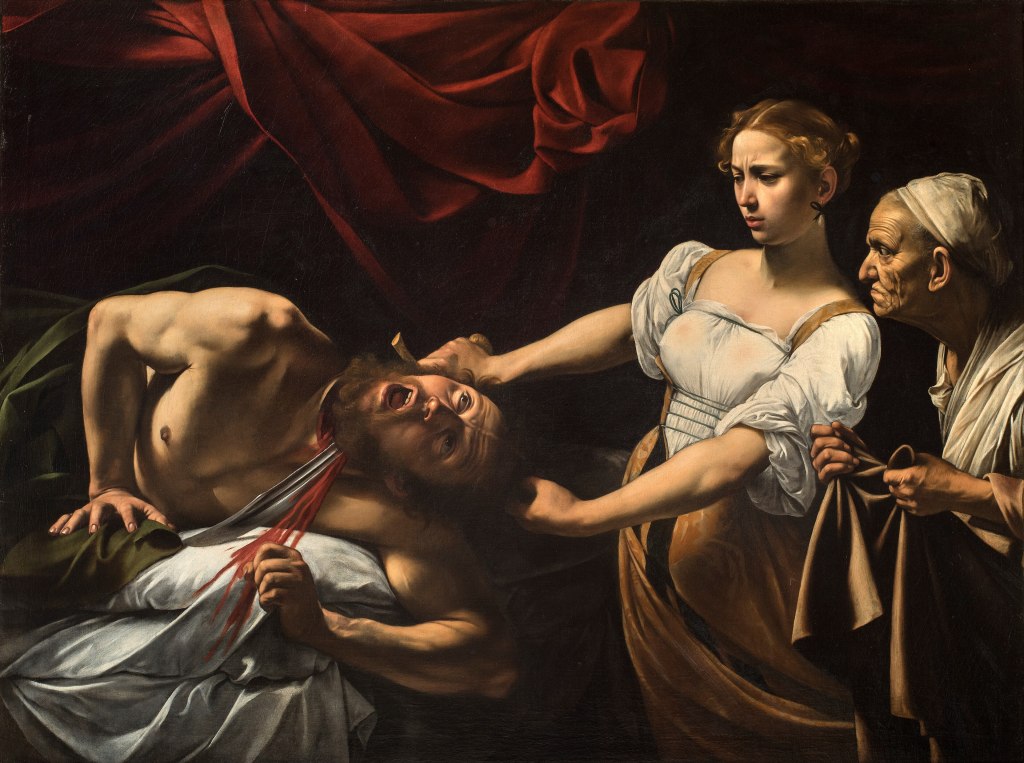



 elsToday