Beyond Death-Return to Eden

Death is a biological condition of life. Mortality is a fundamental fact of our existence: with life comes death.

The body dies when it can no longer sustain itself. Physicians may debate the precise moment, this minute or maybe the next, but the uncertainty is measured in seconds, not hours. What matters is not the exact time but the irreversible transition.

Of the roughly 115–120 billion humans who have ever lived, about 110 billion have died. Put differently, out of every sixteen people who have existed, only one is alive today. At present, roughly one out of every 135 people on the planet dies each year, somewhere between 53 and 68 million annually.

We die from disease, accidents, violence, starvation, drowning, substance abuse, fire, war, climate (heat or cold), and natural disasters. Yet the most common cause of death is simply age. About two‑thirds of all humans alive today will die of old age; in the developed world, the odds rise to ninety percent.

Old age begins when senescence, the slow accumulation of biological damage, overtakes the body’s ability to repair itself. This shift usually occurs in the seventies, when maintenance falls behind decay. From that point on, aging becomes the dominant threat to life.

For many, life and death are the whole story. Life begins, and it ends. No more, no less. For the atheist, the materialist, the Darwinist, death is not a mystery to ponder or a transition to prepare for. It is simply the termination of an organism: the cessation of function and future.

The Stoics, along with Socrates and Aristotle, saw virtue as its own reward. For them, the moral life was complete in itself, needing no promise of continuation beyond the grave. Marcus Aurelius acknowledged that life after death might take one of several forms: “either dispersion, or a change, or extinction,” yet he treated all possibilities as indifferent. What mattered was living rightly within the order of nature, not speculating on what lies beyond it.

A similar spirit, pun intended, appears in Confucian thought, where the focus rests entirely on the moral harmony of earthly life. Confucius taught that humanity’s proper concern is virtue within society, not the mysteries that follow death: “You do not yet understand life; how can you understand death?” he asked.

A similar renunciation of afterlife speculation appears in early Buddhism, though for different reasons. The Buddha did not deny rebirth, but he denied the existence of the very self that would be reborn. What continues, he taught, is not a person but a chain of conditions: craving, ignorance, momentum, none of which constitute an enduring identity. Questions about what happens “to us” after death are therefore misguided, because the “us” in question is a cognitive illusion. Like the Stoics and Confucius, Buddhism directs attention away from metaphysical hopes and toward the transformation of life in the present, but it does so by dissolving the very subject who might hope for anything beyond the grave.

I acknowledge these views, but they leave much without answers. For death is not only a biological event; it is a metaphysical boundary. To understand death, we must understand what it is not.

Biology can describe the failure of the body, but it cannot account for the conscious self that inhabited it. The death of the organism is measurable; the disappearance of the “I” is not. And it is the latter, not the former, that makes death a metaphysical event.

Human beings are more than cellular machinery. We are conscious, self‑aware, moral agents who love, choose, remember, hope, and fear. Whatever death is, it is not merely the cessation of heartbeat or brainwave. It is the end of embodied life for a being whose inner life: mind, self, soul, consciousness, cannot be reduced to physiology alone. Neuroscience can trace the brain’s machinery in exquisite detail, but it cannot locate consciousness within it, nor explain how matter alone could generate the first‑person experience of being a self.

This duality is not only metaphysical; it is moral.  If consciousness were nothing more than the byproduct of a mortal brain, then every human value would collapse into biology. A purely biological organism seeks survival, reproduction, and pleasure; it has no reason to value truth, justice, beauty, or goodness. Evolution cannot produce a creature that willingly dies for a stranger, sacrifices advantage for principle or chooses suffering for the sake of meaning. Yet human beings do these things.

Nor is this duality contradicted by empirical observation.  Biology has never located the source of consciousness within the brain. Damage to the brain can impair memory, language, or movement, yet the conscious self often remains intact. This persistence; this interior “I” that endures even when the machinery falters, suggests that consciousness is not generated by the body but expressed through it, and that the two together comprise the individual.

And if consciousness is not generated by the body, deeper implications follow.  If consciousness does not arise from the body, then it cannot be confined to the body. It is not located in space, and it does not unfold in time. The body participates in consciousness; it does not contain it. And if consciousness is not temporal or spatial, then the death of the body cannot annihilate it. It is something more. It is the beginning of the soul.

This structure, a temporal expression of a non‑temporal reality, has deep theological precedent. In St. Paul’s Letter to the Hebrews, Christ’s sacrifice is described as occurring once in time yet possessing eternal presence and effect. A single historical event becomes the temporal manifestation of an act rooted outside of time. It is not repeated, because what is eternal cannot be repeated. It is not confined to a place, because what is non‑spatial cannot be localized. It is accessed, not reenacted.

Consciousness follows the same architecture: one embodied expression, grounded in a reality that does not begin or end with the body. Time is the realm of change, decay, and sequence; eternity is the realm of being. The soul is the bridge between them; the eternal dimension of the person expressed once in the temporal world.

But this raises a deeper question: If consciousness is not in spacetime, then what happens when the body, the interface between consciousness and the temporal world, fails?

This is where near‑death experiences become philosophically illuminating. They are, in a sense, the Myth of Er retold in modern form.

Near‑death experiences, taken even as phenomenological data rather than theological proof, reveal something striking. Their most remarkable feature is not the light, the peace, or the sense of transcendence; these can be explained by neurochemistry or symbolism. The striking feature is recognition.

People report meeting deceased relatives with clarity, identity, and immediacy. They do not search for them. They do not wait for them. They do not arrive at a place where others have been waiting. The encounter is instantaneous.

Instant recognition implies a mode of existence in which time does not unfold sequentially. If two conscious selves can meet the moment one crosses the boundary of death, then the initial post‑mortem state cannot be temporal in any ordinary sense. It is a mode of being in which persons are present to one another without delay, without distance, without sequence.

This is precisely what one would expect if consciousness is, as argued above, “not located in space, and not unfolding in time.” A timeless consciousness entering a timeless mode of existence would experience others not as arrivals but as presences.

The implications are profound. If consciousness persists without the body, then the body is not the fundamental reality of the person. It is the contingent expression of the person within spacetime. And if consciousness functions fully outside spacetime, then spacetime itself is not the ultimate structure of reality. It is the environment in which the soul experiences embodied life, not the domain to which the soul belongs.

Biological life is the soul expressed under temporal conditions; death is the soul expressed without them.

A mind conditioned by spacetime struggles with this, because it assumes that all existence must occur “somewhere” and “after” something else. But what the NDE literature suggests is a mode of being that is not spatial or sequential at all. This also explains why the first experience reported in many NDEs is not isolation but encounter. A timeless mode of existence would not require travel, waiting, or sequence; it would simply reveal what is already present. The immediacy of these encounters suggests that death is not movement into a new location but awakening into a new condition. The soul does not go anywhere; it becomes what it already is when the body no longer mediates its expression. In this sense, the soul exists beyond spacetime while simultaneously manifesting within it; two orders of reality, distinct yet interwoven, the eternal expressing itself through the temporal without being contained by it.

Quantum entanglement hints at a mode of unity that is not spatial, not temporal, and not divisible; a structure in which a single reality can be present in multiple locations without being contained by any of them. This is the closest physical analogy to how the soul may exist beyond spacetime while expressing itself within it.

Death is not the end of consciousness but the end of the constraints that shaped its earthly form. It is the moment when the temporal falls away and the eternal dimension of the person stands revealed.

But this is only the beginning. A timeless unveiling cannot complete the person. Recognition is immediate, but purification is not. Transformation requires sequence, and sequence requires time. The NDE reveals the first state of the soul: the unveiling. Purification is the second state: the transformation. Resurrection is the third state: the completion.

Death is not the opposite of life but its threshold, the necessary passage from embodied time to the timeless unveiling of the soul, and from there into the temporal purification that prepares the soul for its final union with an immortal body.

To see death clearly, it is helpful to say what it is not.

Death is not divine retribution. Death is not the price of sin rather it’s the natural boundary of finite life. Sin makes death fearful, not causal. From St. Paul in 1 Corinthians 15:54-56 he says, “Now the sting of death is sin: and the power of sin is the law”. A surficial reading of this verse finds sin causes death, or death is the price of sin. This makes death not only fearful but inevitable. And by extension entirely avoidable. Fearful because God is going to find you wanting; we are all sinners. Inevitable because that is the price of sin. And avoidable because without sin you will not die. All are a misreading of Paul.

The sting is to die in sin not that it is the cause of death. “The power of sin is the law” means the law exposes your guilt to God much the same way that the law of man exposes your presumed guilt to the to judge and jury.

Death has never been the punishment of God, nor the consequence of some ancient fault: original sin. It is simply the boundary of embodied life, the moment when what we have become is no longer hidden by flesh. The body falls away, and the soul stands revealed. That revelation; nothing more, nothing less, is what Scripture calls judgment. And judgment is the soul revealing its true state to God. God does not judge you; your soul determines its own fate, you judge you. Jesus was sinless and died, therefore death is not punishment.

Death is not caused by evil. Evil corrupts the soul, but it does not kill the body. Evil is the absence of good, the absence of God, and at death it reveals itself for what it is; a distortion of the soul’s true form.

Death is not an accident of fate. It is woven into the structure of our existence. Nature depends on death for renewal and continuity. Death is not chaos or disorder; it is lawful, patterned, and governed by the same symmetry that rules all physical processes.

Death is not the end of consciousness. The body and brain are mortal; consciousness is not. It may change form, but the capacity for awareness is not reducible to biological function.

Death is not meaningless. If death were meaningless, then so would be our finite biological life. Meaning arises because our souls continue, and they cannot continue without death. Death frees the soul to begin its transition into what its earthly life has shaped it to be.

For all our biological instincts toward survival, human beings carry an equally powerful intuition that life is preparing us for something beyond itself. Biology commands us to cling to life; consciousness teaches us to accept death. We fear it, resist it, postpone it, yet we also anticipate it, prepare for it, and in the end, most of us meet it with a strange readiness. This readiness is not biological; no organism is wired to welcome its own extinction. It arises from the deeper structure of consciousness itself, from the sense that our lives are not merely lived but shaped, formed, and oriented toward a further horizon.

This universal intuition, found in every culture and every age, is the clearest sign that the human story does not end at the grave. If death is a transition rather than an end, the natural question follows: a transition to what?

Across history, cultures have answered this with remarkable consistency. From the burial rites of the earliest hunter‑gatherers to the metaphysical systems of Greece, India, China, and the Abrahamic faiths, every major tradition has affirmed that something of the person endures beyond the dissolution of the body. The forms differ; reincarnation, resurrection, judgment, liberation, union, but the intuition is the same: death opens into another mode of being.

The Indigenous cultures of the Americas provide the clearest evidence that belief in an afterlife is not a product of cultural diffusion but a universal human intuition. Separated from the Old World for more than fifteen millennia, they independently developed burial rites, soul concepts, and post‑mortem journeys that mirror the earliest patterns of Egypt, Mesopotamia, and Greece. Yet their understanding of the soul was radically different: not an interior self or seat of consciousness, but a functional life‑force, often plural, relational, and without personal identity. In these traditions, something continues after death, but that “something” is not the conscious self. This is why resurrection; which requires a soul that is the self, never appears in the New World. The New World thus reveals both the universality of the afterlife intuition and the cultural specificity of the metaphysical structures that later produced resurrection in the Old World.

What varies is not the belief that something continues, but the nature of that continuation. Each tradition, each culture offers a different answer to the same metaphysical question: What becomes of the self when the body falls away?

It is to these visions of what lies beyond death that we now turn.

Ancient Egyptian religion was a vast polytheistic system with over 1,500 deities. Among them, Amun‑Ra, the sun god, and Osiris, ruler of the underworld, were central figures, with Isis as Osiris’s consort and one of the most revered goddesses. Belief in the afterlife was fundamental, and practitioners sought to remain in harmony with Ma’at: truth, balance, and cosmic order, while actively resisting chaos. In the Hall of Truth, Osiris presided over the judgment of the deceased, whose hearts were weighed against the feather of Ma’at to reveal their fidelity to this cosmic order. The essential idea was that Osiris oversaw the process, but the heart itself delivered the verdict, making Egyptian judgment a form of self‑revelation rather than divine sentencing.

Osiris’ judgment had three possible outcomes. The justified soul; one who lived in accordance with Ma’at, entered the Field of Reeds (Aaru), a perfected Egypt where the blessed lived eternally among the gods in peace, abundance, and a restored body. If a soul was not wicked but merely disordered, it was denied entry into Aaru and instead wandered the underworld, facing trials and purifications that might eventually lead to transformation. This state was not considered punishment but a corrective process. For the truly corrupt and self‑destroyed, the consequence was annihilation: no afterlife, no consciousness, and no torment, simply non‑being.

The Egyptians understood the “soul” not as a single entity but as a constellation of spiritual components: the ka (life‑force), ba (personality and mobility), ib (the heart as the moral self), ren (the name as enduring identity), sheut (the shadow‑double), and the sah (the spiritual body formed after death). These parts did not all continue automatically; death was a moment of disassembly in which the heart revealed the truth of the person. If the ib proved light and aligned with Ma’at, the ba and ka could reunite to form the akh, the transfigured, eternal self. If the heart was heavy, the soul’s components weakened, wandered, or dissolved, and in the worst case the heart was devoured, ending the person entirely. For the Egyptians, death was not punishment but passage; a metaphysical sorting in which only the harmonious elements of the person could reassemble into eternal life.

In Egypt, death was a passage judged by divine order; in India, it became a cycle governed by moral law. Hindu philosophy, emerging from the Vedic tradition, conceives existence as a continuum: birth, death, and rebirth bound by karma and dharma. The soul (ātman) does not perish but moves through forms until it attains moksha, a release from the wheel of becoming. Where Egyptian thought sought justification before divine judgment, Hindu thought sought escape from recurrence itself; the perfection of unity with the ultimate reality, Brahman.

Judgment in Hindu philosophy is not deferred to a heavenly tribunal but woven into the fabric of existence. Each life is both consequence and opportunity; every action, desire, and intention carries its own moral gravity, tipping the scale toward harmony or imbalance. Life itself becomes the tribunal; a living measure of one’s alignment with cosmic law. Death merely pauses the process before it resumes in another form, until perfect equilibrium is achieved and the soul is released into unity with the divine.

Liberation (moksha) is not reward but realization; the awakening of the soul to its identity with Brahman, the eternal reality from which all things arise. The perfected soul does not ascend to a heavenly realm but dissolves into the infinite, the boundaries of individuality and the mortal body falling away into pure consciousness. In this sense, moksha mirrors the Judeo‑Christian vision of heaven: the soul’s return to the infinite, yet it goes further. The self does not dwell with the divine; it becomes the divine. This statement isn’t meant as an act of ego but as the dissolution of ego. The individual isn’t claiming divinity but the realization that the individual is/was an illusion. The recognition that the individual was never separate, but a shadow cast by the infinite light of Brahman.

The soul that resists balance with Brahman does not fall into eternal damnation but into recurrence. Its judgment is lived, not decreed; suffering and rebirth are the universe’s way of restoring equilibrium. Even Naraka, the realm of torment, is not punishment but purification, a temporary crucible through which the soul learns what harmony demands. No soul is irredeemable; evil and ignorance are distortions, not essences. The universe corrects rather than condemns, and through karma and rebirth every soul moves, however slowly, toward restoration; torment is temporary, never permanent exile.

Leaving aside this eastern tradition for now and concentrating on western beliefs brings us back to life among the gods. Ancient Greek religion predates the eighth‑century BC Homeric poems by many centuries, with even earlier Minoan and Mycenaean traditions forming its foundation. Before Homer, local cults preserved their beliefs through oral practice rather than written doctrine. Homer’s epics did not invent Greek religion; they just consolidated and stabilized a diverse set of traditions that had been evolving from these oral traditions for generations.

Minoan religion (c. 2700–1100 BC), centered on Crete, revolved around powerful goddesses, nature spirits, and fertility cults. Mycenaean religion (c. 1600–1100 BC), on the Greek mainland, expanded on this tradition and included many of the Olympian gods familiar from later Greek life: Zeus, Hera, Poseidon, and others. Both cultures practiced elaborate burials and clearly assumed that the dead continued to exist in some form. But neither tradition shows evidence of moral judgment, reward, or punishment after death. Their afterlife was a continuation of existence in a diminished, non‑moral state.

By the Late Bronze Age, Mycenaean belief had developed into what becomes the prototype of Homeric Hades: a neutral, shadowy realm where all souls go regardless of virtue or vice. This early Greek afterlife is not a place of cosmic justice but simply the destination of the dead. The earliest textual appearance of the psyche: the Greek “soul”, also belongs to this period through Homer. In Homer, the psyche is merely the life‑breath that survives as a powerless shade in Hades, not a moral or immortal essence.

Only in the centuries after Homer does the psyche become a philosophical object: immortal, moral, and capable of judgment. Before Plato, Orphic and Pythagorean traditions transformed the Greek understanding of the afterlife. They introduced the idea of the soul as immortal, divine, and trapped in the body, undergoing cycles of reincarnation shaped by moral conduct. They taught that the soul is judged after death, rewarded or punished, and must be purified to escape the cycle of rebirth. These movements created the first moralized Greek afterlife, replacing Homer’s neutral Hades with a system of cosmic justice.

Plato inherits these ideas and gives them a philosophical architecture. In his hands, the soul becomes fully moral, truly immortal, and subject to cosmic judgment. The afterlife is no longer a shadowy continuation but a structured arena in which ethical choices determine the soul’s fate. This development reaches its clearest expression in the Myth of Er, where Plato presents a comprehensive vision of judgment, reward, punishment, and reincarnation; the first fully articulated moral afterlife in Western philosophy.

In this respect, Greek philosophy arrived at a structure broadly parallel to the Egyptian model, although by a very different intellectual route. As Greek metaphysics matured, Jewish theology was contemporaneously undergoing its own transformation, both of which were setting the stage for Stoic cosmology and the later Christian synthesis.

Early Jewish thought knew only Sheol, a neutral realm of the dead without judgment, reward, or punishment, closely paralleling the Greek Hades. In this earliest layer, all the dead; righteous and wicked alike, descended into the same shadowy underworld. But during the Second Temple period (516 BC–70 AD), Jewish theology underwent a profound transformation. As ideas of divine justice, moral order, and eschatological hope developed, Sheol did not evolve into new realms; it lost its function. The older, undifferentiated underworld dissolved as Jewish thought articulated a more morally structured vision of the afterlife.

Resurrection emerged as Judaism’s answer to the problem of justice: if God’s world is morally ordered, then death cannot be the final word. The righteous who suffered and the wicked who prospered must ultimately stand before God, and this requires that the dead rise so that judgment can be rendered in the fullness of embodied life. Jewish tradition therefore developed a two‑stage afterlife. At death, the soul enters an immediate spiritual state, experiencing either the nearness of Gan Eden or the purifying distance of Gehinnom; yet this is not final judgment, but the soul’s own condition revealed. True judgment awaits the resurrection in the World to Come, when body and soul are reunited.

In that final world, both Gan Eden and Gehinnom are emptied because their work is complete: purification has finished, disembodiment has been healed, and every soul capable of restoration enters the perfected, embodied life of Olam Ha‑Ba. The wicked who can be healed are purified and rise; the wicked who have destroyed their own capacity for the Good simply do not rise at all, for a soul that has unmade itself cannot be resurrected. It simply ceases to exist. In Judaism the soul is only immortal by participation in God.

Unlike Greek philosophy, which often treated the soul as separable, superior, or even imprisoned by the body, Judaism insisted that a human being is an indivisible unity. If judgment is the soul’s self‑revelation at death, then resurrection is not required for justice; it is required for wholeness. The resurrection of the body is therefore not an optional doctrine but the culmination of God’s moral order and the completion of human identity.

Across Egyptian, Hindu, Greek, and Jewish thought, a remarkably consistent anthropology emerges: human beings are composite creatures, a unity of body and soul. Whether this convergence arose through cultural exchange or independent insight is impossible to prove, but the structural duality is unmistakable.

When Christianity took shape in the first century, an extraordinary refinement of last things happened: Jesus’ resurrection changed the temporal meaning of resurrection within Jewish eschatology. Christianity enters history not as a new philosophy of the soul but as a claim about an event. The resurrection of Jesus becomes the axis around which the entire understanding of death, judgment, and the afterlife turns. In the earliest Christian imagination, Jesus is not merely raised; he is the “first fruits” of the general resurrection promised in Jewish apocalyptic hope. What Israel expected at the end of time has, in one case, has already happened. The future has broken into the present.

This single conviction reshaped everything.

The afterlife is no longer only a distant horizon. It becomes present and active, because the risen Christ is already alive, already reigning, already inaugurating the world to come. The intermediate state is transformed: the righteous dead are no longer waiting in Sheol for God’s final act. Through the Harrowing of Hell, Sheol itself is reinterpreted, not as the neutral realm of the dead, but as the territory Christ has invaded and emptied. Heaven becomes accessible because Christ has ascended; the righteous dead are now “with Christ,” not asleep in the underworld.

Early Christians did not treat death as a natural transition or a metaphysical necessity. Death is not a doorway into a higher state but the natural boundary of embodied life, the point at which the body falls away and the soul stands revealed. It is not the punishment of God nor the consequence of some primordial fault. Jesus himself was sinless and died; therefore, death cannot be retribution.

Yet Paul still calls death an “enemy.” Not because death was created as evil, but because sin has turned the moment of revelation into a moment of terror. Sin gives death its sting, and the law exposes that sting, making the soul fear what it will see when the body no longer hides it. The tyranny of death is experiential, not ontological: death becomes a tyrant only for the soul unprepared for its own truth.

Christ breaks this tyranny not by abolishing death, but by transforming what death reveals. For those who belong to him, death is no longer accusation but unveiling: a boundary like the edge of a rainbow: from one side nothing is visible, from the other everything is revealed.

In Philippians 1:21–23, Paul writes: “For to me, to live is Christ; and to die is gain… I have a desire to depart and to be with Christ, a thing far better.” To die is to enter a new mode of communion with Christ, superior to mortal life. In 2 Corinthians 5:6–8 he further explains that “while we are in the body, we are absent from the Lord… we would rather be absent from the body and present with the Lord.” The absence of the body is not annihilation but a provisional intimacy with Christ, awaiting the resurrection.

As Christianity develops in the Latin West, it builds a juridical and metaphysical system around sin, grace, and judgment. Yet beneath these developments lies the same fundamental conviction inherited from Judaism: the human person is incomplete without the body, and the final destiny of humanity is resurrection. Christianity’s distinctive claim is not the nature of the final state but that the resurrection has already begun in Christ, making the future world present in Him.

As a counterpoint, and a significant departure from Paul, Catholic teaching, and the argument of this essay; St. Augustine taught that death is the penalty of sin, inherited from Adam as divine punishment. Yet this position creates a deep theological contradiction: if death is truly the penalty of sin, then Christ, who was sinless, should not have died, and the baptized, whose original sin is removed, should not die either. Death cannot be the punishment of sin. It is the natural boundary of embodied life. Sin does not cause death; sin makes death fearful.

Augustine ultimately reaches the same eschatological ends as Paul, but by a radically different path. Where Paul understands sin as moral evil; the absence of good and the absence of God, Augustine relocates sin almost entirely into inherited guilt from Adam. In doing so, he effectively ignores the moral and spiritual reality of sin and replaces it with a juridical transmission of fault.

Aquinas takes several steps back behind Augustine and re‑enters the older philosophical tradition. Drawing on Aristotle, he treats the soul as naturally immortal and the intellect as ordered toward the vision of God. Death is not the catastrophic penalty of Adam’s sin but the natural dissolution of a composite being. Resurrection perfects nature by restoring the embodied person to the fullness of its form. In Aquinas, Christian eschatology becomes a synthesis of Greek psychology and Pauline theology, rather than an extension of Augustine’s doctrine of inherited guilt.

From its Jewish roots, Western Christianity develops a legal‑metaphysical architecture of the afterlife: self-judgment, purification, reward, or punishment grounded in the moral order.

In the Christian East, the framework is not juridical but ontological. The afterlife is understood as participation in divine life, not the outcome of a legal process.

The Cappadocian Fathers begin with the conviction that human nature is created for communion with God. Death is fragmentation, the tearing apart of body and soul, and resurrection is reintegration, the healing and restoration of human nature to its proper unity.

Later Maximus the Confessor deepens this vision. The human person is a microcosm and mediator of creation, the point where the material and spiritual realms meet. The telos of human nature is deification: participation in God’s uncreated energies. Eschatology is therefore not merely personal destiny but cosmic transformation, the transfiguration of all creation in and through Christ.

Gregory Palamas articulates this further through the essence–energies distinction. God’s essence remains inaccessible, but God’s energies, God’s life, light, and grace are fully participable. Heaven is thus participation in uncreated light, the same light revealed at the Transfiguration: “light from light, true God from true God.”

Hell, in this vision, is not divine retribution but the same divine presence experienced as torment by those who reject communion. The light that deifies the righteous, wounds the soul that has closed itself to God. Suffering is not imposed; it is the soul’s own resistance to the divine life.

Eastern Christianity therefore offers an ontological and pragmatic model of the afterlife. The human person becomes what it beholds. The soul discloses the truth of its life; its loves, its wounds, its distortions, just as in the Western tradition the soul is revealed at death. But whereas the West often interprets this revelation in juridical terms, as the basis for a moral verdict, the East understands it as the unveiling of the soul’s capacity (or incapacity) for communion with God. The same revelation, but a different metaphysical grammar.

Across East and West, Christianity shares a common framework. At death there is an intermediate state: conscious but incomplete. In the end there is a final resurrection: universal, bodily, definitive. Judgment is personal and cosmic. Heaven in the West is the Beatific Vision: the direct and unmediated sight of God’s essence in eternity. In the East it is Theosis, it is participation in divine energies. Hell in the West is the absence of God. In the East it is the misrelation to divine light. Moral life is essentially the same in the East and West: the formation of a person capable of communion with God.

To conclude, Christianity does not invent a new eschatology so much as it reinterprets Jewish eschatology through a decisive historical claim. The resurrection of Jesus inaugurates the final destiny of humanity within history; the moral and spiritual life becomes participation in divine life itself; and death, long regarded as the great enemy, is declared already defeated. Christianity’s innovations are therefore temporal, ontological, and soteriological. Transformations of Judaism’s deepest hopes rather than replacements for them.

Centuries later, Islamic thought attempts to present a coherent eschatological architecture that remains within the broad Near Eastern frame but without the pedagogical, logical, or the developmental dimension characteristic of the Judeo‑Christian tradition. It offers a distinct set of answers to questions about the soul, death, and the afterlife, but these answers rest on revelatory premises rather than demonstrable metaphysical proofs. Its eschatological framework is internally consistent, yet it neither resolves nor attempts to resolve the deeper philosophical questions that occupied Greek and Judeo‑Christian thinkers. Instead, it articulates a straightforward theological anthropology grounded in divine decree, moral accountability, and the finality of human character at death.

Islam does not treat death as a metaphysical rupture or the consequence of inherited guilt. Human beings are created finite; mortality is intrinsic to creaturely existence rather than a punishment. Adam’s lapse introduces moral consequences but does not alter human nature or the conditions of embodied life. These claims are theological affirmations, not philosophical demonstrations, and they function within the Quranic worldview rather than arising from independent argument. Each person bears responsibility for his own soul; he does not carry the burden of those who came before him.

Islamic anthropology distinguishes between al‑rūḥ (the divine spirit that animates life) and al‑nafs (the morally accountable self). This dual vocabulary describes different aspects of the human interior without positing a metaphysical dualism of substances. The rūḥ is the principle of life; the nafs is the locus of intention, desire, and responsibility. Islamic tradition treats the human person as a unified being whose identity persists beyond bodily dissolution, but it does not attempt to prove the persistence of personal identity through philosophical argument. It simply asserts it as part of the revealed account of human nature.

Death marks the transition to Barzakh, an intermediate state extending from burial to resurrection. Islamic sources describe Barzakh as a conscious interval in which the soul encounters a preliminary disclosure of its moral condition. The interrogation by the angels Munkar and Nakir is presented as revelatory rather than evidentiary: the questions do not determine the soul’s nature but expose it. Islamic theology does not offer a metaphysical explanation of how consciousness persists without the body, nor does it attempt to reconcile Barzakh with philosophical accounts of personal identity. It treats the intermediate state as a matter of divine knowledge and decree. From this point forward, the soul is what it is; there is no further growth or deeper communion with God.

Judgment is portrayed in juridical terms. Each person receives a record of deeds, and these deeds are weighed. Divine justice is perfect, yet divine mercy remains decisive. Islamic theology rejects inherited guilt, vicarious atonement, and the transfer of righteousness. Each soul bears responsibility for its own actions. These claims articulate a moral vision rather than a philosophical argument about the nature of justice; they presuppose a revealed moral order rather than deriving one. Judgment results in either Heaven or Hell.

Paradise and Hell are described in sensory and moral imagery. Islamic tradition treats these descriptions as real, though interpreters differ on the extent to which they are literal or symbolic. Paradise is the fulfillment of embodied flourishing or more simply, earthly pleasures. Hell is the state of estrangement from God. The tradition affirms the eternity of Hell for unbelievers, though classical and modern debates exist about the nature and duration of punishment. Again, these are theological positions, not conclusions reached through philosophical reasoning.

A distinctive feature of Islamic eschatology is the absence of post‑mortem transformation. The soul does not develop, heal, or change after death. Barzakh does not purify; resurrection does not transfigure. The soul at death is the soul that is judged. This finality reflects a theological commitment to moral responsibility in earthly life rather than a metaphysical argument about the impossibility of post‑mortem change.

In the Islamic model, death is not a transition of the soul but an interruption of life. The soul enters barzakh, a state of waiting in which its moral condition is fixed and unalterable. Nothing in this interval modifies the soul’s character, clarifies its understanding, or alters its destiny. Barzakh is not a realm of becoming; it is a metaphysical pause.

Resurrection, accordingly, is not a transformation but a restoration. The Quran affirms a universal bodily resurrection on the Day of Judgment: the body is reconstituted, the soul is reunited with it, and the human being stands before God as the same moral agent who died. The tradition does not offer a philosophical account of how bodily identity is preserved or what constitutes numerical sameness between the earthly body and the resurrected one. Instead, it treats resurrection as an act of divine power whose coherence rests on God’s ability rather than on metaphysical demonstration.

Taken together, Islamic eschatology presents a linear narrative of human destiny grounded in divine decree, moral accountability, and the finality of earthly character. It is a coherent internal structure, but its claims rest on revelation rather than philosophical demonstration. Like all theological systems, it answers certain questions by asserting limits: a few matters are explained, but most are simply declared. The result is a worldview in which death is a pause, judgment is decisive, and the soul’s ultimate state reflects what it has become within the constraints of earthly, mortal life.

Islam does not present its eschatology as the conclusion of a logical argument, nor does it offer a historical or philosophical pedigree for its claims. Its eschatology is structurally complete but epistemically ungrounded — a finished architecture without a blueprint. It is a system that is internally tidy but externally unanchored.

Philosophically, Islam represents a decisive alternative to the metaphysical developments of Judaism and Christianity. It affirms resurrection but rejects the idea that the soul is timeless consciousness. It affirms judgment but denies that judgment is the soul’s own unveiling. It affirms the afterlife but insists that it remains within the framework of space, time, and physical embodiment.

The difference reflects two models of divine-human relationship. Islamic theology is built on the commands of God; Judeo‑Christian theology is built on the teachings of God and His prophets. The Qur’anic God judges souls; the biblical God forms souls. The Qur’anic God commands; the biblical God instructs. The Islamic afterlife is static and retributive; the biblical afterlife continues the soul’s journey.

Placed alongside Judaism and Christianity, Islam preserves the moral clarity of resurrection while rejecting its metaphysical depth. It is precisely here, in the tension between restoration and transformation, that the philosophical necessity of resurrection becomes clear. If consciousness survives the body and enters another mode of existence, then the final question is not whether the soul endures, but why it should ever need a body again. After surveying the great traditions of Egypt, India, Greece, Judaism, Christianity, and Islam, a deeper pattern emerges: human beings are not merely souls trapped in bodies, nor bodies animated by accident, but composite beings whose identity is expressed through embodiment.

The Egyptians preserved the body because they believed the person required form. Hindus sought liberation from embodiment yet still described the soul’s ascent, purification, and realization. Greeks moved from powerless shades to moral souls. Judaism insisted that justice requires resurrection. Christianity proclaimed that resurrection had already begun. Islam affirmed resurrection but denied transformation.

Across these traditions, one truth recurs with remarkable consistency: the soul alone is not the whole person.

A disembodied consciousness may be aware, present, and unified, but it lacks the full structure of personhood. A person is not merely consciousness but also identity, memory, perspective, sequence, and narrative. These require embodiment, not necessarily biological embodiment, but a stable form through which the self can act, be recognized, and exist as a distinct individual.

A soul without a body is like a musician without an instrument. The musician exists. The music exists. But the performance does not.

This is why resurrection is not an optional doctrine or a theological flourish. It is the metaphysical completion of the human person. If death reveals the soul, resurrection restores the person. It reunites consciousness with form, identity with expression, presence with agency.

But this restoration is not a simple return. In Hindu, Jewish, and Christian theology the soul that survives death is not the soul that departed the body. If it undergoes purification, if it is clarified, healed, or transformed, then the soul that reunites with the body is not the same soul that once animated it. Purification implies change, and change requires sequence, and sequence requires time. A timeless realm cannot host transformation. Therefore the soul’s purification must occur in a domain where time is real, even if it is not mortal time. Purgatory, in this light, is not eternity but a different order of temporality: a realm where the soul can change without decay.

Thus the resurrected body does not merely receive its old inhabitant. It receives a purified soul, one capable of inhabiting an eternal mode of existence. And the body itself must be transformed to match it. The resurrected body gains what it lacked before: incorruptibility, immortality, and a mode of being compatible with a soul that has passed through purification. It regains, in perfected form, what humanity once possessed: Eden.

Resurrection is not the reanimation of a corpse. It is the emergence of the completed self: a purified soul united with an immortal body in a mode of existence neither component possessed before. It is the answer to the problem that disembodied consciousness cannot solve: how a person remains a person. But it also raises a deeper truth: the resurrected self is not merely the old self restored; it is the old self transfigured.

In this light, resurrection becomes the philosophical culmination of the entire inquiry. It is not merely a religious claim but the logical resolution of the metaphysics of consciousness. If the soul is eternal, and if the person is a unity of soul and form, then resurrection is the final harmony of what death temporarily separates, even if the harmony is not identical to the melody that began the song.

The traditions of the world intuited this in different ways. Christianity declared it explicitly: the future has already broken into the present, and the destiny of humanity has been revealed in the resurrection of Christ, the first fruits of what all persons are meant to become.

Resurrection is not a return to biological life. It is the completion, and transformation of human identity in a mode beyond decay, beyond time, beyond the limitations of mortal embodiment. It is, in the deepest sense, a return to Eden.

Once resurrection is understood as the completion of human identity, the great thinkers of the West can be seen not as inventing new doctrines but as interpreting the same metaphysical structure through different lenses. Each attempts to answer the same question: What does it mean for a person to exist beyond death?

Dante’s Divine Comedy is not merely medieval imagination; it is a metaphysical map of the soul’s condition when the body falls away. In Dante, judgment is not imposed but revealed. Hell, Purgatory, and Paradise are not external punishments or rewards but the soul’s own state made visible.

The damned are those who have become their vices. The saved are those who have become their virtues. Purgatory is the soul’s purification into what it was always meant to be.

Dante’s cosmos is the architecture of self‑revelation. Death unveils the soul; resurrection completes it. Dante’s genius lies in showing that the afterlife is not arbitrary but morally intelligible; the soul inhabits the shape it has chosen.

The Protestant Reformers stripped away the medieval scaffolding of purgatory, indulgences, and ecclesial mediation, returning to the raw Pauline insight: death is unveiling. The soul stands before God without delay, without ritual, without institutional intercession.

Luther and Calvin emphasized: the immediacy of judgment, the sufficiency of Christ, and the transparency of the soul before God. Yet even in their stark formulations, the metaphysical structure remains, death reveals the soul’s true state, and resurrection restores the person to embodied wholeness.

Kant approached the afterlife not through theology but through moral philosophy. For him, the existence of the moral law within us implies: the immortality of the soul, the existence of God, the ultimate harmony of virtue and happiness.

Kant did not claim to know the mechanics of the afterlife. Instead, he argued that morality itself requires a realm in which the soul can achieve the perfection it strives for but cannot attain in finite life. Immortality is a postulate of practical reason, the necessary horizon of moral striving.

Hegel saw history as the unfolding of Spirit (Geist) toward self‑knowledge. Individual death is not annihilation but the transition of finite spirit into the universal. For Hegel, the afterlife is not a place but a mode of participation in the Absolute. While Hegel’s metaphysics differs from traditional theology, he preserves the essential insight: the self is not reducible to the body, and death is not the end of the self’s meaning.

C.S. Lewis, writing in the twentieth century, returned to the ancient intuition that the soul becomes what it loves. In The Great Divorce and The Last Battle, he portrays the afterlife as the intensification of the soul’s chosen orientation.  Heaven is reality becoming more real. Hell is the self-collapsing inward. Lewis’s contribution is existential clarity: the afterlife is not imposed; it is the soul’s own trajectory fulfilled. Death reveals; resurrection completes.

Across biology, metaphysics, NDE phenomenology, and the world’s religious traditions, a coherent, if not logical picture emerges. Death is the natural boundary of embodied life. It is not punishment, chaos, or annihilation. Consciousness is not reducible to the body but is a non‑spatial, non‑material reality that cannot be extinguished by biological death.

Near‑death experiences illuminate the soul’s native mode. Immediate recognition, integrated presence, and the collapse of sequence suggest that consciousness persists outside the spacetime conditions of mortal embodiment. Spacetime is the environment of biological life, not the ground of being. The soul expresses itself through the body but is not contained by it. Death unveils the soul. What we have become is revealed when the body falls away.

Yet the soul revealed at death is not the completed person. Across the world’s traditions, one intuition recurs: something of the person endures, and that endurance is morally structured. But the soul alone is not the whole self. A person requires identity, agency, memory, and narrative, all of which require sequence and therefore require time. A disembodied soul may be conscious, but it cannot be fully personal.

This is why the soul must undergo purification. And purification is not a timeless state but a temporal process, a sequence of change, healing, and clarification that requires a domain where time is real, even if it is not mortal time. The soul is prepared, shaped, and transformed for a mode of existence it could not inhabit before.

Resurrection is the completion of this process. The purified soul is reunited with a transformed, immortal body; a body no longer subject to decay, entropy, or death. The resurrected body gains what it lacked before: incorruptibility, permanence, and a mode of being compatible with a soul that has passed through purification. The union of purified soul and immortal body does not merely restore the old person; it brings forth the completed person, the self as it was always meant to be.

In this light, death is not the end of the human story but its unveiling. Consciousness does not vanish; it is freed. The body does not imprison the soul; it expresses it. And resurrection is not a return to mortality but the fulfillment of what it means to be human.

Biological life is the prelude. Death is the boundary. Purification is the transformation. Resurrection is the completion.

And consciousness: the soul, is the thread that runs through all three. A return to Eden.
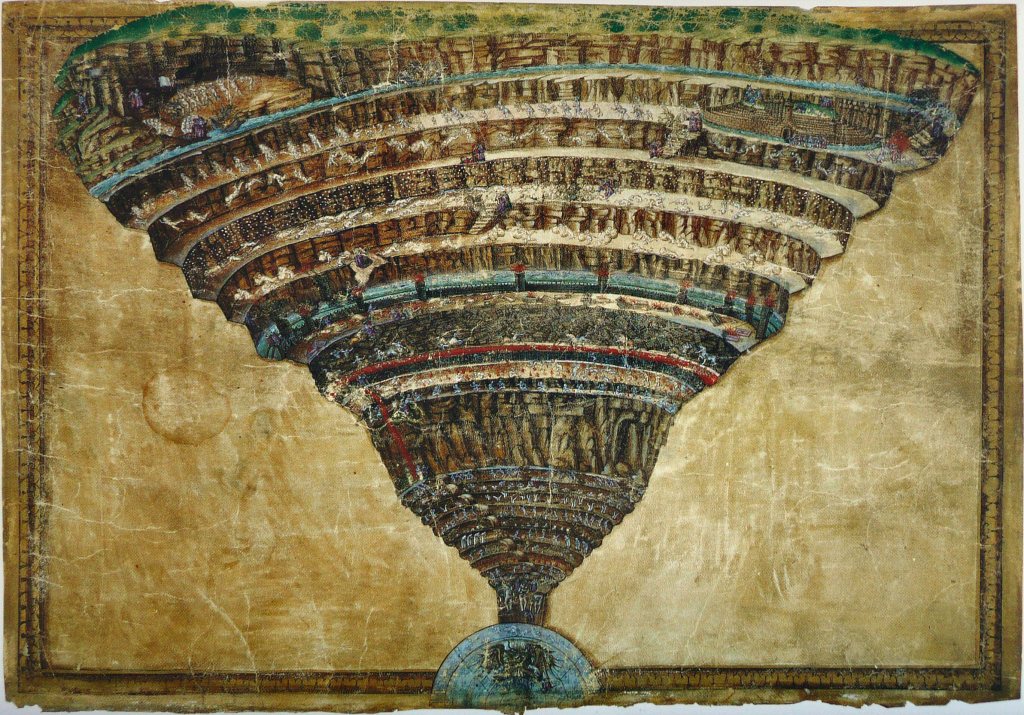
Sheol, Hades, Gehenna, and Hell

“What I am going to say is not a dogma of faith but my own personal view: I like to think of hell as empty; I hope it is.”  Pope Francis, 14 January 2024.

Few utterances from the papal class have landed with more confusion than Pope Francis’s remark. It is muddled, misleading, and ultimately misconstrued, though with two thousand years of ecclesiastical history, one might find other contenders. To be fair, only two papal statements have ever been deemed infallible: Pius IX’s definition of the Immaculate Conception and Pius XII’s proclamation of the Assumption of Mary. Nearly everything else falls under the category of secular opinion. So secular opinion will have to stand along with my slightly pedantic philosophical flourish on the topic.

The trouble with Francis’s remark is not that it expresses hope in an infinitely merciful God. It does, and God is. Humans are extravagantly hopeful when it comes to their own stake in the hereafter. But the Pope’s phrasing seems to remove the ultimate incentive to live a moral life. If there is no hell, then there are no boundaries to one’s actions. On its surface, the statement reduces moral teaching and punishment for sin to negligible outcomes. Two millennia of urging humans to keep their souls pure dissipate in an instant. It treats hell as if it were a place one might stroll into and find as empty as a modern mall, then decide to shop elsewhere; Amazon, perhaps. It blurs the line between our desire to avoid suffering and the eschatological reality in which immorality and punishment are tied to free will. Judgment remains inevitable, for better or worse, and forever. The qualifier “I hope it is” reduces judgment to a wish for mercy rather than a real consequence of one’s actions. It also suggests that the Pope is worried not only about your soul but his own. A merciful God will save a repentant sinner, but hoping is an insecure measure of remorse.

In short, Francis managed an exceptionally muddled rendering of the Augustinian and Thomistic view that hell is the final state of a person who refuses the good and closes themselves off to God’s love. To be fair, clarity is difficult when the very word “hell” carries millennia of conflicting meanings, teachings, and eschatological traditions.

This confusion is inevitable because the Christian vocabulary of the afterlife is a translucent overlay of older worlds, cultures, and languages. The Hebrew Scriptures speak of Sheol, a shadowy realm of the dead with no inherent moral judgment, not a prison for the wicked, but simply the condition of being dead. In Christian theology, “[Jesus] was crucified, died, and was buried. He descended into hell.” The “hell” in this line refers to Sheol (often rendered as Hades), the realm of the dead into which Christ entered. His descent breaks open the barrier between death and divine life. In Sheol, He liberates the righteous dead and inaugurates the post‑biblical landscape of heaven, purgatory, and the final hell of separation from God’s love. After this event, Sheol becomes vestigial in Christian thought, a name without a continuing function. Christianity judges the soul immediately and resurrects the body later, whereas Judaism gives the soul varied post‑death experiences but reserves final judgment for bodily resurrection.

In the ancient Greek world, Hades begins much like Sheol: a neutral underworld where all the dead reside. Only the exceptional are diverted: heroes to the Elysian Fields, mythic offenders to Tartarus. Plato’s Myth of Er overlays this older realm with Socratic soulfully infused moral vision: judgment, reward, punishment, and reincarnation. Over time, mythic Hades and Platonic moral Hades blend into a single, more complex vision. Early Judaism and early Greek religion both had neutral underworlds, but the Greeks moralized theirs first. Socrates’ preoccupation with the soul made him less a secular philosopher than a theological pioneer or prophet if you will.

Hell does not take on its later punitive shape until the New Testament’s use of Gehenna, a metaphor drawn from a real valley outside Jerusalem associated with corruption and divine judgment. In the Gospels, Gehenna is a warning, not a mapped realm. Jesus uses it as prophetic shorthand for the consequence of a life turned away from the good. A moral and relational judgment rather than the later imagery of fire, demons, or descending circles. Gehenna is not the fully developed hell of medieval imagination but a symbol of what becomes of a life that refuses the shape of love.

Augustine, in the 4th century, further develops hell as a condition rather than a location. Hell is self‑exclusion: the soul turns away from God and locks itself into disordered love. Suffering arises from the consequences of one’s own choice; separation from the source of all goodness. This state is eternal not because God withholds mercy but because the will can become fixed in refusal. Fire is both real and symbolic: suffering is real, though its mode lies beyond language and expression.

Aquinas in the 13th century builds on Augustine by grounding hell in Aristotelian metaphysics. Hell is the definitive state of a rational soul that dies in mortal sin. The soul’s refusal of God is not only moral failure but a failure of rational nature. Aquinas distinguishes poena damni (the pain of loss) and poena sensus (the pain of sense). At death, the soul’s direction becomes fixed; eternal destiny is determined not by divine wrath but by the soul’s own settled choice. At the resurrection, the body joins the soul in its suffering. William Blake captures this Thomistic vision in his illustration of Dante conversing with the heretic Farinata degli Uberti in the fiery tombs of the sixth circle.

Aquinas provided his near‑contemporary Dante with the moral architecture that allowed hell to shift from concept to vividly imagined landscape. In the Inferno, Dante transforms that architecture into a descending spiral of circles, each calibrated to a deeper distortion of the good and a harsher form of alienation. At the frozen center lies the absolute loss of God’s presence and love. Dante’s genius is giving spatial form to moral trajectory. Sin becomes architecture.

Modern Christians often imagine hell through Dante’s nine circles without realizing it. Levels, tailored punishments, structured descent, these are Dante’s inventions, not biblical categories. Yet his poetic vision has become the default mental picture of what it means to lose God’s love. His circles are not doctrine, but they express a truth the tradition affirms: the more a soul rejects the good, the more it collapses inward, freezing into itself; a thermodynamic loss not of heat but of God’s presence. Dante’s afterlife remains a symbolic map of the soul’s self‑chosen distance from God, shaping imagination long after its theology has been forgotten or more likely, ignored.

By the modern era, hell has traveled a long road: from Sheol and Hades, through Gehenna, into Augustine’s self‑chosen alienation, Aquinas’s metaphysical finality, and Dante’s architectural imagination. Each stage sharpens the moral stakes, but none claims to know the final census of the saved and the lost.

It is here that Hans Urs von Balthasar, the 20th‑century Swiss theologian, offers a different starting point: beauty as the mode of God’s self‑revelation. God becomes visible through form, radiance, and splendor; beauty is the shape of truth and goodness. For Balthasar, salvation is participation in God’s dramatic love: the drama in which God and humanity meet in freedom. Christ is the central actor whose obedience, self‑gift, and descent into the depths of human abandonment open the way for every person to enter divine life. Salvation is aesthetic: God is Beauty, Christ is Beauty made visible, and salvation is the soul learning again to see the Beauty that is God.

Balthasar insists that Christ’s descent into Sheol means no place remains where God is not. Hell remains a real possibility, but God’s love hopes for every person, even as human freedom is never overridden. Salvation is the soul being drawn freely, dramatically, and beautifully into the radiant self‑giving love of the Triune God.

Balthasar offers a final, chastened note: Christians may hope that all will be saved, but they may never presume it. Hope is a virtue; presumption a trespass. Hell remains real, possible, and bound to freedom, yet the Christian stance toward final judgment is not certainty but reverent uncertainty. We may hope that no soul ultimately refuses the good, but we may not claim to know the mind of God. This hope is not optimism; it is the trembling aspiration of the penitent, something beyond the insecure measure of remorse that opened this essay.

In the end, tradition leaves us with a paradox: hell is the consequence of free-will, yet hope is the proper response to divine mercy. Between those two poles, freedom and mercy, the human soul stands. And perhaps that is the only place it can stand: not in presumption, not in despair, but in the narrow space where hope remains possible without ever becoming a certainty. Perhaps this is what Pope Francis, in his inelegant phrasing, was reaching for.

By the time afterlife dogma and secular imagination knock on our modern door, “hell” is less a settled place or concept than a linguistic suitcase and atlas stuffed with conflicting contents and branching paths toward judgment. Hope without presumption is allowed; hiding never is.

Graphic: Chart of Hell by Sandro Botticelli, c1480. Vatican City. Public Domain.

End Times

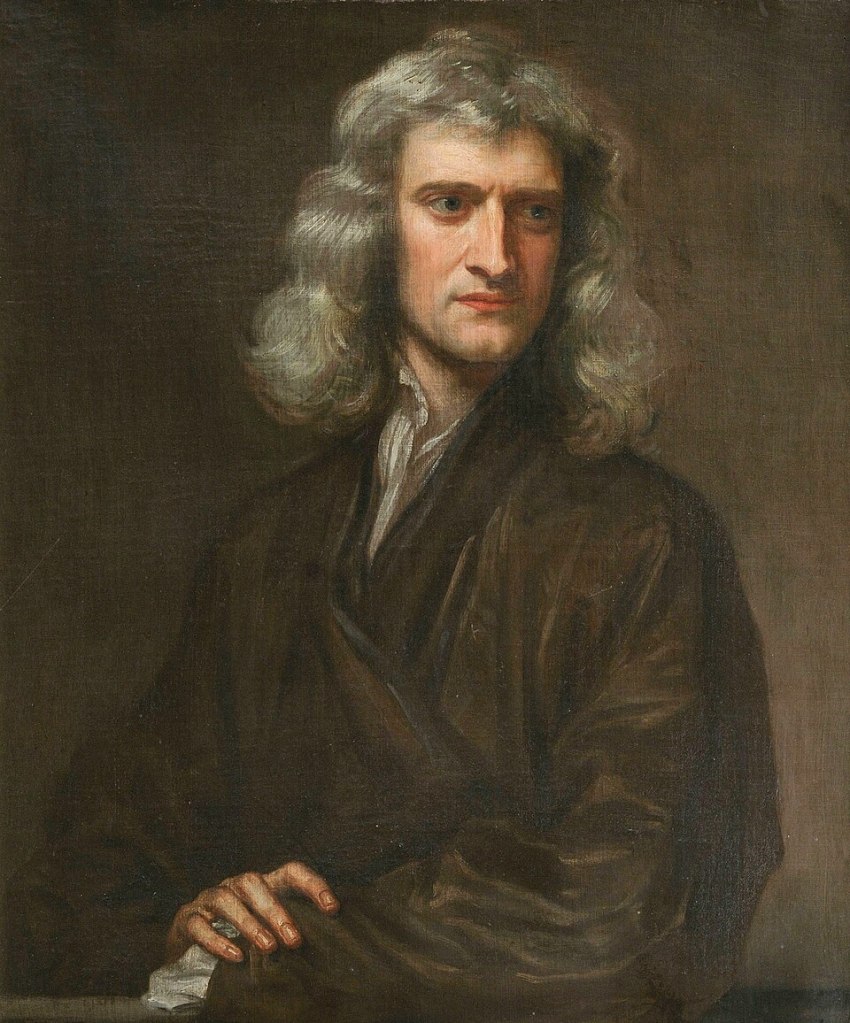
Isaac Newton (1642–1727), remembered as one of the greatest mathematicians and architect of modern physics, devoted more time to theology and biblical study than to science. Among his vast unpublished papers lies a remarkable calculation: Newton believed that the End of Times would not occur before the year 2060. His thesis was not a prediction of hell on Earth, but rather a forecast of the corrupt secular and spiritual powers giving way to the establishment of Christ’s kingdom on earth.

Newton’s notes on prophecy and chronology survive in the Yahuda manuscripts, now housed at the National Library of Israel. For more than a century, these papers were considered “unfit to print” and remained hidden in the English Earl of Portsmouth’s family archives. In 1936, Sotheby’s auctioned off Newton’s theological and alchemical writings for just over 9,000 British pounds or about $1 million in today’s dollars. Abraham Shalom Yahuda, a Jewish polymath and collector, recognized their importance and purchased a large portion, including Newton’s calculations on the End of Times.

Newton was deeply engaged with biblical prophecy, especially the Books of Daniel and Revelation. He believed these texts contained coded timelines of history on into the future. In Observations upon the Prophecies of Daniel (published posthumously in 1733), he wrote: “The prophecies of Daniel are all of them related to one another, as if they were but several parts of one general prophecy… The Apocalypse of John is written in the same style and language with Daniel, and hath many of the same figures.”

In Daniel 7:25 and 12:7, and again in Revelation 12:14, “a time” is taken as one year, “times” as two years, and “half a time” as half a year—an interpretation rooted in the Aramaic/Hebrew idiom in which “time” means “year.” Revelation 11:2 and 13:5 describe the same period as 42 months, which equals 3½ years (42 ÷ 12). Revelation 11:3 and 12:6 express it again as 1,260 days, using the Jewish symbolic 360‑day prophetic year (360 × 3.5 = 1,260). Across Revelation 11–13, these expressions appear interchangeably, reinforcing the equivalence.

The 3½‑year duration itself is symbolic: it is half of seven, the biblical number of completeness, and thus represents a period of incompleteness or tribulation deliberately cut short. Cut short because in Matthew 24:22 Jesus states, “Unless those days had been cut short, no flesh would be saved; but for the sake of the elect those days will be cut short.” A full seven would symbolize evil completing its course, but Scripture portrays God as limiting evil’s duration, preserving a some but not all, and interrupting the “full seven” before it reaches completion.

Later interpreters extended this further. Drawing on Numbers 14:34: “a day for a year”; and Ezekiel 4:6, where God again assigns “a day for a year,” they applied the day‑year principle to the 1,260 days, transforming them into 1,260 years.

Newton then sought a historical anchor, a year to start the clock to End Times. He identified 800 AD, when Charlemagne was crowned Emperor of the Romans by Pope Leo III, as the beginning of ecclesiastical corruption. For Newton, this coronation marked the fusion of secular and papal power: the fulfillment of Daniel’s prophecy of a blasphemous authority ruling over the saints. Adding 1,260 years to 800 AD produced the year 2060. In his notes, Newton wrote: “The period of 1260 days, if dated from the complete conquest of the three kings A.C. 800, will end A.C. 2060.” (Newton preferred A.C., Anno Christi, in the year of Christ over A.D., Anno Domini, in the year of the Lord.)

Newton also considered 2034 as an alternative. Anchoring the calculation in 774 AD; the year of Charlemagne’s conquest of the Lombards and alliance with Pope Adrian I: 774 plus 1260 equals 2034. The year 774 also coincided with a massive solar storm, sometimes referred to as the Charlemagne Event (stronger than the Carrington Event of 1859), with auroras reaching deep into southern latitudes and temperatures dropping a few degrees. Yet 2060 remained the most consistent date in his manuscripts.

Newton believed that the corrupt powers that would bring about the End of Times was both the papacy and the secular rulers who supported the church. In his manuscripts he clearly identified the papacy as the “little horn” and the “man of sin,” a corrupt ecclesiastical power that had usurped apostolic Christianity. At the same time he perceived that secular rulers were equally part of the apostate system destined to collapse. The ten horns of the Beast were the European kingdoms. Their political power upheld the papal system and thus shared in its guilt and its eschatological fate.

Importantly, Newton did not envision annihilation at the End of Times. He saw 2060 as the end of corruption and the dawn of a new divine order. He cautioned it may end later, but said “I see no reason for its ending sooner. This I mention not to assert when the time of the end shall be, but to put a stop to the rash conjectures of fanciful men…”

Newton feared that false predictions would undermine faith. His calculation was meant as sober interpretation, not sensational prophecy. He emphasized that only God knows the appointed time: “It is not for us to know the times and seasons which God hath put into his own breast.”

Newton’s calculation of the End of Times flows logically from the biblical text, and he treats the prophetic numbers with strict literalism. Yet he interprets the tribulation not as a final, catastrophic episode at the end of history, but as a long historical decline. Slow corruption within secular and ecclesiastical institutions. All culminating in the restoration of true Christianity.

Although Newton’s prophetic writings remained unpublished during his lifetime, the rediscovery of the Yahuda manuscripts in the 1930s revealed the full scope of his vision. He saw the End Times not as annihilation but as transformation: the fall of apostate Christianity, the renewal of true religion, and the establishment of Christ’s kingdom of peace.

Newton’s restrained timing aligns with Christ’s teaching in Matthew 24:36: “But of that day and hour no one knoweth, not the angels of heaven, but the Father alone.” In Christian eschatology, the Second Coming is likened to a Canaanite or Jewish wedding: the Father alone knows the day, the Son prepares a place, and the bride: the Church, must remain watchful. Newton’s calculations were an attempt to glimpse the architecture of prophecy, yet he humbly accepted the unknowable will of God.

Graphic: Isaac Newton by Godrey Kneller, 1689. Issac Newton Institute. Public Domain.

Solution in Search of a Problem

…[God] commanded him, saying: Of every tree of paradise thou shalt eat:  But of the tree of knowledge of good and evil, thou shalt not eat. For in what day soever thou shalt eat of it, thou shalt die the death. Genesis 2: 16-17.  …And the woman saw that the tree was good to eat, and fair to the eyes, and delightful to behold: and she took of the fruit thereof, and did eat, and gave to her husband who did eat. Genesis 3: 6.  …And to Adam he said: Because thou hast hearkened to the voice of thy wife, and hast eaten of the tree, whereof I commanded thee that thou shouldst not eat, cursed is the earth in thy work; with labor and toil shalt thou eat thereof all the days of thy life. Genesis 3: 17.

The command. The Original Sin. The yoke of punishment.

Within the Christian narrative, the Garden of Eden; whether read as fact or parable, is not a catastrophe that condemns humanity but a pedagogical interval in which freedom, purpose, and morality first become visible. Eden is the place where God teaches that a being with a soul cannot thrive in effortless abundance; that freedom requires choice; that purpose emerges only through effort–trial and error, consequence, responsibility, and growth. Original Sin is not an accident but the awakening of the human soul, the moment the lesson begins.

Against this backdrop, William Dembski’s (1960-present) The End of Christianity advances a far more far‑reaching claim: that God imposed suffering and death across the entire 4.5‑billion‑year history of Earth in response to Adam’s sin; an event that, even on the most generous timelines, occurred only a few tens of thousands of years ago. The difficulty with this theory is not merely its scale but its direction. Within the Christian understanding of God’s eternal now, Eden is not an isolated moment but a teaching environment whose possibilities: temptation, failure, growth, are already present to the divine mind. Dembski’s proposal, however, requires suffering to be imposed on the epochs that precede the sin itself. Adam has no predecessors whose guilt could be inherited, and the only antecedent in the narrative is God Himself. This reversal of moral sequence renders the thesis difficult to sustain.

His theodicy survives only at the level of abstraction; once the brush narrows to a single creature or a single moment, the logic collapses. A brontosaurus sinking into Jurassic mud is not a moral agent, nor is a trilobite crushed in a Cambrian landslide. To treat their deaths as the retroactive consequence of a human sin that has not yet occurred is to impose moral causality where no moral subject exists. The moment the argument touches the concrete world: an ecosystem, a predator’s hunger, a tectonic shift, it demands that nature behave like a courtroom, assigning guilt and punishment across epochs that cannot bear such categories.

Nor does the appeal to the serpent resolve the difficulty. To identify the serpent as the origin of evil is to mistake a narrative instrument for a metaphysical explanation. The question is not who tempted Adam, but how the possibility of temptation exists at all within a creation held in the eternal knowledge of God. If evil can arise only through the serpent’s intrusion or Adam’s misstep, then the divine eternity becomes strangely porous, as though God were surprised by a contingency He did not foresee. A coherent theodicy must account for the possibility of evil within the very structure of creation; reducing it to a reptile or a human choice leaves the deeper metaphysical question untouched.

Additionally, he treats death itself as a sin and the result of sin, redefining a creaturely condition as a moral indictment and thereby forcing all pre‑human death into the ledger of Adam’s guilt. Once these premises are set, the argument can proceed only by inverting causality, collapsing divine eternity into creaturely time, and assigning retroactive guilt to a world that existed long before humanity appeared.

A further difficulty remains unaddressed. If God is placed within a temporal sequence, as Dembski’s model requires, then any retroactive application of punishment collapses into divine causation. A temporal God cannot reach backward in time without becoming the direct agent of the suffering He imposes. If Adam’s sin occurs after millions of years of natural history, then all pre‑human suffering occurs before the sin; and if that suffering is nevertheless treated as punishment for Adam, the only possible source of it is God Himself. The attempt to preserve a literal reading of Genesis thus forces the blame for natural evil onto the Creator, a conclusion Dembski never acknowledges and cannot escape.

As the argument unfolds, the incoherence deepens. Dembski appeals to Rabbi Harold Kushner, who resolves the problem of suffering by limiting God’s power, and to Tony Campolo, who suggests that God voluntarily cedes power to human freedom; positions incompatible with a thesis that requires God to exercise maximal power across billions of years to impose retroactive suffering on creation. He suggests that God created a perfect world, that the Son of God somehow disrupted that perfection, and that God was then forced to rewrite the story while it was being undone. Such a view divides the Trinity into competing agents and reduces God’s eternal now to a sequence of creaturely reactions. In attempting to preserve a literal reading of Genesis, Dembski abandons the very doctrines of divine eternity, unity, and immutability that Christianity has always affirmed.

His treatment of Chronos and Kairos only compounds the confusion. He proposes that God creates in Kairos and implements in Chronos, as though the eternal act of God could be divided into a timeless planning phase and a temporal execution phase. But Kairos and Chronos are categories of human experience, not metaphysical compartments within the divine life. By splitting God’s creative act into stages, Dembski collapses divine eternity into creaturely sequence, producing a picture of God who drafts outside of time and then steps into time to carry out the plan. It is a scheme that contradicts both classical doctrine and the logic of his own argument.

The result is a proposal that feels less like a coherent theological model and more like a solution in search of a problem; an attempt to preserve a preferred interpretation rather than a conclusion arising naturally from the metaphysics he invokes. His argument depends on a literal, historical Adam whose single act introduces moral disorder into the entire cosmos, yet he never defends this premise or engages the long tradition that treats Adam as archetype rather than biological progenitor. Nor does he address the scientific evidence that humanity emerged from a population rather than a solitary pair. The entire structure stands on an unexamined foundation.

By contrast, a more coherent theological reading sees Eden as a deliberate environment constructed to teach humanity its telos. God did not create paradise for idle comfort but to reveal that abundance without purpose is not paradise; that safety without responsibility is not fulfillment; that comfort without growth is tedium. The expulsion from Eden is not divine vindictiveness but the extension of the curriculum: a life in which effort–trial and error, consequence, and responsibility become the conditions for virtue. Original Sin is not a permanent stain but the beginning of moral adulthood, an inherited condition whose guilt is washed away in baptism. God does not abandon humanity after the Fall; He immediately promises redemption and sets further boundaries to guide the soul toward righteousness.

In this light, Eden is not the site of global catastrophe but the first classroom of the human spirit. Eden and Adam are not the problem but the beginning of the solution. It is the place where freedom is defined, purpose is revealed, and the long winding road of redemption begins.

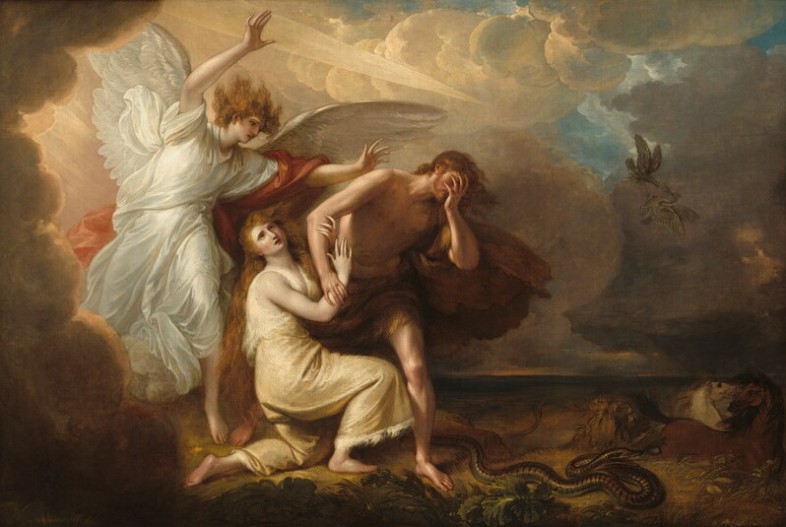
Graphic: The Expulsion of Adam and Eve from Paradise by Benjamin West, 1791. Public Domain

My Name is Legion

Beelzebub has been wandering through western civilization since the Philistines appeared on the scene in the 12th century BC. The polytheistic Philistines of Ekron, one of their five cities within Canaan, worshiped Beelzebub, Baal-Zebub in the Philistine language, as a minor god of healing and protection from diseases, mainly from flies. In the semitic languages Beelzebub was literally known as the “Lord of the Flies”. (In Indo-European languages some interpretations suggest that Beelzebub is translated into a more friendly Lord of the Jungle.)

As monotheistic traditions took root in Canaan, Beelzebub shifted from a protective deity to a purveyor of evil, demonized within emerging Jewish thought. By the 9th century BC, the prophet Elijah condemned the Israel King Ahab and the prophets of Baal for worshiping this god rather than the true God of the Jews. By the time of the New Testament, which mentioned him 7 times in Matthew, Mark, and Luke, he was associated with Satan, who represented the emperor of Hell.

In Matthew and Mark, the Pharisees accused Jesus of casting out demons by the power of Beelzebub or the “Prince of the Demons”. Jesus counters by exclaiming that “Every kingdom divided against itself is brought to desolation, and every city or house divided against itself will not stand.” Jesus’ response backed the Pharisees into a corner, if they admitted that Jesus was casting out demons by God’s power, then they would have to acknowledge his divine authority. But if they insisted, he was working with Satan, they would have to explain why Satan would undermine his own influence: a house divided will not stand. (Lincoln in an 1858 speech used the same words with a moral rather than religious meaning, granted that is a very fine line, “A house divided against itself cannot stand,” suggesting that the evils of slavery would lead to collapse of the country.)

Between the 15th and 17th centuries Beelzebub was transformed into one of the seven princes of Hell: Lucifer the Emperor, Satan, Leviathan, Belphegor, Mammon, Asmodeus, and Beelzebub. Beelzebub represented the deadly sins of gluttony and envy.

In modern times Beelzebub remains a symbol of evil in literature and culture. John Milton’s Paradise Lost cast him as a chief demon and William Golding’s Lord of the Flies takes a more ancient meaning associated with corruption and destruction.

From an ancient minor Philistine god to Satan during the times of Jesus, to a major Christian demon in medieval times, back to Satan himself in modern times; Beelzebub’s transformation reflects the shifting religious and cultural landscapes over millennia, but demons will always have a name. In Mark 5:9, Jesus asks a possessed man, “What is your name?” The demon responds, “My name is Legion, for we are many.”

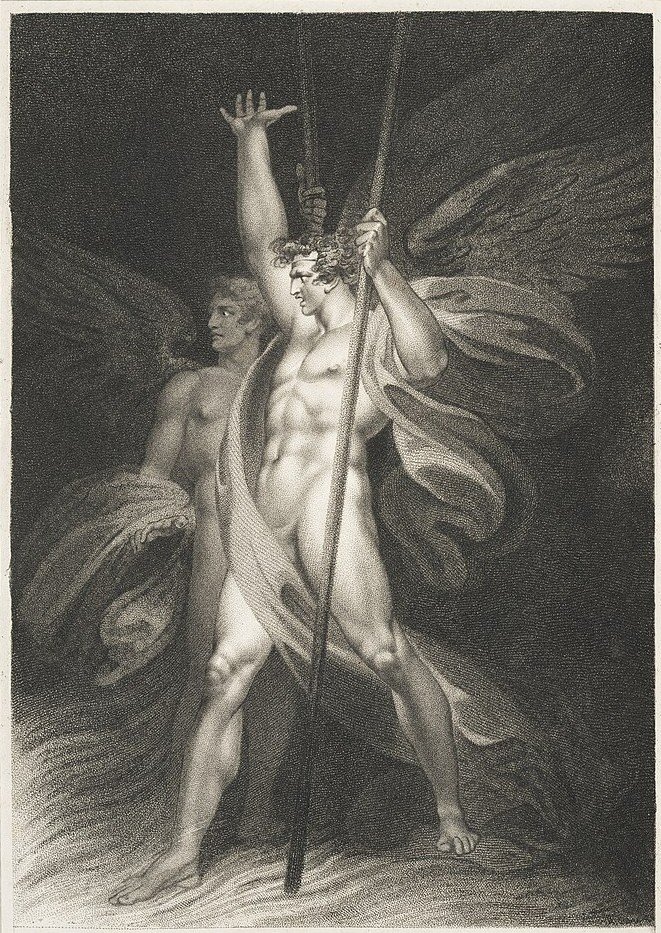
Graphic: Satan and Beelzebub by William Hayley, Jean Pierre Simon, Richard Westall: Paradise Lost. Public Domain.

The Antiquities of the Jews

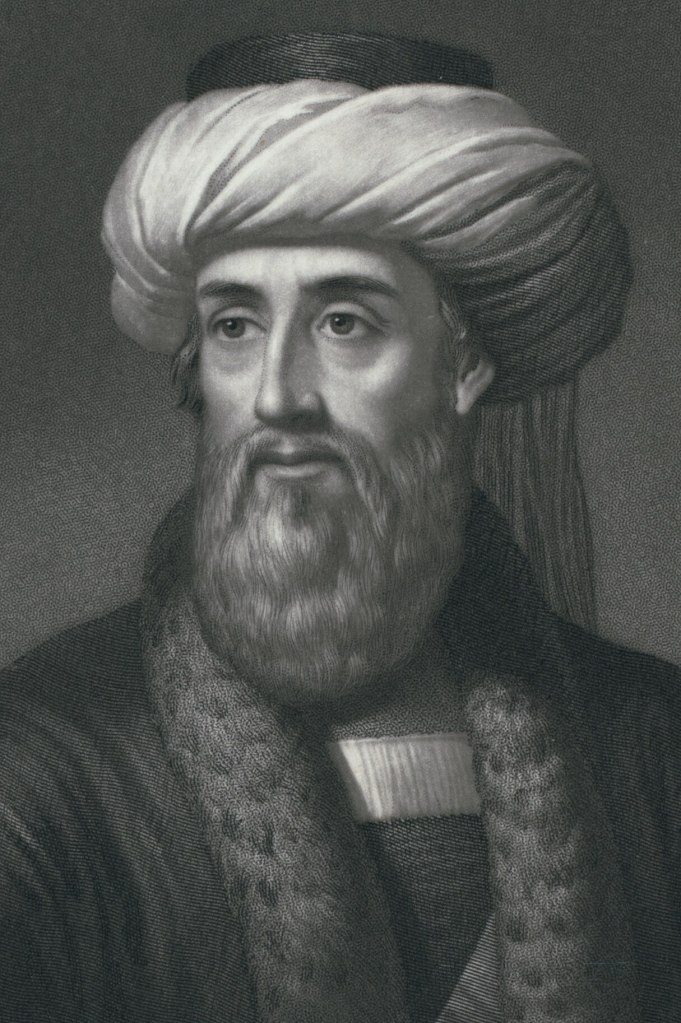
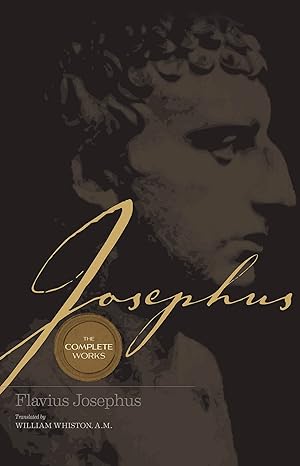
Josephus’s 20 volume history of the Jews titled: The Antiquities of the Jews was written to provide an account of the Jewish people for his Roman patrons and protectors.

Below is a synopsis of the 20 volumes:

  • Biblical creation to the death of Abraham’s son Isaac
  • History of Isaac’s sons to the Exodus of Jews from Biblical Egypt
  • Exodus from Egypt to the first 2 years of the 40 years in the wilderness
  • The remaining 38 years in the wilderness to the death of Moses upon reaching Canaan
  • Joshua’s replacement of Moses as leader to the death of the priest Eli
  • The capture of the Ark by the Philistines to the death of King Saul
  • David’s ascension to the throne of the Kingdom of Israel to the death of King David
  • Solomon’s ascension as King of Israel to the death of King Ahab
  • Reign of King Jehoshaphat to the fall of Samaria
  • Babylonian captivity of the Jews and the destruction of the Neo-Assyrian Empire
  • Start of the Persian Empire of Cyrus the Great to the death of Alexander the Great
  • Death of Alexander the Great to the Maccabean Revolt
  • Origins of the Hasmonean dynasty to the death of Queen Alexandra
  • The death of Queen Alexandra to the death of Antigonus II Mattathias
  • Herod the Great’s taking of Jerusalem to the completion of King Herod’s temple
  • Completion of King Herod’s temple to the death of Herod’s sons
  • Death of Herod’s sons to the banishment of King Archelaus

Josephus history covers major portions of the Old Testament including Genesis, Exodus, Numbers, Joshua, Judges, Ruth, Samuel 1&2, 1&2 Kings, 1&2 Chronicles, and Prophets. Josephus’s accounts provide for additional material and commentary not found in other texts including the bible.

Source: Josephus: The Complete Works, 2003. Jewish Virtual Library. World History Encyclopedia. Graphic Joseph, Son of Gorian, by Thomas Emmet, 1880, public domain.

Jewish, Roman, Historian

Flavius Josephus, a first century Jewish scholar and historian wrote four extant works:

  1. The Jewish War. (Jewish Revolt) 75 AD – The first revolt against the Romans from 66-73 AD
  2. The Antiquities of the Jews. 95 AD – From Adam to the death of Herod’s sons
  3. Against Apion. 97 AD – A defense of Judaism
  4. Vita or The Life of Flavius. 99 AD – Biography

These works provide significant source material and insight into first-century Judaism and Christianity.

Josephus was born into the Jewish priesthood on his father’s side and of Hasmonean royal descent maternally. He served in the Jewish military during the Jewish War but surrendered to the Romans and he was considered a traitor to Jews ever after. While waiting to be executed by the Romans he predicted that Vespasian would eventually be crowned emperor of Rome. Vespasian, because of the prophecy, spared his life and made him a consultant, but still a slave, to the Roman army. Josephus gained his freedom when Vespasian became emperor in 69 AD, at which time he changed his name to Flavius Josephus. Flavius was the family name of the emperor Vespasian.

Source: Josephus: The Complete Works, 2003. Jewish Virtual Library. World History Encyclopedia.

Apologetics

Eusebius: The Church History

By Eusebius (of Caesarea)

Translated by Paul L. Maier

Kregel Academic

Copyright: © 2007

Original Publication Dates: 313-326 AD

Original Title: Eusebius: Ecclesiastical History

AmazonPicture

Maier Biography:

Paul L. Maier, born 1930 in St. Louis, author, public speaker, and historian has written twenty-three adult and children, fiction and non-fiction, books about Christianity. He is the son of Walter A. Maier, founder, and speaker of The Lutheran Hour.

He graduated from Harvard and Concordia Seminary in St. Louis with additional studies in Heidelberg, Germany and Basel, Switzerland. He was the Seibert Professor of Ancient History at Western Michigan University until he retired in 2011.

In addition to his definitive translation of “Eusebius: The Church History“, his 1993 “Skeleton in God’s Closet” was a number one best seller in religious fiction, a thriller concerning the Resurrection of Jesus. He also co-wrote with Hank Hanegraaff in 2006 a rebuttal to Dan Brown’s “The Da Vinci Code“: “The Da Vinci Code: Fact or Fiction?

In addition to writing books Maier has produced six religious documentaries including the 2014 “The Week That Changed the World“, detailing the Holy Week before Jesus’s resurrection, discussing the key personalities, the politics, and the treachery that sealed Christ’s fate.

Maier Bibliography-Books and Documentaries:

  • A Man Spoke, A World Listened: The Story of Walter A. Maier 1963
  • Pontius Pilate 1968
  • First Christmas: The True and Unfamiliar Story in Words and Pictures 1971
  • First Easter: The True and Unfamiliar Story in Words and Pictures 1973
  • First Christians: Pentecost and the Spread of Christianity 1976
  • Flames of Rome 1981
  • The Best of Walter A. Maier 1981 (paperback)
  • Josephus, The Essential Writings 1988
  • In Fullness of Time 1991
  • A Skeleton in God’s Closet 1994
  • The Very First Christmas 1998
  • The New Complete Works of Josephus with William Whiston 1999
  • Eusebius: The Church History 1999
  • The Very First Easter 2000
  • More Than a Skeleton 2003
  • Caspar Schwenckfeld on the Person and Work of Christ: A Study of Schwenckfeldian Theology at Its Core 2004 (paperback)
  • Martin Luther a Man Who Changed the World 2004
  • The Da Vinci Code: Fact or Fiction? with Hank Hanegraaf 2006
  • The Real Story of Creation 2007
  • The Real Story of the Flood 2008
  • A Skeleton in Rome 2011
  • The Constantine Codex 2011
  • The Genuine Jesus 2021
  • Christianity: The First Three Centuries (Documentary) 2003
  • The Odyssey of St. Paul (Documentary) 2003
  • Jesus: Legend or Lord? (Documentary) 2003
  • How We Got the Bible (Documentary) 2009
  • Christianity and the Competition (Documentary) 2010
  • The Week that Changed the World (Documentary) 2011

Eusebius Biography:

FootnoteA

“May I be an enemy to no one and the friend of what abides eternally. May I never quarrel with those nearest me and be reconciled quickly if I should. May I never plot evil against others, and if anyone plots evil against me, may I escape unharmed and without the need to hurt anyone else.” — Eusebius

Eusebius of Caesarea, also known as Eusebius Pamphili, was a historian, interpreter of scripture, and Christian apologist, born around 260-265 AD in Caesarea, where he gained prominence in the fourth century, before passing away around 339 AD. His early education was by the learned presbyter, and eventual saint, Pamphilus, the principle religious scholar of his generation.  Eusebius became bishop of Caesarea around 314 AD, shortly after Constantine became Roman Emperor, and remained in that position until his death in 339 AD. Eusebius became a significant figure in the theological controversies and politics of his day, becoming a, if not the leading spiritual advisor and confidant to Constantine.

Christians since the time of Christ were persecuted for their faith which came to a ghoulish crescendo under the Diocletian Edicts, also known as “The Edicts Against the Christians” of 303 AD. The edicts dissolved the Christians’ legal rights, compelled them to reject Jesus and to adhere to the local religious customs of paganism and polytheism. The edict saw the destruction of Christian scripture and churches along with the torture and execution of approximately 3500 church leaders and lay people including Eusebius’ teacher Pamphilus. The persecution ended with the Edict of Milian in 313 AD, decreed and signed by Constantine and Licinius proclaiming religious toleration within the empire.

FootnoteB

The edict gained the life-long gratitude of Eusebius culminating in the Christian bishop’s panegyric, “Life of Constantine“, in which the author details the emperor’s religious policies as well as a hagiographic account of Constantine’s life. Historians have described their relationship as complex, evolving over time. They have also stated that Eusebius may have been the power behind the throne or, as others have surmised, just an obsequious toady seeking protection from his church enemies. Regardless of the actual relationship it is agreed that Eusebius was Constantine’s spiritual and political advisor.

FootnoteC

Eusebius, through his bond with the emperor, helped structure the relationship between church and state, assisting in the creation of the Constantinian concept of a Christian empire, which had a considerable influence on the development of the early Christian Church and the Roman Empire, along with empires to come.

Constantine, to put down an early rebellion of church leaders, ordered three hundred bishops throughout the empire to meet at the First Council of Nicaea in 325 AD to resolve the controversy of Arianism, a concept that Christ was not divine but was created by God. Much of the Church believed that Christ was of the same substance, “consubstantiality“, as the Father and as such: divine. Eusebius, enjoying the emperor’s favor, sat next to him at the council and offered his own creed stating that Christ was begotten, not made, from the Father. The council, in the end, rejected Arianism and formulated the creed that is recited at every High Catholic Mass to this day. The council also set the time for Easter as the Sunday after the first full moon following the Spring equinox rather than occurring on the Sunday closest to Jewish Passover or on the Jewish Passover even it was not on a Sunday. Which explains why no one knowns when Easter occurs. Constantine was adamant about foregoing any Jewish practices in the honor of Jesus.

Eusebius is referred to as the “Father of Church History” due to his voluminous writings in the field including, as discussed below, his account of the first centuries of Christianity in his “Ecclesiastical History” or “Church History“. 

Church History (Ecclesiastical History):

FootnoteD

Church History ” or “Ecclesiastical History” is the only exigent work that chronicles the development of early Christianity and its Church from the birth of Christ on into the fourth century. Eusebius’s account, written in Koiné Greek, lingua franca for the Mediterranean area from fourth century BC to fourth century AD, provides a chronological narrative, using the succession of Roman Emperors as a linear timeline, of the early Christian Church. Eusebius, with his access to the Theological Library of Caesarea, incorporated many church documents, acts of the martyrs, letters, and extracts from earlier Christian writings into his work, many which no longer exists. The “Church History” covers the succession of Church bishops, the history of Christian teachers especially Origen, the history of the many church heresies and conflicts, and Christianity’s relationships with Romans, pagans, and Jews. Despite accusations that “Church History” is more a defense of Christianity, an apologetic and hagiography, than a history, Eusebius’s work remains a valuable source for understanding early Christian history.

Below are the Maier’s chapter listings, brief descriptions, and Roman Emperors during the historical period covered.

  • Book I: The Person and Work of Christ: Eusebius on Christ. Augustus to Tiberius.
  • Book II: The Apostles: Eusebius on the Apostles. Tiberius to Nero.
  • Book III: Missions and Persecutions: Formation of the New Testament. Galba to Trajan.
  • Book IV: Bishops, Writings, and Martyrdoms: Defenders and Defamers of the Faith. Trajan to Marcus Aurelius.
  • Book V: Western Heros, Eastern Heretics: Death at Lyons, Rome, and Alexandria. Marcus Aurelius to Septimius Severus.
  • Book VI: Origen and Atrocities at Alexandria: Life of Origen. Septimius Severus to Decius.
  • Book VII: Dionysius and Dissent: Church Life According to Dionysius. Gallus to Diocletian.
  • Book VIII: The Great Persecution: Edicts Against Christians. Diocletian to Galerius.
  • Book IX: The Great Deliverance: The End of Persecution? Maximin, Maxentius, and Constantine.
  • Book X: Constantine and Peace: Eusebius and Constantine. Constantine.

Literary Criticism:

In C.F. Cruse’s 1850 translation of “Ecclesiastical History” he states that, “…Eusebius was not without his beauties, but they were rarely scattered, that we can hardly allow him an eminent rank as a writer.” This is an understatement of the 19th century although it is a polite way to admit Eusebius was incapable of engaging his readers in any form other than pedantic verbosity. This is also an example that Cruse was not immune from obfuscating meaning in his written translations and commentary. His comment above simply stated that Eusebius rarely wrote with elegance and concision. Eusebius’ writing was dense, confusing, dogmatic, and sometimes incomprehensible. Eusebius’ writing compares favorably, snark intended, with Edward Gibbons’ “The Decline and Fall of the Roman Empire” whose erudite, verbose, and opaque style has managed to confuse his readers for two plus centuries now, but for some reason no one seems to mind, except me. Gibbons disliked, immensely, Eusebius’ “Ecclesiastical History” stating that it was full of lies and falsehoods which is an exceedingly difficult position to support due to Eusebius’ excessive use, usually in quotes, of original source material. Gibbons blamed the fall of the Roman Empire on the rise of Christianity, a problematic thesis considering Christianity was the least of the Empires worries. Unchecked immigration and a corrupt governing class were much bigger problems than a few Christians asking to be left alone to worship their God in peace.

Paul L. Maier’s translation of “Church History” is a masterful improvement over C.F. Cruse’s 1850 attempt to make Eusebius readable. Cruse strove to accurately translate Eusebius with the result of burdening his readers with difficult and cluttered phrasing. Maier saves his readers by reducing Eusebius’s lengthy sentences, dense language, and abrupt subject changes to intelligible bites of prose that are readable, understandable, and usable. An example of Maier taking difficult sentences and distilling them into something cogent can be seen in the two example sentences below. The first sentence comes from Loeb’s edition of “Ecclesiastical History“, which is a very faithful rendition of Eusebius’ writing, followed by Maier’s translated version. Loeb: “I have already summarized the material in the chronological tables which I have drawn up, but nevertheless in the present work I have undertaken to give the narrative in full detail.” Maier: “Previously I summarized this material in my Chronicle but in the present work I deal with it in the fullest detail.” The first sentence takes a few readings to comprehend the meaning. Maier allows for instant comprehension.

Ecclesiastical History” or “Church History” is an important work in understanding the beginnings of Christianity and the governing hierarchy that was built up over the centuries. This is not a long book, less than four hundred pages, but it does take dedication to the task of reading and understanding it. In the end it is worth the effort as a little history is always useful if not enlightening.

References and Readings:

FootnoteA: Eusebius preceding his Eusebian Canons in the Garima Gospels. Michael Gervers. 2004. Public Domain

FootnoteB: The Christian Martyrs’ Last Prayer. Jean-Leon Gerome. Walters Art Museum. 1863-1883. Public Domain

FootnoteC: Eusebius of Caesarea. Unknown Source and Date. Public Domain

FootnoteD: Constantine the Great. Unknown Source and Date. Public Domain

The First Superhero

Gilgamesh: A New English Version

Translator: Stephen Mitchell

Published by Free Press

Copyright: © 2004

Stephen Mitchell-Amazon Picture

Biography:

Stephen Mitchell was born in Brooklyn in 1943 (80ish), educated at ‘Ivy League’ schools in the US and France, and, quoting his words, “de-educated through intensive Zen practice“. That may be just a spoonful of humor, it is though a spoonful of humility, and a large serving of Zen-Socratic wisdom. A wisdom that becomes one that reflects upon his life and realizes his education has granted him neither knowledge nor wisdom. He does not say what the Ivy League has instilled in him, but the derivation of any real value from those hallowed halls, as seen from the Zen rear-view mirror, appears minimal.

In an interview with the Los Angeles Times, he ruminates that “If I’m a scholar, I’m an amateur“. A humble observation in the truest form of the personal quest for fulfillment and enlightenment. In the same interview, elaborating on Chuang-tzu in Mitchell’s ‘The Second Book of the Tao‘, he says: “I have no pretensions to scholarship. I just love to play with the Taoist masters. For them, nothing is sacred. The best tribute is contradiction.” Again, humility before all, all before self.

In a separate interview with Scott London also discussing ‘The Second Book of the Tao‘ Mitchell relates the teachings of Chuang-tzu as a philosophy of the unassuming and the simple life. “There was nothing to live up to,” he says. “There was only a passion for the genuine, a fascination with words, and a constant awareness that the ancient Masters are alive and well in the mind that doesn’t know a thing.” Mitchell personifies and lives that philosophy.

Mitchell has translated and authored many books including the bestselling Tao Te Ching, Gilgamesh, The Gospel According to Jesus, and his latest book, The First Christmas released in 2021. He is also the coauthor of three of his wife Byron Katie’s bestselling books: Loving What Is, A Thousand Names for Joy, and A Mind at Home with Itself and numerous children’s books.

The Discovery of the Story of Gilgamesh:

The Epic of Gilgamesh was, in the beginning, a series of Sumerian poems/stories likely passed down through the ages as oral histories before being written down in Akkadian 700-1000 years after the reign of the mythical/historical King of Uruk: Gilgamesh.

Mitchell may have been introduced to the literary stature of Gilgamesh while translating the Austrian mystic poet, Rainer Marie Rilke. Rilke wrote at the end of 1916. “I … consider it to be among the greatest things (the poem Gilgamesh) that can happen to a person. I have immersed myself in [it], and in these truly gigantic fragments I have experienced measures and forms that belong with the supreme works that the conjuring Word has ever produced.

The poem, written in Assaryian cuneiform script, on clay tablets, was discovered by Austen Henry Layard while excavating mounds, beginning in 1844, around what is now known as the city of Mosul. The mounds turned out to be the remains of the ancient Assyrian capital palaces of Nineveh including the library of King Ashurbanipal or Ashur Banipal (668-627 BC) depending on the source. Over 25,000 clay tablets from the library, twelve of which contained the poem, were shipped back to the British Museum. It took until 1872 before the poem was discovered among this immense trove of tablets and in 1872 George Smith translated and published the poem. These twelve tablets contain the fullest version of the poem found to date.

The first surviving version of the combined epic is known as the Old Babylonian version and dates from the 18th century BC. The longer and more complete copy of the poem, from King Ashurbanipal’s library is from the 10th to the 13th centuries BC and is known as the Standard version. Currently seventy-three fragments, possibly more, of the Standard version have been discovered containing some two thousand lines of the original, which is surmised to be three thousand lines long.

Mitchell mainly adapts the Standard version into a contemporary English language poem with gap filler supplied by the Old Babylonian version. Where there is no original material to complete known gaps, Mitchell has contributed original work to provide clarity and to maintain continuity.

The Man of Gilgamesh:

Gilgamesh is accepted as being the 5th king of Uruk, possibly reigning roughly in the 26th century BC (2800-2500 BC) for 126 years. Some believe the long reign of 126 years may actually be a number in base six which would equate to 54 years in base ten. Very little is known of his reign with the exception that he built the walls Uruk, is listed in the Sumerian King list, and is mentioned as a contemporary of Aga, son of King Enmebaragesi of Kish.

Aga, who ruled over Sumer for 625 years, is the antagonist in the Sumerian poem ‘Gilgamesh and Aga‘, recording the King of Kish’s siege of Uruk after Gilgamesh refused to submit to him. From the poem Aga commands Gilgamesh and the citizens of Uruk to work forever as slaves on Kish’s irrigation projects.

There are wells to be finished.
There are wells in the land to be finished.
There are shallow wells in the land to be completed.
There are deep wells and hoisting ropes to be completed

Gilgamesh is made King of Uruk for his defiance and resistance to Aga’s demands. King Gilgamesh captures Aga on the 10th day of the siege but sets him free to return to Kish.

The Land of Gilgamesh:

Uruk was a Sumerian city-state established in the southern reaches of Mesopotamia and was located on the east bank of the Euphrates River. The river today, through the process of river channel migration, is much further to the west. The city and its surrounding area were home to about 40,000-125,000 people, who during the time of Gilgamesh controlled the entire Sumer area.

The Sumerian area and Uruk lay claim to the beginnings of civilization, urbanization, laws, and writing. Cuneiform, wedge shaped writing on clay tablets and the earliest known system of writing, dates to the fourth millennium BC with the oldest examples being inventories of goods stored and transported in and out of the Sumer area.

The oldest known surviving law code, the Code of Ur-Nammu, in the world comes down through the ages from the Sumerian king Ur-Nammu or his son Shulgi of Ur during the last half of 21st century through the beginning of 20th century BC. The Code of Urukagina is older but is known only through references in other ancient writings. The better-known Babylonian Code of Hammurabi is younger and dates from the eighteenth-century BC.

The greatest architectural monument of Uruk was the White Temple built upon the Anu Ziggurat during the fourth millennium. The temple was thirteen meters high and 22.3 x 17.5 meters in depth and width. It stood upon a ziggurat with dimensions of 50 x 46 x 10 meters in depth, width, and height, respectively. On the flat plains surrounding Uruk it was visible in the distance for kilometers.

German archaeological excavations in 2003, conducted in and around the old riverbed of the Euphrates, have reportedly revealed garden enclosures, specific buildings, and structures described in The Epic of Gilgamesh, including Gilgamesh’s tomb. According to The Death of Gilgamesh, he was buried at the bottom of the Euphrates when the waters parted after he died. There is debate whether these excavations and discoveries exist or are a hoax. These discoveries have not been confirmed and no updates from the original can be found but one of the original authors of the 2003 study is Jorg Fassbinder, a geophysical archeologist associated with the University of Munich.

Uruk is also recognized as the city of Erech, founded by Nimrod, great-grandson of Noah, as mentioned in Genesis 10:10:

8And Cush begat Nimrod: he began to be a mighty one in the earth. 

9He was a mighty hunter before the LORD: wherefore it is said, Even as Nimrod the mighty hunter before the LORD. 

10And the beginning of his kingdom was Babel, and Erech, and Accad, and Calneh, in the land of Shinar. 

11Out of that land went forth Asshur, and builded Nineveh, and the city Rehoboth, and Calah

The Legend of Gilgamesh:

Gilgamesh in Sumerian possibly means ‘The Old Man Is a Young Man’ or ‘The Ancestor Was a Hero’. An immortal Hero, a synthesis that brings us to the story and plot of Gilgamesh.

Gilgamesh is the epic hero of the times. Dashing, brave, adventurous; a seeker of immortality and wisdom but not much in the way of kingly benevolence. The gods knowing Gilgamesh lacked wisdom sent him his twin and his opposite: Enkidu. Enkidu became Gilgamesh’s brother and constant companion. Thus begins the quest of Gilgamesh to find himself. It is far more than that, though, as Mitchell explains:

Part of the fascination of Gilgamesh (the story and person) is that, like any great work of literature, it has much to tell us about ourselves. In giving voice to grief and the fear of death, perhaps more powerfully than any book written after it, in portraying love and vulnerability and the quest for wisdom, it has become a personal testimony for millions of readers in dozens of languages.

Gilgamesh, as with some of his readers of today, is slow to learn the lessons of life, slow to acquire wisdom even when it is given to him/us for free. From the old Babylonian Version in Book X, Siduri, a wise matron brewer of beer offers Gilgamesh an opiate of advice for his pain brought on through the death of his brother Enkidu.

“Gilgamesh, where are you roaming? You will never find the eternal life that you seek. When the gods created mankind, they also created death, and they held back eternal life for themselves alone. Humans are born, they live, then they die, this is the order that the gods have decreed. But until the end comes, enjoy your life, spend it in happiness, not despair. Savour your food, make each of your days a delight, bathe and anoint yourself, wear bright clothes that are sparkling clean, let music and dancing fill your house, love the child who holds you by the hand, and give your wife pleasure in your embrace. That is the best way for a man to live.”

Gilgamesh declines the advice to live for the day and continues with his quest for immortality.

Bibliography:

Dropping Ashes on the Buddha: The Teaching of Zen Master Seung Sahn. 1976

The Selected Poetry of Rainer Maria Rilke. 1982

The Sonnets of Orpheus. 1985

The Book of Job. 1987

Tao Te Ching: 1988

The Enlightened Heart: An Anthology of Sacred Poetry 1989

The Creation. 1990

The Enlightened Mind: An Anthology of Sacred Prose. 1991

Parables and Portraits. 1991

The Gospel According to Jesus: A New Translation and Guide to His Essential Teachings for Believers and Unbelievers. 1991

A Book of Psalms: Selected & Adapted from the Hebrew. 1993

Into the Garden: A Wedding Anthology. 1993

Ahead of All Parting: The Selected Poetry and Prose of Rainer Maria Rilke. 1995

Bestiary: An Anthology of Poems about Animals. 1996

Genesis: A New Translation of Classic Biblical Stories. 1996

The Selected Poetry of Dan Pagis. 1996

The Selected Poetry of Yehuda Amichai. 1996

Full Woman, Fleshly Apple, Hot Moon: Selected Poems of Pablo Neruda. 1997

The Essence of Wisdom: Words from the Masters to Illuminate the Spiritual Path. 1998

Meetings with the Archangel: A Comedy of the Spirit. 1998

The Frog Prince: A Fairy Tale for Consenting Adults. 1999

Bhagavad Gita: A New Translation. 2000

The Nightingale. 2002

Loving What Is: Four Questions That Can Change Your Life. With Byron Katie. 2002

Jesus: What He Really Said and Did. 2002

Can Love Last?: The Fate of Romance Over Time, 2002

The Wishing Bone. 2003

Gilgamesh: A New English Version. 2004

The Essential Neruda: Selected Poems (Bilingual Edition). 2004

A Thousand Names for Joy: Living in Harmony with the Way Things Are. With Byron Katie. 2007

Iron Hans: A Grimms’ Fairly Tale. 2007

Genies, Meanies, and Magic Rings: Three Tales from The Arabian Nights. 2007

The Tinderbox. 2007

The Ugly Duckling. 2008

The Second Book of the Tao. 2009

The Iliad. 2011

The Odyssey. 2013

A Mind at Home with Itself: How Asking Four Questions Can Free Your Mind, Open Your Heart, and Turn Your World Around. With Byron Katie. 2017

Beowulf. 2017

Joseph and the Way of Forgiveness: A Story About Letting Go. 2019

The First Christmas: A Story of New Beginnings. 2021

References and Readings:

Visions of the End

Apocalypse M Apocalypse 2015

Theaters:  NA (TV Movie – 2000)

Streaming:  April, 2004

Rated:  NR

Runtime:  96 minutes

Genre:  Drama – Faith – Religion

els:  3.0/10

IMDB:  6.4/10

Amazon:  4.3/5 stars

Rotten Tomatoes Critics:  NA/10

Rotten Tomatoes Audience:  2.9/5

Metacritic Metascore:  NA/100

Metacritic User Score:  NA/10

Awards:

Directed by:  Raffaele Mertes

Written by:  Francesco Contaldo, Raffaele Mertes, Gianmario Pagano

Music by:  Marco Frisina

Cast:  Richard Harris, Vittoria Belvedere, Benjamin Sadler, Bruce Payne

Film Locations:  NA

Budget:  $ NA Low-Budget, Made for TV

Worldwide Box Office:  $ NA

St. John, John the Apostle, John the Evangelist, John of Patmos, John the Elder (Harris) is held in the Aegean island prison of Patmos as a scribe for his Roman jailers.   God speaks to John and commands him to disseminate, as letters, the visions he sends him. The letters are be sent to the 7 churches of Asia Minor.  The visions include truths and admonishment to the churches and how the beginning of the end of times will transpire.

This is a made for TV movie that exhibits its low-budget pedigree in almost every scene.  But the movie wasn’t made to garner any awards, rather it was made to educate the public about the Book of Revelations, the last book of the Bible. It does accomplish this but the story is out of sequence and the method is clunky and amateurish.

The supporting actors are all bad with the atrocious acting trophy going to the Bruce Payne playing the Roman Emperor Domitian. Moving from bad to worse, the special effects were categorically dreadful.  If there is an award for worst special effects this movie would win. The movie’s effects were on par with what passed as realistic in the 1958 movie: The 7th Voyage of Sinbad the Sailor. Spending a few dollars more on marginally better special effects very likely would have taken this movie from ugh awful to mildly entertaining.

The only true shining light in this movie is Richard Harris, he can’t save the movie, but he is a joy to watch.  The kindly Dumbledore persona comes through in every scene. A natural teacher with a gentle soul.  Interestingly, his full name is Richard St John Harris.