La Rioja Alta Vina Alberdi Reserva Tinto 2010

W Alberdi 2010Tempranillo from Rioja, Spain

100% tempranillo

13.5% alcohol

Opened 21 Dec 2017

els: 9.0/10

James Suckling: 95

Robert Parker: 91

Cellar Tracker: 90

Wine Spectator: 89

La Rioja Alta, founded in 1890, within the Station Quarter of Haro, Spain, offers some of the finest  wines coming out of the Rioja producing region. The Vina Alberdi brand was added to the firm’s lineup of great wines in 1978, making its newest label, out of 5, and the only one made with 100% Tempranillo grapes.

The Rioja region’s wine history is tied into the arrival of the Phoenicians, and their wine making skills, 3000 years ago, with their arrival and founding, in the 11th century B.C., of what is now city of Cadiz along the southwestern Spanish-Atlantic coast. They likely continued their migration to the Rioja region via sea routes along the Atlantic-Iberian coast. The Romans continued, and expanded, the wineries in the Rioja area starting around the 2nd century B.C.; credited with the planting many of the vineyards in the area. During the Middle-Ages, Christian pilgrimages through the area provided a continuous market, and free advertising, for these northern Spanish wines.

In the 19th century the French vineyards were devastated and destroyed by the very small critter: Daktulosphaira vitifoliae.  With the resultant collapse of the French wine industry many of the country’s wine artisans migrated south into the Spanish wine growing regions, bringing with them their expertise and customs, especially from the Bordeaux region.  La Rioja Alta’s first winemaker in 1890 was the Frenchman, Monsieur Vigier, coming during the period, in the late 19th century, of the greatest vineyard destruction in France where 65-90% of the vineyards succumbed to the Phylloxera.

La Rioja Alta’s estate owned vineyards: Las Monjas, Bardal and Las Cuevas, which provide the Tempranillo grapes for this wine, grow at 1600 to 2000′ above sea level, a few miles from Haro. The soils are chalky and clayey, nurturing vines that were planted more than 40 years ago. Growing season temperatures range from a the low 50s at night to the low 80s Fahrenheit during the day, with atypical  20 degree, night-to-day, temperature swing. Rarely does the area experience freezing temperatures. The spring and summer months average 1.75 to 3 inches of rain per month.

The Tempranillo grapes are manually harvested and the wine spends 12 months in new American oak barrels and an additional 12 months in 3-year-old, or more, barrels.  Every 6 months the wine is romantically racked (trasegamos) by the light of a candle. The 2010 vintage was bottled in 2013.

This is a brilliant, dark cherry-red wine with a peachy-pink rim. Aromas of red fruits and berries, with a hint of oak and caramel. Very nice tasting, balanced, medium bodied and smooth, with a crisp acidity and just right tannins, producing a long, dry finish. The wine evokes visions of the gently undulating curves of a gypsy dancer in an iridescent, flowing chiffon red dress; her body pulsating and pressing to the slow Bolero beats in a smoky, steamy, waterfront Cadiz club.

An outstanding wine. Serve with cheese or light fare. Decant and aerate for one hour before drinking.

$11.00-33.00  wine-searcher.com
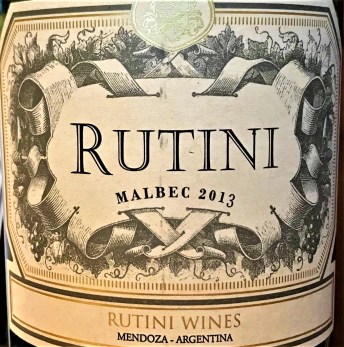
Rutini Malbec 2013

W Rutini 2013Malbec from Uco Valley, Mendoza, Argentina
100% malbec

14.0% alcohol

Opened 15 Dec 2017

els: 9.0/10

Cellar Tracker: 92

Wine Spectator: 91

Wine and Spirits: 89

Wine Enthusiast: 88

Felipe Rutini was born in 1866, into a winemaking family in the central Italian agricultural Province of Ascoli Piceno, which is less than 20 miles west of the Adriatic Sea. He graduated from the Royal School of Agriculture as an agricultural technician in the city of Ascoli Piceno. Disillusioned with the Italian unification and the constant wars in Europe, he made his way to Mendoza, Argentina at the young age of 18 and a year later founded the La Rural winery in the district of Coquimbito, currently located in the southeastern portion of the Mendoza metro area. People definitely made their mark earlier in life during the days of horses and steam.

His sons, after their father Felipe Rutini’s death in 1919, took over the winery and were the first to plant vineyards in the Uco Valley, around Tupungato, in the year of 1925. The winery eventually established two more vineyards in the southern portion of Uco Valley in the San Carlos Department. All 3 of these vineyards: Gualtallary, The Consultation, and The Altamira; totaling approximately 620 acres, are a source of grapes for this Malbec. In 1994, the Rutini winery and vineyards were sold to Argentinian investors including the wine makers: Nicolas Catena and Jose Benegas Lynch.

The vineyards are situated 3100 to 4100′ above sea level in the shadow of the Andes Mountains and the 21,500′ Tupungato volcano. The soils are well-drained, alluvial to colluvial, rocky sands to loams, one to four feet thick. Temperatures reach into the 80s during the growing season days and dip into the mid-50s at night.  Rain varies from 1 to 3.5 inches per month.

The grapes are manually harvested and the wine spends 12 months in new French and American oak barrels. Later vintages are stored in new and second use oak barrels.

It is a dark plum-colored wine with blackberry and earthy aromas. Huge tannins and shanghaied acidity produce a long grope of a finish. I drank a bottle of this wine several years ago and it was mediocre, plain and uninteresting, at best.  It has aged well in the bottle and exhibits a greater punch and grab now. Also it was about half the price a few years ago, re-enforcing the maxim: buy early, drink later. Serves well with red meat.

An outstanding wine. Decant and aerate for one hour before drinking.

$32-40  wine-searcher.com

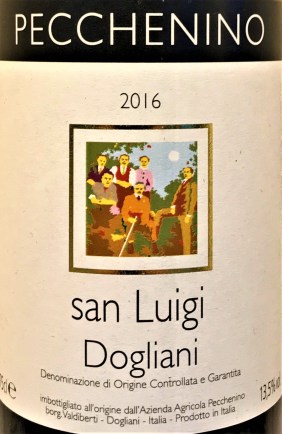
Pecchenino San Luigi Dogliani Dolcetto 2016

W San Luigi 2016Dolcetto from Dogliani, Piedmont, Italy

100% dolcetto

13.5% alcohol

Opened 11 Dec 2017

els: 9.0/10

Wine Spectator: 91

Wine Advocate: 90

The Pecchenino wine estate has been passed from father to son since the late 18th century. The estate, since the 1970s, has tripled in size and now encompasses approximately 62 acres northeast of the commune of Dogliani, a small town of about 5000 people, which is  less than 40 miles southeast of Turin.  The estate has 70% of its acreage planted in Dolcetto vines with the remaining 30% dedicated to their better known cousins: Barbera, Nebbiolo, Chardonnay and Sauvignon Blanc.

The Dolcetto, known in area since at least the early 1400s, is a cool weather, dark-skinned grape with high tannin levels but low acidity, necessitating an early consumption since it will not age well in the bottle much beyond 4 or 5 years. This is not catastrophic, actually just the opposite, since the 2016 vintage is a nice wine to drink right now while you wait for the regions Barbera and Nebbiolo wines to age for 3-5 years.

The Pecchenino soils consist of unconsolidated calcareous alluvium, somewhat fertile but lacking in substantial organics. The vines are perched at an altitude of 1275-1400 feet above sea level, with a generally southern exposure.  Temperatures range from the low 80s during the growing season days to the mid 50s at night.  Rain amounts of 1-3 inches per month are typical.  October is the wettest month with up 3.5 inches expected and July is the driest with an average rainfall of a little more than 1 inch.

A brilliant, medium colored red wine with fruity and earthy aromas. Nice tannins and not too dry, producing a pleasant and satisfying finish. Serves well with, and not trying to be cliché, pizza and pasta.

An outstanding wine. Decant and aerate for at least one hour.

$11.98-17.99  wine-searcher.com


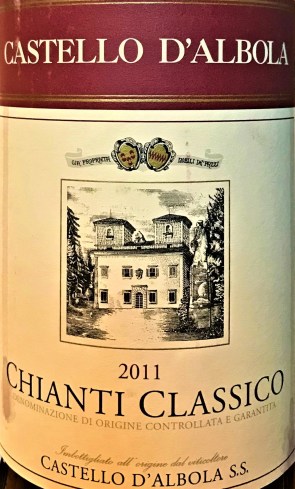
Castello d’Albola Chianti Classico DOCG 2011

W D'Albola Chianti 2011Sangiovese from Tuscany, Italy

95% sangiovese

5% canaiol

13.0% alcohol

Opened 7 Dec 2017

els 8.8/10

JS 91

WS 90

RP 87

The Castello d’Abola estate, drastically renamed Castello di Albola, located in the village of Radda, is smack dab in the middle of the Chianti Classico DOCG. The wine takes its name from the Abola Castle, built sometime around the 1400s and beautifully restored by the current owners: the Zonin family.

Vineyards and wineries have existed in Tuscany Chianti area for at least 2500 years, likely even further into the past, back during the pre-Roman times of the enigmatic Etruscan civilization; who are believed to have introduced wine production to the French. A truer definition of altruistic and noble charity cannot be found.

The vines for this wine are grown at the highest elevation of any vineyard in the Chianti DOCG, rooted in clayey limestone soils that receive anywhere from 0.25 to 1.8 inches of rain per month during the growing season.  Temperatures can reach into the mid-80s during the day and drop into the mid-40s Fahrenheit at night.

This wine exhibits a brilliant ruby-red  to garnet hue, redolent of sweet fruits and pepper. A medium body, balanced and structured wine along with a moderate but pleasant finish. A nice table wine for everyday fare or drink alone while watching the sun sink slowly towards the west.

A good wine. Decant and aerate for at least one hour.

The 2011 is close to impossible to find anymore, at least in the US.  I’ve found one store in the UK and one in Canada that are charging an exorbitant price that you should definitely pass on.  I paid $15.99 for a bottle in 2015, which is (was) an inexpensive to a tad over-priced for wine of this quality.

Michel Gassier Cercius Rouge 2013

W Cercius 2013Rhone Red Blends from Cotes du Rhone, Rhone, France
85% grenache

15% syrah

15.5% alcohol

Opened 7 Dec 2017

els 9.0/10

RP 91

Cercius, from the Latin term for a wind between north and west, is a delightful vieilles vignes (old vine) Cotes du Rhone blend from the Plateau de Domazan, located about 8 miles west of the Avignon; the 14th century Papal seat which was then part of the Kingdom of Arles within the Holy Roman Empire.

Wine was likely grown and produced in the Rhone Valley as far back as the 6th century BC, believed to have been established by either the Greeks or Persians, with the vineyards and wineries maintained until the end of the Roman Empire in the late 5th century AD. It wasn’t until the late Middle Ages when the Avignon papacy re-established the Rhone area vineyards and wineries, mostly for their own use, beginning with Pope Clement V around 1309.  The rest, as they say, is history.

The 80-year-old plus vines are nurtured by clayey limestone soils topped with a layer of pebbles which contend with blustery, northwest winds, traveling over and down the 6000 foot peaks and slopes of the Central Massif, blowing into the  Michel Gassier’s Rhone Valley vineyards, proudly defying Mother Nature’s blustery assault at 500 feet above sea level.  The growing season climate for the area provides for hot days above 80 degrees Fahrenheit and cool nights with temperatures dipping into the mid-40s to low 50s.  Rainfall averages 2.5-4 inches per month.

The grapes are hand harvested, destemmed, allowing natural yeast fermentation in concrete tanks for 6 months.

The wine exhibits a deep ruby-red color; a wonderful aroma of lilacs, violets and sweet fruits. It’s well-balanced and full-bodied and the finish is long and satisfying.

An outstanding wine. Decant and aerate for at least one hour.

$12.99  wine.com


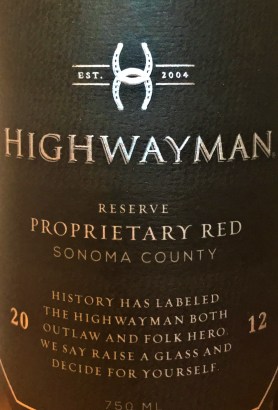
Highway 12 Highwayman Proprietary Red 2012

W Highwayman 2012Other Red Blends from Sonoma County, California
Proprietary red blend:

     cabernet sauvignon

     cabernet franc

     merlot

14.8% alcohol

Opened 2 Dec 2017

els 9.1/10

Highway 12 is a North Coast, Sonoma County winery producing 3 brands of differing quality wines from the vineyards of Sonoma and Carneros regions: Highway 12, Carneros Highway, and their flagship wine: Highwayman.  The Highwayman lineup includes 1 white and 4 reds: Chardonnay, Cabernet Sauvignon, Pinot Noir, and 2 red blends.  Their Proprietary Red was the initial wine in this lineup with the blend of grape types and percentages changing from vintage to vintage.  The 2013 vintage is a blend of Cabernet Franc, Merlot and Petit Verdot as opposed to this 2012 vintage of Cabernet Sauvignon, Cabernet Franc, and Merlot.

Highwayman, the wine, commemorates the fabled gentlemen robbers of days gone by, who relieved, accessible and unguarded, or guarded, travelers of their possessions on the desolate stretches of road in many a nation’s country-sides. In California, a highwayman was known as a road agent, the most famous of which was probably Charles “Black Bart” Boles, a bandit with a particular affinity to Wells Fargo Coaches and their money boxes. He plied his trade of questionable legitimacy for 8 years during the late 19th century, along the deserted roads of northern California.  Black Bart, always armed with a shotgun but never fired during any of his roadside capers, acquired his name by leaving snippets of rhyming poetry at the scene of his crimes. Below is a sample of his poetry that he left at a robbery in 1877, with a slight, germane, editorial modification:

I’ve labored long and hard for (wine and) bread,
For honor, and for riches,
But on my corns too long you’ve tread,
You fine-haired sons of bitches.
 
— Black Bart, 1877.

Fortunately for all of us, highway robbery is now practiced by a better class of erudite individuals.

This wine has a black ruby-red hue, aromas of sweet black and blue berries, with whiffs of spicy herbs and earth, producing an enjoyable, full-bodied, long finish. It exhibits a powerful but balanced and delightful taste of chewy tannins and fruit. Perhaps a tad heavy by itself, better if served with a medium rare rib-eye.

An outstanding wine. Decant and aerate for at least one hour.

$19.38  wine-searcher.com

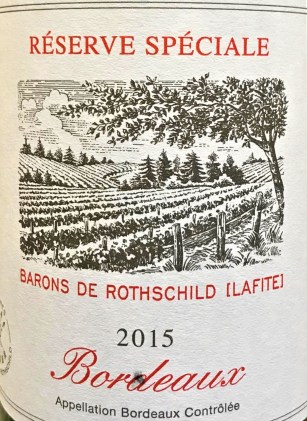
Domaines Barons de Rothschild (Lafite) Reserve Speciale Bordeaux

W Lafite 2015Bordeaux from Bordeaux, France

60% merlot

40% cabernet sauvignon

12.5% alcohol

Opened 30 Nov 2017

els 8.5/10

Decanter 86

Reserve Speciale Bordeaux is from a family of wines created by Barons de Rothschild (Lafite) to provide, in their terms, “wines ideal for everyday drinking and more accessible than the Grands Crus” which they brand as “The Collection”, and includes the Legende, Saga, and Reserves brands; all three of which, bottle both Bordeaux reds and whites.

The family name of Lafite can be traced back to a Pauillac French monastery in the 13th century but the legendary winery took root with the planting of the vineyards by Jacques de Segur in the 1670s. Londoners, surprisingly enough, where the first to sing the praises of Lafite wines, which made their way to that city by way of British corsairs seizing the French merchant ships and confiscating their wine in the early 1700s. French nobility took notice of Chateau Lafite’s wine after Richelieu introduced it to King Louis XV; quickly becoming the “Kings Wine”; served at the tables of the 18th century French aristocratic rich and famous. After the French Revolution the Chateau changed owners several times until Baron James de Rothschild purchased it in 1868 and it has remained in the family ever since, with the minor exception of a German expropriation for a short time during WWII.  In 1995, the winery began selecting grapes for their “accessible” line of wines from  the region’s Bordeaux, Medoc, and Pauillac family, and non-family owned vineyards; to become part of the Barons de Rothschild (Lafite), “The Collection”.

The Reserve Speciale Bordeaux is sourced mainly from vineyards in the Entre-Deux-Mers (between two tides) wine region; situated between the tidal rivers Garonne and Dordogne. This is the largest sub-region of Bordeaux but less than half the acreage is planted in vines with the rest being generally forested.  This region produces only white wine that can carry the AOC Entre-Deux-Mers.  The reds are sold under various Bordeaux labels.

This wine has a clear ruby-red color, redolent of red berries and spice. Very smooth, not bold, with a quick finish.  A nice, inexpensive table wine that doesn’t overly impress but will pair well with cheese and friends.

A good wine. Decant and aerate for at least one hour.

$10.00-16.00  wine-searcher.com

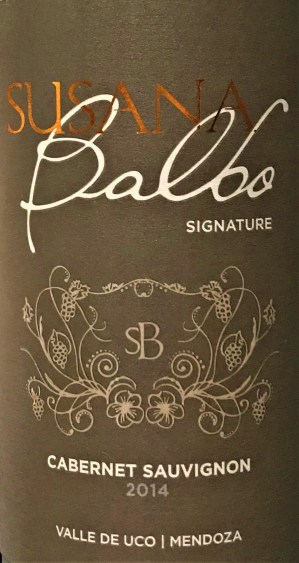
Susana Balbo Signature Cabernet Sauvignon 2014

W Balbo 2014Cabernet Sauvignon from Uco Valley, Mendoza, Argentina
95% cabernet sauvignon

5% merlot

14.3% alcohol

Opened 21 Nov 2017

els 9.2/10

James Suckling 93

Wine Advocate 91

Vinaceous 91

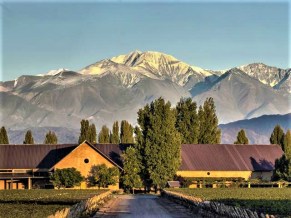
Susana Balbo’s winery, established in the stunning, idyllic eastern foothills of the Andes Mountains, within the viticultural region of Uco Valley, which lies southwest of Mendoza, Argentina; is surrounded by 52 acres of Malbec, Cabernet Sauvignon, Cabernet Franc and Petit Verdot vines; produces 4 brands of wines with distinct and complex personalities that appreciate long, secluded years in their bottles: Crios, Ben Marco, Nostros and Susana Balbo Signature.

The vineyards are at an average elevation of about 3800 feet above sea level where the

W Balbo Winery

The Susana Balbo Winery and Vineyards. Photo by Susana Balbo Winery.

steppe climate provides a large swing in growing season temperatures ranging from daytime highs in the mid 80s to night-time lows approaching 50 degrees Fahrenheit, with arid conditions that receive a paltry 1 to 1.25 inches of rain per month. To compensate for the semi-desert conditions and the well-drained alluvial soils of Uco Valley, the vineyards are drip irrigated from the Andes’ snow melted water to provide just the right of amount of essential moisture to produce these flavorful wines.

The grapes are hand-picked and fermented in concrete vessels and finished with 13 months in 70% second use and 30% first use French oak barrels.  The wine has a clear, bright ruby color with aromas of black berries and a very subtle hint of mint and earth. A long, full, dry finish with close to perfect tannins. Wonderful.

An outstanding wine. Decant and aerate for at least one hour.

$20.99 wine.com

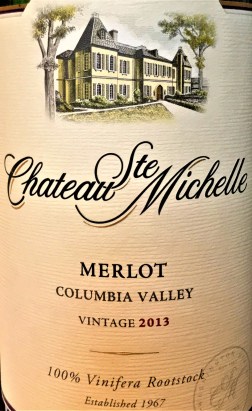
Chateau Ste. Michelle Merlot 2013

W St Michelle 2013Merlot from Columbia Valley, Washington
89% merlot

11% syrah

13.5% alcohol

Opened 14 Nov 2017

els 8.7/10

Wine Enthusiast 89

Chateau Ste. Michelle, the oldest winery in Washington, traces its beginnings back to the end of the prohibition era in the mid-1930s, with the formation of the Pomerelle Co. and the National Wine Company. These two companies merged in 1954 as the American Wine Co., and in 1967 initiated a premium line of wines known as Ste. Michelle. In 1972 a group of investors bought out the American Wine Company and renamed it Ste. Michelle Vintners. In 1974 the company was bought out by Altria. In 1976 Ste. Michelle Vintners built a French style winery, about 15-20 miles northeast of Seattle, in the Woodinville Tourist District, and changed its name to Chateau Ste. Michelle.

W Columbia Gorge

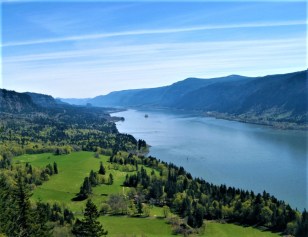
Columbia River Gorge by etliebe.

Today, Chateau Ste. Michelle consists of 2 wineries, the Chateau in Woodinville which makes the company’s white wines, and its reds are made at the Canoe Ridge Estate winery in Eastern Washington.  The vineyards on the Canoe Ridge Estate were planted in 1991 with Cabernet Sauvignon, Chardonnay, Merlot, and Syrah grapes on the steep sloping, arid hills of the Columbia River Gorge. The winery followed in 1993. One interesting aspect of this vineyard is that the grape varieties are grown from their own vinifera rootstock, apparently indifferent to the phylloxera aphid.

The alluvial soils of Canoe Ridge Estate are well-drained, thick Pleistocene cobblestone, sandy silts at approximately 900 feet above sea level, deposited on top of the eroded Miocene Columbia River Basalts.  The April through September growing season sees highs of about 90 and lows of 40 degrees Fahrenheit.  Rain is sparse, averaging from 0.2 to 0.75 inches per month during the growing season.  Hard freezes during the winter months are rare.

This wine has a clear garnet to ruby color, subtle aromas of strawberry and dark berries, with a touch of vanilla. A medium body with a medium finish. The tannins are smooth and easy. A nice wine but rather unadventurous, timid even.  Best served as a sipping wine along with small berries and nuts.

A good wine. Decant and aerate for at least one hour.

$16.99 wine.com

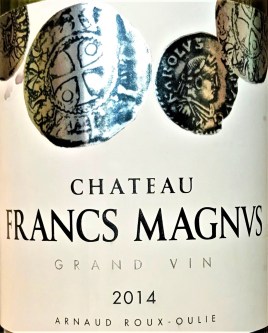
Chateau Francs Magnus Bordeaux Superieur 2014

W Francs2014Bordeaux Red Blends from Bordeaux, France

Proprietary red blend

13.5% alcohol

Opened 11 Nov 2017

els 9.0/10

James Suckling 91

From the winery and vineyards of Arnaud Roux-oulie, complete with limestone quarries and Gallo-Roman silos.

This wine has a clear garnet to ruby color, redolent of plums and dark berries, with a touch of licorice. A medium body and finish, with smooth and easy tannins. A nice, unpretentious everyday wine, enjoyable with simple fare such as pizza or cheeseburgers. Decant and aerate for at least one hour.

$11.99 wine.com