Literary Plots

(Note: This is an updated version of the original post from March of 2026. It now includes a Chowder reference that I recently stumbled across in Heinlein’s juvenile novels.)

“What was the worst thing you’ve ever done?”  “What is the worst thing that has ever happened to you?”

So begins the story of the Chowder Society nightmare. Five men bound since their youth, destined purposefully together by life and consequence, later joined by the main protagonist Don Wanderley, drawn into an A.M. horror with no single name and a thousand shifting labels. Their lives become a tangle of stories within stories, the past bleeding into the present, each tale circling a separate Dantean ring of terror.

Peter Straub (1943–2022) builds “Ghost Story” out of the shadows of man’s dreams of dread and death. Drawing on a century of horror in literature, visual arts, and psychology to create a world of insinuation, illusion, and fear; where nothing is ever said just once, nothing is ever said plainly, and nothing settles. Straub’s references to books, photos, and films, often through Wanderley, but not exclusively, are not decorative touches or character shading. They are physical clues. Each reference is a lens through which the plot becomes clearer.

Don Wanderley’s name is the novel in miniature: this is a tale about a man who wanders through illusions and a town that wanders through its own lies. As the heir to the Chowder Society’s buried horror, Wanderley carries the past into the present, through his criticism of art and letters, through his misreadings of life, and through belief in the oldest self‑deception of all, the belief that the women who charm you are the ones who love you.

As a lecturer at Berkeley, Wanderley teaches Hawthorne’s “The House of the Seven Gables” and encounters R.P. Blackmur’s essay on the novel, which argues: “When every possibility is taken away, then we have sinned.” Wanderley finds that this idea radiates throughout Hawthorne’s work, and he “could connect the novels and stories by this black Christianity,” an impulse or more directly, a desire for nightmares. Hawthorne himself writes that he sometimes achieved a “singular and not unpleasing effect” by imagining incidents in which “the spiritual mechanism of the faery legend” is fused with “the characters and manners of everyday life.”

In modern terms: the ghost and the haunted are part of the same mechanism. Straub uses this to signal that Don and the Chowder Society are haunted not by an external force, but by themselves.

Wanderley extends this line of thought through D.H. Lawrence’s critique of Hawthorne, which ties Blackmur’s concept of sin to lust, and to the New England lineage of Hawthorne, Poe, James, Lovecraft, and King:

And the first thing she does is seduce him.
And the first thing he does is to be seduced.
And the second thing they do is to hug their sin in secret, and gloat over it, and try to understand.
Which is the myth of New England.

Although Straub never states it outright, Stephen King does so in his introduction to “Ghost Story:” this lineage leads directly to Henry James’s “The Turn of the Screw,” which asks whether the supernatural is real or a projection of the psyche. James refuses to resolve the question. Straub resolves it by refusing to choose. His haunting functions like a double‑slit experiment: both interpretations are true simultaneously. The horror is real and psychological. It exists because the Chowder Society created the conditions for it.

Hawthorne fused the supernatural with everyday life. James separated them and let the reader decide. Straub makes them inseparable, a melding of spirit and mind, a duality of horror.

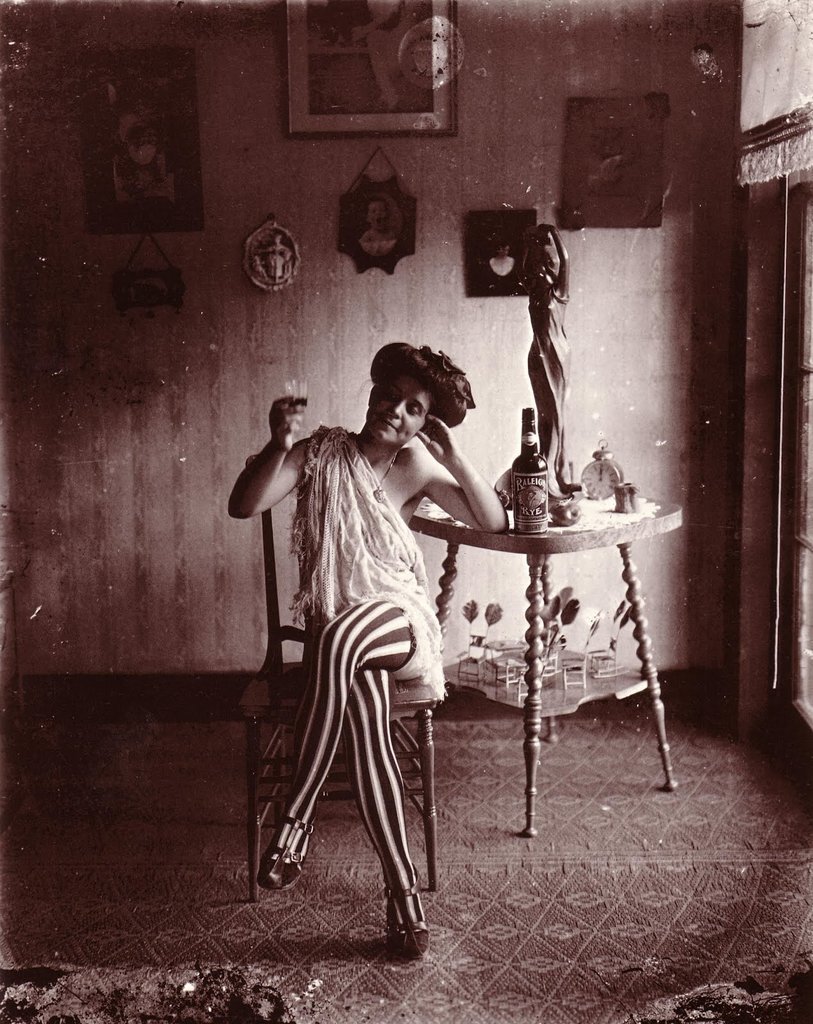
Continuing this duality, Wanderley describes a sudden vision of Alma: “Then suddenly and shockingly, she [Alma] lifting a spoonful of mint-green avocado to her mouth, I had another vision of her. I saw her as a whore, a 1910 Storyville prostitute, her hair exotically twisted, her dancer’s legs drawn up, her naked body was very clear for a moment. Another image of professional detachment, I supposed, but that did not explain the force of the vision.”  A vision of Alma or from Alma?

Alma as a “1910 Storyville prostitute” is not a literary allusion but a visual one. Straub is invoking the E.J. Bellocq photographs of New Orleans prostitutes in Storyville around 1910: stark, intimate portraits rediscovered in the 1970s and now held in major museums such as MoMA. These images show women posed in small, bare rooms, sometimes clothed, sometimes nude, their expressions shifting between defiance and vulnerability. They carry an aura of theatrical melancholy: present yet absent, exposed yet unknowable.

It is a perfect portrait of Alma. And Wanderley misses the meaning entirely. The vision is not “professional detachment.” It is the novel’s gears revealing itself: Alma appears as a figure who is both real and unreal, historical and spectral, seductive and annihilating; the very embodiment of Straub’s fused supernatural psychology of mind and ghost.

Enhancing the contradictions Straub has Don Wanderley bring Alama to a showing of Renoir’s “La Grande Illusion.” The film is about the collapse of the structures that once defined Europe: class, nation, aristocratic codes, the belief that enemies and friends can be cleanly separated. Straub’s novel is about the collapse of the structures that once defined the Chowder Society: honor, memory, guilt, the belief that the past can be buried. It’s not a casual reference; it’s Straub subtly telling the reader how to understand the plot of “Ghost Story.”

In La Grande Illusion, friends are enemies and enemies are friends. A French aristocrat and a German aristocrat share more with each other than with the men they command. Working‑class soldiers form bonds that ignore borders. The “grand illusion” isn’t war; it’s the belief that the old hierarchies still matter in the face of modernity. Renoir uses the prison‑camp setting not for escape‑movie suspense (though there is an escape), but to dissect a social order already dying.

Straub mirrors this logic. “Ghost Story” is a deadly illusion of its own: heroes and villains circle one another, and to know one is to find the other. Evil is a ghost from the past, a supernatural entity and a moral consequence brought to the present. The men who see themselves as honorable are the ones who committed the original sin. The woman they loved is the monster they created and honored. The past they buried is the thing hunting them.

Like Renoir’s war film without battles, Straub builds a ghost story without medieval props of vampires and werewolves, although there is that. The real haunting is psychological. The real prison is memory. The real war is the struggle between the stories the men tell about themselves, the truth they refuse to face, and the nightmares that consume them.

Both works, the film and the novel, strip away the expected genre scaffolding, war without battles, society without walls; ghosts without haunted houses, horror without the supernatural. What remains is the same core revelation: the structures we trust to define us are illusions, and when they collapse, the truth steps forward. “When every possibility is taken away, then we have sinned.”

Alma tells Waverley everything and he misses it entirely. “I (Alma) know some people who are interested in the occult.”…It can’t be…Ordo Templi Orientis.” …They were known to be cruel, even savage.” …”I saw a ghost” …[or] did Alma actually say, “I am a ghost?”

Then the mists begin to dissipate. Don begins to see. “…my second lecture was a disaster. I brought out secondhand ideas unsuccessfully, tried to relate them and got lost in my notes: I contradicted myself. …I said that “The Red Badge of Courage” was a great ghost story in which the ghost never appears. He begins to see ghosts. But Waverley misreads the book just as Henry Fleming in Badge of Courage misreads himself. Fleming was a coward and courageous, he lied and acted with honor, and he was neither hero nor villain. Straub tells the reader that Wanderley is tactically brilliant in seeing ghosts but strategically misreading Alma, and his fears, and his courage, and his guilt. He misses the moral and ocular truth in front of him.

Then Straub moves the deception from Wanderley to the weakest link in the original Chowder Society: Dr. Jaffery. Straub begins Jaffery’s end with a normal scene morphing into the long hidden truth: “The fading wallpaper…the table bearing neat piles of coins, a library book (The Making of a Surgeon) and a lamp…In this room, at once familiar and unreal, he could not stay…Jesus she moved.” This is the moment the author moves beyond Wanderley’s thematic deception onto Jaffrey and the entire Chowder Society’s moral deception.

And “The Making of a Surgeon” is all about moral clarity, facing consequences, and accepting responsibility. It’s a memoir of professional responsibility and moral courage. And the Chowder Society is finally reaching across the abyss of denial and confronting the horror or their past.

Now working backwards, Edward Wanderley, Don Wanderley’s uncle, an original Chowder, enters the story mostly as a memory, but he is the caretaker of all those haunting memories. He is unwitting biographer of their past, recording moments of truth that reveal nothing, saving no one. Edward preserved the past in perfect detail, and like his nephew, it all remained unexamined, redeeming no one.

Finally, if Straub’s novel teaches anything, it is that every circle eventually closes. The Chowder Society’s memories loop back on themselves, and so does the novel’s architecture. Even the name of the Society carries its own literary origin, one that reaches not into the gothic of Hawthorne or James but into the sci-fi literature of Straub’s youth. In Robert Heinlein’s first juvenile novella Rocket Ship Galileo (1947), a trio of boys form a self‑styled “Marching‑and‑Chowder Society.” The phrase is unusual enough that its reappearance is unlikely to be accidental, even if the influence operated subconsciously. In Heinlein the Chowder Society is an exclusive action‑club of boys whose bond is forged through shared adventure and forward‑moving purpose. Straub begins his Chowder Society by inverting this structure: his Chowder Society is a literary circle of elderly men whose bond originates in a youthful action and persists as a lifelong burden. Where Heinlein presents the bright formation of a pact, Straub presents its long shadow, the adult reckoning that follows the kind of formative event boys’ adventure fiction treats as uncomplicated. This possible allusion subtly reinforces Ghost Story’s central concern with how male bonds, once formed, harden into narrative, secrecy, and fate.

Readers often describe Ghost Story as wandering, uneven, or prone to detours, a criticism echoed in contemporary reviews that note Straub’s tendency to drift away from the main plot or indulge in seemingly irrelevant texture. But what looks like narrative drift on the surface is, on a deeper reading, the novel’s strongest logic. Straub isn’t losing the thread; he’s showing us what a haunting feels like. He shows that the lies we tell ourselves are the horrors that destroy us.

Straub’s haunting is not linear. It circles and returns. Like Asimov’s hidden Earth — the point “as far away as possible” that turns out to be the origin — Straub’s details repeat endlessly, drift, and seem meaningless until the moment the circle closes back to the beginning and the truth stands revealed. Straub builds his novel out of these arcs, fragments of a circumference that seem disconnected until the circle closes. He hides this map inside the tangents, and once you see the pattern: Heinlein’s bonding, Hawthorne’s nightmare impulse, Lawrence’s seduction‑and‑sin pattern, Crane’s “ghost story without a ghost,” James’s ambiguity, Renoir’s collapsing social order. Don Wanderley’s literary misreadings are not digressions but the novel’s diagnostic tools. Each failed interpretation reveals the flaw that defines him: he wanders through texts the way he wanders through life, intelligent but unanchored, perceptive but myopic.

Straub refuses to lead the reader by the hand. He insists that you find your own way through the misty, musty traces of arts and letters. He trusts us to assemble meaning the way the Chowder Society must: by piecing together fragments, memories, misreadings, and half‑buried truths. What appears astray is actually ghostly context; the white space in which the novel’s real shape emerges. The wandering is the haunting. The arcs of irrelevances are the clues. The men believe they buried the past, but Straub shows that nothing buried stays buried; it simply waits at the farthest point of the circle to be met again.

The worst thing is the horror circling your mind.

Graphic: 1910 Storyville Photographs by Bellocq. Source: Ghost Story by Peter Straub. Copyright 1979.
Power Corrupts

Publius Cornelius Tacitus (c. 56–120 AD), Roman historian, orator, and statesman, was born into a wealthy equestrian family and rose through the imperial system during the Flavian dynasty (Emperors Vespasian, Titus, and Domitian). He began his public career under Vespasian, receiving the latus clavus that marked him for the senatorial track, and entered the Senate itself as quaestor under Titus. His advancement continued under Domitian, whose autocratic rule left a deep imprint on his political philosophy and the cynical tone of his future writings. Tacitus became praetor in 88, suffect consul in 97 under Nerva, and ultimately proconsul of Asia in 112–113 under Trajan; one of the most prestigious governorships available to a senator.

Tacitus’s praenomen has long been debated. Sidonius Apollinaris calls him Gaius, but the principal manuscript tradition gives Publius, now the generally accepted form. The name itself was common in the Republic and famously borne by Publius Valerius Publicola, one of Rome’s early founders. When Hamilton, Madison, and Jay adopted “Publius” as their shared pseudonym for the Federalist Papers, they invoked that republican lineage. The choice was not meant to evoke Tacitus directly, yet the intellectual affinity is unmistakable: the founders read Tacitus closely, admired his moral rigor, and shared his preoccupation with how republics decay into autocracy. Tacitus lays bare the psychology of power and the corrosion of institutions, the hard, universal truth that power corrupts. The Federalist authors attempted to design constitutional structures resistant to precisely those dangers.

Understanding Tacitus’s background clarifies why these themes resonated so strongly. The equestrian order into which he was born had evolved far from its early republican role as a cavalry class. By the first century it had become, in the Roman class hierarchy, a wealthy administrative elite just below the Senate, supplying imperial procurators, financial officers, and provincial administrators; the managerial backbone of the empire. His family’s standing enabled him to enter the cursus honorum under the Flavians: Vespasian (69–79), Titus (79–81), and Domitian (81–96). As a young man he moved from the preparatory rank of the latus clavus into the Senate proper as quaestor, then advanced through praetorship, priesthood, and consulship before receiving the proconsulship of Asia.

Tacitus’s entire political formation occurred under the tutelage of emperors, but it was the republican aristocracy of old that he idealized. He rose because of the imperial system and later turned cynical because of its corrupt morality. The bitterness, irony, and forensic detail of his Histories and Annals emerge from those hard lessons learned at the feet of emperors and from years spent inside the senatorial class.

Your first encounter with Tacitus’s writings is usually one of frustration bordering on bewilderment. Context is sparse, dates are assumed, and linear narrative is treated as optional. To understand him, you must stop reading him as a dry; and his Annals can be dry, dispassionate chronicler of the recent past and start seeing him as a man writing under the weight of hard lessons learned, and sometimes personally endured. His Annals and Histories are not balanced accounts of the early empire; they are the literary equivalent of a post‑mortem. He writes as someone convinced that Rome’s better days were behind it. Everything in his style follows from that conviction: the selective focus, the moral compression, the absence of counterarguments, the uneven chronology, the disproportionate attention to monstrous emperors, and the silence around Rome’s achievements. Like many modern historians, he is heavy on interpretation and opinion, weighted toward failures and abuses, and nearly silent on the empire’s prosperity, engineering feats, or legal innovations such as due process and justice.

Tacitus’s narrative imbalance is not an accident; it is his purpose. In Annals he states, “I write without anger or partiality, for these are feelings I have long put aside… My purpose is to relate… without either bitterness or servility.” He writes for a narrow audience: senators of his own generation, who already knew the timeline, the emperors, the scandals, and the public record. They did not need dates or context; they needed a non‑imperial interpretation. They needed someone to explain how a state that once prided itself on civic virtue and shared governance had become a place where fear, flattery, and corruption were the normal conditions of political life. Tacitus assumes his readers know the “what.” He believed his task was to show them the “why.” That is why the Annals sometimes feel like diary fragments in their immediacy: Tacitus is relying on the imperially sanctioned record while quietly correcting it, without exposing himself to the charge of attacking the regime’s memory. The Histories, written earlier, have a different texture, closer to tragic prose than diary. Tacitus lived through the events they describe; his memory is fresher, his indignation sharper. To him, the Histories were tragedy, and the Annals the farce that served as prologue.

He gives inordinate space to Caligula, Nero, and Vitellius and so little to the emperors who governed competently. The monsters reveal the system’s truth. In Annals he justifies this center of gravity: “Under Tiberius, all was secrecy and suspicion… Nero, who defiled himself by every cruelty and shame.” In Histories he elaborates: “Vitellius… a man who could not rule himself, much less the empire.” Tacitus chooses emperors who embody the moral recidivism he wants to expose. The decent rulers obscure it. He is not interested in balance because balance would dilute his narrative. He is not trying to persuade, only to write a history before the sanitized version takes root. His Rome is a place where power has become addictive, where institutions have rotted from within, where citizens have withdrawn into resignation, and where the machinery of the state grows even as trust declines. That is the world he wants his readers to confront.

This is why Tacitus feels so contemporary. Modern societies that lose confidence in their institutions often follow the same arc he describes. A negative narrative, whether born from war, scandal, abuse of power, or cultural disillusionment, does not only describe the past but also the present. When people internalize a story of corruption or decline, they become less willing to participate, less confident in self‑government, and more susceptible to the quiet expansion of bureaucratic power. Distrust does not produce resistance; it produces apathy. And apathy creates a vacuum. And vacuums are always filled by those willing to seize power. Tacitus watched this happen in Rome: a population that despised the emperors but feared instability more. He expands on this in Histories: “We witness the worst crimes not by the wicked but by the weak.” And again: “The desire for safety is the greatest of dangers.” Citizens gave up freedom for safety and eventually had neither.

Does Tacitus matter today? Probably not because his emperors resemble modern leaders, but because the psychological and structural patterns he describes are universal. When society’s dominant narrative becomes one of failure, corruption, or moral exhaustion, the political consequences tend to run in one direction: more centralization, more administrative power, more resignation, and less freedom. Tacitus is not relevant because he predicted our world; he is relevant because he understood how people behave when they no longer trust their own institutions. His works endure because they capture a recurring human pattern: once power becomes the default solution to fear, it grows, and once it grows, it rarely shrinks except through collapse or death.

The question his writing leaves us with is not whether Rome fell, but whether any society can recover its confidence once it has embraced safety for freedom. In Annals he states, “The more corrupt the state, the more numerous the laws.” This is Tacitus’s worldview in a single stroke: power expands as virtue contracts and freedom fades. In Histories he expands on this thought: “No one has ever wished for power to preserve the liberty of others.” A sentiment the Federalist Papers and the Constitution itself tried to address and avoid. The founders recognized, as Tacitus had before them, that only the restraint of power preserves the liberty it always threatens to consume.

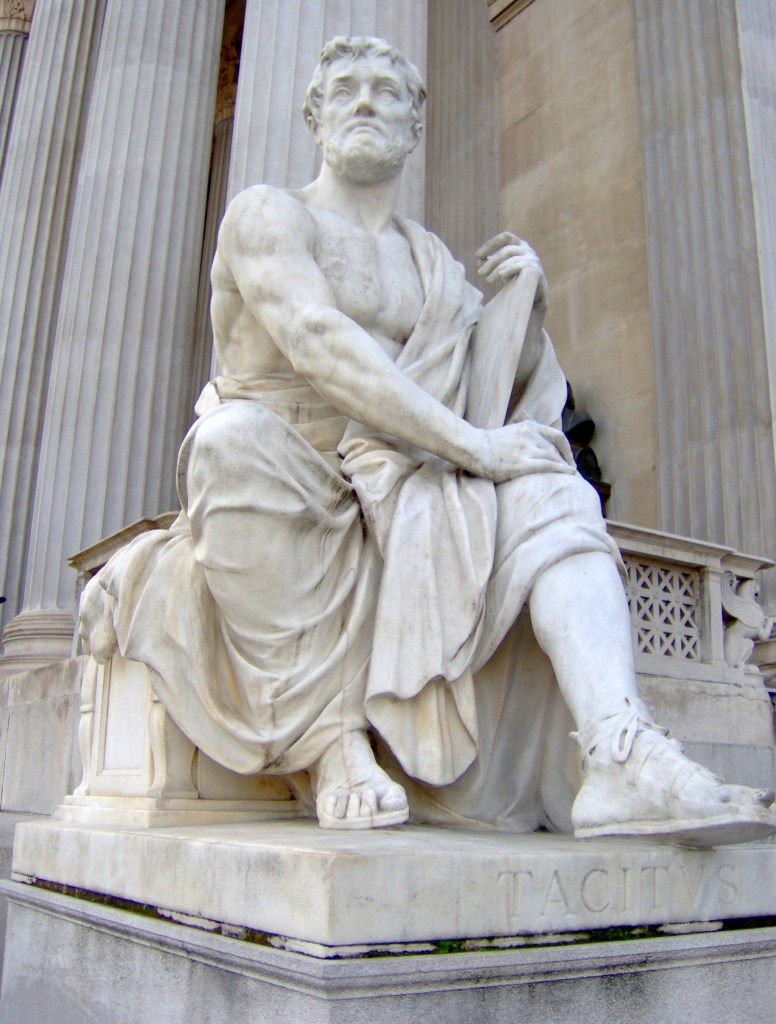
Source: Tacitus: Annals and Histories, 2009, multiple translators. Graphic: Tacitus, Vienna. 2009 Photo by Pe-Jo. Public Domain.

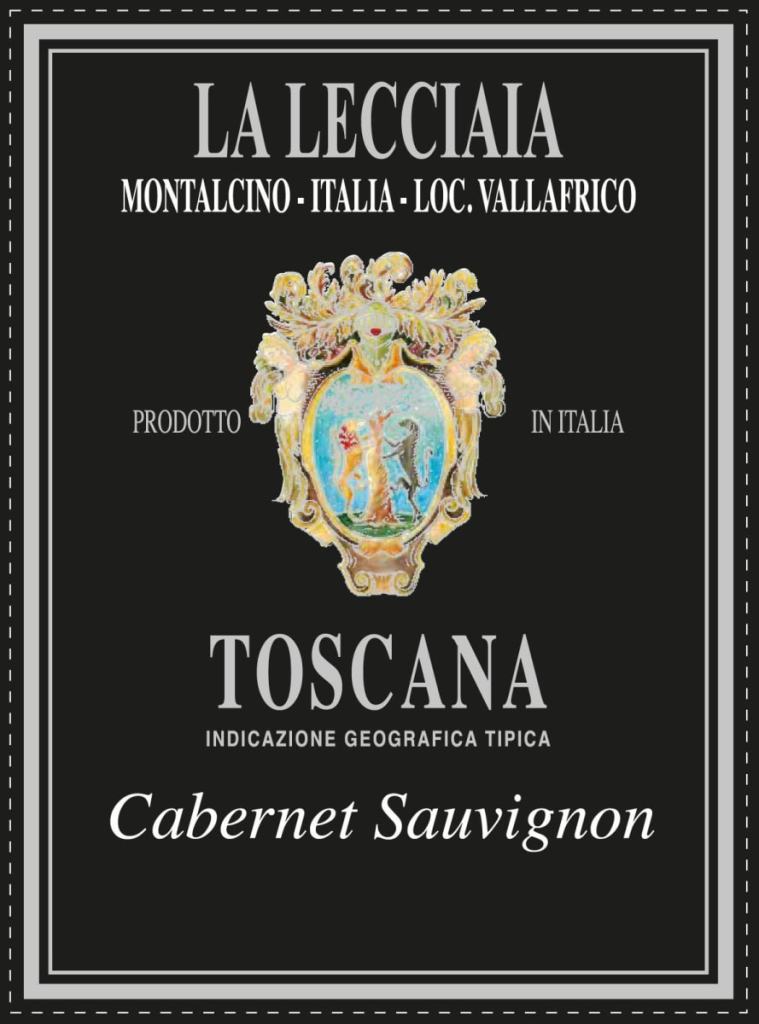
La Lecciaia Cabernet Sauvignon 2017

Cabernet Sauvignon from Tuscany, Italy

Purchase Price $18.99

James Suckling 92, ElsBob 91

ABV 13.5%

A beautifully clear ruby to garnet red with red and black fruits and a touch of spice. On the palate the cherry flavors come home, showcasing a medium to full body, mildly tannic wine with remarkable balance and structure. This wine should improve 5-6 rating points alone if you let it breath 30-60 minutes.

An excellent table wine at a remarkable price. Current pricing from $20-30.

Trivia with Literary License: Long before Cabernet roots worked their way into the slopes of Montalcino, the ridge above La Lecciaia stood as a contested frontier between Siena and Florence. Florence was rising toward its Renaissance artistic peak; Siena was already descending into its long twilight, its fame dimming after centuries of brilliance. In the late summer of 1502, when the dust of Cesare Borgia’s campaigns drifted across central Italy, the hills around the modern vineyard, then fields of grain and olive trees, would have felt its renown beginning to pass out of sight. Couriers rode the ridgelines, mercenaries threaded the valleys, and rumors traveled faster than horses. Borgia, son of Pope Alexander VI, brilliant, corrupt, and blood‑stained; was stitching Romagna, Umbria, and the Tuscan borderlands into the patchwork of his imagined and desired kingdom.

For a moment, it almost worked. With his father’s money, troops, and papal legitimacy, Cesare Borgia came closer than any condottiere of his age to forging a new principality in the heart of Italy. But fortune and fate interceded. Pope Alexander VI died suddenly in 1503, and Cesare himself lay bedridden with malaria, too weak to seize the reins of power. The new pope, Julius II, moved swiftly: stripping him of titles, seizing his fortresses, and unleashing the enemies he had once imprisoned. His fall was swift and complete, but Machiavelli kept him alive for the ages, immortalizing him in The Prince. His life became a cautionary tale. A rise and ruin that reads like a Renaissance tragedy worthy of Hamlet. Borgia had chased destiny with a bloody sword, all without honor.

Crossing this same landscape comes Leonardo da Vinci. Drawn by the promise of designing ideal cities with resources to bring them to fruition, he entered Borgia’s service in the summer of 1502 as Architect and General Engineer. For a brief moment, Borgia’s appetite overlapped with Leonardo’s visions of a symmetrical, ordered world shaped within the folds of his expansive mind. Leonardo traveled across central Italy inspecting fortresses and terrain, producing his famous Imola map. A masterpiece of precision and imagination; one of the first in Europe to apply true orthographic projection to a fully measured city plan.

By November or December of that year, Leonardo likely encountered the true nature of his patron. Although accounts are cloudy, in December 1502 Leonardo, Machiavelli, and Borgia’s captains were together in the Adriatic coastal town of Senigallia. There, Borgia enticed his captains with words of friendship, then had them strangled or stabbed within minutes. An act of theatrical brutality carried out in the very building where Leonardo was said to be working. The episode left a lasting impression on both the artist and Machiavelli.

Leonardo left no written record of that night, but he departed Borgia’s service almost immediately afterward. The timing is unmistakable. It is not difficult to imagine a world in which Leonardo remained in the employ of Borgia, and how his contributions to humanity might have taken a darker, narrower turn. As Paulo Coelho writes in The Alchemist, “when you want something, all the universe conspires in helping you to achieve it.” Leonardo stepped away just as the universe showed him a fork in the road and nudged him from the darker path.

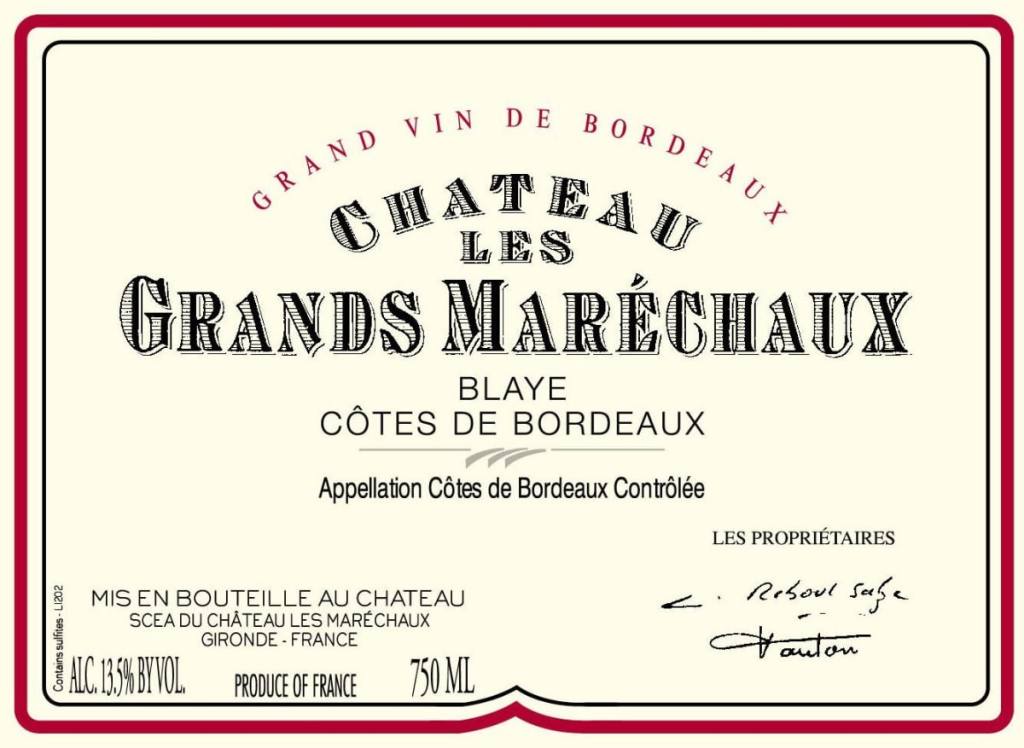
Chateau Les Grands Marechaux 2019

Bordeaux Red Blend from Bordeaux, France

Merlot, 84%, Cabernet Franc 9%, Cabernet Sauvignon 7%

Purchase Price $17.97

Wine Enthusiast 91, James Suckling 91, ElsBob 89

ABV14%

A medium purple wine with aroma of black fruits and a touch of cinnamon. Medium-bodied, bold, medium tannic with a nice fresh finish.

A very good fine wine at a tolerable price but on the high end. Don’t pay more than $15-16 though. Current prices are around $20.

Trivia: The Right Bank of Bordeaux is all about geology, which dictates the elemental structure for every bottle. Clay and limestone dominate the landscape, shaping not only the vineyards but the very character of the wines. Clay holds water and moderates temperature, slowing ripening and giving Merlot the conditions it needs to develop depth and supple density. Limestone, by contrast, drains freely and raises the natural acidity of the fruit, lending a kind of lifted tension that becomes especially clear in Cabernet Franc. Most Right Bank terroirs are some interplay of these two materials, and the wines reflect that structural duet.

Because the soils speak so clearly, the grape varieties are inevitable. Merlot thrives on the moisture and coolness of clay, producing wines that are plush, dark-fruited, and immediately generous. Cabernet Franc finds its ideal expression on limestone, where it gains aromatic precision and a firmer, more architectural frame. Cabernet Sauvignon plays only a minor role, appearing meaningfully only where gravel becomes plentiful, uncommon occurrence on this side of the river. The blends that emerge from these conditions are less stylistic and more like geological consequences.

Across the region, this soil–variety logic creates a coherent family of appellations. Saint‑Émilion’s limestone plateau and clay-limestone slopes yield vertical, structured wines shaped by Cabernet Franc. Pomerol’s blue clay produces Merlot of unusual depth and velvet. The surrounding satellites share these themes with less concentration but often remarkable value. And further north, in the Côtes de Blaye and Côtes de Bourg, estates like Château Les Grands Maréchaux work with the same clay‑limestone matrix, producing Merlot‑driven wines that are fresh, supple, and structurally clear despite their modest price. Taken together, the Right Bank’s identity is not a matter of marketing or prestige but of geology asserting itself. The wines share a recognizable signature, black plum and violet, fine chalky tannins, a rounded mid‑palate, and a fresh, lifted finish, all because the land insists on it.