Chateau Ampelia Castillon-Cotes de Bordeaux 2011

W Ampelia 2011Bordeaux Red Blend, St. Philippe d’ Aiguilhe, Castillon-Cotes de Bordeaux, Bordeaux, France
95% merlot

5% cabernet franc

13.5% alcohol

Purchased: 24 April 2014 – $17.99

Opened: 14 Feb 2018

els: 8.9/10

Wine Enthusiast: 92

Cellar Tracker: 89

Wine Spectator: 88

The Despagne family has been making wines in the Saint-Emilion AOC  for more than 200 years. Today Francois, a seventh generation descendent of the Despagne family, is currently manager, since 1996, of Grand Corbin-Despagne winery and founder of the Chateau Ampelia in 1999. Breaking with family tradition the new winery and vineyards are located to the east, and adjacent to Saint-Emilion in the Castillon-Cotes de Bordeaux appellation 1.5 miles west of Saint-Philippe-d’Aiguille, and a little more than 4 miles north of the Dordogne River. This AOC was upgraded from Bordeaux Superior in 2008 and the area includes about 230 families working, on average, 25 acres of vines; predominately Merlot (70%), but also Cabernet Franc (20%), and Cabernet Sauvignon (10%).  Vines in this area date back to at least the 2nd century AD when the Romans planted Vitus Biturica, an ancient cousin of Cabernet Sauvignon and Cabernet Franc.

Merlot, the most planted grape in France, in known for its mellow and rounded flavors and is often blended with its close cousin: Cabernet Sauvignon and or its parent: Cabernet Franc, to soften them up. Cabernet Franc is a black skinned grape that imparts a peppery character to Bordeaux blends.

The grapes are harvested and sorted twice, once in the vineyard and then again at the winery. They are crushed, de-stemmed and fermented in temperature controlled, concrete and stainless steel tanks.  The post-fermented juice is racked into French oak barrels, one-third which are new, and allowed to age for 12 months before being blended and bottled.

The wine has ruby-red color with a garnet rim. A bouquet of cherries, plums and cedar with a hint of pepper. On the palate the wine is medium-bodied with soft tannins.  It has a pleasant, medium lasting, and soothing finish. Not overly bold but a refreshing wine.

A good wine but hard to find and a little expensive for the quality. Pair with a snack of soft cheese and berries.  Drink now, but should last for another year or two.  Decant and aerate for one hour before drinking.

$22.37 wine-searcher.com (limited availability)


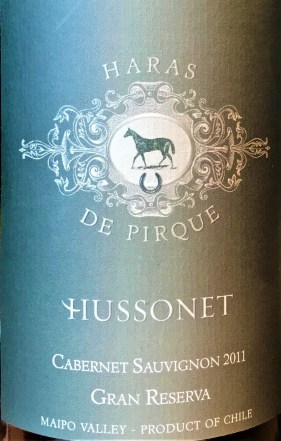
Haras de Pirque Hussonet Gran Reserva Cabernet Sauvignon 2011

W Hussonet 2011Cabernet Sauvignon from Maipo Valley, Central Valley and Andes, Chile

100% cabernet sauvignon

14.0% alcohol

Purchased: 20 Aug 2016 – $12.99

Opened: 11 Feb 2018

els: 8.7/10

James Suckling: 95

Wine Spectator: 88

Cellar Tracker: 88

Eduardo Matte in 1991 purchased an estate he later named Haras de Pirque, a term derived from the combination of a name for a 1892 thoroughbred stud: Haras; which also is the French term for stud farm, and the Chilean commune name for the area: Pirque.  The estate is less than 20 miles southeast from the center of Santiago, Chile in the Maipo Valley and a little over 20 miles east of the Andes Mountain’s year-round snow fields. The estate, eventually growing to encompass approximately 1500 acres, lies on the western edge of a peripheral, Miocene-Pliocene aged, Andes’ thrust fault and has almost 250 acres devoted to growing Cabernet Sauvignon, Merlot, Carmenere, Chardonnay, and Sauvignon Blanc grapes. The remainder of the estate is dedicated to raising horses for racing and show. The Hussonet name comes from a famous eponymous American-Chilean stud, whose offspring have achieved some success as race horses in Chile and Australia.

The vineyards and winery, beginning in 2003, were originally a 50-50 joint venture with the Italian company, Marchesi Antinori, and their first wine was a Bordeaux red blend under the Albis label.  The Hussonet label followed a few years later.

The Antinori family, an ancient clan believing they can trace their blood lines back to the 11th century BC city of Troy, and their winemaking, a more persuasively detailed chronicle, dating back to at least the time of the Florentine Renaissance, bought out Matte’s share in the Harris de Pirque estate in mid-2017 and they plan extensive changes to the winery and vineyards to better reflect their name, which is synonymous with prestigious wines in general and Super Tuscans in particular.

Cabernet Sauvignon is a cross, believed to have occurred naturally sometime in the 1600s in France, between Cabernet Franc and Sauvignon Blanc grapes.  It is now the most widely planted grape in the world.  A thick-skinned grape that’s relatively easy to grow and maintain and it exhibits high tannins and acidity, along with cool climate grown aromas of peppers and currants.

The Haras de Pirque vineyards are located between 1800-2100′ above sea level on the west side of an outlier Andes series of foothills. The soils are clays and loams mixed with large alluvial and colluvial stones. Growing season temperatures have a diurnal range of approximately 50-85ºF and rainfall amounts average a very dry 0.5″ per month or less. During the southern hemisphere winters rainfall can exceed, but still dry, 2″ per month.

There is no useful information available, that I can find, on the actual details of making of this wine.

The wine has ruby-red to purple color with a garnet rim. A bouquet of black currants, pepper, and a hint of vanilla. On the palate the wine is full-bodied, rich in tannins, but slightly drier and more acidic than usual for a Cabernet Sauvignon. The finish is short to medium.

A good wine at a fair price. Pair with a snack of hard cheese and salami.  Not a great wine to add to the menu for an expensive or fancy beef meal. Drink now, but should last until 2021.  Decant and aerate for one hour before drinking.

$9.99-16.12 wine-searcher.com

Arzuaga Pago Florentino 2007

W Florentino 2007Tempranillo from Malagon, Ciudad Real, Castile-La Mancha, Spain
100% cencibel (tempranillo)

14.5% alcohol

Purchased: 18 Aug 2014 $13.98

Opened: 7 Feb 2018

els: 9.2/10

Cellar Tracker: 93

Decantalo: 89

Penin: 89

In the early 1990s the Arzuaga Group established themselves in the small hamlet of Quintanilla de Onésimo, Spain, north of Madrid about 90 miles and 125 miles south of the northern Spanish Atlantic coast.  The hamlet of little more than 1000 souls occupies the flat agricultural plains adjacent and immediately south of the Duero River. The companies vineyards in the area grow Cabernet Sauvignon, Merlot, Pinot Noir, Tempranillo, and Chardonnay grapes.

In 1997 the company, looking for additional olive groves for their olive oil business, instead found and purchased the existing 143 acre vineyard: La Solana. The vineyard is near the small town of Malagon, Spain, located between the Toledo Mountains to the north and the Sierra Madrones to the south. The vineyards and winery did not begin producing wines until 5 years later in 2002.  In 2009 the vineyard was granted Vino de Pago status; the highest quality category of Spanish wine.  To obtain this designation the wines have to not only meet the DOCa requirements, but must also have a proven track record of consistently high quality and the grapes have to be grown, processed and aged on the estate.

Tempranillo grapes, called cencibel in the Ciudad Real area, are thick-skinned and love sunny, long hot days and cool nights, all of which brings forth a deep red wine with mild to moderate tannins and low to medium acidity. These qualities help generate a deep-colored medium-bodied wine with a wide range of aromas and tastes, including strawberries, blackcurrants, cherries, leather and tobacco.

The La Solana vineyard is on the north side of a series of low hills, with the vines growing in a rocky, pebbly top soil with an impermeable clay layer below. The vineyard grows, in addition to Tempranillo; Syrah, and Petit Verdot grapes. The growing season temperatures range from about 50-92ºF with rainfall ranging from as little as 0.25 inches to as much as 2.25 inches per month.

The grapes are hand-picked, sorted, de-stemmed and then gravity fed into casks or barrels. The grapes undergo approximately a 5 day cold maceration and a 7 day hot fermentation at roughly 82ºF. Only some of the wine undergoes malolactic fermentation in new oak barrels. The wine is aged for about 12 months in French and American oak barrels.

The wine has ruby-red to purple color with a garnet rim. A bouquet of fresh cherries, leather, and earthy mushrooms. On the palate the wine is well-balanced, medium to full-bodied with a medium finish. Wonderful.

An outstanding wine at a  good price, if you can find it, but later vintages should be similar. The 2012 vintage was a good year with similar ratings. Serve with traditional La-Mancha dishes; such as pisto soup, cuchifritos and paella. If you wish lighter fair try with crab stuffed mushrooms and soft cheese. Drink now, but should last until 2020.  Decant and aerate for one hour before drinking.

$18.99 wine-searcher.com


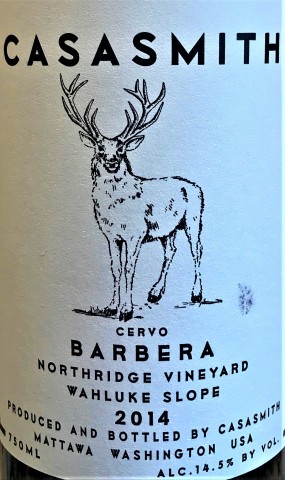
CasaSmith Cervo Barbera 2014

W CasaSmith 2014Barbera from Columbia Valley, Washington, US

100% barbera

14.5% alcohol

Opened 5 Feb 2018

els: 9.1/10

Wine Advocate: 93

Wine Enthusiast: 91

International Wine Report: 90

Cellar Tracker: 88

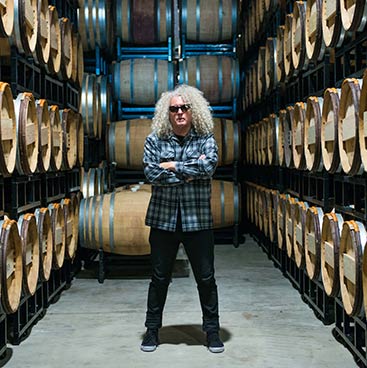
Charles Smith, vagabond, restaurateur, rock band manager, hard partier, and after almost 40 years decides to postpone adulthood further by starting a winery.  And doggone it, he’s good at it.  Mr. Smith builds up the winery, produces some darn good wines and sells the business for a ludicrous amount of money, and then promptly starts another winery; which he will likely sell for an even larger and more absurd (ludicrouser?) amount of money.  I spent 35 years at a nice, respectable and steady day job, thinking I was proceeding down a proper path.  Retrospection of ones life can be painful.

W Charles Smith 2018

Charles Smith.  Photo stolen from one of his web sites.

Charles Smith has set up shop in the southeastern Washington state, Columbia Valley town of Walla Walla; a megalopolis of about 45,000 folks which sits close to the Oregon border. The Cervo Barbera wine is part of a collection of Italian grapes grown and produced from his Washington vineyards, where he strives to reproduce the quality and integrity that one would find in Italy.

The Barbera, native to northwestern Italy, is a dark purple skinned grape producing a wine of low tannins and high acidity.  To combat the acidity, ageing the wine in old or neutral oak barrels is highly recommended to give the product more balance and a smoother finish.

The Northridge vineyard, planted in 2003, is a 92 acre site on a Wahluke Slope alluvial gravel fan, created approximately 15,000 years ago, in the Late Pleistocene, from the periodic floods originating from the ice dammed Glacial Lake Missoula in western Montana. Underneath the gravels are caliche deposits and Miocene-aged flood basalts.  The gravels provide excellent drainage for the vine’s roots and the caliche provides the calcium carbonate that the Barbera grapes thrive on.  Growing season temperatures range from daytime highs around 90ºF to nighttime lows approaching 40ºF.   Rainfall, during the growing season, ranges from 0.6-2.25″ per month.  The Northridge vineyard is approximated 2º degrees of latitude further north than its Italian Barbera counterparts in northwestern Italy and as a result receives more summertime sunshine.

The wines are whole cluster fermented and macerated for 37 days.  The wine is aged in old oak barrels for 12 months.

A wine with a garnet to ruby-red color and an amber rim. A bouquet of earthy herbs and black berries. On the palate a fruity, full-bodied, slightly acidic but balanced wine.  It has a fresh, long finish.

An outstanding wine at a fair price.  Serve this Italian wine with Italian pastas and pizzas. Drink now, but should last until 2020. Decant and aerate for one hour before drinking.

$20.00 wine-searcher.com

Crios de Susana Balbo Malbec 2015

W Crios Malbec 2015Malbec from Uco Valley, Mendoza, Argentina
95% malbec

5% bonarda

14.5% alcohol

Opened 2 Feb 2018

els: 9.0/10

Wine Advocate: 90

James Suckling: 90

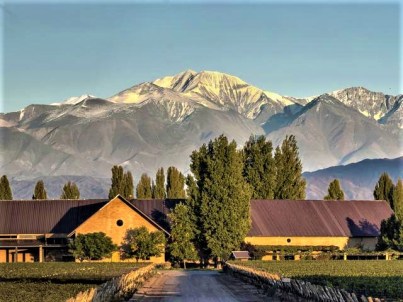
Susana Balbo’s winery, established in the stunning, idyllic eastern foothills of the Andes Mountains, within the viticultural region of Uco Valley, is southwest of Mendoza, Argentina. The winery is surrounded by 52 acres of Malbec, Cabernet Sauvignon, Cabernet Franc and Petit Verdot vines; producing 4 brands of wines with distinct and complex personalities that appreciate long, secluded years in their bottles: Crios, Ben Marco, Nostros and Susana Balbo Signature. The Bonarda grapes are sourced from surrounding non-Balbo vineyards.

The vineyards are at an average elevation of about 3700-3800 feet above sea level where the steppe climate provides a large swing in growing season temperatures ranging from daytime highs in the mid 80s to night-time lows approaching 50°F. The climate is arid and vines receive a paltry 1-1.25″ of rain per month. To compensate for the semi-desert conditions and the well-drained alluvial soils of Uco Valley, the vineyards are drip irrigated using the Andes’ snow melted water to provide just the right of amount of essential moisture to produce these flavorful wines.  This vintage’s growing weather was cooler and wetter than normal.

W Balbo Winery

Susan Balbo Winery

The grapes are hand-harvested and spend 25 days in maceration vats.  After maceration the wine spends 9 months in new French oak barrels.

The wine has ruby-red to purple color with a garnet to peach rim. A bouquet of fresh cherries and blackberries. On the palate the wine is very well-balanced and medium bodied.  Very fresh and cooling.

An outstanding wine at a very good price. Serve with lamb or beef steak. Get adventurous and try with a grilled tuna steak. Drink now, but should last until 2022-2023.  Decant and aerate for one hour before drinking.

$11.99 wine.com

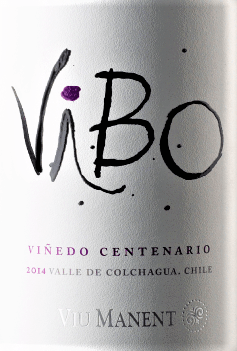
Viu Manent ViBo Vinedo Centenario 2014

W Vibo 2014Bordeaux Red Blend from Colchagua Valley, Rapel Valley, Central Valley, Chile
65% cabernet sauvignon

35% malbec

13.5% alcohol

Opened 31 Jan 2018

els: 9.2/10

Wine Advocate: 91

Colchagua Valley is in the southern and western portions of Rapel Valley, which itself is located in the middle of the 250 mile long Central Valley, all situated between the Andes to the east and the Coastal Ranges to the west. The northern edge of the Colchagua Valley is defined by the life giving, Rapel River and its main tributaries: the Tinguiririca and Cachapoal Rivers. The valley, sheltered from the cold Pacific winds by the Coastal Ranges, has a mild Mediterranean climate, warm but not too hot, or too cold, with rainfall that averages about 24″ per year. The main wine of the valley is Cabernet Sauvignon but in recent years Malbec has been added to the vineyards to capitalize on their Argentinian success on the other side of the Andes. The better wineries of Colchagua Valley have their vineyards located on the eastern slopes of the Coastal Ranges.

In 1935 the Viu family, Catalonian immigrants, founded a Bodega in Santiago, Chile to bottle and market wines locally.   The family, in 1966 purchased a winery and its vineyards in the Colchagua Valley which included very old, pre-Phylloxera, French derived vines.  This purchase marked the beginning of the family’s proprietary production of wine. In 2009, Vibo made its appearance on the Chilean and International markets.

Viu Manent, the Viu family company, operates 3 vineyards, totaling 627 acres, in Colchagua Valley: San Carlos, La Capilla, and El Olivar.  The San Carlos vineyard is 370 acres of 40 year-old plus vines, some more than 100 years old, growing at 800′ above sea level in very thick and porous, silty-sand to clayey-sand soils. The vineyard was established in the 1800s with pre-Phylloxera, French root-stock and vines. The La Capilla vineyard is about 93 acres dedicated to red-wine-only vines growing at 750 feet in a pebbly limestone and limey soil.  The vines are on average 16 years old. The El Olivar is a new land acquisition which the company plans to develop into about 175 acres of vines at an elevation between 500-930′, located on the steep slopes, up to 45°, of the Coastal Range foothills in pebbly-clayey soils.

Vibo Vinedo Centenario is produced from the oldest vines from the San Carlos vineyard. The 2014 growing season was delayed by long spring frosts which eventually led to hot summer days in the low 80s°F but the nights were cooler than normal, resulting in sustained high acidity levels for the grapes until harvest.

The grapes were hand harvested, de-stemmed and crushed in stainless steel tanks. After a 5-day cold water soak the grapes were fermented in natural yeasts.  Malolactic fermentation occurred in oak vats. The wine was aged for 18 months in French oak barrels, about 20% which are new oak.

The wine has ruby-red color with a garnet rim. A bouquet of fruity herbs and spice. The tongue stays happy with a great balance of tannins and acidity.  A wonderful finish.

An outstanding wine at a good price.  Serve with cheese, beef, lamb or duck. Drink now, but should last until 2020-2022. Decant and aerate for one hour before drinking.

$16.99 wine.com

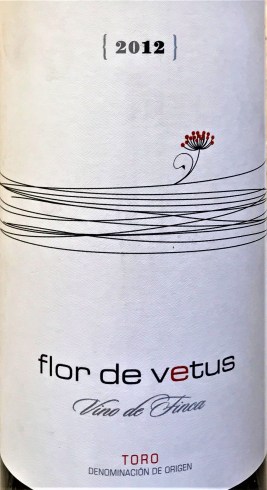
Vetus Flor de Vetus 2012

W Flor Vetus 2012Tempranillo from Toro, Spain

An Eric Solomon Selection

100% tinta de toro (tempranillo)

14.0% alcohol

Opened 29 Jan 2018

els: 9.0/10

Wine Advocate: 92

Decantalo: 92

Guia Penin: 91

Cellar Tracker: 88

The Spanish Northern Plateau Toro Region is 40-50 miles east of the Portuguese border and 125-150 miles south of the Northern Spanish-Atlantic Ocean coast. Wine has been produced in the Toro region for more than 2000 years ever since the Greeks taught the Celts the art of the vine and grape.  During the Middle Ages, Catholic religious orders obtained land in the region from the king under the expressed agreement that they would expand the vineyards. In the 1800s the area’s vineyards escaped the phylloxera crisis resulting, today, in some very old vines.

The Artevino company, under the tutelage of Gonzalo Anton, began its wine making endeavors in Rioja Alavesa, one of the 3 sub-regions of the La Rioja DOC, in 1987, focusing on the hospitality industry with their IZADI labeled wines. In 2000, Gonzalo’s son began to expand the winery’s footprint and soon established, in the Toro Region, Bodegas Vetus in 2003. He initially concentrated on developing their vineyards until they were assured of success before building their winery there, which they eventually opened in 2008.

The 50 acres of 25 year-old vines of the Vetus vineyards surround the winery, and are located less than 10 miles to the south, southwest of the city, Toro, and about 2/3 of a mile west of the Guarena River, a north flowing tributary of the Douro River.  They are at an altitude of approximately 2300′ above sea level, growing in a loose conglomeratic soil, which consists of a dark sandy matrix, some clay, and limestone pebbles; locally known as a puddingstone.  The area experiences a continental climate with growing season temperatures ranging from daytime highs in the mid-80°s to night time lows in the high 50°s F.  Growing season rains range from 0.75 to 2.25″ per month.

The grapes are hand harvested, de-stemmed, partially crushed, and fermented in stainless steel vats. They are aged for 9 months in half new, half second year, half American and half French, oak barrels with the resulting wine falling into the Spanish Crianza aging label category: aged for 2 years with at least 6 months in oak.

The wine exhibits a dark ruby-red to purple hue with a thin garnet rim.  A glorious nose of fresh berries and cherries coupled with a rich, thick taste of berries and chewy tannins. Very balanced acidity and tannins with a very nice finish.

An outstanding wine at a good price.  Serve with lamb and Spanish rice. Drink now, but should last until 2020. Decant and aerate for one hour before drinking.

$14.99 wine.com


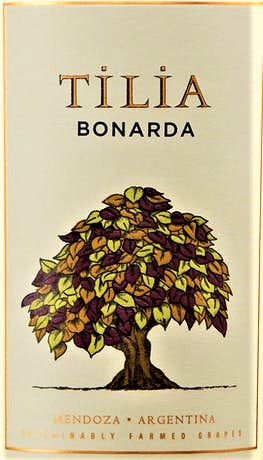
Tilia Bonarda 2016

W Tilia 2016Bonarda from Mendoza, Argentina

100% bonarda (aka: charbono, corbeau de savoie, or douce noire)

12.5% alcohol

Purchased:  8 January 2017 – $10.99

Opened:  27 Jan 2018

els: 8.7/10

Wine Advocate: 88

Argentina’s wine history dates back to the 1500s when Catholic priests planted vineyards around their monasteries to guarantee wine for the parish and Holy Mass. The country was the first South American country attempting to commercially grow vines, beginning in Mendoza in the early to mid-1800s.  Many of the initial plantings came from Chile in the early 1800’s but the varietals that would change world wine history came from the Bordeaux region of France in 1853, including the ubiquitous Malbec.  Eventually, Mendoza was producing world-class Malbec wines, on par or superior to those produced in France, mainly due to its high elevations in the foothills of the Andes, well-drained soils, and lots and lots of hot sunshine. Today the country produces 75% of the world’s Malbec.

Argentina is the world’s 6th largest producer of wine by volume, just behind the US and ahead of Australia. It produces about 6% of the world’s total wine. The country has 510,000 acres planted in grapes, 55% in red wine grapes, 25% in roses and the rest in whites. Malbec plantings account for 20% of the total acres planted with Bonarda, Cabernet Sauvignon, and Chardonnay accounting for another 20%. Argentina has 4 main wine-producing regions: Atlantic, Cuyo, North, and Patagonia.

Cuyo is the largest and most important wine-producing, macroeconomic region in central Argentina and includes the wine sub-regions of La Rioja, Mendoza, and San Juan; with Mendoza being the largest of the 3 by area, population, GDP, and wine production. The region produces about 80% of all wine in the country. The area is arid to semi-arid receiving less than 20 inches of rain per year and experiences large diurnal temperature variations of about 35°F.

The Mendoza region, lapping up onto the eastern foothills of the youthful Andes, is the largest wine producer in Argentina, accounting for 65-75% of the country’s total. A third of the country’s vineyards are dedicated to Malbec with Mendoza also producing the lion’s share of that variety with 85,000 acres planted. The Mendoza wine region is partitioned into another 5 sub-areas: Central Oasis, East Mendoza, North Mendoza, South Mendoza, and Uco Valley. North Mendoza, aka Lujan de Cuyo, designated as an appellation in 1993,  contains an additional 6 micro-regions including: Agrelo, Barrancas, Las Compuertas, Perdriel, Ugarteche, and Vistalba.

Bodegas Esmeralda, founded by Don Juan Fernandez is named in honor of his only daughter: Esmeralda Fernandez. The winery is located in the city of Junin, approximately 300 miles west of Buenos Aires and almost 800 miles east of Mendoza, producing wines both for the local market and for export. The winery’s Tilia labeled wines, named after the Latin name for the Linden tree, are all produced for the export market.

Tilia’s Bonarda vineyard, El Mirador, is located 50 miles to the southeast of Mendoza, at elevations ranging from 1,950 – 2,150’ above sea level. The vineyard is in a true desert climate, receiving less than 1″ of rain per month and is carefully irrigated with the Andes’ snow melt waters flowing down through the Tunuyan River.  Because of the desert conditions the sun shines 90% of time throughout the year, generating hot days and cool nights, perfect for the Bonarda grape.

The grape, also known as the Charbono in California, is a very commonly planted variety, second only to Malbec, in the Mendoza area.  In the desert climate the grapes produce a medium bodied wine of dark fruit and berry flavors with high acidity and medium tannins.

This wine has a deep purple hue with a cherry red rim. A nose full of plums and black fruit hits you hard upon opening.  A medium to full-bodied, but soft on the palate, wine, with an earthy, herbal flavor. It has a medium finish with vivacious tannins, well-nigh a Merlot in character.

A good everyday red at a good price.  Serve with mild cheese, pasta or pizza. Drink now but it should be good through 2020. Decant and aerate for one hour before drinking.

$10.99  wine.com

Two Hands Bella’s Garden Shiraz 2013

W Bella Garden 2013Shiraz from Barossa Valley, Barossa, Australia

100% shiraz

14.5% alcohol

Opened 21 Jan 2018

els: 9.4/10

James Halliday: 95

Wine Advocate: 94

Wine Spectator: 94

Cellar Tracker: 93

German immigrants brought the wine industry to Barossa Valley in 1843 and its reputation in the wine trade has waxed and waned through the years, along with the world’s perception of Shiraz. In the late 20th century the valley once again saw its fortunes on the rise and today it rates along side McLaren Vale as South Australia’s premier wine regions.

The Two Hands winery came into existence in 1999 with the single aim of producing the best Shiraz from the best regions of Australia. By 2003 the company had put down roots in Barossa Valley and their Shiraz Garden series wines were in full bloom. The series is currently a collection of 6 Shiraz wines, each sourced from a different growing region in South Australia and Victoria.  The different region’s grapes are prepared and processed in exactly the same manner at their Barossa Estate so that the 6 separate Shirazes’ character becomes a definite reflection of their distinct terroir.

The Barossa Valley vineyards grow in a hot and dry continental climate and receive a scant 6 inches of rain during the growing season. Growing season temperatures peak in the high 80s°F during the day and dip into the low 50s°F at night. The soils tend to be clay and silt with some sand aiding in the drainage. The grapes are de-stemmed, crushed and fermented in open fermenters. After 2 weeks the wine is racked to barrels for malolactic fermentation. The wine is aged for 18 months in new and old French oak hogsheads (59-66 US gallons) and puncheons (132 US gallons).

The wine has a deep and dark purple color with a lighter purple rim. Dark fruits and berries wind their way through your nose and palate, interacting with the perfect balance of acidity and tannins to produce a long and satisfying finish.

An outstanding dinner wine.  My wife and I drank this wine over a delicious meal that started off with warm sourdough bread dipped in a mixture of salt-basil-pepper and olive oil, followed by two small, lightly spiced crab cakes, just to keep our appetites in check until the next course made its appearance. Our entrees consisted of a medium-rare filet mignon and a medium lamb loin, both served with garlic mashed potatoes and grilled, whole baby carrots.  We finished the repast with a slice of lime cheesecake topped with blueberries and unsweetened whipped cream. The Shiraz made it all simply divine and so decadent. This wine should last for many years. Decant and aerate for one hour before drinking.

$49.99-79.99  wine-searcher.com (~ $70.00 at the restaurant)


Bodegas Castano Solanera 2013

W Solanera 2013Other Red Blends from Yecla Region, Southern Spain

An Eric Solomon Selection

70% monastrell (mourvedre)

15% cabernet sauvignon

15% garnacha tintorera

14.5% alcohol

Opened 20 Jan 2018

els: 9.0/10

Wine Advocate: 92

Guia Penin: 89

Cellar Tracker: 88

Ramon Castano Santa and his 3 sons have nourished their Yecla vineyards since the 1950s and today they extend over almost 1500 acres, growing a wide assortment of grapes from the ancestral Monastrell, also known as Mourvedre, to Cabernet Franc, Cabernet Sauvignon, Chardonnay, Garnacha Tinta, Macabeo, Merlot, Moscatel, Sauvignon Blanc, Syrah, and Tempranillo. Some of the vines are in excess of 100 years old.  The vines for this wine are 40-100 years old, thus “vinas viejas” or old vines.

The family’s vineyards are located in the northern reaches of the Yecla region, near the foot of Monte Arabi, and are approximately 50 miles northwest of the Mediterranean coast, ranging from 1300-3000 feet above sea level.  The vineyards for this wine are from their Campo Arriba (high land) area and are just shy of 3000′ above sea level, growing in a low organic, clayey limestone with good drainage. The climate is a cross between Mediterranean and a continental weather conditions. Daytime temperatures during the growing season reach into the mid-80s and the night-time lows dip into the mid-50s°F. The summer rains are infrequent and sparse, delivering anywhere from 0.25-2.0 inches per month, perfect for the thick-skinned Monastrell grapes.

The Castano family grapes are used in this Eric Solomon selection and the wine making is supervised by Solomon and Jean-Marc Lafage.  The grapes are hand harvested and fermented separately in stainless steel tanks. The wine is then aged in French and American oak barrels for 10 months.

Dark ruby-red to purple in color with a light purple rim. Elegantly redolent of dark fruits and berries. A rich, thick taste of berries and chewy tannins. Balanced and delicious.

An outstanding everyday red blend at a good price.  Serve with cheese, lamb, pork; the spicier the food the better. Drink now, but should last for many years.  Decant and aerate for one hour before drinking.

$14.99  wine.com