Art Imitates Life

American Made (Theaters-2017; Streaming-2018)  Rated: R  Runtime: 115 minutesM American Made 2017

Genre:  Action-Adventure-Biography-Comedy-Crime-Drama-Mystery-Suspense-Thriller

els – 6.5/10

IMDb – 7.2/10

Amazon – 3.5/5 stars

Rotten Tomatoes Critics – 7.0/10

Rotten Tomatoes Audience – 3.8/5

Metacritic Metascore – 65/100

Metacritic User Score – 6.8/10

Directed by:  Doug Liman

Written by:   Gary Spinelli

Music by:  Christophe Beck

Cast:   Tom Cruise, Domhnall Gleeson, Sarah Wright

Film Locations:   Atlanta, Ball Ground and Madison, Georgia, US; New Orleans, US; Araracuara, Caqueta and Medellin, Columbia

Budget:   $50,000,000

Worldwide Box Office:  $135,581,390

Barry Seal (Cruise) is a hustler, a con, a drug smuggling, gun running, money laundering, CIA operative; a Medellin Cartel useful stooge, and all around terrific husband and father who will not let anything get between him and an illicit mountain of cash. Seal is a TWA pilot who can’t make ends meet or fulfill his adrenaline needs, so he turns to flying drugs from South American to supplement his legitimate wages and feed his risk cravings.  He soon attracts the attention of the CIA who need a gofer to conduct business between the agency and Panama’s Noriega. This leads to running CIA supplied guns to Panama and the Cartel in Columbia.  Return flights are loaded with Columbian cocaine netting Seal $2000 per kilogram smuggled.  The amount of drugs involved eventually causes Seal to run out of banks and closet space for his green abundance. The entire story is told with more humor than drama, concentrating on Seal’s/Cruise’s smile and devil be damned style. You know Seal is man without a conscience but he is so darn likable and fun.

American Made is aptly directed by Doug Liman who keeps the focus of the movie light and airy, bordering on silly, against a background of drugs and the ensuing trail of death and ruin; and somehow it all works. Liman last worked with Cruise in the fantastic and critical acclaimed 2014 sci-fi flick: Live Die Repeat: The Edge of Tomorrow.  A little known, but talented writer, Gary Spinelli wrote the screenplay for this movie and auctioned it off to Universal for a cool million back in 2014. At that time Ron Howard was pegged to direct the movie. Filming started around May 2015 and continued off and on until January 2017.

This film is blithely marketed as a true story, a biography. As with all things Hollywood, that statement stretches reality to the breaking point. Barry Seal was a pilot for TWA and he was a drug smuggler; that part is true, after which the rest of the story gets the Hollywood treatment where the truth is pitted against fiction; may the highest gross potential wins.  The CIA part of the story may or may not have happened but the official line is it did not or at least not till much later in time.  Seal was busted for drug smuggling and money laundering and was facing serious time in the pen. He cut a deal with the DEA to help bring down the Columbian Cartels in exchanged for a lighter sentence.  At this point it appears the CIA, in conjunction with the DEA, stepped in to also gather information on the Nicaraguan Sandinistas.  Subsequently, Seal, at an airport in Nicaragua, took photos of Pablo Escobar, Ochoa, plus a Sandinista government official, Federico Vaughan, directing the loading of cocaine onto a DEA aircraft.  These pictures leaked out to the general public, after which Escobar placed a bounty on Seal’s life; supposedly $1,000,000 for capture and return to Columbia or $500,000 for his death. In early 1986 Seal was assassinated by Escobar’s hit men in front of a Baton Rouge, Louisiana Salvation Army facility.

Seal’s American Made life is a comedy.  Seal’s real life was a tragedy. Aristotle said in the 4th century BC, that art imitates life, mimesis, whereas Oscar Wilde in 1889 said the life imitates art, anti-mimesis. Here art imitates life, but comedy polled better than tragedy: money wins. Ok, that might be a bit heavy.  It’s a good movie so kick your feet up and pass the popcorn.
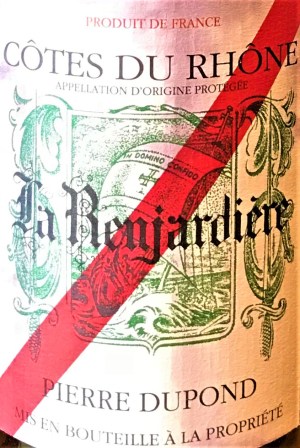
 

Pierre Dupond La Renjardiere Cotes du Rhone Rouge 2015

W Dupond 2015Rhone Red Blend from Southern Rhone – Cotes du Rhone, Rhone, France

60% grenache

20% syrah

10% mourvedre

10% cinsault

14.0% alcohol

Opened 17 Jan 2018

els: 8.6/10

Tastings: 88

The Cotes du Rhone wine region stretches along the Rhone River, beginning at Vienne in the north to Avignon, 125 miles to the south. The Central Massif defines the western boundary and the foothills of the Alps, the eastern boundary. The region is designated with 4 levels of distinction: at the bottom and the most basic are the Cotes du Rhone wines, this wine falls into that category, followed by 95 Cotes du Rhone-Villages, then, with another step up there are the 18 Cotes du Rhone-Named Villages and finally at the top are the 17 Crus. Cotes du Rhone wines must contain at least 40% Grenache as their main grape, followed by a minimum of 15% from the secondary grapes: Syrah and Mourvedre.  Accessory grapes, such as Cinsault, can not provide more than 30% of the total.

The La Renjardière is a 300 acre+ vineyard, just north of Chateauneuf du Pape and the city of Orange. The vineyards reside on the right bank slopes of the Rhone with soils consisting of sand, clay and limestone with round pebbles which make walking without shoes difficult, but provide a wonderful assist for drainage. The vineyard’s Mediterranean climate has growing season temperatures ranging from the high 40s at night to the low 80s °F during the day.

The wine has a dark ruby-red color with a nice garnet rim. It exhibits a medium but distinct nose of  cherry and strawberries. The tongue tells me that plums and black fruits are nearby. Tannins are easy, acidity isn’t overpowering, or in other words a balanced, mild wine with a medium to long finish, reminiscent of a young woman with small, but invitingly round breasts. The wine should be good for a few more years.

A good everyday red at a good price.  Serve with cheese, lamb, or pork.  Decant and aerate for one hour before drinking.

$12.99  wine.com

With a Little Help from My Mum

Kaleidoscope (Theaters-2017; Streaming-2017)  Rated: NA  Runtime: 99-100 minutes

Genre:  Drama-Mystery-Suspense-ThrillerM Kaleidoscope 2017

els – 7.0/10

IMDb – 6.0/10

Amazon – 3.5/5 stars

Rotten Tomatoes Critics – 6.4/10

Rotten Tomatoes Audience – NA/5

Metacritic Metascore – 52/100

Metacritic User Score – NA/10

Directed by:  Rupert Jones

Written by:   Rupert Jones

Music by:  Mike Prestwood Smith

Cast:   Toby Jones, Anne Reid, Sinead Matthews

Film Locations:   London, England

Budget:   NA–Low Budget Indie Film

Worldwide Box Office:  $6,906 (Limited Release)

Carl (Jones) is a lonely man. Just out of prison, for what is never stated, he attempts a lonely hearts, social network consummated, date for the first time in 15 years. The date appears to be just what Carl needs to jump-start his life and leave his ill-defined past behind; until his mother (Reid) calls.  The call releases his past in waves of psychological, matriarchal malevolence, torturing his mind with fits of murderous rage and metaphysical straight-jackets. His date goes downhill and his mother shows up at his flat to complete the twisted anguish taking place in Carl’s mind.

Kaleidoscope was written and directed by Rupert Jones, a sophomoric directorial effort in the feature film category, blood-tied to a clan of English stage and movie actors; father Freddy Jones, mother Jessie Heslewood, and brothers Toby and Casper Jones. His main efforts prior to this film were in the realm of shorts and music videos, including directing: Most Likely You Will Go Your Way  by Bob Dylan. Jones weaves a captivating psychological thriller that holds you, rivets you, to Carl’s revolving kaleidoscope of shifting past memories and misty glimpses of the present. A surprisingly great movie from one with such an unsuspecting thin cinematic resume.

Toby Jones and Anne Reid play Kaleidoscope precisely as needed: a dysfunctional family, and play it as if it were their reality. Their whole body, visual as well as vocal, creates a truly intricate and color-saturated story that the sparse dialogue only begins to animate into a meaningful coherence. Toby’s silent looks speak volumes while Reid’s wrinkles and loose skin invoke not sympathy, but a cold certainty that she should be tossed from a fast train or a high balcony.

This is a remarkable movie; psychotic portraits vividly drawn on a Kandinsky canvas, divorced from any obvious visual realities. The visuals keep you engaged but the reality is hidden; past is prologue, present is interesting, if not terrifying. A low-budget masterpiece; a great story with great direction and acting.

Wirra Wirra Church Block CSM 2013

W Church Block 2013Other Red Blends from McLaren Vale, Australia

50% cabernet sauvignon

37% shiraz

13% merlot

14.5% alcohol

Opened 10 Jan 2018

els: 9.2/10

Australian Wine Companion:  94

James Suckling:  92

Wine Enthusiast:  91

Wine Spectator:  90

Wilfred Wong:  90

Vinous:  89

The McLaren Vale wine region is centered around the eponymous small town populated with approximately 4000 people, located 20 miles south of Adelaide in South Australia.  The wine growing region, triangular in shape, is less than 20 miles in length and 8 miles in width, nestled between the Gulf of St. Vincent on the west-northwest and the Willunga Fault and scarp, known as the Sellicks Hills Range, along its southeastern edge. McLaren Vale grew famous with its Shiraz wines but today its 88 wineries produce world-class reds and whites; including Cabernet Sauvignon, Grenache, Mourvedre, Chardonnay, Riesling, and Sauvignon Blanc. It is not uncommon to find 100-year old vines in McLaren Vale vineyards.

The Wirra Wirra winery was established in 1969 by Greg Trott and others, out of the ruins of the 1894 winery started by a gentleman delightfully named, Robert Strangways Wigley. Greg Trott’s first Wirra Wirra labeled wine was the 1972 Church Block CSM, named after a vineyard adjacent to a small church.

The vineyards of McLaren Vale are subjected to a Mediterranean climate with dry summers and wet winters, perfect for growing red wine grapes.  Rains bring between 20 and 30 inches per year; the rains peaking in the southern hemisphere May to September winter.  Growing season temperatures range from daytime highs in the mid-80s to night time lows in the mid-50s degrees Fahrenheit. Frost and snow are almost unheard of anytime during the year.  The soils are generally well-drained, thin loamy sands with clays and clayey limes underneath.

This wine has a brilliant ruby-red hue with a narrow pink rim.  Redolent of black berries and plums. An intense taste of red fruits with lasting tannins, and a very long, balanced finish.

An outstanding red wine at a great price.  Serves well with beef and lamb. Tastes great by itself.  Tannins suggests that this wine will serve well for many years to come. A very versatile wine. Decant and aerate for one hour before drinking.

$14.99-21.99  wine-searcher.com

Stockholm Syndrome

The Pirates of Somalia  (Theaters-2017; Streaming-2017)  Rated: R  Runtime: 116-118 minutesM Pirates 2017

Genre:  Biography-Drama

els – 6.0/10

IMDb – 6.9/10

Amazon – 3.8/5 stars

Rotten Tomatoes Critics – 6.1/10

Rotten Tomatoes Audience – 4.2/5

Metacritic Metascore – 54/100

Metacritic User Score – 7.8/10

Directed by:  Bryan Buckley

Written by:  Bryan Buckley

Music by:  Andrew Feltenstein, John Nau

Cast:  Evan Peters, Barkhad Abdi, Melanie Griffith, Al Pacino

Film Locations:   Cape Town and Western Cape, South Africa; New York, US

Budget:   NA

Worldwide Box Office:  NA

Jay Bahadur (Peters), a young, idealistic Canadian, aspires to be a journalist, but his job prospects are poor to nonexistent. Going to Somalia to observe, interview, report, and write a book on the pirates is just the scoop he needs to break into the profession. He wrote a term paper in his first year of college romanticizing the peaceful transition to power of a newly elected government in Somalia, in which he extrapolates from that occurrence, a country that is a charming spot of sand, full of peace and love, not so different from his beloved home country of Canada; minus the sand of course. He naively weaves this theory throughout the movie, and beyond, with conviction, never contemplating that Somalia life and politics may be just a tad more complicated and less perfect than this young, inexperienced man may imagine.

With some journalistic mentoring from a retired newsman, Seymour Tolden (Pacino), Jay sets off for Somalia without any real inkling of what he is up against. Using Tolden’s contacts in the country, along with bribes and khat, a local addictive stimulant, he gains access to the pirates and is able to document their side of the story. The pirates see themselves as modern-day Robin Hoods, taking from the multinational corporations what is due them. Due them for past wrongs, due them for the British and Italian colonization and to help set matters right. I suspect the Nazis, the Mafia, Castro, Chavez, and countless others saw matters in a similar light; it was their due and they were going make everything alright.

The movie is based on a biographical account, chronicled in the 2011 New York Times bestseller: The Pirates of Somalia: Inside Their Hidden World by Jay Bahadur. The movie was filmed in early 2016, had its world premiere at the Tribeca Film Festival in April 2017 and was released in the US on 8 December 2017.

Leaving the kid’s politics aside, just for a moment, this is an interesting and well filmed and acted drama, with the exception of the tongue-in-cheek over prints and narratives which are fun and irritating at the same time, depicting life in Somalia and the pirates claim to authority and respect in this peaceful country.  At the end of the movie Bahadur appears to have made a very good living off his book, movie and consulting; telling the world about the wonderful and peaceful land of Somalia and its citizens.

The problem with his story though is that he never successfully bridges the logical, the cerebral disconnect between the peaceful transition of the newly elected government with the existence of the shadow government run by the pirates; much less contemplate the very peaceful, 1991 civil war, precipitated by the smooth transition-to-power-coup that claimed up to 500,000 lives and resulted in 1,000,000 plus refugees, or using the pc correct term: displaced persons. Add to that, the bloodless 1993 Battle of Mogadishu, that claimed 19 American lives, 73 wounded and 1 captured, which was subsequently documented and portrayed, poorly, in the 2002 film: Black Hawk Down.  An interesting aside is that in this movie the Somalis complain that no Somalis were used as actors in depicting the butchering of Americans in Black Hawk Down. The irony is lost on Bahadur. Jay Bahadur is naive and likely not very bright, he wanted to go into journalism for cripes sakes, but watch the movie anyway, it’s a useful lesson in ignorance and a trusting nature leading to self-deception.

Do it the Hard Way–Do it Yourself

Hollow in the Land (Theaters-2017; Streaming-2017)  Rated: NA  Runtime: 92-99 minutesM Hollow 2017

Genre:  Drama-Mystery-Thriller

els – 5.0/10

IMDb – 5.6/10

Amazon – 3.7/5 stars

Rotten Tomatoes Critics – 7.2/10

Rotten Tomatoes Audience – 4.1/5

Metacritic Metascore – 54/100

Metacritic User Score – NA/10

Directed by:  Scooter Corkle

Written by:  Scooter Corkle

Music by:  NA

Cast:  Dianna Agron, Rachelle Lefevre, Shawn Ashmore

Film Locations:   Castlegar, Canada

Budget:   NA–Low Budget Indie Film

Worldwide Box Office:  NA

Alison Miller (Dianna Agron), a young woman, bereft of parents; mother dead, father serving time for drunken vehicular homicide, is desperately trying to keep her immature and obnoxious brother out of jail until he turns 18, all the while, working at a factory owned by the family of the young boy killed by her father. On the one-year anniversary of Alison’s father’s crime, her brother disappears after his girlfriend’s father is murdered. Alison begins trying to unravel mystery of her brothers whereabouts and the events that led to his suspicious disappearance.

Hollow in the Land was filmed in the small logging and mining community of Castlegar, British Columbia, home town to this movie’s director and writer: Scooter Corkle. The town is nestled in the valley at the confluence of the Columbia and Kootenay Rivers with the picturesque Selkirk Mountains towering above; sometimes referred to as a mountain hollow; pronounced holler if you are from West Virginia. Hollow also signifies the meaningless and pointless existence of the Millers, living as outcasts among small town hypocrites and cheats.

As a low-budget film, everything works except the story. It pulls all the right emotional strings, but intellectually it’s a beginning to end bust.  You watch the movie and just keep repeating to yourself: why, why does Alison do what she does?  A little thought shows a better way, a simpler plot with the same outcome, without traipsing down alleys and back roads, leading to the same place as the freeway. The movie starts out very slow with digressions that are simply insane and after 15 minutes of that goop, your mind tells you to get up and walk away.  If you stay it gets a little better and a little quicker, but just a little.

Some scenes should have been left on the cutting room floor, including a clip of Alison’s brother and his girlfriend swapping saliva, unconvincingly, for what feels like 20 excoriating minutes. A glancing blow of that scene would have been sufficient. The girl, moments after her father is murdered, is shown in an angelic, peaceful sleeping pose. Ain’t life wonderful? A few moments later the curtain opens, literally, to Alison and the girl’s mother, ex-wife of the murdered man, having a touching shower scene together. Made sense to someone.  Additionally, there are scenes and script that cause brain cells to scream out in anguish. Alison working for the family that lost their son due to the actions of her father. Why, why, why?  Alison playing amateur sleuth and never sharing anything with the police even though one of her few friends is a deputy.  Why, is never explained.

This is a flip of a coin movie. Heads watch it, tails, trim your toenails. As a mystery it is pretty good.  The process to the solution of the mystery is incoherent and the trips down the back roads are maddening.  Hollow may actually mean that the movie is insignificant and meaningless.


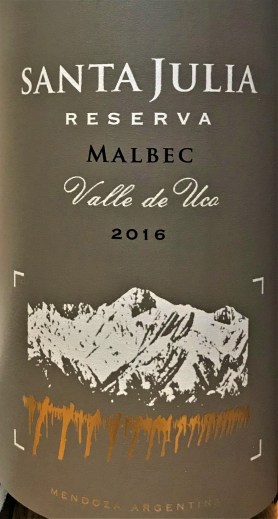
Santa Julia Reserva Malbec 2016

W Julia 2016.jpgMalbec from Uco Valley Mendoza, Argentina
100% malbec

13.0% alcohol

Opened 15 Jan 2018

els: 9.0/10

Wine Advocate: 91-90

Descorchados: 89

Wine Enthusiast: 87

Santa Julia is one of the three brands produced by the Zuccardi Family who have been active in Mendoza area vineyards and bodegas since 1950. The family founded the company in 1963. The Julia brand, named after the founder Jose Alberto Zuccardi’s daughter, was inaugurated in 1982 with the first wines exported in 1990. Today the wines are sold in 45 countries.

Santa Julia Bodega has 2 vineyards in the Uco Valley; Finca La Ribera of 210 acres, and Finca Vista Flores of 106 acres, both at an average elevation of 2900 feet above see level. Temperatures, during the growing season, range from the mid-80s°F during the day to the mid-40s°F at night.  Rainfall averages 1 to 3.5 inches per month with the driest month occurring during April.

The grapes are harvested towards the end of April, fermented at 77°F and allowed to macerate for 20 days. Part of the harvest is then aged in French oak barrels for 10 months.

The wine has a brilliant garnet to ruby-red hue with a faint narrow pink rim.  Light aromas of fruit, red berries and a hint of herbs. A taste of red fruits with a nice dry medium and balanced finish, like a kiss of a pretty, young girl.

An outstanding red wine at a great price.  Serve with cheese, pasta, or pizza. Tastes great slightly chilled: 62-65°F.  Decant and aerate for one hour before drinking.

$10.99  wine.com

Beyond Comic

Beyond Skyline (Theaters-2017; Streaming-2017)  Rated: R  Runtime: 105-106 minutes

Genre:  Action-Adventure-Drama-Fantasy-Horror-Science Fiction-ThrillerM Skyline 2017

els – 4.5/10

IMDb – 5.4/10

Amazon – 3.3/5 stars

Rotten Tomatoes Critics – 5.9/10

Rotten Tomatoes Audience – 3.2/5

Metacritic Metascore – 46/100

Metacritic User Score – 5.6/10

Directed by:  Liam O’Donnell

Written by:  Liam O’Donnell

Music by:  Nathan Whitehead

Cast:  Frank Grillo, Bojana Novakovic, Jonny Weston

Film Locations:   Toronto, Canada; Batam and Yogyakarta, Indonesia; Los Angeles and Marina Del Rey, US

Budget:   ~$15,000,000

Worldwide Box Office:  ~$1,000,000

Mark (Grillo), a washed up LA cop picks up his troublesome and busted son from the police department and is taking him back home when the aliens, or is it alien, attack the city and suck everyone up into their spaceship via a blue light beaming down, and vacuuming up, from the crowded streets below.  The LA folks who are pulled into the spaceship have their brains removed, inserted into cyborg-like machines, and are reprogrammed to do the bidding of the alien(s), all with a blue twinkle in their eyes.  Mark and his son are eventually captured and brought into the craft but he escapes the brain transference process while his son doesn’t. Mark befriends another cyborg that doesn’t like the alien(s) and together they cause the spacecraft to crash into the drug infested jungles of Laos, actually Indonesia, where they seem to have been totally forgotten by the rest of humanity. At this point Mark joins forces with Laotian drug smugglers and they proceed to battle the alien(s) and cyborgs Kung Fu style, setting the stage for Skyline 3.

Beyond Skyline is an ambitious special effects movie hamstrung with a lousy script and even worse direction; both supplied by Liam O’Donnell. This is O’Donnell’s first shot at directing with the only positive being that he has to improve in his next movie, if there is one. The acting and the special effects are all serviceable but the story just loses all control of reality and veers off into an action soaked craze masquerading as a plot. Each scene seems designed to end the confusion from the previous scene, but fails, and you are left with just witnessing some fairly decent action but not really knowing why. In the end you would be forgiven to think that this flick was a comedy, non-stop slapstick if you will, except it wasn’t funny. Blue lights bad, red lights good.  Red light bombs turn blue lights red. In Skyline 3 we will likely to be informed what green lights are all about. Brains for cyborgs, tots for toys; good grief.  Keep your popcorn in the kernel and move along; nothing to see here.


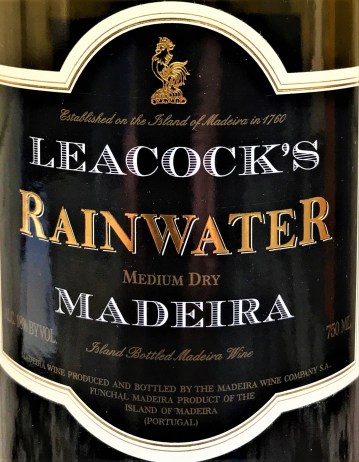
Leacock’s Rainwater Madeira

W RainwaterMadeira from Island of Madeira, Portugal
100% tinta negra mole

18.0% alcohol

Opened 06 Jan 2018

els: 8.9/10

Wine Spectator: 90

Cellar Tracker: 88

Wine Enthusiast: 86

The islands of Madeira, in the eastern, middle Atlantic Ocean, approximately 550 miles WSW of Casablanca, were likely known to seafaring civilizations before the time of Christ, to the Romans from at least to the 1st century AD, to the Vikings in the 10th century, and the English in the 14th century but were not permanently settled until the 15th century by the Portuguese. Almost from the beginning of the Portuguese settlement, sugarcane and grapes became important export crops for the islands.  Wine slowly became the dominant crop after the sugar industry shifted from the islands to Brazil in the 17th century.

Production and export of the wine from the islands date back to the 15th century but the earliest shipments spoiled in the ship’s baking-hot holds as they crossed the Atlantic on their way to the new world. To counter the spoilage, a small amount of sugarcane derived spirits were added to the wine to stabilize it. The added spirits along with the intense heat in the ship’s holds caused the wine to transform into a fortified, dry to sweet liquid that became the preferred wine in the new world.  Later when the sugar industry left the islands, brandy was added to wine instead of alcohol derived from sugar. Madeira wine was a mistake, but what a wonderful mistake.

The Leacock name, associated with the Island of Madeira, dates back to John Leacock’s arrival on the island, from England, in 1741. By the late 1750’s John, along with several partners were producing wine on the island. In the 19th century Thomas Sapp Leacock was instrumental in saving the island’s vineyards from Phylloxera. He initially applied a potion of resin and turpentine but this was expensive and subsequently he was one of the first to realize that American rootstocks were resistant to Phylloxera. In 1925 the Leacock business was merged, due to financial difficulties, with Blandy and they formed the Madeira Wine Company. Today the Blandy family owns the majority interest, and they run the company, producing 4 major brands: Blandy, Cossart Gordon, Leacock and Miles.

The Tinto Negra Mole grape is used to produce this wine.  It is a thick-skinned red grape variety that accounts for about 80% of island’s vineyards, arranged in steep terraces around the central mountain, growing in rich volcanic soils.  This grape, for the dryer wines only, is not subjected to maceration. The wines, once fortified, are heated to 113 degrees Fahrenheit for 4 months after which the wine is aged in oak casts for several years while the temperature is slowly reduced. Because the wine is fortified it will last indefinitely, opened or unopened.

This Rainwater variety is a lighter and sweeter version of dry Madeira. This wine produces a smoky and nutty fragrance with a sweet, dry, fruity and buttery finish.

A good dessert wine. Serve lightly chilled, as an aperitif, or with strong cheeses.

$11.05-16.99  wine-searcher.com

Vengeance is Bad Until it is Good

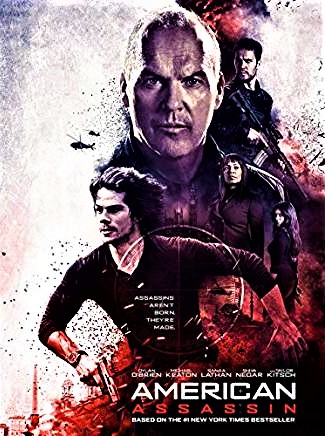
American Assassin  (Theaters-2017; Streaming-2017)  Rated: R  Runtime: 111-112 minutesM Assassin 2017

Genre:  Action-Spy-Thriller

els – 5.5/10

IMDb – 6.2/10

Amazon – 3.6/5 stars

Rotten Tomatoes Critics – 4.7/10

Rotten Tomatoes Audience – 3.6/5

Metacritic Metascore – 45/100

Metacritic User Score – 6.0/10

Directed by:  Michael Cuesta

Written by:  Stephen Schiff, Michael Finch, Edward Zwick, Marshall Herskovitz

Music by:  Steven Price

Cast:  Dylan O’Brien, Michael Keaton, Sanaa Lathan

Film Locations:   Birmingham and London, England; Rome, Italy; Valletta, Malta; Phuket, Thailand

Budget:   ~$33,000,000

Worldwide Box Office:  $66,000,000+

Mitch Rapp (O’Brien) lost his fiancé, minutes after proposing to her, to mass murdering, middle-eastern terrorists on the beaches of Spain (actually shot in Phuket). Rapp vows revenge for her death and begins training himself to go after and kill all the terrorists involved.  The CIA notices him and monitors his progress, eventually deciding to bring him into the fold and continue his training under the former SEAL, Stan Hurley (Keaton). The plot begins to thicken as Rapp and Hurley investigate a series of terrorist attacks that eventually lead to the realization that middle-eastern elements are trying to acquire a nuclear device and use it to start a world war.

The movie is based on Vince Flynn’s 1994 novel of the same name with plans for making the movie beginning back in 2012, finally leading to actual filming in 2016. The movie is obviously intended as the opening shot for a long running spy-thriller franchise.  It appears that the choice of O’Brien to fill the lead as a 20 something young adult is meant to demonstrate, with time, his progression into a personage with a Bourne or Bond countenance in the subsequent movies. Hopefully it will work.

The professional class of critics have panned this flick with no mercy. The major dig being that the story is stale and has been told a million times before, and usually better. On the other hand the movie paying public likes this movie for the action and the mindless entertainment that it is; nothing more. The filming and cinematography are beautiful with competent acting all around. Yes, the story could have used some sprucing  up, mainly around the convoluted messaging on the morality of revenge, but I’ll reserve judgement until after the sophomore release.  Feet up and pass the popcorn.