The First Precious

Before the One Ring, created by Sauron during the Second Age, Plato created, as a thought experiment, the Ring of Gyges which gave its wearer the cloak of invisibility. Gyges discovered that when he was invisible, he could commit immoral acts and crimes without suffering any adverse consequences or retribution from society.

Plato in his Republic, using the ring of invisibility as an analogy, explores man’s ability to remain honest and moral in the face of immunity from all consequences. He concludes that if one is free of any consequences he will act in his own self-interest, justice be damned, or as the 19th century historian and writer, Lord Acton states, “Power tends to corrupt, and absolute power corrupts absolutely.”

This leads Plato, through the lips of Socrates, to suggest that justice is not a social construct but an inherent quality of one’s soul. The soul must be in harmony with one’s actions and a harmonious soul contributes to a just society. Socrates believed and advised, and he followed his advice, that a harmonious and pure soul leads to true happiness and fulfillment or as the ancient Greeks called it: eudaimonia. For Aristotle eudaimonia is the highest human good and the only human good that is desirable for its own sake, an end in itself. Justice is a by-product of true happiness. Unhappy people and unhappy societies are not just people and just societies.

J.R.R. Tolkien, not only a writer but also a philologist, most certainly was aware of Plato’s Ring of Gyges as an analogy of ultimate power when he used his One Ring in the Lord of the Rings as the definitive symbol of man’s quest to resist and fight evil.

Source: The Republic by Plato. Reason and Meaning.com. Philosophy Terms. Oxford Reference. Graphic: The One Ring, Good Free Photos.

Journalism – Michael Straight

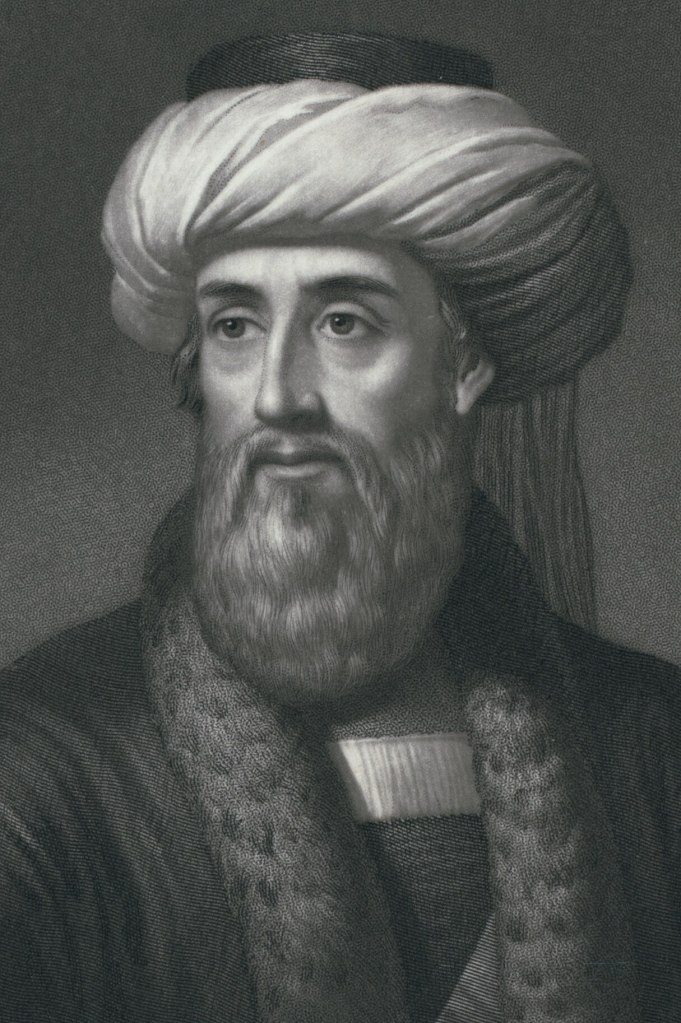
Michael Straight, New Republic publisher, editor, and writer from 1948 to 1956, was a KGB spy associated with the notorious UK Cambridge Five that passed thousands of classified documents and secrets to the KGB from the 1930s through at least the early 1950s.

He worked as a speech writer for Frankin D. Roosevelt and in that administration’s Department of State beginning in 1937. In 1940 he was employed at the Department of State covering the Near East. In 1942 he joined the Air Force and was a pilot of B-17s. After the war he left government service to help run his family’s journalism business: the New Republic. In 1963 he admitted to being a communist spy and outed Anthony Blunt, the recruiter for the Cambridge Five for which he was given immunity from prosecution and a job as Deputy Chairman of the Coordinating Committee for Cuban Affairs in the Kennedy Administration.

After the collapse of the Soviet Union and the end of the Cold War it was revealed that Straight was a much more significant KGB asset than he led the US government to believe.

Source: Historica.fandom.com. History.com. Graphic: Michael Straight at Cambridge, 1936, Public Domain.

To Kill a King

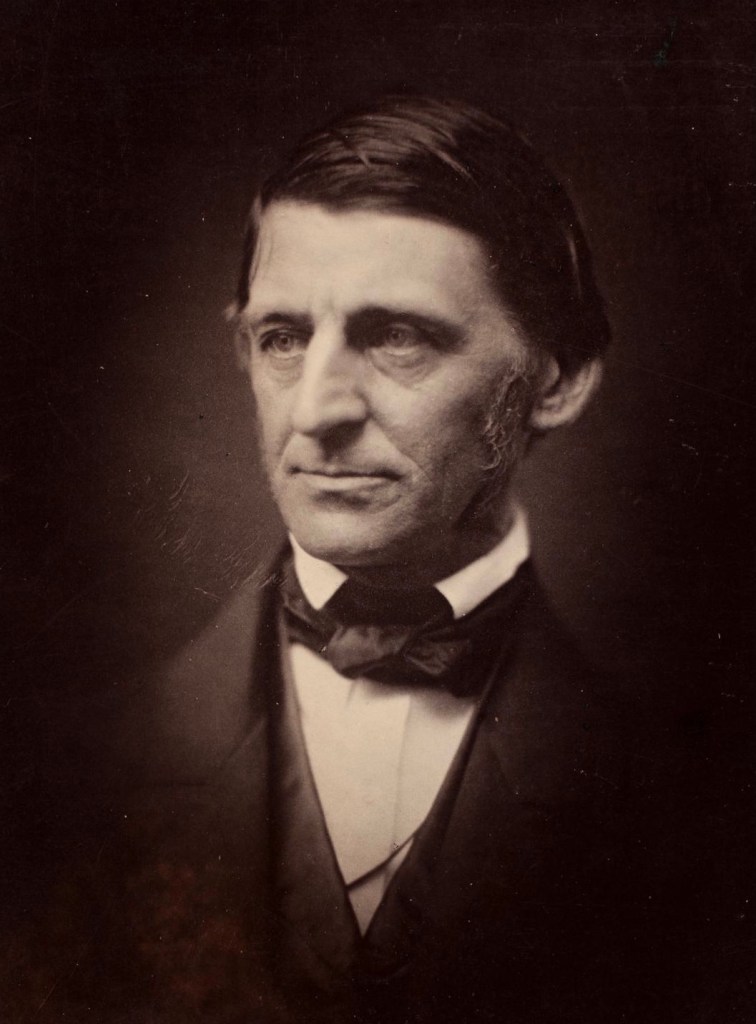
Ralph Waldo Emerson, author of the transcendental essay, “Self-Reliance” is often credited with saying, “When you strike at a king, you must kill him.” The exact setting and time for the quote is unknown but Ann Althouse believes it was said during a conversation with Oliver Wendell Holmes Jr., one of the most widely cited Supreme Court justices, after Holmes attacked Plato. Emerson’s parried with the quote above, meaning that if you strike at the philosopher king you must be thorough.

Niccolò Machiavelli, in his book “The Prince”, didn’t specifically mention the need to “kill the king” however, he did say, “If an injury has to be done to a man it should be so severe that his vengeance need not be feared,” and he also added “People should either be caressed or crushed. If you need to injure someone, do it in such a way that you do not have to fear their vengeance.”

Source: The Prince, Machiavelli. Emerson, Althouse Blog, 2019. Graphic: Emerson by Hawes, 1857, Public Domain.

The Roman Jewish Wars

During the first and second centuries AD there were 3 major Jewish revolts against Roman rule in Judea: The first war from 66-73 AD, the Kitos War from 115-117 AD, and the Bar Kokhba Revolt from 132-135 AD. Roman taxation, financial exploitation, religious persecution, oppression, extrajudicial executions, and the plundering of the Second Jewish Temple all contributed to the conflicts.

Roman punishment increased with each successive war eventually leading to wholesale depopulation of Jewish communities by enslavement, death, and exile. It is believed that upwards of 1.3-1.4 million Jews were killed during these revolts, which would have been about one-third of the total worldwide Jewish population. After the Bar Kokhba Revolt the Romans renamed the area Palestina after the Philistines who populated the general area before the 6th century BC.

Source: Josephus. Wikipedia, Heritage-History, WorldHistory, Alchetron, Britannica. Graphic: Roman Triumphal panel from Beth Hatefutsoth showing spoils from the Jewish Temple. Max Morris 2016.

The Antiquities of the Jews

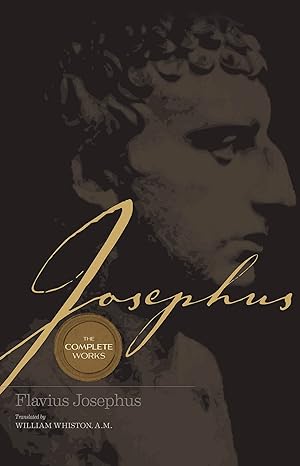
Josephus’s 20 volume history of the Jews titled: The Antiquities of the Jews was written to provide an account of the Jewish people for his Roman patrons and protectors.

Below is a synopsis of the 20 volumes:

  • Biblical creation to the death of Abraham’s son Isaac
  • History of Isaac’s sons to the Exodus of Jews from Biblical Egypt
  • Exodus from Egypt to the first 2 years of the 40 years in the wilderness
  • The remaining 38 years in the wilderness to the death of Moses upon reaching Canaan
  • Joshua’s replacement of Moses as leader to the death of the priest Eli
  • The capture of the Ark by the Philistines to the death of King Saul
  • David’s ascension to the throne of the Kingdom of Israel to the death of King David
  • Solomon’s ascension as King of Israel to the death of King Ahab
  • Reign of King Jehoshaphat to the fall of Samaria
  • Babylonian captivity of the Jews and the destruction of the Neo-Assyrian Empire
  • Start of the Persian Empire of Cyrus the Great to the death of Alexander the Great
  • Death of Alexander the Great to the Maccabean Revolt
  • Origins of the Hasmonean dynasty to the death of Queen Alexandra
  • The death of Queen Alexandra to the death of Antigonus II Mattathias
  • Herod the Great’s taking of Jerusalem to the completion of King Herod’s temple
  • Completion of King Herod’s temple to the death of Herod’s sons
  • Death of Herod’s sons to the banishment of King Archelaus

Josephus history covers major portions of the Old Testament including Genesis, Exodus, Numbers, Joshua, Judges, Ruth, Samuel 1&2, 1&2 Kings, 1&2 Chronicles, and Prophets. Josephus’s accounts provide for additional material and commentary not found in other texts including the bible.

Source: Josephus: The Complete Works, 2003. Jewish Virtual Library. World History Encyclopedia. Graphic Joseph, Son of Gorian, by Thomas Emmet, 1880, public domain.

Jewish, Roman, Historian

Flavius Josephus, a first century Jewish scholar and historian wrote four extant works:

  1. The Jewish War. (Jewish Revolt) 75 AD – The first revolt against the Romans from 66-73 AD
  2. The Antiquities of the Jews. 95 AD – From Adam to the death of Herod’s sons
  3. Against Apion. 97 AD – A defense of Judaism
  4. Vita or The Life of Flavius. 99 AD – Biography

These works provide significant source material and insight into first-century Judaism and Christianity.

Josephus was born into the Jewish priesthood on his father’s side and of Hasmonean royal descent maternally. He served in the Jewish military during the Jewish War but surrendered to the Romans and he was considered a traitor to Jews ever after. While waiting to be executed by the Romans he predicted that Vespasian would eventually be crowned emperor of Rome. Vespasian, because of the prophecy, spared his life and made him a consultant, but still a slave, to the Roman army. Josephus gained his freedom when Vespasian became emperor in 69 AD, at which time he changed his name to Flavius Josephus. Flavius was the family name of the emperor Vespasian.

Source: Josephus: The Complete Works, 2003. Jewish Virtual Library. World History Encyclopedia.

GOAT Gas

Water vapor is the most abundant and the most powerful greenhouse gas in the atmosphere and is responsible for about half of the Earth’s greenhouse effect. The amount of water vapor in the lower atmosphere is largely controlled by temperature, such that warmer air holds more moisture. Water vapor returns to the Earth’s surface usually within two weeks but only if the vapor is in the troposphere, the atmospheric layer closest to the Earth.

Water vapor in the stratosphere, the layer above the troposphere, on the other hand, can stay there for a long time due to the lack of physical mechanisms to bring it back to the surface of the Earth. MIT has estimated that a water molecule, or any atmospheric molecule, can stay in the troposphere for about 1.5 years, possibly longer, before circulating back to the troposphere or Earth’s surface.

On 15 January 2022 the South Pacific volcano, Hunga Tonga-Hunga Ha’apai, erupted sending a huge jet of water vapor into Earth’s stratosphere, estimated to have been around 40 billion gallons in volume.  This is estimated to have increased the water vapor in the stratosphere by 10% in a matter of hours or days.

For reference, the greenhouse effect for selected gases by its 20-year GWP (Greenhouse Warming Potential) value:

  1. Water Vapor = A very large value but difficult to find in print.
  2. Hydrofluorocarbons (HFCs) = 460-9100 GWP
  3. Bromides = 7140 (varies)
  4. Chlorofluorocarbons (CFCs) = 4400-6200 GWP
  5. Nitrous oxide = 280 GWP
  6. Methane = 56 GWP
  7. Carbon dioxide = 1 GWP

Source: NASA. MIT. Graphic by AGeremia, 2020, Creative Commons.

Gol Stave Church


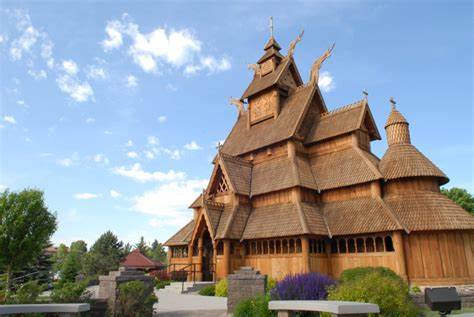
At the Scandinavian Heritage Association’s Heritage Park in Minot, North Dakota there is a full-size replica, built in 2000, of the Gol Stave Church. The original was constructed in Gol, Hallingdal, Norway (~100 miles NW of Oslo) around 1250 AD. It was moved to Bygdoy Park in Oslo, Norway about 100 years ago.

According to Valebrokk et al, inside the church, the corner posts are essential. They are often accentuated and are heavier and more richly decorated than the other structural elements. “They represent the four gospels whose teachings are the supporting foundation of all Christianity” is the description given in a sermon in the thirteenth century. This sermon was held during a church consecration, in which each section of the stave church’s structure was related to spiritual values. The beams upon which the columns rest “signify God’s apostles, the foundation of all Christianity.” The floorboards represent “the humble men who bow in honour; the more they are exposed to the trampling feet of the congregation, the more support they provide.”

The roof surface which protects the church from snow and inclement weather “represents the men…whose prayers protect Christianity from temptation.”

In addition to the replica in Minot, additional replicas exist in the Gordarike Family Park in Gol, which was built in 1995 and in the Norwegian Pavilion in EPCOT, Orlando which was built in 1984.

Source and graphic: scandinavianheritage.org. Excerpts above from Norway’s Stave Churches by Eva Valebrokk and Thomas Thiis-Evensen. Wikipedia.

Resilience and Patience

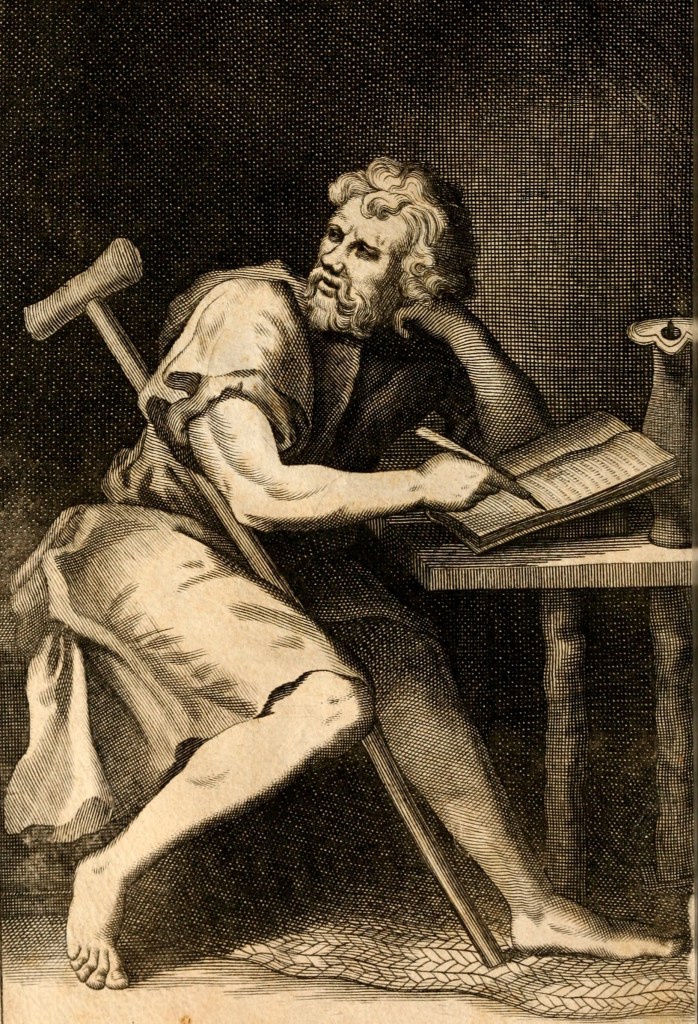
Epictetus was a 1st and 2nd century AD Greek Stoic who lived a simple life and taught philosophy at his school in Nicopolis, Greece. No writings of his have survived, if there were any to begin with, but his pupil Arrian captured his teachings and collected them into two separate works: The Discourses and the Enchiridion.

In The Enchiridion Epictetus briefly discusses 52 or 53 maximums or rules a practicing Stoic should live by with the first and main rule being that you should “only concern yourself with matters that you can control.” Everything else is irrelevant to living a pleasant life.

Stoicism is the philosophy of resilience and patience. Adherents believed in leading a life of virtue, which one did by acquiring wisdom, exhibiting courage, practicing temperance, and promoting justice.

Famous Stoics throughout Greek and Roman history include Zeon of Citium, Eratosthenes of Alexandria, Lucius Seneca, and Marcus Aurelius.

Source: The Enchiridion by Epictetus/Arrian, translated by Elizabeth Carter contained within Ancient Greek Philosophers, published 2018. Graphic of Epictetus by William Sonmans 1715, public domain.

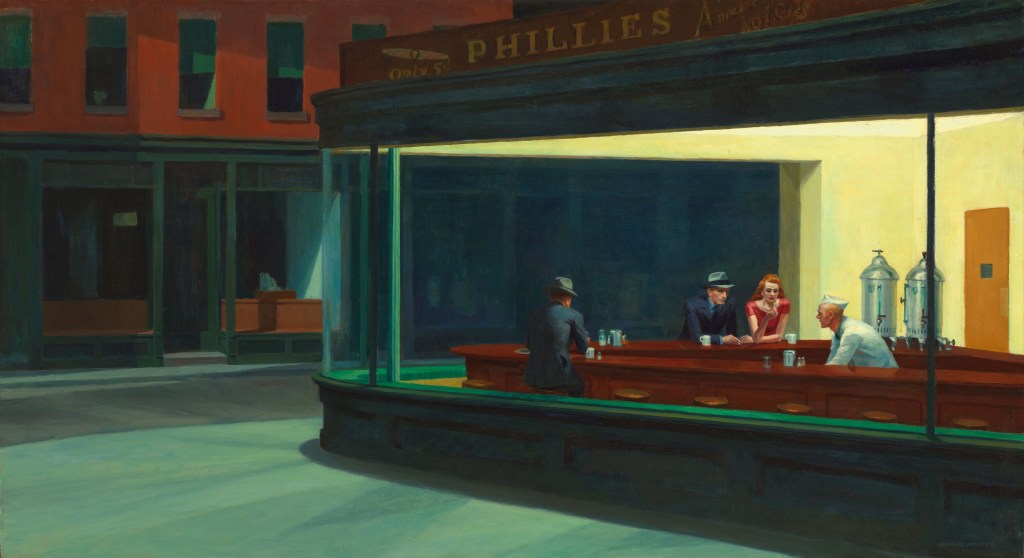
Nighthawks:

Edward Hopper’s 1942 painting, “Nighthawks” was his best-known piece of art. He commented that, “Nighthawks seems to be the way I think of a night street. I didn’t see it as particularly lonely. I simplified the scene a great deal and made the restaurant bigger. Unconsciously, probably, I was painting the loneliness of a large city.” Later, he again downplayed the loneliness aspect of the painting by stressing that it was just “a restaurant on Greenwich Avenue where two streets meet”.

Source: Hopper by Rolf G. Renner, Taschen, 2020 originally published 1991. Painting, “Nighthawks” by Hopper owned by Daniel Rich. Public domain.