Awards: — Nominated Hollywood Critics Association Midseason Awards
Directed by: Christopher McQuarrie
Written by: Christopher McQuarrie and Erik Jendresen
Music by: Lorne Balfe
Cast: Tom Cruise, Ving Rhames, Simon Pegg
Film Locations: England — Italy — Norway — UAE
Budget: $291 million
Worldwide Box Office: $567.5 million
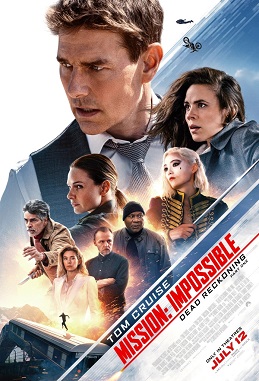
AI is aware. Cruise is there. An artificial intelligence called the ‘Entity’ is learning and moving for ultimate control, but it is afraid. All the branches of the Entity’s probability tree lead to success except the ones sprouting Ethan Hunt.
This is the seventh ‘Mission: Impossible’ franchise movie with the eighth, Mission: Impossible — Dead Reckoning Part Two set for release in June of 2024.
I’m going to depart from my usual thoroughly researched and long-winded reviews and say with absolute conviction–watch this movie and leave it at that. It’s the best action movie since Blade Runner 2049 (Harrison Ford should have quit when he was ahead) in 2017. Every piece in this flick is solid; directing, acting, writing, camera, and music. There was one hole in the plot, but I will leave it to you to find. Also, early in the film there appeared to be a glitch in the CGI rendering involving Cruise’s chin, but I will have to watch it again to see if it was real or just my imagination.
One last thing. There is a major train scene in the movie using a steam locomotive which intrigued me due to their extreme scarcity in world today. So, I checked it out. The steam locomotive used in the movie was a specially built replica, three were built, of a Class 52 locomotive, a type of German steam engine that operated from 1942 to 1962. The replicas were constructed by The Steam Workshop in the UK, and then transported to Norway for filming.
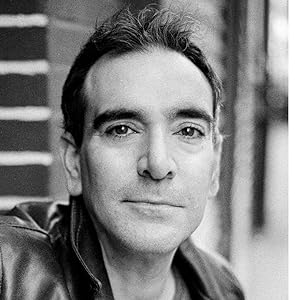
Aaron Poochigian earned a PhD in Classics from the University of Minnesota and an MFA in Poetry from Columbia University. He has authored four books of poetry and translated seven books from Greek and French. He won the Muse Book Award for his book of poetry, Manhattanite and the Richard Wilbur Award for another book of poetry, American Divine. He currently lives and writes in New York City.
In an interview with Heide Sander in 2021 she asked Poochigian to share a story about what first drew him poetry. His answer, to me anyway, was unexpected to say the least, “I had a religious experience when I was 18. Sitting outside an ivy-covered old brick building on the quad of my campus, I was looking at the opening lines of an epic poem in Latin, the Aeneid: ‘Arma virumque cano Troiae qui primus ab oris. . .‘ Though I did not yet know the language, the sky became brighter, and I could feel my synapses lighting up, and it became clear to me that I was supposed to spend my life writing poetry. For better or worse, for richer and poorer, that’s what I have done.”
I find this fascinating. What strain of curiosity exists for someone to read lines of poetry, or any text for that matter, in a language one doesn’t understand. Truly beguiling or maybe closer to the point, mystifying but I’m not a poet so I’m likely missing something important.
For those that are curious, The Aeneid an epic poem written in Latin by Virgil between 29-19 BC, describes the adventures of Aeneas, a Trojan who fled Troy after it fell to the Greeks and who subsequently made his way to Italy, becoming the ancestor of all Romans. The above quoted Latin phrase in bold type is a small snippet from the opening line of the Aeneid which the entire line in English reads as follows: “I sing of arms and the man who first from the shores of Troy came to Italy and Lavinian shores, exiled by fate, that man who was tossed much both on lands and on the deep by the power of the gods because of the mindful anger of savage Juno; also he suffered many things in war until he could found a city and bring his gods to Latium, whence the Latin race and the Alban fathers and the walls of high Rome” .
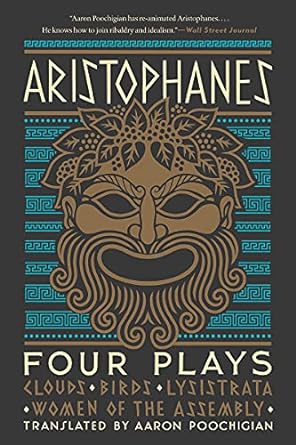
Poochigian, in his introduction, feels the need to point out that slavery existed during the Golden Age of Athens, as if it ever went away. He states: “…would do well to acknowledge that the entire edifice of the glorious civilization that was fifth century Athens including its rich tradition of theatrical performance, was built on a foundation of forced, uncompensated labor. Athenians themselves may have been willfully blind to the injustice of reserving democratic self-determination for themselves and relegating their defeated enemies to abject servitude, but it is impossible for us now to ignore it.”
The “built on a foundation” and “willfully blind” are very bold assumptions whose conclusive inerrancy would improve with a smidgen of support from the historical record. Also, to translate the works of a free Athenian citizen, whose works were supposedly built on the backs of slaves, then hold out your hand for payment does seem a bit much. One may wish to consider how the future humans will look upon present-day west coast cities in the U.S. Will their view of us be judged by the abhorrent spectacle of unending tent cities and homelessness, unchecked crime, filth in the streets, untreated mental illness, rampant drug use and addiction? Should the future disparage our attempts to uplift the human condition of some because we failed to uplift all? If we cannot accept the civilizational accomplishments from 2800 years ago because slavery existed then, as it does today, do we expect the future to treat us differently?
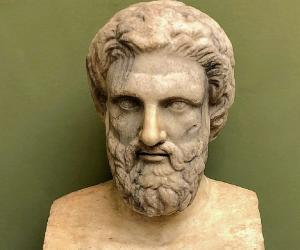
Aristophanes — Wikipedia
Aristophanes Biography:
Aristophanes, Greek playwright, born circa 448-6 and died circa 386-5 grew up in Athens during the Age of Pericles, 461-429 BC. His early adult years on into middle age occurred during the declining period of the Athenian Golden Age due to the mounting strategic failures and monetary costs of the city-state’s losing gambles in the Peloponnesian War from 431-404 BC.
It is unknown whether Aristophanes fought in the war, but it is believed he did due to the Athenian compulsory draft of all eligible citizens during the Peloponnesian War. Then again, if he did serve in the military, it didn’t appear to impede his prodigious writing output.
Aristophanes, known as the ‘Father of Comedy’, produced thirty-six to forty plays, maybe more, of which only eleven exist in completed form while another eleven are found in fragments. He is the only writer of Greek ‘Old Comedy’ whose plays still survive.
He submitted his first play, The Banqueters to the festival in Dionysia in 427 BC, receiving second prize out of the three that were accepted for live performance. His plays went on to garner eleven prizes at Dionysia and Lenaea even managing the exceptional feat of winning first and second prize at Lenaea in 422 BC for his plays The Preview and The Wasps respectively.
Aristophanes plays, at least the eleven surviving ones, are all stylistic examples of what is now called ‘Old Comedy’, the initial form of Greek theater comedy. Old Comedy was characterized by the merciless skewering of public figures while entertaining the audience with beautiful lyrical songs, dance, ribald and licentious speech, and absurd plots. Aristophanes plots began sane and logically, centered around an imaginative hero, progressing to a preposterous but victorious heroic conclusion such as in The Birds where a middle-aged burnout from Athens, searching the wilderness for peace, stumbles into a ruling role of the bird kingdom which in the end supplants the Greek gods for supremacy.
Greek Competitive Theater:
Ancient Greeks invented theater with Greek tragedy first appearing in the late sixth century BC. It is believed that Greek theater began as songs and dances, known as the dithyramb, honoring Dionysus or Bacchus, the Greek god of all that was fun: wine, fertility, festivity, insanity, and theater. The songs and dances celebrating fertility evolved into rites of spring with theatrical plays becoming central to the festivities. The Dionysia as the festival became known was the second most important Greek celebration after the Panathenaic, the quadrennial Athenian athletic games.
The theatric festival was eventually held as a competition where three tragic poets or playwrights wrote and produced three tragedies on a common theme. Additionally, the poets were also required to produce a satyr play, a heroic tragedy with cheerful atmospherics and rural backgrounds. An award, initially believed to have been a goat, fortunately becoming a wreath of ivy and/or a bronze tripod cauldron, was given to the best tragic poet. The term “tragedy” comes from the Greek word ‘tragoidia’, which translates to ‘goat song’. From 449 BC onward the best actors, known as protagonists, were also given prizes.
Comedy was introduced at Dionysia in 486 BC with five poets initially competing for the prize. In 440 BC a minor festival to Dionysus was established in January at Lenaea where initially, only comedy was staged. Tragedy was added at Lenaea in 432 BC. Five comedies were presented yearly at Lenaea except during the Peloponnesian War when only three plays were staged. Four tragedies were presented at this winter festival but were composed by only two poets.
Aristophanes’ Theater Awards for Comedy:
Second prize at the Dionysia in 427 BC for The Banqueters (now lost)
First prize at Dionysia in 426 BC for The Babylonians (only fragments remain)
First prize at the Lenaea in 425 BC for The Acharnians
First prize at Lenaea in 424 BC for The Knights
Third (last) prize at Dionysia in 423 BC for The Clouds (first edition now lost)
First prize at the Lenaea in 422 BC for The Preview (now lost)
Second prize at the Lenaea in 422 BC for TheWasps
Second prize at the Dionysia in 421BC for Peace
Second prize at the Dionysia in 414 BC for The Birds
First prize at the Lenaea in 411 BC for Lysistrata
First prize at the Lenaea in 405 BC for The Frogs
Aristophanes — Four Plays Plot Summaries and Commentary:
Clouds is a tale detailing the importance of an education and the resulting moral rot that accompanies it. A spendthrift and unappreciative son Pheidippides is driving his father, Strepsiades, into bankruptcy. Strepsiades counts on the wrong argument, taught by sophists at the Thinkery school with Socrates as the headmaster, to win him a reprieve from his debts.
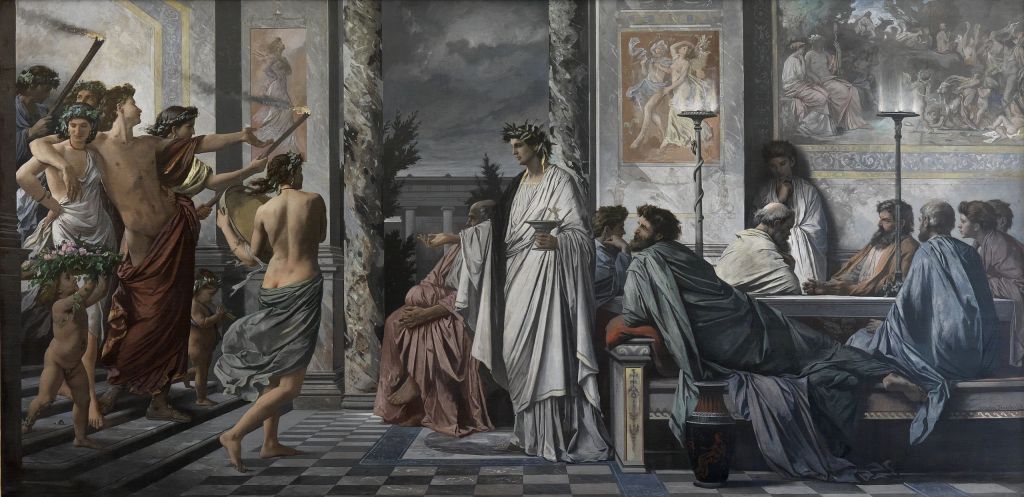
Symposium by Feuerbach — First version — 1869 — Socrates is in the right center facing the wall.
Sophists, in the original Greek meaning were sages or experts imparting wisdom and learning. During the Golden Age of Athens in fifth century BC, professional educators roamed the Greek empire teaching for a fee on a wide range of subjects from rhetoric, poetry, music, philosophy, and mathematics. Rhetoric or the art of apprising and persuasion was the preeminent study for the litigious Athenians. When discussing sophists, one would be remiss not to mention that Aristophanes had numerous students under his care throughout his career as a playwright, which one can assume were not instructed for free, whereas Socrates taught and lectured for free.
The Clouds that took third (last) at Dionysia in 423 BC is now lost. The one that reaches us here in the 21st century is a revised version of the play from 418 BC, which Aristophanes, it is believed, never presented to the public.
In Plato’s Apology the author claims this play was a contributing factor in the conviction and execution of Socrates for the specious crime of corrupting Athen’s youth.
Birds, taking second prize at Dionysia in 414 BC, attempts to find utopia outside of the struggles of Athens. The plot begins with a worn-out Athenian, Pisthetaerus, wandering in the wilderness with his fellow traveler, Euelpides, looking for Tereus the Hoopoe, supreme leader of the birds. Upon finding Tereus, Pisthetaerus hatches a great idea to establish a city in the sky, Cloudcuckooland and reclaim the birds’ standing as the first among gods.
Many have tried to find allegorical meaning in the play, but sometimes a fairy-tale is just that, a fairy-tale, a fantasy that entertains without it being weighed down with heavy philosophical and political interpretations.
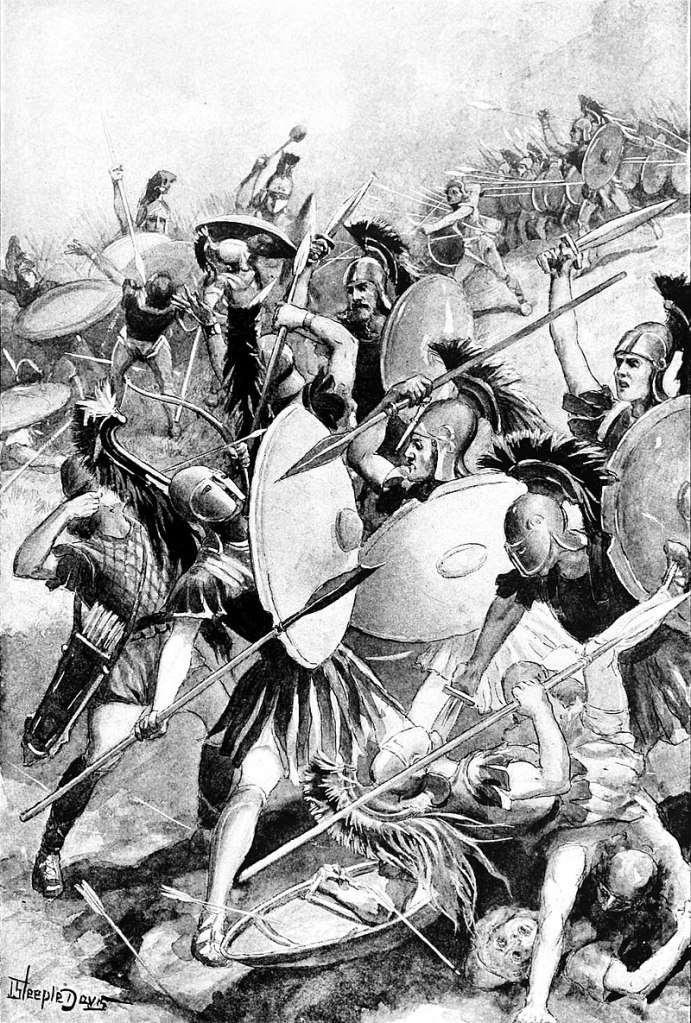
Destruction of Athenian army at Syracuse — Davis 1900 — Wikipedia
Lysistrata, taking first prize at Lenaea in 411 BC, has Aristophanes bringing the matriarchy to the forefront of Greek society were the Athenian wives, brides, and lovers of war-locked men attempt to end the Peloponnesian War. Lysistrata and the other women of Athens hatch a plan to deny sex to the men until they end the war thus denying themselves, their one and only desire in life.
By 411 BC Athens was losing badly in the Peloponnesian War through the treachery of Alcibiades, the incompetence of military commanders in Sicily and elsewhere, and the political blunders emanating from Athens. Having lost most of their navy in 413 BC, Athens was slowing and mercilessly succumbing to Sparta and its ally, Persia, with their tightening noose around Athens’ perimeter choking off their much-needed trade and silver resources to continue the war.
The play has feminist overtones, but it is unabashedly an enactment of societal male domination designed to protect women from their baser and irrational instincts. While the play is a creed to the ethos of patriarchy, it subtly informs the Athenians that all is lost, and it was time to make peace with Sparta.
Women of the Assembly goes by more names than the devil: Assemblywomen, Congresswomen, A Parliament of Women, Women at the Assembly, Women of Ecclesia, Women in Parliament, Women in Power, and possibly others. Ecclesia, along with the plethora of previously listed names, in ancient Greece was the assembly of citizens of the city-state which included all male citizens 18 years and older. In Aristophanes time the Ecclesia was summoned by the ruling Boule of four hundred, a Greek council or senate. The assemblies were charged with debating and voting on matters presented to them by the council.
The play, presented in 391 BC, is one of Aristophanes’ weaker and rightly, less appreciative efforts, garnering no awards at Dionysia or Lenaea. The women of Athens take over the Ecclesia, dressed as men and force a communistic system of sexual equity for all, the ugly and the beautiful, and a ban on the rich. Equality of outcomes, of one ring, to rule them all.
The play on the surface is an exploration of feminist power in government whereas it is truly a rebuke of effeminate men in the halls of government. Aristophanes believed in a binary world. If men and women were interchangeable and indistinguishable then madness and sadness is everyone’s just reward.
Literary Criticism:
German poet Henrich Heine said: “There is a God, and his name is Aristophanes.” Once a god is conceded all negatives melt away. I will concede the obvious–the negatives are not only trivial but possibly non-existent.
Aristophanes plays were filled not only with comedy but with fantasy and fetish, irrationalism, satire, ribald commentary, and vulgar ridicule of Athenian society. Aristophanes respected no sacred cows, skewering everyone and everything with impunity, an unrestrained destruction, fairly or unfairly, imparting a message to all comers that they were mostly fools. Open season was declared on poetry, religion, philosophy, and politics as were the famous and infamous of society such as Socrates, Cleon, fellow poet Euripides, and when he ran out of the famous, he turned his sharp swords of locution on the Athenian people. He truly was a god of Greek poetry, comedy, and theater.
Aristophanes surfeit use of vulgarity, phallic imaging, and sexual inuendo comes across as juvenile upon reading his plays but then these plays are for presentation at festivals honoring Bacchus, the Greek god of wine. It may not be unrealistic to assume that his audience, at a minimum, is slightly inebriated, in which case Aristophanes isn’t being crude but deliberately playing to his audience’s relaxed mental state.
Poochigian believes in magic. The magic of poetry, stating in 2021, “Poetry is a magic circle of sound and image in which anything can happen. Yes, poetry means magic to me, and I see the poet as a magician who, with his/her incantations, creates special spaces outside of prose and everyday life.” He is an able translator of Aristophanes plays bringing his Greek poetry into realm of the vernacular of almost blue-collar English but managing to leave the magic behind in the agoras and councils of the Athens.
Poochigian’s translation of Tereus’, king of the birds, great speech summoning his subjects is typical, “…come here, all you endowed with wings, all you who flutter over acres of fertile land, you myriad throngs who feed on grain, you swift seed-pickers who warble such delightful songs. Come all that over furrowed ground twitter, molto espressivo, this pleasant sound–tio, tio, tio, tio, tio, tio, tio, tio...” Where is the beauty, the magic in this translation? This is prose of the common man. It is amusing though that the Italian term, molto espressivo, meaning very expressive, is used to translate the Greek to English.
An anonymous translator from the early 20th century gives us Epops summoning his subjects, “…here, here, quick, quick, quick, my comrades in the air: all you who pillage the fertile farming lands, the numberless tribes who gather and devour the barley seeds, the swift flying race that sings so sweetly. And you whose gentle twitter resounds through the fields with the little cry of tiotiotiotiotiotiotiotio…” This is poetry. This is magic.
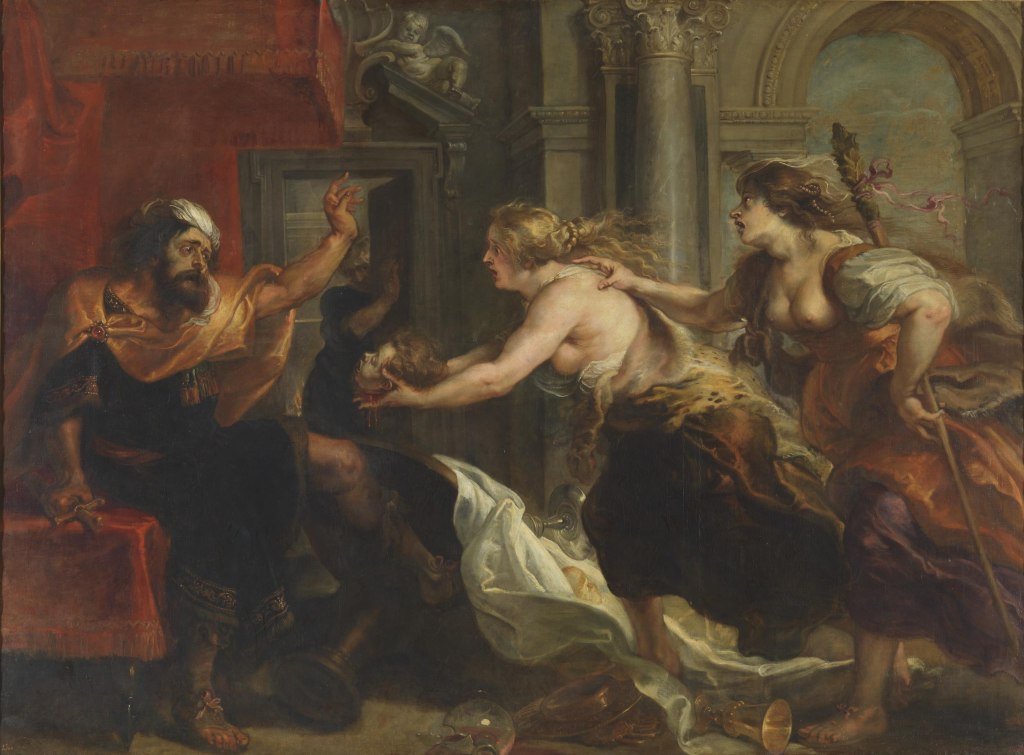
Tereus Confronted with the Head of his Son Itys — Rubens — 1636-38
Epops, in Latin and Greek, is a hoopoe. A bird with a long beak and a crest of feathers. Why the anonymous translator called Tereus Epops is unknown. The name of the king of birds in Aristophanes play is the hoopoe Tereus. Tereus is a character from Greek mythology who was the king of Thrace and the son of Ares, the god of war, and Bistonis, a water nymph. He married Procne, the daughter of Pandion, the king of Athens. However, he also raped and mutilated his sister-in-law Philomela, who was Procne’s sister. As a result, Procne and Philomela took revenge on Tereus by killing his son Itys and serving him as a meal to Tereus. When Tereus discovered the truth, he tried to kill them, but the gods intervened and turned them all into birds. Tereus became a hoopoe. Procne became a nightingale with a beautiful song. Philomela became a swallow who could not sing.
Aristophanes’ Surviving Complete Plays Bibliography:
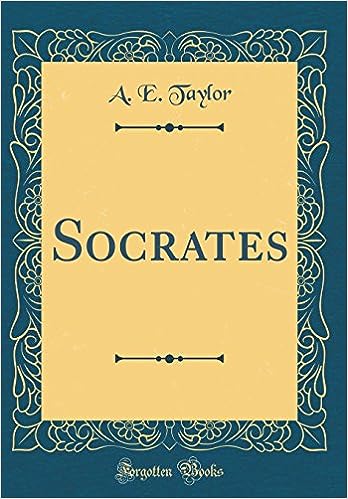
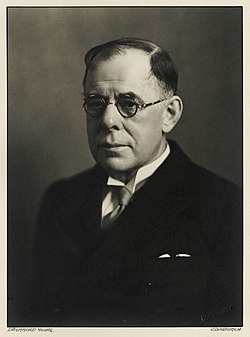
Alfred Edward Taylor was born in Oundle, England in 1869, and died in Edinburgh, Scotland in 1945. He was a professor, a Greek classicist, and a philosopher of metaphysics and ethics. He spent his adult life at the ancient Scottish Universities of St. Andrews and Edinburgh researching and teaching the spiritual; the immortal basis for morality and the philosophy of Plato. Plato was a student of Socrates and as such he was a concern to and within the orbit of Taylor.
Socrates’, leaving no written record, entire philosophical corpus and biography have reached us today primarily through the writings of two near contemporary Greeks: Plato and Xenophon. Taylor’s contribution to our present day understanding of Socrates was to argue that Plato’s four basic texts on Socrates: Euthyphro, Apology, Crito, and Phaedo, are accurate depictions of what Socrates said and did. Xenophon, who also wrote extensively about Socrates but later, Taylor argued, is less reliable. This may seem trivial, but this point has been and still is contested due to the immense stature of Socrates as one of the founders of Western philosophy in general and ethics in particular. The basic question among philosophers is whether Plato’s writings describing Socratic philosophy are accurate or are amalgamations of Socratic and Platonic thought? Who knows? The dispute will continue till the end of days so we will leave it as Taylor says.
Taylor’s studies within the philosophy of ethics and morality centered on what is right and good, whether the two were complementary and/or achievable. Taylor argued right and good or the moral practice of the individual is constrained and flawed without the aid of the supernatural: God. His thesis was that searching inward, within oneself for rebirth and betterment, for a moral compass, flows only in circles leading nowhere. To reach a higher level of morality or good requires looking outward to the spiritual through contemplation of the eternal good. Taylor argued that the will to reach for a better or eternal good is impetus for the eternal, the divine good to reach for you. Additionally, morality, Taylor surmises, plateaus in the human confines of a person’s physical life, requiring, unfortunately or fortunately depending on your perspective, death to continue the soul’s moral journey for better or worse.
Socrates:
Any biography of Socrates is going to be short. Almost all authoritative writings concerning his work, teachings, and life that have reached us in the 21st century consists of approximately two hundred written pages, in English, by Plato and about three hundred English written pages by Xenophon with the two containing significant overlap. Taylor’s biography, using Plato and Xenophon as primary sources, is no exception managing to encapsulate Socrates’ remarkable life into a quick read of 142 pages. Within these few pages concerning this most remarkable man everything has been disputed except for the Athenians putting him to death for being a royal pain in the rear, some have used the term gadfly. That is the one piece of his life that no one disagrees with. No one disputes that he was put to death in 399 BC, and it is likely that no one disputes that he was a royal pain in the posterior, a gadfly.
Socrates was born, circa 469 BC, grew up and lived in Athens until he was put to death in 399 BC at the age of seventy. He lived during the Golden Age of Athens (478-404 BC) and the overlapping Age of Pericles (461-429 BC) both now combined and known by the excessively non-descriptive non-demonym: Fifth Century Athens. (Why classical historians thought this was a useful, didactic change defies any sound, logical reasoning. Alas it was changed to avoid hurt feelings of Greeks and Athenians whose best years occurred two thousand seven hundred years ago. How you soothe pouting children should not be an instruction manual for sane adults.)
Socrates only left Athens to serve in military battles prior to and during the (second) Peloponnesian War. He was a hoplite in the Athenian army, a heavy infantry soldier outfitted with a shield, sword, and/or spear fighting in a phalanx or block-like formation. By all accounts he was a good and courageous soldier. His first recorded engagement, at the age of thirty-eight, was the battle and siege at Potidaea beginning in 432 BC. lasting until 429 BC. Potidaea was a Greek city-state, approximately 155 miles, as the crow flies, north of Athens, threatening to break free of Athenian control. This battle helped trigger the much larger and costlier Peloponnesian War beginning in 431 BC and lasting until 404 BC.
Socrates saved the life of Alcibiades, a gifted Athenian general and politician, but exceptionally duplicitous and erratic. Socrates heroic action should have garnered him the prize for valor, but Alcibiades was awarded it instead due to his higher birth and rank. A very powerful disincentive to the rank and file indeed.
Five and seven years later Socrates fought for Athens in the losing battles of Delium and Amphipolis, respectively, during the initial stages of the twenty-seven year-long Peloponnesian War. During the battle of Delium in 424 BC, Alcibiades saved Socrates’ life thus repaying Socrates’ valiant deed and cementing their life-long, but problematic, friendship.
Alcibiades recounts a story of Socrates during the engagement of Potidaea that bears on the philosopher’s power, or possibly prophetic power of thought. One morning Socrates, while contemplating an assumed perplexing problem became motionless, a state he remained in until the next morning when he said a prayer and walked away invigorated, amazing his fellow soldiers who had been watching him through the night. This story has him either being completely lost in thought, refusing to move to avoid breaking that train of thought, or as another occurrence of the ‘Sign’, voice, or daimonion that came to him, starting in his childhood and continuing throughout his adult life.
The ‘Sign’ was a voice usually described as an inner call, not to action, but to caution, a warning of future woes to come. Socrates mentioned at his trial that whenever the voice spoke to him it turned him away from something he was about to do. Some believe the ‘Sign’ was simply his subconscious speaking to him while others feel it was divine. A message from God.
To stretch a minor detail, Socrates almost never referred to the Gods, just God in the singular, a minor point yes, but a point all the same that the ‘Sign’ may have been religious vision or experience from the perspective of monotheism versus accepted Greek polytheism. At his trial he states, “It is to fulfill some function that I believe God has placed me in the city. I never cease to rouse each and every one of you, to persuade and reproach you all day long…” His ‘Sign’ did not speak to him during his trial leaving him to conclude that the sentence of death was something he should accept.
Socrates’ ‘religion’ began with his belief in the soul, and that it was immortal and unchanging. The soul existed before you were born and continued after your death. He believed the soul was your truth, your essence, your reality beyond your corporal self. He believed the soul must be looked after and kept in immaculate condition.
Socrates believed that to care for your soul required a focus on personal growth. Growth comes from the pursuit of wisdom and knowledge, the study of philosophy, to further one’s understanding of not only yourself but the world around you. The pursuit of wisdom through what became known as the Socratic method, questioning and logical reasoning started with yourself: ‘know thyself’ and expanded to include the universe beyond your own flesh. To seek wisdom and knowledge by examining your life was to seek truth. Seeking wisdom and knowledge for the sake of truth is what Socrates meant when he spoke his famous line at his trial in 399 BC, “The unexamined life is not worth living.” Without truth, life is not worth living. Without truth one risks living a lie.
Socrates examined and questioned everything and everyone. His thirst for knowledge and wisdom all flowed from his stated belief in his own ignorance, stating “as for me all I know is that I know nothing.” No one that knew Socrates believed this statement for a second. He was known as a sage, a philosopher, and shrewd one at that. His wisdom was even embraced by the Oracle of Delphi who said Socrates was the wisest person in Athens.
For Socrates, though, his statement professing to know nothing wasn’t an expression of humility or ignorance but a challenge. A challenge to question one’s beliefs and opinions concerning all things seen and unseen. Two plus two equals four, everything else is questionable. “All I know is that I know nothing” is an acknowledgement that the search for wisdom: truth, at a minimum is transitory, possibly imaginary, and thus one must never stop searching. This was not to say there were no truths available to the living, but the search could be difficult and deceptive.
Socrates’ quest for the truth manifested itself first through his rejection of fame, money, and power. The corollary of that rejection is he lived a life of poverty, neglected hygiene, and wore no shoes. No shoes whether with feet on burning stones or frosted rocks. Pain and discomfort did not seem to bother him.
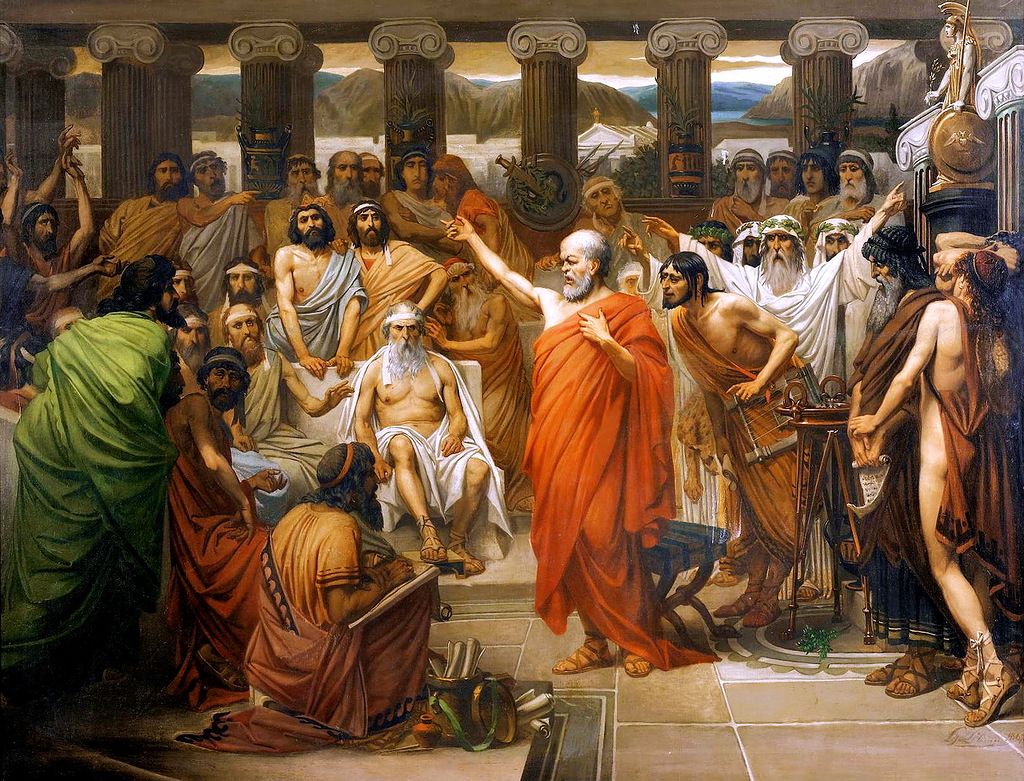
Secondly his quest for the truth was through the spoken word, never written. Conversations with his fellow Athenians occurred throughout the city, the Lyceum and the Agora were his two favorite haunts where he questioned his victims, and they were victims, in his famous ‘Socratic Method’ style of inquisition. Below is a short description of Socratic torture from the–Explainer: Socrates and the Life Worth Living (link below):
Socrates engages an interlocutor who appears to possess knowledge about an idea
The interlocutor makes an attempt to define the idea in question
Socrates asks a series of questions which test and unravel the interlocutor’s definition
The interlocutor tries to reassemble their definition, but Socrates repeats step three
Both parties arrive at a state of perplexity, or aporia (ed. a philosophical puzzle), in which neither can any further define the idea in question
Socrates’ Address. Louis J. Lebrun. 1867
A humorous sketch illustrating his method from Plato’s ‘Euthyphro‘ picks up near the end of a discussion concerning the gods:
Euthyphro: Why you don’t suppose, Socrates, that the gods gain any advantage from what they get from us, do you?
Socrates: Well then, what would those gifts of ours to the gods be?
Euthyphro: What else than honor and praise, and, as I said before, gratitude?
Socrates: Then, Euthyphro, holiness is grateful to the gods, but not advantageous or precious to the gods?
Euthyphro: I think it is precious, above all things.
Socrates: Then again, it seems, holiness is that which is precious to the gods.
Euthyphro: Certainly.
Socrates: Then will you be surprised, since you say this, if your words do not remain fixed but walk about, and will you accuse me of being the Daedalus who makes them walk, when you are yourself much more skillful than Daedalus and make them go round in a circle? Or do you not see that our definition has come round to the point from which it started? For you remember, I suppose, that a while ago we found that holiness and what is dear to the gods were not the same, but different from each other; or do you not remember?
Socrates: Then don’t you see that now you say that what is precious to the gods is holy? And is not this what is dear to the gods?
Euthyphro: Certainly.
Socrates: Then either our agreement a while ago was wrong, or if that was right, we are wrong now.
Euthyphro: So it seems.
Socrates: Then we must begin again at the beginning and ask what holiness is. Since I shall not willingly give up until I learn. […]
Euthyphro: Some other time, Socrates. Now I am in a hurry, and it is time for me to go.
Socrates: Oh my friend, what are you doing? You go away and leave me cast down from the high hope I had that I should learn from you what is holy, and what is not, and should get rid of Meletus’s indictment by showing him
Socrates’ learnings in search of the truth have been passed down to us through Plato, Aristotle, Epicurus, Locke, and others, climaxing in Jefferson’s preamble to Western civilization’s crowning ode to self and country: the ‘Declaration of Independence‘, proclaiming the fundamental, natural rights of man: Life, Liberty and the pursuit of Happiness.
The phrase the ‘pursuit of Happiness’ has been thoroughly misconstrued to mean something foreign and vulgar to Jefferson’s original intent. The ‘pursuit of Happiness’ was not a grant to seek earthly enrichments and pleasures but a call to a higher state of being. Epicurus provided a definition of happiness that comes closest to the meaning of Jefferson, “the end of all our actions is to be free from pain and fear, and once this is obtained the tempest of the soul is quelled.” Life, Liberty, and the pursuit free from pain and fear. The ‘pursuit of Happiness’ sounds better.
Epicurus seeks a soul free of pain and fear. Socrates sought a pure soul. Both pursued it through the same means. Socrates and Epicurus’ greatest pleasure in life was the pursuit of wisdom and truth. Neither sought fame, money, or power nor feared death. Epicurus did not fear death because it was the end of the body and the soul. There was nothingness after death. No greater glory. No damnation. Just nothing. Socrates did not fear death because a pure and good soul went on to something better.
Socrates, then, lived a good life. A life in pursuit of truth. A death to continue his journey to a higher plane.
Socrates died, supposedly, for impiety and corruption of the youth. Both charges were difficult to square with reality, but they achieved the desired outcome: removing an inconvenient seeker of truth. Silencing the moral inquisitor, the examiner of the soul. Extinguishing the gadfly.
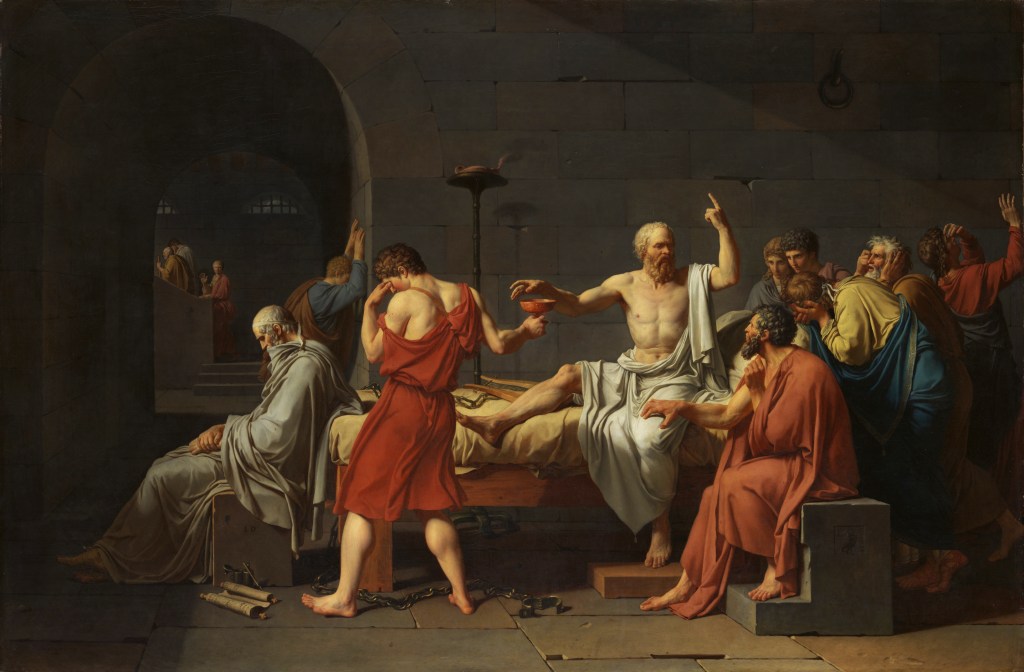
At the end of his trial Socrates’ soul was at peace but still he seeks truth: “Now the hour to part has come. I go to die, you go to live. Which of us goes to the better lot is known to no one, except God.”
The Death of Socrates. By Jacques-Louis David. 1787
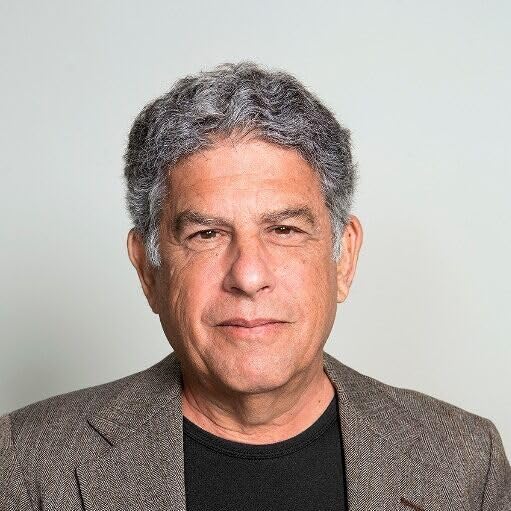
Stephen Mitchell was born in Brooklyn in 1943 (80ish), educated at ‘Ivy League’ schools in the US and France, and, quoting his words, “de-educated through intensive Zen practice“. That may be just a spoonful of humor, it is though a spoonful of humility, and a large serving of Zen-Socratic wisdom. A wisdom that becomes one that reflects upon his life and realizes his education has granted him neither knowledge nor wisdom. He does not say what the Ivy League has instilled in him, but the derivation of any real value from those hallowed halls, as seen from the Zen rear-view mirror, appears minimal.
In an interview with the Los Angeles Times, he ruminates that “If I’m a scholar, I’m an amateur“. A humble observation in the truest form of the personal quest for fulfillment and enlightenment. In the same interview, elaborating on Chuang-tzu in Mitchell’s ‘The Second Book of the Tao‘, he says: “I have no pretensions to scholarship. I just love to play with the Taoist masters. For them, nothing is sacred. The best tribute is contradiction.” Again, humility before all, all before self.
In a separate interview with Scott London also discussing ‘The Second Book of the Tao‘ Mitchell relates the teachings of Chuang-tzu as a philosophy of the unassuming and the simple life. “There was nothing to live up to,” he says. “There was only a passion for the genuine, a fascination with words, and a constant awareness that the ancient Masters are alive and well in the mind that doesn’t know a thing.” Mitchell personifies and lives that philosophy.
Mitchell has translated and authored many books including the bestselling Tao Te Ching, Gilgamesh, The Gospel According to Jesus, and his latest book, The First Christmas released in 2021. He is also the coauthor of three of his wife Byron Katie’s bestselling books: Loving What Is, A Thousand Names for Joy, and A Mind at Home with Itself and numerous children’s books.
The Discovery of the Story of Gilgamesh:
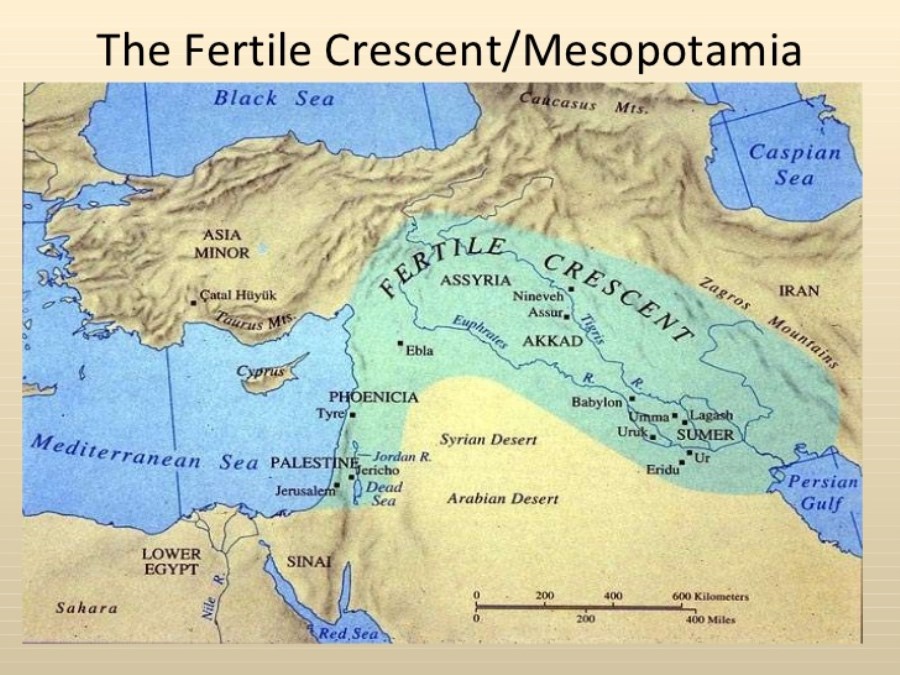
The Epic of Gilgamesh was, in the beginning, a series of Sumerian poems/stories likely passed down through the ages as oral histories before being written down in Akkadian 700-1000 years after the reign of the mythical/historical King of Uruk: Gilgamesh.
Mitchell may have been introduced to the literary stature of Gilgamesh while translating the Austrian mystic poet, Rainer Marie Rilke. Rilke wrote at the end of 1916. “I … consider it to be among the greatest things (the poem Gilgamesh) that can happen to a person. I have immersed myself in [it], and in these truly gigantic fragments I have experienced measures and forms that belong with the supreme works that the conjuring Word has ever produced.”
The poem, written in Assaryian cuneiform script, on clay tablets, was discovered by Austen Henry Layard while excavating mounds, beginning in 1844, around what is now known as the city of Mosul. The mounds turned out to be the remains of the ancient Assyrian capital palaces of Nineveh including the library of King Ashurbanipal or Ashur Banipal (668-627 BC) depending on the source. Over 25,000 clay tablets from the library, twelve of which contained the poem, were shipped back to the British Museum. It took until 1872 before the poem was discovered among this immense trove of tablets and in 1872 George Smith translated and published the poem. These twelve tablets contain the fullest version of the poem found to date.
The first surviving version of the combined epic is known as the Old Babylonian version and dates from the 18th century BC. The longer and more complete copy of the poem, from King Ashurbanipal’s library is from the 10th to the 13th centuries BC and is known as the Standard version. Currently seventy-three fragments, possibly more, of the Standard version have been discovered containing some two thousand lines of the original, which is surmised to be three thousand lines long.
Mitchell mainly adapts the Standard version into a contemporary English language poem with gap filler supplied by the Old Babylonian version. Where there is no original material to complete known gaps, Mitchell has contributed original work to provide clarity and to maintain continuity.
The Man of Gilgamesh:
Gilgamesh is accepted as being the 5th king of Uruk, possibly reigning roughly in the 26th century BC (2800-2500 BC) for 126 years. Some believe the long reign of 126 years may actually be a number in base six which would equate to 54 years in base ten. Very little is known of his reign with the exception that he built the walls Uruk, is listed in the Sumerian King list, and is mentioned as a contemporary of Aga, son of King Enmebaragesi of Kish.
Aga, who ruled over Sumer for 625 years, is the antagonist in the Sumerian poem ‘Gilgamesh and Aga‘, recording the King of Kish’s siege of Uruk after Gilgamesh refused to submit to him. From the poem Aga commands Gilgamesh and the citizens of Uruk to work forever as slaves on Kish’s irrigation projects.
There are wells to be finished. There are wells in the land to be finished. There are shallow wells in the land to be completed. There are deep wells and hoisting ropes to be completed
Gilgamesh is made King of Uruk for his defiance and resistance to Aga’s demands. King Gilgamesh captures Aga on the 10th day of the siege but sets him free to return to Kish.
The Land of Gilgamesh:
Uruk was a Sumerian city-state established in the southern reaches of Mesopotamia and was located on the east bank of the Euphrates River. The river today, through the process of river channel migration, is much further to the west. The city and its surrounding area were home to about 40,000-125,000 people, who during the time of Gilgamesh controlled the entire Sumer area.
The Sumerian area and Uruk lay claim to the beginnings of civilization, urbanization, laws, and writing. Cuneiform, wedge shaped writing on clay tablets and the earliest known system of writing, dates to the fourth millennium BC with the oldest examples being inventories of goods stored and transported in and out of the Sumer area.
The oldest known surviving law code, the Code of Ur-Nammu, in the world comes down through the ages from the Sumerian king Ur-Nammu or his son Shulgi of Ur during the last half of 21st century through the beginning of 20th century BC. The Code of Urukagina is older but is known only through references in other ancient writings. The better-known Babylonian Code of Hammurabi is younger and dates from the eighteenth-century BC.
The greatest architectural monument of Uruk was the White Temple built upon the Anu Ziggurat during the fourth millennium. The temple was thirteen meters high and 22.3 x 17.5 meters in depth and width. It stood upon a ziggurat with dimensions of 50 x 46 x 10 meters in depth, width, and height, respectively. On the flat plains surrounding Uruk it was visible in the distance for kilometers.
German archaeological excavations in 2003, conducted in and around the old riverbed of the Euphrates, have reportedly revealed garden enclosures, specific buildings, and structures described in The Epic of Gilgamesh, including Gilgamesh’s tomb. According to The Death of Gilgamesh, he was buried at the bottom of the Euphrates when the waters parted after he died. There is debate whether these excavations and discoveries exist or are a hoax. These discoveries have not been confirmed and no updates from the original can be found but one of the original authors of the 2003 study is Jorg Fassbinder, a geophysical archeologist associated with the University of Munich.
Uruk is also recognized as the city of Erech, founded by Nimrod, great-grandson of Noah, as mentioned in Genesis 10:10:
8And Cush begat Nimrod: he began to be a mighty one in the earth.
9He was a mighty hunter before the LORD: wherefore it is said, Even as Nimrod the mighty hunter before the LORD.
10And the beginning of his kingdom was Babel, and Erech, and Accad, and Calneh, in the land of Shinar.
11Out of that land went forth Asshur, and builded Nineveh, and the city Rehoboth, and Calah
The Legend of Gilgamesh:
Gilgamesh in Sumerian possibly means ‘The Old Man Is a Young Man’ or ‘The Ancestor Was a Hero’. An immortal Hero, a synthesis that brings us to the story and plot of Gilgamesh.
Gilgamesh is the epic hero of the times. Dashing, brave, adventurous; a seeker of immortality and wisdom but not much in the way of kingly benevolence. The gods knowing Gilgamesh lacked wisdom sent him his twin and his opposite: Enkidu. Enkidu became Gilgamesh’s brother and constant companion. Thus begins the quest of Gilgamesh to find himself. It is far more than that, though, as Mitchell explains:
“Part of the fascination of Gilgamesh (the story and person) is that, like any great work of literature, it has much to tell us about ourselves. In giving voice to grief and the fear of death, perhaps more powerfully than any book written after it, in portraying love and vulnerability and the quest for wisdom, it has become a personal testimony for millions of readers in dozens of languages.“
Gilgamesh, as with some of his readers of today, is slow to learn the lessons of life, slow to acquire wisdom even when it is given to him/us for free. From the old Babylonian Version in Book X, Siduri, a wise matron brewer of beer offers Gilgamesh an opiate of advice for his pain brought on through the death of his brother Enkidu.
“Gilgamesh, where are you roaming? You will never find the eternal life that you seek. When the gods created mankind, they also created death, and they held back eternal life for themselves alone. Humans are born, they live, then they die, this is the order that the gods have decreed. But until the end comes, enjoy your life, spend it in happiness, not despair. Savour your food, make each of your days a delight, bathe and anoint yourself, wear bright clothes that are sparkling clean, let music and dancing fill your house, love the child who holds you by the hand, and give your wife pleasure in your embrace. That is the best way for a man to live.”
Gilgamesh declines the advice to live for the day and continues with his quest for immortality.
Awards: — Nominated for Best Summer Blockbuster Trailer
Directed by: Steven Caple Jr.
Written by: Joby Harold–Darnell Metayer–Josh Peters–Eric Hoeber–Jon Hoeber
Music by: Jongnic Bontemps
Cast: Anthony Ramos–Dominque Fishback–Peter Cullen–Ron Perlman–Peter Dinklage
Film Locations: United States–Peru–Canada
Budget: $195-200 million
Worldwide Box Office: $436.7 million
Maximals, robotic animals, join forces with the Autobots to battle the ruthless mechanoid Terrorcons who are attempting to bring their master, Unicron, a planet eating god, to Earth.
This is the seventh ‘Transformer’ franchise movie with two more in development plus an animated prequel planned for 2024 release. It is debatable whether the franchise can survive this painful ‘Fall of the Beast’. If it does survive, they need to bring in a whole new crew for the subsequent releases and relegate this movie’s crop of personalities to daytime TV or better yet, Saturday morning cartoons.
There is absolutely no talent or passion on display anywhere in this movie. There is no direction apparent, just a series of shots randomly glued together. There is no acting, just the reading of lines for both the human and the voice over roles. The screenplay was a committee effort of giggling adolescents. Even the CGI scenes are inferior to the standards of today. This is not a $200 million movie.
If you have moved past the age and mental maturity of a 12-year-old, this movie is not something you need to spend 2 hours of your life on.
Written by: Guy Ritchie – Ivan Atkinson – John Friedberg – Josh Berger
Music by: Christopher Benstead
Cast: Jake Gyllenhaal – Dar Salim – Emily Beecham –Jonny Lee Miller
Film Locations: Spain
Budget: $55 million
Worldwide Box Office: $17.5 million
American Army Sergeant John Kinley, played by Jake Gyllenhaal, and his Afghan interpreter Ahmed, played by Dar Salim take on the Taliban in a war-time tale of trust earned and promises kept.
I watched this movie because Guy Ritchie’s name was all over it. Director, writer, producer, even in the title: Guy Ritchie’s The Covenant. I suppose if you direct, write, and produce the movie you can put your name in the title. His past movies: Snatch, RocknRolla, Sherlock, The Gentleman, and others have complex, Rube Goldberg plots, twists within twists with tongue planted firmly in the cheek. I loved them and I wanted more Guy Ritchie movies. I expected more of the same with The Covenant and received nothing of the sort. The Covenant is a drama with a little war, a little action, and a little suspense thrown in. If Ritchie’s name weren’t all over the film you would not know it was a Ritchie film, which I guess explains why he put his name in the title. But it is a movie worthy of Ritchie’s name and fame.
The Covenant is Christopher Benstead’s fourth movie composing the music and score for Ritchie’s movies which included: The Gentlemen, Wrath of Man, and Aladdin. This movie’s play list:
A Horse With No Name – America
Long Cool Woman (In a Black Dress) – The Hollies
Truth – Alex Ebert
Toshna Ye Abem Shoda – Mehri Maftun
Say What You Want – White Denim
Thunder Continues In The Aftermath – Laurie Anderson & The Kronos Quartet
Darkness Falls – Margaret Lewis
Farkhâr Chi Khush-u Khush Havây Dâra Janam – Rahim Takhari
Darkness Falls and Thunder Continues are perfectly placed and worth the price of admission.
I’m ambivalent towards Jake Gyllenhaal, his acting skills, not him personally. Not that he can’t act, he can but his character portrayals always seem a bit off, not what your mind is expecting, especially in his nut case roles. In End of Watch and Nightcrawler he never fully captures the essence of his character. In places he is holding back emotionally, in other scenes he has gone too far but in the wrong direction. In The Covenant he manages a more consistent character portrayal and in the last battle scene he captures the moment with body language and facial expressions. No words needed.
The script is solid and concise without any major plot holes. Having someone with military experience to parse the script would have been helpful in a few of the scenes where Sgt. Kinley and Ahmed are evading capture through the mountains and foothills of Afghanistan. When you’re running for your lives, sitting down in the open when you have trees for cover seems ill-advised.
These negatives are mostly trivial though. The script, the direction, the camera work, the acting is all done well, not exceptional but certainly above average.
In the final scenes of the Benghazi movie, 13 Hours, the protagonists note that the Arab attack against the embassy compound must have required weeks if not months of advanced planning. A subtle message but one that called out the lie of the US administration’s stance that the attack was reaction to an anti-Islam movie the day before in Egypt. In the final scene of The Covenant a statement, posted on screen, revealed that in the aftermath of the Taliban’s recapture of Afghanistan, over 300 Afghan interpreters affiliated with the U.S. military were murdered by the Taliban terrorists, with thousands more still in hiding. Again, a subtle message dealing with the lack of foresight and due diligence concerning the US administration’s Afghan withdrawal plans and execution.
Awards: Fantasia International Film Festival 2022 — Best International Feature Award
Directed by: Franklin Ritch
Written by: Franklin Ritch
Music by: —
Cast: Tatum Matthews, David Girard, Sinda Nichols, Franklin Ritch, Lance Henriksen
Film Locations: —
Budget: Low Budget
Worldwide Box Office: Limited Release – Unknown
The beginning of the movie finds a computer programmer, Gareth played by Franklin Ritch, being interrogated by government agents questioning his ties to various pedophiles operating around the world. As the scene progresses, we learn that the programmer has created an artificial intelligence program represented by a nine-year-old girl avatar named Cherry. She entices, online, child molesters and pedophiles, learns their identities, and reports them, through Gareth, to the authorities.
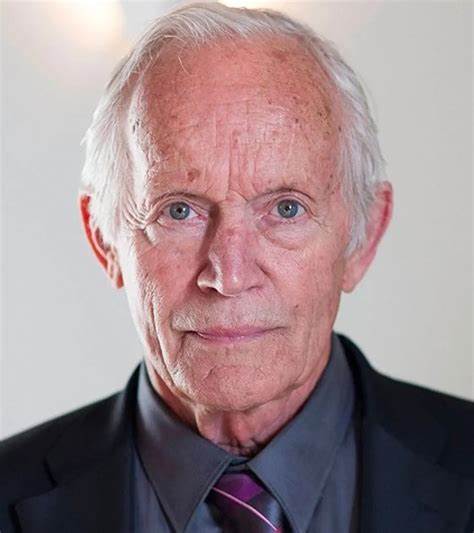
The movie is divided into three main scenes progressing linearly in time. The first scene opens with Gareth in his early to mid-twenties. The second scene is 15 years into the future with the same actors aged 15 additional years except Cherry who is still nine years old. The final scene is even further into future where Gareth is an old man played by Lance Henriksen. Cherry hasn’t aged a day.
I found the choice of Henriksen to play Gareth simply sublime. He played a synthetic human named Bishop with a heroic ‘heart’ in the 1986 movie Aliens and the living human Bishop with an evil heart in the 1992 Alien 3 movie.
For a low budget movie everything is done right, almost to perfection. The only quibble is Sinda Nichols’ over the top acting in the opening scenes but that is more of a ding on the screenplay and direction rather than the performance. Tatum Matthew’s acting is very good considering her age. She maintains a slight mechanical inflected voice throughout the movie which seems fitting for a computer-generated delivery.
This movie is worth your investment of 93 minutes not just because it is well done but also there is some thinking to be done. The thinking isn’t heavy. It just comes along for the ride. A few of the same questions addressed in the Alien movies, and others, by Henriksen’s Bishop roles are reprised in The Artifice Girl. Are humans good or evil for creating Cherry? Is Cherry ultimately evil or good? Do humans understand the consequences of AI? Should you do something just because you can?
(Picture above left: Tatum Matthews age 14. Picture above right is Lance Henriksen age 83.)
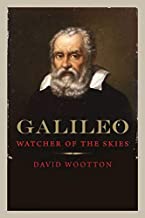
David Wootton, age 71, is the Anniversary Professor (a named professor in the British system is equivalent to a full professor in the American system…I believe) of History at the University of York in England. His work ranges from the history of the individual to the wider-ranging histories, and philosophies of ideas that shaped our world. His published interests concentrate on the Renaissance but stretch back to the Greeks and forward to the embryonic American experiment. He is an old-school historian with his scholarship supported by the evidence available coupled with the existing mores of the times. His selection of topics that I have read or perused suggests a thorough dearth of confidence in past historical interpretations and a jaundiced view of present sense and sensibilities. Or more succinctly and in his own words, “History is always about a particular time, a particular place; it is always about groups more than it is about individuals; it is always the history of somewhere.” and if I may so boldly add, it is always the history of (some)time.
Wootton’s biography of Paolo Sarpi, a contemporary and patron of Galileo, likely provided, albeit 27 years later, the impetus and scholarship for Wootton publishing his second biography in 2006 on that aforementioned watcher of the skies. Sarpi, a devout Copernican and a supposedly not so devout Catholic supported Galileo’s heliocentric theories and shielded him, for a time, from his Roman inquisitors. Parenthetically, Wootton in his book on Galileo almost apologizes for writing biographies mainly because his peers look down on the genre, a sentiment I used to harbor but I now appreciate the category because they provide the who to the what, where, and when.
Bad Medicine, Wootton’s second book, postulates that doctors have dispensed more harm than good, beginning with Hippocrates in the fifth century B.C and continuing through to the present day. Covid or the Wuhan Flu pandemic will not provide the medical profession with the needed catharsis to dispel Wootton’s conjecture.
In The Invention of Science Wootton walks us through the birth of the scientific method starting with a supernova shining in the Renaissance night sky of the 1500s and culminating with Newton’s discovery that visible light contains a plethora, or at least 7 wavelengths and hues in the early 1700s.
In Power, Pleasure, and Profit, Wootton expands on the concept of selfishness driving all human progress. A concept, although anathema to all Christian and Western ethics and morality, was espoused by Machiavelli’s The Prince, published in the early 1500s and Mandeville’s The Fable of the Bees, also known as The Grumbling Hive, first published in 1705.
Wootton’s Besterman Lecture: Adam Smith, Poverty, and Famine, we find out that charity is not a word in Smith’s vocabulary. Academics and maybe the rest us can really get into the weeds.
And finally, before I get into Galileo, The BBC devoted 40 minutes interviewing four guests, Wootton being one of them, on The Fable of the Bees, written initially as a poem, as stated above, by Bernard Mandeville and expanded into a book length dissertation sub-titled Private Vices, Publick Benefits which proposes that personal pleasure and greed drive human progress not altruism or Christian charity.
Galileo, born in the small city of Pisa, Italy in 1564, lived to the astronomical age of 77, some 25 years beyond the average lifespan for that era. He spent his final years blind, serving a life sentence, originally in a papal prison but eventually the prison was exchanged for confinement to his home located in a small village outside of Florence. His crime was for authoring a book defending the heliocentric model of the universe as theorized by Copernicus in 1543 rather than promoting the geocentric model as demanded by the Catholic Church.
Galileo was a tinkerer and thinker more akin to our modern definition of an engineer rather than a scientist, taking innovative ideas and novel inventions to the next level. He didn’t invent the telescope, Hans Lippershay of the Netherlands in 1608 did, but Galileo’s design quickly became the standard and he eventually increased Lippershay’s 3x magnification to 23-30x. His leaden tube with a convex lens in one end and concave lens in the other end discovered the mountains and plains of the moon, the moons of Jupiter, the rings of Saturn, the phases of Venus, possibly the planet Neptune, individual stars of the Milky Way, and sunspots. Today we can purchase a 30x set of binoculars for less than $100 which we use to peep through our neighbors’ windows and watch songbirds in the meadow across the street. All his discoveries aided in the proof of a heliocentric universe, his universe being mostly what we would refer to today as the solar system. Our discoveries prove that our neighbors are weird.
Galileo was a fascinating man and genus who introduced the world to a new way of advancing our knowledge of the world and the universe. His tinkering and thinking were the rudimentary beginnings of what we now call the scientific method–observe, hypothesize, test, repeat.
His proof of Copernicus’ theory was mostly correct. The Church’s defense of the geocentric model wasn’t. The Church admitted their error in 1992.
If I had a hammer I’d hammer in the morning I’d hammer in the evening All over this land …
Songwriters: Lee Hays and Pete Seeger.
Seeger and Hays’ ‘If I had a Hammer’, a song about justice and freedom, was first played by the writers at a testimonial dinner in 1949 supporting the US Communist Party. 1949 was the same year Seeger finally wised up to his former friend, and hero Joseph Stalin, disowning him for being the butcher that he had been all along. The song was eventually rebranded to support the civil rights and labor movements of the 1950s and 60s. After the Civil Rights Act of 1964 and Lyndon Johnson’s mid-sixties Great Society War on Poverty programs passed at the Federal level, the song found a new home among the environmentalists. With only a hammer in your fist all the world’s problems big, small, and imagined are nails.
Below are a few recent and past headlines concerning climate change which taken in aggregate are a mash of the silly. Climate change in today’s jargon, by the way, equals global warming. Models of any kind, whether on population, food, weather, climate, prices, crime, are not reliable more than a few years into the future and in the case of weather a few days at most.
Science Alert reports (5 December 2022): “A new study has revealed that small lakes on Earth have expanded considerably over the last four decades – a worrying development, considering the amount of greenhouse gases freshwater reservoirs emit.”
Frozen fresh water is good, but it could turn into fresh water.
BBC reports (3 November 2022): “Glaciers across the globe – including the last ones in Africa – will be unavoidably lost by 2050 due to climate change, the UN says in a report.”
Axios reports (9 January 2023): “If the Great Salt Lakecontinues to shrink at its current rate, it could disappear in the next five years, according to researchers from more than a dozen universities and environmental organizations.”
Salt water is double good because it’s main use is to make frozen water for Hollywood A-listers.
Unofficial Networks reports (5 May 2022): “The Great Salt Lake has decreased twenty feet in elevation from the record high set in 1985 to the record low achieved last year. … Pray to whatever god, gods, higher power, or whatever you believe in. Utah, and the American west need water, badly. (Editor’s note: the Great Salt Lake is not a source of drinking or irrigation water, but it is the primary source of water for the snow that falls on the Sundance Resorts. When it melts in the spring it turns into bad fresh water.)
Frozen fresh water is still good, and fortuitously the bad fresh water will take longer to appear.
UPI reports (6 January 2023): “Half of the world’s glaciers will melt and disappear before the turn of the next century, according to alarming new research that predicts greater fallout from global warming despite meaningful efforts in recent years to address environmental concerns.
Frozen fresh water is still good even if you must admit your models are bad.
CNN reports (8 January 2020): “The signs at Glacier National Park warning that its signature glaciers would be gone by 2020 are being replaced.
The signs in the Montana park were added more than a decade ago to reflect climate change forecasts at the time by the US Geological Survey, park spokeswoman Gina Kurzmen told CNN.
In 2017, the park was told by the agency that the complete melting off [sic] of the glaciers was no longer expected to take place so quickly due to changes in the forecast model, Kurzmen said.”
Frozen water could be bad when it appears but it’s hard to tell because the models are not good.
The Independent reports (20 March 2000): “Britain’s winter ends tomorrow with further indications of a striking environmental change: snow is starting to disappear from our lives. …Heavy snow will return occasionally, says Dr. Viner, but when it does we will be unprepared. …Snow will probably cause chaos in 20 years’ time, he said.”





 elsToday