“Marjosse is my secret garden. It gives me energy. It is important for me to have this place and share it.” – Pierre Lurton.
This is a medium-bodied, deep-reddish purple Bordeaux with scents of plums and blackberries. It is a merlot heavy blend with secondary amounts of cabernet sauvignon, cabernet franc and malbec. This is a outstanding wine at a good price.
Chateau Marjosse is a right bank Bordeaux vineyard in the Entre Deux Mers appellation, owned and operated by Pierre Lurton. The vineyard is just under 124 acres, planted mostly in merlot. Smaller portions of cabernet franc, cabernet sauvignon, sauvignon blanc, semillon, chardonnay, old vine malbec and muscadelle. For the red wine, the planted varieties of grape are 80% merlot, 10% cabernet sauvignon, 10% cabernet franc, and a smidgen of malbec. There are three main soil types: sand and red clay, sand and white clay, and limestone. The vines are planted on sloping hillsides, rising almost one thousand feet above sea level. (The above quote is from The Wine Independent article published in February 2023.)
Vincent Di Fate, born 1945 in Yonkers, is a New Yorker and American artist known for his depictions of science fiction, fantasy, and realistic space art. He has an MA from Syracuse University.
People Magazine noted the Di Fate is, “one of the top illustrators of science fiction…” His specialty is imaging technologies and environments in the nether regions of space and the universe. His clients include NASA, IBM, Scientific American, and The National Geographic Society. James Lizowski, Omni Magazine critic, noted that Di Fate, “combines the skills of a masterful painter with the fierce demand of an uncompromising artist to create visions of the future that are precise, powerful, and dazzling to the eye“.
His numerous awards include the: Hugo, Sklark, Lensman, Chesley, and Rondo Awards, among others for illustration of science fiction and fantasy subjects. He was inducted into the Science Fiction Hall of Fame in 2011 and the Illustrator’s Hall of Fame in 2019. He has consulted for MCA/Universal, 20th Century Fox, Walt Disney, MGM/United Artists.
Di Fate has also written three books and is currently working on his fourth. His second book Infinite Worlds was the first comprehensive history of science fiction art in America. Listed below are some of the books of fiction he has illustrated. Additionally, he has illustrated hundreds of sci-fi and fantasy book covers in his four decades as an artist.
Di Fate Book Illustrations (Partial):
2001: A Space Odyssey by Arthur C. Clarke
Prelude to Foundation by Isaac Asimov
The Demolished Man by Alfred Bester
The Fabulous Riverboat by Philip José Farmer
The Dark Design by Philip José Farmer
The Magic Labyrinth by Philip José Farmer
The World of Null-A by A.E. van Vogt
Rules of Engagement by Elizabeth Moon
The Time Traders by Andre Norton
The Godmakers by Frank Herbert
Di Fate Bibliography:
Di Fate’s Catalog of Science Fiction Hardware 1980
Infinite Worlds: The Fantastic Visions of Science Fiction Art 1997
The Science Fiction Art of Vincent Di Fate 2002
Clement Biography:
“Human beings are prone to believe the things they wish were true.” – Hal Clement
Hal Clement, born in 1922, in Massachusetts, passing away in 2003, was an American science fiction writer and a leader of the hard science fiction subgenre. Hard science, as it was defined in 1957 by P. Schuyler Miller, is characterized by scientific accuracy and logic. Hard science fiction is strongly rooted to known physical laws in the natural universe. In an interview with “The Science Fiction Radio Show” in the early 1980s Clement said that he had “…trouble writing something unless, I can, more or less convince myself it might happen.” In the old days before computers, he was known to whip out his slide rule and run through the calculations to make sure his stories passed the law of physics test.
FootNoteB
Clement received a degree in astronomy from Harvard University in 1943, an M.Ed. from Boston University in 1946, and eventually an M.S. in chemistry from Simmons College in 1963. He was a B-24 Liberator, a heavy bomber, pilot during WWII, flying combat missions over Europe, finishing his Air Force career after the war in the Air Force Reserve, retiring as a colonel. He taught astronomy and chemistry at the high school level in Massachusetts.
Clement while working towards his B.S. at Harvard wrote and published his first piece of science fiction, a short story called “Proof“. The story first appeared in a 1942 issue of Astounding Science edited by his mentor John W. Campbell. Campbell was known as the leader of the hard science wing of the science fiction genre which Clement admits affected his writing standards. Clement’s first three novels were Astounding Science serials under Campbell: Needle in 1950, Iceworld in 1953, and Mission of Gravity, his best-known novel, in 1954. Clement followed up Needle and Mission of Gravity with the sequels: Through the Eye of a Needle in 1978 and Star Light in 1971, respectively. He also wrote two additional short story sequels for Mission of Gravity: Lecture Demonstration in 1973 and Under in 2000.
In addition to his writing, Clement also painted astronomically oriented artworks under the name George Richard. In 1998, he was inducted into the Science Fiction and Fantasy Hall of Fame and was named the 17th SFWA Grand Master by the Science Fiction and Fantasy Writers of America in 1999.
Hal Clement wrote over 120 novels, novellas, short stories, and collections. Below is a listing of just his novels.
Clement Bibliography (Novels Only, Shorter Fiction not Listed):
Needle 1950
Iceworld 1953
Mission of Gravity 1954
The Ranger Boys in Space 1956
Cycle of Fire 1957
Close to Critical 1958
Natives of Space 1965
Star Light 1971
Left of Africa 1976
Through the Eye of a Needle 1978
The Nitrogen Fix 1980
Intuit 1987
Still River 1987
Fossil 1993
Half Life 1999
The Essential Hal Clement, Volume 1: Trio for Slide Rule and Typewriter 2007
The Essential Hal Clement, Volume 3: Variations on a Theme by Sir Isaac Newton 2007
Heavy Planet 2002
Noise 2003
Hal Clement SF Gateway Omnibus 2014
Mission of Gravity:
Mission of Gravity was first published in serialized form in The Astounding Science Fiction Anthology of 1953 with the hardcover coming out in 1954 followed by the paperback in 1958.
The story takes place on the planet Mesklin, an object thought to be in the 61 Cygni system, eleven light years from Earth. Mesklin is a super-giant bowl-shaped planet, flattened at the poles, an oblate spheroid, with an extreme rotation that allows for 18-minute days or approximately 9 minutes of daylight. The high spin rate creates gravity that equals about 3g at the equator and 700g at the poles. Clement eventually re-calculated the gravity over the planet and changed the polar regions to 200g. For comparison purposes the Sun has a gravity of 28g or 28 times that of Earth.
Earth has sent a probe to Mesklin to study its extreme gravity and other matters of value, but it became stranded in the high gravity areas of a pole ruling out a rescue by a human team. Earth wants to recover the probe at all costs to learn what secrets it contains.
The planet is populated by an intelligent species of centipedes that come in assorted sizes, but the ones be-friended by the Earth visitors are about three feet long. An Earth spacemen, Charles Lackland travels to the equator of the planet where he can just manage the 3g environment and meets Barlennan a captain of a sailing raft named the Bree. The Bree and its crew are on a trading voyage in the equatorial areas making a profit by bartering goods from isolated populations all over the planet. After Barlennan learns English, a deal is arranged for him and his crew to retrieve the probe at the poles and return it to the equator where the humans can pick it up. So begins the centipedes’ journey to the pole.
Literary Criticism:
As with all science fiction, Mission of Gravity suffers from futuristic technology that outdates itself in a few years. A quaint process in mapping the surface of Mesklin involves taking a series of high altitude photographs, displaying them of photo paper and trying to put them all together like a giant jig-saw puzzle. No GPS coordinates, no digital, just 1950 Earth tech and methodology. Leaving that aside though, the story is well worth reading. The science as presented is sound, mostly, the story telling and plot is a page turner, and the characterization of the alien’s life-forms is plausible and interesting. It will be worth your time and at 223 pages a quick read.
Lime and limpid green, a second scene A fight between the blue you once knew Floating down, the sound resounds Around the icy waters underground
Pink Floyd – Astronomy Domine: Written by Syd Barrett – Piper at the Gates of Dawn – 1967
“Astronomy Domine“, a Latin phrase meaning “An Astral Chant to the Lord” leads off Pink Floyd’s debut album: “Piper at the Gates of Dawn” containing the rhyming cadence of nonsense some of which are noted above. Many have attributed these lyrics to a psychedelic experience induced by LSD, but others say nay–you decide. Leaving that aside, Syd Barrett in 1968 was thrown out of the band that he helped create, reportedly due to his excessive use of psychedelics and mental illness, cause, and effect some would say. Barrett’s family denied that he was mentally ill only that he was occupying a point on the autism spectrum. Roger Waters, Floyd bassist, the world’s best-known antisemite and Red Chinese apologist, said Barrett was schizophrenic. David Gilmour, the band’s guitarist, believed that LSD may not have been the root cause of Barrett’s aberrant behavior but it likely was the catalyst. Barrett died in 2006 at the age of sixty, a painter, a gardener, a recluse.
MKUltra, as I discussed in a previous post concerning Ken Kesey’s novel “One Flew Over the Cuckoo’s Nest“, was a covert CIA designed, funded, and operated psy-op to brainwash and mentally torture subjects with the aim of controlling human behavior. The CIA used drugs, such as LSD, electroshocks, hypnosis, sensory deprivation, isolation, verbal abuse, sexual abuse, radiation, and other sadistic depravities to achieve their objectives. The operation officially ran from 1953 to 1963 or 1973 depending on source, but there is speculation that it continued well beyond the previously mentioned dates. Allegedly, all CIA documents related to MKUltra were destroyed in 1973 by the order of CIA Director Richard Helms. The operation was revealed to the public by the U.S. Senate Church Committee in 1975 with additional information coming from the Rockerfeller and Pike Committees run from the Senate and House of Representatives, respectively. The program consisted of 162 projects at 86 institutions including colleges, mental hospitals, prisons, and drug companies and employed at least 185 “researchers”. MKUltra was unethical and illegal, causing widespread human destruction and death among the thousands of unknowing subjects with little or no known repercussions or consequences for the instigators or managers of the program.
It is estimated that at least a thousand, likely more, a lot more, prostitutes’ and their clients, enlisted military, CIA and other government employees, drug company employees, terminal cancer patients, prisoners, college and university students, and the vulnerable were selected, some voluntarily, some not, for the experiments which frequently did not end well. Over 1100 soldiers in the U.S. Army alone were administered LSD; with some of their stories discussed below.
Using government-employed prostitutes, read that opening phrase again, unsuspecting men were lured to CIA safe houses where they were drugged with LSD and observed. George Hunter White, the federal agent in charge of this sub-program of MKUltra, known as Midnight Climax, is quoted as saying in a letter to the head of the program, Sidney Gottlieb, that his work was, “…fun, fun, fun…Where else could a red-blooded American boy lie, kill, cheat, steal, rape, and pillage with the sanction and blessing of the All-Highest? High morals and ethics were not a requirement for employment at the CIA.
The agency also targeted individuals who were considered enemies of or threats to the government, including foreign agents and dissidents. The subjects were detained and coerced into participating in the experiments. Robert Kennedy’s assassin Sirhan Sirhan’s lawyer discussed in open court that his client may have been the subject of a MKUltra experiment but offered no evidence as proof.
The CIA experimented on their own employees, military personnel, and other government workers without their consent or knowledge. Frank Olson, a CIA scientist, was murdered because of his concerns over the program.
Some individuals were aware that they were participating in MKUltra experiments and consented to be part of the research such as Ken Kelsey mentioned above. These volunteers often included military personnel, government employees, and civilians who were recruited for specific studies. The late 50s early 60s crowd of bohemians and hippies were full of willing participants to experiment with LSD. No coercion needed.
As a outgrowth of Nazi war crimes during WWII, the Nuremberg Code was established in 1947 and is still considered a fundamental document in the ethics of medical research. The Nuremberg Code was only six years before the onset of the MKUltra experiments.
Below is a compilation of some of the more notorious, famous, and not-so-famous subjects of MKUltra that are in the public records.
Harold Blauer, a minor talent in the professional tennis circuit during the 1930s, managed to reach the “Round of 16” in the U.S. Professional Tennis Tournament at Forest Hills in 1935 but lost to the eventual winner, Bill Tilden. Later in life, due to symptoms of depression, Blauer checked into the New York State Psychiatric Institute in 1952, where he was diagnosed as a “pseudo-neurotic schizophrenic” which in modern terms is called “borderline personality disorder”. The doctors believed his condition was improving and scheduled him for release from the institute. Inexplicably the doctors began injecting Blauer with a derivative of mescaline, MDA, a psychedelic compound like LSD and psilocybin and a close cousin of MDMA, better known in the night clubs as Ecstasy. The drug was developed by the German company Merck in 1912. One month after checking into the Institute Blauer was dead. The treating doctors were treating him under a classified agreement with the U.S. Army Chemical Corps, a front for the CIA’s MKUltra project. The doctors have stated that they did not know what they were injecting into Blauer. The CIA’s front man at the Institute was Dr. Paul Hoch. Hoch later became head of mental hygiene in New York and a professor at Columbia University. In 1975 the government admitted to Blauer’s family that the mescaline derivative injections caused his death. In 1987, the government, after being sued for Blauer’s death paid out $700,000 to his family.
Whitey Bulger was a crime boss heading up the Winter Hill Gang in Somerville, Massachusetts, a suburb of Boston and an FBI informant snitching on the Patriarca crime family. Prior to his criminal career in Boston, he was arrested for robbing a bank in Rhode Island. He was incarcerated in an Atlanta Federal prison for this crime in 1956, becoming an inmate participant of MKUltra in return for a lighter sentence. He was told the experiment was focused on finding a cure for schizophrenia. While in prison he was given large doses of LSD almost every day for 15 months. He claims that his violent tendencies in later life were due to the drug. Even though he was a protected informant for the FBI he was finally apprehended in California in 2011 and sentenced to two consecutive life terms in 2013. He was premeditatively murdered within 7 minutes of arrival at the high security Hazelton Prison in West Virgina in 2018. Who ordered his murder remains unknown.
Allen Ginsberg, who died in 1997, was an American poet, writer, and core member of the Beat Generation best known for his 1956 poem of lament “Howl“, a literary reaction to a bad peyote trip. Ginsberg became a volunteer in the MKUltra in the 1950s, but it is not exactly clear whether he was fully informed of the nature or purpose of the LSD experiments. After discovering that the experiments were a CIA operation he wrote, “Am I, Allen Ginsberg, the product of one the CIA’s lamentable, ill-advised, or triumphantly successful experiments in mind control?” A dual head scratcher of a question framed by a poet.
FootnoteC
Robert Hunter was the lyricist for the Grateful Dead, joining the band in 1967 but never playing on stage, who went on to write many of the band’s most memorable songs including: “Ripple“, “Truckin“, and “Terrapin Station“. He also participated, and was paid, in MKUltra experiments with LSD, psilocybin, and mescaline at Stanford University. He reported that his experiences were creatively formative for him. He went to sing the praises of LSD throughout the land. “Black Peter“, “Dark Star“, and “China Cat Sunflower” were all songs that he wrote while under the influence of LSD. He died in 2019 at the age of 78 in California.
Dr. Robert Hyde is credited with being the first American to take LSD. The doctor was a psychiatrist at Boston Psychopathic Hospital, where he was persuaded by the Viennese doctor, Otto Kauders, to try and prescribe LSD to treat schizophrenia in his patients. In 1949 Hyde obtained LSD from Sandoz Chemicals, the company where LSD was discovered in 1938. After taking the drug he didn’t experience any psychosis, but his colleagues found his behavior strange. Hyde went on to accept CIA funding to test LSD on one hundred patients. This was the first of many LSD experiment in the U.S. Robert Hyde continued his experiments on unwitting patients at the CIA’s center in Rhode Island and later at the Vermont State Hospital. It was never clear whether Dr. Hyde fully understood the purposes of MKUltra.
Candy Jones, an American model, and radio host claimed that she was hypnotized and brainwashed by an MKUltra agent in 1960 who later employed her as a courier and spy. She claimed the experiments on her resulted in her having a split personality. Jones also claimed that Dr. Gilbert Jensen was her CIA handler who hypnotized her and drugged her to bring forward a secondary personality named Arlene. This secondary personality was supposedly used for various covert missions. She claimed that the CIA trained her in every aspect of covert action, including explosives, close combat with improvised weaponry, disguise, and communications. Her experience is speculative and has never been proven but it is a great plot which was used in the 2010 movie Salt. Angelina Jolie as Evelyn Salt plays a double-agent who is mind-controlled by remnants of the former USSR secret service.
Ted Kaczynski was an American mathematician and domestic terrorist better known as the Unabomber. While earning his undergraduate degree at Harvard he volunteered, in 1959, for a psychological study run by Dr. Henry Murray, a CIA employee working on the MKUltra project. Kaczynski, in the study was subjected to intense interrogation that were, in his own words, “vehement, sweeping, and personally abusive.” The aim was to psychologically break the subject and explore the effects of severe stress on the human psyche. He later became a recluse, living in the backwoods of Montana, and a long-distance murderer, mailing bombs to people who advocated for modern technology, injuring twenty-three and killing three. From his cabin in Montana, he developed a nihilistic, anti-capitalist, anti-technology political philosophy, writing a manifesto that opposed industrialization and rejected modern left-wing politics. After an intense manhunt he was captured in 1996 and died in prison in 2023. As a post-script, Timothy Leary began his research, in 1960, on psychedelics while at Harvard. While there is no evidence that Leary knew or ever met Kaczynski at Harvard, it has been said that Dr. Murray supervised Leary’s research into psychedelics.
Ruth Kelly a singer and waitress at the Black Sheep Bar in San Francisco, was unknowingly given LSD before performing on stage by George H. White, a veteran of the US Bureau of Narcotics or one of his men. White found Kelley attractive but uninterested and resistant to his advances. She was able to finish her set but rushed off to the hospital immediately afterward and wasn’t released until the effects of the LSD wore off. White headed up a part of the MKULTRA program called Operation Midnight Climax, a program that used prostitutes who gave their clients LSD, all the while agents behind one-way mirrors observed the effects of the drug. A CIA investigator later wrote that “The LSD definitely took some effect during her act.” White claimed he was trying to recruit Kelly for Operation Midnight Climax, which may have been true, but he may have had other motives. What became of Ms. Kelly after her run in with White is lost to the streets of San Francisco.
Ken Kesey was an American novelist who wrote “One Flew Over the Cuckoo’s Nest“. After finishing college at the University of Oregon he moved to California and enrolled in Stanford to study creative writing from 1958 to 1961 while simultaneously settling into the counterculture lifestyle gripping the area and the nation. In 1959 he volunteered for the CIA’s LSD mind experiments being run under the code name MKUltra. These experiments were conducted at a VA hospital in Menlo Park, just northwest of Stanford. At the same time in 1959 he accepted a position as an attendant in the hospital’s psych ward, working there while tripping on LSD. He began writing “One Flew Over the Cuckoo’s Nest” in 1959 or 60 (various sources give different dates).
FootnoteD
Charles Manson was a pimp, arsonist, thief, rapist, murder, and leader of the San Francisco Manson Family religious cult. He was born in Cincinnati, Ohio in 1934 to Kathleen Maddox, a 15- or 16-year-old prostitute and alcoholic. Manson took the last name of his mother’s first husband. Manson spent much of his teen years in juvenile reformatories and prison for theft and robbery. He was first sent to juvenile detention in 1947 which he promptly ran away from. From 1947 till 1967 Manson was sent to various prisons on various charges, eventually, at the age of thirty-two he was given his freedom. He had by that time spent sixteen years of his life behind bars. In prison he studied Scientology and continued with the practice for a brief period while he was in Los Angles after his release from prison. In 1967 he moved to San Francisco, collected a group of followers from the local street bohemians, and proclaimed himself a god. This group, known as Manson’s Family, was a communal religious cult who worshiped Manson and his teachings. In 1969, the Family carried out several notorious murders on Manson’s orders, including that of actress Sharon Tate, Roman Polanski’s wife. Manson was convicted of first-degree murder and conspiracy to commit murder in 1971. Manson died in prison in 2017 at the age of eighty-three, spending 62 years of his life locked up. If you discount his first 13 years of life, Manson was only a free man for 8 years in which he spent his non-incarcerated time almost entirely as a criminal and a con man. Whether Manson was part of the MKUltra experiments has always been highly controversial with little corroborating evidence to link him to the CIA experiments. Author Tom O’Neill explored the possibility but concluded that the theory was “far-out”, but he authored a book about it anyway. Some also insist that Manson and his followers were heavily into LSD which they obtained from the San Francisco Free Clinic, reportedly sourced through CIA connections. Manson was a troubled kid and thoroughly wacked-out street smart adult who had the ability to connect and schmooze with anyone. It is unlikely that the CIA could have made Manson any crazier than he already was.
Linda McDonald, a 25-year-old mother, was admitted to the Allan Memorial Institute in Montreal, Canada in 1963 for fatigue and depression, known today as post-natal depression, after the birth of her fifth child in five years. After 3 weeks of uneventful and normal evaluations, Ewen Cameron, a famous doctor with impecable credentials diagnosed Linda as a paranoid schizophrenic or possible manic depressive, better known today as bipolar disorder. Her husband was told that she would be institutionalized for the rest of her life if he didn’t agree to his “deep sleep” treatment, but Linda was not informed of the treatment plan, nor did she give her consent. Within a month she was comatose and subsequently spent 73 or 86 days in a barbiturate infused sleep. She was also subjected to 102 or 109 high doses of electroconvulsive treatments along with repetitious “depatterning” phrases continually playing under her pillow as she slept. At the end of the treatment her mind had been totally wiped clean, and to this day she remembers nothing of her life before leaving the clinic. She had been turned into an infant to the point her husband had to potty train her. When considering her yearly age, she starts from the day she left the clinic, her first 26 years do not exist to her. She tried to commit suicide twice the first two years away from the clinic. Ewen Cameron was a friend of Allen Dulles, head of the CIA, and his “Sleep Room” experiments were part of MKUltra. Fifty-five Canadian families are suing the government and the hospitals involved in MKUltra for monetary damages. The lawsuit was first filed in 2019 and continues to this day.
Frank Olson was an American bacteriologist and a biological warfare scientist who worked for the United States Army Biological Warfare Laboratories, and was an employee of the CIA. Olson was one of the few who knew the true nature of MKUltra and was against the project’s human experiment protocols. In a 1953 meeting in rural Maryland, during the early days of MKUltra, Olson was secretly dosed with LSD by his colleague and superior Sidney Gottlieb, head of the MKUltra program. Olson had a severe and traumatic reaction to the drug which continued for days. Nine days after being dosed, Olson plunged to his death from the window of the Hotel Statler in New York. The U.S. government first described his death as a suicide, and then as misadventure, while others alleged murder. In 1975 it was learned from the Rockefeller Commission that Olson was dosed with LSD without his knowledge. His family threatened to sue, and the government eventually agreed to a $750,000 settlement and an apology from President Gerald Ford. In 1994 Olson’s son had his father’s body exhumed to be buried next to his mother. The family after exhumation had a second autopsy performed. The team that examined the body concluded that Frank Olson was murdered before being thrown out of the hotel window. The CIA’s manual of assassination says the most efficient “accident”, in a simple assassination is a fall from seventy-five feet or more onto a solid surface. Frank Olson stayed on the 13th floor of the Hotel staler, approximately 130 feet above the surface. It is believed that Allen Dulles and Richard Helms were directly involved in Frank Olson’s death.
Wayne Ritchie, deputy US marshal, veteran of the Marine Corps, claims that he was unknowingly dosed while at a holiday party with other federal officers in December 1957. In a sworn deposition given as part of the lawsuit Ritchie later filed, Ira Feldman, a CIA agent involved in the MKUltra program, nonchalantly explained the manner in which he observed the people he had secretly drugged with LSD: “You just sit back away and let them worry, like this nitwit, Ritchie,” he said, acknowledging that Ritchie’s dosage was “a full head”. He said Ritchie was dosed because he “deserved to suffer.” Shortly after being exposed to LSD, Ritchie armed himself with his government-issued service revolvers and attempted to rob a bar in the Fillmore District. During the robbery attempt, he was knocked out by another customer, and arrested by police a brief time later. He pleaded guilty to attempted armed robbery and was sentenced to five years of probation and a fine of $500. 40 years after the incident, Ritchie learned of the CIA’s MKULtra program that covertly drugged people in the San Francisco area with LSD. He filed suit, which was dismissed, but the court acknowledged that it was quite possible that the CIA drugged Ritchie.
Jimmy Shaver, an airman at the Lackland Air Force Base in San Antonio, Texas, with no previous criminal record, was accused of the rape and murder of a 3-year-old girl, Chere Jo Horton on the night of 4 July 1954. When Shaver was found he was shirtless, covered in blood, and in a “trance-like” state. He was arrested and interrogated, during which he didn’t recognize his wife and insisted that another man was responsible, claiming to have lost all memory of the incident. Eventually, Shaver signed a statement taking full responsibility, saying the evidence was overwhelming and that he must have committed the heinous crime. Shaver 4 years later was executed on his 33rd birthday for the rape and murder of Chere Jo Horton. In 2019 it was revealed that Shaver was unknowingly used by MKUltra as one of its subjects in mind control.
James Stanley joined the U.S. Army when he was 15 years old and by the time he was twenty he had been promoted to master sergeant which in these modern times takes about 20 years for a private to get promoted to MSG. To say he had a promising career in the Army ahead of him would be an understatement. Then he volunteered to test gas masks in 1958 at Edgewood Arsenal, a chemical weapons facility. While testing the masks the drinking water provided to him was secretly laced with LSD. It has been speculated that the testing of gas masks was a ruse while observing his reaction to LSD the real purpose of the experiment. Stanley began experiencing significant negative effects after being given the LSD. He suffered from hallucinations, memory loss, incoherence, and a personality change. He had spells of uncontrolled violence that destroyed his family and likely impacted his career as a soldier. He left the Army in 1969 and his marriage was dissolved one year later. The testing he was subjected to was done under the MKUltra project. He did not learn that he was exposed to LSD until 1975, when the Army followed up on the experiment by contacting him. He then realized that his odd behavior and feelings of confusion were the result of chemical testing that he had not agreed to. He sued the Army for the testing but lost his case. According to the Supreme Court, it didn’t matter whether his allegations were true. He lacked standing to sue because military personnel can’t sue the government or their superiors for damages, no matter how severe or even unconstitutional they may be. Dissenting Justices Brennan and Marshall write, “…it is important to place the Government’s conduct in historical context. The medical trials at Nuremberg in 1947 deeply impressed upon the world that experimentation with unknowing human subjects is morally and legally unacceptable. The United States Military Tribunal established the Nuremberg Code as a standard against which to judge German scientists who experimented with human subjects. Its first principle was: “The voluntary consent of the human subject is absolutely essential.” In 1994, Congress passed a private claims bill to remedy the CIA’s wrongful treatment of Stanley. In 1996, an arbitration panel awarded Stanley $400,577, which was the maximum amount allowed under the bill, after a 2-1 vote. There is no public record of who the people on the arbitration panel were.
On 22 January 2024 the FDA (the Food and Drug Agency) finalized new rules relaxing the need for informed consent when experimenting on human subjects with drugs.
Church Report. By Church Committee. US Congress. 1976
Paul L. Maier, born 1930 in St. Louis, author, public speaker, and historian has written twenty-three adult and children, fiction and non-fiction, books about Christianity. He is the son of Walter A. Maier, founder, and speaker of The Lutheran Hour.
He graduated from Harvard and Concordia Seminary in St. Louis with additional studies in Heidelberg, Germany and Basel, Switzerland. He was the Seibert Professor of Ancient History at Western Michigan University until he retired in 2011.
In addition to his definitive translation of “Eusebius: The Church History“, his 1993 “Skeleton in God’s Closet” was a number one best seller in religious fiction, a thriller concerning the Resurrection of Jesus. He also co-wrote with Hank Hanegraaff in 2006 a rebuttal to Dan Brown’s “The Da Vinci Code“: “The Da Vinci Code: Fact or Fiction?“
In addition to writing books Maier has produced six religious documentaries including the 2014 “The Week That Changed the World“, detailing the Holy Week before Jesus’s resurrection, discussing the key personalities, the politics, and the treachery that sealed Christ’s fate.
MaierBibliography-Books and Documentaries:
A Man Spoke, A World Listened: The Story of Walter A. Maier 1963
Pontius Pilate 1968
First Christmas: The True and Unfamiliar Story in Words and Pictures 1971
First Easter: The True and Unfamiliar Story in Words and Pictures 1973
First Christians: Pentecost and the Spread of Christianity 1976
Flames of Rome 1981
The Best of Walter A. Maier 1981 (paperback)
Josephus, The Essential Writings 1988
In Fullness of Time 1991
A Skeleton in God’s Closet 1994
The Very First Christmas 1998
The New Complete Works of Josephus with William Whiston 1999
Eusebius: The Church History 1999
The Very First Easter 2000
More Than a Skeleton 2003
Caspar Schwenckfeld on the Person and Work of Christ: A Study of Schwenckfeldian Theology at Its Core 2004 (paperback)
Martin Luther a Man Who Changed the World 2004
The Da Vinci Code: Fact or Fiction? with Hank Hanegraaf 2006
The Real Story of Creation 2007
The Real Story of the Flood 2008
A Skeleton in Rome 2011
The Constantine Codex 2011
The Genuine Jesus 2021
Christianity: The First Three Centuries (Documentary) 2003
The Odyssey of St. Paul (Documentary) 2003
Jesus: Legend or Lord? (Documentary) 2003
How We Got the Bible (Documentary) 2009
Christianity and the Competition (Documentary) 2010
The Week that Changed the World (Documentary) 2011
Eusebius Biography:
FootnoteA
“May I be an enemy to no one and the friend of what abides eternally. May I never quarrel with those nearest me and be reconciled quickly if I should. May I never plot evil against others, and if anyone plots evil against me, may I escape unharmed and without the need to hurt anyone else.” — Eusebius
Eusebius of Caesarea, also known as Eusebius Pamphili, was a historian, interpreter of scripture, and Christian apologist, born around 260-265 AD in Caesarea, where he gained prominence in the fourth century, before passing away around 339 AD. His early education was by the learned presbyter, and eventual saint, Pamphilus, the principle religious scholar of his generation. Eusebius became bishop of Caesarea around 314 AD, shortly after Constantine became Roman Emperor, and remained in that position until his death in 339 AD. Eusebius became a significant figure in the theological controversies and politics of his day, becoming a, if not the leading spiritual advisor and confidant to Constantine.
Christians since the time of Christ were persecuted for their faith which came to a ghoulish crescendo under the Diocletian Edicts, also known as “The Edicts Against the Christians” of 303 AD. The edicts dissolved the Christians’ legal rights, compelled them to reject Jesus and to adhere to the local religious customs of paganism and polytheism. The edict saw the destruction of Christian scripture and churches along with the torture and execution of approximately 3500 church leaders and lay people including Eusebius’ teacher Pamphilus. The persecution ended with the Edict of Milian in 313 AD, decreed and signed by Constantine and Licinius proclaiming religious toleration within the empire.
FootnoteB
The edict gained the life-long gratitude of Eusebius culminating in the Christian bishop’s panegyric, “Life of Constantine“, in which the author details the emperor’s religious policies as well as a hagiographic account of Constantine’s life. Historians have described their relationship as complex, evolving over time. They have also stated that Eusebius may have been the power behind the throne or, as others have surmised, just an obsequious toady seeking protection from his church enemies. Regardless of the actual relationship it is agreed that Eusebius was Constantine’s spiritual and political advisor.
FootnoteC
Eusebius, through his bond with the emperor, helped structure the relationship between church and state, assisting in the creation of the Constantinian concept of a Christian empire, which had a considerable influence on the development of the early Christian Church and the Roman Empire, along with empires to come.
Constantine, to put down an early rebellion of church leaders, ordered three hundred bishops throughout the empire to meet at the First Council of Nicaea in 325 AD to resolve the controversy of Arianism, a concept that Christ was not divine but was created by God. Much of the Church believed that Christ was of the same substance, “consubstantiality“, as the Father and as such: divine. Eusebius, enjoying the emperor’s favor, sat next to him at the council and offered his own creed stating that Christ was begotten, not made, from the Father. The council, in the end, rejected Arianism and formulated the creed that is recited at every High Catholic Mass to this day. The council also set the time for Easter as the Sunday after the first full moon following the Spring equinox rather than occurring on the Sunday closest to Jewish Passover or on the Jewish Passover even it was not on a Sunday. Which explains why no one knowns when Easter occurs. Constantine was adamant about foregoing any Jewish practices in the honor of Jesus.
Eusebius is referred to as the “Father of Church History” due to his voluminous writings in the field including, as discussed below, his account of the first centuries of Christianity in his “Ecclesiastical History” or “Church History“.
Church History (Ecclesiastical History):
FootnoteD
“Church History ” or “Ecclesiastical History” is the only exigent work that chronicles the development of early Christianity and its Church from the birth of Christ on into the fourth century. Eusebius’s account, written in Koiné Greek, lingua franca for the Mediterranean area from fourth century BC to fourth century AD, provides a chronological narrative, using the succession of Roman Emperors as a linear timeline, of the early Christian Church. Eusebius, with his access to the Theological Library of Caesarea, incorporated many church documents, acts of the martyrs, letters, and extracts from earlier Christian writings into his work, many which no longer exists. The “Church History” covers the succession of Church bishops, the history of Christian teachers especially Origen, the history of the many church heresies and conflicts, and Christianity’s relationships with Romans, pagans, and Jews. Despite accusations that “Church History” is more a defense of Christianity, an apologetic and hagiography, than a history, Eusebius’s work remains a valuable source for understanding early Christian history.
Below are the Maier’s chapter listings, brief descriptions, and Roman Emperors during the historical period covered.
Book I: The Person and Work of Christ: Eusebius on Christ. Augustus to Tiberius.
Book II: The Apostles: Eusebius on the Apostles. Tiberius to Nero.
Book III: Missions and Persecutions:Formation of the New Testament. Galba to Trajan.
Book IV: Bishops, Writings, and Martyrdoms: Defenders and Defamers of the Faith. Trajan to Marcus Aurelius.
Book V: Western Heros, Eastern Heretics: Death at Lyons, Rome, and Alexandria. Marcus Aurelius to Septimius Severus.
Book VI: Origen and Atrocities at Alexandria: Life of Origen. Septimius Severus to Decius.
Book VII: Dionysius and Dissent: Church Life According to Dionysius. Gallus to Diocletian.
Book VIII: The Great Persecution: Edicts Against Christians. Diocletian to Galerius.
Book IX: The Great Deliverance: The End of Persecution? Maximin, Maxentius, and Constantine.
Book X: Constantine and Peace: Eusebius and Constantine. Constantine.
Literary Criticism:
In C.F. Cruse’s 1850 translation of “Ecclesiastical History” he states that, “…Eusebius was not without his beauties, but they were rarely scattered, that we can hardly allow him an eminent rank as a writer.” This is an understatement of the 19th century although it is a polite way to admit Eusebius was incapable of engaging his readers in any form other than pedantic verbosity. This is also an example that Cruse was not immune from obfuscating meaning in his written translations and commentary. His comment above simply stated that Eusebius rarely wrote with elegance and concision. Eusebius’ writing was dense, confusing, dogmatic, and sometimes incomprehensible. Eusebius’ writing compares favorably, snark intended, with Edward Gibbons’ “The Decline and Fall of the Roman Empire” whose erudite, verbose, and opaque style has managed to confuse his readers for two plus centuries now, but for some reason no one seems to mind, except me. Gibbons disliked, immensely, Eusebius’ “Ecclesiastical History” stating that it was full of lies and falsehoods which is an exceedingly difficult position to support due to Eusebius’ excessive use, usually in quotes, of original source material. Gibbons blamed the fall of the Roman Empire on the rise of Christianity, a problematic thesis considering Christianity was the least of the Empires worries. Unchecked immigration and a corrupt governing class were much bigger problems than a few Christians asking to be left alone to worship their God in peace.
Paul L. Maier’s translation of “Church History” is a masterful improvement over C.F. Cruse’s 1850 attempt to make Eusebius readable. Cruse strove to accurately translate Eusebius with the result of burdening his readers with difficult and cluttered phrasing. Maier saves his readers by reducing Eusebius’s lengthy sentences, dense language, and abrupt subject changes to intelligible bites of prose that are readable, understandable, and usable. An example of Maier taking difficult sentences and distilling them into something cogent can be seen in the two example sentences below. The first sentence comes from Loeb’s edition of “Ecclesiastical History“, which is a very faithful rendition of Eusebius’ writing, followed by Maier’s translated version. Loeb: “I have already summarized the material in the chronological tables which I have drawn up, but nevertheless in the present work I have undertaken to give the narrative in full detail.” Maier:“Previously I summarized this material in my Chronicle but in the present work I deal with it in the fullest detail.” The first sentence takes a few readings to comprehend the meaning. Maier allows for instant comprehension.
“Ecclesiastical History” or “Church History” is an important work in understanding the beginnings of Christianity and the governing hierarchy that was built up over the centuries. This is not a long book, less than four hundred pages, but it does take dedication to the task of reading and understanding it. In the end it is worth the effort as a little history is always useful if not enlightening.
References and Readings:
Eusebius. By Allan Miller. Wikipedia. 2001 (2024 Update)
There are only meager snippets of biographical information available on Carsten-Peter Warncke. The inside jacket of this volume on Picasso contains the most detail I was able to find, and I quote it in total below:
“Carsten-Peter Warncke was born in Hamburg in 1947, studied art history, classical archaeology and literature in Vienna, Heidelberg, and Hamburg, and received his doctorate from the last university in 1975. He is Professor of Art History at the University of Gottingen.”
Pablo Picasso was born in Malaga, Spain in 1881 to Don Jose Ruiz Blasco, a painter who taught drawing, and Dona Maria Picasso Lopez. Pablo adopted his mother’s surname somewhere between 1897 and 1901 believing that his paternal surname was too common, plus he was convinced his name needed a double consonant to align with other artists such as Matisse, Poussin, and Rousseau.
Picasso was recognized as a child prodigy at a very young age. He began to paint with oils when he was eight and by the time he was thirteen he was selling his work. At the age of fourteen, he was admitted to the prestigious Barcelona art school: La Lonja. At the age of fifteen he made his official entry into the professional art world, presenting the painting, “The First Communion” at the Third Exhibition of Fine Arts and Artistic Industries in Barcelona.
FootnoteB
In 1900 Picasso exhibited 150 drawings at the Barcelona cafe, “Els Quatre Gats“. The cafe’s name derives from a Catalan expression which means “only a few people” and translates to “The Four Cats”. The expression describes people who are a bit strange or peculiar. The cafe was a popular meeting place for famous artists in the twentieth century including Isaac Albeniz, Gustavo Barcelo, Ramon Casa, Carlos Casegemas, and Santiago Rusinol.
Picasso moved around France and Spain about as often as he experimented with and changed his artistic style. In October of 1900 he moved to Montmartre on the Right Bank of the Seine in Paris to open a studio with Casagemas. Shortly afterward the Paris art dealer, Pedro Manach, offered him 150 francs a month for his 150 aforementioned prints. There is no record of what else was required of Picasso to fulfill the contract, but the contract was either fulfilled or expired at the end of 1902 at which time the painter moved back to Barcelona. Finally, in a Hobbitian maneuver of there and back again, he returned to Paris in 1904 where he stayed until he moved to the French Riviera, initially on a semi-permanent basis, but eventually taking up full time residence in the area in 1952, where he remained until his death in 1973.
FootnoteC
FootnoteD
Picasso was constantly re-inventing himself over the course of his career that spanned three-quarters of a century. He began painting as a realist and gradually morphed into a modern artist laying claim to the greatest surrealist in the twentieth century.
Picasso viewed his art as a diary. He said he had no secrets, sharing his artistic journey with all. He was quoted as saying, “When I paint my object is to show what I have found and not what I am looking for.”
World events, such as war, and personal relationships often influenced his work. Picasso also anticipated the late twentieth century business mindset of “If it ain’t broke, fix it anyway” or more compactly, change for change’s sake. He conceptualized change as “A picture is not thought out and settled beforehand. While it is being done it changes as one’s thoughts change. And when it is finished, it still goes on changing, according to the state of mind of whoever is looking at it.“ This quote has also been paraphrased as “When I know what the picture will be beforehand, why make it?” In the same vein he also stated: “You mustn’t expect me to repeat myself. My past doesn’t interest me. I would rather copy others than copy myself. In that way I should at least be giving them something new. I love discovering things.” Change was religion for Picasso, and he worshiped it.
FootnoteE
Below is listing of the different art periods he laid claim to over the years:
Early Work from 1890-1901: Realistic style influenced by Expressionism and Post-Impressionism. Edvard Munch’s, Expressionist and painter of the 1893 “The Scream“, use of color and various themes resonated with Picasso. Wassily Kandinsky, Expressionist and painter of the 1903 “Blue Rider” moved in the same circles as Picasso and the two likely shared abstract artistic forms and themes. Picasso greatly admired the Post-Impressionist Toulouse-Lautrec with his 1900 “Le Moulin de la Galette” paying homage to Lautrec in style and spirit.
Blue Period from 1901-1904: Monochromatic paintings in shades of blue. Scenes of poverty and despair predominate this period exemplified by one of his most famous paintings from this period; “The Old Guitarist“. The painting, in addition to the characteristic blue, also shows the elongated bodies and fingers which the painter used to evoke emotion and reaction. Poverty and despair weren’t just a stylistic phase for him but a mirror into his personal depression. He was very poor and had lost his close friend Carles Casagemas in 1901. His depression began during his Blue Period and lasted in milder forms till the end of his Cubist Period.
Rose Period from 1904-1906: He used warmer colors than in his Blue Period with more cheerful subjects such as circus performers, clowns, and harlequins. His depression lifted slightly during this period possibly due to his relationship Fernande Olivier, a model and artist that Picasso painted over sixty portraits of. His best-known painting from this period is the 1905 “Boy with a Pipe“. Picasso described the boy, Louis, as an “evil angel” and used the garland of roses on his head to symbolize the blood of the Eucharist. This contrasted with the harsh street life that Louis actually endured along with the innocence of his youth. The garland of roses serves as a powerful symbol in the painting, representing the juxtaposition of innocence and the harsh realities of life. Beauty and thorns, side by side.
African Influenced Period from 1907-1909: He was inspired by African masks and sculptures. During this period, he experimented with geometric forms and shapes. His best-known work from this period is “The Ladies of Avignon”. This painting is considered a precursor to his Cubist Period and tangentially to his Surrealist Period. Art historian John Richardson said that this painting made Picasso the most pivotal artist in the West. Art Critic Holland Carter said that this work changed history. One can never accuse a critic of being subtle.
Cubist Period from 1909-1919: This period is divided into two phases: Analytic and Synthetic Cubism. Picasso’s Analytic Cubism from 1907-1912 combined deconstructed objects into overlapping planes from multiple viewpoints using muted colors. His Synthetic Cubism from 1912-1914 eliminated three-dimensional space and introduced extraneous matter mixed with bright subject colors. One of his better-known works during his Cubist Period is “Glass and Bottle of Suze“.
Neoclassicism from 1919-1924: Picasso returned to a more realistic style after WWI. Art critics at the time insisted Cubist art was a product of Germany coupled with the realization that Picasso’s Cubist art promoter was a German, causing the French to reject not only the style but also casting suspicion on the artist. Additionally, Picasso, being Spanish, did not serve in the French military during war causing public opinion to turn against him. To combat the ill feelings toward him he reverted to a more classical style. One of his better-known paintings during this period was “TheLover” which has the appearance of being lifted directly from a Greek or Roman bath.
Surrealist Period from 1924-1937: During this period Picasso incorporated elements of the subconscious, dreams, and fantasy into his art, exploring new ways to express emotion and reality. He was particularly interested in eroticism, violence, and primitivism. His art emphasized flowing lines and fragmented bodies which are interpreted to represent Picasso’s personal feelings towards his subjects. His anti-war “Guernica”, a response to Nazi bombing of the Basque town of Guernica during the Spanish Civil War is his most famous Surrealistic painting or possibly his most famous painting in any style. If you didn’t know the story behind the painting and what it represents you would still see and feel the violence flowing from the canvas–knowing full well that supreme evil was in progress, seeping and dripping from the canvass in black and white. Picasso’s approach to Surrealism can be summed up with his words, “I paint objects as I think them, not as I see them.”
Later Work from 1937-1973: Picasso continued to reinvent himself over the last quarter century of his life but with less success in the realm of originality. His paintings remained Surrealistic with occasional bursts of Cubism but were becoming more abstract and confusing. He began to reinterpret the old masters and explore love and death in more exacting detail while also branching out into distinctive and different mediums such as collage, sculpture, ceramics, and printmaking.
FootnoteF
Picasso was a prolific artist, orders of magnitude beyond the output of his contemporaries. As a way of comparison, the post-impressionist Toulouse-Lautrec, who was also considered a prolific painter, painted 737 oil paintings, 275 watercolors, 363 prints, and 5,084 drawings over a period of 20 years while Picasso is estimated to have produced 13,500 paintings, 100,000 prints, 34,000 book illustrations, and three hundred sculptures and ceramics over his 75-year career. On just the painting side of the equation Toulouse-Lautrec created, on average, approximately one painting per week while Picasso finished 3-4 paintings per week. Possibly only QiBaishi, a Chinese painter of whimsical watercolors is known to have created more paintings than him.
The last known estimate of Picasso’s total oeuvre is estimated at over $500 million. Considering that eight of his paintings: “Les Femmes d’Alger” (Cubist/Matisse Adoptive–$179.4 million) “Le Rêve” (Surrealist–$155 million), “Femme à la Montre” (Surrealist–$139.4 million) “Fillette a la Corbeille” (Surrealist–$115 million), “Nude Green Leaves and Bust” (Surrealist–$106.5 million), “Boy with a Pipe” (Blue–$104 million), “Femme Assise Pres d’une Fenetre” (Surrealist–$103.4 million), and “Dora Maar au Chat” (Cubist/Surrealist–$95.2 million) exceed that estimate it would not be unreasonable to conclude that his collection may be worth something approaching 10 times that number or more. Additionally, his art increases in value by about 7.5% per year so the skies the limit.
Literary Criticism:
Warncke’s Picasso attempts the Herculean task of encapsulating the prolific artist in a few hundred pages of text and pictures. It fails but it is probably the best that can be done without overwhelming the reader with his enormous oeuvre. The one person that has attempted a thorough compilation of Picasso’s work is Christian Zervos who spent 46 years at the task. He brought together 16,000 of his paintings and drawings into the thirty-three volume “Pablo Picasso Catalogue Raisonne” which sells for 25,000 Euros (about $27,600). It’s still not everything that Picasso produced but probably more than anyone can digest.
Warncke’s book is a useful romp through the 75 years of the artist’s life, but what was most useful, for me, was the year-by-year biographical breakdown of Picasso’s 33,000 days, plus a few, on this Earth in the back pages of this volume. It provided me with a linear sequence of his progression and growth as an artist. I believe he was at the height of his powers during his Blue Period, but the big money goes to his Surrealistic Period.
Picasso Awards:
FootnoteG
Honorable mention from Madrid exhibition of fine arts, 1897
Gold medal from Malaga provincial exhibition, 1897
Carnegie Prize, 1930
Honorary curator of Prado Museum in Madrid, 1936
Silver Medal of French Gratitude from France, 1948
Order of Polish Renascence commander’s cross from Poland, 1948
Pennell Memorial Medal from Philadelphia Academy of Fine Arts, for lithograph “The Dove of Peace,” 1949
Lenin Peace Prize from Soviet Union, 1950 and 1962
Written by: Richard Wenk–Based on Gun Monkeys by Victor Gischler
Music by: Fil Eisler
Cast: Pierce Brosnan–James Caan–Morena Baccarin
Film Locations: USA
Budget: $16 million
Worldwide Box Office: —
Fast Charlie is directed by Australian Philip Noyce whose best work revolves around the action, crime, and thriller genres. His oeuvre includes the 1992 Patriot Games, the 1994 Clear and Present Danger, and the 1999 The Bone Collector. Pierce Brosnan was Noyce’s first choice as Charlie due to gun skills and his acting abilities–Bond, James Bond. Brosnan does seem a natural in this film even though his interpretation of a southern accent is so heavy the vowels just drag into next week with a possible nap needed along the way. Never mind that the actual local New Orleans’ accent is closer to Jersey speak than a Charleston drawl.
Pierce Brosnan is Charlie Swift, a fixer, a concierge as he refers to himself when asked. If a problem requires that people disappear, he’s the man, the hitman to be exact. Charlie’s first hit in the movie is for money. After that they are for honor and revenge with the order being negotiable. Along the way he finally discovers the rational for his dream retirement in the hills and vineyards of Tuscany, Italy.
Brosnan sums up the movie his way, explaining the movie with a bit of inside baseball jargon thrown in for good measure: ‘Charlie is a little bit more of a chamber piece because of the tonality of his life and wanting to be as authentic as possible within the setting. When the curtain goes up, you really are in a specific place and time. It’s a more interior piece. But then of course, you put the gun in his hand, and he has to go shoot people.‘ Not sure what all that means except maybe it describes a swiftly made, low budget action movie that works.
FootnoteA
This is a movie to let go of your world for an hour and a half. There are no big messages to ponder. No hidden meaning to watch for. Just a good story with a no-hole plot, competent to particularly good acting and no extraneous scenes directing. There will be no awards for this flick, but the audience doesn’t care. As Glenn Kenny over at RogerEbert.com succinctly explains, “This is the farthest thing in the cinematic firmament from a world-changer you can imagine, but as an evening’s entertainment, it’ll more than do.“
On a final note, James Caan, 82, Sonny Corleone of The Godfather fame, gave his final performance in Fast Charlie. Filming for the movie began in April of 2022 and Caan passed away in July of 2022. Go out doing what you love. RIP.
Awards: Best Actress–Best Supporting Actor, Academy Awards; Best Actress–Best Picture–Best Screenplay–Best Supporting Actor, Golden Globe Awards; and many others.
How I missed this movie for 7 years is mystery but I’m glad I found it. The movie won multiple major Academy and Golden Globe Awards and it didn’t even register within my sphere of consciousness. Of course, if I paid any attention, which I don’t, to Hollywood award shows I may have caught it. But any who, I saw a mention about the movie online while browsing and decided to give it view. I’m probably the only person on the planet that hasn’t watched this movie but on the off chance you haven’t, you should.
After Coen Brother’s 1996 black comedy crime film: ‘Fargo‘, ‘Three Billboards‘ brings another black comedy crime film without the Coens but thankfully with Joel Coen’s spouse, the fantastically wonderful actress, Frances McDormand to the screen. McDormand takes the lead role in ‘Three Billboards‘, as she did in ‘Fargo‘, and turns in a engrousing performance as a grieving and scheming mother earning her the Academy and Golden Globes Best Actress awards in the process.
‘Three Billboards‘ was written and directed by Martin McDonagh in which he garnered the 2017 Golden Globe Best Screenplay for the movie. He followed up this film with the 2022 movie ‘The Banshees of Inisherin‘ which won the 2022 Golden Globe for Best Movie. In both movies McDonagh brings his trademark dark humor cloaked in a drama to the big screen. Tragedy is a better genre fit for McDonagh’s work but that term seems to belong to a time long passed.
FootnoteA
Frances McDormand, as Mildred, is a mother looking for closure over her daughter’s rape and murder in the small town of Ebbing, Missouri. After many months of waiting for the local authorities to solve the crimes she grows despondent and desperate over the lack of progress in apprehending, or at a minimum, identifying a suspect and begins to take matters into her own hands.
This movie hits on all cylinders, the screenplay, direction, cinematography which is beautiful, and acting all come together to produce a mostly coherent story with multiple sub-plots that are a feast for your senses and emotions. The only ding I have is that towards the end of the movie McDonagh introduces a twist in the plot that makes very little sense unless they were planning for a sequel, or it is a deus ex machina solution to an intractable plot problem. It is a minor irritation but in its defense, without the twist the final scene would have been very different and likely not as fullfilling.
On an extraneous side note, as with ‘Fargo‘ which was filmed mainly in multiple locations in Minnesota, ‘Three Billboards’ was filmed in multiple locations in North Carolina. Movies are for believers.
Oh, when I look back now
That summer seemed to last forever
And if I had the choice
Yeah, I'd always wanna be there
Those were the best days of my life

Song written by Bryan Adams/Jim Vallance - Summer of 69 - Reckless album - Released 1985
BradburyBiography:
“All education is self-discovery.” Bradbury
Ray Bradbury, 1920-2012, was an American treasure, an exceptionally talented and prolific writer in multiple genres that included science fiction, horror, and mystery but his passion lay in the field of fantasy. He felt that fantasy, by his definition, was “a depiction of the unreal“. He took inspiration and pleasure from the fantastical works of Poe, Wells, and Verne and spent a lifetime mining his imagination for the unreal. Fantasy was where he could not only “create myths for the future” but warn society of the dangers of technology and conformity. In his words: “to prevent the future.”
FootnoteA
Bradbury was born in Waukegan, Illinois, a small town of 20-30 thousand people, at the time, north of Chicago, and came of age there during the Great Depression. It was a time when the future was murky, and he said he needed his imagination to see through the gloom. That imagination was fruitful and varied.
His writing was packed full of social commentary, especially Fahrenheit 451, but more on that in a bit. He wrote about the unreal side of the present but with an eye to the future. His prescient vision alerted us 75 years ago about the evils that will come from a monoculture dispensed from the organs of mass media and technology. He was afraid that it would keep society passive and ignorant. And ignorance has come to pass.
Bradbury never drove a car, but he did ride in them, he did not board a plane, heights bothered him, until he was in his sixties, and he never used a computer. He thought the internet was useless, perfectly encapsulating a flaw, maybe the major flaw in science fiction: predicting the future is hard and mostly wrong. Machines didn’t interest him but when he wrote about them, he just made it up as he went.
He initially corrected people when questioned about his “science fiction” writing, “I don’t write science fiction” he insisted. “I write fantasy. Fantasy is a depiction of the unreal.” In later interviews when referred to as a science fiction writer he just graciously accepted it and moved on. Science fiction he also said was “a depiction of the unreal but with an attempt to be faithful to reality.” He didn’t want to be faithful to reality. He stated that of all the stories he wrote, and it’s believed that there were more than a thousand of them, no one seems to be able to add them all up, Fahrenheit 451 is the only true science fiction he ever wrote. It not only has withstood the test of time as a classic piece of sci-fi literature, but it also was rendered into two motion pictures in 1966 and 2018. The former was only marginally bad with the latter being just flat out bad, proving the point that low budget sci-fi does not win any awards in Hollywood or with audiences.
FootnoteB
Bradbury made his mark in the literary world with The Martian Chronicles, a collection of loosely connected short stories released in 1950. The book chronicles the settlement of Mars, the home of Martians by Americans fleeing an Earth falling into a hellish abyss.
During the height of the second Red Scare beginning in 1947, Bradbury warned of government censorship with his fourth and possibly his greatest novel, Fahrenheit 451. The story initially appeared in book format in 1953 and was reprinted in the nascent publication Playboy in 1954. Fahrenheit 451 is the story of firemen not putting out fires but starting them. They burn books, and buildings with books to keep people ignorant and thus obedient. An obedient population was not a threat to the government.
Dandelion Wine:
FootnoteC
Dandelion Wine is Bradbury’s fifth novel and his most intimate creation. It is a loose collection of forty-nine semi-autobiographical short stories detailing a 12-year-old boy, Douglas Spaulding and his 10-year-old brother Tom, trying to stretch out the summer of 1928 into a never-ending triumph of pubescence experience in small town America.
In a 1974 introduction to Dandelion Wine, titled Just This Side of Byzantium…, Bradbury writes: “…Waukegan was Green Town was Byzantium with all the happiness that that means, with all the sadness that these names imply. The people there were gods and midgets and knew themselves mortal and so the midgets walked tall so as not to embarrass the gods and the gods crouched so as to make the small ones feel at home…Here is my (Bradbury’s) celebration,then, of death as well as life, dark as well as light, old as well as young, smart and dumb combined, sheer joy as well complete terror written by a boy who once hung upside down in trees, dressed in his bat costume with candy fangs in his mouth, who finally fell out of the trees when he was twelve and went and found a toy-dial typewriter and wrote his first ‘novel’.”
FootnoteD
About half of the chapters in the book were initially published, starting in 1946, as short stories in magazines such as Weird Tales (The Night), Charm (The Green Machine), and The Saturday Evening Post (The Happiness Machine). In 1957 all the stories were brought together into the book, Dandelion Wine. The title refers to Douglas’s grandfather making wine every summer from the petals of dandelions. Bradbury used the title as a metaphor for cramming all the joys and happenings of summer into one bottle. Or one book.
As a testament to the lasting appeal of the book, the 1971 crew of Apollo 15 named a lunar crater Dandelion. In 1986, as a testament to Bradbury’s lasting appeal as a writer, an asteroid was named after him called 9766 Bradbury.
And finally, in a 2010 interview with Universe Today a few years before his death, in reference to being buried on Mars, he said: “I don’t want to be the first live person to arrive there,” he said. “It’ll be too late. But I want to be the first dead person that gets there. I want to arrive in a Campbell’s soup can. Bury me on Mars in (a) thing called the Bradbury Abyss. They gotta name a place on Mars for me, and I will welcome that.” Maybe Elon Musk can help with this.
FootnoteE
Literary Criticism:
Ray Bradbury writes poetry as prose. Natural and chatty prose. Prose rich in explanation, metaphor, and image. Prose that is a joy to read, planting scenes in your mind that grow into a picture worthy of Raphael’s Triumph of Galatea.
Dandelion Wine is the extraordinary time in a boy’s life where innocence, friendship, and happiness occur without the weight of the substantial and ponderous adult years.
Read the snippet below from chapter 29 of Dandelion Wine, Summer’s Ice House and tell me you do not feel the chill.
Deep in winter they had looked for bits and pieces of summer and found it in furnace cellars or in bonfires on the edge of frozen skating ponds at night. Now, in summer, they went searching for some little bit, some piece of the forgotten winter...Summer’s Icehouse on a summer day! They said the words, laughing, and moved to peer into that tremendous cavern where in fifty, one-hundred, and two-hundred-pound chunks, the glaciers, the icebergs, the fallen but not forgotten snows of January…
Dandelion Wine is a masterpiece of prose, of imagination, and fantasy.
Bradbury Literary Awards:
World Fantasy Award for Life Achievement 1977
Prometheus Award for Fahrenheit 451 1984
Bram Stoker Award for Lifetime Achievement 1989
P.V. Helmerich Distinguished author Award 1994
Emmy Award for The Halloween Tree 1994
First Fandom Hall of Fame Award 1996
Science Fiction and Fantasy Hall of Fame Inductee 1999
Medal for Distinguished Contribution to American Letters 2000
“Since we don’t know where we’re going, we have to stick together in case someone gets there.” Kesey
FootnoteA
Ken Kesey, who died at the age of sixty-six in 2001, was a novelist, hippie, and beatnik, tuning into the counterculture movement of the sixties that renounced materialism, institutions, and the middle-class, while embracing LSD, free-sex, and carrots. Kesey, I believe, just embraced LSD, grass, and laughs.
After finishing college at the University of Oregon–go Ducks–he moved to California and enrolled in Stanford–go Tree??–to study creative writing from 1958 to 1961 while simultaneously settling into the counterculture lifestyle gripping the area and the nation.
In 1959 he volunteered for the CIA’s LSD mind experiments being run under the code name MKUltra. These experiments were conducted at a VA hospital in Menlo Park, just northwest of Stanford. At the same time in 1959 he accepted a position as an attendant in the hospital’s psych ward, working there while tripping on LSD. He began writing One Flew Over the Cuckoo’s Nest in 1959 or 60 (various sources give different dates). In 1962 Kesey published his masterpiece. The rest is history.
FootnoteB
Later, in 1964 Kesey and his band of Merry Pranksters, a group he and others formed in the late fifties, bought an old school bus, repainted it in the pop art and comic book style of Andy Warhol and Roy Lichtenstein respectively, and took off to survey and crash the Beatnik scene in New York City. While on the road to New York they handed out LSD in various forms, it wasn’t illegal until 1966, and held street party theater for the locals. The whole experience was recorded with microphones and cameras along with several books being written afterwards about the experience.
After returning to California in 1965 Kesey was arrested for marijuana possession. Fearing prison, he faked his suicide which didn’t really fool the police and escaped to Mexico. A few months later in 1966 he was captured and sent to an honor prison camp in Redwood City, California for six months where he cleared brush and kept a diary of his experience later publishing it as Kesey’s Jail Journal: Cut the M*********** Loose.
Upon release from prison, he gave up the bohemian lifestyle, returned to Oregon, and settled down to the life of a respectable middle-aged citizen with a little acid and weed still making recreational appearances.
FootnoteC
Defending his drug use he made the point, in an interview with Charley Rose in 1992, that doing drugs was a personal decision and if your neighbor incurred no harm, then no one need be concerned. A thoroughly libertarian position not terribly different than William Buckley’s view on pot. He also denied being a mindless drug addict stating in an interview with Terry Gross, “I’ve always been a reliable, straight-up-the-middle-of-the-road citizen that just happens to be an acidhead.”
One Flew Over the Cuckoo’s Nest:
The story’s narrator, Chief Bromden, a 6’6″ tall member of a Columbia River Indian tribe, is a schizophrenic patient in an Oregon psychiatric hospital, passing himself off as a deaf, mute with an agreeable disposition. Bromden forms a bond of friendship with Randle McMurphy, a new psych patient who, rather than put in a few months in at a prison work farm, convinces his jailers that he is insane so he can get transferred to a no work sanitorium with better meals. McMurphy initially finds his situation much improved and installs himself as head crazy but quickly butts heads with Nurse Ratched the chief administrator for his floor. Nurse Ratched is a humorless soul sucking battle axe who quickly realizes that she is in a clash of Titans and wits with McMurphy where the winner takes all. As in Macbeth only one king, or Queen, shall live or as Shakespeare states, “if the assassination / Could trammel up the consequence”. In today’s vernacular, the Machiavellian “when you set out to kill the king, you must kill him” and damn the repercussions is more succinct.
Literary Criticism:
One Flew Over the Cuckoo’s Nest is one of the best American novels written in the latter half of the twentieth century easily standing with Steinbeck’s East of Eden and Of Mice and Men, Hemingway’s The Old Man and the Sea, Lee’s To Kill a Mockingbird, and Bradbury’s Fahrenheit 451. Except for Hemingway’s novella they all explore good and evil within the context of human nature and its effect on one’s soul. Kesey’s book pokes and prods the reader with almost farcical battles of weak minds against strong minds. Wills of strength versus the will of the state. Occasional good against consistent evil.
Every literary device and human character flaw known has been applied to this novel, simile, metaphor, personification, action, protagonist, antagonist, conflict, allusion, imagery, climax, male chauvinism, misogynism, sexuality, sexual repression, fear, hate, violence, intimidation, dominance; it is all here, a masterpiece of storytelling that maybe only Dickens was capable of duplicating.
In Aristophanes’ play The Birds he invented the term “cloud cuckoo land” as the name for his bird utopia but in reality, it was the home for the absurd. Whether Kesey intended to imitate Aristophanes social criticism and sarcasm inherent in The Birds is not known but they both found their subject matter bizarre and ridiculous.
Mental Health and the Cuckoo’s Nest:
One Flew Over the Cuckoo’s Nest, the book, the play, the movie, likely accelerated the deinstitutionalization of mental patients in the U.S. and the world. It was a process that had already begun in the mid-fifties with the introduction of the antipsychotic drug, chlorpromazine, allowing mental illness to be treated outside of a hospital setting. In the sixties and seventies President Kennedy and California Governor Reagan were champions of providing mental health services without walls. In hindsight it should have been easily anticipated the inevitable negative consequences of such policies. Homelessness and incarceration, rampant use of illicit drugs and crime, the general breakdown of societal norms when the mentally ill were allowed to take charge of their own care without supervision. Assuming logical outcomes from illogical inputs is well–illogical.
In Virgil’s Aeneid he wrote, “facilis descensus Averno (the descent to hell is easy)” or as Samuel Johnson updated the proverb by stating, “…hell is paved with good intentions”. Today we just say the “Road to hell is paved with good intentions” and hell is a dystopian wasteland.
Ted Sorensen, died in 2010 at the age of eighty-two, was White House counsel and speechwriter for President Kennedy and speechwriter for Lyndon Johnson from 1961-1964. In the early days of Kennedy’s administration, he assisted in drafting the President’s inaugural speech in which the famous line, “Ask not what your country can do for you; ask what you can do for your country.”
Initially Sorensen was limited to domestic issues within the administration but after the April 1961 Bay of Pigs fiasco, a 24-hour failed attempt to overthrow Castro, which ostensibly Sorensen bitterly opposed, Kennedy asked him to help with foreign policy going forward.
Eighteen months later in October 1962, the Cuban Missile Crises gripped the nation and the world. The Soviets were staging nuclear missiles in Cuba just ninety miles from U.S. shores. The U.S. responded with a naval blockade of Cuba along with the threat of invading the island. Soviet First Secretary Khrushchev offered to remove the missiles if the U.S. promised not to invade Cuba. Khrushchev also added an additional condition less than 24 hours later, insisting that the U.S. also remove their missiles from Turkey. The President was inclined to accept the Khrushchev’s initial proposal, but the second condition took them by surprise. McGeorge Bundy, Kennedy’s national security advisor, suggested that the administration just ignore the second proposal and proceed with accepting the conditions from the first offer. Sorensen collaborated with the president and Robert Kennedy in drafting a letter agreeing to the Soviet leaders’ initial terms; missiles out of Cuba and the U.S. will not invade the island. Meanwhile, unbeknownst to most, Robert Kennedy was meeting with Soviet Ambassador Anatoly Dobrynin agreeing to also remove U.S. missiles from Turkey. This was a secret agreement that the Soviets agreed never to make public. Truth and lies. War averted.
Sorensen was also involved with Kennedy and the Vietnam War. Sorensen wrote in his memoir that the President was “determined not to lose Vietnam to communism” and that he “believed that only the South Vietnamese could win it.” Sorensen also wrote that Kennedy “never accepted the advice of those who urged him to send American combat troops to Vietnam” and that Kennedy did not believe in the Domino Theory. By 1962 the Kennedy administration had increased U.S. military personnel in Vietnam, from less than eight hundred under Eisenhower, to about 9,000 during his administration. Others have also said that Kennedy accepted without serious question the basic tenets of the Domino Theory. Sorensen also claimed that Kennedy had a secret plan to withdraw US advisers from Vietnam after the 1964 election although no one has ever been able to find any evidence to support this claim.
On 22 November 1963 Kennedy was assassinated in Dallas, Texas. Sorensen was riding in a car behind the president’s limousine when the shots were fired. Sorensen stayed on briefly after Kennedy’s death to assist the new president, Lyndon Johnson, as a speechwriter but left the White House in 1964.
Sorensen remained loyal to the Kennedy family, supporting Robert (Bobby) F. Kennedy’s presidential campaign in 1968 and attempting to provide damage control for Ted Kennedy’s Chappaquiddick drunk driving episode that resulted in the senseless death of Mary Jo Kopechne in 1969.
FootnoteB
Kennedy Biography:
“The greater our knowledge increases, the greater our ignorance unfolds.” JFK
John Fitzgerald Kennedy, assassinated in 1963 at the age of forty-six, was the charismatic 35th president of the United States remembered as much for his initiatives, which were many as his accomplishments, which were few.
JFK, born into a wealthy New England family, the second oldest of nine siblings, educated at the best schools but he was a poor student academically, having interests only in history and girls. Near the end of his studies at Harvard he finally pulled himself together enough to author a commendatory analysis, as his senior thesis, of England’s lack of preparation for WWII. The thesis relied heavily on his father’s contacts and position as the U.S. ambassador to England. His thesis was soon published in book form, titled Why England Slept, and sold 80,000 copies in England and the U.S.
He joined the U.S. Navy after Harvard and commanded a torpedo boat in the South Pacific during WWII. His boat was split into two by a Japanese warship, killing two of his sailors and permanently injuring his back. He and his remaining sailors managed to swim to a nearby island and were rescued six days later.
In 1952 he ran for the U.S. senate from Massachusetts challenging the Republican incumbent Henry Cabot Lodge. Kennedy won the race and became a rising star in Democratic politics.
After the election to the senate, he married Jacqueline Bouvier in 1953. They had three children: Caroline, John Jr., and Patrick Kennedy.
While recovering from back surgery in 1956, due to his WWII naval injury, he began his book, Profiles in Courage, with Ted Sorensen, which won him a Pulitzer in 1957.
After 8 undistinguished years in the senate, he ran for president in 1960 against Richard Nixon. He won, becoming the second youngest president ever elected. He served as president for three short years, being assassinated by Lee Harvey Oswald in Dallas, Texas on 22 November 1963. His domestic and foreign policy initiatives were significant but due to his limited time in office he saw few results or conclusions related to his governing vision. A few of his strategies, visions, and world events during his presidency are listed below:
Creation of the Peace Corps in 1961
Increased U.S. involvement in Vietnam 1961-1963
Bay of Pigs Invasion 1961
Soviet construction of the Berlin Wall in 1961
Cuban Missile Crises 1962
Desegregation of Mississippi colleges in 1962
Nuclear Test Ban Treaty with Great Britain and the Soviet Union 1963
Sent the Civil Rights Act to Congress in 1963 (passed into law in 1964)
Proposed sweeping tax cuts in 1963 (Revenue Act passed in 1964)
Profiles in Courage:
Profiles in Courage is a compilation of vignettes describing eight senators’ actions that bucked their party and sometimes popular public sentiment to help pass legislation. Each vignette is preceded by a short ‘Time and Place‘ chapter that sets the stage and mood of the country at the time.
Federalist John Quincy Adams, from Massachusetts, broke with his party and sided with the Republicans. The Republicans became better known as the Democrat-Republicans which eventually became just the Democrats. The Federalist party morphed into the Republicans with a slight stop-over as Whigs. Using today’s terms Adams broke with the Republicans and sided with the Democrats. Adams courage was for shutting down the Massachusetts economy by voting for the Embargo Act of 1807. The act attempted to punish the English for their impressment of American sailors and disrespecting American sovereignty. War with England occurred shortly after in 1812.
Federalist and Whig Daniel Webster, also from Massachusetts, spoke in favor of the Compromise of 1850. The Compromise of 1850 was five separate bills concerning slavery status in various states and the District of Columbia, California state admission to the Union, boundary disputes between the states, and assumption of Texas debt by the Federal government. The bills broke mainly along geographic lines, northern states versus southern states with party loyalty playing a secondary role. The Compromise of 1850 kicked the slavery issue down the road and postponed the civil war for ten years. At the time it was believed the compromise would settle the issue permanently. The consequence of voting in favor of the Compromise was to allow the north to grow stronger, economically and militarily, and the south to weaken.
Democrat Thomas Hart Benton, from Missouri, was a staunch anti-slavery politician but remained in the pro-slavery Democratic Party, hating Republicans more than slavery. This was called courageous.
Democratic-Republican (Democrat) Sam Houston, from Texas, voted against the Kansas–Nebraska Act of 1854, which would have allowed the voters of those two states to decide on the slavery question themselves effectively repealing the Missouri Compromise. Houston wanted to uphold the Missouri Compromise which would have banned slavery in Kansas and Nebraska. Texas was a pro-slavery state thus Houston’s vote was condemned as treasonous in his home state. Houston eventually left the Democrat Party.
Republican Edmund G. Ross, from Kansas, voted for acquittal in the Democrat Andrew Johnson’s impeachment trial. As a result of Ross’s vote, along with six other Republicans, Johnson’s presidency was saved, and the stature of the office was preserved. The charges against Johnson were insubstantial and without legal merit or in other words it was all about politics.
Democrat Lucius Lamar, from Mississippi, eulogized anti-slavery Republican Charles Sumner on the Senate floor and made other efforts to mend ties between the North and South during Reconstruction. Charles Sumner was a nominal Republican having thoroughly alienated his standing with presidents, Lincoln, and Grant. Lamar eventually convinced the voters of Mississippi that his tactics were correct, and they were wrong.
Republican George Norris, from Nebraska, opposed Republican Joseph Gurney Cannon’s autocratic power as Speaker of the House, spoke out against arming U.S. merchant ships during the United States’ neutral period in World War I, and supported the presidential campaign of Democrat Al Smith, the first Catholic to be a major party nominee.
Republican Robert A. Taft, from Ohio, criticized the post-WWII Nuremberg Trials that were trying Nazi war criminals under ex post facto laws. His whole argument revolved around fairness to the accused. Taft may have had the law on his side, but it was like a lawyer getting his guilty as sin, ax murdering client off Scott-free due to a technicality. Tone-deaf would be a better adjective to describe Taft rather than courageous.
FootnoteC
Literary Criticism:
I’ve always wanted to read this book. It just took a long time to get around to it. I heard and read glowing terms of its contents since I was in high school and the few snippets I had read were interesting. I should have left matters at that.
Profiles in Courage is a pedestrian book with little new to add to the history and biography of the eight senators covered. The analysis is light and generally one sided which can be summed up as voting for Democrats is courageous, voting against Democrats isn’t. Kennedy was awarded a Pulitzer for this book. It is always good to be born and raised on the right side of the tracks.
AuthorshipNote:
In 1957 Drew Pearson, journalist, stated on The Mike Wallace Interview show that “John F. Kennedy is the only man in history that I know who won a Pulitzer Prize for a book that was ghostwritten for him.” Pearson added that Ted Sorensen, Kennedy’s advisor, and speech writer authored the book. Joseph Kennedy’s, JFK’s father, response was to sue Pearson and ABC, the network broadcasting Mike Wallace’s show. ABC made a retraction and issued an apology.
Herbert Parmet, historian, and biographer, wrote in his 1983 book Jack: The Struggles of John F. Kennedy that Kennedy developed the concepts and provided direction for Profiles in Courage, but it was Sorensen who wrote the bulk of the book. The essays in the first and last chapters were likely written by John F. Kennedy.
Sorensen in his 2008 memoir, Counselor: A Life at the Edge of History stated that he helped write Profiles in Courage. Sorensen admits that he wrote “a first draft of most of the chapters” and “helped choose the words of many of its sentences“. He also wrote: “While in Washington, I received from Florida almost daily instructions and requests by letter and telephone – books to send, memoranda to draft, sources to check, materials to assemble, and Dictaphone drafts or revisions of early chapters“.



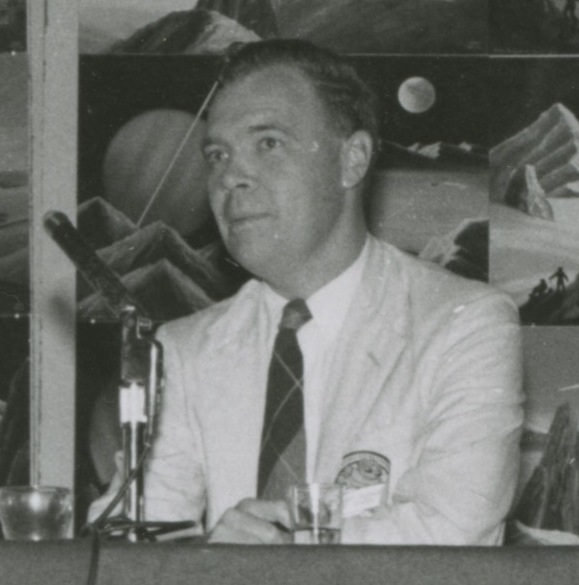
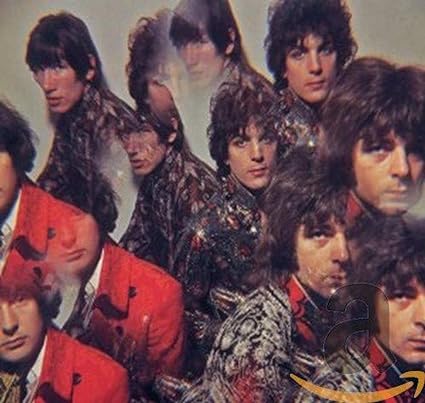

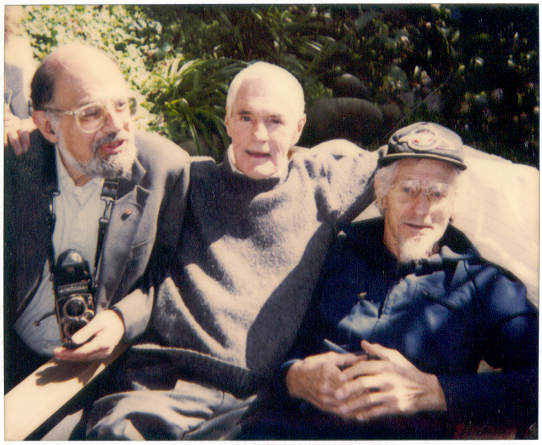
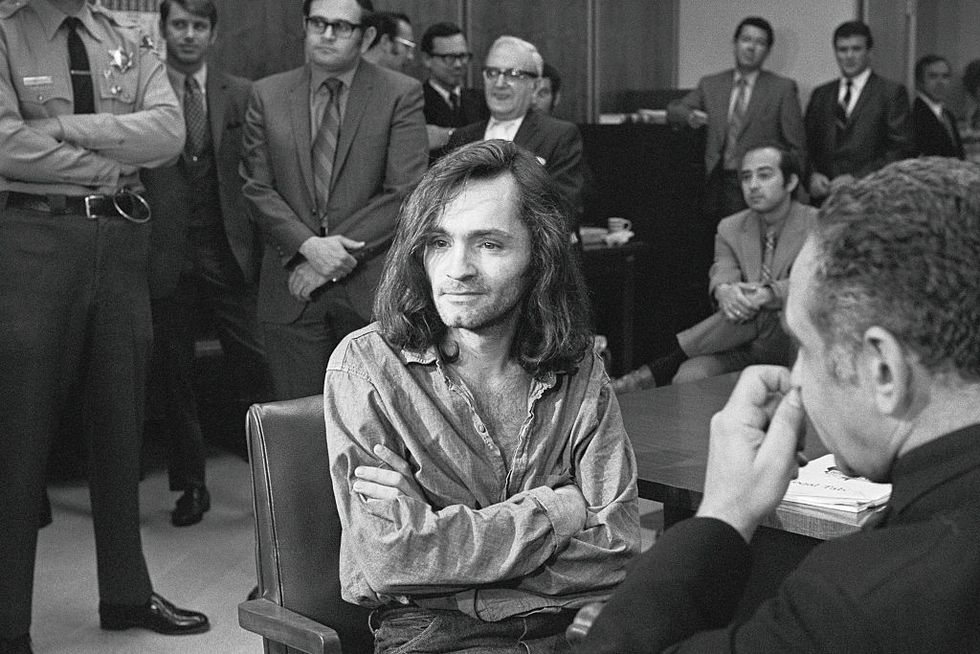

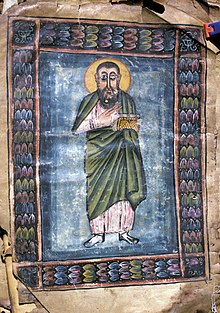

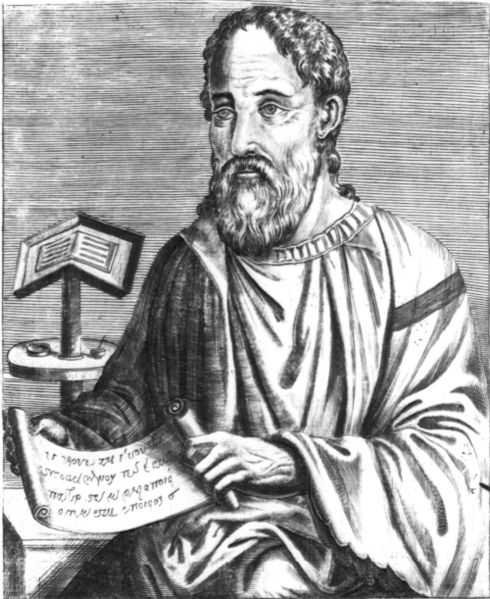
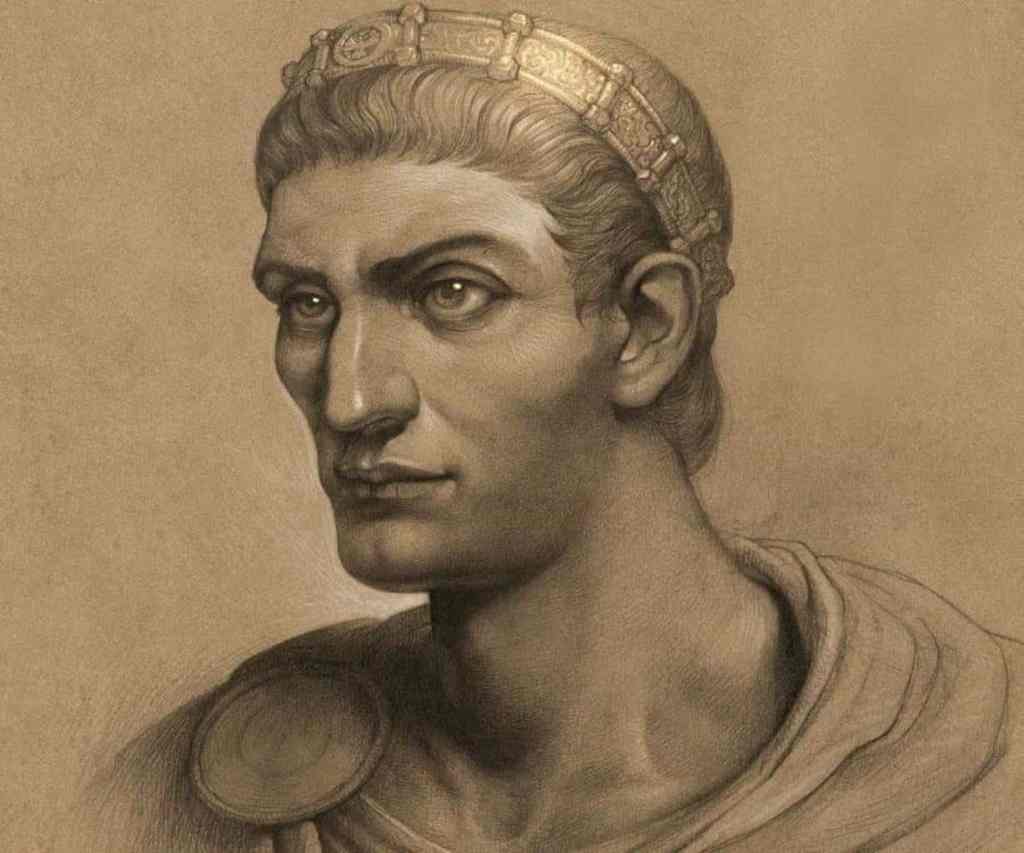
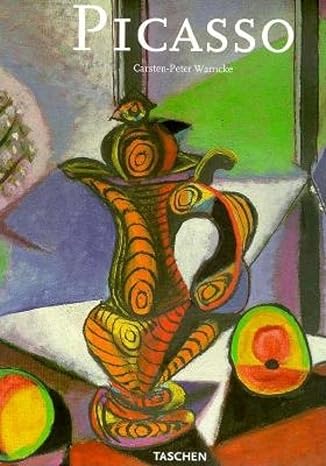
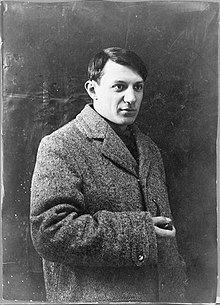
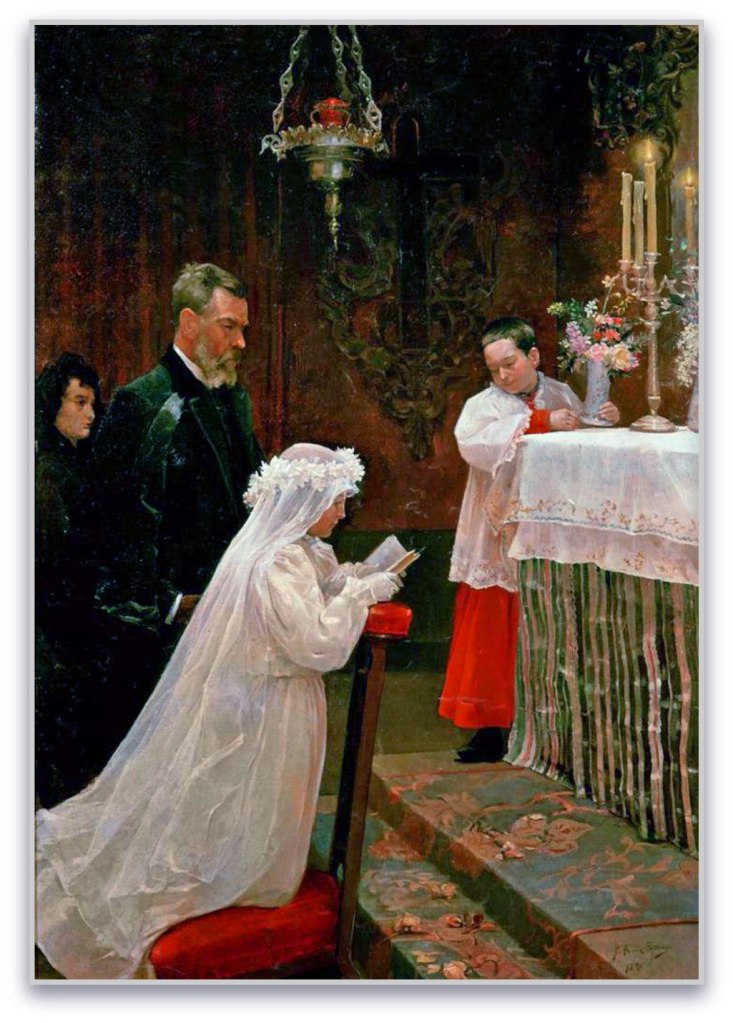
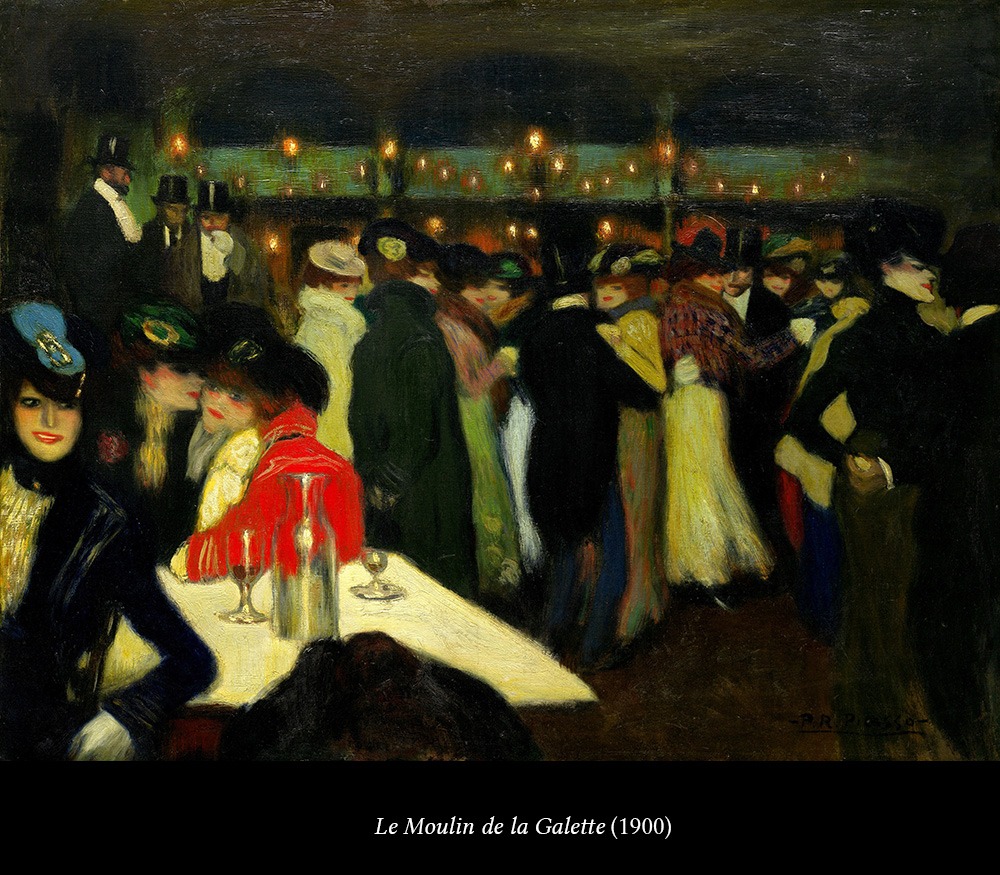
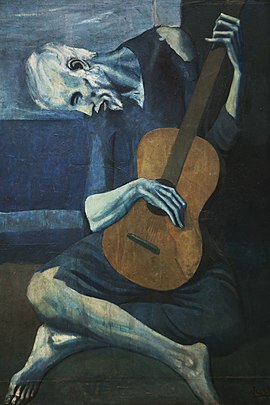
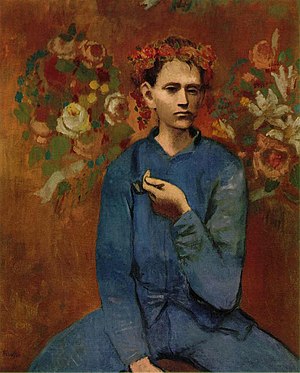
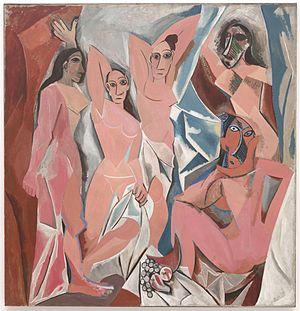
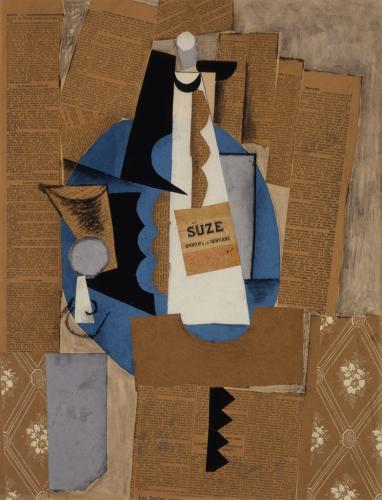
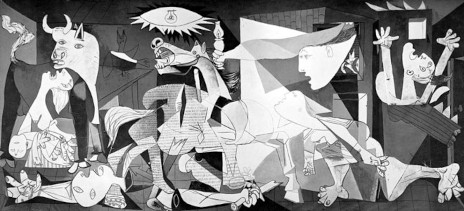

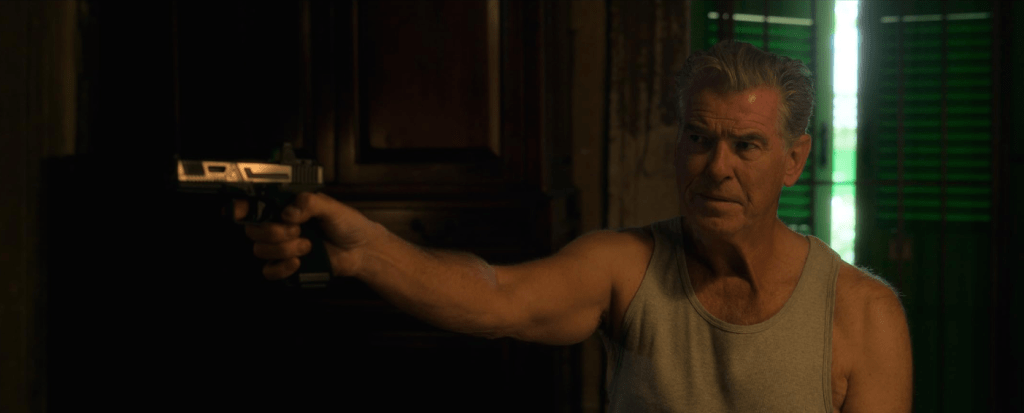




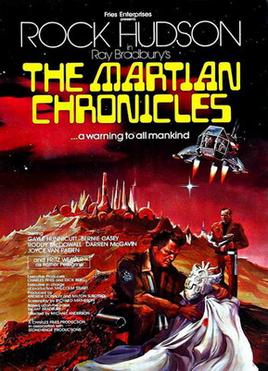
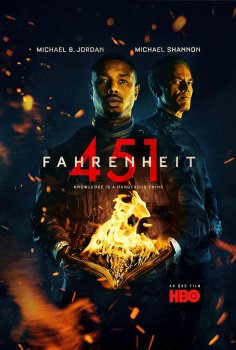

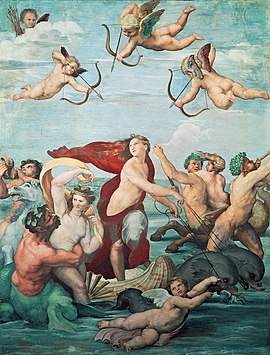

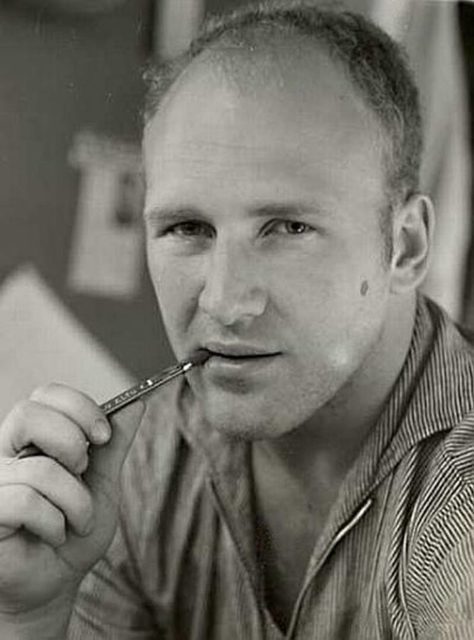

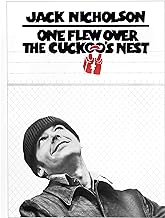
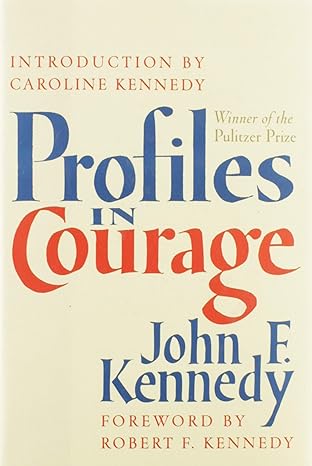
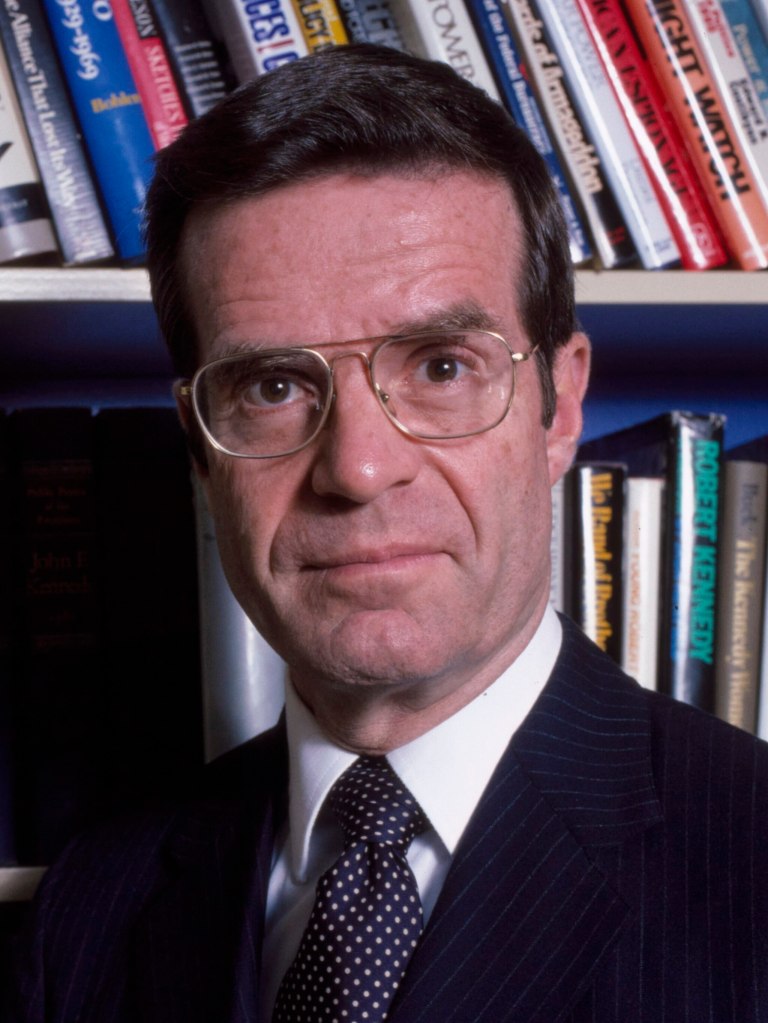
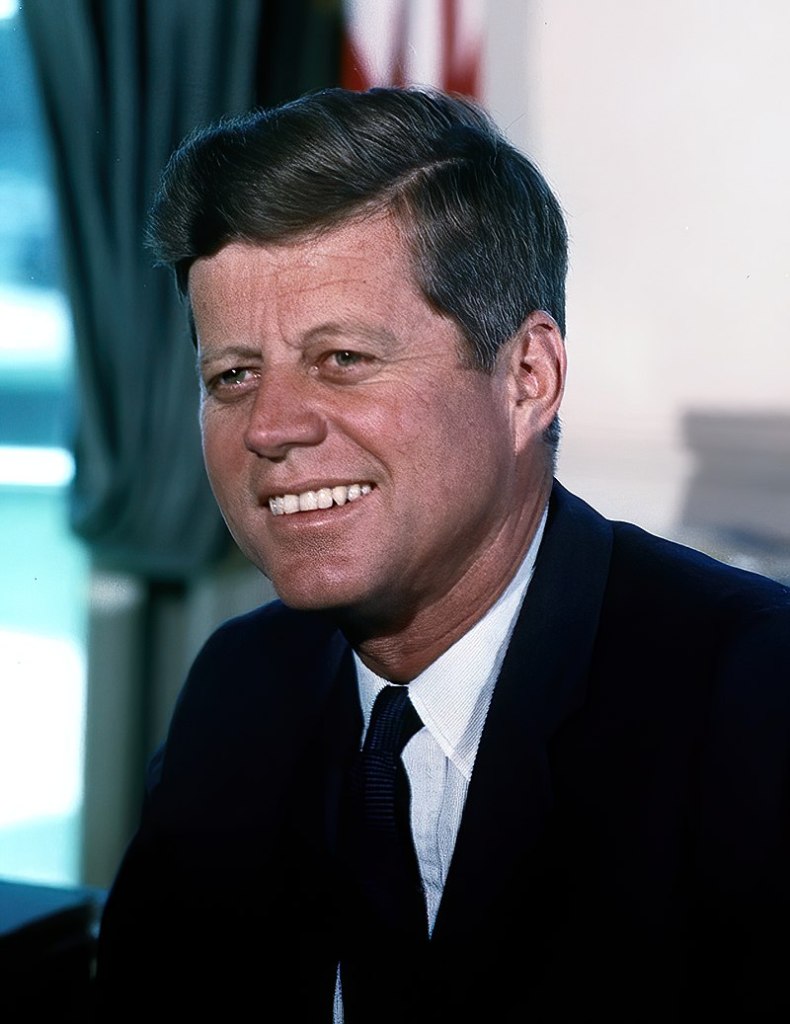
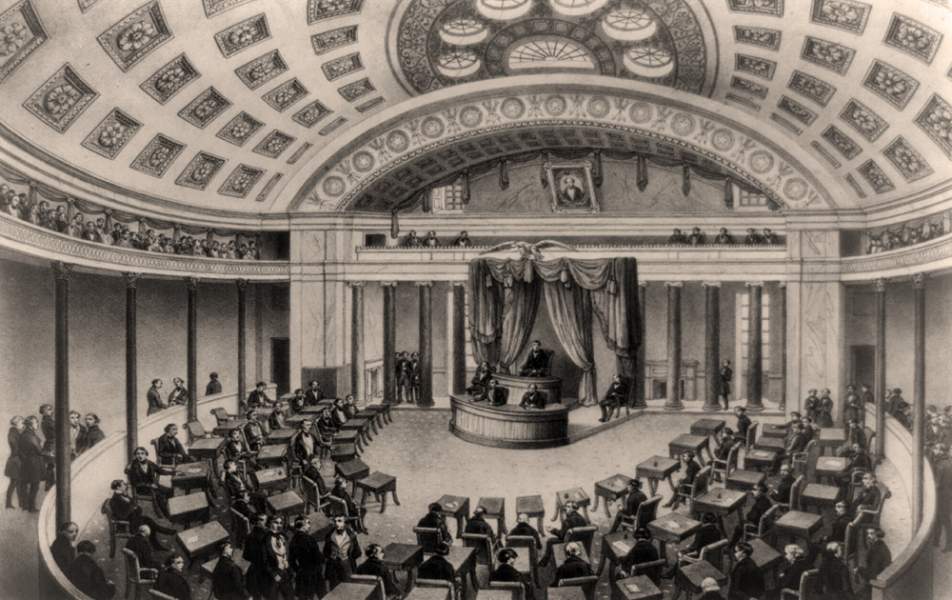
 elsToday