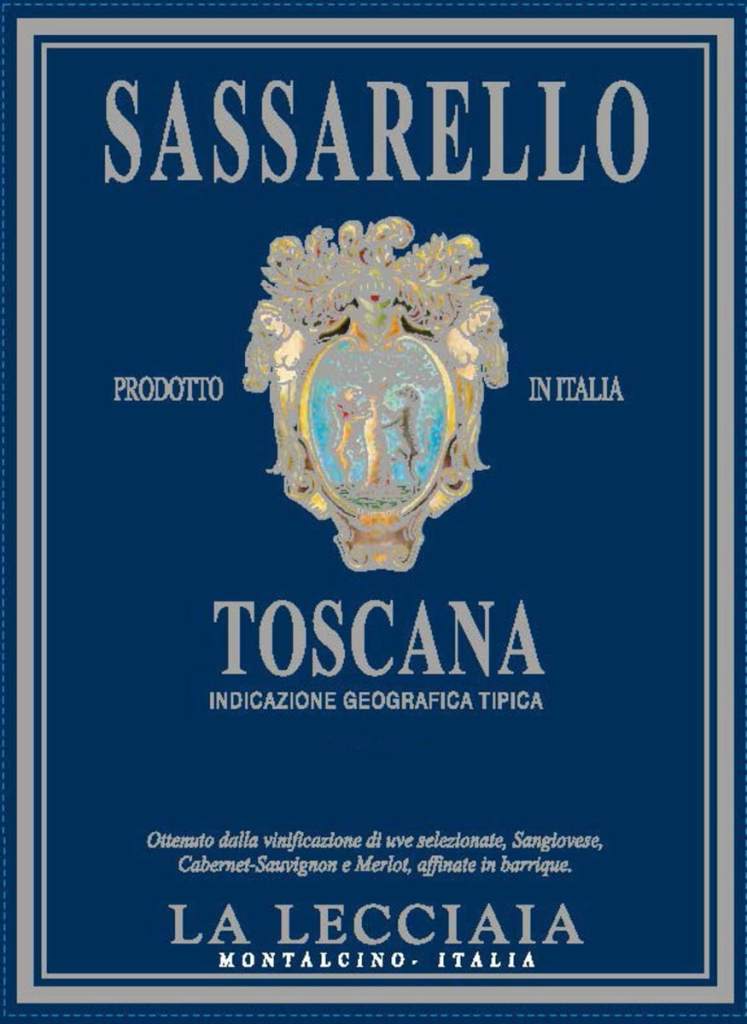
La Lecciaia Sassarello 2018

Other Red Blends from Tuscany, Italy

Sangiovese, Cabernet Sauvignon, Merlot (No percentages given)

Purchase Price: $18.99

James Suckling 92, ElsBob 91

ABV 13.5%

A deep ruby and a fainter ruby rim with aromas of dark fruits and herbs. Medium-full bodied with cherries and spice on the palate with balanced acidity and tannins. As with all Sangiovese wines, it needs to breathe.

An excellent table wine at a great price. Current prices range from $15-18.

Through the Grapevine: Fattoria La Lecciaia lies just off the old Via Francigena, the medieval road that carried pilgrims from England all the way to Rome. A traveler leaving Canterbury would walk to the Channel, cross by boat into France, and then continue south on foot through Reims and Besançon, climbing steadily toward the Alps. The most daunting stretch was the Great St. Bernard Pass, a high, wind‑scoured saddle between Switzerland and Italy where snow lingered well into spring and travelers relied on the hospitality of the monks who kept watch there.

Once over the pass, the road dropped into the Aosta Valley and wound south through the Tuscan hills. Pilgrims, merchants, and clerics passed directly through the countryside around Montalcino, moving along the same ridgelines and valleys where La Lecciaia’s Sangiovese vines now grow. For centuries, the drum of footsteps, mule bells, and weary voices shaped this landscape long before Brunello or Toscana IGT existed.

This route was initially recorded by the Archbishop Sigeric of Canterbury in 990 AD who walked from Rome back to England and fixed all 80 of his stopping points for his flock to follow. This is the moment that the route became a pilgrimage. Most travelers made the trek in a single season of 3-4 months, one-way, leaving England in spring so they could cross the Alps in summer before descending into the Tuscan hills…centuries before Henry II ever muttered his famous complaint about a Thomas Becket, the ‘meddlesome priest.’

Continuing the over‑trivialization of everything, the St. Bernard Pass was originally known, at least as far back as surviving records allow, as Poeninus Mons or Summus Poeninus, named by the Romans for a local Alpine god. A temple to Jupiter Poeninus once stood at the summit, watching over traders and legionaries who crossed these heights. Only in the 11th century was the pass renamed after St. Bernard of Menthon, who established a hospice there in 1049 AD. The monks began keeping large working dogs several centuries after St. Bernard’s lifetime, breeding them on site for the practical work of rescuing travelers from snowdrifts. Sadly, there is no reliable evidence that they ever dispensed spirits to the distressed or those buried in white snow. The breed eventually took on the monk’s name, making him the eponym rather than the other way around.
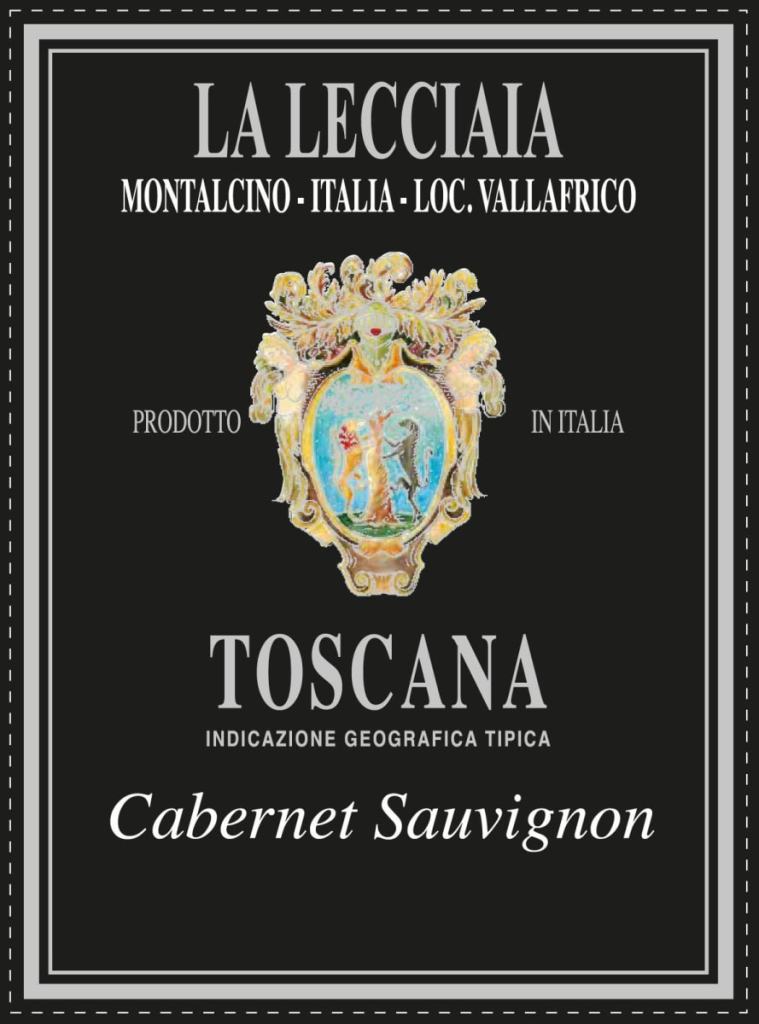
La Lecciaia Cabernet Sauvignon 2017

Cabernet Sauvignon from Tuscany, Italy

Purchase Price $18.99

James Suckling 92, ElsBob 91

ABV 13.5%

A beautifully clear ruby to garnet red with red and black fruits and a touch of spice. On the palate the cherry flavors come home, showcasing a medium to full body, mildly tannic wine with remarkable balance and structure. This wine should improve 5-6 rating points alone if you let it breath 30-60 minutes.

An excellent table wine at a remarkable price. Current pricing from $20-30.

Trivia with Literary License: Long before Cabernet roots worked their way into the slopes of Montalcino, the ridge above La Lecciaia stood as a contested frontier between Siena and Florence. Florence was rising toward its Renaissance artistic peak; Siena was already descending into its long twilight, its fame dimming after centuries of brilliance. In the late summer of 1502, when the dust of Cesare Borgia’s campaigns drifted across central Italy, the hills around the modern vineyard, then fields of grain and olive trees, would have felt its renown beginning to pass out of sight. Couriers rode the ridgelines, mercenaries threaded the valleys, and rumors traveled faster than horses. Borgia, son of Pope Alexander VI, brilliant, corrupt, and blood‑stained; was stitching Romagna, Umbria, and the Tuscan borderlands into the patchwork of his imagined and desired kingdom.

For a moment, it almost worked. With his father’s money, troops, and papal legitimacy, Cesare Borgia came closer than any condottiere of his age to forging a new principality in the heart of Italy. But fortune and fate interceded. Pope Alexander VI died suddenly in 1503, and Cesare himself lay bedridden with malaria, too weak to seize the reins of power. The new pope, Julius II, moved swiftly: stripping him of titles, seizing his fortresses, and unleashing the enemies he had once imprisoned. His fall was swift and complete, but Machiavelli kept him alive for the ages, immortalizing him in The Prince. His life became a cautionary tale. A rise and ruin that reads like a Renaissance tragedy worthy of Hamlet. Borgia had chased destiny with a bloody sword, all without honor.

Crossing this same landscape comes Leonardo da Vinci. Drawn by the promise of designing ideal cities with resources to bring them to fruition, he entered Borgia’s service in the summer of 1502 as Architect and General Engineer. For a brief moment, Borgia’s appetite overlapped with Leonardo’s visions of a symmetrical, ordered world shaped within the folds of his expansive mind. Leonardo traveled across central Italy inspecting fortresses and terrain, producing his famous Imola map. A masterpiece of precision and imagination; one of the first in Europe to apply true orthographic projection to a fully measured city plan.

By November or December of that year, Leonardo likely encountered the true nature of his patron. Although accounts are cloudy, in December 1502 Leonardo, Machiavelli, and Borgia’s captains were together in the Adriatic coastal town of Senigallia. There, Borgia enticed his captains with words of friendship, then had them strangled or stabbed within minutes. An act of theatrical brutality carried out in the very building where Leonardo was said to be working. The episode left a lasting impression on both the artist and Machiavelli.

Leonardo left no written record of that night, but he departed Borgia’s service almost immediately afterward. The timing is unmistakable. It is not difficult to imagine a world in which Leonardo remained in the employ of Borgia, and how his contributions to humanity might have taken a darker, narrower turn. As Paulo Coelho writes in The Alchemist, “when you want something, all the universe conspires in helping you to achieve it.” Leonardo stepped away just as the universe showed him a fork in the road and nudged him from the darker path.