Beelzebub has been wandering through western civilization since the Philistines appeared on the scene in the 12th century BC. The polytheistic Philistines of Ekron, one of their five cities within Canaan, worshiped Beelzebub, Baal-Zebub in the Philistine language, as a minor god of healing and protection from diseases, mainly from flies. In the semitic languages Beelzebub was literally known as the “Lord of the Flies”. (In Indo-European languages some interpretations suggest that Beelzebub is translated into a more friendly Lord of the Jungle.)
As monotheistic traditions took root in Canaan, Beelzebub shifted from a protective deity to a purveyor of evil, demonized within emerging Jewish thought. By the 9th century BC, the prophet Elijah condemned the Israel King Ahab and the prophets of Baal for worshiping this god rather than the true God of the Jews. By the time of the New Testament, which mentioned him 7 times in Matthew, Mark, and Luke, he was associated with Satan, who represented the emperor of Hell.
In Matthew and Mark, the Pharisees accused Jesus of casting out demons by the power of Beelzebub or the “Prince of the Demons”. Jesus counters by exclaiming that “Every kingdom divided against itself is brought to desolation, and every city or house divided against itself will not stand.” Jesus’ response backed the Pharisees into a corner, if they admitted that Jesus was casting out demons by God’s power, then they would have to acknowledge his divine authority. But if they insisted, he was working with Satan, they would have to explain why Satan would undermine his own influence: a house divided will not stand. (Lincoln in an 1858 speech used the same words with a moral rather than religious meaning, granted that is a very fine line, “A house divided against itself cannot stand,” suggesting that the evils of slavery would lead to collapse of the country.)
Between the 15th and 17th centuries Beelzebub was transformed into one of the seven princes of Hell: Lucifer the Emperor, Satan, Leviathan, Belphegor, Mammon, Asmodeus, and Beelzebub. Beelzebub represented the deadly sins of gluttony and envy.
In modern times Beelzebub remains a symbol of evil in literature and culture. John Milton’s Paradise Lost cast him as a chief demon and William Golding’s Lord of the Flies takes a more ancient meaning associated with corruption and destruction.
From an ancient minor Philistine god to Satan during the times of Jesus, to a major Christian demon in medieval times, back to Satan himself in modern times; Beelzebub’s transformation reflects the shifting religious and cultural landscapes over millennia, but demons will always have a name. In Mark 5:9, Jesus asks a possessed man, “What is your name?” The demon responds, “My name is Legion, for we are many.”
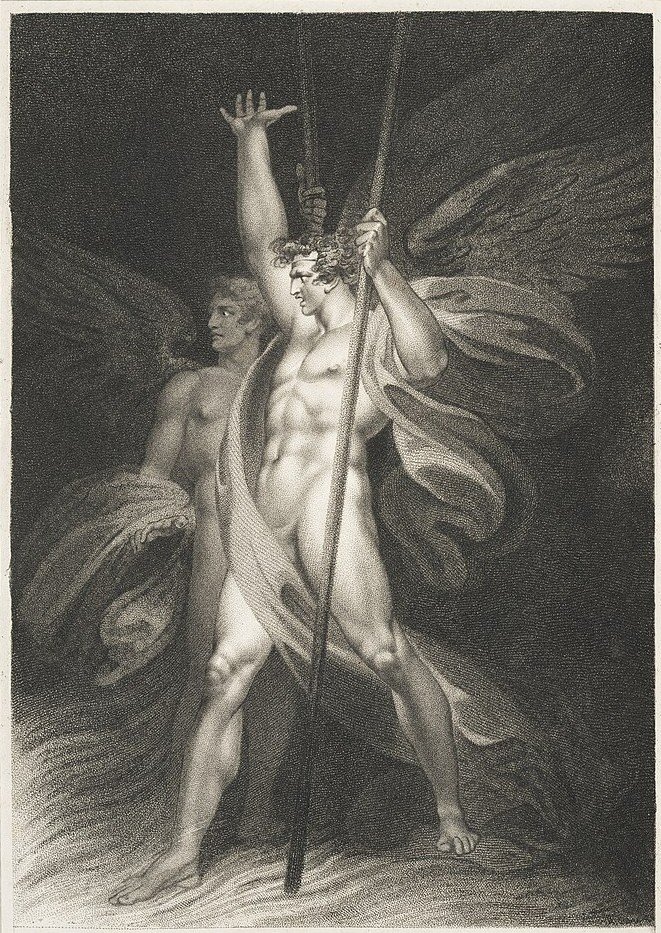
Graphic: Satan and Beelzebub by William Hayley, Jean Pierre Simon, Richard Westall: Paradise Lost. Public Domain.
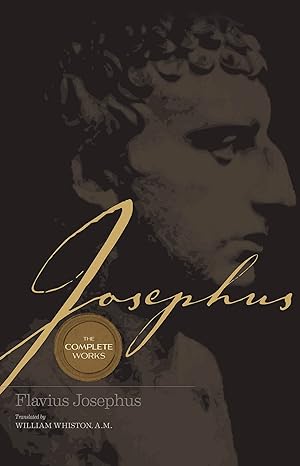
Josephus’s 20 volume history of the Jews titled: The Antiquities of the Jews was written to provide an account of the Jewish people for his Roman patrons and protectors.
Below is a synopsis of the 20 volumes:
Biblical creation to the death of Abraham’s son Isaac
History of Isaac’s sons to the Exodus of Jews from Biblical Egypt
Exodus from Egypt to the first 2 years of the 40 years in the wilderness
The remaining 38 years in the wilderness to the death of Moses upon reaching Canaan
Joshua’s replacement of Moses as leader to the death of the priest Eli
The capture of the Ark by the Philistines to the death of King Saul
David’s ascension to the throne of the Kingdom of Israel to the death of King David
Solomon’s ascension as King of Israel to the death of King Ahab
Reign of King Jehoshaphat to the fall of Samaria
Babylonian captivity of the Jews and the destruction of the Neo-Assyrian Empire
Start of the Persian Empire of Cyrus the Great to the death of Alexander the Great
Death of Alexander the Great to the Maccabean Revolt
Origins of the Hasmonean dynasty to the death of Queen Alexandra
The death of Queen Alexandra to the death of Antigonus II Mattathias
Herod the Great’s taking of Jerusalem to the completion of King Herod’s temple
Completion of King Herod’s temple to the death of Herod’s sons
Death of Herod’s sons to the banishment of King Archelaus
Josephus history covers major portions of the Old Testament including Genesis, Exodus, Numbers, Joshua, Judges, Ruth, Samuel 1&2, 1&2 Kings, 1&2 Chronicles, and Prophets. Josephus’s accounts provide for additional material and commentary not found in other texts including the bible.
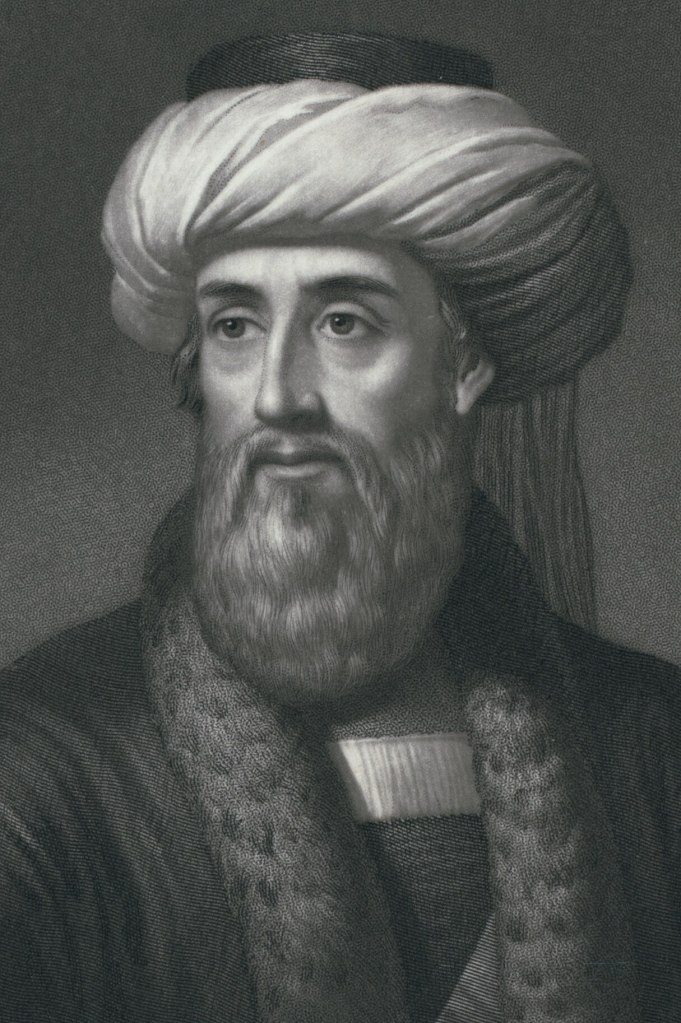
Source: Josephus: The Complete Works, 2003. Jewish Virtual Library. World History Encyclopedia. Graphic Joseph, Son of Gorian, by Thomas Emmet, 1880, public domain.
Flavius Josephus, a first century Jewish scholar and historian wrote four extant works:
The Jewish War. (Jewish Revolt) 75 AD – The first revolt against the Romans from 66-73 AD
The Antiquities of the Jews. 95 AD – From Adam to the death of Herod’s sons
Against Apion. 97 AD – A defense of Judaism
Vita or The Life of Flavius. 99 AD – Biography
These works provide significant source material and insight into first-century Judaism and Christianity.
Josephus was born into the Jewish priesthood on his father’s side and of Hasmonean royal descent maternally. He served in the Jewish military during the Jewish War but surrendered to the Romans and he was considered a traitor to Jews ever after. While waiting to be executed by the Romans he predicted that Vespasian would eventually be crowned emperor of Rome. Vespasian, because of the prophecy, spared his life and made him a consultant, but still a slave, to the Roman army. Josephus gained his freedom when Vespasian became emperor in 69 AD, at which time he changed his name to Flavius Josephus. Flavius was the family name of the emperor Vespasian.
Source: Josephus: The Complete Works, 2003. Jewish Virtual Library. World History Encyclopedia.
Paul L. Maier, born 1930 in St. Louis, author, public speaker, and historian has written twenty-three adult and children, fiction and non-fiction, books about Christianity. He is the son of Walter A. Maier, founder, and speaker of The Lutheran Hour.
He graduated from Harvard and Concordia Seminary in St. Louis with additional studies in Heidelberg, Germany and Basel, Switzerland. He was the Seibert Professor of Ancient History at Western Michigan University until he retired in 2011.
In addition to his definitive translation of “Eusebius: The Church History“, his 1993 “Skeleton in God’s Closet” was a number one best seller in religious fiction, a thriller concerning the Resurrection of Jesus. He also co-wrote with Hank Hanegraaff in 2006 a rebuttal to Dan Brown’s “The Da Vinci Code“: “The Da Vinci Code: Fact or Fiction?“
In addition to writing books Maier has produced six religious documentaries including the 2014 “The Week That Changed the World“, detailing the Holy Week before Jesus’s resurrection, discussing the key personalities, the politics, and the treachery that sealed Christ’s fate.
MaierBibliography-Books and Documentaries:
A Man Spoke, A World Listened: The Story of Walter A. Maier 1963
Pontius Pilate 1968
First Christmas: The True and Unfamiliar Story in Words and Pictures 1971
First Easter: The True and Unfamiliar Story in Words and Pictures 1973
First Christians: Pentecost and the Spread of Christianity 1976
Flames of Rome 1981
The Best of Walter A. Maier 1981 (paperback)
Josephus, The Essential Writings 1988
In Fullness of Time 1991
A Skeleton in God’s Closet 1994
The Very First Christmas 1998
The New Complete Works of Josephus with William Whiston 1999
Eusebius: The Church History 1999
The Very First Easter 2000
More Than a Skeleton 2003
Caspar Schwenckfeld on the Person and Work of Christ: A Study of Schwenckfeldian Theology at Its Core 2004 (paperback)
Martin Luther a Man Who Changed the World 2004
The Da Vinci Code: Fact or Fiction? with Hank Hanegraaf 2006
The Real Story of Creation 2007
The Real Story of the Flood 2008
A Skeleton in Rome 2011
The Constantine Codex 2011
The Genuine Jesus 2021
Christianity: The First Three Centuries (Documentary) 2003
The Odyssey of St. Paul (Documentary) 2003
Jesus: Legend or Lord? (Documentary) 2003
How We Got the Bible (Documentary) 2009
Christianity and the Competition (Documentary) 2010
The Week that Changed the World (Documentary) 2011
Eusebius Biography:
FootnoteA
“May I be an enemy to no one and the friend of what abides eternally. May I never quarrel with those nearest me and be reconciled quickly if I should. May I never plot evil against others, and if anyone plots evil against me, may I escape unharmed and without the need to hurt anyone else.” — Eusebius
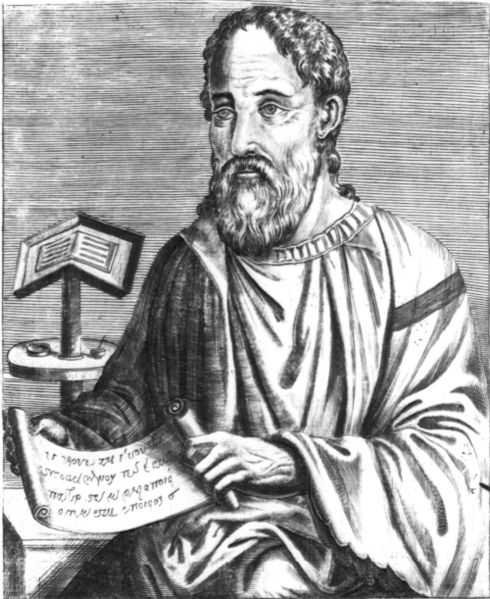
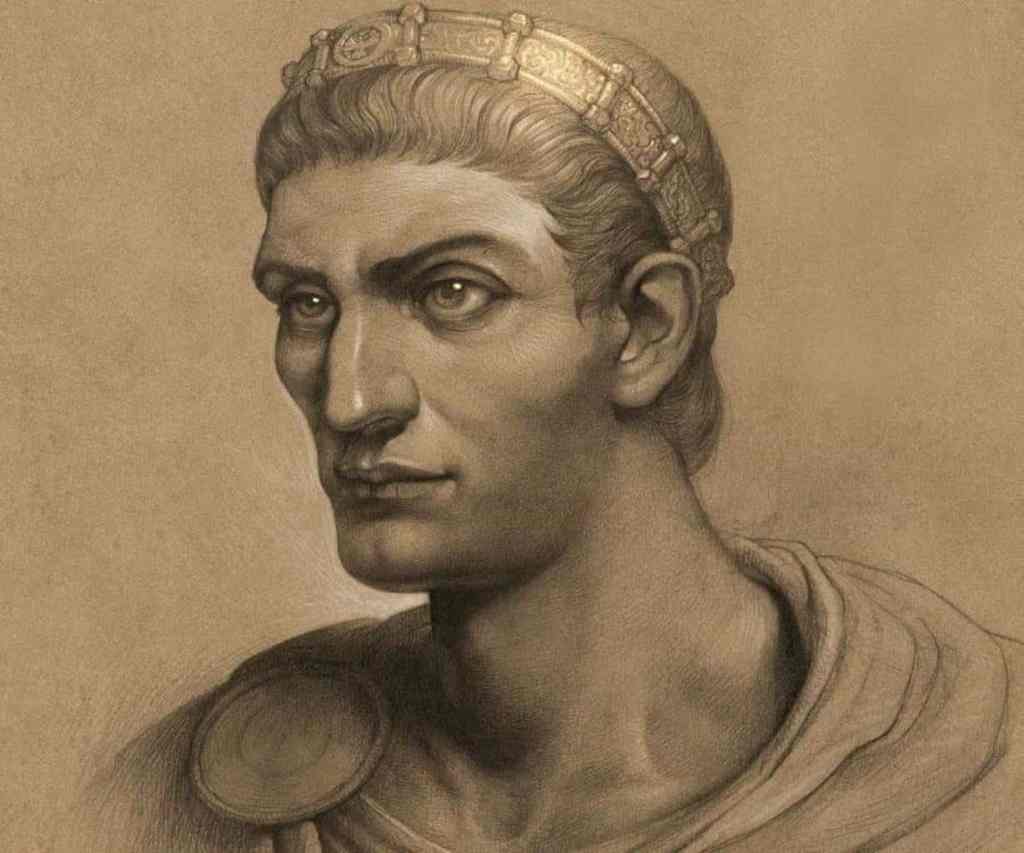
Eusebius of Caesarea, also known as Eusebius Pamphili, was a historian, interpreter of scripture, and Christian apologist, born around 260-265 AD in Caesarea, where he gained prominence in the fourth century, before passing away around 339 AD. His early education was by the learned presbyter, and eventual saint, Pamphilus, the principle religious scholar of his generation. Eusebius became bishop of Caesarea around 314 AD, shortly after Constantine became Roman Emperor, and remained in that position until his death in 339 AD. Eusebius became a significant figure in the theological controversies and politics of his day, becoming a, if not the leading spiritual advisor and confidant to Constantine.
Christians since the time of Christ were persecuted for their faith which came to a ghoulish crescendo under the Diocletian Edicts, also known as “The Edicts Against the Christians” of 303 AD. The edicts dissolved the Christians’ legal rights, compelled them to reject Jesus and to adhere to the local religious customs of paganism and polytheism. The edict saw the destruction of Christian scripture and churches along with the torture and execution of approximately 3500 church leaders and lay people including Eusebius’ teacher Pamphilus. The persecution ended with the Edict of Milian in 313 AD, decreed and signed by Constantine and Licinius proclaiming religious toleration within the empire.
FootnoteB
The edict gained the life-long gratitude of Eusebius culminating in the Christian bishop’s panegyric, “Life of Constantine“, in which the author details the emperor’s religious policies as well as a hagiographic account of Constantine’s life. Historians have described their relationship as complex, evolving over time. They have also stated that Eusebius may have been the power behind the throne or, as others have surmised, just an obsequious toady seeking protection from his church enemies. Regardless of the actual relationship it is agreed that Eusebius was Constantine’s spiritual and political advisor.
FootnoteC
Eusebius, through his bond with the emperor, helped structure the relationship between church and state, assisting in the creation of the Constantinian concept of a Christian empire, which had a considerable influence on the development of the early Christian Church and the Roman Empire, along with empires to come.
Constantine, to put down an early rebellion of church leaders, ordered three hundred bishops throughout the empire to meet at the First Council of Nicaea in 325 AD to resolve the controversy of Arianism, a concept that Christ was not divine but was created by God. Much of the Church believed that Christ was of the same substance, “consubstantiality“, as the Father and as such: divine. Eusebius, enjoying the emperor’s favor, sat next to him at the council and offered his own creed stating that Christ was begotten, not made, from the Father. The council, in the end, rejected Arianism and formulated the creed that is recited at every High Catholic Mass to this day. The council also set the time for Easter as the Sunday after the first full moon following the Spring equinox rather than occurring on the Sunday closest to Jewish Passover or on the Jewish Passover even it was not on a Sunday. Which explains why no one knowns when Easter occurs. Constantine was adamant about foregoing any Jewish practices in the honor of Jesus.
Eusebius is referred to as the “Father of Church History” due to his voluminous writings in the field including, as discussed below, his account of the first centuries of Christianity in his “Ecclesiastical History” or “Church History“.
Church History (Ecclesiastical History):
FootnoteD
“Church History ” or “Ecclesiastical History” is the only exigent work that chronicles the development of early Christianity and its Church from the birth of Christ on into the fourth century. Eusebius’s account, written in Koiné Greek, lingua franca for the Mediterranean area from fourth century BC to fourth century AD, provides a chronological narrative, using the succession of Roman Emperors as a linear timeline, of the early Christian Church. Eusebius, with his access to the Theological Library of Caesarea, incorporated many church documents, acts of the martyrs, letters, and extracts from earlier Christian writings into his work, many which no longer exists. The “Church History” covers the succession of Church bishops, the history of Christian teachers especially Origen, the history of the many church heresies and conflicts, and Christianity’s relationships with Romans, pagans, and Jews. Despite accusations that “Church History” is more a defense of Christianity, an apologetic and hagiography, than a history, Eusebius’s work remains a valuable source for understanding early Christian history.
Below are the Maier’s chapter listings, brief descriptions, and Roman Emperors during the historical period covered.
Book I: The Person and Work of Christ: Eusebius on Christ. Augustus to Tiberius.
Book II: The Apostles: Eusebius on the Apostles. Tiberius to Nero.
Book III: Missions and Persecutions:Formation of the New Testament. Galba to Trajan.
Book IV: Bishops, Writings, and Martyrdoms: Defenders and Defamers of the Faith. Trajan to Marcus Aurelius.
Book V: Western Heros, Eastern Heretics: Death at Lyons, Rome, and Alexandria. Marcus Aurelius to Septimius Severus.
Book VI: Origen and Atrocities at Alexandria: Life of Origen. Septimius Severus to Decius.
Book VII: Dionysius and Dissent: Church Life According to Dionysius. Gallus to Diocletian.
Book VIII: The Great Persecution: Edicts Against Christians. Diocletian to Galerius.
Book IX: The Great Deliverance: The End of Persecution? Maximin, Maxentius, and Constantine.
Book X: Constantine and Peace: Eusebius and Constantine. Constantine.
Literary Criticism:
In C.F. Cruse’s 1850 translation of “Ecclesiastical History” he states that, “…Eusebius was not without his beauties, but they were rarely scattered, that we can hardly allow him an eminent rank as a writer.” This is an understatement of the 19th century although it is a polite way to admit Eusebius was incapable of engaging his readers in any form other than pedantic verbosity. This is also an example that Cruse was not immune from obfuscating meaning in his written translations and commentary. His comment above simply stated that Eusebius rarely wrote with elegance and concision. Eusebius’ writing was dense, confusing, dogmatic, and sometimes incomprehensible. Eusebius’ writing compares favorably, snark intended, with Edward Gibbons’ “The Decline and Fall of the Roman Empire” whose erudite, verbose, and opaque style has managed to confuse his readers for two plus centuries now, but for some reason no one seems to mind, except me. Gibbons disliked, immensely, Eusebius’ “Ecclesiastical History” stating that it was full of lies and falsehoods which is an exceedingly difficult position to support due to Eusebius’ excessive use, usually in quotes, of original source material. Gibbons blamed the fall of the Roman Empire on the rise of Christianity, a problematic thesis considering Christianity was the least of the Empires worries. Unchecked immigration and a corrupt governing class were much bigger problems than a few Christians asking to be left alone to worship their God in peace.
Paul L. Maier’s translation of “Church History” is a masterful improvement over C.F. Cruse’s 1850 attempt to make Eusebius readable. Cruse strove to accurately translate Eusebius with the result of burdening his readers with difficult and cluttered phrasing. Maier saves his readers by reducing Eusebius’s lengthy sentences, dense language, and abrupt subject changes to intelligible bites of prose that are readable, understandable, and usable. An example of Maier taking difficult sentences and distilling them into something cogent can be seen in the two example sentences below. The first sentence comes from Loeb’s edition of “Ecclesiastical History“, which is a very faithful rendition of Eusebius’ writing, followed by Maier’s translated version. Loeb: “I have already summarized the material in the chronological tables which I have drawn up, but nevertheless in the present work I have undertaken to give the narrative in full detail.” Maier:“Previously I summarized this material in my Chronicle but in the present work I deal with it in the fullest detail.” The first sentence takes a few readings to comprehend the meaning. Maier allows for instant comprehension.
“Ecclesiastical History” or “Church History” is an important work in understanding the beginnings of Christianity and the governing hierarchy that was built up over the centuries. This is not a long book, less than four hundred pages, but it does take dedication to the task of reading and understanding it. In the end it is worth the effort as a little history is always useful if not enlightening.
References and Readings:
Eusebius. By Allan Miller. Wikipedia. 2001 (2024 Update)
Stephen Mitchell was born in Brooklyn in 1943 (80ish), educated at ‘Ivy League’ schools in the US and France, and, quoting his words, “de-educated through intensive Zen practice“. That may be just a spoonful of humor, it is though a spoonful of humility, and a large serving of Zen-Socratic wisdom. A wisdom that becomes one that reflects upon his life and realizes his education has granted him neither knowledge nor wisdom. He does not say what the Ivy League has instilled in him, but the derivation of any real value from those hallowed halls, as seen from the Zen rear-view mirror, appears minimal.
In an interview with the Los Angeles Times, he ruminates that “If I’m a scholar, I’m an amateur“. A humble observation in the truest form of the personal quest for fulfillment and enlightenment. In the same interview, elaborating on Chuang-tzu in Mitchell’s ‘The Second Book of the Tao‘, he says: “I have no pretensions to scholarship. I just love to play with the Taoist masters. For them, nothing is sacred. The best tribute is contradiction.” Again, humility before all, all before self.
In a separate interview with Scott London also discussing ‘The Second Book of the Tao‘ Mitchell relates the teachings of Chuang-tzu as a philosophy of the unassuming and the simple life. “There was nothing to live up to,” he says. “There was only a passion for the genuine, a fascination with words, and a constant awareness that the ancient Masters are alive and well in the mind that doesn’t know a thing.” Mitchell personifies and lives that philosophy.
Mitchell has translated and authored many books including the bestselling Tao Te Ching, Gilgamesh, The Gospel According to Jesus, and his latest book, The First Christmas released in 2021. He is also the coauthor of three of his wife Byron Katie’s bestselling books: Loving What Is, A Thousand Names for Joy, and A Mind at Home with Itself and numerous children’s books.
The Discovery of the Story of Gilgamesh:
The Epic of Gilgamesh was, in the beginning, a series of Sumerian poems/stories likely passed down through the ages as oral histories before being written down in Akkadian 700-1000 years after the reign of the mythical/historical King of Uruk: Gilgamesh.
Mitchell may have been introduced to the literary stature of Gilgamesh while translating the Austrian mystic poet, Rainer Marie Rilke. Rilke wrote at the end of 1916. “I … consider it to be among the greatest things (the poem Gilgamesh) that can happen to a person. I have immersed myself in [it], and in these truly gigantic fragments I have experienced measures and forms that belong with the supreme works that the conjuring Word has ever produced.”
The poem, written in Assaryian cuneiform script, on clay tablets, was discovered by Austen Henry Layard while excavating mounds, beginning in 1844, around what is now known as the city of Mosul. The mounds turned out to be the remains of the ancient Assyrian capital palaces of Nineveh including the library of King Ashurbanipal or Ashur Banipal (668-627 BC) depending on the source. Over 25,000 clay tablets from the library, twelve of which contained the poem, were shipped back to the British Museum. It took until 1872 before the poem was discovered among this immense trove of tablets and in 1872 George Smith translated and published the poem. These twelve tablets contain the fullest version of the poem found to date.
The first surviving version of the combined epic is known as the Old Babylonian version and dates from the 18th century BC. The longer and more complete copy of the poem, from King Ashurbanipal’s library is from the 10th to the 13th centuries BC and is known as the Standard version. Currently seventy-three fragments, possibly more, of the Standard version have been discovered containing some two thousand lines of the original, which is surmised to be three thousand lines long.
Mitchell mainly adapts the Standard version into a contemporary English language poem with gap filler supplied by the Old Babylonian version. Where there is no original material to complete known gaps, Mitchell has contributed original work to provide clarity and to maintain continuity.
The Man of Gilgamesh:
Gilgamesh is accepted as being the 5th king of Uruk, possibly reigning roughly in the 26th century BC (2800-2500 BC) for 126 years. Some believe the long reign of 126 years may actually be a number in base six which would equate to 54 years in base ten. Very little is known of his reign with the exception that he built the walls Uruk, is listed in the Sumerian King list, and is mentioned as a contemporary of Aga, son of King Enmebaragesi of Kish.
Aga, who ruled over Sumer for 625 years, is the antagonist in the Sumerian poem ‘Gilgamesh and Aga‘, recording the King of Kish’s siege of Uruk after Gilgamesh refused to submit to him. From the poem Aga commands Gilgamesh and the citizens of Uruk to work forever as slaves on Kish’s irrigation projects.
There are wells to be finished. There are wells in the land to be finished. There are shallow wells in the land to be completed. There are deep wells and hoisting ropes to be completed
Gilgamesh is made King of Uruk for his defiance and resistance to Aga’s demands. King Gilgamesh captures Aga on the 10th day of the siege but sets him free to return to Kish.
The Land of Gilgamesh:
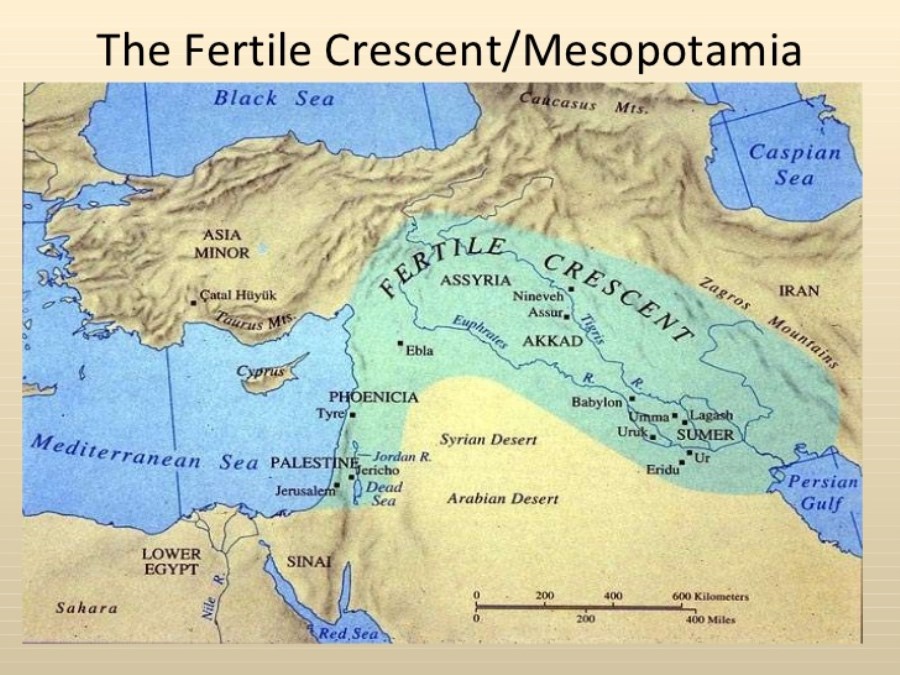
Uruk was a Sumerian city-state established in the southern reaches of Mesopotamia and was located on the east bank of the Euphrates River. The river today, through the process of river channel migration, is much further to the west. The city and its surrounding area were home to about 40,000-125,000 people, who during the time of Gilgamesh controlled the entire Sumer area.
The Sumerian area and Uruk lay claim to the beginnings of civilization, urbanization, laws, and writing. Cuneiform, wedge shaped writing on clay tablets and the earliest known system of writing, dates to the fourth millennium BC with the oldest examples being inventories of goods stored and transported in and out of the Sumer area.
The oldest known surviving law code, the Code of Ur-Nammu, in the world comes down through the ages from the Sumerian king Ur-Nammu or his son Shulgi of Ur during the last half of 21st century through the beginning of 20th century BC. The Code of Urukagina is older but is known only through references in other ancient writings. The better-known Babylonian Code of Hammurabi is younger and dates from the eighteenth-century BC.
The greatest architectural monument of Uruk was the White Temple built upon the Anu Ziggurat during the fourth millennium. The temple was thirteen meters high and 22.3 x 17.5 meters in depth and width. It stood upon a ziggurat with dimensions of 50 x 46 x 10 meters in depth, width, and height, respectively. On the flat plains surrounding Uruk it was visible in the distance for kilometers.
German archaeological excavations in 2003, conducted in and around the old riverbed of the Euphrates, have reportedly revealed garden enclosures, specific buildings, and structures described in The Epic of Gilgamesh, including Gilgamesh’s tomb. According to The Death of Gilgamesh, he was buried at the bottom of the Euphrates when the waters parted after he died. There is debate whether these excavations and discoveries exist or are a hoax. These discoveries have not been confirmed and no updates from the original can be found but one of the original authors of the 2003 study is Jorg Fassbinder, a geophysical archeologist associated with the University of Munich.
Uruk is also recognized as the city of Erech, founded by Nimrod, great-grandson of Noah, as mentioned in Genesis 10:10:
8And Cush begat Nimrod: he began to be a mighty one in the earth.
9He was a mighty hunter before the LORD: wherefore it is said, Even as Nimrod the mighty hunter before the LORD.
10And the beginning of his kingdom was Babel, and Erech, and Accad, and Calneh, in the land of Shinar.
11Out of that land went forth Asshur, and builded Nineveh, and the city Rehoboth, and Calah
The Legend of Gilgamesh:
Gilgamesh in Sumerian possibly means ‘The Old Man Is a Young Man’ or ‘The Ancestor Was a Hero’. An immortal Hero, a synthesis that brings us to the story and plot of Gilgamesh.
Gilgamesh is the epic hero of the times. Dashing, brave, adventurous; a seeker of immortality and wisdom but not much in the way of kingly benevolence. The gods knowing Gilgamesh lacked wisdom sent him his twin and his opposite: Enkidu. Enkidu became Gilgamesh’s brother and constant companion. Thus begins the quest of Gilgamesh to find himself. It is far more than that, though, as Mitchell explains:
“Part of the fascination of Gilgamesh (the story and person) is that, like any great work of literature, it has much to tell us about ourselves. In giving voice to grief and the fear of death, perhaps more powerfully than any book written after it, in portraying love and vulnerability and the quest for wisdom, it has become a personal testimony for millions of readers in dozens of languages.“
Gilgamesh, as with some of his readers of today, is slow to learn the lessons of life, slow to acquire wisdom even when it is given to him/us for free. From the old Babylonian Version in Book X, Siduri, a wise matron brewer of beer offers Gilgamesh an opiate of advice for his pain brought on through the death of his brother Enkidu.
“Gilgamesh, where are you roaming? You will never find the eternal life that you seek. When the gods created mankind, they also created death, and they held back eternal life for themselves alone. Humans are born, they live, then they die, this is the order that the gods have decreed. But until the end comes, enjoy your life, spend it in happiness, not despair. Savour your food, make each of your days a delight, bathe and anoint yourself, wear bright clothes that are sparkling clean, let music and dancing fill your house, love the child who holds you by the hand, and give your wife pleasure in your embrace. That is the best way for a man to live.”
Gilgamesh declines the advice to live for the day and continues with his quest for immortality.
Written by: Francesco Contaldo, Raffaele Mertes, Gianmario Pagano
Music by: Marco Frisina
Cast: Richard Harris, Vittoria Belvedere, Benjamin Sadler, Bruce Payne
Film Locations: NA
Budget: $ NA Low-Budget, Made for TV
Worldwide Box Office: $ NA
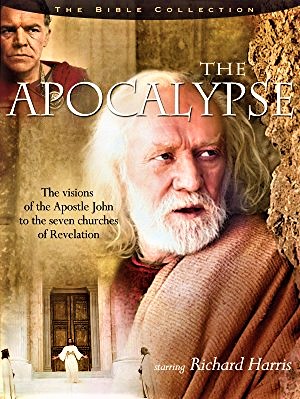
St. John, John the Apostle, John the Evangelist, John of Patmos, John the Elder (Harris) is held in the Aegean island prison of Patmos as a scribe for his Roman jailers. God speaks to John and commands him to disseminate, as letters, the visions he sends him. The letters are be sent to the 7 churches of Asia Minor. The visions include truths and admonishment to the churches and how the beginning of the end of times will transpire.
This is a made for TV movie that exhibits its low-budget pedigree in almost every scene. But the movie wasn’t made to garner any awards, rather it was made to educate the public about the Book of Revelations, the last book of the Bible. It does accomplish this but the story is out of sequence and the method is clunky and amateurish.
The supporting actors are all bad with the atrocious acting trophy going to the Bruce Payne playing the Roman Emperor Domitian. Moving from bad to worse, the special effects were categorically dreadful. If there is an award for worst special effects this movie would win. The movie’s effects were on par with what passed as realistic in the 1958 movie: The 7th Voyage of Sinbad the Sailor. Spending a few dollars more on marginally better special effects very likely would have taken this movie from ugh awful to mildly entertaining.
The only true shining light in this movie is Richard Harris, he can’t save the movie, but he is a joy to watch. The kindly Dumbledore persona comes through in every scene. A natural teacher with a gentle soul. Interestingly, his full name is Richard St John Harris.