Four Women of the Renaissance

Leonardo da Vinci, who died on May 2, 1519 at the age of 67, began around 40 paintings in his lifetime, of which fewer than 20 survive. Of those that survive, only about 15 are believed to be complete.

The artist painted only four known portraits of women:

  • Ginevra de’ Benci at the National Gallery of Art in Washington, D.C.
  • La Belle Ferronnière at the Louvre Museum in Paris.
  • Mona Lisa also at the Louvre Museum in Paris.
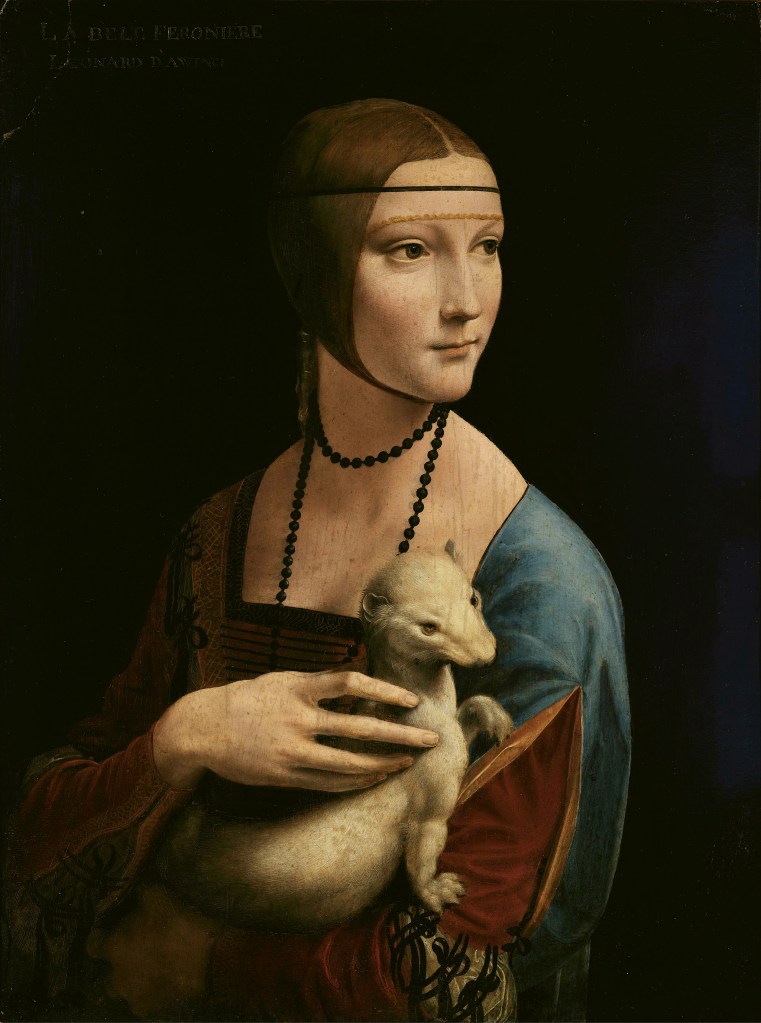
  • Cecilia Gallerani (known as “Lady with an Ermine“) at the Czartoryski Museum in Krakow, Poland.

Cecilia Gallerani was the mistress of Ludovico Sforza, Duke of Milan, and was painted while da Vinci worked in the Duke’s court in Milan, Italy. The Polish government paid 100 million Euros for the painting in 2016.

Trivia: Many believe that Leonardo da Vinci continuously reworked the Mona Lisa throughout his life; it was still in his possession when he died. The fact that the Mona Lisa does not have eyebrows suggests, to me, that the painting was still unfinished. The absence of eyebrows in the Mona Lisa has led to other theories as well:

  • Others argue that da Vinci might have intentionally left them out for artistic reasons.
  • There’s also the theory that the eyebrows might have faded over time due to the varnish or other conservation issues.

Source: Leonardo da Vinci by Walter Isaacson, 2017. Graphic: Lady with and Ermine by da Vinci, public domain.
The First Capitalist

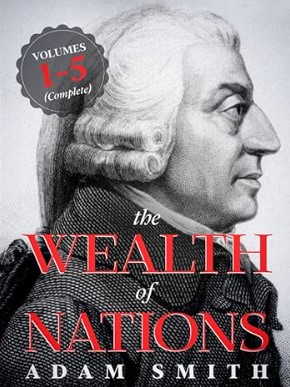
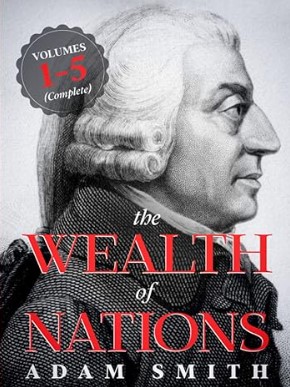
Adam Smith, who published his landmark economic treatise The Wealth of Nations in 1776, created an immense tome that spans around 950 pages of incredibly original theory, but it also disparagingly known for its complex language, lengthy, detailed detours, and economic examples that can seem quaint or enigmatic by today’s standards. The book is worth reading but find an abridged version such as The Wealth of Nations: Abridged, CreateSpace, 2011, 150 pages.

His theories for the efficient running of a country’s economy have become the foundation of classical economics, eventually forming the basis for the capitalist economic system. In his book, he introduced concepts such as the invisible hand, free markets, and laissez-faire economics—principles that are widely accepted in the Chicago and Austrian schools of economic thought today.

The Wealth of Nations is divided into 5 books:

  • Economic Efficiency: Discusses the division of labor and how it increases productivity and efficiency in the economy.
  • Accumulation of Capital: Focuses on the importance of savings and investment in driving economic growth.
  • Economic Growth: Examines the factors that contribute to the prosperity of nations, including labor, land, and capital.
  • Economic Theory: Lays out the principles of supply and demand, price mechanisms, and market dynamics.
  • The Role of Government: Argues for limited government intervention, emphasizing the protection of property rights, national defense, and the provision of public goods.

Trivia: Smith never used the word capitalist or any of its derivatives. The first English use of the word “capitalism” is believed to have appeared in the novel The Newcomes by William Makepeace Thackeray. The story follows a banking family and their increasing wealth and admittance into the English aristocracy.

Source: The Wealth of Nations by Adam Smith. The Newcomes by Thackeray.

Sarcasm Slightly Cold

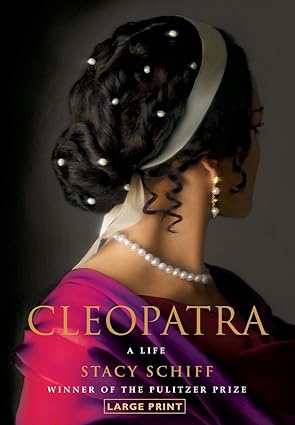
Stacy Schiff, biographer of Cleopatra VII and history of Egypt and Rome during her reign as Egypt’s queen is an entertaining writer with a sardonic sense of humor.

Wit of Schiff I: Cleopatra and Mark Anthony, after a three-year separation, reunited in 37 BC in Antioch. They rekindle their relationship, Cleopatra becomes pregnant, and they part again in early 36 BC, he for a military campaign in Parthia and she to go south to meet with Herod in Jerusalem.

In the course of the visit she met Herod’s fractious extended family…Herod had the misfortune to share an address with several implacable enemies, first among them his contemptuous, highborn mother-in-law, Alexandra…his insinuating mother; a grievance-loving, overly loyal sister; and Mariamme, the cool, exceptionally beautiful wife…who to his frustration, somehow could never get past the fact that Herod had murdered half her family.

Wit of Schiff II: Mark Anthony after conquering Armenia, which included parts of modern Turkey and Azerbaijan, in 34 BC, “returned to Alexandria in triumph, taking with him not only the collected treasure of Armenia, but its King, his wife, their children, and the provincial governors. Out of deference to their rank, he bound the royal family in chains of gold.

Trivia: No good, confirmed likenesses of either Cleopatra or Herod exist. Recently a bust from the Egyptian Taposiris Magna temple near Alexandria has been recovered which the archaeologist, Kathleen Martinez claims is a likeness of Cleopatra. Other experts disagree.

Source: Cleopatra: A Life by Stacy Shiff, 2010. Marble Bust Found, Gadgets 360, 2024.

The Last Queen

Cleopatra VII, descendant of Alexander the Great’s general Ptolemy Soter, inheriting the Egyptian Empire upon Alexander’s death, was the last pharaoh or queen of Egypt. Upon her death in 30 B.C., less than two weeks after the death of her lover, Mark Antony, she took her own life, likely with a fast-acting poison rather than the bite of an asp. This cleared the way for Augustus, the founder of the Roman Empire, to incorporate Egypt into the Roman realm.

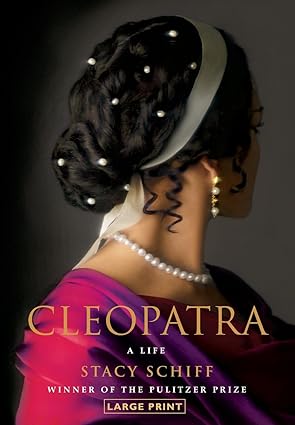
In Cleopatra: A Life, Stacy Schiff weaves an engrossing tale of the queen’s ruthless ambition to restore the Egyptian Empire to its former glory. Though Cleopatra’s life lasted less than 40 years, she brought Rome into her world, achieving greatness that ultimately led to her downfall.

Cleopatra wanted greatness and found the means to attain it. Schiff states in her book that “Cleopatra appears to have had sex with only two men. They happen, however, to have been Julius Caesar and Mark Antony, among the most prominent Romans of the day. …Cleopatra had a child with Caesar and after his murder — three more with his protégé…The two [Cleopatra and Anthony] would together attempt to forge a new empire, in an alliance that spelled their ends.

Source: Cleopatra: A Life by Stacy Shiff, 2010.

Free Trade

Adam Smith, author of Wealth of Nations, advocated free trade if a country’s savings were increasing, and it produced more than it consumed. He qualified his pro-free trade sentiments by declaring that a country with a low savings rate, producing less than it consumes, and experiencing consistent negative trade balances with its competitors is potentially in for some hard reckoning, including:

  1. Reliance on Foreign Capital: With low savings, a country will have to resort to financing large negative trade balances with foreign lenders, leading to an unhealthy dependency on those countries.
  2. Currency Depreciation: Persistent trade deficits can put downward pressure on the country’s currency value and are potentially inflationary.
  3. Vulnerability to External Shocks: A country with low savings and a negative trade balance is more vulnerable to external economic shocks, leading to economic instability.
  4. Investment Constraints: Limited domestic savings may constrain the country’s ability to invest in infrastructure, education, and other critical areas that support long-term economic growth.

Source: Wealth of Nations by Adam Smith.

Flowers for Purpose:

Georgia O’Keeffe, a major influence and definer of early 20th-century American Modernism, was an exemplar of the natural world, painting flowers, desert landscapes, and skyscrapers with precision, coated with a veneer of the sublime and a touch of the surreal.

Her flowers were her gifts and instructions to the world. In the May 16, 1946, issue of the New York Post, she articulated her artistic purpose: “When you take a flower in your hand and really look at it, it’s your world for the moment. I want to give that world to someone else. Most people in the city rush around so, they have no time to look at a flower. I want them to see it whether they want to or not.”

The American Modernism movement is difficult to define, though O’Keeffe seems to have taken the movement a step back from the light and color of French Impressionism to a more classical form, incorporating precision of shape with the synthesis of modern abstraction.

When she abandoned precision for immersion in total abstraction, she sometimes found herself lost in amateurish erotica or unending interpretive babbling, enigmatically and essentially labeling these works as meaning whatever she wanted them to mean.

Source: Georgia O’Keeffe Edited by Barson, 2016.  Graphic: Jimson Weed/White Flower No. 1, oil on canvas by Georgia O’Keeffe, 1932; in the Crystal Bridges Museum of American Art, Arkansas. 121.9 × 101.6 cm. Edward C. Robison III/ © 2016 Georgia O’Keeffe Museum/DACS

Near Death Experiences

Bruce Greyson in a paper published in the Journal Humanities states that, “Near-death experiences (NDEs) are vivid experiences that often occur in life-threatening conditions, usually characterized by a transcendent tone and clear perceptions of leaving the body and being in a different spatiotemporal dimension.”

NDEs have been reported throughout history and across various cultures, with many interpreting them as proof of life after death or the continuation of existence beyond the death of the physical body.

Dr. Eben Alexander, a neurosurgeon, experienced his own NDE during a week-long coma induced by a brain illness. During this experience, he reported traveling outside his body to another world, where he encountered an angelic being and the maker of the universe. He interpreted his experience not only as evidence that consciousness exists outside the mortal body but also as proof of God and heaven.

Socrates believed that the soul, a concept encompassing not only consciousness but also the whole psyche of a person, was immortal and existed in a realm beyond the physical world. According to the Platonic concept of “anamnesis”, the soul is temporarily housed in the mortal body until the body’s death, at which point it returns to a “spiritual” realm. Socrates firmly believed that because the soul is immortal, it is imperative to live a moral and virtuous life to avoid damaging the soul.

Zeno of Citium and the Stoics, following in Socrates’ footsteps, developed the concept of “pneuma” or spirit, which they viewed as a physical substance that returns to the cosmos after the death of the body. They believed that the universe is a living being, a concept known as “pantheism,” and that pneuma or souls are part of the greater universal whole.

Omniscience–Omnipresence.

Source: The Near-Death Experience by Sabom, JAMA Network, Proof of Heaven by Alexander. Memorabilia by Xenophon. Graphic: Out of Body, istock licensed.

The Natural State of Man

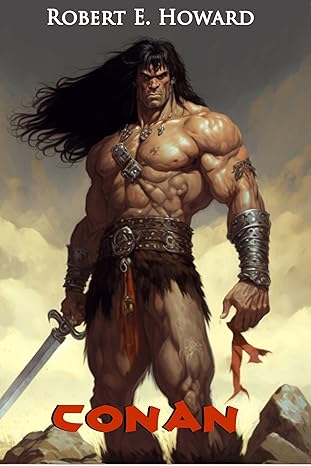
Robert Howard, 20th-century pulp fiction author and creator of Conan the Barbarian, believed that “barbarianism is the natural state of mankind. Civilization is unnatural. It is the whim of circumstance.”

Thomas Hobbes, 17th-century English philosopher best known for his social contract theory, attempted to justify that the authority of the state superseded the rights of man, believing that the natural state of man was war, that life was “solitary, poor, nasty, brutish, and short,” thus necessitating some higher authority to calm and tame the natural instincts of man.

Michael Huemer, professor of philosophy at UC Boulder, argues that “The current state of American society is a historical fluke, marked by extraordinarily low levels of exploitation, oppression, and injustice… The key sources of this happy state include such institutions as democracy, free markets, and modern science.”

I would add free speech coupled with property rights to the mix. Modern science is a double-edged sword that in the end, I would argue, is more a societal neutral force rather than a force against our true nature.

Huemer further maintains that before we tear down these stabilizing institutions, we should heed the advice of the Hippocratic Oath and first do no harm, stating, “If we undermine our current norms and institutions, the most likely result is not that we will be swept into a paradise… [but] the most likely result is that we will revert to something closer to the natural state of human beings.”

Huemer concludes with the observation that the 20th-century experiment called communism swept away all existing culture, norms, and institutions, resulting in 100 million deaths.

Source: Oxford Reference. Progressive Myths by M. Huemer, 2024. Graphic: Conan, Kindle Book Cover, Amazon.

Epistemic Humility

Donald Rumsfeld, expanding on Socrates’ statement, “The only true wisdom is in knowing you know nothing,” pedantically states in the year 2002 that, “There are known knowns—things we know that we know. There are known unknowns—things we know we don’t know. But there are also unknown unknowns—things we don’t know we don’t know.

Which suggests that we all are pre-ordained to a life of study to shorten the list of unknowns and the embarrassment of being unprepared.

G.K. Chesterton anticipating that a lifetime, or something less than a lifetime of study has its dangers, warned in his 1908 collection of essays, “All Things Considered,” “Without education, we are in a horrible and deadly danger of taking educated people seriously.” Implying that a myopic education may allow for mastering a single subject but is ill-equipped to understand anything broader; unable to see the forest for the trees.

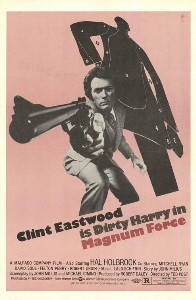
Which leads us to the 1973 “Magnum Force” with Clint Eastwood, wielding a Smith and Wesson Model 29 .44 magnum in a Dirty Harry hand, explaining to an unfortunate soul that “A man’s got to know his limitations,” highlighting the concept of epistemic humility: the recognition that one’s knowledge and understanding is always limited and to proceed accordingly.

Source: Socrates. G.K. Chesterton. Socratic-Method.com.  Graphic: Magnum Force poster, copyright Warner Bros.

Rainbows

God’s Edenic Covenant with Adam and Eve in which they were promised eternal life and given dominion over the animals stipulated that they were to obey one command: not to eat the fruit from the tree of knowledge (of good and evil).

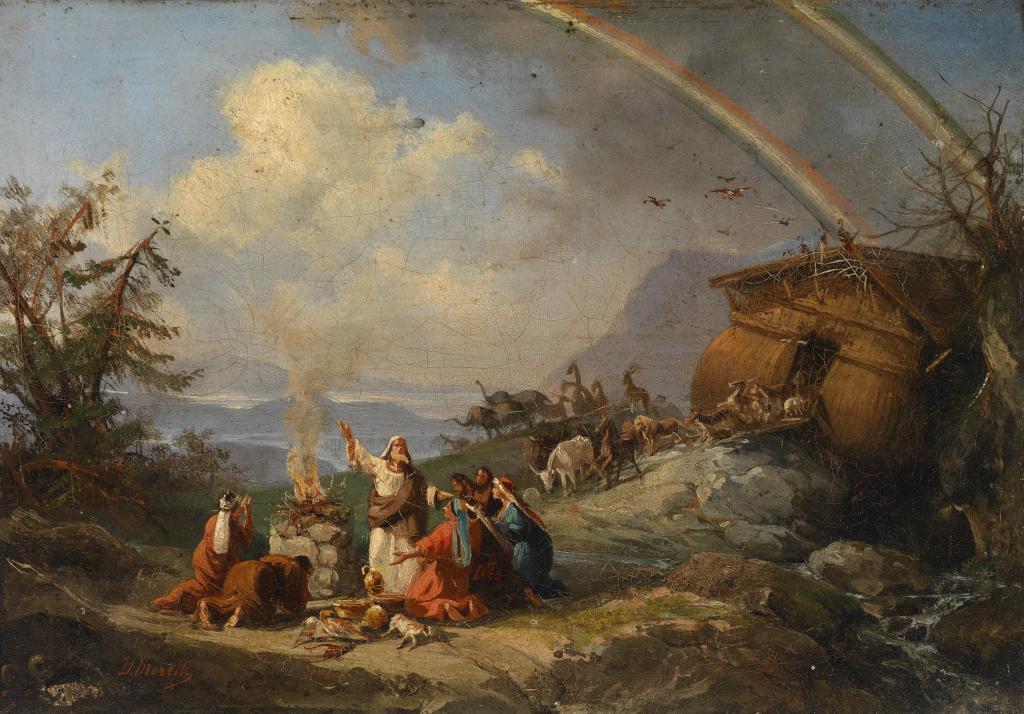
That didn’t work out well for Adam and Eve, so he made a covenant with Noah after the flood that included seven laws for man to live a just and moral life. With man’s observance, God promised to never destroy the world by flood again.  God sealed the covenant by creating a rainbow.

The seven laws of Noah:

1 – Do not worship false gods

2 – Do not curse God.

3 – Do not murder.

4 – Do not commit adultery or sexually immorality.

5 – Do not steal.

6 – Do not eat flesh from a living animal.

7 – Establish courts of justice.

Source: Seven Laws of Noah by Slon Anava, 2014, Azmut. Graphic: Noahs Dankgebet by Domenico Morelli 1901, Public Domain.