Michelangelo, Medici, and Florence

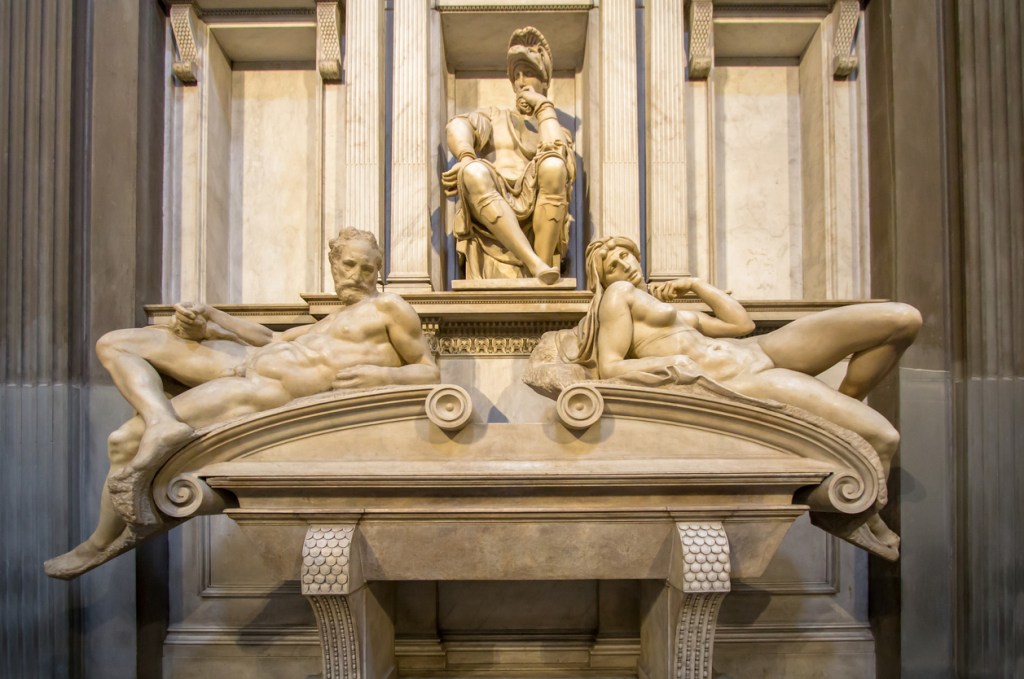
Tomb of Lorenzo II de Medici and below lying on the sarcophagus two sculptures ‘Dawn and Dusk’ in Medici Chapel, Florence, Italy

Florence, the Medici family, and the Renaissance are inextricably linked, forming a vibrant nexus of world-shaping brilliance and energy. After Lorenzo the Magnificent’s death in 1492, Michelangelo emerged as the towering figure of art and beauty during the High Renaissance, spanning the late 15th and early 16th centuries.

Michelangelo’s unparalleled artistic mastery endured for nearly fifty years beyond his death in 1564, yet with the passing of Ferdinando I de’ Medici in 1609, Baroque masters like Caravaggio and Bernini ascended as Europe’s preeminent talents.

Michelangelo navigated a delicate balance with the shifting demands of his Medici patrons, fiercely defending his artistic vision while securing payment, often with friction. The expectations of the Medici popes, Leo X (1513–1521) and Clement VII (1523–1534), frequently clashed—both in timing and creative intent—with his ambitions. This tension, happily, fueled his masterpieces, including the Sistine Chapel ceiling (1508–1512) and the Last Judgment (1536–1541).

The image depicts the Tomb of Lorenzo II de’ Medici, a work Michelangelo sculpted between 1524 and 1531.

Source: The Medici, Michaelangelo…Florence, Essays by Acidini…2002. Graphic: Tomb of Lorenzo II de Medici, Michelangelo, 1524-1531. CAHJKT iStock Photo Licensed.
Exploits in Dying

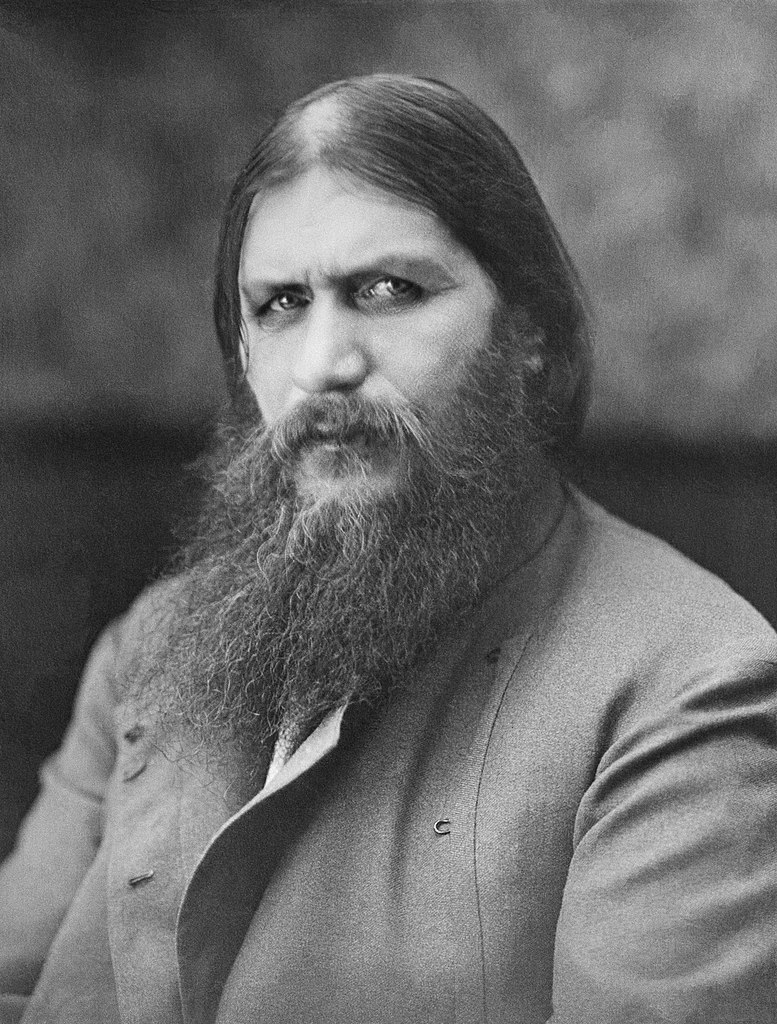
Grigori Rasputin, a Russian mystic, met an inglorious, improbable, and inexplicable end in 1916 at his assassin’s Moika Palace in Saint Petersburg. Although accounts vary, Rasputin’s executioners ostensibly made multiple attempts to murder him. They began with cyanide-laced cakes, which did not achieve their desired outcome. Next, in an attempt to reach a different result with the same measures, they offered him wine fortified with more cyanide. This attained the same result as the first attempt.

Following this, they shot him multiple times, but he continued to move, eventually attacking his would-be murderers. Finally, they wrapped him up in a carpet and tossed him into a freezing river, where he supposedly died of hypothermia.

A less imaginative account of his death suggests that he died from a single bullet to the head.

Rasputin supposedly left a letter, which was read by Alexandra, the wife of Tsar Nicholas II, prophesizing that if he was killed by Russian nobles, the Russian Tsar’s family would be executed within a few years.

Source: Biography, 2021. Graphic; Rasputin, c1910, Russian Empire, public domain. 

15 Million Asteroids

How high’s the water, mama?
Two feet high and rising
How high’s the water, papa?
She said is two feet high and rising”
(Johnny Cash Five Feet High and Rising)

The early development of life on Earth relied on two essential building blocks: carbonaceous (carbon) material and water. It has long been postulated that asteroids, comets, and other planetesimals brought these ingredients to our planet. Water in meteorites existed in the form of hydrous minerals and possibly brine.

Researchers from Rutgers University, led by Professor Katherine Bermingham, studied isotopes of molybdenum from meteorites and Earth’s crust. They inferred that water arrived on Earth during its late accretion phase, around 4.1-3.8 billion years ago. The team also suggested that the water was delivered by inner solar system planetesimals such as comets and asteroids.

This is a crucial milestone in Earth’s development timeline, as there are two competing theories about when water was delivered to our planet: the Moon-Forming Event and the Late Heavy Bombardment (LHB). The Moon is believed to have formed about 4.5 billion years ago, shortly after Earth formed around 4.56 billion years ago, caused by a large object crashing into Earth. The LHB is a period of intense bombardment by planetesimals on the inner planets, occurring around 4.1-3.8 billion years ago.

An inference from the LHB is that all planets and moons existing at that time either contained or still contain water.

Trivia: Assuming the median size of planetesimals striking Earth during its early formation was around 15 kilometers (9.3 miles) with an average water content of 5% of their total volume, it would take about 15,688,960 hunks of rock to supply the current volume of water on Earth. Dividing that number by the LHB time interval of 300 million years suggests a significant impact every 227 months, or roughly every 19 years.

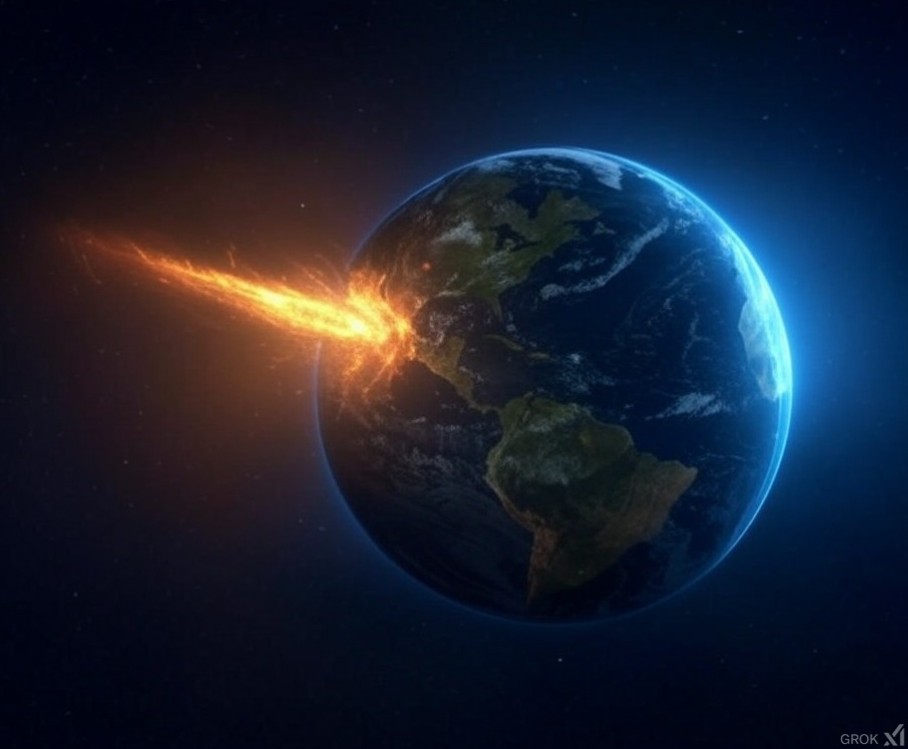
Source: Life-bearing Water, by Bermingham et al, Rutgers, 2025. Graphic: Comet Cometh, Grok, 2025.

Painter of the Real

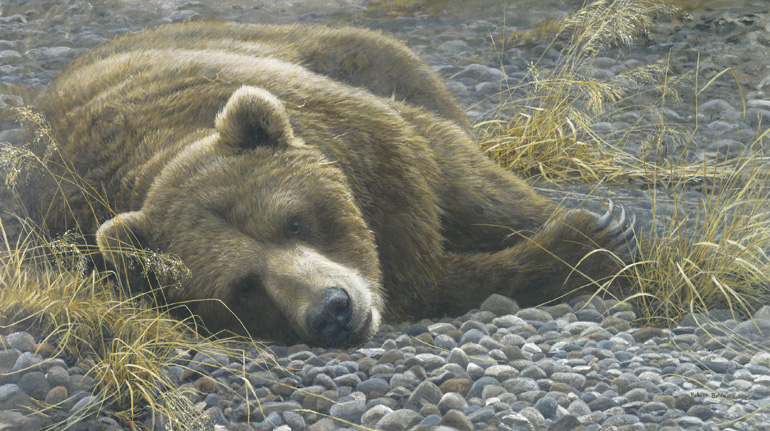
Robert Bateman, a Canadian artist from the school of Realism, paints wildlife with the precision of a photographer, leaving the viewer to ponder reality as it is rather than relying on the interpretation of the man with a brush. Bateman, explaining his motives, says, “I try to portray an animal living its own life independent of man.”

His paintings often place the subject tangentially, guiding the line of sight from the center to an edge where the action occurs. This composition suggests a reality beyond all living things, implying that we are all bit players, regardless of our size.

Bateman’s style is reminiscent of fellow Realist Andrew Wyeth, whom he acknowledges as a significant influence. However, Wyeth never entirely let go of his early impressionistic impulses. Roger Tory Peterson noted that while Wyeth froze his subjects in the moment, Bateman’s “subjects are ready to go somewhere else, to fly away,” allowing the reality of the moment to transition to another point in time, to a different reality.

Edgar Degas, an Impressionist Realist who combined realistic details of life with the softening blur of Impressionism, commented that one of the past masters of Realism, Jean-François Millet, painted so realistically that his work almost destroyed the profession. Wallace Stevens, a 20th-century modernist poet, took a different and somewhat counterintuitive view, stating that Realism is a corruption of reality. He believed that Realism reduced the complexity and beauty of the universe to the literal, leaving no room for the experience of humanity.

Both criticize Realism for its lack of emotion and interpretation, failing to observe that a gift from God is perfect as presented.

Source: The Art of Robert Bateman by Ramsay Derry 1981. Graphic: Grizzly at Rest by Robert Bateman, 2006.

My Friend Can Stick Around

The Weight” by Robbie Robertson is one of The Band’s best-known songs. It was released on their 1968 breakout album, Music from the Big Pink. It is ranked among the greatest rock songs of all time by Rolling Stone and the Rock and Roll Hall of Fame.

The song’s narrative is a commentary on the impossibility of doing good, emphasizing that morality and virtue require effort. Jake Grogan quotes Robertson philosophically explaining his song as the weight placed on one’s shoulders when fulfilling a favor: “The Weight was this very simple thing. Someone says, ‘Listen, would you do me this favor? When you get there, will you say hello to somebody, or will you give somebody this, or will you pick up one of these for me? … I’ve only come here to say ‘hello’ for somebody, and I’ve got myself in this incredible predicament.

Trivia: The opening line of the song, “I pulled into Nazareth, was feelin’ about half past dead,” refers to Nazareth, Pennsylvania, where Martin Guitars manufactures their instruments.

Source: Origins of a Song by Jake Grogan, 2018. Graphic: The Weight video by Robbie Robertson and Ringo Star, 2018 Universal Music Publishing.

Brunelleschi’s Dome

Filippo Brunelleschi, a goldsmith, engineer, and relatively inexperienced architect, completed the largest masonry dome in the world in 1436—a record that has never been broken. The world now knows it as Brunelleschi’s Dome, which sits atop the Cathedral of Saint Mary of the Flower in Florence, Italy.

When completed, the dome was 52 meters (171 feet) high, with an exterior diameter of 45.5 meters (149 feet) and an interior diameter at its base of 41 meters (135 feet). The base of the dome sat above the crossing of the Cathedral, which was 55 meters (180 feet) above the ground. Atop the dome was a lantern measuring 21 meters (69 feet) in height, bringing the entire Cathedral structure to a remarkable 128 meters (420 feet). While it was not the tallest structure in the world at the time—Lincoln Cathedral in England, at 160 meters (525 feet), held that distinction—it was certainly an impressive architectural feat.

Trivia: Brunelleschi developed an ingenious mechanical lift to raise materials up to the dome. The modern world knows what that device looked like and how it worked because a young Leonardo da Vinci sketched the hoist when he was apprenticed to the Florentine painter Verrocchio beginning in 1466. Due to that sketch, Leonardo was sometimes mistakenly given credit for inventing the hoist.

Source: Brunelleschi’s Dome by Ross King, 2000. Graphic: Brunelleschi’s Dome by National Geographic, 2013-2019.

1556 Shaanxi Earthquake

23 January 1556, a massive earthquake with a magnitude estimated between 7 and 8 struck Shaanxi, China, resulting in the tragic loss of upwards of 830,000 lives. The quake hit late in the evening, when most people were at home, leading to widespread destruction as homes were buried by landslides and collapsed structures.

This devastating extensional earthquake occurred in the Wei River Valley, part of the Weihe-Shanxi Rift system. Faults in the region indicate that vertical movement of up to 25 feet might have occurred during the tremor or multiple quakes.

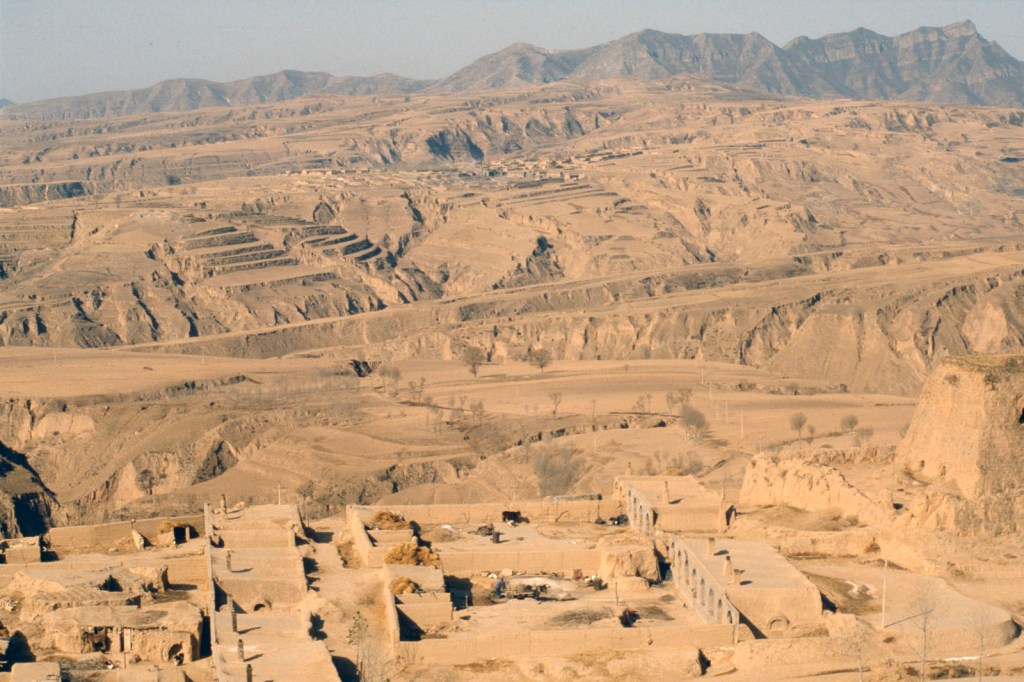
The Wei River Valley is also renowned for its extensive loess deposits—glacially created windblown silt and fine sand—that have shaped the landscape into a series of terraces and rolling hills. In the 16th century, local inhabitants carved out caves, known as yaodongs, in these loess deposits for shelters. Tragically, during the earthquake, these caves and above-ground shelters collapsed, burying most of the inhabitants alive.

Source: Shaanxi Earthquake by Smith, 2021, Nature World News. Graphic: Loess Landscape Near Shanxi, China by Till Niermann, public domain.

No One Shall Sleep

Nessun Dorma,” (No One Shall Sleep) an aria by Giacomo Puccini from the final act of his opera Turandot, is performed by an enigmatic tenor prince who seeks the hand of Princess Turandot. The Princess decrees that any suitor must solve three riddles to win her consent for marriage. The unknown prince answers all the riddles correctly, but the Princess still defers. He then proposes a counteroffer: if she can guess his name, she can have him executed, but if she cannot, she must marry him. In response, the Princess commands that none of her subjects shall sleep until they uncover his name.

Puccini’s opera, left incomplete at his death in 1924, offers a unique interpretation of Carlo Gozzi’s 18th-century play of the same name, which, in turn, drew inspiration from a 12th-century Persian fairy tale by Nizami as part of his poem collection titled Haft Peykar. In the fairy tale, a princess sets impossible riddles for her suitors.

Puccini retains three riddles from Nizami’s tale but alters the third one:

  1. What is born each night and dies each dawn? (hope)
  2. What flickers red and warm like a flame, but is not a flame? (blood)
  3. What is like ice but burns? (Princess Turandot)

(Nizami’s original 3rd riddle: What echoes with countless voices, yet has no voice of its own? (a letter))

Source: Grove Book of Operas edited by Stanley Sadie, 2006. Wikipedia. Graphic: Nessun Dorma by Pavarotti, 2023 copyright Warner Classics.

The End

On 16 January 27 BC, the Roman Senate voted to confer the title of Augustus upon Octavian, Julius Caesar’s adopted son, realistically marking the end of the Roman Republic and the beginning of the Roman Empire. This decision aimed to restore stability and order after years of civil war and internal conflict, legitimizing Octavian’s authority while maintaining a veneer of republican governance. Augustus took effective control of the military, religion, bureaucracy, and administrative operations of the empire.

After the assassination of Julius Caesar in 44 BC, Octavian, in 43 BC, formed the Second Triumvirate with Mark Antony and Lepidus. Following their eventual conflict and his decisive victory at the Battle of Actium in 31 BC, Octavian became the uncontested ruler of Rome.

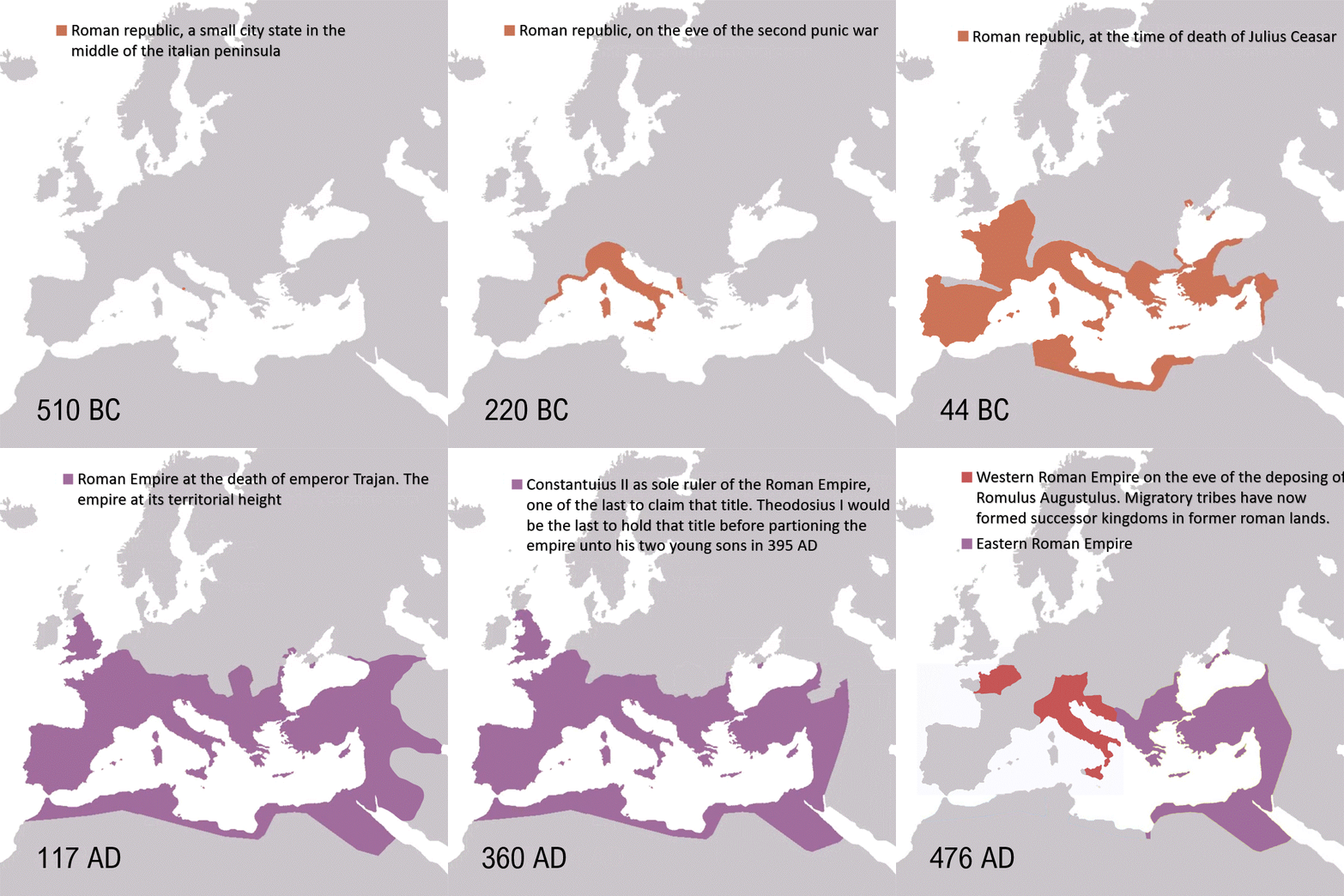
The Roman Empire was the final iteration of the Roman government, which began as a monarchy with Romulus as king in 753 BC, transitioned into a republic in 509 BC, and lasted through the era of civil wars and dictatorships until Octavian’s elevation as Augustus in 27 BC. The Roman Empire as a whole lasted until 476 AD when the Western Empire fell, while the Eastern Empire continued until 1453 AD.

Trivia: 16 January 27 BC, is the actual Julian calendar date, retained and quoted in texts for historical accuracy. According to the Gregorian calendar, however, the date marking the end of the Roman Republic would be 26,27 January 27 BC.

Source: Roman Republic…by M. Vermeulen, The Collector, 2020.  Graphic: Evolution of the Roman Empire, by ESKEHL-Wikipedia, 2022.

Choose

Movies such as Pakula’s 1982 “Sophie’s Choice” and Eastwood’s 2024 “Juror #2” depict gut-wrenching moral dilemmas, where every decision is flawed and ethically unbearable.

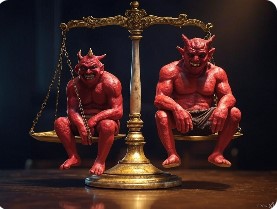
Moral dilemmas arise when all available options are objectionable, involving transgressions against moral principles. Their resolution often revolves around the “Principle of the Lesser of Two Evils,” where one chooses the least harmful option.

In 1944, President Roosevelt’s health was rapidly deteriorating, and many in the Democratic Party believed he wouldn’t finish his term if re-elected. Despite this, Roosevelt ran for a fourth term but was pressured to find a different running mate with better economic and leadership skills. Vice President Henry Wallace was replaced by Harry Truman, a senator from Missouri, on the ticket.

Roosevelt won his fourth term but passed away less than three months into it, making Truman the 33rd President on 12 April 1945. Within four months, Truman faced the dilemma of dropping atomic bombs on Japan to possibly end World War II or continuing a more conventional war.

Although there were no initial estimates of fatalities before the bombings, aftermath estimates suggested that up to a quarter of a million lives were lost at Nagasaki and Hiroshima. In contrast, continuing the war conventionally was estimated to result in 6 to 11 million additional fatalities.

Truman chose the lesser of two evils: sacrificing a quarter of a million souls to save millions.

Source: Lesser Evil Principle by Dougherty, 2020, Encyclopedia of Business and Professional Ethics. Graphic: Grok Generated.