The Fall

Edward Gibbons’ epilogue to his book, “The Decline and Fall of the Roman Empire”, mentions several factors that led to the collapse of the Empire:

  1. Barbarian Invasions: Incursions and settlements of Germanic tribes, Saxons, Huns, Alans, and others that overtaxed and weakened the Roman military and its infrastructure.
  2. Decline of Civic Virtue: Loss of a sense of civic duty and responsibility and the subsequent decay of public morality
  3. Christianity: Spiritual concerns took the focus away from civic duties. (Gibbons wasn’t an atheist but likely a deist or a detached Christian with a disdain for organized religion.)
  4. Economic Decay: The empire faced heavy taxation, inflation, and reliance on slave labor. Inflation was due to government corruption, excessive trade imports, military spending, and debasement of the currency.
  5. Political Corruption: A corrupt and unstable political system led to ineffective and nonsensical governance.
  6. Military Overextension: The Empire was too large to manage, resulting in an over-stretched military.

Marcus Aurelius in his book, “Meditations” also mentions the Antonine Plague years of 165-180 AD (a second outbreak occurring from 251-266 AD) as the primary cause of the Empire’s decline. The plague reduced Rome’s population, affecting its military’s ability to defend its borders, and the loss of labor to maintain its infrastructure.

Additional factors have also been mentioned by others, including: a disloyal military, civil wars, lead poisoning, and the always useful-climate change.

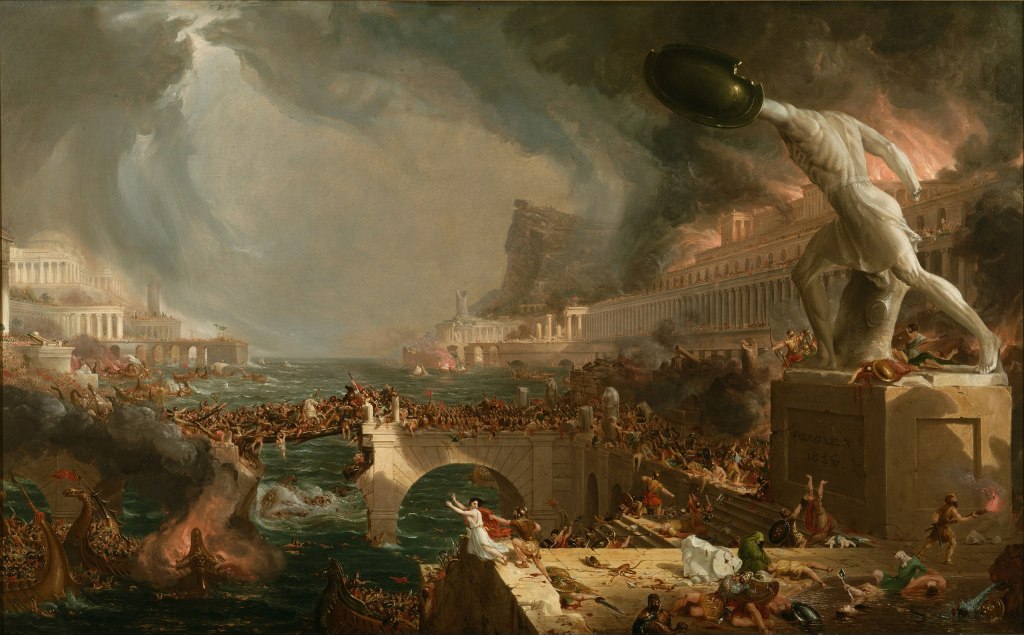
Source: “The Decline and Fall of the Roman Empire” by Edward Gibbons, 1776-1788. “Meditations” by Marcus Aurelius. Graphic: Destruction by Thomas Cole, 1836, from the series: The Course of Empire. New York Historical Society. Public Domain.
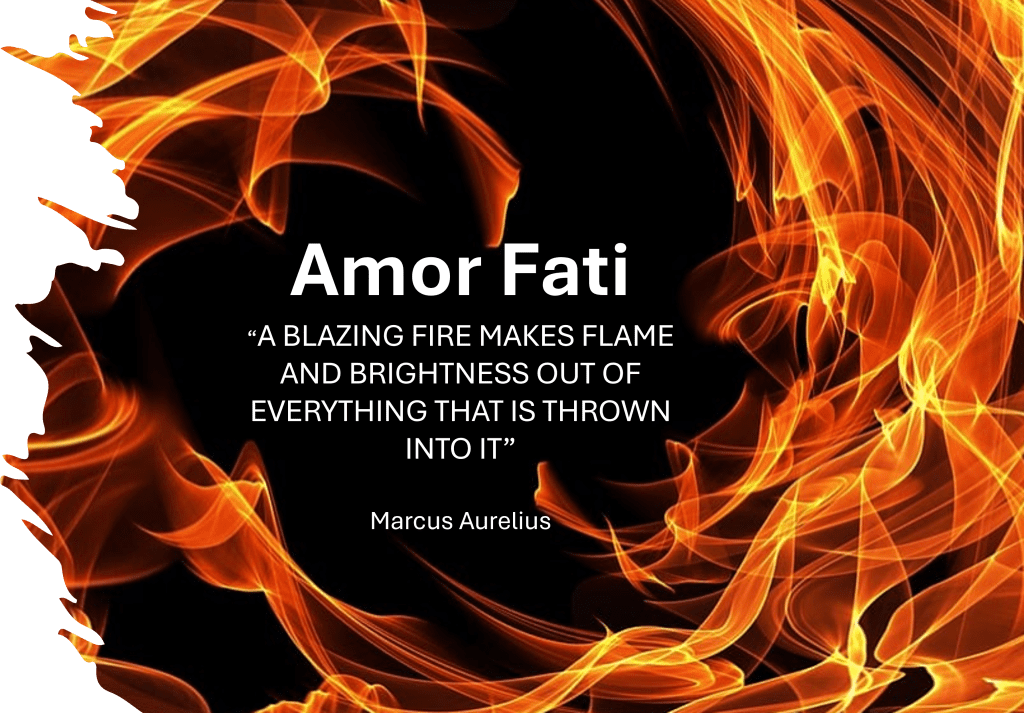
Amor Fati

Marcus Aurelius in “Meditations” reflects and instructs continuously on living harmoniously within the constructs of the universe, nature, and reason.

His philosophical foundation, Stoicism, meant living virtuously and rationally within a structured system that he believed was a manifestation of “Logos”, the rational principle that governs the universe. “Logos” can be understood as a divine rationality or intelligence that permeates and directs the universe.

Reason or “Logos” is the central pillar of Stoicism and is the guiding principle that governs the universe. Rational thought, rather than emotional impulse, is about seeking wisdom, demonstrating courage, seeking justice, and exercising temperance: living virtuously.

Nature means understanding that everything in life is interconnected, that all life is part of a larger, harmonious system governed by reason.

The Universe, to Stoics, is a well-ordered system where all actions happen for a reason. Stoics believed that one must live in harmony with the universe and embrace “Amor Fati”, accepting fate and focusing only on matters within one’s control.

Source: Meditations by Marcus Aurelius. Friedrich Nietzsche.

Life Goes On

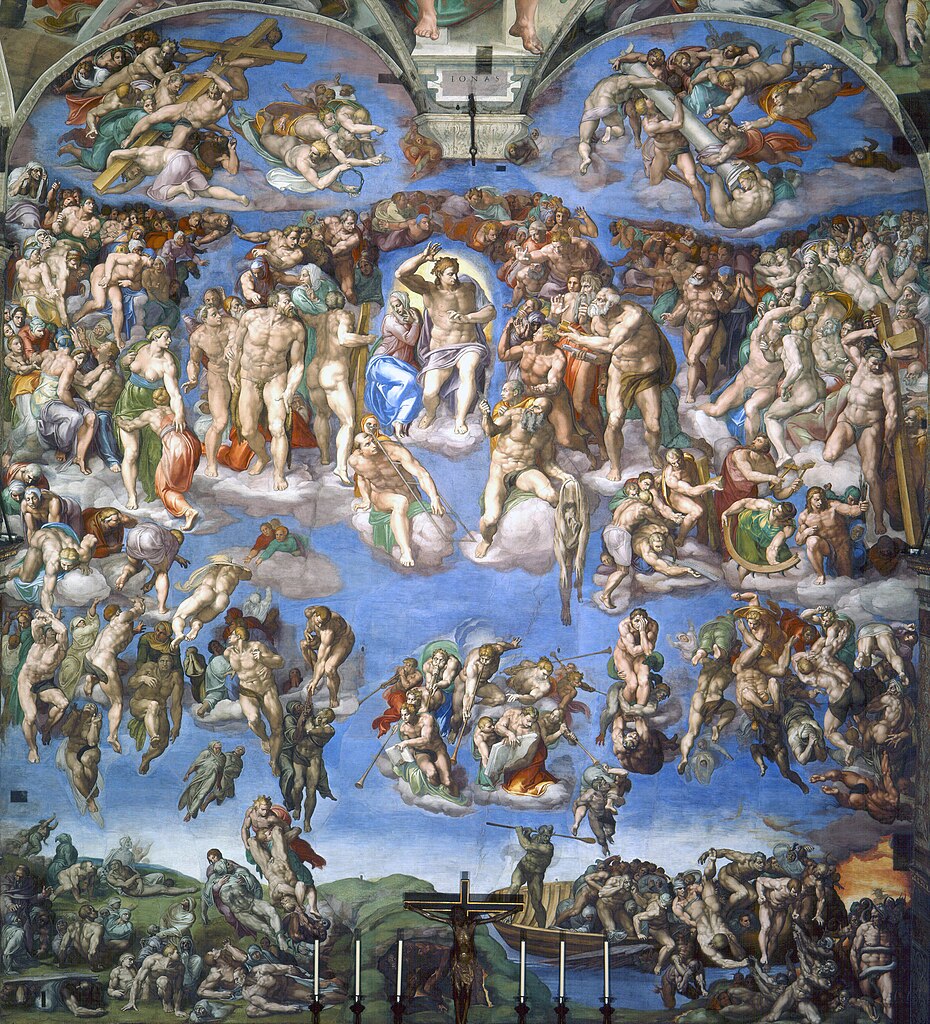
Marcus Aurelius, the last Stoic, stays his fear of death by believing that life’s pauses and changes are preludes to death of which we should not fear. He stated in Book IX of his Meditations: “[as you] …pass to the ages of your life, boyhood for instance, youth, manhood, old age; for each change of these was a death; was there anything to be afraid of?”

This comes directly from Heraclitus, a Greek philosopher and influencer of the first Stoic: Zeno, stating that, “The living and the dead, the sleeper and the watcher, the young and the old are the same.

St. Augustine in Confessions rephrases Marcus and Heraclitus with the joyful question; “And lo! My infancy died long since, and I am alive… Declare to me, your suppliant, did my infancy succeed to some age of mine that is also dead?

Joseph Butler, Christian apologist and philosopher, carries the thought to its logical conclusion, writing: “We have passed undestroyed through those many and great resolutions of matter, so peculiarly appropriated to us ourselves; why should we imagine death will be so fatal to us?”

Butler’s argument is that if we’ve survived many transformations throughout our lives, there’s no reason to believe that death would be our ultimate end. His view is grounded in the belief that our continued existence after death is consistent with the enduring nature of our existence during life.

Source: Meditations by Marcus Aurelius, edited by Farquharson. Graphic: The Last Judgement by Michelangelo, Sistine Chapel. Public Domain.

Thought for the Day

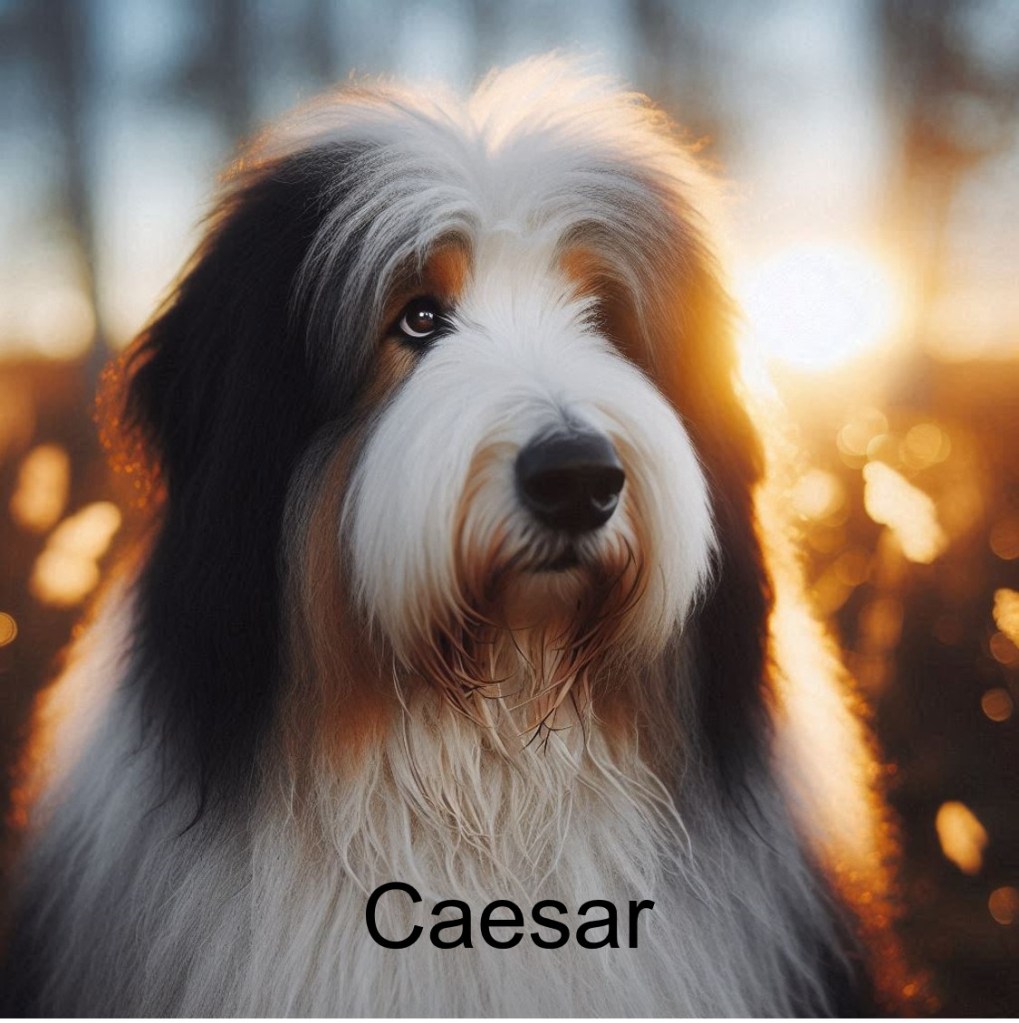
T.H. Huxley, Darwin’s Bulldog, anatomist, and autodidact, reflecting upon time and matter, makes the humorous connection that, “It is very possible that atoms which once formed an integral part of the busy brain of Julius Caesar may now enter into the composition of Caesar, the housedog in an English homestead.

Source: Elementary Physiology, T.H. Huxley, 1902. Graphic: English Sheepdog, AI generated.

Know Thyself

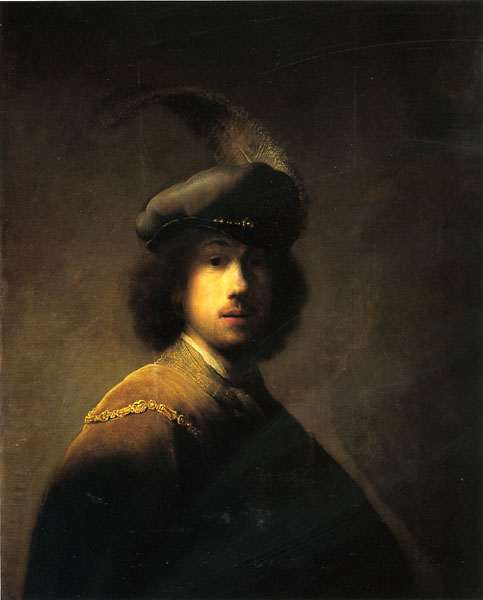
Draughtsman, etcher, painter, Rembrandt van Rijn, fascinated with the expressive face, inclined to acting out different character roles, inserting himself into the crowds to witness his subjects, shaping his public persona through his art, uncertain in youth, self-assured by mid-life, reflective towards the end, it is believed, with scholars still counting, that he created 40 to 50 paintings, 31 or 32 etchings, and 7 drawings of himself over a period of 44 years.

It is believed to be a record for self-portraits by a renowned artist.

The curator at the Museum of Fine Arts, Boston, C.S. Ackley writes that: “The artist used himself as a cheap model, studying his contorted features in the mirror.

A student of Rembrandt wrote in 1678 that a young budding artist should use a mirror to aid in the representation of the passions or emotions in order “to be at once performer and audience.”

To paraphrase the Delphic maxim: Know your art by studying yourself.

Source Rembrandt’s Journey by C.S. Ackley, 2003. ThoughtCo. 2019. Graphic: Rembrandt, Self-Portrait, Oil on Panel, 1629, Isabella Stewart Gardner Museum, Boston.

The Last Stoic

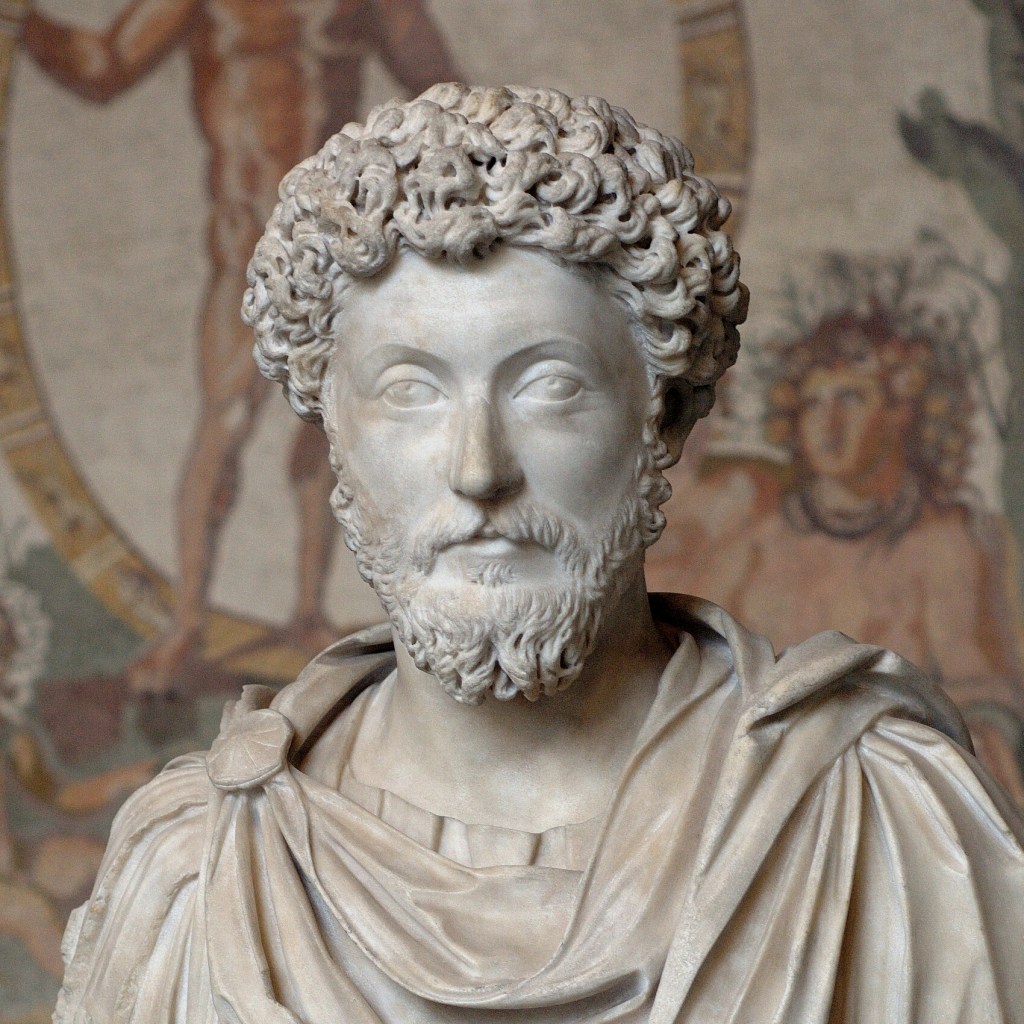
Marcus Aurelius Antoninus, Roman Emperor, soldier, stoic philosopher, stated in Book I of his Meditations that Plutarch’s nephew, Sextus taught him: “…life according to Nature, Dignity without pretense, solicitous consideration for friends, tolerance of amateurs and of those whose opinions have no ground in science.”

Marcus Aurelius, along with Alexander the Great are two rulers who came closest to Plato’s concept of a Philosopher-King. Plato believed that to rule justly and wisely required a thorough foundation in philosophical principles coupled with the skill to serve for the benefit of the state and the ruled rather than for personal gain.

Source: Meditations by Marcus Aurelius. Graphic: Bust of Aurelius extracted from Glyptothek Munich. Public Domain.

The Age of Metternich

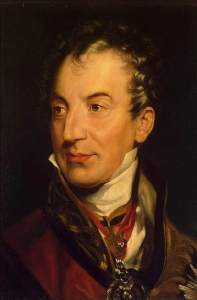
Klemens von Metternich, under the Habsburgs, was the Foreign Minister, Chancellor of Austria and chief censor of word and speech in the immediate aftermath of the Napoleonic Era.

A strict monarchist, he attempted to suppress liberal democracies and nationalist movements by censoring the press, books, speech, and even tombstones through a process that became known as the Metternich System spanning the years from 1815-1848. This period subsequently became known as the Age of Metternich.

His system of censorship was implemented through the Habsburgs Court Police. Attacks against the monarchy, government, heads of state, religion, and immoral utterances were forbidden. The press was relentlessly controlled and censored. Violators of the censorship rules faced imprisonment, fines, confiscation of their works, and banning of publications.

The Metternich System collapsed when revolutionary idealism broke out in Vienna in 1848, and Metternich fled to England to save his skin.

Source: A Little History by E. H. Gombrich. Graphic: Metternich by Sir Thomas Lawrence 1814-1819.

Versailles

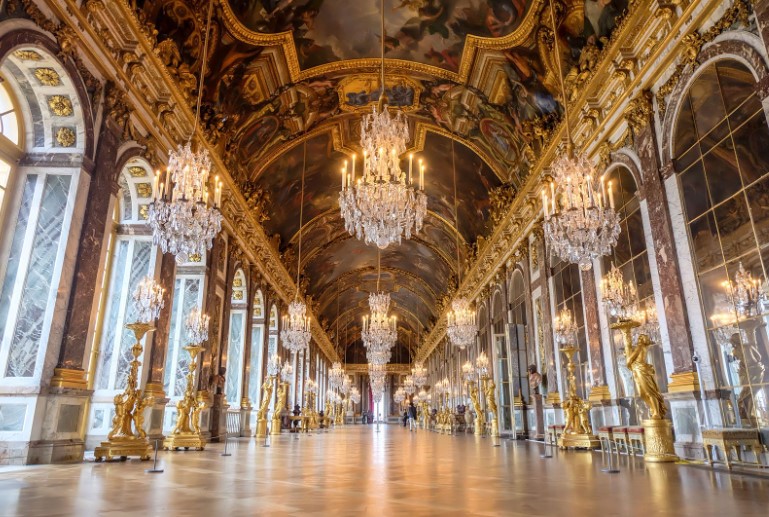
The Palace of Versailles is the modern definition of grand opulence. Opulence beyond the comprehension of the common man. Built as a tribute to, and glorification of, himself, King Louis XIV, who stood at the apex of the world stage in the 17th century.

He built the palace to move his court out of Paris, supposedly so he could exert more control over the French nobility.

Initial construction began in 1661 with the Grand Palace and its surrounding gardens and culminated in 1710 with the completion of The Royal Chapel. The entire estate covers about 2000 acres and various estimates suggest that Versailles would cost $2-50 billion to construct today.

The Hall of Mirrors, shown in the graphic, was added, along with the wings to the Grand Palace from 1678-1684.

Source: Versailles by Perouse de Montclos, 1991. Graphic: Hall of Mirrors, Britannica.

Western Taste–Georgian Style

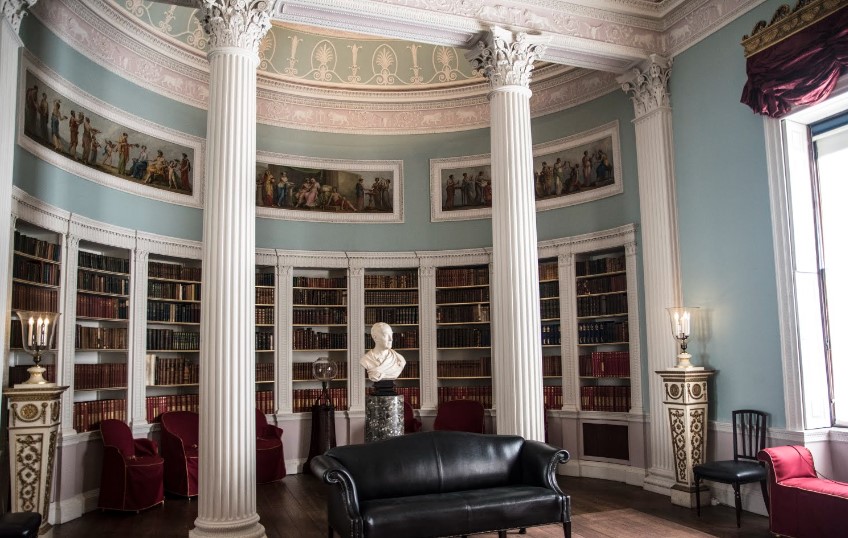
The Great Room or Library at Kenwood House in London, built from 1767-1770, was and still is considered the creme de la crème of English interior architecture during the reign of the Hanoverian Kings.

The designer of the Great Room, Robert Adam was a Scottish neoclassical architect during the Georgian Era. (All the Hanoverian Kings were named George.) This period spanned most of the 18th and early 19th centuries and Adam was singularly responsible for the revival of classical architecture throughout the west from 1760 till the end of the 18th century.

Trivia: Hanoverian King, George III, prime American Revolutionary War antagonist, ruled England during the height of Robert Adam’s influence on architecture and interior design.

Source: Robert Adam by Jeremy Musson and Paul Barker, 2017. Graphic: The Adam Library, Kenwood House on Hampstead Heath, Joe Adamczewski photo, copyright English Heritage.

The Hand of God

Guillaume de Laubier and Jacques Bosser in their book ‘Sacred Spaces: The Awe-Inspiring Architecture of Churches and Cathedrals’ capture the artistic wonderment and engineering marvels that sprang from the last two millennia of Christian faith. From St. Peter’s Basilica in Rome to St. Paul’s Cathedral in London and back to Barcelona’s Basilica de la Sagrada Familia, the authors showcase the magnificent architectural monuments to Christ that are unsurpassed in our contemporary world of concrete and steel. The beauty presented in these ‘Sacred Spaces’ were constructed with flesh and blood but only God could have provided the inspiration and the will to create them.

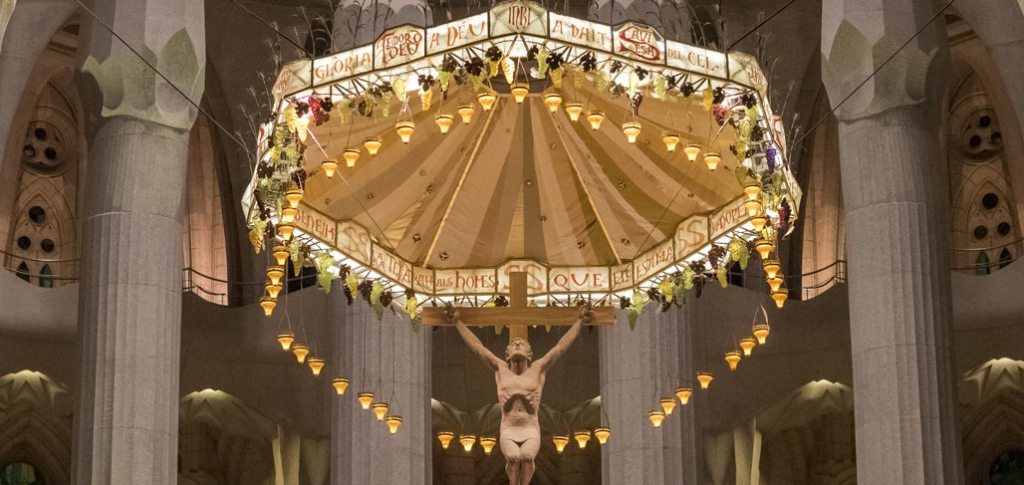
The photo is the baldachin, or canopy, which hangs in the Barcelona Sagrada Familia. It represents the Holy Spirit covering the cross of Christ and hangs below the representation of the Father (not shown), which taken together represent the Holy Trinity of Christian faith.

Source: Sacred Spaces: The Awe-Inspiring Architecture of Churches and Cathedrals by Jacques Bosser and Guillaume de Laubier, 2018. Graphic: The Baldachin: Representation of the Holy Spirit at the Sagrada Familia by Blog Sagrada Familia, 2018.