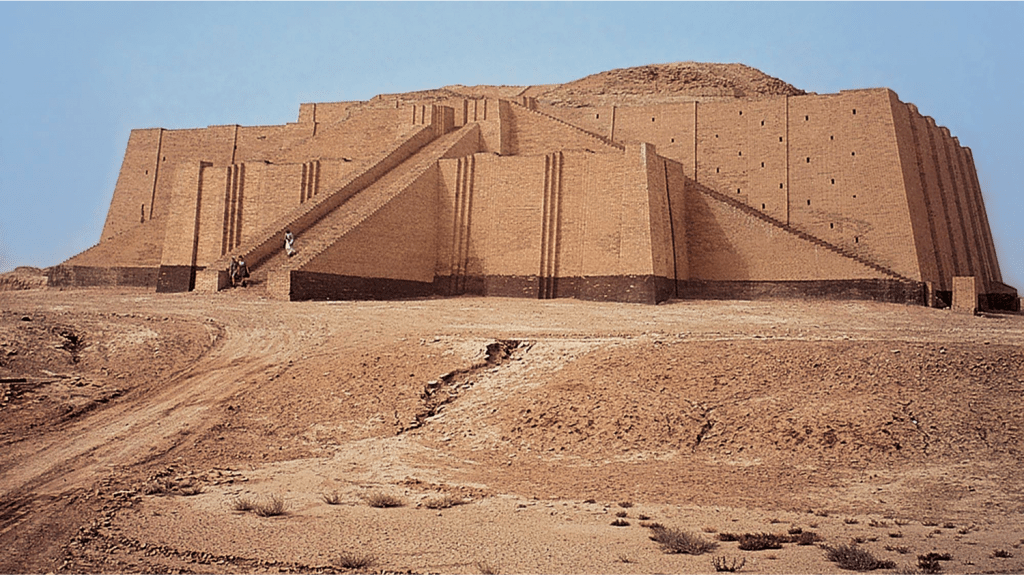
Five thousand years ago, Sumerians and Akkadians, occupying what is now southern and central Iraq, respectively, believed souls or spirits after death occupied a subterranean world called Kur or Irkalla.
All those who entered this underworld could not leave but it was not hell or heaven but more of a place to exist after death; as a ghost of your past.
There is no record that Mesopotamians in 3000 BC believed in reincarnation, resurrection, or any form or transmigration of the soul.
With many exceptions, the spirit or ghost that existed in the netherworld maintained the social status that they had when alive. Thus, kings were still kings, slaves were still slaves.
In the Epic of Gilgamesh, he and his friend Enkidu ventured into this underworld to retrieve their lost magical objects and to seek immortality. They did not find the magical objects, but they did find the Plant of Immortality but promptly lost it to a serpent, learning one of the earliest lessons for humanity: never entrust your life to a snake.
Source: Epic of Gilgamesh. Mesopotamian Beliefs by Chaksi, 2014, World History. The Afterlife by Enlightenment Journey. Graphic: Ziggurat of Ur, 21st century BC, dedicated to the Moon god Nanna.
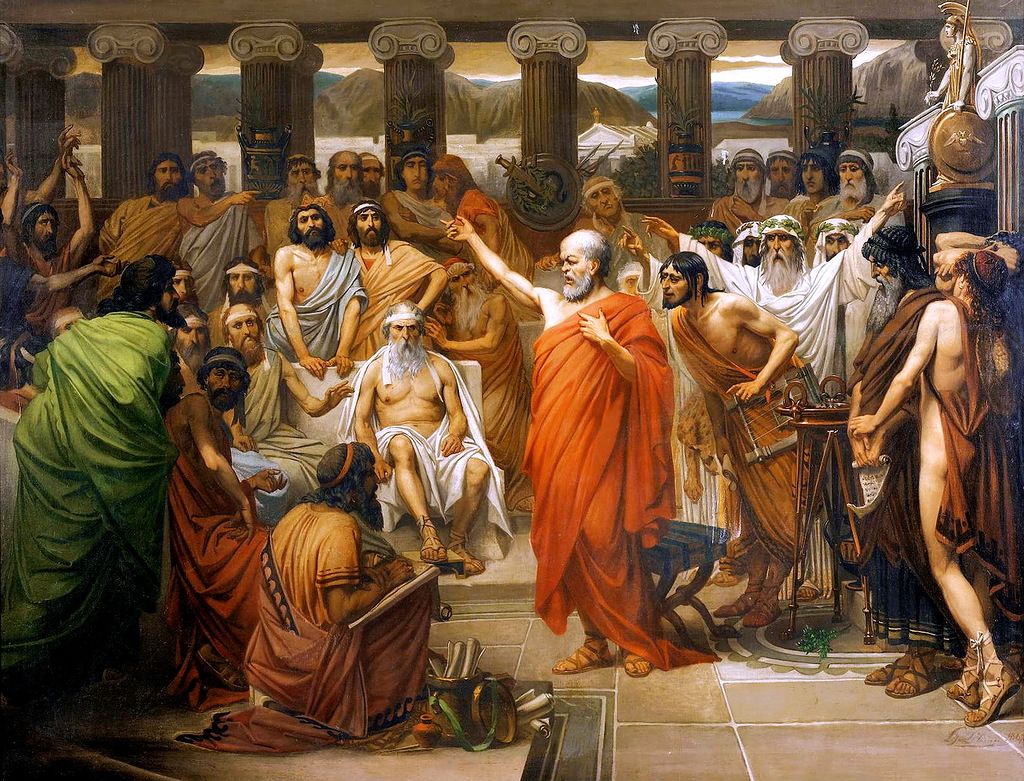
In Plato’s Republic, a “Noble Lie” is a myth, or a falsehood knowingly propagated by the elites to maintain social harmony, or stated succinctly, to keep the plebs in their place and make sure they love it.
Plato believed that society required a class system led by philosophers who needed to create a lie that unites and binds the lower classes to the state. Without this binding myth the classes will turn on each other, and the government will fail.
The Noble Lie myth promoted by Plato, via Socrates, was that the populace was born with hierarchical souls with the upper classes having better souls. Another myth was Karl Marx stating, “From each according to his ability, to each according to his needs,” formulating a classless society where goods and services were free.
Source: Plato’s Republic. A Noble Lie by Plato Intelligence. Introduction to Plato: The Noble Lie by Paul Krause, 2019, Minerva Wisdom. Graphic: Socrates’ Address by Lebrun, 1867, public domain.
Michael Straight, New Republic publisher, editor, and writer from 1948 to 1956, was a KGB spy associated with the notorious UK Cambridge Five that passed thousands of classified documents and secrets to the KGB from the 1930s through at least the early 1950s.
He worked as a speech writer for Frankin D. Roosevelt and in that administration’s Department of State beginning in 1937. In 1940 he was employed at the Department of State covering the Near East. In 1942 he joined the Air Force and was a pilot of B-17s. After the war he left government service to help run his family’s journalism business: the New Republic. In 1963 he admitted to being a communist spy and outed Anthony Blunt, the recruiter for the Cambridge Five for which he was given immunity from prosecution and a job as Deputy Chairman of the Coordinating Committee for Cuban Affairs in the Kennedy Administration.
After the collapse of the Soviet Union and the end of the Cold War it was revealed that Straight was a much more significant KGB asset than he led the US government to believe.
Source: Historica.fandom.com. History.com. Graphic: Michael Straight at Cambridge, 1936, Public Domain.
During the first and second centuries AD there were 3 major Jewish revolts against Roman rule in Judea: The first war from 66-73 AD, the Kitos War from 115-117 AD, and the Bar Kokhba Revolt from 132-135 AD. Roman taxation, financial exploitation, religious persecution, oppression, extrajudicial executions, and the plundering of the Second Jewish Temple all contributed to the conflicts.
Roman punishment increased with each successive war eventually leading to wholesale depopulation of Jewish communities by enslavement, death, and exile. It is believed that upwards of 1.3-1.4 million Jews were killed during these revolts, which would have been about one-third of the total worldwide Jewish population. After the Bar Kokhba Revolt the Romans renamed the area Palestina after the Philistines who populated the general area before the 6th century BC.
Source: Josephus. Wikipedia, Heritage-History, WorldHistory, Alchetron, Britannica. Graphic: Roman Triumphal panel from Beth Hatefutsoth showing spoils from the Jewish Temple. Max Morris 2016.
Josephus’s 20 volume history of the Jews titled: The Antiquities of the Jews was written to provide an account of the Jewish people for his Roman patrons and protectors.
Below is a synopsis of the 20 volumes:
Biblical creation to the death of Abraham’s son Isaac
History of Isaac’s sons to the Exodus of Jews from Biblical Egypt
Exodus from Egypt to the first 2 years of the 40 years in the wilderness
The remaining 38 years in the wilderness to the death of Moses upon reaching Canaan
Joshua’s replacement of Moses as leader to the death of the priest Eli
The capture of the Ark by the Philistines to the death of King Saul
David’s ascension to the throne of the Kingdom of Israel to the death of King David
Solomon’s ascension as King of Israel to the death of King Ahab
Reign of King Jehoshaphat to the fall of Samaria
Babylonian captivity of the Jews and the destruction of the Neo-Assyrian Empire
Start of the Persian Empire of Cyrus the Great to the death of Alexander the Great
Death of Alexander the Great to the Maccabean Revolt
Origins of the Hasmonean dynasty to the death of Queen Alexandra
The death of Queen Alexandra to the death of Antigonus II Mattathias
Herod the Great’s taking of Jerusalem to the completion of King Herod’s temple
Completion of King Herod’s temple to the death of Herod’s sons
Death of Herod’s sons to the banishment of King Archelaus
Josephus history covers major portions of the Old Testament including Genesis, Exodus, Numbers, Joshua, Judges, Ruth, Samuel 1&2, 1&2 Kings, 1&2 Chronicles, and Prophets. Josephus’s accounts provide for additional material and commentary not found in other texts including the bible.
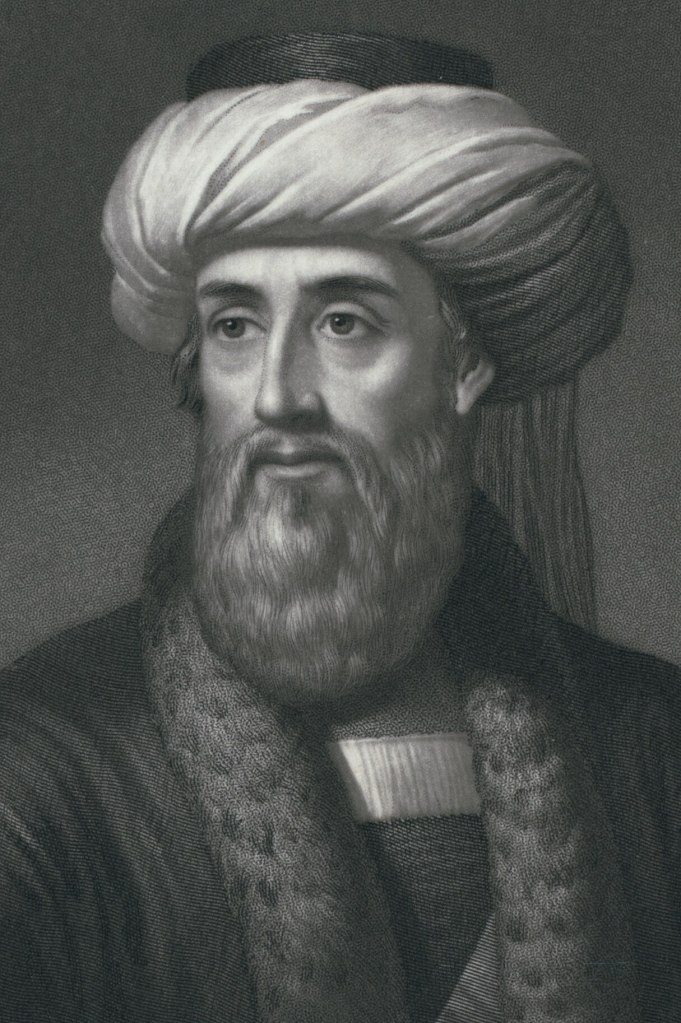
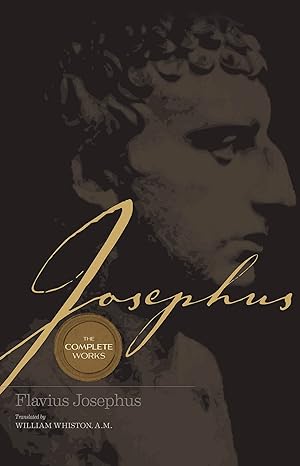
Source: Josephus: The Complete Works, 2003. Jewish Virtual Library. World History Encyclopedia. Graphic Joseph, Son of Gorian, by Thomas Emmet, 1880, public domain.
Flavius Josephus, a first century Jewish scholar and historian wrote four extant works:
The Jewish War. (Jewish Revolt) 75 AD – The first revolt against the Romans from 66-73 AD
The Antiquities of the Jews. 95 AD – From Adam to the death of Herod’s sons
Against Apion. 97 AD – A defense of Judaism
Vita or The Life of Flavius. 99 AD – Biography
These works provide significant source material and insight into first-century Judaism and Christianity.
Josephus was born into the Jewish priesthood on his father’s side and of Hasmonean royal descent maternally. He served in the Jewish military during the Jewish War but surrendered to the Romans and he was considered a traitor to Jews ever after. While waiting to be executed by the Romans he predicted that Vespasian would eventually be crowned emperor of Rome. Vespasian, because of the prophecy, spared his life and made him a consultant, but still a slave, to the Roman army. Josephus gained his freedom when Vespasian became emperor in 69 AD, at which time he changed his name to Flavius Josephus. Flavius was the family name of the emperor Vespasian.
Source: Josephus: The Complete Works, 2003. Jewish Virtual Library. World History Encyclopedia.
On the evening of the 18th of April 1775 Paul Revere galloped through the countryside of Massachusetts to warn the populace that British were coming by water: one if by land, two if by water.
The next day the British, after crossing the Charles River from the Boston side, marched on Concord to try and capture colonial military supplies that had been stored there. The patriots knew of the British plans and moved most of their military equipment elsewhere.
The British had to pass through Lexington as they marched their way to Concord. The first shots between the British and Americans were fired at sunrise at Lexington, signaling the beginning of the Revolutionary War. After a minor skirmish in Lexington the British continued on their way to Concord.
The British marched to Concord with 700 troops and the Americans were eventually able to muster about 3500 militiamen although they only had about 77 at Lexington. During the Battles of Lexington and Concord on that day the British suffered 273 losses and the Americans 95.
Source: History.com and “The Many Rides of Paul Revere” by James Giblin published 2007. Photo of a painting showing Paul Rever’s Midnight Ride by Office of War Information http://www.archives.gov.
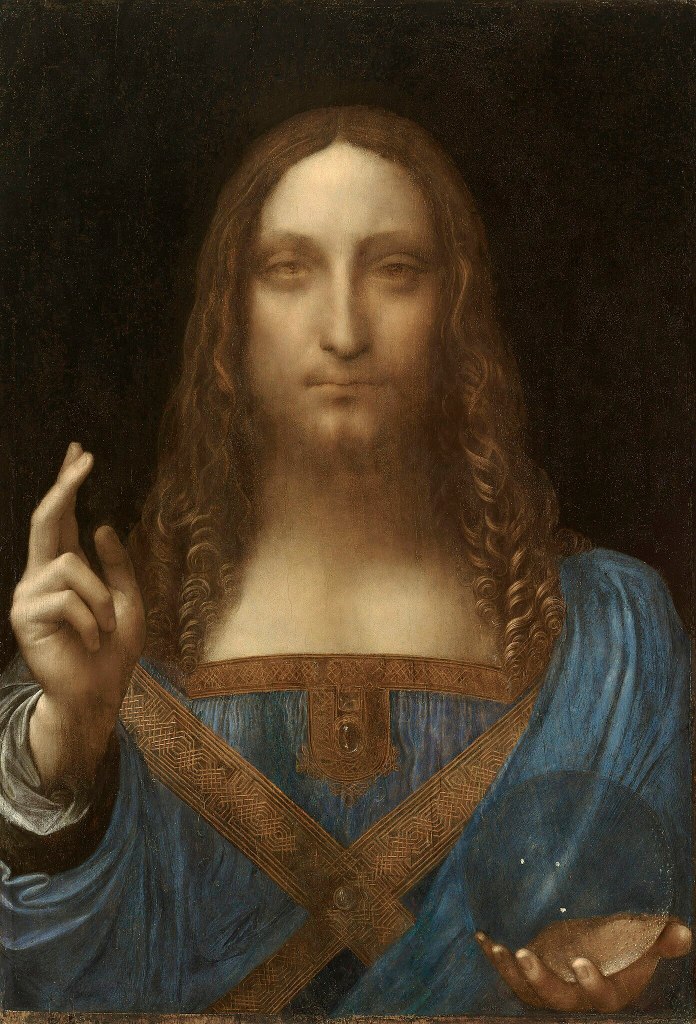
Salvator Mundi, Savior of the World, is believed to have been painted by Leonardo da Vinci sometime between 1499 and 1510 which is considered by historians to be the beginning of the High Renaissance period. The painting was supposedly commissioned by King Louis XII of France and was later recorded in the possession of the English Kings Charles I and II. How the English acquired the painting is unknown. It was then passed onto the Duke of Buckingham in the 1600s after which his son sold it in 1763. The painting then disappeared for 137 years.
It reappeared in 1900, changing hands a few times without anyone realizing it may be an authentic Leonardo. In 2005 a consortium of art dealers and collectors purchased it with the intent to have it cleaned and restored all the while attempting to prove that it was indeed a Leonardo painting. In 2013 most experts agreed that it was an authentic Leonardo allowing it to be sold for $80 million to Swiss art dealer Yves Bouvier which he quickly resold to the Russian Rybolovlev for $127.5 million. This sale quickly became a legal mess with the resolution not entirely clear.
Somehow the legal issues resolved themselves and the painting came to market again in 2017 selling for $450.3 million, making it the most expensive painting ever sold. After much wild and erroneous speculation, it was revealed that Abu Dhabi’s Department of Culture and Tourism bought the painting. It is currently in storage awaiting the completion of the Louvre Abu Dhabi in the United Arab Emirates.
In 2020 the experts have struck again and attribution of the painting to Leonardo is in doubt. Experience says this debate will continue ad infinitum. Meanwhile an extremely expensive art piece supposedly by a gay painter of Jesus Christ resides in the Arab Middle East.
Sources: Leonardo da Vinci by Walter Isaacson published in 2017. Salvator Mundi by Christies published in 2017. Salvator Mundi by ArtNet published in 2020.
Paul L. Maier, born 1930 in St. Louis, author, public speaker, and historian has written twenty-three adult and children, fiction and non-fiction, books about Christianity. He is the son of Walter A. Maier, founder, and speaker of The Lutheran Hour.
He graduated from Harvard and Concordia Seminary in St. Louis with additional studies in Heidelberg, Germany and Basel, Switzerland. He was the Seibert Professor of Ancient History at Western Michigan University until he retired in 2011.
In addition to his definitive translation of “Eusebius: The Church History“, his 1993 “Skeleton in God’s Closet” was a number one best seller in religious fiction, a thriller concerning the Resurrection of Jesus. He also co-wrote with Hank Hanegraaff in 2006 a rebuttal to Dan Brown’s “The Da Vinci Code“: “The Da Vinci Code: Fact or Fiction?“
In addition to writing books Maier has produced six religious documentaries including the 2014 “The Week That Changed the World“, detailing the Holy Week before Jesus’s resurrection, discussing the key personalities, the politics, and the treachery that sealed Christ’s fate.
MaierBibliography-Books and Documentaries:
A Man Spoke, A World Listened: The Story of Walter A. Maier 1963
Pontius Pilate 1968
First Christmas: The True and Unfamiliar Story in Words and Pictures 1971
First Easter: The True and Unfamiliar Story in Words and Pictures 1973
First Christians: Pentecost and the Spread of Christianity 1976
Flames of Rome 1981
The Best of Walter A. Maier 1981 (paperback)
Josephus, The Essential Writings 1988
In Fullness of Time 1991
A Skeleton in God’s Closet 1994
The Very First Christmas 1998
The New Complete Works of Josephus with William Whiston 1999
Eusebius: The Church History 1999
The Very First Easter 2000
More Than a Skeleton 2003
Caspar Schwenckfeld on the Person and Work of Christ: A Study of Schwenckfeldian Theology at Its Core 2004 (paperback)
Martin Luther a Man Who Changed the World 2004
The Da Vinci Code: Fact or Fiction? with Hank Hanegraaf 2006
The Real Story of Creation 2007
The Real Story of the Flood 2008
A Skeleton in Rome 2011
The Constantine Codex 2011
The Genuine Jesus 2021
Christianity: The First Three Centuries (Documentary) 2003
The Odyssey of St. Paul (Documentary) 2003
Jesus: Legend or Lord? (Documentary) 2003
How We Got the Bible (Documentary) 2009
Christianity and the Competition (Documentary) 2010
The Week that Changed the World (Documentary) 2011
Eusebius Biography:
FootnoteA
“May I be an enemy to no one and the friend of what abides eternally. May I never quarrel with those nearest me and be reconciled quickly if I should. May I never plot evil against others, and if anyone plots evil against me, may I escape unharmed and without the need to hurt anyone else.” — Eusebius
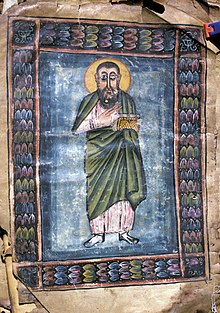
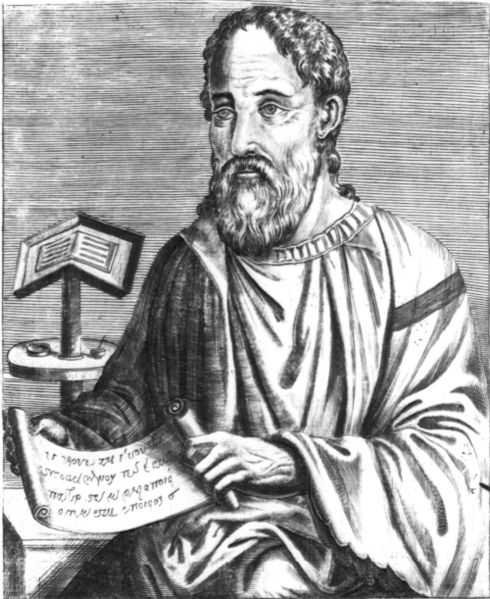
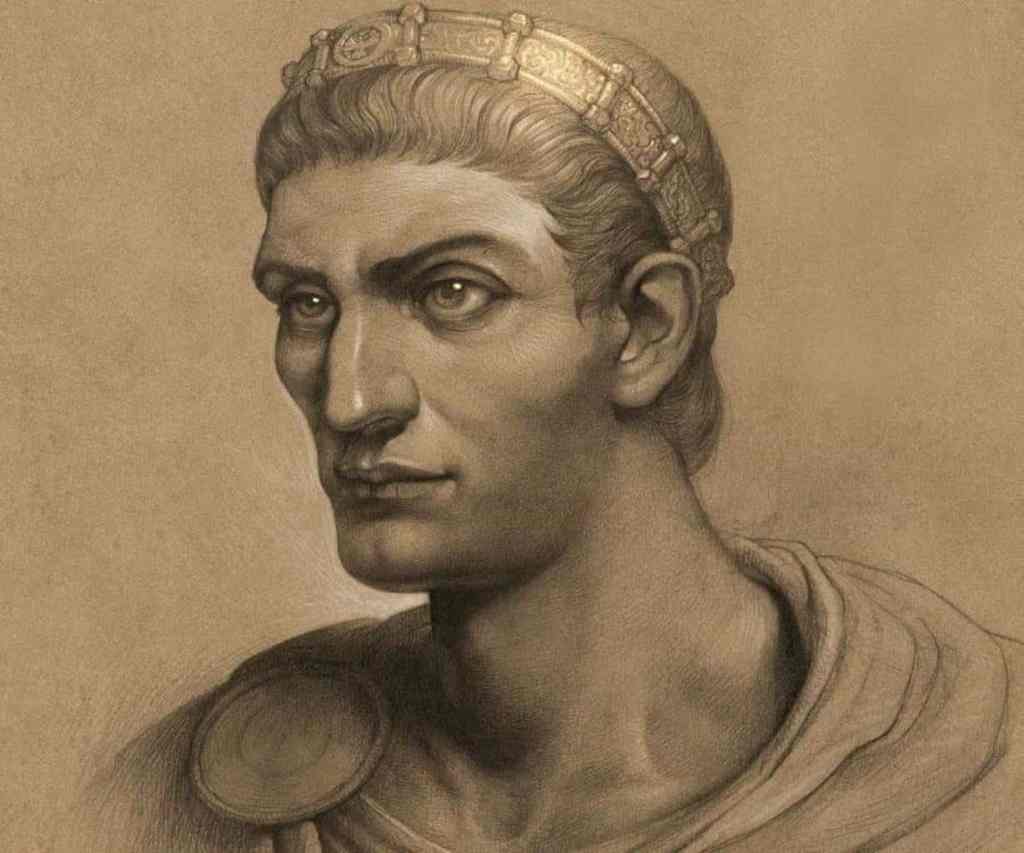
Eusebius of Caesarea, also known as Eusebius Pamphili, was a historian, interpreter of scripture, and Christian apologist, born around 260-265 AD in Caesarea, where he gained prominence in the fourth century, before passing away around 339 AD. His early education was by the learned presbyter, and eventual saint, Pamphilus, the principle religious scholar of his generation. Eusebius became bishop of Caesarea around 314 AD, shortly after Constantine became Roman Emperor, and remained in that position until his death in 339 AD. Eusebius became a significant figure in the theological controversies and politics of his day, becoming a, if not the leading spiritual advisor and confidant to Constantine.
Christians since the time of Christ were persecuted for their faith which came to a ghoulish crescendo under the Diocletian Edicts, also known as “The Edicts Against the Christians” of 303 AD. The edicts dissolved the Christians’ legal rights, compelled them to reject Jesus and to adhere to the local religious customs of paganism and polytheism. The edict saw the destruction of Christian scripture and churches along with the torture and execution of approximately 3500 church leaders and lay people including Eusebius’ teacher Pamphilus. The persecution ended with the Edict of Milian in 313 AD, decreed and signed by Constantine and Licinius proclaiming religious toleration within the empire.
FootnoteB
The edict gained the life-long gratitude of Eusebius culminating in the Christian bishop’s panegyric, “Life of Constantine“, in which the author details the emperor’s religious policies as well as a hagiographic account of Constantine’s life. Historians have described their relationship as complex, evolving over time. They have also stated that Eusebius may have been the power behind the throne or, as others have surmised, just an obsequious toady seeking protection from his church enemies. Regardless of the actual relationship it is agreed that Eusebius was Constantine’s spiritual and political advisor.
FootnoteC
Eusebius, through his bond with the emperor, helped structure the relationship between church and state, assisting in the creation of the Constantinian concept of a Christian empire, which had a considerable influence on the development of the early Christian Church and the Roman Empire, along with empires to come.
Constantine, to put down an early rebellion of church leaders, ordered three hundred bishops throughout the empire to meet at the First Council of Nicaea in 325 AD to resolve the controversy of Arianism, a concept that Christ was not divine but was created by God. Much of the Church believed that Christ was of the same substance, “consubstantiality“, as the Father and as such: divine. Eusebius, enjoying the emperor’s favor, sat next to him at the council and offered his own creed stating that Christ was begotten, not made, from the Father. The council, in the end, rejected Arianism and formulated the creed that is recited at every High Catholic Mass to this day. The council also set the time for Easter as the Sunday after the first full moon following the Spring equinox rather than occurring on the Sunday closest to Jewish Passover or on the Jewish Passover even it was not on a Sunday. Which explains why no one knowns when Easter occurs. Constantine was adamant about foregoing any Jewish practices in the honor of Jesus.
Eusebius is referred to as the “Father of Church History” due to his voluminous writings in the field including, as discussed below, his account of the first centuries of Christianity in his “Ecclesiastical History” or “Church History“.
Church History (Ecclesiastical History):
FootnoteD
“Church History ” or “Ecclesiastical History” is the only exigent work that chronicles the development of early Christianity and its Church from the birth of Christ on into the fourth century. Eusebius’s account, written in Koiné Greek, lingua franca for the Mediterranean area from fourth century BC to fourth century AD, provides a chronological narrative, using the succession of Roman Emperors as a linear timeline, of the early Christian Church. Eusebius, with his access to the Theological Library of Caesarea, incorporated many church documents, acts of the martyrs, letters, and extracts from earlier Christian writings into his work, many which no longer exists. The “Church History” covers the succession of Church bishops, the history of Christian teachers especially Origen, the history of the many church heresies and conflicts, and Christianity’s relationships with Romans, pagans, and Jews. Despite accusations that “Church History” is more a defense of Christianity, an apologetic and hagiography, than a history, Eusebius’s work remains a valuable source for understanding early Christian history.
Below are the Maier’s chapter listings, brief descriptions, and Roman Emperors during the historical period covered.
Book I: The Person and Work of Christ: Eusebius on Christ. Augustus to Tiberius.
Book II: The Apostles: Eusebius on the Apostles. Tiberius to Nero.
Book III: Missions and Persecutions:Formation of the New Testament. Galba to Trajan.
Book IV: Bishops, Writings, and Martyrdoms: Defenders and Defamers of the Faith. Trajan to Marcus Aurelius.
Book V: Western Heros, Eastern Heretics: Death at Lyons, Rome, and Alexandria. Marcus Aurelius to Septimius Severus.
Book VI: Origen and Atrocities at Alexandria: Life of Origen. Septimius Severus to Decius.
Book VII: Dionysius and Dissent: Church Life According to Dionysius. Gallus to Diocletian.
Book VIII: The Great Persecution: Edicts Against Christians. Diocletian to Galerius.
Book IX: The Great Deliverance: The End of Persecution? Maximin, Maxentius, and Constantine.
Book X: Constantine and Peace: Eusebius and Constantine. Constantine.
Literary Criticism:
In C.F. Cruse’s 1850 translation of “Ecclesiastical History” he states that, “…Eusebius was not without his beauties, but they were rarely scattered, that we can hardly allow him an eminent rank as a writer.” This is an understatement of the 19th century although it is a polite way to admit Eusebius was incapable of engaging his readers in any form other than pedantic verbosity. This is also an example that Cruse was not immune from obfuscating meaning in his written translations and commentary. His comment above simply stated that Eusebius rarely wrote with elegance and concision. Eusebius’ writing was dense, confusing, dogmatic, and sometimes incomprehensible. Eusebius’ writing compares favorably, snark intended, with Edward Gibbons’ “The Decline and Fall of the Roman Empire” whose erudite, verbose, and opaque style has managed to confuse his readers for two plus centuries now, but for some reason no one seems to mind, except me. Gibbons disliked, immensely, Eusebius’ “Ecclesiastical History” stating that it was full of lies and falsehoods which is an exceedingly difficult position to support due to Eusebius’ excessive use, usually in quotes, of original source material. Gibbons blamed the fall of the Roman Empire on the rise of Christianity, a problematic thesis considering Christianity was the least of the Empires worries. Unchecked immigration and a corrupt governing class were much bigger problems than a few Christians asking to be left alone to worship their God in peace.
Paul L. Maier’s translation of “Church History” is a masterful improvement over C.F. Cruse’s 1850 attempt to make Eusebius readable. Cruse strove to accurately translate Eusebius with the result of burdening his readers with difficult and cluttered phrasing. Maier saves his readers by reducing Eusebius’s lengthy sentences, dense language, and abrupt subject changes to intelligible bites of prose that are readable, understandable, and usable. An example of Maier taking difficult sentences and distilling them into something cogent can be seen in the two example sentences below. The first sentence comes from Loeb’s edition of “Ecclesiastical History“, which is a very faithful rendition of Eusebius’ writing, followed by Maier’s translated version. Loeb: “I have already summarized the material in the chronological tables which I have drawn up, but nevertheless in the present work I have undertaken to give the narrative in full detail.” Maier:“Previously I summarized this material in my Chronicle but in the present work I deal with it in the fullest detail.” The first sentence takes a few readings to comprehend the meaning. Maier allows for instant comprehension.
“Ecclesiastical History” or “Church History” is an important work in understanding the beginnings of Christianity and the governing hierarchy that was built up over the centuries. This is not a long book, less than four hundred pages, but it does take dedication to the task of reading and understanding it. In the end it is worth the effort as a little history is always useful if not enlightening.
References and Readings:
Eusebius. By Allan Miller. Wikipedia. 2001 (2024 Update)
Frank Zollner, born 26 June 1956 in Bremen, Germany, is an art historian specializing in Renaissance painters, specifically Leonardo, but also Michelangelo, Rapheal, and Botticelli. He has been a professor of art history at Leipzig University since 1996.
As an expert in all matters Leonardo, he has been wrapped up in the authenticity of the multiple Mona Lisas that exist around world. The Mona Lisa actually painted by Leonardo that everyone appears to agree on is in the Louvre. Experts also agree that parts of the Isleworth Mona Lisa may have also been painted by Leonardo. Then there is the two Mona Lisas that are most like each other, the Louvre Mona Lisa, and the Prado Mona Lisa in Madrid. The Prado Mona Lisa is acknowledged to have been painted in Leonardo’s workshop but not necessarily by Leonardo himself. The two most famous paintings are the Louvre Mona Lisa and the Washington National Gallery’s Mona Lisa. The National Gallery Mona Lisa is believed to have been painted by one of Leonardo’s followers, possibly Salaì or Francesco Melzi. So, it would appear that there are a lot of Mona Lisa’s floating around but only one fully authentic and completely Leonardo.
Zöllner re-introduced the art world to the ancient concept of aesthetic hedonism. Aesthetic hedonism states that for art to have value one must experience emotional pleasure when viewing or experiencing it. The value related to aesthetic hedonism is derived from empirical observations and experiences. Philosophers, such as Hume and Kant, have argued that aesthetic pleasure is universal, reflecting the intellectual harmony within one’s mind. Plato and others, on the other hand, suggest that empiricism alone is not enough to render value to an object of art. Other subjective factors also need to be considered such as moral, social, or religious values.
Which brings us to an impertinent detour but much needed critique of modern art. Where is the beauty, the pleasure, or at a more essential and primeval level, where is the talent for what passes today as modern art? A deplorable example of modern art totally lacking in artistic talent or merit, unable to provide any visual pleasure, is Vienna’s newest fountain: WirWasser. A cultural devolution that is utterly sad and heartbreaking. Look at the picture of the fountain with the people responsible for that monstrosity. They are smiling. What is wrong with those people?
Botticelli Biography:
“By throwing a sponge soaked with deffernet colors at at a wall one can make a spot in which a beautiful landscape can be seen“…Botticelli.
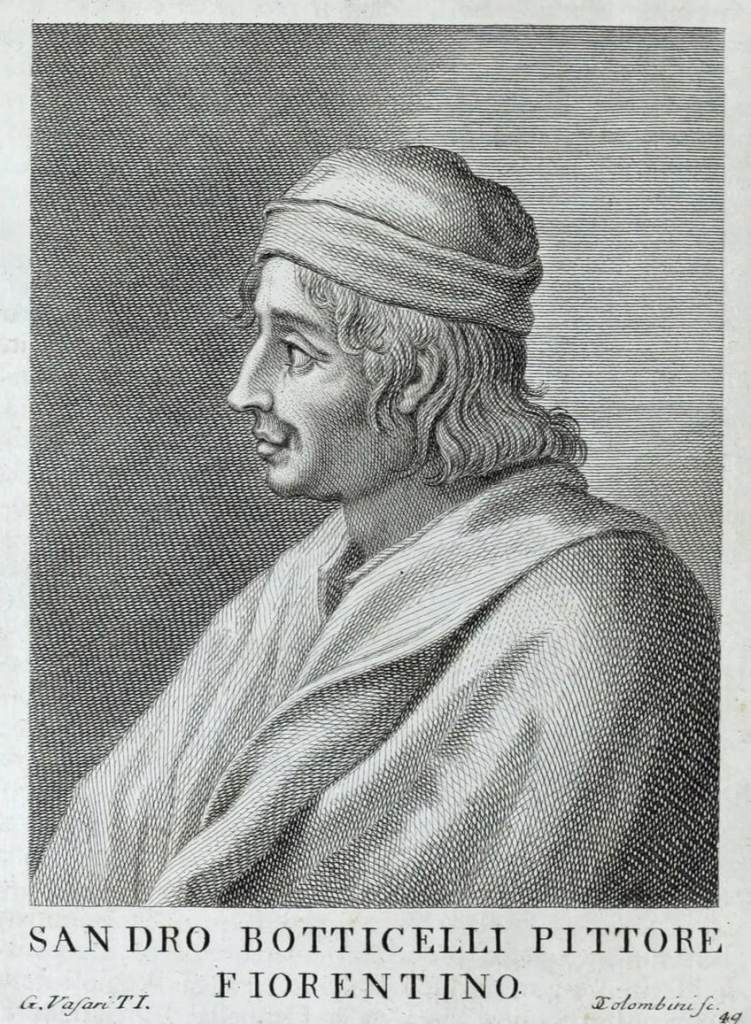
Sandro Botticelli, born Alessandro di Mariano di Vanni Filipep circa 1445, later given the moniker Botticelli by an older brother meaning ‘little barrel’ in Italian, is considered the greatest humanist painter of the Early Renaissance Era.
Botticelli’s art was always about dignity, about maintaining the grace and soulfulness of his subjects. His genus lies in capturing the emotional persona of people populating his paintings along with the technical ability to skillfully show perspective, accurately express anatomy, and the mastery of color and light.
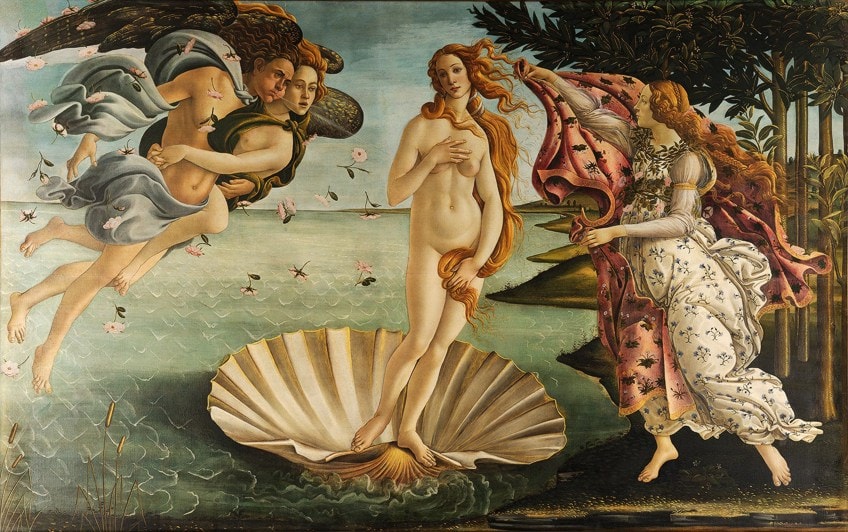
Botticelli died in Florence in 1510 at the age of 64 or 65. His complete oeuvre is unknown but at least 137 artworks have been attributed to him, including panel paintings, works on canvas, frescoes, and drawings for Dante’s Divine Comedy. Among his most famous and recognizable paintings are LaPrimavera (shown above) and the Birth of Venus (shown below), which today, are synonymous with perfection and Early Renaissance art.
The LaPrimavera, shown above, was originally in the possession of one of the younger Medicis and was given as a wedding present to Semiranmide Appiani who married Lorenzo di Pierfrancesco de’ Medici in 1482. The painting depicts, beginning on the far left continuing to far right, Mercury in winged shoes poking at the clouds with a wand, the Three Graces in the company of Mercury creating an atmosphere of beauty and what else, grace. The central figure is Venus. The floating cherub above Venus is Cupid, her son by Mars. To the right of Venus is Flora, goddess of flowers, springtime, and fertility. The woman to the right of Flora is Chloris, originally a virginal nymph who was transformed into Flora by the wind God Zephyr shown floating above ground on the far right. Zephyr raped Flora/Chloris but made amends by making her his wife.
Botticelli’s TheBirth of Venus, referred to by some art critics, including Zollner, as the Arrival of Venus, shows the goddess of love on the shores of the island of Cythera. Botticelli based the painting on a poem by Greek poet Hesiod, describing Venus emerging from the sea, formed from the severed genitals of Uranus. Venus is standing on a giant scallop shell, blown by the wind god Zephyr and his companion Aura, a goddess of breeze, and welcomed by one of the Horae, likely a goddess of spring, who offers her a cloak.
Literary Criticism:
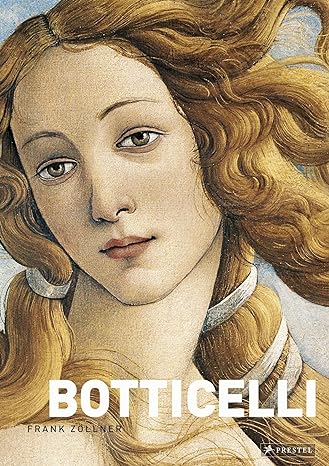
Zollner’s Botticelli is a masterpiece in scholarship and beauty. The reproductions of Botticelli’s art are crisp and clear, but the text brings it all together, biography, provenance, technique, and history. To follow a painting from brush to museum, as Zollner has, is itself a work of art and love.







 elsToday