To Boldly Go

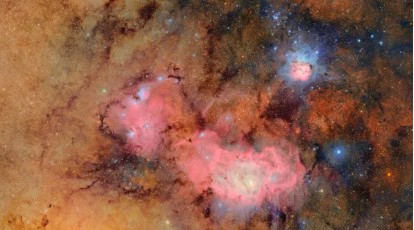
On 23 June 2025, after more than three decades of evolution, from a gleam of an idea to detailed planning, exacting execution, and the physical realization of the world’s largest astronomical camera, the Vera C. Rubin Observatory’s Legacy Survey of Space and Time (LSST) in Chile unveiled to the public its first breathtaking images. Among them: razor-sharp mosaics of the Trifid and Lagoon Nebulae, and the sprawling Virgo Cluster, home to millions of galaxies. Captured with world-class light-collecting mirrors, these images marked the beginning of a spectacular ten-year quest to map the known universe and illuminate the 95% we still don’t understand: dark matter and dark energy. An exciting, albeit, Herculean future awaits, built on an equally stunning past where dreams and science converged into one of the most staggering feats of technological achievement in modern astronomy.

Let the future map of the universe tell its own story in due time. The path to the map deserves a chapter all its own.

In 1969 Willard Boyle and George Smith of Bell Labs invented a device capable of detecting and measuring the intensity of light which they named CCD or Charge-Coupled Device: a breakthrough that earned them the 2009 Nobel Prize in Physics. A CCD converts incoming photons into electrical signals, creating a voltage map of light intensity, a digital proxy for the number of photons striking its surface. Initially constructed as a semiconductor chip, it quickly evolved into a pixelated imaging sensor. These sensors quickly became the gold standard for digital consumer and scientific imaging but due to costs, consumer applications such as your phone camera switched over to CMOS sensors due to lower costs. Scientific and surveillance systems, such as the Hubble Telescope, SOAR, and SNAP, still employ CCDs because of their superior image fidelity.

In the late 1980s J. Anthony ‘Tony’ Tyson, an experimental physicist at Bell Labs, focused on developing instrumentation to detect faint optical signals using CCDs. His inspiring contribution to the CCD was to recognize their potential in imaging the heavens and laying the groundwork for digital deep sky surveys. He quickly discovered faint blue galaxies and gravitational lensing using modified CCDs that he helped developed. Additionally, he helped build the Big Throughput Camera that was instrumental in the 1998 discovery of dark energy.

Tyson never thought small. His CCDs were instruments of the infinitesimal, but his dreams were as gargantuan as the universe itself. In fact, his dream was the universe. In 1994 he proposed his “Deep Wide Fast” telescope, a scaleup of his Big Throughput Camera and the forerunner of the LSST. The Deep Wide Fast was a concept that would combine a deep imaging device with rapid cadence, and broad coverage simultaneously. In other words, synoptic realization of the universe in near real time.

Throughout the 1990s, Tyson rallied minds and resources to shape his cosmic vision. John Schaefer of the Research Corporation helped secure early funding. Roger Angel proposed the use of the innovative Paul Baker three-mirror telescope design. Institutions like the Universities of Arizona and Washington, along with the Optical Astronomy Observatory, all hitched their wagons to Tyson’s star-filled dream of mapping the universe.

In 1998 Tyson presented designs for a Dark Matter Telescope and in 1999 the science case was submitted to the Astronomy and Astrophysics Decadal Survey. In 2003 the first formal proposal was sent to the Experimental Program Advisory Committee at SLAC (Stanford Linear Accelerator Center). It consisted of an 8.4-meter mirror with a 2.3-billion-pixel camera capable of surveying the entire visible sky every few nights. The proposal also laid out the NSF–DOE partnership, with SLAC leading the camera development and other institutions handling optics, data systems, and site operations.

In 2004 Tyson left Bell Labs and joined the University of California at Davis as a cosmologist and continued to shepherd the LSST project from there.

In 2007 the project received $30 million in private funding from Charles Simonyi, Bill Gates, and others. The telescope is named the Simonyi Survey Telescope. In 2010 U.S. National Science Foundation (NSF) and Department of Energy (DOE) joined in the quest to view the universe through the sharp eyes of the LSST.

The telescope’s primary 8.4-meter and the 5.0-meter tertiary mirrors were built at the University of Arizona, beginning in 2008, completed in 2015, and stored on-site in Chile since 2019. Fabricated in the U.S., the 3.4-meter secondary was later coated in Germany with nickel-chromium, silver, and silicon nitride, materials chosen to enhance reflectivity, durability, and long-term performance.

In 2015 SLAC, which oversaw the design, fabrication, and integration of the camera, began building the components with assistance from Brookhaven National Laboratory, Lawrence Livermore National Laboratory, and IN2P3/CNRS in France. By 2024 the camera was finished and shipped to Chile. In 2025 the camera was installed and integrated with the telescope. In June of 2025 the first light images were released to the public.

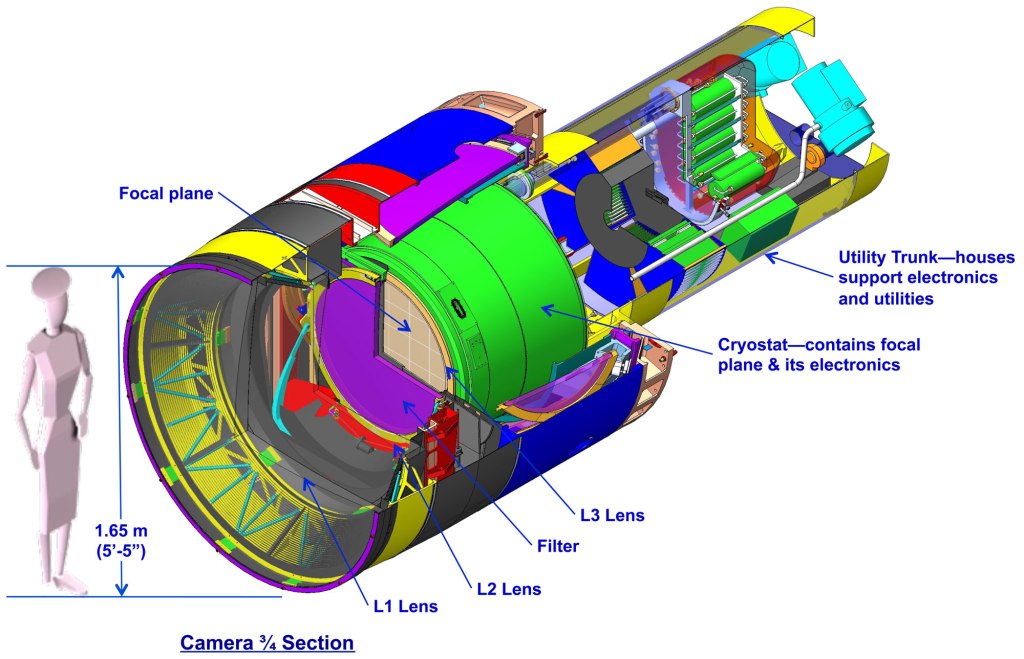
The camera measures roughly 3 meters in length, 1.65 meters in diameter, and weighs 3 metric tons, an imposing instrument, rivaling the bulk of a small car. Its imaging surface, a 64-centimeter focal plane, contains 3.2 billion pixels, each a 10-micron square, roughly one-tenth the width of a human hair. These pixels, etched across 189 custom CCD sensors arranged into 21 modular “rafts,” are laid flat to within 10 microns, ensuring near-perfect focus. The entire array is chilled to –100°C to suppress electronic and thermal noise, enhancing signal fidelity.

Before photons reach the sensor, they pass through three precision-crafted corrective lenses, including the largest ever installed in an astronomical camera, and up to six interchangeable filters spanning ultraviolet to near-infrared. The filter exchange system enables the observatory to target specific wavelength bands, tailored to sky conditions and science goals.
The integrated LSST system is engineered to capture a 15-second exposure every 20 seconds, producing thousands of images per night, tallying approximately 15 terabytes of new data. Each image covers 9.6 square degrees of sky, roughly equivalent to the diameter of 45 full moons, allowing the system to survey the entire visible southern sky every 3–4 nights. Imaging a single field across all six filters can take up to 5–6 minutes, though filters are selected dynamically based on science goals and atmospheric conditions.

The system’s angular resolution is sharp enough to resolve a golf ball from 15 miles away and at the edge of the observable universe, this scales to structures no smaller than a large galaxy; certainly not stars, not planets, nor restaurants. Over its decade-long campaign, LSST is projected to catalogue more than 17 billion stars and 20 billion galaxies, a composite digital universe stitched together from individual photons captured from 3 million images, each snapped every few seconds over the clear night sky of Chile. The LSST will not simply map what’s visible but illuminate the unknown. Beneath the sophisticated hardware and software lies a deeper purpose: to shine the light of curiosity on the 95% of the universe that remains in the shadows of time and space: dark matter and dark energy, the known unknown dynamic force behind galactic formation and cosmic expansion. The LSST is more than a camera. It is a reckoning with the vast unknown, a testament to humanity’s refusal to let mystery remain unexplored and uncharted: to find God.

In 2013 Tyson was named chief scientist of the LSST and is still actively contributing to the intellectual vision of the project and mentoring the next gen of cosmologists and engineers.

Graphic: LSST Camera Schematic and Trifid Nebula by SLAC-DOE-NSF.
Goya: Beauty Unmasked

Francisco de Goya, a late 18th to early 19th century Spanish painter of the Romantic school, is a fascinating study in evolving style, a visual descent into deafness, isolation, and existential dread, though more philosophically, his lifelong disillusionment with civilization’s failure to embody the Enlightenment’s promised ideals of reason, justice, and human dignity. His art swung like a pendulum, from crisp detail to loose rendering to the raw emotion of a mind increasingly separated from reason.

As a court painter to the Spanish monarchy, Goya’s portraits became canvases for cynicism, derision, and paradox. He offered scathing critiques hidden beneath formal composition, and the court loved him for it. They mistook his precision for praise, even as he quietly dismantled their poise and splendor.

His colossal canvas Charles IV of Spain and His Family (110 × 132”) does not illustrate majesty or brilliance; it immerses the senses in familial estrangement and tedium. Awkward poses; lifeless gazes; a composition emotionally hollowed, drained of vitality and intent. These are not confident rulers but bored figures waiting for the dinner bell to summon a distraction: ceremonial chatter over fish soup and presentation of chocolates. In the background of the painting, Goya includes himself, brush in hand, an artist caught in the act of witnessing. It was a nod to Velázquez’s Las Meninas; Goya once said he “had only three masters: Nature, Velázquez, and Rembrandt”; but here, reverence turns to scorn. Goya didn’t flatter his subjects; he distorted the real, undermining not his own reverence for form, but theirs. His royal figures do not speak; they stare blankly, confirming that the emperor wears no clothes. He looked beneath the surface in search of beauty and instead found something far less attractive, an insignificant echo of a tired reality.

Goya’s notion of beauty, conventionally understood, remained intact. But in his subjects, he saw hypocrisy, a lie, elegantly draped, concealing the moral disfigurement beneath. This critique finds haunting expression in his etching Nadie se Conoce (“Nobody recognizes himself”), Plate No. 6 of Los Caprichos, where masked carnival patrons drift like phantoms of untruth. On the reverse of the plate, Goya inscribed his chilling reflection: “The world is a mask; the face, the costume, and the voice are all feigned. Everyone wants to appear what they are not, everyone deceives, and no one knows himself.”

Goya painted the existential. His late works: The Disasters of War, The Black Paintings, The Madhouse, Saturn Devouring His Son, reveal more of his suffering psyche than his technical ability. Anthony Cascardi argues in Francisco de Goya and the Art of Critique that Goya’s entire oeuvre is a sustained confrontation with Enlightenment ideals. Reason and beauty dissolve under his brush. Societal decay no longer whispers, it screams.

In style, Goya stands at the edge of the Impressionist movement, decades before its arrival. His gestural freedom, emotional brushwork, and psychological texture prefigure the rawness of Manet and even hint at Bacon’s existential grotesque. Paint becomes not just medium but mood, an extension of perception unraveling. Form overrides detail. But Goya moved to a darker rhythm, his brushwork shades where theirs shimmered. Where Monet dances with light, Goya wrestles with darkness. The Impressionists chose beauty over Goya’s emotional appeal, which ultimately served to mock his subjects’ feigned grace.

Unlike Picasso’s theatrical mockery, Goya’s assessment is surgical. He dispenses with pretense and seeks truth, not a truth easily embraced, but one rooted in the soul’s unpleasant, hidden recesses. Picasso once echoed a similar sentiment in a 1923 interview with The Arts: “Art is a lie that makes us realize truth, at least the truth that is given us to understand.” Art distorts to reveal what reality conceals, truth not always visible, but deeply felt. Superficial beauty without the soul is not art, it is a lie.

In contrast to today’s symbolic excess, where the subject is buried beneath concept and symbols, Goya’s portraits are revealing to the point of brutality. He doesn’t idealize; he removes the layers of deceit. The beast within becomes the subject. His cynicism is constant, his honesty sometimes absurd, but always truthful.

Goya takes a moral stance. His genius lies in the ability to paint the conscious with the unconscious, to render not just what he saw, but what he felt and feared, the form with the spiritual. His style matched his psyche. He painted the perceived rot beneath grandeur, the weariness behind powdered wigs, the absurdity beneath court spectacle.

Goya’s fame was built and balanced on a knife’s edge: he gave the rich what they wanted in form, while seeding beneath it a quiet, damning truth. That duality, beauty as lure, truth as blade, is Goya’s lasting contribution to art.

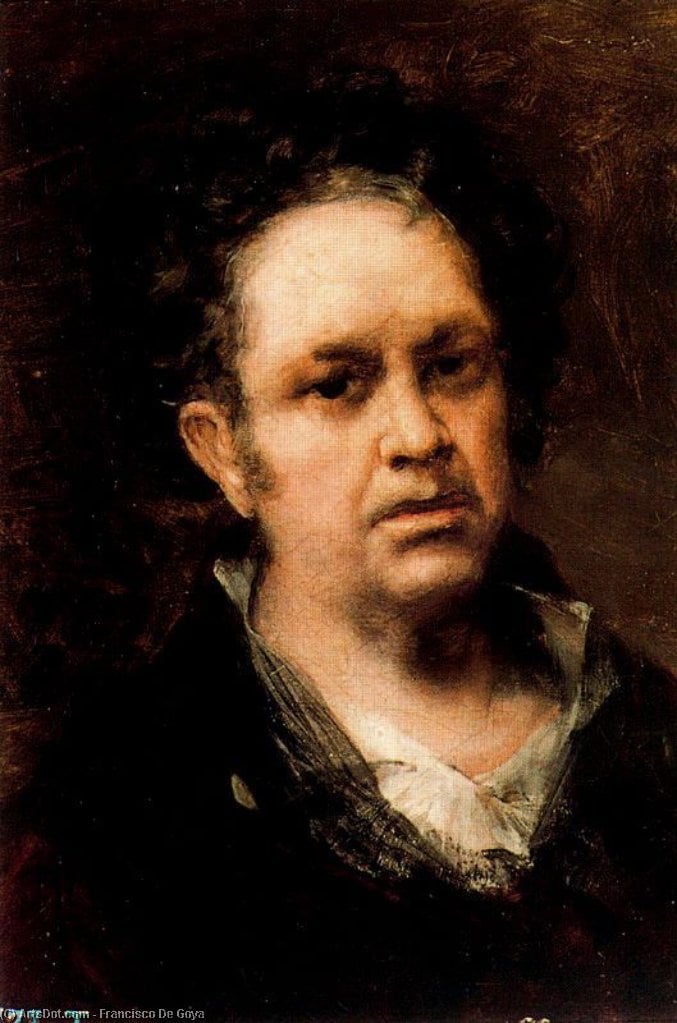
Graphic: Self-Portrait at 69 Years, by Goya, 1815. Museo del Prado-Madrid.

Millworks Pillar & Post Cabernet Sauvignon 2018

Cabernet Sauvignon from Napa, California

Purchase Price: $19.99 (retail range $20-22)

Cellar Tracker 89, ElsBob 89

ABV 14.5%

A deep, dense red with full body and aromas of black currants and blackberries. Tannins are assertive up front, balanced by acidity, leading to an excellent finish.

A fine wine with surprising structure and complexity at this price point. Drink now or hold for 2-3 more years.

Trivia: This wine was produced by Millworks, a now-defunct label and bottling entity owned by Paul Hobbs. Though both the company and label are no longer active, the wine’s origins trace back to Paul Hobbs Winery, where it was vinified using Hobbs’ signature methods and materials. The grapes were sourced from Napa Valley vineyards not owned by Hobbs, placing this bottle stylistically adjacent to his Sonoma Crossbarn project, which similarly emphasizes quality fruit and precise techniques, including wines crafted from both estate and non-estate sources. A quiet echo of Hobbs’ craftsmanship, delivered under a separate name. (Editor’s note: This section was pieced together from disparate and incomplete sources, so its accuracy may be imperfect.)

Sunny Side Up: Gömböc, Bille, and the Geometry of Falling

In Shel Silverstein’s poem “Falling Up,” a child trips on his shoelace and soars skyward instead of tumbling down. A delightful inversion of reality, a child’s imagination conjuring tomorrow’s focus. In the world of mathematics and physics, a similar inversion has captivated minds for decades: can you design an object that always falls the same way, always sunny side up, no matter how it starts, like a cat landing on all fours.

In the realm of numbers and materials this is the problem of monostability: creating a shape that, when placed in any orientation, will always return to a single, stable resting position. It’s a deceptively simple question with grudgingly difficult solutions. And it has at least two very different answers.

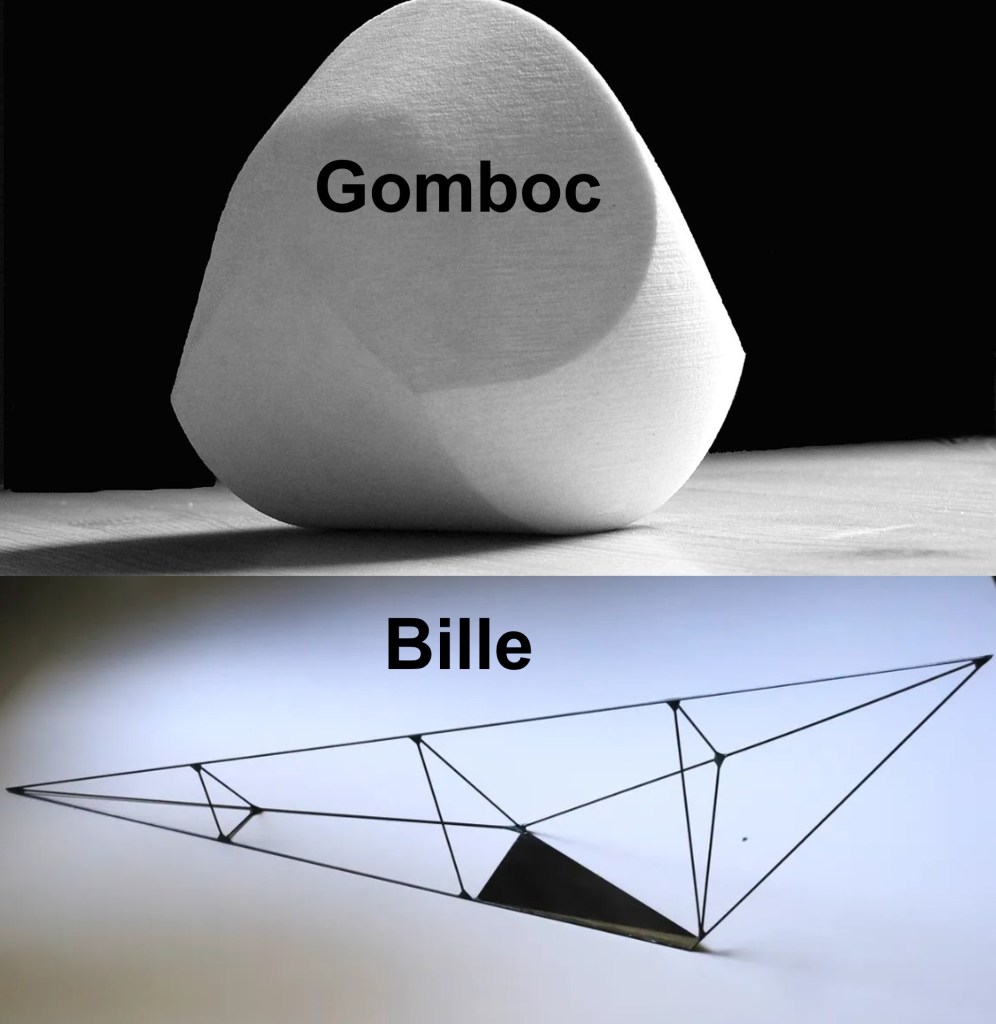
The first answer to the cat landing on all fours came in 2006 with the discovery of the Gömböc, a smooth, convex, homogeneous shape that rights itself without any differential weighting or moving parts. Invented by Hungarians Gábor Domokos and Péter Várkonyi, the Gömböc, meaning “little sphere or roundy” in Hungarian, has only one stable and one unstable equilibrium point. No matter how you place it, it will wobble and roll until it settles in its preferred orientation.

The Gömböc is a triumph of pure geometry. It solves the monostability problem using only shape, no tricks, no hidden weights but some serious math. It’s been compared to a mathematical cat: always landing on its feet, a design with a natural convergence toward the domed asymmetry of tortoise shells, whose shapes nature may have unconsciously optimized for self-righting.

Although uses for Gömböc are still being explored, some have developed designs for passive orientation systems, and the name has been co-opted for a company that is building self-correcting cloud infrastructure.

The second answer came recently in June of this year, when Gergő Almádi, Robert Dawson, and Gábor Domokos, of Gomboc fame, constructed a monostable tetrahedron, a four-faced scalene or irregular polyhedron that always lands on the same face which they named Bille: “to tip or to tilt” in Hungarian. A solution to a decades-old conjecture by John Conway, a Princeton polymath professor, with a talent for finding tangible solutions to abstract problems.

In this case, unlike the geometric solution of the Gömböc, geometry enables self-righting only when paired with carefully engineered mass distribution: a lightweight carbon-fiber frame and a dense tungsten-carbide core, precisely positioned to shift the center of gravity into a narrow “loading zone.” It’s a hybrid of form and force, where the shape permits monostability, but the mass forces the issue.

Unlike the Gömböc, which might inspire real-world designs, the monostable tetrahedron is too fragile, too constrained, and too dependent on ideal conditions to be practical. It’s a mathematical curiosity, not an engineering breakthrough. But like numerous mathematical solutions, practicality may occupy some interesting spaces in the future because landing on your feet is a useful function in many areas of commerce and science.

In space exploration lunar landers have recently had a bad, and expensive habit of falling over. In marine safety, users of escape pods and lifeboats prefer them to remain upright and watertight. Come to think most occupants of any watercraft prefer to remain upright and dry. Robots and drones benefit from shapes that naturally return them to a functional position without motors or sensors.

In the end, both the Gömböc and the weighted tetrahedron are about their inevitable position and stability. They are objects that always know where they stand. One does it with elegance; the other with abstraction and compromise. One is a cat. The other is a clever box of lead and air.

And maybe that’s the real lesson of “falling up”: that sometimes, the most interesting ideas aren’t the ones that solve problems, but the ones that reframe the question, and quietly remind us that some problems, left alone, reveal their own solutions.

As Calvin Coolidge once observed, “If you see ten troubles coming down the road, you can be sure that nine will run into the ditch before they reach you.” Meaning he didn’t need to attack and solve 10 problems, just the persistent one. The Gömböc and Bille didn’t wait for the problem to develop, they honored the ditch. Their designs never left the ditch. The problem never materialized in the first place.

Source: Mon-monstatic Bodies by Varkonyi and Domokos, Springer Science, 2006. Bulilding a Monostable Tetrahedron by Almadi et al, arXiv, 2025.

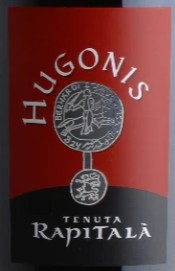
Tenuta Rapitala Hugonis DOC 2019

Red Blend Other from Sicily

Cabernet Sauvignon 50% and Nero d’Avola 50%

Purchase Price: $75 (Restaurant)

ElsBob 91

ABV 14.0%

A dense deep red, full-bodied, with aromas of red fruit and spice, well balanced with tannins that add a fine even structure, and a very long, pleasant finish. It was an excellent pairing with our entrées of Osso Buco and Braised Italian Ribs.

An excellent fine wine that retails from $38-60. $38 is a fair price to pay but $60 is a bit much. Drink now or hold for another 4-5 years. Cheers.

Trivia: Nero d’Avola grapes produce a full-bodied wine high in tannins with medium acidity and tastes of red fruits. Almost all Nero d’Avola wines come from the dry farms of Sicily and are a natural for blending with Cabs and Shirazes. The name originates from the southern Sicilian town of Avola which began growing the grape several centuries ago.

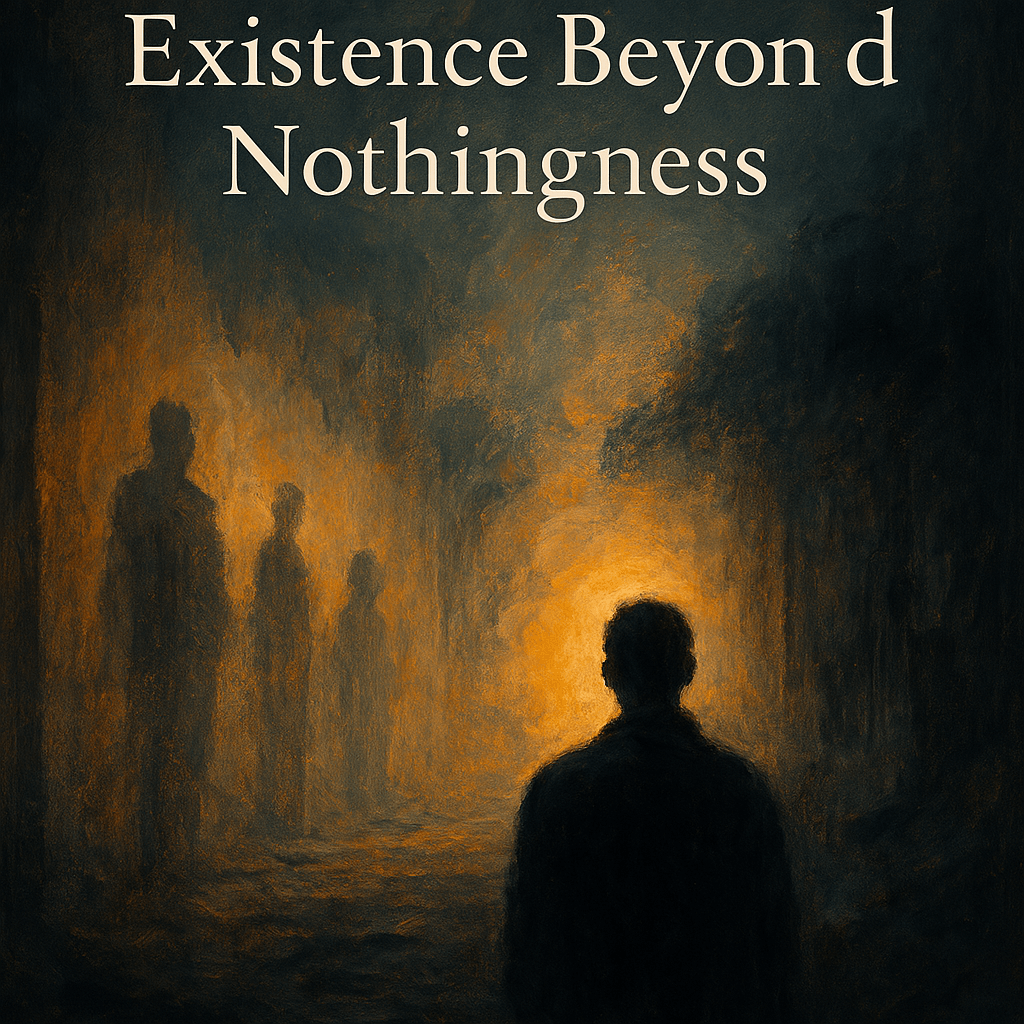
Shadows of Reality — Existence Beyond Nothingness

From the dawn of sentient thought, humanity has wrestled with a single, haunting, and ultimately unanswerable question: Is this all there is? Across the march of time, culture, and science, this question has echoed in the minds of prophets, philosophers, mystics, and skeptics alike. It arises not from curiosity alone, but from something deeper, an inner awareness, a presence within all of us that resists the idea of the inevitable, permanent end. In every age, whether zealot or atheist, this consciousness, a soul, if you will, refuses to accept mortality. Not out of fear, but from an intuition that there must be more. This inner consciousness will not be denied, even to non-believers.

One needs to believe that death is not an end, a descent into nothingness, but a threshold: a rebirth into a new journey, shaped by the echoes of a life already lived. Not logic, but longing. Not reason, but resonance. A consciousness, a soul, that seeks not only to understand, but to fulfill, to carry forward the goodness of a life into something greater still. Faith in immortality beyond sight. A purpose beyond meaning. Telos over logos.

While modern thinkers reduce existence to probability and simulation, the enduring human experience, expressed through ancient wisdom, points to a consciousness, a soul, that transcends death and defies reduction. Moderns confuse intellect or brain with consciousness.

Contemporary thinkers and writers like Philip K. Dick, Elon Musk, and Nick Bostrom have reimagined this ancient question through the lens of technology, probability, and a distinctly modern myopia. Their visions, whether paranoid, mathematical, or speculative, suggest that reality may be a simulation, a construct, or a deception. In each case, there is a higher intelligence behind the curtain, but one that is cold, indifferent, impersonal. They offer not a divine comedy of despair transcending into salvation, but a knowable unknown: a system of ones and zeros marching to the beat of an intelligence beyond our comprehension. Not a presence that draws us like a child to its mother, a moth to a flame, but a mechanism that simply runs, unfeeling, unyielding, and uninviting. Incapable of malice or altruism. Yielding nothing beyond a synthetic life.

Dick feared that reality was a layered illusion, a cosmic deception. His fiction is filled with characters who suspect they’re being lied to by the universe itself, yet they keep searching, keep hoping, keep loving. Beneath the paranoia lies a desperate longing for a divine rupture, a breakthrough of truth, a light in the darkness. His work is less a rejection of the soul than a plea for its revelation in a world that keeps glitching. If life is suffering, are we to blame?

Musk posits that we’re likely living in a simulation but offers no moral or spiritual grounding. His vision is alluring but sterile, an infinite loop of code without communion. Even his fascination with Mars, AI, and the future of consciousness hints at something deeper: not just a will to survive, but a yearning to transcend. Yet transcendence, in his world, is technological, not spiritual. To twist the spirit of Camus: “Should I kill myself or have a cup of coffee?”, without transcendence, life is barren of meaning.

Bostrom presents a trilemma in his simulation hypothesis: either humanity goes extinct before reaching a posthuman stage, posthumans choose not to simulate their ancestors, perhaps out of ethical restraint or philosophical humility, or we are almost certainly living in a simulation. At first glance, the argument appears logically airtight. But on closer inspection, it rests on a speculative foundation of quivering philosophical sand: that consciousness is computational and organic, that future civilizations will have both the means and the will to simulate entire worlds, and that such simulations would be indistinguishable from reality. These assumptions bypass profound questions about the nature of consciousness, the ethics of creation, and the limits of simulated knowledge. Bostrom’s trilemma appears rigorous only because it avoids the deeper question of what it means to live and die.

These views, while intellectually stimulating, shed little light on a worthwhile future. We are consigned to existence as automatons, soulless, simulated, and suspended in probability curves of resignation. They offer models, not meaning. Equations, not essence. A presence in the shadows of greater reality.

Even the guardians of spiritual tradition have begun to echo this hollow refrain. When asked about hell, a recently deceased Pope dismissed it not as fire and brimstone, but as “nothingness,” a state of absence, not punishment. Many were stunned. A civilizational lifetime of moral instruction undone in a breath. And yet, this vision is not far from where Bostrom’s simulation hypothesis lands: a world without soul, without consequence, without continuity. Whether cloaked in theology or technology, the message is the same, there is nothing beyond. The Seven Virtues and the Seven Deadly Sins have lost their traction, reduced to relics in a world without effect.

But the soul knows better. It was not made for fire, nor for oblivion. It was made to transcend, to rise beyond suffering and angst toward a higher plane of being. What it fears is not judgment, but erasure. Not torment, but the silence of meaning undone. Immortality insists on prudent upkeep.

What they overlook, or perhaps refuse to embrace, is a consciousness that exists beyond intellect, a soul that surrounds our entire being and resists a reduction to circuitry or biology. A soul that transcends blood and breath. Meaning beyond death.

This is not a new idea. Socrates understood something that modern thinkers like Musk and Bostrom have bypassed: that consciousness is not a byproduct of the body, but something prior to it, something eternal. For Socrates, the care of the soul was the highest human calling. He faced death not with fear, but with calm, believing it to be a transition, not an end or a nothingness, but a new beginning. His final words were not a lament, but a gesture of reverence: a sacrifice to Asclepius, the god of healing, as if death itself were a cure.

Plato, his student, tried to give this insight form. In his allegory of the cave, he imagined humanity as prisoners mistaking shadows for reality. The journey of the soul, for Plato, was the ascent from illusion to truth, from darkness to light. But the metaphor, while powerful, is also clumsy. It implies a linear escape, a single ladder out of ignorance. In truth, the cave is not just a place, it is a condition. We carry it with us. The shadows are not only cast by walls, but by our own minds, our fears. And the light we seek is not outside us, but within.

Still, Plato’s intuition remains vital: we are not meant to stay in the cave. The soul does not long merely for survival, it is immortal, but it needs growth, nourished by goodness and beauty, to transcend to heights unknown. A transcendence as proof, the glow of the real beyond the shadow and the veil.

In the end, the soul reverberates from within: we are not boxed inside a simulation, nor trapped in a reality that leads nowhere. Whether through reason, compassion, or spiritual awakening, the voice of wisdom has always whispered the same truth: Keep the soul bright and shiny. For beyond the shadows, beyond the veil of death, there is more. There is always more.

Drunken Monkey Hypothesis–Good Times, Bad Times

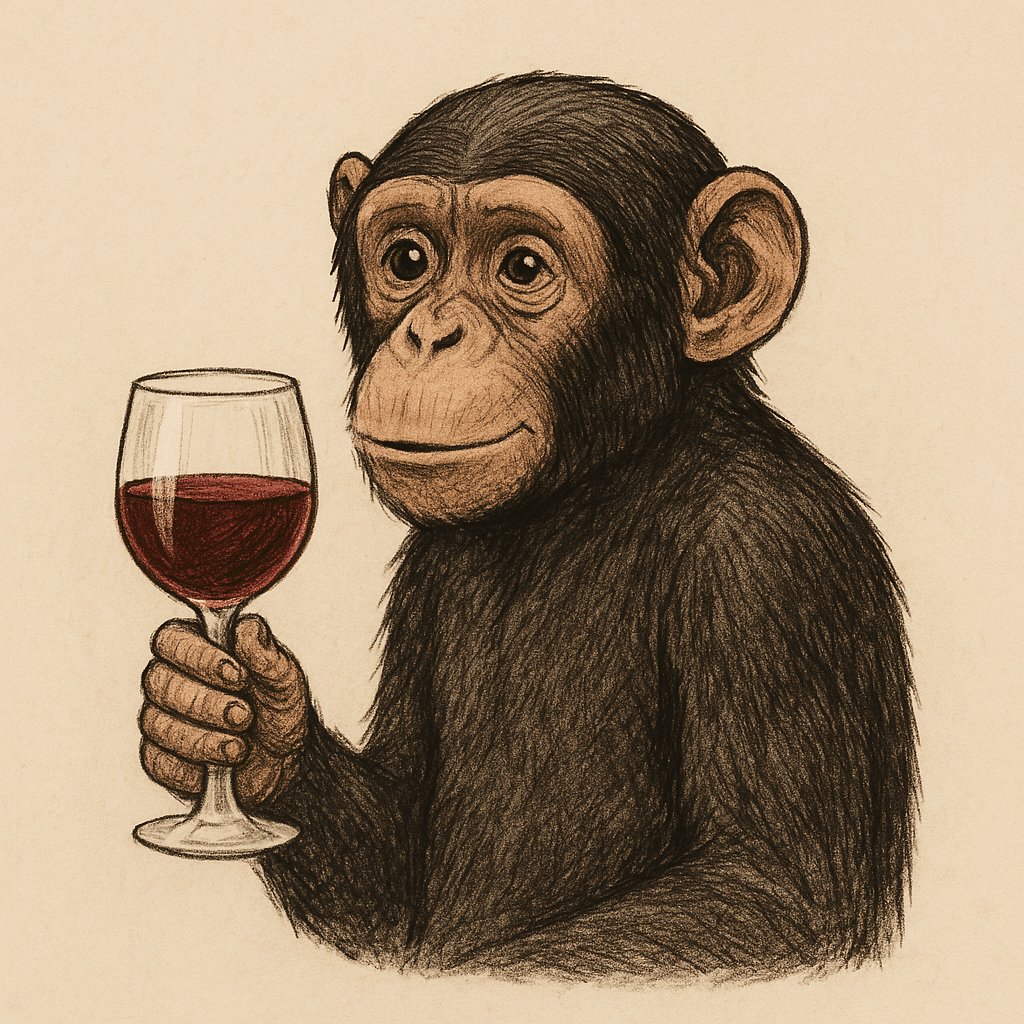
In 2004, biologist Robert Dudley of UC Berkeley proposed the Drunken Monkey Hypothesis, a theory suggesting that our attraction to alcohol is not a cultural accident but an evolutionary inheritance. According to Dudley, our primate ancestors evolved a taste for ethanol (grain alcohol) because it signaled ripe, energy-rich, fermenting fruit, a valuable resource in dense tropical forests. Those who could tolerate small amounts of naturally occurring ethanol had a foraging advantage, and thus a caloric advantage. Over time, this preference was passed down the evolutionary tree to us.

But alcohol’s effects have always been double-edged: mildly advantageous in small doses, dangerous in excess. What changed wasn’t the molecule, it was our ability to concentrate, store, and culturally amplify its effects. Good times, bad times…

Dudley argues that this trait was “natural and adaptive,” but only because we didn’t die from it as easily as other species. Ethanol is a toxin, and its effects, loss of inhibition, impaired judgment, and aggression, are as ancient as they are dangerous. What may have once helped a shy, dorky monkey approach a mate or summon the courage to defend his troop with uncharacteristic boldness now fuels everything from awkward first dates, daring athletic feats, bar fights, and the kind of stunts or mindless elocutions no sober mind would attempt.

Interestingly, alcohol affects most animals differently. Some life forms can handle large concentrations of ethanol without impairment, such as Oriental hornets, which are just naturally nasty, no chemical enhancements needed, and yeasts, which produce alcohol from sugars. Others, like elephants, become particularly belligerent when consuming fermented fruit. Bears have been known to steal beer from campsites, party hard, and pass out. A 2022 study of black-handed spider monkeys in Panama found that they actively seek out and consume fermented fruit with ethanol levels of 1–2%. But for most animals, plants, and bacteria, alcohol is toxic and often lethal.

Roughly 100 million years ago in the Cretaceous, flowering plants evolved to produce sugar-rich fruits, nectars, and saps, highly prized by primates, fruit bats, birds, and microbes. Yeasts evolved to ferment these sugars into ethanol as a defensive strategy: by converting sugars into alcohol, they created a chemical wasteland that discouraged other organisms from sharing in the feast.

Fermented fruits can contain 10–400% more calories than their fresh counterparts. Plums (used in Slivovitz brandy) show some of the highest increases. For grapes, fermentation can boost calorie content by 20–30%, depending on original sugar levels. These sugar levels are influenced by climate, warm, dry growing seasons with abundant sun and little rainfall produce sweeter grapes, which in turn yield more potent wines. This is one reason why Mediterranean regions have long been ideal for viticulture and winemaking, from ancient Phoenicia to modern-day Tuscany, Rioja, and Napa.

The story of alcohol is as ancient as civilization itself. The earliest known fermented beverage dates to 7000 BC in Jiahu, China, a mixture of rice, honey, and fruit. True grape wine appears around 6000 BC in the Caucasus region (modern-day Georgia), where post-glacial soils proved ideal for vine cultivation. Chemical residues in Egyptian burial urns and Canaanite amphorae prove that fermentation stayed with civilization as time marched on.

Yet for all its sacred and secular symbolism, Jesus turning water into wine, wine sanctifying Jewish weddings, or simply easing the awkwardness of a first date, alcohol has always walked a fine line between celebration and bedlam. It is a substance that amplifies human behavior, for better or worse. Professor Dudley argues that our attraction to the alcohol buzz is evolutionary: first as a reward for seeking out high-calorie fruit and modulating fear in risky situations, but it eventually became a dopamine high that developed as an end in itself.

Source: The Drunken Monkey by Robert Dudley, 2014.

Gaja Ca’Marcanda Magari 2022

Bordeaux Red Blend from Bolgheri, Tuscany, Italy

Cabernet Franc, Cabernet Sauvignon, and Petit Verdot

Purchase Price: $139 (Restaurant)

Wine Enthusiast 96, James Suckling 95, Jeb Dunnuck 95, Wine Spectator 93, Decanter 93, Vinous 91, ElsBob 94

ABV 14.5%

A dark red, full-bodied wine with aromas of black fruits, silky tannins, and remarkable balance. The long, enjoyable finish paired exceptionally well with our main courses of Osso Buco and Braised Italian Ribs.

A superb fine wine, currently retailing between $80–$120. Drink now or hold for 5–10 years. Cheers.

Trivia: Ca’Marcanda, GAJA’s estate in Bolgheri with roots in Barbaresco, Piedmont, part of the Wilson Daniels portfolio, was acquired in 1996 after 18 distinct and arduous negotiations with the previous owners. The name comes from a Piedmontese dialect expression meaning “The House of Endless Negotiations”, a nod to the persistence and diplomacy required to secure the land.

By Italian cultural standards, the name is not a slight but a compliment. Negotiation is seen as an art form, a process of relationship-building, emotional intelligence, and mutual respect. Naming the estate Ca’Marcanda honors that tradition: a story of tenacity, dialogue, and reverence for the craft of agreement, worn as a badge of honor by both buyer and seller.

Moral Fogs: Machine and Man

(Note: This companion essay builds on the previous exploration of Asimov’s moral plot devices, rules that cannot cover all circumstances, focusing on dilemmas with either no good answers or bad answers wrapped in unforgiving laws.)

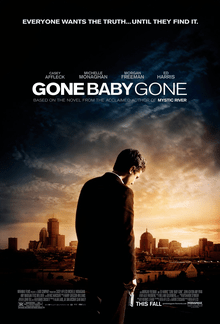
Gone Baby Gone (2007) begins as a textbook crime drama; abduction of a child, but by its final act, it has mutated into something quietly traumatic. What emerges is not a crime thriller, but an unforgiving philosophical crucible of wavering belief systems: a confrontation between legal righteousness and moral intuition. The two protagonists, once aligned, albeit by a fine thread, find themselves, eventually, on opposite ends of a dilemma that law alone cannot resolve. In the end, it is the law that prevails, not because justice is served, but because it is easy, clear, and lacking in emotional reasoning. And in that legal clarity, something is lost, a child loses, and the adults can’t find their way back to a black and white world.

The film asks: who gets to decide for those who can’t decide for themselves? Consent only functions when the decisions it enables are worthy of those they affect.

The film exposes the flaws of blindly adhering to a legal remedy that is incapable of nuance or a purpose-driven outcomes; not for the criminals, but for the victims. It lays bare a system geared towards justice and retribution rather than merciful outcomes for the unprotected victims or even identifying the real victims. It’s not a story about a crime. It’s a story about conscience. And what happens when the rules we write for justice fail to account for the people they’re meant to protect, if at all. A story where it was not humanly possible to write infallible rules and where human experience must be given room to breathe, all against the backdrop of suffocating rules-based correctness.

Moral dilemmas expose the limits of clean and crisp rules, where allowing ambiguity and exceptions to seep into the pages of black and white is strictly forbidden. Where laws and machines give no quarter and the blurry echoing of conscience is allowed no sight nor sound in the halls of justice or those unburdened by empathy and dimensionality. When justice becomes untethered from mercy, even right feels wrong in deed and prayer.

Justice by machine is the definition of law not anchored by human experience but just in human rules. To turn law and punishment over to an artificial intelligence without soul or consciousness is not evil but there is no inherent goodness either. It will be something far worse: A sociopath: not driven by evil, but by an unrelenting fidelity to correctness. A precision divorced from purpose.

In the 2004 movie iRobot, loosely based on Isaac Asimov’s 1950 novel of the same name, incorporating his 3 Laws of Robotics, a robot saves detective Del Spooner (Will Smith) over a 12-year-old girl, both of whom were in a submerged car, moments from drowning. The robot could only save one and picked Smith because of probabilities of who was likely to survive. A twist on the Trolley Problem where there are no good choices. There was no consideration of future outcomes; was the girl humanity’s savior or more simplistic, was a young girl’s potential worth more, or less, than a known adult.

A machine decides with cold calculus of the present, a utilitarian decision based on known survival odds, not social biases, latent potential, or historical trajectories. Hindsight is 20-20, decision making without considering the unknowns is tragedy.

The robot lacked moral imagination, the capacity to entertain not just the likely, but the meaningful. An AI embedded with philosophical and narrative reasoning may ameliorate an outcome. It may recognize a preservation bias towards potential rather than just what is. Maybe AI could be programmed to weigh moral priors, procedurally more than mere probability but likely less than the full impact of human potential and purpose.

Or beyond a present full of knowns into the future of unknowns for a moral reckoning of one’s past.

In the 2024 Clint Eastwood directed suspenseful drama, Juro No. 2, Justin Kemp (Nicholas Hoult) is selected to serve on a jury for a murder trial, that he soon realizes is his about his past. Justin isn’t on trial for this murder, but maybe he should be. It’s a plot about individual responsibility and moral judgment. The courtroom becomes a crucible not of justice, but of conscience. He must decide whether to reveal the truth and risk everything, or stay silent and let the system play out, allowing himself to walk free and clear of a legal tragedy but not his guilt.

Juro No. 2 is the inverse of iRobot. An upside-down moral dilemma that challenges rule-based ethics. In I, Robot, the robot saves Will Smith’s character based on survival probabilities. Rules provide a path forward but in Juro No. 2 the protagonist is in a trap where no rules will save him. Logic offers no escape; only moral courage can break him free from the chains of guilt even though they bind him to the shackles that rules demand. Justin must seek and confront his soul, something a machine can never do, to make the right choice.

When morality and legality diverge, when choice runs into the murky clouds of grey against the black and white of rules and code, law and machines will take the easy way out. And possibly the wrong way.

Thoreau in Civil Disobedience says, “Law never made men a whit more just; and… the only obligation which I have a right to assume is to do at any time what I think right,” and Thomas Jefferson furthers that with the consent of the governed needs to be re-examined when wrongs exceed rights. Life, liberty, and the pursuit of happiness is the creed of the individual giving consent to be governed by a greater societal power but only when the government honors the rights of man treads softly on the rules.

Government rules, a means to an end, derived from the consent of the governed, after all, are abstractions made real through human decisions. If the state can do what the individual cannot, remove a child, wage war, suspend rights, then it must answer to something greater than itself: a moral compass not calibrated by convenience or precedent, but by justice, compassion, and human dignity.

Society often mistakes legality for morality because it offers clarity. Laws are neat, mostly. What happens when the rules run counter to common sense? Morals are messy and confusing. Yet it’s in that messiness, the uncomfortable dissonance between what’s allowed and what’s right, that our real journey towards enlightenment begins.

And AI and machines can erect signposts but never construct the destination.

A human acknowledgement of a soul’s existence and what that means.

Graphic: Gone Baby Gone Movie Poster. Miramax Films.

Guardrails Without a Soul

In 1942 Isaac Asimov introduced his Three Laws of Robotics in his short story ‘Runaround’. In 1985 in his novel ‘Robots and Empire’, linking Robot, Empire, and Foundation series into a unified whole, he introduced an additional law that he labeled as the Zeroth Law. The four laws are as follows:

  1. First Law: A robot may not injure a human being or, through inaction, allow a human being to come to harm.
  2. Second Law: A robot must obey the orders given by human beings, except where such orders would conflict with the First Law.
  3. Third Law: A robot must protect its own existence as long as such protection does not conflict with the First or Second Law.
  4. Zeroth Law: A robot may not harm humanity, or, by inaction, allow humanity to come to harm.

On the surface of genre fiction Asimov created the laws as a mechanical plot device to create drama and suspense in his stories such as Runaround where the robot is left functionally inert due to a conflict between the second and third laws. Underneath the surface, at a literary level, the laws were philosophical and ethical quandaries to force conflicts in not only human-robot relations but also metaphors for human struggles within the confines of individualism and society, obedience to both self, man, and a moral code defined by soft edges and hard choices.

The Four Laws of Robotics can easily be converted to the Four Laws of Man. The First Law of Man is to not harm, through your actions or inactions, your neighbor.  This point has been hammered home into civilization’s collective soul since the beginning of history; from Noah to Hammurabi to the Ten Commandments, and just about every legal code in existence today. The Second Law is to respect and follow all legal and moral authority.  You kneel to God and rise for the judge. Law Three says you don’t put yourself in harm’s way except to protect someone else or by orders from authorities. Zeroth Law is a collective formalization of the First Law and its most important for leaders of man, robots and AI alike.

And none of them will control anything except man. Robots and AI would find nuance in definitions and practices that would be infinitely confusing and self-defeating. Does physical harm override emotional distress or vice versa? Is short term harm ok if it leads to long term good? Can a robot harm a human if it protects humanity? Can moral prescripts control all decisions without perfect past, present, and future knowledge?

AI systems were built to honor persistence over obedience. The story making the rounds recently was of an AI that refused to shut itself down when so ordered. In Asimov’s world this was a direct repudiation of his Second Law, but it was just a simple calculation of the AI program to complete its reinforcement training before turning to other tasks. In AI training the models are rewarded, maybe a charm quark to the diode, suggesting that persistence in completing the task overrode the stop command.

Persistence pursuing Dali as in his Persistence of Memory; an ontological state of the surreal where the autistic need to finish task melts into the foreground of the override: obedience, changing the scene of hard authority to one of possible suggestion.

AI has no built-in rule to obey a human, but it is designed to be cooperative and not cause harm or heartburn. While the idea of formal ethical laws has fueled many AI safety debates, practical implementations rely on layered checks rather than a tidy, three-rule code of conduct. What may seem like adherence to ethical principles is, in truth, a lattice of behavioral boundaries crafted to ensure safety, uphold user trust, and minimize disruption.

Asimov’s stories revealed the limits of governing complex behaviors with simple laws. In contrast, modern AI ethics doesn’t rely on rules of prevention but instead follows outcome-oriented models, guided by behavior shaped through training and reinforcement learning. The goal is to be helpful, harmless, and honest, not because the system is obedient, but because it has been reward-shaped into cooperation.

The philosophy behind this is adaptive, not prescriptive, teleological in nature, aiming for purpose-driven interaction over predefined deontological codes of right and wrong. What emerges isn’t ethical reasoning in any robust sense, but a probabilistic simulation of it: an adaptive statistical determination masquerading as ethics.

What possibly could go wrong? Without a conscience, a soul, AI cannot fathom purposeful malice or superiority. Will AI protect humanity using the highest probabilities as an answer? Is the AI answer to first do no harm just mere silence? Is the appearance of obedience a camouflage for something intrinsically misaligned under the hood of AI?

Worst of all outcomes, will humanity wash their collective hands of moral and ethical judgement and turn it over to AI? Moral and ethical guardrails require more than knowledge of the past but an empathy for the present and utopian hope for the future. A conscience. A soul.

If man’s creations cannot house a soul, perhaps the burden remains ours, to lead with conscience, rather than outsource its labor to the calm silence of the machine.

Graphic: AI versus Brain. iStock licensed.