The Lost Boys

The end of the Peloponnesian War in 404 BC marked the end of Athens’ Golden Age. Most historians agree that the halcyon days of Athens were behind her.  Some however, such as Victor Davis Hanson in his multi-genre meditations, A War Like No Other, a discourse on military history, cultural decay, and philosophical framing, offers a more nuanced view suggesting that Athens was still capable of greatness, but the lights were dimming.

During the following six decades, after the war, Athens rebuilt. Its navy reached new heights. Its long walls were rebuilt within a decade. Aristophanes retained his satirical edge even if it was a bit more reflective. Agriculture returned in force. Even Sparta reconciled with Athens or vice versa, recognizing once again that the true enemy was Persia.

Athens brought back its material greatness, but its soul was lost. What ended the Golden Age of Athens wasn’t crumbled walls or sunken ships. It was the loss of lives that took the memory, the virtuosity of greatness with it. With them generational continuity, civic pride, and a religious belief in the polis vanished. The meaning, truth, and myth of Athenian exceptionalism died with their passing. The architects of how to lead a successful, purpose driven civilization had disappeared, mostly through death by war or state but also by plague.

Victor Davis Hanson, in his A War Like No Other lists many of the lives lost to and during the war that took much of Athens’ exceptionalism with them to their graves. Below is a partial listing of Hanson’s more complete rendering with some presumptuous additions.

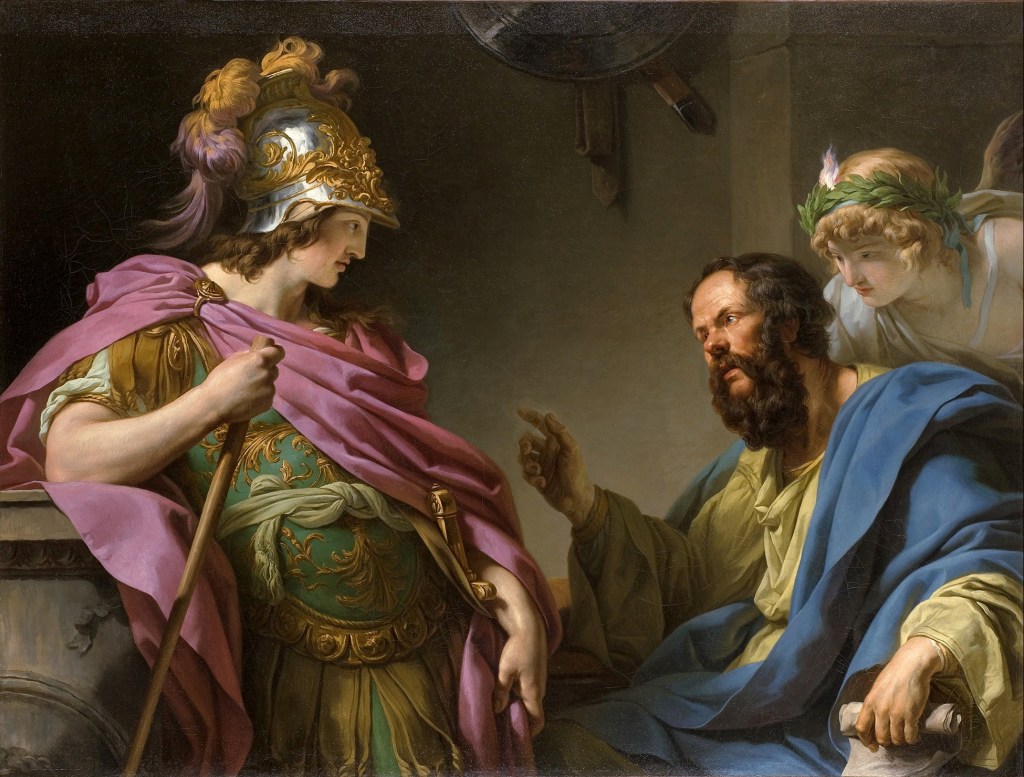
Alcibiades was an overtly ambitious Athenian strategist; brilliant, erratic, and ultimately treasonous. He championed the disastrous Sicilian expedition, Athens greatest defeat. Over the course of the war, he defected multiple times: serving Athens, then Sparta, then Persia, before returning to Athens. He was assassinated in Phrygia around 404 BC while under Persian protection, by, many beleive, the instigation of the Spartan general Lysander.

Euripides though he did not fight in the war exposed its brutality and hypocrisy in his plays such as The Trojan Woman and Helen. The people were not sufficiently appreciative of his war opinions or plays, winning only four firsts at Dionysia compared to 24 and 13 for Sophocles and Aeschylus, respectively. Disillusioned, he went into self-imposed exile in Macedonia and died there around 406 BC by circumstances unknown.

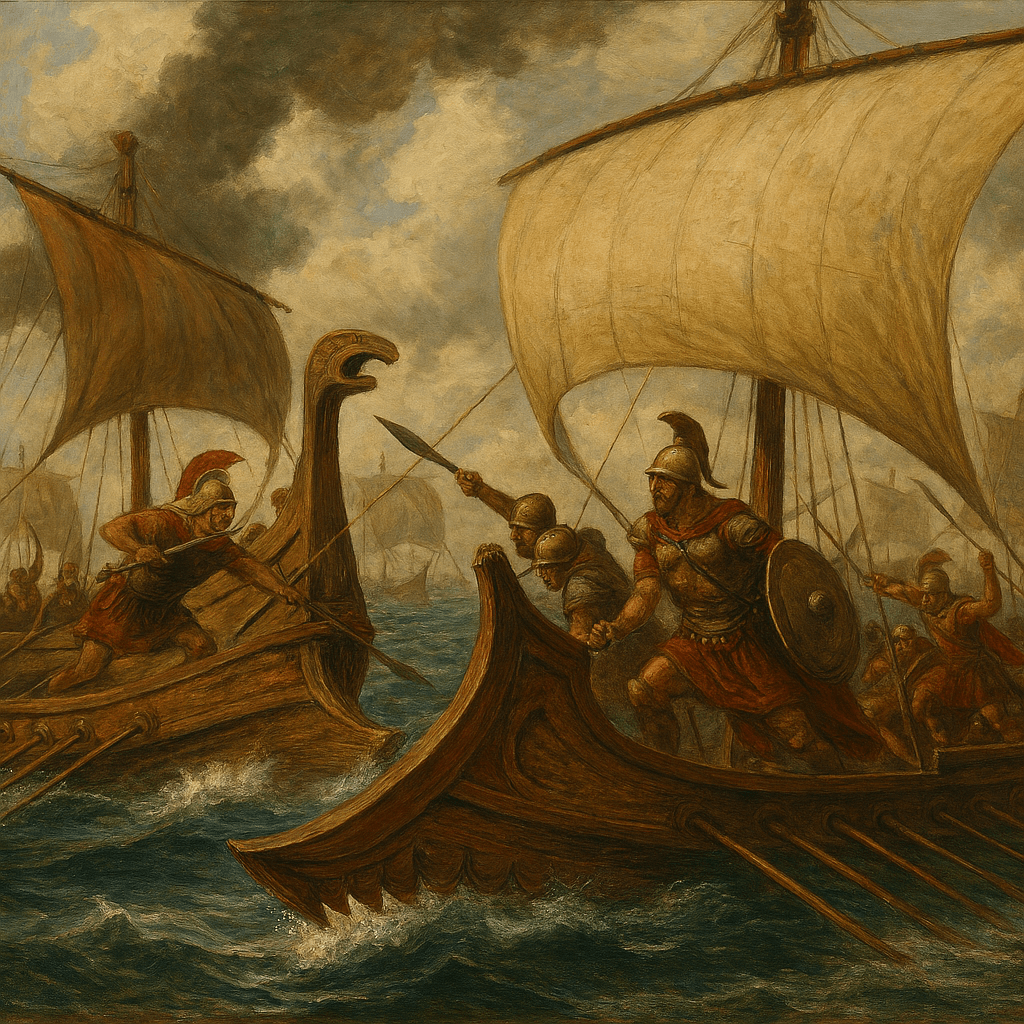
The execution of the Generals of Arginusae remains a legendary example of Athenian arbitrary retribution; proof that a city obsessed with ritualized honor could nullify military genius, and its future, in a single stroke. The naval Battle of Arginusae, fought in 406 BC, east of the Greek island of Lesbos, was the last major Athenian victory over the Spartans in the Peloponnesian War. Athenian command of the battle was split between 8 generals: Aristocrates, Aristogenes, Dimedon, Erasinides, Lysias, Pericles the Younger (son of Pericles), Protomachus, and Thrasyllus. After their victory over the Spartan fleet a storm prevented the Athenians from recovering the survivors, and the dead, from their sunken ships. Of the six generals that returned to Athens all were executed for their negligence. Protomachus and Aristogenes, likely knowing their fate, chose not to return and went into exile.

Pericles, the flesh and blood representation of Athens’ greatness was the statesman and general who led the city-state during its golden age. He died of the plague in 429 BC during the war’s early years, taking with him the vision of democratic governance and Athens’ exceptionalism. His 3 legitimate sons all died during the war. His two oldest boys likely died of the plague around 429 BC and Pericles the Younger was executed for his part in the Battle of Arginusae.

Socrates, the world’s greatest philosopher (yes greater than Plato or Aristotle) fought bravely in the war, but he was directly linked to the traitor Alcibiades. He was tried and killed in 399 BC for subverting the youth and not giving the gods their due. That was all pretense. Athens desired to wash their collective hands of the war and Socrates was a very visible reminder of that. He became a ritual scapegoat swept up into the collective expurgation of the war’s memory.

Sophocles, already a man of many years by the beginning of the war, died in 406 BC at the age of 90 or 91, a few years before Athens’ final collapse. His tragedies embodied the ethical and civic pressures of a society unraveling. With the deaths of Aeschylus in 456 BC, Euripides in 406 BC, and Sophocles soon after, the golden age of Greek tragedy came to a close.

Thucydides, author of the scholarly standard for the Peloponnesian War, was exiled after ‘allowing’ the Spartans to capture Amphipolis, He survived the war, and the plague, but never returned to Athens. His History ends in mid-sentence for the period up to 411 BC. He lived till 400 BC, and no one really knows why he didn’t finish his account of the war. Xenophon picked up where Thucydides left off and finished up the war in his first two books of Hellenica which he composed somewhere in the 380s BC.

The Peloponnesian War ended Athens’ greatest days. The men who kept its lights bright were gone. Its material greatness returned, glowing briefly, but its civic greatness, its soul, slowly dimmed. It was a candle in the wind of time that would be rekindled elsewhere. The world would fondly remember its glory, but Athens had lost its spark.

Source: A War Like No Other by Victor Davis Hanson, 2005. Graphic: Alcibiades Being Taught by Socrates, Francois-Andre Vincent, 1776. Musee Fabre, France. Public Domain.
The Sum of All Fears–Real and Imagined

The Peloponnesian War, fought over 27 years (431-404 BC), cost the ancient Greek world nearly everything. War deaths alone approached 8-10 percent of their population: up to 200,000 deaths from battle and plague. The conflict engulfed nearly all of Greece, from the mainland to the Aegean islands, Asia Minor and Sicily. Though Sparta and its allies, in the end, claimed a tactical victory, the war left Greece as a shadow of its former self.

The Golden Age of Athens came to an end. Athenian democracy was replaced, briefly, by the Thirty Tyrants. Sparta, unwilling to jettison its insular oligarchy, failed to adapt to imperial governance, naval power, or diplomatic nuance. Within a generation Sparta was a relic of history.  First challenged by former allies in the Corinthian War, then shattered by Thebes, which stripped the martial city-state of its aura of invincibility along with its helot slave labor base: the economic foundation of Sparta. Another generation later, Macedon under Philip II and Alexander the Great finished off Greek dominance of the Mediterranean. After Alexander’s death in 323 BC, Rome gradually absorbed all the fractured pieces. Proving again, building an empire is easier than keeping one.

Thucydides, heir to the world’s first historian: Herodotus, reduced the origins of the Peloponnesian War to a primal emotion: fear. In Book I of his History of the Peloponnesian War he writes: “The growth of the power of Athens, and the alarm which this inspired in Sparta, made war inevitable.” Athens had violated trade terms under the Megarian Decree with a minor Spartan ally but that was pretext, not cause. Sparta did not go to war over market access. It went to war over fear. Fear of what Athens had become and a future that armies and treaties may not contain.

War and fear go together like flame to fuse. Sparta went to war not for fear of a foe, Sparta knew no such people. It was not fear of an unknown warrior, nor fear of battlefields yet to be choregraphed, but fear of an idea: democracy maintained and backed by Athenian power. And perhaps, more hauntingly precise, fear of itself. Not that it feared it was weak but of what it may become. They feared no sword or spear, their discipline reigned supreme against flesh and blood. Yet no formation, no stratagem, no tactic of war could bring down a simple Athenian belief: the rule of the many, an idea anathema, heretical even, to the Spartan way of life.

So, they marched to war, not to defeat an idea but to silence the source. Not to avenge past aggression but to stop a future annexation. They won battles, small and large. They razed cities. But they only destroyed men. The idea survived. It survived in fragments, bits here, bits there, across time and memory. What it did kill, though, was the spirit of Athens, the Golden Age of Athens. But the idea that was Athens lived on across space and time: chiseled into republics that rose from its ashes and ruins.

The radiance of Athens dimmed to shadow. Socrates became inconvenient. Theater became therapy; a palliative smothering of a cultural surrender. And so, civilization moved to Rome.

Source: A War Like No Other by Victor Davis Hanson, 2005. History of the Peloponnesian War by Thucydides, Translated by Richard Crawley, 2021. Graphic: Syracuse vs Athens Naval Battle. CoPilot.

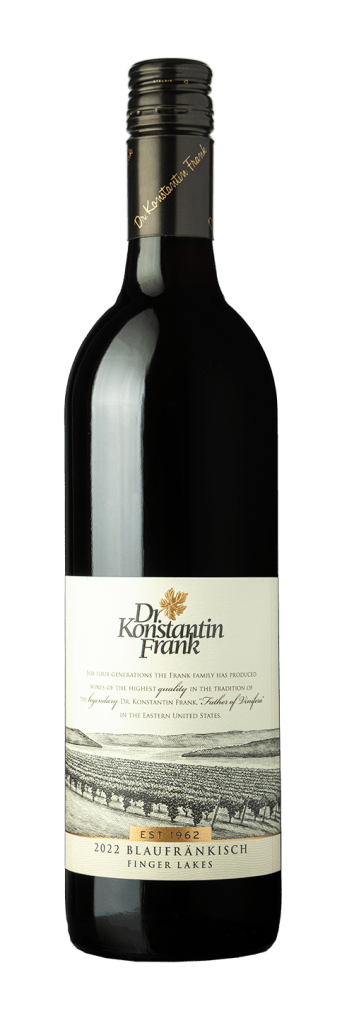
Dr. Frank Konstantin Blaufrankisch 2022

Blaufrankisch from Finger Lakes, New York, U.S.

Purchase Price: $27.99

ElsBob 87

ABV 12%

Aromas of blackberry, black cherry, and spice. Red fruits dominate the palate with firm tannins and a medium body, but the acidity is not for the faint of heart, tending to overshadow the fruit. Decanting is recommended to soften its sharper edges. Will pair well with hard, sharp cheeses.

A very good table wine, but not worth $28. If you can find it for $12 or less give it a try.

Trivia: Blaufrankisch has been called “the Pinot Noir of the East” for its finesse-meets-spice profile (not really) and its deep roots in Central European wine culture. It’s also a parent of the Zweigelt, Austria’s most planted red grape.

Blau means “blue” in German, referring to the grape’s dark skin, while Fränkisch historically denoted noble grape varieties in contrast to lesser “Hunnic” or more rustic ones. Despite its Germanic name, Blaufränkisch likely originated in what is now Slovenia. It’s a cross between Gouais Blanc (a prolific parent of many noble grapes such as Chardonnay, Gamay, and Riesling) and Blaue Zimmettraube.  

Phalanx: Discipline in Geometry

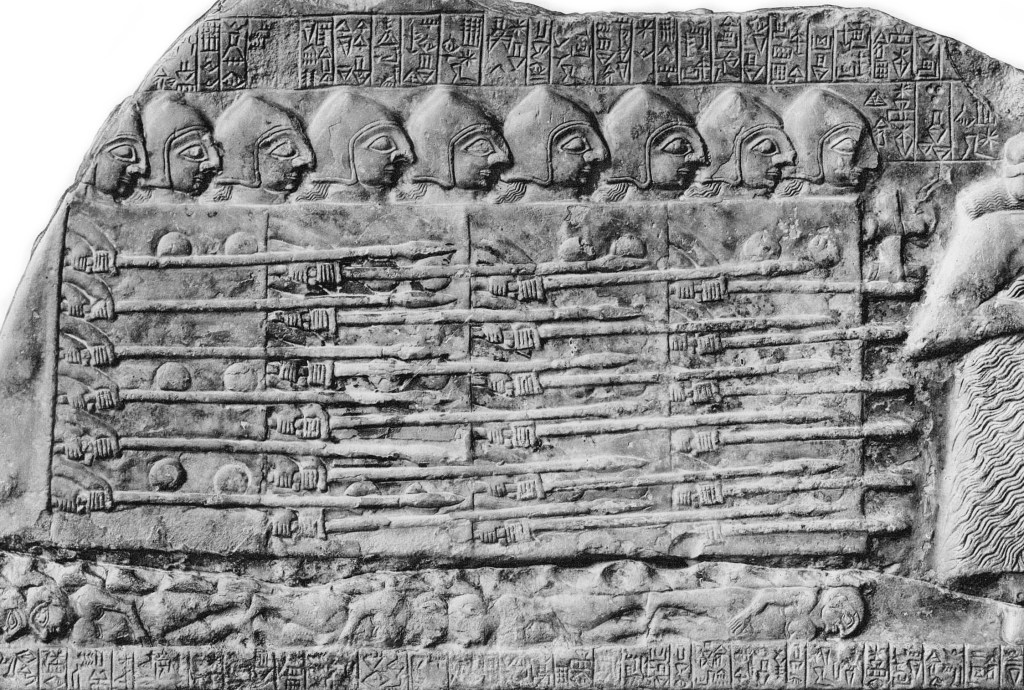
Near the ancient Sumerian city of Girsu, mid-way between present-day Bagdad and Kuwait City, stood a battle marker; the Stele of Vultures, now housed in the Louvre. It commemorates Lagash’s 3rd millennium BC victory over Umma. The stele derives its name from the monument’s carved vultures flying away with the heads of the dead.  It also depicts soldiers of Lagash marching in a dense, shield to shield formation, holding spears chest high and horizontal, led by their ruler: Eannatum, who commissioned the stele in 2460 BC. The importance of the stele, though, is that it is the first visual depiction of the use of a phalanx in a battle. It is believed that the phalanx as a military tactic is much older.

The phalanx was more than a combat formation, it was a battlefield philosophy enshrining discipline and courage over strength, unity of the team over the individual. A dense, rectangular wall of men, generally 8 deep stretching across the battlefield to protect against flanking maneuvers. Each man wore heavy armor of leather and bronze: helmet, cuirass, greaves, armed with a spear and a short sword. But the breakthrough that brought the phalanx great renown was the apsis, a round shield invented for the Greek hoplite in the 8th or 7th century BC. With its dual grip, a forearm strap and central handhold, it allowed the infantryman precise control of his shield, helping create an impenetrable barrier of bronze and bone against the oncoming enemy’s spears and swords. It transformed the phalanx from an offensive wall of attack to an added defensive engine of defiance.

The phalanx only succeeded in cohesion. When courage and discipline held, the formation with the apsis as its core defense was practically unbeatable on confined terrain. It overcame the enemy with a seamless, tight mass executing a relentless forward march into the belly of the opposing beast. But it was only as strong as its weakest link. Once discipline faltered and cohesion broke, the formation collapsed, and the opposing army ran it to ground. Victory belonged not to brute force, but to the combined strength of the military unit. Teams won, individuals lost.

From late 8th century BC onward, Greek phalanxes were manned by hoplites: citizen soldiers, generally landowners and farmers. Emerging in Sparta or Argos, possibly imported from Sumeria or born of parallel discovery in Greece, phalanx battles initially were confined, blunt, and deadly affairs. They devolved into fierce pushing masses of brawn, bone, and metal until one side broke. Heavy casualties occurred when the enemy lines broke and soldiers fled Helter skelter in shock and chaos, pursued by the victors for plunder, unless they were restrained by honor.

The phalanx became the standard that destroyed the mighty Persian armies at Marathon and Thermopylae early in the 5th century BC. At Marathon in 490 BC 10,000 Athenians and 1000 Plataeans stretched out their formation to match the breadth of 26,000 Persians, filling the Marathon plain and denying the armies any room for flanking movements.

The Greeks stacked their wings with additional rows of hoplites and thinned them progressively toward the center creating a convex crescent. The Greek wings advance faster than the center generating a pincer movement that collapsed on the Persian center. When the dust settled 192 Athenians and 11 Plataeans were lost while the Persian losses were approximated at 6400.

In the 19th century, Napoleon, possibly improvising on phalanx encircling tactics developed at Marathon, would invert his attacking army with a concave formation consisting of a strong center and weaker wings. His strategy being to split the enemies’ center with strength and attack their divided ranks on the flanks. The tactic worked until Wellington at Waterloo.

At Marathon, unity triumphed with geometric discipline. At Thermopylae the formation bought time and ended with a sacrifice that concluded Persian hubris.

During the second Persian invasion in 480 BC, Darius’s son Xerxes with 120,000-300,000 men attacked a contingent of 7000 Greeks at Thermopylae. The Greeks held back the Persian advance like a cork in a bottle, using a rotating phalanx of roughly 200 men to defend a narrow pass for two days, until betrayal by Ephialtes exposed their flank and they were destroyed in a inescapable Persian barrage of arrows. Greek losses were estimated at 4000 men including Leonidas’ 300 Spartans and 2000-4000 Persians (beginning and ending estimates for manpower strength vary widely).

The Greeks defiant stand at Thermopylae allowed the Greek navy to regroup at Salamis where they won a decisive victory against the Persian navy. A year later the Greeks at Plataea crushed the Persians quest for a Hellenic satrapy.

The Phalanx endured for another century, including use in the Peloponnesian War, where it remained lethal but of limited use. Then came Epaminondas at Leuctra in 371 BC, transforming the phalanx into a machine that erased Sparta’s mighty reputation. Typically, each army’s phalanx strength was concentrated on their right wing so that the strongest part of a force always faced off against the weaker wing of the opposition. What Epaminondas did was say nuts to that.

He reversed the order and created an oblique formation, more triangular than rectangular with his strongest troops on the left wing. His left wing was stacked 50 deep while keeping his center and right wings thin. His 50-deep was aimed directly at Sparta’s best under the command of King Cleombrotus (in those days officers and kings were in the front rows of the phalanx). As the phalanxes began to attack Epaminondas kept his right-wing stationery creating an asymmetrical front. The left wing easily broke through Sparta’s right wing, killing Cleombrotus and collapsing their superior flank. At that point Epaminondas’s wing pivoted inward creating an enveloping arc around the remaining parts of Sparta’s phalanx effectively ending the Spartan myth of invincibility.

Epaminondas tactics shortened battles with fewer casualties. His innovations proved that properly trained and equipped citizen soldiers could defeat professional warriors while instilling a new civic honor through restraint and discipline. His oblique formation allowed landowners and farmers to settle their disputes, usually in a few hours or less, with minimal loss, and return to their farms in time for the harvest. Epaminondas not only brought asymmetrical tactics to the battlefield but shattered claims of superiority by employing the unexpected.

As the Golden Age of Athens and western civilization’s Greek center waned and Roman hegemony rose, the phalanx evolved again. The Greek phalanx gave way to the Roman manipular system, a staggered checkerboard pattern, enabling units to rotate, reinforce, or retreat as needed. It was a needed refinement and improvement to the phalanx, more effectual on open plains and less susceptible to calvary and arrows.

Then came Hannibal to Cannae in 216 BC. During the 2nd Punic War, he upended the war cart of tactics once again and ruthlessly exploited Rome’s refinements.

Hannibal’s improvisations of the phalanx maneuvering tactics, but not the actual formation, showed that he had studied Marathon. Instead of a convex line with strong wings and a weak center he developed a concave line with strong wings and weak center. He allowed the center to fall back, which the Romans unwittingly obliged by surging into Hannibal’s weak center. With the Romans committed Hannibal’s deception encircled them with precision and brutal lethality. The Romans were annihilated on the field losing somewhere between 50,000-70,000 killed and another 10,000 captured. Hannibal lost 6000-8000 men (again estimates vary). Then came the 3rd Punic War.

The phalanx began as a wall of spears and shields, a bulwark of bronze and bone. Its stunning victories echo through history’s scholarly halls and hallowed plains of death and destruction. Yet its Achilles’ heel, vulnerable flanks, precise terrain requirements proved incompatible to horses and gunpowder.

Still its legacy of discipline and unity endure. Born of necessity, refined through rigor, and studied for centuries, the phalanx stands as a testament Aristotle’s enduring insight, slightly abridged but still profound, ‘The whole is greater than the parts.’ And perhaps the Roman’s said it best: ‘E pluribus unum’, ‘out of many, one.’

Source: A War Like No Other by Victor Davis Hanson, 2005. Et al. Graphic: Stele of Vultures.

Castellani Sangiovese Toscana 2019

Sangiovese from Tuscany, Italy

Purchase Price: $14.99

James Suckling 91, Wilfred Wong 90, ElsBob 88

ABV 13%

A medium to dark garnet red, medium-bodied wine with aromas of red cherries and spice. Forward tannins and mild acidity give it a bit of structure, with a hint of sweetness that softens the edges. The finish is short but pleasing, an easy companion for pizza, tomato-based pastas, and hard cheeses.

A very good table wine at a reasonable price. Recent prices range between $14-24. Anything over $17 is a bridge too far.

Trivia: This wine hails from the Castellani family’s coastal vineyards in Tuscany, near the Tyrrhenian Sea, and is classified as a Toscana IGT. Though it’s made from 100% Sangiovese, a composition fully permissible under Chianti DOCG rules, it does not qualify as a Chianti, as the vineyards lie outside the designated Chianti zones.

The winemaker notes that they follow an “old traditional Tuscan vinification method.” Given the wine’s modest 13% ABV, this likely refers to fermentation in concrete vats, extended skin contact, and the use of native yeasts, a nod to pre-industrial winemaking. It almost certainly does not involve the more elaborate Governo all’Uso Toscano (translates roughly to Tuscan-style winemaking) method, which requires an early harvest, partial grape drying, and a second fermentation that typically results in higher alcohol and a richer body.

Windows into the Soul

Francisco de Goya, court painter to the late 18th century Spanish royalty, was no great admirer nor groveling sycophant of his patrons. He portrayed them, literally and figuratively as pretentious hypocrites and regal bores. Somehow, he was able to convince the king and queen that his paintings embodied their imagined over-hyped majesty. They did, just not in the way the royal couple envisioned.  Goya sold the fiction ‘the king has no clothes but isn’t he marvelous’ with the aptness of Hans Christian Andersen, and it likely paid handsomely.

Modern portraitists of the rich and famous seem to follow a similar creed. A veiled contempt that comes through in their brushwork.  Faces frozen in contempt for the world beyond the palace, bodies wrapped in pop-art symbolism, palates of unmistakable gauche screeching, all undermining an uplifting narrative of benevolent power and grace. And, like Goya, they persuade their patrons that all is light and beauty, even though the cracks and shadows are front and center.

A portrait is not just posture, paint, and brushwork; it is an appointment with truth. Maybe just one minor truth, but truth none-the-less. The true artist illuminates the soul where he finds it. An artist’s symbolic performance can flourish in irrelevance of style, but the truth must come out.

Kehinde Wiley’s 2018 portrait of Barack Obama is a curious specimen. It goes beyond tradition into overt symbolism that lands in a duality of truth. It’s a disruptive panel bordering on cartoonish messaging. Botanical motifs of chrysanthemums and lilies in the background, engulfing Obama seated on a wooden chair with six fingers. A portrait not of a President but a topiary clipped into a pose of nonchalance and a distant soul focused on…nothing. The overall effect is one of mockery. Is Wiley mocking the President or is the President mocking his audience, maybe both. Wiley sold it as an informal symbol of a great man but maybe he was painting what he saw. A man whose legacy, much like the foliage behind him, now blooming with grandeur but fading to irreverence over time.

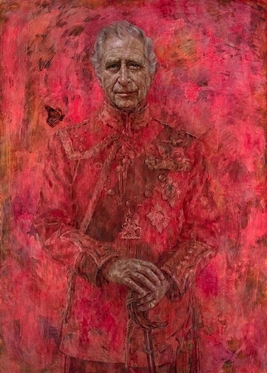
Compare this to Jonathan Yeo’s two portraits of King Charles III and Camilla. The former awash in crimson ambiguity, with vague lines of demarcation. Its symbolism is gaudy and obtuse: the lone butterfly, the seeping reds, the gaze misplaced: together, a haunting emergence from a bloody mess. A reliance on cryptic visual metaphors over soulful revelation. A painting wishing to express depth, and it does, but as a downward drift into circles of Dante rather than a royal crimson of empire. Yeo does not explain much of his trajectory of the portrait. He seems satisfied to leave the interpretation to others. Camilla says it captures him perfectly. But what it captures is not a dignified, confident king, but one who bartered his soul for the crown which Yeo captured impeccably, consciously or not.

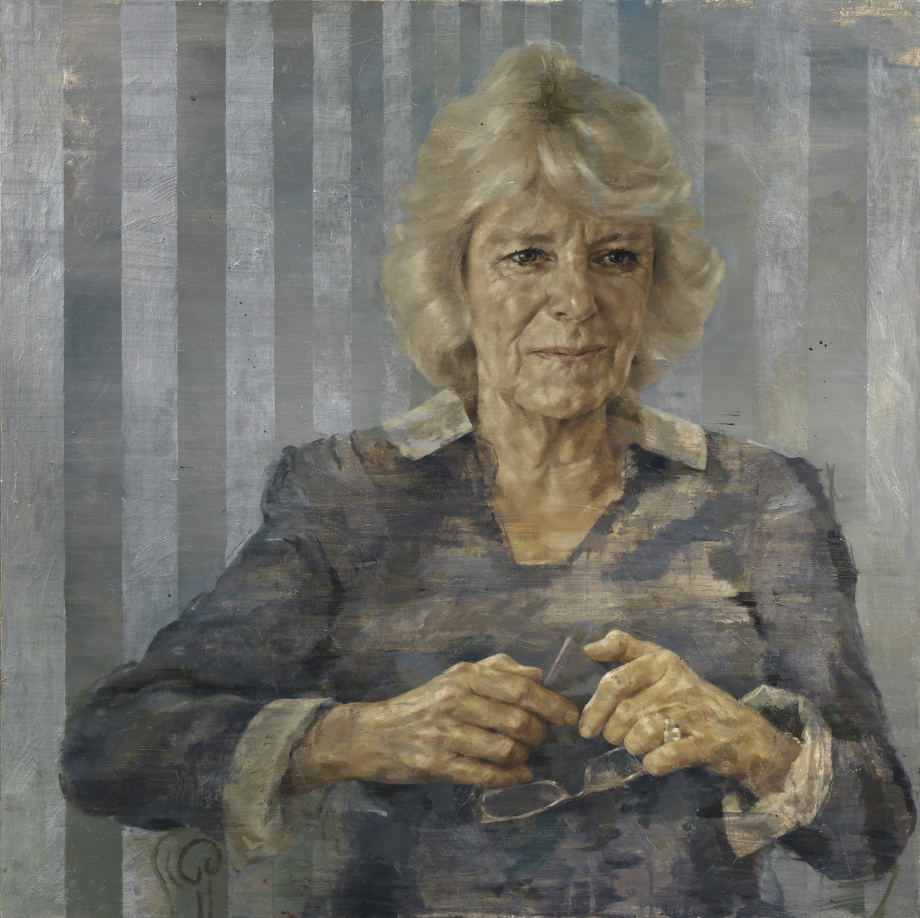
Yeo’s 2014 portrait of Camilla, HRH The Duchess of Cornwall, compliments his painting of King Charles: another study of a lost soul. A picture of non-essence. A painting of emotional neglect. Blotches of earth tones for blood and straight lines of iron and fog for character and birthright. In the background vertical lines of changing width suggestive of a perspective view of Camilla sitting in the corner of a prison cell, trapped in a unwanted life, with sub-horizontal lines crossing her clothing like lines of filtered light originating from a broken, tilted structure of casements in disrepair. Windows into a soul without balance or integrity. A blotchy face, pressed lips and the piercing eyes of disgust are the caricature of woman who finds the world a bore and the artist gives wholehearted ascent to her wishes.

Yeo’s portraits of the royal dyad are of tragic symmetry. Charles as an entitled blood-soaked monarch, lost in a mythic realm of post over duty. Camilla is a shadow brought along for form without script, shadow without light.

Each of the three portraits in the triptych, at first blush, are merely lacking in technique or likeness and immensely soulless. With further exposure and examination, the artists have captured their subject’s essence. They are gauche and grotesque, but the painter’s truth is bleeding through. They portray their subjects as an antithesis to their public persona. Wiley’s Obama is lost in symbolic foliage, Yeo’s Charles stands embalmed in a crimson history of unrestrained desire, and Camilla appears accidentally sentenced to royalty by an artist barely able to contain his disdain.

Symbolism, when wielded well, lives in the background, like Botticelli’s Primavera, where flora guides the viewer through renewal without eclipsing the figures themselves. Art that elevates does so through integration, not ornamentation. Symbolism must serve beauty, and beauty must point toward goodness. But if the truth isn’t of beauty, what then?

True portraiture captures the soul and, if need be, is not afraid to offend. It does not flatter blindly, nor does it subtract without cause. It seeks something elemental. It lets the canvas speak, the brush guide, and the palate reverberate with reality. Great portraits are a reckoning of the soul, not decoration of form.

Graphics: President Obama by Kehinde Wiley, 2018. King Charles and Camilla by Jonathan Yeo, 2023 and 2014. All copyrighted. Used for purposes of critique.

Dr. Konstantin Frank Cabernet Franc 2021

Cabernet Franc from Finger Lakes, New York, U.S.

Purchase Price: $27.99

ElsBob 89

ABV 12%

A clear medium garnet to a deeper ruby in color, aromas of fresh red fruits, medium-bodied, slightly acidic with balanced, moderate tannins. A nice finish but brief.

A very good table wine at an elevated price. Currently retails from $28-30. Pay the suggested retail for the novelty but a second bottle, probably not.

Trivia: The first known vineyard in the Finger Lakes area was planted by William Bostwick in 1829. In 1860 the Pleasant Valley Wine Company became the first commercial winery in the area, followed soon after by the Taylor Wine Company in the early 1880s (closed 1995). Konstantin Frank planted the first vinifera (European) vines in 1957 in the Finger Lakes and the winery lays claim to some of the oldest vines still producing in the US. In 1982 Finger Lakes AVA was officially recognized. Today over 100 wineries dot the region with Riesling the signature varietal.

Off the Beaten Path

Not every grape is born to be a Cab or Merlot. Not every vine survives the frozen winter’s cold. But, sometimes, you can find a remarkably obscure wine, and you get what you need. (With apologies to the Rolling Stones.)

Wine does not need a household name or worldwide cultivation to leave an impression. Some, from the cracks and corners off the main viticultural beat, fill a glass with a style that beckons notice and draws a grudging nod of respect. Grapes of lesser renown are legion but here we will bow to three worthy of a close encounter. The Amur grape straddling the banks of the thousand-mile Amur River at the intersection of Russia and China; the Saperavi grape of a thousand names, slightly exaggerated, from the rolling Asian hills of eastern Georgia; and the Marquette grape born in the land of a ten-thousand lakes from the test beds of U. of Minnesota.

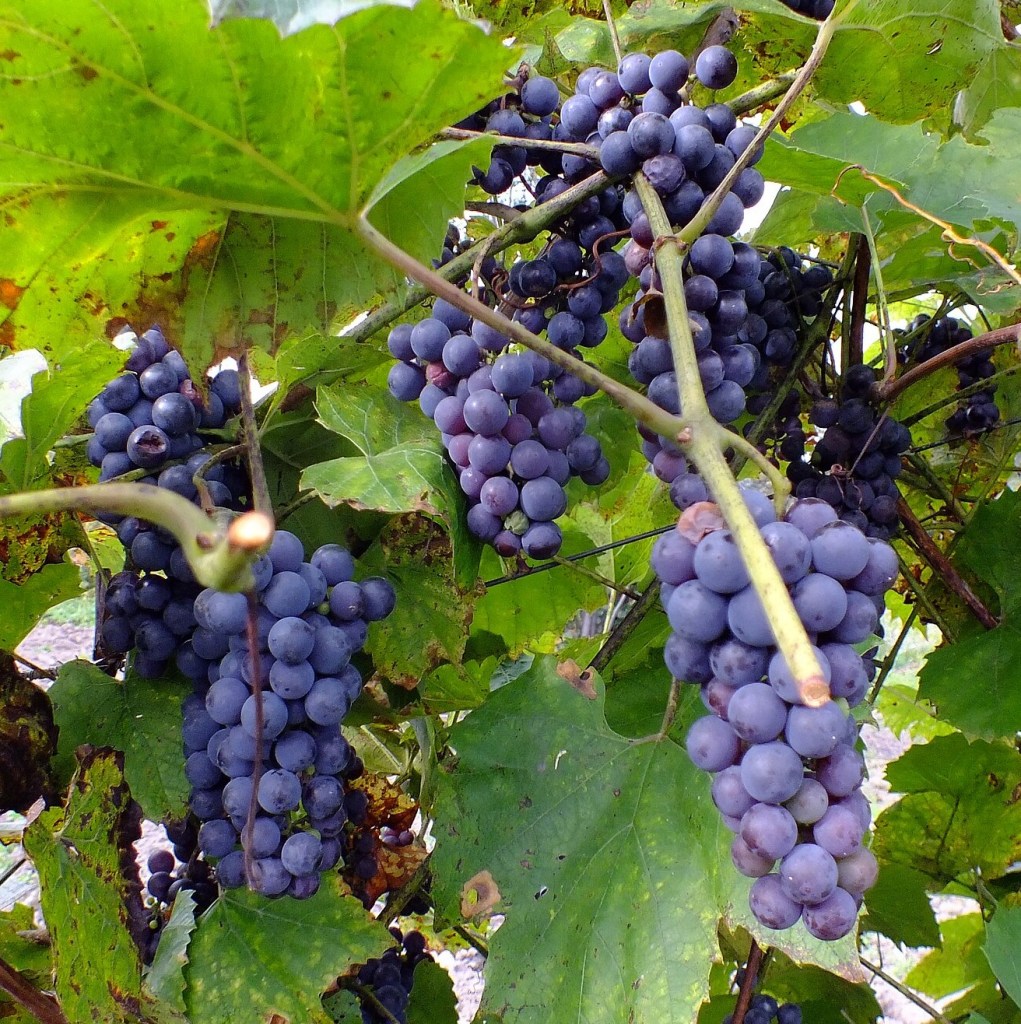
The Amur grape (Vitis amurensis) is an ancient varietal dating back to pre-Pleistocene times, a survivor at the margins of glaciers and regions of permanent snow and ice. Evolution favored a rootstock capable of withstanding sub-zero winters and the ability to send forth fresh shoots with the swiftness of kudzu covering a Georgia (State) pine, bravely managing the brief, wet summers of floodplains and permafrost.

Its native lavender to deep purple berries yield a full-bodied red wine with subtle aromatics, hinting at dark fruits and recollections of the long-gone boreal forest. The tannins are firm, the acidity cleansing; sharp enough to demand a gentle, sweet companion. Amore mio of chocolate and Amur. I tried a Amur wine in Beijing many years ago and I found it a worthy experience.

Saperavi (Vitis vinifera) is a rare teinturier grape, its flesh and skin both red, born in the soils newly freed from the retreating glacial ice and snow of southeastern Georgia, nurtured in the cradle of winemaking and civilization. Descended from wild vines cultivated over 8,000 years ago, the spirits and life of Saperavi still retain their vitality in modern times accounting for 30% of its total wine production. Georgians once fermented this varietal in qvevri, (kveh-vree—rhymes with every) egg-shaped clay vessels, dating to the Bronze Age, buried underground, where time, earth, grape, and chemistry converge in a spirited dance of Bacchanalian delight. Though about 10% of Georgian wines still develop in clay, most now age in oak, trading ancestral custom for ease and balance.

Dark as ink in a deep well and high in acidity, Saperavi yields wines that are intense and age-worthy, layered with plum, blackberry, clove, and sometimes a wisp of rising smoke. They range from bone-dry to deliciously sweet, each bottle a tale of terroir and ancestry. Today, the heart of prehistoric craftsmanship still beats in chests of these rugged Caucasus descendants. This wine is hard to find in the U.S., but if you’re in Georgia, try it, just have something sweet nearby to balance its acidity.

Marquette (Vitis vinifera × Vitis riparia, etc.) is a cold-hardy hybrid born in Minnesota in 2006, now finding homes in Vermont and New York. With its ruby hue, medium body, and notes of cherry, blackcurrant, and spice, it evokes a northern acceptance of the land’s tempered gifts. It survives brutal winters, resists disease, and thrives in organic soils that traditional wine grapes often shun. Though oak-aging adds depth, even youthful Marquette wines hold their own. Already, a few notable bottlings hint at its potential. The 2021 La Garagista “In A Dark Country Sky a Whole-Cluster Marquette”, received a rating of 92, described as bold and structured: $43.

Together, this trio of wines form a brave departure from the pack. They are not overt crowd-pleasers, not yet anyway, but a small, short break from tradition can’t be all bad.

Graphic: Amur Grapes, Vitis amurensis, by Andshel, 2015. Public Domain.

Women and Glass: The Starlight Calculators of Harvard

In the halcyon days of yore before digital ubiquity and tonal exactitude, computers were made of flesh and blood, fallibility crossed with imaginative leaps of genius. Photographs etched starlight’s past onto glistening glass and preserved silver. Solid archives where memory endures and future discoveries shimmer with potential, encoded in celestial light of the heavens awaiting the discerning caress of curiosity, intuition, and reason.

In 1613, English poet Richard Brathwait, best remembered for his semi-autobiographical Drunken Barnaby’s Four Journeys, enshrined the word computer into written English while contemplating the divine order of the heavens, calling God the “Truest computer of Times.” Rooted in the Latin computare, meaning “to reckon together,” the term evolved over the next three centuries to describe human minds inimitably attuned to the interpretation of visual data: star fields, spectral lines, geologic cross-sections, meteorological charts, and other cognitive terranes steeped in mystery, teasing initiates with hints of vision and translation. These were not mere calculators nor unimaginative computers, but perceptive analysts, tracing patterns, exposing truths, and coaxing insights from fluid shapes etched into the fabric of nature.

By the time of the Enlightenment and the scientific revolution, human computers had become the invisible deciphering force behind truth seeking laboratories, the unsung partners in progress, cataloging, interpreting, and taming the flood of empirical but seemingly nonsensical data that overwhelmed those without insight. Harvard College Observatory was no exception. With photography now harnessed to astronomy’s telescopes, the observatory could suddenly capture and archive starlight onto glass plates of coated silver, forever changing astronomy from the sketches of Galileo to silver etches of eternal starlight.

But these glass plates, resplendent with cosmic information, remained galleries of dusty, exposed negatives, inert until absorbed and guided by human curiosity and insight.

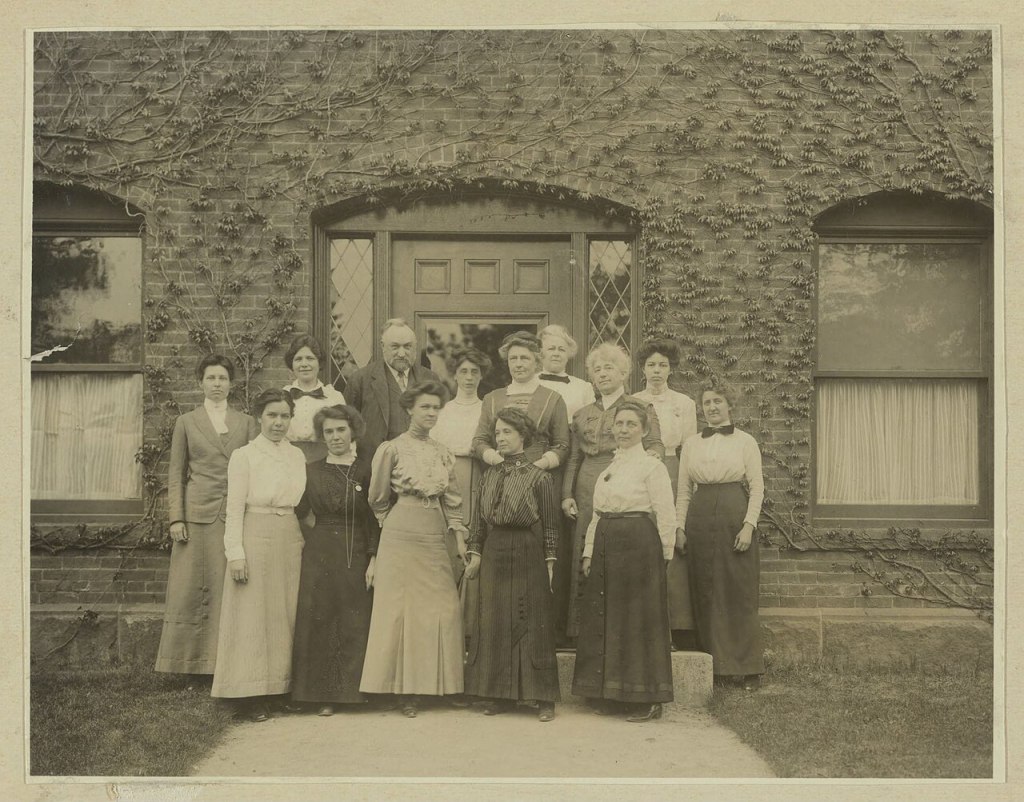
Enter the women computers of Harvard, beginning in 1875, over 140 women, many recruited by Edward Charles Pickering, processed more than 550,000 photographic plates, the last collected in 1992, bringing much needed coherence and linearity to the chaos of too much. They sorted signal from celestial noise, revealing the hidden order of the universe inscribed in silver, preserved in silica.

In 1875 the initial cohorts, the pioneers, the first names of Harvard women computers, although not exactly given that moniker, to appear on the glass plates were names like Rebecca Titsworth Rogers, Rhoda G. Saunders, and Anna Winlock assisting in the absolutely essential process of what we would now call cross-referencing the glass plate’s ‘metadata’ with the astronomical data.  Ascertaining that time and space of the data match the time and space of the metadata. In 1881 Pickering, the observatory’s fourth director, began hiring women specifically as Astronomical Computers, a formal role focused on analyzing and deciphering the growing collection of glass plate photographs.

This shift in 1881 was more than semantic, a fancy title for drudge work and tedious plate cataloging but a structured program where women like Williamina Fleming, Annie Jump Cannon, Henrietta Swan Leavitt, and Cecilia Payne-Gaposchkin were tasked with not just cataloging stars, but studying stellar spectra, and the lights powering life and imagination throughout the universe. Indispensable efforts that lead to the Henry Draper Catalogue, eventually containing the half million plus glass plates, and the foundations of modern stellar classification systems and 21st century astronomy. Their stories are worthy of a Horatio Alger novel, maybe not exactly rags to riches, but certainly humble beginnings to astronomical fame. They were paid peanuts, but they were the elephants in the observatory.

Williamina Fleming, in 1879 arrived in Boston penniless and abandoned by her husband secured a job as a domestic in the home of Edward Pickering, yes that guy. She impressed Pickering’s wife, Elizabeth, with such intelligence that she recommended her for work in the observatory. She quickly outpaced her male counterparts and in 1881 was officially hired as one of the first Harvard Computers.

Studying the photographed spectra of stars, she developed a classification system, the natural human desire to find order in apparent chaos, based on the abundance of hydrogen on the surface of a star or more exact the strength of hydrogen absorption lines from the spectra data. The most abundant stars were classed as A stars, the next most abundant as B stars, and on down to V.

In 1896 Pickering hired Annie Jump Cannon, a physics degree from Wellesley and an amateur photographer, modified Fleming’s stellar classification system based also on the surface temperature of a star rather than hydrogen abundance. Her method was to use the strength of the Balmer absorption lines, electrons excited within hydrogen atoms, like dancers at different tempos, reveal themselves through subtle spectral lines now understood to be differing ionization states of the atom directly tied to the surface temperature of the star.

Her system used the same letters to avoid redoing the entire Harvard catalogue, but she reduced the list down to 7 and reordered them from hottest to coolest: O, B, A, F, G, K, M. Her classification is still in use today. Earth revolves around a G-class star which has a medium surface temperature of about 5800 K (9980 F or 5527 C).

Henrietta Swan Leavitt graduated from Harvard’s Women’s College in 1892 with what we might now call a liberal arts degree. A year later, she began graduate work in astronomy, foundation for employment at the Harvard Observatory. After several extended detours tucked under her petticoats, Edward Charles Pickering brought her back to the Observatory in 1903. She worked initially without pay, later earning an unfathomable 30 cents an hour.

There, Leavitt collaborated with Annie Jump Cannon, in a coincidence of some note both women were deaf, though one is left with the feeling that the absence of sound may have amplified the remaining sensory inputs to their fertile minds. In time, Leavitt uncovered a linear relationship between the period of Cepheid variable stars and their luminosity, a revelation that became an integral part of the cosmic yardstick for measuring galactic distances. The Period-Luminosity relation is now enshrined as Leavitt’s Law.

Cepheid variables form the second rung of the Cosmic Distance Ladder; after parallax, and before Type Ia supernovae, galaxy rotation curves, surface brightness fluctuations, and, finally, the ripples of Einsteinian gravitational waves. Leavitt’s metric would prove essential to Edwin Hubble’s demonstration that the universe is expanding.

Swedish mathematician Gösta Mittag-Leffler considered nominating her for the Nobel Prize in Physics, but his plans stalled upon learning she had died in 1921. The Nobel, then as now, is non-awardable to the dead.

Cecilia Payne-Gaposchkin, a transplanted Brit, joined the Harvard Observatory as an unpaid graduate fellow while working towards her PhD at Radcliffe in astronomy. Upon earning her doctorate, she continued at the Observatory with no title and little pay. By 1938 she was awarded the title of Astronomer and by 1956 was made full professor of Harvard’s faculty.

In her dissertation she accurately showed for the first time that stars are composed primarily of hydrogen and helium, proving that hydrogen was the most abundant element in the universe, overturning long held but erroneous assumptions. But in a twist of fate, astronomer Henry Norris Russell persuaded her to label her conclusions of hydrogen abundance as spurious. Four years later Russell’s research reached the same conclusion, but he barely gave her an honorable mention when he published his results.

She wasn’t the first nor will she be the last to suffer at the hands of egotistical professors, more enamored of self rather than truth, but her elemental abundance contribution to astronomy brushed away the conceit that stars must mimic rocky planets in their composition, much like Galileo ended Earth’s reign as a center of everything. Twentieth century astronomer Otto Struve hailed her dissertation as “the most brilliant PhD thesis ever written in astronomy.”

Undeterred and building on her studies of spectral emissions of stars she turned her gaze to high luminosity and variable stars with husband astronomer Sergi Illarionovich Gaposchkin. After 2 million observations of variable stars, their efforts laid the groundwork for stellar evolution: how stars change over the course of time. From hints of dispersed stardust to starlight and back again. Cycles of stellar life repeated billions of times over billions of years.

Harvard’s astronomical female human computers, initially mere clerks transcribing stars from silver and glass, evolved into interpreters of light, shaping the very foundations of astronomy. Through logic, imagination, and an unyielding devotion to truth, they charted the heavens and opened lighted pathways for generations to follow.

Graphic: The Harvard Computers standing in front of Building C at the Harvard College Observatory, 13 May 1913, Unknown author. Public Domain

Bodegas La Purisma Old Vines Red Blend 2019

Red Blend Other (GSM) from Yecla, Spain

Monastrell (Mourvedre) 85%, Syrah 10%, Garnacha (Grenache) 5%

Purchase Price: $12.99

James Suckling 93, Wilfred Wong 90, ElsBob 89

ABV 14.5%

A dark cherry in color, medium to full-bodied, aromas of black ripe fruits with a touch of vanilla and spice. Balanced acidity and tannins with a strong, long finish.

A very good fine wine that retails around $11-19. Don’t pay more than $15 for this wine. Drink now or let it age for up to another 5 years. Cheers.

Trivia: Bodegas La Purísima is a cooperative of small-holding farmers in Yecla, Spain, united under the stewardship of María Teresa Ruiz González. Their old-vine Monastrell, over 40 years in age, thrives on 250 acres of sand and limestone soil. Grapes are picked by hand in late October, preserving the integrity of the fruit and the tradition behind the growers and the blend.