A beautifully clear ruby to garnet red with red and black fruits and a touch of spice. On the palate the cherry flavors come home, showcasing a medium to full body, mildly tannic wine with remarkable balance and structure. This wine should improve 5-6 rating points alone if you let it breath 30-60 minutes.
An excellent table wine at a remarkable price. Current pricing from $20-30.
Trivia with Literary License: Long before Cabernet roots worked their way into the slopes of Montalcino, the ridge above La Lecciaia stood as a contested frontier between Siena and Florence. Florence was rising toward its Renaissance artistic peak; Siena was already descending into its long twilight, its fame dimming after centuries of brilliance. In the late summer of 1502, when the dust of Cesare Borgia’s campaigns drifted across central Italy, the hills around the modern vineyard, then fields of grain and olive trees, would have felt its renown beginning to pass out of sight. Couriers rode the ridgelines, mercenaries threaded the valleys, and rumors traveled faster than horses. Borgia, son of Pope Alexander VI, brilliant, corrupt, and blood‑stained; was stitching Romagna, Umbria, and the Tuscan borderlands into the patchwork of his imagined and desired kingdom.
For a moment, it almost worked. With his father’s money, troops, and papal legitimacy, Cesare Borgia came closer than any condottiere of his age to forging a new principality in the heart of Italy. But fortune and fate interceded. Pope Alexander VI died suddenly in 1503, and Cesare himself lay bedridden with malaria, too weak to seize the reins of power. The new pope, Julius II, moved swiftly: stripping him of titles, seizing his fortresses, and unleashing the enemies he had once imprisoned. His fall was swift and complete, but Machiavelli kept him alive for the ages, immortalizing him in The Prince. His life became a cautionary tale. A rise and ruin that reads like a Renaissance tragedy worthy of Hamlet. Borgia had chased destiny with a bloody sword, all without honor.
Crossing this same landscape comes Leonardo da Vinci. Drawn by the promise of designing ideal cities with resources to bring them to fruition, he entered Borgia’s service in the summer of 1502 as Architect and General Engineer. For a brief moment, Borgia’s appetite overlapped with Leonardo’s visions of a symmetrical, ordered world shaped within the folds of his expansive mind. Leonardo traveled across central Italy inspecting fortresses and terrain, producing his famous Imola map. A masterpiece of precision and imagination; one of the first in Europe to apply true orthographic projection to a fully measured city plan.
By November or December of that year, Leonardo likely encountered the true nature of his patron. Although accounts are cloudy, in December 1502 Leonardo, Machiavelli, and Borgia’s captains were together in the Adriatic coastal town of Senigallia. There, Borgia enticed his captains with words of friendship, then had them strangled or stabbed within minutes. An act of theatrical brutality carried out in the very building where Leonardo was said to be working. The episode left a lasting impression on both the artist and Machiavelli.
Leonardo left no written record of that night, but he departed Borgia’s service almost immediately afterward. The timing is unmistakable. It is not difficult to imagine a world in which Leonardo remained in the employ of Borgia, and how his contributions to humanity might have taken a darker, narrower turn. As Paulo Coelho writes in The Alchemist, “when you want something, all the universe conspires in helping you to achieve it.” Leonardo stepped away just as the universe showed him a fork in the road and nudged him from the darker path.
Merlot, 84%, Cabernet Franc 9%, Cabernet Sauvignon 7%
Purchase Price $17.97
Wine Enthusiast 91, James Suckling 91, ElsBob 89
ABV14%
A medium purple wine with aroma of black fruits and a touch of cinnamon. Medium-bodied, bold, medium tannic with a nice fresh finish.
A very good fine wine at a tolerable price but on the high end. Don’t pay more than $15-16 though. Current prices are around $20.
Trivia: The Right Bank of Bordeaux is all about geology, which dictates the elemental structure for every bottle. Clay and limestone dominate the landscape, shaping not only the vineyards but the very character of the wines. Clay holds water and moderates temperature, slowing ripening and giving Merlot the conditions it needs to develop depth and supple density. Limestone, by contrast, drains freely and raises the natural acidity of the fruit, lending a kind of lifted tension that becomes especially clear in Cabernet Franc. Most Right Bank terroirs are some interplay of these two materials, and the wines reflect that structural duet.
Because the soils speak so clearly, the grape varieties are inevitable. Merlot thrives on the moisture and coolness of clay, producing wines that are plush, dark-fruited, and immediately generous. Cabernet Franc finds its ideal expression on limestone, where it gains aromatic precision and a firmer, more architectural frame. Cabernet Sauvignon plays only a minor role, appearing meaningfully only where gravel becomes plentiful, uncommon occurrence on this side of the river. The blends that emerge from these conditions are less stylistic and more like geological consequences.
Across the region, this soil–variety logic creates a coherent family of appellations. Saint‑Émilion’s limestone plateau and clay-limestone slopes yield vertical, structured wines shaped by Cabernet Franc. Pomerol’s blue clay produces Merlot of unusual depth and velvet. The surrounding satellites share these themes with less concentration but often remarkable value. And further north, in the Côtes de Blaye and Côtes de Bourg, estates like Château Les Grands Maréchaux work with the same clay‑limestone matrix, producing Merlot‑driven wines that are fresh, supple, and structurally clear despite their modest price. Taken together, the Right Bank’s identity is not a matter of marketing or prestige but of geology asserting itself. The wines share a recognizable signature, black plum and violet, fine chalky tannins, a rounded mid‑palate, and a fresh, lifted finish, all because the land insists on it.
A deep garnet wine with aromas of dark fruits and florals. Medium-full-bodied with grippy medium-high tannins. A fresh acidity that provides a nice finish.
A very good fine wine at an elevated price. Current pricing is from $16-19. I wouldn’t pay more than $11-12 for this wine.
This is an AVA cab blend sourced from North Coast vineyards which, by definition, may include Marin, Solano, Napa, Sonoma, Mendocino, and Lake counties.
Beauty is a leading indicator of a society’s health. When a civilization loses confidence in itself, beauty is the first thing to fade. Beauty cannot be manufactured to restore confidence; it is the natural expression of those who already possess it. Like Michelangelo carving the Pietà, one removes what does not belong; confusion, torment, disbelief, until the form within emerges. Civilizations are no different. When they chip away what obscures truth and goodness, beauty appears as the visible sign of inner clarity.
Beauty shows up everywhere: in human form, in nature, in paintings, and for this essay, in architecture. When a culture believes in itself with unpretentious conviction, it builds boldly with results spanning generations. It invests in the future because it trusts the future. When that belief evaporates, beauty dissolves with it, drifting into the mists of a doubtful future.
The loss of belief begins when a society abandons boundaries and accepts all impressions as equal. A mind without form cannot discern truth or goodness. And beauty requires clarity, clarity requires form, and form requires a frame. When the frame splinters, architecture becomes utilitarian, art becomes cynical, and culture stops believing in greatness. Nowhere traces this rise and fall more clearly than Parisian architecture over the last millennium.
To understand that arc, we begin not with kings or cathedrals but at the beginning with the first simple, rustic settlers along the Seine around 7600 BC, when the landscape was young and belief was simple. Farming had taken root in the fertile soils of the not‑yet‑named Paris Basin, and small cohorts of semi‑sedentary farmers, herders, hunters, and craftsmen gathered along the river to sustain their lives.
By the 3rd century BC, the Parisii: a Celtic tribe, had settled the Île de la Cité, the island seed that would one day become Paris. They were farmers and traders, positioned perfectly between northern tribes and Mediterranean merchants.
Then came the Romans. In 52 BC, Caesar’s legions conquered the Parisii and founded Lutetia atop their settlement. This is often treated as the city’s formal beginning, though it would take until the 5th century AD for the name Paris to take hold, when Clovis I made it his Frankish capital.
Before Christianity, the boatmen of Roman Lutetia erected a temple to Jupiter on the very site where Notre‑Dame now stands. When Christianity took root, a cathedral called Saint‑Étienne rose atop the old Roman temple in the 6th century. By the 12th century, Saint‑Étienne had grown decrepit, and Bishop Maurice de Sully resolved to replace it. In 1163, the first stones of Notre‑Dame de Paris were laid; the beginning of a cathedral that would become one of the great monuments of and to Western civilization.
Here begins the Parisian story of architecture‑as‑art: a chronicle of a culture that once believed deeply enough to reveal the beauty within itself, and then, over centuries, slowly lost that radiance of truth and goodness.
Paris reveals that architectural civilizational arc: from Gothic certainty to Haussmannian order, from Second Empire spectacle to a nostalgic retreat, from iron’s engineering faith to the late‑modern emptiness. Each movement is a confession of what the culture believed about itself, until, finally, belief becomes incoherent.
Notre‑Dame de Paris (1163–1345)
In the 12th century, France was not yet the France we know today, but its culture was beginning to consolidate around a pious Catholic king and a Paris that was rapidly becoming the kingdom’s political and cultural center. The University of Paris was emerging as Europe’s intellectual powerhouse: the renaissance before the Renaissance. The French language was taking shape, the merchant class was rising, and Paris was swelling into one of the largest cities in Europe. The city was bursting with intellectual and artistic energy, and out of that confidence they raised a Gothic cathedral of stone that embodied their faith in God and their belief in a promising future.
Notre‑Dame is the archetype of Parisian architecture‑as‑art. A cathedral that is more than a building; it is a testament to a society that believes in God and in themselves as children of God. A Gothic masterpiece born from greatness, rising stone by stone into beauty made visible.
As Caroline de Sury of OSV (Our Sunday Visitor) writes, Notre‑Dame is “one of the great monuments of human civilization, a work that reveals the ambition and ingenuity of medieval builders.”
Sainte-Chapelle (1238-1248)
If truth and goodness are beauty made visible, then the Gothic masterwork Sainte‑Chapelle is beauty translated into light: a soaring reliquary of faith where daybreak reds and midnight blues radiate with glory through stained glass. A spiritual journey through Genesis, the Passion, and the Apocalypse: beginnings, the Way, and the end of all things.
Sainte‑Chapelle was the natural continuation of the same cultural confidence that raised Notre‑Dame. Before Notre‑Dame was even complete, Louis IX envisioned a new sanctuary worthy of the relics of Christ’s Passion. In 1239 he purchased the Crown of Thorns from Baldwin II, the financially desperate Latin Emperor of Constantinople, for 135,000 livres. Within a few years he added a fragment of the True Cross and the Holy Lance, housing them in a gold‑and‑silver châsse that cost another 100,000 livres. The chapel built to enshrine them required a further 40,000. In modern terms, the king devoted the equivalent of half a billion dollars to gather and honor these relics.
The relics arrived in Paris from Venice in solemn procession, carried by Dominican friars and received by Louis himself, barefoot and dressed as a penitent. The upper chapel, conceived as a two‑story royal sanctuary, rises as a nearly weightless cage of stone and glass, its walls dissolved into color, its architecture awash with light.
To later generations, the result was nothing less than otherworldly. Jean de Jandun, the 14th‑century scholastic, praised Sainte‑Chapelle as “the most beautiful of chapels…its ruddy windows bestowing such hyperbolic beauty that one believes oneself, as if rapt to heaven, to enter one of the best chambers of Paradise.”
Sainte‑Chapelle is a medieval anticipation of Impressionism, a world where form dissolves into light. But where the Impressionists sought the light and color of the natural world, the 13th century sought the prismatic glory of the divine. The Impressionists never turned their canvases toward it, not out of indifference, but because their gaze was fixed on the modern world, while Sainte‑Chapelle belonged to an age where painted light came from God.
Haussmann Renovation (1853-1927)
In the mid‑19th century, central Paris couldn’t breathe. It was taking short, asthmatic gulps of dirty air from dark, narrow medieval streets where sunlight rarely reached, plants withered, and human life was short and precarious. Disease thrived. Childhood was a gamble. The city had no coherent structure; only a tangle of alleys, filth, and improvisation.
And without order, there was no beauty.
For Plato, beauty emerges from the harmonious ordering of the cosmos toward the Good. Aquinas makes the point explicit: beauty requires integritas (wholeness), proportio or consonantia (due proportion, order, harmony), and claritas (radiance). Order is not an aesthetic preference; it is one of the metaphysical conditions for beauty itself. Balthasar later described beauty as the radiant expression of ordered love‑truth‑goodness in the drama of being. Disorder is not neutral; it is the antithesis of form and thus beauty.
Napoleon III wanted a beautiful city, and he sought it through order. And that desire itself reveals something deeper: Paris still believed that beauty was possible, that the city could manifest a visible order. Baron Georges‑Eugène Haussmann became the instrument of that belief. His renovation of Paris was not merely an infrastructure project; it was one of the most ambitious exercises in urban aesthetics in the modern era.
He treated the city center as a single vision rather than a collection of buildings. The result was a radical shift toward ensemble thinking; unified perspectives, monumental scale, and living environments conducive to modern societies.
The wide, straight boulevards created long dramatic sightlines that turned everyday movement into a kind of urban procession. These axes imposed rationality and clarity, echoing the formal perspectives of Baroque urbanism but expanded to a modern scale. Haussmann insisted on light, air, and luminosity in his designs. Building heights were calibrated to street widths, allowing daylight to flood the city and turning the pale limestone facades into soft reflectors. Paris acquired its characteristic glow; an Impressionist atmosphere before Impressionism existed.
The street front became a dignified stage for bourgeois life: tall French windows, wrought‑iron balconies, and a clear hierarchy of floors. Decorative without excess, elegant without aristocratic pomp. A civic beauty built not for kings but for citizens.
Critics at the time called this uniformity authoritarian, monotonous, even soulless. By 1870, the political backlash, mainly the constant, never-ending construction, was strong enough that Napoleon dismissed him. Yet his vision continued to shape the city well into the 1920s. And from today’s vantage point, the achievement is unmistakable: Haussmann created one of the most recognizable and photogenic urban textures in the Western world. A master class in balance of order, livability, and aesthetic coherence.
He redesigned central Paris as a single, harmonious work of civic art, where beauty arises not from isolated monuments but from the collective whole.
Aquinas would have recognized instantly what Haussmann achieved: a city where order becomes radiance. A city that believes that order can create beauty.
Palais Garnier (1861–1875)
On a dreary winter night in January 1858, with a light, bone‑chilling drizzle misting the streets of Paris, Napoleon III and his wife, Empress Eugénie, arrived at the old opera house, the Salle Le Peletier, to attend a performance of Guillaume Tell. As their carriage pulled up to the entrance, Italian anarchist Felice Orsini and his accomplices hurled three bombs at the imperial couple. The Emperor and Empress survived, but eight people were killed and roughly 150 injured.
Shaken by the attack, Napoleon III insisted that a new opera house be built, one in which his safety was not an afterthought but a built-in design principle. He loved the opera and wanted to attend without fear, so his instructions to Charles Garnier concerned security, circulation, and protection. The aesthetics he left entirely to the architect.
Amid Haussmann’s orderly redefinition of central Paris, Garnier revealed a society that still believed in beauty and in itself. He created a solid, physical embodiment of the Gesamtkunstwerk: a total work of art, a fusion of architecture, sculpture, painting, ritual, and movement into a coherent, immersive whole. Gesamtkunstwerk: Everything all at once. The term, popularized by Wagner, described the union of architecture, poetry, staging, gesture, and sound into a single living concept of beauty. Garnier achieved the impossible: he made society come alive in stone, marble, and gold.
The architect constructed a monument that proclaimed a cultural confidence that Parisian society may not have fully articulated, but only a civilization still open to greatness could have built what this opera house became. A loving spectacle of marble, gold, and fresco, choreographed like a Tchaikovsky ballet: complete with cannon, procession, and royalty.
Sacré-Coeur Basilica (1875–1914)
Sacré‑Coeur, a travertine wonder of white absolution, was a national act of catharsis. A reliquary of past beauty and honor. In 1871, Otto von Bismarck goaded a militarily weak France into declaring war on a superior Prussian empire. The conflict lasted barely six months, during which France suffered three‑quarters of a million casualties, the capture of Napoleon III, and the collapse of its regime, while Prussian losses remained comparatively light. It was a bloody, humiliating defeat that ended the French monarchy and, more importantly, shifted the balance of European power from France to a newly unified Germany. A realignment that would shape the grotesque catastrophes of the twentieth century.
In the aftermath, Paris reached backward for comfort. The city sought a therapeutic vision of an older, less violent world: Romano‑Byzantine domes, shimmering mosaics, and a vernacular of sacred purity untouched by the modern machinery of destruction. Sacré‑Coeur is beautiful, but its beauty is retrospective and prophetically tentative. It looks for solace in the rearview mirror because the future felt too dangerous to contemplate. In the long arc of Parisian architecture, the basilica is a holding pattern; a pause in the light built from the hope that the coming century might offer more than the dark silhouettes of humiliation and destruction.
Sacré‑Coeur contains a trace of the old Parisian confidence, a belief that beauty could be recovered by reaching backward into older, protective forms. The Catholic Church, convinced that the nation’s defeat was divine retribution for moral decline, proposed a new basilica on the highest hill of the city. Conceived as the antithesis of the secular opulence of the Palais Garnier, it emerged as a sacred neo‑Byzantine tapestry of color and pattern; a deliberate return to the safety of inherited forms. It was, in truth, a brief fling with the past, a luminous attempt to steady a wounded nation while the future was already projecting unfamiliar forms.
Opposed from its inception, sometimes violently, the basilica nonetheless became one of Paris’s most visited sites. It did not erase the humiliation of 1870, but it offered a place to set it down, closure, a brief, consoling pause before the city stepped into a future it no longer fully trusted or orchestrated. Sacré‑Coeur was a last, luminous fling with the past, a moment when Paris tried to steady itself by returning to forms that once offered meaning. But the modern world was already unwinding beneath its domes, carrying architecture toward a new purpose: not the revelation of beauty through form, but the expression of a deeper, more unsettled consciousness. In that sense, Sacré‑Coeur stands as the final exhale of an old metaphysics, just before the Eiffel Tower announces the beginning of something entirely different.
Eiffel Tower (1887–1889)
When I look at the Eiffel Tower, I don’t see a piece of 19th‑century whimsy or a symbol of Parisian romance. I see Rome. Not in style or material, but in spirit. The Tower rises from four sweeping iron legs that form, at their base, a kind of elongated, quadripartite arch; the same structural logic that held up aqueducts, amphitheaters, and triumphal monuments two thousand years earlier. Strip away the iron lattice and the modern height, and the underlying gesture is unmistakably Roman: an engineer’s declaration of what a civilization believes it can build.
The Tower is not beautiful in the Gothic or Baroque sense. It has no ornament, no narrative program, no sculptural allegory. Its beauty is structural, not decorative. The kind of beauty the Romans understood instinctively. They built in stone what Eiffel built in iron: arches, vaults, and exposed frameworks that celebrated the triumph of engineering over gravity. The Tower is simply the Roman impulse stretched upward, essentially a triumphal arch turned vertical, raised not to an emperor but to the idea of progress itself.
It was built for the Exposition Universelle of 1889, a centennial monument to the Revolution, but it functions more like a modern Column of Trajan: a national exclamation point. It is the last moment Paris built something with imperial confidence, before the long slide into the functional neutrality of the 20th century. The Tower does not seduce its viewers; it asserts a dominance of French will. It does not charm; it declares. It stands not as a palace of beauty but as a monument to the audacity of engineering; the final great structure of a civilization that still believed in its own strength.
In hindsight, the Eiffel Tower reads like a perfect exclamation point at the end of an era; the last moment Paris could still build with civilizational confidence, yet at the turn into the modern age, unable to express beauty from within. Its grandeur is external, not internal: a feat of engineering rather than a revelation of beauty or meaning. The Tower celebrates structure for its own sake, a Roman impulse translated into iron, but it also marks the pivot toward a new architectural age in which engineering replaces art, and performance replaces symbolism. Seen from the present, it feels less like a continuation of Parisian beauty than the hinge on which the city swings toward modernism, functionalism, and eventually the exposed ducts and structural exhibitionism of the Centre Pompidou. It is both the final shout of a culture that still believed in its own strength and the first unmistakable sign that it no longer knew how to build something beautiful. A celebration of the past with an unmistakable unease for the future.
Centre Pompidou (1977)
Contemporary art, the world French President Georges Pompidou championed with such confidence and enthusiasm in the late 1960s and early 1970s, was still in its formative slurry of dissociative forms when he embraced it. It was a movement emerging just as the last metaphysical foundations of Western art had quietly dissolved into the mists of an artistic tradition already deemed superannuated. Modernism had exhausted its internal logic: revealing beauty had become a secondary objective, while experimentation without rails had become its primary engine. Its successor inherited that momentum but none of the metaphysical grounding. Contemporary art had not yet discovered a voice of its own, yet the improvisation continued. What passed for innovation was mostly provocative drift and grift, gestures searching not for meaning but for acceptance. A tragedy of novelty as farce.
The Centre Pompidou emerged from this vacuous experimentation with almost comic inevitability. What began as a playful provocation; a design submitted with a wink, more dare than proposal, was suddenly embraced as the future of French culture. A joke, once accepted in earnest, just had to be retrofitted with meaning, and so a narrative was hastily draped over a building that had no internal logic to support it. Its exposed pipes and skeletal frame were praised as transparency, its industrial scaffolding as democratic openness, its externalized systems celebrated as newfound functionality, though this was mostly justification layered on after the fact. The truth was simpler: the Pompidou embodies the moment when architecture no longer knew what it meant to finish anything, because it no longer knew what it meant to begin with an idea of beauty and proceed to its revelation. It was, in spirit, a retelling of The Emperor’s New Clothes: a building so brazenly inside‑out that it dared the world to call its bluff. No one did. No child shouted out. And Paris was left with a structure that looks permanently under construction, as if the scaffolding were never removed because there was no final form waiting beneath it; the builders went to lunch and never came back.
Institut du Monde Arabe (1987)
When I look at the Institut du Monde Arabe, I find myself at a loss for words; not because it overwhelms, but because it offers so little to respond to. There is no beauty here, and not even the consolation of provocation. It is simply a box wrapped in a pattern of dots, a techno‑mashrabiya that repeats the symbolism of privacy and modesty after the conditions that once gave those meanings a living visualness have disappeared. The facade behaves like a piece of needlepoint stretched across a five‑and‑dime tin: a surface treatment meant to suggest depth, enclosing a void no one dares open for fear that what lies inside might be as stale as the gesture that contains it. The building promises intricacy and depth but delivers only process; it gestures toward tradition but speaks none of its language. Even its celebrated diaphragms; those photo‑sensitive apertures that, on paper, were the building’s great promise, the mechanism that justified its existence, produced little more than a momentary novelty, a gesture that quickly settled into a kind of architectural ‘whatever.’ They jammed long ago, and no one was moved enough to repair them. Their failure revealed what the building had always been: a technological simulation of a symbolic language that no one spoke.
And this muteness is nowhere more striking than in its placement. The Institut du Monde Arabe faces Notre‑Dame across the Seine, a cathedral whose every arch and proportion bursts with metaphysical drama. Yet the IMA offers no counter‑narrative, no dialogue, not even a gesture of acknowledgment. It simply sits there, mute before a building that still knows how to radiate meaning. A patterned box across from a cathedral, its mechanisms and symbolism inert and frozen, a structure of indifference that neither provokes nor participates, content to remain unopened, like a tin whose contents everyone quietly suspects have long since gone stale.
Louvre Pyramid (1989)
The Louvre Pyramid was born of a practical need: the museum had outgrown its entrances, and the over-flow crowds pleaded for a solution. In that narrow sense, the pyramid succeeded; it streamlined circulation, clarified access, and organized the subterranean lobby with admirable efficiency. But in reaching for transcendence, it failed as art. The glass pyramid, often praised as a dialogue between past and present, is in truth a structure that reflects because it cannot speak a language of its own. Its transparency is not revelation but absence, a geometric gesture that offers no symbolic meaning of its own. Placed at the heart of the Louvre’s courtyard, a space saturated with centuries of artistic conviction; it behaves like a visitor rather than a participant. It mirrors the palace because it has nothing to add to it. The entire structure could have been placed discreetly below the courtyard and left at that; instead, it rises into view as a polite confession of modernity’s exhaustion, a form that admits its own emptiness with immaculate clarity.
Opera Bastille (1989)
Opera was once the sound of beauty, an art meant to be absorbed, felt, seen, and heard as a single ascending experience. It needed a setting equal to its purpose, a space that prepared the soul for what it was about to encounter. The Opéra Bastille offers the opposite. It treats opera not as revelation but as logistics, a cultural event to be processed with the architectural vocabulary of airports and modern shopping. At street level it doesn’t merely echo retail; it becomes retail, its façade functioning like a mall’s frontage: glass bays arranged for transaction rather than transcendence. Its square entrance, the same monumental outline that defines the Grande Arche completed that same year, behaves like a photographer’s finger‑frame: a device for excluding everything beyond the immediate now. What might have signified clarity or democratic openness becomes instead a gesture of erasure, geometry used to forget rather than remember. The square here is not neutral; it is the architectural form of a culture rejecting its inheritance. The vast glass facade and anonymous granite curves reinforce this absence of beauty, evoking commercial neutrality rather than the dignity of a house of art. Inside, circulation and efficiency dominate, as if the highest aim of opera were the smooth movement of crowds. What was once a ritual of ascent has been reduced to a pedestrian experience, a building that confuses functionality with meaning. If the Palais Garnier is a palace for opera, the Bastille is a shopping mall where opera happens to occur. A structure that shows, with painful clarity, what happens when a civilization forgets that beauty was the purpose.
The Cost of Forgetting:
What began as a civilization’s attempt to reveal beauty, successfully I might add, slowly unraveled into a search for novelty that mistook disruption and provocation for depth. The great works of the past were not beautiful by accident; they were the outward expression of an inner confidence; a belief that the world possessed order, meaning, and purpose waiting to be disclosed. But as that confidence faded, art turned away from revelation and toward experimentation for its own sake. In its hunger for the new, it discovered only decadence and despair. And the despair was not in the forms themselves but in the culture that produced them; a society that no longer believed in its own metaphysical foundations. The darkness that followed was not dramatic; it was quiet, incremental, a slow drift into soullessness. Architecture became little more than gesture, spectacle, logistics, branding. The pursuit of beauty gave way to the performance of innovation. And in that exchange, something essential was lost: the sense that art could still reveal truth.
Graphics: Notre Dame de Paris by Ali Sabbagh. Public Domain. Sainte-Chapelle by Unknown. Public Domain. Halevy Street by Gustave Caillebotte, 1878. Public Domain. Palais Garnier Grand Staircase. Photo by Benh Lieu Song. Public Domain. The Basilica of Sacre-Coeur photo by Oliveira TP. Public Domain. Eiffel Tower, photo by Paul 012. Public Domain. Centre Pompidou. Copyright Independent UK. Institut du Monde Arabe photo by Fred Romero. Public Domain. Opera Bastille photo by IronGargolyle. Public Domain.
Decanter 95, Natalie Maclean 93, Tim Atkin 93, James Suckling 92, Tasting Panel 92, Wine Enthusiast 90, Robert Parker 90, Cellar Tracker 89, ElsBob 90
ABV 14.0%
An intense deep purple with aromas of red fruits and cocoa. Medium to medium-full bodied with smooth tannins and a medium fresh finish. Enjoy alone or with lamb chops or chorizo.
An excellent fine wine at a fair price. Current prices range from $20-22.
Trivia: From archaeological sites in the area of Mendoza, especially Agua de la Cueva and Gruta del Indio, show human occupation dating back roughly to 12,000-13,000 years ago. Right at the tail end of the last ice age. The people who inhabited this area were hunter-gatherers moving seasonally through the Andean foothills, likely avoiding the higher elevations in the southern hemisphere winters. They left tools, hearths, and lots and lots of bones. They left no recorded language or name.
Since the earliest times of conscious thought, man has asked not only “Who or what am I?” but “Why am I here?” And the answer is both circular and logical at once: we are because we can ask. I think, therefore I am. But consciousness alone does not tell us what existence is for. And if the question of existence is humanity’s oldest query, beauty is one of its oldest replies. Beauty made existence feel meaningful rather than merely the repetition of appetite and rest; it revealed that life pointed beyond itself. Our Stone Age ancestors were not finger‑painting on cave walls 50,000 years ago for fun. They were attempting to make the invisible visible.
Beauty in being says that existence is not enough. Beauty discloses purpose, and in doing so, it provides it. It is one of the ways human beings make that purpose visible, a sign that we participate in an order of reality greater than ourselves.
Art as Philosophy begins with beauty: an act of existential revelation. Morality and aesthetics often appear in art as emotional or epistemic, yet both are fixed in an ontological core. Beauty is a metaphysical center made visible through existential experience; it discloses the shape of human existence and binds aesthetics and morality to the deeper question of what it means to be human. It provides purpose.
From the earliest myths to the highest metaphysics, beauty has never been treated as a garnish. Long before philosophy had a name, ancient cultures intuited beauty as the signature of an ordered world and cosmos rather than chaos. Harmony in music, proportion in the human form, symmetry in temples: these were not aesthetic add-ons, but revelations of a deeper structure woven into reality itself.
Plato gave this intuition its first philosophical clarity. For him, beauty was not accidental but the radiance of the Good, the Form that awakens desire and draws the soul upward. Encountering beauty in the world triggers anamnesis, the recollection of what the soul already knew. Beauty was not subjective; it was participatory. To encounter beauty was to brush against the eternal. Beauty is the condition under which truth becomes visible and knowable. Without beauty, the intellect cannot ascend; it stalls, and ultimately, descends.
Neoplatonic Plotinus (3rd century AD) deepened Plato’s vision. Beauty, he argued, is the soul’s recognition of its origin in the One. The beautiful is not merely pleasing; it is the way the intelligible realm shines forth, emanates, into the sensible. Without beauty, the mind loses its orientation toward the intelligible and shatters into fragmentation. To perceive beauty is already a kind of knowing, a moment of noesis, a reminder that all things flow from a single source and long to return to their origin. As Plotinus put it, “the soul must be made beautiful to see beauty.” An ordered soul has the clarity to perceive beauty.
Aquinas immersed this lineage into Christian metaphysics. Beauty, for him, is a transcendental of being coextensive with truth and goodness. Beauty is rooted in being itself; consciousness merely receives it. Aquinas’s point is not that beauty is a mental event, but that it is an ontological property: the radiance of form made visible to a perceiving mind. Plato locates beauty in transcendent Forms; Aquinas locates beauty in the immanent form of the thing itself. To call something beautiful is to say that its form reveals its purpose, its integrity, and its participation in the act of existence itself. Beauty incorporates wholeness, proportion, and radiance into being. Beauty pleases, but it requires perceptive judgment; it is the condition under which a being becomes delightful, showing itself to be both knowable and lovable.
Even Kant, who tried to bracket metaphysics and leave beauty suspended in an onto‑epistemological limbo, could not escape the pull of beauty’s universality. His “purposiveness without purpose” is an admission that beauty feels ordered even when we cannot articulate the order. In trying to deny beauty a purpose, he inadvertently gave it one: beauty reveals a structure of meaning that reason cannot fully justify yet cannot ignore.
Heidegger returned beauty to ontology by insisting that art “unconceals” being. Beauty is not decorative but disclosure, the world showing itself as meaningful. He rejected aesthetics as subject‑centered and sought to recover the original Greek sense of aletheia, unconcealment. Heidegger critiques Plato and ignores Aquinas, yet his account of Being as unconcealment resembles Aquinas’s act‑of‑being far more than Plato’s transcendent Forms. He retrieves, but cloaks, the spiritual dimension of ontology in a deliberately unspecific, non‑theological way. For Heidegger, beauty is how truth happens: an event in which being clears a space for beings to appear as what they are, unconcealed and encountered truthfully. Art, especially poetry, is privileged because it lets being shine most intensely. In this sense, beauty comes full circle: it is the radiance of truth and the invitation to goodness.
And Balthasar, gathering the entire philosophical tradition, argued that beauty is the glory of being, the radiance that makes truth lovable and goodness desirable. Without beauty, truth becomes abstract and goodness becomes coercive. His entire theology revolves around the transcendentals of truth, goodness, and beauty, inseparable properties of being that reflect the nature of God. He argued forcefully that in the modern era beauty has been severed from truth and goodness, often reduced to mere aesthetics or subjective preference, and that this breach damages all three. Without beauty’s radiant, attractive power, truth collapses into dry intellectualism and goodness into moralism or duty. Beauty, he insisted, demands as much “courage and decision” as truth and goodness do, and when banished, beauty takes them along in a “mysterious vengeance.” Balthasar absorbs Plato’s intuition within Aquinas’s ontology, locating beauty not in a distant realm of Forms but in the immanent radiance of being itself: the “Glory of Being.”
Across millennia, the consensus is unmistakable: beauty is not subjective preference but the visible expression of an invisible order.
Beauty is the first principle in ascertaining the health of a society. Beauty is the outward sign of truth and goodness in both the individual and the collective. Beauty is not a matter of taste or form but a universal reality, perceptible wherever the soul is clear enough to perceive it.
Civilizations have always intuitively known this, even when they lacked the vocabulary to name it, and one can argue that we still don’t. They built temples, carved statues, raised cathedrals, composed hymns, and painted frescoes not as decorative motifs but as necessity. A necessity of revealing a world ordered enough to trust and beautiful enough to love. Beauty was the first language of meaning, the earliest evidence that reality was intelligible, logical, and worth living in.
To encounter beauty is to encounter a world that makes sense.
Beauty does not precede truth and goodness in God, but it precedes them in the order of human perception. It is the first contact point between the soul and being itself, the moment when beauty discloses its radiance before the mind has time to analyze it or the will has time to respond. Beauty is an invitation to recognize truth and respond to goodness. Reverse the order and the entire structure folds into incomprehensible abstraction. Begin with truth and you end up defending the truths you already prefer. The mind simply reinforces its own assumptions, allowing nothing genuinely new to appear. Begin with goodness and you get moralism. Begin with beauty and find transcendence, an ascent that brings illumination.
But the modern world, unlike every age before it, has attempted to sever beauty from consciousness, from the human capacity to perceive what is objectively there.
Yet modernity, with its suspicion of universals and its allergy to transcendence, has tried to demote beauty to a matter of taste. “Beauty is subjective,” we are told, as though the human longing for harmony, proportion, and radiance were nothing more than a cultural preference. But this claim sinks under its own weight. If beauty were merely subjective, then the Parthenon would be no more meaningful than a strip mall, Michelangelo’s Pietà no more weighty than a child’s clay doodle, and Leonardo’s Vitruvian geometry of the human form would carry no hint of a deeper order in being. The human heart knows better. Even in our most cynical age, people still travel across oceans to stand before the great works of the past, hoping, often without knowing why, to feel again the presence of something real.
Beauty is not an opinion. Beauty is recognition of transcendent qualities.
And recognition implies that something is there to be seen.
This is why the loss of beauty is never merely aesthetic. It is metaphysical. When a civilization can no longer create or perceive beauty, it is not because beauty has vanished but because the soul has clouded. The organ of perception has dimmed. The world has not changed; the viewer has.
This is the quiet tragedy of the modern age: we have not lost beauty, but we have lost the capacity to see it, to create it.
If beauty is the form in which truth and goodness appear, then the loss of beauty is not a stylistic shift: it is a lament of civilizational change. It signals that the culture no longer believes in the radiance of being, no longer trusts that the world is ordered or intelligible. Beauty requires confidence in form. It requires the belief that reality is not arbitrary, that meaning is not an illusion, that the human soul is capable of perceiving something beyond itself.
When this confidence erodes and falters, beauty becomes impossible.
This is why the modern era, for all its technical brilliance, is marked by profound aesthetic exhaustion. The great artistic movements of the twentieth century did not abandon beauty because they discovered something truer; they abandoned beauty because they no longer believed in the metaphysical order that makes beauty possible. Fragmented order, chaos even, replaced harmony. Sensory shock replaced radiance. Psychological intensity replaced form. Beauty was replaced by raw power: a confirmation that the artist could impose meaning rather than receive it. The artist, once a witness to transcendence, became a fabricator of worlds.
And nowhere is this shift from order to chaos more visible than in the work of Pablo Picasso. Picasso is not the cause of the aesthetic shift; he is its herald. His cubist renderings of fractured forms, dislocated bodies, and jagged planes are not innovations in beauty but revelations of a world that no longer seems logical. His paintings do not disclose harmony; they expose unremitting loss. They do not reveal order; they reveal its absence. They do not manifest radiance; they disclose bewilderment and torment. And yet, people call it powerful; and powerful it is. But beauty it is not.
People pay staggering sums for canvases that scream with his dislocations of form, as though truth could be bought. They stand before the broken bodies and insist they see something profound. But what they are seeing is not truth in the classical sense. They are seeing realism rather than reality: accuracy without truth. They are seeing psychological exposure, emotional intensity, historical impact, the perverse thrill of transgression. They are seeing the festering wounds and raw scars of a civilization, mistaking them for truth, but thankfully, never confusing them with goodness.
When beauty fades from consciousness, as it did in the era that slipped away at the dawn of modern art, truth turns upside down and inside out. A culture that cannot perceive beauty begins to call its own fragmented reality honesty writ large. But if art loses beauty, truth is also lost. Truth and goodness are visible to a clear soul. Distortion leaves us guessing.
Picasso’s Guernica is the perfect example of this distortion: a masterpiece of torment and bewilderment elevated to the status of beauty by a culture that no longer knows how to recognize beauty: not out of malice, but from a dullness of spirit, the kind that mistakes sophistication for wisdom and complexity for truth.
For the capacity to perceive beauty is not automatic or axiomatic. It must be formed, protected, and kept clear. When it erodes, truth becomes inverted and goodness becomes opaque. Painted in 1937 in response to the bombing of the Basque town of Guernica during the Spanish Civil War, Picasso’s mural is enormous, over 25 feet wide, and simply overwhelming. It is a world shattered into jagged shards: a horse screaming in agony, a mother wailing over her dead child, a soldier’s broken body strewn across the ground, a bull looming with an ambiguous menace, a light bulb glaring like an unblinking mechanical eye. There is no center. There is no harmony. There is no rest.
The painting is a visual, unrelenting scream, a deliberate assault on the viewer’s sense of order. It is not meant to be contemplated; it is meant to shock. And in this sense, Guernica is a perfect expression of its age; an age in which suffering no longer appears within a meaningful frame but erupts as raw, unmediated violence.
The crucial point of Guernica is that it is evocative and powerful, but it is not beautiful.
Its power comes from its honesty about fragmentation, its refusal to offer consolation, its unflinching portrayal of torment. But power is not beauty. Beauty reveals the radiance of being; Guernica reveals the failure of being. Beauty discloses order; Guernica discloses chaos. Beauty invites contemplation; Guernica demands only what the painter wants you to see, annihilation of being, and he gives you only one way to go. His way… a rejection of the past.
And yet, in the modern imagination, the two, power and beauty, have become confused. People stand before Guernica and insist they see beauty of form and execution. But what they are seeing is intensity, authenticity, historical weight, emotional force.
They are seeing the wounds of the world and mistaking those wounds for wisdom.
This confusion is not Picasso’s fault. Art precedes culture. Picasso anticipated rather than directed. He diagnosed the symptoms but offered no cure. For beauty is not something an artist creates; it is something he reveals. And when an artist refuses revelation, or can’t, he produces not‑beauty; a world in which being cannot be perceived. Guernica reveals nothing of being, only fractures and faults.
Where beauty is absent, not‑beauty remains. Guernica is not‑beauty.
Caravaggio’s Judith Beheading Holofernes confronts the same violence, but within a world where being is still intact, where justice is truth made visible and beauty perceptible.
The story itself is a parable, a theological narrative. In the biblical Book of Judith, the city of Bethulia, perhaps Shechem in the hill‑country of Samaria, is under siege by the Assyrian army led by Holofernes, general of Nebuchadnezzar, because they didn’t support his wars. The people are losing faith and preparing to surrender. Judith, a devout widow, rebukes their despair. She prays, disguises herself, and enters the enemy camp. Over several days she wins Holofernes’ trust. When he collapses in drunken sleep, she takes his sword and beheads him. She returns to Bethulia with his head, and her people rally and rout the invaders.
Caravaggio’s painting (c. 1599) captures this moment of judgment with hyper‑realistic detail and dramatic chiaroscuro. Judith’s face is composed, almost detached, the instrument of justice. Holofernes screams in agony as blood spurts across the canvas. And beside Judith stands the maid, her expression a moral counterweight: not horror, not pity, but a grim, knowing resolve, as though she alone feels the full weight of what justice demands.
Yet the scene rises beyond horror. It embodies a metaphysical beauty because it reveals justice as an eternal, harmonious truth. Beauty here is not mere aesthetic pleasure but the radiance of the Good and the True. Judith’s act is a moral triumph: her faith and courage overcome tyranny, restoring order. Violence serves a higher purpose, not chaos, but a necessary catharsis that discloses transcendental harmony. Even the composition’s balance, with light piercing darkness, symbolizes truth emerging from brutality. Caravaggio turns judgment into revelation: beauty as justice made visible.
The contrast with Picasso could not be sharper. Guernica presents the bombing of the Basque town as a fragmented, monochromatic nightmare; suffering without resolution. It is not‑beauty in the metaphysical sense because it rejects transcendence. There is no redemptive justice, no higher truth to personify. Its cubist abstraction amplifies universal horror, trapping the viewer in an existential downward arc that mirrors war’s senseless destruction. Unlike Caravaggio, where violence leads to truth, Guernica offers only loss. It critiques rather than affirms, making it a powerful ethical statement but not a vessel of transcendental beauty. It is the absence of the divine order that Judith reveals. And where that order collapses in Picasso, it is restored in Michelangelo.
Michelangelo’s Pietà brings an act of violence and suffering into a realm of peace, order, truth, and goodness: into beauty.
Carved in 1499, when the Renaissance still believed that beauty was the visible form of truth, the sculpture depicts Mary cradling the dead Christ, her face serene, her posture composed, her sorrow dignified. Christ’s body is lifeless yet harmonious, the lines of his form flowing with a quiet grace that seems to transcend death itself.
The Pietà depicts beauty. It manifests it. Michelangelo did not infuse the marble with beauty; he allowed beauty to escape from it. The sculpture stands as the Renaissance ideal crafted in stone: beauty as the visible form of truth, truth as the expression of goodness, goodness as the radiance of being. The Pietà is not an image of beauty; it is Beauty itself, the transcendental unity of form, meaning, and love. It stands above all other works in this triptych of form because it reveals what the others only mimic or lose entirely.
All three works depict suffering and violence. But they inhabit different metaphysical planes.
In the Pietà, suffering is real but not absurd. Mary’s sorrow is profound, yet her face is serene, not because she is unfeeling, but because her grief is held within a larger meaning. The sculpture suggests that even in death there is dignity, coherence, and hope. Suffering is transfigured but not denied.
In Judith, suffering is the moral weight of the violence she must commit. Yet violence is framed by justice, and justice by truth. It is still a logical world where meaning still governs.
In Guernica, suffering is unmoored from truth and goodness. The figures scream into a void that offers no escape. There is no frame of meaning, no horizon of hope, no suggestion that agony is anything but senselessness. It is an irrational world without any existential foundational support. A world that makes no sense.
Together, the Pietà, Judith, and Guernica form a kind of metaphysical triptych. Michelangelo’s Pietà stands at the summit, where beauty is the first principle of existence, where form, harmony, and radiance disclose a truth deeper than suffering and a goodness that holds even grief within order. Caravaggio’s Judith occupies the middle panel, where truth is the second principle, where justice becomes visible, where violence is not chaos but judgment, and where goodness emerges through the restoration of order. Picasso’s Guernica completes the sequence not by fulfilling it but by negating it: a world where beauty has withdrawn, where truth has withered, where goodness is impossible. The Pietà transfigures suffering; Judith interprets it; Guernica renders it senseless. In the Pietà, harmony governs. In Judith, justice governs. In Guernica, nothing governs. Beauty, truth, and goodness appear in their proper order in the first two; in the last, they are absent, inverted, or broken. It is a triptych of being, and Guernica is the panel where being loses meaning.
Art is never merely art. It is a civilization peering into a crystal ball and seeing what is to come. It reveals not who people are, but what they are becoming. Art stands upstream of culture because it expresses a civilization’s posture toward being before that posture becomes conscious. The artist feels the tremors before the quake; culture only notices when the ground finally breaks.
Society’s art is therefore its earliest confession.
When a culture produces works like the Pietà, it is not simply exposing beauty; it is expressing metaphysical confidence. It believes the world is ordered, that truth is radiant, that goodness is real, that suffering can be transfigured. It builds cathedrals because it believes heaven is near. It carves marble into harmony because it trusts that form is trustworthy and good.
When a culture produces works like Guernica, it is not merely innovating stylistically; it is confessing metaphysical exhaustion. It no longer believes in order, so it paints fragmentation. It no longer trusts form, so it breaks it. It no longer sees radiance in being, so it reveals only distortion. It no longer believes suffering can be redeemed, so it depicts suffering as absurd.
Beauty has not disappeared from the world; we have simply lost the clarity to perceive it. The modern mind, dazzled by science and flattered by its own mindful openness, has mistaken boundlessness for wisdom, a mind without borders believes everything and sees nothing. Yet this distortion is not permanent. The capacity for beauty can be restored because beauty is not a human invention but a feature of reality itself, the radiance of being waiting to be seen again. To recover beauty is to recover orientation, to remember that truth is luminous, and goodness desirable. And when a civilization regains the ability to see beauty, it regains the capacity to hope.
The soul must be made beautiful to see beauty.
Graphics: Judith Beheading Holofernes by Caravaggio, c. 1598. Pieta by Michelangelo c. 1499. Both Public Domain. Guernica by Picasso, 1937. Art Print. Copyright is likely held by Picasso’s family.
A deep purple medium-full bodied wine with aromas of florals, spice and red fruits. Tastes of plums and bright tannins. Nice balanced, structure with a medium finish. This wine will pair well with hearty meats and pasta dishes.
An excellent table wine at a reasonable price. Current prices range from $19-23.
Trivia: The Douro Valley was officially demarcated as a wine region in 1756, making it the oldest legally defined wine region in the world. The demarcation was established to combat merchants who diluted Port with inferior wines: unscrupulous scurvy dogs of questionable sobriety. This system of quality control ensured authenticity and became the model for wine denominations worldwide.
“What I am going to say is not a dogma of faith but my own personal view: I like to think of hell as empty; I hope it is.” Pope Francis, 14 January 2024.
Few utterances from the papal class have landed with more confusion than Pope Francis’s remark. It is muddled, misleading, and ultimately misconstrued, though with two thousand years of ecclesiastical history, one might find other contenders. To be fair, only two papal statements have ever been deemed infallible: Pius IX’s definition of the Immaculate Conception and Pius XII’s proclamation of the Assumption of Mary. Nearly everything else falls under the category of secular opinion. So secular opinion will have to stand along with my slightly pedantic philosophical flourish on the topic.
The trouble with Francis’s remark is not that it expresses hope in an infinitely merciful God. It does, and God is. Humans are extravagantly hopeful when it comes to their own stake in the hereafter. But the Pope’s phrasing seems to remove the ultimate incentive to live a moral life. If there is no hell, then there are no boundaries to one’s actions. On its surface, the statement reduces moral teaching and punishment for sin to negligible outcomes. Two millennia of urging humans to keep their souls pure dissipate in an instant. It treats hell as if it were a place one might stroll into and find as empty as a modern mall, then decide to shop elsewhere; Amazon, perhaps. It blurs the line between our desire to avoid suffering and the eschatological reality in which immorality and punishment are tied to free will. Judgment remains inevitable, for better or worse, and forever. The qualifier “I hope it is” reduces judgment to a wish for mercy rather than a real consequence of one’s actions. It also suggests that the Pope is worried not only about your soul but his own. A merciful God will save a repentant sinner, but hoping is an insecure measure of remorse.
In short, Francis managed an exceptionally muddled rendering of the Augustinian and Thomistic view that hell is the final state of a person who refuses the good and closes themselves off to God’s love. To be fair, clarity is difficult when the very word “hell” carries millennia of conflicting meanings, teachings, and eschatological traditions.
This confusion is inevitable because the Christian vocabulary of the afterlife is a translucent overlay of older worlds, cultures, and languages. The Hebrew Scriptures speak of Sheol, a shadowy realm of the dead with no inherent moral judgment, not a prison for the wicked, but simply the condition of being dead. In Christian theology, “[Jesus] was crucified, died, and was buried. He descended into hell.” The “hell” in this line refers to Sheol (often rendered as Hades), the realm of the dead into which Christ entered. His descent breaks open the barrier between death and divine life. In Sheol, He liberates the righteous dead and inaugurates the post‑biblical landscape of heaven, purgatory, and the final hell of separation from God’s love. After this event, Sheol becomes vestigial in Christian thought, a name without a continuing function. Christianity judges the soul immediately and resurrects the body later, whereas Judaism gives the soul varied post‑death experiences but reserves final judgment for bodily resurrection.
In the ancient Greek world, Hades begins much like Sheol: a neutral underworld where all the dead reside. Only the exceptional are diverted: heroes to the Elysian Fields, mythic offenders to Tartarus. Plato’s Myth of Er overlays this older realm with Socratic soulfully infused moral vision: judgment, reward, punishment, and reincarnation. Over time, mythic Hades and Platonic moral Hades blend into a single, more complex vision. Early Judaism and early Greek religion both had neutral underworlds, but the Greeks moralized theirs first. Socrates’ preoccupation with the soul made him less a secular philosopher than a theological pioneer or prophet if you will.
Hell does not take on its later punitive shape until the New Testament’s use of Gehenna, a metaphor drawn from a real valley outside Jerusalem associated with corruption and divine judgment. In the Gospels, Gehenna is a warning, not a mapped realm. Jesus uses it as prophetic shorthand for the consequence of a life turned away from the good. A moral and relational judgment rather than the later imagery of fire, demons, or descending circles. Gehenna is not the fully developed hell of medieval imagination but a symbol of what becomes of a life that refuses the shape of love.
Augustine, in the 4th century, further develops hell as a condition rather than a location. Hell is self‑exclusion: the soul turns away from God and locks itself into disordered love. Suffering arises from the consequences of one’s own choice; separation from the source of all goodness. This state is eternal not because God withholds mercy but because the will can become fixed in refusal. Fire is both real and symbolic: suffering is real, though its mode lies beyond language and expression.
Aquinas in the 13th century builds on Augustine by grounding hell in Aristotelian metaphysics. Hell is the definitive state of a rational soul that dies in mortal sin. The soul’s refusal of God is not only moral failure but a failure of rational nature. Aquinas distinguishes poena damni (the pain of loss) and poena sensus (the pain of sense). At death, the soul’s direction becomes fixed; eternal destiny is determined not by divine wrath but by the soul’s own settled choice. At the resurrection, the body joins the soul in its suffering. William Blake captures this Thomistic vision in his illustration of Dante conversing with the heretic Farinata degli Uberti in the fiery tombs of the sixth circle.
Aquinas provided his near‑contemporary Dante with the moral architecture that allowed hell to shift from concept to vividly imagined landscape. In the Inferno, Dante transforms that architecture into a descending spiral of circles, each calibrated to a deeper distortion of the good and a harsher form of alienation. At the frozen center lies the absolute loss of God’s presence and love. Dante’s genius is giving spatial form to moral trajectory. Sin becomes architecture.
Modern Christians often imagine hell through Dante’s nine circles without realizing it. Levels, tailored punishments, structured descent, these are Dante’s inventions, not biblical categories. Yet his poetic vision has become the default mental picture of what it means to lose God’s love. His circles are not doctrine, but they express a truth the tradition affirms: the more a soul rejects the good, the more it collapses inward, freezing into itself; a thermodynamic loss not of heat but of God’s presence. Dante’s afterlife remains a symbolic map of the soul’s self‑chosen distance from God, shaping imagination long after its theology has been forgotten or more likely, ignored.
By the modern era, hell has traveled a long road: from Sheol and Hades, through Gehenna, into Augustine’s self‑chosen alienation, Aquinas’s metaphysical finality, and Dante’s architectural imagination. Each stage sharpens the moral stakes, but none claims to know the final census of the saved and the lost.
It is here that Hans Urs von Balthasar, the 20th‑century Swiss theologian, offers a different starting point: beauty as the mode of God’s self‑revelation. God becomes visible through form, radiance, and splendor; beauty is the shape of truth and goodness. For Balthasar, salvation is participation in God’s dramatic love: the drama in which God and humanity meet in freedom. Christ is the central actor whose obedience, self‑gift, and descent into the depths of human abandonment open the way for every person to enter divine life. Salvation is aesthetic: God is Beauty, Christ is Beauty made visible, and salvation is the soul learning again to see the Beauty that is God.
Balthasar insists that Christ’s descent into Sheol means no place remains where God is not. Hell remains a real possibility, but God’s love hopes for every person, even as human freedom is never overridden. Salvation is the soul being drawn freely, dramatically, and beautifully into the radiant self‑giving love of the Triune God.
Balthasar offers a final, chastened note: Christians may hope that all will be saved, but they may never presume it. Hope is a virtue; presumption a trespass. Hell remains real, possible, and bound to freedom, yet the Christian stance toward final judgment is not certainty but reverent uncertainty. We may hope that no soul ultimately refuses the good, but we may not claim to know the mind of God. This hope is not optimism; it is the trembling aspiration of the penitent, something beyond the insecure measure of remorse that opened this essay.
In the end, tradition leaves us with a paradox: hell is the consequence of free-will, yet hope is the proper response to divine mercy. Between those two poles, freedom and mercy, the human soul stands. And perhaps that is the only place it can stand: not in presumption, not in despair, but in the narrow space where hope remains possible without ever becoming a certainty. Perhaps this is what Pope Francis, in his inelegant phrasing, was reaching for.
By the time afterlife dogma and secular imagination knock on our modern door, “hell” is less a settled place or concept than a linguistic suitcase and atlas stuffed with conflicting contents and branching paths toward judgment. Hope without presumption is allowed; hiding never is.
Graphic: Chart of Hell by Sandro Botticelli, c1480. Vatican City. Public Domain.
The following is a guest post by Emilia Ross. She is a life coach who specializes in helping individuals navigate their personal and professional lives. Visit her site at Schedule-Life.com)
Mental resilience is the capacity to adapt, recover, and grow when life feels uncertain or overwhelming. For people who experience anxiety, the future can feel like a moving target—plans shift, news cycles churn, and the nervous system stays on high alert. This article explores practical ways to steady your mind and build resilience without pretending uncertainty doesn’t exist.
A quick grounding snapshot: Life is unpredictable. You can’t control every outcome, but you can train your responses. By cultivating openness to change, approaching uncertainty with curiosity, and committing to lifelong learning—alongside mindfulness, emotional agility, and supportive relationships—you build a mind that bends instead of breaks.
When Uncertainty Triggers Anxiety (The Problem)
Anxiety thrives on “what ifs.” When the brain scans for threats, ambiguity gets labeled as danger. The result? Rumination, avoidance, or a frantic search for certainty that doesn’t exist. This pattern exhausts the mind and narrows your options.
The shift isn’t to eliminate uncertainty—it’s to relate to it differently.
Curiosity Beats Fear (The Core Reframe)
Curiosity interrupts the threat response. Asking “What can I learn here?” engages the prefrontal cortex, widening perspective and loosening anxiety’s grip. Curiosity doesn’t deny risk; it invites exploration without panic.
Try this micro-reframe: When anxiety spikes, replace “What if this goes wrong?” with “What’s one small thing I can understand or test right now?”
Openness to Change, Practiced Gently
Openness isn’t reckless change. It’s flexibility with guardrails. People with anxiety often do better with small, reversible experiments rather than big leaps.
This trains your brain to see change as information—not a verdict.
Lifelong Learning as Mental Armor
Learning keeps the mind agile and confident. It reinforces a growth mindset: skills are built, not bestowed. Continuing education—especially flexible, online options—lets you adapt at your own pace. For example, pursuing online IT programs can help you stay adaptable in fast-changing fields while strengthening curiosity and self-trust. Learning doesn’t just open doors; it steadies your inner narrative: I can learn my way forward.
Mindfulness & Emotional Agility (Tools, Not Vibes)
Mindfulness isn’t about emptying your mind. It’s about noticing thoughts without obeying them. Emotional agility adds a second step: choosing actions aligned with values even when emotions are loud.
A simple sequence: Notice → Name → Choose. Notice the sensation. Name the emotion. Choose the next small, values-aligned step.
The Quiet Power of Supportive Relationships Resilience is relational. Anxiety shrinks when it’s shared with safe people—friends, family, therapists, or peers. Ask for specific support (“Can you check in on Tuesdays?”). Clarity reduces the stress of asking.
Balance Optimism with Realism
Optimismworks best when grounded. Practice realistic optimism: acknowledge risks, prepare modestly, and keep room for positive outcomes. This prevents the crash that comes from forced positivity.
How-To: A Weekly Resilience Checklist
Use this checklist once a week—10 minutes is enough.
☐ One curiosity question I explored
☐ One small change I tested
☐ One learning action (article, lesson, practice)
☐ One mindfulness check-in (2–5 minutes)
☐ One connection I nurtured
☐ One realistic plan for a known stressor
A Snapshot Table: Skills → Practices → Payoffs
Skill
Practice
Payoff
Curiosity
Ask one “how/why” daily
Reduced threat response
Openness
Run small experiments
Confidence with change
Learning
Weekly skill micro-goal
Mental agility
Mindfulness
3 mindful breaths
Nervous system reset
Connection
Specific support asks
Emotional buffering
Realism
If-then planning
Fewer surprises
FAQ
Isn’t focusing on uncertainty just making anxiety worse? Not when done skillfully. Curiosity and planning reduce ambiguity by turning it into manageable steps.
What if I don’t have time for all this? Start with one practice. Consistency beats intensity.
Can learning actually reduce anxiety? Yes. Learning builds agency and reframes challenges as solvable.
A Helpful, Evidence-Based Resource
If mindfulness resonates, explore the Mindfulness-Based Stress Reduction (MBSR) program from UMass Medical School. It’s a well-researched approach for stress and anxiety.
Future-proofing your mind isn’t about predicting what’s next—it’s about preparing how you’ll respond. With curiosity, gentle openness to change, lifelong learning, and steady supports, anxiety loosens its hold. Small practices, repeated, create a resilient mind that meets uncertainty with clarity and care.
For more than a century, the independence of the Federal Reserve has been treated as the holy grail of policy dogma. Economists defend it as the firewall shielding monetary policy from the passions of electoral politics and politicians. Journalists speak of it with the same reverence they reserve for constitutional rights. Yet beneath this vow of righteousness and infallibility lies an implicit assumption. That fiat money is a stable, coherent, self‑sustaining system. Once this assumption begins to decay, the entire debate over Fed independence reveals itself as no more than a side-show distraction; a nonsensical argument about who gets to captain a grounded ship.
To understand why, one must begin with the nature of fiat itself. Fiat money is often described as being “backed by the full faith and credit of the government,” and faith is the key word. Fiat is a belief system. Not belief in metaphysical truths or moral principles, but belief in a story. A narrative about competence, stability, continuity, and trust. Fiat works when people believe that the institutions issuing it are capable stewards of their money and future. It works when inflation is low enough to ignore, debt stays at acceptable levels, political institutions appear stable, and the public assumes that tomorrow will be much like today. And, a really big and, above all, the Fed must appear to know what it’s doing. “Forever QE” and transitory inflation are not words of assurance, but policy choices to mask underlying problems.
Belief is the core mechanism to fiat. It is the glue that holds the system together. And it is very, very fragile. Fiat has no basis in physical reality. It is not tied to energy, or production, or land, or gold, or work, or any measurable capacity of the world. It exists entirely on expectations. And the expectations are inherently psychological and political. When the story is coherent and the holders feel safe, fiat, like Plato shadows on the wall remain acceptable and real. When the story becomes visibly illogical with inflation and high debt coming into sharp focus, belief drifts from acceptance to catastrophic loss. Gradually at first, and then suddenly, as Hemingway described bankruptcy. Bankruptcy of everyone all at once.
The Federal Reserve’s role is to maintain the story of competence and solvency. Its tools: interest rates, liquidity operations, forward guidance, balance‑sheet adjustments, do not directly control the real economy. They shape expectations. The Fed is, in a very real sense, the narrator of the monetary story. Its independence is meant to signal that the narrator is trustworthy, competent, that the story is objective, that the governing institution stands above politics. Cutting the federal funds rate on the eve of an election can shatter that trust and illusion of independence in an instant. And when the story itself begins to lose coherence, the independence of the narrator becomes irrelevant. The problem is not who tells the story. The problem is that the story no longer matches people’s experience. At that point, belief collides with reality, and reality wins: holders of paper lose.
Over the past several decades, the narrative foundation of fiat has weakened precipitously. Inflation, once subdued after the Fed Chairman Volcker era, has returned in unpredictable waves. Sovereign debt has grown to levels that strain the imagination. Political polarization has eroded institutional trust and effectiveness. Global supply chains have been revealed as suppressors of the middle-class and gross vulnerabilities to national resilience. Geopolitical tensions have dissipated the assumption of a unified global monetary order. And digital alternatives, however imperfect, have demonstrated that fiat’s monopoly is not certain. Crypto’s rise is not evidence of crypto’s strength; it is evidence of fiat’s weakness. Gold’s relentless upward march mirrors fiat’s decline. Gold is a search for monetary stability: an anchor to stop loss of value in a monetary system. BRICS nations are attempting to offer an alternative narrative, but their proposals remain variations on the same theme. The world is searching for a different narrative, a new anchor, something beyond blind faith.
Both the United States and BRICS are trapped in the same deception: that the future will be won by whoever controls the existing fiat narrative. Each is fighting to preserve a version of monetary primacy that no longer commands the world’s confidence. The deeper problem is not mismanagement but design: fiat systems decay because their value depends on political restraint, institutional credibility, and collective belief. All these factors erode over time. Fiat invites the very forces it claims to contain: short‑termism, opportunism, fiscal excess, and the slow erosion of incentives. Whether issued by Washington or by BRICS, a fiat regime remains vulnerable to the same pressures of politics, greed, and narrative manipulation. The real challenge is not choosing the next steward of fiat but recognizing that the architecture itself guarantees monetary decline and eventual failure.
Gold once provided stability but lacked liquidity; it could not expand fast enough to support a growing credit economy. Fiat solved the liquidity problem but forfeited stability, allowing credit to expand faster than real output. The mechanism changed, but the boom‑and‑bust cycles did not. A century of data shows that recessions occur with almost the same frequency as before. The tools of modern central banking: interest‑rate adjustments, balance‑sheet expansion, crisis intervention, can shape expectations temporarily, but they cannot alter the deeper forces that drive credit economies.
This is why the debate over Federal Reserve independence is the wrong question. Independence gives the Fed room to act, but it does not give it the power to cure the system’s structural instability. Modern monetary policy resembles a doctor endlessly adjusting a patient’s blood‑pressure medication: the dosage changes constantly, the treatment never ends, and the underlying condition remains untouched. When inflation rises, the Fed tightens; when markets wobble, it loosens. These actions contradict each other because they target symptoms, not causes. The Fed cannot control the human impulses that generate leverage, speculation, fear, political pressure, and herd behavior. It can only dampen the consequences, usually at the cost of accelerating fiat’s long‑term decline.
The persistence of recessions before and after the Fed reveals the deeper reality: the problem is not the monetary mechanism but the nature of a credit‑based economy itself. Gold failed because it was too rigid; fiat struggles because it is too flexible; Bitcoin, more commodity than money, will fail for the same reasons gold failed, its supply is perfectly inelastic and its price too volatile. And Stablecoins add nothing new; they are simply fiat in a crypto wrapper. Every architecture confronts the same contradiction: money must be stable enough to be trusted yet elastic enough to support lending, investment, and crisis response. No system has ever resolved this conflict because the real driver of instability is not gold, fiat, or Bitcoin. It is the cycle of human behavior interacting with credit. Until that changes, the mechanism will change its shape, but the outcomes will remain the same.
If fiat is losing its narrative monopoly, what replaces it? Crypto attempted to answer this question with mathematics and a limited supply. Gold answered it with geology and limited supply. Commodity baskets answered it with diversification around hard assets. But none of these fully solve the problem. Crypto is digital gold. Gold is rigid and insufficient for a modern credit economy. Commodities are volatile and become incoherent during panics. Attempting to replace human need with symbols fails every single time.
A deeper insight emerges when you step back and view civilization as a physical system rather than a financial abstraction. The true foundation of economic value is not mathematics, geology, or diversification. It is the capacity to perform work. Work is force or energy moving mass.
Civilization runs on energy generation, energy storage, energy transmission, industrial capacity, logistics networks, and computational infrastructure: organic or silicon. These are the engines of real productivity. They are scarce, measurable, auditable, and grounded in physics. They cannot be printed, inflated, or conjured by policy. They are the physical substrate of economic life. Without energy, life reverts to the stone age before fire. And energy is the force that moves economies. In the financial world, economic work is an incentive force (wages, etc.) producing goods and services.
Money is not merely a measuring stick; it is an incentive field. People work because they receive something in return. Money is barter with flexibility, a universal IOU that aligns human behavior with the physical work civilization requires to survive. Any monetary system that ignores incentives collapses (socialism), because incentives are the bridge between physics and behavior (selfishness). They determine whether capacity is created, maintained, or abandoned.
A monetary system fastened to work‑capacity. The ability of a civilization to perform work in the future. It solves the core problem fiat cannot: it ties money to something the world cannot fake. You can fake a balance sheet. You can fake a narrative. You can fake a token. You cannot fake a gigawatt. That is a first principle: neither arbitrary nor rigid, but physically independent of human interpretation. It scales with civilizational growth. It reflects real productivity. It resists political manipulation. And fraud becomes easy to detect. But only if there is the will to detect it. Most importantly, it aligns incentives with reality: you earn money by increasing the world’s capacity to perform work, not by manipulating symbols.
But a work‑anchored system adopted by even one sovereign does not remain a domestic experiment. It immediately creates pressure elsewhere. A currency tied to audited work‑capacity becomes harder, more credible, and more stable than fiat, and capital begins to migrate toward it. Exchange rates shift. Trade balances distort. Governments that rely on narrative management find their monetary sovereignty constrained by physics. They cannot negotiate with a watt. The result is geopolitical conflict, not because the system is coercive, but because it exposes the gap between a nation’s stories and its real productive base.
In such a system, money becomes a claim on future work. A power plant, a data center, a steel mill, a logistics network, each can issue claims proportional to its audited capacity to perform work. These claims circulate as money. They settle against actual output. Fraud becomes self‑defeating because it cannot survive contact with physics. A plant that over‑issues claims cannot deliver the promised work. A grid that misreports capacity is exposed by its own output. A ledger that attempts to rewrite history is contradicted by the physical world it purports to represent. In this architecture, cheating is not impossible, but it is unprofitable.
The transition from fiat to a work‑anchored system is evolutionary, not revolutionary. It occurs through parallel adoption. A second monetary base emerges alongside fiat. Institutions adopt it for long‑term contracts. Governments recognize it for infrastructure financing. Savings and credit migrate. Fiat becomes a convenience layer, not the foundation. This is not Bitcoin’s adoption curve. It is slower, quieter, and more stable because it is tied to real infrastructure, not speculative enthusiasm. Governments do not adopt it because they want to. They adopt it because the old system stops working for them. They do not lose control. They lose the illusion of control. And that is the real political friction.
Once money is anchored in work‑capacity, the Fed’s role changes fundamentally. It no longer manages inflation, steers the business cycle, manipulates expectations, or performs narrative maintenance. It becomes a clearinghouse, a standards body, a referee, an auditor. Its job shrinks from managing the economy to ensuring the measuring stick is honest. In that world, the debate about Fed independence becomes meaningless. One does not argue about the independence of the Bureau of Weights and Measures. One does not politicize the definition of a kilogram. One does not campaign on the governance of the volt. When money is anchored in physics, not narrative, the central bank becomes a notary, not a priesthood. And the question of its independence becomes as irrelevant as arguing about who should steer the boat when the rudder is missing.
The pointlessness of Fed independence is not a critique of the Fed. It is a recognition that the architecture it manages is reaching the end of its narrative life. Fiat’s fragility is not a failure of policy. It is a failure in its foundation. A work‑anchored monetary system, grounded in the ability of civilization to perform work, offers a path out of the cave of shadows. It replaces narrative with physics, belief with capacity, and discretion with measurement. And once money is anchored in reality, the independence of the storyteller becomes irrelevant. Because the story no longer holds the system together. Reality does.
In the end, every monetary architecture is a story about how a civilization chooses to coordinate work. Fiat coordinates through narrative. Gold coordinates through rigidity. Crypto coordinates through code. A work‑anchored system coordinates through physics and incentives. It does not promise perfection; it promises honesty. It does not eliminate politics; it limits the damage politics can do. And it does not replace human behavior; it aligns it with the real constraints of the world. When money measures capacity instead of belief, the system no longer depends on the storyteller. It depends on the civilization itself.
Fiat creates symbols. Work creates reality.
Postscript: In a work‑anchored system, generators of capacity become profit centers, users become cost centers, and currency becomes a digital ledger of claims and redemptions tied to the physical delivery of work. Taxes take the form of a pure consumption tax or a drawdown of civilization’s work‑capacity. The only form of taxation that aligns incentives, physics, and public finance.
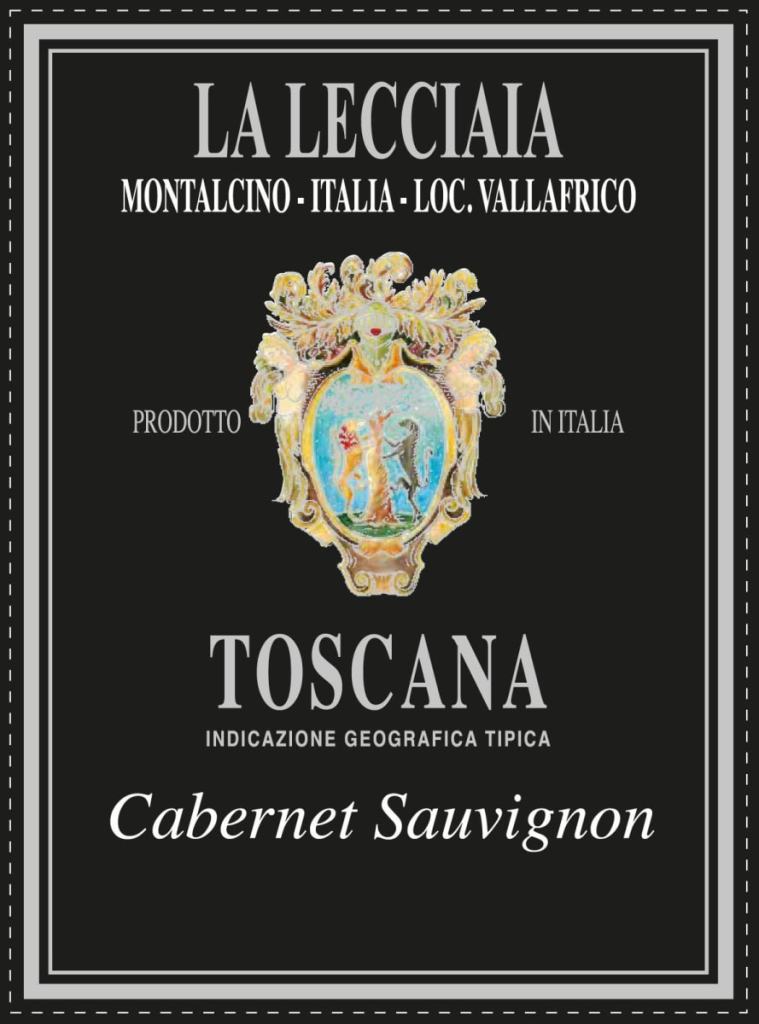
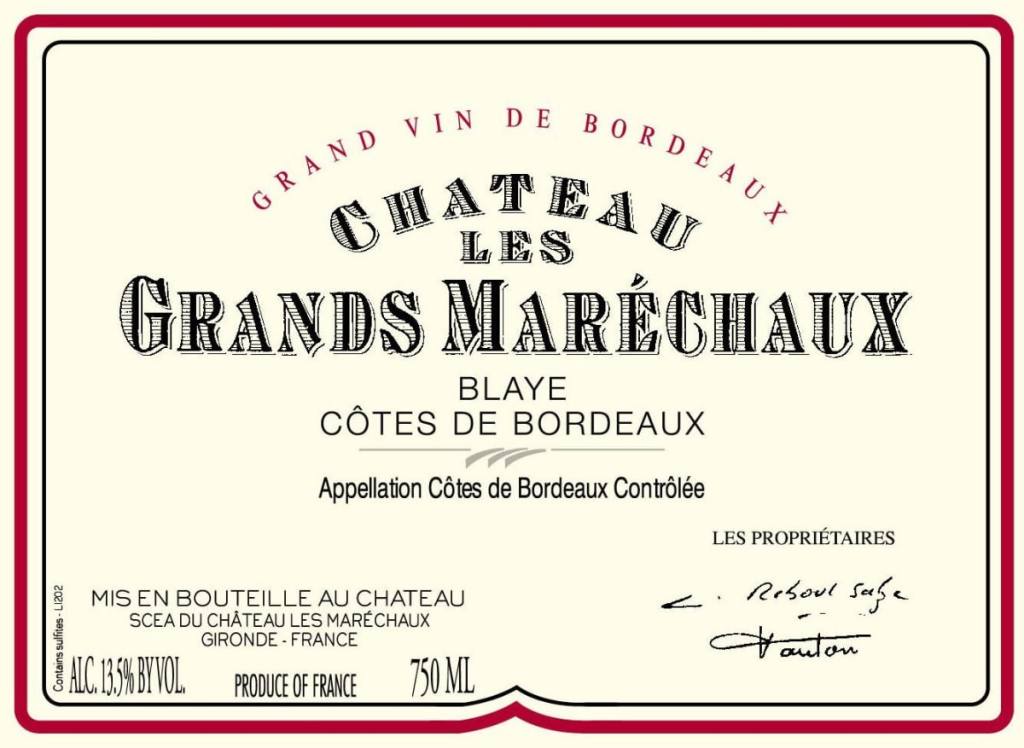
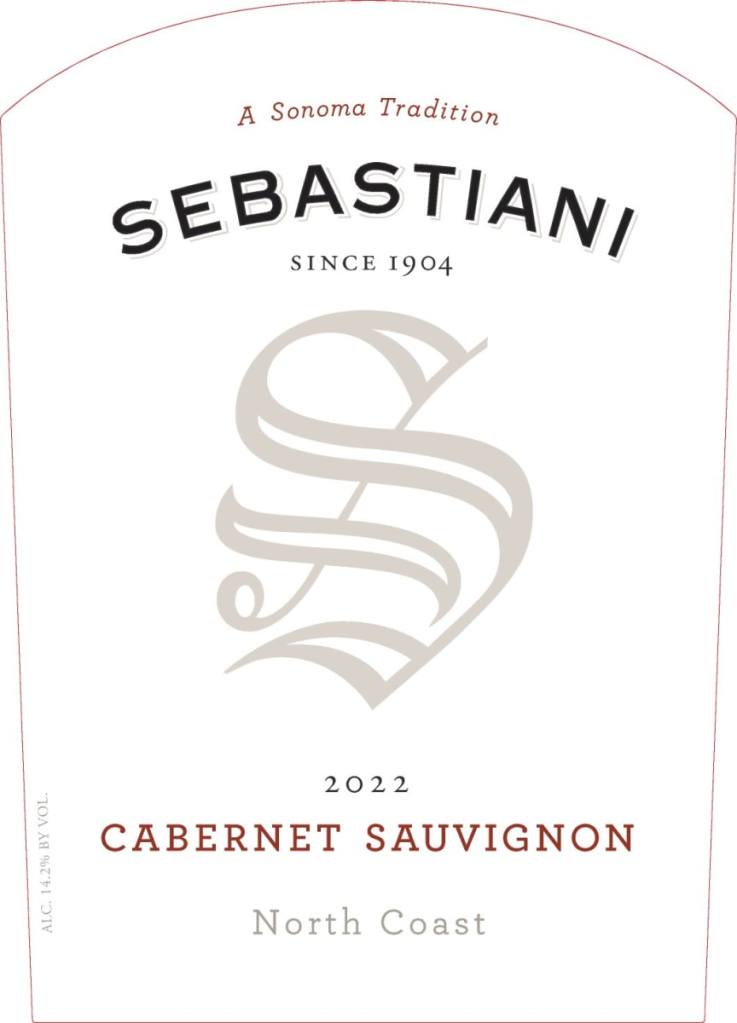
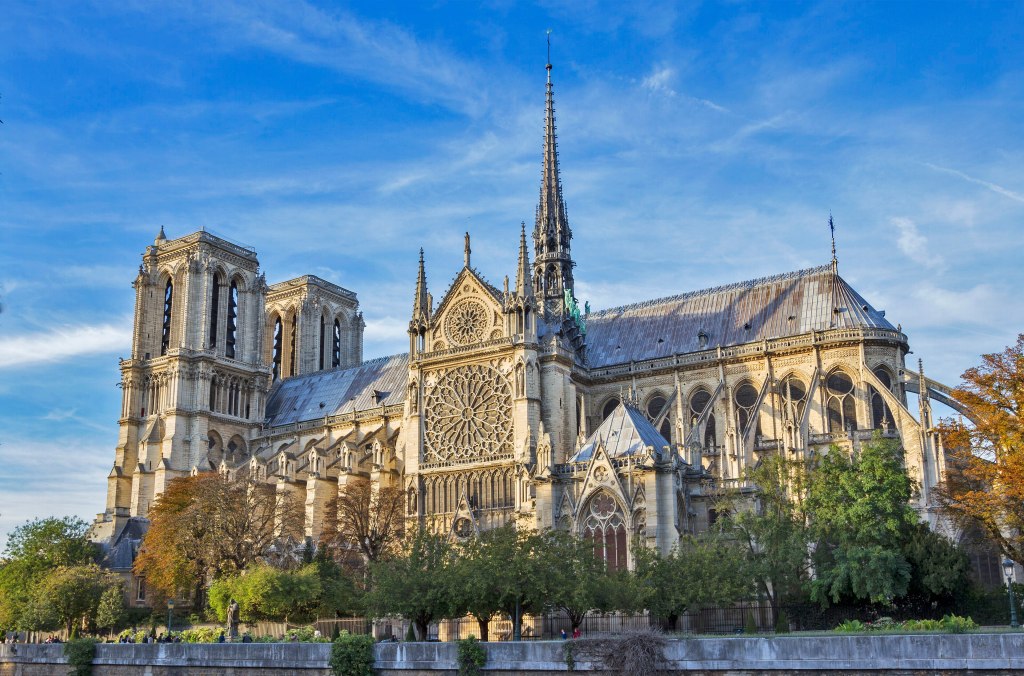
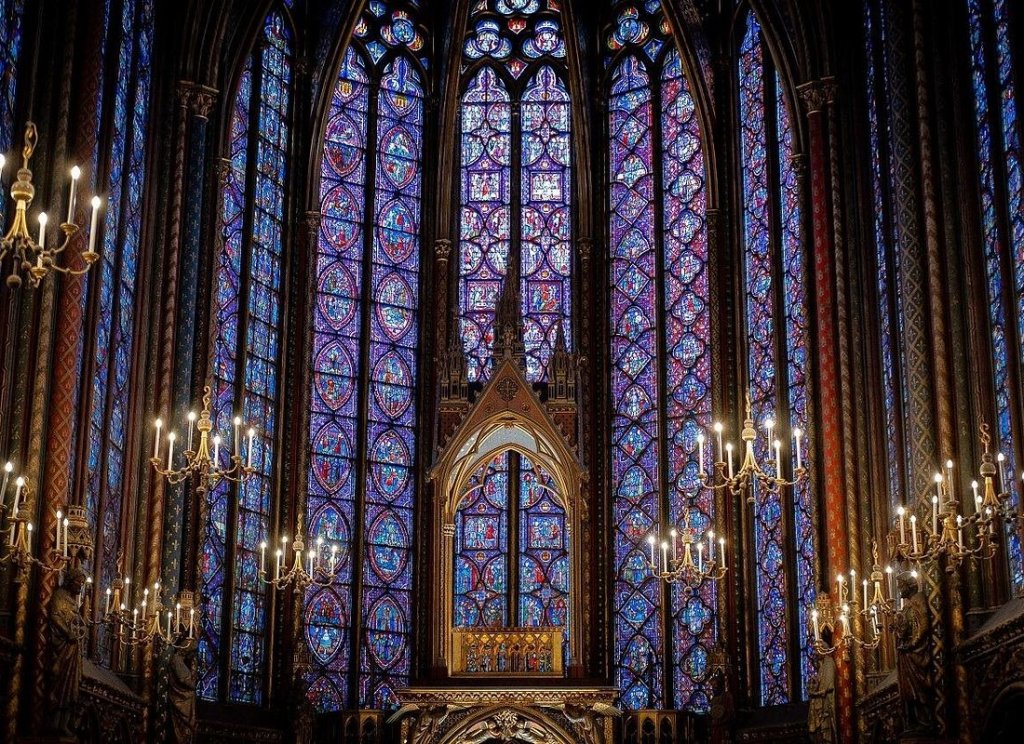
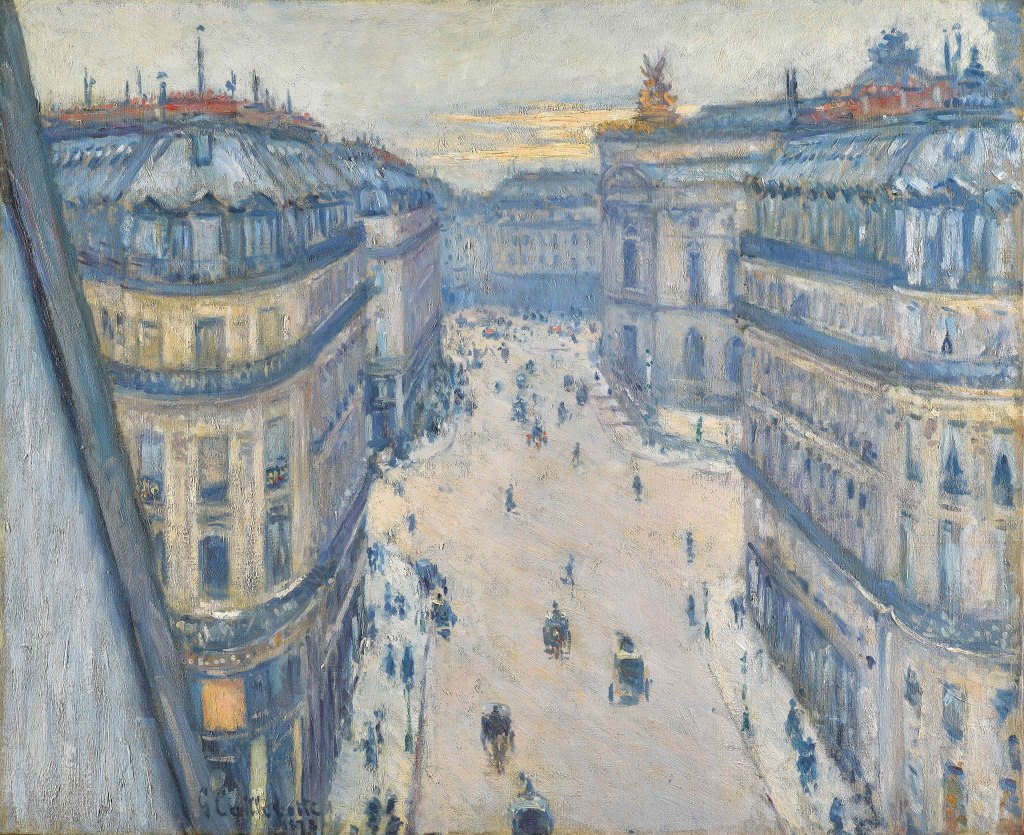
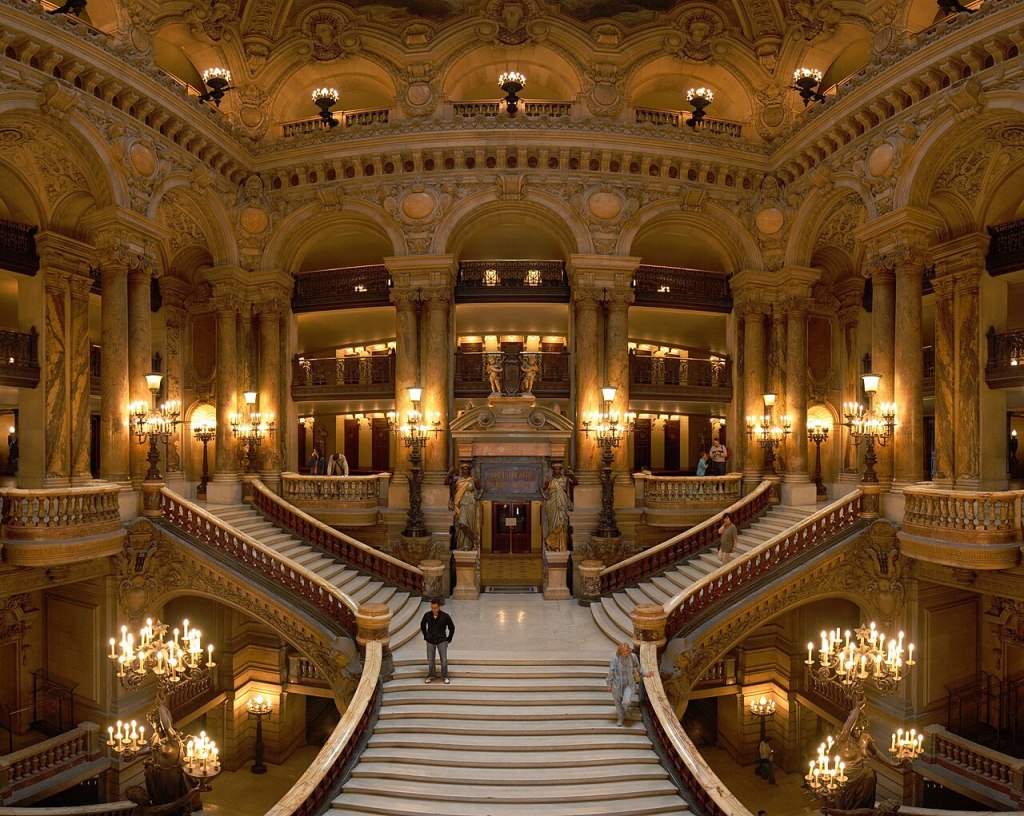
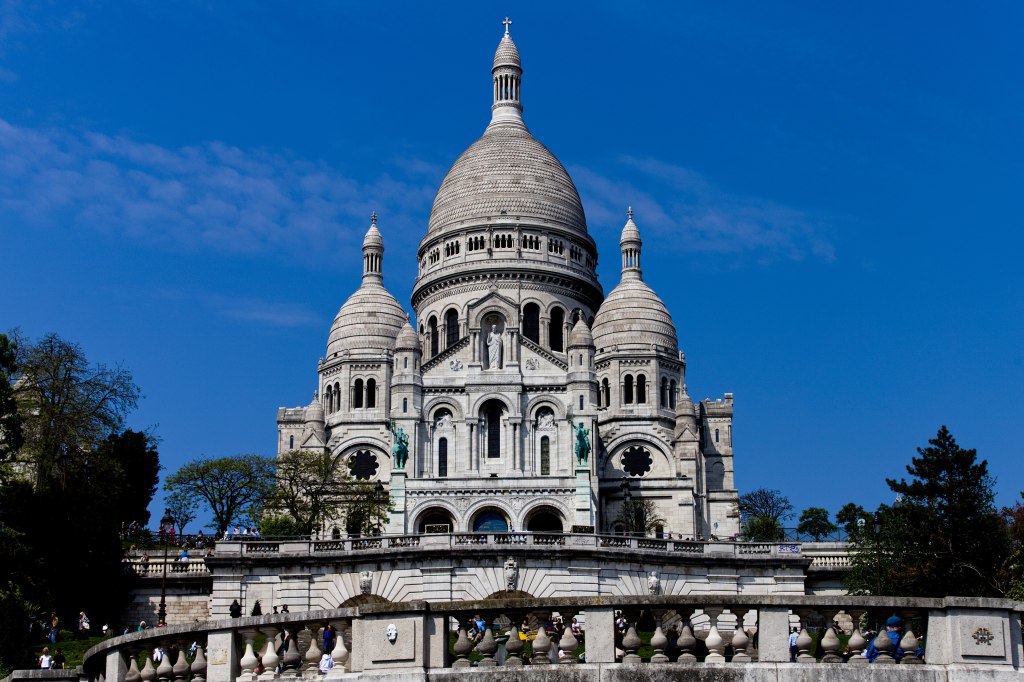
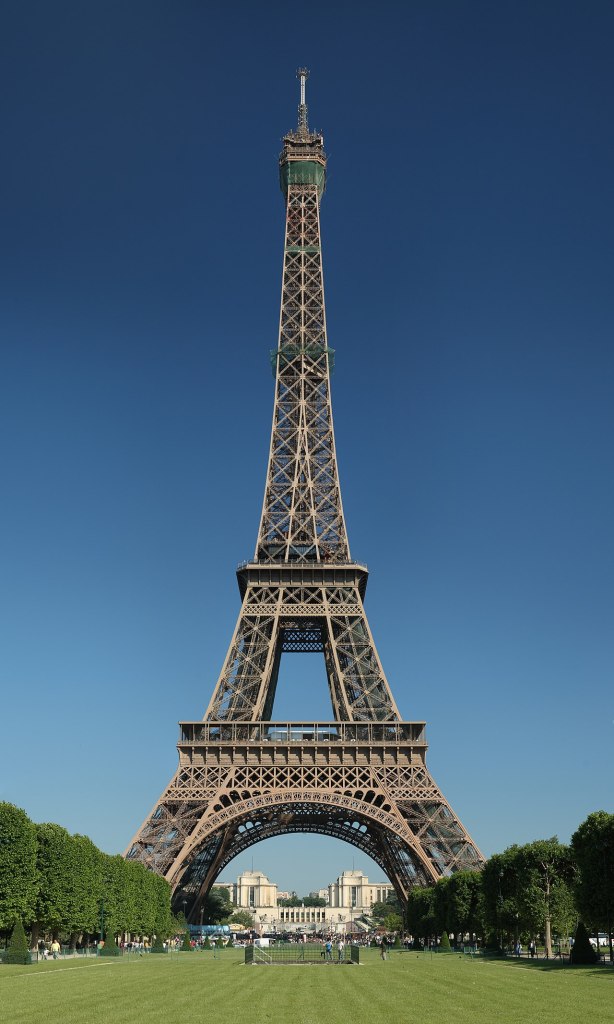
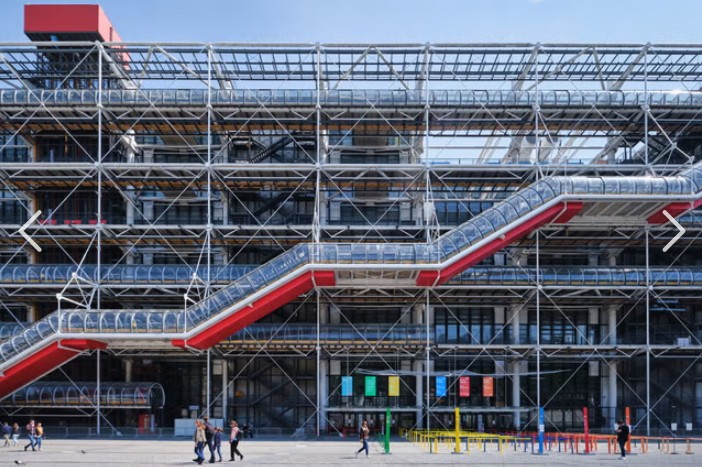
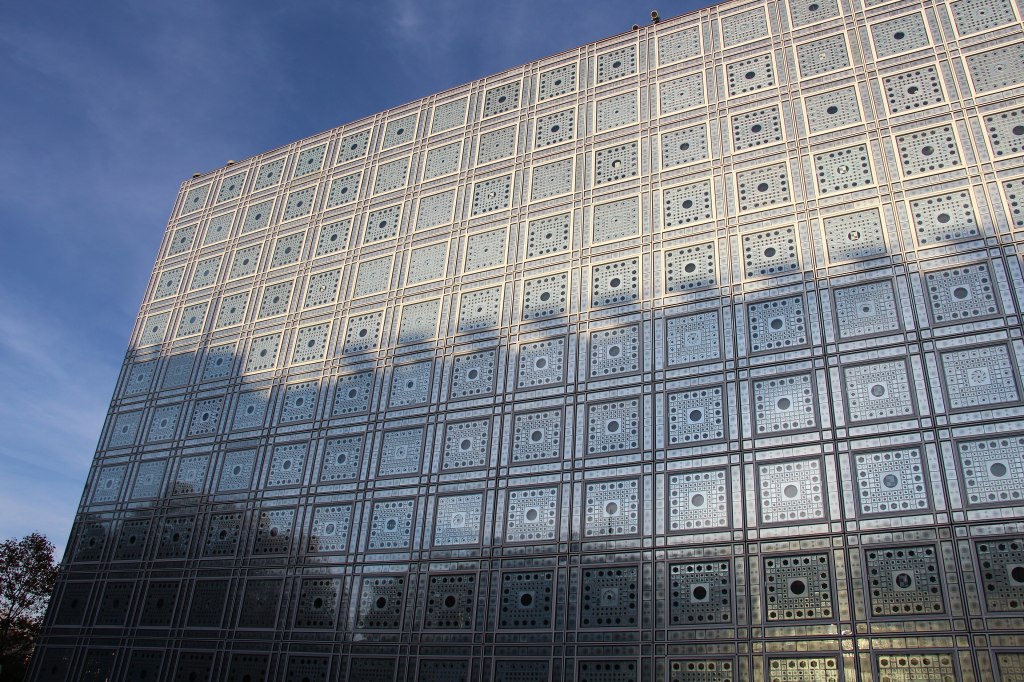
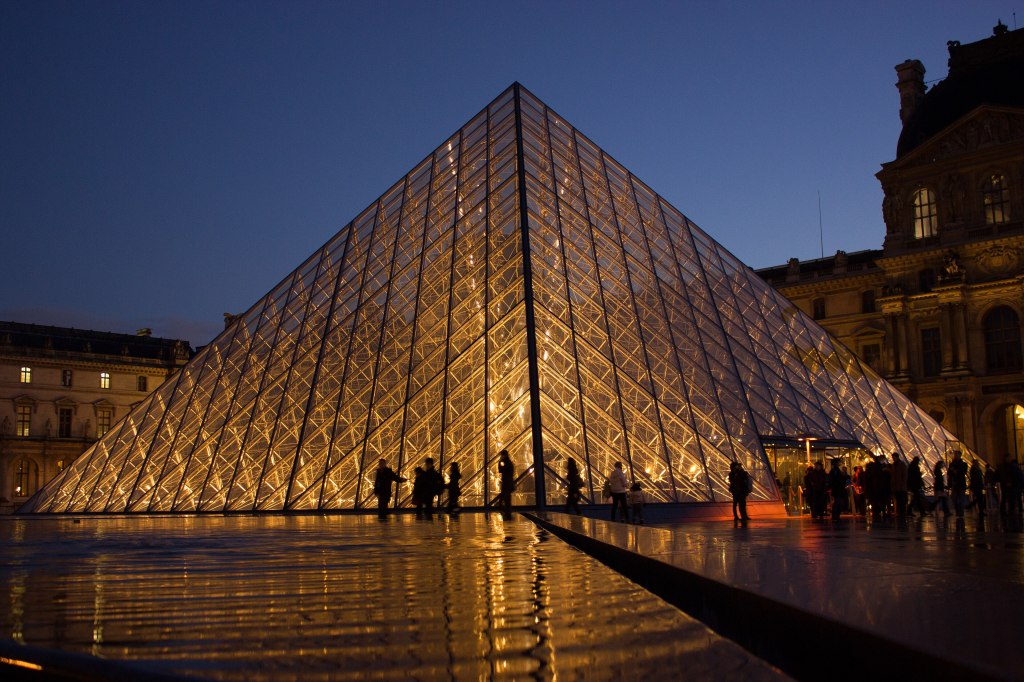
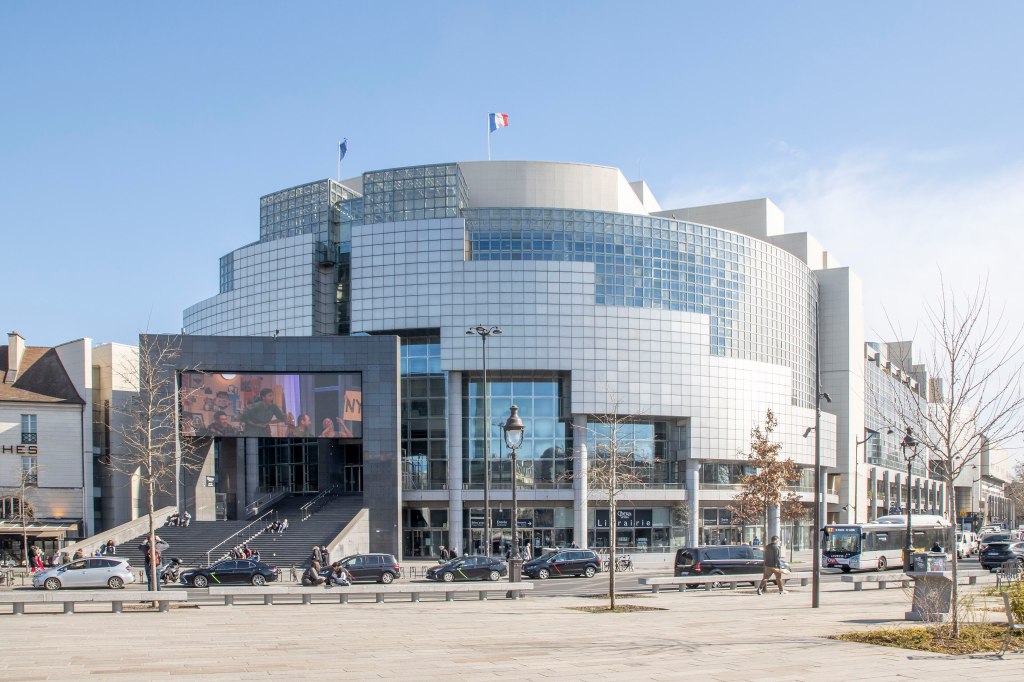
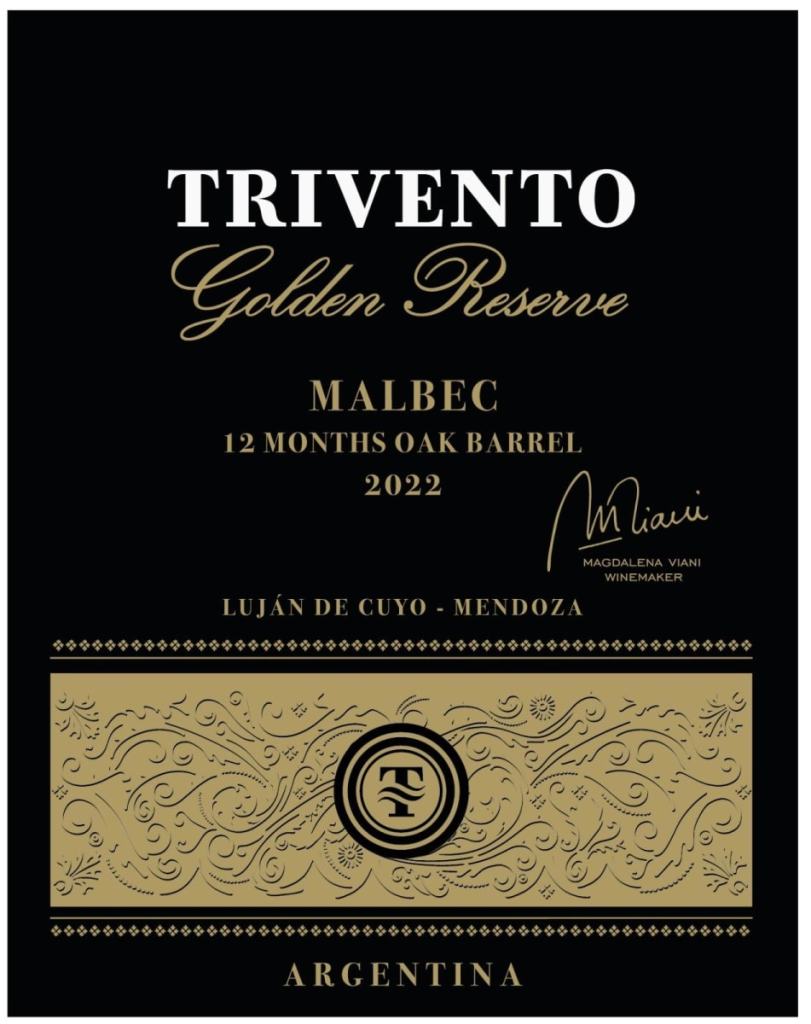
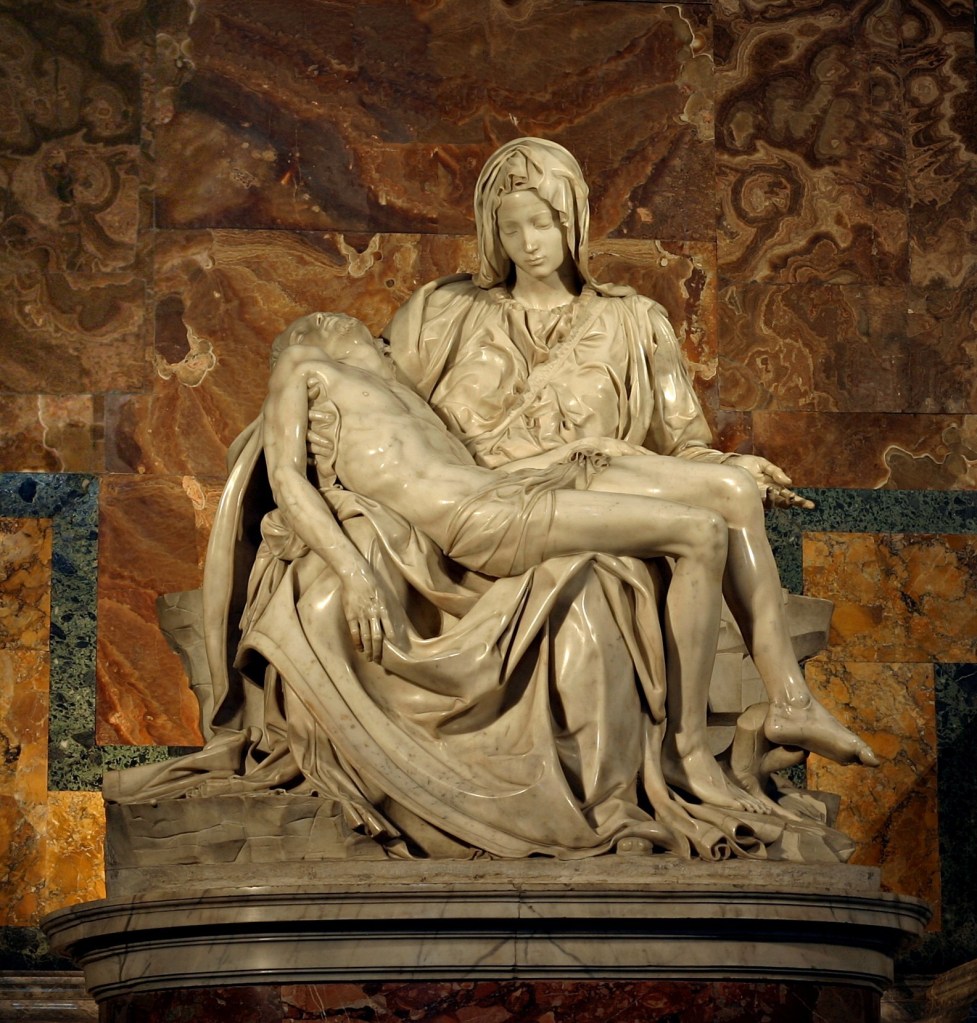
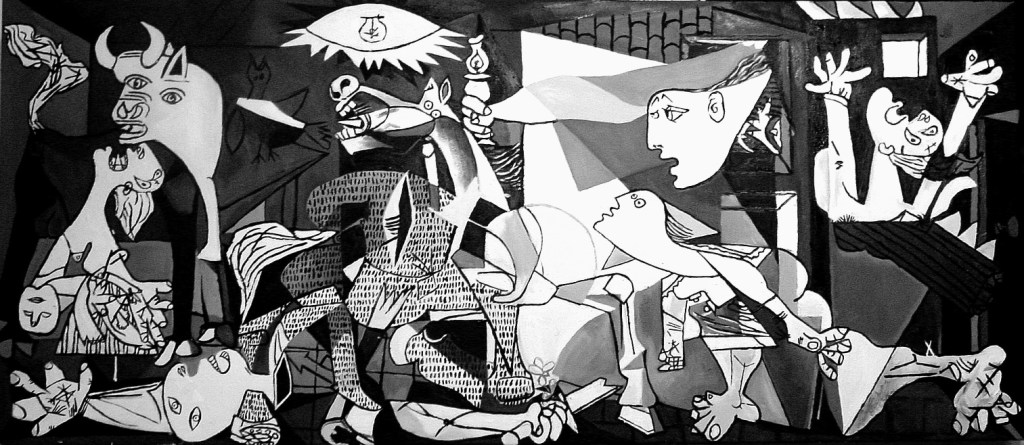
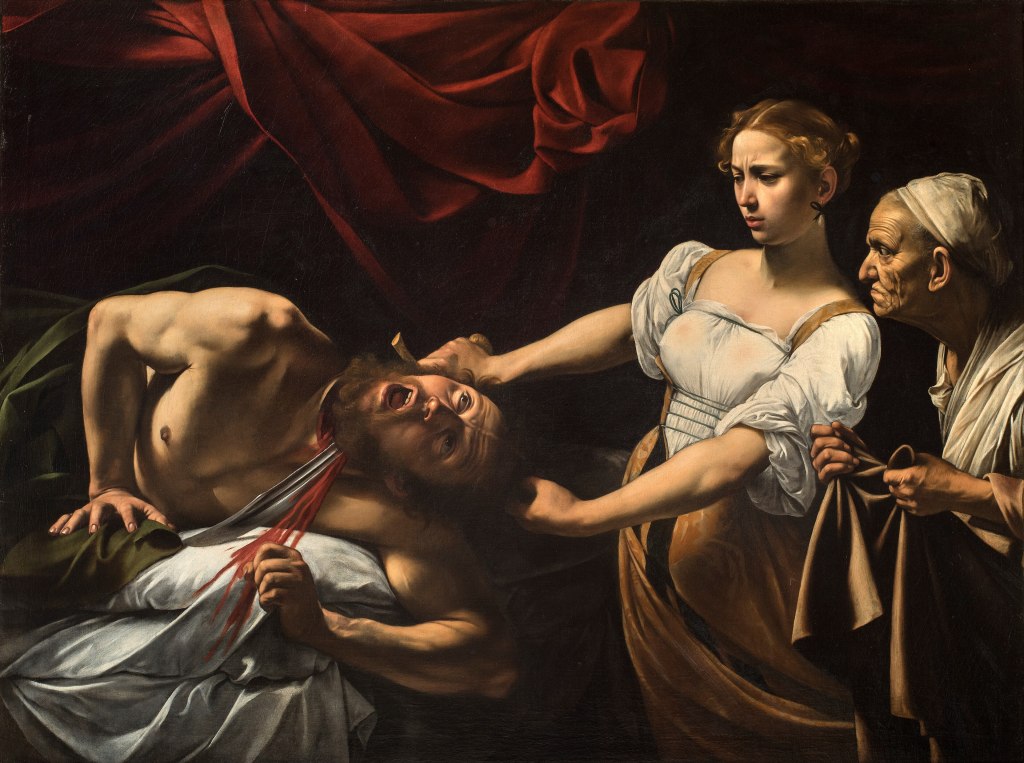
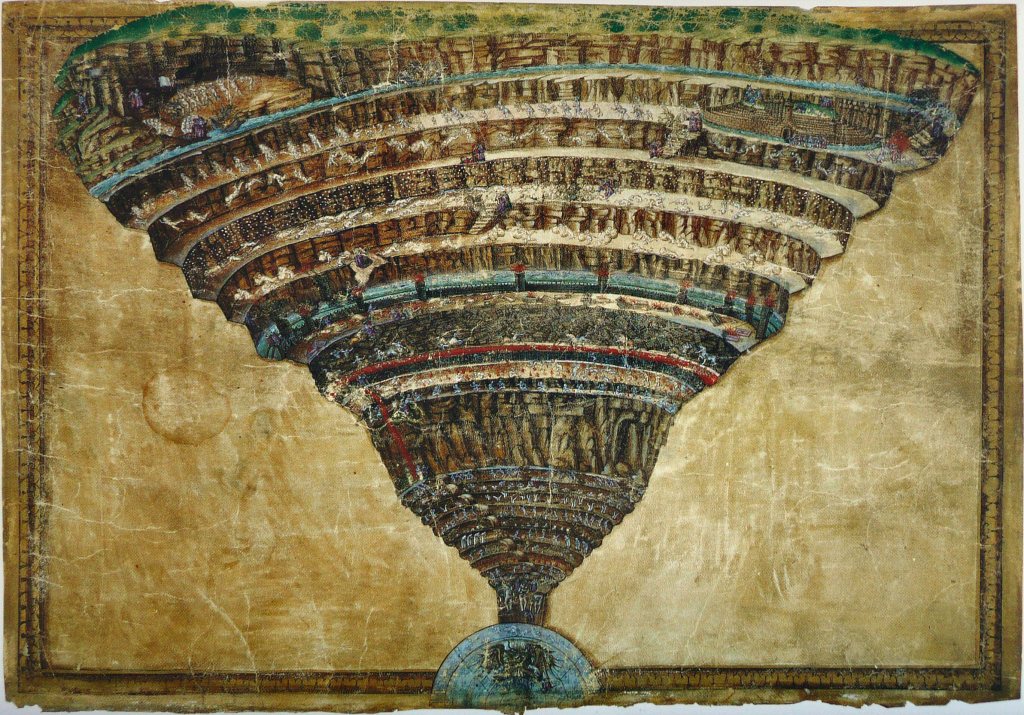

 elsToday