No One Shall Sleep

Nessun Dorma,” (No One Shall Sleep) an aria by Giacomo Puccini from the final act of his opera Turandot, is performed by an enigmatic tenor prince who seeks the hand of Princess Turandot. The Princess decrees that any suitor must solve three riddles to win her consent for marriage. The unknown prince answers all the riddles correctly, but the Princess still defers. He then proposes a counteroffer: if she can guess his name, she can have him executed, but if she cannot, she must marry him. In response, the Princess commands that none of her subjects shall sleep until they uncover his name.

Puccini’s opera, left incomplete at his death in 1924, offers a unique interpretation of Carlo Gozzi’s 18th-century play of the same name, which, in turn, drew inspiration from a 12th-century Persian fairy tale by Nizami as part of his poem collection titled Haft Peykar. In the fairy tale, a princess sets impossible riddles for her suitors.

Puccini retains three riddles from Nizami’s tale but alters the third one:

  1. What is born each night and dies each dawn? (hope)
  2. What flickers red and warm like a flame, but is not a flame? (blood)
  3. What is like ice but burns? (Princess Turandot)

(Nizami’s original 3rd riddle: What echoes with countless voices, yet has no voice of its own? (a letter))

Source: Grove Book of Operas edited by Stanley Sadie, 2006. Wikipedia. Graphic: Nessun Dorma by Pavarotti, 2023 copyright Warner Classics.
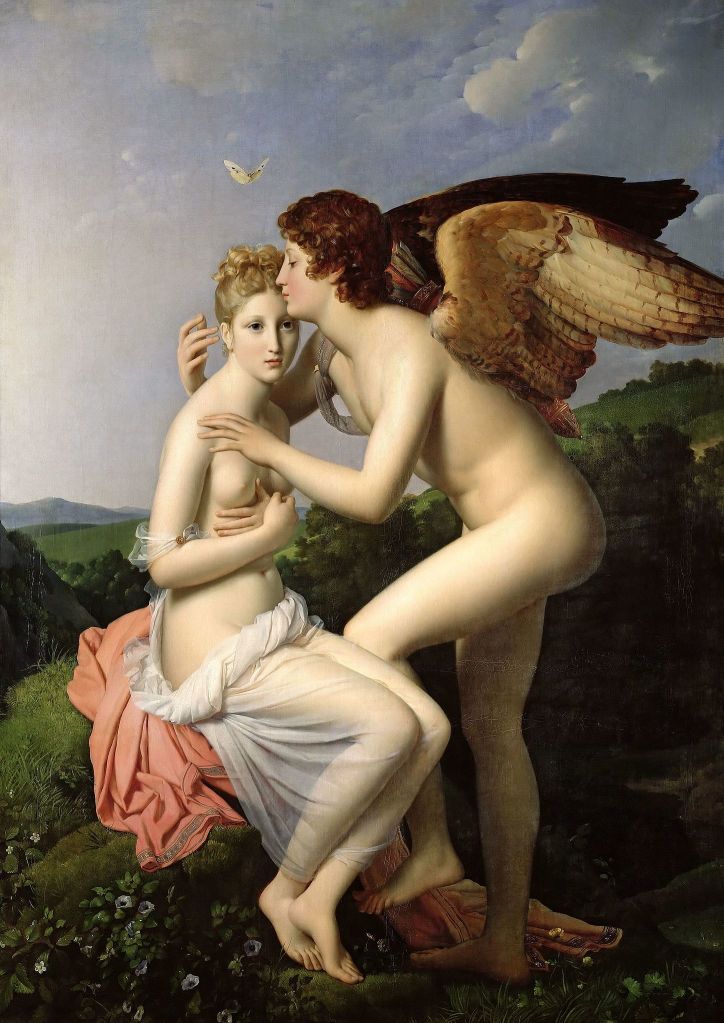
Cupid and Psyche

Cupid and Psyche is the timeless tale of love’s conquering power, overcoming all obstacles in its path. It symbolizes the union of the soul with desire, transcending to a love that goes beyond the physical and the mortal.

The only extant writings of Cupid and Psyche is known from Apuleius’s romance “The Golden Ass,” composed in the 2nd century AD. The tale is likely to have been known as early as the 4th century BC, and Cupid is known as far back as the 8th century BC from Hesiod’s “Theogony.”

In the myth of Cupid and Psyche, with Cupid’s mother Venus as the antagonist, the characters metaphorically act out various emotions and experiences, both mortal and immortal.

Psyche,a mortal more beautiful than the goddess Venus, represents the soul (in Greek, Psyche means soul) and its journey from the tragedy of human life to the transformative power of love for everlasting spiritual fulfillment.

Cupid, tasked by his mother Venus to destroy Psyche for possessing beauty beyond that of a mortal, instead falls in love with her. Cupid embodies love and desire, and the emotional power and unpredictability that it brings to a relationship.

Venus, the goddess of love and beauty, represents jealousy and the obstacles that Psyche battles to realize the completion of her quest for emotional and spiritual fulfillment. Her trials for Psyche reflect the ever-present barriers to true love.

Cupid and Psyche is a story of transcendent transformation over the physical to the triumph of love and the immortality of the soul.

Trivia: In the painting by Gerard, the butterfly floating above Psyche’s head represents, rather redundantly, the soul.

Source: The Golden Ass by Apuleius. The Evolution of Cupid, Erlang Shen, Fatelines, 2022. Graphic: Cupid and Psyche by Francois Gerard, 1798, The Louvre, Public Domain.

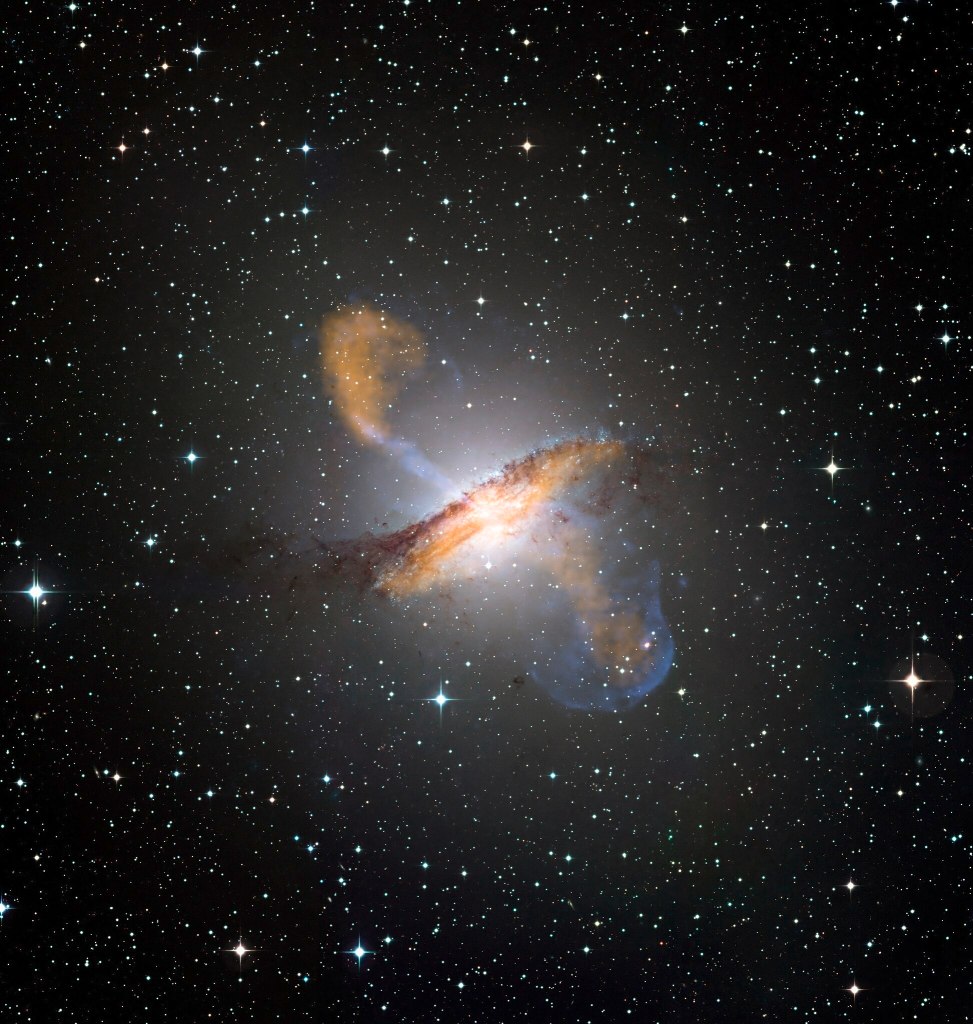
Plasma Jets

In a galaxy far, far away within the Draco (Dragon) constellation, an international team has, for the first time, observed plasma jets forming in real time and shooting out at relativistic speeds, perpendicular to the plane of a black hole’s event horizon. Plasma jets, composed of ionized matter, are a subset of astrophysical jets—energetic, narrow beams of matter and radiation ejected from various objects, primarily black holes, along their axis of rotation.

These plasma jets were observed in the Milky Way’s gravitationally captured satellite, the Draco Dwarf Galaxy, located 270 million light-years from Earth. The Draco Dwarf Galaxy is home to a black hole that apparently has a white dwarf star companion. A likely scenario is that the white dwarf was once a companion to a much larger star that evolved faster, went supernova, and collapsed into a black hole. Today, the black hole is possibly cannibalizing material from the white dwarf, potentially leading to the plasma jets observed by researchers.

Source: Astronomers observe real-time formation of black hole jets by UMBC, 2025. Graphic: Black Hole Outflows from Centaurus A, ESO, 2009.

The End

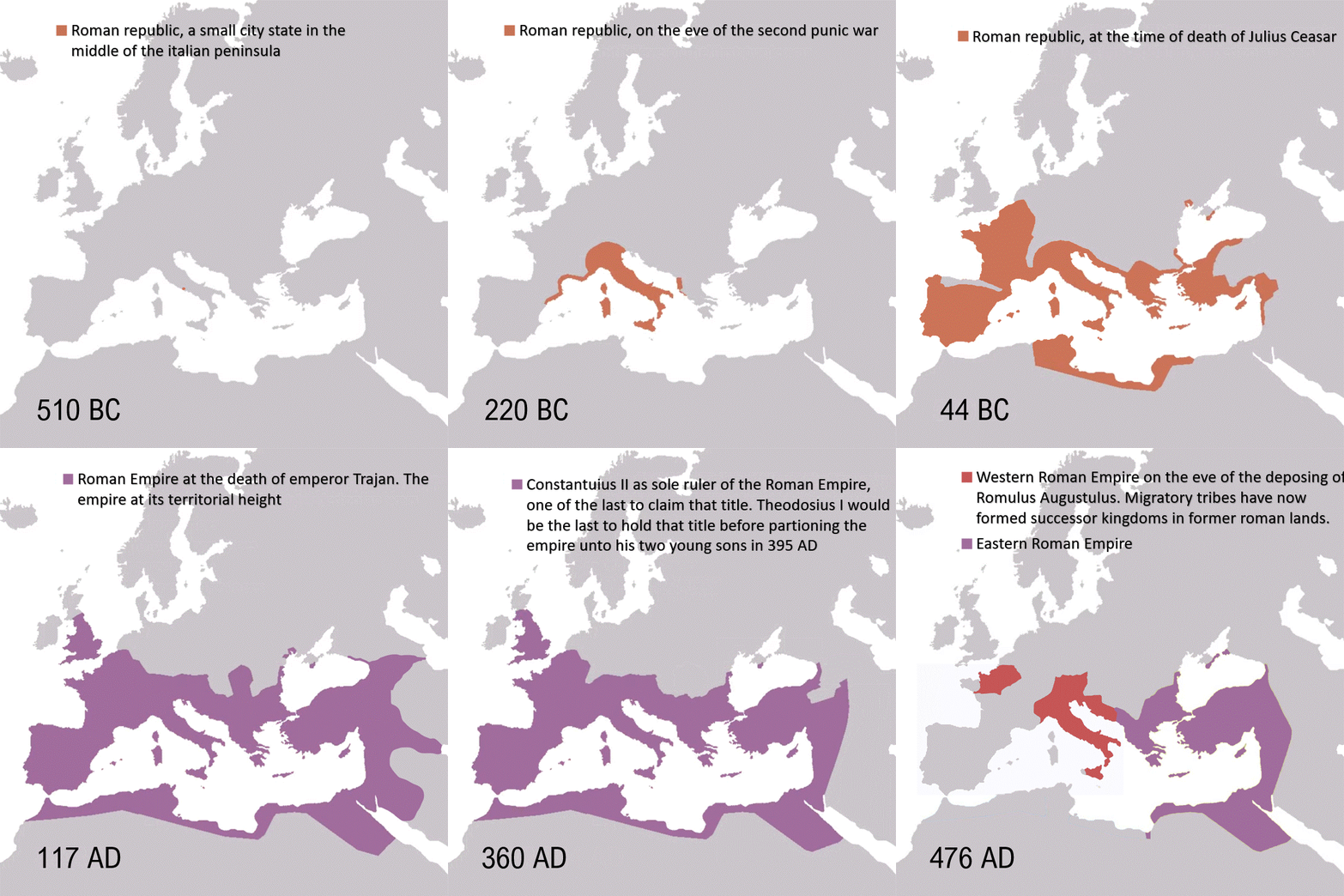
On 16 January 27 BC, the Roman Senate voted to confer the title of Augustus upon Octavian, Julius Caesar’s adopted son, realistically marking the end of the Roman Republic and the beginning of the Roman Empire. This decision aimed to restore stability and order after years of civil war and internal conflict, legitimizing Octavian’s authority while maintaining a veneer of republican governance. Augustus took effective control of the military, religion, bureaucracy, and administrative operations of the empire.

After the assassination of Julius Caesar in 44 BC, Octavian, in 43 BC, formed the Second Triumvirate with Mark Antony and Lepidus. Following their eventual conflict and his decisive victory at the Battle of Actium in 31 BC, Octavian became the uncontested ruler of Rome.

The Roman Empire was the final iteration of the Roman government, which began as a monarchy with Romulus as king in 753 BC, transitioned into a republic in 509 BC, and lasted through the era of civil wars and dictatorships until Octavian’s elevation as Augustus in 27 BC. The Roman Empire as a whole lasted until 476 AD when the Western Empire fell, while the Eastern Empire continued until 1453 AD.

Trivia: 16 January 27 BC, is the actual Julian calendar date, retained and quoted in texts for historical accuracy. According to the Gregorian calendar, however, the date marking the end of the Roman Republic would be 26,27 January 27 BC.

Source: Roman Republic…by M. Vermeulen, The Collector, 2020.  Graphic: Evolution of the Roman Empire, by ESKEHL-Wikipedia, 2022.

Diamonds are Forever

Den of Thieves 2: Pantera: Big Nick (Gerard Butler) is tracking Donnie (O’Shea Jackson Jr.) through Europe, eventually catching up with him in Nice, France. There, Donnie and the Panther Mafia are plotting a seemly outrageous style heist at the city’s World Diamond Center. Nick, broke and tired, is eager to get a piece of the action.

Unlike the first Den of Thieves, this movie takes on a lighter, occasionally humorous tone. Big Nick dials down his badass-itude, though not entirely. The film focuses more on the meticulous planning of the heist than the actual event, reminiscent of the Mission: Impossible and Ocean’s film series.

The movie recreates, with creative license, the 2003 Antwerp Diamond Heist (Antwerp is the actual diamond center of the world), where $100 million in diamonds, gold, and other valuables were stolen. The heist was executed by a five-man team, four of whom were captured and imprisoned, but the loot was never recovered. The ringleader, Leonardo Notarbartolo, received a ten-year prison sentence, while his three captured accomplices were each sentenced to five years.

Trivia: The Panther Mafia in Den of Thieves is likely inspired and named after the real-life Pink Panthers, a network of international jewel thieves responsible for some of the world’s most daring and glamorous heists. The Pink Panthers were given their moniker by European police due to the similarities between their crimes and the antics in The Pink Panther film series. Art imitating reality in an unbroken circle.

Genre: Action—Crime—Drama–Thriller

Directed by: Christian Gudegast

Screenplay by: Christian Gudegast

Music by: Kevin Matley

Cast: Gerard Butler, O’Shea Jackson Jr.

Film Location: Canary Islands and United Kingdom

ElsBob: 7.0/10

IMDb: 6.6/10

Rotten Tomatoes Critics: 60%

Rotten Tomatoes Popcornmeter: 79%

Metacritic Metascore: 60%

Metacritic User Score: 6.8/10

Theaters: 10 January 2025

Runtime: 145 minutes

Budget: $40 million

Box Office: $21 million

Source: Rotten Tomatoes, IMDb, Metacritic. Graphic: Den of Thieves 2: Pantera Poster and Trailer, copyright Lionsgate.

Pacific Redwood Organic Merlot

Merlot from California

84% Merlot, 16% Carignane

Purchase Price: $13.99

Wine Enthusiast 90, ElsBob 89

ABV 13.8%

Aromas of red fruits, cherries on the palate, medium-bodied, smooth, with a short finish. Will go well with vegetables, pizza, and pasta. An easy sipping wine best served slightly chilled.

A very good table wine at a slightly elevated price.

Trivia: Label is from an 18”x24” oil painting by Andrew Power titled “Pacific Redwood”, 2008-2009.

The Last Waltz: A Timeless Rock Odyssey

On Thanksgiving Day in 1976, Bill Graham’s legendary Winterland Ballroom in San Francisco played host to an unparalleled musical spectacular: The Last Waltz. Orchestrated by the visionary filmmaker Martin Scorsese and the iconic concert promoter Bill Graham, this five-hour marathon has earned its place in history as the greatest rock documentary ever made.

A star-studded fantasy night where rock, roots rock, blues, and folk giants converged. The Band taking center stage, were joined by a stellar lineup including Bob Dylan, Dr. John, Van Morrison, Joni Mitchell, Ringo Starr, Eric Clapton, and many more. Each performance was a masterpiece, weaving together years of musical brilliance into a single, unforgettable tapestry.

Michael Wilmington of the Chicago Tribune and Rolling Stone have rightfully hailed this epic concert as a monumental achievement, a time capsule of musical greatness that continues to inspire and captivate audiences nearly 50 years later.

The Last Waltz wasn’t just a concert; it was a celebration of artistic vision, camaraderie, and the timeless power of music.

Graphic: The Last Waltz Official Trailer #2, 1978, Copyright Last Waltz Productions.

Sticks His Nose In

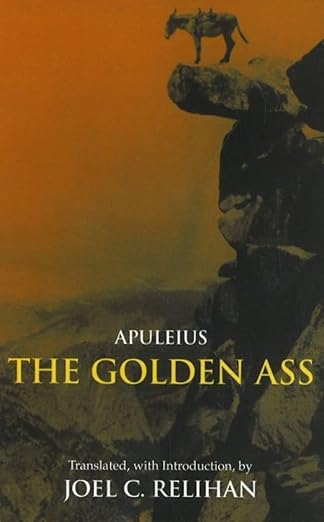
Lucius, the protagonist of the 2nd century AD Latin novel The Golden Ass, cannot suppress his curiosity nor stop meddling in the dark arts of spells and magic. Attempting to flee from the troubles resulting from his inquisitiveness, he accidentally uses the wrong ointment and turns himself into a donkey rather than a bird. This error leads to a series of comical and mostly bawdy misadventures as a beast of burden, who is thoroughly abused and misused due to his intemperate habit of sticking his nose in.

The story, written by the Roman author and philosopher Lucius Apuleius, who hailed from a Roman province in what is now modern-day Algeria, is characterized as a romance—not in the modern Harlequin sense, but in the Greek meaning of a Milesian tale. A Milesian tale consists of a series of adventurous stories, usually short, humorous, and erotic—a romantic narrative for the ancients.

The translator of The Golden Ass, Joel C. Relihan, takes the meaning of a Milesian romance a step further into what Northrop Frye described as secular scripture. Relihan states that the romance in The Golden Ass is: “A survivor’s tale of descent into a nightmare world of loss and eventual recovery of identity.”

Lucius loses his identity, becoming ludicrous and expendable. But in the end, he prays for salvation, which he receives from the goddess Isis. Ultimately, he is initiated into the secrets of the gods. His transformation from misfortune to enlightenment and spiritual fulfillment is, in the end, the ultimate story of a lived life—a maturing into old age with illuminated and learned experience leading to peace and grace.

Trivia: The Golden Ass has been known by various names, including the author’s title, Metamorphoses, Asinus Aureus (a Latin name which translates to “Golden Ass”), The Metamorphosis of Lucius, and the modern title: The Golden Ass or A Book of Changes.

Source: The Golden Ass by Apuleius. Oxford Bibliographies. Graphic: The Golden Ass Book Cover, Hackett Publishing, 2007.

Choose

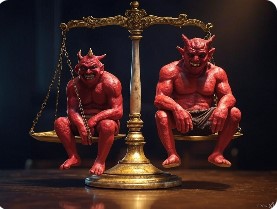
Movies such as Pakula’s 1982 “Sophie’s Choice” and Eastwood’s 2024 “Juror #2” depict gut-wrenching moral dilemmas, where every decision is flawed and ethically unbearable.

Moral dilemmas arise when all available options are objectionable, involving transgressions against moral principles. Their resolution often revolves around the “Principle of the Lesser of Two Evils,” where one chooses the least harmful option.

In 1944, President Roosevelt’s health was rapidly deteriorating, and many in the Democratic Party believed he wouldn’t finish his term if re-elected. Despite this, Roosevelt ran for a fourth term but was pressured to find a different running mate with better economic and leadership skills. Vice President Henry Wallace was replaced by Harry Truman, a senator from Missouri, on the ticket.

Roosevelt won his fourth term but passed away less than three months into it, making Truman the 33rd President on 12 April 1945. Within four months, Truman faced the dilemma of dropping atomic bombs on Japan to possibly end World War II or continuing a more conventional war.

Although there were no initial estimates of fatalities before the bombings, aftermath estimates suggested that up to a quarter of a million lives were lost at Nagasaki and Hiroshima. In contrast, continuing the war conventionally was estimated to result in 6 to 11 million additional fatalities.

Truman chose the lesser of two evils: sacrificing a quarter of a million souls to save millions.

Source: Lesser Evil Principle by Dougherty, 2020, Encyclopedia of Business and Professional Ethics. Graphic: Grok Generated.

Fractional Excitons

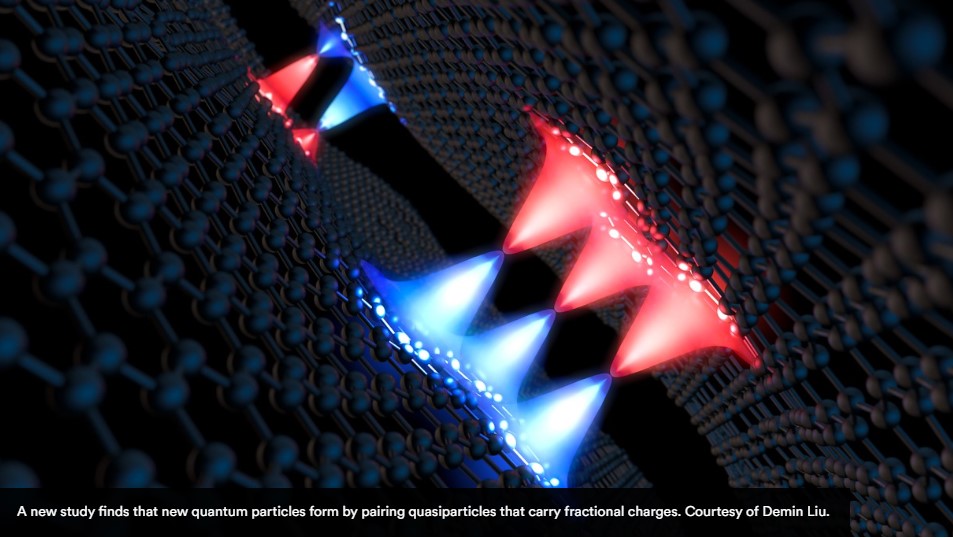
Physicists at Brown University have recently observed a new class of quantum particles called fractional excitons.

Excitons consist of an electron and an electron hole (a quasiparticle, a concept, representing the absence of an electron where one should exist). They allow for energy transfer in a lattice, such as in a transistor. Applying voltage to a transistor influences the movement of electrons and holes through the material. Simplified, this movement can turn the current flow on and off, forming a logic gate.

Despite being composed of fermions, excitons exhibit bosonic behavior and follow bosonic statistics. Fractional excitons, however, show behaviors that don’t fully align with either fermions or bosons. This suggests they belong to a new class of particles with previously unobserved quantum properties.

The researchers speculate that these fractional excitons may lead to advances in quantum computing.

Source: Excitons, Zhang et al, Nature, 2025. Graphic: Quasiparticles, Demin Liu, Brown University 2025.