End Times

Isaac Newton (1642–1727), remembered as one of the greatest mathematicians and architect of modern physics, devoted more time to theology and biblical study than to science. Among his vast unpublished papers lies a remarkable calculation: Newton believed that the End of Times would not occur before the year 2060. His thesis was not a prediction of hell on Earth, but rather a forecast of the corrupt secular and spiritual powers giving way to the establishment of Christ’s kingdom on earth.

Newton’s notes on prophecy and chronology survive in the Yahuda manuscripts, now housed at the National Library of Israel. For more than a century, these papers were considered “unfit to print” and remained hidden in the English Earl of Portsmouth’s family archives. In 1936, Sotheby’s auctioned off Newton’s theological and alchemical writings for just over 9,000 British pounds or about $1 million in today’s dollars. Abraham Shalom Yahuda, a Jewish polymath and collector, recognized their importance and purchased a large portion, including Newton’s calculations on the End of Times.

Newton was deeply engaged with biblical prophecy, especially the Books of Daniel and Revelation. He believed these texts contained coded timelines of history on into the future. In Observations upon the Prophecies of Daniel (published posthumously in 1733), he wrote: “The prophecies of Daniel are all of them related to one another, as if they were but several parts of one general prophecy… The Apocalypse of John is written in the same style and language with Daniel, and hath many of the same figures.”

In Daniel 7:25 and 12:7, and again in Revelation 12:14, “a time” is taken as one year, “times” as two years, and “half a time” as half a year—an interpretation rooted in the Aramaic/Hebrew idiom in which “time” means “year.” Revelation 11:2 and 13:5 describe the same period as 42 months, which equals 3½ years (42 ÷ 12). Revelation 11:3 and 12:6 express it again as 1,260 days, using the Jewish symbolic 360‑day prophetic year (360 × 3.5 = 1,260). Across Revelation 11–13, these expressions appear interchangeably, reinforcing the equivalence.

The 3½‑year duration itself is symbolic: it is half of seven, the biblical number of completeness, and thus represents a period of incompleteness or tribulation deliberately cut short. Cut short because in Matthew 24:22 Jesus states, “Unless those days had been cut short, no flesh would be saved; but for the sake of the elect those days will be cut short.” A full seven would symbolize evil completing its course, but Scripture portrays God as limiting evil’s duration, preserving a some but not all, and interrupting the “full seven” before it reaches completion.

Later interpreters extended this further. Drawing on Numbers 14:34: “a day for a year”; and Ezekiel 4:6, where God again assigns “a day for a year,” they applied the day‑year principle to the 1,260 days, transforming them into 1,260 years.

Newton then sought a historical anchor, a year to start the clock to End Times. He identified 800 AD, when Charlemagne was crowned Emperor of the Romans by Pope Leo III, as the beginning of ecclesiastical corruption. For Newton, this coronation marked the fusion of secular and papal power: the fulfillment of Daniel’s prophecy of a blasphemous authority ruling over the saints. Adding 1,260 years to 800 AD produced the year 2060. In his notes, Newton wrote: “The period of 1260 days, if dated from the complete conquest of the three kings A.C. 800, will end A.C. 2060.” (Newton preferred A.C., Anno Christi, in the year of Christ over A.D., Anno Domini, in the year of the Lord.)

Newton also considered 2034 as an alternative. Anchoring the calculation in 774 AD; the year of Charlemagne’s conquest of the Lombards and alliance with Pope Adrian I: 774 plus 1260 equals 2034. The year 774 also coincided with a massive solar storm, sometimes referred to as the Charlemagne Event (stronger than the Carrington Event of 1859), with auroras reaching deep into southern latitudes and temperatures dropping a few degrees. Yet 2060 remained the most consistent date in his manuscripts.

Newton believed that the corrupt powers that would bring about the End of Times was both the papacy and the secular rulers who supported the church. In his manuscripts he clearly identified the papacy as the “little horn” and the “man of sin,” a corrupt ecclesiastical power that had usurped apostolic Christianity. At the same time he perceived that secular rulers were equally part of the apostate system destined to collapse. The ten horns of the Beast were the European kingdoms. Their political power upheld the papal system and thus shared in its guilt and its eschatological fate.

Importantly, Newton did not envision annihilation at the End of Times. He saw 2060 as the end of corruption and the dawn of a new divine order. He cautioned it may end later, but said “I see no reason for its ending sooner. This I mention not to assert when the time of the end shall be, but to put a stop to the rash conjectures of fanciful men…”

Newton feared that false predictions would undermine faith. His calculation was meant as sober interpretation, not sensational prophecy. He emphasized that only God knows the appointed time: “It is not for us to know the times and seasons which God hath put into his own breast.”

Newton’s calculation of the End of Times flows logically from the biblical text, and he treats the prophetic numbers with strict literalism. Yet he interprets the tribulation not as a final, catastrophic episode at the end of history, but as a long historical decline. Slow corruption within secular and ecclesiastical institutions. All culminating in the restoration of true Christianity.

Although Newton’s prophetic writings remained unpublished during his lifetime, the rediscovery of the Yahuda manuscripts in the 1930s revealed the full scope of his vision. He saw the End Times not as annihilation but as transformation: the fall of apostate Christianity, the renewal of true religion, and the establishment of Christ’s kingdom of peace.

Newton’s restrained timing aligns with Christ’s teaching in Matthew 24:36: “But of that day and hour no one knoweth, not the angels of heaven, but the Father alone.” In Christian eschatology, the Second Coming is likened to a Canaanite or Jewish wedding: the Father alone knows the day, the Son prepares a place, and the bride: the Church, must remain watchful. Newton’s calculations were an attempt to glimpse the architecture of prophecy, yet he humbly accepted the unknowable will of God.

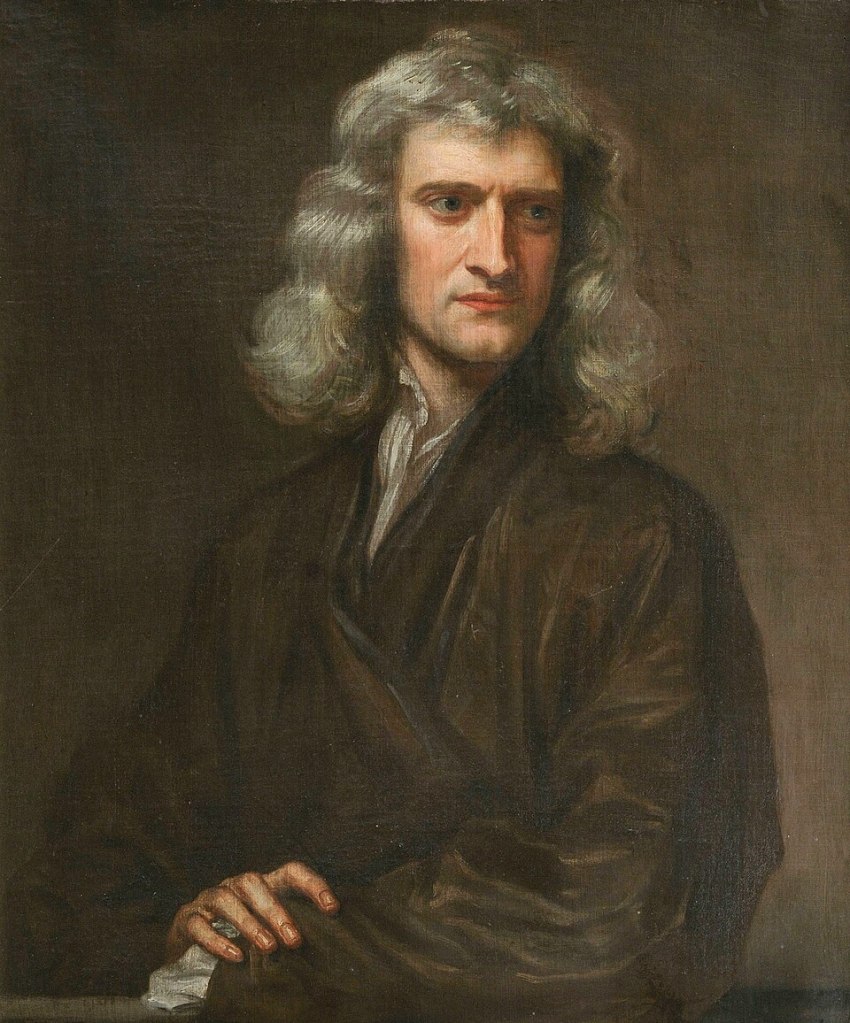
Graphic: Isaac Newton by Godrey Kneller, 1689. Issac Newton Institute. Public Domain.
Time not Time

Time, life, and physics are inseparably intertwined. Remove time from our lives or our equations and we are left with a null set; a void where very little makes sense, and nothing moves forward or backwards. Birthdays, compound interest, and prison sentences lose their definitions. Einstein’s spacetime, relativity, and the absolute speed of particles all collapse if time is reduced to mere concept rather than a dimension woven into the fabric of the universe.

Time is real, yet not what we think. It is measurable, yet subjective. Physical, yet metaphysical. Created, yet transcended. It is time, and not time.

To confront this metaphysical and ontological puzzle, we must go back and consider how others have wrestled with it. In Book XI of Confessions, Augustine famously writes: “What then is time? If no one asks me, I know; if I wish to explain it to one who asks, I do not know.” He knew time intimately yet could not articulate it; a paradox of intuitive knowledge that resists definition.

For Augustine, time is the tension of the soul: distentio animi, stretched between memory, perception, and anticipation. I would go further: time is the unease of the soul, the awareness that our life is not merely sequential but weighted. Each present moment becomes a record, a catalogue of change, where memory and expectation converge upon the ubiquitous now.

From this knotty discomfort, Augustine turns to consciousness. We do not measure existence as an external construct, nor as Einstein’s spacetime, but hold past, present, and future together in awareness. This is the soul’s way of ordering experience: a catalogue of change. An AI approaches memory similarly; not as a flowing timeline but as indexed facts retrievable when relevant. What for humans is the soul’s ledger of experience, for AI is a ledger of durable notes. And yet both remain finite catalogues.

Augustine presses further: God transcends even this. For us, awareness gathers past as memory and future as expectation, but God simply is: beyond sequence, beyond catalogue, beyond event. Time itself began with creation; sequence and change belong only to the created. God exists outside of it, the eternal source from which all temporal becoming flows.

Thomas Aquinas also saw time not as a substance but as a measure: the numbering of motion by before and after. Time, for him, comes into being with creation and is experienced only by mutable beings, for without change there is no succession, and without succession there is no time. Humanity lives within this flow: we need time to give shape to purpose, meaning, and becoming. But God is utterly immutable, without before or after. He does not move from past to future but exists in a timeless presence; eternity as the simultaneously whole possession of life. All times are present to Him at once, not as a sequence but as a single, perfect act of being.

Pope Benedict XVI, following Augustine and Aquinas, insisted that eternity is not endless time but timeless presence. To bind God within sequential time would reduce Him to a creature among creatures. God does not foresee as a prophet would; He simply is, in relation to all times.

This ‘eternal now,’ or what Boethius calls the ‘eternal present,’ expresses his argument that eternity is not infinite duration but the perfect simultaneity of divine presence. God’s knowledge is not ours extended indefinitely; it is categorically different. Thus, free will and an all‑knowing God are not contradictions. According to Boethius, “whatever lives in time lives only in the present,” whereas God lives in the eternal present: totum simul, the all‑at‑once‑ness of divine life.

Where Christian thought places God beyond time, the Greeks placed humanity within two modes of time: Chronos and Kairos. Chronos is quantitative time; measured, sequential, countable. It gives life structure, the frame by which we track change. Kairos is qualitative time; the opportune moment, the ripeness of action, the fullness of meaning. Chronos watches the clock; Kairos watches life. Chronos measures duration; Kairos measures significance.

Together they reveal that time is not merely a dimension we move through but a dual register of existence: one that counts our days and one that gives those days weight.

Time, from ancient philosophers and theologians to modern physicists, has evolved. Theology gives us a God of timeless presence. Newtonian time was absolute, measurable, and continuous. Einsteinian time became relative, elastic, and inseparable from space. Quantum time is probabilistic, discontinuous, sometimes irrelevant. Entanglement seems to ignore time altogether. The arc bends from time to not‑time. From time to timelessness.

If theology gives us the metaphysics of time, physics gives us its language; how time behaves, how it binds itself to matter, motion, and measurement.

The physical story begins with Newton, who imagined time as absolute: a universal river flowing uniformly for all observers. In Newton’s cosmos, time is the silent metronome of the universe, ticking identically everywhere, indifferent to motion or perspective. It is Chronos rendered into mathematics.

But Einstein suppressed that certainty. In special relativity, time is no longer absolute but elastic. It stretches and contracts depending on velocity. Two observers moving differently do not share the same “now.” Time becomes inseparable from space, fused into a four‑dimensional fabric: spacetime. Where motion through one dimension alters experience of the others. The universe no longer runs on a single clock; it runs on countless local clocks; each tied to its own frame of reference.

General relativity deepens the strangeness. Gravity is not a force but the curvature of spacetime itself. Massive objects bend the temporal dimension, slowing time in their vicinity. A clock on a mountaintop ticks faster than a clock at sea level. Time is not merely experienced; it is shaped by mass and speed. It bends under pressure. It is not the absolute we imagine.

If Newton’s time was a river, Einstein’s time is a landscape; warped, uneven, inseparable from the terrain of existence.

Yet even Einstein’s vision wanes at the smallest scales. Quantum mechanics introduces a world where time behaves less like a smooth dimension and more like a probabilistic backdrop. Particles do not trace continuous, classical arcs but inhabit shifting probability fields. Events unfold not deterministically but as clouds of possibility collapsing into actuality when observed.

And then comes entanglement; the phenomenon Einstein called “spooky action at a distance.” Two particles, once linked, remain correlated no matter how far apart they travel. Their states are not merely synchronized; they are one system across space. Measurement of one instantaneously determines the other, as if the universe refuses to let them be separated by distance or by time.

Entanglement suggests that relation is woven deeper than sequence. The universe reveals patterns of connections that seem to operate under different temporal conditions altogether.

And this loosening of temporal order is not confined to the quantum scale; it appears again, in a different register, at the largest scales of the cosmos.

The universe’s expansion gives the appearance of faster‑than‑light recession, not because objects outrun light, but because spacetime itself stretches. And in the vast reaches where dark energy dominates, the very markers of time grow thin. Beyond the realm shaped by matter, time begins to lose its meaning; dark energy becomes a kind of luminous emptiness, a region where temporality itself seems to fade.

But the universe does not remain at its extremes; the very small and the very large fold back into the ordinary world we inhabit.

And yet, when these quantum strangenesses are averaged over countless particles, when probabilities smooth into certainties and fluctuations cancel out, the world resolves once more into Newton’s calm, reassuring, continuous order. The granular becomes smooth. The uncertain becomes predictable. The timeless hints collapse back into the familiar rhythm of clocks and orbits. Newton’s universe reappears not as the foundation of physics, but as its limit; the shape reality takes when the deeper layers approach infinity.

And it is precisely at this limit that physics brushes against theology. For if entangled particles share a state beyond temporal separation, then timelessness is not merely a divine abstraction but a feature of the universe’s foundational structure. Augustine’s claim that God exists outside time finds an unexpected shadow in quantum theory: the most fundamental connections in reality are not mediated by time at all.

Where theology speaks of God’s eternal now, quantum mechanics reveals systems that behave as if they participate in a kind of physical “now” that transcends sequence. Where theology insists that God is not bound by before and after, entanglement shows us correlations that ignore the very notion of before and after.

Physics does not prove theology. But it points toward a universe where timelessness is not only conceivable but woven into the fabric of existence: an image of everything at once: totum simul, a vision that dissolves the moment we try to picture it.

Issac Newton and Leonardo Da Vinci:

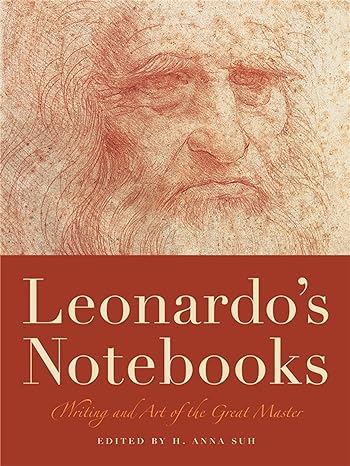
Leonardo Da Vinci and Issac Newton were both consummate note takers. They recorded their thoughts, ideas, and anything else that struck their fancy in innumerable notebooks and loose sheets of paper.

Paper was expensive so they both wrote small and covered every inch of paper with drawings and script.

Newton wrote in Latin, Greek, and English with most subject titles in Latin and the text in Greek. To save space his letters were an eye straining one sixteenth of an inch high. An estimated 4000 pages with around 285,000 words plus drawings of his writings have been found to date.

Leonardo wrote in Tuscan Italian, with the text written in a right to left mirror style which some believe he did because he was left-handed, as, by-the-way so was Newton. 13,000 pages of Leonardo’s notes have been found which is believed to be only about a fifth of the total.

Source: “Isaac Newton” by James Gleick, 2003. “Leonardo’s Notebooks” Edited by H. Anna Suh, 2005. “Leonardo Da Vinci” by Walter Isaacson, 2017. Graphic of da Vinci and Newton AI generated.