On the evening of the 18th of April 1775 Paul Revere galloped through the countryside of Massachusetts to warn the populace that British were coming by water: one if by land, two if by water.
The next day the British, after crossing the Charles River from the Boston side, marched on Concord to try and capture colonial military supplies that had been stored there. The patriots knew of the British plans and moved most of their military equipment elsewhere.
The British had to pass through Lexington as they marched their way to Concord. The first shots between the British and Americans were fired at sunrise at Lexington, signaling the beginning of the Revolutionary War. After a minor skirmish in Lexington the British continued on their way to Concord.
The British marched to Concord with 700 troops and the Americans were eventually able to muster about 3500 militiamen although they only had about 77 at Lexington. During the Battles of Lexington and Concord on that day the British suffered 273 losses and the Americans 95.
Source: History.com and “The Many Rides of Paul Revere” by James Giblin published 2007. Photo of a painting showing Paul Rever’s Midnight Ride by Office of War Information http://www.archives.gov.
Paul L. Maier, born 1930 in St. Louis, author, public speaker, and historian has written twenty-three adult and children, fiction and non-fiction, books about Christianity. He is the son of Walter A. Maier, founder, and speaker of The Lutheran Hour.
He graduated from Harvard and Concordia Seminary in St. Louis with additional studies in Heidelberg, Germany and Basel, Switzerland. He was the Seibert Professor of Ancient History at Western Michigan University until he retired in 2011.
In addition to his definitive translation of “Eusebius: The Church History“, his 1993 “Skeleton in God’s Closet” was a number one best seller in religious fiction, a thriller concerning the Resurrection of Jesus. He also co-wrote with Hank Hanegraaff in 2006 a rebuttal to Dan Brown’s “The Da Vinci Code“: “The Da Vinci Code: Fact or Fiction?“
In addition to writing books Maier has produced six religious documentaries including the 2014 “The Week That Changed the World“, detailing the Holy Week before Jesus’s resurrection, discussing the key personalities, the politics, and the treachery that sealed Christ’s fate.
MaierBibliography-Books and Documentaries:
A Man Spoke, A World Listened: The Story of Walter A. Maier 1963
Pontius Pilate 1968
First Christmas: The True and Unfamiliar Story in Words and Pictures 1971
First Easter: The True and Unfamiliar Story in Words and Pictures 1973
First Christians: Pentecost and the Spread of Christianity 1976
Flames of Rome 1981
The Best of Walter A. Maier 1981 (paperback)
Josephus, The Essential Writings 1988
In Fullness of Time 1991
A Skeleton in God’s Closet 1994
The Very First Christmas 1998
The New Complete Works of Josephus with William Whiston 1999
Eusebius: The Church History 1999
The Very First Easter 2000
More Than a Skeleton 2003
Caspar Schwenckfeld on the Person and Work of Christ: A Study of Schwenckfeldian Theology at Its Core 2004 (paperback)
Martin Luther a Man Who Changed the World 2004
The Da Vinci Code: Fact or Fiction? with Hank Hanegraaf 2006
The Real Story of Creation 2007
The Real Story of the Flood 2008
A Skeleton in Rome 2011
The Constantine Codex 2011
The Genuine Jesus 2021
Christianity: The First Three Centuries (Documentary) 2003
The Odyssey of St. Paul (Documentary) 2003
Jesus: Legend or Lord? (Documentary) 2003
How We Got the Bible (Documentary) 2009
Christianity and the Competition (Documentary) 2010
The Week that Changed the World (Documentary) 2011
Eusebius Biography:
FootnoteA
“May I be an enemy to no one and the friend of what abides eternally. May I never quarrel with those nearest me and be reconciled quickly if I should. May I never plot evil against others, and if anyone plots evil against me, may I escape unharmed and without the need to hurt anyone else.” — Eusebius
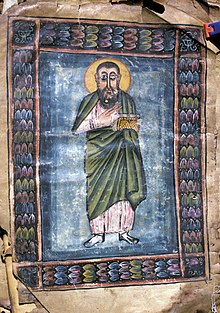
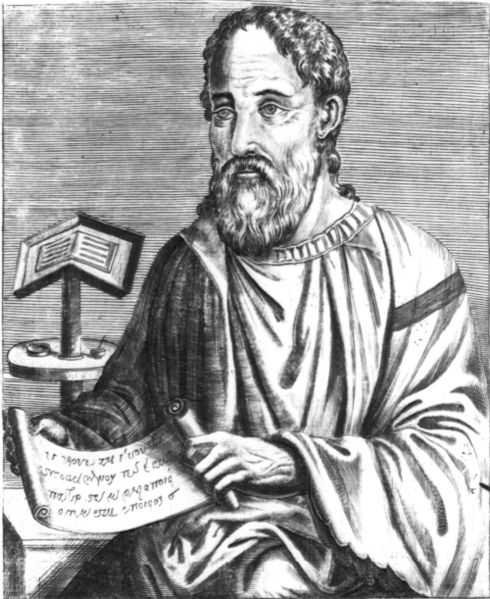
Eusebius of Caesarea, also known as Eusebius Pamphili, was a historian, interpreter of scripture, and Christian apologist, born around 260-265 AD in Caesarea, where he gained prominence in the fourth century, before passing away around 339 AD. His early education was by the learned presbyter, and eventual saint, Pamphilus, the principle religious scholar of his generation. Eusebius became bishop of Caesarea around 314 AD, shortly after Constantine became Roman Emperor, and remained in that position until his death in 339 AD. Eusebius became a significant figure in the theological controversies and politics of his day, becoming a, if not the leading spiritual advisor and confidant to Constantine.
Christians since the time of Christ were persecuted for their faith which came to a ghoulish crescendo under the Diocletian Edicts, also known as “The Edicts Against the Christians” of 303 AD. The edicts dissolved the Christians’ legal rights, compelled them to reject Jesus and to adhere to the local religious customs of paganism and polytheism. The edict saw the destruction of Christian scripture and churches along with the torture and execution of approximately 3500 church leaders and lay people including Eusebius’ teacher Pamphilus. The persecution ended with the Edict of Milian in 313 AD, decreed and signed by Constantine and Licinius proclaiming religious toleration within the empire.
FootnoteB
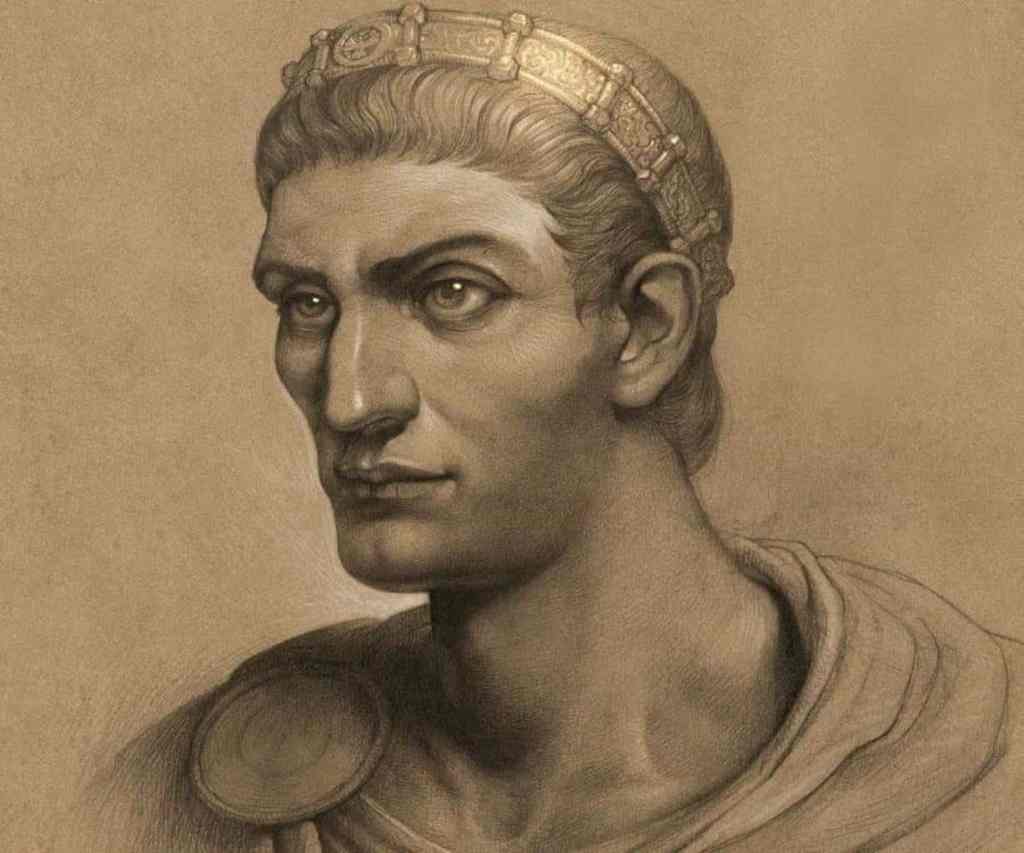
The edict gained the life-long gratitude of Eusebius culminating in the Christian bishop’s panegyric, “Life of Constantine“, in which the author details the emperor’s religious policies as well as a hagiographic account of Constantine’s life. Historians have described their relationship as complex, evolving over time. They have also stated that Eusebius may have been the power behind the throne or, as others have surmised, just an obsequious toady seeking protection from his church enemies. Regardless of the actual relationship it is agreed that Eusebius was Constantine’s spiritual and political advisor.
FootnoteC
Eusebius, through his bond with the emperor, helped structure the relationship between church and state, assisting in the creation of the Constantinian concept of a Christian empire, which had a considerable influence on the development of the early Christian Church and the Roman Empire, along with empires to come.
Constantine, to put down an early rebellion of church leaders, ordered three hundred bishops throughout the empire to meet at the First Council of Nicaea in 325 AD to resolve the controversy of Arianism, a concept that Christ was not divine but was created by God. Much of the Church believed that Christ was of the same substance, “consubstantiality“, as the Father and as such: divine. Eusebius, enjoying the emperor’s favor, sat next to him at the council and offered his own creed stating that Christ was begotten, not made, from the Father. The council, in the end, rejected Arianism and formulated the creed that is recited at every High Catholic Mass to this day. The council also set the time for Easter as the Sunday after the first full moon following the Spring equinox rather than occurring on the Sunday closest to Jewish Passover or on the Jewish Passover even it was not on a Sunday. Which explains why no one knowns when Easter occurs. Constantine was adamant about foregoing any Jewish practices in the honor of Jesus.
Eusebius is referred to as the “Father of Church History” due to his voluminous writings in the field including, as discussed below, his account of the first centuries of Christianity in his “Ecclesiastical History” or “Church History“.
Church History (Ecclesiastical History):
FootnoteD
“Church History ” or “Ecclesiastical History” is the only exigent work that chronicles the development of early Christianity and its Church from the birth of Christ on into the fourth century. Eusebius’s account, written in Koiné Greek, lingua franca for the Mediterranean area from fourth century BC to fourth century AD, provides a chronological narrative, using the succession of Roman Emperors as a linear timeline, of the early Christian Church. Eusebius, with his access to the Theological Library of Caesarea, incorporated many church documents, acts of the martyrs, letters, and extracts from earlier Christian writings into his work, many which no longer exists. The “Church History” covers the succession of Church bishops, the history of Christian teachers especially Origen, the history of the many church heresies and conflicts, and Christianity’s relationships with Romans, pagans, and Jews. Despite accusations that “Church History” is more a defense of Christianity, an apologetic and hagiography, than a history, Eusebius’s work remains a valuable source for understanding early Christian history.
Below are the Maier’s chapter listings, brief descriptions, and Roman Emperors during the historical period covered.
Book I: The Person and Work of Christ: Eusebius on Christ. Augustus to Tiberius.
Book II: The Apostles: Eusebius on the Apostles. Tiberius to Nero.
Book III: Missions and Persecutions:Formation of the New Testament. Galba to Trajan.
Book IV: Bishops, Writings, and Martyrdoms: Defenders and Defamers of the Faith. Trajan to Marcus Aurelius.
Book V: Western Heros, Eastern Heretics: Death at Lyons, Rome, and Alexandria. Marcus Aurelius to Septimius Severus.
Book VI: Origen and Atrocities at Alexandria: Life of Origen. Septimius Severus to Decius.
Book VII: Dionysius and Dissent: Church Life According to Dionysius. Gallus to Diocletian.
Book VIII: The Great Persecution: Edicts Against Christians. Diocletian to Galerius.
Book IX: The Great Deliverance: The End of Persecution? Maximin, Maxentius, and Constantine.
Book X: Constantine and Peace: Eusebius and Constantine. Constantine.
Literary Criticism:
In C.F. Cruse’s 1850 translation of “Ecclesiastical History” he states that, “…Eusebius was not without his beauties, but they were rarely scattered, that we can hardly allow him an eminent rank as a writer.” This is an understatement of the 19th century although it is a polite way to admit Eusebius was incapable of engaging his readers in any form other than pedantic verbosity. This is also an example that Cruse was not immune from obfuscating meaning in his written translations and commentary. His comment above simply stated that Eusebius rarely wrote with elegance and concision. Eusebius’ writing was dense, confusing, dogmatic, and sometimes incomprehensible. Eusebius’ writing compares favorably, snark intended, with Edward Gibbons’ “The Decline and Fall of the Roman Empire” whose erudite, verbose, and opaque style has managed to confuse his readers for two plus centuries now, but for some reason no one seems to mind, except me. Gibbons disliked, immensely, Eusebius’ “Ecclesiastical History” stating that it was full of lies and falsehoods which is an exceedingly difficult position to support due to Eusebius’ excessive use, usually in quotes, of original source material. Gibbons blamed the fall of the Roman Empire on the rise of Christianity, a problematic thesis considering Christianity was the least of the Empires worries. Unchecked immigration and a corrupt governing class were much bigger problems than a few Christians asking to be left alone to worship their God in peace.
Paul L. Maier’s translation of “Church History” is a masterful improvement over C.F. Cruse’s 1850 attempt to make Eusebius readable. Cruse strove to accurately translate Eusebius with the result of burdening his readers with difficult and cluttered phrasing. Maier saves his readers by reducing Eusebius’s lengthy sentences, dense language, and abrupt subject changes to intelligible bites of prose that are readable, understandable, and usable. An example of Maier taking difficult sentences and distilling them into something cogent can be seen in the two example sentences below. The first sentence comes from Loeb’s edition of “Ecclesiastical History“, which is a very faithful rendition of Eusebius’ writing, followed by Maier’s translated version. Loeb: “I have already summarized the material in the chronological tables which I have drawn up, but nevertheless in the present work I have undertaken to give the narrative in full detail.” Maier:“Previously I summarized this material in my Chronicle but in the present work I deal with it in the fullest detail.” The first sentence takes a few readings to comprehend the meaning. Maier allows for instant comprehension.
“Ecclesiastical History” or “Church History” is an important work in understanding the beginnings of Christianity and the governing hierarchy that was built up over the centuries. This is not a long book, less than four hundred pages, but it does take dedication to the task of reading and understanding it. In the end it is worth the effort as a little history is always useful if not enlightening.
References and Readings:
Eusebius. By Allan Miller. Wikipedia. 2001 (2024 Update)
David Wootton, age 71, is the Anniversary Professor (a named professor in the British system is equivalent to a full professor in the American system…I believe) of History at the University of York in England. His work ranges from the history of the individual to the wider-ranging histories, and philosophies of ideas that shaped our world. His published interests concentrate on the Renaissance but stretch back to the Greeks and forward to the embryonic American experiment. He is an old-school historian with his scholarship supported by the evidence available coupled with the existing mores of the times. His selection of topics that I have read or perused suggests a thorough dearth of confidence in past historical interpretations and a jaundiced view of present sense and sensibilities. Or more succinctly and in his own words, “History is always about a particular time, a particular place; it is always about groups more than it is about individuals; it is always the history of somewhere.” and if I may so boldly add, it is always the history of (some)time.
Wootton’s biography of Paolo Sarpi, a contemporary and patron of Galileo, likely provided, albeit 27 years later, the impetus and scholarship for Wootton publishing his second biography in 2006 on that aforementioned watcher of the skies. Sarpi, a devout Copernican and a supposedly not so devout Catholic supported Galileo’s heliocentric theories and shielded him, for a time, from his Roman inquisitors. Parenthetically, Wootton in his book on Galileo almost apologizes for writing biographies mainly because his peers look down on the genre, a sentiment I used to harbor but I now appreciate the category because they provide the who to the what, where, and when.
Bad Medicine, Wootton’s second book, postulates that doctors have dispensed more harm than good, beginning with Hippocrates in the fifth century B.C and continuing through to the present day. Covid or the Wuhan Flu pandemic will not provide the medical profession with the needed catharsis to dispel Wootton’s conjecture.
In The Invention of Science Wootton walks us through the birth of the scientific method starting with a supernova shining in the Renaissance night sky of the 1500s and culminating with Newton’s discovery that visible light contains a plethora, or at least 7 wavelengths and hues in the early 1700s.
In Power, Pleasure, and Profit, Wootton expands on the concept of selfishness driving all human progress. A concept, although anathema to all Christian and Western ethics and morality, was espoused by Machiavelli’s The Prince, published in the early 1500s and Mandeville’s The Fable of the Bees, also known as The Grumbling Hive, first published in 1705.
Wootton’s Besterman Lecture: Adam Smith, Poverty, and Famine, we find out that charity is not a word in Smith’s vocabulary. Academics and maybe the rest us can really get into the weeds.
And finally, before I get into Galileo, The BBC devoted 40 minutes interviewing four guests, Wootton being one of them, on The Fable of the Bees, written initially as a poem, as stated above, by Bernard Mandeville and expanded into a book length dissertation sub-titled Private Vices, Publick Benefits which proposes that personal pleasure and greed drive human progress not altruism or Christian charity.
Galileo, born in the small city of Pisa, Italy in 1564, lived to the astronomical age of 77, some 25 years beyond the average lifespan for that era. He spent his final years blind, serving a life sentence, originally in a papal prison but eventually the prison was exchanged for confinement to his home located in a small village outside of Florence. His crime was for authoring a book defending the heliocentric model of the universe as theorized by Copernicus in 1543 rather than promoting the geocentric model as demanded by the Catholic Church.
Galileo was a tinkerer and thinker more akin to our modern definition of an engineer rather than a scientist, taking innovative ideas and novel inventions to the next level. He didn’t invent the telescope, Hans Lippershay of the Netherlands in 1608 did, but Galileo’s design quickly became the standard and he eventually increased Lippershay’s 3x magnification to 23-30x. His leaden tube with a convex lens in one end and concave lens in the other end discovered the mountains and plains of the moon, the moons of Jupiter, the rings of Saturn, the phases of Venus, possibly the planet Neptune, individual stars of the Milky Way, and sunspots. Today we can purchase a 30x set of binoculars for less than $100 which we use to peep through our neighbors’ windows and watch songbirds in the meadow across the street. All his discoveries aided in the proof of a heliocentric universe, his universe being mostly what we would refer to today as the solar system. Our discoveries prove that our neighbors are weird.
Galileo was a fascinating man and genus who introduced the world to a new way of advancing our knowledge of the world and the universe. His tinkering and thinking were the rudimentary beginnings of what we now call the scientific method–observe, hypothesize, test, repeat.
His proof of Copernicus’ theory was mostly correct. The Church’s defense of the geocentric model wasn’t. The Church admitted their error in 1992.
Homo erectus, an upright fellow, showed up during the Pleistocene about 2 million years ago and quickly dispersed throughout Asia and Africa even though his starting point is ambiguous. After mucking about the tropics, the lack of clothes makes it difficult to take skiing vacations in the Alps, decided to take on a bigger brain and chin with less eye brow protuberance, and developed into our mum: Homo sapiens, a couple of hundred thousand years ago. Some say we came from east Africa, others say east Asia but regardless of our origins we showed up in what is now Israel around 100,000 years ago and our quest for ever larger cell phone screens and civilized table manners had begun.
Agriculture, originating about the 12th century B.C., traces its roots back to the fertile crescent; beginning at the Jordan River progressing north and northeast to the headwaters of the Euphrates and Tigris Rivers and then back down south to the rivers’ marshlands, eventually pouring into the Persian Gulf. By 9500 B.C. man was cultivating wheat, flax, rye, peas, and other crops that brokered the way for cities, government, laws, and taxes; otherwise known as civilization.
The earliest civilizations are conveniently timed to the discovery of bronze around 2500 B.C. Bronze tools and weapons, an amalgam of copper and tin, galvanized the rise of city-states and empires until the tin ran out in 1200 B.C., then the Dark Ages set in. Virtually every major city in the eastern Mediterranean was sacked and burned during the first 50 years of the advent of these interesting times, many to disappear from the map forever. The technology to smelt carbon steel brought a renewal of civilization during the Iron Age and the cementing of the Assyrian Empire–for awhile.
By the end of the Iron Age the bright lights of civilization have shifted from Mesopotamia to the northern shores of the Mediterranean; first settling into the Aegean peninsula around the 8th century B.C. before migrating to Rome in the 3rd century B.C. By the 3rd century A.D. Rome was a spent force and the remnants of the empire shifted back to the eastern Mediterranean in Constantinople.
Christianity’s rise followed Rome’s decline through the Mediterranean. The rapid spread of Christianity is somewhat of enigma, as are other philosophies or religions such as Buddhism and Islam, but the prevailing thoughts are that church improved the lives of its followers and promised a way to life every after.
The authors, Drs Winks and Mattern-Parkes, professors of history at Yale and the University of Georgia respectively, have written a short history of the region that engrosses and enlightens without preaching. If interested in the history of the Mediterranean from the Stone Age to Islam, this is quick read and is eminently readable.
The Earth has experienced at least 6 major episodes of glaciation in the past. Three in the Pre-Cambrian, which is a time older than 0.542 billion years (Ga) and three in Phanerozoic, a time younger than 0.542 Ga. All appear to have had a profound effect on life on Earth; not so much the beginning of any particular ice age but what occurred when the glaciers melted. The first glaciation, Pongola, occurred from approximately 2.9 to 2.75 Ga. The end of this glacial period saw a build up of oxygen in the oceans until it reached critical levels and began charging the atmosphere. Around 2.45 Ga, oxygen levels reached levels sufficient to cause cooling of the Earth, by removing greenhouse gases, and thus starting the second glacial period, the Huronian from 2.4 to 2.1 Ga. Shortly before or after the glaciers melted, around 2.2 to 1.6 Ga, eukaryotes, cells with a nucleus, appeared. Eukaryotes are everywhere, you, your cat, your flowering plants that your cat eats, the spiders in the corner of your bedroom that your cat will not eat, everywhere. Next up is the Cryogenian, a glacial period in Earth’s history occurring from 0.720 to 0.635 Ga. Shortly after they melted, the ozone layer was created, a cloak desperately needed to protect life from the harmful rays of the sun. The Cambrian Explosion of life followed the ozone creation. Moving on to the next glacial, the Andean-Saharan, occurring from 0.450 to 0.420 Ga, predominately in the Silurian Period but also sucking up some of its predecessor’s, the Ordovician, time. This glaciation is followed by significant accumulation of life, plants and animals, moving beyond strictly marine habitats to occupy solid land and Amazon distribution centers. The Karoo Ice Age, from 0.360 to 0.260 Ga, is followed by the largest extinction event this planet has ever seen, occurring at the end of the Permian and the beginning of the Triassic. At this point glacial melting does not appear to be the causative event for the extinctions but may have provided a nudge. The final event, known as the Quaternary Glaciation, started 2.58 million years ago and is still active today. Currently we are within what is called an inter-glacial period. These inter-glacials are preceded and followed by glaciers marching towards and receding from lower latitudes. Note to self and you: these glacial periods last much, much, much longer than 2.58 million years. With the exception of Antarctica and Greenland, the current set of glaciers reached their maximum extent about 20-25,000 years ago and have slowly retreated, essentially disappearing by 9600 years ago. Around 25,000 years ago, human populations started to increase. By 9600 years ago his technological progress exploded.
Dr. Steven Mithen, the author of After the Ice, attempts to record our history from when the ice sheets began their retreat to the time the Sumerians first developed a system of writing 5000 years ago, a period partially covered by what we now call with the broad brushed term; pre-history. Dr. Mithen primarily uses an archeologist’s box of tools to decipher ancient Homo sapiens sapiens style of living, their diet, housing, religion, culture; their existence and growth as a species, all from a time when our ancestors were not consciously plastering their material world with sticky notes.
After the Ice is a global tour of archeological finds and their interpretations, from our hunter-gather roots in the Pleistocene to a more sedentary and cosmopolitan life as a farmer, artist, city-dweller; parsing one continent at a time. There is little in the way of original research in this book, more a compendium of secondary source material, known sites, and the results obtained from them. Exactly what I was looking for when I picked up this book to read.
The author covers most of the major sites and imparts to us what all the shell debris, bone carvings, and flint scrapings mean. He does this beautifully and when confronted with differing possible interpretations, he carefully constructs a point-counterpoint argument to help resolve the issues. His discussion and synopsis of the initially controversial, Monte Verde site in Chile, which ultimately pushed humanity’s origins in the Americas back about 2500 years, from Clovis times to 14,500 years ago, was expertly relayed to the reader, leaving little room for alternate meanings: a real education one may add.
This book and author excel when relating the artifacts found and their possible meanings and its thoroughly fascinating stuff, but he manages to turn the affair into an awful, muddled mess of narrative excess by introducing a time-traveling archaeologist, John Lubbock, to add color to the play-by-play. John Lubbock, who actually was an eminent archeologist in the late 1800s, observes humans at various times and places in our pre-history, providing second person comments on the existing state of humanity and the world. It’s all a bit much and very distracting, annoying even. An all too common example; meaning to give an example, I just opened the book, put my finger down and copied whatever was there:
Lubbock left the cave at Lukenya Hill with a hunting party late one afternoon. As they walked, spider’s webs within the grass were illuminated by the setting sun, momentarily exposed in a narrow band between clouds and distant mountains.
Keep in mind this happened 1000s of years before writing was invented so this is little more than pure unadulterated fiction. To add authenticity and license to his fiction he occasionally appends a footnote. And it’s liberally interspersed throughout the book amounting to equal parts Lubbock fantasy to Mithen facts. Take out Lubbock and the book goes from a blathering 600 pages of confusion to 300 pages of something that may be worth reading. Mithen just can’t seem to make up his mind, does he want to write a factual history or historical fiction. Actually he did make up his mind, he decided to do both.
I initially tried to skim Lubbock’s narrative and just stick with Mithen’s discussion but the author so intertwines them both that bypassing one makes nonsense of the other. This could have, should have been a great book dealing with the world’s archeological quest to unravel our past. There are moments in the book where Mithen brings his and his colleagues’ science to life but in the end it just too dang hard to enjoy the meat when he coats the entire thing in Lubbock’s wispy, sticky cotton candy.
I am once again on the lookout for a decent account of humanity’s pre-history.
Little Big Man (Theaters – December 1970; Streaming – April 2003) Rated: PG — Runtime: 139 minutes
Genre: Adventure – Comedy – Satire – Western
els: 6.5/10
IMDB: 7.6/10
Amazon: 4.5/5 stars
Rotten Tomatoes Critics: 7.9/10
Rotten Tomatoes Audience: 3.8/5
Metacritic Metascore: 63/100
Metacritic User Score: 8.0/10
Awards: NA
Directed by: Arthur Penn
Written by: Calder Willingham (screenplay), Thomas Berger (book)
Music by: John Hammond
Cast: Dustin Hoffman, Faye Dunaway, Chief Dan George, Richard Mulligan
Film Locations: Calgary, Morely, Alberta, Canada; Billings, Crow Indian Reservation, Hardin, Lame Deer, Little Big Horn Battlefield, Nevada City, Virginia City, Montana – Agoura Hills, Los Angeles, Thousand Oaks, California, US
Budget: $15,000,000
Worldwide Box Office: $31,600,000
An ancient and time-worn Jack Crabb (Hoffman), spending his final days in a nursing home, relates his incongruous life of farce and fate to an interested historian. At the age of 10 a Pawnee raiding party attacks his family and kills his parents. Later a Cheyenne brave finds him and his sister hiding in their destroyed wagon and takes them back to his tribe. The tribe’s chief, Old Lodge Skins (Chief Dan George) raises the boy and thus begins a series of improbable events that punctuate Jack’s long and full life. Indian on Indian battles, white on red battles, sexually repressed preacher’s wife battles, gunfighter playing, snake oil selling, drunken despondency; all in a day in the life of a western meme.
Arthur Penn creates a movie of contrasts that is labeled revisionist history but is no more than a comedy situated in the late 19th century American west, incorporating events of historical interest but not necessarily accurate or correct. The contrasts are established through the lives of the story’s actors, their happenstance encounters and experiences highlighting life’s hypocrisy and charades. Jack as a natural gunfighter that cannot stomach killing, a preacher’s wife that seeks pleasure over salvation, a narcissistic general searching for fame through folly. A tragedy’s lessons told through tongue-in-cheek schtick. An effective delivery of farce that unfortunately passed as truth for millions of viewers.
Hoffman takes top billing as lead actor and he delivers a masterful performance both on-screen and as the voice-over narrator, but it is Chief Dan George who shines, turning an ok script into a wonderful exhibition of cheerful existence in the face of our inhumanity. George was nominated for an Academy Award but unfortunately lost out to John Mills in the totally forgettable Ryan’s Daughter. Richard Mulligan, as Custer, turns in a performance that is remarkable in its absurdity, an under-dog role elevated to a tour-de-force of parody. Faye Dunaway’s hilarious representation as a sexually needy whore and preacher’s wife sets the standard for urgency over love, a role reprised brilliantly by Madeline Kahn as Lili von Shtupp in the 1974 romp, Blazing Saddles.
Little Big Man is a fun chuckle of a movie that should not be confused for history but as a satire of the past. A movie encompassing a large swath of all western tales encapsulated into a few hours of humor and jest.
Godiva is may favorite chocolate. When I have Godiva chocolates in the house I worry about gaining weight but I usually don’t because the rest of the family always, and I mean always, beats me to the box of goodies and gobbles them up before I can over indulge. I know I should hide them, keep them for myself, deny the pleasure to others but that would just be curmudgeonly selfish. I think I can do that.
The art, biography, and history of the Drap family and their boundless love for all things chocolate is contained within the covers of this short, but lavishly illustrated book. The pages of this book bring to life the Belgium family’s chocolate odyssey, beginning in 1926, as they continually generate smiles of gratitude and gastronomic satisfaction for over 90-years. Laid out in opposing columns of English and French, this album of confectionary delight brings to the reader Godiva’s inspiration, their style, and their passion for making everything chocolate. Inspiration from the fashion houses of Paris and Brussels. Style from the Belgium arts university, La Cambre and artists of renown such as Oli-B. Passion for chocolate from the leading Chef’s and chocolatiers of Belgium.
This is a visually captivating book bringing to your eyes what Godiva’s chocolates bring to your palate: sensual, divine pleasure. The book will only take a few leisurely hours of your time, but be forewarned, your desire for Godiva truffles will be magnified a hundred fold.
Attempting to describe 12-15,000 years, since the big ice fields melted, of human endeavors in 200 pages and 50 topics would seem presumptuous and futile, and you would be right, but one has to start somewhere and the first steps can and should be small but decisive. One can quibble about the exact 50 topics, and I will do just that in a bit, but the author, Ian Crofton, performs the task with aplomb, and provides the maximum amount of useful information possible given the limiting format.
This book is a quick and fun read for both those without a broad or deep introduction to human history or those that just want to refresh their memory on once familiar, but long forgotten topics. Even if you are familiar with all the topics in the book there will be a sufficient amount of new informational tidbits to make it worth your time. For myself, as one example, I found the observation that our ancestral hunter-gather cousins versus the first cereal grain farmers, were healthier, due mainly to their higher protein intake from a meat rich diet, was new and interesting.
Not to detract from the topics that the author has chosen, his are all defendable, but for myself I probably would have included 5 different topics devoted to: the Iron Age, Israelites of the 12th century BC, 1st century Christianity, Sumerians development of an alphabet in 300 BC coupled with Guttenberg’s first printing press in the 15th century AD, 18th century BC Babylonian Hammurabi’s, and 7th century BC Greek Draco’s legal codifications, and finally the advent of computers in the 20th century and beyond. Adding 5 topics requires that 5 be removed. I would likely leave out: Empires and Kingdoms of Africa, The Bubonic Plague, the Vietnam War, integral to the late 20th century US, but will likely be a footnote on communism in the future, and lastly, the Arab-Israeli conflict and the post 9-11 topics, at a minimum, combined into a topic on 21st century divisions in civilization and culture, as if that were something new. On further thought, maybe just leave those last two topics out completely, mainly because they are too fresh to decide their seminality to our future development as a species.
That leaves our list one shy of 50. What topic(s) would you add?
On 5 December 1985 Kip Forbes, son of Malcolm Forbes, acting as his father’s agent, sat in Christie’s London auction room waiting to bid on a 1787 bottle of Chateau Lafite, supposedly owned by Thomas Jefferson, the third president of the U.S. Forbes had intended to bid no more than £5000 for the bottle but when the bidding ended and the dust settled, he had set the price record for a single bottle of wine; tendering £105,000 or about $156,000 at the then current exchange rates.
Almost from the beginning the wine’s authenticity was questioned. The place it was discovered and how many bottles were found at the site has never been fully or satisfactorily revealed. Students of Jefferson could not find any conclusive proof that the former president ever possessed this wine; important because Jefferson catalogued and inventoried everything. Dating techniques were unable to assign a definitive date except give it a range of somewhere between 50 to 200 years old. The engraving on the bottle was certified old, and new by different experts. The wine, when opened, actually a different bottle from the same Jeffersonian lot, was delicious; a very rare occurrence for a 200-year-old bottle of red wine.
The Billionaire’s Vinegar is the story of this suspect bottle of wine, and the exclusive club of people who are connected with it. Benjamin Wallace tells this tale of mystery and intrigue through the use of short vignettes and biographies of those involved, much as if he were writing a series of magazine articles; not surprising since that is what he does for a living: write magazine articles. He presents the evidence that exists in excruciating detail, but it is not enough to truly settle the debate, although he convincingly posits that the whole affair was a con.
When Willie Sutton was asked why he robbed banks he replied, supposedly, “because that’s where the money is”. The rare and old wine market is an expensive hobby, open only to those whose pockets are deep and full. Always an attraction for those dissatisfied with their shallow and empty pockets.
American grade schoolers are taught, are told, that Paul Revere, in the cold, wee hours of 19 April 1775, galloped fiercely through the countryside west of Boston, taking the back roads connecting the small hamlets of Lexington and Concord, yelling at the top of his lungs, “The British are coming”; a story that has passed down through the generations since the Revolutionary War. Dramatic in the telling, yes, correct, not so much. The truth of what happened that night is no less dramatic, extraordinarily dramatic in fact, considering that the American rebels went up against the greatest army and navy on the planet during the latter half of the 18th century, and triumphed.
Warning the Boston countryside of the imminent arrival of British Regulars was not a spontaneous reaction, by the patriot Paul Revere, but a well planned counteraction, with the main details worked out well in advance of the Redcoats march towards Lexington and Concord. Alerted by a Boston stable boy, who revealed that the British officers, in the late afternoon of 18 April 1775, were preparing their horses for a march; the pre-arranged lamp signal, one if by land, two if by sea, was lit in the tall steeple of Christ Church, tipping-off the rebels that the British were going to take the shorter water route to Concord. This set off a cascading series of events that put into motion upwards to sixty patriots charging through the Boston countryside, alerting and assembling the Minuteman army, warning John Hancock and John Adams of their imminent arrest and hiding rebel assets.
The years preceding the Declaration of Independence on 4 July 1776 saw a significant percentage of self-government seeking colonists locked in a high stakes match of wills with King George III and the British, specifically, the Massachusetts headquartered, Lieutenant-General Thomas Gage, chief of British forces in America and as such the most powerful man in the colonies: General Gage, likely understanding the game being played, resisted brandishing the sword to the very end, when events spiraled out of his control forever in the spring of 1775.
The independence minded colonists, the Whigs, mainly operating from the greater Boston area, resisting the British rule at every turn, prodding them to be the first to use excessive violence against the colonists, to draw enough blood and take sufficient lives that it would light the fuse of war. The Boston Massacre of 5 March 1970 almost lit that fuse, but the Whigs were not ready for war, they lacked organization, men, materials and most important of all, a plurality of support from the population. John Hancock, Sam Adams and Paul Revere tamped down the populace’s anger after this event, dampened the fuse of war to await a more felicitous time and place: Concord and Lexington, 19 April 1775.
David Hackett Fischer, currently University Professor and Earl Warren Professor of History at Brandeis University, has written a meticulously researched account of the days leading up to the battles of Concord and Lexington, and the subsequent battle for the hearts and minds of the colonists and British alike; delving into American and British military depositions, pension applications, claims of damages, Thomas Gage, Paul Revere, and other participants’ personal papers, American and British government documents, newspapers, terrain studies, Boston association members, local histories, histories of histories, family trees, weather, tides, phases of the moon; a seemingly inexhaustible list of sources that the author combines into an enjoyable, detailed narrative, in places a bit slow, but always interesting, of the early spring days of 1775 that laid the foundation for the United States of America.




 Runtime: 139 minutes
 Illustrated London News Limited, © 2016.

 elsToday