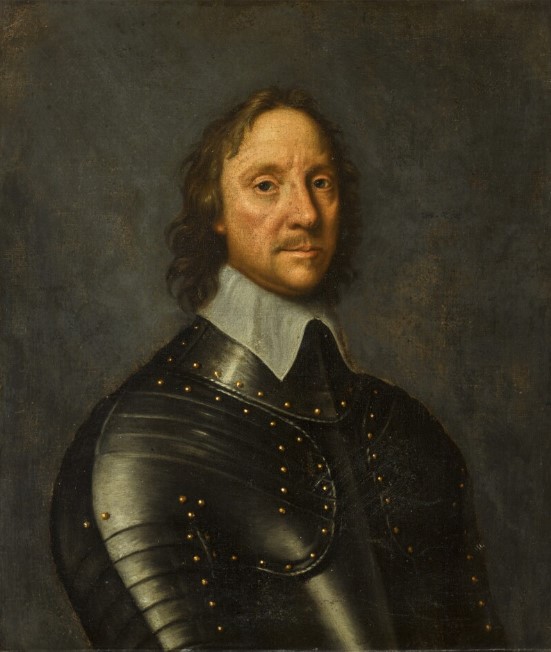
Choose

Movies such as Pakula’s 1982 “Sophie’s Choice” and Eastwood’s 2024 “Juror #2” depict gut-wrenching moral dilemmas, where every decision is flawed and ethically unbearable.

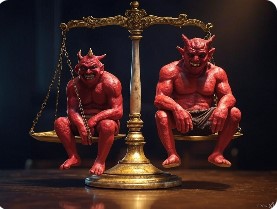
Moral dilemmas arise when all available options are objectionable, involving transgressions against moral principles. Their resolution often revolves around the “Principle of the Lesser of Two Evils,” where one chooses the least harmful option.

In 1944, President Roosevelt’s health was rapidly deteriorating, and many in the Democratic Party believed he wouldn’t finish his term if re-elected. Despite this, Roosevelt ran for a fourth term but was pressured to find a different running mate with better economic and leadership skills. Vice President Henry Wallace was replaced by Harry Truman, a senator from Missouri, on the ticket.

Roosevelt won his fourth term but passed away less than three months into it, making Truman the 33rd President on 12 April 1945. Within four months, Truman faced the dilemma of dropping atomic bombs on Japan to possibly end World War II or continuing a more conventional war.

Although there were no initial estimates of fatalities before the bombings, aftermath estimates suggested that up to a quarter of a million lives were lost at Nagasaki and Hiroshima. In contrast, continuing the war conventionally was estimated to result in 6 to 11 million additional fatalities.

Truman chose the lesser of two evils: sacrificing a quarter of a million souls to save millions.

Source: Lesser Evil Principle by Dougherty, 2020, Encyclopedia of Business and Professional Ethics. Graphic: Grok Generated.

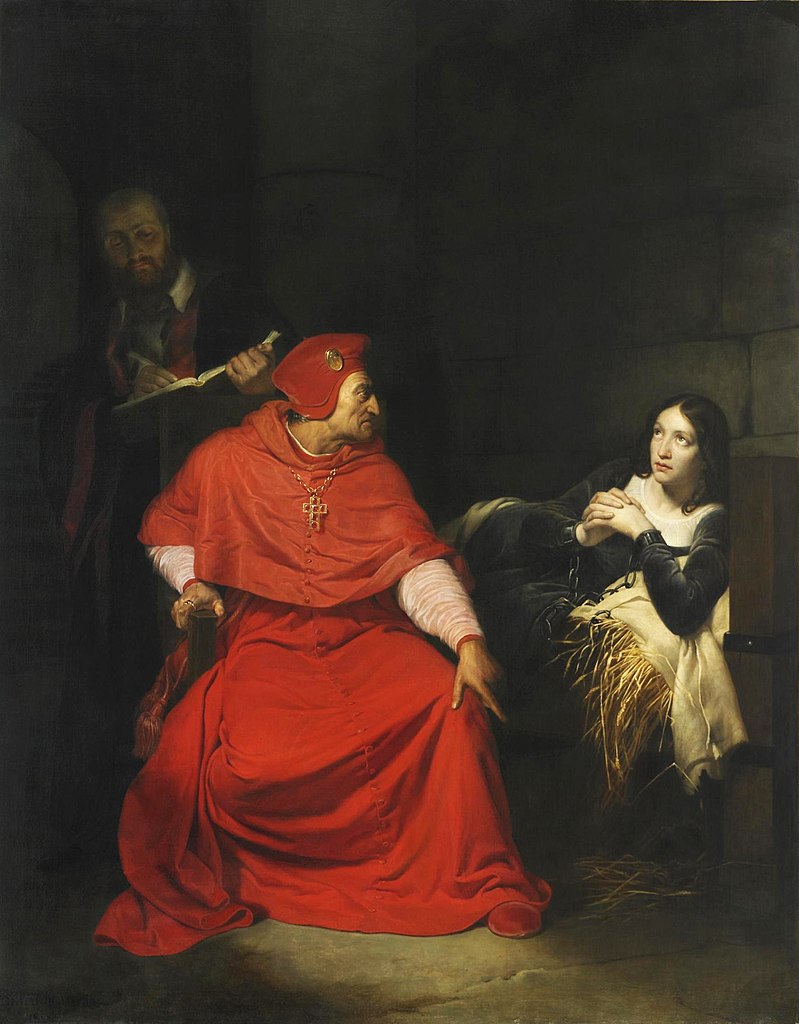
Joan of Arc’s Trial

The trial of Joan of Arc began almost 600 years ago, on 9 January 1431 in Rouen, France. She was captured by allies of the British during the siege of Compiègne in 1430 and tried for heresy. Her interrogation and trial began on 21 February 1431 and concluded on 24 May 1431.

Joan of Arc, also known as the Maid of Orléans, played a crucial role in liberating France from British control during the Hundred Years’ War. For her efforts the British burned her at the stake on 30 May 1431.

Joan of Arc was proclaimed a saint by Pope Benedict XV in 1920, who stated that her life was “proof of the existence of God.” She is the patroness saint of France and women.

Father Chatillon, rector of the Orléans Cathedral, where Joan of Arc attended Mass on 2 May 1429 while in the city to repel the British, commented that she “was a girl who was committed at 17 and died at 19, after having seen her mission through by liberating Orléans and by allowing Dauphin Charles VII to be king of France.”

Source: Tadie, NCR, 2020. Graphic: St. Joan of Arc is Interrogated by The Cardinal of Winchester in her Prison, Paul Delaroche, 1824, Public Domain.

Four Women of the Renaissance

Leonardo da Vinci, who died on May 2, 1519 at the age of 67, began around 40 paintings in his lifetime, of which fewer than 20 survive. Of those that survive, only about 15 are believed to be complete.

The artist painted only four known portraits of women:

  • Ginevra de’ Benci at the National Gallery of Art in Washington, D.C.
  • La Belle Ferronnière at the Louvre Museum in Paris.
  • Mona Lisa also at the Louvre Museum in Paris.
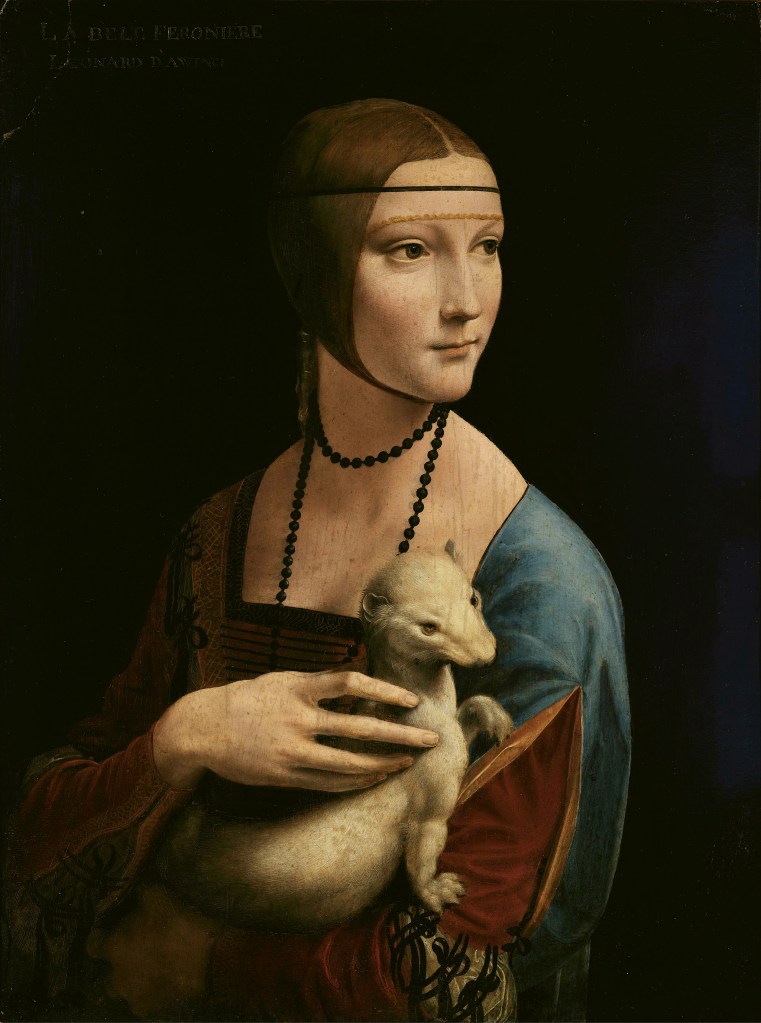
  • Cecilia Gallerani (known as “Lady with an Ermine“) at the Czartoryski Museum in Krakow, Poland.

Cecilia Gallerani was the mistress of Ludovico Sforza, Duke of Milan, and was painted while da Vinci worked in the Duke’s court in Milan, Italy. The Polish government paid 100 million Euros for the painting in 2016.

Trivia: Many believe that Leonardo da Vinci continuously reworked the Mona Lisa throughout his life; it was still in his possession when he died. The fact that the Mona Lisa does not have eyebrows suggests, to me, that the painting was still unfinished. The absence of eyebrows in the Mona Lisa has led to other theories as well:

  • Others argue that da Vinci might have intentionally left them out for artistic reasons.
  • There’s also the theory that the eyebrows might have faded over time due to the varnish or other conservation issues.

Source: Leonardo da Vinci by Walter Isaacson, 2017. Graphic: Lady with and Ermine by da Vinci, public domain.

Sarcasm Slightly Cold

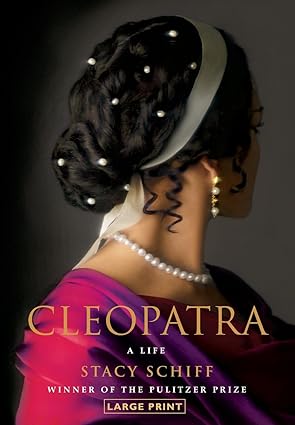
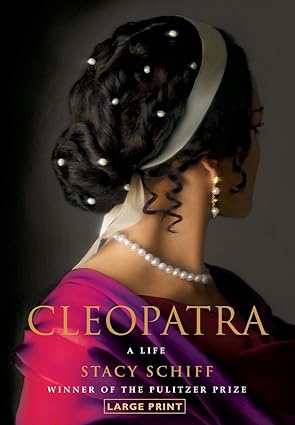
Stacy Schiff, biographer of Cleopatra VII and history of Egypt and Rome during her reign as Egypt’s queen is an entertaining writer with a sardonic sense of humor.

Wit of Schiff I: Cleopatra and Mark Anthony, after a three-year separation, reunited in 37 BC in Antioch. They rekindle their relationship, Cleopatra becomes pregnant, and they part again in early 36 BC, he for a military campaign in Parthia and she to go south to meet with Herod in Jerusalem.

In the course of the visit she met Herod’s fractious extended family…Herod had the misfortune to share an address with several implacable enemies, first among them his contemptuous, highborn mother-in-law, Alexandra…his insinuating mother; a grievance-loving, overly loyal sister; and Mariamme, the cool, exceptionally beautiful wife…who to his frustration, somehow could never get past the fact that Herod had murdered half her family.

Wit of Schiff II: Mark Anthony after conquering Armenia, which included parts of modern Turkey and Azerbaijan, in 34 BC, “returned to Alexandria in triumph, taking with him not only the collected treasure of Armenia, but its King, his wife, their children, and the provincial governors. Out of deference to their rank, he bound the royal family in chains of gold.

Trivia: No good, confirmed likenesses of either Cleopatra or Herod exist. Recently a bust from the Egyptian Taposiris Magna temple near Alexandria has been recovered which the archaeologist, Kathleen Martinez claims is a likeness of Cleopatra. Other experts disagree.

Source: Cleopatra: A Life by Stacy Shiff, 2010. Marble Bust Found, Gadgets 360, 2024.

The Last Queen

Cleopatra VII, descendant of Alexander the Great’s general Ptolemy Soter, inheriting the Egyptian Empire upon Alexander’s death, was the last pharaoh or queen of Egypt. Upon her death in 30 B.C., less than two weeks after the death of her lover, Mark Antony, she took her own life, likely with a fast-acting poison rather than the bite of an asp. This cleared the way for Augustus, the founder of the Roman Empire, to incorporate Egypt into the Roman realm.

In Cleopatra: A Life, Stacy Schiff weaves an engrossing tale of the queen’s ruthless ambition to restore the Egyptian Empire to its former glory. Though Cleopatra’s life lasted less than 40 years, she brought Rome into her world, achieving greatness that ultimately led to her downfall.

Cleopatra wanted greatness and found the means to attain it. Schiff states in her book that “Cleopatra appears to have had sex with only two men. They happen, however, to have been Julius Caesar and Mark Antony, among the most prominent Romans of the day. …Cleopatra had a child with Caesar and after his murder — three more with his protégé…The two [Cleopatra and Anthony] would together attempt to forge a new empire, in an alliance that spelled their ends.

Source: Cleopatra: A Life by Stacy Shiff, 2010.

Free Trade

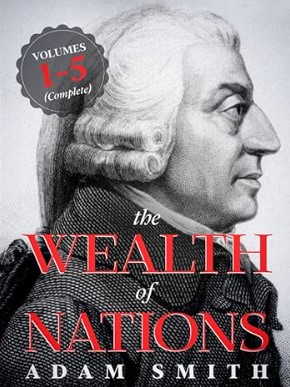
Adam Smith, author of Wealth of Nations, advocated free trade if a country’s savings were increasing, and it produced more than it consumed. He qualified his pro-free trade sentiments by declaring that a country with a low savings rate, producing less than it consumes, and experiencing consistent negative trade balances with its competitors is potentially in for some hard reckoning, including:

  1. Reliance on Foreign Capital: With low savings, a country will have to resort to financing large negative trade balances with foreign lenders, leading to an unhealthy dependency on those countries.
  2. Currency Depreciation: Persistent trade deficits can put downward pressure on the country’s currency value and are potentially inflationary.
  3. Vulnerability to External Shocks: A country with low savings and a negative trade balance is more vulnerable to external economic shocks, leading to economic instability.
  4. Investment Constraints: Limited domestic savings may constrain the country’s ability to invest in infrastructure, education, and other critical areas that support long-term economic growth.

Source: Wealth of Nations by Adam Smith.

Social Contract

Thomas Hobbes, a 17th-century philosopher and author of Leviathan, argued that humans are driven by self-interest and the instinct for survival, which can be inherently self-destructive. To curtail our tendency to drift towards chaos and early death, he proposed his social contract theory, where we sacrifice some freedoms to the state in exchange for safety, peace, and security.

Hobbes recognized that surrendering freedoms may lead to tyranny. He said that if the state becomes oppressive, the social contract is broken, and citizens are no longer bound to submit to its authority. He argued that the contract is rational and valid only as long as the benefits outweigh the costs.

Thomas Jefferson used a similar argument in the Declaration of Independence, stating: “That whenever any Form of Government becomes destructive of these ends, it is the Right of the People to alter or to abolish it, and to institute new Government, laying its foundation on such principles, and organizing its powers in such form, as to them shall seem most likely to effect their Safety and Happiness.

Source: Hobbes’s Moral and Political Philosophy, SEP 2022. Graphic: AI generated.

The Natural State of Man

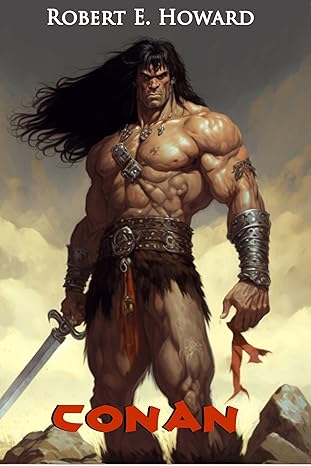
Robert Howard, 20th-century pulp fiction author and creator of Conan the Barbarian, believed that “barbarianism is the natural state of mankind. Civilization is unnatural. It is the whim of circumstance.”

Thomas Hobbes, 17th-century English philosopher best known for his social contract theory, attempted to justify that the authority of the state superseded the rights of man, believing that the natural state of man was war, that life was “solitary, poor, nasty, brutish, and short,” thus necessitating some higher authority to calm and tame the natural instincts of man.

Michael Huemer, professor of philosophy at UC Boulder, argues that “The current state of American society is a historical fluke, marked by extraordinarily low levels of exploitation, oppression, and injustice… The key sources of this happy state include such institutions as democracy, free markets, and modern science.”

I would add free speech coupled with property rights to the mix. Modern science is a double-edged sword that in the end, I would argue, is more a societal neutral force rather than a force against our true nature.

Huemer further maintains that before we tear down these stabilizing institutions, we should heed the advice of the Hippocratic Oath and first do no harm, stating, “If we undermine our current norms and institutions, the most likely result is not that we will be swept into a paradise… [but] the most likely result is that we will revert to something closer to the natural state of human beings.”

Huemer concludes with the observation that the 20th-century experiment called communism swept away all existing culture, norms, and institutions, resulting in 100 million deaths.

Source: Oxford Reference. Progressive Myths by M. Huemer, 2024. Graphic: Conan, Kindle Book Cover, Amazon.

FDR Wins 4th Term

On Tuesday, 7 November 1944, Franklin D. Roosevelt won his fourth term as President of the United States, defeating Republican Thomas E. Dewey of New York.

Few states in the 1944 election had a primary system in place to vote for party nominees, instead choosing delegates to the national nominating convention through party caucuses or state conventions. The real job of selecting the party’s nominees occurred at the national conventions with little to no input from the voting public.

Democrats, concerned that Roosevelt might not live to complete his term, replaced the sitting left-wing and economically illiterate Vice President Henry A. Wallace with the Missouri Senator Harry S. Truman.

Roosevelt died on 12 April 1945, less than three months into his new term, with Truman assuming the presidency that same day.

Truman ordered the dropping of the first atomic bomb on Hiroshima on August 6, 1945, less than six months into his presidency, proving that holding the highest office in the land is fraught with uncertainty and requires unimaginable determination and strength.

Graphic: Electoral College Results for the 1944 Presidential Election.

Rights of the Free

Thomas Paine, American Founding Father, philosopher, and inventor authored some of the most influential and inspirational works supporting the American Revolution: The American Crisis and Common Sense. He also wrote a rousing defense of the 1789 French Revolution: The Rights of Man.

Paine’s thesis in “The Rights of Man” is that human rights are natural rights, inalienable, and not subject to the caprices of the governing class. They cannot be repealed. He asserts that men are born free and equal, and the government’s purpose is to preserve these natural rights, chiefly: liberty, security, property, and resistance to oppression.

Paine, like Thomas Jefferson in the Declaration of Independence, believed that citizens must stand firm against tyranny to uphold the principles of justice and liberty. Jefferson’s eloquence is unparalleled when he wrote in the Declaration: “Governments are instituted among Men, deriving their just powers from the consent of the governed, –That whenever any Form of Government becomes destructive of these ends, it is the Right of the People to alter or to abolish it, and to institute new Government…”

Source: Rights of Man by Thomas Paine, 1791. Graphic: Liberty Leading the People by Eugene Delacroix 1830. Public Domain.