Tripping

Albert Hofmann, employed by Sandoz Laboratories in Basel, Switzerland, was conducting research on ergots, a toxic fungus, in 1938 to identify potential circulatory and respiratory stimulants. While synthesizing compounds derived from the fungus, he inadvertently created lysergic acid diethylamide (LSD), an alkaloid of the ergoline family, known for their physiological effects on the human nervous system.

Five years later on April 16, 1943, Hofmann became the first person to experience the hallucinogenic effects of LSD while re-synthesizing the compound. He accidentally absorbed a small amount through his skin, leading to vivid hallucinations he later described as a dreamlike state with kaleidoscopic visuals. With two groundbreaking lab accidents occurring five years apart, The Daily Telegraph ranked Hofmann as the greatest living genius in 2007.

During the counter-cultural movement of the 1960s, LSD emerged as a popular recreational drug, attracting advocates such as Timothy Leary, a Harvard psychologist who famously urged people to “Turn on, tune in, drop out.” Leary championed the use of psychedelics to explore altered states of consciousness and challenge conventional societal norms. LSD also played a pivotal role in Ken Kesey’s novel One Flew Over the Cuckoo’s Nest, which focused on the horrific abuse of patients in mental institutions. The book, later adapted into a film starring Jack Nicholson, significantly influenced awareness of the cruelty of mental institutions. However, LSD’s trajectory took a sinister turn beyond recreation when it became a tool for government mind-control experiments.

Starting in the 1950s, the CIA launched MKUltra, a covert program designed to explore drugs and techniques for breaking down individuals psychologically. LSD became a central component of these experiments, often administered secretly to unsuspecting individuals to study its effects. Targets included prisoners, drug addicts, prostitutes, military personnel, CIA employees, and even random civilians. It is difficult to ascertain which acronym took the greater hit to its reputation: the CIA or LSD.

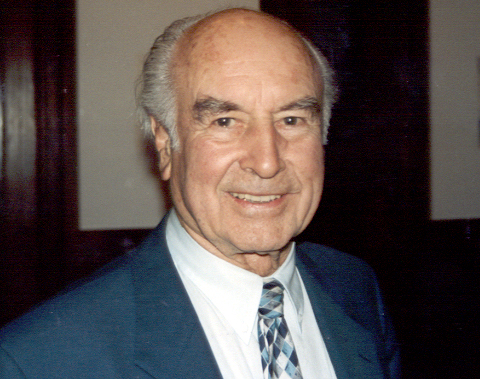
Source: Albert Hofmann by Morgan and Donahue, All That’s Interesting, 2025. Graphic: Albert Hofmann in 1993.

Black Swans Part I

Black swans are rare and unpredictable events, what the military calls “unknown unknowns“, that often have significant, domain-specific impacts, such as in economics or climate. Despite their unpredictability, societies tend to rationalize these occurrences after the fact, crafting false narratives about their inevitability. COVID-19, for instance, ripples across multiple domains, beginning as a health crisis but expanding to influence the economy, legal systems, and societal tensions. As a human-made pathogen, its risks should have been anticipated.

Black swans throughout history are legendary. Examples include the advent of language and agriculture, the rise of Christianity (predicted yet world-changing), and the fall of Rome, which plunged the Western world into centuries of stagnation. Islam (also predicted), the Mongol conquests, the Black Death, and the Great Fire of London shaped and disrupted societies in profound ways. The fall of Constantinople, the Renaissance, the discovery of America, the printing press, and Martin Luther’s Reformation brought new paradigms. More recently, the Tambora eruption (“the year without a summer”), the Great Depression, WWII brought unforeseen disruptions to economies and geopolitics, the Manhattan Project, Sputnik, the fall of the Berlin Wall, and the rise of PCs and the internet altered the trajectory of human progress. Events like 9/11 and the iPhone have similarly reshaped the modern world. While black swans may be rare, they are not inevitable. We should expect moments of dramatic collapse or unanticipated brilliance to recur throughout history.

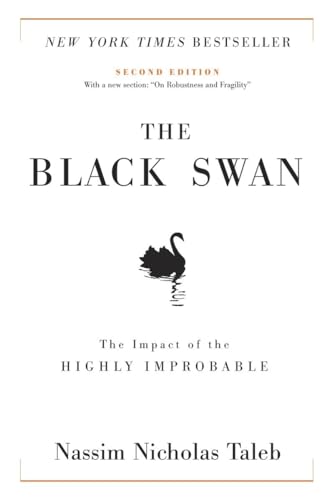
Nassim Taleb, author of the 2007 book The Black Swan, suggests several approaches to mitigate the effects of such events without needing to predict them. His recommendations include prioritizing redundancy, flexibility, robustness, and simplicity, as well as preparing for extremes, fostering experimentation, and embracing antifragility: a concept where systems not only withstand shocks but emerge stronger.

Through the lens of history, black swans appear as a mix of good and bad, bringing societal changes that were largely unanticipated before their emergence. As history has shown, predicting the impossible is just that: impossible. What might the next frontier be, the next black swan to transform humanity? Could it be organic AI, a fusion of human ingenuity and machine intelligence, unlocking potential but posing profound risks to free will, societal equilibrium, and humanity’s very essence? (Next week—preparing for a black swan: an example.)

Natural Law—Point Counterpoint

Version 1.0.0

The notions of right and wrong, justice and injustice, have there no place. Where there is no common power, there is no law; where no law, no injustice.” — Leviathan by Thomas Hobbes

Thomas Hobbes saw human nature as a cauldron of chaos. In his state of nature, life is “nasty, brutish, and short,” a “war of all against all” where self-preservation is the only natural law. Shaped by Thucydides’ tales of strife and Machiavelli’s ruthless pragmatism, Hobbes cast man’s self-interest as a destructive force that casts morality aside. His remedy to avert chaos: a towering sovereign, ideally a monarch, to crush anarchy with an iron fist. The social contract trades liberty for security, forging laws as human tools to bind the beast within. Yet Hobbes stumbled: he failed to grasp power’s seductive pull. He assumed his Leviathan, though human, would rise above the self-interest he despised, wielding authority without buckling to its corruption.

Reason, which is that law, teaches all mankind…that being all equal and independent, no one ought to harm another in his life, health, liberty, or possessions.” — Second Treatise of Government by John Locke

John Locke painted a gentler portrait of man than did Hobbes. He rooted natural law in reason and divine will, granting all people inherent rights to life, liberty, and property. His state of nature is peaceful yet imperfect, marred by the “want of a common judge with authority,” leaving it vulnerable to human bias and external threats. Optimistic, Locke envisioned a social contract built on the consent of the governed, protecting these rights through mutual respect and laying the groundwork for constitutional rule. Where Hobbes saw a void to be filled with control, Locke trusted reason to elevate humanity, crafting government as a shield, not a shackle.

Hobbes and Locke clash at the fault line of power. Hobbes’s sovereign, meant to tame chaos, reflects the rulers’ thirst for dominance, but his naivety about power’s effect cracks his foundation. Locke’s ideals, morality, reason, rights, empower the ruled, who yearn for liberty after security sours. Hobbes missed the flaw: rulers, driven by the same self-interest he feared, bend laws to their will, spawning a dual reality—one code for the governed, another for the governors. Locke’s vision of freedom and limited government inspires their soul, while Hobbes’s call for order fortifies their bones with courts, police, and laws of men. The U.S. Constitution marries both, yet scandals tip the scales: power corrupts, and liberty frays as safeguards buckle under the rulers’ grip.

Hobbes and Locke both accept the imperfection of man but take different paths to mitigate that imperfection with workable safeguards. Hobbes insists on the rule by law but drafted by imperfect man and applied with a Machiavellian indifference with no solution for absolute powers corrupting influence. Locke also chooses to rule by law but guided by morality, God and the will to depose of despots.

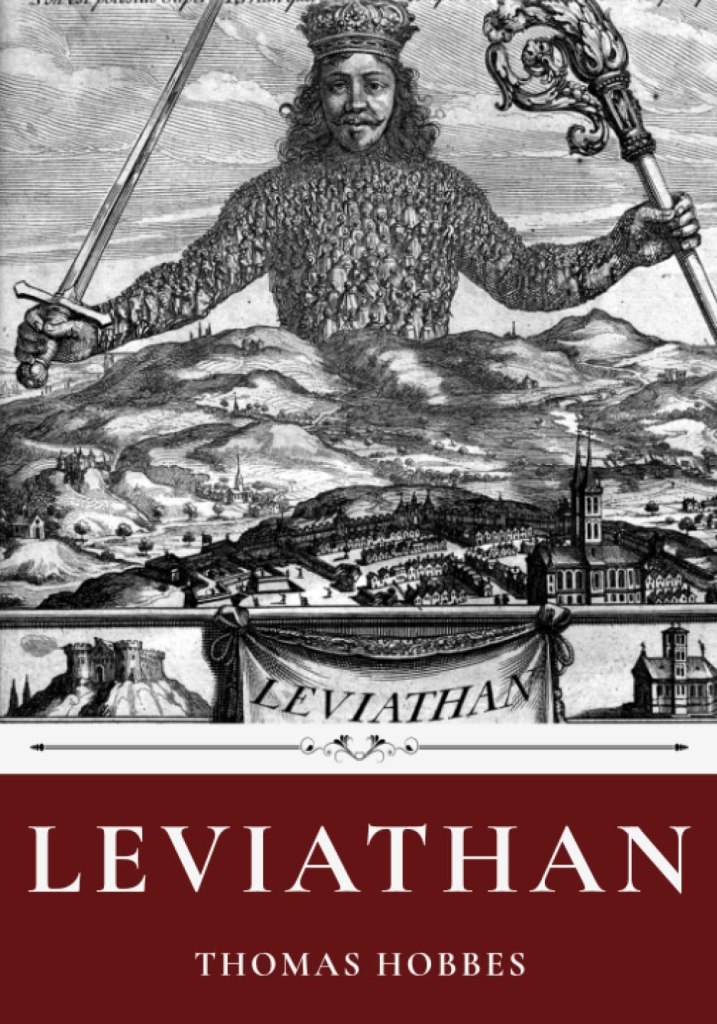
Sources: Leviathan, Thomas Hobbes; Second Treatise of Government, John Locke. Graphic:Original Leviathan frontispiece, a king composed of subjects, designed with Hobbes’s input.

White Guard

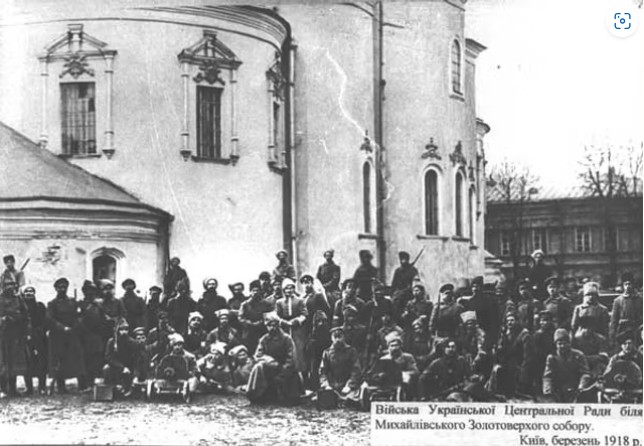
Mikhail Bulgakov’s White Guard, set during the Ukrainian War of Independence (1917–1921) amid the Russian Civil War, captures Kyiv in an existential power struggle against varied forces: Ukrainian nationalists allied with German troops, the White Guard clinging to Tsarist dreams, Lenin’s Bolsheviks closing in, plus Poles and Romanians. Against this bloody backdrop, Bulgakov crafts a semi-autobiographical tale of loss and fatalism, culminating in a nihilistic realization of humanity’s purpose: “But this isn’t frightening. All this will pass. The sufferings, agonies, blood, hunger, and wholesale death. The sword will go away, but these stars will remain… So why are we reluctant to turn our gaze to them? Why?”

Bulgakov, a doctor of venereal diseases like the book’s protagonist Alexei Turbin, knew hopelessness. In 1918, syphilis was a scourge, often incurable, leading to madness, mirroring the war’s societal decay. Alexei volunteers for the White Guard, tending to horrors he can’t heal, his efforts dissolving in a dream: “shadows galloped past…Turbin was dying in his sleep.” War becomes a disease, resistance futile. Yet Bulgakov’s lens widens. Sergeant Zhilin dreams of Revelation, “And God shall wipe away all tears…and there shall be no more death,” finding humility in cosmic indifference. Petka, an innocent, dreams simply of a sunlit ball, untouched by great powers. “Blessed are the pure in heart, for they shall see God” (Matthew 5:8).

Then, out of dreamland into the light: “All this will pass.” The stars endure, wars fade. Writing in the 1920s after the White defeat, Bulgakov channels Russian fatalism—Dostoevsky’s inescapable will, Chekhov’s quiet surrender. But he’s not fully broken. His “Why?” pleads, mocks, resists. Why not look up? Survival is luck, death equalizes, yet fighting a losing battle confronts our nothingness. Kyiv falls, the Bolsheviks threaten, the White Guard vanishes, still, Bulgakov continues to ask. Why?

He blends despair with irony, a doctor mocking death as the stars watch. The German expulsion of the Reds in 1918 briefly eased bloodshed, but 1919 brought worse, “Great was the year and terrible the Year of Our Lord 1918, but more terrible still was 1919.” History moves on; stars don’t care. Bulgakov’s question lingers: Why? To fight is to live, fate be damned.

Source: White Guard, Mikhail Bulgakov, trans. Marian Schwartz. Graphic: Ukrainian Soldiers circa 1918.

Temperance in Early Virginia

The Virginia Colony, established by the Virginia Company of London, was not a cradle of temperance in its early years. Founded in 1607 at Jamestown under a 1606 charter from King James I, this joint-stock venture aimed for profit—gold, trade, and later tobacco—not moral reform. Its settlers, a mix of Anglican adventurers, merchants, and laborers, relied on alcohol (beer and spirits) as a staple, given the assumed scarcity of safe water. Yet, a supposed temperance law dated 5 March 1623 is often cited as America’s first, though no documentary evidence from the Virginia Company’s records supports this claim.

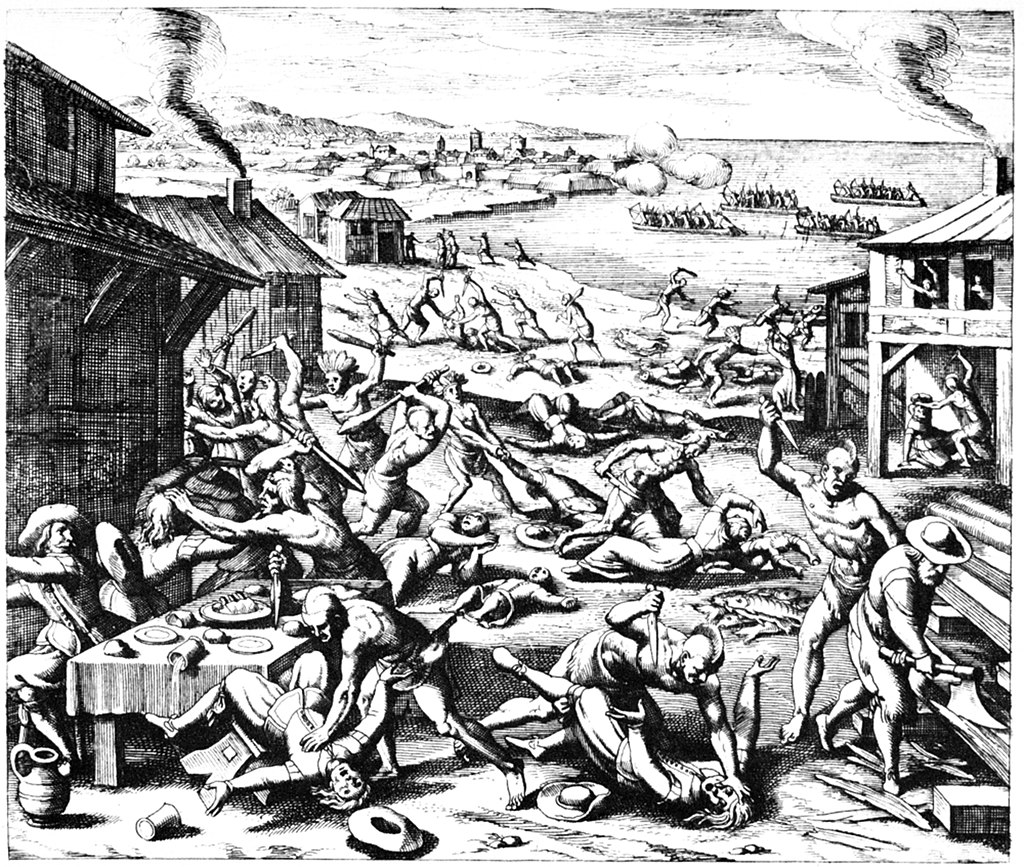
The context for such a measure lies in the colony’s struggles. By 1623, Virginia was a fragile outpost under company control, reeling from the Powhatan Uprising of 1622. This surprise attack by the Powhatan Confederacy killed about 347 settlers—over a quarter of the population—likely in response to English land grabs for growing tobacco. The massacre disrupted food supplies, leaving grain scarce. If a 1623 law restricted alcohol production, it may have been a pragmatic response to conserve resources, not a temperance crusade. Virginia Company records don’t mention such a law, but they do show earlier alcohol regulations for practical ends—economic control, public order, or resource management—rather than moral prohibitions.

Earlier codes hint at this pattern, vigilance in the face of pioneering hardships. The Laws Divine, Moral and Martial, enacted around 1610–1611 under Sir Thomas Dale, imposed strict discipline in the struggling settlement, including penalties for drunkenness to curb idleness. In 1619, Governor George Yeardley’s assembly banned “drunkenness” and excessive gaming, possibly reflecting mild Puritan influence from England’s religious debates. However, these rules targeted abuse, not alcohol itself, and didn’t amount to temperance as later understood. The absence of a Puritan majority—unlike in New England—underscores this distinction. Virginia’s settlers were commerce-driven subjects of the Crown, not the religious reformers who arrived later with the Plymouth Colony (1620) or Massachusetts Bay (1630).

The 1623 claim might stem from a misinterpretation of these regulatory measures, exaggerated by later historians or temperance advocates seeking an early precedent. For comparison, in 1623, the Virginia Company of Plymouth’s minister William Blackstone distributed apples (later tied to cider), but no temperance law emerged there either. Both companies, focused on survival and profit, bore little resemblance to the Puritan ethos that shaped later American temperance movements. Without primary evidence, the 1623 Virginia temperance law remains a historical ghost—possibly a practical rule born of crisis, not a moral milestone.

Source: Initial claim from Encyclopedia of Trivia, elaborated by Grok 3. Graphic: Indian Massacre of 1622, Woodcut by Matthaus Merian, 1628. Public Domain.

Locke and Jefferson

John Locke’s theory on the social contract is a cornerstone of his political philosophy and western democracies, as outlined in his work “Second Treatise of Government.” According to Locke, the social contract is an agreement among individuals to form a government that will protect their natural rights to life, liberty, and property. The social contract is a compromise between man’s inherent natural rights and the need to preserve and protect those rights.

Thomas Jefferson, in his Declaration of Independence builds on Locke’s concepts, tweak is probably a better word. Locke writes that people have “natural rights” to “life, liberty, and estate” (property), and if a government violates these, it’s “dissolved,” giving people the right to form a new one. Jefferson writes into the Declaration its famous “life, liberty, and the pursuit of happiness”—swapping “property” for a broader, aspirational feel. Locke’s idea that government derives legitimacy from the “consent of the governed” shows up when Jefferson lists grievances against King George III, arguing the king’s abuses justify breaking away. And Locke’s justification for revolution—“when a long train of abuses” threatens these rights, people can resist—mirrors Jefferson’s “whenever any Form of Government becomes destructive of these ends, it is the Right of the People to alter or to abolish it.”

Locke’s key points in his Second Treatise:

  1. State of Nature: Locke believed that in the state of nature, individuals are free and equal, governed by natural law, which dictates that no one should harm another in their life, health, liberty, or possessions. Anarchy with adherence to God’s moral code.
  2. Natural Rights: Locke argued that individuals have inherent rights to life, liberty, and property. These rights are inalienable and must be protected by any legitimate government.
  3. Consent of the Governed: Locke emphasized that government derives its authority from the consent of the governed. People agree to form a government to protect their natural rights, and this consent is the basis of political legitimacy.
  4. Limited Government: Locke’s social contract theory advocates for a government with limited powers, designed to serve the common good and protect individual rights.
  5. Right to Revolution: Locke believed that if a government becomes tyrannical and or violates the social contract, the people have the right to revolt and establish a new government that will better protect their rights.

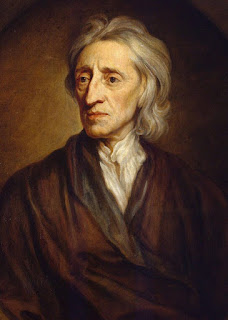
Source: Second Treaties of Government by John Locke, 1690. Graphic: John Locke by Godfrey Kneller 1697.  Public Domain.

The Mystic

Rasputin: Dark Servant of Destiny.  Grigori Rasputin, often referred to as the “Mad Monk,” was a peasant with a fondness for madeira, cheap steaks, and prostitutes. He seemingly cured the Tsar’s son, Alexei, returning him to health by a gift from God: the power of faith.

Rasputin, living by the Russian proverb “You can’t avoid that which is meant to happen,” accepted his fate and was welcomed by the Empress and her son into the royal household with open arms. However, he was later expelled from the royal household by the Tsar and his handlers for violating another Russian proverb: “Don’t bring your own rules into someone else’s monastery.”

Rasputin: Dark Servant of Destiny, a 1996 HBO TV movie seen by almost no one, is Alan Rickman’s tour de force. It provides an exquisite emotional interpretation of religious fervor and mystical power. The film brings the myth of Rasputin into the realm of authenticity and historical plausibility.

The film recreates Rasputin’s madness amidst the early 20th-century events that predated and possibly presaged the madness of events set into motion by Lenin in 1917 (Rasputin was murdered towards the end of 1916). These events led to what Orwell succinctly summarized in “Animal Farm” when the new boss replaced the old boss: “The creatures outside looked from pig to man, and from man to pig, and from pig to man again; but already it was impossible to say which was which.

Genre: Biographical, Drama, Historical

Directed by: Uli Edel

Screenplay by: Peter Pruce

Music by: Brad Fiedel

Cast: Alan Rickman, Greta Scacchi, Ian McKellen, Freddie Finlay

Film Location: Budapest, Hungary and St. Petersburg, Russia

ElsBob: 7.0/10

IMDb: 6.9/10

Rotten Tomatoes Critics: -%

Rotten Tomatoes Popcornmeter: 79%

Metacritic Metascore: -%

Metacritic User Score: -/10

Theaters: 23 March 1996

Runtime: 135 minutes

Source: Rotten Tomatoes, IMDb. Graphic: Rasputin Movie Trailer, copyright HBO.

Exploits in Dying

Grigori Rasputin, a Russian mystic, met an inglorious, improbable, and inexplicable end in 1916 at his assassin’s Moika Palace in Saint Petersburg. Although accounts vary, Rasputin’s executioners ostensibly made multiple attempts to murder him. They began with cyanide-laced cakes, which did not achieve their desired outcome. Next, in an attempt to reach a different result with the same measures, they offered him wine fortified with more cyanide. This attained the same result as the first attempt.

Following this, they shot him multiple times, but he continued to move, eventually attacking his would-be murderers. Finally, they wrapped him up in a carpet and tossed him into a freezing river, where he supposedly died of hypothermia.

A less imaginative account of his death suggests that he died from a single bullet to the head.

Rasputin supposedly left a letter, which was read by Alexandra, the wife of Tsar Nicholas II, prophesizing that if he was killed by Russian nobles, the Russian Tsar’s family would be executed within a few years.

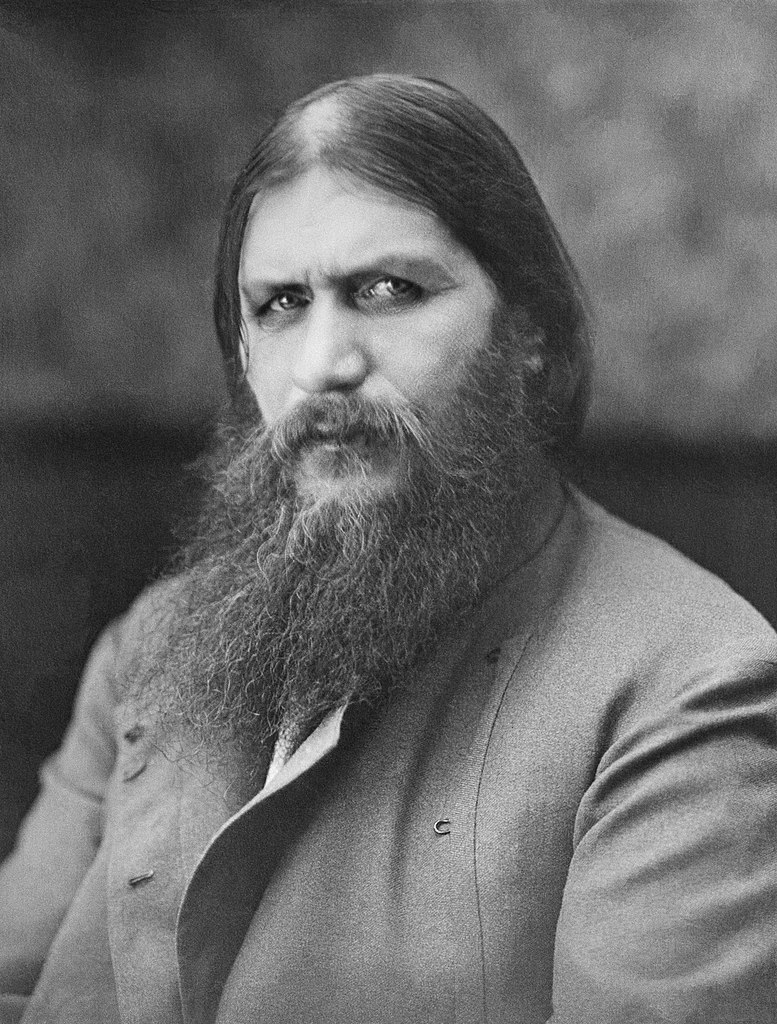
Source: Biography, 2021. Graphic; Rasputin, c1910, Russian Empire, public domain. 

Die, Die Again

On 30 January 1661, Oliver Cromwell, Lord Protector of England, Scotland, and Ireland, suffered his second death. His first death, possibly from malaria or sepsis, occurred on 3 September 1658. On that day a windstorm of supposedly hurricane strength occurred, which some claimed was the devil coming to collect his due. He was buried with honors almost two months later on 10 November 1658, at the east end of Henry VII’s chapel in Westminster Abbey.

After Cromwell’s first death, the monarchy was restored to power. The new king, expressing his gratitude to Cromwell for giving the country a taste of democracy, had his body exhumed, in preparation for his second death. His body was then hung in chains, a common fate for traitors, then decapitated, with his head placed on a spike that remained on display until 1685. His body, sans the head, was then unceremoniously thrown into a pit.

Source: History Today. World History. RMG. Graphic: Portrait of Oliver Cromwell from the studio of Robert Walker, Property of Sir Brooke Boothby.

The End

On 16 January 27 BC, the Roman Senate voted to confer the title of Augustus upon Octavian, Julius Caesar’s adopted son, realistically marking the end of the Roman Republic and the beginning of the Roman Empire. This decision aimed to restore stability and order after years of civil war and internal conflict, legitimizing Octavian’s authority while maintaining a veneer of republican governance. Augustus took effective control of the military, religion, bureaucracy, and administrative operations of the empire.

After the assassination of Julius Caesar in 44 BC, Octavian, in 43 BC, formed the Second Triumvirate with Mark Antony and Lepidus. Following their eventual conflict and his decisive victory at the Battle of Actium in 31 BC, Octavian became the uncontested ruler of Rome.

The Roman Empire was the final iteration of the Roman government, which began as a monarchy with Romulus as king in 753 BC, transitioned into a republic in 509 BC, and lasted through the era of civil wars and dictatorships until Octavian’s elevation as Augustus in 27 BC. The Roman Empire as a whole lasted until 476 AD when the Western Empire fell, while the Eastern Empire continued until 1453 AD.

Trivia: 16 January 27 BC, is the actual Julian calendar date, retained and quoted in texts for historical accuracy. According to the Gregorian calendar, however, the date marking the end of the Roman Republic would be 26,27 January 27 BC.

Source: Roman Republic…by M. Vermeulen, The Collector, 2020.  Graphic: Evolution of the Roman Empire, by ESKEHL-Wikipedia, 2022.