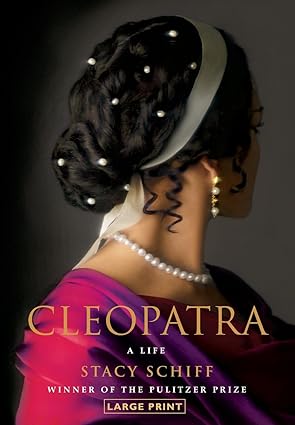
The Last Queen

Cleopatra VII, descendant of Alexander the Great’s general Ptolemy Soter, inheriting the Egyptian Empire upon Alexander’s death, was the last pharaoh or queen of Egypt. Upon her death in 30 B.C., less than two weeks after the death of her lover, Mark Antony, she took her own life, likely with a fast-acting poison rather than the bite of an asp. This cleared the way for Augustus, the founder of the Roman Empire, to incorporate Egypt into the Roman realm.

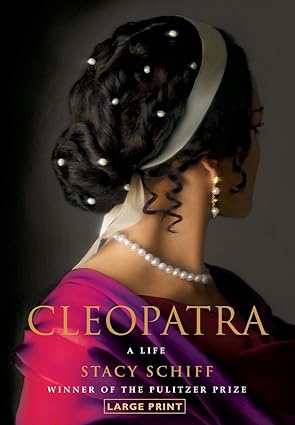
In Cleopatra: A Life, Stacy Schiff weaves an engrossing tale of the queen’s ruthless ambition to restore the Egyptian Empire to its former glory. Though Cleopatra’s life lasted less than 40 years, she brought Rome into her world, achieving greatness that ultimately led to her downfall.

Cleopatra wanted greatness and found the means to attain it. Schiff states in her book that “Cleopatra appears to have had sex with only two men. They happen, however, to have been Julius Caesar and Mark Antony, among the most prominent Romans of the day. …Cleopatra had a child with Caesar and after his murder — three more with his protégé…The two [Cleopatra and Anthony] would together attempt to forge a new empire, in an alliance that spelled their ends.

Source: Cleopatra: A Life by Stacy Shiff, 2010.

Free Trade

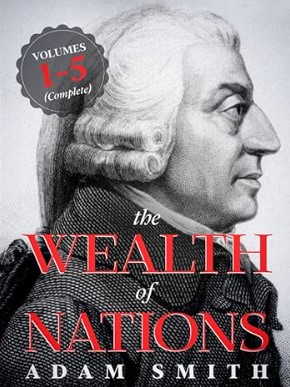
Adam Smith, author of Wealth of Nations, advocated free trade if a country’s savings were increasing, and it produced more than it consumed. He qualified his pro-free trade sentiments by declaring that a country with a low savings rate, producing less than it consumes, and experiencing consistent negative trade balances with its competitors is potentially in for some hard reckoning, including:

  1. Reliance on Foreign Capital: With low savings, a country will have to resort to financing large negative trade balances with foreign lenders, leading to an unhealthy dependency on those countries.
  2. Currency Depreciation: Persistent trade deficits can put downward pressure on the country’s currency value and are potentially inflationary.
  3. Vulnerability to External Shocks: A country with low savings and a negative trade balance is more vulnerable to external economic shocks, leading to economic instability.
  4. Investment Constraints: Limited domestic savings may constrain the country’s ability to invest in infrastructure, education, and other critical areas that support long-term economic growth.

Source: Wealth of Nations by Adam Smith.

Social Contract

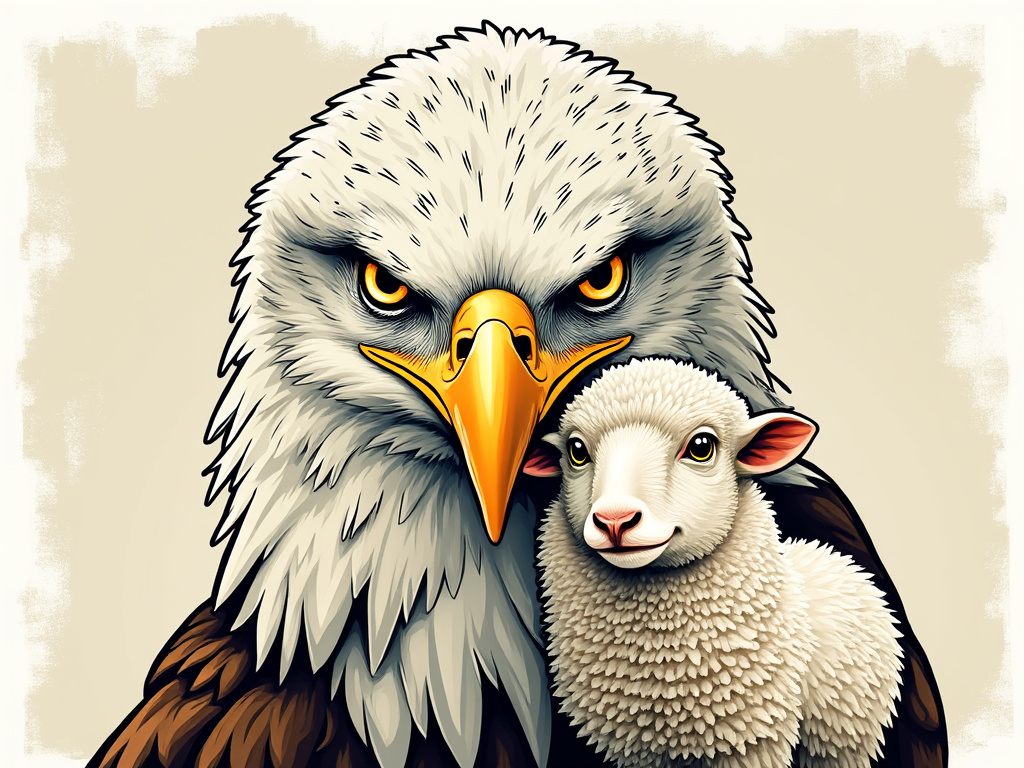
Thomas Hobbes, a 17th-century philosopher and author of Leviathan, argued that humans are driven by self-interest and the instinct for survival, which can be inherently self-destructive. To curtail our tendency to drift towards chaos and early death, he proposed his social contract theory, where we sacrifice some freedoms to the state in exchange for safety, peace, and security.

Hobbes recognized that surrendering freedoms may lead to tyranny. He said that if the state becomes oppressive, the social contract is broken, and citizens are no longer bound to submit to its authority. He argued that the contract is rational and valid only as long as the benefits outweigh the costs.

Thomas Jefferson used a similar argument in the Declaration of Independence, stating: “That whenever any Form of Government becomes destructive of these ends, it is the Right of the People to alter or to abolish it, and to institute new Government, laying its foundation on such principles, and organizing its powers in such form, as to them shall seem most likely to effect their Safety and Happiness.

Source: Hobbes’s Moral and Political Philosophy, SEP 2022. Graphic: AI generated.

The Natural State of Man

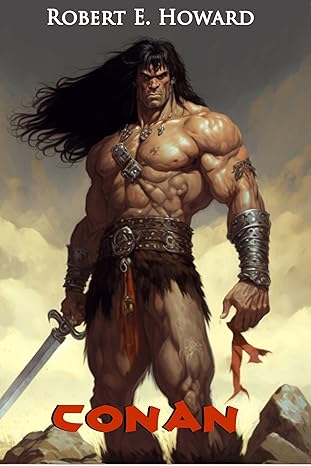
Robert Howard, 20th-century pulp fiction author and creator of Conan the Barbarian, believed that “barbarianism is the natural state of mankind. Civilization is unnatural. It is the whim of circumstance.”

Thomas Hobbes, 17th-century English philosopher best known for his social contract theory, attempted to justify that the authority of the state superseded the rights of man, believing that the natural state of man was war, that life was “solitary, poor, nasty, brutish, and short,” thus necessitating some higher authority to calm and tame the natural instincts of man.

Michael Huemer, professor of philosophy at UC Boulder, argues that “The current state of American society is a historical fluke, marked by extraordinarily low levels of exploitation, oppression, and injustice… The key sources of this happy state include such institutions as democracy, free markets, and modern science.”

I would add free speech coupled with property rights to the mix. Modern science is a double-edged sword that in the end, I would argue, is more a societal neutral force rather than a force against our true nature.

Huemer further maintains that before we tear down these stabilizing institutions, we should heed the advice of the Hippocratic Oath and first do no harm, stating, “If we undermine our current norms and institutions, the most likely result is not that we will be swept into a paradise… [but] the most likely result is that we will revert to something closer to the natural state of human beings.”

Huemer concludes with the observation that the 20th-century experiment called communism swept away all existing culture, norms, and institutions, resulting in 100 million deaths.

Source: Oxford Reference. Progressive Myths by M. Huemer, 2024. Graphic: Conan, Kindle Book Cover, Amazon.

FDR Wins 4th Term

On Tuesday, 7 November 1944, Franklin D. Roosevelt won his fourth term as President of the United States, defeating Republican Thomas E. Dewey of New York.

Few states in the 1944 election had a primary system in place to vote for party nominees, instead choosing delegates to the national nominating convention through party caucuses or state conventions. The real job of selecting the party’s nominees occurred at the national conventions with little to no input from the voting public.

Democrats, concerned that Roosevelt might not live to complete his term, replaced the sitting left-wing and economically illiterate Vice President Henry A. Wallace with the Missouri Senator Harry S. Truman.

Roosevelt died on 12 April 1945, less than three months into his new term, with Truman assuming the presidency that same day.

Truman ordered the dropping of the first atomic bomb on Hiroshima on August 6, 1945, less than six months into his presidency, proving that holding the highest office in the land is fraught with uncertainty and requires unimaginable determination and strength.

Graphic: Electoral College Results for the 1944 Presidential Election.

Rights of the Free

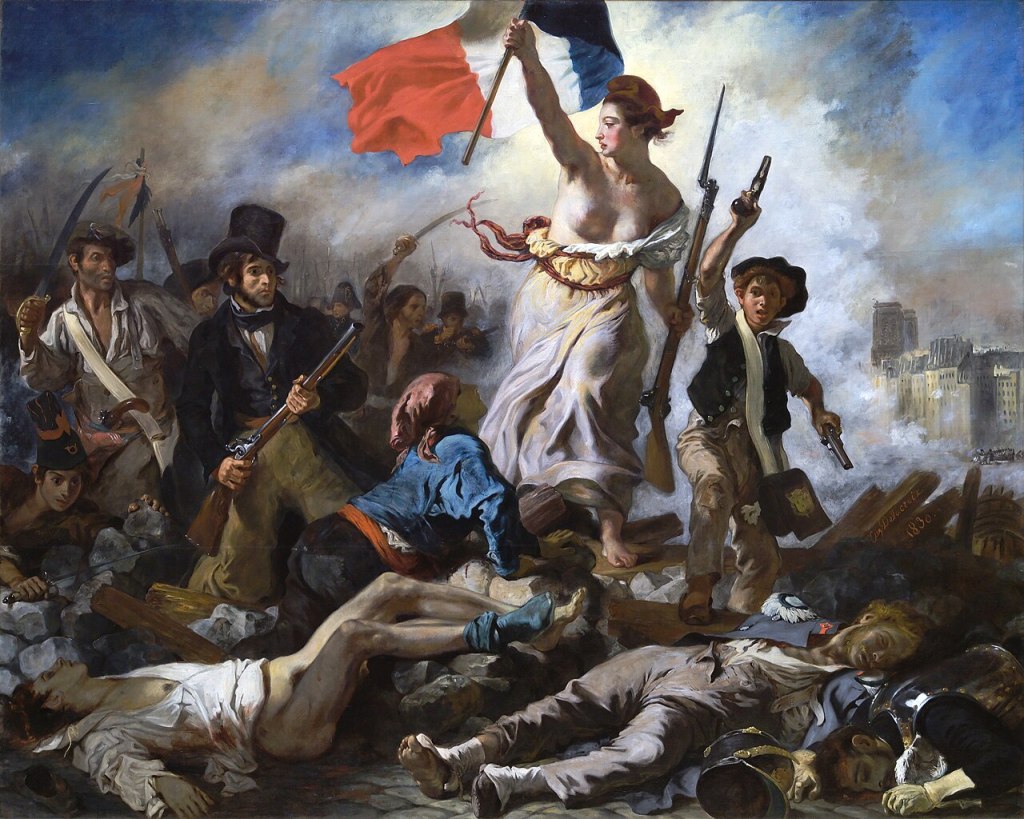
Thomas Paine, American Founding Father, philosopher, and inventor authored some of the most influential and inspirational works supporting the American Revolution: The American Crisis and Common Sense. He also wrote a rousing defense of the 1789 French Revolution: The Rights of Man.

Paine’s thesis in “The Rights of Man” is that human rights are natural rights, inalienable, and not subject to the caprices of the governing class. They cannot be repealed. He asserts that men are born free and equal, and the government’s purpose is to preserve these natural rights, chiefly: liberty, security, property, and resistance to oppression.

Paine, like Thomas Jefferson in the Declaration of Independence, believed that citizens must stand firm against tyranny to uphold the principles of justice and liberty. Jefferson’s eloquence is unparalleled when he wrote in the Declaration: “Governments are instituted among Men, deriving their just powers from the consent of the governed, –That whenever any Form of Government becomes destructive of these ends, it is the Right of the People to alter or to abolish it, and to institute new Government…”

Source: Rights of Man by Thomas Paine, 1791. Graphic: Liberty Leading the People by Eugene Delacroix 1830. Public Domain.

Mesopotamian Life After Death

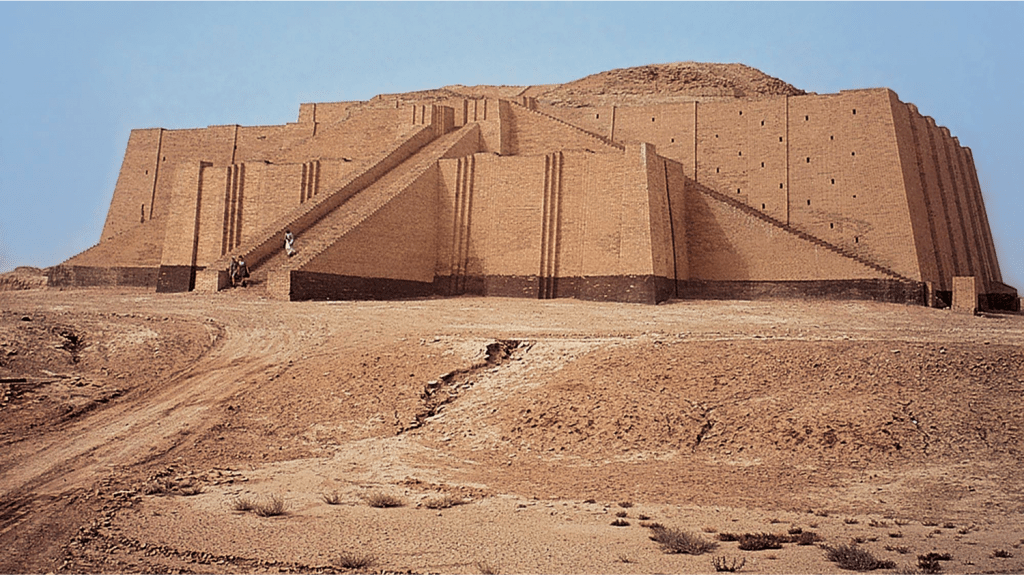
Five thousand years ago, Sumerians and Akkadians, occupying what is now southern and central Iraq, respectively, believed souls or spirits after death occupied a subterranean world called Kur or Irkalla.

All those who entered this underworld could not leave but it was not hell or heaven but more of a place to exist after death; as a ghost of your past.

There is no record that Mesopotamians in 3000 BC believed in reincarnation, resurrection, or any form or transmigration of the soul.

With many exceptions, the spirit or ghost that existed in the netherworld maintained the social status that they had when alive. Thus, kings were still kings, slaves were still slaves.

In the Epic of Gilgamesh, he and his friend Enkidu ventured into this underworld to retrieve their lost magical objects and to seek immortality. They did not find the magical objects, but they did find the Plant of Immortality but promptly lost it to a serpent, learning one of the earliest lessons for humanity: never entrust your life to a snake.

Source: Epic of Gilgamesh. Mesopotamian Beliefs by Chaksi, 2014, World History. The Afterlife by Enlightenment Journey. Graphic: Ziggurat of Ur, 21st century BC, dedicated to the Moon god Nanna.

A Deadly Political Duel

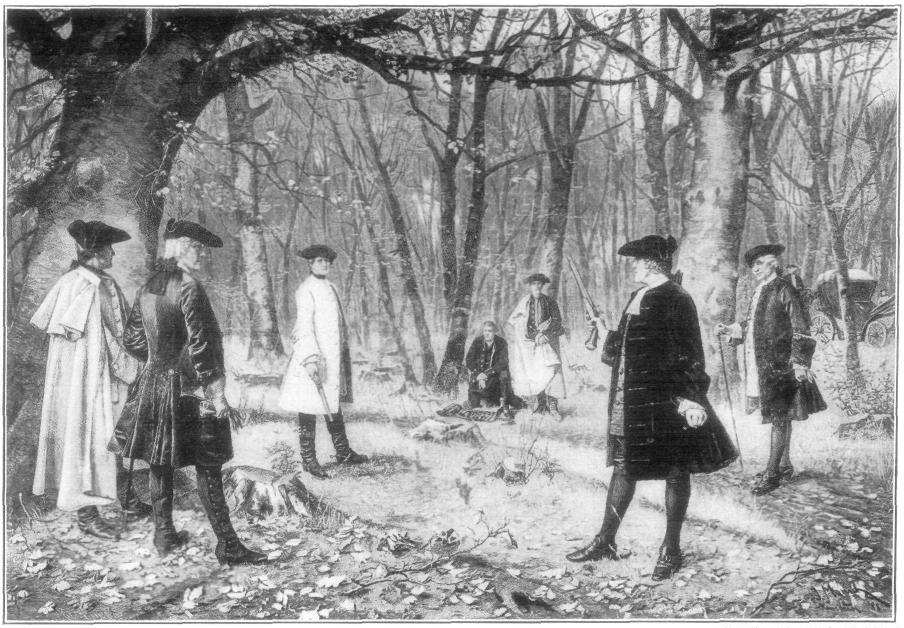
220 years ago on 11 July 1804 Aaron Burr, Vice President of the US challenged and mortally wounded, in a duel, the US Secretary of the Treasury, Alexander Hamilton.

Burr claimed that Hamilton smeared his name by stating that he was a dangerous man and should not be in control of a government. Burr demanded a public apology. Hamilton refused to acknowledge, much less apologize to Burr for the alleged smear, triggering Burr to challenge Hamilton to a duel.

The duel occurred near Weehawken, New Jersey, across the Hudson from Manhattan, and both men fired one round. Hamilton was hit in his side near the hip and died the next day from the wound.

Dueling at the time was illegal but Burr escaped without any charges being brought, although his political career lay in tatters.

Source:  The Hamilton-Burr Duel by Josh Wood, Origins, 2019. Graphic: Hamilton-Burr Duel after a painting by J. Mund, public domain.220

The Travels of Mary, Joseph, and Jesus

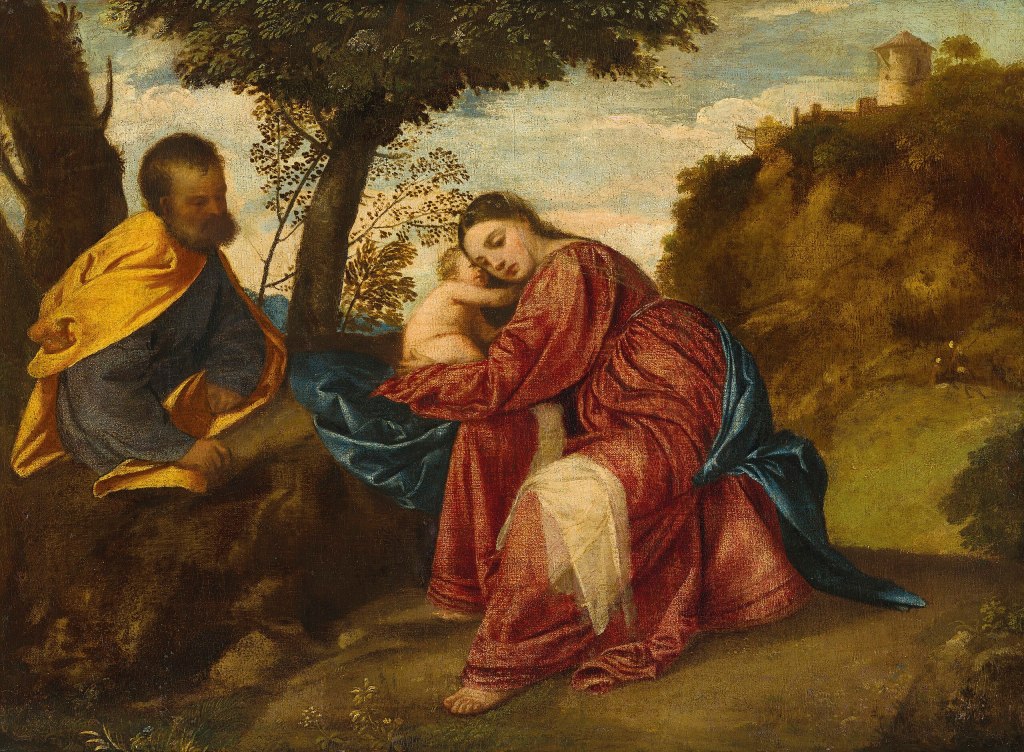
Rest on the Flight into Egypt was painted by the Venetian Renaissance master Tiziano Vecellio, better known as Titian, while he was in his late teens or possibly 20 years old in the year 1508. The painting was inspired by Joseph’s dream, recounted in Matthew 2:13-23, telling him and his young family to flee Herod and Judea.

The painting has changed hands repeatedly over the centuries being possessed by Dukes, Archdukes, Marquess, thieves, and other rich and powerful people. Below is a compilation of known owners of the painting through the years:

  • Possibly the first owner was Alfonso d’Este, Duke of Ferrara, 1508? Unverified.
  • Purchased by a Venetian merchant, Bartolomeo della Nave at an unknown date. Sold 1638
  • Purchased by James Hamilton, Duke of Hamilton in 1638
  • Purchased by Leopold Wilhelm, Archduke of Austria in 1649
  • Acquired by Hugh Andrew Johnston Munro of Novar in 1851
  • Acquired by John Thynne, Marquess of Bath in 1878
  • Stolen from Alexander Thynn, Marquess of Bath in 1995
  • Recovered for Alexander Thynn, Marquess of Bath in 2002. The painting was found at a bus stop in south-west London.
  • Sold by Ceawlin Thynn at Christie’s to an unknown buyer on 2 July 2024 for 17,560,000 pounds or about 22.17 million dollars.

Source: Christie’s June 2024. Artnet.com. The Art Newspaper.  Graphic: Rest on the Flight into Egypt, Titian, 1508, Public Domain.

The Noble Lie

In Plato’s Republic, a “Noble Lie” is a myth, or a falsehood knowingly propagated by the elites to maintain social harmony, or stated succinctly, to keep the plebs in their place and make sure they love it.

Plato believed that society required a class system led by philosophers who needed to create a lie that unites and binds the lower classes to the state. Without this binding myth the classes will turn on each other, and the government will fail.

The Noble Lie myth promoted by Plato, via Socrates, was that the populace was born with hierarchical souls with the upper classes having better souls. Another myth was Karl Marx stating, “From each according to his ability, to each according to his needs,” formulating a classless society where goods and services were free.

Source: Plato’s Republic. A Noble Lie by Plato Intelligence. Introduction to Plato: The Noble Lie by Paul Krause, 2019, Minerva Wisdom. Graphic: Socrates’ Address by Lebrun, 1867, public domain.