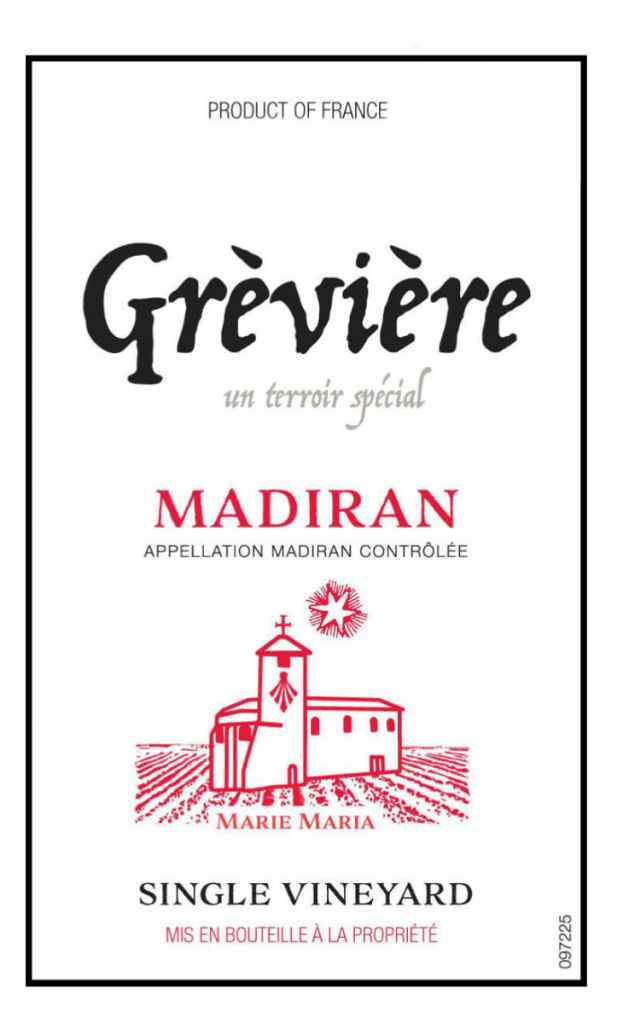
Other Red Blends from Madiran, South West, France
90% tannat
10% cabernet sauvignon
14.5% alcohol
Purchased: 12 July 2017 – $19.99
Opened: 25 March 2018
els: 9.2/10
Wine Enthusiast: 93
France is the 2nd largest producer of wine in the world, just behind Italy and ahead of Spain, representing about 21% of the global wine market. The country is responsible for creating some of the most recognizable old world wines on the planet, from the bubbly Champagnes in the cool north to world-class Bordeaux along the Garonne and Dordogne Rivers to the GSMs in the warm Mediterranean south. There are 17 major wine-producing regions in the country along with another 28 smaller areas, all growing 96 varieties of predominate grapes with Merlot and Grenache the most common. Reds account for almost 70% of the 2 million plus acres planted in vines, with whites accounting for the remainder. As with the other major European wine producers, France’s vineyard acreage has been shrinking over the last couple of decades due to less demand from their home population and increased market pressures from new world producers.
The South West or Sud Quest region, France’s 5th largest wine area, begins in the central north on the eastern edge of the Bordeaux region and continues 150 miles to the southwest towards the Pyrenees, ending near the Spanish border. The region includes 25 AOCs with 120,000 areas planted in grapes producing around 270 million bottles of wine every year; roughly 3% of total for all of France. The Romans initially cultivated the area for grapes and had it awash in wine before the Bordeaux region even thought about growing their own. But because Bordeaux controlled the wine trading routes they strangled the South West market, through taxes and laws, in the 13th century and the area never regained its prominence in the France, or the world. The area predominately grows red Cabernet Sauvignon, Merlot, and Tannat grapes along with white Semillon Sauvignon, and Ugni Blanc grapes. The climate is a combination of oceanic and continental with cool wet winters and springs, offset by warm, sunny summers.
Madiran AOC is named after the town of Madiran in the Gascony Provence near the Adour River, 90 miles south of Bordeaux, 80 miles west of Toulouse and 60 miles from the Spanish border. The AOC is available only to red wine containing 40-60% Tannat, although 100% is acceptable (makes no sense to me), and blended with Cabernet Franc and or Cabernet Sauvignon. There are 3200 acres of vineyards in the Madiran AOC producing about 10 million bottles of red wine annually. The Pyrenees to the south have deposited, a generally, well-drained alluvium of clays and silts, rich in limestone interspersed with lots of red iron pebbles and stones. The area enjoys warm summer days rarely topping 80°F with rainfall averaging 1-2″ per month with a few inches of snow in the winter.
The Tannat grape, as its name suggest is very high in tannins, is native to the South West region of France. It is not a commonly grown grape, ranking at 100 out of all grapes grown globally but in Madiran it is king. There are about 15,000 acres planted worldwide or much less than 1% of the total grape acreage. The wine from the grape is often blended with “softer” wines such as Cabernet Franc and Cabernet Sauvignon to reduce its astringency. To further soften up the wine they are kept in oak barrels for up to 20 months. The wines exhibit a deep tannic structure with notes of raspberry. They are very dark in color and have great aging potential. Tannat grapes are high in procyanidins, a condensed tannin class of flavonoid with high antioxidant values that affects the wines astringency, color and mouth-feel.
Cabernet Sauvignon is a cross, believed to have occurred naturally sometime in the 1600s in southwestern France, between Cabernet Franc and Sauvignon Blanc grapes. It is now the most widely planted grape in the world covering more than 700,000 acres or about 6.5% of all vines planted. France is number 1 in the world in acres planted for this grape. It is a thick-skinned grape that’s relatively easy to grow and maintain, exhibiting high tannins and acidity, producing a distinct bell pepper flavor, especially in cool climates, along with aromas of mint and eucalyptus. The grapes produce a full-bodied and dark-ruby colored wine.
The Domaine Berthoumieu was founded in the 1850s by Virgile Dutour in the tiny village of Viella which is 5 miles northwest of Madiran. In the 1980s Didier Barré took over management of the winery from his father Louise. Today the property is in the hands of the family’s 6th generation of wine makers: Claire and Marion Bortolussi. The Berthoumieu field, part of the Domaine Berthoumieu, is part of d’Artagnan’s homeland, aka Charles de Batz, Louis XIV’s Musketeer.
The winery has 64 acres which is planted in 85% red and 15% white grapes with the vines being 50-100 years-old. The reds include: Tannat, Cabernet Sauvignon, Cabernet Franc, and Pinenc. The whites include: Petit Manseng, Gros Manseng, and Petit Courbu. The soils are a silty-clay, heavy in limestone with gravels and stones. The area enjoys an oceanic climate with diurnal growing season temperatures ranging from 45-80°F and rainfall ranging from 2-2.75″ per month.
After picking and sorting the grapes they are transferred to 150-210 gallon tanks for 30 days of fermentation and maceration. The wine is then aged for 12 months in new and used oak.
A dark, dark purple, almost black wine with a ruby rim. Strong aromas of delicious raspberries Full-bodied and powerful. The tannins are, cut with a knife thick, and the wine is very dry. A wonderful long, long finish.
This wine needs a strong, flavorful food pairing. Strong cheeses. Strong tangy barbecue. Meats with strong herbs such as rosemary. Try my slow cooker rosemary stew. I always make this slightly different so I’ll try to generalize it a bit. Start with 1-2 pounds of beef stew meat cut up in small chunks, add in a cup of beef broth, one chopped medium onion, a small can of tomato sauce (optional), a handful of baby carrots, 10 ounces of canned corn, 1 tablespoon of garlic, a cup of chopped celery, 1-2 teaspoons of dried rosemary, and 2 cups washed and sliced baby potatoes (I usually make these fairly big chunks by just quartering the baby potatoes), 1-2 teaspoons of cornstarch (thickener), salt and pepper, a dash of oregano and basil. Add everything, except the cornstarch, salt and pepper, into the slow cooker for 8 hours, half on high, half on low. Add the cornstarch to a half cup of warm water and mix. Stir into the slow cooker about 15 minutes before serving. Add water ifs needed. Salt and pepper to taste.
An outstanding wine at a fair price. Drink this year but likely good until 2025-2030. Decant and aerate for one hour, or more, before drinking.
This wine’s vintage appears to be no longer available outside of the borders of France. The 2012 vintage is still available and has ratings of 90 or more.