Cosmic Gold Rush

Ultra-high-energy cosmic rays (UHECRs) are the universe’s most energetic particles, with energies exceeding 100 quintillion electronvolts (100 EeV)—far beyond anything we can replicate on Earth. First observed over 60 years ago, these particles have puzzled scientists with their immense power and a curious pattern: their energy correlates closely with their electric charge. But where do they come from?

A new theory by physicist Glennys Farrar from New York University offers an answer. She proposes that UHECRs originate in binary neutron star (BNS) mergers—explosive collisions that form a black hole. These events unleash powerful jets of material, acting as cosmic particle accelerators that boost particles to unimaginable energies. The idea links UHECRs’ narrow energy range and charge correlation to a range of combined neutron star mass sufficient to form a black hole.

The theory suggests that the highest-energy UHECRs—those above 100 EeV—could be heavy elements like gold, platinum, or uranium, forged in extreme cosmic events such as supernovae or neutron star collapses (stars can only create elements up to iron through fusion). By tying UHECRs to BNS mergers, Farrar’s work could reveal how precious elements form and deepen our understanding of cosmic cataclysms.

Source: Binary Neutron Star Mergers… by Glennys R. Farrar, Physical Review Letters, 28 February 2025. Graphic: Two Neutron Stars Merging by Universe Today.

Temperance in Early Virginia

The Virginia Colony, established by the Virginia Company of London, was not a cradle of temperance in its early years. Founded in 1607 at Jamestown under a 1606 charter from King James I, this joint-stock venture aimed for profit—gold, trade, and later tobacco—not moral reform. Its settlers, a mix of Anglican adventurers, merchants, and laborers, relied on alcohol (beer and spirits) as a staple, given the assumed scarcity of safe water. Yet, a supposed temperance law dated 5 March 1623 is often cited as America’s first, though no documentary evidence from the Virginia Company’s records supports this claim.

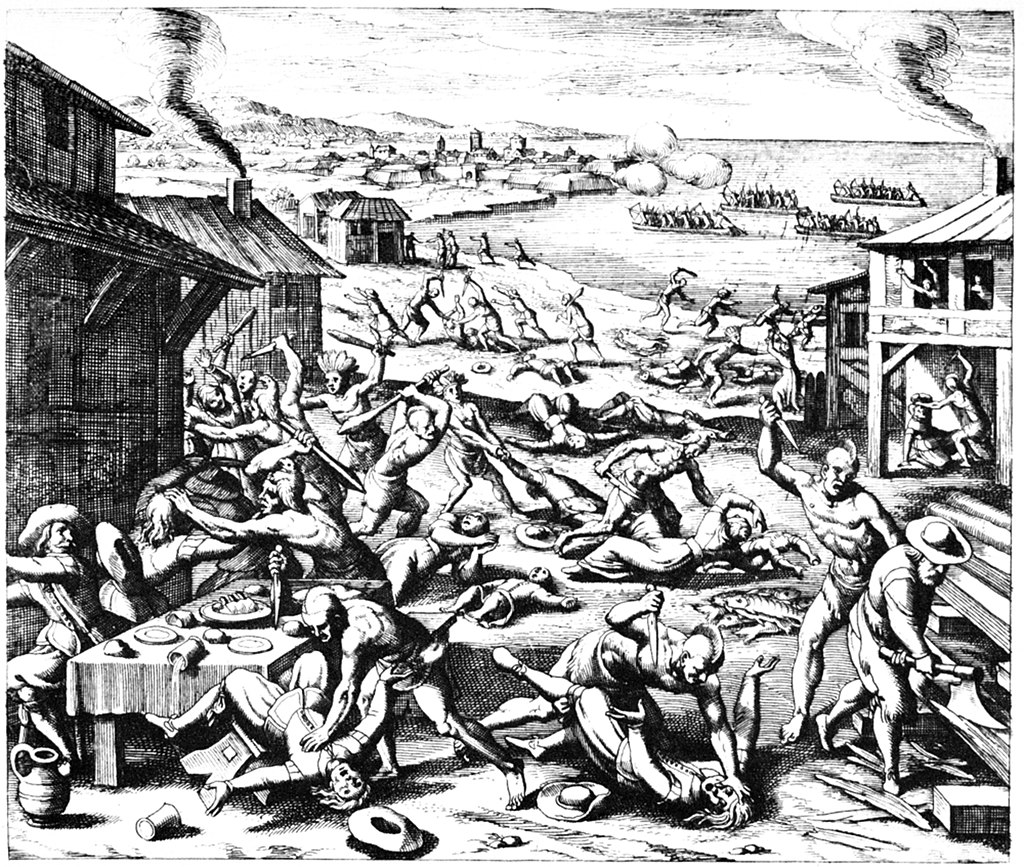
The context for such a measure lies in the colony’s struggles. By 1623, Virginia was a fragile outpost under company control, reeling from the Powhatan Uprising of 1622. This surprise attack by the Powhatan Confederacy killed about 347 settlers—over a quarter of the population—likely in response to English land grabs for growing tobacco. The massacre disrupted food supplies, leaving grain scarce. If a 1623 law restricted alcohol production, it may have been a pragmatic response to conserve resources, not a temperance crusade. Virginia Company records don’t mention such a law, but they do show earlier alcohol regulations for practical ends—economic control, public order, or resource management—rather than moral prohibitions.

Earlier codes hint at this pattern, vigilance in the face of pioneering hardships. The Laws Divine, Moral and Martial, enacted around 1610–1611 under Sir Thomas Dale, imposed strict discipline in the struggling settlement, including penalties for drunkenness to curb idleness. In 1619, Governor George Yeardley’s assembly banned “drunkenness” and excessive gaming, possibly reflecting mild Puritan influence from England’s religious debates. However, these rules targeted abuse, not alcohol itself, and didn’t amount to temperance as later understood. The absence of a Puritan majority—unlike in New England—underscores this distinction. Virginia’s settlers were commerce-driven subjects of the Crown, not the religious reformers who arrived later with the Plymouth Colony (1620) or Massachusetts Bay (1630).

The 1623 claim might stem from a misinterpretation of these regulatory measures, exaggerated by later historians or temperance advocates seeking an early precedent. For comparison, in 1623, the Virginia Company of Plymouth’s minister William Blackstone distributed apples (later tied to cider), but no temperance law emerged there either. Both companies, focused on survival and profit, bore little resemblance to the Puritan ethos that shaped later American temperance movements. Without primary evidence, the 1623 Virginia temperance law remains a historical ghost—possibly a practical rule born of crisis, not a moral milestone.

Source: Initial claim from Encyclopedia of Trivia, elaborated by Grok 3. Graphic: Indian Massacre of 1622, Woodcut by Matthaus Merian, 1628. Public Domain.

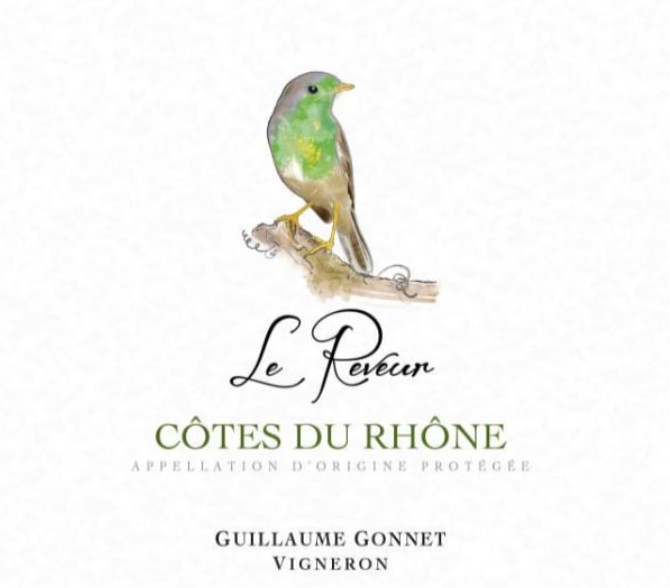
Guillaume Gonnet Cotes du Rhone Le Reveur 2022

Rhone Red Blend from Cotes du Rhone, Rhone, Franc

60% Grenache, 20% Syrah

Purchase Price: $10.99

ElsBob 88

ABV 14.5%

Aromas of red cherry and raspberry; full-bodied, dry, medium acidic, with a medium tannic finish. Will pair well with beef or game meat but this would be better served as the second bottle for an after-work social.

A very good fine wine priced a tad high at $11. I’ve seen it retail recently for $20+ which is too much for this wine.

Engraver of Wood:

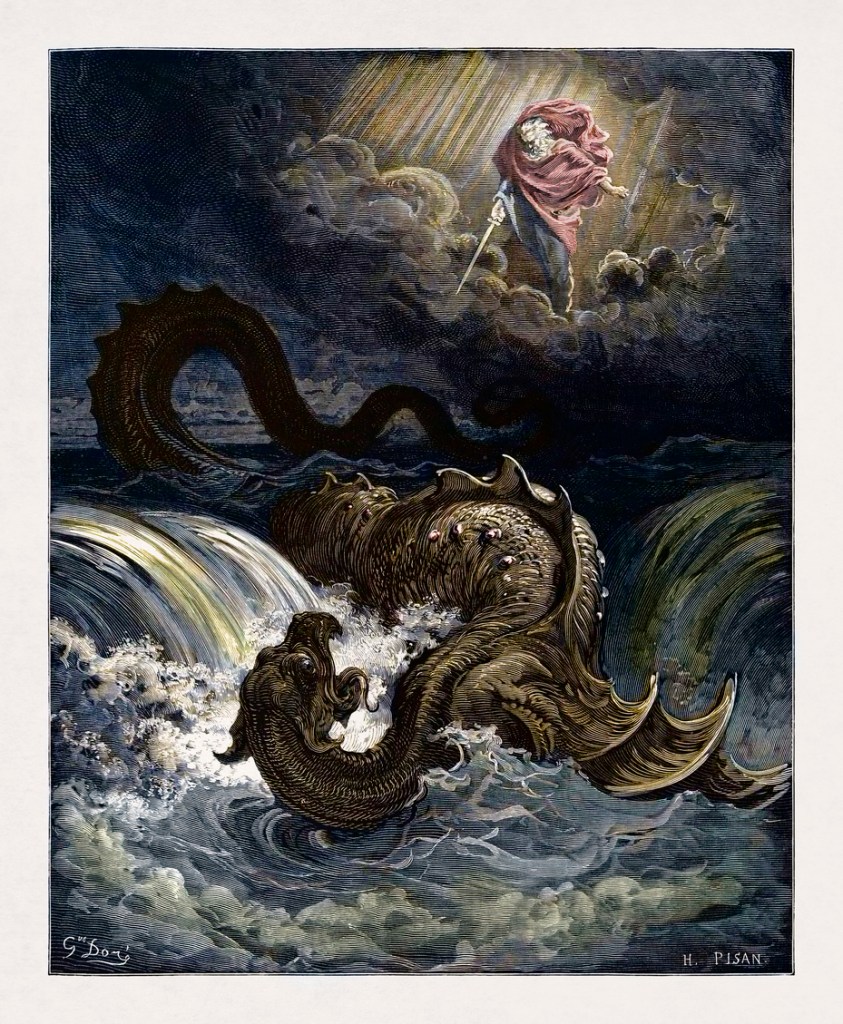
Gustave Doré, widely regarded as the greatest illustrator of the 19th century, produced meticulous and exquisite works that continue to captivate audiences today, particularly his illustrations for the Bible and Dante’s Divine Comedy. Born, raised, and deceased in France, Doré began his artistic pursuits at the age of six and started illustrating classic literature at twelve using lithography. By nineteen, he embarked on his lifelong mission to illustrate the world’s greatest books, transitioning to woodblock engravings. It is estimated that he created over 10,000 engravings during his lifetime.

Among his most celebrated works are the engravings for the Vulgate Bible, also known as La Grande Bible de Tours. This collection includes 139 plates depicting scenes from the Old Testament and 81 plates from the New Testament. Featured in the attached graphic is his illustration of Isaiah 27, portraying God (often interpreted as Jesus in Christian theology) slaying Leviathan, symbolizing the ultimate triumph of good over evil.

Source: Gustave Doré Engravings by Alpine Fine Arts, 1995. Graphic: Destruction of Leviathan (Isaiah 27, colorized) by Gustave Doré, 1866, licensed by Gwengoat.

Locke and Jefferson

John Locke’s theory on the social contract is a cornerstone of his political philosophy and western democracies, as outlined in his work “Second Treatise of Government.” According to Locke, the social contract is an agreement among individuals to form a government that will protect their natural rights to life, liberty, and property. The social contract is a compromise between man’s inherent natural rights and the need to preserve and protect those rights.

Thomas Jefferson, in his Declaration of Independence builds on Locke’s concepts, tweak is probably a better word. Locke writes that people have “natural rights” to “life, liberty, and estate” (property), and if a government violates these, it’s “dissolved,” giving people the right to form a new one. Jefferson writes into the Declaration its famous “life, liberty, and the pursuit of happiness”—swapping “property” for a broader, aspirational feel. Locke’s idea that government derives legitimacy from the “consent of the governed” shows up when Jefferson lists grievances against King George III, arguing the king’s abuses justify breaking away. And Locke’s justification for revolution—“when a long train of abuses” threatens these rights, people can resist—mirrors Jefferson’s “whenever any Form of Government becomes destructive of these ends, it is the Right of the People to alter or to abolish it.”

Locke’s key points in his Second Treatise:

  1. State of Nature: Locke believed that in the state of nature, individuals are free and equal, governed by natural law, which dictates that no one should harm another in their life, health, liberty, or possessions. Anarchy with adherence to God’s moral code.
  2. Natural Rights: Locke argued that individuals have inherent rights to life, liberty, and property. These rights are inalienable and must be protected by any legitimate government.
  3. Consent of the Governed: Locke emphasized that government derives its authority from the consent of the governed. People agree to form a government to protect their natural rights, and this consent is the basis of political legitimacy.
  4. Limited Government: Locke’s social contract theory advocates for a government with limited powers, designed to serve the common good and protect individual rights.
  5. Right to Revolution: Locke believed that if a government becomes tyrannical and or violates the social contract, the people have the right to revolt and establish a new government that will better protect their rights.

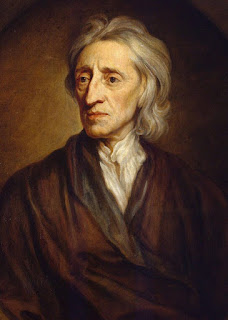
Source: Second Treaties of Government by John Locke, 1690. Graphic: John Locke by Godfrey Kneller 1697.  Public Domain.

Nebbiolo Grapes

Nebbiolo is an Italian grape variety predominantly associated with the Piedmont region in northwest Italy, near the borders of France and Switzerland. Indigenous to this area, it boasts a long history of cultivation. Evidence indicates that wines made from Nebbiolo have been produced in the region since at least the first millennium AD, with the earliest recorded mention of the grape dating back to the 13th century in the vicinity of Turin.

Today, Nebbiolo is the cornerstone of several renowned wines, including Barolo and Barbaresco. These wines are notable for their clarity, often drawing comparisons to Pinot Noir in appearance. However, they stand out for their medium- to full-bodied structure and complex profile, characterized by aromas of red fruit, pronounced tannins, vibrant acidity, and an extraordinary finish. Decanting is crucial to mellow the tannins and enhance their drinkability.

Nebbiolo wines pair exceptionally well with rich, fatty dishes such as ribeye steak and meals featuring acidic components, including meat ragù and hearty pasta sauces.

Graphic: A bunch of Nebbiolo Grapes by Cristiano Alessandro, Licensed.

Gravity and Vanilla Black Holes

Einstein’s theory of general relativity, which includes gravity, predicts that black holes have a tricky feature: a singularity. This is a point where space and time are squeezed so tightly that the laws of physics break down—think of it as a cosmic “error message.” To fix this, scientists often turn to exotic matter—hypothetical substances with bizarre properties like negative energy—to smooth things out. However, a team from the University of Barcelona, led by Pablo Bueno, found an alternative. They didn’t need exotic matter at all. Instead, they tweaked Einstein’s gravity by adding an infinite series of extra “rules” (higher-curvature corrections) to the math.

Their solution works in spacetimes with more than four dimensions—beyond our usual height, width, depth, and time. In these higher-dimensional worlds, black holes can exist without singularities. This “smooths out” black holes, making them less mysterious and more like regular objects in spacetime—no weird stuff required.

The presence of extra dimensions doesn’t just fix singularities—it can also change how black holes behave. In higher-dimensional spacetimes, black holes might have different event horizon shapes (the boundary beyond which nothing escapes) or other structural quirks. The Barcelona team’s work shows that these altered properties emerge naturally from gravity in more than four dimensions, offering a fresh perspective on these cosmic giants.

Thinking outside the box, is it possible that these extra dimensions link black holes to “a reality outside regular spacetime,” like wormholes (tunnels through spacetime), braneworlds (parallel universes on higher-dimensional “membranes”), or even gateways to white holes (theoretical opposites of black holes that spit stuff out)? Theories like string theory and braneworld scenarios suggest that extra dimensions might allow such connections. For example, a wormhole could theoretically bridge two distant points in our universe—or even lead to a completely different universe.

While the math of higher dimensions opens the door to these possibilities, it’s all conjecture. The Barcelona team’s work is a major step forward in understanding black holes in higher dimensions, but it doesn’t directly prove connections to other realities.

Source: Grok 3. Regular Black Holes… by Bueno, P. et al., Physics Letter B, February 2025. Graphic: Black Hole Rendering, iStock licensed.

Hundred Days

Napoleon Bonaparte, reeling from his disastrous Russian campaign of 1812 and suffering significant losses to the Sixth Coalition in 1813, faced a decisive defeat at the Battle of Leipzig in October of that year. With his options exhausted and his army depleted, Napoleon abdicated his throne on 11 April 1814, and was exiled to Elba, a small island off the coast of Tuscany.

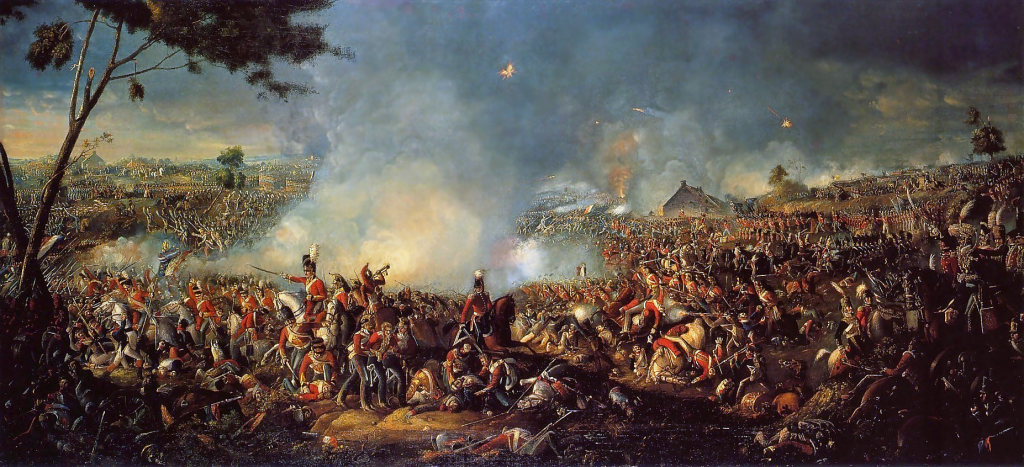
After approximately ten months in captivity, Napoleon executed a daring escape on 26 February 1815, orchestrated by loyal supporters and a small contingent of soldiers. He landed in France and marched triumphantly into Paris on 20th of March, reclaiming his title as Emperor and ushering in his second reign. This brief resurgence, however, ended with his defeat at the Battle of Waterloo on 18 June 1815, at the hands of the Duke of Wellington and Prussian Field Marshal Gebhard Leberecht von Blücher. The victorious Anglo-Prussian forces entered Paris on 7th of July restoring King Louis XVIII to the French throne and effectively concluding Napoleon’s reign—later dubbed the “Hundred Days” (20 March to 8 July) in historical accounts.

Unable to flee to the United States as he had hoped, Napoleon surrendered to the British Navy and was transported to England. From there, he was exiled to the remote island of Saint Helena in the South Atlantic, arriving there on 15 October 1815. He spent his final years there, dying on 5 May 1821.

Source: Napoleon by André Castelot, 1991. Graphic: Battle of Waterloo by William Sadler, 1815 (Public Domain).

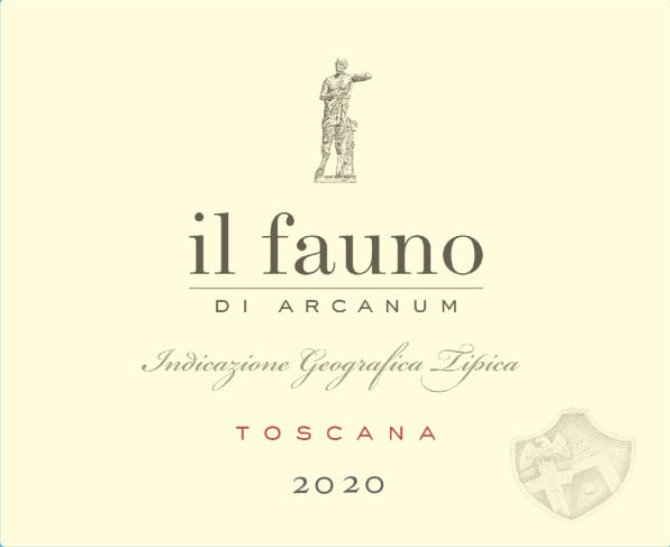
Tenuta di Arceno Il Fauno di Arcanum 2020

Bordeaux from Tuscany, Italy

Merlot 41%, Cabernet Franc 34%, Cabernet Sauvignon 20%, Petit Verdot 5%

Purchase Price: $87.00 (Restaurant)

James Suckling 93, Wine Spectator 93, Jeb Dunnuck 92, Robert Parker 92, ElsBob 92

ABV 14.5%

Aromas of black cherry and plum; full-bodied and dry with a silky tannic finish. Pairs well with ribeye, filet, grilled vegetables, or desserts like cannoli and tiramisu. We enjoyed it with osso boco on garlic mashed potatoes – delicious. Also ideal for sipping on a shady patio on a warm afternoon.

An excellent fine wine priced slightly under the median for 92-point wines (retail ~$52).

Trivia: A Faun (Fauno in Latin) is a half-human, half-goat creature in Greek and Roman mythology with hairy legs, pointed ears, a tail, and human arms. The most famous faun is Pan, the Greek god of nature, known for playing a flute, his sexual prowess, and joking attitude.

Michelangelo, Medici, and Florence

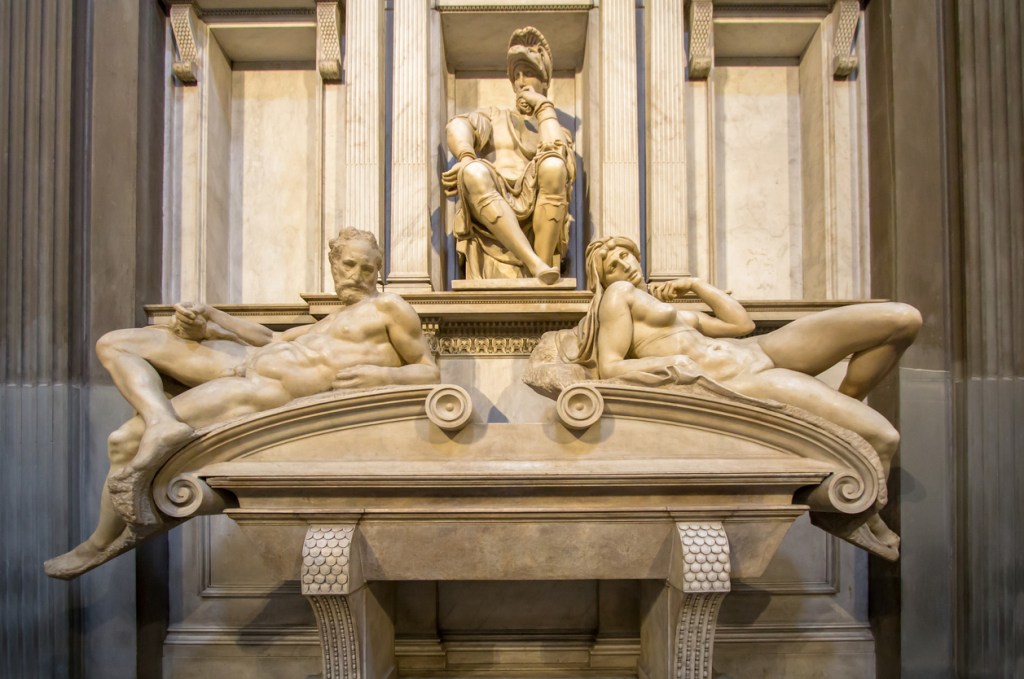
Tomb of Lorenzo II de Medici and below lying on the sarcophagus two sculptures ‘Dawn and Dusk’ in Medici Chapel, Florence, Italy

Florence, the Medici family, and the Renaissance are inextricably linked, forming a vibrant nexus of world-shaping brilliance and energy. After Lorenzo the Magnificent’s death in 1492, Michelangelo emerged as the towering figure of art and beauty during the High Renaissance, spanning the late 15th and early 16th centuries.

Michelangelo’s unparalleled artistic mastery endured for nearly fifty years beyond his death in 1564, yet with the passing of Ferdinando I de’ Medici in 1609, Baroque masters like Caravaggio and Bernini ascended as Europe’s preeminent talents.

Michelangelo navigated a delicate balance with the shifting demands of his Medici patrons, fiercely defending his artistic vision while securing payment, often with friction. The expectations of the Medici popes, Leo X (1513–1521) and Clement VII (1523–1534), frequently clashed—both in timing and creative intent—with his ambitions. This tension, happily, fueled his masterpieces, including the Sistine Chapel ceiling (1508–1512) and the Last Judgment (1536–1541).

The image depicts the Tomb of Lorenzo II de’ Medici, a work Michelangelo sculpted between 1524 and 1531.

Source: The Medici, Michaelangelo…Florence, Essays by Acidini…2002. Graphic: Tomb of Lorenzo II de Medici, Michelangelo, 1524-1531. CAHJKT iStock Photo Licensed.