Cupid and Psyche

Cupid and Psyche is the timeless tale of love’s conquering power, overcoming all obstacles in its path. It symbolizes the union of the soul with desire, transcending to a love that goes beyond the physical and the mortal.

The only extant writings of Cupid and Psyche is known from Apuleius’s romance “The Golden Ass,” composed in the 2nd century AD. The tale is likely to have been known as early as the 4th century BC, and Cupid is known as far back as the 8th century BC from Hesiod’s “Theogony.”

In the myth of Cupid and Psyche, with Cupid’s mother Venus as the antagonist, the characters metaphorically act out various emotions and experiences, both mortal and immortal.

Psyche,a mortal more beautiful than the goddess Venus, represents the soul (in Greek, Psyche means soul) and its journey from the tragedy of human life to the transformative power of love for everlasting spiritual fulfillment.

Cupid, tasked by his mother Venus to destroy Psyche for possessing beauty beyond that of a mortal, instead falls in love with her. Cupid embodies love and desire, and the emotional power and unpredictability that it brings to a relationship.

Venus, the goddess of love and beauty, represents jealousy and the obstacles that Psyche battles to realize the completion of her quest for emotional and spiritual fulfillment. Her trials for Psyche reflect the ever-present barriers to true love.

Cupid and Psyche is a story of transcendent transformation over the physical to the triumph of love and the immortality of the soul.

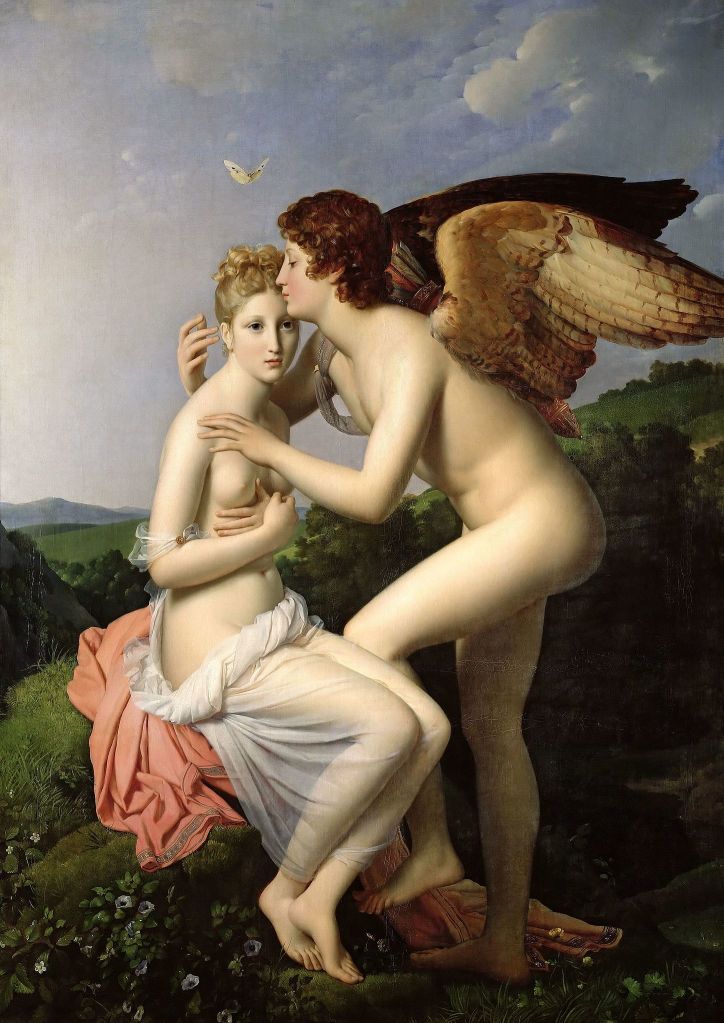
Trivia: In the painting by Gerard, the butterfly floating above Psyche’s head represents, rather redundantly, the soul.

Source: The Golden Ass by Apuleius. The Evolution of Cupid, Erlang Shen, Fatelines, 2022. Graphic: Cupid and Psyche by Francois Gerard, 1798, The Louvre, Public Domain.

Chateau Lajarre Bordeaux Superieur 2020

Bordeaux Red Blend form Bordeaux, France

80% Merlot, 20% Cabernet Franc

Purchase Price: $14.99

Wine Enthusiast 87-91, ElsBob 88

ABV 13.5%

Aromas of black fruits, smooth, slightly acidic, medium bodied with a short finish. Will pair well with beef, pasta, and cheese. Serve slightly chilled.

A very good table wine at an elevated price. Probably not worth paying more than $12.

Ground Control to Major Tom

Space Oddity,” David Bowie’s ode to the loneliness of space, framed as a conversation between ‘Major Tom and Ground Control’, was released in July 1969, nine days before Apollo 11 landed on the moon. Bowie didn’t draw inspiration from the moon landing but rather from Stanley Kubrick’s 1968 film “2001: A Space Odyssey.” However, the song was rushed through the production process to capitalize on the American moon shot.

While watching the movie in the theater in 1968, Bowie related to Classic Rock in 2012 that, “It was the sense of isolation I related to. I found the whole thing amazing. I was out of my gourd, very stoned when I went to see it – several times – and it was really a revelation to me. It got the song flowing.

The song reached #5 on the charts in the UK but only made a slight blip in the US, peaking at #124 on the Billboard Hot 100. As Bowie’s fame increased in the next couple of years, RCA re-released the 1969 album and the song as a single, leading it to rise to #15 in the US on the Billboard Hot 100.

The attached video is Canadian astronaut Chris Hadfield’s rendition of the song that he recorded aboard the International Space Station in 2013. With permission from Bowie, he updated the lyrics slightly to reflect current circumstances. The song was the first music video made in space and the first use of an acoustic guitar in space.

Trivia:

  • During the launch of Musk’s Falcon Heavy, with a Tesla Roadster aboard, the car’s sound system was said to be looping the Bowie songs “Space Oddity” and “Life on Mars?”
  • Kubrick’s film 2001: A Space Odyssey drew inspiration from Arthur C. Clarke’s novel of the same name, but also from Clarke’s earlier short stories, particularly “The Sentinel” and “Encounter in the Dawn,” both published in the early 1950s.

Source: David Bowie.com. Where is Telsa Roadster.space. Graphic: Space Oddity by Chris Hadfield, 2013.

Four Women of the Renaissance

Leonardo da Vinci, who died on May 2, 1519 at the age of 67, began around 40 paintings in his lifetime, of which fewer than 20 survive. Of those that survive, only about 15 are believed to be complete.

The artist painted only four known portraits of women:

  • Ginevra de’ Benci at the National Gallery of Art in Washington, D.C.
  • La Belle Ferronnière at the Louvre Museum in Paris.
  • Mona Lisa also at the Louvre Museum in Paris.
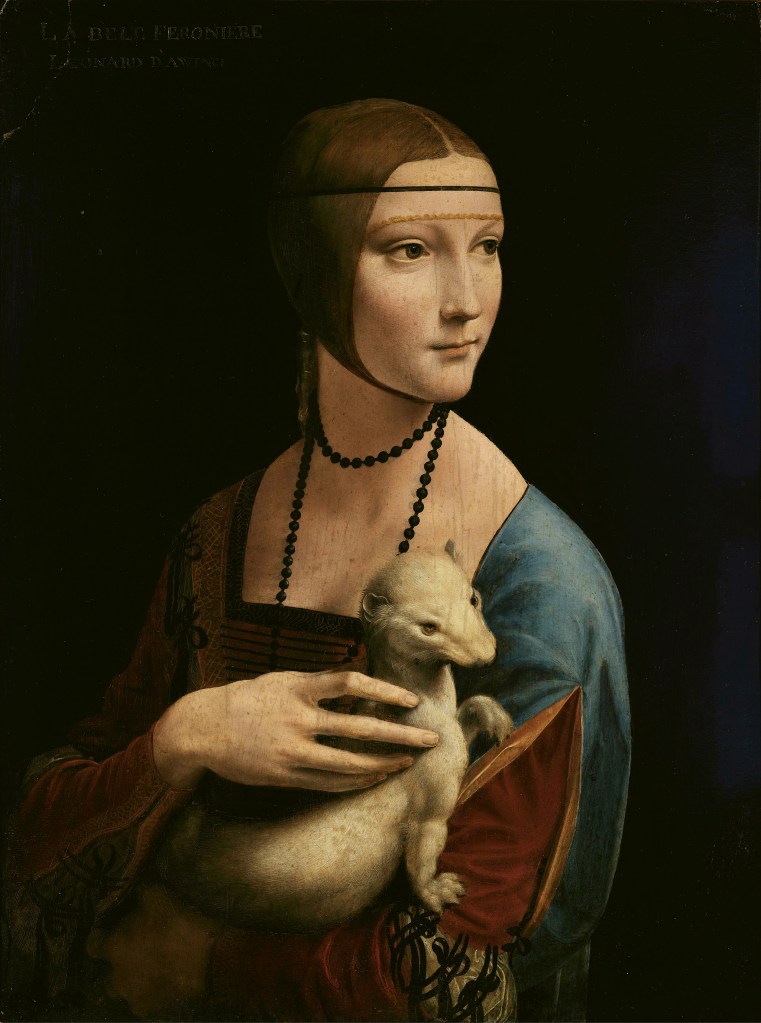
  • Cecilia Gallerani (known as “Lady with an Ermine“) at the Czartoryski Museum in Krakow, Poland.

Cecilia Gallerani was the mistress of Ludovico Sforza, Duke of Milan, and was painted while da Vinci worked in the Duke’s court in Milan, Italy. The Polish government paid 100 million Euros for the painting in 2016.

Trivia: Many believe that Leonardo da Vinci continuously reworked the Mona Lisa throughout his life; it was still in his possession when he died. The fact that the Mona Lisa does not have eyebrows suggests, to me, that the painting was still unfinished. The absence of eyebrows in the Mona Lisa has led to other theories as well:

  • Others argue that da Vinci might have intentionally left them out for artistic reasons.
  • There’s also the theory that the eyebrows might have faded over time due to the varnish or other conservation issues.

Source: Leonardo da Vinci by Walter Isaacson, 2017. Graphic: Lady with and Ermine by da Vinci, public domain.

Journalism – Denver Post 2024

I’ve been running a weekly post on the shortcomings and biases within the news media complex since April of 2024, starting with Walter Duranty of the New York Times covering for Stalin’s forced collectivization of Ukrainian farms in 1929. Duranty claimed in 1933 that no Ukrainian’s died of starvation even though estimates stated that up to 5 million did die from severe ‘food shortage’ in Timesman’s words.

I’ve attempted to cover just the most egregious and mendacious examples of media malpractice over the last 9 months amounting to about 30 posts spanning about 95 years of print and broadcast journalism. One thing that has become clear over that time is reporting hasn’t improved; fabrications, prevarications, and deceptions still appear to be the currency of the realm. Objective and factual journalism only appears when there are no winners or losers, a rare occurrence indeed.

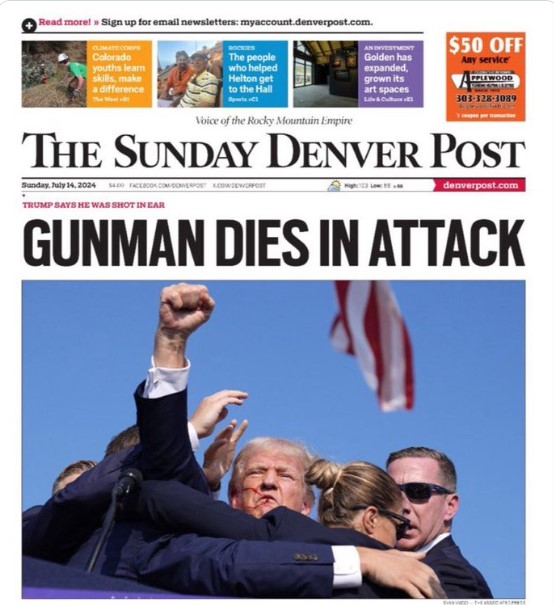
So, let’s start off the new year with the Denver Post’s initial headline documenting the attempt on Trump’s life at his Butler rally on 13 July 2024: “Gunman Dies in Attack.” A major candidate for the presidency is almost killed and the paper’s concern is for the assassin.

After taking considerable flak for that headline the Post scrubbed the headline from their website and replaced it with “Trump is injured but ‘fine’…

Graphic: Front Page Denver Post, via Charlie Kirk, 14 July 2024, X.

Journalism – Hunter Biden’s Laptop and the FBI 2019-2020:

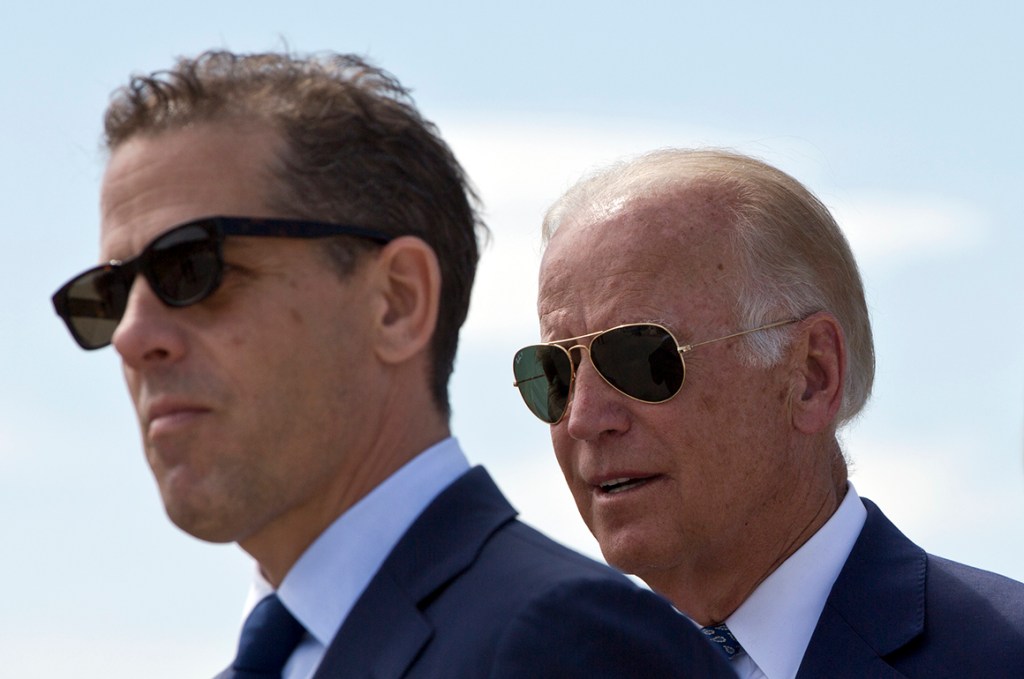
In October 2020, a few weeks before the election, the New York Post reported on the existence and contents of Hunter Biden’s laptop. Media sources other than the Post did not report on the laptop, supposedly due to concerns about the authenticity of the computer and its contents. Below is a partial timeline of FBI’s involvement in the laptop.

  • Summer 2019: John Paul Mac Isaac, owner of the computer repair shop, attempted to notify the FBI through his father that he had a laptop belonging to Hunter Biden. The FBI turned Isaac away.
  • October 2019: The FBI contacted Isaac’s father and eventually Isaac to discuss the laptop, which occurred during the impeachment of President Trump. That same month, Hunter Biden’s attorney contacted Isaac about the laptop, but nothing came of that interaction.
  • November 2019: The FBI authenticated the laptop as belonging to Hunter Biden and determined it was not part of any foreign disinformation campaign. The FBI authenticated the laptop, in part, by matching communications contained on the computer with intercepted 2017 communications from China. The FBI kept the authentication confidential, supposedly due to concerns over foreign disinformation.
  • December 2019: The FBI seized the laptop from Isaac under a subpoena issued by a Wilmington Grand Jury. The grand jury had been investigating Hunter Biden’s foreign financial dealings. The IRS was also notified that the laptop likely contained evidence of tax crimes.
  • Run-up to the 2020 Election: The FBI warned social media companies about potential foreign disinformation related to the laptop, which caused the story to be suppressed on Twitter and Facebook.
  • Post-2020 Election: The FBI continued to remain silent about the authenticity and contents of the laptop, citing concerns over foreign disinformation and ongoing criminal cases.

Sources: Morris and Fonrouge, NY Post, 2020. John Solomon, Just the News, 2020. Kerr and Simonson, Free Beacon, 2023. Oliver, Washington Examiner, 2023. Sperry, NY Post, 2023. Graphic: President Biden and his son Hunter, AP Photo/Visar Kryeziu).

Free Trade

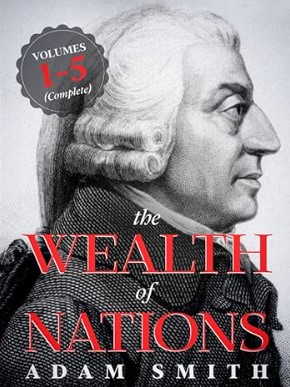
Adam Smith, author of Wealth of Nations, advocated free trade if a country’s savings were increasing, and it produced more than it consumed. He qualified his pro-free trade sentiments by declaring that a country with a low savings rate, producing less than it consumes, and experiencing consistent negative trade balances with its competitors is potentially in for some hard reckoning, including:

  1. Reliance on Foreign Capital: With low savings, a country will have to resort to financing large negative trade balances with foreign lenders, leading to an unhealthy dependency on those countries.
  2. Currency Depreciation: Persistent trade deficits can put downward pressure on the country’s currency value and are potentially inflationary.
  3. Vulnerability to External Shocks: A country with low savings and a negative trade balance is more vulnerable to external economic shocks, leading to economic instability.
  4. Investment Constraints: Limited domestic savings may constrain the country’s ability to invest in infrastructure, education, and other critical areas that support long-term economic growth.

Source: Wealth of Nations by Adam Smith.

Santa Julia Reserva Mountain Blend 2022

Bordeaux Red Blends from Uco Valley, Mendoza, Argentina

70% Malbec, 30% Cabernet Franc

Purchase Price: $12.99

James Suckling 91, Robert Parker 91, ElsBob 90

ABV 13.9%

Aromas of plums and herbs, medium-bodied, tannic, balanced, with a medium finish on the palate. Enjoy it by itself or with a few Godiva chocolate truffes.

An excellent wine at less than half what you would expect to pay for a comparable wine.

Near Death Experiences

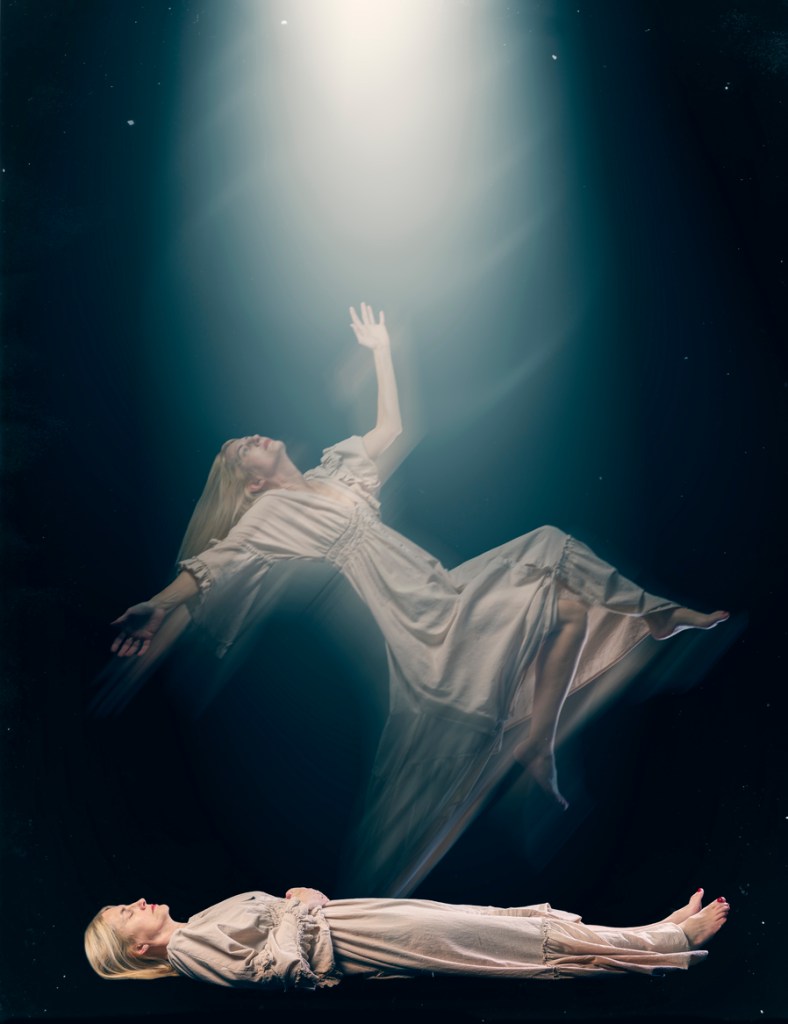
Bruce Greyson in a paper published in the Journal Humanities states that, “Near-death experiences (NDEs) are vivid experiences that often occur in life-threatening conditions, usually characterized by a transcendent tone and clear perceptions of leaving the body and being in a different spatiotemporal dimension.”

NDEs have been reported throughout history and across various cultures, with many interpreting them as proof of life after death or the continuation of existence beyond the death of the physical body.

Dr. Eben Alexander, a neurosurgeon, experienced his own NDE during a week-long coma induced by a brain illness. During this experience, he reported traveling outside his body to another world, where he encountered an angelic being and the maker of the universe. He interpreted his experience not only as evidence that consciousness exists outside the mortal body but also as proof of God and heaven.

Socrates believed that the soul, a concept encompassing not only consciousness but also the whole psyche of a person, was immortal and existed in a realm beyond the physical world. According to the Platonic concept of “anamnesis”, the soul is temporarily housed in the mortal body until the body’s death, at which point it returns to a “spiritual” realm. Socrates firmly believed that because the soul is immortal, it is imperative to live a moral and virtuous life to avoid damaging the soul.

Zeno of Citium and the Stoics, following in Socrates’ footsteps, developed the concept of “pneuma” or spirit, which they viewed as a physical substance that returns to the cosmos after the death of the body. They believed that the universe is a living being, a concept known as “pantheism,” and that pneuma or souls are part of the greater universal whole.

Omniscience–Omnipresence.

Source: The Near-Death Experience by Sabom, JAMA Network, Proof of Heaven by Alexander. Memorabilia by Xenophon. Graphic: Out of Body, istock licensed.

Faith

All money is a matter of belief”, according to Adam Smith, author of The Wealth of Nations.

The value that is assigned to money is subjective and is essentially a matter of trust. There isn’t a fixed value for money except the belief that it is useful for the exchange of goods and services.

If that faith or trust erodes, then its value can drop sharply and lead to crises in the economy or society.

Money is an idea, and it’s built on trust. Bitcoin and the Dollar are an idea.

Source: The Socratic Method: Money.