Chateau Bel Air Haut-Medoc 2012

W Bel Air.jpgBordeaux Red Blends from Medoc, Bordeaux, France (Domaines Joel Irigaray)

55% cabernet sauvignon

45% merlot

12.5% alcohol

Opened 7 Oct 2017

els 8.9/10

Hailing from the St. Emilion area on the right bank of the Gironde, Chateau Bel Air, Joel Irigaray Domaines, is a Bordeaux blend of Cabernet Sauvignon and Merlot.  St. Emilion is blessed with wonderful mix of vine growing soils of gravel, clays and limestone, coupled with an oceanic climate of hot summers, and warm autumns, with just the right amount of rain when needed. The vineyards around St. Emilion and the Bordeaux region date back to at least the Roman plantings in the 2nd century AD; proving that good things do last.

A good, solid, dark, purple to ruby-red wine, redolent of cherry fruits, smooth tannins and acidity.  Serve with a juicy rib-eye and enjoy its balanced and long finish.

A good wine.

$13.99

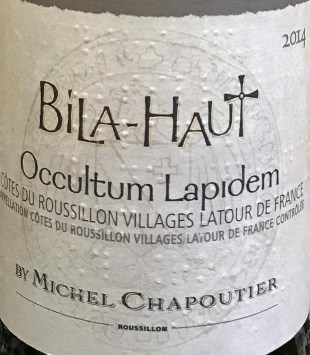
Bila-Haut Occultum Lapidem 2014

W Bila HautRhone Red Blends from Languedoc-Roussillon, France

Proprietary blend of syrah, grenache, and carignan

14% alcohol

els 9.2/10

Wine Advocate 92

Wilfred Wong 91

Wine Spectator 90

Occultum Lapidem, in Latin, a hidden stone, wine birthed in the valleys and terraces on the northern flanks of the Pyrenees in southern France, about 25-30 miles from Catalan Spain, and 20-25 miles from the Gulf of Lion in the Mediterranean Sea, near the small villages of Latour and Lesquerde; not far from the path of Hannibal’s army and elephants around 218 BC, marching towards the heart of the Roman Empire. The Pyrenees’ rock layers, jumbled, and thrust together in towering, reaching for the heavens, jagged waves, by the cataclysmic joining of the Iberian peninsula subducting beneath southern France, supply the building blocks for the vineyards’ difficult and cantankerous soils.  The soils, composed of gnarled gneisses, and pressured schists, both from the Devonian (maybe Precambrian gneisses), along with Jurassic chalky carbonates, impart diverse and distinctive, but obviously, as noted below, delicious and enticing flavors to the wines.

This Rhone red blend has a dark garnet color, extolling pleasant aromas of blackberries, cherries and plums, spicy and full-bodied with very balanced tannins and acidity.  Beautiful finish.

An outstanding wine.

$26.99 wine.com

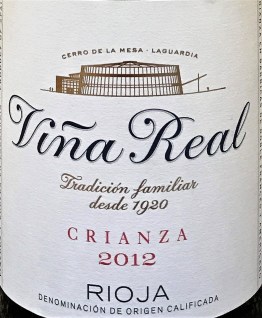
Vina Real Crianza 2012

W Vina RealOther Red Blends from Rioja, Spain

90% tempranillo

10% garnacha, graciano and mazuela

13.2% alcohol by volume

els 9.0/10

Guia Penin 93

Wine Advocate 92

Compañía Vinícola del Norte del España, CVNE, a family winery and vineyard, was founded in 1879 in the small town of Haro within the wine growing region of Rioja, Spain. The town is renowned for the annual Haro Wine Festival, celebrated on the 29th of June, in honor of the town’s patron saint, San Pedro.  The event is inaugurated each year, with a possibly, somber and sober mass at the Hermitage of San Felices de Bilibio, followed by wine drinking competitions, and drenching thine neighbor with buckets of red wine, producing a population of lovely, glowing, lavender hued, inebriated participants. Songkran take note.

Today the company includes 4 wineries including Vina Real in Laguardia, established in 1920s, near the provincial seat of the Rioja wine district, Logrono; producing some of first oak barrel aged wine in the region.

The vineyards are grown on calcareous soils in the Rioja Alavesa wine sub-region at a few hundred feet above sea level, south of the Cantabrian Mountains, enjoying a calm, continental climate of moderate days in the low 70s, and nights dipping into the low 60s with 2 to 4 inches of rain during the growing season, although 2012 was very dry.

The wine has a clear to brilliant, garnet to ruby-red coloring; a bouquet of blackberries, cherries, plums, and earth. A wonderfully balanced, medium bodied wine with a very nice finish.

An outstanding wine.

$13.99 wine.com

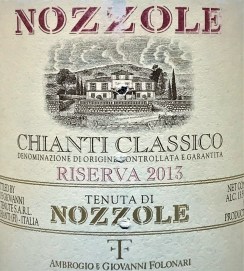
Tenuta di Nozzole Chianti Classico Riserva 2013

W Nozzole ChiantiSangiovese from Chianti, Tuscany, Italy

100% sangiovese

13.5% alcohol by volume

els 9.1/10

Vinous 93

Wilfred Wong 90

The Italians, Ambrogio, and his son Giovanni, the seventh and eighth generations of wine makers in the Folonari family, acquired the Nozzole Estate in 1971; continuing the family tradition of producing fine Tuscany wines since the 1700s.

The Nozzole Estate, less than 20 miles south of Florence, was known as a producer of fine wines as far back as the 1300s. The immediate proximity of the estate to Florence is prima facie evidence that the winery supplied the city with a significant amount of Nozzole’s output, making a claim to the creative spirit and charm of this city.

Florence, birthplace of the Renaissance in the middle 1300s was known, from historical records, to import, during this time period, 6 to 7 million gallons of wine inside the city walls each year; estimated to have a population of 80,000 to 95,000 citizens; happily providing every person with a bottle of wine every day. It is no coincidence that the Florence of old is synonymous with the creative brilliance, magnificence, patronage of notables like Leonardo, Botticelli, and Medici: paintings, sculpture and money.

Moving into the present, estimates are that the world produces upwards to 36 billion bottles of wine every year, barely enough to give every soul a miserly bottle of wine every 2 or 3 months. It is no coincidence that the world today generates copious amounts of lawyers, guns and…money.

The Nozzole’s vineyards are  222 acres of Sangiovese grapes, grown in the Chianti Classico sub-region of central Tuscany, sunning themselves 1000 feet above sea level on the rolling hills of weathered sandstone and chalky marlstones. Mild nights, temperatures from the low to high 50s, and hot days reaching up into the mid-80s persuade the grapes to give up a full-bodied wine, nudged along with 1.5 to 3 inches of rain per month during the growing season.

This Chianti is a dark, purple to ruby-red, aromas of acidic, dark cherries and raisins, tannins just right for a long, structured finish.

An outstanding wine.

$19.99 wine.com

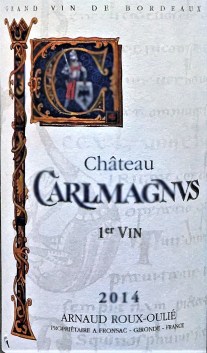
Chateau Carlmagnus 2014

W Carlmagnus BordeauxBordeaux Red Blend from Fronsac, Bordeaux, France.
Proprietary red blend.
14.5% alcohol by volume

els 9.1/10

Wine Advocate 90-92

Wine Spectator 90

James Suckling 90

Fronsac, a wooded and hilly area, east of the Bordeaux wine region, in southwest France, is located near the northern bank of the Dordogne river, just a few miles west of the small city, Libourne; home of numerous appellations including Saint-Emilion, Pomerol, and of course, Fronsac.

Merlot is the main grape variety harvested here along with a smattering of Cabernet Franc, grown on primarily clayey-limestone soils. The vineyards sit atop a network of limestone caves, serving as the winery’s cellars. The summer climate is mild and sunny with temperatures dipping into the low 50s at night, and the days range from the mid 70s to the low 80s. Rain brings 1 to 2.5 inches of water per month.

Chateau Carlmagnus is a gorgeous dark purple, cherries and plums dance into your nose, slightly acidic but is quickly tamed.  This is a full-bodied, complex but balanced wine.

A outstanding wine.

$17.99 wine.com

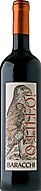
Baracchi O’lillo 2014

W Baracchi OlilloTuscan Red Blend from Tuscany, Italy
25% cabernet sauvignon
25% merlot
25% sangiovese
25% syrah
14.5% alcohol by volume

els 9.0/10

James Suckling 93

Wine Spectator 90

The Baracchi winery and vineyards are located on the southern, sunny slopes of the Apennine Mountains, in the eastern central area of Tuscany, just outside the stone walls of the ancient, small city of Cortona.

Legend has it that Cortona was originally established by Noah, shortly after the great flood; falling in love with the fertile soils and natural beauty of the area. Umbrians, Etruscans, Romans, Guelphs, Medici, Italians have all called Cortona theirs. The town, at approximately 1600 feet above sea level, overlooks Lake Trasimene, the setting for one of the Roman Empires great military defeats at the hands of Hannibal in 217 BC (Carnage and Culture, The Punic Wars).  When touring the Tuscany wine region this is a required stop to cherish and savor the legends, the history, the scenery, the food, and certainly, the wine.

The Baracchi Estate, winery and vineyards, a family business since 1860, is run by Riccardo and his son Benedetto, producing some of the best wines in the region. There are 4 vineyards sitting about 1000 feet above sea level, enjoying hot days, rising to the high 80s, and cool nights dipping down to the chilly low 50s. The rains, coming roughly once a week, deliver from 1.5 to 3 inches of water per month to the thirsty vines. The soils range from sandy to clayey and chalky. The wines are aged in French oak barrels.

This red blend is a brilliant ruby-red, redolent with red and black cherries and just a whisper of black pepper.  The tannins are about as smooth as a cloudless Mediterranean sky, with an enjoyable, hearty and long finish.

An outstanding wine.

$19.99 wine.com

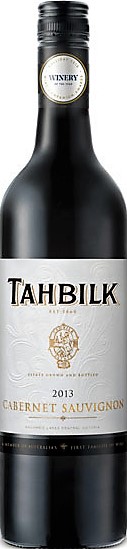
Tahbilk Cabernet Sauvignon 2013

W Tahbilk 2013Cabernet Sauvignon from Central Victoria, Australia
100% cabernet sauvignon
14.0% alcohol by volume

els 8.9/10

Australian Wine Companion 94

Wine Spectator 90

Tahbilk established itself in 1860, as the first winery in the Goulburn Valley of Central Victoria, Australia and is one of the oldest wineries in Australia. Reginald Purbrick purchased the winery in 1925 and 5 generations of family have been making wines there ever since.

The vineyards are situated less than 500 feet above sea level but the temperatures are cool nights of about 50 degrees Fahrenheit with the days hovering in the low 80s during the growing season. Rain is sufficient at about 1.5 to 2.5 inches per month. The soils are sandy.

Tahbilk cabernet sauvignon is produced from about 70 acres of old vines planted in 1949.

The wine is a brilliant ruby-red with a great fragrance of black cherry and plum.  Mild herbal and spice hints add to its sensual aroma. The tannins are smooth and easy, producing a balanced but a long and intense finish. A good wine.

$19.99 wine.com

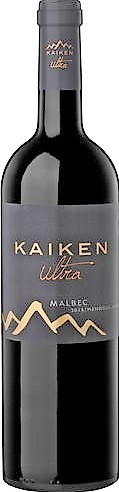
Kaiken Ultra Malbec 2013

W Kaiken Malbec 2013Malbec from Mendoza, Argentina
100% malbec
14.5% alcohol by volume

els 8.7/10

James Suckling 93

Wine Spectator 90

The Kaiken Winery, named after the gregarious caiquen goose, is located a few miles southwest of Mendoza, Argentina on a medial position of an alluvial fan born from sediment disgorged from the towering Andes to the west, and a few stones throw north of the spirited, flowing braids of the Rio Mendoza.

The malbec grapes are harvested from 3 vineyards north and south of Mendoza, ranging from 950-1250 meters above sea level, rendering thirsty, hot days and dry, cool nights, partnering with the sandy, loamy soils in providing temperament and complexion to the impending wines.

With a clear ruby-red color the wine exudes a black cherry and plum bouquet with a mild vanilla sweetness coming later. This malbec is smooth all around; pleasant and mellow tannins with a simple and balanced finish. On a better day I might rate this wine 9.0/10 but it just doesn’t manifest the pizzazz, personally, to push it to that level.

The 2013 vintage is very difficult to find but there is a similarly rated 2015 Kaiken Ultra Malbec available for $18.99 wine.com.

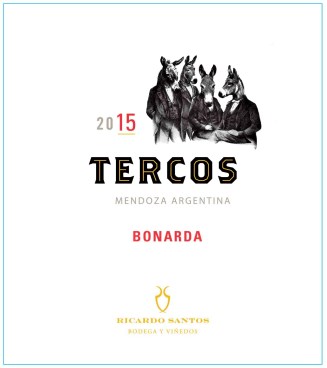
Tercos Bonarda 2015

W Tercos Bonarda 2015Bonarda from Tupungato, Uco Valley, Mendoza, Cuyo Region, Argentina

100% bonarda

13.9% alcohol by volume

Purchased: 12 July 2017 – $19.99

Opened: 8 September 2017

els:  9.0/10

James Suckling:  93

Insider: 92

Natalie Maclean:  90

Wine Align: 86

Wine Enthusiast: 82

Argentina is the world’s 6th largest producer of wine by volume, just behind the US and ahead of Australia. It produces about 6% of the world’s total wine. The country has in excess of 500,000 acres planted in grapes. Red grapes account for about 55% of the total grown in the country with rose and whites accounting for the rest.  The country grows more than 100 varietals of grapes but the 6 main ones make up almost half of the total acreage planted. Four varietals account for 79% of all red grapes planted and 42% of the total for all red, white, and rose grapes: Malbec 36% total/20% red, Bonarda 17%/9%, Cabernet Sauvignon 14%/7%, and Syrah 11%/6%.  Two varietals account for 35% of all white grapes planted or 7% of the total of all grapes: Torrontes Riojano 20% white/4% total and Chardonnay 15%/3%. Argentina has 4 main wine-producing regions: Atlantic, Cuyo, North, and Patagonia. Cuyo is the largest and most important wine-producing, macroeconomic region in central Argentina and includes the wine sub-regions of La Rioja, Mendoza, and San Juan; with Mendoza being the largest of the 3 by area, population, GDP, and wine production.

Argentina was the first South American country attempting to grow vines, beginning in Mendoza in the early 1800s.   The initial plantings came from the Bordeaux region of France, including the ubiquitous Malbec.  Eventually, Mendoza was producing world-class Malbec wines, on par or superior to those produced in France, mainly due to its high elevations in the foothills of the Andes, well-drained soils, and lots and lots of hot sunshine. Today the country produces 75% of the world’s Malbec.  The country’s 2nd most planted grape, on 47,000 acres, is Bonarda, aka Douce Noir, Corbeau, and Charbono accounting for almost all of the world’s total acreage.

Cuyo Region, in the western Andes foothills of central Argentina is the country’s main wine-producing area that includes the provinces of San Juan, San Luis, Mendoza, and La Rioja. The region covers a 450 miles, north to south, from the village of San Blas de los Sauces in the north to the small city of General Alvear in the south. The region accounts for almost 80% of country’s wine production. The area is one of the driest wine-producing areas of the world requiring some form of irrigation for the all the vineyards.

The Mendoza region, lapping up onto the eastern foothills of the youthful Andes, is the largest wine-producing area in all of Argentina, accounting for 65-75% of the country’s total. A third of the country’s vineyards are dedicated to Malbec with Mendoza also producing the lion’s share of that variety. The region’s vineyards range from 1600-5600′ above sea level. The Mendoza wine region is partitioned into another 5 sub-areas: Central Oasis, East Mendoza, North Mendoza, South Mendoza, and Uco Valley.

The Uco Valley, striking in a north-south direction, just east and parallel to the Andes Mountains, is 45 miles long and about 15 miles wide on average. The northern edge of valley is situated at the small town of San Jose and the southern limit is anchored by the tiny village of El Cepillo. The valley is crossed by the braided Tunuyan and Tupungato Rivers, sourced from the snow packs high in the Andes Mountains. There are over 60,000 acres of vineyards ranging from 2800-5600′ above sea level in the sub-region. The main varietals grown are Malbec, Cabernet Sauvignon, Merlot, Tempranillo, Pinot Noir, Chardonnay and Sauvignon Blanc. Malbec accounts for almost 45% of all acreage planted. Soils throughout the Uco Valley are alluvial and consist of a rocky, clayey sub-soil overlain by a stony, sandy surface. The soils are immature, infertile, and well-drained; perfect for growing grapes. The dry valley sits in the rain shadow of the mountains requiring irrigation for the vineyards. Growing season temperatures range from 50-85°F with rainfall averages of 1-3.75″ per month.

Tupungato is located in the northern third of the Uco Valley, in the shadow of the Tupungato volcano and about 40 miles south of Mendoza. About a third of the acreage is devoted to vineyards with Malbec and Chardonnay the undisputed kings of the area. The soils are immature, stony and well-drained. Growing season temperatures range from 50-85°F with rainfall ranging from 0.5-1.33″ per month.

Bonarda, also known as Douce Noir, Corbeau, and Charbono, is the country’s 2nd most planted grape.  It is planted on more than 47,000 acres which is more than 99% of the world-wide total. The grape is thought to have originated in northern Italy along the Po River valley 3000 years ago, first planted by the Etruscans and brought to Argentina by Italian immigrants. It is a thick-skinned, medium-sized blueish-black grape producing a deep red wine high in tannins.  It has aromas of black fruit, plums, and anise. A full-bodied wine with great structure and long aging potential.

Ricardo Santos, owner of the Norton Winery, was the first producer in Argentina to export Malbec wines to the US in 1972. Santos sold this winery in 1989 and purchased vineyards around Mendoza, Maipu and Russell. The Ricardo Santos Bodega and Vineyards, today run by Ricardo’s sons, Patricio and Pedro Santos, has its winery located just south of Mendoza in Russell, Maipu. The winery was built in 2005 and has a capacity 700,000 liters or 185,000 gallons per year.  Its air-conditioned cellars accommodate 300 oak barrels. The winery produces 5 reds and 1 white under two labels:  Ricardo Santos and Tercos.

Tercos was developed by Pedro and Patricio Santos. The wine’s iconic, humorous and possibly triple entendre wine label of 4-donkeys in 3-piece suits is suggestive of a play on the word stubborn, the literal Spanish to English translation of Tercos, insinuating the difficulty of producing a superb wine from the local dry and poor volcanic-alluvial soils, and finally, they may be donkeys, but they dress up rather nicely.

The Bonarda grape is grown at their Finca La Pitonisa vineyard, or in English, the Witch Estate, which is in the evening shadows of the inactive Andean stratovolcano Tupungato towering another 17,799′ over the 3600′ above sea level vineyards. The volcano contributes to the silica rich, sandy loams of vineyard soils, containing various amounts of aluminum, calcium, sodium, magnesium, zinc and iron which augment the flavors and body of this wine. The vines were planted between 1977 and 1990 placing them mostly into the old vine category of lower yield but concentrated grapes. The grapes for the 2015 vintage were harvested in the 3rd week of April.

The grapes were picked, crushed and fermented in stainless steel tanks for 23 days at 77°F.  In December the wine was transferred to 15,000 3/4 liter bottles.

This is a satisfying wine with a pleasing, dark ruby-red to violet color. The aroma is easy with berries, plums and raisins in the forefront with a hint of cloves and spice. The taste is very smooth all around and the balanced finish lasts well into your next sip.

Bonarda compliments so many dishes and entrees, but I usually take a simple path and prepare a plate of thinly sliced sausages such as hard salami and summer sausage with some mild cheddar. Toss in a handful of salted cashews and seedless grapes and you’re all set. Bon appetit.

An outstanding wine at a great price. Drink this year but it’s likely good until 2025. Decant and aerate for one hour, or more, before drinking.

$12.99 wine.com

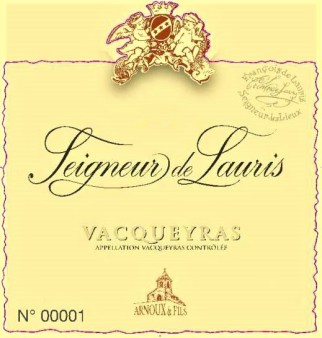
Arnoux et Fils Vacqueyras Seigneur de Lauris 2012

W Vacqueyras 2012Rhone Red Blends from Vacqueyras AOC, Rhone Valley, France

70% grenache

30% syrah

14.0% alcohol

Purchased:  12 July 2017 – $19.99

Opened:  29 August 2017

els:  9.0/10

Vinous:  93

Stephan Tanzer: 93-91

The Wine Advocate:  90


Cellar Tracker:  88

Gilbert and Gaillard:  87

France is the 2nd largest producer of wine in the world, just behind Italy and  ahead of Spain, representing about 21% of the global wine market.  The country is responsible for creating some of the most recognizable old world wines on the planet, from the bubbly Champagnes in the cool north to world-class Bordeaux along the Garonne and Dordogne Rivers to the GSMs in the warm Mediterranean south. There are 17 major wine-producing regions in the country along with another 28 smaller areas, all growing 96 varieties of predominate grapes with Merlot and Grenache the most common. Reds account for almost 70% of the 2 million plus acres planted in vines, with whites accounting for the remainder. As with the other major European wine producers, France’s vineyard acreage has been shrinking over the last couple of decades due to less demand from their home population and increased market pressures from new world producers.

The Rhone Valley wine region of southern France, extending 155 miles along  both sides of the north-south river, situated between the Massif Central to the west and the Alps to the east, produces some of the truly great red blends in the world. The wineries in this valley have practiced and perfected their craft since the Greeks came to Massilia (modern Marseille) and planted their vines in the 4th century BC. The Romans, knowing a good thing when they see it, defended Massilia from the Gaul’s in the second century BC, protecting and expanding the Rhone wine trade throughout the Mediterranean. The wines, especially from the right bank of the Rhone, have been the favorites of kings and popes since the Latin and Greek Churches parted company in 1054. In the 14th century the Latin Popes set up residency on the right bank of the Rhone at Avignon and controlled the area until the 18th century, all the while extending and perfecting the local vineyards.  In the 20th century, Rhone wineries were instrumental in codifying French laws, AOCs, to regulate the type and quality of wines produced.

Today the Rhone Valley is France’s second largest wine-producing region of over 5300 growers and producers spread over 250 communes, containing 28 appellations, and growing 27 varieties of grapes. Syrah, Grenache, and Mourvedre red grapes are the most common by acreage planted. In 2016 the region produced 80 million gallons and sold 372 million bottles of wine, produced from 175,000 acres of vines. More than 80% of the wine produced is red. A little less than a third of that wine is exported, mainly to the UK, Belgium, and the US.

Vacqueyras AOC, located at the foot of  Dentelles de Montmirail, is 14 miles east of the Rhone, 8-9 miles east of Orange, and 60 miles north-northwest of Marseille. The AOC sits along the left-bank of the Ouveze River, a tributary of the Rhone. Vacqueyras’ history goes back to the Romans in the 2nd century BC with first written proof of wine making recorded in the 15th century AD tax rolls. In 1937, Vacqueyras was added to the Cotes du Rhone area. In 1955, it became a Cotes du Rhone Village. In 1967, it became a named Cotes du Rhone village. Finally, in 1990, it obtained its AOC status. The area has 3500 acres of planted vines with red grapes comprising 97% of all grapes grown. Grenache, Syrah, and Mourvedre account for 90% of all vines planted. The area produced 12,000 gallons of wine in 2016. The soils are generally alluvial and glacial, sandy-clay with pebbles. The area enjoys a Mediterranean climate with growing season temperatures ranging from 50-80°F and rainfall ranging from 2.0-2.75″ per month.

Grenache grapes likely originated in Aragon in north central Spain. It is the 7th most commonly grown grape in the world, planted on about 455,000 acres and producing about 4% of all harvested grapes. France is the largest grower of this grape followed by Spain and is the most common grape grown in the Rhone valley. The grape is used to produce single varietals and blends. A dark-blueish, large, thick-skinned grape that produces medium to full-bodied wines high in alcohol but with medium acidity and tannins.  It is high in dark fruit and spice flavors that mellow with age.

Syrah grapes were originally thought to have originated in Persia or Syria but recent DNA analyses has shown its roots to be in Savoy, a region at the junction of France, Switzerland, and Italy, and the Ardeche region on the eastern edge of the Rhone Valley.  The grape is the 6th most grown grape in the world, planted on about 460,000 acres and producing a little more than 4% of all harvested grapes. France is the largest producer of this grape and is used to produce single varietals and blends. A small to medium-sized grape, deep purple in color, producing full-bodied wines high in alcohol and acidity with medium tannins. The wines have flavors of red and black fruits, and spice.  The wine ages well, developing aromas of leather and licorice over time.

In 1717, the Count Francois de Castellanne, de Lauris, de Vassadel, de Gerard, Chevalier marquis of Ampuis, de Lagneroux, Vacqueyras, gave Pierre Bovis, an ancestor of the Arnoux family a vineyard. Fortunately he didn’t make Pierre name the vineyard after him. Today the estate is run by Marc and Jean-Francois. Arnoux et Fils’ winery, on the right bank of the Rhone River produces it blends from low yield vineyards as prescribed by AOC rules.

The family has 100 acres of vineyards at the foot of the Dentelles de Montmirail, loosely translated as lacy, adorable mountains. These mountains formed from late Mesozoic to present day tectonic uplift, causing the nearly vertical placement of the originally horizontal, Late Jurassic-Oxfordian fine-grained basinal carbonates. The carbonates are the source of the poor argillaceous, limestone soil mixed with round stones  of the winery’s vineyards. The vines are more than 50 years-old. As stated above the vineyards enjoy a Mediterranean climate with growing season temperatures ranging from 50-80°F and rainfall ranging from 2.0-2.75″ per month, with the vines and soil being kept cool and dry by the strong mistral winds coming out of the northwest.

The grapes were hand-picked, partially de-stemmed, and spent 15 days fermenting in vats. The wine is then aged 18 to 24 months in oak barrels, 2/3 new and 1/3 used.  The wine is partially aged in the winery’s underground cellar for 12 to 18 months.

This wine has beautiful clear garnet hues which just beg you to enjoy outside on a Willie Nelson “Uncloudy Day“. Powerful aromas meet your nose with hints of raspberry, currant, black cherry, and prunes.  Whispers of mushrooms and cloves add to this delightful fragrance of liquid comfort. The tannins are smooth and easy, providing a nice balanced finish now and for years to come.

Enjoy while nibbling on some small chunks of pungent goat cheese or make a meal of it and grill up a rib-eye. Smother your steak with a red wine, peppercorn sauce.  Start with a tablespoon of butter, the real stuff, 2-3 tablespoons of finely chopped onions, a tablespoon of crushed peppercorns, a sloppy tablespoon of cognac (optional), a half cup of red wine, a cup of beef stock, and a quarter cup of heavy cream. Cook the butter, onions, and peppercorns over medium heat until the onions are soft, less than 10 minutes. Add in the cognac and reduce to nothing. Add the wine and the beef stock, bringing to a boil, reducing everything by 2/3. Add in the cream and allow to thicken.  Salt to taste and serve over a hot, juicy steak.

An outstanding wine at an ok price. Drink this year but likely good until 2022-2027. Decant and aerate for one hour, or more, before drinking.

$19.99 Wine.com