“The notions of right and wrong, justice and injustice, have there no place. Where there is no common power, there is no law; where no law, no injustice.” — Leviathan by Thomas Hobbes
Thomas Hobbes saw human nature as a cauldron of chaos. In his state of nature, life is “nasty, brutish, and short,” a “war of all against all” where self-preservation is the only natural law. Shaped by Thucydides’ tales of strife and Machiavelli’s ruthless pragmatism, Hobbes cast man’s self-interest as a destructive force that casts morality aside. His remedy to avert chaos: a towering sovereign, ideally a monarch, to crush anarchy with an iron fist. The social contract trades liberty for security, forging laws as human tools to bind the beast within. Yet Hobbes stumbled: he failed to grasp power’s seductive pull. He assumed his Leviathan, though human, would rise above the self-interest he despised, wielding authority without buckling to its corruption.
“Reason, which is that law, teaches all mankind…that being all equal and independent, no one ought to harm another in his life, health, liberty, or possessions.” — Second Treatise of Government by John Locke
John Locke painted a gentler portrait of man than did Hobbes. He rooted natural law in reason and divine will, granting all people inherent rights to life, liberty, and property. His state of nature is peaceful yet imperfect, marred by the “want of a common judge with authority,” leaving it vulnerable to human bias and external threats. Optimistic, Locke envisioned a social contract built on the consent of the governed, protecting these rights through mutual respect and laying the groundwork for constitutional rule. Where Hobbes saw a void to be filled with control, Locke trusted reason to elevate humanity, crafting government as a shield, not a shackle.
Hobbes and Locke clash at the fault line of power. Hobbes’s sovereign, meant to tame chaos, reflects the rulers’ thirst for dominance, but his naivety about power’s effect cracks his foundation. Locke’s ideals, morality, reason, rights, empower the ruled, who yearn for liberty after security sours. Hobbes missed the flaw: rulers, driven by the same self-interest he feared, bend laws to their will, spawning a dual reality—one code for the governed, another for the governors. Locke’s vision of freedom and limited government inspires their soul, while Hobbes’s call for order fortifies their bones with courts, police, and laws of men. The U.S. Constitution marries both, yet scandals tip the scales: power corrupts, and liberty frays as safeguards buckle under the rulers’ grip.
Hobbes and Locke both accept the imperfection of man but take different paths to mitigate that imperfection with workable safeguards. Hobbes insists on the rule by law but drafted by imperfect man and applied with a Machiavellian indifference with no solution for absolute powers corrupting influence. Locke also chooses to rule by law but guided by morality, God and the will to depose of despots.
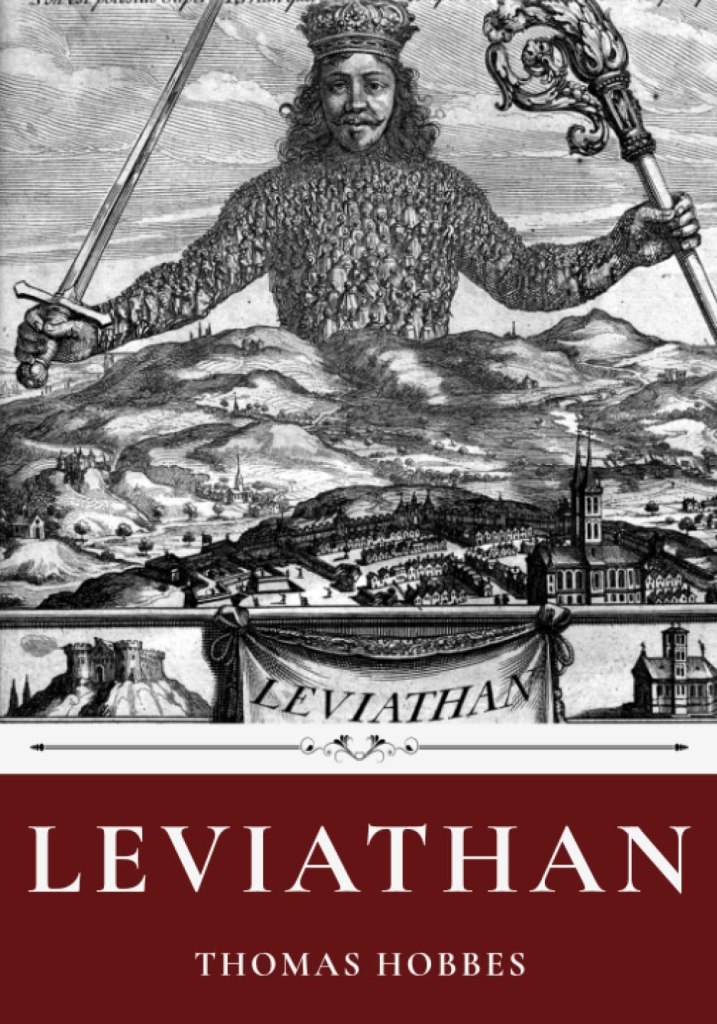
Sources: Leviathan, Thomas Hobbes; Second Treatise of Government, John Locke. Graphic:Original Leviathan frontispiece, a king composed of subjects, designed with Hobbes’s input.
Bruce Greyson in a paper published in the Journal Humanities states that, “Near-death experiences (NDEs) are vivid experiences that often occur in life-threatening conditions, usually characterized by a transcendent tone and clear perceptions of leaving the body and being in a different spatiotemporal dimension.”
NDEs have been reported throughout history and across various cultures, with many interpreting them as proof of life after death or the continuation of existence beyond the death of the physical body.
Dr. Eben Alexander, a neurosurgeon, experienced his own NDE during a week-long coma induced by a brain illness. During this experience, he reported traveling outside his body to another world, where he encountered an angelic being and the maker of the universe. He interpreted his experience not only as evidence that consciousness exists outside the mortal body but also as proof of God and heaven.
Socrates believed that the soul, a concept encompassing not only consciousness but also the whole psyche of a person, was immortal and existed in a realm beyond the physical world. According to the Platonic concept of “anamnesis”, the soul is temporarily housed in the mortal body until the body’s death, at which point it returns to a “spiritual” realm. Socrates firmly believed that because the soul is immortal, it is imperative to live a moral and virtuous life to avoid damaging the soul.
Zeno of Citium and the Stoics, following in Socrates’ footsteps, developed the concept of “pneuma” or spirit, which they viewed as a physical substance that returns to the cosmos after the death of the body. They believed that the universe is a living being, a concept known as “pantheism,” and that pneuma or souls are part of the greater universal whole.
Omniscience–Omnipresence.
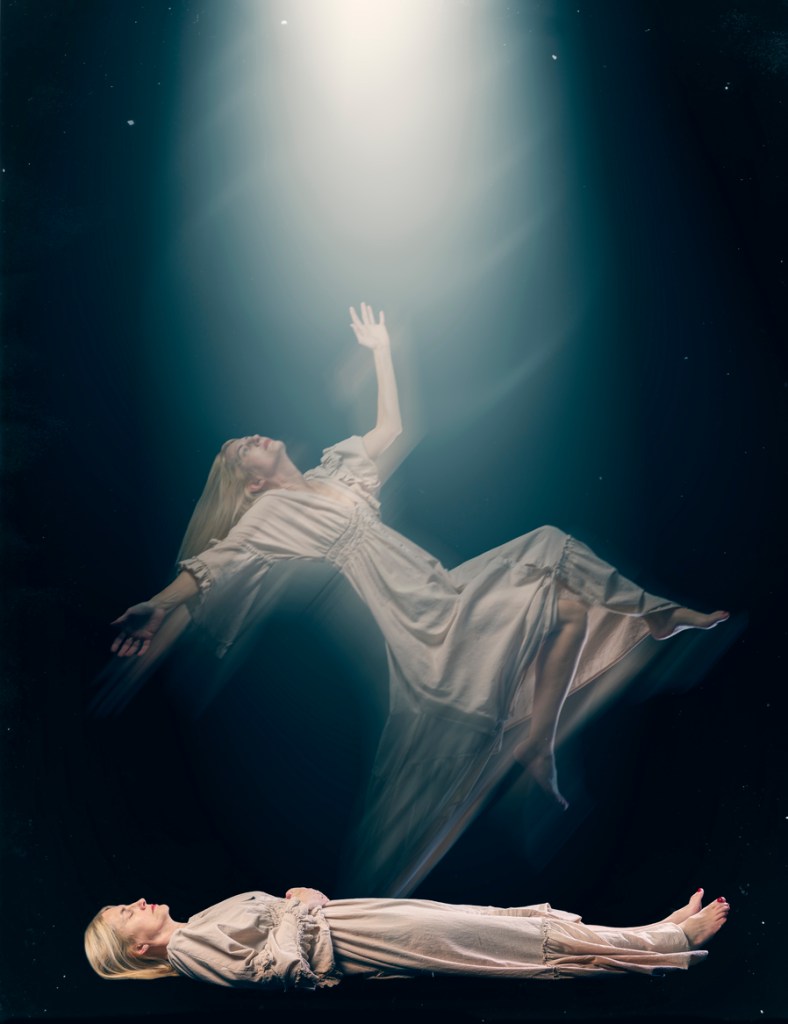
Source: The Near-Death Experience by Sabom, JAMA Network, Proof of Heaven by Alexander. Memorabilia by Xenophon. Graphic: Out of Body, istock licensed.
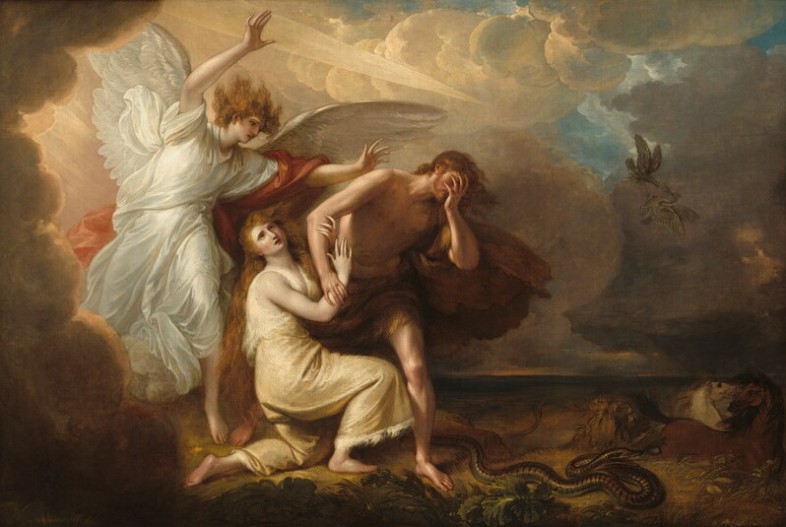
God’s Edenic Covenant with Adam and Eve in which they were promised eternal life and given dominion over the animals stipulated that they were to obey one command: not to eat the fruit from the tree of knowledge (of good and evil).
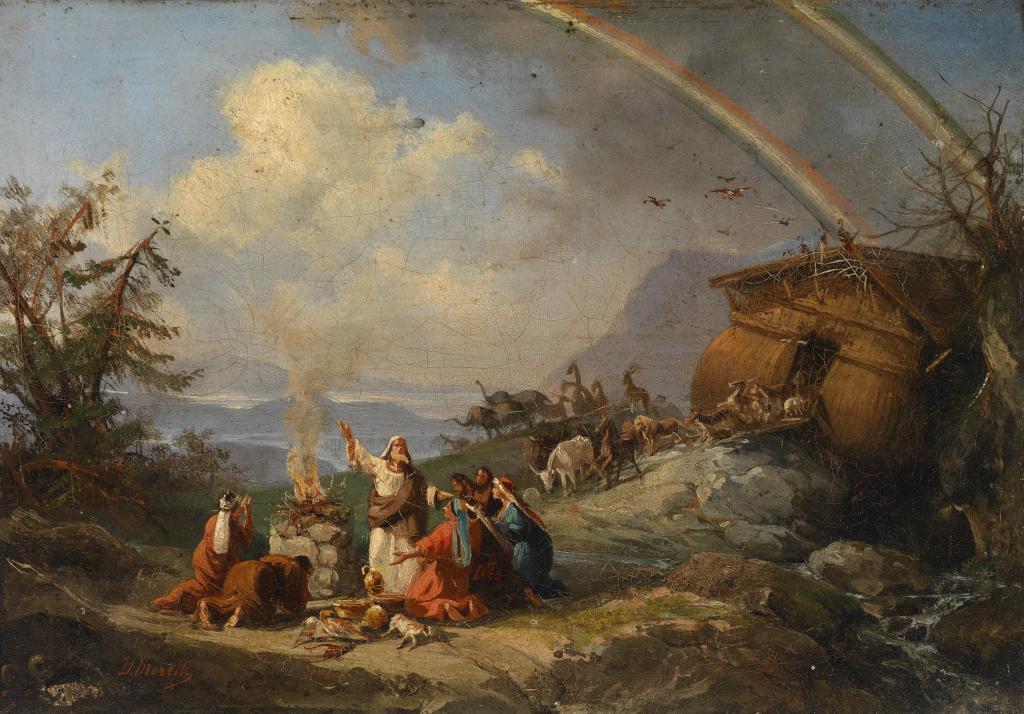
That didn’t work out well for Adam and Eve, so he made a covenant with Noah after the flood that included seven laws for man to live a just and moral life. With man’s observance, God promised to never destroy the world by flood again. God sealed the covenant by creating a rainbow.
The seven laws of Noah:
1 – Do not worship false gods
2 – Do not curse God.
3 – Do not murder.
4 – Do not commit adultery or sexually immorality.
5 – Do not steal.
6 – Do not eat flesh from a living animal.
7 – Establish courts of justice.
Source: Seven Laws of Noah by Slon Anava, 2014, Azmut. Graphic: Noahs Dankgebet by Domenico Morelli 1901, Public Domain.
Josephus’s 20 volume history of the Jews titled: The Antiquities of the Jews was written to provide an account of the Jewish people for his Roman patrons and protectors.
Below is a synopsis of the 20 volumes:
Biblical creation to the death of Abraham’s son Isaac
History of Isaac’s sons to the Exodus of Jews from Biblical Egypt
Exodus from Egypt to the first 2 years of the 40 years in the wilderness
The remaining 38 years in the wilderness to the death of Moses upon reaching Canaan
Joshua’s replacement of Moses as leader to the death of the priest Eli
The capture of the Ark by the Philistines to the death of King Saul
David’s ascension to the throne of the Kingdom of Israel to the death of King David
Solomon’s ascension as King of Israel to the death of King Ahab
Reign of King Jehoshaphat to the fall of Samaria
Babylonian captivity of the Jews and the destruction of the Neo-Assyrian Empire
Start of the Persian Empire of Cyrus the Great to the death of Alexander the Great
Death of Alexander the Great to the Maccabean Revolt
Origins of the Hasmonean dynasty to the death of Queen Alexandra
The death of Queen Alexandra to the death of Antigonus II Mattathias
Herod the Great’s taking of Jerusalem to the completion of King Herod’s temple
Completion of King Herod’s temple to the death of Herod’s sons
Death of Herod’s sons to the banishment of King Archelaus
Josephus history covers major portions of the Old Testament including Genesis, Exodus, Numbers, Joshua, Judges, Ruth, Samuel 1&2, 1&2 Kings, 1&2 Chronicles, and Prophets. Josephus’s accounts provide for additional material and commentary not found in other texts including the bible.
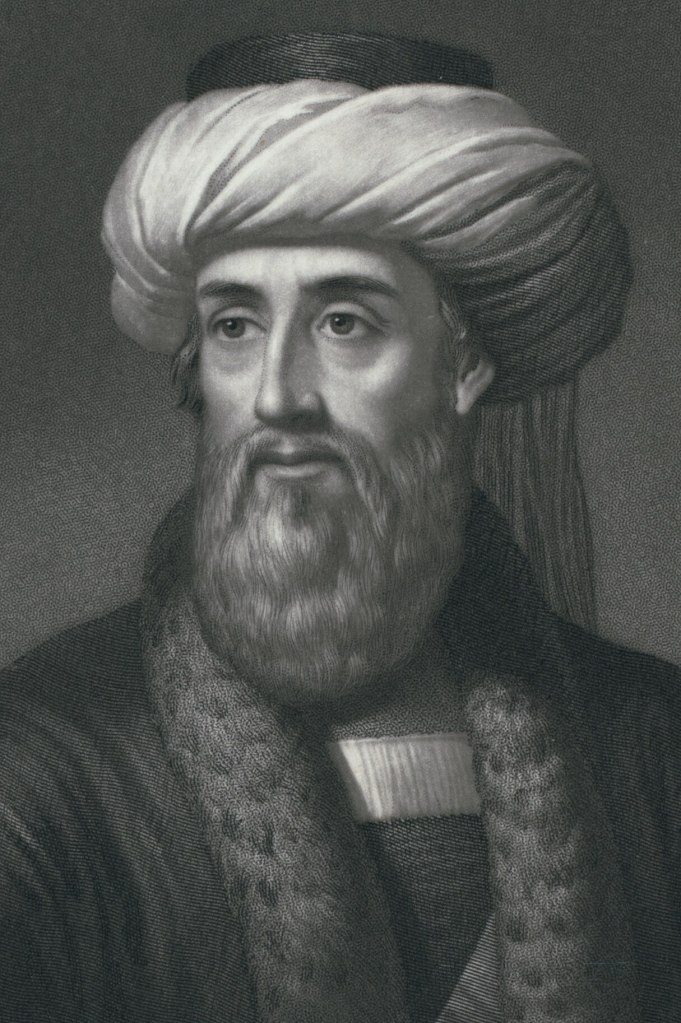
Source: Josephus: The Complete Works, 2003. Jewish Virtual Library. World History Encyclopedia. Graphic Joseph, Son of Gorian, by Thomas Emmet, 1880, public domain.
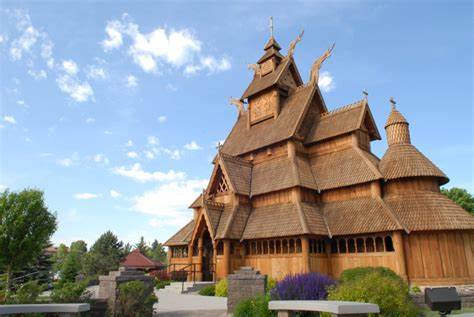
At the Scandinavian Heritage Association’s Heritage Park in Minot, North Dakota there is a full-size replica, built in 2000, of the Gol Stave Church. The original was constructed in Gol, Hallingdal, Norway (~100 miles NW of Oslo) around 1250 AD. It was moved to Bygdoy Park in Oslo, Norway about 100 years ago.
According to Valebrokk et al, inside the church, the corner posts are essential. They are often accentuated and are heavier and more richly decorated than the other structural elements. “They represent the four gospels whose teachings are the supporting foundation of all Christianity” is the description given in a sermon in the thirteenth century. This sermon was held during a church consecration, in which each section of the stave church’s structure was related to spiritual values. The beams upon which the columns rest “signify God’s apostles, the foundation of all Christianity.” The floorboards represent “the humble men who bow in honour; the more they are exposed to the trampling feet of the congregation, the more support they provide.”
The roof surface which protects the church from snow and inclement weather “represents the men…whose prayers protect Christianity from temptation.”
In addition to the replica in Minot, additional replicas exist in the Gordarike Family Park in Gol, which was built in 1995 and in the Norwegian Pavilion in EPCOT, Orlando which was built in 1984.
Source and graphic: scandinavianheritage.org. Excerpts above from Norway’s Stave Churches by Eva Valebrokk and Thomas Thiis-Evensen. Wikipedia.
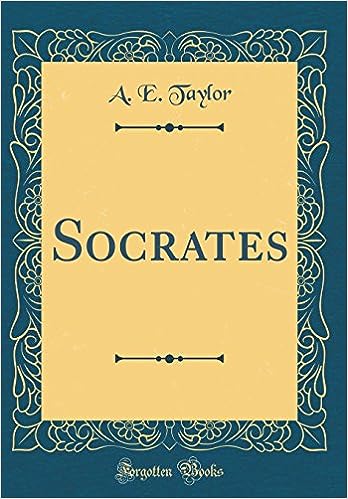
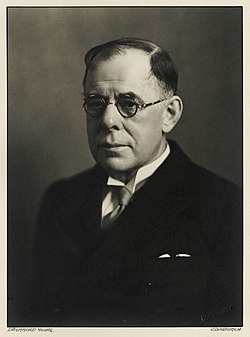
Alfred Edward Taylor was born in Oundle, England in 1869, and died in Edinburgh, Scotland in 1945. He was a professor, a Greek classicist, and a philosopher of metaphysics and ethics. He spent his adult life at the ancient Scottish Universities of St. Andrews and Edinburgh researching and teaching the spiritual; the immortal basis for morality and the philosophy of Plato. Plato was a student of Socrates and as such he was a concern to and within the orbit of Taylor.
Socrates’, leaving no written record, entire philosophical corpus and biography have reached us today primarily through the writings of two near contemporary Greeks: Plato and Xenophon. Taylor’s contribution to our present day understanding of Socrates was to argue that Plato’s four basic texts on Socrates: Euthyphro, Apology, Crito, and Phaedo, are accurate depictions of what Socrates said and did. Xenophon, who also wrote extensively about Socrates but later, Taylor argued, is less reliable. This may seem trivial, but this point has been and still is contested due to the immense stature of Socrates as one of the founders of Western philosophy in general and ethics in particular. The basic question among philosophers is whether Plato’s writings describing Socratic philosophy are accurate or are amalgamations of Socratic and Platonic thought? Who knows? The dispute will continue till the end of days so we will leave it as Taylor says.
Taylor’s studies within the philosophy of ethics and morality centered on what is right and good, whether the two were complementary and/or achievable. Taylor argued right and good or the moral practice of the individual is constrained and flawed without the aid of the supernatural: God. His thesis was that searching inward, within oneself for rebirth and betterment, for a moral compass, flows only in circles leading nowhere. To reach a higher level of morality or good requires looking outward to the spiritual through contemplation of the eternal good. Taylor argued that the will to reach for a better or eternal good is impetus for the eternal, the divine good to reach for you. Additionally, morality, Taylor surmises, plateaus in the human confines of a person’s physical life, requiring, unfortunately or fortunately depending on your perspective, death to continue the soul’s moral journey for better or worse.
Socrates:
Any biography of Socrates is going to be short. Almost all authoritative writings concerning his work, teachings, and life that have reached us in the 21st century consists of approximately two hundred written pages, in English, by Plato and about three hundred English written pages by Xenophon with the two containing significant overlap. Taylor’s biography, using Plato and Xenophon as primary sources, is no exception managing to encapsulate Socrates’ remarkable life into a quick read of 142 pages. Within these few pages concerning this most remarkable man everything has been disputed except for the Athenians putting him to death for being a royal pain in the rear, some have used the term gadfly. That is the one piece of his life that no one disagrees with. No one disputes that he was put to death in 399 BC, and it is likely that no one disputes that he was a royal pain in the posterior, a gadfly.
Socrates was born, circa 469 BC, grew up and lived in Athens until he was put to death in 399 BC at the age of seventy. He lived during the Golden Age of Athens (478-404 BC) and the overlapping Age of Pericles (461-429 BC) both now combined and known by the excessively non-descriptive non-demonym: Fifth Century Athens. (Why classical historians thought this was a useful, didactic change defies any sound, logical reasoning. Alas it was changed to avoid hurt feelings of Greeks and Athenians whose best years occurred two thousand seven hundred years ago. How you soothe pouting children should not be an instruction manual for sane adults.)
Socrates only left Athens to serve in military battles prior to and during the (second) Peloponnesian War. He was a hoplite in the Athenian army, a heavy infantry soldier outfitted with a shield, sword, and/or spear fighting in a phalanx or block-like formation. By all accounts he was a good and courageous soldier. His first recorded engagement, at the age of thirty-eight, was the battle and siege at Potidaea beginning in 432 BC. lasting until 429 BC. Potidaea was a Greek city-state, approximately 155 miles, as the crow flies, north of Athens, threatening to break free of Athenian control. This battle helped trigger the much larger and costlier Peloponnesian War beginning in 431 BC and lasting until 404 BC.
Socrates saved the life of Alcibiades, a gifted Athenian general and politician, but exceptionally duplicitous and erratic. Socrates heroic action should have garnered him the prize for valor, but Alcibiades was awarded it instead due to his higher birth and rank. A very powerful disincentive to the rank and file indeed.
Five and seven years later Socrates fought for Athens in the losing battles of Delium and Amphipolis, respectively, during the initial stages of the twenty-seven year-long Peloponnesian War. During the battle of Delium in 424 BC, Alcibiades saved Socrates’ life thus repaying Socrates’ valiant deed and cementing their life-long, but problematic, friendship.
Alcibiades recounts a story of Socrates during the engagement of Potidaea that bears on the philosopher’s power, or possibly prophetic power of thought. One morning Socrates, while contemplating an assumed perplexing problem became motionless, a state he remained in until the next morning when he said a prayer and walked away invigorated, amazing his fellow soldiers who had been watching him through the night. This story has him either being completely lost in thought, refusing to move to avoid breaking that train of thought, or as another occurrence of the ‘Sign’, voice, or daimonion that came to him, starting in his childhood and continuing throughout his adult life.
The ‘Sign’ was a voice usually described as an inner call, not to action, but to caution, a warning of future woes to come. Socrates mentioned at his trial that whenever the voice spoke to him it turned him away from something he was about to do. Some believe the ‘Sign’ was simply his subconscious speaking to him while others feel it was divine. A message from God.
To stretch a minor detail, Socrates almost never referred to the Gods, just God in the singular, a minor point yes, but a point all the same that the ‘Sign’ may have been religious vision or experience from the perspective of monotheism versus accepted Greek polytheism. At his trial he states, “It is to fulfill some function that I believe God has placed me in the city. I never cease to rouse each and every one of you, to persuade and reproach you all day long…” His ‘Sign’ did not speak to him during his trial leaving him to conclude that the sentence of death was something he should accept.
Socrates’ ‘religion’ began with his belief in the soul, and that it was immortal and unchanging. The soul existed before you were born and continued after your death. He believed the soul was your truth, your essence, your reality beyond your corporal self. He believed the soul must be looked after and kept in immaculate condition.
Socrates believed that to care for your soul required a focus on personal growth. Growth comes from the pursuit of wisdom and knowledge, the study of philosophy, to further one’s understanding of not only yourself but the world around you. The pursuit of wisdom through what became known as the Socratic method, questioning and logical reasoning started with yourself: ‘know thyself’ and expanded to include the universe beyond your own flesh. To seek wisdom and knowledge by examining your life was to seek truth. Seeking wisdom and knowledge for the sake of truth is what Socrates meant when he spoke his famous line at his trial in 399 BC, “The unexamined life is not worth living.” Without truth, life is not worth living. Without truth one risks living a lie.
Socrates examined and questioned everything and everyone. His thirst for knowledge and wisdom all flowed from his stated belief in his own ignorance, stating “as for me all I know is that I know nothing.” No one that knew Socrates believed this statement for a second. He was known as a sage, a philosopher, and shrewd one at that. His wisdom was even embraced by the Oracle of Delphi who said Socrates was the wisest person in Athens.
For Socrates, though, his statement professing to know nothing wasn’t an expression of humility or ignorance but a challenge. A challenge to question one’s beliefs and opinions concerning all things seen and unseen. Two plus two equals four, everything else is questionable. “All I know is that I know nothing” is an acknowledgement that the search for wisdom: truth, at a minimum is transitory, possibly imaginary, and thus one must never stop searching. This was not to say there were no truths available to the living, but the search could be difficult and deceptive.
Socrates’ quest for the truth manifested itself first through his rejection of fame, money, and power. The corollary of that rejection is he lived a life of poverty, neglected hygiene, and wore no shoes. No shoes whether with feet on burning stones or frosted rocks. Pain and discomfort did not seem to bother him.
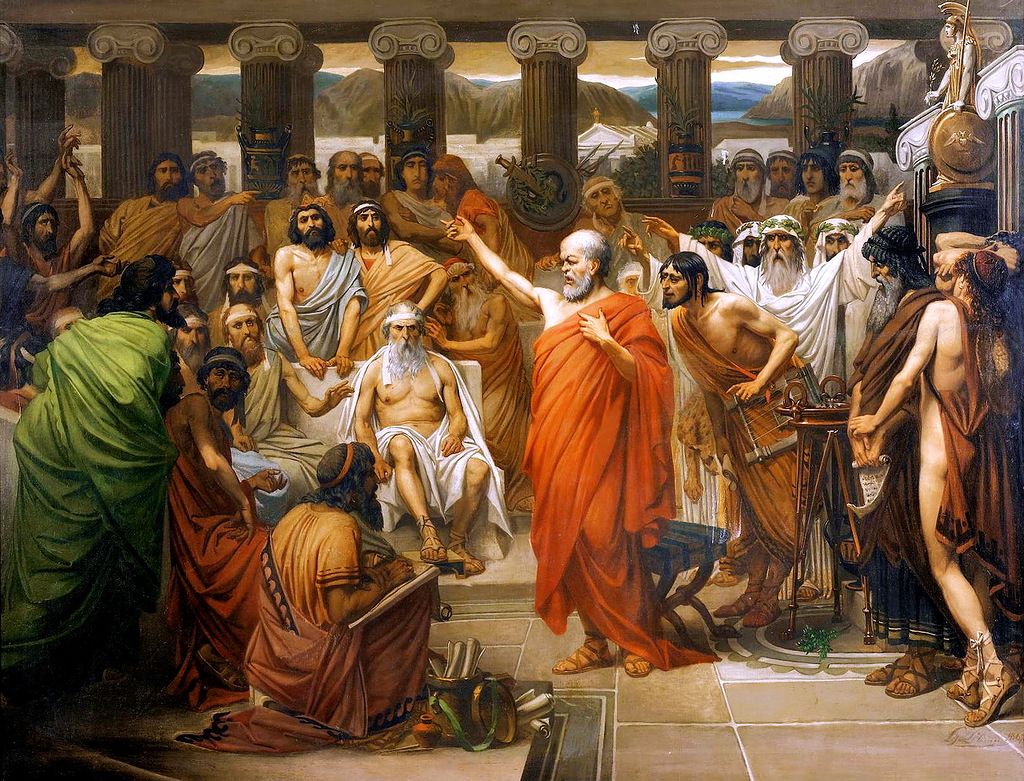
Secondly his quest for the truth was through the spoken word, never written. Conversations with his fellow Athenians occurred throughout the city, the Lyceum and the Agora were his two favorite haunts where he questioned his victims, and they were victims, in his famous ‘Socratic Method’ style of inquisition. Below is a short description of Socratic torture from the–Explainer: Socrates and the Life Worth Living (link below):
Socrates engages an interlocutor who appears to possess knowledge about an idea
The interlocutor makes an attempt to define the idea in question
Socrates asks a series of questions which test and unravel the interlocutor’s definition
The interlocutor tries to reassemble their definition, but Socrates repeats step three
Both parties arrive at a state of perplexity, or aporia (ed. a philosophical puzzle), in which neither can any further define the idea in question
Socrates’ Address. Louis J. Lebrun. 1867
A humorous sketch illustrating his method from Plato’s ‘Euthyphro‘ picks up near the end of a discussion concerning the gods:
Euthyphro: Why you don’t suppose, Socrates, that the gods gain any advantage from what they get from us, do you?
Socrates: Well then, what would those gifts of ours to the gods be?
Euthyphro: What else than honor and praise, and, as I said before, gratitude?
Socrates: Then, Euthyphro, holiness is grateful to the gods, but not advantageous or precious to the gods?
Euthyphro: I think it is precious, above all things.
Socrates: Then again, it seems, holiness is that which is precious to the gods.
Euthyphro: Certainly.
Socrates: Then will you be surprised, since you say this, if your words do not remain fixed but walk about, and will you accuse me of being the Daedalus who makes them walk, when you are yourself much more skillful than Daedalus and make them go round in a circle? Or do you not see that our definition has come round to the point from which it started? For you remember, I suppose, that a while ago we found that holiness and what is dear to the gods were not the same, but different from each other; or do you not remember?
Socrates: Then don’t you see that now you say that what is precious to the gods is holy? And is not this what is dear to the gods?
Euthyphro: Certainly.
Socrates: Then either our agreement a while ago was wrong, or if that was right, we are wrong now.
Euthyphro: So it seems.
Socrates: Then we must begin again at the beginning and ask what holiness is. Since I shall not willingly give up until I learn. […]
Euthyphro: Some other time, Socrates. Now I am in a hurry, and it is time for me to go.
Socrates: Oh my friend, what are you doing? You go away and leave me cast down from the high hope I had that I should learn from you what is holy, and what is not, and should get rid of Meletus’s indictment by showing him
Socrates’ learnings in search of the truth have been passed down to us through Plato, Aristotle, Epicurus, Locke, and others, climaxing in Jefferson’s preamble to Western civilization’s crowning ode to self and country: the ‘Declaration of Independence‘, proclaiming the fundamental, natural rights of man: Life, Liberty and the pursuit of Happiness.
The phrase the ‘pursuit of Happiness’ has been thoroughly misconstrued to mean something foreign and vulgar to Jefferson’s original intent. The ‘pursuit of Happiness’ was not a grant to seek earthly enrichments and pleasures but a call to a higher state of being. Epicurus provided a definition of happiness that comes closest to the meaning of Jefferson, “the end of all our actions is to be free from pain and fear, and once this is obtained the tempest of the soul is quelled.” Life, Liberty, and the pursuit free from pain and fear. The ‘pursuit of Happiness’ sounds better.
Epicurus seeks a soul free of pain and fear. Socrates sought a pure soul. Both pursued it through the same means. Socrates and Epicurus’ greatest pleasure in life was the pursuit of wisdom and truth. Neither sought fame, money, or power nor feared death. Epicurus did not fear death because it was the end of the body and the soul. There was nothingness after death. No greater glory. No damnation. Just nothing. Socrates did not fear death because a pure and good soul went on to something better.
Socrates, then, lived a good life. A life in pursuit of truth. A death to continue his journey to a higher plane.
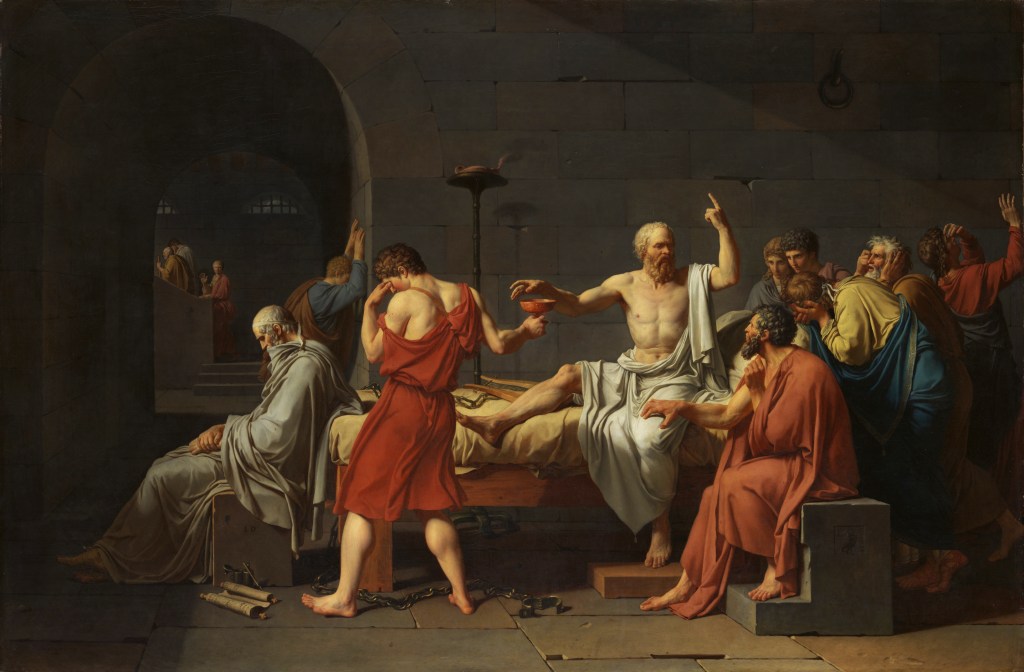
Socrates died, supposedly, for impiety and corruption of the youth. Both charges were difficult to square with reality, but they achieved the desired outcome: removing an inconvenient seeker of truth. Silencing the moral inquisitor, the examiner of the soul. Extinguishing the gadfly.
At the end of his trial Socrates’ soul was at peace but still he seeks truth: “Now the hour to part has come. I go to die, you go to live. Which of us goes to the better lot is known to no one, except God.”
The Death of Socrates. By Jacques-Louis David. 1787
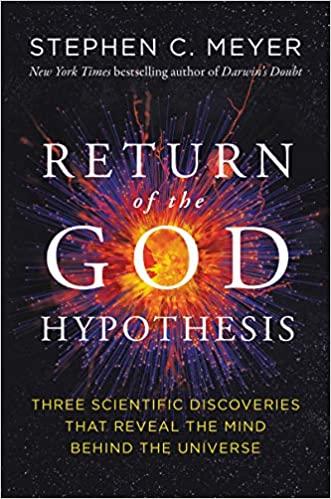
An interesting if not an enlightening, but thoroughly tedious treatise.
Meyer, in excruciating detail, examines the evidence for a universe designed, created, and set into motion by the hand of God. His proofs assess how the universe is perfectly tuned to foster our existence, how human DNA’s complexity is beyond random chance, and how the explosion of multi-celled life forms during the Cambrian Period (485-539 mya (million years ago)) is unlikely Darwinian in nature.
The first two proofs are plausible, and his arguments are meticulously developed, while the Cambrian explosion of life does not address the hundreds of millions to a billion years of missing rock section prior to the beginning to the Cambrian Period. The explosion of life may simply be a function of where one begins to sample the evidence.
Meyer’s case for God orchestrating our existence is convincing but you only need to read Part II, about 150 pages in the hardback version of the book, while the other 300 pages can be consigned to doctoral students in logic and religion.