No Free Lunch

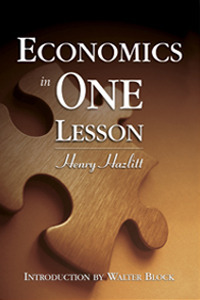
Henry Hazlitt in 1946 published one of the greatest books on economics ever written: ‘Economics in One Lesson’. It’s concise, lucid, factual, and in respect to deductive reasoning on par with Fredrich Hayek’s ‘The Road to Serfdom’ and Adam Smith’s ‘The Wealth of Nations’.

Hazlitt, like Hayek, was a student of the Austrian school of economics which advocated for minimal government intervention, was against central planning, and believed in gold-standard like currencies.

Hazlitt sums up his short book in one sentence, ‘The art of economics consists in looking not merely at the immediate but at the longer effects of any act or policy; it consists in tracing the consequences of that policy not merely for one group but for all groups.’ What’s good for the gander is likely not good for the goose.

He expands this thought by showing that economics is about tradeoffs and choices or to simplify it further, when it comes to government spending there is no free lunch. Spending money on guns means less money spent on butter. When President Johnson, in the 1960s after the book was written, tried to spend money on both guns and butter we received inflation. When our current politicians spent unlimited amounts of money on everything imaginable, we received inflation.

History may not repeat itself, but it rhymes.

Source: Economics in One Lesson by Henry Hazlitt, 1946. Graphic: Economics in One Lesson, Hardcover, 2008 Edition, public domain.
Mesopotamian Life After Death

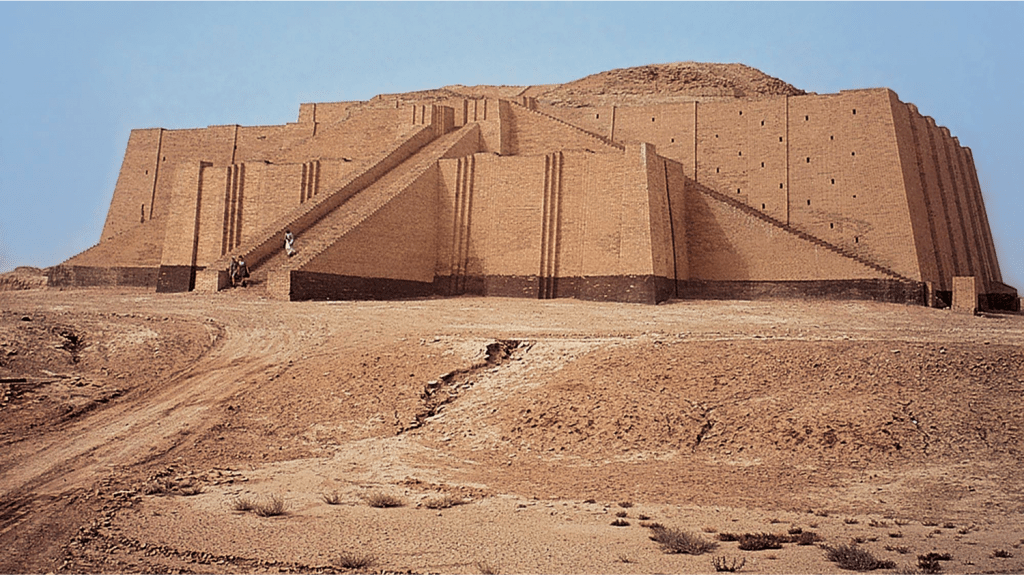
Five thousand years ago, Sumerians and Akkadians, occupying what is now southern and central Iraq, respectively, believed souls or spirits after death occupied a subterranean world called Kur or Irkalla.

All those who entered this underworld could not leave but it was not hell or heaven but more of a place to exist after death; as a ghost of your past.

There is no record that Mesopotamians in 3000 BC believed in reincarnation, resurrection, or any form or transmigration of the soul.

With many exceptions, the spirit or ghost that existed in the netherworld maintained the social status that they had when alive. Thus, kings were still kings, slaves were still slaves.

In the Epic of Gilgamesh, he and his friend Enkidu ventured into this underworld to retrieve their lost magical objects and to seek immortality. They did not find the magical objects, but they did find the Plant of Immortality but promptly lost it to a serpent, learning one of the earliest lessons for humanity: never entrust your life to a snake.

Source: Epic of Gilgamesh. Mesopotamian Beliefs by Chaksi, 2014, World History. The Afterlife by Enlightenment Journey. Graphic: Ziggurat of Ur, 21st century BC, dedicated to the Moon god Nanna.

The Noble Lie

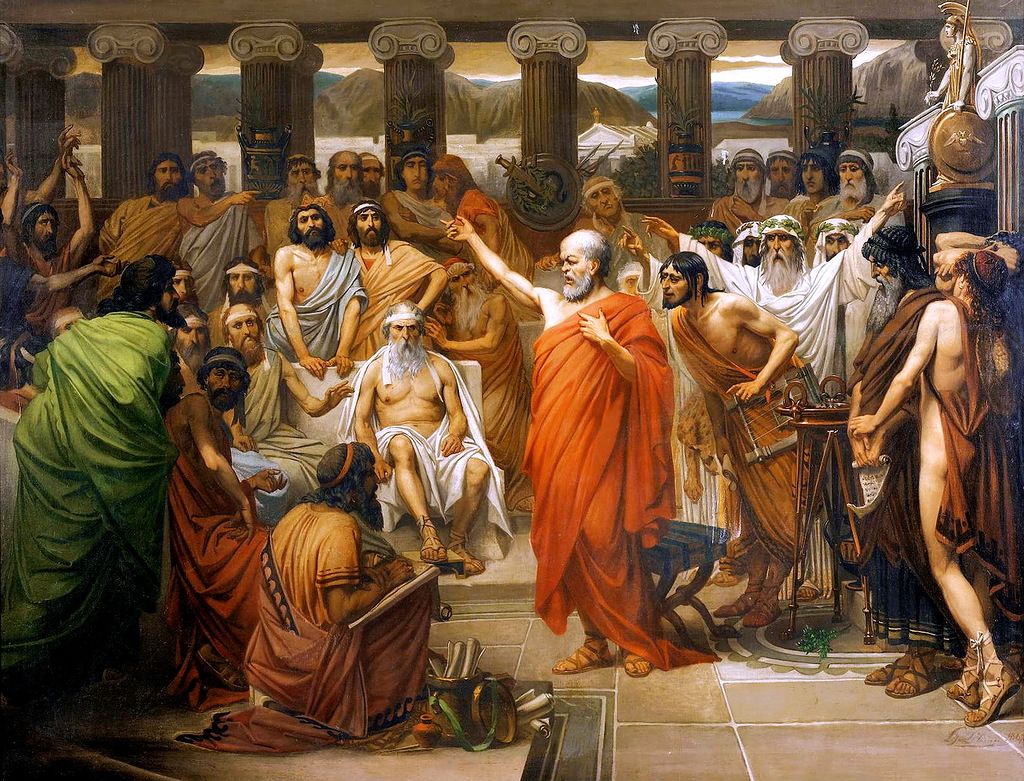
In Plato’s Republic, a “Noble Lie” is a myth, or a falsehood knowingly propagated by the elites to maintain social harmony, or stated succinctly, to keep the plebs in their place and make sure they love it.

Plato believed that society required a class system led by philosophers who needed to create a lie that unites and binds the lower classes to the state. Without this binding myth the classes will turn on each other, and the government will fail.

The Noble Lie myth promoted by Plato, via Socrates, was that the populace was born with hierarchical souls with the upper classes having better souls. Another myth was Karl Marx stating, “From each according to his ability, to each according to his needs,” formulating a classless society where goods and services were free.

Source: Plato’s Republic. A Noble Lie by Plato Intelligence. Introduction to Plato: The Noble Lie by Paul Krause, 2019, Minerva Wisdom. Graphic: Socrates’ Address by Lebrun, 1867, public domain.

End Times for Socrates

Plato documents Socrates’ final days in four books all written as dialogues. The first dialogue, ensuing shortly before Socrates’ trial for impiety and corruption of Athenian youth occurs between Socrates and the Athenian prophet, Euthyphro, who together attempt to define piety without success.

The second book, Apology, Socrates defends himself to the Athenian court, poorly in all respects, purposefully one suspects, confessing that his life’s quest is one of seeking wisdom, nothing more.

Crito is the third book in this series, and it takes place in Socrates’ prison cell after he has been found guilty of his crimes with his execution scheduled for the next day. Crito, a wealthy friend of Socrates, has come to urge him to escape. Socrates refuses and the ensuing dialogue revolves around justice and the damage to one’s soul through the actions of injustice.

In the fourth book Phaedo, a Greek philosopher, visits on the day of Socrates’ execution, and has a discussion centered on the immortality of the soul. Socrates offers four arguments for why the soul must be eternal while the body is mortal, firmly imprinting the duality of nature into the human psyche for endless generations to come.

Source:  Euthyphro, Apology, Crito, and Phaedo by Plato, 4th century BC. Graphic: Statue of Socrates by Drosis, Athens, Classical Wisdom.

The First Precious

Before the One Ring, created by Sauron during the Second Age, Plato created, as a thought experiment, the Ring of Gyges which gave its wearer the cloak of invisibility. Gyges discovered that when he was invisible, he could commit immoral acts and crimes without suffering any adverse consequences or retribution from society.

Plato in his Republic, using the ring of invisibility as an analogy, explores man’s ability to remain honest and moral in the face of immunity from all consequences. He concludes that if one is free of any consequences he will act in his own self-interest, justice be damned, or as the 19th century historian and writer, Lord Acton states, “Power tends to corrupt, and absolute power corrupts absolutely.”

This leads Plato, through the lips of Socrates, to suggest that justice is not a social construct but an inherent quality of one’s soul. The soul must be in harmony with one’s actions and a harmonious soul contributes to a just society. Socrates believed and advised, and he followed his advice, that a harmonious and pure soul leads to true happiness and fulfillment or as the ancient Greeks called it: eudaimonia. For Aristotle eudaimonia is the highest human good and the only human good that is desirable for its own sake, an end in itself. Justice is a by-product of true happiness. Unhappy people and unhappy societies are not just people and just societies.

J.R.R. Tolkien, not only a writer but also a philologist, most certainly was aware of Plato’s Ring of Gyges as an analogy of ultimate power when he used his One Ring in the Lord of the Rings as the definitive symbol of man’s quest to resist and fight evil.

Source: The Republic by Plato. Reason and Meaning.com. Philosophy Terms. Oxford Reference. Graphic: The One Ring, Good Free Photos.

Journalism – Michael Straight

Michael Straight, New Republic publisher, editor, and writer from 1948 to 1956, was a KGB spy associated with the notorious UK Cambridge Five that passed thousands of classified documents and secrets to the KGB from the 1930s through at least the early 1950s.

He worked as a speech writer for Frankin D. Roosevelt and in that administration’s Department of State beginning in 1937. In 1940 he was employed at the Department of State covering the Near East. In 1942 he joined the Air Force and was a pilot of B-17s. After the war he left government service to help run his family’s journalism business: the New Republic. In 1963 he admitted to being a communist spy and outed Anthony Blunt, the recruiter for the Cambridge Five for which he was given immunity from prosecution and a job as Deputy Chairman of the Coordinating Committee for Cuban Affairs in the Kennedy Administration.

After the collapse of the Soviet Union and the end of the Cold War it was revealed that Straight was a much more significant KGB asset than he led the US government to believe.

Source: Historica.fandom.com. History.com. Graphic: Michael Straight at Cambridge, 1936, Public Domain.

To Kill a King

Ralph Waldo Emerson, author of the transcendental essay, “Self-Reliance” is often credited with saying, “When you strike at a king, you must kill him.” The exact setting and time for the quote is unknown but Ann Althouse believes it was said during a conversation with Oliver Wendell Holmes Jr., one of the most widely cited Supreme Court justices, after Holmes attacked Plato. Emerson’s parried with the quote above, meaning that if you strike at the philosopher king you must be thorough.

Niccolò Machiavelli, in his book “The Prince”, didn’t specifically mention the need to “kill the king” however, he did say, “If an injury has to be done to a man it should be so severe that his vengeance need not be feared,” and he also added “People should either be caressed or crushed. If you need to injure someone, do it in such a way that you do not have to fear their vengeance.”

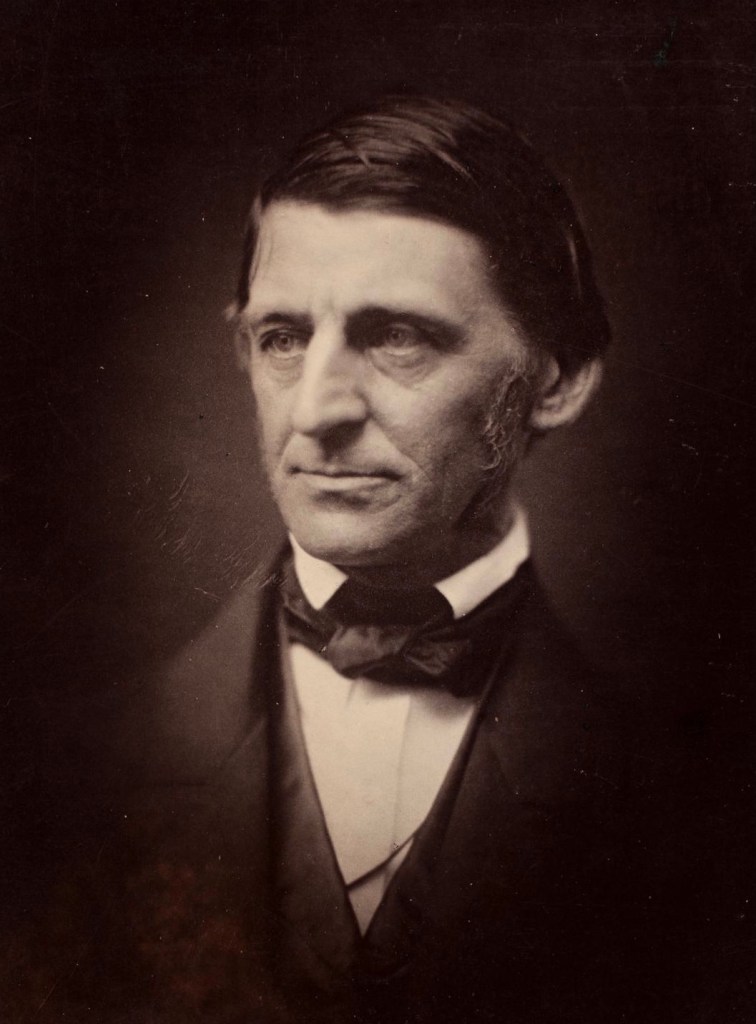
Source: The Prince, Machiavelli. Emerson, Althouse Blog, 2019. Graphic: Emerson by Hawes, 1857, Public Domain.

The Roman Jewish Wars

During the first and second centuries AD there were 3 major Jewish revolts against Roman rule in Judea: The first war from 66-73 AD, the Kitos War from 115-117 AD, and the Bar Kokhba Revolt from 132-135 AD. Roman taxation, financial exploitation, religious persecution, oppression, extrajudicial executions, and the plundering of the Second Jewish Temple all contributed to the conflicts.

Roman punishment increased with each successive war eventually leading to wholesale depopulation of Jewish communities by enslavement, death, and exile. It is believed that upwards of 1.3-1.4 million Jews were killed during these revolts, which would have been about one-third of the total worldwide Jewish population. After the Bar Kokhba Revolt the Romans renamed the area Palestina after the Philistines who populated the general area before the 6th century BC.

Source: Josephus. Wikipedia, Heritage-History, WorldHistory, Alchetron, Britannica. Graphic: Roman Triumphal panel from Beth Hatefutsoth showing spoils from the Jewish Temple. Max Morris 2016.

The Antiquities of the Jews

Josephus’s 20 volume history of the Jews titled: The Antiquities of the Jews was written to provide an account of the Jewish people for his Roman patrons and protectors.

Below is a synopsis of the 20 volumes:

  • Biblical creation to the death of Abraham’s son Isaac
  • History of Isaac’s sons to the Exodus of Jews from Biblical Egypt
  • Exodus from Egypt to the first 2 years of the 40 years in the wilderness
  • The remaining 38 years in the wilderness to the death of Moses upon reaching Canaan
  • Joshua’s replacement of Moses as leader to the death of the priest Eli
  • The capture of the Ark by the Philistines to the death of King Saul
  • David’s ascension to the throne of the Kingdom of Israel to the death of King David
  • Solomon’s ascension as King of Israel to the death of King Ahab
  • Reign of King Jehoshaphat to the fall of Samaria
  • Babylonian captivity of the Jews and the destruction of the Neo-Assyrian Empire
  • Start of the Persian Empire of Cyrus the Great to the death of Alexander the Great
  • Death of Alexander the Great to the Maccabean Revolt
  • Origins of the Hasmonean dynasty to the death of Queen Alexandra
  • The death of Queen Alexandra to the death of Antigonus II Mattathias
  • Herod the Great’s taking of Jerusalem to the completion of King Herod’s temple
  • Completion of King Herod’s temple to the death of Herod’s sons
  • Death of Herod’s sons to the banishment of King Archelaus

Josephus history covers major portions of the Old Testament including Genesis, Exodus, Numbers, Joshua, Judges, Ruth, Samuel 1&2, 1&2 Kings, 1&2 Chronicles, and Prophets. Josephus’s accounts provide for additional material and commentary not found in other texts including the bible.

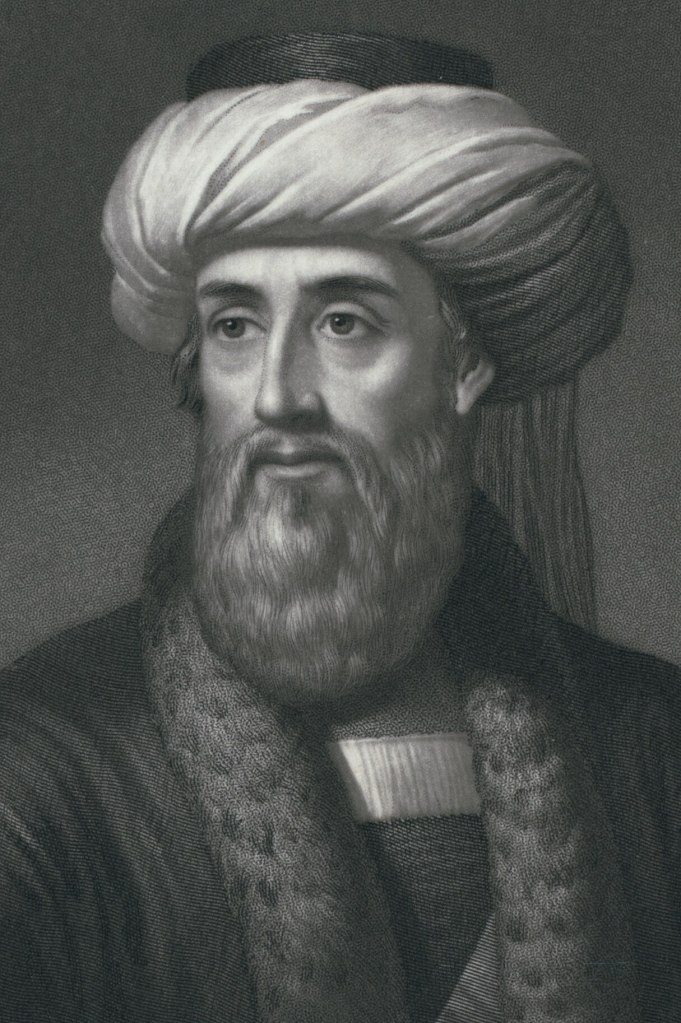
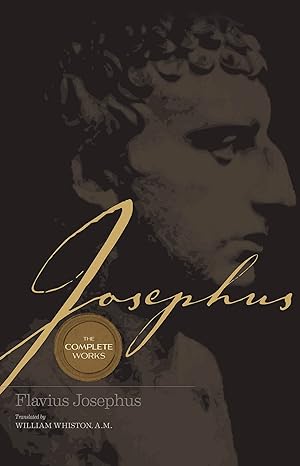
Source: Josephus: The Complete Works, 2003. Jewish Virtual Library. World History Encyclopedia. Graphic Joseph, Son of Gorian, by Thomas Emmet, 1880, public domain.

Jewish, Roman, Historian

Flavius Josephus, a first century Jewish scholar and historian wrote four extant works:

  1. The Jewish War. (Jewish Revolt) 75 AD – The first revolt against the Romans from 66-73 AD
  2. The Antiquities of the Jews. 95 AD – From Adam to the death of Herod’s sons
  3. Against Apion. 97 AD – A defense of Judaism
  4. Vita or The Life of Flavius. 99 AD – Biography

These works provide significant source material and insight into first-century Judaism and Christianity.

Josephus was born into the Jewish priesthood on his father’s side and of Hasmonean royal descent maternally. He served in the Jewish military during the Jewish War but surrendered to the Romans and he was considered a traitor to Jews ever after. While waiting to be executed by the Romans he predicted that Vespasian would eventually be crowned emperor of Rome. Vespasian, because of the prophecy, spared his life and made him a consultant, but still a slave, to the Roman army. Josephus gained his freedom when Vespasian became emperor in 69 AD, at which time he changed his name to Flavius Josephus. Flavius was the family name of the emperor Vespasian.

Source: Josephus: The Complete Works, 2003. Jewish Virtual Library. World History Encyclopedia.