“I’ll chase him round Good Hope, and round the Horn, and round the Norway Maelstrom, and round perdition’s flames before I give him up.” – From Chapter 36-The Quarter-Deck of Melville’s Moby Dick. Published 1851.
FootNoteA
“Some know him by his peg leg…Others by the white scar that runs head to toe, the result of an unfortunate encounter witha lightning bolt. Still others by his entourage of harpooner henchmen with names like Fedallah, Daggoo, Tashtego, and Queequeq.
Mostly, readers know him because he’s shorthand for any intense, self-destructive fixation…
He, of course, is Captain Ahab…”
Excerpt from “The 100 Greatest Literary Characters”. By Plath, Sinclair, and Curnutt. 2019.
FootNoteB:
The book also has one of the great opening lines in all of literature: “Call me Ishmael.” The narrator introduces himself to the reader in three words. How simple and straightforward can one get? In a few more lines he sets the stage for how he will tell his story. “With a philosophical flourish Cato throws himself upon his sword: I quietly take to the ship.”
FootNoteA: Illustration of the final chase of Moby-Dick. By I.W. Taber. 1902. In Moby-Dick. Charles Scribner’s Sons, New York. Public Domain.
FootNoteB: Illustration below from an early edition of Moby Dick – 1892. C.H. Simonds Co. Public Domain.
“At the end of the day, I’m fighting for the things I said I’d fight for.” – Ron DeSantis
Courage to Be Free is the Florida governor’s biography with a good measure of politics, vision and American government thrown in. It’s a simple read from someone selling himself as an authentic American and an honest and ethical broker who supports the citizens through good government.
Ron Desantis was born in Jacksonville, Florida in 1978, married Casey Black in 2009, and has three children, two girls and a boy. He attended Yale and graduated in 2001 with a B.A. A year later he entered Harvard and graduated with a law degree in 2005. During law school he was commissioned as an officer in the U.S. Navy. In 2007 he was assigned as a legal advisor to SEAL Team One in Fallujah, Iraq where he was awarded the Bronze Star.
In 2012 he was elected to the U.S. House of Representatives and was re-elected in 2014 and 2016. DeSantis decided not to run for re-election to the House for the 2018 term but instead competed for the Florida governorship which he won. He won re-election in 2022 and as he is term limited by Florida law will not seek that office in 2024. Since he has dropped out of the Presidential race what he does next is an open question.
The first half of Desantis’ book is dedicated to his biography followed by his vision of government and national policy. He draws heavily on the expository essays and articles within the Federalist Papers and their vision for a constitutional republic. The authors of the Federalist Papers, Madison, Hamilton, and Jay argue strenuously for a republican form of government and against direct democracy which one could paraphrase in slang terms as mob rule. DeSantis agrees.
His political philosophy is simple in principle, excoriatingly difficult in execution. Encapsulating his thoughts he states, “The right path forward is not difficult to identify; it just requires using basic common sense and applying core American values…” He follows this up with his blueprint for Florida and America: “Be willing to lead, have the courage of your convictions, deliver for your constituents, and reap the political rewards.” Reaping the political rewards sounds like every politician that has ever walked the face of this Earth and I don’t recognize that as a positive trait.
Literary Criticism:
Courage to Be Free was a number one bestseller in the New York Times, Wallstreet Journal, Amazon, and Publisher’s Weekly shortly after it was released in 2023. Although sales figures are almost impossible to find, for free, the book had an initial print run of 250,000. There hasn’t been a second printing.
Hagiographies are one sided affairs with nary a discouraging word to be found, with sainthood lurking right around the corner. DeSantis autobiography is a hagiography but in fairness one doesn’t provide his opposition with free negative research when your goal is to introduce yourself to the public.
This book had only one purpose, to launch DeSantis into the 2024 presidential Republican primary in the best possible light and as a bonus, get your targeted audience to pay for it by purchasing the book. It admirably accomplishes the task, but it certainly is not a literary masterpiece, rather it reads like a college term paper completed under duress. Simple, direct, with no flowery prose or memorable lines. If you want to learn something about this man, give it perusal, a quick read is all it needs and watch one or two of his Republican primary debates for additional elucidation.
The only reason I read this book was because of the title: The Courage to Be Free. It reminded me of the title of John F. Kennedy’s Profiles in Courage. Kennedy’s book employs a better writing style but that is because Kennedy didn’t author his book. In a previous post I stated who did and I’ll leave it to you to look it up if you are curious. In the end both are about embellishing their respective reputations. Mission accomplished.
Paul L. Maier, born 1930 in St. Louis, author, public speaker, and historian has written twenty-three adult and children, fiction and non-fiction, books about Christianity. He is the son of Walter A. Maier, founder, and speaker of The Lutheran Hour.
He graduated from Harvard and Concordia Seminary in St. Louis with additional studies in Heidelberg, Germany and Basel, Switzerland. He was the Seibert Professor of Ancient History at Western Michigan University until he retired in 2011.
In addition to his definitive translation of “Eusebius: The Church History“, his 1993 “Skeleton in God’s Closet” was a number one best seller in religious fiction, a thriller concerning the Resurrection of Jesus. He also co-wrote with Hank Hanegraaff in 2006 a rebuttal to Dan Brown’s “The Da Vinci Code“: “The Da Vinci Code: Fact or Fiction?“
In addition to writing books Maier has produced six religious documentaries including the 2014 “The Week That Changed the World“, detailing the Holy Week before Jesus’s resurrection, discussing the key personalities, the politics, and the treachery that sealed Christ’s fate.
MaierBibliography-Books and Documentaries:
A Man Spoke, A World Listened: The Story of Walter A. Maier 1963
Pontius Pilate 1968
First Christmas: The True and Unfamiliar Story in Words and Pictures 1971
First Easter: The True and Unfamiliar Story in Words and Pictures 1973
First Christians: Pentecost and the Spread of Christianity 1976
Flames of Rome 1981
The Best of Walter A. Maier 1981 (paperback)
Josephus, The Essential Writings 1988
In Fullness of Time 1991
A Skeleton in God’s Closet 1994
The Very First Christmas 1998
The New Complete Works of Josephus with William Whiston 1999
Eusebius: The Church History 1999
The Very First Easter 2000
More Than a Skeleton 2003
Caspar Schwenckfeld on the Person and Work of Christ: A Study of Schwenckfeldian Theology at Its Core 2004 (paperback)
Martin Luther a Man Who Changed the World 2004
The Da Vinci Code: Fact or Fiction? with Hank Hanegraaf 2006
The Real Story of Creation 2007
The Real Story of the Flood 2008
A Skeleton in Rome 2011
The Constantine Codex 2011
The Genuine Jesus 2021
Christianity: The First Three Centuries (Documentary) 2003
The Odyssey of St. Paul (Documentary) 2003
Jesus: Legend or Lord? (Documentary) 2003
How We Got the Bible (Documentary) 2009
Christianity and the Competition (Documentary) 2010
The Week that Changed the World (Documentary) 2011
Eusebius Biography:
FootnoteA
“May I be an enemy to no one and the friend of what abides eternally. May I never quarrel with those nearest me and be reconciled quickly if I should. May I never plot evil against others, and if anyone plots evil against me, may I escape unharmed and without the need to hurt anyone else.” — Eusebius
Eusebius of Caesarea, also known as Eusebius Pamphili, was a historian, interpreter of scripture, and Christian apologist, born around 260-265 AD in Caesarea, where he gained prominence in the fourth century, before passing away around 339 AD. His early education was by the learned presbyter, and eventual saint, Pamphilus, the principle religious scholar of his generation. Eusebius became bishop of Caesarea around 314 AD, shortly after Constantine became Roman Emperor, and remained in that position until his death in 339 AD. Eusebius became a significant figure in the theological controversies and politics of his day, becoming a, if not the leading spiritual advisor and confidant to Constantine.
Christians since the time of Christ were persecuted for their faith which came to a ghoulish crescendo under the Diocletian Edicts, also known as “The Edicts Against the Christians” of 303 AD. The edicts dissolved the Christians’ legal rights, compelled them to reject Jesus and to adhere to the local religious customs of paganism and polytheism. The edict saw the destruction of Christian scripture and churches along with the torture and execution of approximately 3500 church leaders and lay people including Eusebius’ teacher Pamphilus. The persecution ended with the Edict of Milian in 313 AD, decreed and signed by Constantine and Licinius proclaiming religious toleration within the empire.
FootnoteB
The edict gained the life-long gratitude of Eusebius culminating in the Christian bishop’s panegyric, “Life of Constantine“, in which the author details the emperor’s religious policies as well as a hagiographic account of Constantine’s life. Historians have described their relationship as complex, evolving over time. They have also stated that Eusebius may have been the power behind the throne or, as others have surmised, just an obsequious toady seeking protection from his church enemies. Regardless of the actual relationship it is agreed that Eusebius was Constantine’s spiritual and political advisor.
FootnoteC
Eusebius, through his bond with the emperor, helped structure the relationship between church and state, assisting in the creation of the Constantinian concept of a Christian empire, which had a considerable influence on the development of the early Christian Church and the Roman Empire, along with empires to come.
Constantine, to put down an early rebellion of church leaders, ordered three hundred bishops throughout the empire to meet at the First Council of Nicaea in 325 AD to resolve the controversy of Arianism, a concept that Christ was not divine but was created by God. Much of the Church believed that Christ was of the same substance, “consubstantiality“, as the Father and as such: divine. Eusebius, enjoying the emperor’s favor, sat next to him at the council and offered his own creed stating that Christ was begotten, not made, from the Father. The council, in the end, rejected Arianism and formulated the creed that is recited at every High Catholic Mass to this day. The council also set the time for Easter as the Sunday after the first full moon following the Spring equinox rather than occurring on the Sunday closest to Jewish Passover or on the Jewish Passover even it was not on a Sunday. Which explains why no one knowns when Easter occurs. Constantine was adamant about foregoing any Jewish practices in the honor of Jesus.
Eusebius is referred to as the “Father of Church History” due to his voluminous writings in the field including, as discussed below, his account of the first centuries of Christianity in his “Ecclesiastical History” or “Church History“.
Church History (Ecclesiastical History):
FootnoteD
“Church History ” or “Ecclesiastical History” is the only exigent work that chronicles the development of early Christianity and its Church from the birth of Christ on into the fourth century. Eusebius’s account, written in Koiné Greek, lingua franca for the Mediterranean area from fourth century BC to fourth century AD, provides a chronological narrative, using the succession of Roman Emperors as a linear timeline, of the early Christian Church. Eusebius, with his access to the Theological Library of Caesarea, incorporated many church documents, acts of the martyrs, letters, and extracts from earlier Christian writings into his work, many which no longer exists. The “Church History” covers the succession of Church bishops, the history of Christian teachers especially Origen, the history of the many church heresies and conflicts, and Christianity’s relationships with Romans, pagans, and Jews. Despite accusations that “Church History” is more a defense of Christianity, an apologetic and hagiography, than a history, Eusebius’s work remains a valuable source for understanding early Christian history.
Below are the Maier’s chapter listings, brief descriptions, and Roman Emperors during the historical period covered.
Book I: The Person and Work of Christ: Eusebius on Christ. Augustus to Tiberius.
Book II: The Apostles: Eusebius on the Apostles. Tiberius to Nero.
Book III: Missions and Persecutions:Formation of the New Testament. Galba to Trajan.
Book IV: Bishops, Writings, and Martyrdoms: Defenders and Defamers of the Faith. Trajan to Marcus Aurelius.
Book V: Western Heros, Eastern Heretics: Death at Lyons, Rome, and Alexandria. Marcus Aurelius to Septimius Severus.
Book VI: Origen and Atrocities at Alexandria: Life of Origen. Septimius Severus to Decius.
Book VII: Dionysius and Dissent: Church Life According to Dionysius. Gallus to Diocletian.
Book VIII: The Great Persecution: Edicts Against Christians. Diocletian to Galerius.
Book IX: The Great Deliverance: The End of Persecution? Maximin, Maxentius, and Constantine.
Book X: Constantine and Peace: Eusebius and Constantine. Constantine.
Literary Criticism:
In C.F. Cruse’s 1850 translation of “Ecclesiastical History” he states that, “…Eusebius was not without his beauties, but they were rarely scattered, that we can hardly allow him an eminent rank as a writer.” This is an understatement of the 19th century although it is a polite way to admit Eusebius was incapable of engaging his readers in any form other than pedantic verbosity. This is also an example that Cruse was not immune from obfuscating meaning in his written translations and commentary. His comment above simply stated that Eusebius rarely wrote with elegance and concision. Eusebius’ writing was dense, confusing, dogmatic, and sometimes incomprehensible. Eusebius’ writing compares favorably, snark intended, with Edward Gibbons’ “The Decline and Fall of the Roman Empire” whose erudite, verbose, and opaque style has managed to confuse his readers for two plus centuries now, but for some reason no one seems to mind, except me. Gibbons disliked, immensely, Eusebius’ “Ecclesiastical History” stating that it was full of lies and falsehoods which is an exceedingly difficult position to support due to Eusebius’ excessive use, usually in quotes, of original source material. Gibbons blamed the fall of the Roman Empire on the rise of Christianity, a problematic thesis considering Christianity was the least of the Empires worries. Unchecked immigration and a corrupt governing class were much bigger problems than a few Christians asking to be left alone to worship their God in peace.
Paul L. Maier’s translation of “Church History” is a masterful improvement over C.F. Cruse’s 1850 attempt to make Eusebius readable. Cruse strove to accurately translate Eusebius with the result of burdening his readers with difficult and cluttered phrasing. Maier saves his readers by reducing Eusebius’s lengthy sentences, dense language, and abrupt subject changes to intelligible bites of prose that are readable, understandable, and usable. An example of Maier taking difficult sentences and distilling them into something cogent can be seen in the two example sentences below. The first sentence comes from Loeb’s edition of “Ecclesiastical History“, which is a very faithful rendition of Eusebius’ writing, followed by Maier’s translated version. Loeb: “I have already summarized the material in the chronological tables which I have drawn up, but nevertheless in the present work I have undertaken to give the narrative in full detail.” Maier:“Previously I summarized this material in my Chronicle but in the present work I deal with it in the fullest detail.” The first sentence takes a few readings to comprehend the meaning. Maier allows for instant comprehension.
“Ecclesiastical History” or “Church History” is an important work in understanding the beginnings of Christianity and the governing hierarchy that was built up over the centuries. This is not a long book, less than four hundred pages, but it does take dedication to the task of reading and understanding it. In the end it is worth the effort as a little history is always useful if not enlightening.
References and Readings:
Eusebius. By Allan Miller. Wikipedia. 2001 (2024 Update)
There are only meager snippets of biographical information available on Carsten-Peter Warncke. The inside jacket of this volume on Picasso contains the most detail I was able to find, and I quote it in total below:
“Carsten-Peter Warncke was born in Hamburg in 1947, studied art history, classical archaeology and literature in Vienna, Heidelberg, and Hamburg, and received his doctorate from the last university in 1975. He is Professor of Art History at the University of Gottingen.”
Pablo Picasso was born in Malaga, Spain in 1881 to Don Jose Ruiz Blasco, a painter who taught drawing, and Dona Maria Picasso Lopez. Pablo adopted his mother’s surname somewhere between 1897 and 1901 believing that his paternal surname was too common, plus he was convinced his name needed a double consonant to align with other artists such as Matisse, Poussin, and Rousseau.
Picasso was recognized as a child prodigy at a very young age. He began to paint with oils when he was eight and by the time he was thirteen he was selling his work. At the age of fourteen, he was admitted to the prestigious Barcelona art school: La Lonja. At the age of fifteen he made his official entry into the professional art world, presenting the painting, “The First Communion” at the Third Exhibition of Fine Arts and Artistic Industries in Barcelona.
FootnoteB
In 1900 Picasso exhibited 150 drawings at the Barcelona cafe, “Els Quatre Gats“. The cafe’s name derives from a Catalan expression which means “only a few people” and translates to “The Four Cats”. The expression describes people who are a bit strange or peculiar. The cafe was a popular meeting place for famous artists in the twentieth century including Isaac Albeniz, Gustavo Barcelo, Ramon Casa, Carlos Casegemas, and Santiago Rusinol.
Picasso moved around France and Spain about as often as he experimented with and changed his artistic style. In October of 1900 he moved to Montmartre on the Right Bank of the Seine in Paris to open a studio with Casagemas. Shortly afterward the Paris art dealer, Pedro Manach, offered him 150 francs a month for his 150 aforementioned prints. There is no record of what else was required of Picasso to fulfill the contract, but the contract was either fulfilled or expired at the end of 1902 at which time the painter moved back to Barcelona. Finally, in a Hobbitian maneuver of there and back again, he returned to Paris in 1904 where he stayed until he moved to the French Riviera, initially on a semi-permanent basis, but eventually taking up full time residence in the area in 1952, where he remained until his death in 1973.
FootnoteC
FootnoteD
Picasso was constantly re-inventing himself over the course of his career that spanned three-quarters of a century. He began painting as a realist and gradually morphed into a modern artist laying claim to the greatest surrealist in the twentieth century.
Picasso viewed his art as a diary. He said he had no secrets, sharing his artistic journey with all. He was quoted as saying, “When I paint my object is to show what I have found and not what I am looking for.”
World events, such as war, and personal relationships often influenced his work. Picasso also anticipated the late twentieth century business mindset of “If it ain’t broke, fix it anyway” or more compactly, change for change’s sake. He conceptualized change as “A picture is not thought out and settled beforehand. While it is being done it changes as one’s thoughts change. And when it is finished, it still goes on changing, according to the state of mind of whoever is looking at it.“ This quote has also been paraphrased as “When I know what the picture will be beforehand, why make it?” In the same vein he also stated: “You mustn’t expect me to repeat myself. My past doesn’t interest me. I would rather copy others than copy myself. In that way I should at least be giving them something new. I love discovering things.” Change was religion for Picasso, and he worshiped it.
FootnoteE
Below is listing of the different art periods he laid claim to over the years:
Early Work from 1890-1901: Realistic style influenced by Expressionism and Post-Impressionism. Edvard Munch’s, Expressionist and painter of the 1893 “The Scream“, use of color and various themes resonated with Picasso. Wassily Kandinsky, Expressionist and painter of the 1903 “Blue Rider” moved in the same circles as Picasso and the two likely shared abstract artistic forms and themes. Picasso greatly admired the Post-Impressionist Toulouse-Lautrec with his 1900 “Le Moulin de la Galette” paying homage to Lautrec in style and spirit.
Blue Period from 1901-1904: Monochromatic paintings in shades of blue. Scenes of poverty and despair predominate this period exemplified by one of his most famous paintings from this period; “The Old Guitarist“. The painting, in addition to the characteristic blue, also shows the elongated bodies and fingers which the painter used to evoke emotion and reaction. Poverty and despair weren’t just a stylistic phase for him but a mirror into his personal depression. He was very poor and had lost his close friend Carles Casagemas in 1901. His depression began during his Blue Period and lasted in milder forms till the end of his Cubist Period.
Rose Period from 1904-1906: He used warmer colors than in his Blue Period with more cheerful subjects such as circus performers, clowns, and harlequins. His depression lifted slightly during this period possibly due to his relationship Fernande Olivier, a model and artist that Picasso painted over sixty portraits of. His best-known painting from this period is the 1905 “Boy with a Pipe“. Picasso described the boy, Louis, as an “evil angel” and used the garland of roses on his head to symbolize the blood of the Eucharist. This contrasted with the harsh street life that Louis actually endured along with the innocence of his youth. The garland of roses serves as a powerful symbol in the painting, representing the juxtaposition of innocence and the harsh realities of life. Beauty and thorns, side by side.
African Influenced Period from 1907-1909: He was inspired by African masks and sculptures. During this period, he experimented with geometric forms and shapes. His best-known work from this period is “The Ladies of Avignon”. This painting is considered a precursor to his Cubist Period and tangentially to his Surrealist Period. Art historian John Richardson said that this painting made Picasso the most pivotal artist in the West. Art Critic Holland Carter said that this work changed history. One can never accuse a critic of being subtle.
Cubist Period from 1909-1919: This period is divided into two phases: Analytic and Synthetic Cubism. Picasso’s Analytic Cubism from 1907-1912 combined deconstructed objects into overlapping planes from multiple viewpoints using muted colors. His Synthetic Cubism from 1912-1914 eliminated three-dimensional space and introduced extraneous matter mixed with bright subject colors. One of his better-known works during his Cubist Period is “Glass and Bottle of Suze“.
Neoclassicism from 1919-1924: Picasso returned to a more realistic style after WWI. Art critics at the time insisted Cubist art was a product of Germany coupled with the realization that Picasso’s Cubist art promoter was a German, causing the French to reject not only the style but also casting suspicion on the artist. Additionally, Picasso, being Spanish, did not serve in the French military during war causing public opinion to turn against him. To combat the ill feelings toward him he reverted to a more classical style. One of his better-known paintings during this period was “TheLover” which has the appearance of being lifted directly from a Greek or Roman bath.
Surrealist Period from 1924-1937: During this period Picasso incorporated elements of the subconscious, dreams, and fantasy into his art, exploring new ways to express emotion and reality. He was particularly interested in eroticism, violence, and primitivism. His art emphasized flowing lines and fragmented bodies which are interpreted to represent Picasso’s personal feelings towards his subjects. His anti-war “Guernica”, a response to Nazi bombing of the Basque town of Guernica during the Spanish Civil War is his most famous Surrealistic painting or possibly his most famous painting in any style. If you didn’t know the story behind the painting and what it represents you would still see and feel the violence flowing from the canvas–knowing full well that supreme evil was in progress, seeping and dripping from the canvass in black and white. Picasso’s approach to Surrealism can be summed up with his words, “I paint objects as I think them, not as I see them.”
Later Work from 1937-1973: Picasso continued to reinvent himself over the last quarter century of his life but with less success in the realm of originality. His paintings remained Surrealistic with occasional bursts of Cubism but were becoming more abstract and confusing. He began to reinterpret the old masters and explore love and death in more exacting detail while also branching out into distinctive and different mediums such as collage, sculpture, ceramics, and printmaking.
FootnoteF
Picasso was a prolific artist, orders of magnitude beyond the output of his contemporaries. As a way of comparison, the post-impressionist Toulouse-Lautrec, who was also considered a prolific painter, painted 737 oil paintings, 275 watercolors, 363 prints, and 5,084 drawings over a period of 20 years while Picasso is estimated to have produced 13,500 paintings, 100,000 prints, 34,000 book illustrations, and three hundred sculptures and ceramics over his 75-year career. On just the painting side of the equation Toulouse-Lautrec created, on average, approximately one painting per week while Picasso finished 3-4 paintings per week. Possibly only QiBaishi, a Chinese painter of whimsical watercolors is known to have created more paintings than him.
The last known estimate of Picasso’s total oeuvre is estimated at over $500 million. Considering that eight of his paintings: “Les Femmes d’Alger” (Cubist/Matisse Adoptive–$179.4 million) “Le Rêve” (Surrealist–$155 million), “Femme à la Montre” (Surrealist–$139.4 million) “Fillette a la Corbeille” (Surrealist–$115 million), “Nude Green Leaves and Bust” (Surrealist–$106.5 million), “Boy with a Pipe” (Blue–$104 million), “Femme Assise Pres d’une Fenetre” (Surrealist–$103.4 million), and “Dora Maar au Chat” (Cubist/Surrealist–$95.2 million) exceed that estimate it would not be unreasonable to conclude that his collection may be worth something approaching 10 times that number or more. Additionally, his art increases in value by about 7.5% per year so the skies the limit.
Literary Criticism:
Warncke’s Picasso attempts the Herculean task of encapsulating the prolific artist in a few hundred pages of text and pictures. It fails but it is probably the best that can be done without overwhelming the reader with his enormous oeuvre. The one person that has attempted a thorough compilation of Picasso’s work is Christian Zervos who spent 46 years at the task. He brought together 16,000 of his paintings and drawings into the thirty-three volume “Pablo Picasso Catalogue Raisonne” which sells for 25,000 Euros (about $27,600). It’s still not everything that Picasso produced but probably more than anyone can digest.
Warncke’s book is a useful romp through the 75 years of the artist’s life, but what was most useful, for me, was the year-by-year biographical breakdown of Picasso’s 33,000 days, plus a few, on this Earth in the back pages of this volume. It provided me with a linear sequence of his progression and growth as an artist. I believe he was at the height of his powers during his Blue Period, but the big money goes to his Surrealistic Period.
Picasso Awards:
FootnoteG
Honorable mention from Madrid exhibition of fine arts, 1897
Gold medal from Malaga provincial exhibition, 1897
Carnegie Prize, 1930
Honorary curator of Prado Museum in Madrid, 1936
Silver Medal of French Gratitude from France, 1948
Order of Polish Renascence commander’s cross from Poland, 1948
Pennell Memorial Medal from Philadelphia Academy of Fine Arts, for lithograph “The Dove of Peace,” 1949
Lenin Peace Prize from Soviet Union, 1950 and 1962
Frank Zollner, born 26 June 1956 in Bremen, Germany, is an art historian specializing in Renaissance painters, specifically Leonardo, but also Michelangelo, Rapheal, and Botticelli. He has been a professor of art history at Leipzig University since 1996.
As an expert in all matters Leonardo, he has been wrapped up in the authenticity of the multiple Mona Lisas that exist around world. The Mona Lisa actually painted by Leonardo that everyone appears to agree on is in the Louvre. Experts also agree that parts of the Isleworth Mona Lisa may have also been painted by Leonardo. Then there is the two Mona Lisas that are most like each other, the Louvre Mona Lisa, and the Prado Mona Lisa in Madrid. The Prado Mona Lisa is acknowledged to have been painted in Leonardo’s workshop but not necessarily by Leonardo himself. The two most famous paintings are the Louvre Mona Lisa and the Washington National Gallery’s Mona Lisa. The National Gallery Mona Lisa is believed to have been painted by one of Leonardo’s followers, possibly Salaì or Francesco Melzi. So, it would appear that there are a lot of Mona Lisa’s floating around but only one fully authentic and completely Leonardo.
Zöllner re-introduced the art world to the ancient concept of aesthetic hedonism. Aesthetic hedonism states that for art to have value one must experience emotional pleasure when viewing or experiencing it. The value related to aesthetic hedonism is derived from empirical observations and experiences. Philosophers, such as Hume and Kant, have argued that aesthetic pleasure is universal, reflecting the intellectual harmony within one’s mind. Plato and others, on the other hand, suggest that empiricism alone is not enough to render value to an object of art. Other subjective factors also need to be considered such as moral, social, or religious values.
Which brings us to an impertinent detour but much needed critique of modern art. Where is the beauty, the pleasure, or at a more essential and primeval level, where is the talent for what passes today as modern art? A deplorable example of modern art totally lacking in artistic talent or merit, unable to provide any visual pleasure, is Vienna’s newest fountain: WirWasser. A cultural devolution that is utterly sad and heartbreaking. Look at the picture of the fountain with the people responsible for that monstrosity. They are smiling. What is wrong with those people?
Botticelli Biography:
“By throwing a sponge soaked with deffernet colors at at a wall one can make a spot in which a beautiful landscape can be seen“…Botticelli.
Sandro Botticelli, born Alessandro di Mariano di Vanni Filipep circa 1445, later given the moniker Botticelli by an older brother meaning ‘little barrel’ in Italian, is considered the greatest humanist painter of the Early Renaissance Era.
Botticelli’s art was always about dignity, about maintaining the grace and soulfulness of his subjects. His genus lies in capturing the emotional persona of people populating his paintings along with the technical ability to skillfully show perspective, accurately express anatomy, and the mastery of color and light.
Botticelli died in Florence in 1510 at the age of 64 or 65. His complete oeuvre is unknown but at least 137 artworks have been attributed to him, including panel paintings, works on canvas, frescoes, and drawings for Dante’s Divine Comedy. Among his most famous and recognizable paintings are LaPrimavera (shown above) and the Birth of Venus (shown below), which today, are synonymous with perfection and Early Renaissance art.
The LaPrimavera, shown above, was originally in the possession of one of the younger Medicis and was given as a wedding present to Semiranmide Appiani who married Lorenzo di Pierfrancesco de’ Medici in 1482. The painting depicts, beginning on the far left continuing to far right, Mercury in winged shoes poking at the clouds with a wand, the Three Graces in the company of Mercury creating an atmosphere of beauty and what else, grace. The central figure is Venus. The floating cherub above Venus is Cupid, her son by Mars. To the right of Venus is Flora, goddess of flowers, springtime, and fertility. The woman to the right of Flora is Chloris, originally a virginal nymph who was transformed into Flora by the wind God Zephyr shown floating above ground on the far right. Zephyr raped Flora/Chloris but made amends by making her his wife.
Botticelli’s TheBirth of Venus, referred to by some art critics, including Zollner, as the Arrival of Venus, shows the goddess of love on the shores of the island of Cythera. Botticelli based the painting on a poem by Greek poet Hesiod, describing Venus emerging from the sea, formed from the severed genitals of Uranus. Venus is standing on a giant scallop shell, blown by the wind god Zephyr and his companion Aura, a goddess of breeze, and welcomed by one of the Horae, likely a goddess of spring, who offers her a cloak.
Literary Criticism:
Zollner’s Botticelli is a masterpiece in scholarship and beauty. The reproductions of Botticelli’s art are crisp and clear, but the text brings it all together, biography, provenance, technique, and history. To follow a painting from brush to museum, as Zollner has, is itself a work of art and love.
Alfred Edward Taylor was born in Oundle, England in 1869, and died in Edinburgh, Scotland in 1945. He was a professor, a Greek classicist, and a philosopher of metaphysics and ethics. He spent his adult life at the ancient Scottish Universities of St. Andrews and Edinburgh researching and teaching the spiritual; the immortal basis for morality and the philosophy of Plato. Plato was a student of Socrates and as such he was a concern to and within the orbit of Taylor.
Socrates’, leaving no written record, entire philosophical corpus and biography have reached us today primarily through the writings of two near contemporary Greeks: Plato and Xenophon. Taylor’s contribution to our present day understanding of Socrates was to argue that Plato’s four basic texts on Socrates: Euthyphro, Apology, Crito, and Phaedo, are accurate depictions of what Socrates said and did. Xenophon, who also wrote extensively about Socrates but later, Taylor argued, is less reliable. This may seem trivial, but this point has been and still is contested due to the immense stature of Socrates as one of the founders of Western philosophy in general and ethics in particular. The basic question among philosophers is whether Plato’s writings describing Socratic philosophy are accurate or are amalgamations of Socratic and Platonic thought? Who knows? The dispute will continue till the end of days so we will leave it as Taylor says.
Taylor’s studies within the philosophy of ethics and morality centered on what is right and good, whether the two were complementary and/or achievable. Taylor argued right and good or the moral practice of the individual is constrained and flawed without the aid of the supernatural: God. His thesis was that searching inward, within oneself for rebirth and betterment, for a moral compass, flows only in circles leading nowhere. To reach a higher level of morality or good requires looking outward to the spiritual through contemplation of the eternal good. Taylor argued that the will to reach for a better or eternal good is impetus for the eternal, the divine good to reach for you. Additionally, morality, Taylor surmises, plateaus in the human confines of a person’s physical life, requiring, unfortunately or fortunately depending on your perspective, death to continue the soul’s moral journey for better or worse.
Socrates:
Any biography of Socrates is going to be short. Almost all authoritative writings concerning his work, teachings, and life that have reached us in the 21st century consists of approximately two hundred written pages, in English, by Plato and about three hundred English written pages by Xenophon with the two containing significant overlap. Taylor’s biography, using Plato and Xenophon as primary sources, is no exception managing to encapsulate Socrates’ remarkable life into a quick read of 142 pages. Within these few pages concerning this most remarkable man everything has been disputed except for the Athenians putting him to death for being a royal pain in the rear, some have used the term gadfly. That is the one piece of his life that no one disagrees with. No one disputes that he was put to death in 399 BC, and it is likely that no one disputes that he was a royal pain in the posterior, a gadfly.
Socrates was born, circa 469 BC, grew up and lived in Athens until he was put to death in 399 BC at the age of seventy. He lived during the Golden Age of Athens (478-404 BC) and the overlapping Age of Pericles (461-429 BC) both now combined and known by the excessively non-descriptive non-demonym: Fifth Century Athens. (Why classical historians thought this was a useful, didactic change defies any sound, logical reasoning. Alas it was changed to avoid hurt feelings of Greeks and Athenians whose best years occurred two thousand seven hundred years ago. How you soothe pouting children should not be an instruction manual for sane adults.)
Socrates only left Athens to serve in military battles prior to and during the (second) Peloponnesian War. He was a hoplite in the Athenian army, a heavy infantry soldier outfitted with a shield, sword, and/or spear fighting in a phalanx or block-like formation. By all accounts he was a good and courageous soldier. His first recorded engagement, at the age of thirty-eight, was the battle and siege at Potidaea beginning in 432 BC. lasting until 429 BC. Potidaea was a Greek city-state, approximately 155 miles, as the crow flies, north of Athens, threatening to break free of Athenian control. This battle helped trigger the much larger and costlier Peloponnesian War beginning in 431 BC and lasting until 404 BC.
Socrates saved the life of Alcibiades, a gifted Athenian general and politician, but exceptionally duplicitous and erratic. Socrates heroic action should have garnered him the prize for valor, but Alcibiades was awarded it instead due to his higher birth and rank. A very powerful disincentive to the rank and file indeed.
Five and seven years later Socrates fought for Athens in the losing battles of Delium and Amphipolis, respectively, during the initial stages of the twenty-seven year-long Peloponnesian War. During the battle of Delium in 424 BC, Alcibiades saved Socrates’ life thus repaying Socrates’ valiant deed and cementing their life-long, but problematic, friendship.
Alcibiades recounts a story of Socrates during the engagement of Potidaea that bears on the philosopher’s power, or possibly prophetic power of thought. One morning Socrates, while contemplating an assumed perplexing problem became motionless, a state he remained in until the next morning when he said a prayer and walked away invigorated, amazing his fellow soldiers who had been watching him through the night. This story has him either being completely lost in thought, refusing to move to avoid breaking that train of thought, or as another occurrence of the ‘Sign’, voice, or daimonion that came to him, starting in his childhood and continuing throughout his adult life.
The ‘Sign’ was a voice usually described as an inner call, not to action, but to caution, a warning of future woes to come. Socrates mentioned at his trial that whenever the voice spoke to him it turned him away from something he was about to do. Some believe the ‘Sign’ was simply his subconscious speaking to him while others feel it was divine. A message from God.
To stretch a minor detail, Socrates almost never referred to the Gods, just God in the singular, a minor point yes, but a point all the same that the ‘Sign’ may have been religious vision or experience from the perspective of monotheism versus accepted Greek polytheism. At his trial he states, “It is to fulfill some function that I believe God has placed me in the city. I never cease to rouse each and every one of you, to persuade and reproach you all day long…” His ‘Sign’ did not speak to him during his trial leaving him to conclude that the sentence of death was something he should accept.
Socrates’ ‘religion’ began with his belief in the soul, and that it was immortal and unchanging. The soul existed before you were born and continued after your death. He believed the soul was your truth, your essence, your reality beyond your corporal self. He believed the soul must be looked after and kept in immaculate condition.
Socrates believed that to care for your soul required a focus on personal growth. Growth comes from the pursuit of wisdom and knowledge, the study of philosophy, to further one’s understanding of not only yourself but the world around you. The pursuit of wisdom through what became known as the Socratic method, questioning and logical reasoning started with yourself: ‘know thyself’ and expanded to include the universe beyond your own flesh. To seek wisdom and knowledge by examining your life was to seek truth. Seeking wisdom and knowledge for the sake of truth is what Socrates meant when he spoke his famous line at his trial in 399 BC, “The unexamined life is not worth living.” Without truth, life is not worth living. Without truth one risks living a lie.
Socrates examined and questioned everything and everyone. His thirst for knowledge and wisdom all flowed from his stated belief in his own ignorance, stating “as for me all I know is that I know nothing.” No one that knew Socrates believed this statement for a second. He was known as a sage, a philosopher, and shrewd one at that. His wisdom was even embraced by the Oracle of Delphi who said Socrates was the wisest person in Athens.
For Socrates, though, his statement professing to know nothing wasn’t an expression of humility or ignorance but a challenge. A challenge to question one’s beliefs and opinions concerning all things seen and unseen. Two plus two equals four, everything else is questionable. “All I know is that I know nothing” is an acknowledgement that the search for wisdom: truth, at a minimum is transitory, possibly imaginary, and thus one must never stop searching. This was not to say there were no truths available to the living, but the search could be difficult and deceptive.
Socrates’ quest for the truth manifested itself first through his rejection of fame, money, and power. The corollary of that rejection is he lived a life of poverty, neglected hygiene, and wore no shoes. No shoes whether with feet on burning stones or frosted rocks. Pain and discomfort did not seem to bother him.
Secondly his quest for the truth was through the spoken word, never written. Conversations with his fellow Athenians occurred throughout the city, the Lyceum and the Agora were his two favorite haunts where he questioned his victims, and they were victims, in his famous ‘Socratic Method’ style of inquisition. Below is a short description of Socratic torture from the–Explainer: Socrates and the Life Worth Living (link below):
Socrates engages an interlocutor who appears to possess knowledge about an idea
The interlocutor makes an attempt to define the idea in question
Socrates asks a series of questions which test and unravel the interlocutor’s definition
The interlocutor tries to reassemble their definition, but Socrates repeats step three
Both parties arrive at a state of perplexity, or aporia (ed. a philosophical puzzle), in which neither can any further define the idea in question
Socrates’ Address. Louis J. Lebrun. 1867
A humorous sketch illustrating his method from Plato’s ‘Euthyphro‘ picks up near the end of a discussion concerning the gods:
Euthyphro: Why you don’t suppose, Socrates, that the gods gain any advantage from what they get from us, do you?
Socrates: Well then, what would those gifts of ours to the gods be?
Euthyphro: What else than honor and praise, and, as I said before, gratitude?
Socrates: Then, Euthyphro, holiness is grateful to the gods, but not advantageous or precious to the gods?
Euthyphro: I think it is precious, above all things.
Socrates: Then again, it seems, holiness is that which is precious to the gods.
Euthyphro: Certainly.
Socrates: Then will you be surprised, since you say this, if your words do not remain fixed but walk about, and will you accuse me of being the Daedalus who makes them walk, when you are yourself much more skillful than Daedalus and make them go round in a circle? Or do you not see that our definition has come round to the point from which it started? For you remember, I suppose, that a while ago we found that holiness and what is dear to the gods were not the same, but different from each other; or do you not remember?
Socrates: Then don’t you see that now you say that what is precious to the gods is holy? And is not this what is dear to the gods?
Euthyphro: Certainly.
Socrates: Then either our agreement a while ago was wrong, or if that was right, we are wrong now.
Euthyphro: So it seems.
Socrates: Then we must begin again at the beginning and ask what holiness is. Since I shall not willingly give up until I learn. […]
Euthyphro: Some other time, Socrates. Now I am in a hurry, and it is time for me to go.
Socrates: Oh my friend, what are you doing? You go away and leave me cast down from the high hope I had that I should learn from you what is holy, and what is not, and should get rid of Meletus’s indictment by showing him
Socrates’ learnings in search of the truth have been passed down to us through Plato, Aristotle, Epicurus, Locke, and others, climaxing in Jefferson’s preamble to Western civilization’s crowning ode to self and country: the ‘Declaration of Independence‘, proclaiming the fundamental, natural rights of man: Life, Liberty and the pursuit of Happiness.
The phrase the ‘pursuit of Happiness’ has been thoroughly misconstrued to mean something foreign and vulgar to Jefferson’s original intent. The ‘pursuit of Happiness’ was not a grant to seek earthly enrichments and pleasures but a call to a higher state of being. Epicurus provided a definition of happiness that comes closest to the meaning of Jefferson, “the end of all our actions is to be free from pain and fear, and once this is obtained the tempest of the soul is quelled.” Life, Liberty, and the pursuit free from pain and fear. The ‘pursuit of Happiness’ sounds better.
Epicurus seeks a soul free of pain and fear. Socrates sought a pure soul. Both pursued it through the same means. Socrates and Epicurus’ greatest pleasure in life was the pursuit of wisdom and truth. Neither sought fame, money, or power nor feared death. Epicurus did not fear death because it was the end of the body and the soul. There was nothingness after death. No greater glory. No damnation. Just nothing. Socrates did not fear death because a pure and good soul went on to something better.
Socrates, then, lived a good life. A life in pursuit of truth. A death to continue his journey to a higher plane.
Socrates died, supposedly, for impiety and corruption of the youth. Both charges were difficult to square with reality, but they achieved the desired outcome: removing an inconvenient seeker of truth. Silencing the moral inquisitor, the examiner of the soul. Extinguishing the gadfly.
At the end of his trial Socrates’ soul was at peace but still he seeks truth: “Now the hour to part has come. I go to die, you go to live. Which of us goes to the better lot is known to no one, except God.”
The Death of Socrates. By Jacques-Louis David. 1787
(Note: This is the third of 3 reviews detailing the stories and methods of stock market trend followers and traders that collectively became known as ‘Turtles’. The following short bio is a repeat from the second post in this series.)
Biography:
Michael W. Covel, 54, born in Virgina, is an author of 8 books on markets and trading with a specialization in the market technical analysis known as trend following or ‘Turtle’ trading.
He also hosts a podcast, ‘Trend Following Radio‘, which he has, to date, recorded more than 1200 episodes. The podcast follows a format of interviewing leading authorities in economics, trading, and various other topics of interest to the investment world.
Market Players:
People analyzing and trading the markets fall into two distinct groups: fundamental and technical. Those taking a fundamental approach to the markets tend to be long-term investors whereas technical analysts have a short-term focus.
A fundamental analyst of the market keys in on news and financial data to assess the relative strength of a security. These investors tend to adhere to the Efficient Market Hypothesis/Theory (EMH or EMT): that individual securities are fairly valued. Inherent to this theory is that markets are rational. Stock prices reflect all the information available and are not affected by emotional spasms otherwise known as volatility. Ha.
Actually, volatility is a well-defined statistical measure of a stock’s price swings away from its mean. Large price swings equate to high volatility. High volatility stocks are riskier stocks to trade because the price swings are large and unpredictable. There are those on the technical side of trading that believe that volatility and risk are unrelated, but this always seems to be, at its core, a sematic argument. Additionally, higher volatility stocks have a higher price premium built into their option prices.
By sifting through mountains of market news and financial data investors are attempting to identify financially strong securities to hold for the long term. Also, in their quest to understand and know the markets and companies, they hope to uncover the rare, undervalued security which may lead to significant profit. Ironically, undervalued, aka value stocks, belie the premise behind the EMH. Doubly ironic, searching for value stocks is akin to unicorn hunting, neither exists in the real world, so why bother, in my most humble opinion.
The timing of entry to and exit from a market trade is the greatest pitfall for a long-term investor. A trade may take the price elevator south, accumulating significant losses before there is any data, or none, to support its rapid descent.
A technical analyst is only concerned with the security’s price, and its current trend. Is it going up, down, or sideways? There is a belief that technical analysts and traders are attempting to predict the future direction of security’s price, but this is incorrect. Technical traders, using statistical probabilities, attempt to take the path of greatest potential profitability. The greatest downside to technical trading is that all statistical analysis of a security or market is calculated from data derived from the past and the present but never the future so even with the best tools trends reverse themselves with warning.
Technical analysts like to think of themselves as card counters at a blackjack table trying to ascertain when the deck is heavy or light in high cards. A higher ratio of high cards favors the player. Stocks with a strong trend favor the trader. The problem with this analogy is that the US market has close to ten thousand ticker symbols that trade daily or to keep the metaphor intact about two hundred decks of cards for the card counting trader to digest.
Ten thousand securities, all with their own trend or no trend, all in constant state of flux, it is difficult to consistently pick the stocks with the winning trend. Losses are and will be incurred under the best of systems. Successful trend followers exit losing trades when they are down about 20%. Exit your losers and quickly to stay in the game.
Whether a fundamental investor or a technical trader, forecasting price is fraught with danger and losses. In the immortal words of Niels Bohr, father of the mathematical foundations of quantum theory: “It is very hard to predict, especially the future.” (Quote and variations sometimes attributed to others such as: Samuel Goldwyn, Yogi Berra, and Mark Twain)
Trend Following:
Covel’s ‘Trend Following’ deals with the technical analysis of the markets with a not so insignificant dollop of whining condescension directed towards the fundamentalists. The book is divided into three sections. The first two sections, written mainly by Covel, define and explain market technical analysis and trading along with seven in-depth interviews with successful trend traders. The concluding section is a collection of trend following research papers written by experts in the field of technical analysis and trading. Interspersed throughout the book are a plethora of epigraphs, epigrams, and aphorisms, ranging in worth from the profound to the quaint. Most are the equivalent of footnotes, sometimes useful and instructive, but mostly time-consuming and distracting.
The first edition in 2004 was a manageable 256 pages. The second edition in 2005 increased in size by 65% and totaled 420 pages. The 2009 third edition was even fatter with 464 pages. The fourth edition I can find neither hide nor hair of, but it likely experienced similar inflationary page count pressures. The 5th edition of this book comes in at an eye watering 688 pages: 578 pages of trending stuff and 109 pages of footnote/index stuff. Stuff is the correct word, mostly.
This book is beginning to resemble the 3-semester text for college calculus where every possible type of integral insists on its 15 minutes of fame. Teaching and learning take a back seat to the authors’ need to impress their peers. For the sake of future readers interested in trading on the price trend let us hope that Covel may stop adding material and start addressing the always interesting topic of concision.
Trend following, trend trading, momentum investing, ‘Turtle’ trading all refers to the same basic method of analyzing the market: probabilistic analysis of the current price and the trend of its price history. The concept of price and its trend is too simple of a concept for a good chunk of Wall Street traders to accept but we all follow trends without thinking. We follow the herd when deciding where to shop, what schools to send the kids to, what books to read. Why are stock price trends anathema to a good chunk of the investor class? Who knows? Ed Seykota, one the world’s most successful trend traders’ comments, “All profitable systems trade trends.” Trading at a profit or loss implies a trend.
To evaluate the results of trading on the trend requires a focus on absolute return. All that means is that one makes the most profit possible. Making the most requires that the trader be on the right side of the market at the right time. Being on the right side of the market starts with not fighting the trend, going with the flow. When the markets or security are on an upswing do not try to convince yourself that a downturn is imminent, even though trend reversals are common, betting on reversals is the road to bankruptcy. The trend is your friend. Stay friendly. Stay profitable.
(Note: This is the second of 3 reviews detailing the stories and methods of stock market trend followers and traders that collectively became known as ‘Turtles’.)
Michael W. Covel, 54, born in Virgina, is an author of 8 books on markets and trading with a specialization in the market technical analysis known as trend following or ‘Turtle’ trading.
He also hosts a podcast, ‘Trend Following Radio‘, which to date has recorded more than 1200 episodes. The podcast follows a format of interviewing leading authorities in economics, trading, and various other topics of interest to the investment world.
The previous post, ‘Turtle of the First’ was from the perspective of Curtis Faith who, in 1984, began his trading career in the first class of Richard Dennis’ ‘Turtles’. Michael Covel’s book is from the perspective of an outsider looking in. Before moving onto Covel’s story a quick recap from the previous post.
In 1983 Richard J. Dennis and his partner at C&D Commodities, their Chicago trading firm, budgeted $15,000 to run a recruitment ad in the Wall Street Journal, Barrons, and the International Herald Tribune seeking recruits to train in futures trading:
…Mr. Dennis and his associates will train a small group of applicants in his proprietary trading concepts. Successful candidates will then trade solely for Mr. Dennis: they will not be allowed to trade futures for themselves or others. Traders will be paid a percentage of their trading profits, and will be allowed a small draw. Prior experience in trading will be considered, but is not necessary. Applicants should send a brief resume with one sentence giving their reasons for applying…
From Richard J. Dennis et al ad in the above-mentioned newspapers and magazine.
From the replies to his ad Dennis chose 23 inductees into the ‘Turtle’ program that included college graduates with degrees in accounting, business, economics, geology, linguistics, marketing, music, and the US Naval Academy. Those from the paycheck world he picked a security guard, salesperson, broker, phone clerk, bartender, board game designer, and someone who listed himself as unemployed. An eclectic bunch for a very structured task indeed.
Dennis was looking for high IQ types willing to break from the herd and take risks. Intelligently calculated risks to be precise.
Dennis and his partner William Eckhardt taught the students in a conference room, not the trading pits, all they needed to trade in two weeks. Each student received $1 million to trade and was allowed to keep 15% of the profits.
They had one objective. Make as much money trading, on their terms, as humanly possible. It was definitely high risk, but the rewards were commiserate. The persistent need to win was mandatory if they were to survive as a ‘Turtle’.
Dennis insisted that to win, his students must always question conventional wisdom. He knew from experience in the trading pits that the majority opinion was wrong a majority of the time along with information coming from the news sources.
‘Turtles’ were discouraged from following the news, reading economic reports, or collecting stock tips because the markets move faster than information can be assimilated into the market. Or in other words information didn’t move the markets; people trading, often irrationally, did.
Conventional wisdom on Wall Street was to buy low and sell high. ‘Turtles’ tossed the conventional wisdom, bought high, and sold higher or shorted new lows.
Dennis and Eckhardt taught the ‘Turtles’ to follow the trend. They waited for the market to move then they followed it. Capturing most of the trend, up or down, was the goal.
They determined when to buy high, or to short stocks going lower, by observing breakouts in the markets or securities. If a stock made a new 20 or 55 day high, they bought the stock. If it made a new 20 or 55 day low, they shorted the stock. If the trend continued in the desired direction, they bought, or shorted, more of the stock. When the trend ended they sold.
It was a simple system and it worked exceptionally well for the ‘Turtles’ who collectively made profits of $175,000,000 over the 5 years they worked for Dennis’s firm. The spreadsheet to the right shows the individual ‘Turtle’ results while they were working for Dennis (source: Covel and the Wall Street Journal – not all ‘Turtles’ listed)
(Note: This is the first of 3 reviews detailing the stories and methods of stock market trend followers and traders that collectively became known as ‘Turtles’. Curtis Faith was a turtle and a trader. The two reviews following this one concern publications by Michael Covel a market writer and trading coach who has lectured and written extensively on trend trading and Turtles.)
In 1983 Richard J. Dennis and his partner at C&D Commodities, their Chicago trading firm, budgeted $15,000 to run a recruitment ad in the Wall Street Journal, Barrons, and the International Herald Tribune seeking recruits to train in futures trading:
…Mr. Dennis and his associates will train a small group of applicants in his proprietary trading concepts. Successful candidates will then trade solely for Mr. Dennis: they will not be allowed to trade futures for themselves or others. Traders will be paid a percentage of their trading profits, and will be allowed a small draw. Prior experience in trading will be considered, but is not necessary. Applicants should send a brief resume with one sentence giving their reasons for applying…
From Richard J. Dennis et al ad in the above-mentioned newspapers and magazine.
The ad was the opening volley to proving a nature versus nurture disagreement between Dennis and his partner William Eckhardt. Dennis believed successful trading could be taught. Eckhardt, a mathematician by training turned trader, believed trading was innate, natural, inborn. You either had it or you didn’t, and no amount of teaching could change that.
To settle the debate Dennis agreed to teach his trading style and rules to a select group, letting them learn the craft using his money. From the firm’s ad and a follow-up true and false questionnaire they cobbled together a group of candidates, 23 in two tranches of 14 and 9 that were taught the firm’s trading rules. The traders came to be known as ‘Turtles’ because Dennis had seen a turtle farm, of all things, in Singapore and he believed he could raise traders as efficiently as Singaporeans raised turtles.
Over the next 5 years the ‘Turtles’ as a whole earned, made is probably a better word, $175,000,000. Dennis won the bet, but he worried that no amount of instruction could ultimately overcome human nature. Not sure if the following quote is a contradiction or just plain old irony but he worried his ‘Turtles’ couldn’t remain true to their training, stating “I always say that you could publish my trading rules in the newspaper, and no one would follow them. The key is consistency and discipline. Almost anybody can make up a set of rules that are 80% as good as what we taught our people. What they couldn’t do is give them the confidence to stick to those rules even when things are going bad” (from Market Wizards, by Jack Schwager).
Curtis Faith was a ‘Turtle’ selected in the first group and began trading under Dennis and Eckhardt’s tutelage in 1984. He was C&D Commodities’ most successful student, reportedly earning $31.5 million for the firm by the end of the experiment. To put that into context the 23 ‘Turtles’ as a whole averaged a little over $7.5 million each. Some twenty plus years later Faith published a book detailing his experience and methods living in ‘Turtle Time’ during the 1980s (apologies to Danny Flowers and Don Williams).
Faith was a risk taker, and he was probably the greatest risk taker of all the ‘Turtles’, even greater than Richard Dennis. Taking and managing risk is what traders do. They buy and sell risk. And you need nerves of steel or as Dennis states above: discipline. When managing risk, one needs a plan to get into a security and a plan to get out. In the immortal words in Don Schlitz’s 1976 song ‘The Gambler‘ made famous by Kenny Rogers: “You got to know when to hold them, know when to fold them…”
Traders buy and sell liquidity and price risk. Market Makers trade liquidity–making money off the spread between buy and sell prices. Speculators trade price risk. Buying low and selling high. Or with ‘Turtles’ buying high and selling higher or vice versa.
Speculators are not long-term investors. Speculators are short-term traders who have no desire or need to find the intrinsic or fundamental value of any security. Their only concern is price and which way is it moving; up, down, or sideways. The statistical analysis of price momentum and sometimes volume are the tools of the trade for the short-term speculators. This is usually referred to as technical analysis and technical trading.
Turtles are speculators, technical traders, playing trends in price that may not have a fundamental basis. Price trends without a fundamental basis are almost by definition irrational.
Adam Smith in his ‘Wealth of Nations’ postulated the first form of the Rational Choice Theory, that an individual’s actions are mostly selfish, which he dubbed the ‘Invisible Hand’. The theory suggests that individuals act in their own best interest and that their behavior is rational. At the beginning of the 20th century the hypothesis that the markets are efficient and rational began to take hold among traders and economists. This led to the Efficient-Market Hypothesis (EMH) or Theory that maintains that valuations or prices for assets such as stocks and bonds reflect all available information and are fairly valued. Only added information will then affect the price of an asset. This implies that it is impossible to beat the market. Just invest in DIAs, IWMs, SPYs, and QQQs and forget about them until you retire.
Faith and the Turtles say bunk to all that market rationality and index investing. Technical trading and trading like a turtle works because market movements are driven by the irrational collective behavior of the market participants or so they believed.
Turtles were trend followers attempting to take advantage of large price increases or decreases over a period of several months. Significant profitable trends happen infrequently with a high percentage of promising trend trades turning south soon after placing them. They experienced significantly more losers than winners but exited their losses quickly, usually around 20% below entry price.
Following trends is geared towards the present and what the market is currently doing. It is never about trying to predict the future. They entered trades when the calculated probabilities, through technical analysis, were in their favor.
The Turtle method was simple and easy to understand. The strategy could be summed up in one sentence. Trade with an edge, manage risk, be consistent, and keep it simple.
Trade with an edge. Have a plan and stick to it. Through experience or preferably back testing find a trading strategy that will have positive returns over the long run.
Manage your risk. Control your risk or in other words don’t bet the bank on a single trade and don’t hang onto your losers hoping for a turnaround.
Be consistent in executing your strategy. Do not jump into trades that look interesting but fail the tactical elements of your plan.
Keep it simple and follow your plan. Most of your trades may be losers but the winners will make up for the shortfall or drawdown. Think in terms of the long game and don’t fixate on the individual losing trades.
The Turtles tactics used in implementing their strategy were also simple.
Turtles traded liquid futures such as commodities, currencies, metals, energy, and bonds.
The Turtle’s most complicated tactic was position sizing the trades. Generally, the more liquid the market the fewer the contracts they traded.
The Turtles identified trends using two similar systems employing price breakouts at 20 and 55 days. They tried to enter as many of these breakouts as possible so as not to miss out on the rare but very profitable, large price movements.
All trades had stop losses.
Trade exits were set as a 10-day low for long positions and a 20-day high for shorts. They never exited a trade at maximum profitability but only when the end of the trend was evident.
Simple stuff and they made $175,000,000 with it. Dennis reportedly made $200,000,000 trading his own account.
Original Book Publication Dates: 1705/1714/1729/1733
Bernard Mandeville was a free thinker, a contrarian, a troublemaker and likely loved every minute of it. His writings on vice and free living were greedily consumed by the 18th century public, and his notoriety began with a simple poem of 433 eight syllable coupled, rhymed lines, a doggerel of no artistic merit but with a moralistic message that has echoed, in various forms throughout the ages. It was originally titled: The Grumbling Hive or, Knaves turned Honest.
Mandeville was born in 1670 in the Dutch city of Rotterdam where he received a classical education at the Erasmus school and a medical degree from the University of Leiden. In the medical field he developed a special interest in what we would now call psychiatry and the use of talk therapy for curing hypochondriacs, the same branch his father practiced. He anticipated Freud by 175 years. Upon completing his medical studies, he moved to London to learn the language and decided to stay. In London he specialized in treating hypochondriacs, stomach ailments, writing political and philosophical tracts, all in which he achieved minor fame and fortune.
Beyond these meager particulars of his early life very little is known about Mandeville’s personal history. To know him, but not necessarily understand him, one must study his pamphlets and books on politics and philosophy and everything he wrote was soaked with politics and philosophy.
Mandeville’s written works sold so well that dozens of editions were needed to keep up with demand. His most celebrated work was The Grumbling Hive which he published anonymously in 1705. This little ditty immediately became a hit with the public and generated an immense amount of discourse and criticism.
Over the next 25 years or so he expanded the poem with commentary and essays under his own name with the next updated edition coming out in 1714 titled: The Fable of the Bees: or Private Vices, Public Benefits. In 1923 he again expanded the Fable of the Bees with an essay attacking charity schools, free schools for the poor, as nothing more than a vehicle to assuage the guilty conscience of the rich. The schools, while teaching the basics, the three Rs, were also a forum for instructing young minds in morality and religion. Mandeville was not so much against instructing the kids in addition and subtraction but that teaching morality in a capitalistic society was counterproductive.
Mandeville’s premise was that the rich set up and donated to the schools to atone for their gains attained through vice and greed. Mandeville would likely surmise that today’s charity and political donations, such as George Soros’ funding of weak on crime prosecutors, was atonement for their selfish gains in business and the markets. To put it mildly this did not go well with the upper crust, but it did increase the sales of his books.
In 1728 Mandeville expanded the Fable of the Bees again by adding a second volume which provided additional defense of his thesis that vice is good in the form of dialogs: elaborations on the division of labor and their associated economics. The two volumes were published together in 1733, the year of Mandeville’s death.
Mandeville’s basic thesis underlaying the Fable of the Bees was that greed and vice were good for the economy and society. A person’s self-interest in the pursuit of wealth and luxury provides benefits for everyone. A rising tide lifts all boats. The idea of selfishness for the public good certainly predates Mandeville and continues to the present day. The 1987 movie Wall Street, Gordon Gekko played by Michael Douglas argues that the human march of progress is fueled by personal self-interest and greed. Self-interest to accumulate wealth and fame. Morality does not enter into the equation, or it shouldn’t.
Mandeville believed that vice had a negligible effect on the population, but he obviously understood that it was the gateway drug to harder crimes. He understood that victimless crime led to felonious crime. He understood the “Broken Windows Theory” before it had a name. As such he strongly advocated for a robust and universal system of justice. A system that John Adams in 1779 would codify into the Massachusetts constitution as “a government of laws, and not of men.” By laws Mandeville meant the rules of conduct that private society imposed on itself over centuries of trial and error. He was not prescribing a legislative solution to criminal behavior although he offered advice in that arena also. Rather his economic laissez faire attitude carried over to his thoughts on justice. The fewer government mandates the better. He would readily agree with the 20th century Italian political philosopher Bruno Leoni’s notion on government decrees, “legislation…has come to resemble more and more a sort of diktat that the winning majorities in the legislative assemblies impose upon the minorities, often with the result of overturning long-established individual expectations and creating completely unprecedented ones.”
He emphasized the word justice, as in justice for all, without giving much serious thought to the criminal part of the equation. Mandeville’s endeavors at navigating the differences between vice and crime usually led to ambiguous reasoning and muddy waters. He had a wishful belief in a harmless sort of anarchy where everyone didn’t or shouldn’t bother their neighbors — much. Mandeville was stuck between his belief that selfish behavior is good, and that morality is an illusion, leaving no room for compromise. In the end all behavior could be explained by our selfish desires and motives. Altruistic behaviors were just cover for a guilty conscience.
Mandeville’s intellectual, educational, and philosophical journey, with little supporting evidence other than circumstantial bits and pieces, could be a great case study in nature versus nurture. His father and great-grandfather were both respected physicians with the wherewithal to send him to the best schools in Rotterdam.
His formal education began at the local Erasmus school which gave the students a grounding in Christianity, literature, poetry, drama, art, philosophy, languages, and history with an emphasis on lifelong learning. Desiderius Erasmus, a 15th, and 16th century resident of Rotterdam believed that man could only rise above other animals through self-improvement and study.
Another local resident of Rotterdam that had a profound influence on Mandeville was his contemporary, although a few decades older than himself, Pierre Bayle, a philosopher, and skeptic in the purest sense of the word. Bayle believed Christianity did not have a lock on virtuosity and morality. He believed in religious toleration beyond Catholicism for the simple reason that he was persecuted as a protestant. And he believed that one shouldn’t burden one’s conscience with guilt from minor transgressions or sins of the flesh.
Thomas Hobbes, who died in the same decade that Mandeville was born, was an English polymath best known for his treatise on government and the governed: Leviathan. Leviathan is a discussion on how the individual and societies should be governed, and the covenants between the ruled and the ruler(s) that were needed to hold common-wealth, or as he called it, the Leviathan together. One of Hobbes main points about man as an individual in Leviathan, and which Mandeville was certainly familiar with, was that good and evil were constructs, mere names, for human emotional and physical appetites. The desires that make us human. Morality was nonsense.
26 years after Mandeville’s death Adam Smith wrote The Theory of Moral Sentiments where he introduced the concept of the ‘Invisible Hand’, a concept of individual self-interest driving the economic advancement of society. Adams stated, “They (ed. society) are led by an invisible hand to make nearly the same distribution of the necessaries of life, which would have been made, had the earth been divided into equal portions among all its inhabitants, and thus without intending it, without knowing it, advance the interest of the society, and afford means to the multiplication of the species.” Smith’s ‘Invisible Hand’ is practically interchangeable with Mandeville’s self-interest and greed thesis. Smith expanded upon the ‘Invisible Hand’ in his 1976 publication The Wealth of Nations.
The Theory of Moral Sentiments introduced the ‘Invisible Hand’ but was primarily intended to provide logical reasoning for man’s altruistic nature and furnish a rebuttal to Mandeville and others. Adams believed that morality was more than a word, more than an ethical nicety. Smith believed our sense of morality was real and natural. It was built into our being through the experience of living, and he termed it sympathy, what we would now call empathy. It was natural to care about the lives of others either because we have walked in the shoes of the less fortunate, or we can see with our own eyes what the less fortunate are living with or without. Empathy was the laissez faire sense of justice that Mandeville could not see, but should have, because it was in the opposite direction of selfishness. He wouldn’t look there because he believed it couldn’t be found.
Richard Dawkins’ 1976 book The Selfish Gene asserts that a human gene propagates itself into the future through the individual selfish motives of survival rather than through the desire to better a group or organism. The thought that a gene can be selfish is no more plausible than it can run a 4-minute mile, but it is a useful term to use as a descriptor. Dawkins claims that the selfish gene increases its chances of replication and survival by promoting altruistic behavior between like members of a group or organism. The selfish actions of the individual or the gene leads to unselfish actions of the group or the organism.
In the end Mandeville articulated a theory of self-interest driving societal economic advancement that causes emotional discomfort in most of us, not because it is wrong but because it is only half right. We may be selfish, but altruism and benevolence are part of our nature, a major part of who we are. Selfishness and altruism together advance our species and our society.
Bibliography:
1685 de Medicina Oratio Scholastica. Regneri Leers, Rotterdam. An oration in which BM declares his intent to study medicine at Leyden.
1689 Disputatio Philosophica de Brutorum Operationibus. Abraham Elzevier, Leyde. A dissertation delivered at Leyden in 1689, in which Mandeville defended the Cartesian position that animals are unfeeling automata.
1691 Disputatio Medica Inauguralis de Chylosi Vitiata. Abraham Elzevier, Leyden. Mandeville’s medical dissertation in which he argued that digestion involved fermentation, rather than warmth.
1703 Some Fables After the Easie and Familiar Method of Monsieur de la Fontaine. Printed for and sold by R. Wellington, London
1703 The Pamphleteers. A Satyr, London
1704 Æsop Dress’d or A Collection of Fables Writ in Familiar Verse. Printed for R. Wellington, London
1704 Typhon: Or the Wars Between Gods and Giants. Printed for J. Pero, Little Britain
1705 The Grumbling Hive, or Knaves Turn’d Honest. Printed for S. Ballard and A. Baldwin, London
1709 The Virgin Unmask’d: Or, Female Dialogues Betwixt an Elderly Maiden Lady … Printed, and are to be sold by J. Morphew, and J. Woodward, London
1709 The Female Tatler, by “a Society of Ladies”. A. Baldwin, London
1711 A Treatise of the Hypochondriack and Hysterick Diseases. In Three Dialogues. Printed J. Tonson, London
1712 Wishes to a Godson, with Other Miscellany Poems. Printed for J. Baker, London
1714 The Mischiefs that Ought Justly to be Apprehended from a Whig-Government. Printed for J. Roberts, London
1714 The Fable of the Bees: or, Private Vices, Public Benefits. Printed and sold by J. Roberts, London
1720 Free Thoughts on Religion, the Church, and National Happiness. Printed, and sold by T. Jauncy, and J. Roberts, London
1723 An Essay on Description in Poetry with A Description of a Rouz’d Lion. Printed in St. James Journal
1723 The Death of Turnus. Printed in St. James Journal
1723 The Fable of the Bees: or, Private Vices, Public Benefits. Expanded Edition. Printed for E. Parker, London
1724 A Modest Defence of Publick Stews. Printed by A. Moore, London
1725 An Enquiry into the Causes of the Frequent Executions at Tyburn: and a Proposal for Some Regulations Concerning Felons in Prison, and the Good Effects to be Expected from Them. Letters to the British Journal
1729 The Fable of the Bees: or, Private Vices, Public Benefits. Volume II. Printed and sold by J. Roberts, London
1732 An Enquiry into the Origin of Honour and the Usefulness of Christianity in War. Printed for J. Brotherton, London
1732 A Letter to Dion, Occasion’d by his Book called Alciphron. Printed and Sold by J. Roberts, London
1733 The Fable of the Bees: or, Private Vices, Public Benefits. Volumes I and II. London
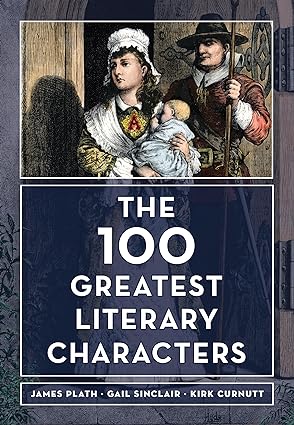
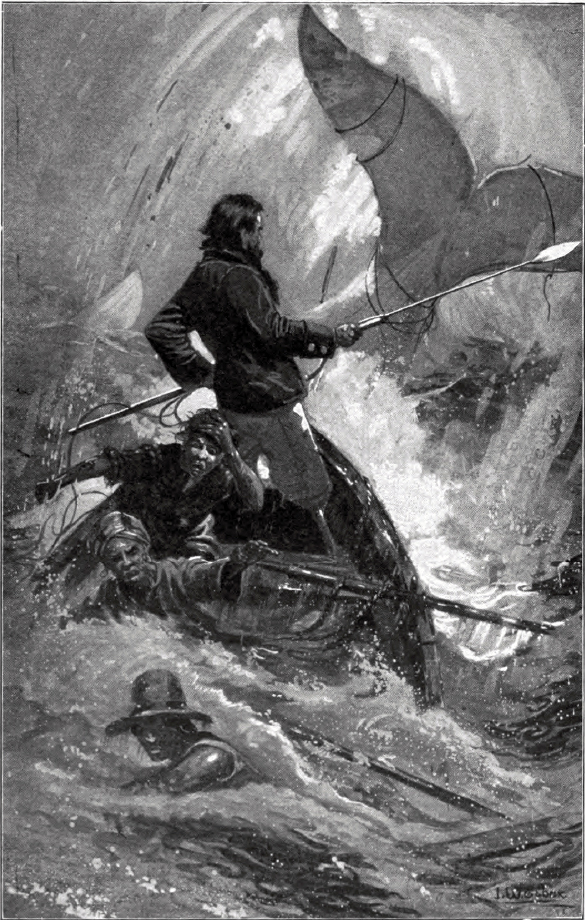

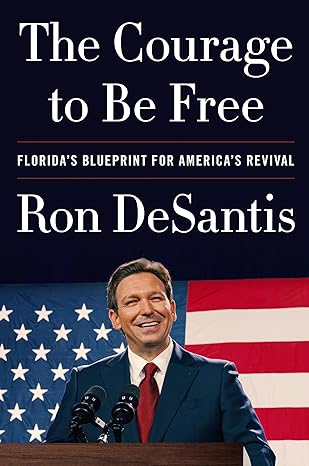

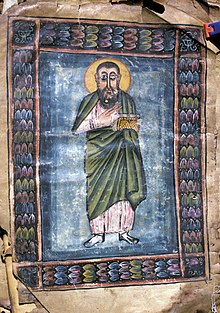

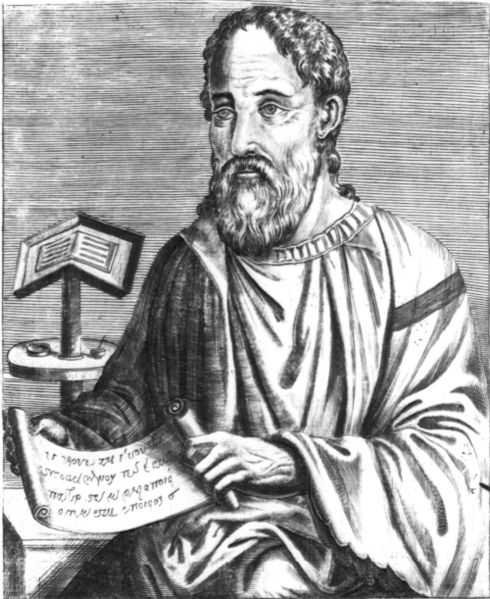
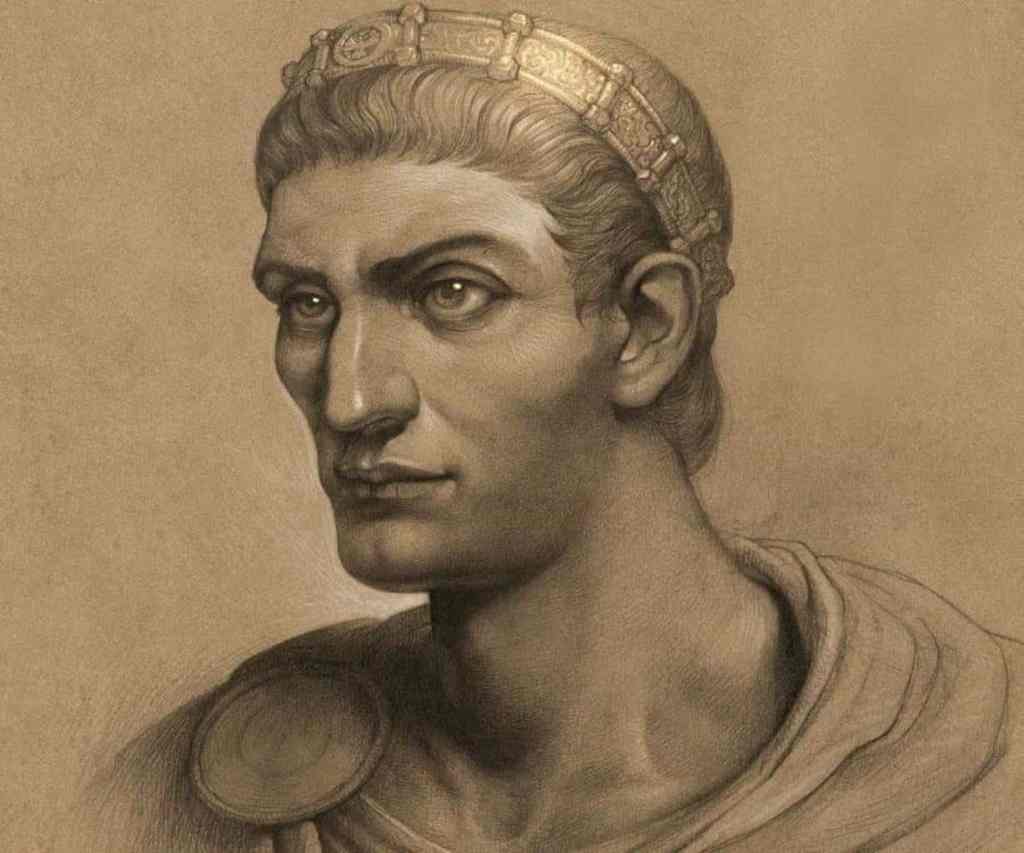
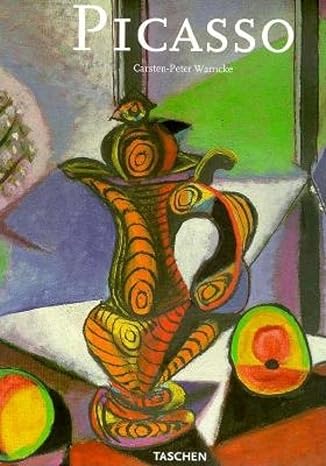
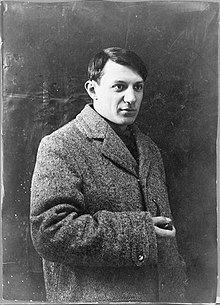
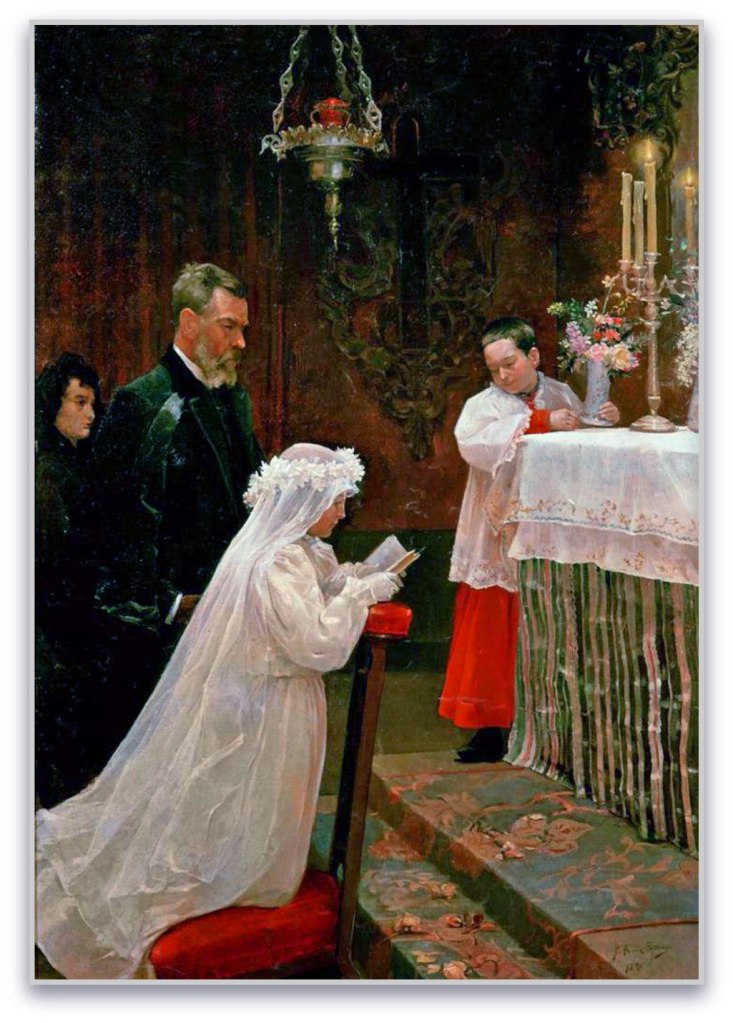
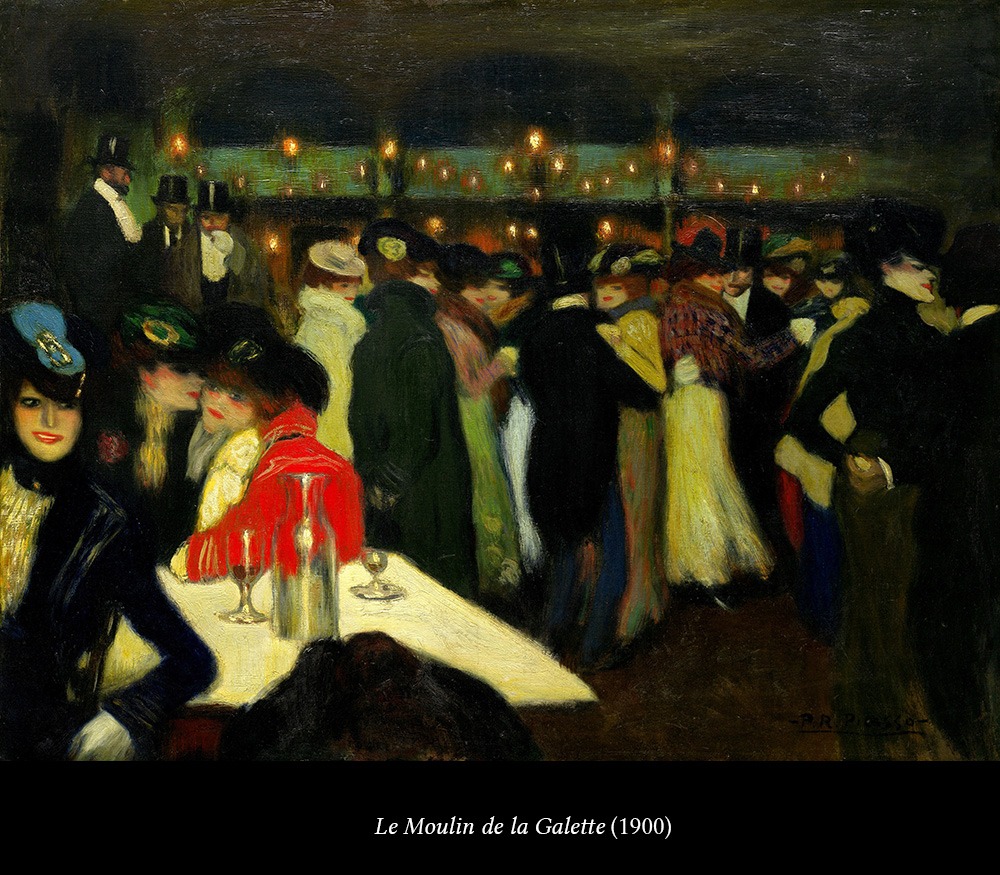
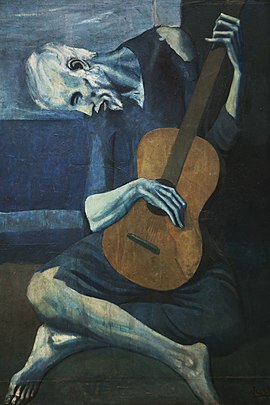
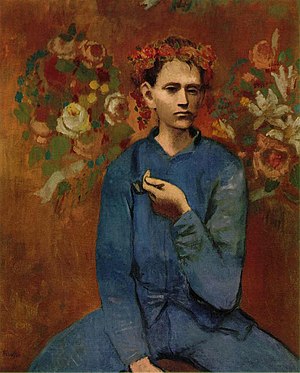
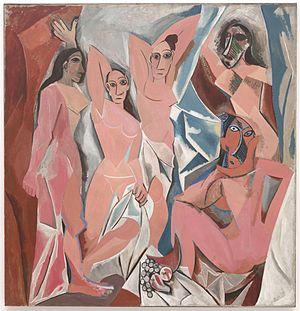
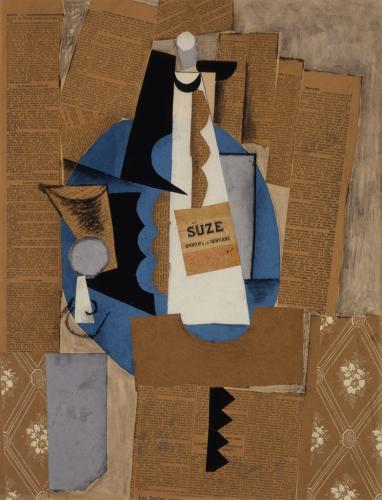
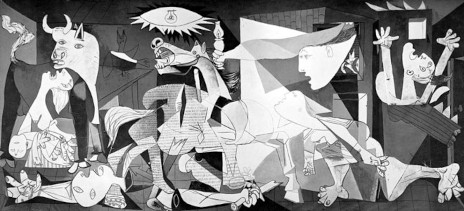
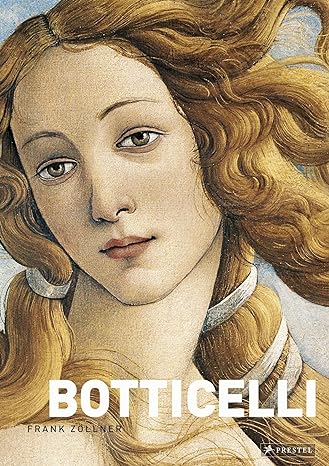

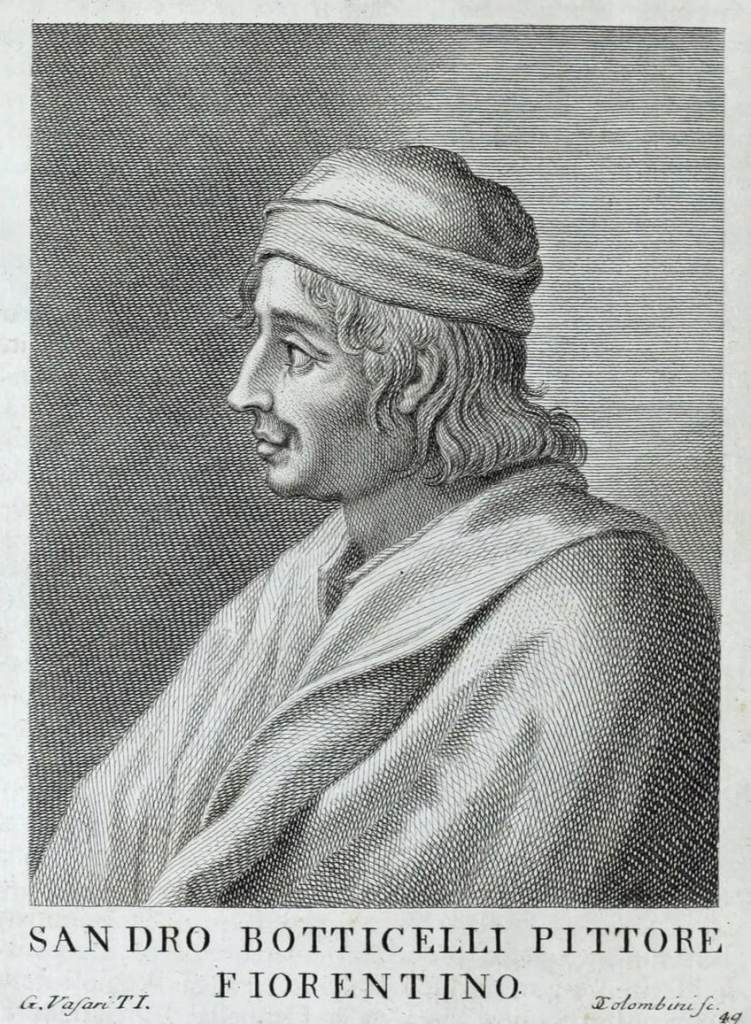

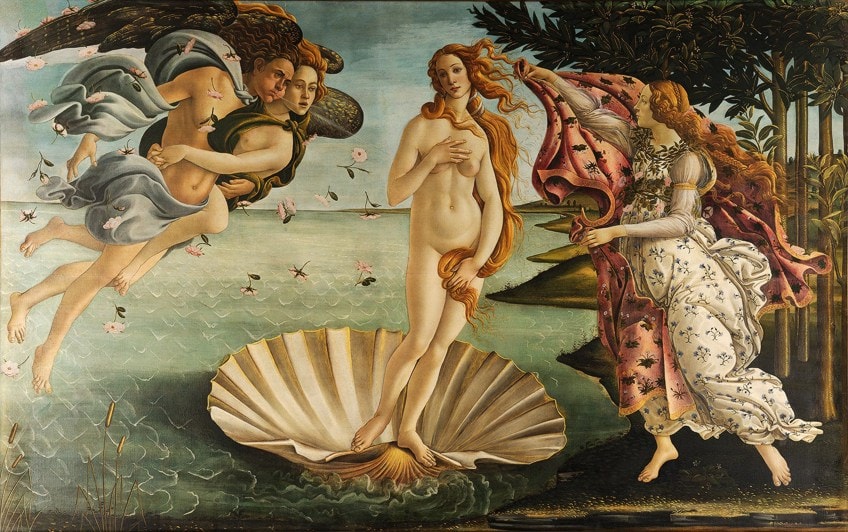
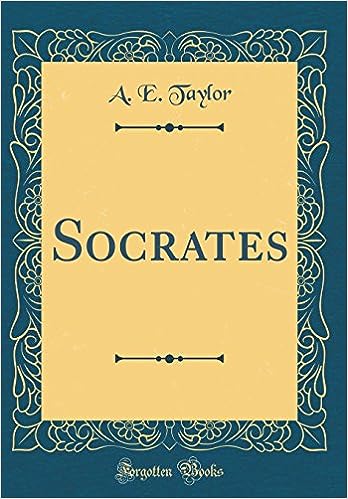
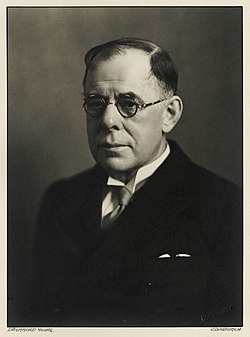
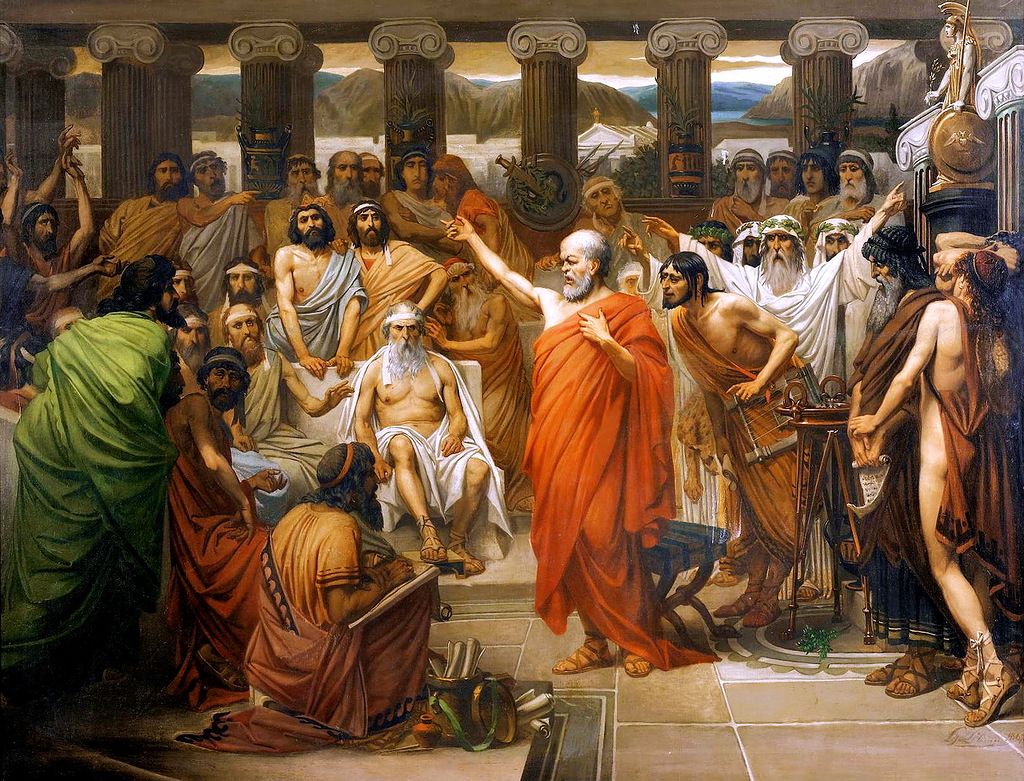
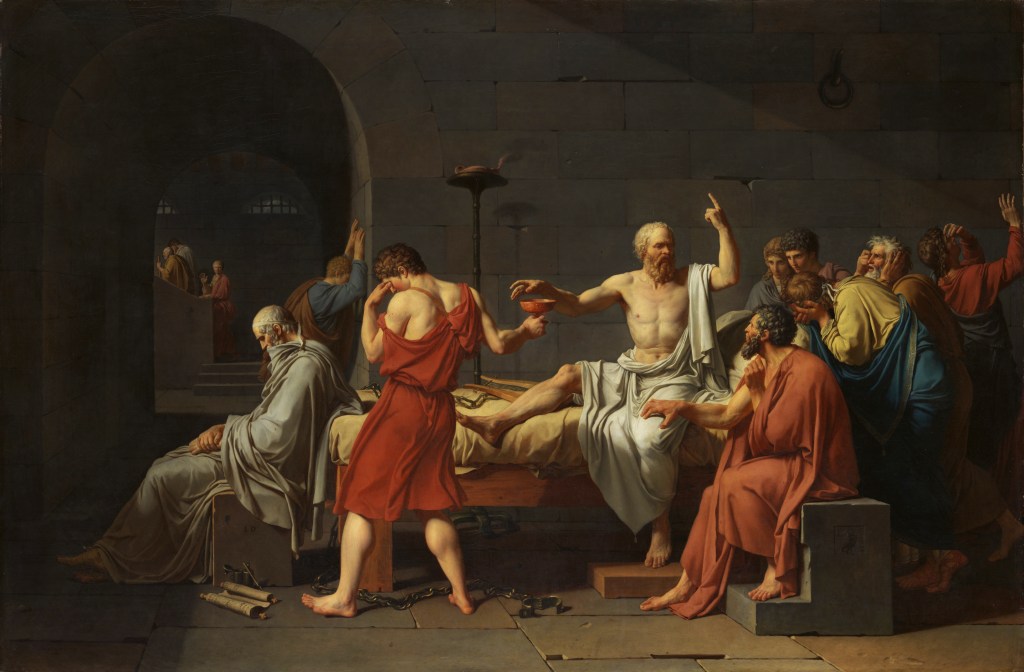


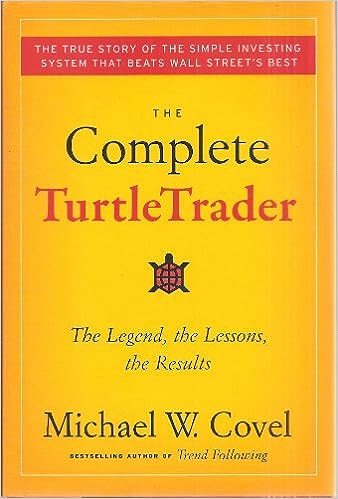
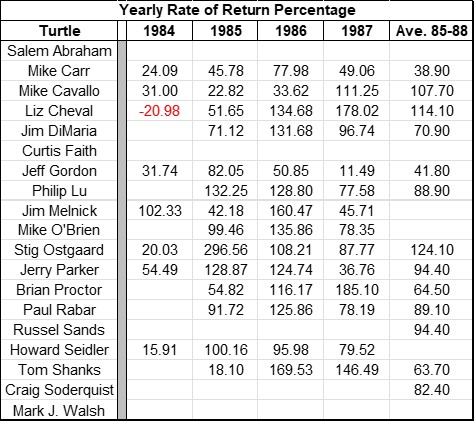
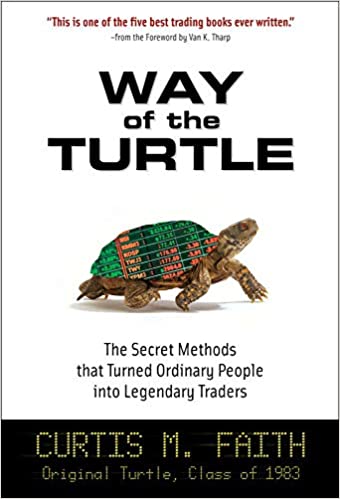

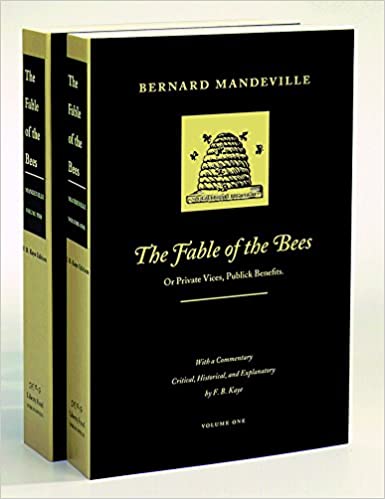
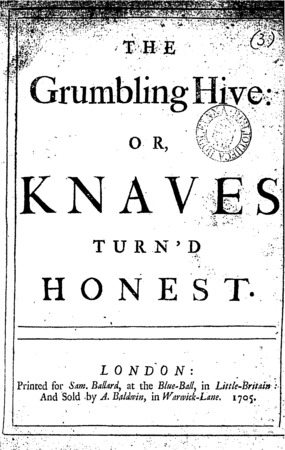
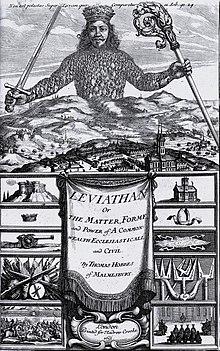
 elsToday