Marcus Aurelius, the last Stoic, stays his fear of death by believing that life’s pauses and changes are preludes to death of which we should not fear. He stated in Book IX of his Meditations: “[as you] …pass to the ages of your life, boyhood for instance, youth, manhood, old age; for each change of these was a death; was there anything to be afraid of?”
This comes directly from Heraclitus, a Greek philosopher and influencer of the first Stoic: Zeno, stating that, “The living and the dead, the sleeper and the watcher, the young and the old are the same.”
St. Augustine in Confessions rephrases Marcus and Heraclitus with the joyful question; “And lo! My infancy died long since, and I am alive… Declare to me, your suppliant, did my infancy succeed to some age of mine that is also dead?”
Joseph Butler, Christian apologist and philosopher, carries the thought to its logical conclusion, writing: “We have passed undestroyed through those many and great resolutions of matter, so peculiarly appropriated to us ourselves; why should we imagine death will be so fatal to us?”
Butler’s argument is that if we’ve survived many transformations throughout our lives, there’s no reason to believe that death would be our ultimate end. His view is grounded in the belief that our continued existence after death is consistent with the enduring nature of our existence during life.
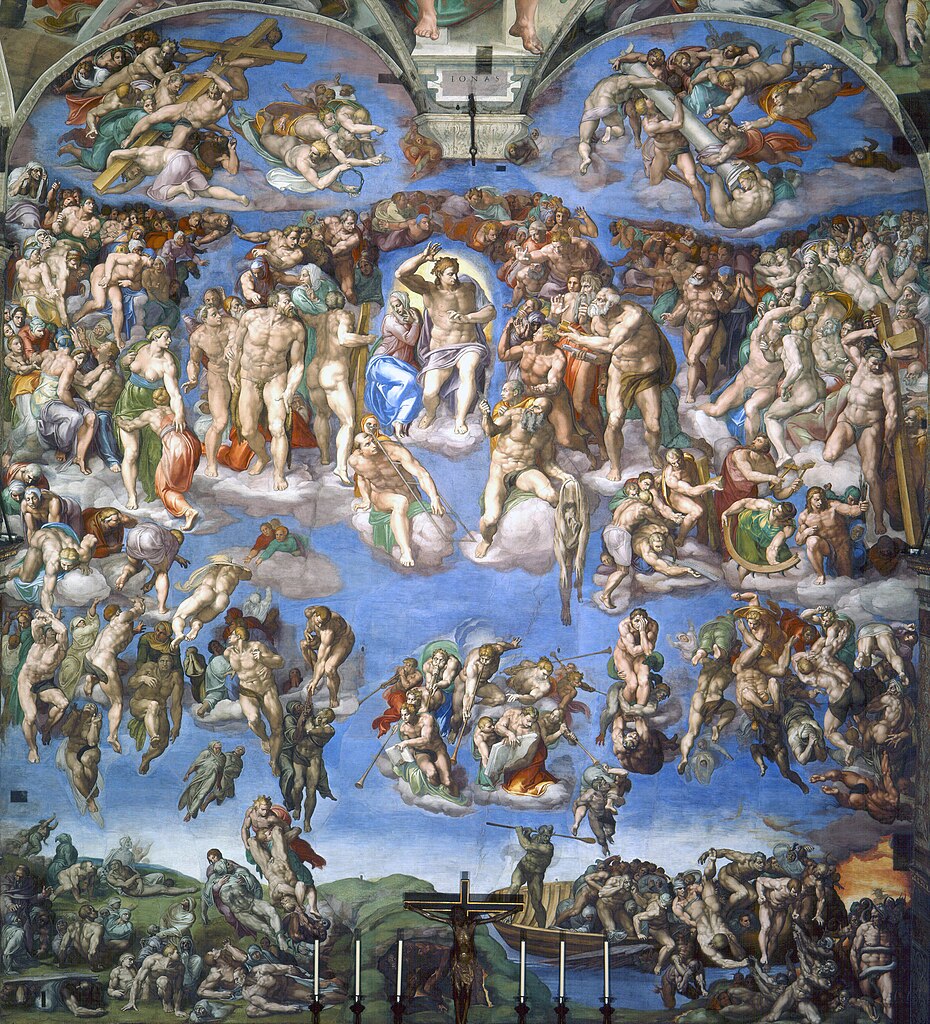
Source: Meditations by Marcus Aurelius, edited by Farquharson. Graphic: The Last Judgement by Michelangelo, Sistine Chapel. Public Domain.
Marcus Aurelius Antoninus, Roman Emperor, soldier, stoic philosopher, stated in Book I of his Meditations that Plutarch’s nephew, Sextus taught him: “…life according to Nature, Dignity without pretense, solicitous consideration for friends, tolerance of amateurs and of those whose opinions have no ground in science.”
Marcus Aurelius, along with Alexander the Great are two rulers who came closest to Plato’s concept of a Philosopher-King. Plato believed that to rule justly and wisely required a thorough foundation in philosophical principles coupled with the skill to serve for the benefit of the state and the ruled rather than for personal gain.
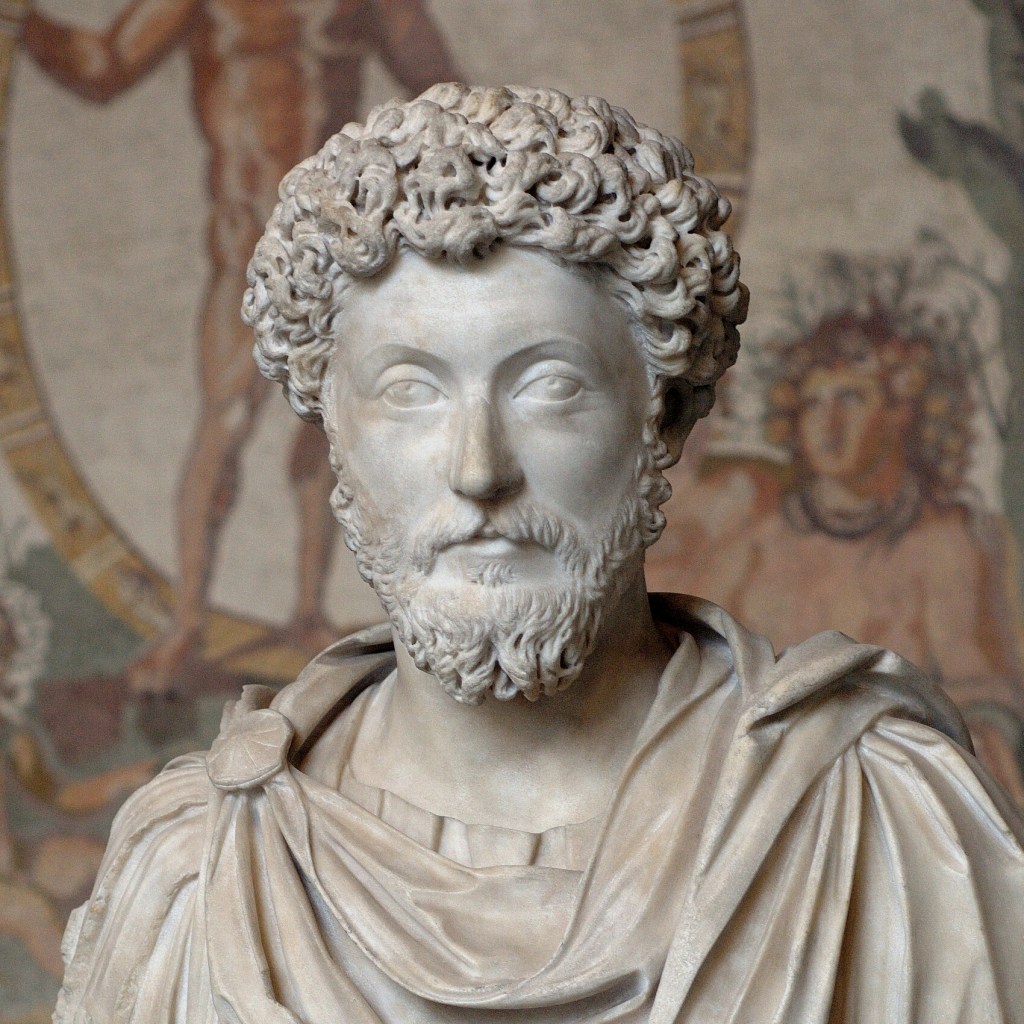
Source: Meditations by Marcus Aurelius. Graphic: Bust of Aurelius extracted from Glyptothek Munich. Public Domain.
Homer is said to have died of grief or maybe shame when he was unable to solve the riddle posed below by some small children:
‘What do you leave behind if you know you have it and what do you take with you if don’t know you have it?’
Lice.
Almost nothing is known about Homer, including his existance, making everything said about him to be either myth, allegorical, or just made up out of whole cloth.
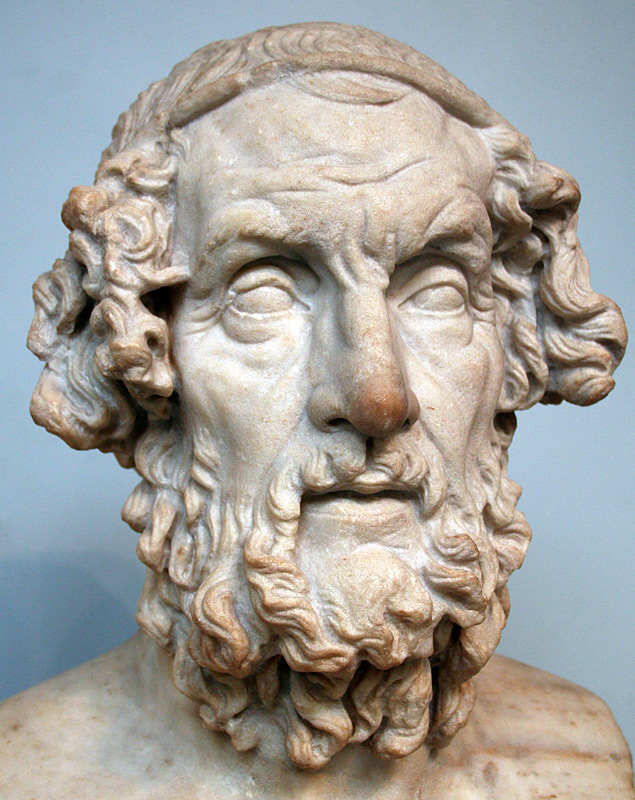
Source: Bulfinch’s Mythology, 1991 – 1st published 1855. Graphic: Bust of Homer, British Museum, Public Domain
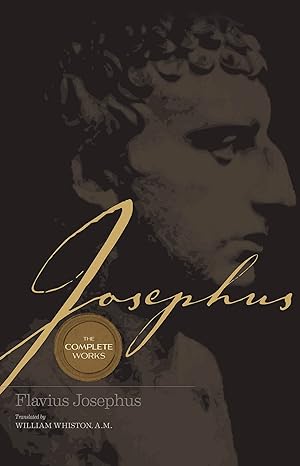
Josephus’s 20 volume history of the Jews titled: The Antiquities of the Jews was written to provide an account of the Jewish people for his Roman patrons and protectors.
Below is a synopsis of the 20 volumes:
Biblical creation to the death of Abraham’s son Isaac
History of Isaac’s sons to the Exodus of Jews from Biblical Egypt
Exodus from Egypt to the first 2 years of the 40 years in the wilderness
The remaining 38 years in the wilderness to the death of Moses upon reaching Canaan
Joshua’s replacement of Moses as leader to the death of the priest Eli
The capture of the Ark by the Philistines to the death of King Saul
David’s ascension to the throne of the Kingdom of Israel to the death of King David
Solomon’s ascension as King of Israel to the death of King Ahab
Reign of King Jehoshaphat to the fall of Samaria
Babylonian captivity of the Jews and the destruction of the Neo-Assyrian Empire
Start of the Persian Empire of Cyrus the Great to the death of Alexander the Great
Death of Alexander the Great to the Maccabean Revolt
Origins of the Hasmonean dynasty to the death of Queen Alexandra
The death of Queen Alexandra to the death of Antigonus II Mattathias
Herod the Great’s taking of Jerusalem to the completion of King Herod’s temple
Completion of King Herod’s temple to the death of Herod’s sons
Death of Herod’s sons to the banishment of King Archelaus
Josephus history covers major portions of the Old Testament including Genesis, Exodus, Numbers, Joshua, Judges, Ruth, Samuel 1&2, 1&2 Kings, 1&2 Chronicles, and Prophets. Josephus’s accounts provide for additional material and commentary not found in other texts including the bible.
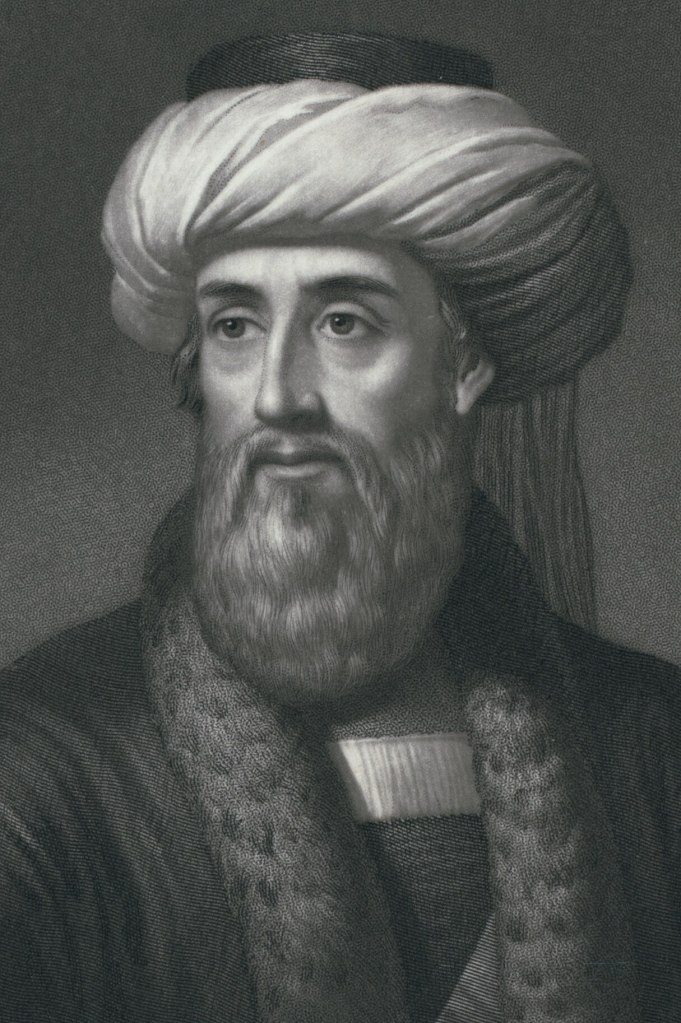
Source: Josephus: The Complete Works, 2003. Jewish Virtual Library. World History Encyclopedia. Graphic Joseph, Son of Gorian, by Thomas Emmet, 1880, public domain.
Flavius Josephus, a first century Jewish scholar and historian wrote four extant works:
The Jewish War. (Jewish Revolt) 75 AD – The first revolt against the Romans from 66-73 AD
The Antiquities of the Jews. 95 AD – From Adam to the death of Herod’s sons
Against Apion. 97 AD – A defense of Judaism
Vita or The Life of Flavius. 99 AD – Biography
These works provide significant source material and insight into first-century Judaism and Christianity.
Josephus was born into the Jewish priesthood on his father’s side and of Hasmonean royal descent maternally. He served in the Jewish military during the Jewish War but surrendered to the Romans and he was considered a traitor to Jews ever after. While waiting to be executed by the Romans he predicted that Vespasian would eventually be crowned emperor of Rome. Vespasian, because of the prophecy, spared his life and made him a consultant, but still a slave, to the Roman army. Josephus gained his freedom when Vespasian became emperor in 69 AD, at which time he changed his name to Flavius Josephus. Flavius was the family name of the emperor Vespasian.
Source: Josephus: The Complete Works, 2003. Jewish Virtual Library. World History Encyclopedia.
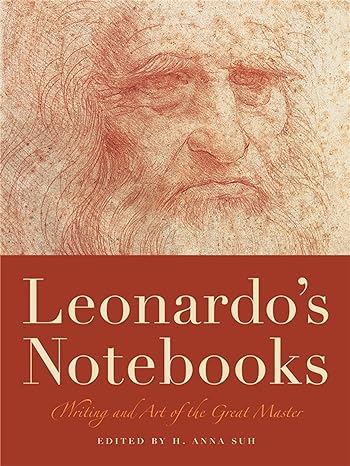
Leonardo Da Vinci and Issac Newton were both consummate note takers. They recorded their thoughts, ideas, and anything else that struck their fancy in innumerable notebooks and loose sheets of paper.
Paper was expensive so they both wrote small and covered every inch of paper with drawings and script.
Newton wrote in Latin, Greek, and English with most subject titles in Latin and the text in Greek. To save space his letters were an eye straining one sixteenth of an inch high. An estimated 4000 pages with around 285,000 words plus drawings of his writings have been found to date.
Leonardo wrote in Tuscan Italian, with the text written in a right to left mirror style which some believe he did because he was left-handed, as, by-the-way so was Newton. 13,000 pages of Leonardo’s notes have been found which is believed to be only about a fifth of the total.
Source: “Isaac Newton” by James Gleick, 2003. “Leonardo’s Notebooks” Edited by H. Anna Suh, 2005. “Leonardo Da Vinci” by Walter Isaacson, 2017. Graphic of da Vinci and Newton AI generated.
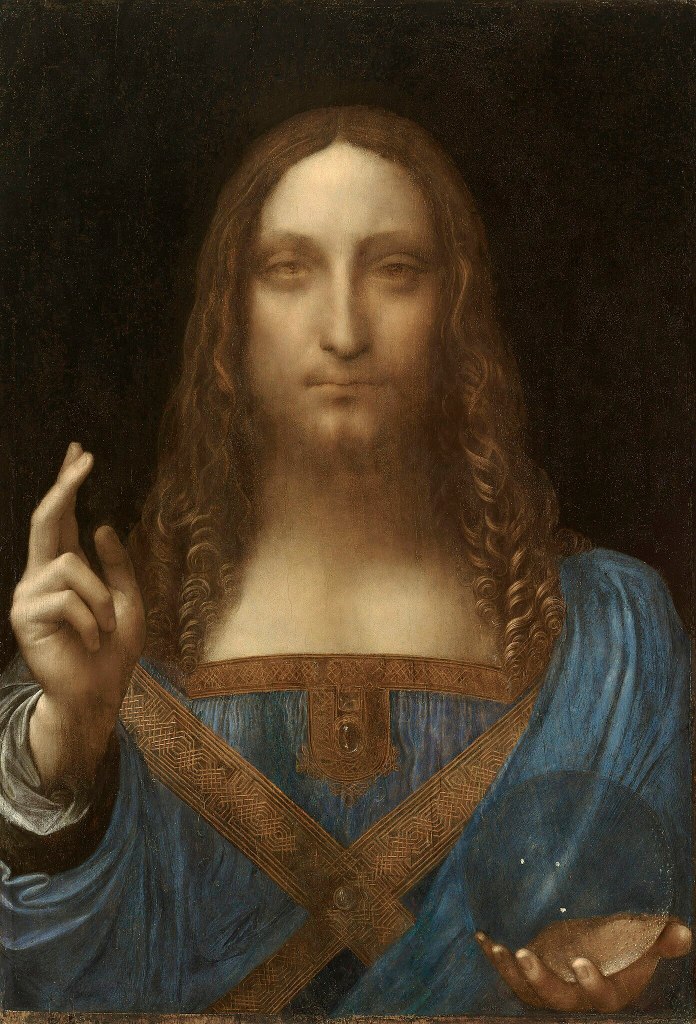
Salvator Mundi, Savior of the World, is believed to have been painted by Leonardo da Vinci sometime between 1499 and 1510 which is considered by historians to be the beginning of the High Renaissance period. The painting was supposedly commissioned by King Louis XII of France and was later recorded in the possession of the English Kings Charles I and II. How the English acquired the painting is unknown. It was then passed onto the Duke of Buckingham in the 1600s after which his son sold it in 1763. The painting then disappeared for 137 years.
It reappeared in 1900, changing hands a few times without anyone realizing it may be an authentic Leonardo. In 2005 a consortium of art dealers and collectors purchased it with the intent to have it cleaned and restored all the while attempting to prove that it was indeed a Leonardo painting. In 2013 most experts agreed that it was an authentic Leonardo allowing it to be sold for $80 million to Swiss art dealer Yves Bouvier which he quickly resold to the Russian Rybolovlev for $127.5 million. This sale quickly became a legal mess with the resolution not entirely clear.
Somehow the legal issues resolved themselves and the painting came to market again in 2017 selling for $450.3 million, making it the most expensive painting ever sold. After much wild and erroneous speculation, it was revealed that Abu Dhabi’s Department of Culture and Tourism bought the painting. It is currently in storage awaiting the completion of the Louvre Abu Dhabi in the United Arab Emirates.
In 2020 the experts have struck again and attribution of the painting to Leonardo is in doubt. Experience says this debate will continue ad infinitum. Meanwhile an extremely expensive art piece supposedly by a gay painter of Jesus Christ resides in the Arab Middle East.
Sources: Leonardo da Vinci by Walter Isaacson published in 2017. Salvator Mundi by Christies published in 2017. Salvator Mundi by ArtNet published in 2020.
Leonardo, dreamer, artist, and scientist; Cesare Borgia, Cardinal, murderer, duplicitous tyrant; and likely subject of Niccolo Machiavelli’s book: The Prince, were holed up together for three months during the Renaissance winter of 1502-1503 in the five blocks by eight blocks Italian walled garrison town of Imola.
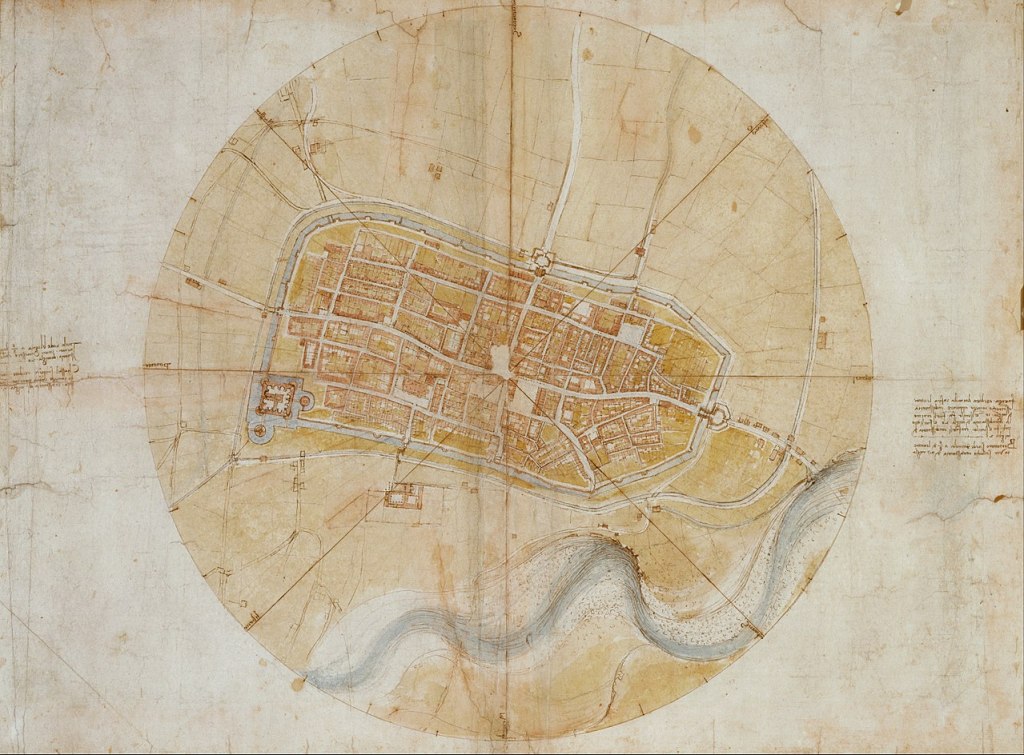
According to Walter Isaacson in his 2017 “Leonardo da Vinci” biography he states that, “While he was in Imola with Machiavelli and Borgia, Leonardo made what may be his greatest contribution to the art of war. It is a map of Imola… It is a work of beauty, innovative style, and military utility…Drawn in ink with colored washes and black chalk… The aerial view is from directly overhead, unlike most maps of the time. On the edges he specified the distances to nearby towns, useful information for military campaigns…”
Cesare Borgia (1475-1507), backed by his father Pope Alexander VI, was on a military campaign to carve out his own personal princedom, by hook, crook or force. He had moved his court to Imola to further plans for his conquest of the area. Leonardo da Vinci (1452-1519) was there because he had signed on as Borgia’s chief military engineer. Leonardo’s task was to reinforce castles and defenses in the region and construct new military machines based on his notebook designs such as his rapid-fire projectile weapon, armored car, helicopter, and giant crossbows; none of which were ever built in his lifetime. Niccolo Machiavelli (1469-1527), was dispatched by the Florentine authorities as a diplomat to discern Borgia’s intentions towards the city and dissuade him, if possible, from attacking Florence.
As an aside, Friedrich Nietzsche (1844-1900), German philosopher and critic, introduced the concept of Ubermensch: an idealized individual who transcends conventional morality and societal norms. Nietzsche elevated Borgia to this lofty status. Borgia’s daring, ruthlessness, and strategic cunning seemed to align with the philosopher’s ideals of a powerful individual who creates his own fate. Many have split hairs with Nietzsche’s concept of Ubermensch but when one creates his own morality it is hard to distinguish the end result from that of a psychopath.
Shown above is Leonardo’s map of Imola drawn in 1502-03. Public domain.
Shown above right is a Friedrich Nietzsche, circa 1975. Photo by Friedrich Hartmann. Public domain.
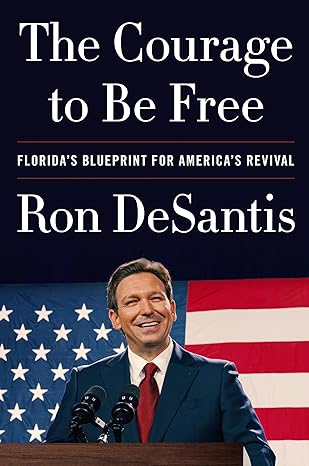
“At the end of the day, I’m fighting for the things I said I’d fight for.” – Ron DeSantis
Courage to Be Free is the Florida governor’s biography with a good measure of politics, vision and American government thrown in. It’s a simple read from someone selling himself as an authentic American and an honest and ethical broker who supports the citizens through good government.
Ron Desantis was born in Jacksonville, Florida in 1978, married Casey Black in 2009, and has three children, two girls and a boy. He attended Yale and graduated in 2001 with a B.A. A year later he entered Harvard and graduated with a law degree in 2005. During law school he was commissioned as an officer in the U.S. Navy. In 2007 he was assigned as a legal advisor to SEAL Team One in Fallujah, Iraq where he was awarded the Bronze Star.
In 2012 he was elected to the U.S. House of Representatives and was re-elected in 2014 and 2016. DeSantis decided not to run for re-election to the House for the 2018 term but instead competed for the Florida governorship which he won. He won re-election in 2022 and as he is term limited by Florida law will not seek that office in 2024. Since he has dropped out of the Presidential race what he does next is an open question.
The first half of Desantis’ book is dedicated to his biography followed by his vision of government and national policy. He draws heavily on the expository essays and articles within the Federalist Papers and their vision for a constitutional republic. The authors of the Federalist Papers, Madison, Hamilton, and Jay argue strenuously for a republican form of government and against direct democracy which one could paraphrase in slang terms as mob rule. DeSantis agrees.
His political philosophy is simple in principle, excoriatingly difficult in execution. Encapsulating his thoughts he states, “The right path forward is not difficult to identify; it just requires using basic common sense and applying core American values…” He follows this up with his blueprint for Florida and America: “Be willing to lead, have the courage of your convictions, deliver for your constituents, and reap the political rewards.” Reaping the political rewards sounds like every politician that has ever walked the face of this Earth and I don’t recognize that as a positive trait.
Literary Criticism:
Courage to Be Free was a number one bestseller in the New York Times, Wallstreet Journal, Amazon, and Publisher’s Weekly shortly after it was released in 2023. Although sales figures are almost impossible to find, for free, the book had an initial print run of 250,000. There hasn’t been a second printing.
Hagiographies are one sided affairs with nary a discouraging word to be found, with sainthood lurking right around the corner. DeSantis autobiography is a hagiography but in fairness one doesn’t provide his opposition with free negative research when your goal is to introduce yourself to the public.
This book had only one purpose, to launch DeSantis into the 2024 presidential Republican primary in the best possible light and as a bonus, get your targeted audience to pay for it by purchasing the book. It admirably accomplishes the task, but it certainly is not a literary masterpiece, rather it reads like a college term paper completed under duress. Simple, direct, with no flowery prose or memorable lines. If you want to learn something about this man, give it perusal, a quick read is all it needs and watch one or two of his Republican primary debates for additional elucidation.
The only reason I read this book was because of the title: The Courage to Be Free. It reminded me of the title of John F. Kennedy’s Profiles in Courage. Kennedy’s book employs a better writing style but that is because Kennedy didn’t author his book. In a previous post I stated who did and I’ll leave it to you to look it up if you are curious. In the end both are about embellishing their respective reputations. Mission accomplished.
David Wootton, age 71, is the Anniversary Professor (a named professor in the British system is equivalent to a full professor in the American system…I believe) of History at the University of York in England. His work ranges from the history of the individual to the wider-ranging histories, and philosophies of ideas that shaped our world. His published interests concentrate on the Renaissance but stretch back to the Greeks and forward to the embryonic American experiment. He is an old-school historian with his scholarship supported by the evidence available coupled with the existing mores of the times. His selection of topics that I have read or perused suggests a thorough dearth of confidence in past historical interpretations and a jaundiced view of present sense and sensibilities. Or more succinctly and in his own words, “History is always about a particular time, a particular place; it is always about groups more than it is about individuals; it is always the history of somewhere.” and if I may so boldly add, it is always the history of (some)time.
Wootton’s biography of Paolo Sarpi, a contemporary and patron of Galileo, likely provided, albeit 27 years later, the impetus and scholarship for Wootton publishing his second biography in 2006 on that aforementioned watcher of the skies. Sarpi, a devout Copernican and a supposedly not so devout Catholic supported Galileo’s heliocentric theories and shielded him, for a time, from his Roman inquisitors. Parenthetically, Wootton in his book on Galileo almost apologizes for writing biographies mainly because his peers look down on the genre, a sentiment I used to harbor but I now appreciate the category because they provide the who to the what, where, and when.
Bad Medicine, Wootton’s second book, postulates that doctors have dispensed more harm than good, beginning with Hippocrates in the fifth century B.C and continuing through to the present day. Covid or the Wuhan Flu pandemic will not provide the medical profession with the needed catharsis to dispel Wootton’s conjecture.
In The Invention of Science Wootton walks us through the birth of the scientific method starting with a supernova shining in the Renaissance night sky of the 1500s and culminating with Newton’s discovery that visible light contains a plethora, or at least 7 wavelengths and hues in the early 1700s.
In Power, Pleasure, and Profit, Wootton expands on the concept of selfishness driving all human progress. A concept, although anathema to all Christian and Western ethics and morality, was espoused by Machiavelli’s The Prince, published in the early 1500s and Mandeville’s The Fable of the Bees, also known as The Grumbling Hive, first published in 1705.
Wootton’s Besterman Lecture: Adam Smith, Poverty, and Famine, we find out that charity is not a word in Smith’s vocabulary. Academics and maybe the rest us can really get into the weeds.
And finally, before I get into Galileo, The BBC devoted 40 minutes interviewing four guests, Wootton being one of them, on The Fable of the Bees, written initially as a poem, as stated above, by Bernard Mandeville and expanded into a book length dissertation sub-titled Private Vices, Publick Benefits which proposes that personal pleasure and greed drive human progress not altruism or Christian charity.
Galileo, born in the small city of Pisa, Italy in 1564, lived to the astronomical age of 77, some 25 years beyond the average lifespan for that era. He spent his final years blind, serving a life sentence, originally in a papal prison but eventually the prison was exchanged for confinement to his home located in a small village outside of Florence. His crime was for authoring a book defending the heliocentric model of the universe as theorized by Copernicus in 1543 rather than promoting the geocentric model as demanded by the Catholic Church.
Galileo was a tinkerer and thinker more akin to our modern definition of an engineer rather than a scientist, taking innovative ideas and novel inventions to the next level. He didn’t invent the telescope, Hans Lippershay of the Netherlands in 1608 did, but Galileo’s design quickly became the standard and he eventually increased Lippershay’s 3x magnification to 23-30x. His leaden tube with a convex lens in one end and concave lens in the other end discovered the mountains and plains of the moon, the moons of Jupiter, the rings of Saturn, the phases of Venus, possibly the planet Neptune, individual stars of the Milky Way, and sunspots. Today we can purchase a 30x set of binoculars for less than $100 which we use to peep through our neighbors’ windows and watch songbirds in the meadow across the street. All his discoveries aided in the proof of a heliocentric universe, his universe being mostly what we would refer to today as the solar system. Our discoveries prove that our neighbors are weird.
Galileo was a fascinating man and genus who introduced the world to a new way of advancing our knowledge of the world and the universe. His tinkering and thinking were the rudimentary beginnings of what we now call the scientific method–observe, hypothesize, test, repeat.
His proof of Copernicus’ theory was mostly correct. The Church’s defense of the geocentric model wasn’t. The Church admitted their error in 1992.


 elsToday