God Will Come

Blade Runner (Theaters-1982; DVD-2001) Rated: R — Runtime: 117 minutesM Blade 1982
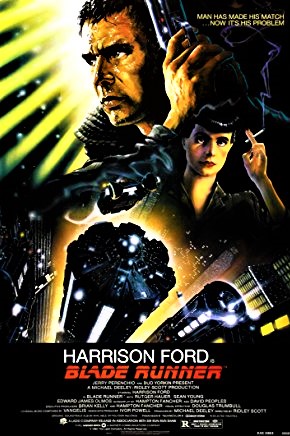
Blade Runner 2049 (Theaters-October 2017; Streaming-January 2018) Rated: R — Runtime: 163 minutes

Genre: Action-Drama-Mystery-Science Fiction-Suspense-Thriller

els – 8.0/10 (1982); 7.5/10 (2017)

IMDb – 8.2/10 (1982); 8.2/10 (2017)

Amazon – 4.3/5 stars (1982); 3.6/10 (2017)

Rotten Tomatoes Critics – 8.5/10 (1982); 8.2/10 (2017);

Rotten Tomatoes Audience – 4.0/10 (1982); 4.1/5 (2017)

Metacritic Metascore – 89/100 (1982); 81/100 (2017)

Metacritic User Score – 8.8/10 (1982); 8.2/10 (2017)

Directed by: Ridley Scott (1982); Denis Villeneuve (2017)

Written by: Hampton Fancher and David Peoples (1982); Hampton Fancher and Michael Green (2017); Movies Based on the 1968 Story Do Androids Dream of Electric Sheep? by Philip K. Dick

Music by: Vangelis (1982); Hans Zimmer and Benjamin Wallfisch (2017)
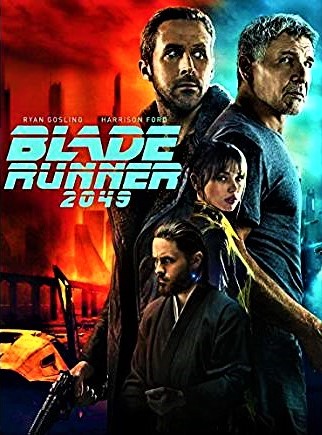
M Blade 2017Cast: Harrison Ford, Rutger Hauer, Sean Young (1982); Ryan Gosling, Harrison Ford, Ana de Armas (2017)

Film Locations: Burbank–Los Angeles, US; London–Surrey, England (1982): Budapest–Etyek–Hungary; Iceland; Mexico; Almería–Andalucía–El Ejido–Sevilla, Spain; Nevada, US (2017)

Budget: $28,000,000 (1982); $185,000,000 (2017)

Worldwide Box Office: $33,139,618 (1982); $258,978,008 (2017)

In a not too distant dystopian future, replicants, or bio-engineered humans are created to perform tasks humans can’t or won’t do.  Due to their greater than human physical attributes they are relegated to planets beyond  Earth, kept as slaves and forever banned from humanity’s home planet.  The replicants, in case they escape their captivity, are created with built-in fail-safes; a four-year life span and sterility.  Blade Runners (Harrison and Gosling) are bounty hunters hired to retire, kill, fugitive replicants. In the first Blade Runner movie Ford hunts down replicants that want to live beyond their 4 years of existence. In the second Blade Runner, Gosling, a replicant himself and a Blade Runner, a rather bizarre twist causing serious cognitive disconnects, searches for the replicant miracle: the spawn of a replicant, reminiscent of the 1993 Jurassic Park fail-safe: the all-female dinosaurs couldn’t reproduce but they found a way.

Philip K. Dick in his 1968 book, Do Androids Dream of Electric Sheep?, explores the meaning of human life. What distinguishes humans from replicants or any sentient life?  These two movies follow a similar path as the book, a similar plot but eventually go deeper; delving into man’s ability to create life, to control life, to supplant God. If creation is the mark of God does man reach godhead by creating a likeness of himself?  What are man’s responsibilities as a creator; what are his duties to his children?

In a symbolic scene from the first movie, Roy (Hauer), leader of the renegade replicants, is reaching his pre-programmed death as he pursues Deckard (Harrison) for destroying his vision of salvation from the fail-safe. As his death advances he loses control of his hand muscles and to stave off the inevitable he pushes a square nail through his palm and out the other side to stabilize the involuntary contractions. A painful suffering from, or possibly for, his creators’ designs. Roy finally reaches Deckard who is slowly slipping from the roof of an apartment building.  As Deckard’s grip gives way, Roy clasps his wrist and pulls him to safety; the hunted saving the hunter. As the two sit on the roof and face each other, Roy’s life slowly leaves him as he recites his eulogy:

“…All those moments will be lost in time, like tears in rain. Time to die.”

The creation dies having shown mercy and empathy.

The second movie explores the miracle of birth that couldn’t happen.  A birth from the womb of a replicant, a birth of a detached and lonely creature, but a true gift to humanity.  A child that transcends our being by giving us our memories.  Memories that make us whole and real: human.  A child burning bright, leaving a future by leaving a past, but denied progeny.  She is Asimov’s 1951 Foundation Mule; a conqueror and a giver, but sterile.

These are movies examining the meaning of God, what it is to be God. An examination of the burdens of God. An investigation into what it means to strive towards godhead. An investigation of paths taken and not taken.  An inquiry into our will to die for our creations or to live with them. Will God come when we become gods?

All Chan, All Good

The Foreigner (Theaters-September 2017; Streaming-January 2018) Rated: R  Runtime: M Foreigner 2017113-114 minutes

Genre: Action-Crime-Drama-Mystery-Suspense-Thriller

els – 7.0/10

IMDb – 7.1/10

Amazon – 4.6/5 stars

Rotten Tomatoes Critics – 5.9/10

Rotten Tomatoes Audience – 3.8/5

Metacritic Metascore – 55/100

Metacritic User Score – 7.1/10

Directed by: Martin Campbell

Written by: David Marconi (screenplay), Stephan Leather (novel)

Music by: Cliff Martinez

Cast: Jackie Chan, Pierce Brosnan

Film Locations:  London, England; Larne, Northern Ireland

Budget: $35,000,000

Worldwide Box Office: $140,793,485

Quan (Chan), a widower, lives a quiet London life, looking after his only daughter and his restaurant, his only major concerns are the boys chasing after his beloved teenaged girl.  Then a new IRA faction blows up a bank, killing his little girl, who was shopping at a dress shop adjacent to the bank, and Quan’s life and priorities change. He wants to know who killed his daughter, who was responsible.  He wants justice.  When the officials are unable to give him any names or promise any arrests, soon, he organizes his vigilante squad of one and slowly narrows down the possibilities; Jackie Chan style, but without malice for dogs or the innocent.

Jackie Chan steps past his normal fun side, giving the audience a taste of his drama and emotional acting abilities, and proves that his serious character portrayals are real, believable and effective.  Not since his role as a morose handyman in the 2010 Karate Kid have I seen him in such a convincing dramatic role, but this time the screenplay (Marconi) and supporting actors are not relegating him to a least common denominator of mediocrity and cheesiness.  The screenplay flows well, it’s coherent, and has enough twists to keep you guessing, but it does have a flaw, and unfortunately its a big one. Brosnan’s Liam Hennessy role is muddled, his level of involvement and guilt in the IRA bombing is never completely resolved. Maybe it’s intentional but it adds clutter to the plot and its conclusion. That aside, this is a typical Martin Campbell film, full of action, intrigue and entertainment, always spot on and fun; ok, maybe the Green Hornet was a dud, but usually his films are a must see, as is this one.

This was a fun action-drama to watch.  Jackie Chan displays what made him famous, his martial arts moves, but in the film he also displays his serious side and lets us know that, yes, he can play that part.

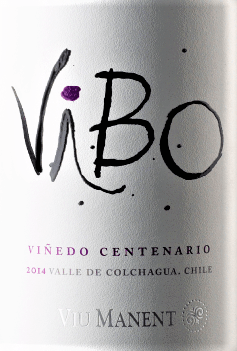
Viu Manent ViBo Vinedo Centenario 2014

W Vibo 2014Bordeaux Red Blend from Colchagua Valley, Rapel Valley, Central Valley, Chile

65% cabernet sauvignon

35% malbec

13.5% alcohol

Opened 31 Jan 2018

els: 9.2/10

Wine Advocate: 91

Colchagua Valley is in the southern and western portions of Rapel Valley, which itself is located in the middle of the 250 mile long Central Valley, all situated between the Andes to the east and the Coastal Ranges to the west. The northern edge of the Colchagua Valley is defined by the life giving, Rapel River and its main tributaries: the Tinguiririca and Cachapoal Rivers. The valley, sheltered from the cold Pacific winds by the Coastal Ranges, has a mild Mediterranean climate, warm but not too hot, or too cold, with rainfall that averages about 24″ per year. The main wine of the valley is Cabernet Sauvignon but in recent years Malbec has been added to the vineyards to capitalize on their Argentinian success on the other side of the Andes. The better wineries of Colchagua Valley have their vineyards located on the eastern slopes of the Coastal Ranges.

In 1935 the Viu family, Catalonian immigrants, founded a Bodega in Santiago, Chile to bottle and market wines locally.   The family, in 1966 purchased a winery and its vineyards in the Colchagua Valley which included very old, pre-Phylloxera, French derived vines.  This purchase marked the beginning of the family’s proprietary production of wine. In 2009, Vibo made its appearance on the Chilean and International markets.

Viu Manent, the Viu family company, operates 3 vineyards, totaling 627 acres, in Colchagua Valley: San Carlos, La Capilla, and El Olivar.  The San Carlos vineyard is 370 acres of 40 year-old plus vines, some more than 100 years old, growing at 800′ above sea level in very thick and porous, silty-sand to clayey-sand soils. The vineyard was established in the 1800s with pre-Phylloxera, French root-stock and vines. The La Capilla vineyard is about 93 acres dedicated to red-wine-only vines growing at 750 feet in a pebbly limestone and limey soil.  The vines are on average 16 years old. The El Olivar is a new land acquisition which the company plans to develop into about 175 acres of vines at an elevation between 500-930′, located on the steep slopes, up to 45°, of the Coastal Range foothills in pebbly-clayey soils.

Vibo Vinedo Centenario is produced from the oldest vines from the San Carlos vineyard. The 2014 growing season was delayed by long spring frosts which eventually led to hot summer days in the low 80s°F but the nights were cooler than normal, resulting in sustained high acidity levels for the grapes until harvest.

The grapes were hand harvested, de-stemmed and crushed in stainless steel tanks. After a 5-day cold water soak the grapes were fermented in natural yeasts.  Malolactic fermentation occurred in oak vats. The wine was aged for 18 months in French oak barrels, about 20% which are new oak.

The wine has ruby-red color with a garnet rim. A bouquet of fruity herbs and spice. The tongue stays happy with a great balance of tannins and acidity.  A wonderful finish.

An outstanding wine at a good price.  Serve with cheese, beef, lamb or duck. Drink now, but should last until 2020-2022. Decant and aerate for one hour before drinking.

$16.99 wine.com

Grand Forks, ND Housing Market: Jan 2018

Trends from the previous month:

  1. December 2017 price drop and days on the market increase were all an statistical anomaly due to houses being pulled briefly from the market and then added back in a few days later.  This has the effect of resetting the clock as far as days on the market is concerned.  Houses that were on the market for a year or more are now listed as being for sale only for a few days.  It will take a few months for this trade trick to work itself out of the numbers.
  2. Ignoring the clock resets, the number of homes on the market continues to decrease.
  3. Homes selling for less than $500,000 are staying on the market longer. Homes on the market for more than $500,000 are selling quicker.
  4. Price per square foot for all homes is essentially flat.
  5. Next month I will have 6 months of data and will start showing the monthly results in graphical form.  Should be easier to ascertain the month to month changes.RE Housing Jan 2018

Top 100 Music Albums: Summed Score from 91 Top Album Lists

MU Sgt Pepper's 1967A hobby of mine for the last 10 years or so has been collecting Top 100 lists of albums.  Every once in a while I concatenate them to see how the world’s musical taste is changing; what’s new, what’s rising, what’s fading.  The world does change, but slowly. Pre-2000 albums still dominate the lists, even today, but acts from the 2000s are starting to break through such as Adele, Coldplay, Muse and Pixies.  Adele’s 21 album which was put out in 2011 is on this list; a truly remarkable feat.  Just as remarkable is Miles Davis’ Kind of Blue from 1959.MU Kind of Blue 1959

The following list was compiled from 88 Top 100 (or more) Album polls from the major aggregators such as: Rolling Stone, New Music Express, Entertainment Weekly. The 2012 and 2017 RIAA top 100 albums by sales and the Grammy Year’s Best Album are also included. The lists range in time from 1974 to 2017. Every album was assigned a score based on its ranking in the various polls. For example an album that was ranked number 1 in a particular poll was given a score of 100. An album ranked at 100 was given a score of 1.  The individual list’s scores were MU Adele 21 2011then summed with the other lists and sorted.  The greatest sum was ranked as the number 1 album.  The smallest sum was ranked as the number 100 album.  The number 1 album is The Beatles’ Sgt. Pepper’s and it was included in 83 polls and had a sum score of 7333. The album included in the least number of polls and still making the list was Muse’s Origin of Symmetry which showed up on just 14 polls.
Obviously the more polls an album is listed on the more likely they will score high on this list.  To counter that effect I will also publish a list based on an album’s average score which should help alleviate that issue.  I will also publish a listing based on the number of polls an album makes.

Now for what it’s worth, my list:

Rank Artist Album Album Year Artist Origin
1 Beatles The Sergeant Pepper’s Lonely Hearts Club Band 1967 England
2 Pink Floyd The Dark Side of the Moon 1973 England
3 Beatles The The White Album 1968 England
4 Nirvana Nevermind 1991 US
5 Beatles The Revolver 1966 England
6 Beatles The Abbey Road 1969 England
7 Beach Boys The Pet Sounds 1966 US
8 U2 The Joshua Tree 1987 Ireland
9 Fleetwood Mac Rumours 1977 England / US
10 Bruce Springsteen Born to Run 1975 US
11 Rolling Stones The Exile on Main Street 1972 England
12 Michael Jackson Thriller 1982 US
13 David Bowie The Rise and Fall of Ziggy Stardust 1972 England
14 Radiohead OK Computer 1997 England
15 R.E.M. Automatic for the People 1992 US
16 Led Zeppelin IV 1971 England
17 Velvet Underground The The Velvet Underground plus Nico 1967 US
18 Jimi Hendrix Are You Experienced 1967 US
19 Bob Dylan Blonde on Blonde 1966 US
20 Bob Dylan Highway 61 Revisited 1965 US
21 Sex Pistols The Never Mind the Bollocks 1977 England
22 Clash The London Calling 1979 England
23 Rolling Stones The Let it Bleed 1969 England
24 Marvin Gaye What’s Going On 1971 US
25 Pearl Jam Ten 1991 US
26 Beatles The Rubber Soul 1965 England
27 Pink Floyd The Wall 1979 England
28 Bob Dylan Blood on the Tracks 1975 US
29 Who The Who’s Next 1971 England
30 Prince Purple Rain 1984 US
31 Doors The The Doors 1967 US
32 Guns N’ Roses Appetite for Destruction 1987 US
33 Rolling Stones The Sticky Fingers 1971 England
34 Van Morrison Astral Weeks 1968 Ireland
35 Jimi Hendrix Electric Ladyland 1968 US
36 Paul Simon Graceland 1986 US
37 U2 Achtung Baby 1991 Ireland
38 Eagles Hotel California 1976 US
39 Metallica Metallica Black Album 1991 US
40 Smiths The The Queen is Dead 1986 England
41 Pink Floyd Wish You Were Here 1975 England
42 Joni Mitchell Blue 1971 Canada
43 Dire Straits Brothers in Arms 1985 England
44 Alanis Morissette Jagged Little Pill 1995 Canada
45 Oasis Morning Glory 1995 England
46 Bruce Springsteen Born in The U.S.A. 1984 US
47 Led Zeppelin II 1969 England
48 Radiohead The Bends 1995 England
49 Love Forever Changes 1967 US
50 Simon and Garfunkel Bridge Over Troubled Water 1970 US
51 Meat Loaf Bat Out of Hell 1977 US
52 David Bowie Hunky Dory 1971 England
53 Stevie Wonder Songs in the Key of Life 1976 US
54 Miles Davis Kind of Blue 1959 US
55 Carole King Tapestry 1971 US
56 Prince Sign ‘O’ the Times 1987 US
57 Queen A Night at the Opera 1975 England
58 Neil Young Harvest 1972 Canada
59 Band The The Band 1969 Canada
60 AC/DC Back in Black 1980 Australia
61 Stone Roses The The Stone Roses 1989 England
62 Rolling Stones The Beggars’ Banquet 1968 England
63 Patti Smith Horses 1975 US
64 Neil Young After the Goldrush 1970 Canada
65 Elton John Goodbye Yellow Brick Road 1973 England
66 Who The Tommy 1969 England
67 Oasis Definitely Maybe 1994 England
68 Bob Marley and The Wailers Legend 1984 Jamaica
69 U2 The Unforgettable Fire 1984 Ireland
70 Led Zeppelin Physical Graffiti 1975 England
71 Clash The The Clash 1977 England
72 Jeff Buckley Grace 1994 US
73 Van Morrison Moondance 1970 Ireland
74 Public Enemy It Takes a Nation of Millions to Hold Us Back 1988 US
75 Television Marquee Moon 1977 US
76 Coldplay A Rush of Blood to the Head 2002 England
77 Stevie Wonder Innervisions 1973 US
78 Bob Dylan Bringing it All Back Home 1965 US
79 Red Hot Chili Peppers Californication 1999 US
80 John Lennon Imagine 1971 England
81 Derek and The Dominos Layla and Other Assorted Love Songs 1970 England/US
82 Lou Reed Transformer 1972 US
83 Led Zeppelin Led Zeppelin 1969 England
84 Adele 21 2011 England
85 Pixies Doolittle 1989 US
86 Otis Redding Otis Blue 1966 US
87 Joy Division Unknown Pleasures 1979 England
88 James Brown Live at The Apollo 1963 US
89 Massive Attack Blue Lines 1991 England
90 Joy Division Closer 1980 England
91 Crosby Stills Nash and Young Deja Vu 1970 US
92 Elvis Presley The Sun Sessions 1976 US
93 John Coltrane A Love Supreme 1964 US
94 Muse Origin of Symmetry 2001 England
95 Bruce Springsteen Darkness on the Edge of Town 1978 US
96 Supertramp Breakfast in America 1979 England
97 Captain Beefheart Trout Mask Replica 1969 US
98 Primal Scream Screamadelica 1991 Scotland
99 Ramones Ramones 1976 US
100 Portishead Dummy 1994 England

Vetus Flor de Vetus 2012

W Flor Vetus 2012Tempranillo from Toro, Spain

An Eric Solomon Selection

100% tinta de toro (tempranillo)

14.0% alcohol

Opened 29 Jan 2018

els: 9.0/10

Wine Advocate: 92

Decantalo: 92

Guia Penin: 91

Cellar Tracker: 88

The Spanish Northern Plateau Toro Region is 40-50 miles east of the Portuguese border and 125-150 miles south of the Northern Spanish-Atlantic Ocean coast. Wine has been produced in the Toro region for more than 2000 years ever since the Greeks taught the Celts the art of the vine and grape.  During the Middle Ages, Catholic religious orders obtained land in the region from the king under the expressed agreement that they would expand the vineyards. In the 1800s the area’s vineyards escaped the phylloxera crisis resulting, today, in some very old vines.

The Artevino company, under the tutelage of Gonzalo Anton, began its wine making endeavors in Rioja Alavesa, one of the 3 sub-regions of the La Rioja DOC, in 1987, focusing on the hospitality industry with their IZADI labeled wines. In 2000, Gonzalo’s son began to expand the winery’s footprint and soon established, in the Toro Region, Bodegas Vetus in 2003. He initially concentrated on developing their vineyards until they were assured of success before building their winery there, which they eventually opened in 2008.

The 50 acres of 25 year-old vines of the Vetus vineyards surround the winery, and are located less than 10 miles to the south, southwest of the city, Toro, and about 2/3 of a mile west of the Guarena River, a north flowing tributary of the Douro River.  They are at an altitude of approximately 2300′ above sea level, growing in a loose conglomeratic soil, which consists of a dark sandy matrix, some clay, and limestone pebbles; locally known as a puddingstone.  The area experiences a continental climate with growing season temperatures ranging from daytime highs in the mid-80°s to night time lows in the high 50°s F.  Growing season rains range from 0.75 to 2.25″ per month.

The grapes are hand harvested, de-stemmed, partially crushed, and fermented in stainless steel vats. They are aged for 9 months in half new, half second year, half American and half French, oak barrels with the resulting wine falling into the Spanish Crianza aging label category: aged for 2 years with at least 6 months in oak.

The wine exhibits a dark ruby-red to purple hue with a thin garnet rim.  A glorious nose of fresh berries and cherries coupled with a rich, thick taste of berries and chewy tannins. Very balanced acidity and tannins with a very nice finish.

An outstanding wine at a good price.  Serve with lamb and Spanish rice. Drink now, but should last until 2020. Decant and aerate for one hour before drinking.

$14.99 wine.com


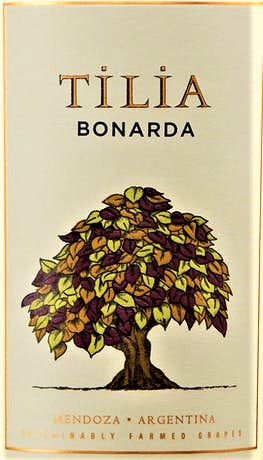
Tilia Bonarda 2016

W Tilia 2016Bonarda from Mendoza, Argentina

100% bonarda (aka: charbono, corbeau de savoie, or douce noire)

12.5% alcohol

Purchased:  8 January 2017 – $10.99

Opened:  27 Jan 2018

els: 8.7/10

Wine Advocate: 88

Argentina’s wine history dates back to the 1500s when Catholic priests planted vineyards around their monasteries to guarantee wine for the parish and Holy Mass. The country was the first South American country attempting to commercially grow vines, beginning in Mendoza in the early to mid-1800s.  Many of the initial plantings came from Chile in the early 1800’s but the varietals that would change world wine history came from the Bordeaux region of France in 1853, including the ubiquitous Malbec.  Eventually, Mendoza was producing world-class Malbec wines, on par or superior to those produced in France, mainly due to its high elevations in the foothills of the Andes, well-drained soils, and lots and lots of hot sunshine. Today the country produces 75% of the world’s Malbec.

Argentina is the world’s 6th largest producer of wine by volume, just behind the US and ahead of Australia. It produces about 6% of the world’s total wine. The country has 510,000 acres planted in grapes, 55% in red wine grapes, 25% in roses and the rest in whites. Malbec plantings account for 20% of the total acres planted with Bonarda, Cabernet Sauvignon, and Chardonnay accounting for another 20%. Argentina has 4 main wine-producing regions: Atlantic, Cuyo, North, and Patagonia.

Cuyo is the largest and most important wine-producing, macroeconomic region in central Argentina and includes the wine sub-regions of La Rioja, Mendoza, and San Juan; with Mendoza being the largest of the 3 by area, population, GDP, and wine production. The region produces about 80% of all wine in the country. The area is arid to semi-arid receiving less than 20 inches of rain per year and experiences large diurnal temperature variations of about 35°F.

The Mendoza region, lapping up onto the eastern foothills of the youthful Andes, is the largest wine producer in Argentina, accounting for 65-75% of the country’s total. A third of the country’s vineyards are dedicated to Malbec with Mendoza also producing the lion’s share of that variety with 85,000 acres planted. The Mendoza wine region is partitioned into another 5 sub-areas: Central Oasis, East Mendoza, North Mendoza, South Mendoza, and Uco Valley. North Mendoza, aka Lujan de Cuyo, designated as an appellation in 1993,  contains an additional 6 micro-regions including: Agrelo, Barrancas, Las Compuertas, Perdriel, Ugarteche, and Vistalba.

Bodegas Esmeralda, founded by Don Juan Fernandez is named in honor of his only daughter: Esmeralda Fernandez. The winery is located in the city of Junin, approximately 300 miles west of Buenos Aires and almost 800 miles east of Mendoza, producing wines both for the local market and for export. The winery’s Tilia labeled wines, named after the Latin name for the Linden tree, are all produced for the export market.

Tilia’s Bonarda vineyard, El Mirador, is located 50 miles to the southeast of Mendoza, at elevations ranging from 1,950 – 2,150’ above sea level. The vineyard is in a true desert climate, receiving less than 1″ of rain per month and is carefully irrigated with the Andes’ snow melt waters flowing down through the Tunuyan River.  Because of the desert conditions the sun shines 90% of time throughout the year, generating hot days and cool nights, perfect for the Bonarda grape.

The grape, also known as the Charbono in California, is a very commonly planted variety, second only to Malbec, in the Mendoza area.  In the desert climate the grapes produce a medium bodied wine of dark fruit and berry flavors with high acidity and medium tannins.

This wine has a deep purple hue with a cherry red rim. A nose full of plums and black fruit hits you hard upon opening.  A medium to full-bodied, but soft on the palate, wine, with an earthy, herbal flavor. It has a medium finish with vivacious tannins, well-nigh a Merlot in character.

A good everyday red at a good price.  Serve with mild cheese, pasta or pizza. Drink now but it should be good through 2020. Decant and aerate for one hour before drinking.

$10.99  wine.com

Chillin’ Back to the Future

Baby Driver (Theaters-2017; Streaming-2017)  Rated: R  Runtime: 112 minutesM Baby 2017

Genre:  Action-Crime-Music-Suspense-Thriller

els – 8.5/10

IMDb – 7.0/10

Amazon – 3.9/5 stars

Rotten Tomatoes Critics – 8.0/10

Rotten Tomatoes Audience – 4.2/5

Metacritic Metascore – 86/100

Metacritic User Score – 7.7/10

Directed by:  Edgar Wright

Written by:  Edgar Wright

Music by:  Stephen Price

Cast:   Ansel Elgort, Jamie Foxx, Kevin Spacey, Jon Hamm, Lily James

Film Locations:   Atlanta, Dunwoody and Gainesville, Georgia, New Orleans, Louisiana, US

Budget:   $34,000,000

Worldwide Box Office:  $228,311,809

Baby (Elgort) is a getaway driver, choreographing his high RPM street racing to the music pumping through his ear buds, playing catch me if you can with a no sweat demeanor that has you cheering for him non-stop.  Baby works for Doc (Spacey), a criminal mastermind that plans all his heists in chalk-board detail, never using the same group of robbers twice, except for Baby.  Baby is exceptional. Spacey catches Baby, how that happens is somewhat implausible since no one every catches Baby, trying to rob him and forces him to drive his den of thieves away from their crime scenes as retribution.

I’m late to this movie so I will give my due respect to the principles and then move on to what makes this movie so special: script and score–together.  Edgar Wright has put together a story that doesn’t come along too often, a story that has is all, action, comedy, crime, love, suspense–it has everything that you and I watch movies for. He brings it all together with a coherent and convincing screenplay, tight directing, precision choreographed cinematography (Bill Pope), and acting that is just perfect. Of course it doesn’t hurt to have Elgort, Foxx, Hamm, and Spacey providing believable and real characters along with the very pretty James. Throw in some subtle paeans to the past, such as Back to the Future, and you have a simply stunning movie, a true masterpiece; the bits and pieces adding up to a fulfillment of a lost cinematic ideal: pure, unadulterated entertainment.

Then Wright brings forth the melody.  A melody that matches and honors the lyrics: the screenplay. Lyrical poetry, accordant with the harmonic notes performing a dance of rockin’, rollin’, tango action.  Not since the 1983 Big Chill has Hollywood scored music so perfectly with the movie.

The Big Chill brought together children of the 1960s, audience and actors alike, in a comedic drama about trying to find meaning in a modern world after their fling with anarchy and drugs.  They found no meaning.  The point of the 60s was that there was no point.  But the 60’s music was sublime and transcendent. The music in The Big Chill, complimented the story as if they were fraternal twins, different veins but the same beat. Bringing together the rockin’ soul of the era with the burn-it-down pathos of its youth.  Marvin Gaye, Aretha Franklin, Smokey Robinson, black soul groovin’ the white bourgeoisie who thought they were the proletariat.  A movie, and an era, of no meaning, expressing itself with music that meant everything, and the two together brought soothing cover and entertainment.

Baby Driver just brings entertainment, no-guilt-pleasure, meshing the visual with the phonic.  It brings in The Big Chill‘s soul sound with the likes of Carla Thomas, Sam and Dave, and Barry White; and then branches out to include the  old-time rockers of Queen, T. Rex (Marc Bolan’s son sued the movie for using Debora without permission), and Golden Earring; progressing up the time scale with blues-rocker Jon Spencer Blues Explosion, and alternate-stuff Beck; capping it off with the synth-pop of Sky Ferreira. A great collection of musicians that compliments the movies action, creating a greater artistic experience than the two alone could achieve. Jon Spencer’s Bellbottoms in the opening car chase scene sets the throbbing standard for the movie that doesn’t abate until the ending credits roll, accompanied by the Simon and Garfunkel song: Baby Driver.

Sony and Edgar Wright have agreed to a sequel, hopefully in 2019.  May the magic strike twice.

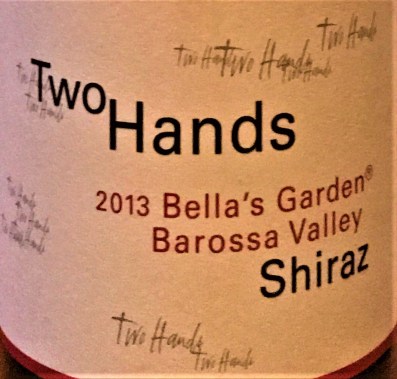
Two Hands Bella’s Garden Shiraz 2013

W Bella Garden 2013Shiraz from Barossa Valley, Barossa, Australia
100% shiraz

14.5% alcohol

Opened 21 Jan 2018

els: 9.4/10

James Halliday: 95

Wine Advocate: 94

Wine Spectator: 94

Cellar Tracker: 93

German immigrants brought the wine industry to Barossa Valley in 1843 and its reputation in the wine trade has waxed and waned through the years, along with the world’s perception of Shiraz. In the late 20th century the valley once again saw its fortunes on the rise and today it rates along side McLaren Vale as South Australia’s premier wine regions.

The Two Hands winery came into existence in 1999 with the single aim of producing the best Shiraz from the best regions of Australia. By 2003 the company had put down roots in Barossa Valley and their Shiraz Garden series wines were in full bloom. The series is currently a collection of 6 Shiraz wines, each sourced from a different growing region in South Australia and Victoria.  The different region’s grapes are prepared and processed in exactly the same manner at their Barossa Estate so that the 6 separate Shirazes’ character becomes a definite reflection of their distinct terroir.

The Barossa Valley vineyards grow in a hot and dry continental climate and receive a scant 6 inches of rain during the growing season. Growing season temperatures peak in the high 80s°F during the day and dip into the low 50s°F at night. The soils tend to be clay and silt with some sand aiding in the drainage. The grapes are de-stemmed, crushed and fermented in open fermenters. After 2 weeks the wine is racked to barrels for malolactic fermentation. The wine is aged for 18 months in new and old French oak hogsheads (59-66 US gallons) and puncheons (132 US gallons).

The wine has a deep and dark purple color with a lighter purple rim. Dark fruits and berries wind their way through your nose and palate, interacting with the perfect balance of acidity and tannins to produce a long and satisfying finish.

An outstanding dinner wine.  My wife and I drank this wine over a delicious meal that started off with warm sourdough bread dipped in a mixture of salt-basil-pepper and olive oil, followed by two small, lightly spiced crab cakes, just to keep our appetites in check until the next course made its appearance. Our entrees consisted of a medium-rare filet mignon and a medium lamb loin, both served with garlic mashed potatoes and grilled, whole baby carrots.  We finished the repast with a slice of lime cheesecake topped with blueberries and unsweetened whipped cream. The Shiraz made it all simply divine and so decadent. This wine should last for many years. Decant and aerate for one hour before drinking.

$49.99-79.99  wine-searcher.com (~ $70.00 at the restaurant)


Raw Infamy

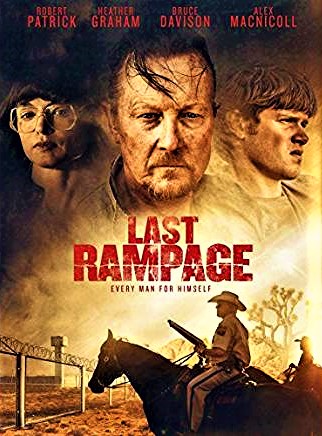
Last Rampage (Theaters-2017; Streaming-2017)  Rated: R  Runtime: 92-93 minutesM Rampage 2017

Genre:  Crime-Drama-Mystery-Thriller

els – 7.0/10

IMDb – 5.4/10

Amazon – 3.7/5 stars

Rotten Tomatoes Critics – 5.9/10

Rotten Tomatoes Audience – 4.1/5

Metacritic Metascore – 49/100

Metacritic User Score – NA/10

Directed by:  Dwight H. Little

Written by:   James W. Clarke (book), Alvaro Rodríguez (screenplay)

Music by:  Tobias Enhus, Richard Patrick

Cast:   Robert Patrick, Heather Graham, Bruce Davison, Chris Browning

Film Locations:   Club Ed Film Set – 150th Street E, Lancaster, California, US

Budget:   NA

Worldwide Box Office:  $6,294

This is a true tale, lifted from the pages of James W. Clarke’s 1999 book: Last Rampage: The Escape of Gary Tison. It’s a story of the gruesome, murderous crimes committed by a pair of maniacal felons following their escape from prison. The movie portrays sociopaths Gary Tison (Patrick) and Randy Greenawalt (Browning) in their twisted, bloody run from the state police and justice, through the barren, dry hills of Arizona.

Gary Tison, a hypnotic, Charles Manson like figure, begins his criminal life as a petty thief but quickly escalates to a major felon by taking the life of a prison guard. Greenawalt, a thoroughly remorseless and creepy individual, executes two truck drivers while they sleep, and is a suspect in several similar murders. Both men are serving life for their homicides. Miraculously the two get themselves transferred, for “excellent behavior”, to a low-security jail on the outskirts of Florence, Arizona where, with the help of Tison’s 3 matriarchally, brainwashed and programed young sons, plan their escape. The boys casually waltz into the prison on visitor’s day, whip out their guns, demand the release of Tison and Greenawalt and the 5 of them drive off into the dusty Arizona countryside, somehow staying one step ahead of the law. Death of the innocent and innocence follows Tison and Greenawalt in their lurching, chaotic escape to Mexico. For 10 days, killing grounds are everywhere and anywhere they meet the unwary and the innocent. For 10 days, the young boys’ probity, their innocence, slowly drains away to the horror that is their father.

Last Rampage, a gritty, no frills look at two demented beings, is structured by Dwight H. Little, the director, to exhibit the criminal monsters in a sharp, glaring  light of fact; a truth that is hideous and raw. A hard white light flooding the scene with no sympathy, no quarter, just evil shown as it is: evil.  A true tour de force in the crime genre with the exception that the opening scene was pointless.

The acting is superb, although Robert Patrick may carry his role as hell’s spawn with him longer than he may wish. Patrick and Browning’s sociopathic characters are displayed with an authoritative, emotionless, punch-to-the-gut performance, inciting the viewer to casually, almost clinically, conclude that death would be good for these two.