Pericles-Funeral Oration:

At the end of first year of the Peloponnesian War in 431 BC Athenians held the customary public funeral to honor the soldiers who gave their lives in the war against Sparta. As Thucydides records in his “History of the Peloponnesian War” the funeral was a procession of citizens that ushered ten cypress coffins representing the ten Athenian tribes plus one more for the soldiers not recovered from the field of battle to the public graveyard at Ceramicus.

Thucydides further states that “When the bodies had been buried, it was customary for some wise and prudent notable and chief person of the city, preeminent in honor and dignity, before all the people to make a prayer in praise of the dead, and after doing this, each one returned to his House. That time to report the praises of the first who were killed in the war, Pericles, son of Xanthippus, was chosen; who, having finished the solemnities made in the tomb, climbed on a chair, from where all the people could see and hear him, and gave this discourse.

Pericles’ speech was given not only as a tribute to the fallen, but a celebration of the Athenian citizens’ patriotism and urged them to honor the dead by continued support for the city and its democratic ideals.

The following is the first paragraph of the speech recorded by Thucydides:

Most of those who have spoken here before me have commended the lawgiver who added this oration to our other funeral customs. It seemed to them a worthy thing that such an honor should be given at their burial to the dead who have fallen on the field of battle. But I should have preferred that, when men’s deeds have been brave, they should be honored in deed only, and with such an honor as this public funeral, which you are now witnessing. Then the reputation of many would not have been imperiled on the eloquence or want of eloquence of one, and their virtues believed or not as he spoke well or ill. For it is difficult to say neither too little nor too much; and even moderation is apt not to give the impression of truthfulness. The friend of the dead who knows the facts is likely to think that the words of the speaker fall short of his knowledge and of his wishes; another who is not so well informed, when he hears of anything which surpasses his own powers, will be envious and will suspect exaggeration. Mankind are tolerant of the praises of others so long as each hearer thinks that he can do as well or nearly as well himself, but, when the speaker rises above him, jealousy is aroused and he begins to be incredulous. However, since our ancestors have set the seal of their approval upon the practice, I must obey, and to the utmost of my power shall endeavor to satisfy the wishes and beliefs of all who hear me.

Source: Richard Hooker, 1996, University of Minnesota, Human Rights Library. Graphic: Pericles Funeral Oration by Philipp Foltz, 1877, Public domain.

The Most Unkindest Cut of All

Mark Anthony opens his famous, but fictional, eulogy to Julius Caesar with 7 words of endearment and authority; Aristotelian pathos and ethos, that have become as familiar as blue sky to fans of Shakespeare and English lit students everywhere: “Friends, Romans, countrymen lend me your ears”.

Julius Caesar, a tragedy by Shakespeare, written around 1599, was based on Caesar’s life and death as documented in Plutarch’s Parallel Lives.

With pathos, logos and a chariot laden with irony, Anthony turns initial honor for Brutus and Caesar’s ambition inside out. He brings honor to Caesar and lays ambition on Brutus, along with Cassius. He brings condemnation to the conspirators and love for Caesar.

The first few lines of Anthony’s Eulogy:

Friends, Romans, countrymen, lend me your ears; I come to bury Caesar, not to praise him.
The evil that men do lives after them;
The good is oft interred with their bones;
So let it be with Caesar. The noble Brutus
Hath told you Caesar was ambitious:
If it were so, it was a grievous fault,
And grievously hath Caesar answer’d it.
Here, under leave of Brutus and the rest–
For Brutus is an honourable man;
So are they all, all honourable men–
Come I to speak in Caesar’s funeral.
He was my friend, faithful and just to me:
But Brutus says he was ambitious;
And Brutus is an honourable man.
He hath brought many captives home to Rome
Whose ransoms did the general coffers fill:
Did this in Caesar seem ambitious?
When that the poor have cried, Caesar hath wept:
Ambition should be made of sterner stuff:
Yet Brutus says he was ambitious;
And Brutus is an honourable man.
You all did see that on the Lupercal
I thrice presented him a kingly crown,
Which he did thrice refuse: was this ambition?
Yet Brutus says he was ambitious;
And, sure, he is an honourable man.
I speak not to disprove what Brutus spoke,
But here I am to speak what I do know.
You all did love him once, not without cause:
What cause withholds you then, to mourn for him?
O judgment! thou art fled to brutish beasts,
And men have lost their reason. Bear with me;
My heart is in the coffin there with Caesar,
And I must pause till it come back to me.

Source: “Julius Caesar” by William Shakespeare, Act 3, Scene II. Plutarch’s Parallel Lives. Graphic: Marlon Brando as Mark Antony in the 1953 film “Julius Caesar”

Gas to Yuma Will be Late:

Last Stop Yuma County.

Theaters: 10 May 2024

Streaming: 10 May 2024

Runtime: 90 minutes

Genre:  Crime – Drama — Mystery — Suspense — Thriller

Els:  7.0/10

IMDB:  6.9/10

Rotten Tomatoes Critics:  96/100

Rotten Tomatoes Audience:  73/100

Metacritic Metascore:  72/100

Metacritic User Score:  6.3/10

Directed by: Francis Galluppi

Screenplay by: Francis Galluppi

Music by:  Matthew Compton

Cast: Jim Cummings, Faizon Love, Jocelin Donahue

Film Locations:  Palmdale, California.

Budget:  $1 Million

Worldwide Box Office:  $0.94 Million

At a rural, gasless Arizona rest stop a hundred miles from nowhere, travelers with empty tanks and locals alike are thrown together with a pair of bank robbers, $700,000, and more guns than a Long Branch Saloon scene.

This is a bloody fast and fun movie with plenty of twists. Quenton Tarantino and the “Hateful Eight” have nothing on this bunch. Sources. IMDb. Rotten Tomatoes. Metacritic. Graphic: Movie Poster, Well Go USA Entertainment.

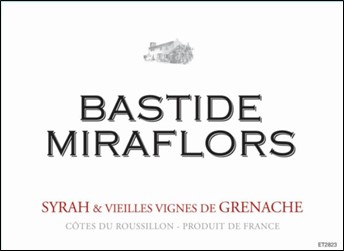
Domaine Lafage Bastide Miraflors Vieilles Vignes 2019:

Rhone Red blends from Cotes du Roussillon, Roussillon, South of France, France

Syrah 70%. Grenache 30%.

Purchase price: $13.99

Rankings: Robert Parker 91. ElsBob 91-93.

ABV: 14.5%

A pale to medium purple, full-bodied, with aromas of black fruit and pepper, high tannins and a very nice long finish. A great sipping red wine for your wine-thirty affair or pair with anything spicy, gamey, or blue and pecorino cheeses.

An excellent wine at a very good price. Buy a case, or two, and hold.

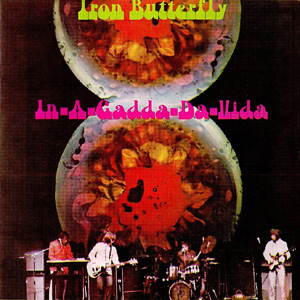
Iron Butterfly’s In-A-Gadda-Da-Vida

This week in 1968, San Diego psychedelic, hard rock band, Iron Butterfly released their second album, “In-A-Gadda-Da-Vida” which sold a record, at the time, 8 million copies in its first year and a reputed 30 million, to date, worldwide. The song was voted the 24th greatest hard rock song of all time by VH1 in 2009 and also contained the 10th greatest drum solo of all time, as voted WatchMojo.

“In-A-Gadda-Da-Vida” was planned as a love song to Adam and Eve tentatively titled “In the Garden of Eden” but when vocalist and song writer Doug Ingle, sang the song after drinking a whole freaking gallon of Red Mountain wine, he slurred the words so badly that drummer, Ron Bushy, transcribing the lyrics, mis-interpreted “In the Garden of Eden” as what became one of the great rock songs, ever.

In the 1995 episode “The Simpsons – Bart Sells His Soul”, Bart pranks his church into singing “In-A-Gadda-Da-Vida” for the opening hymn which he labeled as “In the Garden of Eden” by I. Ron Butterfly in the sheet music handout.

Source: Simpson Wiki. Watch Mojo. Graphic: Album cover, Atco Records.

The Ark of the Covenant

Shortly after the Israelites exodus from Egypt around 1500 BC Moses received the Ten Commandments from God who further instructed Moses to have Bezalel build an Ark to house the commandments and He gives specific instructions on how the Ark should be built. Since no pictures are known to exist for the actual Ark, Spielberg’s rendition, built for “Raiders of the Lost Ark” movie, is as good as anything that currently depicts it.

The Ark was initially kept in the ancient Samarian sanctuary city of Shiloh in a tabernacle built under Moses direction and remained there for 369 years.

During the battle of Eben-ezer in 1180 BC the Israelites were defeated by the Philistines, bringing the Ark back to the Philistine pentapolis city of Ashdod, just south of the present-day Tel Aviv, as part of their plunder of Shiloh. Upon capturing the Ark, the Philistines were beset by plagues and misfortune and decided that it would be best to return it to the Israelites.

After its return it eventually settled in Kiriath-Jearim where it remained for about 20 years.  King David eventually brought the Ark to Zion or the City of David. When Solomon succeeded David, he had the Ark brought to his temple in Jerusalem sometime in the 10th century BC, no earlier than 957 BC.

Around 586 BC the Neo-Babylonian Empire destroyed Jerusalem and Solomon’s Temple. After this destruction the Ark disappeared, and its location has been a mystery ever since.

Legends and myths say the Ark was destroyed, or it is currently in Ethiopia, or in the Philistine city of Ekron, or beneath Jerusalem, or on Mount Nebo, or in a cave near the Dead Sea, or the Romans captured it during the Jewish revolts in the 1st and 2nd centuries AD, or aliens took it.

Source: Bible. BibleArchaeology.org. Wikipedia. Graphic: Ark from “The Raiders of the Lost Ark

To Kill a King

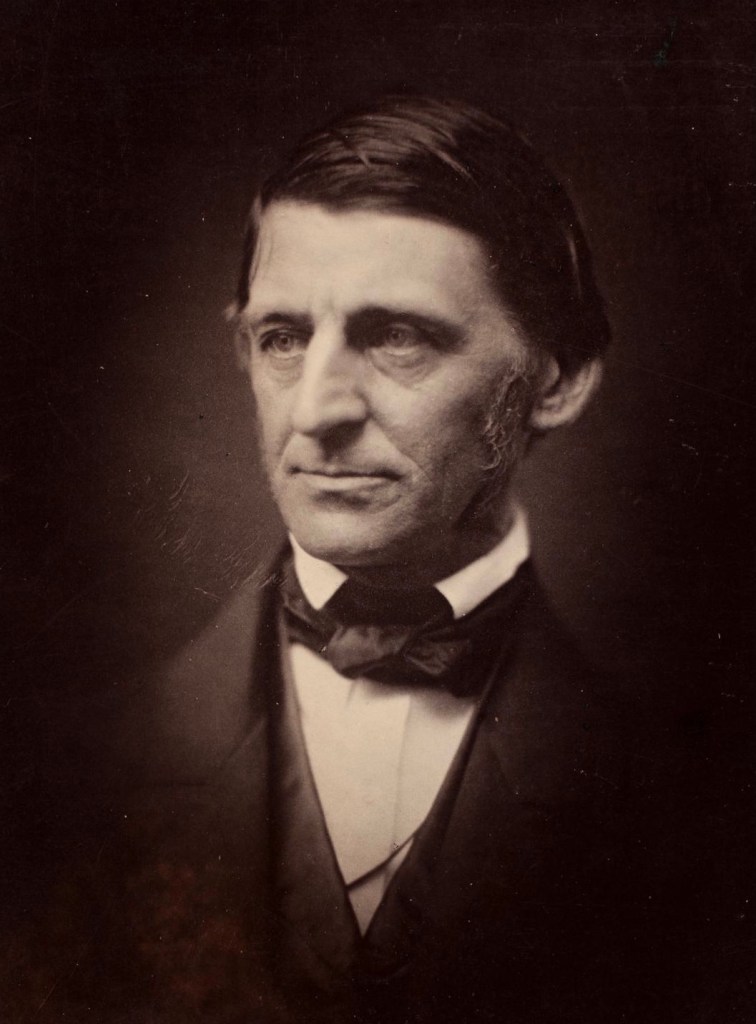
Ralph Waldo Emerson, author of the transcendental essay, “Self-Reliance” is often credited with saying, “When you strike at a king, you must kill him.” The exact setting and time for the quote is unknown but Ann Althouse believes it was said during a conversation with Oliver Wendell Holmes Jr., one of the most widely cited Supreme Court justices, after Holmes attacked Plato. Emerson’s parried with the quote above, meaning that if you strike at the philosopher king you must be thorough.

Niccolò Machiavelli, in his book “The Prince”, didn’t specifically mention the need to “kill the king” however, he did say, “If an injury has to be done to a man it should be so severe that his vengeance need not be feared,” and he also added “People should either be caressed or crushed. If you need to injure someone, do it in such a way that you do not have to fear their vengeance.”

Source: The Prince, Machiavelli. Emerson, Althouse Blog, 2019. Graphic: Emerson by Hawes, 1857, Public Domain.

Devil Take You

Devil aka The Night Chronicles: Devil.

Theaters: 17 September 2010

Streaming: ~2011

Runtime:  90 minutes

Genre:  Drama – Horror – Mystery – Suspense — Thriller

Els:  6.5/10

IMDB:  6.3/10

Rotten Tomatoes Critics:  50/100

Rotten Tomatoes Audience:  43/100

Metacritic Metascore:  44/100

Metacritic User Score:  8.3/10

Awards: — Two minor nominations for screenplay and supporting actor

Directed by: John Erick Dowdle

Screenplay by: Brian Nelson

Story by: M Night Shyamalan

Music by:  Fernando Velazquez

Cast: Chris Messina, Logan Marshall-Green, Jenny O’Hara

Film Locations:  Toronto, Philadelphia, Los Angles

Budget:  $10 Million

Worldwide Box Office:  $62.6 Million

Five strangers, one of them the devil on a soul collecting task, are stuck together on a broken-down Philadelphia elevator waiting to be rescued.

Devil is a low budget movie done right. The director and acting are competent, but the real star of the show is the screenplay. The run-time has been criticized as too short, but a longer movie would have led to over-telling of the story, unnecessarily dragging out the plot.

Sources. IMDb. Rotten Tomatoes. Metacritic. Horror Film Wiki. Graphic: Movie Poster, Universal Pictures.

Bodegas Juan Gil Silver Label 2020

Mourvedre (Monastrell) from Jumilla, Spain

Purchase price $15.99

Rankings: Robert Parker 92. James Suckling 90. ElsBob 90-91.

ABV: 15.0%

A deep red in color with notes of black fruits. A full-bodied wine, medium-high in tannins with a medium and balanced finish. Pairs well with rich foods high in fat such as marbled steaks or cured meats.

This is an excellent wine at a good price.

The White Album

The Beatle’s most innovative album originally titled The Beatles was released 55 years ago, plus a few months, in November of 1968. It was the group’s only double album containing 30 new tracks, mostly written between February and April of 1968. The album cover was released in pure white with the simple and only words The Beatles stamped on the front, causing it to be known forever more as the White Album.

The album followed Sgt Pepper, and Ringo remarks that recording the White Album calmed the seas, “Sgt Pepper did its thing, it was the album of the decade – of the century maybe. It was very innovative. Great songs, glad I was on it. But the White Album…We ended up being more of a band again and that’s what I always love, I love being in a band.”

The album went number 1 on the UK charts for eight weeks and stayed in the charts for 22 weeks. In the US it ran at number 1 for 9 weeks and stayed in the charts for an astounding 65 weeks. The 2018 50th anniversary album reissue entered the Billboard 200 at number 6. None of the 30 tracks from the original album were issued in single format. The songs covered a broad range of genres including rock, pop, folk, country rock, blues, Ska, proto-metal, and avant-garde.

Source: Apple Corp, thebeatles.com. Genius.com. Graphic: Cover of the White Album, by Beat 768, 2010, Public Domain.