Closer to Zero

“The answer to the ultimate question of life, the universe, and everything is 42” Douglas Adams.

But to the question “Are we alone?”—the answer leans towards likely,”  ElsBob

In a recent systems-thinking thought experiment, researchers from Germany and the U.S. revisited the statistical “Hard Steps” model, originally proposed by Brandon Carter in 1983, which aimed to estimate the probability of intelligent life emerging. Carter’s model focused on rare biological milestones—such as photosynthesis and multicellularity—concluding that intelligent life should be exceedingly rare due to the improbability of these “hard steps.” 

In a February 2025 paper, Mills et al. propose a tweak to this framework. Rather than life’s progression depending on a handful of unlikely biological breakthroughs, they suggest Earth’s environmental evolution—marked by the presence of water, organic compounds, oxygen, and geochemical shifts—created a more gradual pathway toward complexity. They argue that these conditions didn’t so much lower the odds of each step but reframed life’s development as a cumulative process, softening the gauntlet of improbable hurdles envisioned by Carter. 

Is this new? Not entirely. The idea that life’s journey—from planetary formation to advanced neural systems, language, and sociocultural structures—unfolded as a process has roots in the 1950s, with pioneers like Urey and Miller. What’s novel in Mills et al.’s work is their integration of geological timelines and Bayesian reasoning to qualitatively soften the perceived improbability of life’s emergence, rather than delivering a fully quantitative overhaul of the Hard Steps model. Where Carter’s framework likened intelligent life to finding a unicorn, this tweak nudges it from “highly improbable” to “slightly less than highly improbable.” 

Now, the fun part—calculating the odds of a planet fostering life advanced enough for Alan Turing to deem it intelligent. 

The “witch’s cauldron” of variables for simple life might include (though not exhaustively): a planet in the habitable zone, liquid water, organic molecules, self-replicating systems, protocell formation, anaerobic metabolism, photosynthesis, aerobic respiration, multicellularity, geochemical cycles, plate tectonics, ocean currents, atmospheric dynamics, natural radiation, planetary stability, appropriate size and gravity, and a protective magnetic field—plus, perhaps, a partridge in a pear tree. Estimating these probabilities is speculative, but let’s assume a rough combined probability for simple life emerging on a suitable planet. Using reasonable constraints, Grok 3 might estimate this at approximately 1 in 1 billion (10⁻⁹). 

The leap to sentient, intelligent life adds further layers: advanced neural systems, social organization, cultural evolution, time, and a dash of random chance. These additional factors could reduce the odds by another factor of 1,000, shifting the probability to between 1 in 1 trillion (10⁻¹²) and 1 in 1 quadrillion (10⁻¹⁵). These are back-of-the-envelope figures, grounded in the spirit of the thought experiment rather than precise data. 

To make these abstract numbers relatable, let’s scale them to the universe and our galaxy. Current estimates suggest the observable universe contains roughly 100 billion galaxies (10¹¹), each with an average of 100 million stars (10⁸). Assuming 3 planets per star (a conservative guess based on exoplanet studies), that yields approximately 3 × 10¹⁹ planets—30 quintillion—across the universe. In the Milky Way, with 100 billion stars (10¹¹), we might estimate 300 billion planets (3 × 10¹¹). 

Applying the probabilities: 

Simple life in the universe: At 1 in 1 billion (10⁻⁹), roughly 3 × 10¹⁰ planets—30 billion—might host simple life. 

Intelligent life in the universe: At 1 in 1 trillion (10⁻¹²) to 1 in 1 quadrillion (10⁻¹⁵), between 30 million (3 × 10⁷) and 30,000 (3 × 10⁴) planets might harbor intelligent life. 

Simple life in the Milky Way: At 1 in 1 billion (10⁻⁹), about 300 planets (3 × 10²) could sustain simple life. 

Intelligent life in the Milky Way: At 1 in 1 trillion (10⁻¹²) to 1 in 1 quadrillion (10⁻¹⁵), the odds drop to 0.3 (3 × 10⁻¹) to 0.0003 (3 × 10⁻⁴) planets—statistically less than 1.

Across the vast universe, intelligent life seems plausible on millions or thousands of planets, depending on how pessimistic the odds. On a galactic scale, though one planet with intelligent life is statistically improbable meaning that Earth is likely alone in the Milky Way as far as sentient beings are concerned.  Still, these numbers remain speculative, blending science with educated guesswork—and a touch of cosmic whimsy.

Source: …Evolution of Intelligent Life, Mills, et al, Science Advances 2025. Graphic: Grok 3 Drawn DNA.
The First English Wine Auction

On 20 February 1673, London’s Garraway’s Coffee House, located just north of London Bridge and the Tower of London, held the first recorded wine auction in England. Instead of the traditional “going, going, gone” and a bang of a gavel method, this auction was conducted “to the candle.” In this form of bidding, participants could place bids until a one-inch candle burned out, which typically took only a minute or two. The purpose of this method was to create an unpredictable end time, preventing last-second bids and encouraging bidders to make their best offers early.

London coffee houses in general, and Garraway’s in particular, served as trading houses for commodities and shares. At Garraway’s, tea merchants and trading shares in companies associated with South Sea trade were the main order of business. All that remains today of the coffee house is a plaque informing the public that people of quality frequented this area.

Trivia: Garraway’s Coffee House appears in at least two of Charles Dickens’ novels: The Pickwick Papers and Little Dorrit. In Chapter 37 of The Pickwick Papers, Samuel Pickwick meets his lawyer, Mr. Serjeant Snubbin, at Garraway’s to discuss his case, where he is being sued by his landlady for breach of promise. The opposing lawyer for the landlady is the theatrical blowhard, Mr. Serjeant Buzfuz. Dickens remains the absolute master of character names. In Chapter 21 of Little Dorrit, Arthur Clennam visits “wharves, docks, the Custom House, Garraway’s Coffee House, and the Jerusalem Coffee House” as he attempts to piece together his family’s business and financial affairs.

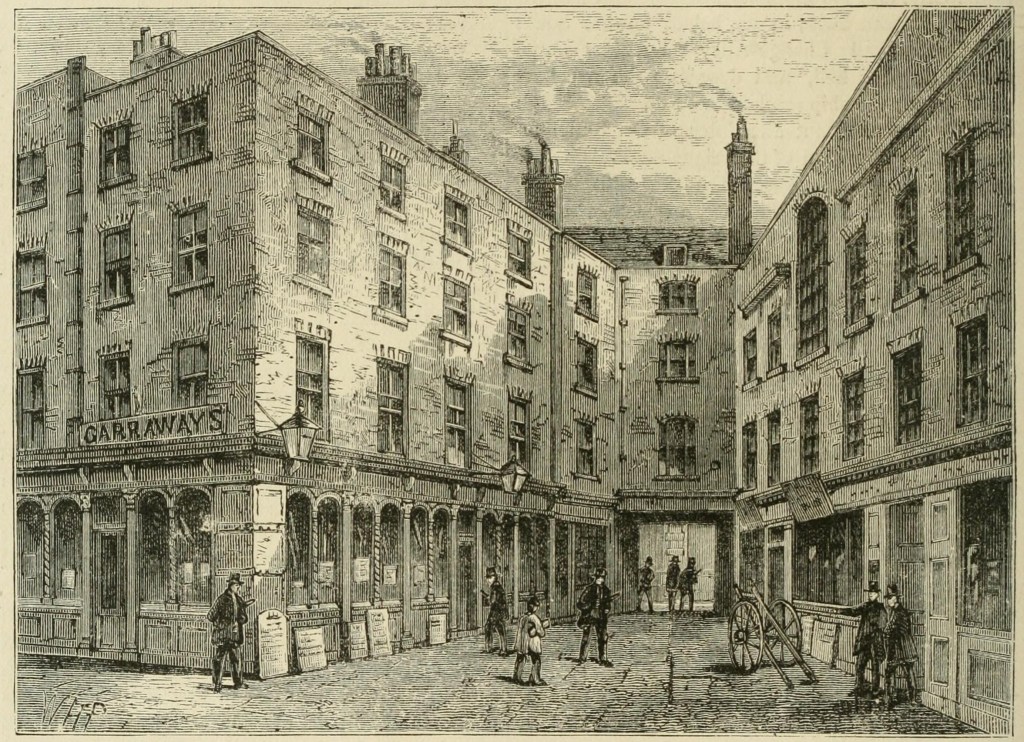
Source: This Day in Wine History. Novels of Dickens. Wikipedia. Graphic: Photo of Garraway’s Coffee House, 1873. Public Domain.

A Poke in the Eye

A Trip to the Moon (Le Voyage dans la Lune): Astronomers in wizard costumes and pointy hats take an artillery shell rocket safari to the moon, discovering mushrooms and surly aliens.

The 1902 film, inspired by Jules Verne and H.G. Wells’ moon novels among other artistic works, was Georges Méliès’ masterpiece. It incorporated every technique that he could conjure up, including splicing in instant scene changes, fade-ins and fade-outs, tracking shots, and—way ahead of his time—color.

Color was hand-painted onto the film by 200 women, producing up to 60 copies of his various films. A hand-colored version of the film was discovered in 1993 and turned over to the Filmoteca de Catalunya in Barcelona. Although in poor condition, the restoration was completed in 2011 and shown at Cannes in the same year.

Trivia: Although confirmation sources are sparse, Méliès introduced another innovation into the marketing side of movies, which in today’s world of DVDs and streaming seems commonplace: selling copies directly to consumers. He charged up to 1,000 francs (approximately $193 US) for a colorized copy of his films.

Genre: Adventure, Fantasy, Sci-Fi

Directed by: George Melies

Screenplay by: George Melies

Music by: Added Live during Showings. Varied by Location.

Cast: George Melies, Bleuette Bernon, Francois Lallement

Film Location: Montreuil, France

ElsBob: 9.0/10

IMDb: 8.1/10

Rotten Tomatoes Critics: 100%

Rotten Tomatoes Popcornmeter: 90%

Metacritic Metascore: -%

Metacritic User Score: -/10

Theaters: 1 September 1902

Runtime: ~15 minutes at 15 frames per minute        

Budget: 10,000 francs (~$2000 US)

Source: Scifist.com, Rotten Tomatoes, IMDb. Graphic: A Trip to the Moon Trailer.

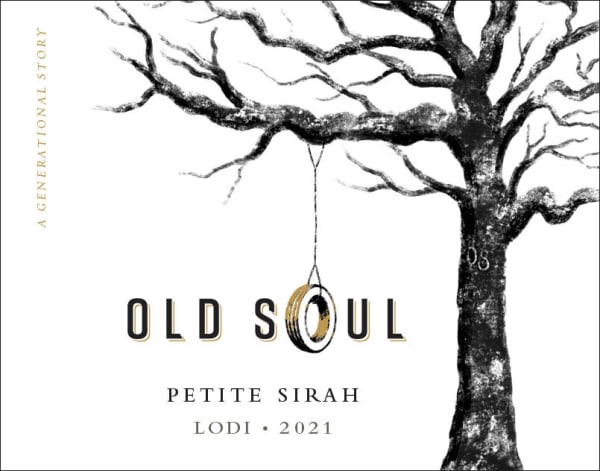
Old Soul Petite Sirah 2021

Petite Sirah from Lodi, California

Purchase Price: $12.99

Wine Enthusiast 91, ElsBob 90

ABV 14.5%

Purplish red in color, aromas of black fruits, full-bodied, semi-dry with a tannic finish. The high tannic finish makes it a difficult sipping wine but will pair nicely with spicey, fatty foods. Try it with barbecued beef ribs or roasted pork.

An excellent fine wine at a very reasonable price. Petite Sirah is some of the best value wine on the market.

Trivia: Petite Sirah is a cross between Syrah and the very rare grape, Peloursin. It is called ‘petite’ because of its small grapes. The wine is one of the most opaque varietals known, with a cloudy look suggesting that it should be filtered but that’s just a natural characteristic of the wine.

Mamma Mia

Bohemian Rhapsody” was the eleventh track, and the first single released from Queen’s 1975 album, A Night at the Opera. Written by Freddie Mercury, the song has become the band’s signature tune and is hailed as one of the greatest rock songs ever recorded. Initially, critics were unsure what to make of the song, with some labeling it as a novelty, campy, calculated, and a brazen hodgepodge. However, they were all wrong. Rolling Stone ranked it 17th in its list of the 500 greatest songs in 2021, and Time ranked it among the top 100 songs written since 1923.

Mercury started writing the song in the 1960s, and it is a combination of three songs with multiple parts, including a cappella ballad, opera, and hard rock. This six-minute lament appeals to many, but everyone has their own interpretation of the song’s meaning. The band has never fully explained the lyrical meaning of the song, only stating that Freddie was a complicated individual with mercurial personality traits and habits. In the album’s Iranian release, it was mentioned in the liner notes that Freddie Mercury, of Indian and Persian descent, explained that ‘Bohemian Rhapsody‘ is about a young man who accidentally kills someone, makes a Faustian bargain by selling his soul to the devil, and ultimately calls upon God, Bismillah, to reclaim his soul.

Source: …Bohemian Rhapsody by Lily Rothman, Time, 2015. Graphic: Bohemian Rhapsody, Cover and Video by Queen, 2008.

Flat-Footed Clown

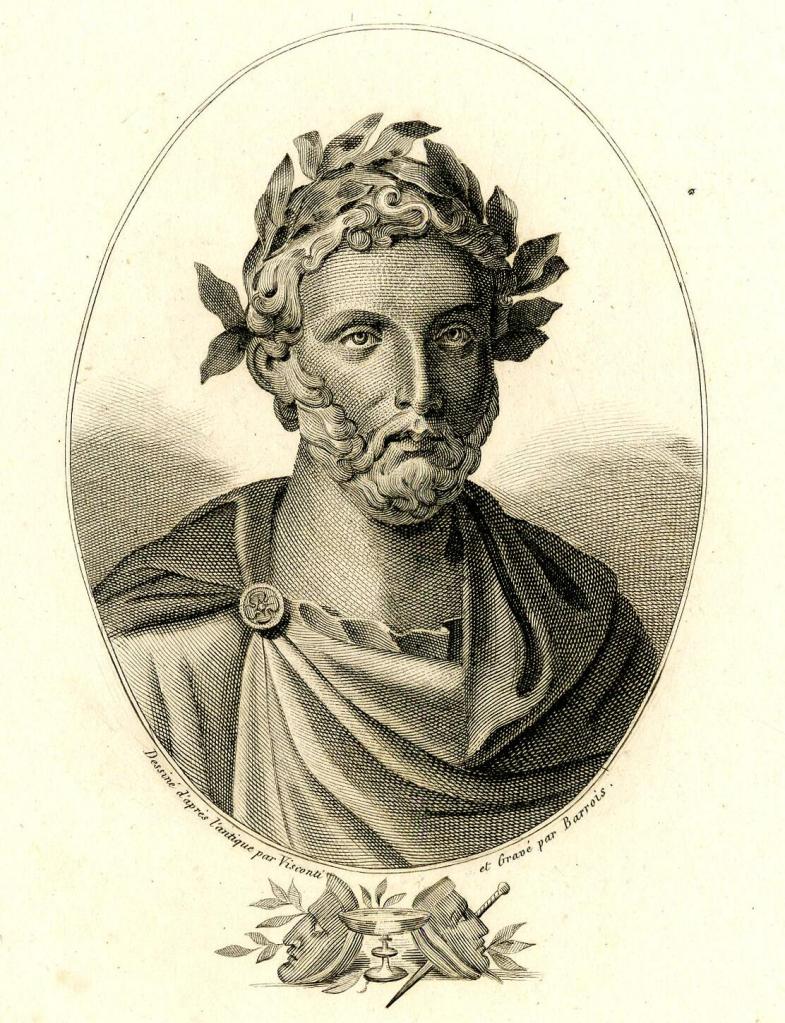
Titus Maccius Plautus was a 2nd century BC Roman playwright known for his loose translations of Greek comedies. It is known that he developed an early attachment to the theater, beginning as a stage carpenter and scene shifter, eventually progressing into acting. During this time, he adopted the nom de plume “Maccius Plautus.” “Maccius” refers to a type of clown, and “Plautus” means flat-footed or bare-footed, thus his name loosely translates to “Titus the Flat-Footed Clown.”

After making some money in the theater, Plautus left the profession, only to lose all his money, forcing him to seek employment in a grain mill. Mill work in ancient Rome was usually reserved for slaves and mules, making it a humiliating job for a free person. However, the drudgery likely provided the motivation for his translation and repurposing of Greek comedies for the Roman audience.

The grind of mill work finds a voice in his plays. Wolfgang De Milo, the current editor and translator of Plautus’s plays for the Loeb Classical Library, states that his plays “…abound in young men doing business abroad and slaves being threatened with being sent to the mill.” While his plays were not strictly original, Plautus incorporated his Italian heritage and customs into his translations of Greek plays, thus making them his own.

Plautus borrowed Greek themes and infused them with his witty take on gods, family, love, money, and immorality. Like the old comedy Greek playwrights, he mocked everything for laughs and urged people to lighten up. His enduring popularity shows that his humor remains timeless and relevant.

Source: Plautus I edited and translated by Wolfgang De Milo, 2011. Graphic: Plautus engraving by Pierre Barrois, 1770, Public Domain

Looking In All the Wrong Places

Johnny Lee’s 1980 recording of “Lookin’ for Love” in all the wrong places is a mantra that most scientists and engineers eventually learn. Not love, but when confronted with the conundrum of not finding an object where it should be, the first response, before questioning the theory, is to look elsewhere.

This is further encapsulated in Arthur Conan Doyle’s “Fate of the Evangeline” when Holmes quips, “Exclude the impossible and what is left, however improbable, must be the truth.”

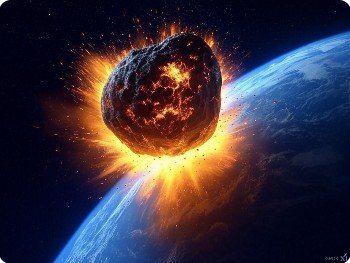
Recent research suggests that Earth and Mars originally had higher concentrations of moderately volatile elements (MVEs), such as copper. These elements were likely abundant in the early formation of Earth and Mars but were depleted by violent cosmic events, such as collisions with meteorites.

These collisions during planetary formation caused large-scale vaporization, leading to the loss of these crustal sources of MVEs into space but not necessarily those present in the mantle or core. While this new understanding challenges traditional theories about why MVEs are not in higher concentrations on Earth, it may also mean that we need to look not only to space for the lost MVEs but also to other deeper and less explored crevices and crannies here on Earth.

Additional areas of exploration on Earth may include hydrothermal vents on the ocean floors, deep crustal and mantle areas, tectonic boundaries, and active volcanic provinces.

Source: …Earth’s Missing Elements by Kim Baptista ASU, 2025. Lookin’ for Love written by Morrison, Ryan, and Mallette. Graphic: Earth Collision, Grok, 2025.

The Legacy of John Locke

The English Bill of Rights was signed into law on 13 February 1689, creating the constitutional monarchy that still exists today, albeit with the monarchy reduced to a figurehead status.

The coronation of William III and Mary II was conditional on their agreeing to the terms stipulated in the Bill of Rights, which included, among others, free speech for members of Parliament, the freedom to bear arms for self-defense, freedom from cruel and unusual punishment, and the establishment of due process.

The Bill of Rights was primarily drafted by members of the English Parliament in response to the abuses of power by King James II, who was overthrown in the Glorious Revolution of 1688.

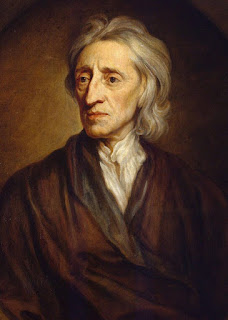
John Locke’s “Second Treatise of Government” had a significant influence on the English Bill of Rights of 1689. Locke was a proponent of natural rights, the social contract, and the separation of powers, which were foundational to the development of constitutional government. His work emphasized that government should be based on the consent of the governed and that individuals have inherent rights to life, liberty, and property.

Source: JohnLocke.net. Graphic: John Locke, 1697, Public Domain.

The Mystic

Rasputin: Dark Servant of Destiny.  Grigori Rasputin, often referred to as the “Mad Monk,” was a peasant with a fondness for madeira, cheap steaks, and prostitutes. He seemingly cured the Tsar’s son, Alexei, returning him to health by a gift from God: the power of faith.

Rasputin, living by the Russian proverb “You can’t avoid that which is meant to happen,” accepted his fate and was welcomed by the Empress and her son into the royal household with open arms. However, he was later expelled from the royal household by the Tsar and his handlers for violating another Russian proverb: “Don’t bring your own rules into someone else’s monastery.”

Rasputin: Dark Servant of Destiny, a 1996 HBO TV movie seen by almost no one, is Alan Rickman’s tour de force. It provides an exquisite emotional interpretation of religious fervor and mystical power. The film brings the myth of Rasputin into the realm of authenticity and historical plausibility.

The film recreates Rasputin’s madness amidst the early 20th-century events that predated and possibly presaged the madness of events set into motion by Lenin in 1917 (Rasputin was murdered towards the end of 1916). These events led to what Orwell succinctly summarized in “Animal Farm” when the new boss replaced the old boss: “The creatures outside looked from pig to man, and from man to pig, and from pig to man again; but already it was impossible to say which was which.

Genre: Biographical, Drama, Historical

Directed by: Uli Edel

Screenplay by: Peter Pruce

Music by: Brad Fiedel

Cast: Alan Rickman, Greta Scacchi, Ian McKellen, Freddie Finlay

Film Location: Budapest, Hungary and St. Petersburg, Russia

ElsBob: 7.0/10

IMDb: 6.9/10

Rotten Tomatoes Critics: -%

Rotten Tomatoes Popcornmeter: 79%

Metacritic Metascore: -%

Metacritic User Score: -/10

Theaters: 23 March 1996

Runtime: 135 minutes

Source: Rotten Tomatoes, IMDb. Graphic: Rasputin Movie Trailer, copyright HBO.

Red Wine Retail Prices

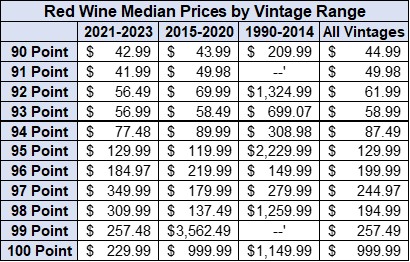
It is time for my yearly posting on red wine retail prices in the US. The ugly part of the post is that wine prices at the retail level have increased substantially; 5-550%, depending on vintage and rating since last year, with an average increase around 20%. The 2021-2023 vintage column for the posted spreadsheet is likely representative of reality while the other columns suffer from low sampling rates for some ratings.

A 90-point red of recent vintage has a medium price around $43. Last year that same quality wine went for about $28. These are medium values for a bottle of wine, half are less, half are more. My personal rule of thumb is that the medium value is the maximum one should pay.  Additionally, at the beginning of 2024 you could easily find a 90-point red for $10-15. You may be able to still find a 90-point red in that price range, but it will take some effort. Most 90-point reds now start at $20.

As with last year, Argentina, Chile, and Spain offer the best value in red wines while France and US tend to be priced 3 to 4 times above those from South America and the Iberian Peninsula.