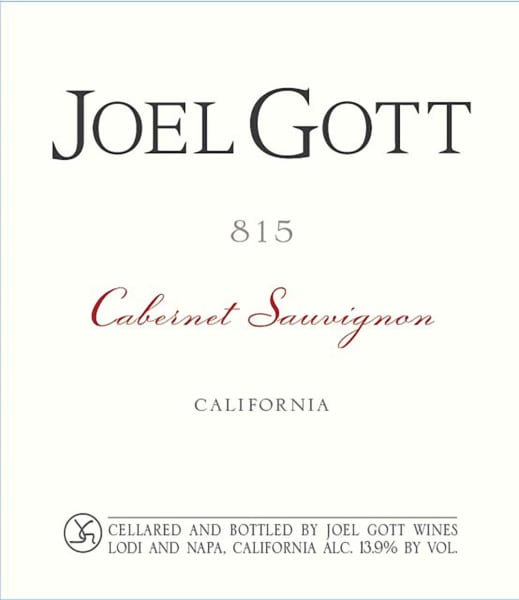
Joel Gott Blend No. 815 Cabernet Sauvignon 2021

Cabernet Sauvignon from Lodi and Napa California

100% Cabernet Sauvignon 

Purchase Price: $14.97

James Suckling 90,Decanter 90,Wine Spectator 89, ElsBob 90-91

ABV 13.9%

A deep ruby to a dark purple wine with aromas of black fruits, a taste of vanilla and spice; medium-full bodied, smooth tannins, dry, slightly acidic, with a medium finish. This wine will pair well with beef, lamb and chocolate desserts.

An excellent fine wine at a great price that is just entering its peak age range. Cheers.

Decline Post Bretton Woods

Bretton Woods, a monetary system established during World War II, sought to stabilize the global economy by making the US dollar the central currency for international trade. Other currencies were pegged to the dollar, which foreign governments could convert into gold bullion at a fixed rate. This framework functioned effectively for decades, however, by the late 1960s, inflationary pressures stemming from the Vietnam War and the domestic spending initiatives of the “guns and butter” era, coupled with a growing accumulation of US dollars in foreign accounts, strained the system’s stability. In 1971, the United States suspended the dollar’s gold convertibility, effectively collapsing the Bretton Woods framework and transitioning to a market-based system of freely floating exchange rates, setting the stage for the dollar’s decline.

Since the demise of Bretton Woods, the US dollar has lost approximately 85% of its purchasing power due to inflation, a monetary phenomenon driven by increases in the money supply. Free trade has exacerbated US economics, including the loss of 6.8 million manufacturing jobs between 1979, the peak of manufacturing employment, and 2019. Many of these jobs shifted to China after its entry into the World Trade Organization in 2001. Middle-class wages have stagnated, remaining at an average of $40,000 per year (adjusted for inflation) since 1970, while housing costs have tripled to $400,000. Meanwhile, the rising costs of child-rearing, $310,000 per child in 2023, have contributed to a declining fertility rate, which has fallen from 2.5 to 1.6 children per woman.

China’s role in US economic decline is significant with a trade deficit of $263 billion in goods and services for 2024 alone. Chinese tariffs protect key industries such as steel and electronics, leaving US manufacturing unable to compete. Federal Reserve policies, including a 40% increase in the M2 money supply since 2020, have inflated asset prices like homes and stocks but failed to meaningfully raise middle-class wages. Wealth inequality has intensified, with the top 1% controlling 40% of the nation’s wealth while Middle America’s share continues to shrink. Trade deficits reached $1.2 trillion in 2024.

Trump’s tariffs can be seen as a reaction to these trade imbalances and loss of domestic manufacturing. Additionally, new measures are seeking to rewrite regulatory and fiscal policies, to address these global inequalities. By 2030, projections suggest 2 million new jobs could be created, including 200,000 to 300,000 directly tied to tariffs, with blue-collar median wages rising to around $60,000. A stronger dollar, inflation below 2%, and a revived manufacturing base could potentially revive the American middle-class, making families more optimistic about the future. Continuing on the same trajectory as the past 50 years risks further erosion of the American dream.

Water Everywhere

Two recent Earth science studies by Barrett et al. and Bermingham et al. explore the origins of Earth’s water and indirectly, organic matter, key prerequisites for the development of intelligent life. Their findings support the early delivery of needed chemicals to form water and carbon molecules by inner and outer solar system planetesimals such as asteroids and comets.

Barrett et al. shows that an inner solar system sourced enstatite chondrite (EC) asteroid found in Antarctica is isotopically similar to Earth material, (not surprisingly, this supports the 270-year-old Nebular Hypothesis) capable of delivering substantial hydrogen during Earth’s accretionary phase (~4.56–4.5 billion years ago). The ECs contain hydrogen as H2S in silicate glass, linked to pyrrhotite, sufficient to account for up to 14 times Earth’s ocean mass. This hydrogen was systematically incorporated in the hot inner solar system via nebular processes, suggesting water was an inherent outcome of Earth’s formation, not a later addition. ECs also contain trace organic matter contributing modestly to Earth’s carbon inventory. Despite the chaotic “billiard table” trajectories of early solar system collisions, the stability of H2S in glass ensured survival during violent accretion. This early delivery of water and organics established a foundational habitable environment, priming the Earth’s prebiotic chemistry for the creation and evolution of intelligent life.

Bermingham et al., taking a different investigative track, analyze molybdenum isotopes in meteorites and Earth’s crust, concluding that water was delivered during the Late Heavy Bombardment (LHB: 4.1–3.8 billion years ago) by planetesimals, including inner solar system asteroids and outer solar system comets, as hydrous minerals or brine. This late accretion, post-Moon-forming event (4.5 billion years ago), suggests a stochastic bombardment enriched Earth’s surface volatiles. Comets and carbonaceous chondrites, rich in organic matter, likely delivered significant carbon compounds, enhancing the prebiotic chemical environment. The chaotic early solar system facilitated this influx of outer solar system organics, complementing earlier inputs.

Both studies align with life’s prerequisites by ensuring water and organic delivery to the planet. Barrett et al. provide the bulk water budget and trace organics via ECs, creating an early aqueous environment, while Bermingham et al.’s LHB bombardment added more water and substantial organics, boosting conditions for life’s emergence. They agree on asteroids’ role, possibly including ECs, but differ in timing (early accretion vs. LHB) and outer solar system delivery contributions (minor in Barrett, significant via comets in Bermingham). Barrett et al.’s early delivery of water and organics can be viewed as foundational and Bermingham et al.’s LHB as a surface-enriching supplement, together enabling the chemical and evolutionary path to intelligent life.

Source: Barrett et al, 2025, Icarus. Bermingham et al, 2025, Rutgers. Graphic: Comet Cometh, Grok3.

Tripping

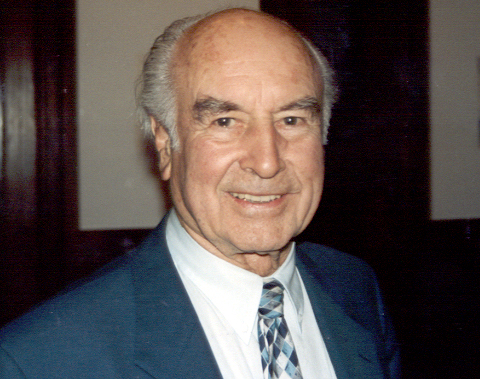
Albert Hofmann, employed by Sandoz Laboratories in Basel, Switzerland, was conducting research on ergots, a toxic fungus, in 1938 to identify potential circulatory and respiratory stimulants. While synthesizing compounds derived from the fungus, he inadvertently created lysergic acid diethylamide (LSD), an alkaloid of the ergoline family, known for their physiological effects on the human nervous system.

Five years later on April 16, 1943, Hofmann became the first person to experience the hallucinogenic effects of LSD while re-synthesizing the compound. He accidentally absorbed a small amount through his skin, leading to vivid hallucinations he later described as a dreamlike state with kaleidoscopic visuals. With two groundbreaking lab accidents occurring five years apart, The Daily Telegraph ranked Hofmann as the greatest living genius in 2007.

During the counter-cultural movement of the 1960s, LSD emerged as a popular recreational drug, attracting advocates such as Timothy Leary, a Harvard psychologist who famously urged people to “Turn on, tune in, drop out.” Leary championed the use of psychedelics to explore altered states of consciousness and challenge conventional societal norms. LSD also played a pivotal role in Ken Kesey’s novel One Flew Over the Cuckoo’s Nest, which focused on the horrific abuse of patients in mental institutions. The book, later adapted into a film starring Jack Nicholson, significantly influenced awareness of the cruelty of mental institutions. However, LSD’s trajectory took a sinister turn beyond recreation when it became a tool for government mind-control experiments.

Starting in the 1950s, the CIA launched MKUltra, a covert program designed to explore drugs and techniques for breaking down individuals psychologically. LSD became a central component of these experiments, often administered secretly to unsuspecting individuals to study its effects. Targets included prisoners, drug addicts, prostitutes, military personnel, CIA employees, and even random civilians. It is difficult to ascertain which acronym took the greater hit to its reputation: the CIA or LSD.

Source: Albert Hofmann by Morgan and Donahue, All That’s Interesting, 2025. Graphic: Albert Hofmann in 1993.

Cols de l’Esperance Lussac Saint-Emilion 2023

Bordeaux from Bordeaux, France

Merlot 100%

Purchase Price: $14.99

Vinous 92, James Suckling 92, Wilfred Wong 91, ElsBob 90

ABV 14.0%

A dark ruby to a dark purple wine with aromas of cherry and a touch of vanilla; medium bodied, smooth tannins, dry, with short to medium finish. This wine will pair well with ambrosial aromas such as lamb but stay clear of overly spicy foods.

An excellent fine wine at a great price. You should let this vintage sit for another year or two and hopefully it will develop a little more character. Cheers.

Note: The label does not explicitly mention that this wine is 100% Merlot, nor does it say it’s a Bordeaux. The retail shops refer to this wine as a Bordeaux and the only grape it mentions on its label is Merlot–the only varietal that the Clos de l’Esperance vineyard grows. Lussac-Saint-Emilion is a wine appellation located in the Bordeaux region and as such it can be called a Bordeaux.

Real Not Real

Have no fear of perfection; you’ll never reach it.” – Dali.

Salvador Dalí was the entertaining, surrealist voice of the masses. His dreamlike spectacle of melting clocks and flamboyant persona captivated popular culture, injecting eccentric brushstrokes into the lives of the disengaged and disinterested. Dalí spoke directly to the public’s fascination with dreams and absurdity, transforming art into a theatrical experience and a giggly poke at the eminent egos on high altars.

Dalí was a 20th-century Spanish artist who drew from influences such as Renaissance art, Impressionism, and Cubism, but by his mid-twenties, he had fully embraced Surrealism. He spent most of his life in Spain, with notable excursions to Paris during the 1920s and 1930s and to the United States during the World War II years. In 1934, he married the love of his life, Gala. Without her, Dalí might never have achieved his fame. She was not just his muse but also his agent and model. A true partner in both his art and life. Together, they rode a rollercoaster of passion and creativity, thrills and dales, until her death in 1982.

Dalí had strong opinions on art, famously critiquing abstract art as “inconsequential.” He once said, “We are all hungry and thirsty for concrete images. Abstract art will have been good for one thing: to restore its exact virginity to figurative art.” He painted images that were real and with context that bordered on the not real, the surreal. For those who believed that modern abstract art had no life, no beauty, no appeal, he provided a bridge back to a coherent emotional foundation with a dreamlike veneer. Incorporating spirituality and innovative perspectives into his dreams and visions of life.

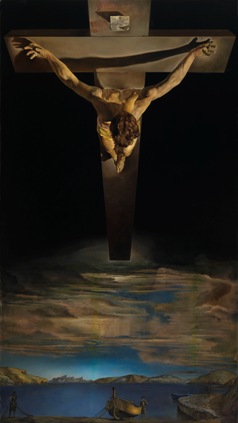
The Persistence of Memory (1931) is Dalí’s most recognizable and famous painting, but his 1951 work Christ of Saint John of the Cross is arguably his most autobiographical and accessible piece. A painting dripping with meaning and perspective, Dalí claimed it came to him in a dream inspired by Saint John of the Cross’s 16th-century sketch of Christ’s crucifixion. The perspective is indirectly informed by Saint John’s vision, while the boat and figures at the bottom reflect influences from La Nain and Velázquez. The triangular shape created by Christ’s body and the cross represents the Holy Trinity, while Christ’s head, a circular nucleus, signifies unity and eternity: “the universe, the Christ!” Dalí ties himself personally to the crucifixion by placing Port Lligat, his home, in the background. He considered this painting a singular and unique piece of existence, one he likely could never reproduce because the part of him that went into the painting was gone forever.That part is shared with his viewers, offering a glimpse into Christ’s pain, Dalí’s anguish, and his compassion: an emotional complexity that transcends mortal comprehension.

Source: Salvador Dali by Robert Descharnes, 1984. Graphic: Christ of Saint John of the Cross, Dali, 1951. Low Res. Copyright Glasgow Corporation.

Divine Right to Rule–Not

Sir Robert Filmer, a mostly forgotten 17th century political theorist, claimed that kings ruled absolutely by divine right, a power he believed was first bestowed upon Adam.

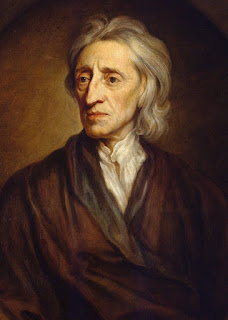
In his First Treatise of Government, John Locke thoroughly shredded and debunked this theory of divine rights of monarchs to do as they pleased. Locke with extensive use of scripture and deductive reasoning demonstrated that ‘jus divinum’ or the divine right to rule led only to tyranny: one master and slavery for the rest, effectively undermining the natural rights of individuals and a just society.

Filmer, active during the late 16th to mid-17th century, argued that the government should resemble a family where the king acts as the divinely appointed patriarch. He erroneously based his theory on the Old Testament and God’s instructions to Adam and Noah. He used patriarchal authority as a metaphor to justify absolute monarchy, arguing that kings can govern without human interference or control. Filmer also despised democracies, viewing monarchies, as did Hobbes, as the only legitimate form of government. He saw democracies as incompatible with God’s will and the natural order.

Locke easily, although in a meticulous, verbose style, attacked and defeated Filmer’s thesis from multiple fronts. Locke starts by accepting a father’s authority over his children, but, in his view, this authority is also shared with the mother, and it certainly does not extend to grandchildren or kings. Locke also refutes Filmer’s assertion that God gave Adam absolute power not only over land and beast but also man. Locke states that God did not give Adam authority over man for if he had, it would mean that all below the king were ultimately slaves. Filmer further states that there should be one king, the rightful heir to Adam. Locke argues that there is no way to resolve who that heir is or how that could be determined. Locke finishes his argument by asserting that since the heir to Adam will be forever hidden, political authority should be based on consent and respect for natural rights, rather than divine inheritance: a logical precursor to his Second Treatise of Government, where Locke profoundly shaped modern political thought by advocating for consent-based governance.

Source: First Treatise of Government by John Locke, 1689. Graphic: John Locke by Godfrey Kneller 1697.  Public Domain.

Deceptive Digs

Bilbo’s goodbye at his 111th birthday party:“I don’t know half of you half as well as I should like, and I like less than half of you half as well as you deserve.”

Oscar Wilde, a virtuoso for expressing dripping contempt. “Some cause happiness wherever they go; others whenever they go.”

Dorothy Parker, a sharp tongue and deceptive digs, “If you want to know what God thinks of money, just look at the people He gave it to.

Mark Twain, a master of eye pokes, “I didn’t attend the funeral, but I sent a nice letter saying I approved of it.”

World’s Best Vineyard 2024

The World’s Best Vineyards, known for curating exceptional wine tourism destinations, publishes an annual list of the top vineyards worldwide. Their selections highlight not only wine quality but also the visitor experience, including tastings, accommodations, and unique attractions at the vineyard and in its surrounding area.

For 2024, the title of the best vineyard in Europe, and the world, has been awarded to Bodegas de los Herederos del Marqués de Riscal, situated in the small but charming town of Elciego, Spain, at the southern edge of the Rioja Alavesa wine region in northern Spain.

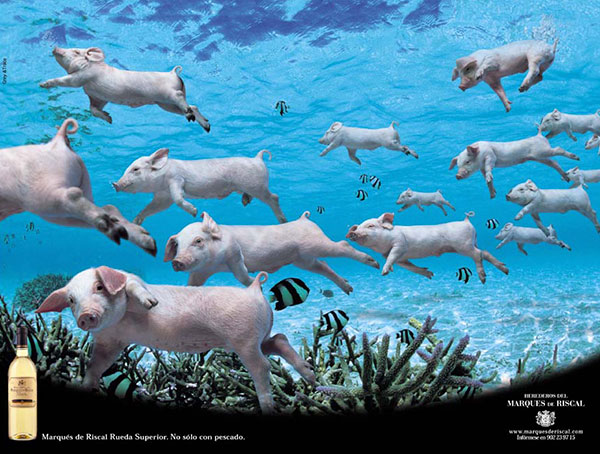
With a legacy spanning over 160 years, the vineyard and winery trace their origins back to 1858. Their first Rioja wine was produced just four years later, in 1862. For over a century, Marqués de Riscal crafted only red wines until they daringly broke with tradition and local reverence in 1972 by introducing their first white wine from Rueda. This leap into white winemaking is honored on their website with a whimsical and enigmatic photograph of the swimming pigs of the Bahamas. The choice of imagery invites unlimited speculation: pigs fly, pigs swim, white wine in Rioja, let your imagination freely wander.

In 2006, Marqués de Riscal expanded its offerings with the inauguration of the City of Wine, a striking complex featuring a hotel and entertainment facilities crowned by a “billowing titanium and stainless-steel roof;” designed by architect Frank Gehry. Visitors to the City of Wine can immerse themselves in the vineyard’s rich history and culture while enjoying luxurious relaxation at the Spa Vinothérapie Caudalie, fine dining at multiple restaurants, shopping at the wine boutique, or even celebrating their love with a wedding, perfect for couples old and young.

Oh, and enjoy the wines: Tempranillo, Tempranillo Blends, Tempranillo/Graciano, Garnacha/Viura, Verdejo, and Sauvignon Blanc. The Marques de Riscal Reserva Rioja’s (Tempranillo) various vintages are consistently rated in the 88-91 range and sell for about $25. Cheers.

Source: World’s Best Vineyards. Marques de Riscal Vineyard. Graphic: Swimming Pigs of the Bahamas.

Cosmic Halo

Galactic halos, consisting of a spherical envelope of dark matter along with sparsely scattered stars, globular clusters, and gas, typically surround most spiral galaxies. Current research is investigating the possibility that some halos may exist solely of dark matter. Discovering halos without stellar matter carries profound implications for our understanding of the universe’s structure, galaxy formation processes, and the conditions required for star formation. More importantly, such a discovery would provide a unique laboratory to study dark matter in isolation, free from interference of normal matter. However, new findings suggest that starless halos may be even rarer than previously thought. This scarcity makes detecting such halos particularly challenging, as they are unlikely to be associated with observable galaxies.

Ethan Nadler, of the University of California San Diego, has demonstrated that molecular hydrogen requires significantly less mass for star formation compared to atomic hydrogen. His research shows that molecular hydrogen can cool sufficiently for gravity to initiate star formation at lower mass thresholds. Specifically, while past studies indicated that dark matter halos need between 100 million to 1 billion solar masses of atomic hydrogen to begin star formation, Nadler has revealed that molecular hydrogen can achieve the same result with as little as 10 million solar masses—a reduction by a factor of 10 to 100. While dark matter halos can theoretically form with masses as low as 10⁻⁶ solar masses, depending on the nature of dark matter, those capable of influencing galaxy formation typically require at least 10⁶ solar masses to enable star formation, further highlighting the challenge of finding starless halos. Detecting these small, starless halos would require identifying subtle perturbations in gravitational fields, a difficult task that may yield little if such halos are as rare as current models suggest.

Source: …Galaxy Formation Threshold, Nadler, AAS, April 2025. Graphic: Dark Matter Halo Simulation by Cosmo0. Public Domain.