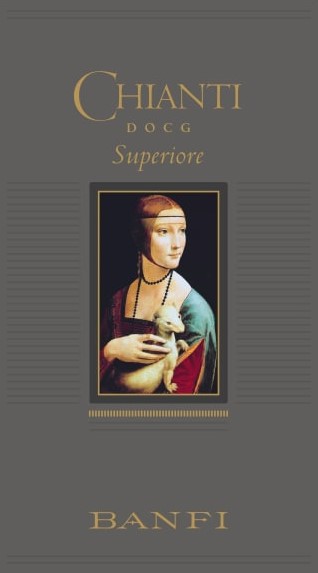
Aromas of cherries, very balanced, smooth, and medium bodied with a medium finish. Will pair well with pasta and mild cheese.
A very good table wine at a reasonable to slightly elevated price.
Trivia: The Renaissance painting depicted on the wine label is “Lady with an Ermine” by Da Vinci, c. 1490. Supposedly it is a portrait of Cecilia Gallerani, the mistress of Ludovico Sforza, Duke of Milan. The painting last sold in 2016 for 100 million Euros or 106 million in 2016 dollars.
Don Q: Little Italy in lower Manhattan needs a new Boss. Skateboarders, incompetent waiters, and macho Chinese boyfriends are everywhere, upsetting the idyllic life of the residents. Don Q (Armand Assante), disavowing his drug-controlled sanity, sets out to reclaim his neighborhood from the incorrigible and unwashed, adopting a mafia persona inspired by his vast library of mobster novels and mafioso crime books.
An almost original movie, it catalogs the great cost of a delusional life, not only to oneself but also for those around him, all on the lighter side without becoming preachy. The film is a masterpiece in storytelling—funny, sad, frustrating, if not downright maddening, which is likely the not-so-subtle point of the plot. And the ending is absolutely Hitchcockian; a finish of ambiguity and unease. Schizophrenic, actually.
“Don Q” and the early 17th-century Spanish comedic novel “Don Quixote” share a commonality of delusion and a desire to protect those they perceive as vulnerable. Don Quixote sees himself as a chivalrous knight on a quest to defend the helpless, while Don Q envisions himself as a powerful mob boss with a mission to control and safeguard his community.
Trivia: Armand Assante, of Italian/Irish descent, played John Gotti, the Gambino crime boss, in the 1996 HBO TV film “Gotti,” winning a Primetime Emmy Award for Outstanding Lead Actor for his performance. Within the family and the organization, Gotti was referred to as Boss, while to the outside world, he was known as the Godfather.
Cleopatra VII, descendant of Alexander the Great’s general Ptolemy Soter, inheriting the Egyptian Empire upon Alexander’s death, was the last pharaoh or queen of Egypt. Upon her death in 30 B.C., less than two weeks after the death of her lover, Mark Antony, she took her own life, likely with a fast-acting poison rather than the bite of an asp. This cleared the way for Augustus, the founder of the Roman Empire, to incorporate Egypt into the Roman realm.
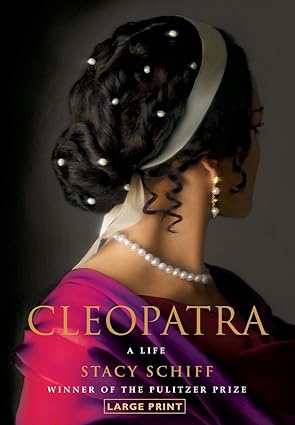
In Cleopatra: A Life, Stacy Schiff weaves an engrossing tale of the queen’s ruthless ambition to restore the Egyptian Empire to its former glory. Though Cleopatra’s life lasted less than 40 years, she brought Rome into her world, achieving greatness that ultimately led to her downfall.
Cleopatra wanted greatness and found the means to attain it. Schiff states in her book that “Cleopatra appears to have had sex with only two men. They happen, however, to have been Julius Caesar and Mark Antony, among the most prominent Romans of the day. …Cleopatra had a child with Caesar andafter his murder — three more with his protégé…The two [Cleopatra and Anthony] would together attempt to forge a new empire, in an alliance that spelled their ends.”
In February 2008, The New York Times published an anonymously sourced front-page story accusing Senator and Republican presidential candidate John McCain of having an improper relationship with telecommunications lobbyist Vicki Iseman. Both McCain and Iseman denied the allegations.
Critics blasted the paper for running a front-page story based on slender and anonymous sourcing. Steve Schmidt, McCain’s campaign advisor, sneered, “It was something that you would see in The National Enquirer.” A few days after the story ran, Times ombudsman Clark Hoyt criticized it for being short on facts, writing, “If you cannot provide readers with some independent evidence, I think it is wrong to report the suppositions or concerns of anonymous aides…“
Vicki Iseman sued The New York Times for defamation in December 2008. The case was settled a few months later, but the Times did not issue a retraction. They did, however, publish a clarifying note stating that they did not intend to imply an improper relationship between Iseman and McCain. John Dean, writing for Verdict, commented on the absurdity of the defamation agreement, stating, “Rather than apologize and/or retract, they [the Times] would merely say what they said is not what they meant, and that readers should not be fooled into understanding what they read as saying what everybody thought it said.”
Source: Times Hit Piece Dying on Media Vine by Clay Waters, 2008. Who Won…by John Dean, Verdict, 2013.
A team of researchers from Penn State and Columbia University has recently observed a quasi-particle that is massless when moving in one direction but acquires mass when moving in a different direction. This quasi-particle, known as a semi-Dirac fermion, was captured by the team inside a ZrSiS crystal and was first theorized 16 years ago. The scientists observed that when the particle travels in one direction at the speed of light, it remains massless. However, when it is forced to change direction, it slows down for the ‘turn’ and gains mass.
This property relates to Einstein’s most famous equation, E=mc², which states that energy and mass are interchangeable, connected by the speed of light squared. According to Einstein’s Theory of Special Relativity, mass traveling at the speed of light would have infinite mass and require infinite energy to maintain its speed, which is impossible. Therefore, only massless particles can travel at the speed of light.
Relativistic effects also come into play when objects approach and attain the speed of light. As an object with mass moves faster, time dilation and length contraction effects become significant. At the speed of light, time would effectively stop for the object, and distances would shrink to zero. These extreme conditions are not physically achievable for objects with mass.
Source: ScienceDaily by Adrienne Berard, 2024. Semi-Dirac Fermions in a Topological Metal. Physical Review X, Shao, et al, 2024.
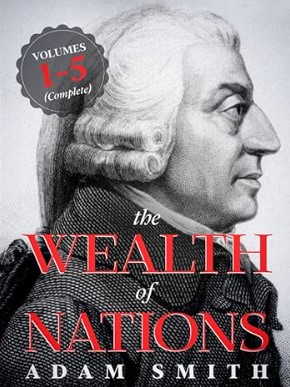
Adam Smith, author of Wealth of Nations, advocated free trade if a country’s savings were increasing, and it produced more than it consumed. He qualified his pro-free trade sentiments by declaring that a country with a low savings rate, producing less than it consumes, and experiencing consistent negative trade balances with its competitors is potentially in for some hard reckoning, including:
Reliance on Foreign Capital: With low savings, a country will have to resort to financing large negative trade balances with foreign lenders, leading to an unhealthy dependency on those countries.
Currency Depreciation: Persistent trade deficits can put downward pressure on the country’s currency value and are potentially inflationary.
Vulnerability to External Shocks: A country with low savings and a negative trade balance is more vulnerable to external economic shocks, leading to economic instability.
Investment Constraints: Limited domestic savings may constrain the country’s ability to invest in infrastructure, education, and other critical areas that support long-term economic growth.
Juror 2: Justin Kemp (Nicholas Hoult) is chosen as one of twelve jurors to decide the fate of a defendant accused of homicide, only to discover that his thumb-up, thumb-down decision transcends the trial itself; like free will, suffering is woven into the fabric of our existence.
Clint Eastwood’s movies typically deliver entertainment with plots that resolve in the great American tradition of truth, justice, and apple pie. This film is different. It’s a story where past mistakes lead to present agony and future pain.
This is a thought-provoking movie, brilliantly portrayed by Hoult. Very little staging or action is needed to polish it into a complete piece. My only quibble is that the moral predicament would resolve itself if the protagonist were fully aware of his actions when they occurred. But then there would be no plot.
Bordeaux Red Blends from Uco Valley, Mendoza, Argentina
70% Malbec, 30% Cabernet Franc
Purchase Price: $12.99
James Suckling 91, Robert Parker 91, ElsBob 90
ABV 13.9%
Aromas of plums and herbs, medium-bodied, tannic, balanced, with a medium finish on the palate. Enjoy it by itself or with a few Godiva chocolate truffes.
An excellent wine at less than half what you would expect to pay for a comparable wine.
Georgia O’Keeffe, a major influence and definer of early 20th-century American Modernism, was an exemplar of the natural world, painting flowers, desert landscapes, and skyscrapers with precision, coated with a veneer of the sublime and a touch of the surreal.
Her flowers were her gifts and instructions to the world. In the May 16, 1946, issue of the New York Post, she articulated her artistic purpose: “When you take a flower in your hand and really look at it, it’s your world for the moment. I want to give that world to someone else. Most people in the city rush around so, they have no time to look at a flower. I want them to see it whether they want to or not.”
The American Modernism movement is difficult to define, though O’Keeffe seems to have taken the movement a step back from the light and color of French Impressionism to a more classical form, incorporating precision of shape with the synthesis of modern abstraction.
When she abandoned precision for immersion in total abstraction, she sometimes found herself lost in amateurish erotica or unending interpretive babbling, enigmatically and essentially labeling these works as meaning whatever she wanted them to mean.
Johann Hari has been involved in significant journalistic malpractice since joining the British media in 2001, earning sneering testimonials for plagiarism, fabrication, misconduct, misrepresentation of research, malicious editing of his biography, false and defamatory articles against fellow journalists, threats of libel suits against anyone challenging his ethical failings, selective editing of interviews to alter narratives, errors in cited data, and claiming evidence without proper citations. And he’s only 45.
Hari has worked for numerous prestigious publications, including the New Statesman, The Independent, The Huffington Post, The New York Times, the Los Angeles Times, The New Republic, The Nation, Le Monde, El Pais, The Sydney Morning Herald, Haaretz, BBC, and Slate. He currently writes non-fiction books on drugs—both legal and illegal—drug culture, and the harm of social media.
Source: Forbes. Wikipedia. Graphic: Johann Hari supplied by Johann Hari, 2011, creative commons.





 elsToday