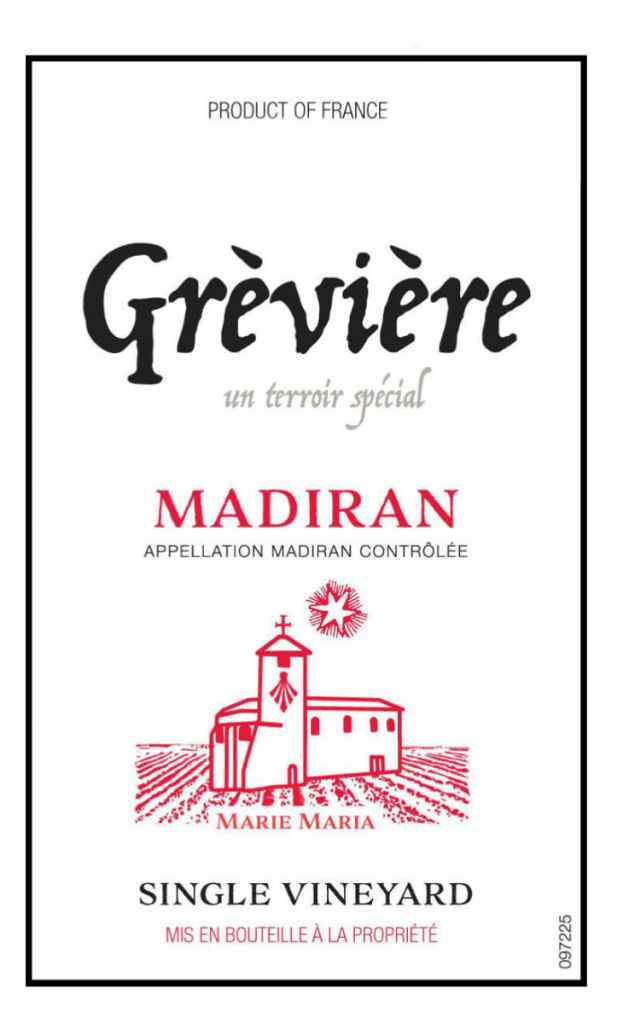
Other Red Blends from Southwest, France
Tannat 80%, Cabernet Sauvignon 20%
Purchase Price: $17.99
Decanter 93, James Suckling 91, Wilfred Wong 91, ElsBob 90
ABV14.5%
A very deep ruby to deep purple wine with aromas of black fruit, oak, and spice. Full-bodied, fruity with expressive tannins, subdued acidity, and a long finish. At a little more than 5 years it is still going strong. It will keep for another 5 years.
An excellent fine wine at a reasonable price. Current prices range from $16-26.
Through the Grapevine: Madiran, a village in southwestern France, is closely associated with the Tannat grape. Situated in the heart of the Pyrenean region where Tannat is believed to have originated, the village has long been considered the grape’s spiritual home.
The Madiran AOC, created in 1948, produces only red wines from vineyards planted to at least 60% Tannat. Under AOC rules, the wines themselves must also contain a minimum of 60% Tannat, a dual requirement that preserves the region’s traditional style. While some producers bottle 100% Tannat, many wines are blended with Cabernet Franc, Cabernet Sauvignon, or Fer Servadou.
Fer Servadou, a traditional grape of southwest France, was likely spread by Benedictine monks and pilgrims traveling the Way of St. James. Known for its hard, “iron-like” wood and bright acidity, it remains an important blending partner to Tannat in the wines of Madiran.
In the 11th century, the Benedictine order, strongly influenced by 910 AD Cluny Abbey in Burgundy, was expanding across southwestern France. One community established the Saint‑Vincent monastery at Madiran. The monks were literate, organized, and agriculturally innovative, and they cared deeply about viticulture. They introduced terracing, pruning systems, record keeping, and cellar management. Under their stewardship, the Tannat grape shifted from a rustic local variety to a deliberately cultivated one.
Madiran lies near the Via Tolosana, one of the four major French routes to Santiago de Compostela (The Way of St. James). The monastery provided pilgrims with lodging and helped establish early wine trade along the route. The monastic vineyards endured until the French Revolution in 1789, when Church lands were seized and dispersed into private hands. While the monastery’s authority vanished, the vineyards did not. The vines continued to produce fruit under new owners, allowing the Benedictines’ centuries of viticultural expertise to survive long after the monks themselves were gone.

