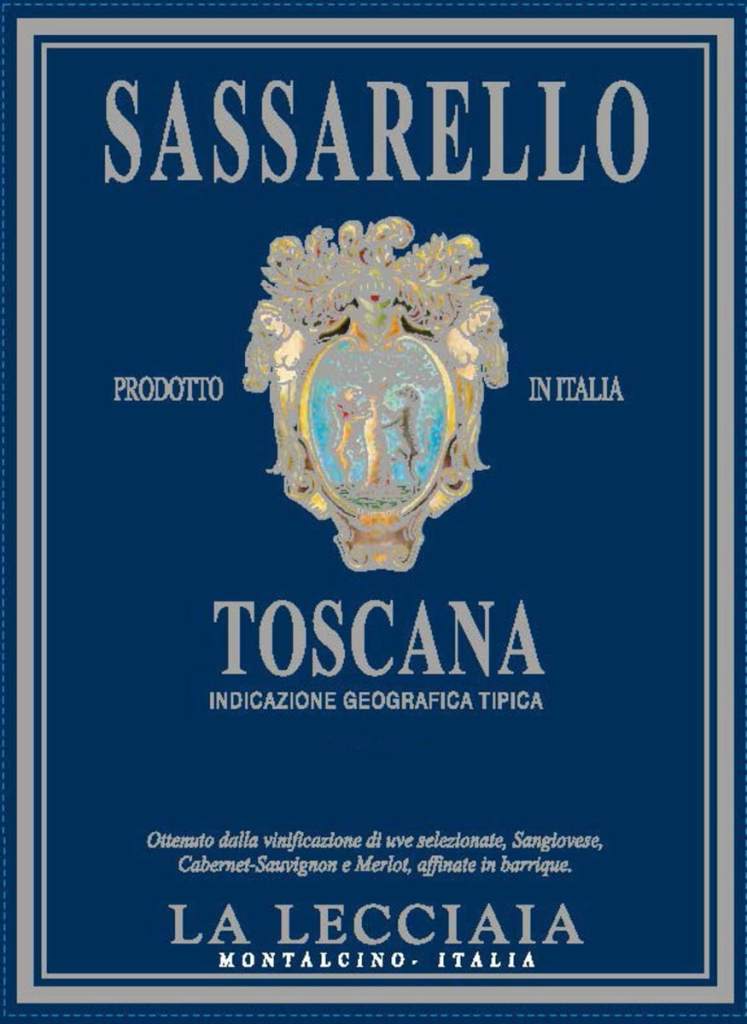
Other Red Blends from Tuscany, Italy
Sangiovese, Cabernet Sauvignon, Merlot (No percentages given)
Purchase Price: $18.99
James Suckling 92, ElsBob 91
ABV 13.5%
A deep ruby and a fainter ruby rim with aromas of dark fruits and herbs. Medium-full bodied with cherries and spice on the palate with balanced acidity and tannins. As with all Sangiovese wines, it needs to breathe.
An excellent table wine at a great price. Current prices range from $15-18.
Through the Grapevine: Fattoria La Lecciaia lies just off the old Via Francigena, the medieval road that carried pilgrims from England all the way to Rome. A traveler leaving Canterbury would walk to the Channel, cross by boat into France, and then continue south on foot through Reims and Besançon, climbing steadily toward the Alps. The most daunting stretch was the Great St. Bernard Pass, a high, wind‑scoured saddle between Switzerland and Italy where snow lingered well into spring and travelers relied on the hospitality of the monks who kept watch there.
Once over the pass, the road dropped into the Aosta Valley and wound south through the Tuscan hills. Pilgrims, merchants, and clerics passed directly through the countryside around Montalcino, moving along the same ridgelines and valleys where La Lecciaia’s Sangiovese vines now grow. For centuries, the drum of footsteps, mule bells, and weary voices shaped this landscape long before Brunello or Toscana IGT existed.
This route was initially recorded by the Archbishop Sigeric of Canterbury in 990 AD who walked from Rome back to England and fixed all 80 of his stopping points for his flock to follow. This is the moment that the route became a pilgrimage. Most travelers made the trek in a single season of 3-4 months, one-way, leaving England in spring so they could cross the Alps in summer before descending into the Tuscan hills…centuries before Henry II ever muttered his famous complaint about a Thomas Becket, the ‘meddlesome priest.’
Continuing the over‑trivialization of everything, the St. Bernard Pass was originally known, at least as far back as surviving records allow, as Poeninus Mons or Summus Poeninus, named by the Romans for a local Alpine god. A temple to Jupiter Poeninus once stood at the summit, watching over traders and legionaries who crossed these heights. Only in the 11th century was the pass renamed after St. Bernard of Menthon, who established a hospice there in 1049 AD. The monks began keeping large working dogs several centuries after St. Bernard’s lifetime, breeding them on site for the practical work of rescuing travelers from snowdrifts. Sadly, there is no reliable evidence that they ever dispensed spirits to the distressed or those buried in white snow. The breed eventually took on the monk’s name, making him the eponym rather than the other way around.

