My Name is Legion

Beelzebub has been wandering through western civilization since the Philistines appeared on the scene in the 12th century BC. The polytheistic Philistines of Ekron, one of their five cities within Canaan, worshiped Beelzebub, Baal-Zebub in the Philistine language, as a minor god of healing and protection from diseases, mainly from flies. In the semitic languages Beelzebub was literally known as the “Lord of the Flies”. (In Indo-European languages some interpretations suggest that Beelzebub is translated into a more friendly Lord of the Jungle.)

As monotheistic traditions took root in Canaan, Beelzebub shifted from a protective deity to a purveyor of evil, demonized within emerging Jewish thought. By the 9th century BC, the prophet Elijah condemned the Israel King Ahab and the prophets of Baal for worshiping this god rather than the true God of the Jews. By the time of the New Testament, which mentioned him 7 times in Matthew, Mark, and Luke, he was associated with Satan, who represented the emperor of Hell.

In Matthew and Mark, the Pharisees accused Jesus of casting out demons by the power of Beelzebub or the “Prince of the Demons”. Jesus counters by exclaiming that “Every kingdom divided against itself is brought to desolation, and every city or house divided against itself will not stand.” Jesus’ response backed the Pharisees into a corner, if they admitted that Jesus was casting out demons by God’s power, then they would have to acknowledge his divine authority. But if they insisted, he was working with Satan, they would have to explain why Satan would undermine his own influence: a house divided will not stand. (Lincoln in an 1858 speech used the same words with a moral rather than religious meaning, granted that is a very fine line, “A house divided against itself cannot stand,” suggesting that the evils of slavery would lead to collapse of the country.)

Between the 15th and 17th centuries Beelzebub was transformed into one of the seven princes of Hell: Lucifer the Emperor, Satan, Leviathan, Belphegor, Mammon, Asmodeus, and Beelzebub. Beelzebub represented the deadly sins of gluttony and envy.

In modern times Beelzebub remains a symbol of evil in literature and culture. John Milton’s Paradise Lost cast him as a chief demon and William Golding’s Lord of the Flies takes a more ancient meaning associated with corruption and destruction.

From an ancient minor Philistine god to Satan during the times of Jesus, to a major Christian demon in medieval times, back to Satan himself in modern times; Beelzebub’s transformation reflects the shifting religious and cultural landscapes over millennia, but demons will always have a name. In Mark 5:9, Jesus asks a possessed man, “What is your name?” The demon responds, “My name is Legion, for we are many.”

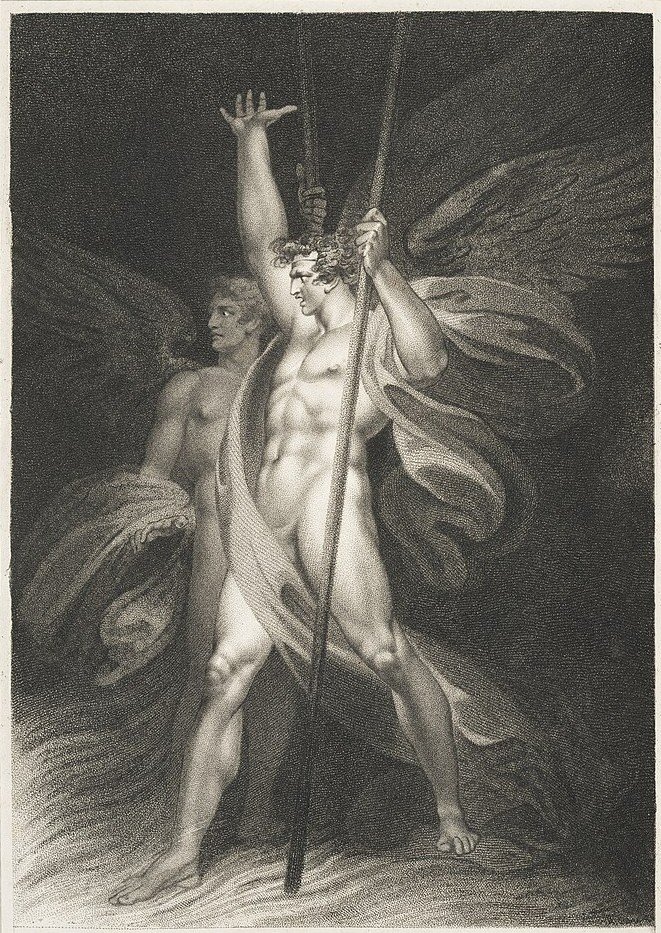
Graphic: Satan and Beelzebub by William Hayley, Jean Pierre Simon, Richard Westall: Paradise Lost. Public Domain.

The Roman Jewish Wars

During the first and second centuries AD there were 3 major Jewish revolts against Roman rule in Judea: The first war from 66-73 AD, the Kitos War from 115-117 AD, and the Bar Kokhba Revolt from 132-135 AD. Roman taxation, financial exploitation, religious persecution, oppression, extrajudicial executions, and the plundering of the Second Jewish Temple all contributed to the conflicts.

Roman punishment increased with each successive war eventually leading to wholesale depopulation of Jewish communities by enslavement, death, and exile. It is believed that upwards of 1.3-1.4 million Jews were killed during these revolts, which would have been about one-third of the total worldwide Jewish population. After the Bar Kokhba Revolt the Romans renamed the area Palestina after the Philistines who populated the general area before the 6th century BC.

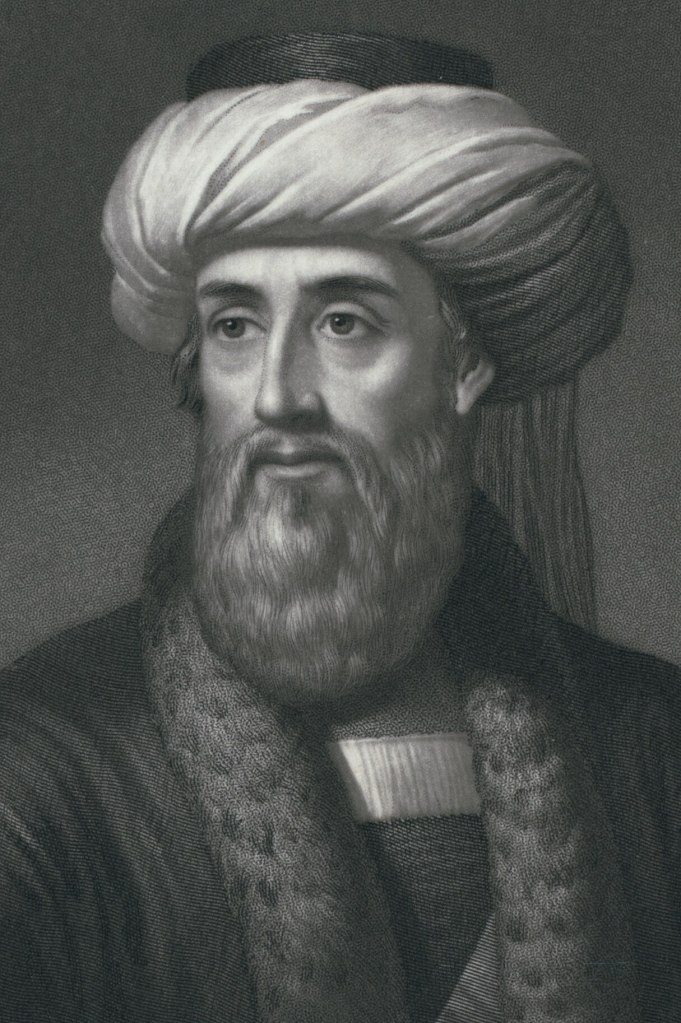
Source: Josephus. Wikipedia, Heritage-History, WorldHistory, Alchetron, Britannica. Graphic: Roman Triumphal panel from Beth Hatefutsoth showing spoils from the Jewish Temple. Max Morris 2016.

The Antiquities of the Jews

Josephus’s 20 volume history of the Jews titled: The Antiquities of the Jews was written to provide an account of the Jewish people for his Roman patrons and protectors.

Below is a synopsis of the 20 volumes:

  • Biblical creation to the death of Abraham’s son Isaac
  • History of Isaac’s sons to the Exodus of Jews from Biblical Egypt
  • Exodus from Egypt to the first 2 years of the 40 years in the wilderness
  • The remaining 38 years in the wilderness to the death of Moses upon reaching Canaan
  • Joshua’s replacement of Moses as leader to the death of the priest Eli
  • The capture of the Ark by the Philistines to the death of King Saul
  • David’s ascension to the throne of the Kingdom of Israel to the death of King David
  • Solomon’s ascension as King of Israel to the death of King Ahab
  • Reign of King Jehoshaphat to the fall of Samaria
  • Babylonian captivity of the Jews and the destruction of the Neo-Assyrian Empire
  • Start of the Persian Empire of Cyrus the Great to the death of Alexander the Great
  • Death of Alexander the Great to the Maccabean Revolt
  • Origins of the Hasmonean dynasty to the death of Queen Alexandra
  • The death of Queen Alexandra to the death of Antigonus II Mattathias
  • Herod the Great’s taking of Jerusalem to the completion of King Herod’s temple
  • Completion of King Herod’s temple to the death of Herod’s sons
  • Death of Herod’s sons to the banishment of King Archelaus

Josephus history covers major portions of the Old Testament including Genesis, Exodus, Numbers, Joshua, Judges, Ruth, Samuel 1&2, 1&2 Kings, 1&2 Chronicles, and Prophets. Josephus’s accounts provide for additional material and commentary not found in other texts including the bible.

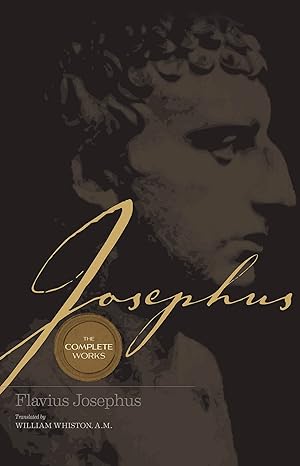
Source: Josephus: The Complete Works, 2003. Jewish Virtual Library. World History Encyclopedia. Graphic Joseph, Son of Gorian, by Thomas Emmet, 1880, public domain.

Jewish, Roman, Historian

Flavius Josephus, a first century Jewish scholar and historian wrote four extant works:

  1. The Jewish War. (Jewish Revolt) 75 AD – The first revolt against the Romans from 66-73 AD
  2. The Antiquities of the Jews. 95 AD – From Adam to the death of Herod’s sons
  3. Against Apion. 97 AD – A defense of Judaism
  4. Vita or The Life of Flavius. 99 AD – Biography

These works provide significant source material and insight into first-century Judaism and Christianity.

Josephus was born into the Jewish priesthood on his father’s side and of Hasmonean royal descent maternally. He served in the Jewish military during the Jewish War but surrendered to the Romans and he was considered a traitor to Jews ever after. While waiting to be executed by the Romans he predicted that Vespasian would eventually be crowned emperor of Rome. Vespasian, because of the prophecy, spared his life and made him a consultant, but still a slave, to the Roman army. Josephus gained his freedom when Vespasian became emperor in 69 AD, at which time he changed his name to Flavius Josephus. Flavius was the family name of the emperor Vespasian.

Source: Josephus: The Complete Works, 2003. Jewish Virtual Library. World History Encyclopedia.

Little Mole

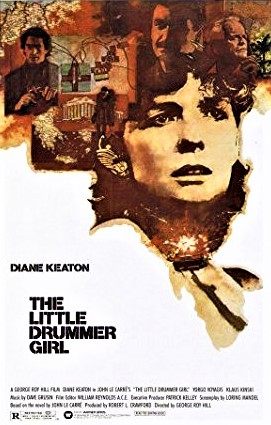
The Little Drummer GirlM Drummer 1984

Theaters:  October 1984

Streaming:

Rated:  R

Runtime:  130-132 minutes

Genre:  Drama – Mystery – Suspense – Thriller

els:  4.5/10

IMDB:  6.1/10

Amazon:  4.1/5 stars

Rotten Tomatoes Critics:  5.7/10

Rotten Tomatoes Audience:  3.4/5

Metacritic Metascore:  NA/100

Metacritic User Score:  NA/10

Awards:

Directed by:  George Roy Hill

Written by:  Loring Mandel (screenplay), John le Carré (book)

Music by:  Dave Grusin

Cast:  Diane Keaton, Yorgo Voyagis, Klaus Kinski

Film Locations:  Germany, Greece, Israel, Lebanon, UK

Budget:  $20,000,000

Worldwide Box Office:  $7,828,841

Charlie (Keaton), a creator of alternate realities and a so-so actress believes in the Palestinian cause; in their quest for a country and peace.  She is recruited by Israeli intelligence, telling her they also want peace. They want her help in finding a Palestinian terrorist bomber, using her well honed abilities at deception and misdirection.

David John Moore Cornwell, a British writer of mysteries and spy novels under the pen name of John le Carré, worked for the English secret service until his 3rd novel in 1963, The Spy Who Came in from the Cold, became an international best seller.  He quit the service in that year and devoted his time to writing, mainly cold war spy novels dealing with the psychology of gamesmanship and spy craft rather than James Bond type action. His stories usually center around the moral cost of attempting to contain the communist empire  without absorbing the stain of their criminality and depravity. In 1983 he broke from his successful template of cold war spy novels and wrote about the ethical ambiguity between Palestinian and Israeli methods of prosecuting and defending against acts of terror in his novel, The Little Drummer Girl. The novel was the 4th highest selling novel in the US in 1983. Loring Mandel is mainly known for his long-time writing involvement for the TV soap opera, Love of Life and his 2001 screenplay for the Nazi final solution movie, Conspiracy depicting the 1942 Wannsee Conference.  His screenplay for The Little Drummer Girl is a faithful and true rendition of le Carre’s novel.

George Roy Hill directed 14 movies, 8 were nominated Oscars and 9 for Golden Globes. Four of the movies won Oscars and 3 won Golden Globes. He was nominated, but didn’t win, the Best Director Academy Award for the 1969 movie Butch Cassidy and the Sundance Kid. His high water mark came in 1974 when he won the Best Director Academy Award for the 1973 movie The Sting. His movies slowly declined in quality after that, with his last 2 films, The Little Drummer Girl and Funny Farm receiving little praise from either the public or audiences. His direction of The Little Drummer Girl was not spectacular, workman-like rather, but that wasn’t what destroyed this movie, that distinction belongs to Diane Keaton.

Diane Keaton is absolutely horrendous in this movie.  Some of the polite critics say she was miscast, which is true, but that doesn’t negate the fact that throughout this movie she just recites lines without conviction or is capable of displaying any proper scene awareness.  Diane Keaton made her name in 1970s acting in movies with the incestuous Woody Allen.  The apogee of her career  came in 1977 with her playing Annie Hall in the movie of the same name.  It has been downhill for her ever since.

This is a movie that you never need to watch unless you wish to watch all of John le Carre’s books come to life on the big screen. Just be aware that the story is good but Keaton is painful to watch.