The Long Way

By 1881, literature was shifting, Realism’s clarity giving way to Modernism’s psychological fog. Henry James pioneered the transformation, publishing what many hailed as his masterpiece and others found nearly unreadable. He moved from the crisp windows of Daisy Miller and Washington Square, where social dilemmas are transparent, into the labyrinth of The Portrait of a Lady, a slow, meandering narrative that tested patience to the point of exasperation. James stretched his scenes into long psychological dramas, shadowed by melancholy, lingering on minutiae rather than decisive events. To admirers, this was a profound exploration of consciousness, to detractors, a soporific feast of abstraction.

Where James’s Portrait is a punishing fugue of memory and angst, a darkness at the edge of noon, Proust’s Swann’s Way (1913) offers a sensual slow dance of lush detail, playful childhood games, and adult desire. In Combray, the family had two ways to take their walks: the short way and the long way. The short way was familiar, contained, offering scenery but little transformation. The long way was expansive, expressive, full of detours and revelations. In Swann in Love, the same pattern unfolds: the first half is Swann’s descent into desire, the short way of immediacy; the second half is his struggle to free himself, the long way of disillusionment and reflection. For Proust, the long way is where life’s lessons are held. Meaning is not found in shortcuts but in detours, delays, and the endurance of memory. The long way is the design of his art: winding detours that illuminate the search for lost time.

Wilde enters here as counterpoint. Where Proust lingers in digressive glow, Wilde sharpens language into bite. His wit distills the same metaphysical concerns: beauty, desire, memory, decay, into crystalline aphorisms. Wilde’s sentences are daggers wrapped in velvet, each polished to a point. If Proust is the cathedral of memory, Wilde is the mirror that cuts as it reflects. The Picture of Dorian Gray dramatizes the peril of desire and the corruption of beauty; themes Proust refracts through memory and longing. But Wilde compresses the ineffable into epigram: glow against bite, long way against short.

Cinema, now, becomes the continuance of these styles. Wilde’s paradox and Proust’s memory echo in films as diverse as Spectre (2015), No Time to Die (2021), and Gosford Park (2001). In Spectre, Madeleine Swann, a psychologist whose very name invokes Madeleine tea cakes and Swann’s Way, probes Bond’s past like Proust probing consciousness, turning trauma into narrative. In No Time to Die, desire and mortality entwine, echoing Proust’s meditation that “life has taken us round it, led us beyond it.” And in Gosford Park, Sir William McCordle brushing crumbs from a breast, Swann brushing flowers from a bosom, gestures lifted from Proust’s sensual triggers, collapse time into desire, while Altman’s upstairs-downstairs satire mirrors Wilde’s social wit. These films remind us that both the glow and the bite, the long way and the short, remain inexhaustible. The short as overture, the long as movement. One as a flash of life, the other as the light of experience.

James stretches narrative into labyrinthine difficulty. Proust redeems patience with memory’s illumination. Wilde polishes language into paradoxical brilliance. Chaplin, in Modern Times (1936), adds another metaphor: the gears of industry grinding human life into repetition. Yet even here, the Tramp and the Gamin walk off together, the long way, not the shortcut; suggesting resilience and hope. Between them, Modernism oscillates: fog and clarity, glow and bite, labyrinth and mirror, machine and memory. Meaning is elusive but never absent. It waits in the folds of memory, in the flash of wit, in the shadows of desire, in the detours of the long way, ready to be revealed.

Through memory’s fragments, along the winding road of joy and grace, we taste again the sweetness of love, the timelessness of innocence, and life’s inexhaustible richness.

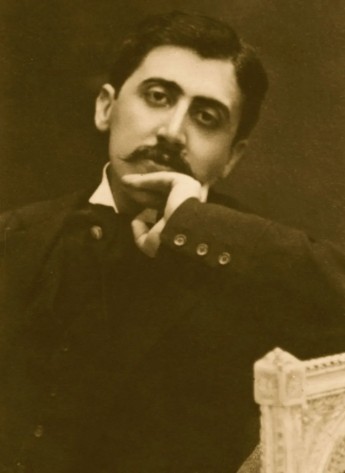
Graphic: Marcel Proust, Hulton Archive/Getty Images.

Consequence of Coincidence

Boris Pasternak (1890–1960), Russian poet and novelist, spent a decade creating his singular opus, Doctor Zhivago, completed in 1956. More than a historical narrative, it is a philosophical cathedral, a novel constructed of haunted Romanticism, moral reckoning, and symbolic renewal. Set against the dissolution of Tsarist Russia and the disillusionment of revolutionary aftermath, the book crosses the bridge from imperial decay into the intoxicating dream of collective transformation, only to watch that dream unravel into a black hole of exile, violence, and starvation.

This arc of collapse recalls the spiritual bargain Thomas Mann dramatizes in Doctor Faustus, but where Mann’s protagonist descends into metaphysical madness, Doctor Zhivago journeys through the quiet but unrelenting erosion of the soul. He does not perish; he endures, but with dimming strength and drive. The rails he rides are not toward damnation but disillusionment. And still, beams of light pierce the fog: rays of love, recollection, and art that suggest the possibility of meaning and rebirth.

As Nikolai Nikolaievich says early in the novel, “the whole of life is symbolic because it is meaningful.” In this way, the prose becomes Pasternak’s metaphorical terrain, thick with fog, fractured history, and spiritual yearning. The appended poetry, by contrast, is a sudden clearing. Here, the truth is not narrated but sung as parables: psalms.

Pasternak stands in conversation with his literary ancestors, not in imitation but in integration. Tolstoy’s presence is unmistakable, the historical sweep as personal crisis, the aching attention to moral choice. But where Tolstoy moves with structural precision, Pasternak drifts with mystical defiance. His narrative resists symmetry. His characters do not seek ideology, they search for grace.

Symbolist in sensibility if not in allegiance, Pasternak paints with metaphysical hues. As Nikolai Nikolaievich reflects, it is not commandments but parables that endure, not doctrine but symbol. Life, for Pasternak, is sacred not by design but because of its trembling unpredictability.

It is no accident that Hamlet opens Zhivago’s verse collection. The parallels run deep: both Hamlet and Zhivago move through time like exiles from history itself, cast adrift in worlds too cruel for their contemplative souls. When Pasternak writes, “I consent to play this part therein,” he evokes both the tragedy and transcendence of bearing witness. Zhivago performs his role, but lives another life, internal, poetic, unreachable: above the fray, but corrupted by the psychosis below.

His poems chart this existential divide: March, an ode to ugliness and beauty; Holy Week, a quiet redemption; Parting, remembrance caught in an unfinished gesture. In Garden of Gethsemane, Pasternak, born Jewish, philosophically Christian, offers the novel’s spiritual heartbeat and epitaph: “To live is to sin, / But light will pierce the Darkness.”

Perhaps nowhere is Pasternak more intentional, and more misunderstood, than in his use of coincidence. Critics have dismissed the improbabilities: chance meetings, reappearances, entwined fates that strain believability. Yet, viewed symbolically, they form a system. These moments are not narrative indulgences; they are metaphysical punctuation marks, appearing when a character risks dissolution and irrelevance, summoning memory, recognition, or spiritual breath.

These recurring events hint at resurrection, not just personal but societal. Pasternak suggests life moves not in straight lines but in spirals and cycles. Coincidence becomes a kind of syntax for recurrence, for unfinished conversations rekindled in new voices. Meaning doesn’t unfold; it echoes amplified.

Again and again, children appear, observers, inheritors, blank slates. In them lies the novel’s quiet eschatology: renewal not through revolution, but through the uncorrupted eye. These youths do not argue ideology. They carry memory unwittingly. They are the future poets whose truths will be elemental and free, like wind through the trees.

If Doctor Zhivago is a Passion, then its resurrection comes not in fire, but in continuity. Not in triumph, but in scattered verses, remembered, revived. Pasternak’s salvation is lived: grace through endurance, beauty through suffering, renewal through remembrance.

Banned in the Soviet Union upon completion, Doctor Zhivago was smuggled to Italy and published in 1957, igniting an international phenomenon. The CIA distributed the book behind the Iron Curtain as a weapon of quiet revolt. Pasternak was awarded the Nobel Prize in 1958, then compelled to decline it under state pressure. And still, by 2003, the novel had found its way into Russian classrooms.

This was not just a novel. It was a voice buried and reborn.

Pasternak’s opus is not a chronicle of a man or an era, but a symbolic landscape of what it means to remain human in the machinery of history. A tale not of revolution’s glory, but of the soul’s refusal to be mechanized. It rejects dogma in favor of parable, certainty in favor of consequence, ideology in favor of grace.

Doctor Zhivago teaches us that life may be coincidence, but not accident. That beauty may falter, but goodness moves quietly. And that sometimes, when all else falls away, it is poetry that remains, whispering its eternal truths into the trembling heart of history.

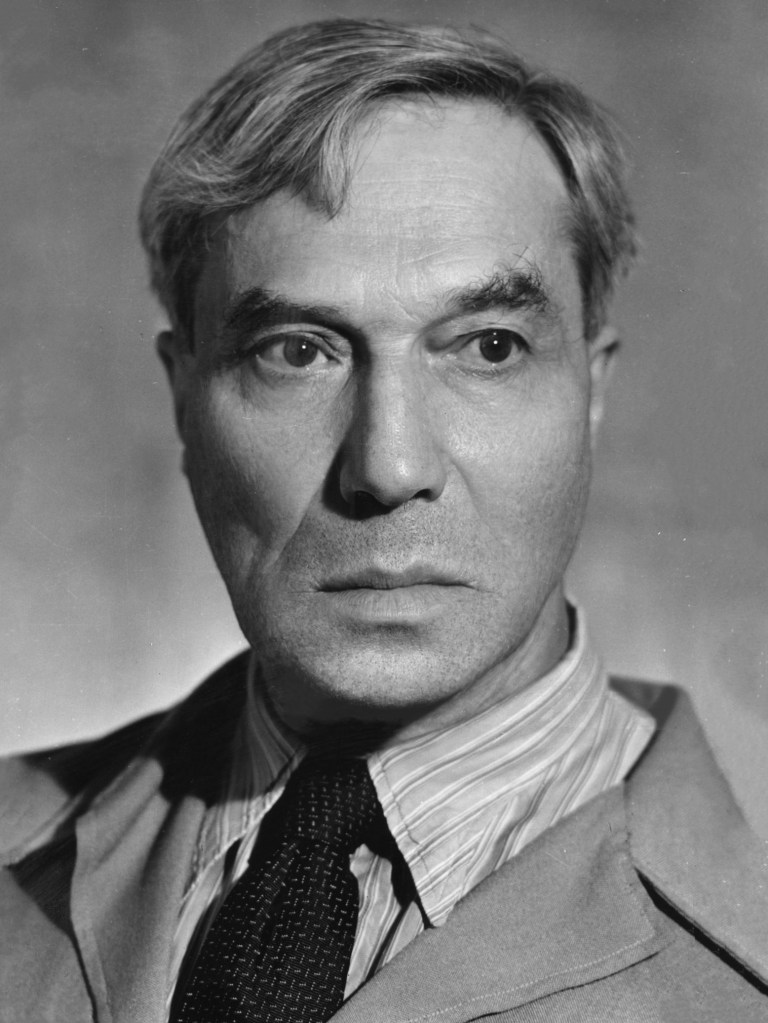
Source: Dr. Zhivago by Boris Pasternak, 1957. Graphic: Boris Pasternak, 1959. Public Domain.

The Many Colors of Slavery

Those who deny freedom to others deserve it not for themselves.”—Abraham Lincoln

Whoever does not have two-thirds of his day for himself, is a slave, whatever he may be: a statesman, a businessman, an official, or a scholar.” — Friedrich Nietzsche

As the great continental glaciers receded at the end of the Pleistocene, fertile land emerged, allowing for the transition from hunting and gathering to agriculture. Farming was labor-intensive, and with the rise of permanent settlements came the demand for constrained and controlled labor. Slavery, likely with first roots in Mesopotamia, though independent manifestation by the Pharaohs in ancient Egypt and other early civilizations, made it ubiquitous, and it has never disappeared.

From the bonded laborers of the Pharaohs to the structured servitude in Greece and Rome, from the transatlantic trade that brutalized African populations to the modern exploitation of migrant workers in sweatshops and the sex trades, slavery has evolved rather than vanished. Each era refines its own form of servitude; forced labor, insurmountable debt, bureaucratic entrapment, or corporate exploitation. It is a practice as ancient as prostitution and taxation, deeply embedded in human society, yet constantly shifting into less visible but equally insidious forms. As long as slavery remains profitable its existence will continue to indelibly stain humanities’ collective soul.

Slavery, and its ultimate contrast, freedom, was a persistent theme in the works of sci-fi author Robert A. Heinlein. With a piercing social awareness, Heinlein, who, in his early years, was described by Isaac Asimov as a ‘flaming liberal’—picked up the theme and horrors of slavery with his 1957 juvenile novel “Citizen of the Galaxy”; bringing the many forms of servitude into the personal history of a precocious kidnapped boy named Thorby. Citizen of the Galaxy is a planet-hopping, spacefaring critique of oppression, class structure, and the nebulous concept of freedom. Heinlein crafts a future where contrasting societies across the galaxy reflect varying degrees of servitude and autonomy, if not necessarily total freedom. Man rarely allows himself complete independence.

Heinlein through the lens of Thorby explores the various shades of slavery, beginning with the brutal, controlling enslavement and continuing to more subtle forms that the individual may not even recognize as confinement. (Partial plot giveaways beyond this point.) Escaping his initial enslavement by the graces of a kindly, strict, but loveable old cripple named Baslim, Thorby moves into a hierarchical, structured existence of spacefaring traders then onto a self-imposed, due to a thirst for justice, straitjacket of a corporate bureaucracy on his birth planet of Terra. A life story of how control can be imposed by others or by ourselves.

As Heinlein’s social perspectives evolved, his libertarian leanings took greater prominence in Citizen of the Galaxy. Through Thorby’s life journey, Heinlein emphasizes personal autonomy, resistance to tyranny, and the moral duty to fight injustice. Baslim, Thorby’s first mentor, symbolizes the idea that one person can stand against oppression and make a difference, even if it takes many miles and years to materialize.

This theme runs through much of Heinlein’s work, but here, it’s especially poignant because Thorby is powerless for much of the novel, making his eventual triumph all the more meaningful. Heinlein’s novels, Farnham’s Freehold, Friday, and Time Enough for Love, explore slavery and control, reinforcing humanity’s inherent need for freedom, or at the very least, breathing space.

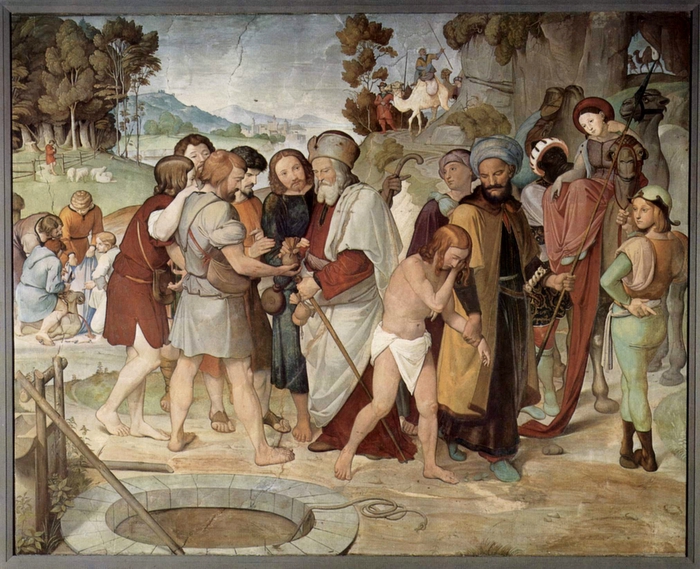
Source: Citizen of the Galaxy by Robert A. Heinlein, 1957. Graphic: Joseph Sold into Slavery by Friedrich Overbeck, 1816. Vanderbilt University. Public Domain.

Love, Class, and Money

Framley Parsonage, by the Victorian author Anthony Trollope, is the fourth novel in the six-part Chronicles of Barsetshire series. This series is set in the fictional county of Barsetshire in the English countryside and details the social entwinings of the gentry, rich mercantile classes, clergy, and occasionally what we would today refer to as the comfortable middle class. The novels, which can be read in any order, revolve around themes of maintaining social status, finding love, marrying well, and money. Hypocrisy, chicanery, and snobbish attitudes often create dilemmas that Trollope, in a winding but satisfying narrative fashion, concludes as the reader wishes.

Framley Parsonage specifically details the misadventures of the amiable but horribly naive vicar, Mark Robarts, who is a boyhood friend of Lord Ludovic Lufton. Through this friendship, Ludovic’s mother, Lady Lufton, installs Robarts in the Framley Parsonage with a sufficient salary to support his young family’s basic needs. Through a misplaced sense of ambition, Robarts attempts to further his standing in life by associating with a parliament member, charlatan, and aptly named Mr. Sowerby, bringing humiliation and disgrace upon himself.

Trollope displays an absolute sense of enjoyment in writing this novel, skewering the political class with an abundance of wit and satire, along with exploring four marriage sub-plots that he resolves with appropriately deserved denouements of happiness or the lack thereof.

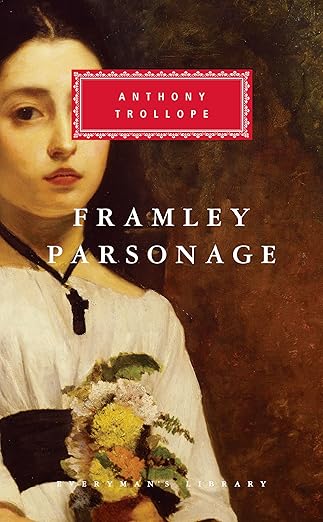
Source and Graphic: Framley Parsonage by Anthony Trollope, Publisher Everyman’s Library, 1994.

Sticks His Nose In

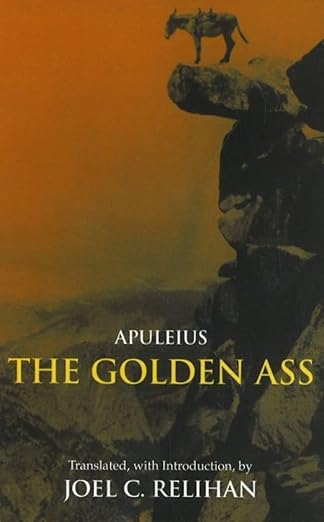
Lucius, the protagonist of the 2nd century AD Latin novel The Golden Ass, cannot suppress his curiosity nor stop meddling in the dark arts of spells and magic. Attempting to flee from the troubles resulting from his inquisitiveness, he accidentally uses the wrong ointment and turns himself into a donkey rather than a bird. This error leads to a series of comical and mostly bawdy misadventures as a beast of burden, who is thoroughly abused and misused due to his intemperate habit of sticking his nose in.

The story, written by the Roman author and philosopher Lucius Apuleius, who hailed from a Roman province in what is now modern-day Algeria, is characterized as a romance—not in the modern Harlequin sense, but in the Greek meaning of a Milesian tale. A Milesian tale consists of a series of adventurous stories, usually short, humorous, and erotic—a romantic narrative for the ancients.

The translator of The Golden Ass, Joel C. Relihan, takes the meaning of a Milesian romance a step further into what Northrop Frye described as secular scripture. Relihan states that the romance in The Golden Ass is: “A survivor’s tale of descent into a nightmare world of loss and eventual recovery of identity.”

Lucius loses his identity, becoming ludicrous and expendable. But in the end, he prays for salvation, which he receives from the goddess Isis. Ultimately, he is initiated into the secrets of the gods. His transformation from misfortune to enlightenment and spiritual fulfillment is, in the end, the ultimate story of a lived life—a maturing into old age with illuminated and learned experience leading to peace and grace.

Trivia: The Golden Ass has been known by various names, including the author’s title, Metamorphoses, Asinus Aureus (a Latin name which translates to “Golden Ass”), The Metamorphosis of Lucius, and the modern title: The Golden Ass or A Book of Changes.

Source: The Golden Ass by Apuleius. Oxford Bibliographies. Graphic: The Golden Ass Book Cover, Hackett Publishing, 2007.

January Madness

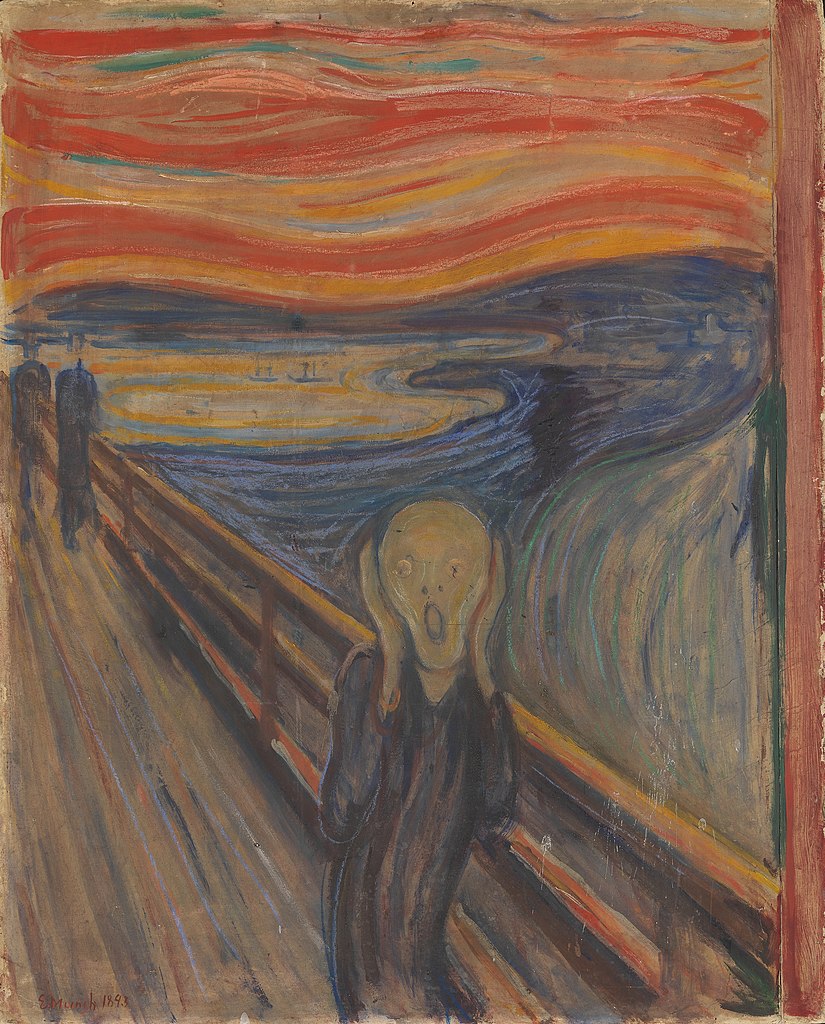
Lots of people go mad in January. Not as many as in May, of course. Nor June. But January is your third most common month for madness.” – From Karen Joy Fowler’s 1991 novel “Sarah Canary”.  

Madness—a recurring theme through the arts and sciences:

  1. There is always some madness in love. But there is also always some reason in madness. – Friedrich Nietzsche
  2. I am but mad north-north-west: when the wind is southerly, I know a hawk from a handsaw. – William Shakespeare, Hamlet
  3. Madness, as you know, is like gravity. All it takes is a little push.” – The Joker, The Dark Knight
  4. The only difference between me and a madman is that I am not mad. – Salvador Dalí
  5.  Oh, you can’t help that… We’re all mad here. I’m mad. You’re mad.– Lewis Carroll, Alice in Wonderland, the Chesire Cat.
  6. The edge…There is no honest way to explain it, because the only people who really know where it is are the ones who have gone over.” – Hunter S. Thompson
  7. You must have chaos within you to give birth to a dancing star.” – Friedrich Nietzsche
  8. The madman is not the man who has lost his reason. The madman is the man who has lost everything except his reason.” – G.K. Chesterton
  9. “Imperfection is beauty, madness is genius, and it’s better to be absolutely ridiculous than absolutely boring.” – Marilyn Monroe
  10. Though this be madness, yet there is method in’t. – William Shakespeare, Hamlet

Source: Mental Health by the Numbers, NAMI. Graphic: The Scream by Edvard Munch, 1893, Munch Museum, Norway. Public Domain.

The Natural State of Man

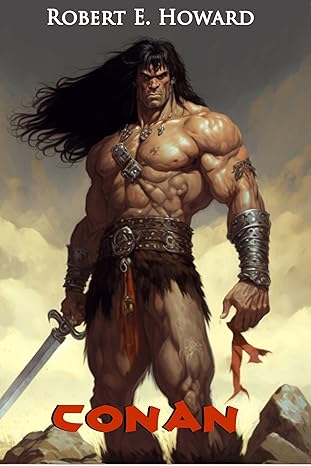
Robert Howard, 20th-century pulp fiction author and creator of Conan the Barbarian, believed that “barbarianism is the natural state of mankind. Civilization is unnatural. It is the whim of circumstance.”

Thomas Hobbes, 17th-century English philosopher best known for his social contract theory, attempted to justify that the authority of the state superseded the rights of man, believing that the natural state of man was war, that life was “solitary, poor, nasty, brutish, and short,” thus necessitating some higher authority to calm and tame the natural instincts of man.

Michael Huemer, professor of philosophy at UC Boulder, argues that “The current state of American society is a historical fluke, marked by extraordinarily low levels of exploitation, oppression, and injustice… The key sources of this happy state include such institutions as democracy, free markets, and modern science.”

I would add free speech coupled with property rights to the mix. Modern science is a double-edged sword that in the end, I would argue, is more a societal neutral force rather than a force against our true nature.

Huemer further maintains that before we tear down these stabilizing institutions, we should heed the advice of the Hippocratic Oath and first do no harm, stating, “If we undermine our current norms and institutions, the most likely result is not that we will be swept into a paradise… [but] the most likely result is that we will revert to something closer to the natural state of human beings.”

Huemer concludes with the observation that the 20th-century experiment called communism swept away all existing culture, norms, and institutions, resulting in 100 million deaths.

Source: Oxford Reference. Progressive Myths by M. Huemer, 2024. Graphic: Conan, Kindle Book Cover, Amazon.

Claret to Bordeaux

Claret is an English term for Bordeaux wines that traces its origins back to 16th century. The name derives from the French word “clairet,” which described a lighter, more rosé-like style from the Bordeaux region.

Originally, the grapes used to make this wine were Cabernet Sauvignon, Merlot, and Cabernet Franc, similar to today’s right-bank Bordeaux. The left bank added Malbec, Petit Verdot, and Carménère to the mix.

By the 17th and 18th centuries, clarets evolved, through better maceration, aging, and blending techniques, into a darker, full-bodied wine we would recognize today as a Bordeaux. It became a major export to England and the world.

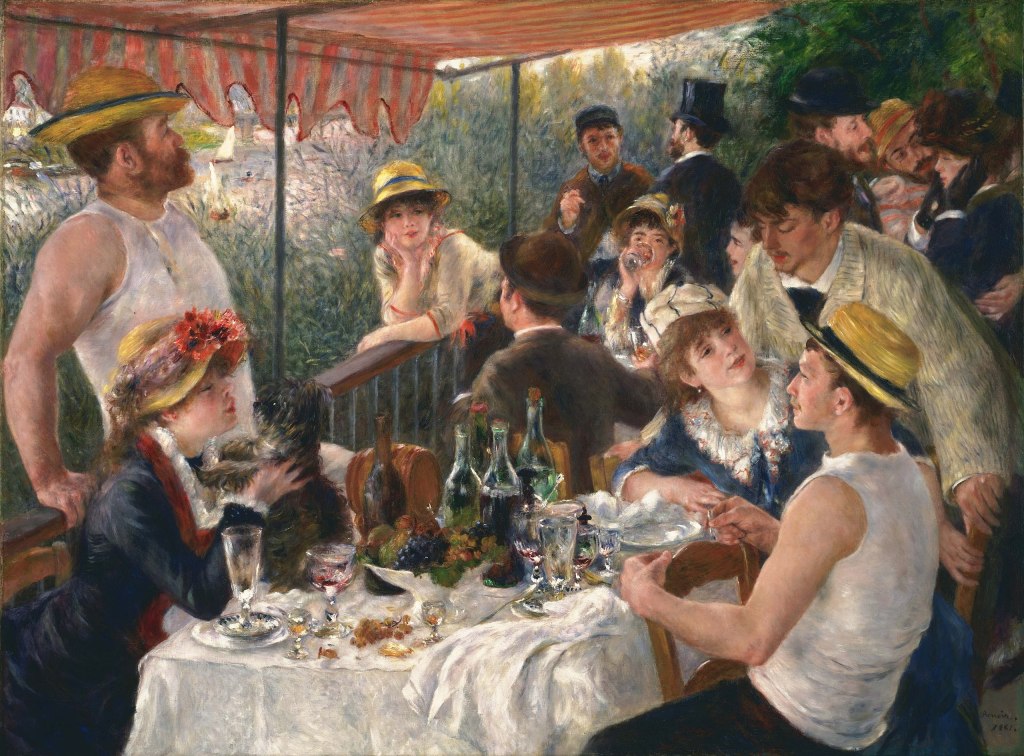
Trivia: Charles Dickens in ‘Martin Chuzzlewit’, ‘The Pickwick Papers’, and ‘Great Expectations’; Wilkie Collins in ‘The Moonstone’; Anthony Trollope in ‘The Belton Estate’; William Thackeray in ‘Vanity Fair’; and George Eliot in ‘Middlemarch’ all mention the drinking of claret, usually at their dinners.

In these novels the claret was diluted with water to reduce the alcohol content, making it more palatable and easier to drink over long meals or gatherings and to stretch the supply.

Source: Wine Spectator. Decanter. Graphic: Luncheon of the Boating Party by Pierre-Auguste Renoir, 1881. Public Domain.

Dracula Lives

Irish author Bram Stoker wrote the quintessential horror story, Dracula during the early to mid-1890s, publishing it in 1897–except Stoker didn’t write it “as fiction but as a warning of a very real evil” according to J.D. Barker’s history of the book.

Many events in the book were not fiction. The ship Dmitri (Demeter in the book) did run aground in Whitby Harbor, and it was carrying crates of dirt that had originated from the European port of Varna. Mr. and Mrs. Jonathan Harker and Dr. Seward were friends of Stoker who supposedly supplied first person accounts of the tale to the author.

Stoker’s publisher, finding the book too frightening for the public, only agreed to publish the book if the first 101 pages were left out along with extensive revisions to the story which took a very clear story of vampires in our mist to one of fictional horror. In the 1980s the original manuscript showed up in rural Pennsylvania with the first 101 pages still missing and was purchased by Paul Allen of Microsoft fame.

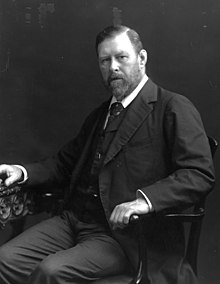
Source: Dracula by Bram Stoker. J.D. Barker, Bram Stocker published by Time.com. Graphic: Bram Stoker, circa 1906, Public Domain.

Pericles-Funeral Oration:

At the end of first year of the Peloponnesian War in 431 BC Athenians held the customary public funeral to honor the soldiers who gave their lives in the war against Sparta. As Thucydides records in his “History of the Peloponnesian War” the funeral was a procession of citizens that ushered ten cypress coffins representing the ten Athenian tribes plus one more for the soldiers not recovered from the field of battle to the public graveyard at Ceramicus.

Thucydides further states that “When the bodies had been buried, it was customary for some wise and prudent notable and chief person of the city, preeminent in honor and dignity, before all the people to make a prayer in praise of the dead, and after doing this, each one returned to his House. That time to report the praises of the first who were killed in the war, Pericles, son of Xanthippus, was chosen; who, having finished the solemnities made in the tomb, climbed on a chair, from where all the people could see and hear him, and gave this discourse.

Pericles’ speech was given not only as a tribute to the fallen, but a celebration of the Athenian citizens’ patriotism and urged them to honor the dead by continued support for the city and its democratic ideals.

The following is the first paragraph of the speech recorded by Thucydides:

Most of those who have spoken here before me have commended the lawgiver who added this oration to our other funeral customs. It seemed to them a worthy thing that such an honor should be given at their burial to the dead who have fallen on the field of battle. But I should have preferred that, when men’s deeds have been brave, they should be honored in deed only, and with such an honor as this public funeral, which you are now witnessing. Then the reputation of many would not have been imperiled on the eloquence or want of eloquence of one, and their virtues believed or not as he spoke well or ill. For it is difficult to say neither too little nor too much; and even moderation is apt not to give the impression of truthfulness. The friend of the dead who knows the facts is likely to think that the words of the speaker fall short of his knowledge and of his wishes; another who is not so well informed, when he hears of anything which surpasses his own powers, will be envious and will suspect exaggeration. Mankind are tolerant of the praises of others so long as each hearer thinks that he can do as well or nearly as well himself, but, when the speaker rises above him, jealousy is aroused and he begins to be incredulous. However, since our ancestors have set the seal of their approval upon the practice, I must obey, and to the utmost of my power shall endeavor to satisfy the wishes and beliefs of all who hear me.

Source: Richard Hooker, 1996, University of Minnesota, Human Rights Library. Graphic: Pericles Funeral Oration by Philipp Foltz, 1877, Public domain.