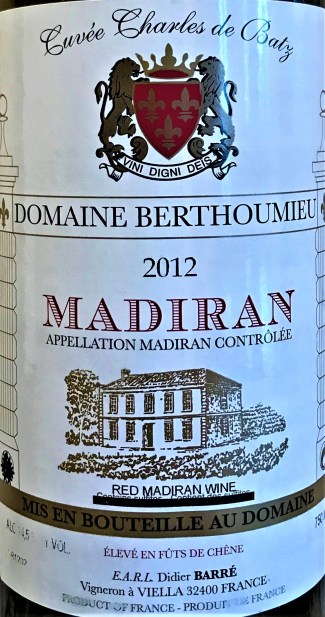
Domaine Berthoumieu Madiran Cuvee Charles de Batz 2014

W Charles Batz 2012Other Red Blends from Madiran, South West, France

90% tannat

10% cabernet sauvignon

14.5% alcohol

Purchased: 12 July 2017  –  $19.99

Opened: 25 March 2018

els:  9.2/10

Wine Enthusiast:  93

France is the 2nd largest producer of wine in the world, just behind Italy and ahead of Spain, representing about 21% of the global wine market. The country is responsible for creating some of the most recognizable old world wines on the planet, from the bubbly Champagnes in the cool north to world-class Bordeaux along the Garonne and Dordogne Rivers to the GSMs in the warm Mediterranean south. There are 17 major wine-producing regions in the country along with another 28 smaller areas, all growing 96 varieties of predominate grapes with Merlot and Grenache the most common. Reds account for almost 70% of the 2 million plus acres planted in vines, with whites accounting for the remainder. As with the other major European wine producers, France’s vineyard acreage has been shrinking over the last couple of decades due to less demand from their home population and increased market pressures from new world producers.

The South West or Sud Quest region, France’s 5th largest wine area, begins in the central north on the eastern edge of the Bordeaux region and continues 150 miles to the southwest towards the Pyrenees, ending near the Spanish border. The region includes 25 AOCs with 120,000 areas planted in grapes producing around 270 million bottles of wine every year; roughly 3% of total for all of France.  The Romans initially cultivated the area for grapes and had it awash in wine before the Bordeaux region even thought about growing their own. But because Bordeaux controlled the wine trading routes they strangled the South West market, through taxes and laws, in the 13th century and the area never regained its prominence in the France, or the world. The area predominately grows red Cabernet Sauvignon, Merlot, and Tannat grapes along with white Semillon Sauvignon, and Ugni Blanc grapes.  The climate is a combination of oceanic and continental with cool wet winters and springs, offset by warm, sunny summers.

Madiran AOC is named after the town of Madiran in the Gascony Provence near the Adour River, 90 miles south of Bordeaux, 80 miles west of Toulouse and 60 miles from the Spanish border. The AOC is available only to red wine containing 40-60% Tannat, although 100% is acceptable (makes no sense to me), and blended with Cabernet Franc and or Cabernet Sauvignon. There are 3200 acres of vineyards in the Madiran AOC producing about 10 million bottles of red wine annually. The Pyrenees to the south have deposited, a generally, well-drained alluvium of clays and silts, rich in limestone interspersed with lots of red iron pebbles and stones. The area enjoys warm summer days rarely topping 80°F with rainfall averaging 1-2″ per month with a few inches of snow in the winter.

The Tannat grape, as its name suggest is very high in tannins, is native to the South West region of France. It is not a commonly grown grape, ranking at 100 out of all grapes grown globally but in Madiran it is king. There are about 15,000 acres planted worldwide or much less than 1% of the total grape acreage.  The wine from the grape is often blended with “softer” wines such as Cabernet Franc and Cabernet Sauvignon to reduce its astringency. To further soften up the wine they are kept in oak barrels for up to 20 months.  The wines exhibit a deep tannic structure with notes of raspberry.  They are very dark in color and have great aging potential. Tannat grapes are high in procyanidins, a condensed tannin class of flavonoid with high antioxidant values that affects the wines astringency, color and mouth-feel.

Cabernet Sauvignon is a cross, believed to have occurred naturally sometime in the 1600s in southwestern France, between Cabernet Franc and Sauvignon Blanc grapes. It is now the most widely planted grape in the world covering more than 700,000 acres or about 6.5% of all vines planted. France is number 1 in the world in acres planted for this grape. It is a thick-skinned grape that’s relatively easy to grow and maintain, exhibiting high tannins and acidity, producing a distinct bell pepper flavor, especially in cool climates, along with aromas of mint and eucalyptus. The grapes produce a full-bodied and dark-ruby colored wine.

The Domaine Berthoumieu  was founded in the 1850s by Virgile Dutour in the tiny village of Viella which is 5 miles northwest of Madiran. In the 1980s Didier Barré took over management of the winery from his father Louise. Today the property is in the hands of the family’s 6th generation of wine makers: Claire and Marion Bortolussi. The Berthoumieu field, part of the Domaine  Berthoumieu, is part of d’Artagnan’s homeland, aka Charles de Batz, Louis XIV’s Musketeer.

The winery has 64 acres which is planted in 85% red and 15% white grapes with the vines being 50-100 years-old.  The reds include: Tannat, Cabernet Sauvignon, Cabernet Franc, and Pinenc.  The whites include: Petit Manseng, Gros Manseng, and Petit Courbu. The soils are a silty-clay, heavy in limestone with gravels and stones. The area enjoys an oceanic climate with diurnal growing season temperatures ranging from 45-80°F and rainfall ranging from 2-2.75″ per month.

After picking and sorting the grapes they are transferred to 150-210 gallon tanks for 30 days of fermentation and maceration.  The wine is then aged for 12 months in new and used oak.

A dark, dark purple, almost black wine with a ruby rim. Strong aromas of delicious raspberries  Full-bodied and powerful.  The tannins are, cut with a knife thick, and the wine is very dry.  A wonderful long, long finish.

This wine needs a strong, flavorful food pairing. Strong cheeses.  Strong tangy barbecue. Meats with strong herbs such as rosemary. Try my slow cooker rosemary stew.  I always make this slightly different so I’ll try to generalize it a bit. Start with 1-2 pounds of beef stew meat cut up in small chunks, add in a cup of beef broth, one chopped medium onion, a small can of tomato sauce (optional), a handful of baby carrots, 10 ounces of canned corn, 1 tablespoon of garlic, a cup of chopped celery, 1-2 teaspoons of dried rosemary, and 2 cups washed and sliced baby potatoes (I usually make these fairly big chunks by just quartering the baby potatoes), 1-2 teaspoons of cornstarch (thickener), salt and pepper, a dash of oregano and basil.  Add everything, except the cornstarch, salt and pepper, into the slow cooker for 8 hours, half on high, half on low.  Add the cornstarch to a half cup of warm water and mix.  Stir into the slow cooker about 15 minutes before serving.  Add water ifs needed. Salt and pepper to taste.

An outstanding wine at a fair price. Drink this year but likely good until 2025-2030. Decant and aerate for one hour, or more, before drinking.

This wine’s vintage appears to be no longer available outside of the borders of France. The 2012 vintage is still available and has ratings of 90 or more.
 

The Last of the Old Guard

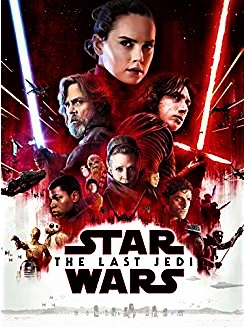
Star Wars: The Last Jedi  M Star 2017

Theaters:  December 2017

Streaming:  March 2018

Rated:  PG-13

Runtime:  152 minutes

Genre:  Action – Fantasy – Science Fiction

els:  6.0/10

IMDB:  7.4/10

Amazon:  3.5/5 stars

Rotten Tomatoes Critics:  8.1/10

Rotten Tomatoes Audience:  3.0/5

Metacritic Metascore:  85/100

Metacritic User Score:  4.5/10

Awards:  NA

Directed by:  Rian Johnson

Written by:  Rian Johnson (screenplay), George Lucas (characters)

Music by:  John Williams

Cast:  Mark Hamill, Carrie Fisher, Adam Driver, Daisy Ridley, John Boyega, Andy Serkis, Benicio del Toro

Film Locations:  Bolivia, Croatia, England, Ireland

Budget:  $200,000,000

Worldwide Box Office:  $1,322,000,00

Resistance forces are fleeing their home base while the First Order fleet prepares to destroy them.  Attempting to buy some time for the evacuation, the Resistance attacks and destroys a First Order dreadnought, aka battleship, allowing the rest of the evacuation forces to escape into hyperspace. The Resistance, after their jump, believing they had bought themselves some time, soon learn that their enemy can track them through hyperspace, leaving them with but a few hours to bring about a miracle or perish.

Meanwhile Rey (Ridley) travels to Luke’s (Hamill) planet for some badly needed lessons in light sabre use, force projection, and dark side avoidance. Luke has other ideas.

Rian Johnson, writer and director of the original, exciting, thought-provoking, and well received Looper movie, takes his turn in the revolving Star Wars franchise door, by writing and directing The Last Jedi.  He succeeds in producing warm milk.  Not horrible, but he definitely is not going down in the annuals of great Star Wars directors and writers.  Then again George Lucas couldn’t direct a golf cart to the first tee either. Johnson brings together some of the elements of a great space opera; breath-taking special and visual effects, great acting, and a wonderful score but the story is just a tedious collection snippets strung together to produce a very long movie. Ok, some of the snippets are quite good such as DJ’s (del Toro) bit pieces of breaking in and out of places that he shouldn’t be able to break in and out of.

This movie is the last that will contain elements of the old guard.  Harrison Ford killed himself off in VII, Carrie Fisher passed away, and Hamill, he can act–who knew, will not be returning for IX, so Johnson spends an inordinate amount of time on character development of all the new faces. It’s all so unnecessary, mostly immaterial and boring.  The development of the players can be spread out over the life of the franchise, no need to force-feed the audience the entire buffet in one sitting.

In the end this is a fair movie; there just wasn’t enough story to hold you for 2 hours and 32 minutes.

Visions of the End

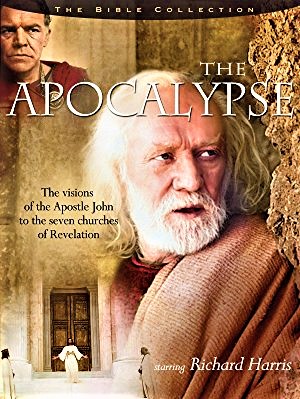
Apocalypse M Apocalypse 2015

Theaters:  NA (TV Movie – 2000)

Streaming:  April, 2004

Rated:  NR

Runtime:  96 minutes

Genre:  Drama – Faith – Religion

els:  3.0/10

IMDB:  6.4/10

Amazon:  4.3/5 stars

Rotten Tomatoes Critics:  NA/10

Rotten Tomatoes Audience:  2.9/5

Metacritic Metascore:  NA/100

Metacritic User Score:  NA/10

Awards:

Directed by:  Raffaele Mertes

Written by:  Francesco Contaldo, Raffaele Mertes, Gianmario Pagano

Music by:  Marco Frisina

Cast:  Richard Harris, Vittoria Belvedere, Benjamin Sadler, Bruce Payne

Film Locations:  NA

Budget:  $ NA Low-Budget, Made for TV

Worldwide Box Office:  $ NA

St. John, John the Apostle, John the Evangelist, John of Patmos, John the Elder (Harris) is held in the Aegean island prison of Patmos as a scribe for his Roman jailers.   God speaks to John and commands him to disseminate, as letters, the visions he sends him. The letters are be sent to the 7 churches of Asia Minor.  The visions include truths and admonishment to the churches and how the beginning of the end of times will transpire.

This is a made for TV movie that exhibits its low-budget pedigree in almost every scene.  But the movie wasn’t made to garner any awards, rather it was made to educate the public about the Book of Revelations, the last book of the Bible. It does accomplish this but the story is out of sequence and the method is clunky and amateurish.

The supporting actors are all bad with the atrocious acting trophy going to the Bruce Payne playing the Roman Emperor Domitian. Moving from bad to worse, the special effects were categorically dreadful.  If there is an award for worst special effects this movie would win. The movie’s effects were on par with what passed as realistic in the 1958 movie: The 7th Voyage of Sinbad the Sailor. Spending a few dollars more on marginally better special effects very likely would have taken this movie from ugh awful to mildly entertaining.

The only true shining light in this movie is Richard Harris, he can’t save the movie, but he is a joy to watch.  The kindly Dumbledore persona comes through in every scene. A natural teacher with a gentle soul.  Interestingly, his full name is Richard St John Harris.


Fact or Fiction

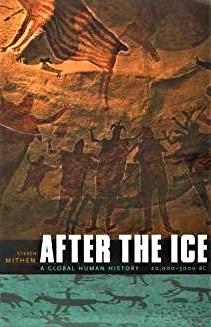
After the Ice: A Global Human History, 20,000-5000 BC B After Ice 2003

Written by:  Steve Mithen

Published by:  Harvard University Press

Copyright:  © 2003

The Earth has experienced at least 6 major episodes of glaciation in the past. Three in the Pre-Cambrian, which is a time older than 0.542 billion years (Ga) and three in Phanerozoic, a time younger than 0.542 Ga. All appear to have had a profound effect on life on Earth; not so much the beginning of  any particular ice age but what occurred when the glaciers melted. The first glaciation, Pongola, occurred from approximately 2.9 to 2.75 Ga. The end of this glacial period saw a build up of oxygen in the oceans until it reached critical levels and began charging the atmosphere. Around 2.45 Ga, oxygen levels reached levels sufficient to cause cooling of the Earth, by removing greenhouse gases, and thus starting the second glacial period, the Huronian from 2.4 to 2.1 Ga. Shortly before or after the glaciers melted, around 2.2 to 1.6 Ga, eukaryotes, cells with a nucleus, appeared. Eukaryotes are everywhere, you, your cat, your flowering plants that your cat eats, the spiders in the corner of your bedroom that your cat will not eat, everywhere. Next up is the Cryogenian, a glacial period in Earth’s history occurring from 0.720 to 0.635 Ga. Shortly after they melted, the ozone layer was created, a cloak desperately needed to protect life from the harmful rays of the sun.  The Cambrian Explosion of life followed the ozone creation.  Moving on to the next glacial, the Andean-Saharan, occurring from 0.450 to 0.420 Ga, predominately in the Silurian Period but also sucking up some of its predecessor’s, the Ordovician, time. This glaciation is followed by significant accumulation of life, plants and animals, moving beyond strictly marine habitats to occupy solid land and Amazon distribution centers. The Karoo Ice Age, from 0.360 to 0.260 Ga, is followed by the largest extinction event this planet has ever seen, occurring at the end of the Permian and the beginning of the Triassic.  At this point glacial melting does not appear to be the causative event for the extinctions but may have provided a nudge. The final event, known as the Quaternary Glaciation, started 2.58 million years ago and is still active today. Currently we are within what is called an inter-glacial period. These inter-glacials are preceded and followed by glaciers marching towards and receding from lower latitudes.  Note to self and you: these glacial periods last much, much, much longer than 2.58 million years. With the exception of Antarctica and Greenland, the current set of glaciers reached their maximum extent about 20-25,000 years ago and have slowly retreated, essentially disappearing  by 9600 years ago. Around 25,000 years ago, human populations started to increase.  By 9600 years ago his technological progress exploded.

Dr. Steven Mithen, the author of After the Ice, attempts to record our history from when the ice sheets began their retreat to the time the Sumerians first developed a system of writing 5000 years ago, a period partially covered by what we now call with the broad brushed term; pre-history.  Dr. Mithen primarily uses an archeologist’s box of tools to decipher ancient Homo sapiens sapiens style of living, their diet, housing, religion, culture; their existence and growth as a species, all from a time when our ancestors were not consciously plastering their material world with sticky notes.

After the Ice is a global tour of archeological finds and their interpretations, from our hunter-gather roots in the Pleistocene to a more sedentary and cosmopolitan life as a farmer, artist, city-dweller; parsing one continent at a time. There is little in the way of original research in this book, more a compendium of secondary source material, known sites, and the results obtained from them. Exactly what I was looking for when I picked up this book to read.

The author covers most of the major sites and imparts to us what all the shell debris, bone carvings, and flint scrapings mean. He does this beautifully and when confronted with differing possible interpretations, he carefully constructs a point-counterpoint argument to help resolve the issues.  His discussion and synopsis of the initially controversial, Monte Verde site in Chile, which ultimately pushed humanity’s origins in the Americas back about 2500 years, from Clovis times to 14,500 years ago, was expertly relayed to the reader, leaving little room for alternate meanings: a real education one may add.

This book and author excel when relating the artifacts found and their possible meanings and its thoroughly fascinating stuff, but he manages to turn the affair into an awful, muddled mess of narrative excess by introducing a time-traveling archaeologist, John Lubbock, to add color to the play-by-play.  John Lubbock, who actually was an eminent archeologist in the late 1800s, observes humans at various times and places in our pre-history, providing second person comments on the existing state of humanity and the world.  It’s all a bit much and very distracting, annoying even.  An all too common example; meaning to give an example, I just opened the book, put my finger down and copied whatever was there:

Lubbock left the cave at Lukenya Hill with a hunting party late one afternoon.  As they walked, spider’s webs within the grass were illuminated by the setting sun, momentarily exposed in a narrow band between clouds and distant mountains.

Keep in mind this happened 1000s of years before writing was invented so this is little more than pure unadulterated fiction. To add authenticity and license to his fiction he occasionally appends a footnote. And it’s liberally interspersed throughout the book amounting to equal parts Lubbock fantasy to Mithen facts.  Take out Lubbock and the book goes from a blathering 600 pages of confusion to 300 pages of something that may be worth reading. Mithen just can’t seem to make up his mind, does he want to write a factual history or historical fiction.  Actually he did make up his mind, he decided to do both.

I initially tried to skim Lubbock’s narrative and just stick with Mithen’s discussion but the author so intertwines them both that bypassing one makes nonsense of the other. This could have, should have been a great book dealing with the world’s archeological quest to unravel our past.  There are moments in the book where Mithen brings his and his colleagues’ science to life but in the end it just too dang hard to enjoy the meat when he coats the entire thing in Lubbock’s wispy, sticky cotton candy.

I am once again on the lookout for a decent account of humanity’s pre-history.

Bad Luck Explained

Accident Man  M Accident 2018

Theaters:  NA

Streaming:  February 2018

Rated:  R

Runtime:  105 minutes

Genre:  Action – Crime – Mystery – Suspense – Thriller

els:  6.0/10

IMDB:  6.1/10

Amazon:  3.8/5 stars

Rotten Tomatoes Critics:  NA/10

Rotten Tomatoes Audience:  3.6/5

Metacritic Metascore:  NA/100

Metacritic User Score:  NA/10

Awards:

Directed by:  Jesse V. Johnson

Written by:  Scott Adkins and Stu Small (screenplay), Pat Mills and Tony Skinner (comic)

Music by:  Sean Murray

Cast:  Scott Adkins, Ray Stevenson, David Paymer, Ashley Greene

Film Locations:  London, England

Budget:  $ NA Low-Budget Indie

Worldwide Box Office:  $ NA

Mike Fallon (Adkins) has a nice life concocting natural death for others.  Fallon is a successful contract killer that goes to great lengths to make sure his murders are not judged murders, just someone having a bad hair day or another wrong place, wrong time accident. Death is a good business so life is good until his ex-girlfriend is murdered. Piecing together the story of her death he begins to realize that his mates in the causality business may have had a hand in her demise. Fallon sets out to even the score with judo chops and bullets flying non-stop.

The movie is based on a series of comics by Pat Mills and Tony Skinner, published in 1991 in the magazine, Toxic!  The series was collected into a graphic novel, The Complete Accident Man in 2014 by Titan.

Jesse V. Johnson, stuntman in the 2012 The Amazing Spider-Man and director and writer of the incredibly bad The Last Sentinel, puts together a story and cast to produce a decent action film with few plot holes but at the same time producing nothing spectacular. Everything is a bit off.  Great martial arts scenes but it doesn’t flow together or congeal into an exciting whole.

In the end this movie is all Scott Adkins.  He produces, he writes, he acts, he fights.  It all works to a certain degree but fails to grab you, or emotionally tie you to the film.  I wouldn’t mind a sequel but hopefully with a larger budget to ratchet everything up a notch. An ok movie with some original scenes but nothing terribly memorable.

Westerns Redefined

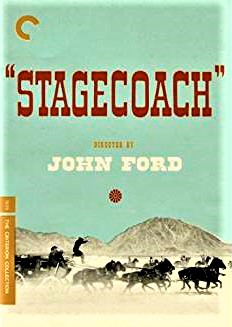
Stagecoach  M Stagecoach 1939

Theaters:  February 1939

Streaming:  May 2010 (digitally restored)

Rated:  NR

Runtime:  96 minutes

Genre:  Action – Adventure – Classic – Drama – Romance – Western

els:  7.5/10

IMDB:  7.9/10

Amazon:  4.7/5 stars

Rotten Tomatoes Critics: 9.3/10

Rotten Tomatoes Audience:  3.9/5

Metacritic Metascore:  NA/100

Metacritic User Score:  NA/10

Awards:  2 Academy Awards

Directed by:  John Ford

Written by:  Dudley Nichols (screen play), Ernest Haycox (short story)

Music by:  Gerard Carbonara

Cast:  Claire Trevor, John Carradine, Thomas Mitchell, John Wayne, Andy Devine, George Bancroft, Donald Meek, Berton Churchill, Louise Platt

Film Locations:  Arizona, California, Colorado, Utah, US

Budget:  $531,374

Worldwide Box Office:  $1,103,757

A stagecoach, in 1880, carries 9 disparate members of the old west from Tonto in the Arizona Territory, through hostile Apache territory, to Lordsburg, New Mexico; all passengers with a story that needs telling.  Ringo Kid (Wayne) breaks out of jail to avenge his father’s and brother’s murder, a banker (Churchill) escaping his harping wife with ill-gotten gains, a mysterious southerner (Carradine) attracted to a pretty young lady passenger (Platt), a submissive whiskey salesman (Meek), a marshal (Bancroft) along to ride shotgun and return Ringo to prison, a prostitute (Trevor), and an alcoholic doctor (Mitchell), all compelled to Lordsburg by ghosts that don’t give a wit about the Apaches. They start off their trip in relative safety with a cavalry escort but lose it at the next town when the relief soldiers fail to show.  As they continue on their way to Lordsburg, tensions and troubles mount as the Apaches close in for the attack.

The movie is based on the 1937 Ernest Haycox short story, Stagecoach to Lordsburg, originally published as The Last Stage to Lordsburg in the 10 April 1937 issue of Colliers. Dudley Nichols, a frequent writer for John Ford movies, adapted the book for this movie.

John Ford hadn’t made a western since the 1920s. No one was making big budget westerns in the 1930s and no one wanted Wayne anywhere near a big production, especially in a starring role. Well Ford had an idea and a story that proved he was right and the experts could go teach their grandmothers to suck eggs. Ford resurrected the western, took it out of the kids’ Saturday matinée round-up, and gave the movie going public a good 30 years of great follow-up action movies involving horses and gunslingers. Oh, by the way, this movie made John Wayne the biggest name in Hollywood for decades to come. Artists are always a tough bunch to judge.

It is a rare movie when all the characters are cast just right.  Wayne the righteous bad guy-good guy, Meek the meek whiskey peddler, Trevor the conflicted prostitute; all fitting their roles like a cow hand’s wet leather glove.  Devine, along with Ken Curtis and Walter Brennan, defined the role of humorous sidekick, adding in the well oiled schtick to move the drama along. Carradine plays a good guy this time, although it is not apparent until much later in the movie whether he is a shady character or an honorable southern gentleman. Playing a drunk doesn’t get more realistic than Mitchell’s whimsical but competent doctor portrayal, for which he deservedly won the Best Supporting Actor Academy Award for.

This movie redefined westerns going into the 40s and 50s for the movie going public.  Not the best western every made but certainly in the top 10. Orson Wells is said to have watched this movie dozens of times to provide background and ideas for his Citizen Kane.  Watching this movie dozens of times in a short period is likely not good for your mental health but once a decade will remind you what a truly ground breaking film this was.

Finca Decero Remolinos Vineyard Malbec 2014

W Decero 2014Malbec from Agrelo, North Mendoza (Lujan de Cuyo), Mendoza, Cuyo, Argentina
100% malbec

14.5% alcohol

Purchased: 6 March 2017  –  $19.99

Opened: 19 March 2018

els:  9.0/10

James Suckling:  92

Tim Atkin:  92

Vinous:  88

Cellar Tracker:  87

Argentina is the world’s 6th largest producer of wine by volume, just behind the US and ahead of Australia. It produces about 6% of the world’s total wine. The country has 350-400,000 acres planted in grapes. Argentina has 4 main wine-producing regions: Atlantic, Cuyo, North, and Patagonia. Cuyo is the largest and most important wine-producing, macroeconomic region in central Argentina and includes the wine sub-regions of La Rioja, Mendoza, and San Juan; with Mendoza being the largest of the 3 by area, population, GDP, and wine production.

Argentina was the first South American country attempting to grow vines, beginning in Mendoza in the early 1800s.   The initial plantings came from the Bordeaux region of France, including the ubiquitous Malbec.  Eventually, Mendoza was producing world-class Malbec wines, on par or superior to those produced in France, mainly due to its high elevations in the foothills of the Andes, well-drained soils, and lots and lots of hot sunshine. Today the country produces 75% of the world’s Malbec.

The Mendoza region, lapping up onto the eastern foothills of the youthful Andes, is the largest wine producer in Argentina, accounting for 65-75% of the country’s total. A third of the country’s vineyards are dedicated to Malbec with Mendoza also producing the lion’s share of that variety. The Mendoza wine region is partitioned into another 5 sub-areas: Central Oasis, East Mendoza, North Mendoza, South Mendoza, and Uco Valley. North Mendoza, aka Lujan de Cuyo, designated as an appellation in 1993,  contains an additional 6 micro-regions including: Agrelo, Barrancas, Las Compuertas, Perdriel, Ugarteche, and Vistalba.

Agrelo, named after a local village, is one of the most prestigious wine micro-regions in Lujan de Cuyo, North Mendoza, and all of Argentina. Its terroir was made for growing Malbec and Cabernet Sauvignon grapes. The vines grow at an elevation of  2900-3500′ above sea level in very dry air, and as such, the cloudless skies provide for an intense sun producing lots of heat.  The soils are a thick, very sandy loam, encouraging deep root penetration into the cool gravelly subsurface. These subsurface gravels help to cool and protect the green vines above from the hot sun. An auspicious terroir responsible for creating Malbec second to none in the world.

Malbec grapes originated around Cahors in south-west France.  It is a thinned-skinned, dark grape, requiring lots of sun and heat. It produces full-bodied wines with medium to high tannins and acidity. In France most of the Malbec is grown around the Cahors AOC on the low, gravelly terraces of the Lot River. In Cahors, a Malbec must contain at least 70% of this grape and is usually blended with Merlot and Tannat. In Argentina the grapes grow at much higher elevations than in France, producing a high acidity, high tannin wine with herbal-flower aromas and flavors versus the more earthly notes of its French sister.

Thomas Schmidheiny, a descendent of Swiss wine makers, set up shop in Agrelo in the year 2000 upon a land of nothing, “cero”, naming his new winery after that land of nothing: Decero. The land he chose is the highest in all of Agrelo; 3500′ above sea level. He planted all reds; Malbec, Cabernet Sauvignon, Petit Verdot, and Tannat grapes on his 270 acres, calling the vineyard Remolinos, named after the tiny whirlwinds or dust devils that commonly dance across vineyards in tandem with the lazy dry winds. They tease the white-hot summer sun, beaming down from on high, to come and join them in a tango of sleepy idleness and pointless play.

The Remolinos vineyard, with some variation, has soils that are similar to all of Agrelo, sandy loams over a gravelly subsoil. The growing season diurnal temperature range is 55-85ºF with rainfall averaging 0.75-1.5″ per month, dropping to almost nothing in the winter. Temperatures may approach freezing in the winter, but usually don’t.

The winery employs its labor intensive “amano”, by hand, process to its vineyards and wine making processes. In the vineyards, all the vines are planted, pruned, and picked by hand. The vines are relieved of their east facing canopy leaves to increase grape cluster exposure to the sun. The clusters are individually thinned to 1 or 2 per branch.

The 2014 harvest was cool and wet, delaying the grape picking by about a week and taking the entire month of April to complete.  The grapes were individually selected on the vine, hand-picked, and sorted, grape by grape, repeating this process again and again throughout the harvest.  The grapes, after crushing, spend 5-7 days in a cold soak and then 10 days fermenting in small stainless steel tanks.  Most grapes are fermented at 78ºF while a small amount is subject to fermentation at 86ºF, ostensibly to increase texture. After fermentation the grapes spend an additional 15-18 days in the tanks for maceration.  90% of the wine is then aged in new and old French oak barrels for 14 months.  The other 10% remains in the stainless steel tanks to preserve the original aromas.

A dark ruby-red wine with a light purple rim. Aromas of red fruits, mainly cherries, with some spice and flowers. Full-bodied and nicely balanced.  The tannins are thick and the acidity is tad more than usual.  Breathing for an hour definitely improves this wine.  It leaves you with a nice long finish.

I’m not sure were I developed this habit but I prefer fruit, berry and cheese, bits and bites, when I drink a Malbec. I can’t remember the last time I had a full meal with a Malbec wine. I usually prefer thin slices of apple and pear, blueberries and sliced strawberries, and strong cheese.  I once tried chocolate dipped strawberries with a Malbec and I’m certain I glimpsed heaven.

An outstanding wine at a fair price. Drink this year but likely good until 2023-2025. Decant and aerate for one hour, or more, before drinking.

$14.96-19.99  wine-searcher.com


Han Solo Weeps

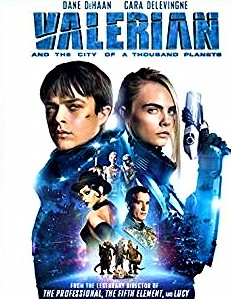
Valerian and the City of a Thousand Planets  M Valerian 2017

Theaters:  July 2017

Streaming:  November 2017

Rated:  PG-13

Runtime:  137 minutes

Genre:  Action – Adventure – Fantasy – Science Fiction – Space Opera

els:  5.0/10

IMDB:  6.5/10

Amazon:  3.5/5 stars

Rotten Tomatoes Critics: 5.5/10

Rotten Tomatoes Audience:  3.3/5

Metacritic Metascore:  51/100

Metacritic User Score:  6.4/10

Awards:  NA

Directed by:  Luc Besson

Written by:  Luc Besson (screenplay), Pierre Christin, Jean-Claude Mézières (comic book)

Music by:  Alexandre Desplat

Cast:  Dane DeHaan, Cara Delevingne, Clive Owen, Rihanna, Ethan Hawke,                 Herbie Hancock, Kris Wu, Rutger Hauer

Film Locations:  Studios de Paris, La Cité du Cinéma, Saint-Denis, Seine-Saint-Denis, France

Budget:  $209,000,000

Worldwide Box Office:  $215,116,000

For centuries the International Space Station has acquired additional modules at a consistent rate and by the 28th century its mass is too much for its low Earth orbit. Consequently the decision is made to move it out of the solar system, into the wild cosmos of open space, acquiring a new name in the process; Alpha. As it travels the galaxy it continues to  grow, both in size and population. Millions of life forms from all corners of the galaxy now inhabit the station necessitating a special police force to maintain peace not only on the station but throughout the galaxy. The two protagonists: Major Valerian (DeHaan) and his side kick Sergeant Laureline (Delevingne) are members of this police force.

Flash back 30 years,  Commander Arün Filitt (Owen) is in a space battle with another space faring species above the planet Mul. In order to win a decisive victory the Commander must destroy the idyllic planet, killing most of the peaceful sentient beings that occupy the surface and their priceless energy pearl replicator.  Flash forward 30 years; one replicator did survive the destruction of the planet, becoming the most sought after object in the Galaxy. Valerian and Laureline are tasked with retrieving the object, initiating a grand adventure through fantastic planets and the mysterious bowels of the quirky Alpha.

The movie is based on the 1967-2010 French comic book series; Valerian and Laureline, created by Pierre Christin (story), Jean-Claude Mézières (art).  The best-selling comic focuses on the pair as they traverse space and time for adventure and good.

Luc Besson, director of imaginative and idiosyncratic films, including the 2014 Lucy and the 1997 The Fifth Element, has created another highly original movie replete with a story containing unique concepts, great cinematography, exceptional special effects, and mostly superb acting. And it all fails to gel into a coherent whole.  The parts are greater than their sum, great scenes producing an indifferent movie.

The movie fails because of the 2 main characters: Valerian and Laureline. Neither one has a screen presence, just reciting lines without bringing the audience along. Harrison Ford would have had you cheering and believing. DeHaan has you wondering when will he start shaving. Delevingne’s “oh please” attitude throughout the movie reminds one of a pretty high school football cheerleader being pursued by the awkward school geek. These two eventually deliver you to a mental stage of not bothering to care what they do. Unfortunately for the movie you reach that stage with these two very early on.  On the flip side, Rihanna and Ethan Hawke are the movies tour de force along with the 3 goofy trumpet nosed, fuzz balls. Without their talents the whole movie would have cratered into a mess of special effects without any pretense of art or style.

I saw this in 2D so the story and acting had to carry the movie where as the 3D version likely overwhelmed the audience with inner-ear confusion and visual exhilaration. Besson personally crowd sourced and financed this big-budget extravaganza. On paper it appears to have grossed a bit more than it cost to make but with all things “Hollywood” it likely lost money. Talk of a sequel is in the air but finding the money may prove insurmountable, especially if they keep DeHaan and Delevingne in the lead roles.  This is a mediocre movie at best. You will be able to carry on with your life if you miss this one.

Into the Woods

Braven M Braven 2018

Theaters:  February 2018

Streaming:  February 2018

Rated:  R

Runtime:  93-94 minutes

Genre:  Action – Adventure – Drama – Thriller

els:  6.0/10

IMDB:  6.4/10

Amazon:  3.5/5 stars

Rotten Tomatoes Critics: 5.8/10

Rotten Tomatoes Audience:  4.0/5

Metacritic Metascore:  60/100

Metacritic User Score:  7.8/10

Awards: NA

Directed by: Lin Oeding

Written by: Mike Nilon, Thomas Pa’a Sibbett

Music by:  NA

Cast: Jason Momoa, Garrett Dillahunt, Stephan Lang, Zahn McClarnon, Jill Wagner, Sasha Rossof

Film Locations: Newfoundland, Canada

Budget: $NA Low-Budget Indie

Worldwide Box Office: $125,000

Joe Braven (Momoa) owns and operates a logging company from a small town in the forests of Canada, living a quiet life with his wife Stephanie (Wagner), their young daughter Charlotte (Rossof), and Joe’s father Linden (Lang), who suffers from dementia. One of Joe’s log haulers, Weston (Brendan Fletcher), agrees to transport drugs hidden in a hollowed out log for a ruthless syndicate of drug dealers.  During transport of the logs, and drugs, on a dark and snowy night, Weston crashes the truck, spilling the logs all over the deserted mountain road.  They move the drugs to Joe’s nearby, empty cabin before the sheriff shows up to assist with the truck accident.

Joe and his wife are having an increasingly difficult time caring for Linden and the doctors suggest they consider alternatives for his care. Stephanie suggests that Joe take Linden up to the cabin for a one-on-one discussion about possible elder-care options.  As they ride up to the cabin, Charlotte sneaks along as a stowaway.  After arriving at the cabin Joe and Linden discover the drugs, and Charlotte, both unexpected.  They immediately realize that whoever planted the drugs will be coming back for them and because of Charlotte they need to urgently leave the area. In the meantime the drug syndicate is rapidly converging on the cabin to retrieve the drugs and eliminate any witnesses. The action quickly escalates to a no-holds-barred display of death and destruction by all means available.

This is Lin Oeding’s first movie directing and he does an admirable job putting together a coherent, compelling story on a limited budget.  He initially takes a long, slow, meandering ride developing the plot that has the audience tapping their toes and checking their watches, waiting for a movie that is billed as an action movie to produce some action. When Oeding finally gets all the preliminaries out-of-the-way, he injects an overdose of adrenaline into the scenes, producing a wild ride of novel, engaging, and thrilling action against a contrasting backdrop of snow-covered mountain beauty. The story is familiar but the execution is pleasantly different.  As a freshman effort, Oeding gets the job done with few complaints from the viewers but it’s his biography that generates as much interest, for me at least, as the movie.  He’s a martial arts fighter with an impressive record of 16-1-2, has performed stunts in the 2010 Inception, was the stunt coordinator for the 2014 The Equalizer, and the 2015 Straight outta Compton, performed fight scenes with just about everyone including Dwayne Johnson, Tom Cruise, and Vin Diesel, competed in bare-knuckle, pay-per-view fighting and is a 1989 Nintendo’s semi-finalist world champion as well as a world-class Tetris player.  What does this guy do to relax?

Mike Nilon and Thomas Pa’a Sibbett have put together a screenplay that has few holes and lots of original action.  My only complaint is when Charlotte is rescued by the local sheriff they immediately drive her back to the very hot kill-zone. This is Nilon’s first attempt at writing and in the past, has used his energy in producing movies such as the 2014 Left Behind fantasy drama. This is also Sibbett’s first writing credit, known previously for consulting on the 2017 short, I am Because You Are.

Joseph Jason Namakaeha Momoa of the 10th season Baywatch fame, provides a believable character in Joe Braven, executing the sparse dialogue but intense action scenes with a smoothness that belies his hulking mass.  With Jason as the proletarian workhorse, Garrett Dillahunt plays the impatient thoroughbred, chomping to complete the task and move on.  He nails the psychopath persona with egotistical aplomb and a general’s overly assured command of his inferiors.

Braven is an easy movie to settle into, once you get past the opening drudgery. It provides entertainment without any preachy philosophy getting in the way.  The movie is well worth the 90 plus minutes.  Grab the popcorn and enjoy.

Million Dollar Kidnapping

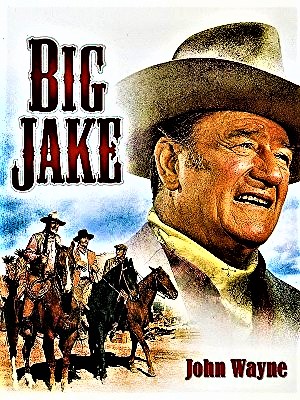
Big Jake  M Jake 1971

Theaters:  May 1971

Streaming:  April 2003

Rated:  PG-13

Runtime:  110 minutes

Genre:  Action – Adventure – Classic – Western

els:  7.0/10

IMDB:  7.2/10

Amazon:  4.8/5 stars

Rotten Tomatoes Critics: NA/10

Rotten Tomatoes Audience:  3.8/5

Metacritic Metascore:  NA/100

Metacritic User Score:  NA/10

Awards: NA

Directed by:  George Sherman, John Wayne (uncredited)

Written by:  Harry J. Fink, Rita M. Fink

Music by:  Elmer Bernstein

Cast:  John Wayne, Richard Boone, Maureen O’Hara

Film Locations: Durango, Sonora, Zacatecas, Mexico

Budget: $4,800,000

Worldwide Box Office: $25,350,000

Little Jake (Ethan Wayne), Big Jake’s (John Wayne) grandson, is kidnapped from the family ranch by a ruthless gang of cutthroats who take the boy across the border from Arizona into Mexico. They will not release the boy until the family delivers a $1,000,000 ransom to them in the dusty deserts of Mexico. Martha McCandles (O’Hara), Big Jake’s estranged wife, manages the ranch while her husband, who has deserted her, travels the west with his redundantly named dog; she calls him home to perform the “harsh and unpleasant business” of bringing the boy back to the family.

George Sherman spent his life in film, starting in the mail room of Warner Brothers and eventually working his way up to director of almost exclusively ‘B’ movies, primarily westerns.  He directed John Wayne in a series of low-budget and forgotten westerns in the 1938 and 1939; a period in John Wayne’s career where he was clawing his way back to stardom after a 1931 run-in with Columbia boss Harry Cohn.  John Wayne never forgot. Sherman only danced in the big time twice. He directed Wayne in Big Jake although he fell ill during filming and John Wayne filled in for him but didn’t take any screen credit for it. He also produced Wayne in the 1961 western, Comancheros.  Sherman earned a reputation of making something out of nothing in his low-budget films; creating motion cantatas of cowboys doing what cowboys do, jumping on horses, riding horses, jumping off horses.  In Big Jake he gives his cinematographer, William H. Clothier, free rein to film the majestic Sonoran Desert panoramas along with superbly and convincingly constructing a story that straddles the fading west as it melts into the modern world of 1909.

John Wayne and Maureen O’Hara reprise their, can’t live with ’em, can’t live without ’em roles, that they so charmingly put together in the 1963 comedy, McLintock!. The charm and laughs are still there but this time Big Jake is a tad meaner.  He is still a gentleman but he can be down right ornery and lethal when needed and in this story, it’s needed.  O’Hara is a true treasure in the Hollywood of days gone by and in this movie she proves why. She is absorbing and natural but there is not enough of her. Her part ends after the opening scenes.  It’s a shame they couldn’t find a way to keep her in through the end. Richard Boone, as bad guy John Fain, upholds his part with a performance that has you believing that he is truly a dastardly beast.

Big Jake is a friends and family affair. Wayne’s friends and family are thick in the making of this movie. They direct, produce and act. Wayne pays his debts and provides avenues for the up and coming just as John Ford and others did for him in the past.  Wayne also makes this a movie of morals and putting the pieces of his broken family back together again.  Another fine, although not great, John Wayne western that you should watch more than once.