Light, Color, Sisley

Great art is the interpretation of great beauty. Art without aesthetic is something rawer, more fleeting, an attempt to conjure emotions that challenge the intellect but not necessarily feed the soul. Picasso and Pollock jolted the mind, often with a visceral, nihilistic force. Alfred Sisley, though, honored the soul, developing and refining an impressionistic palette of light and color on landscapes that captured nature’s beauty and humanity’s place in it throughout his career.

Alfred Sisley was born in Paris in 1839 to a prosperous English expatriate family. At 20, in 1859, he left for London to study business, prepping to succeed his aging father, then 58. But over four years there, he skipped lectures, haunting museums instead, captivated by art. Back in Paris by 1862, his parents relented, letting him trade commerce for canvas. Soon after, he met Monet, Renoir, and Bazille, and together they took to painting ‘en plein air’, in the open air, chasing light, color, and atmosphere over precision. From these outings, Impressionism took root.

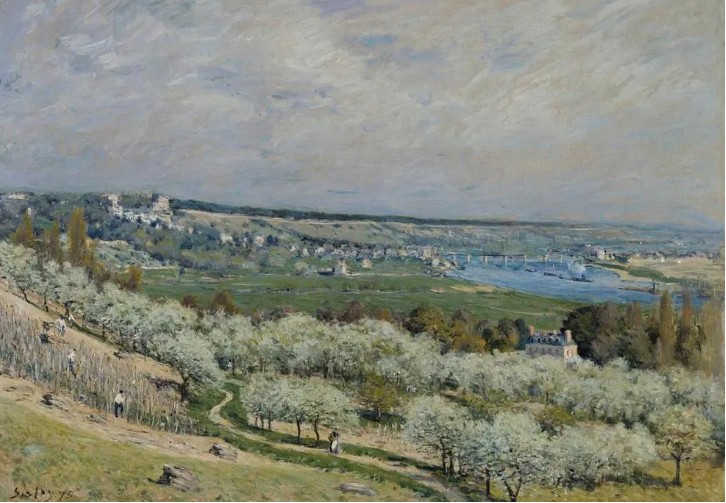
Sisley found inspiration and tranquility in the rural Seine Valley, just tens of miles from Paris, where he painted some of his most enduring landscapes. In The Terrace at Saint-Germain, Spring (1875), near his home, he bathes the valley in a tender, radiant light, blending nature and humanity into a soul-soothing vista. His works, unwavering in their beauty, stand as a testament to art’s power to nourish the spirit, a tribute to life’s grace.

Source: Sisley by Cogniat, translated by Sachs, 1979. Graphic: The Terrace at Saint-Germain, Spring by Sisley, 1875. Walters Art Museum, Baltimore.

White Guard

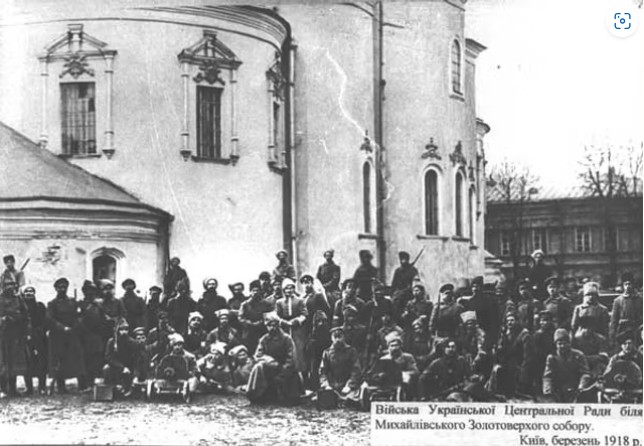
Mikhail Bulgakov’s White Guard, set during the Ukrainian War of Independence (1917–1921) amid the Russian Civil War, captures Kyiv in an existential power struggle against varied forces: Ukrainian nationalists allied with German troops, the White Guard clinging to Tsarist dreams, Lenin’s Bolsheviks closing in, plus Poles and Romanians. Against this bloody backdrop, Bulgakov crafts a semi-autobiographical tale of loss and fatalism, culminating in a nihilistic realization of humanity’s purpose: “But this isn’t frightening. All this will pass. The sufferings, agonies, blood, hunger, and wholesale death. The sword will go away, but these stars will remain… So why are we reluctant to turn our gaze to them? Why?”

Bulgakov, a doctor of venereal diseases like the book’s protagonist Alexei Turbin, knew hopelessness. In 1918, syphilis was a scourge, often incurable, leading to madness, mirroring the war’s societal decay. Alexei volunteers for the White Guard, tending to horrors he can’t heal, his efforts dissolving in a dream: “shadows galloped past…Turbin was dying in his sleep.” War becomes a disease, resistance futile. Yet Bulgakov’s lens widens. Sergeant Zhilin dreams of Revelation, “And God shall wipe away all tears…and there shall be no more death,” finding humility in cosmic indifference. Petka, an innocent, dreams simply of a sunlit ball, untouched by great powers. “Blessed are the pure in heart, for they shall see God” (Matthew 5:8).

Then, out of dreamland into the light: “All this will pass.” The stars endure, wars fade. Writing in the 1920s after the White defeat, Bulgakov channels Russian fatalism—Dostoevsky’s inescapable will, Chekhov’s quiet surrender. But he’s not fully broken. His “Why?” pleads, mocks, resists. Why not look up? Survival is luck, death equalizes, yet fighting a losing battle confronts our nothingness. Kyiv falls, the Bolsheviks threaten, the White Guard vanishes, still, Bulgakov continues to ask. Why?

He blends despair with irony, a doctor mocking death as the stars watch. The German expulsion of the Reds in 1918 briefly eased bloodshed, but 1919 brought worse, “Great was the year and terrible the Year of Our Lord 1918, but more terrible still was 1919.” History moves on; stars don’t care. Bulgakov’s question lingers: Why? To fight is to live, fate be damned.

Source: White Guard, Mikhail Bulgakov, trans. Marian Schwartz. Graphic: Ukrainian Soldiers circa 1918.

Howling Through Europe

During the Italian Renaissance, a cultural rebirth fueled optimism and propelled civilization to new heights. Yet, in stark contrast, werewolf and witch trials, often culminating in gruesome executions, cast a superstitious shadow over the cold, rugged rural regions of France and Germany from the 14th to 17th centuries.

One notorious case revolves around Peter Stumpp, dubbed the “Werewolf of Bedburg.” In 1589, near Cologne in what is now Germany, Stumpp faced accusations of lycanthropy during a spree of brutal murders and livestock killings. Under torture, he confessed to striking a pact with the devil, who allegedly provided a magical wolf-skin belt that allowed him to transform into a wolf. He admitted murdering and cannibalizing numerous victims, including children. Stumpp’s punishment was as horrifying as his alleged crimes: he was beheaded and burned, alongside his daughter and mistress, who were also implicated. His severed head was later mounted on a pole as a grim public warning.

In a striking counterexample, a case from 1692 in present-day Latvia and Estonia challenges the typical narrative. An 80-year-old man named Thiess of Kaltenbrun confessed to being a werewolf, not to wreak havoc, but to protect his community. He claimed he and other “werewolves” battled witches, even journeying to Hell and back to secure the region’s grain supply. The court, skeptical of his tale and possibly viewing him as delusional (perhaps an early case of clinical lycanthropy), rejected the death penalty and sentenced him to flogging instead.

These trials often hinged on confessions extracted through torture, blurring the lines between truth, projection, vengeance, and superstition. Historians still debate the reality behind the accused: Were they serial killers, convenient scapegoats for unsolved crimes, or individuals afflicted by psychological conditions like lycanthropy—a disorder marked by the delusion of transforming into an animal? In his 1865 work, The Book of Were-Wolves, Sabine Baring-Gould analyzed cases like Stumpp’s, arguing that while superstition inflated their legend, they may have been rooted in real incidents: gruesome murders or societal fears run amok.

Source: The Book of Werewolves by Baring-Gould. Werewolf Trials by Beck, History, 2021. Graphic: Werewolf Groc 3.

Wine and Knowing

Ever wondered who’s behind that perfectly paired wine at your favorite (very expensive) restaurant? Meet the sommeliers, roughly 20,000 certified professionals worldwide who bring their expertise to fine dining rooms, luxury resorts, cruise lines, wineries, importers, retail shops, and even culinary schools. It’s a career fueled by passion, though it’s not exactly a fast track to financial independence. Most certified sommeliers earn a median salary of $65,000 annually, while those climbing to the “advanced” level pull in around $90,000. At the pinnacle, Master Sommeliers, the big corks, command between $150,000 and $160,000 a year. Not bad for something most lovers of wine will do for free.

Being a certified sommelier already puts you in an exclusive club, but reaching the rank of Master Sommelier? That’s a whole different beast. As of March 2025, only about 275 people worldwide hold this coveted title, earned through the grueling gauntlet through the Court of Master Sommeliers. This isn’t a casual weekend course. The journey begins with the Introductory Sommelier Course, a two-day crash course in wine basics, followed by the Certified Sommelier Exam—a one-day test of theory, tasting, and service. From there, it’s onto the Advanced Sommelier level, a multi-day ordeal that weeds out all but the most dedicated. The peak level, Master Sommelier Diploma Examination, held just twice a year—once in North America, once in Asia.

The Master exam is a triathlon of will and mind. First, an oral theory test demands encyclopedic knowledge of wine regions, grape varieties, vintages, and even obscure spirits. Next, a blind tasting challenges candidates to identify six wines down to their region, vintage, and quirks—all in 25 minutes. Finally, a service exam puts their hospitality skills under a microscope, mimicking the high-stakes elegance of a Michelin-starred restaurant. Pass the theory, and you’ve got three years to conquer the tasting and service sections. And to let you know there is absolutely no pressure only 10% make it through. It’s no wonder Master Sommeliers are expected to blend technical wizardry, the poise of a French maître d’, and the charisma of a seasoned storyteller.

The rewards, though, go beyond the paycheck. Masters wield influence—consulting for top wineries, judging competitions, or shaping dining experiences at the world’s best tables. But the road is brutal. Years of study, countless bottles tasted (it’s a job), and a relentless pursuit of perfection define the path. For many, it’s less about money and more about prestige and the thrill of mastery.

Trivia: of those 275 Master Sommeliers, only about 28 are women—roughly 10%. That’s striking when you consider research showing women often perform men in wine evaluation. Studies suggest women of reproductive age, have a heightened sense of smell and taste. They’re wired to detect subtle aromas, like the faint floral note in a Riesling or the earthy undertone of a Pinot Noir and articulate them with stunning clarity.

Mind and Brain

“Life is never made unbearable by circumstances, but only by lack of meaning and purpose.” — Viktor Frankl, Holocaust survivor and psychiatrist 

For centuries, we’ve assumed consciousness resides in the brain. Yet, despite decades of slicing, mapping, and probing, its precise location remains elusive. Dr. Wilder Penfield, a neurosurgeon who charted the brain’s sensory and motor regions in the mid-20th century, wrestled with what we might call “self and memory.” While he pinpointed areas tied to movement and sensation, he couldn’t locate the “seat” of consciousness. By the 1960s, this led him to a bold hypothesis: the mind might not be fully reducible to brain activity. In his view, brain and mind could be distinct, with the mind perhaps holding a non-physical dimension—a whisper of something beyond neurons and synapses.

Fast forward to today, and researchers like Michael Levin at Tufts University are pushing this question further, though differently. Levin doesn’t dismiss the brain’s role in consciousness but argues cognition isn’t confined there. He proposes that intelligence and goal-directed behavior arise across the body’s cells and tissues. The brain, in this model, acts as a hub for processing and storing information—not the sole architect of the mind. Levin’s team explores how systems beyond the brain—from cellular networks to synthetic constructs—display mind-like traits: agency, problem-solving, and the pursuit of goals.

At the heart of Levin’s work is bioelectricity, the electrical signaling that guides cells from the zygote’s first spark to a fully formed organism. He sees it as a blueprint, directing how cells collaborate toward a larger purpose, much like ants hauling food to their colony. Each contributes to a collective intelligence, shaped by bioelectric cues that drive development and behavior. Levin stays rooted in empirical science, mapping the “how” without chasing the “why”—hinting at a distributed mind but avoiding a single source or controller.

Could memory bridge consciousness to the self, and perhaps beyond? For Penfield, electrical jolts to the brain summoned vivid past moments—smells, voices—yet the “I” reliving them remained elusive, suggesting a unity beyond the physical. Levin offers a twist: if memory isn’t just locked in the brain but woven into the body’s bioelectric web, consciousness and self might emerge together, shared across every cell. Each recalls its role, its history, to pursue a shared aim—like ants rebuilding their hill. Memory, then, isn’t merely a record but the thread weaving awareness into identity, maybe even purpose. Yet, does bioelectricity simply reflect life’s mechanics, a benign dance of physics and biology? Or does it hint at a deeper force—a directionality we’ve long named “lifeforce” or “soul”? Levin’s inductive lens echoes Descartes’ “I think, therefore I am”—proving existence through awareness but leaving purpose a shadow on the horizon. Science maps the signals; their origin remains unanswered.

Sources: Technological Approach to Mind Everywhere… by Levin and Resnik, 2025, OSF Preprints; Ingressing Minds… by Michael Levin, 2025, PsyArXiv Preprints. Graphic: Molecular Thoughts by Agsandrew, iStock, Licensed.

American Colony’s First Naturalization Act of 1664

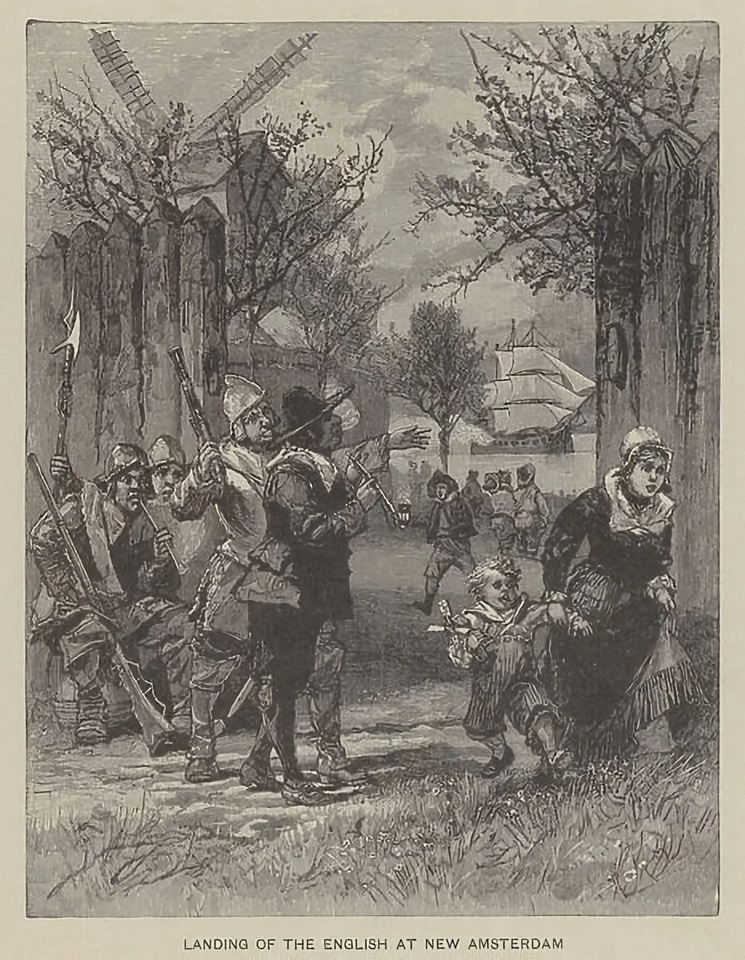
On 12 March 1664, King Charles II, eager to expand the English empire and reward his loyal brother James, Duke of York, granted him a vast swath of North American territory. This prize included New Netherland—stretching roughly from the Delaware River to the Connecticut River—plus scraps of modern Maine and islands like Long Island, Martha’s Vineyard, and Nantucket along the Atlantic coast. Whether Charles saw the Dutch, who currently claimed and occupied most of this land, as a mere obstacle to be swept aside or a challenge for a later Machiavellian showdown isn’t entirely clear in today’s histories. But that’s a story for a later post. What’s certain is that on September 8, 1664, some 300 British troops under Colonel Richard Nicolls peacefully seized New Netherland, renaming its heart, New Amsterdam, as New York.

The conquest raised a question: what to do with the Dutch, French, Walloons, and other non-English settlers now under British rule? The Articles of Capitulation, signed that day, were generous: these residents could keep their property, trade rights, and personal liberties. They weren’t forced out or stripped of their livelihoods—a pragmatic move to avoid rebellion in a colony where the Dutch outnumbered their new overlords. But this deal had limits. Without British citizenship, they owed no loyalty to the Crown, couldn’t pass property seamlessly under English law, and lacked full access to British markets. Enter the curiously dated Naturalization Act of 12 March 1664—more on that head-scratching date in a moment.

This act offered foreign-born settlers a path to English subjecthood. By swearing allegiance to the Crown and paying a fee—described by some as modest, by others as steep—they could gain the rights and privileges of English subjects. The exact fee is lost to time, but it was likely hefty enough to filter out the poor while drawing in merchants and landowners eager for legal and economic benefits. The act aimed to stabilize the colony’s economy, secure political control, encourage growth, and align local realities with British common law.

In mid-17th-century England, citizenship hinged on jus sanguinis—citizenship by blood. Only children of British parents were natural subjects; foreign-born adults, like New York’s Dutch settlers, needed a legal workaround to join the fold and fully participate in colonial life. The act filled that gap, promising a unified British colony over time.

History pegs this Naturalization Act to 12 March 1664—the same day Charles granted James the land—yet the English didn’t hold New Netherland until September. A citizenship act before possession seems nonsensical. One plausible explanation? It’s a backdated fiction. The real policy likely emerged post-conquest, perhaps in late 1664 or 1665, as Nicolls integrated the Dutch population. Linking it to March 12 could’ve been a deliberate move to dress up the original grant as lawful and inevitable—a tidy origin story for English New York. The Articles handled the surrender’s chaos; naturalization was the long-term glue, and pinning it to the charter’s date cast the shift from Dutch to British rule as seamless and legitimate.

Addendum: The Evolution of British Citizenship

British subjecthood didn’t stay rooted in jus sanguinis. Between 1664 and the mid-18th century, it gradually shifted toward jus soli—citizenship by soil. By the time Sir William Blackstone penned his Commentaries on the Laws of England (1765–1769), anyone born in the Crown’s dominions was a natural-born subject, regardless of parentage. This held until the British Nationality Act of 1981, which dialed back unconditional jus soli. Now, a child born in the UK needs at least one parent to be a British citizen or a settled legal resident to claim citizenship—leaving others out of the fold.

Sources: America’s Best History; discussions with Grok 3. Graphic: Landing of the English at New Amsterdam, 1664, produced 1899, public domain.

Shannon Ridge High Elevation Zinfandel 2020

Zinfandel from Lake County, North Coast, California

Purchase Price: $11.99

Wine Enthusiast 92, ElsBob 91

ABV 13.9%

Aromas of red cherry, blackberry and spice; full-bodied, semi-dry, soft to medium acidic, with smooth to moderate tannic, peppery finish. Will pair well with beef or chicken and, better yet, as an accompaniment to a cheese, grape, and salami board.

A very good fine wine, remarkable priced. I’ve seen it retail recently for $17 which is still a great price for this wine.

Americana

Norman Rockwell, a name synonymous with American Realism, was a master of meticulous detail, yet he never failed to brush a thread of whimsy and rustic existence onto the canvases of his iconic paintings.

Norman Rockwell, an iconic painter of American life, was born on 3 February 1894 into a comfortable New York City family. His father, a lover of Charles Dickens, often sketched illustrations from books, planting early seeds of creativity in young Norman. His mother, overprotective yet proud of her English heritage, spoke often of her artistic but unsuccessful father, whose unrealized dreams seemed to echo in the household. Art wasn’t just a pastime for Rockwell; it pulsed through him, and by age 12, he had resolved to draw for a living, though painting would come later in his journey as an artist.

As a teenager, Rockwell pursued artistic training at the National Academy of Design and later at the Art Students League, where he studied under the influence of Howard Pyle, the renowned illustrator of boys’ adventure tales. Pyle, who had founded the school’s philosophy through his own teachings and legacy, left an indelible mark on Rockwell, shaping his lifelong passion for weaving narrative into art. Before he turned 16, Rockwell landed his first commission—four Christmas cards—a modest start for a boy already dreaming big. By 18, he was painting professionally full-time, his talent unfolding with the quiet determination of youth finding its purpose.

In 1916, Rockwell began his legendary run with The Saturday Evening Post, creating covers that would grace the magazine for the next 47 years. Over that span, 322 of his paintings became what the Post proudly dubbed “the greatest show window in America.” Through these works, Rockwell offered a mirror to the nation—sometimes nostalgic, often tender, always human—reflecting everyday moments that resonated deeply with millions.

While his career soared with the Post, city life never suited him. In 1939, he traded New York’s clamor for the rolling hills of Vermont, and later, in 1953, settled in Massachusetts. These rural landscapes became his muse, dominating his canvases for the first three decades of his career. Rockwell was no haphazard artist; he was methodical, even obsessive, following a rigorous six-step process to bring his visions to life: brainstorming ideas, sketching rough outlines, photographing staged scenes with real people, crafting detailed drawings, experimenting with color studies, and only then committing paint to canvas. Each step was a labor of love, a tip of the hat to the America he loved.

At the heart of his art was a simple, profound drive. As Rockwell himself put it, “Without thinking too much about it in specific terms, I was showing the America I knew and observed to others who might not have noticed.” His paintings weren’t just pictures, they were invitations to see the beauty in the ordinary, the dignity in the overlooked; we see not just an artist, but a storyteller who believed in the quiet goodness of people, brushstroke by brushstroke.

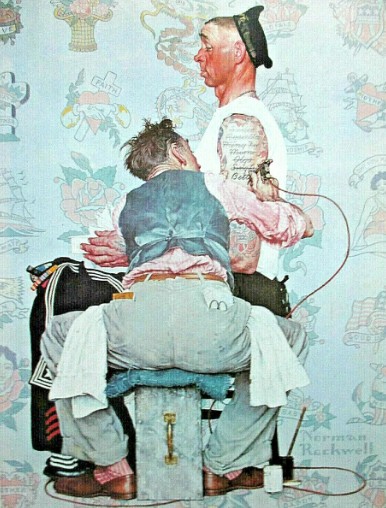
Source: The Norman Rockwell Treasury by Thomas S. Buechner, 1979. Norman Rockwell Museum. Graphic: The Tattooist by Norman Rockwell, 1944, The Brooklyn Museum.

Locke and Citizenship

John Locke, the intellectual and philosophical father of modern Western democracies, argues in his Second Treatise of Government that membership in a political society—and thus citizenship—is not automatically granted by birth on a country’s soil alone. Instead, it depends on the concept of consent, whether explicit or tacit, and the allegiance of the parents. Locke asserts that a child’s status is tied to the political community of the parents rather than merely the geographic location of their birth. Citizenship to Locke was not a right but a contract between the governed and the government. A summation of his reasoning follows:

  1. Voluntary Consent as the Basis of Citizenship: Locke begins with the premise that all individuals are born free and equal in a state of nature. Political society emerges only through the voluntary consent of individuals to join together. For Locke, citizenship is not an inherent trait but a contractual relationship. A child born on foreign soil to non-citizen parents has not entered this contract, nor have their parents done so on their behalf.
  • Parental Influence on Political Identity: Locke suggests that a child’s initial political identity derives from their parents. He describes the natural subjection of children to parental authority, implying that their political allegiance aligns with that of their parents until they reach an age where they can consent for themselves. If the parents are foreigners—not members of the political society where the child is born—they owe no allegiance to that country’s government, and thus neither does the child by extension.
  • Rejection of Jus Soli: Unlike later theories of jus soli (right of the soil), Locke does not consider birth on a territory sufficient for citizenship. He distinguishes between temporary presence and permanent allegiance. A foreigner residing in a country does not automatically become a member of its commonwealth unless they explicitly consent to its laws and government. A child born to such foreigners, being incapable of agreeing to these terms, does not acquire citizenship through birth alone.
  • Tacit Consent and Its Limits: Locke acknowledges that tacit consent—such as owning property or residing long-term in a country—can signal allegiance. However, a newborn child cannot provide consent, tacit or otherwise. If the parents are merely visitors or temporary residents, their presence does not imply a commitment to the political community, and thus the child does not gain citizenship by default.
  • An Illustrative Analogy: Locke reinforces his argument with an example: a child born to English parents in France does not become a French subject simply because of the location of birth. Instead, the child remains tied to the English commonwealth through the parents’ allegiance. This reflects Locke’s view that citizenship stems from political bonds, not just physical geography.

In summary, Locke’s arguments about citizenship, consent, and political society in his Second Treatise of Government are deeply rooted in his broader natural law framework. Natural law, for Locke, is a set of universal moral principles derived from reason and human nature, which govern individuals in the state of nature—before the establishment of organized political societies.

Locke contends that a child born on foreign soil to non-citizen parents is not a citizen of that country because citizenship requires consent and allegiance, which the child inherits from the parents’ status rather than the place of birth. Furthermore, a minor lacks the capacity to consent to the laws and allegiance of a foreign land. Locke’s reasoning underscores individual agency and the contractual nature of political membership, prioritizing these over a purely territorial basis for citizenship.

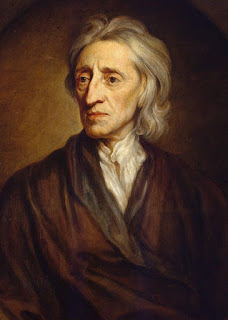
Source: Second Treaties of Government by John Locke, 1690. Graphic: John Locke by Godfrey Kneller 1697.  Public Domain.

Birthplace of Wine

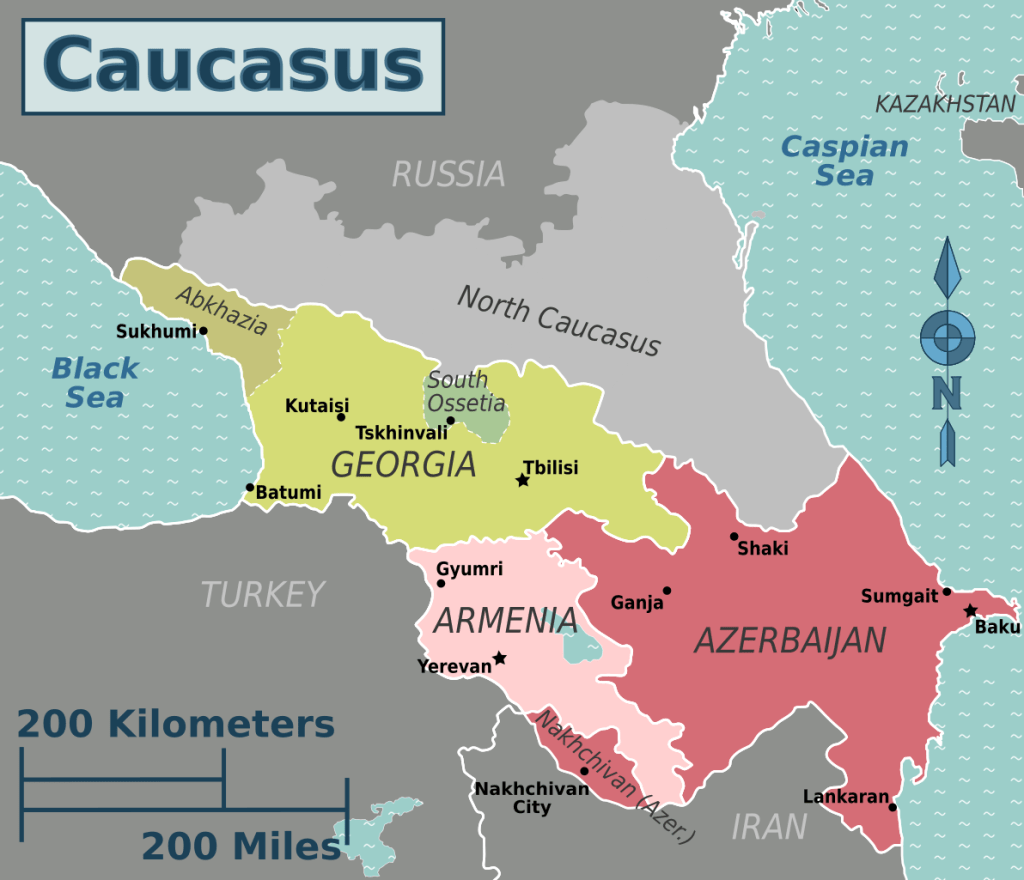
The modern grape (Vitis vinifera subsp. vinifera) is believed to have evolved from its wild ancestor, Vitis vinifera subsp. sylvestris, native to a broad region spanning the Caucasus Mountains (present-day Armenia, Georgia, and Azerbaijan) to the Mediterranean. This area offered ideal conditions for wild grapevines to flourish after the retreat of the Pleistocene glaciers, with its temperate climate and poor, rocky soils providing excellent drainage on rolling hills and mountainsides.

Archaeological evidence suggests that the domestication of grapes likely began in the South Caucasus region between 6,000 and 8,000 years ago. It’s possible that early farmers selectively cultivated wild grapevines, favoring those with the juiciest and most flavorful fruit, gradually developing them into the domesticated grape varieties familiar to us today.

In modern-day Georgia, approximately 30 miles (50 km) south of Tbilisi, evidence of grape wine production dates back to 6000–5800 BC. At the sites of Gadachrili Gora and Shulaveris Gora—Gora or hills are akin to the “tels” of the Levant—researchers have unearthed ancient pottery fragments containing chemical traces of wine, such as tartaric acid. These findings indicate that the inhabitants of this region were cultivating grapes and fermenting them into wine as early as 8,000 years ago.

This positions Georgia as a leading candidate for the “birthplace of wine,” with a merry winemaking tradition that has persisted through millennia.

Source: Oldest Evidence of Winemaking by Andrew Curry, National Geographic, 2017. Graphic: Caucasus Region by Peter Fitzgerald, modified by Travelpleb, Wikimedia Commons.