Phaedo

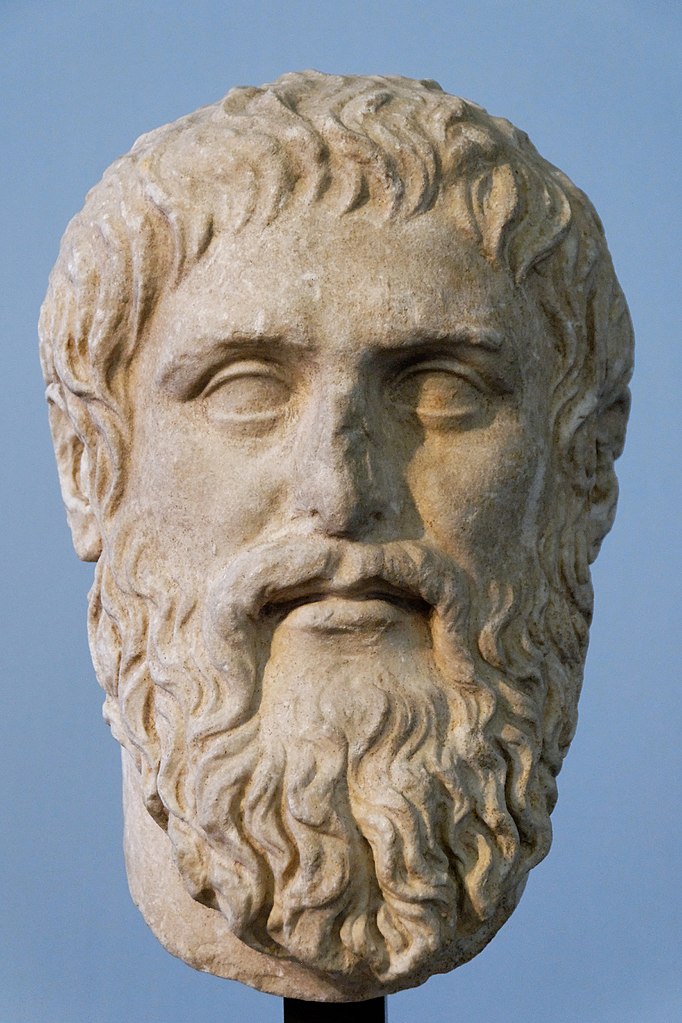
Phaedo is the fourth and final Socratic dialogue by Plato (the others being Euthyphro, Apology, and Crito) discussing the day Socrates was put to death by the Athenian state. Phaedo, who was with Socrates on the day of his death, is in the Greek city of Phlius at a later time and is asked by his friend Echecrates to tell him all about that eventful day.

The dialogue begins with Socrates proposing that a philosopher should look forward to death, but it is immoral for one to take his own life. He posits that the soul is immortal and one’s life should be geared to keeping one’s soul pure. He then provides three, or four depending on interpretations, arguments for the immortality of the soul. First, he puts forth the cyclical argument that death follows life which is followed by death and so on. Second, he proposes that we are born knowing what our souls knew before birth, we just can’t remember it until the proper questions are raised. Finally, Socrates puts forth the Affinity argument which states that the body is mortal and visible, and the soul is immortal and invisible.

After these arguments Socrates introduces Forms, actually a Platonic idea, the fourth argument according to some, sometimes known as the two-world theory where reality is set against what our senses tell us. Our senses give us a visible but imperfect perception of the world as opposed to Forms which are only conceived in one’s mind and are invisible and unchanging.

At the end of the dialog Socrates tells his audience the myth of Er, a discussion of where to soul goes upon death. He then says his goodbyes, drinks hemlock, and slowly dies.

The Phaedo is more a compilation of Plato’s beliefs than a thorough discussion of Socratic philosophy, especially the discussions of Forms.

Source: Ancient Greek Philosophers, translated by Benjamin Jowett, published 2018. Phaedo by Tim Connolly, Internet Encyclopedia of Philosophy. Graphic: Copy of a Bust of Plato, original by Silanion. Photo of bust by Nguyen, 2009.

Journalism – Stephen Glass:

Stephen Glass was an American serial fabrication specialist or as they call it in the trade, a journalist, working for The New Republic from 1995 to 1998. He was a rising star in the profession, a young Turk with a strong work ethic but he was manipulative and emotionally controlling towards his superiors. And just about everything he wrote was a lie. For his severe allergic reaction to telling truth, he was fired from The New Republic in 1998.

Buzz Bissinger in Vanity Fair wrote, “The New Republic, after an investigation involving a substantial portion of its editorial staff, would ultimately acknowledge fabrications in 27 of the 41 bylined pieces that Glass had written for the magazine in the two-and-a-half-year period between December 1995 and May 1998. In Manhattan, John F. Kennedy Jr., editor of George, [Glass contributed to other publications while working full time at The New Republic including George] would write a personal letter to Vernon Jordan apologizing for Glass’s conjuring up two sources who had made juicy and emphatic remarks about the sexual proclivities of the presidential adviser and his boss. At Harper’s, Glass would be dismissed from his contract after a story he had written about phone psychics, which contained 13 first-name sources, could not be verified.”

A 2003 critically acclaimed biographical movie covering Glass’s scandal as a journalist, Shattered Glass, explores what happens when a profession loses the public’s trust. Except it never really answers that question or even why Glass could not tell the truth. Other than that, the audiences loved it.

He currently works as a paralegal at the law firm Carpenter, Zuckerman & Rowley, serving as the director of special projects and trial-team coordinator.

Source: Michael Noer in Forbes, 2014. Buzz Bissinger in Vanity Fair, 2007. The Famous People. IMDb. Graphic from TMDB.

Jewish, Roman, Historian

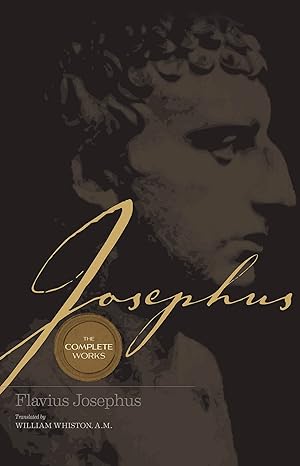
Flavius Josephus, a first century Jewish scholar and historian wrote four extant works:

  1. The Jewish War. (Jewish Revolt) 75 AD – The first revolt against the Romans from 66-73 AD
  2. The Antiquities of the Jews. 95 AD – From Adam to the death of Herod’s sons
  3. Against Apion. 97 AD – A defense of Judaism
  4. Vita or The Life of Flavius. 99 AD – Biography

These works provide significant source material and insight into first-century Judaism and Christianity.

Josephus was born into the Jewish priesthood on his father’s side and of Hasmonean royal descent maternally. He served in the Jewish military during the Jewish War but surrendered to the Romans and he was considered a traitor to Jews ever after. While waiting to be executed by the Romans he predicted that Vespasian would eventually be crowned emperor of Rome. Vespasian, because of the prophecy, spared his life and made him a consultant, but still a slave, to the Roman army. Josephus gained his freedom when Vespasian became emperor in 69 AD, at which time he changed his name to Flavius Josephus. Flavius was the family name of the emperor Vespasian.

Source: Josephus: The Complete Works, 2003. Jewish Virtual Library. World History Encyclopedia.

GOAT Gas

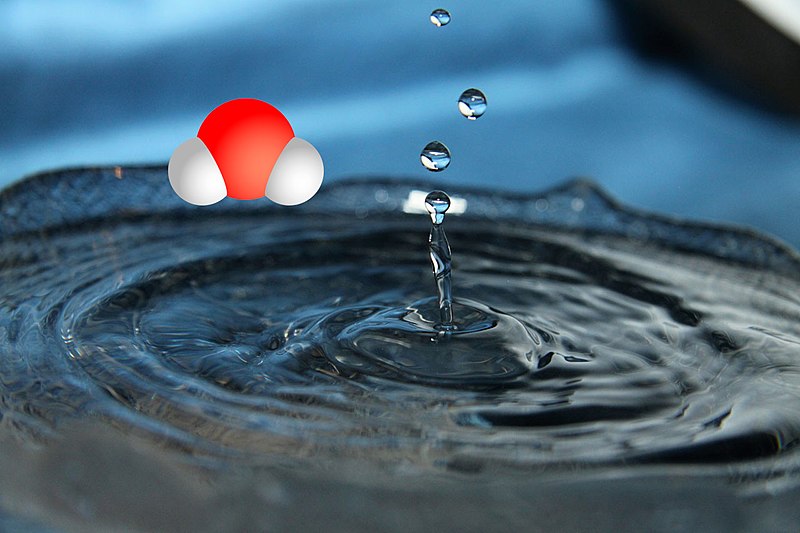
Water vapor is the most abundant and the most powerful greenhouse gas in the atmosphere and is responsible for about half of the Earth’s greenhouse effect. The amount of water vapor in the lower atmosphere is largely controlled by temperature, such that warmer air holds more moisture. Water vapor returns to the Earth’s surface usually within two weeks but only if the vapor is in the troposphere, the atmospheric layer closest to the Earth.

Water vapor in the stratosphere, the layer above the troposphere, on the other hand, can stay there for a long time due to the lack of physical mechanisms to bring it back to the surface of the Earth. MIT has estimated that a water molecule, or any atmospheric molecule, can stay in the troposphere for about 1.5 years, possibly longer, before circulating back to the troposphere or Earth’s surface.

On 15 January 2022 the South Pacific volcano, Hunga Tonga-Hunga Ha’apai, erupted sending a huge jet of water vapor into Earth’s stratosphere, estimated to have been around 40 billion gallons in volume.  This is estimated to have increased the water vapor in the stratosphere by 10% in a matter of hours or days.

For reference, the greenhouse effect for selected gases by its 20-year GWP (Greenhouse Warming Potential) value:

  1. Water Vapor = A very large value but difficult to find in print.
  2. Hydrofluorocarbons (HFCs) = 460-9100 GWP
  3. Bromides = 7140 (varies)
  4. Chlorofluorocarbons (CFCs) = 4400-6200 GWP
  5. Nitrous oxide = 280 GWP
  6. Methane = 56 GWP
  7. Carbon dioxide = 1 GWP

Source: NASA. MIT. Graphic by AGeremia, 2020, Creative Commons.

Fear the Night

Arcadians.

Theaters: 12 March 2024

Streaming: 1 May 2018

Runtime:  92 minutes

Genre:  Action – Horror

Els:  6.0/10

IMDB:  5.6/10

Rotten Tomatoes Critics:  83/100

Rotten Tomatoes Audience:  55/100

Metacritic Metascore:  60/100

Metacritic User Score:  5.6/10

Awards: —

Directed by: Ben Brewer

Music by:  Kristin Kontrol and Josh Martin

Cast: Nicholas Cage

Film Locations:  Ireland

Budget:  – $–

Worldwide Box Office:  $0.9 Million

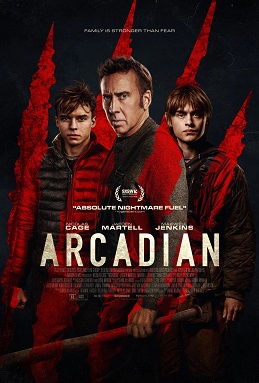
In an apocalyptic world Paul (Cage) and his two sons live a normal farm life during daylight hours and lock themselves into their fortress home during the night, when fuzzy anorexic creatures with extreme dental abnormalities roam in the darkness to kill and feed on humans.

The acting is very good with excellent visuals, but the story is weak on details and inspiration. An OK movie dreaming of a sequel which will never happen.

The name of this movie intrigued me since it was never actually referenced unless I missed it. Arcadia is a district in the central Peloponnesian plane of ancient Greece, which meant refuge or an idyllic place. A place of refuge seems applicable for this movie but not a safe refuge. Or it could just be the city of Arcadia NE of Los Angeles.

Source: IMDb. Rotten Tomatoes. Metacritic. Wikipedia. Graphic: Movie poster for Arcadian.

Resilience and Patience

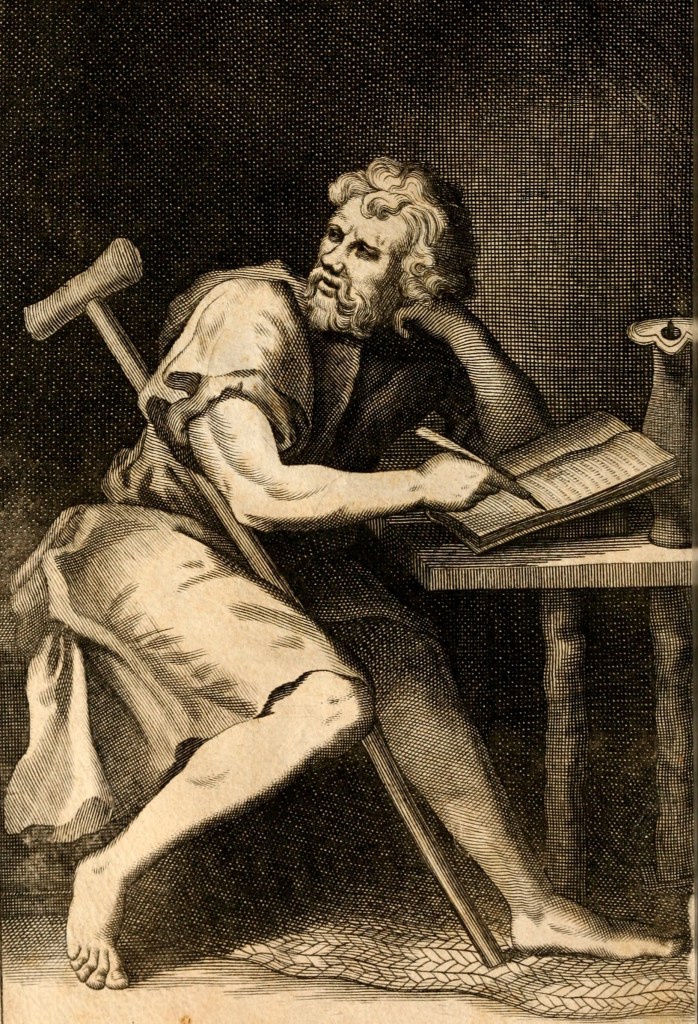
Epictetus was a 1st and 2nd century AD Greek Stoic who lived a simple life and taught philosophy at his school in Nicopolis, Greece. No writings of his have survived, if there were any to begin with, but his pupil Arrian captured his teachings and collected them into two separate works: The Discourses and the Enchiridion.

In The Enchiridion Epictetus briefly discusses 52 or 53 maximums or rules a practicing Stoic should live by with the first and main rule being that you should “only concern yourself with matters that you can control.” Everything else is irrelevant to living a pleasant life.

Stoicism is the philosophy of resilience and patience. Adherents believed in leading a life of virtue, which one did by acquiring wisdom, exhibiting courage, practicing temperance, and promoting justice.

Famous Stoics throughout Greek and Roman history include Zeon of Citium, Eratosthenes of Alexandria, Lucius Seneca, and Marcus Aurelius.

Source: The Enchiridion by Epictetus/Arrian, translated by Elizabeth Carter contained within Ancient Greek Philosophers, published 2018. Graphic of Epictetus by William Sonmans 1715, public domain.

Issac Newton and Leonardo Da Vinci:

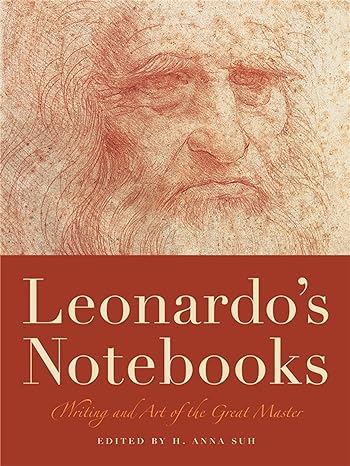
Leonardo Da Vinci and Issac Newton were both consummate note takers. They recorded their thoughts, ideas, and anything else that struck their fancy in innumerable notebooks and loose sheets of paper.

Paper was expensive so they both wrote small and covered every inch of paper with drawings and script.

Newton wrote in Latin, Greek, and English with most subject titles in Latin and the text in Greek. To save space his letters were an eye straining one sixteenth of an inch high. An estimated 4000 pages with around 285,000 words plus drawings of his writings have been found to date.

Leonardo wrote in Tuscan Italian, with the text written in a right to left mirror style which some believe he did because he was left-handed, as, by-the-way so was Newton. 13,000 pages of Leonardo’s notes have been found which is believed to be only about a fifth of the total.

Source: “Isaac Newton” by James Gleick, 2003. “Leonardo’s Notebooks” Edited by H. Anna Suh, 2005. “Leonardo Da Vinci” by Walter Isaacson, 2017. Graphic of da Vinci and Newton AI generated.

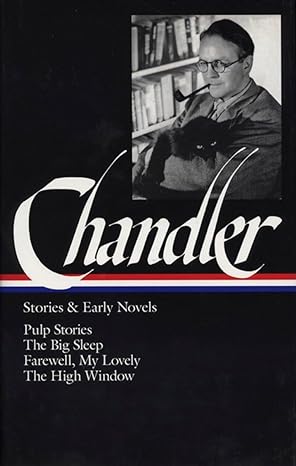
The Big Sleep

She came over near me and smiled with her mouth and she had little sharp predatory teeth, as white as orange pith and shiny as porcelain. They glistened between her thin too taut lips. Her face lacked color and didn’t look too healthy.

“Tall, aren’t you?” she said.

“I didn’t mean to be.” (said Marlow)

Her eyes rounded. She was puzzled. She was thinking. I could see, even on that short acquaintance, that thinking was always going to be a bother to her.

The above excerpt is from Raymond Chandler’s first Philip Marlowe novel: “The Big Sleep”, published in 1939. Marlowe is a hard, introspective private eye dreamed into existence from Chandler’s cynical but playful mind, creating the quintessential detective and crime novel of the 20th century.  “The Big Sleep” has been ranked as one of the best 20th century novels by The Guardian, Time Magazine, Le Mond, and at least 20 other current best book lists.

The 1946 movie adaptation of the book starring Humphrey Bogart and Lauren Bacall with the screenplay by William Faulkner achieved a Metascore of 86 and a user score of 8.0. The Telegraph, critiquing the movie, in 2004 stated that “The Big Sleep is the best scripted, best directed, best acted, and least comprehensible film noir ever made.”

Chandler was 44 years old, an out of work alcoholic, before he wrote his first piece, a short story, “Blackmailers Don’t Shoot”.  “Blackmailers” was the warm-up private eye mystery that would evolve, over the course of the next six years, into his first Philip Marlowe novel: “The Big Sleep”.

Source. Chandler: Stories and Early Novels published by Library of America, 1995. The 100 Greatest Literary Characters by Plath et al published by Rowman and Littlefield, 2019. Graphics: Warner Bros’ 1946. “The Big Sleep” and book cover.

Paul Revere Rides

On the evening of the 18th of April 1775 Paul Revere galloped through the countryside of Massachusetts to warn the populace that British were coming by water: one if by land, two if by water.

The next day the British, after crossing the Charles River from the Boston side, marched on Concord to try and capture colonial military supplies that had been stored there. The patriots knew of the British plans and moved most of their military equipment elsewhere.

The British had to pass through Lexington as they marched their way to Concord. The first shots between the British and Americans were fired at sunrise at Lexington, signaling the beginning of the Revolutionary War. After a minor skirmish in Lexington the British continued on their way to Concord.

The British marched to Concord with 700 troops and the Americans were eventually able to muster about 3500 militiamen although they only had about 77 at Lexington. During the Battles of Lexington and Concord on that day the British suffered 273 losses and the Americans 95.

Source: History.com and “The Many Rides of Paul Revere” by James Giblin published 2007. Photo of a painting showing Paul Rever’s Midnight Ride by Office of War Information http://www.archives.gov.

Teen Picasso

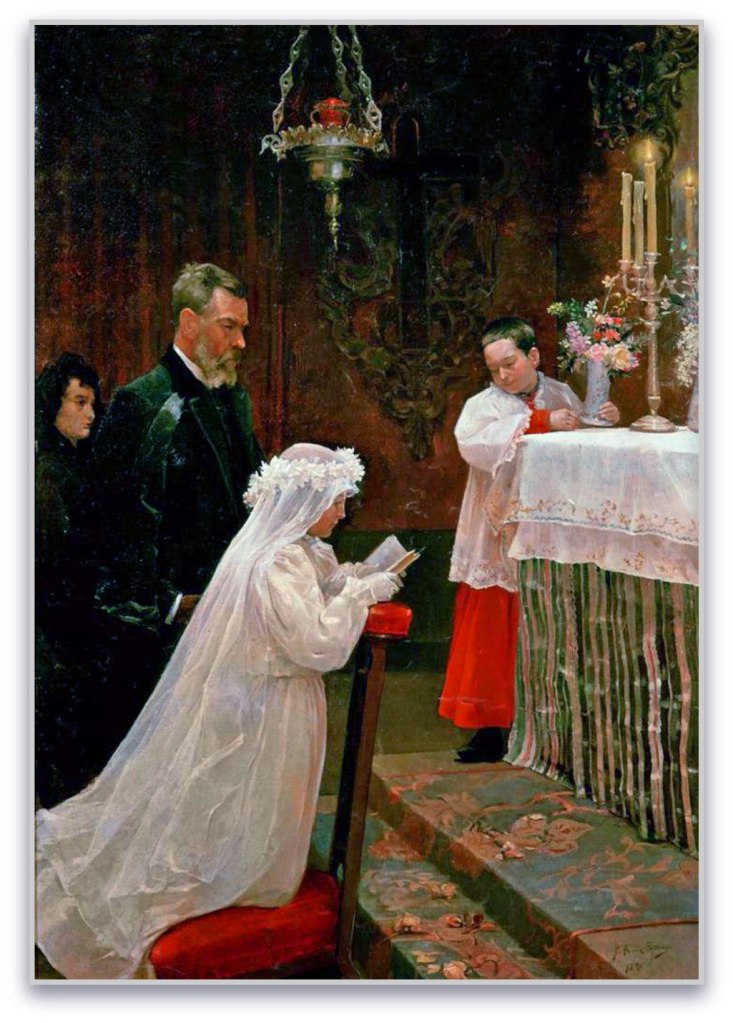
Picasso was recognized as a child prodigy at a very young age. He began to paint with oils when he was eight and by the time he was thirteen he was selling his work. At the age of fourteen, he was admitted to the prestigious Barcelona art school: La Lonja. At the age of fifteen he made his official entry into the professional art world, presenting the painting, “The First Communion” shown to the right, at the Third Exhibition of Fine Arts and Artistic Industries in Barcelona.

Science and Charity” shown to the left is one of Picasso’s most accessible paintings. He painted it in 1897 at the age of 15. This painting was the culmination of his academic studies and he soon after abandoned this style in pursuit of a more personal, albeit inscrutable, approach to art.

Source: Picasso by Carsten-Peter Warncke. Published 2001. Original publication 1998.