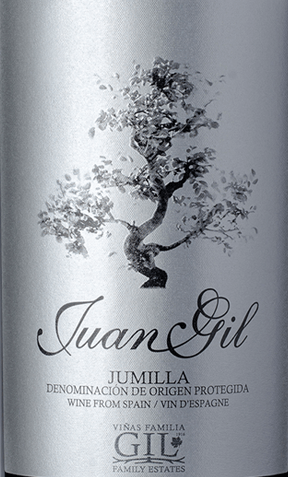
Bodegas Juan Gil Silver Label 2019

Mourvedre from Jumilla, Spain

Purchased price $15.99

Rankings: Robert Parker 93. ElsBob 90-91.

ABV: 15.0%

The grapes are harvested from, on average, 52-year-old vines growing in crappy soils. A medium ruby wine in color with notes of black fruits. Full bodied, high in tannins with a medium finish. Pairs well with beef and pasta.

This is an outstanding wine at a good price.

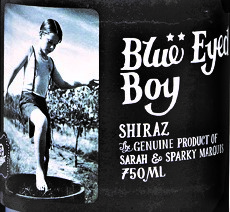
Mollydooker Blue Eyed Boy 2020

Syrah/Shiraz from McLaren Vale, South Australia, Australia.

Purchased price $106.00 (Restaurant).

Generally priced ~$60.00 retail.

Rankings: Wine Spectator 93. Robert Parker 93. Me 93.

ABV: 16.5%

A full-bodied, bold, deep-reddish purple wine with scents of plums and chocolate. Enjoyed it with a medium-cooked tenderloin. Wonderful.

This is an outstanding wine but a little on the pricey side for its ranking.

Don’t forget the “Mollydooker Shake”.

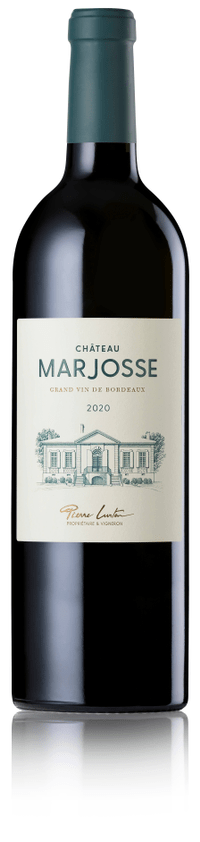
Chateau Marjosse Bordeaux 2020

Bordeaux Red Blend from Bordeaux, France

14.5% alcohol

Purchased: 18 August 2023 – $14.99

Opened: 22 January 2024

els:  9.0/10

James Suckling:  90

Decanter:  91

Marjosse is my secret garden. It gives me energy. It is important for me to have this place and share it.” – Pierre Lurton.

This is a medium-bodied, deep-reddish purple Bordeaux with scents of plums and blackberries. It is a merlot heavy blend with secondary amounts of cabernet sauvignon, cabernet franc and malbec. This is a outstanding wine at a good price.

Chateau Marjosse is a right bank Bordeaux vineyard in the Entre Deux Mers appellation, owned and operated by Pierre Lurton. The vineyard is just under 124 acres, planted mostly in merlot. Smaller portions of cabernet franc, cabernet sauvignon, sauvignon blanc, semillon, chardonnay, old vine malbec and muscadelle. For the red wine, the planted varieties of grape are 80% merlot, 10% cabernet sauvignon, 10% cabernet franc, and a smidgen of malbec. There are three main soil types: sand and red clay, sand and white clay, and limestone. The vines are planted on sloping hillsides, rising almost one thousand feet above sea level. (The above quote is from The Wine Independent article published in February 2023.)

Exploration 16: Red Wine Ratings vs Price

What should you pay for a bottle of wine? Quality, vintage, geographic region, and reputation of the vineyard all influence pricing. Every producer price their wines as high as they believe the market will bear and frequently higher, the same as every other type of business in the world.

Fortunately for the wine drinkers there are about 65,000 wineries in the world producing around thirty-five billion bottles yearly translating into a whole lot of competition to help keep some good wines affordable.

Pricing deals first and foremost with the quality of the wine. Is it any good? Are the components of the wine in balance with each other or do the tannins override the acidity and alcohol? Are the flavors and aromas intense, strong, and bold or weak and faint? Are the flavors and aromas clear and focused or imprecise and expressionless? How complex is wine? Are there multiple layers and nuances? Does the wine exhibit typicity? A great wine will proudly announce its sense of place or its terroir. (Terroir is easier to define for old world wines than it is for new world products.) How’s the finish? Does the taste linger in your mouth after your swallow? An exceptional wine will have a lasting finish.

These six factors are used to gauge the quality of the wine and if you wish to go there, its rating. As I discussed in a previous post, a wine’s rating is a subjective affair. Some find it unnecessary. I find it essential. I find it crucial to know a wine’s rating if I’m going to choose a good wine at a fair price. Without ratings get used to drinking bad wines. There are a few different rating systems: a 100-point scale, a 20-point scale, a 5-point scale, a verbal scale, and others. I use the 100-point scale developed by Robert Parker, but I find myself using Vivino’s 5-point or 5-star system more lately. Most wines go unrated. Wines that are rated professionally usually only have one individual rating, and if you’re lucky sometimes up to five or six which you can average for a more realistic score. Wine’s rated by Vivino’s system have tens to hundreds of individual ratings which tend to smooth out the anomalous, spurious ratings inherent to all rating systems.

Secondly, the vintage of the wine has a significant impact on the price of wine. Some high-quality wines such as Bordeaux and cabernet sauvignon can last for one or two decades, even longer if stored properly. 5-10 years after a wine’s harvest date a bottle can appreciate 200-400% from its original selling price or more but be aware that most wines, red and white alike, do not age well and you may end up paying significant money for a bottle of vinegar.

Other factors such as geographic location and vineyard reputation are fluff to what you really care about, a good tasting wine. Chateau Lafite Rothschild or Sine Qua Non produce some great wines but they are way beyond the means of people without mid-six figure incomes.

Apologies for the long intro to the question: what should you pay for a bottle of wine or for purposes of this post, what should you pay for a bottle of outstanding to exceptional, 90–100-point, red wine? I started with 90-point because it is difficult to find professionally rated wines in the public domain lower than that number. The discussion is also limited to reds because I know almost nothing about white or rose wines.

To begin to answer the above question I gathered pricing, vintage, and rating data for almost sixteen hundred different red wines rated at or above 90-points. The wines are sourced from thirteen countries and every continent, except Antartica of course, with the results skewed towards the nine large producing areas listed below:

  • Argentina
  • Australia
  • Chile
  • France
  • Italy
  • Portugal
  • South Africa
  • Spain
  • U.S.

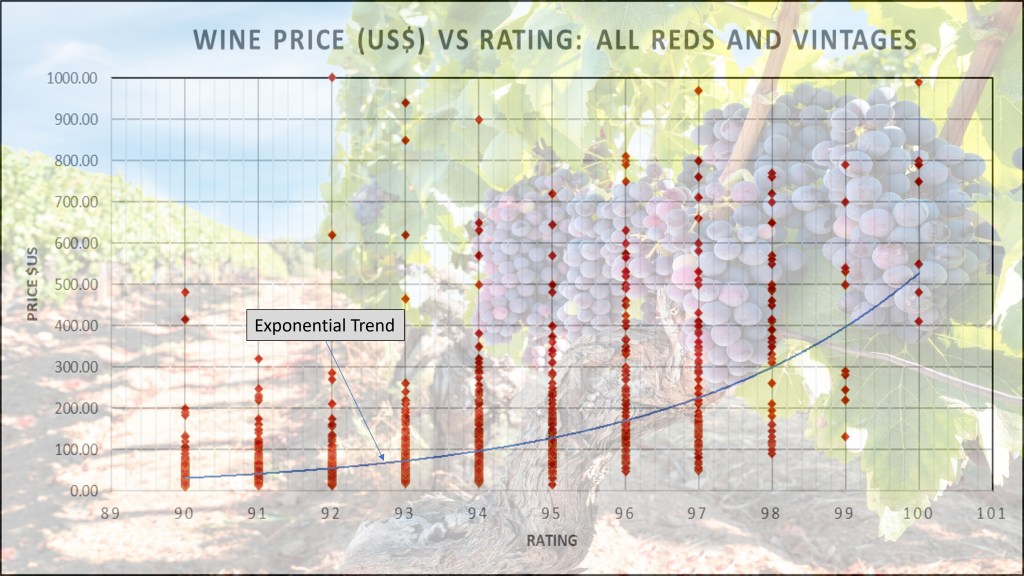
The data were sorted into individual bins by rating and plotted in graphical form as shown above right. The y-axis scale is in dollars and the x-axis is the rating. The y-axis is terminated at $1000 for ease of visualization but there are a handful of wines more expensive than this. The sixteen hundred wines have vintages from 1984-2022. There are very few 2023 reds currently on the market, so they have been excluded. Even though there is a significant amount of scatter in the pricing versus individual rating there is discernable increasing trend in price by higher rating. The trend line shown in blue increasing exponentially from left to right, intersects a 90-point red around $30 and the 100-point at $500 plus.

Below is a chart of the data highlighting the calculated mean (average), median (middle value), and mode (most frequent) wine prices by rating for all red wines and vintages in the data set. The median values are the most useful for comparison shopping purposes and I would suggest that this should be the highest price or ceiling one should pay for any given rated wine. Anything above that and you are just purchasing the shiny coat of paint that adds nothing to the quality of wine. When buying wine by rating the lowest price is the most economically sensical purchase to make. I will expand on that piece of advice below.

The three charts below are the same format as the one above but confined to bracketed vintages from 1984-2014, 2015-18, and 2019-2022. As one would expect and as stated earlier, aged or older wines are more expensive than their more recent counterparts.

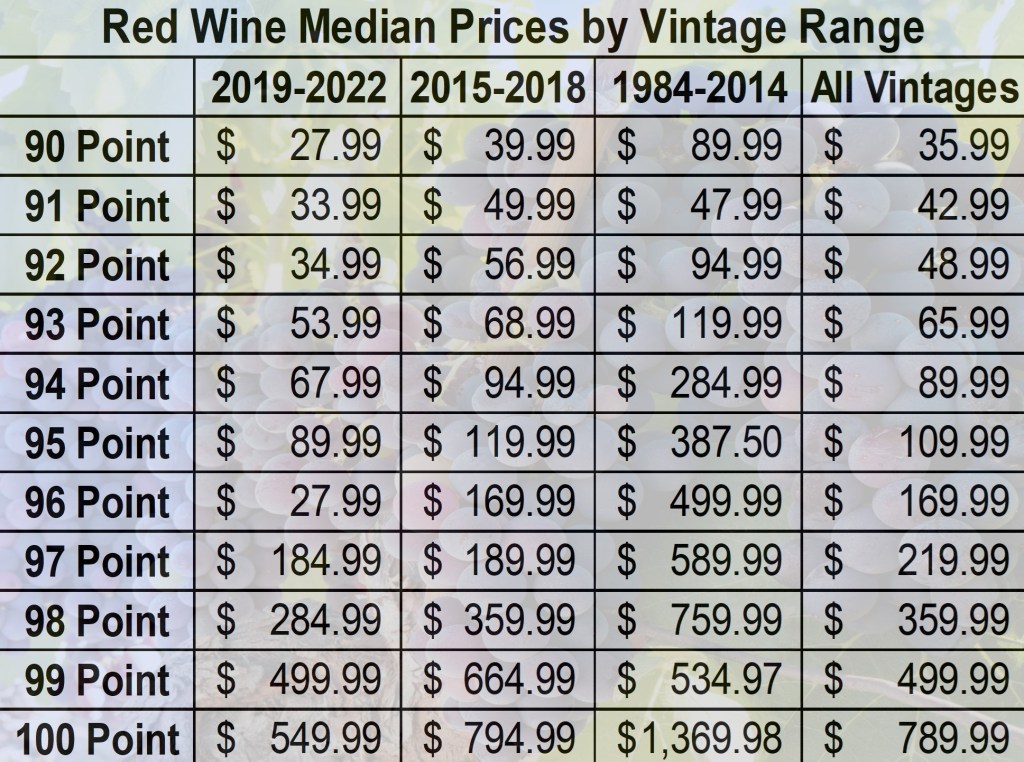
The chart to the left summarizes the median price for the ratings and vintages shown above. Wines increase in price by rating and vintage. Recent wines with a lower rating are cheaper than older wines with higher ratings. Hopefully by taking rating and vintage into account a complicated foray into wine buying will become simple and easily actionable. Keep in mind that the median price should be the highest price paid for any rating and vintage.

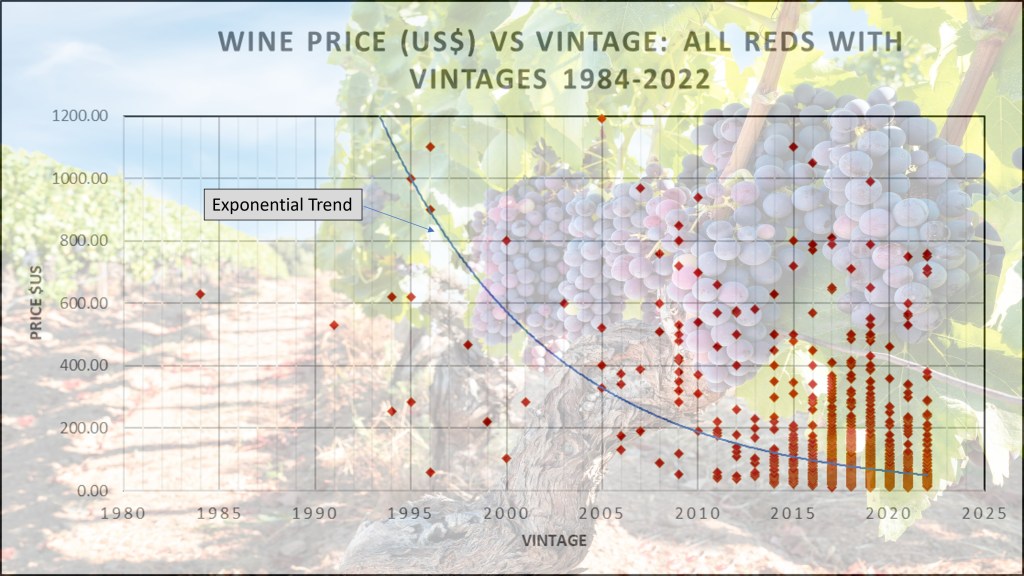
The graph below shows wine prices by vintage. Price is on the y-axis and vintage is on the x-axis. Again, the y-axis is terminated at a lower price than the actual range just to keep visual aspects of the graph manageable. Like ratings the fitted curve trend to price versus vintage is exponential. Older wines cost more, a lot more than recent wines regardless of rating.

In a true to grifter life tale, The Billionaire’s Vinegar: The Mystery of the Worlds’s Most Expensive Bottle of Wine, by Benjamin Wallace details how expensive an old wine can get. Wallace describes how Hardy Rodenstock, allegedly discovered in France a stash of unopened 1787 Chateau Lafite Bordeaux supposedly purchased by Thomas Jefferson while living in Paris after the American Revolution. Rodenstock auctioned a bottle, at Christies, for the tidy sum of $156,000, or $157,000 depending on source, in 1985 to Malcomb Forbes via his son Christopher. In 2023 dollars that would come to $433,740. Rodenstock sold four more bottles to Bill Koch for $400,000 in 1987 or $1,074,378 in 2023 dollars. Old wines can be expensive, and the FBI says they were not only expensive they were also fake. I believe the Feds are still looking for Mr. Rodenstock.

Where do the least and most expensive wines come from? The charts below lists 9 of 11 top wine producing countries in the world and the median price of their wines, as they are priced in the U.S. The yellow highlight is the sorted column. China and Germany are number five and ten in wine production respectively, but little price and rating information is available for comparison purposes, as such they are omitted. Argentina ranks first with the most affordable wines across all outstanding to exceptional rankings. The U.S., mainly California, has the dubious distinction of having the most expensive wines across the 90-100-point ranking scale.

Finally, how much should you spend on a bottle or wine? The best way that I know how to answer that question is to describe my wine buying strategy which, incidentally, may not be the best way to buy wine.

The short description of that strategy is that I like drinking red wine, but I really hate paying a lot for the privilege. To expand on that, first start with the ratings. Without the ratings you are buying blind. Most wines are unrated. If they are rated, they usually will only have one rating in which case you need to have a good feel for how the rater’s judgement fits in with your tastes in wine. Robert Parker is my personal choice. His ratings closely match my own. If he hasn’t rated a bottle of wine, I give it a pass. In the ten years or so that I have been depending on his ratings he has only let me down twice. Both times I felt his ratings were too high, which brings up a useful caution. When you run across a highly rated wine that is less expensive than normal there is a good chance that the rating should be lower than stated rather than you are getting a great deal on a great wine. The second part of purchasing wine is to recognize that for any given varietal whether a cab, a merlot, or whatever, a similar rating should provide similar tastes and aromas for that varietal regardless of where it came from or who produced it. I get a lot of grief for this statement but I’m sticking with it. If you accept this premise, then it really makes sense to buy the least expensive wine available for any given rating. In 2023 that means you will be drinking wine from Argentina, Chile, and Spain. A few years ago, Portugal produced some great inexpensive wines but that has changed dramatically since 2021. U.S. wines, California wines in particular, are good, exceptionally good even but overpriced. No bang for the buck in Napa.

Using this strategy, I consistently buy 90-91-point, occasionally 92–93-point wines ranging in price from $9-17 per bottle. 94-point and higher rated wines are generally beyond what I’m willing to pay. Cheers.

Wine Pricing References and Readings:

Exploration 15: Wine Ratings

But it’s all right ’cause it’s Midnight,
And I got two more bottles of wine.

Song: Two More Bottles of Wine

Performed by: Emmylou Harris

Album: Quarter Moon in a Ten Cent Town – 1978

Written by: Delbert McClinton

Copyright: 1975

The (Editorial) Point:

In subsequent posts I will attempt to examine the relationship between wine ratings and price. To get there I thought it may be useful to quickly rehash the reasoning and methodology of ratings, which has been done many times by many others, before I compare them with wine prices.

The Need for Wine Ratings:

After many years of spending considerable time, money, and effort buying and drinking poor quality wines, I was ready to throw in the grapes and stick with whiskey: Irish whiskey, Scotch whisky, Canadian whisky, but not American burbon whiskey, too rough around the edges for my tastes. But this is not about whiskey. This is about choosing a decent wine at an affordable price–choosing a wine that doesn’t provoke tongue burn and esophageal spasms. Finding a wine without pouring over countless wine reviews in search of something within my budget and of acceptable quality. Unless you were a fervent oenophile steeped in the language and nuance of the vine you could get through about as many reviews as there were licks in a Tootsie Pop – 3 – before giving up and picking a wine at random at the local liquor store. An all-around Herculean and, as a rule, unrewarding task. An alternate method was to collect tips from fellow wine travelers. Experience taught me that wine tips were the blood brothers to stock and racehorse tips. Hang onto your wallet when receiving them and expect nothing good to come from them.

Considering the abysmal state of pre-1970s wine analytics, the ability to sort wine by quality and price, it’s a wonder anyone drank the stuff. Before ratings, the sellers of wine usually wrote glowing reviews of their product leading most buyers, through experience, to question their objectivity. Producer and seller reviews continue to the present with caveat emptor remaining germane and necessary to the buyer.

Then along came Robert Parker in the 1970s with a 100-point impartial wine rating/ranking system, a 50-point system in reality, which revolutionized how wine was bought and sold. His approach was to evaluate wines independently of the producers and sellers, communicating his results directly to the consumer.

Parker’s system wasn’t meant to replace wine reviews and tasting notes but to supplement them. The ratings were meant to provide a comparison between the seemingly infinite number of wines that were all labeled good and worthy of your time and money, but impossible to narrow down to something manageable, affordable, and drinkable. The ratings gave the consumer one number, along with price, helping to winnow the field of immense possibilities to single bottle or two for the evening’s festivities.

Wine rankings have their detractors mainly because they are subjective, but all rankings are subjective whatever they may be–books, clothes, cars, phones, whatever. Name a subject and you will be able to find a ranked list and it will have a subjective component. As a species we describe objects by comparing them with other objects and then rank them in a list. Consumer Reports have been doing this since 1936 and as much as they try to be objective there is always a subjective piece in their evaluations. Ranker.com, going live in 2009, has collected a billion votes from millions of users on hundreds of thousands of items and lists, all with subjective content.

When looking for a movie to stream on Friday night you may check out the written reviews which are likely to range from love it to hate it for any given flick, but the first thing that catches your eye are the consensus scores. A movie that scores 30 out of 100 you will give a pass, unless campy movies are your thing, but the ones rated 85 out of 100 prods your interest. You may even go on and read a review or two by critics that you know and trust. This eliminates a bit of the trial and error, taking thousands of movies and finding something we wish to spend our Friday night watching. Not fool-proof but better than written reviews by themselves.

The same process works for wine. That numerical score assigned by a reviewer that you trust narrows the choices of finding an acceptable wine for that Friday night movie, leaving you time to put together a colorful fruit and cheeseboard to complement your well thought out bottle of red… or white.

The Wine Rating Methodology:

Wine ratings are subjective by nature which means the numerical scores will not only change from reviewer to reviewer, but an individual reviewer will likely assign a different score at a different time and place. Moods, physical states, and surroundings affect us all. Smell and taste will not be the same in fresh air as it would in a smokey room. The variables to consistent, or inconsistent, scores are endless, but one must persevere.

To bring some objectivity to ratings the tastings are generally done blind. In blind tastings information about the producer(s) and price is not divulged to the reviewer. In some cases, even the varietal of wine is not communicated before the actual tastings have been completed. The reviewer uses the same scorecard listing the same criteria to analyze all wines. A typical scorecard will contain some or all the following criteria:

  • Appearance – Color, Viscosity, and Opacity
  • Consistency or Mouthfeel – Body and Density
  • Aroma and Bouquet
  • Taste – Acidity, Flavors, Intensity, Balance, Depth, and Aftertaste
  • Complexity
  • Varietal

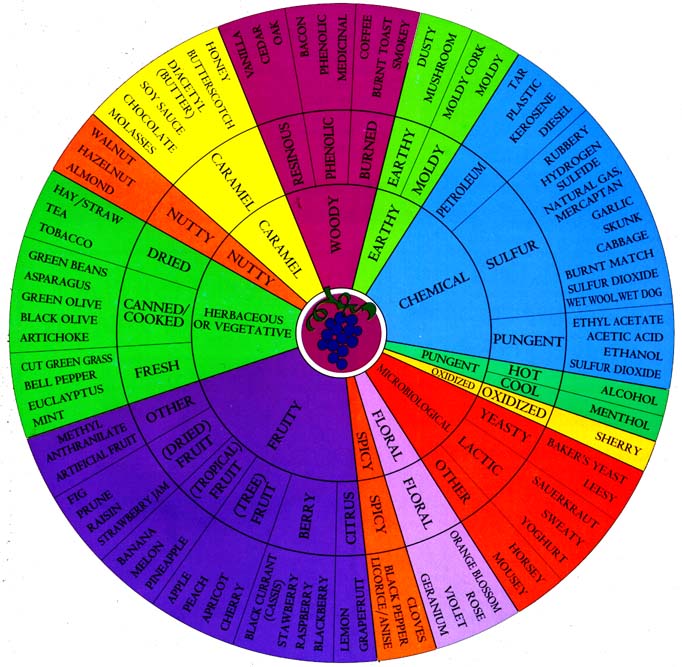
To assist in tasting and evaluating wine the UC Davis wine tasting wheel, divided into three expanding detail circles, was developed, and is shown above right.

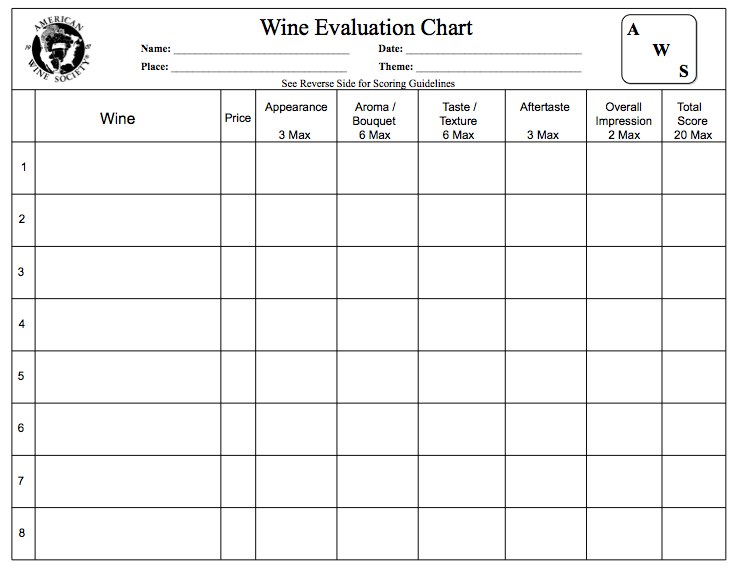
The American Wine Society evaluation sheet shown below is for scoring on the UC Davis 20-point system.

With the above criteria a reviewer will assign a numerical value or star(s) to that vintage bottle of wine. The most common scoring structure is the 100-point system devised by Robert Parker. Others, such as Jancis Robinson use a 20-point system designed at the University of California at Davis in the 1950s. On the simple and basic end of ratings is the ubiquitous 5-star system that ranks wine with very little pretentious hair splitting. Vivino’s use of the 5-star system is strictly constructed and populated from aggregated and averaged individual consumer rankings and correlates very well with the more orthodox expert 100-point ratings. A Vivino 4-star rating equates to a 90-point Parker rating. The four rating scales, plus mine, are listed below.

Ratings in Practice:

On a finale note, those employing the 100-point scale very seldom, either for ranking or subsequent sales promotion, publish any scores below 88 or 89 reducing their scoring system to a 12-point scale that only contains outstanding to extraordinary wines. I have almost no experience with 20-point scales so I cannot speak directly to their posting, or not, of inferior wine scores. Vivino’s 5-Star system publishes all ratings provided by their customers, the good, the bad and the ugly. Vivino’s system subdivides each star into ten parts creating a 40-point system. In the end, whether you are using a 5-, 20-, 40-, 50-, or 100-point system the goal is to add a little quantitative assessment to qualitative reviews.

Robert Parker’s System:

  • 96-100 — An extraordinary wine of profound and complex character displaying all the attributes expected of a classic wine of its variety. Wines of this caliber are worth a special effort to find, purchase and consume.
  • 90-95 — An outstanding wine of exceptional complexity and character. In short, these are terrific wines.
  • 80-89 — A barely above average to very good wine displaying various degrees of finesse and flavor as well as character with no noticeable flaws.
  • 70-79 — An average wine with little distinction except that it is soundly made; in essence, a straightforward, innocuous wine.
  • 50-59 — A wine deemed to be unacceptable.
  • 60-69 — A below average wine containing noticeable deficiencies, such as excessive acidity and/or tannin, an absence of flavor, or possibly dirty aromas or flavors.

University of California at Davis System:

  • 17-20 – Wines of outstanding characteristics having no defects
  • 13-16 – Standard wines with neither outstanding character nor defect
  • 9-12 – Wines of commercial acceptability with noticeable defects
  • 6-8 – Wines below commercial acceptability
  • 1-5 – Completely spoiled wines

American Wine Society Version of UC Davis System:

  • 18 – 20 – Extraordinary
  • 15 – 17 – Excellent
  • 12 – 14 – Good
  • 9 – 11 – Commercially acceptable
  • 6 – 8 – Deficient
  • 0 – 5 – Poor & Objectionable

Vivino et al 5 Star System:

  • Five Stars – Superlative
  • Four Stars – Excellent (Robert Parker’s 90-point rating)
  • Three Stars – Perfect for everyday consumption (Vivino’s average wine is 3.6 stars)
  • Two Stars – Casual drinking
  • One Star – Very Ordinary

Els Ranking:

  • Five Stars – 95-100 points – A most excellent wine
  • Four Stars – 90-94 points – An outstanding wine (My sweet spot for balancing quality and price)
  • Three Stars – 85-89 points – A good wine
  • Two Stars – 80-84 points – An OK wine
  • One Star – <80 – Yuk

The Raters and Rankers:

Wine Magazines, and Information:

Rating References and Readings:

You Are Here: Now What?

Return of the God Hypothesis

By Stephen C. Meyers

Published by HarperOne

Copyright: © 2021

An interesting if not an enlightening, but thoroughly tedious treatise.

Meyer, in excruciating detail, examines the evidence for a universe designed, created, and set into motion by the hand of God. His proofs assess how the universe is perfectly tuned to foster our existence, how human DNA’s complexity is beyond random chance, and how the explosion of multi-celled life forms during the Cambrian Period (485-539 mya (million years ago)) is unlikely Darwinian in nature.

The first two proofs are plausible, and his arguments are meticulously developed, while the Cambrian explosion of life does not address the hundreds of millions to a billion years of missing rock section prior to the beginning to the Cambrian Period. The explosion of life may simply be a function of where one begins to sample the evidence.

Meyer’s case for God orchestrating our existence is convincing but you only need to read Part II, about 150 pages in the hardback version of the book, while the other 300 pages can be consigned to doctoral students in logic and religion.

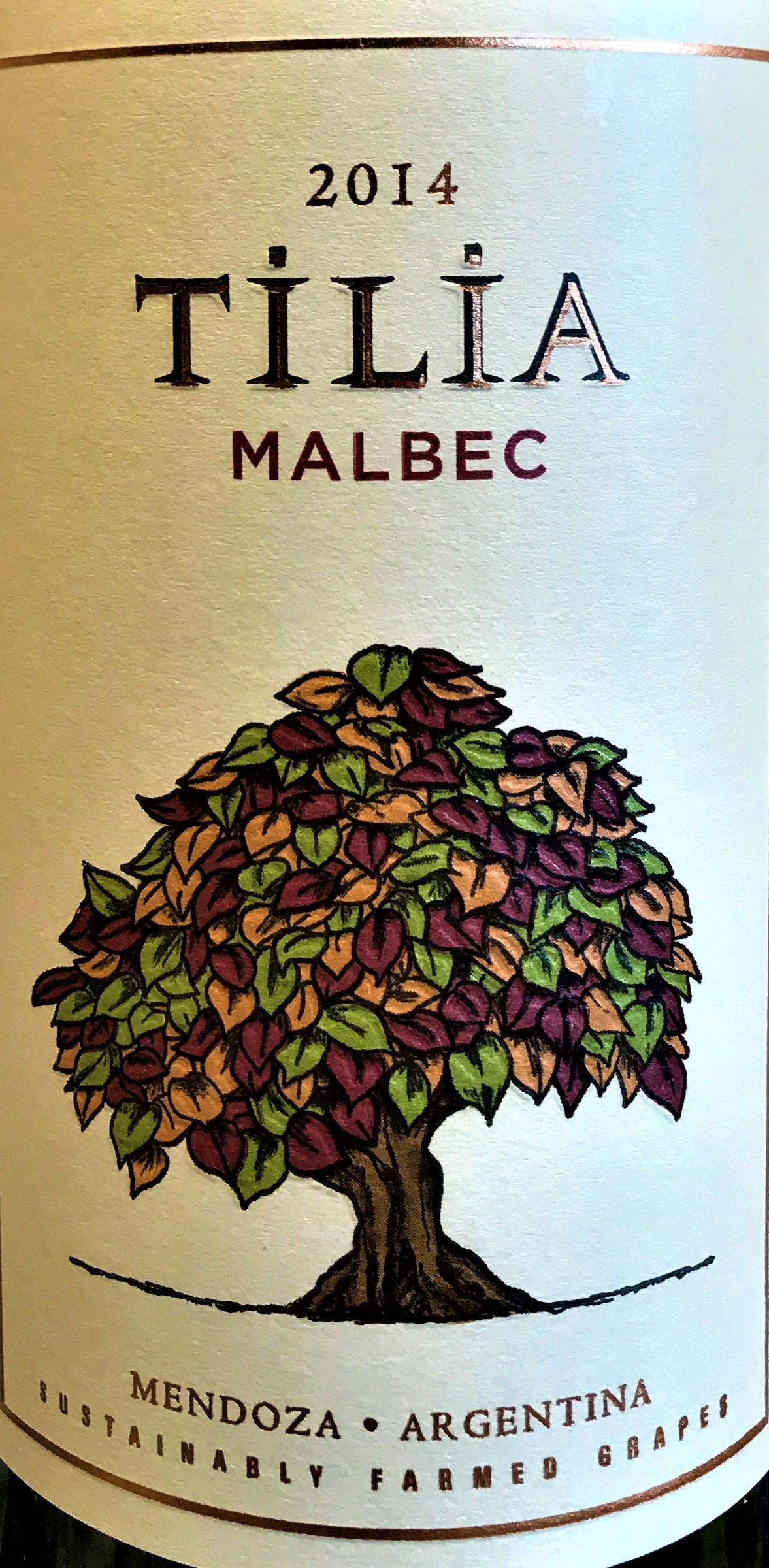
Tilla Malbec 2014

W Tilla 2014Malbec from Eastern and Southern Mendoza, Mendoza, Cuyo Region, Argentina

100% malbec

13.0% alcohol

Purchased:  12 Nov 2017  –  $9.99

Opened:  29 April 2018

els:  8.8/10

Robert Parker:  90

Flagstaff Magazin:  90

Vinous:  87

Wine Enthusiast:  87

Wine Spectator:  87

Cellar Tracker:   86

Argentina’s wine history dates back to the 1500s when Catholic priests planted vineyards around their monasteries to guarantee wine for the parish and Holy Mass. The country was the first South American country attempting to commercially grow vines, beginning in Mendoza in the early to mid-1800s.  Many of the initial plantings came from Chile in the early 1800’s but the varietals that would change world wine history came from the Bordeaux region of France in 1853, including the ubiquitous Malbec.  Eventually, Mendoza was producing world-class Malbec wines, on par or superior to those produced in France, mainly due to its high elevations in the foothills of the Andes, well-drained soils, and lots and lots of hot sunshine. Today the country produces 75% of the world’s Malbec.

Argentina is the world’s 6th largest producer of wine by volume, just behind the US and ahead of Australia. It produces about 6% of the world’s total wine. The country has 510,000 acres planted in grapes, 55% in red wine grapes, 25% in roses and the rest in whites. Malbec plantings account for 20% of the total acres planted with Bonarda, Cabernet Sauvignon, and Chardonnay accounting for another 20%. Argentina has 4 main wine-producing regions: Atlantic, Cuyo, North, and Patagonia.

Cuyo is the largest and most important wine-producing, macroeconomic region in central Argentina and includes the wine sub-regions of La Rioja, Mendoza, and San Juan; with Mendoza being the largest of the 3 by area, population, GDP, and wine production. The region produces about 80% of all wine in the country. The area is arid to semi-arid receiving less than 20 inches of rain per year and experiences large diurnal temperature variations of about 35°F.

The Mendoza region, lapping up onto the eastern foothills of the youthful Andes, is the largest wine producer in Argentina, accounting for 65-75% of the country’s total. A third of the country’s vineyards are dedicated to Malbec with Mendoza also producing the lion’s share of that variety with 85,000 acres planted. The Mendoza wine region is partitioned into another 5 sub-areas: Central Oasis, East Mendoza, North Mendoza, South Mendoza, and Uco Valley. North Mendoza, aka Lujan de Cuyo, designated as an appellation in 1993,  contains an additional 6 micro-regions including: Agrelo, Barrancas, Las Compuertas, Perdriel, Ugarteche, and Vistalba.

The East or Eastern Mendoza sub-region, 50 miles southeast of Mendoza, is the country’s largest wine-producing area with almost 175,000 acres of vineyards and is further divided into 3 smaller areas: Rivadavia, Junin, and San Martin. The largest plantings are in Bonarda, Malbec, Syrah, Chardonnay, and Sauvignon Blanc. The vineyards are grown in the foothills of the Andes at 2100-2500′ above sea level with maximum summer temperatures in the low 80s°F and averaging 8″ of rain per year. Because of the low rainfall, the vineyards are irrigated with snowmelt waters from the Andes. The soils are mostly a heterogeneous mix of infertile, sandy loams and rocks.

The Southern Region is located 100 miles due south from Mendoza, at an elevation 3,000-4,000’ above sea level in San Carlos County. Bonarda and Malbec are the commonest grapes grown in the region. The high elevations mean lower temperatures and bright sunshine. The Southern Region is a desert with annual rainfall averaging about 14″ per year and summer temperatures that get up into the high 80s°F.

Malbec, Argentina’s national and highly celebrated grape was brought to the country in 1853. With its introduction, and other varietals, to the country the legislature established Quinta Normal, a school of agriculture, in Mendoza on 17 April 1853 which was to become the date for the annual Malbec World Day.

Malbec is a black, thin to thick-skinned, depending on elevation, grape that tends to ripen early. The wine from the grapes has aromas of cherries, strawberries, or plums; producing soft flavors and mild but meaty tannins. Malbec’s aged in oak keep for a long time and can be kept uncorked for 10 years or more. Malbec has many synonyms including Cot, Cahors, Grifforin, Hourcat and Quincy.

Bodegas Esmeralda, founded by Don Juan Fernandez is named in honor of his only daughter: Esmeralda Fernandez. The winery is located in the city of Junin, approximately 300 miles west of Buenos Aires and almost 800 miles east of Mendoza, producing wines both for the local market and for export. The winery’s Tilia labeled wines, named after the Latin name for the Linden tree, are all produced for the export market.

Tilia’s Malbec grapes are sourced from a variety of vineyards in the 3 counties that make up the Eastern Region: San Martin, Junin, & Rivadavia and San Carlos county of the Southern Region. The vineyards are in a true desert climate, receiving less than 1″ of rain per month and are irrigated with the Andes’ snow melt waters flowing down through the Tunuyan River. Because of the desert conditions the sun shines 90% of time throughout the year, generating hot days and cool nights.

After harvesting and sorting, the grapes are fermented for 12 days in stainless steel tanks at 81-84°F. The wine undergoes a 15 day maceration period followed by 6-9 months ageing in French and American, new and used oak barrels; steel tanks, and concrete vats. The wines are aged in bottles for 3 months before putting them on the market.

A dark purple wine with aromas of black cherries and plums with a hint of vanilla. The wine is medium to full-bodied with flavors of blackberries and currants. A nice finish with easy tannins and a crisp acidity.

Malbec wines go well with simple foods. We served this wine with a simple meal of spaghetti and meatballs in a marinara sauce producing a solid and enjoyable combination.

A good wine at a great price. It should last until 2022-24. Decanting this wine did it a world of good.

$7.99-9.99 wine-searcher.com


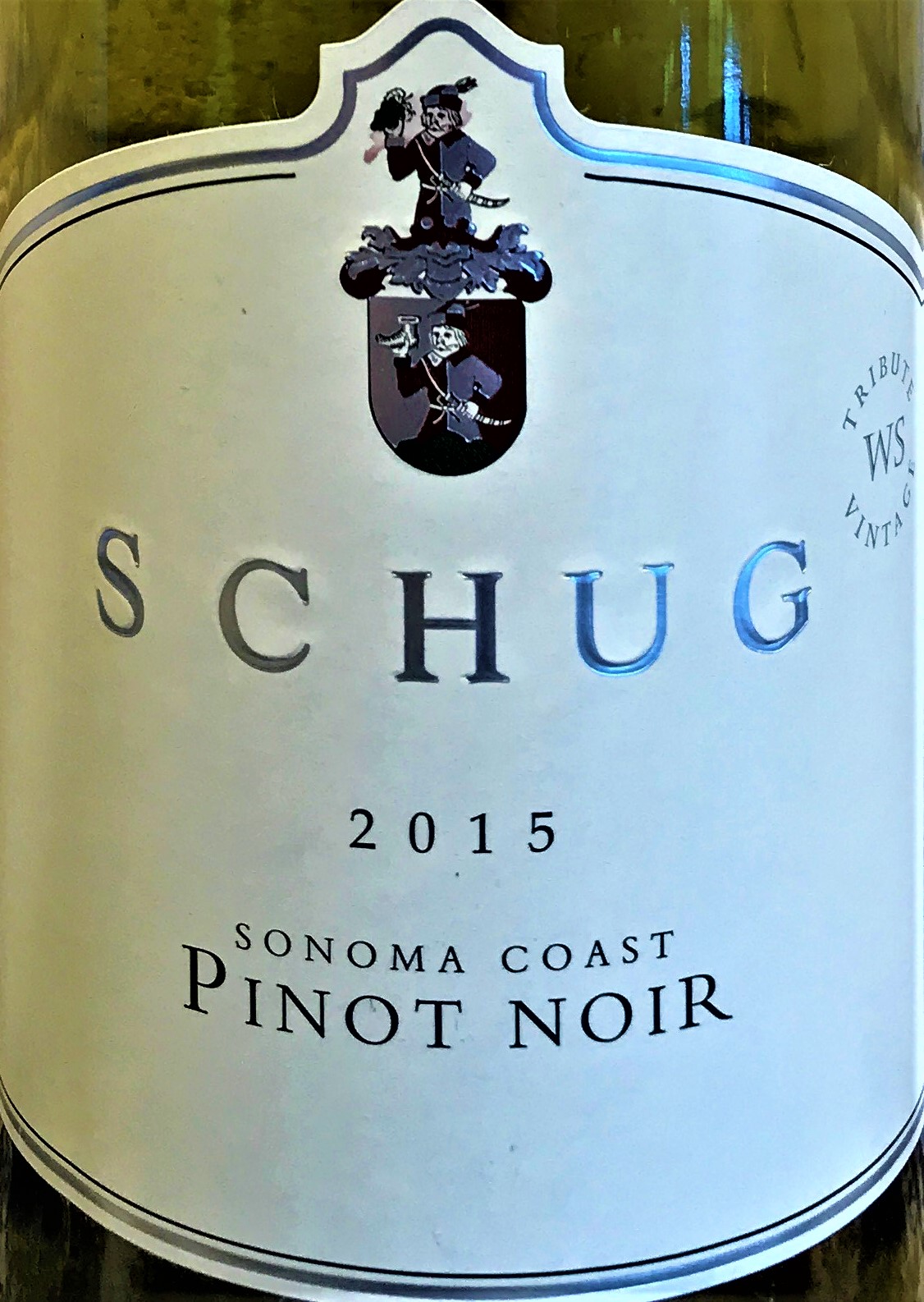
Schug Sonoma Coast Pinot Noir 2015

W Schug 2015Pinot Noir from Sonoma Coast, Sonoma County, North Coast, California, U.S.

100% pinot noir

13.8% alcohol

Purchased:  7 April 2017  –  $19.99

Opened:  19 April 2018

els:  9.0/10

James Suckling:  93

Wilfred Wong:  92

Tastings:  89

Cellar Tracker:  87

The US, when first discovered by the Vikings, was covered in vines and they named the area Vineland. Unfortunately the early settlers discovered that those vines produced a terrible wine. The effort to find a suitable vine for the US began in earnest in the 1600s with the introduction of the Mission grape to Texas, Arizona, and New Mexico and Vitis vinifera to Virginia.  America’s first commercial winery was not established until 1798, finding its home in Kentucky.  Today the US is the 4th largest producer of wine in the world, behind Spain and ahead of Argentina, accounting for 8% of the world’s wine production. There are 89 regions in the country planting 129 prime varieties of grape. The country has almost 8000 wineries that produced 800 million gallons of wine in 2016.

The California wine industry was initially established by Spanish in the 18th century, planting the Mexican sourced “black grape” around their Catholic missions to be used for religious ceremonies and enjoying Californian sunsets.  The “black grape” or the Mission grape, was originally brought to the new world buy Hernan Cortes in the 16th century. It did nothing of note for the Aztecs but it dominated the state’s industry for almost 200 years.

California is far and away the largest grower and producer of wine in the country accounting for about 85% of US production.  The state still ranks as the 4th largest producer in the world just behind France, Italy, and Spain; without including the rest of country. There are over 600,000 acres of vines, 5900 growers and just shy of 4700 wineries in the state producing 285 million cases of wine in 2016. Chardonnay and Cabernet Sauvignon are the most common wine varieties, accounting for about 90,000 and 85,000 acres planted, respectively. In 2016 the state had about 44,600 acres planted in Pinot Noir grapes.

The state has 5 main growing regions: Central Coast, Inland Valleys, North Coast, Sierra Foothills, and South Coast.  Within these 5 regions are upwards to 200 AVAs.  The AVAs  are defined by geography only; counties are automatically classified as an AVA without further registration with the federal government.  85% of the grapes used on an AVA that’s smaller than a county, must be grown there but there are no restrictions on what grapes or amounts that can be used. If it is a county labeled AVA only 75% of the grapes need to come from that area.

The North Coast region, just north of San Francisco, includes the counties of Lake, Marin, Mendocino, Napa, Sonoma, and Solano. The area stretches 100 miles, north to south, and about 50 miles east to west. From Clear Lake on the eastern boundary to the Pacific Ocean on the western edge, the area includes the valleys just north of the San Francisco Bay to the North Coast Mountains in the northern part of the region. The North Coast contains almost half of all the state’s wineries spread over 3 million acres with more than 130,000 acres dedicated to vineyards within 50 smaller AVAs. The predominate grapes are Cabernet Sauvignon and Chardonnay.

Sonoma County wine history dates back to the early 1800s when a Catholic priest established a vineyard around the San Francisco Solano Mission which is now in the city of Sonoma. By the early 1920s the county boasted 20,000 acres of vines and 250 plus wineries. Prohibition knocked Sonoma’s wine industry down to a shadow of its former glory and it took almost 60 years for the county to recover from that social experiment.

Sonoma County has a rich, heterogeneous geography of mountains and valleys that present a profusion of soils and climates that make the French landscape look like vanilla pudding.  The area’s soils are heavily influenced by volcanism along the county’s eastern boundary in the Mayacamas Mountains.  The volcanoes include the Plio-Pleistocene aged Mount St. Helena and Hood Mountain which, among others, spiked the surrounding soils with ash and other wine-loving volcanic ejecta. The climate of the area is a product of its proximity to the Pacific Ocean which has endowed the area with foggy mornings, warm days, not too hot, and cool nights.

Sonoma County is the North Coast’s largest AVA, about 50 miles on a side, containing more than third of North Coast region’s grape acreage, along with 1800 growers, and 400 wineries. The county grows 66 varieties of grapes on 60,000 acres but just 7 of these account for about 90% of all the wine produced.  Chardonnay, Pinot Noir, and Cabernet Sauvignon are the top 3 grapes grown. The area produces about 6% of California’s total wine production versus 4% for Napa.

The county is further subdivided into 3 large AVAs loosely based on geography: Northern Sonoma, Sonoma Coast, and Sonoma Valley with each of these containing an additional 15 distinct AVAs within their borders. These include:  Alexander Valley, Bennett Valley, Carneros Sonoma, Chalk Hill, Dry Creek Valley, Fort Ross-Seaview, Fountaingrove District, Green Valley, Knights Valley, Moon Mountain District, Petuluma Gap, Pine Mountain – Cloverdale Peak, Rockpile, Russian River Valley, Sonoma Mountain. Petuluma Gap was granted AVA status in 2018.

Sonoma Coast, awarded AVA status in 1987, has about 2000 acres planted in vines and around 10 wineries. Chardonnay and Pinot Noir are the most planted variety in the AVA with Syrah coming in third. The climate in this area is cooler and wetter than the rest of the county with lots of fog.

Pinot Noir, native to the Burgundy region of France, is a cool climate, thin-skinned, fussy grape. It is a popular drinking wine, ranking as number 10 in the world by acreage. France and the US are the largest growers of the vine, each with about 75,000 acres under cultivation out of 215,000 acres worldwide. The grape produces a garnet to ruby colored wine with low tannins and medium-body.  The low tannins generally mean it does not age well but that property can be quite unpredictable. Young wines have aromas of cherries and raspberry but older wines tend to acquire more earthy smells.

Schug Carneros Estate Winery, a family operation, with strong wine-making roots in Germany has been making North Coast Schug wines since 1980. In 1989 the family purchased 50 acres in the Sonoma part of the Carneros Sonoma AVA from which winery has grown to its present form of old world tradition and new world wine-making techniques.

This Pinot Noir is sourced from several owned and non-owned vineyards in the Sonoma Coast AVA area including: 29% Ricci, 16% O Tirado, 13% Stage Gulch, 5% Schug Estate, 4% Sangiacomo, 15% Russian River, 14% Sonoma-Carneros. The grapes were harvested from 24 August through 19 September 2015.

After harvesting, the wine was fermented in stainless steel tanks with pump over occurring 2-4 times daily, followed by malolactic fermentation in neutral oak casks. Aging was in neutral French oak barrels.  The wine was released for sale on 1 October 2016.

A dark garnet color with aromas nuts, chocolate, cherry and a hint of oak.  A spicy medium-bodied wine with a medium finish.

We enjoy Pinot Noir as a sipping wine, indulging in them in the late afternoon, slightly chilled, with a plate of sliced fruits and chocolates nearby to provide some contrasting tastes to this fruity wine.

An outstanding wine at a fair to good price. It should last until 2019-2021. Decanting this wine did it a world of good.

$16.99-29.00 wine-searcher.co
Mollydooker Blue Eyed Boy Shiraz 2016

W Blue Eyed 2016Shiraz from The Gateway, McLaren Vale, Fleurieu Zone, South Australia, Australia

100% shiraz

16.0% alcohol

Purchased:  6 April 2018  –  $60.00

Opened:  6 April 2018

els:  9.1/10

Cellar Tracker:  91

In the beginning, Australia’s entire stock of vines had to be imported from Europe and South Africa since it does not have any native grape varieties. In the early 1800s John Macarthur, established the first successful vineyards and winery near Sydney. By the early 1820s wine was being produced in sufficient quantities that the first exports were recorded in 1822.  In 1833 James Busby brought additional cuttings from Europe and introduced Shiraz to the fledgling wine industry. By the latter half of the 1800s, Australian wines were garnering world-wide attention and tasting awards.  Then the unspeakable happened. Phylloxera reached Australia around 1875 destroying a majority of vines in the country.  It would take until the 1960s before Australia moved beyond fortified wines and started producing good to great table wines again.

Wine is currently produced in all 6 six of the country’s states which are further divided up into 65 wine regions that contain over 2400 wineries.  The regions creating serious wines, though, are all located in the cooler southern states of Western Australia, South Australia, New South Wales, and Tasmania.

Australia, in 2016, was the 5th largest producer of wine in the world, behind the US and ahead of China, making 343 million gallons of wine or about 4% of the world-wide total.  Australia consumes about 40% of their wine or a little more than 135 million gallons and exports 60%, about 215 million gallons in 2017, and is 4th largest exporter of wine in the world.  The country exports to 126 counties but five of those countries; China, the US, the UK, Canada, and Hong Kong account for 75% of the total wine exports. China is by far the country’s largest market, sending about a 3rd of their total wine exports, by value, to their thirsty northern neighbors.

The country grows over 130 varietals with just a few accounting for the lion’s share of all grapes harvested. The red grapes Shiraz, Cabernet Sauvignon, and Merlot accounted for 85% of all grapes harvested in 2017. Shiraz contributed 47% to that years red grapes total harvest.  Chardonnay is the top white grape harvested in 2017 accounting for 42% of the total.

South Australia is the largest wine area, by acres of vines planted and wine produced, in Australia.  The temperatures vary widely over area, cool along the coast and hot in the interior. The area is consistently dry and requires irrigation almost everywhere. The area first started growing grapes and producing wine back in the 1830s.

The region had almost 190,000 acres planted in 2017, more than half of the country’s total.  The area produced over 160 million gallons of wine in 2017 and exported 135 million gallons. China-Hong Kong, the UK, the US, and Canada are South Australia’s largest export markets.

There are 7 wine zones, further divided up into 20 distinct regions in South Australia. The zones are: Barossa, Fleurieu, Mount Lofty Ranges, Far North, Limestone Coast, Lower Murray, and The Peninsulas.  The 20 regions are all recognized appellations known in the country as Australian Geographical Indications or AGIs.

McLaren Vale, 1 of the 5 regions within the Fleurieu zone, is one of two premier South Australia wine-producing regions in the country; the other being Barossa Valley. McLaren Vale’s wine history goes back at least 175 years to the time of John Reynell and Thomas Hardy and their first grape plantings in the region.  Today’s Accolade Wines traces its beginnings back to the establishment of the Thomas Hardy and Sons winery, in 1853, in Old Reynella, now a suburb of Adelaide. With its Mediterranean climate and well-drained soils, McLaren Vale has 18,000 acres planted in vines and more than 80 wineries. Its star pupil is Shiraz, accounting for 55% of all grapes grown and processed. The region also produces great wines from Cabernet Sauvignon and Grenache grapes.

Australia is the second largest producer of Shiraz or its genetic French twin, Syrah, in the world, France being the first. These are dark-skinned grapes that produce wildly different flavors depending on the terroir they spring from. The cooler climate versions tend towards medium-bodied wines with higher tannins, producing flavors and aromas of pepper and tobacco.  In the hotter climates, such as McLaren Vale, the wine is fuller in body, softer in tannins with notes of leather and velvety chocolate. Ageing potential is 10-15 years.

In 2006, Sparky and Sarah Marquis established their own brand: Mollydooker, and opened their winery the next year just a few miles southwest of Adelaide and a hop, skip, and jump from the Gulf of St. Vincent in The Gateway sub-region of McLaren Vale. From the outset they have produced outstanding wines garnering high 90s ratings and wine of the year accolades, seemingly without effort. The winery includes 3 vineyards: Long Gully Road, Coppermine Road (Steve Earle’s Copperhead Road produced weed and whiskey),  and the Home Block, totaling 114 acres planted in Shiraz, Cabernet Sauvignon and Merlot.

The grapes for Blue Eyed Boy were grown on all 3 of Mollydooker’s vineyards: Coppermine Road, Long Gully Road, and Home Block. The vines are growing in ancient, Snowball Earth, Pre-Cambrian to Cambrian metasediments, usually extremely weathered and kaolinized. The metasediments include various textures from siltstones to sandstones and limestones to dolostones.  The Mollydooker vineyards are situated a little over 450′ above sea level and enjoy a Mediterranean climate with growing season temperatures ranging from 55-85ºF.  Rainfall is generally less than 1.25″ per month during the growing season.

The grapes are barrel fermented and matured in American oak, 58% new and 42% one- year old.

A dark, dark purple wine with a ruby rim. Aromas of  blueberry, plum and a hint of vanilla. A full-bodied wine, well-structured, and solid tannins. Juicy, silky and smooth, with a very long finish. The high alcohol content does sneak up on you after a couple of glasses.

An outstanding wine.  My wife and I had this for dinner at the Helix Wine and Bites restaurant in Grand Forks, ND.  We shared an entrée of a fall-off-the-bone rib eye, served with baked new potatoes and fried broccoli in olive oil and garlic.

The wine with the meal was simply astounding. The wine is on the pricey side but worth it for special occasions. It is a little young to drink now, wait awhile.  It should last until 2026-2030. Decanting this wine did it a world of good.

$48.99 wine.com

Graham’s Six Grapes Reserve Port

W Graham Ruby 2018Ruby Port from Vila Nova de Gaia, Douro Valley, Portugal

Main Grapes: touriga franca – touriga nacional – tinta roriz – tinta barroca

Secondary Grapes:  tinta amarela – tinta cao – souzao – tinta francisca

19.5% alcohol

Purchased:  6 March 2017  –  $19.99

Opened:  31 March 2018

els:  9.0/10

Decanter:  95

Wine and Spirits:  91

Wilford Wong:  91

Falstaff Magizin: 91

Wine Enthusiast:  89

Wine Spectator:  87

Cellar Tracker:  87

Grapes in Portugal extend back 4000 years to the times of the lost civilization of Tartesso, with vineyards being established in river valleys along the southern Iberian Atlantic coast. Tartesso is thought, by some, to be synonymous with Atlantis or at minimum, a contemporary cousin and both are now believed to be drowned, sunken cities, possibly somewhere on the southern Iberian continental shelf. The Phoenicians, who began arriving in 12th century BC, followed by the Celts in the 8th century BC, and the Greeks a century later, all likely contributed to increasing the plantings, production, and trade of Iberian wine. The first real evidence of wine production comes from the 5th century BC and the arrival of the Carthaginians, who replaced the Phoenicians and closed the Gibraltar Straits to the Greeks. Meanies. Then the Romans came, gaining partial control of the Iberian Peninsula from the Carthaginians after the first Punic War in the 3rd century BC, and cementing their control by the conclusion of the second Punic War.  The Romans were instrumental in expanding the vineyards of southern Portugal and establishing the first vineyards in northern Portugal, including the Douro River Valley. The Christians and the barbarians continued the wine making and trade after the Romans left until the 8th century AD, Arab conquest of the peninsula ended their reign. This caused the wine industry to experience setbacks and difficulties, mainly in the 12th century, but everything returned to normal after they were expelled from Portugal in the 13th century.  Beginning in the late 14th century, the British, in their thirst for wine, slowly took control of Portuguese wine industry, and trade between the two countries thrived.

Portugal is the 11th largest producer of wine by volume, behind Germany and ahead of Russia.  In 2015 the country produced 177 million gallons of wine or 2.4% of the world-wide total. The country is the 9th largest exporter of wine, by volume, shipping 74 million gallons or about 2.7% of the total world-wide exports, behind Germany and ahead of Argentina.  Fortified wines accounted for 19 million gallons of the 74 million exported. Their exports rank 10th in the world by value, shipping $805 million worth or 2.5% of the world total, behind Argentina and ahead of Hong Kong.  Their vineyards exceed 550,000 acres planted in grapes, about 2.5% of the world-wide total.  France, UK, and Angola are the top markets for Portuguese wines.  There are more than 2900 wine producers growing in excess of 250 types of grapes in the country.

Portugal’s wines are categorized into 3 different levels of quality. At the upper end of quality scale are 31 DOCs (Portuguese label) or DOPs (European Union label), with clearly defined geographic limits and strict rules for grape usage, and yield. The mid-level quality wines are the 14 large regional areas labelled as VR, IG, or IGP; 12 on the mainland and the 2 island regions of Madeira and the Azores. The rules for these wines are less strict than DOCs but details such as grape varieties and alcohol content are still prescribed. At the bottom of the scale are table wines, which are not necessarily bad wines, but this level has no rules to constrain the artistic impulses of the area’s wine makers.

The Porto and Douro DOC, with a bit more than a 100,000 acres of grapes under cultivation, occupies the valley created by the 550 mile long Douro River, its headwaters near the small Spanish town of Duruelo de la Sierra at 7300′ above sea level. The Portuguese portion of the river flows westward about 90 miles through the Mountains of Leon from the eastern Spanish border to the  Atlantic coastal city of Porto. The DOC’s geographical limits in the valley stretch from the Spanish border and continue westward about 60 miles to the small city of 4500 inhabitants: Mesao Frio, an ancient shelter along a Roman road and the Douro River dating back to the 3rd century AD.

Wine in the Douro region is known from at least the time of the 3rd century Roman occupation but likely goes back to the beginning of the first century AD. It is the oldest region in the world with a formal demarcation (appellation) for making wine.  A royal Portuguese edict in 1756 stipulated the geographic boundaries for Port wine. Two other less formal wine region declarations in the world preceded Douro: the 1716 Lega del Chianti which defined the geographic area for production of Chianti wines in Italy, and the 1730 Hungarian vineyard classification in the Tokaj region which used soil and the propensity for the grapes to rot as an area specific guide.

The wine region’s vineyards are terraced into the steep slopes of the mountains, planted in man-made soils of broken up schist and granite.  The schist soils are usually reserved for grapes used in the production of Port while the granite soils grow grapes for table wines. The mountains protect the grapes from the full climatic effects of the Atlantic Ocean’s cold winds.  The DOC is divided up into 3 sub regions: Baixo Corgo, the cooler, wetter, western-most area with the most vineyards, 35,000 acres, but with the generally the lowest quality wines; Cima Corgo or Upper Corgo, the heart of Port wine production with 47,000 acres planted; and the eastern-most Douro Superior, having the coldest winters and hottest, driest summers. This latter area is currently experiencing rapid growth in grape plantings and wine production but currently only 21,000 acres are cultivated. Temperatures in the valley during the growing season range from 45-90°F with rainfall averaging 0-2.3″ per month. There are 5 main Port grapes grown in the area: Tinta Roriz, Touriga Franca, Touriga Nacional, Tinta Barroca, and Tinto Cão, all usually planted together in the older vineyards but the modern method is to plant single varietals. The Sousão grape is also gaining popularity in the Douro vineyards.

Port, a fortified sweet wine, takes its name from the northern Portuguese, Atlantic coastal city of Porto, the main export center for the valley’s wines. The grapes are grown, and the wine is produced upstream in the Douro Valley while the blending and ageing generally occurs across the river from Porto in the sister city of Vila Nova de Gaia. No one really knows exactly when Port wine was created but is believed to have its genesis in the later part of the 1600s or the beginning of 1700s, and as legend has it, the monks in the Douro Valley monastery of Lemago were responsible for its inception.

Port is made by adding a neutral grape spirit, sometimes referred to as brandy, to the wine before the fermentation process has completed.  The grape spirit stops the fermentation leaving residual sugar and boosts the alcohol content and sweetness of the wine.  The addition of the grape spirit, was to ‘fortify’ or protect the wine for its trip to England. There are numerous styles of Port including: Ruby, a young, blended wine of  different vintages and varietals, aged for less than 3 years; Tawny is a blended wine that is aged in wood for more than 3 years and sometimes up 40 years; Vintage is a single, exceptional year harvest, allowed to age in a barrel for 2 to 3 years and then bottled. Not all years produce a Vintage Port.  Vintage Ports should be allowed to age for 15 years or more in the bottle before drinking.  They can take up to 60 years to fully mature. The six most widely used grapes for Port wine are Touriga Franca, Tinta Roriz, Tinta Barroca, Touriga Nacional, Tinto Cão, and Tinta Amarela.

Touriga Franca is the most commonly planted grape in the Douro DOC, accounting for about 20% of all acreage planted. The wines are  dark and dense with aromas of black fruits and flowers. The tannins are high which provide for excellent aging potential.  For Ports and red blends it is commonly mixed with Tinta Roriz and Touriga Nacional wines.  The grape is almost exclusively grown in Portugal, accounting for 99.97% of the world-wide plantings.  It is the 59th most commonly grown grape in the world, planted on 28,600 acres world-wide.

Tinta Roriz, also known by its more familiar name, Tempranillo, is a black grape used to make full-bodied red wines, or in Portugal, one of the main varietals used to make Port.  The grape is believed to have existed on the Iberian Peninsula since the time of the Phoenicians. It produces a ruby-red wine with flavors of berries, plum, tobacco, vanilla, and herbs. Tempranillo is the 4th most common grape grown in the world.  In Portugal it is grown on 41,300 acres versus 575,000 acres world-wide.

Tinta Barroca is another commonly planted vine in the Douro area and is almost exclusively grown in Portugal. It is seldom used as a single varietal wine. It is a thin-skinned grape that adds dark colors, the tannins are few, with flavors of plums and cherries. The grape does poorly in high temperatures or excessively dry conditions. This varietal is the 96th most common grape in the world being grown on 15,250 acres world-wide of which 14,675 acres are planted in Portugal.

Touriga Nacional is Portugal’s finest red grape and is planted throughout all 14 of the country’s regions but is believed to have originated in either the Dao or Douro areas. It is a low yielding, thick-skinned grape, high in tannins, with intense flavors of  black currants, raspberries, and liquorice. The varietal is the 67th most common grape in the world, planted on 25,800 acres world-wide, of which 25,000 of those acres are in Portugal.

Tinta Cao dates back to the 1700s in the Douro Valley. The thick-skinned grape has great balance between tannins, acidity, and sugar. It has floral aromas, is well-structured, and is frequently blended with Touriga Nacional and Aragonez wines. The grapes produce very low yields making them very difficult to justify, economically, in the growers’ vineyards. This varietal is ranked 411th in the world and is only found in Portugal.  It is grown on about 900 acres and may soon be extinct.

Tinta Amarela is a difficult grape to grow, doing best in hot, dry climates.  The grapes are full of tannins producing dark, full-bodied wines but are primarily used in Ports.  The grapes are fairly high-yielding, producing aromas of blackberries, flowers and herbs.  The berries are susceptible to rot in wetter climates and have a harvesting window of just a few days. This grape ranks 75th in the world and is almost entirely grown in Portugal. In Portugal it is planted on 22,850 acres with only about another 60 acres grown in the rest of the world.

The brother’s Graham, William and John,  British mercantilists, founded their firm along the banks of the Douro River in Porto, Portugal. There initial business was to trade in textiles but in 1820 they bartered twenty-seven barrels of Port for textile debt. From that point forward they decided that making the best port in the world was much more interesting and enjoyable than buying and selling patterned cloth.  The brothers bought their own vineyard in Douro Valley in 1890.  That same year they also built their Vila Nova de Gaia lodge, across the river from Porto.  The lodge is still used today to blend and age their ports. The cellar contains 2000 pipes (126 gallon wooden barrels), and 40 tonels (cement vats) and balseiros (large wooden, vertical vats).

In 1970 the Symington family fortuitously took control of the company with that year’s vintage being considered one of the greatest in the century.  The families Portuguese heritage dates back to the arrival Andrew Symington, arriving in Porto from Scotland in 1882. Today, 5 Symington cousins run Graham’s, along with Warre’s, Dow’s, Blandy’s, Leacock’s and many others. They are the largest owners of vineyards in Douro which today amounts to about 2300 acres.

Graham’s has 5 terraced vineyards in the Douro Valley; all with well-drained, unirrigated schistose soils, growing in a hot dry climate: 1) Quinta Dos Malvedos, the original Quinta, in the Upper Corgo grows 4 different grapes: 35% Touriga Franc, 29% Touriga Nacional, 18% Tinta Barroca, and 13% Tinta Roriz. 2) Quinta Das Lages in Rio Torto, a northern tributary of the Douro River, grows 38% mixed varietals (it is quite common in the valley for growers not to know exactly what varietal is growing) 22% Touriga Franca, 21% Touriga Nacional, and 14% Tinta Barroca. 3) Quinta Da Vila Velha in the Upper Corgo, produces 38,000 gallons of wine each year from 4 varietals: 33% Touriga Franc, 17% Tinta Roiz, 13% Touriga Nacional, and 12% Tinta Barroca. 4) Quinta Do Vale De Malhadas in the Douro Superior grows 3 varietals: 55% Tinta Roriz, 24% Touriga Franca, and 15% Touriga Nacional.  5) Quinta Do Tua in Upper Corgo has some of the oldest vines, growing 4 varietals: 28% mixed varietals, 21% Touriga Nacional, 17% Touriga Franca, and 17% Souzao.

Six Grapes, Graham’s short hand for their best grapes, sources them from the same 5 vineyards that produce its Vintage Ports. Approximately 35% of the best grapes from the vineyards are set aside each year to potentially source their Vintage Ports. Only a small percentage, if any, of those grapes eventually are bottled as Vintage Ports with the remaining being used to make Six Grapes Port.

The grape varietals are fermented separately at the company’s Quintas and are brought down river to Vila Nova de Gaia to be aged 1-2 years in the cellar’s seasoned, wooden barrels.

A dark, inky wine with flavors of plum and sweet cherries. A great structured wine with a very elegant, lasting finish.

Although there is some movement to serve Port with a meal containing beef, I find this difficult to pursue or appreciate. I believe there are only a few options for enjoying Port, either as an after dinner digestive, by itself as an after work or late night restorative, or with chocolate.  My preference is to have a few Godiva raspberry truffles on hand when drinking this Port.  They were absolutely made for each other.

An outstanding ruby port at a fair price. Drink this year but will be good for many years, decades even, after buying.

$19.99 wine.com