A Little Big Tale

Little Big Man (Theaters – December 1970; Streaming – April 2003)  Rated: PG  —M Little 1970  Runtime: 139 minutes

Genre:  Adventure – Comedy – Satire – Western

els:  6.5/10

IMDB:  7.6/10

Amazon:  4.5/5 stars

Rotten Tomatoes Critics: 7.9/10

Rotten Tomatoes Audience:  3.8/5

Metacritic Metascore:  63/100

Metacritic User Score:  8.0/10

Awards: NA

Directed by:  Arthur Penn

Written by:  Calder Willingham (screenplay), Thomas Berger (book)

Music by:  John Hammond

Cast:  Dustin Hoffman, Faye Dunaway, Chief Dan George, Richard Mulligan

Film Locations: Calgary, Morely, Alberta, Canada; Billings, Crow Indian Reservation, Hardin, Lame Deer, Little Big Horn Battlefield, Nevada City, Virginia City, Montana – Agoura Hills, Los Angeles, Thousand Oaks, California, US

Budget: $15,000,000

Worldwide Box Office: $31,600,000

An ancient and time-worn Jack Crabb (Hoffman), spending his final days in a nursing home, relates his incongruous life of farce and fate to an interested historian.  At the age of 10 a Pawnee raiding party attacks his family and kills his parents. Later a Cheyenne brave finds him and his sister hiding in their destroyed wagon and takes them back to his tribe.  The tribe’s chief, Old Lodge Skins (Chief Dan George) raises the boy and thus begins a series of improbable events that punctuate Jack’s long and full life. Indian on Indian battles, white on red battles, sexually repressed preacher’s wife battles, gunfighter playing, snake oil selling, drunken despondency; all  in a day in the life of a western meme.

Arthur Penn creates a movie of contrasts that is labeled revisionist history but is no more than a comedy situated in the late 19th century American west, incorporating events of historical interest but not necessarily accurate or correct. The contrasts are established through the lives of the story’s actors, their happenstance encounters and experiences highlighting life’s hypocrisy and charades. Jack as a natural gunfighter that cannot stomach killing, a preacher’s wife that seeks pleasure over salvation, a narcissistic general searching for fame through folly. A tragedy’s lessons told through tongue-in-cheek schtick. An effective delivery of farce that unfortunately passed as truth for millions of viewers.

Hoffman takes top billing as lead actor and he delivers a masterful performance both on-screen and as the voice-over narrator, but it is Chief Dan George who shines, turning an ok script into a wonderful exhibition of cheerful existence in the face of our inhumanity. George was nominated for an Academy Award but unfortunately lost out to John Mills in the totally forgettable Ryan’s Daughter. Richard Mulligan, as Custer, turns in a performance that is remarkable in its absurdity, an under-dog role elevated to a tour-de-force of parody. Faye Dunaway’s hilarious representation as a sexually needy whore and preacher’s wife sets the standard for urgency over love, a role reprised brilliantly by Madeline Kahn as Lili von Shtupp in the 1974 romp, Blazing Saddles.

Little Big Man is a fun chuckle of a movie that should not be confused for history but as a satire of the past. A movie encompassing a large swath of all western tales encapsulated into a few hours of humor and jest.


Dying Young

The Curious Case of Benjamin Button (Theaters – December 2008; Streaming – May 2009) M Button 2008Rated: PG  —  Runtime: 166 minutes

Genre: Drama – Fantasy – Mystery – Romance – Suspense

els – 7.5/10

IMDB – 7.8/10

Amazon – 4.6/5 stars

Rotten Tomatoes Critics – 7.1/10

Rotten Tomatoes Audience – 3.7/5

Metacritic Metascore – 70/100

Metacritic User Score – 7.3/10

Awards:  3 Academy Awards – Nominated for 13

Director:  David Fincher

Written by:  Eric Roth (story and screenplay), Robin Swicord (story), F. Scott Fitzgerald (story)

Music by:  Alexandre Desplat

Cast:  Brad Pitt, Cate Blanchett, Julia Ormond

Film Locations:  Cambodia; Montreal, Canada; India; Burbank, Los Angeles, California – Donaldsonville, Laplace, Mandeville, Morgan City, New Orleans, Louisiana, US; St. Thomas, US Virgin Island

Budget:  $167,000,000

Worldwide Take:  $379,000,000

Mr. Gateau, the best clockmaker in all of the southern US, is commissioned to build a clock for a new train station set to open in 1918. When the clock is unveiled, it is running backwards. Mr. Gateau, who lost a son to the recent war, affirms that it is running as designed; to  grant those lost to the war a way back to life and the living.  On 11 November 1918, Armistice Day, Benjamin Button (Brad Pitt) is born, wrinkled and worn, losing his mother to his birth and his father, abandoning him on the porch of an orphanage. Benjamin is a consistent contradiction, experiencing life in a counter-clockwise direction.

The Curious Case of Benjamin Button took 20 years, 7 potential directors prior to Fincher, 3 lead actors before Pitt, 3 different possible producers, and 2 production companies to finally deliver a product for the viewing public to consume. David Fincher brings his visual effect expertise to the forefront, as he usually does, with this enchanted story of love and time. He balances the CGI with a spellbinding collage of romance and courage that moves beyond the flesh. The visual effects are absolutely stunning, keeping this fantasy real and believable.  Fincher was likely the only director that could make this movie and keep the audience interested.

Brad Pitt contributes a somewhat predictable performance, detached but lovable, low-key and restrained, letting his body language provide the message, more so than his dialogue. It works and adds to the mystic of the film but it’s Cate Blanchett’s Daisy that draws you into this movie.  Daisy is a very complex character and Blanchett handles it with grace, charm, and a natural style that holds you in a delightful, enamored state of wonder throughout the film. Sad that she wasn’t even nominated for her more than deserving efforts by the Academy or the Golden Globes.

Benjamin Button is beautifully made, telling a story of true love that outstrips the concepts of time.


Shrew Taming

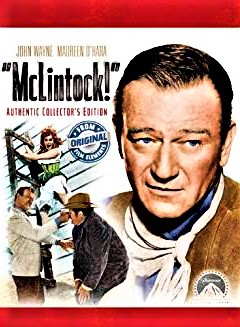
McLintock!  M McLIntock 1963

Theaters:  November 1963

Streaming: July 1997

Rated: NR

Runtime: 127 minutes

Genre: Comedy – Romance – Western

els:  6.0/10

IMDB:  7.3/10

Amazon:  4.5/5 stars

Rotten Tomatoes Critics:  5.1/10

Rotten Tomatoes Audience:  3.9/5

Metacritic Metascore:  NA/100

Metacritic User Score:  NA/10

Awards: NA

Directed by: Andrew V. McLaglen

Written by: James Edward Grant

Music by: Frank De Vol

Cast: John Wayne, Maureen O’Hara

Film Locations: Fairbank – Chiricahua National Monument – Duquesne – Harshaw – Klondyke – Las Cienegas National Conservation Area – Lochiel – Nogales – Patagonia – Ruby – San Raphael Valley – San Xavier – Sonoita – Sonoran Desert – Tucson, Arizona, USA

Budget: $4,000,000

Worldwide Box Office: $14,500,000

Katherine Gilhooley McLintock (Maureen O’Hara) after a 2 year absence returns to her husband, G.W. McLintock (John Wayne) and their ranch outside of the western town of the eponymous McLintock to ask for a divorce, custody of their teenage daughter, and alimony. G.W., still confused about why she left in the first place, just says no to all and proceeds to woo Katherine back to his arms and their ranch.  While G.W. deals with his recalcitrant wife he also faces challenges from dirt farmers trying to farm the unfarmable high plateau, Indians resisting resettlement to the reservation, along with the worthy and not so worthy suitors pursuing the affections of Becky (Stefanie Powers), his daughter. All matters proceed in a slapdash but charming facetiousness.

This movie is all John Wayne. He chose the director, Andrew V. McLaglen, herded the script through completion with scriptwriter, James Edward Grant, had his son Michael produce the movie, and another son, Patrick star in the slightly incestuous role of  a cow-hand courting his movie daughter Becky. The film also marks the beginning of Wayne letting the world know his views on everything from politics to education within the confines of this and his subsequent movies.

The movie reunites John Wayne with his frequent co-star Maureen O’Hara. These two worked together in 4 other movies including the 1950 Rio Grande, the 1952 The Quiet Man, the 1957 The Wings of Eagles, and the 1971 Big Jake. The two had a special working relationship, each able to abide the other’s head strong tendencies, and both could act their parts, from the common “man” to the polish and charm of the upper crust. Their onscreen affection for each other always came through as honest and real, not only a credit to their abilities as actors but also their deportment as a true lady and a true gentleman, all in an age gone by.

A legitimate classic movie with hints of Shakespeare’s comedy, The Taming of the Shrew, the moral education of Father Knows Best, and the real-life tragedy known as the Trail of Tears. John Wayne taming Maureen O’Hara, John Wayne educating his family and friends, John Wayne attempting to reconcile the law with the Indians’ pride and heritage.  John Wayne shows a humorous side in this movie but he is still the big man on the set.

Obsession and Reality

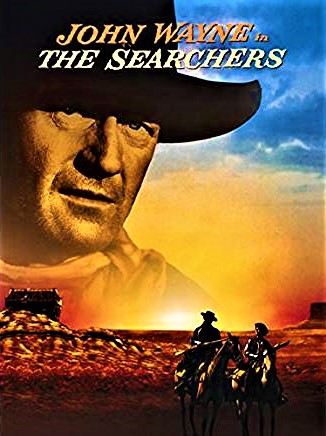
The Searchers (Theaters-March 1956; Streaming-May 1999) Rated: PG  —  Runtime: 119 M Searchers 1956minutes

Genre: Adventure-Drama-Western

els – 8.0/10

IMDB – 8.0/10

Amazon – 4.0/5 stars

Rotten Tomatoes Critics – 8.9/10

Rotten Tomatoes Audience – 4.0/5

Metacritic Metascore – NA/100

Metacritic User Score – NA/10

Awards: 1 Golden Globe

Directed by: John Ford

Written by: Frank S. Nugent (screenplay), Alan Le May (book)

Music by: Max Steiner

Cast: John Wayne, Jeffrey Hunter, Vera Miles, Ward Bond, Natalie Wood

Film Locations: Edmonton, Alberta, Canada: Kayenta – Mexican Water – Monument Valley – Red Mesa – Teec Nos Pos, Arizona; Los Angeles – Culver City, CA; Aspen – Gunnison, Colorado; Goosenecks State Park – Mexican Hat, Utah; USA

Budget: $3,750,000

Worldwide Box Office: $NA (commercial success)

As Martha Edwards (Dorothy Jordan) looks out of her home onto a stretch of Texas scrub and hills, the camera, inside the house, framing her in the door from behind, watches as her long absent brother-in-law, Ethan Edwards (John Wayne) slowly rides on his pony towards the ranch house. Ethan is coming home to his brother’s ranch in 1868, returning after 8 years of war; first as a confederate in the US Civil War and then as a mercenary in the Mexican Revolutionary War. He’s tired and wanting, needing, some peace in his life and to be once again near his secret love, Martha, his brother’s wife. With one night’s rest, Ethan and the rest of the Edward’s family are informed by a company of Texas Rangers that a Comanche raiding party has run off with a neighbor’s cattle. The Rangers, plus Ethan, go after the Indians to retrieve the cows. They soon realize that the theft was a ruse, to draw off the Rangers, with the real crime occurring back at the Edwards’ ranch.  Returning to the ranch they find the buildings burning, Ethan’s brother, wife and son dead, and their 2 young daughters missing, taken by the Comanche for wives and ransom. Ethan, his nephew Martin (Jeffery Hunter), and the Rangers, again set out to find the Indians and retrieve the girls.  Thus begins a five-year odyssey, searching for lost relations but knowing the girls innocence and maybe their lives are lost forever in the Texas hills of sand and scrub.

John Ford created, along with John Wayne, a movie that has transcended its time and its genre to become one of the greatest films ever made. His western landscapes of splendor and greatness have inspired directors ever since. The red sands and blue sky panoramas, the geometries of lines and curves are beyond human capacity to measure; we can only hold our breath and treasure the vision. Ford tells a somber story of a different time, an earlier time when the Comanche were terrorists, a time when the settlers were conquerors. He tells the story with little mercy; raw in emotion, yet, with a large dose of hope.  Roger Ebert believes Ford, in making this movie, was apologizing for the white settlers racism and ethnic cleansing. I believe John Ford knew his history and presented it as it was, maybe unpleasant, but real; not racism: living. The Comanche were battling for their home, their freedom, and in the end, their existence by any means possible, and those possibilities were brutal and savage.  The white settlers for battling for a new beginning, their freedom, their families, their future; and their methods were brutal and savage.

Ethan Edwards was likely John Wayne’s greatest challenge as an actor. A part that wasn’t in his “good guy, tough guy” repertoire. A part where he’s a grim and dark loner, an outcast that has lived too much of his life on the losing side. A part where he still believes in himself, exemplified by the classic line, “That’ll be the day.”, but were time has passed him by and he struggles to find himself; trying to feed an obsession that exists in the past while the world has moved on.  He’s the toughest guy, capable of making the toughest choices but very slowly gaining an appreciation for nuance, for the shades of gray in his black and white world, a world that is constantly testing his beliefs. John Wayne rises to this challenge and produces a character in all the dimensions of good, bad, and yes, ugly, that usually don’t materialize in him or his movies.

In the final scene, the camera focuses on the outdoors from the inside of a house, a door with its straight lines, framing the ill lit inside against the bright outside.  John Wayne, with his back to the camera, steps outside, pauses, and then starts walking away. Wayne as Ethan Edwards, always on the outside but maybe, in the end the stark outline of his shadow is gentler, softer, more at peace with his soul.

This movie is a classic and most likely the greatest Western ever made. Interestingly it keeps rising up the ranking lists with the passing of time, as it should. This is a movie to judge as it was, a chronicle of the past, not an apology, and certainly not a testament to our present.

Boiler Maker Redemption

Small Town Crime (Theaters-NA; Streaming-January 2018) Rated: R  —  Runtime: 91-92 M Small Town 2018minutes

Genre: Crime-Drama-Mystery-Suspense-Thriller

els – 7.0/10

IMDB – 6.6/10

Amazon – 4.0/5 stars

Rotten Tomatoes Critics – 7.0/10

Rotten Tomatoes Audience – 3.9/5

Metacritic Metascore – 68/100

Metacritic User Score – NA/10

Awards: None

Directed by: Eshom Nelms, Ian Nelms

Written by: Eshom Nelms, Ian Nelms

Music by: Chris Westlake

Cast: John Hawkes, Octavia Spencer, Robert Forster, Anthony Anderson

Film Locations:  Utah

Budget: $NA

Worldwide Box Office: $NA

Mike Kendall (John Hawkes) is a big-time drunk and a small-town ex-cop.  A small-town ex-cop because he is a big-time drunk. Riding shotgun, too drunk to drive, with his uniformed partner; occurring immediately before he becomes an ex-cop, in the wee hours of night, they pull over a car and the driver shoots and kills Mike’s partner.  Mike, because he was drunk, is thrown off the force and he sinks further into the bottle but truly believing the police will forgive, forget and hire him back.

Coming around from his nightly bender, Mike finds a badly bloodied girl by the side of the road. He rushes her to the hospital but she soon dies and the death is ruled a homicide.  Seeking redemption, Mike sets out to solve the murder, dragging his family, bartenders, hookers, pimps, grandfathers, and assorted none-too friendly cops along for his burlesque, but borderline professional investigation, into multiple gruesome murders.

The Nelms brothers have woven a fateful crime story worthy of the Cohen brothers’ The Big Lebowski or Fargo. Less comedic than Lebowski and less dramatic than Fargo but all three display the same irreverent contempt for criminals and their slapdash, albeit, serious and consequential, escapades.  The Nelms’ writing and directing are reminiscent of Dragnet’s Friday, just the facts — ma’am.  Watching the movie you wish they would develop some of the more interesting sub-plot lines but in the end the movie does just fine without the added knowledge or clutter.

The acting is superb.  John Hawks is masterful in delivery but he really pulls you in and along with his bumbling style and looks.  His appearance and his face are one with a character that has been on a multi-year drunk.  Gaunt and not too pretty he somehow succeeds in getting you to cheer for him no matter how much his bum nature comes into full gnarly view.

A fun movie, not too serious but captivating just the same.  A worthy addition to pulp fiction and film noir. Escapism with a style all its own.

Alone

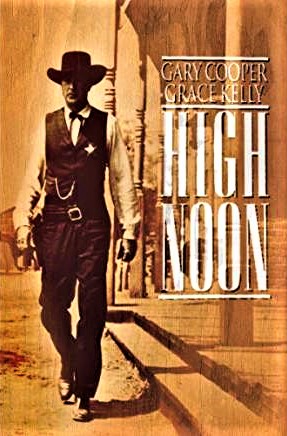
High Noon (Theaters-1952; DVD-May 2004) Rated: TV-PG  —  Runtime: 84-85 minutesM High Noon 1952

Genre: Action-Drama-Suspense-Thriller-Western

els – 8.5/10

IMDb – 8.0/10

Amazon – 4.7/5 stars

Rotten Tomatoes Critics – 8.8/10

Rotten Tomatoes Audience – 4.0/5

Metacritic Metascore – 89/100

Metacritic User Score – 8.4/10

Awards: 4 Academy, 4 Golden Globes

Directed by:  Fred Zinnemann

Written by:  Carl Foreman

Music by: Dimitri Tiomkin

Cast: Gary Cooper, Lloyd Bridges, Grace Kelly

Film Locations:  Burbank, Columbia State Historic Park, Iverson Movie Ranch, Jamestown, Tuolumme, Wanerville; all in California, US

Budget: $730,000

Worldwide Box Office: $8,000,000-18,000,000

Will Kane (Gary Cooper), a soon to be retired lawman from a small, quite, town of dusty streets in old west New Mexico, is getting married and taking his new Quaker wife (Grace Kelly) away for a fresh beginning in another town; to raise a family and run a store.  Moments before they are to leave they learn that Frank Miller, a convicted murderer that Kane and a local judge captured, convicted, and sent to prison has received a pardon from the governor. Miller is coming in on the noon train to settle the score. Waiting at the train station for Miller is his younger brother and two other shifty varmints, eagerly providing guns and muscle to back him up in his all-consuming quest for revenge.  Kane attempts to round-up a pose to face Miller and his gang, but all the town folk decline and insist, instead, that he leave town, a suggestion heartily supported by his pretty young wife.  Knowing that if he ran Miller would follow, Kane stays to make his stand now rather than later: alone.

A truly classic western filmed in black and white under Foreman’s spartan script and directed by Zinnemann in real-time at a parsimonious and fast pace.  The stark cinematography provides the tension inherent in the plot, always pushing the viewer onward to the next scene, straight ahead or around the corner.  The acting was absolutely first-rate.  Gary Cooper won a best actor Oscar for his efforts and had a supporting cast that included some of the greatest names in Hollywood; Lloyd Bridges, Grace Kelly, Otto Kruger, Eve McVeagh, Thomas Mitchell, Henry Morgan, and Lon Chaney Jr.  What a lineup.  Finally the movie included the legendary theme song Do Not Forsake Me, Oh My Darlin’ aka The Ballad of High Noon written by Dimitri Tiomkin and preformed by Tex Ritter; a hardy but forlorn synopsis of the movie’s plot.

The film, when previewed for the press was greeted with derision.  Due to the critics proclaiming the movie a failure the producers decided not to release the movie.  Tiomkin then bought the rights to the theme song and released it with Frankie Laine singing the lyrics, becoming an immediate worldwide hit.  Because of the public’s  positive reaction to the song, the movie was released a few months later, eventually garnering Tiomkin 2 Oscars for movie’s theme song and score.

The movie, released in 1952, played in theaters during Korean War and McCarthy’s Red Scare: the hunt for communists in US government and private institutions, especially Hollywood.  The movie was, and still is, believed to be an allegorical expression of the downtrodden, the just David standing tall against the unjust and unproven allegations. Standing up to the Goliath known as Joseph McCarthy.  During this time being branded, with or without proof, by the scarlet, hot iron C of communism was the end of many careers in the US.  The movie tried to push back and with all things Hollywood, feigned righteous innocence.

Without, or maybe even with, the knowledge of the Red Scare, the movie today is seen more as good versus bad without the partisan grey over-prints.   The right and the small meeting the wrong and the mighty.  Fighting the good fight whatever the odds. Being small doesn’t make you weak.  Being alone doesn’t make you wrong.


Dishonorably Spent

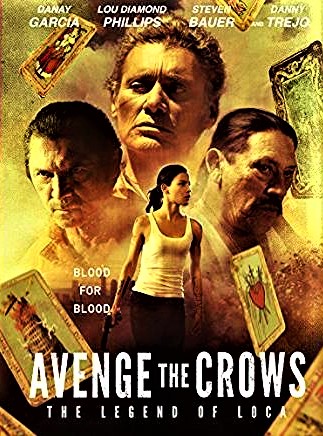
Avenge the Crows: The Legend of Loca (Theaters-NA; Streaming-December 2017) Rated: TV-MA —  Runtime: M Crows 201796 minutes

Genre: Action-Crime-Drama-Thriller

els – 3.0/10

IMDb – 5.4/10

Amazon – 4.4/5 stars

Rotten Tomatoes Critics – NA/10

Rotten Tomatoes Audience – 5.0/5

Metacritic Metascore – NA/100

Metacritic User Score – NA/10

Directed by: Nathan Gabaeff

Written by:  Nathan Gabaeff

Music by:  Spencer Brock, Nathan Gabaeff

Cast:  Danay Garcia, Michael Flores, Cesar Garcia, Lou Diamond Phillips, Danny Trejo

Film Locations:  Los Angeles, US

Budget: $NA — Low-Budget Indie

Worldwide Box Office: $NA

Loca (Danay Garcia), is a down on her luck gangbanging, murdering, thieving, slutty, drug dealing, junkie with a bad temper.  She’s the movie’s protagonist, the champion, the heroine who screws everyone and everything just to become a little more amoral and mercurial than yesterday. She’s the object of a prison gang’s mysterious hit sanction, which she must defend herself and her innocent cousin against and, just to thicken the plot, she must outsmart and outflank a Mexican drug cartel and the opposing LA street gangs.  All by tomorrow.

This is  Nathan Gabaeff’s second effort as a writer and director, the first being the poorly received 2016 Boost, also featuring Danay Garcia and Danny Trejo.  Avenge the Crows is a low-budget film that comes across as being written and directed as an allegorical, non-judgmental documentary of gang life on the streets of LA, complete with flickering static and choppy breaks in the film.  The story is brutal and stupid, the violence and sex are cheap, bordering on pointless. Then there’s the dialogue capable of contradicting itself  in the same scene.  Garcia tells her cousin that it must be the RR prison gang that is responsible for stalking them and then in the next sentence tells her cousin that the gang has no Earthly reason to stalk them.  Well, which is it? How do you arrive at the conclusion that it’s the RR gang when you have no reason to suspect them.

There is some good acting in this movie, Phillips and Trejo, despite the screenplay and direction, but that doesn’t include Danay Garcia.  The women can’t act, but as long as she keeps taking her clothes off the money folks will keep casting her.

Gabaeff was able to pull in some of the most recognizable names in Hispanic acting; Garcia, Phillips, Trejo, for this low-budget movie.  I can’t fathom how he was able to convince these actors sign up for this stinking dog of a movie and, sadly, he has more of these losers in the pipe-line.

This is a movie about the worst of the human condition and its degrading impulses. It passes on declaring any judgement; moral, ethical, or legal; neither for nor against: pathetic.  The movie is artistically dead and morally bankrupt.

God Will Come

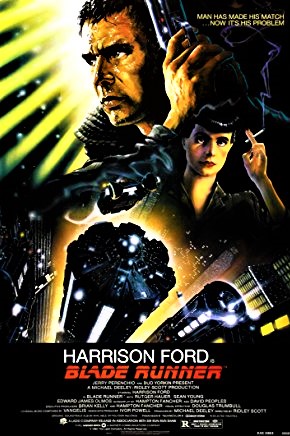
Blade Runner (Theaters-1982; DVD-2001) Rated: R — Runtime: 117 minutesM Blade 1982

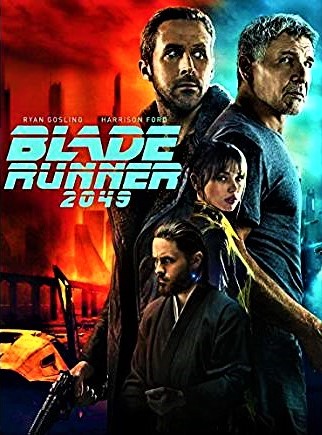
Blade Runner 2049 (Theaters-October 2017; Streaming-January 2018) Rated: R — Runtime: 163 minutes

Genre: Action-Drama-Mystery-Science Fiction-Suspense-Thriller

els – 8.0/10 (1982); 7.5/10 (2017)

IMDb – 8.2/10 (1982); 8.2/10 (2017)

Amazon – 4.3/5 stars (1982); 3.6/10 (2017)

Rotten Tomatoes Critics – 8.5/10 (1982); 8.2/10 (2017);

Rotten Tomatoes Audience – 4.0/10 (1982); 4.1/5 (2017)

Metacritic Metascore – 89/100 (1982); 81/100 (2017)

Metacritic User Score – 8.8/10 (1982); 8.2/10 (2017)

Directed by: Ridley Scott (1982); Denis Villeneuve (2017)

Written by: Hampton Fancher and David Peoples (1982); Hampton Fancher and Michael Green (2017); Movies Based on the 1968 Story Do Androids Dream of Electric Sheep? by Philip K. Dick

Music by: Vangelis (1982); Hans Zimmer and Benjamin Wallfisch (2017)

M Blade 2017Cast: Harrison Ford, Rutger Hauer, Sean Young (1982); Ryan Gosling, Harrison Ford, Ana de Armas (2017)

Film Locations: Burbank–Los Angeles, US; London–Surrey, England (1982): Budapest–Etyek–Hungary; Iceland; Mexico; Almería–Andalucía–El Ejido–Sevilla, Spain; Nevada, US (2017)

Budget: $28,000,000 (1982); $185,000,000 (2017)

Worldwide Box Office: $33,139,618 (1982); $258,978,008 (2017)

In a not too distant dystopian future, replicants, or bio-engineered humans are created to perform tasks humans can’t or won’t do.  Due to their greater than human physical attributes they are relegated to planets beyond  Earth, kept as slaves and forever banned from humanity’s home planet.  The replicants, in case they escape their captivity, are created with built-in fail-safes; a four-year life span and sterility.  Blade Runners (Harrison and Gosling) are bounty hunters hired to retire, kill, fugitive replicants. In the first Blade Runner movie Ford hunts down replicants that want to live beyond their 4 years of existence. In the second Blade Runner, Gosling, a replicant himself and a Blade Runner, a rather bizarre twist causing serious cognitive disconnects, searches for the replicant miracle: the spawn of a replicant, reminiscent of the 1993 Jurassic Park fail-safe: the all-female dinosaurs couldn’t reproduce but they found a way.

Philip K. Dick in his 1968 book, Do Androids Dream of Electric Sheep?, explores the meaning of human life. What distinguishes humans from replicants or any sentient life?  These two movies follow a similar path as the book, a similar plot but eventually go deeper; delving into man’s ability to create life, to control life, to supplant God. If creation is the mark of God does man reach godhead by creating a likeness of himself?  What are man’s responsibilities as a creator; what are his duties to his children?

In a symbolic scene from the first movie, Roy (Hauer), leader of the renegade replicants, is reaching his pre-programmed death as he pursues Deckard (Harrison) for destroying his vision of salvation from the fail-safe. As his death advances he loses control of his hand muscles and to stave off the inevitable he pushes a square nail through his palm and out the other side to stabilize the involuntary contractions. A painful suffering from, or possibly for, his creators’ designs. Roy finally reaches Deckard who is slowly slipping from the roof of an apartment building.  As Deckard’s grip gives way, Roy clasps his wrist and pulls him to safety; the hunted saving the hunter. As the two sit on the roof and face each other, Roy’s life slowly leaves him as he recites his eulogy:

“…All those moments will be lost in time, like tears in rain. Time to die.”

The creation dies having shown mercy and empathy.

The second movie explores the miracle of birth that couldn’t happen.  A birth from the womb of a replicant, a birth of a detached and lonely creature, but a true gift to humanity.  A child that transcends our being by giving us our memories.  Memories that make us whole and real: human.  A child burning bright, leaving a future by leaving a past, but denied progeny.  She is Asimov’s 1951 Foundation Mule; a conqueror and a giver, but sterile.

These are movies examining the meaning of God, what it is to be God. An examination of the burdens of God. An investigation into what it means to strive towards godhead. An investigation of paths taken and not taken.  An inquiry into our will to die for our creations or to live with them. Will God come when we become gods?

All Chan, All Good

The Foreigner (Theaters-September 2017; Streaming-January 2018) Rated: R  Runtime: M Foreigner 2017113-114 minutes

Genre: Action-Crime-Drama-Mystery-Suspense-Thriller

els – 7.0/10

IMDb – 7.1/10

Amazon – 4.6/5 stars

Rotten Tomatoes Critics – 5.9/10

Rotten Tomatoes Audience – 3.8/5

Metacritic Metascore – 55/100

Metacritic User Score – 7.1/10

Directed by: Martin Campbell

Written by: David Marconi (screenplay), Stephan Leather (novel)

Music by: Cliff Martinez

Cast: Jackie Chan, Pierce Brosnan

Film Locations:  London, England; Larne, Northern Ireland

Budget: $35,000,000

Worldwide Box Office: $140,793,485

Quan (Chan), a widower, lives a quiet London life, looking after his only daughter and his restaurant, his only major concerns are the boys chasing after his beloved teenaged girl.  Then a new IRA faction blows up a bank, killing his little girl, who was shopping at a dress shop adjacent to the bank, and Quan’s life and priorities change. He wants to know who killed his daughter, who was responsible.  He wants justice.  When the officials are unable to give him any names or promise any arrests, soon, he organizes his vigilante squad of one and slowly narrows down the possibilities; Jackie Chan style, but without malice for dogs or the innocent.

Jackie Chan steps past his normal fun side, giving the audience a taste of his drama and emotional acting abilities, and proves that his serious character portrayals are real, believable and effective.  Not since his role as a morose handyman in the 2010 Karate Kid have I seen him in such a convincing dramatic role, but this time the screenplay (Marconi) and supporting actors are not relegating him to a least common denominator of mediocrity and cheesiness.  The screenplay flows well, it’s coherent, and has enough twists to keep you guessing, but it does have a flaw, and unfortunately its a big one. Brosnan’s Liam Hennessy role is muddled, his level of involvement and guilt in the IRA bombing is never completely resolved. Maybe it’s intentional but it adds clutter to the plot and its conclusion. That aside, this is a typical Martin Campbell film, full of action, intrigue and entertainment, always spot on and fun; ok, maybe the Green Hornet was a dud, but usually his films are a must see, as is this one.

This was a fun action-drama to watch.  Jackie Chan displays what made him famous, his martial arts moves, but in the film he also displays his serious side and lets us know that, yes, he can play that part.

Chillin’ Back to the Future

Baby Driver (Theaters-2017; Streaming-2017)  Rated: R  Runtime: 112 minutesM Baby 2017

Genre:  Action-Crime-Music-Suspense-Thriller

els – 8.5/10

IMDb – 7.0/10

Amazon – 3.9/5 stars

Rotten Tomatoes Critics – 8.0/10

Rotten Tomatoes Audience – 4.2/5

Metacritic Metascore – 86/100

Metacritic User Score – 7.7/10

Directed by:  Edgar Wright

Written by:  Edgar Wright

Music by:  Stephen Price

Cast:   Ansel Elgort, Jamie Foxx, Kevin Spacey, Jon Hamm, Lily James

Film Locations:   Atlanta, Dunwoody and Gainesville, Georgia, New Orleans, Louisiana, US

Budget:   $34,000,000

Worldwide Box Office:  $228,311,809

Baby (Elgort) is a getaway driver, choreographing his high RPM street racing to the music pumping through his ear buds, playing catch me if you can with a no sweat demeanor that has you cheering for him non-stop.  Baby works for Doc (Spacey), a criminal mastermind that plans all his heists in chalk-board detail, never using the same group of robbers twice, except for Baby.  Baby is exceptional. Spacey catches Baby, how that happens is somewhat implausible since no one every catches Baby, trying to rob him and forces him to drive his den of thieves away from their crime scenes as retribution.

I’m late to this movie so I will give my due respect to the principles and then move on to what makes this movie so special: script and score–together.  Edgar Wright has put together a story that doesn’t come along too often, a story that has is all, action, comedy, crime, love, suspense–it has everything that you and I watch movies for. He brings it all together with a coherent and convincing screenplay, tight directing, precision choreographed cinematography (Bill Pope), and acting that is just perfect. Of course it doesn’t hurt to have Elgort, Foxx, Hamm, and Spacey providing believable and real characters along with the very pretty James. Throw in some subtle paeans to the past, such as Back to the Future, and you have a simply stunning movie, a true masterpiece; the bits and pieces adding up to a fulfillment of a lost cinematic ideal: pure, unadulterated entertainment.

Then Wright brings forth the melody.  A melody that matches and honors the lyrics: the screenplay. Lyrical poetry, accordant with the harmonic notes performing a dance of rockin’, rollin’, tango action.  Not since the 1983 Big Chill has Hollywood scored music so perfectly with the movie.

The Big Chill brought together children of the 1960s, audience and actors alike, in a comedic drama about trying to find meaning in a modern world after their fling with anarchy and drugs.  They found no meaning.  The point of the 60s was that there was no point.  But the 60’s music was sublime and transcendent. The music in The Big Chill, complimented the story as if they were fraternal twins, different veins but the same beat. Bringing together the rockin’ soul of the era with the burn-it-down pathos of its youth.  Marvin Gaye, Aretha Franklin, Smokey Robinson, black soul groovin’ the white bourgeoisie who thought they were the proletariat.  A movie, and an era, of no meaning, expressing itself with music that meant everything, and the two together brought soothing cover and entertainment.

Baby Driver just brings entertainment, no-guilt-pleasure, meshing the visual with the phonic.  It brings in The Big Chill‘s soul sound with the likes of Carla Thomas, Sam and Dave, and Barry White; and then branches out to include the  old-time rockers of Queen, T. Rex (Marc Bolan’s son sued the movie for using Debora without permission), and Golden Earring; progressing up the time scale with blues-rocker Jon Spencer Blues Explosion, and alternate-stuff Beck; capping it off with the synth-pop of Sky Ferreira. A great collection of musicians that compliments the movies action, creating a greater artistic experience than the two alone could achieve. Jon Spencer’s Bellbottoms in the opening car chase scene sets the throbbing standard for the movie that doesn’t abate until the ending credits roll, accompanied by the Simon and Garfunkel song: Baby Driver.

Sony and Edgar Wright have agreed to a sequel, hopefully in 2019.  May the magic strike twice.