The Hidden Gift of Hardship: How Life’s Challenges Shape Growth, Resilience, and Self-Discovery

(Note: The following is a guest post by Emilia Ross. She is a life coach who specializes in helping individuals navigate their personal and professional lives. Visit her site at Schedule-Life.com)
Growth rarely comes from comfort. The moments that test us most — uncertainty, loss, reinvention — are often the ones that shape who we become. Adversity has a way of sharpening focus, deepening self-awareness, and revealing strength we didn’t know we had. This article explores how challenge can become a catalyst for resilience — and how intentional, mindful practice can transform disorder into clarity.

TL;DR

  • Challenges are catalysts for personal evolution.
  • Resilience grows through reframing stress and uncertainty.
  • Self-discovery follows when we pause, reflect, and realign with purpose
  • Tools like gratitude, mindfulness, and community support accelerate transformation.
  • Success includes well-being, not just achievement.

Reframing Hardship: Building Strength Through Mindful Resilience

The way we interpret difficulty determines its impact. When we actively choose to develop a more positive mindset, we redefine struggle as a teacher rather than a threat. Practicing mindfulness helps us stay grounded in the present, preventing future anxiety loops. Meanwhile, expressing gratitude strengthens emotional balance and helps us perceive what remains steady amid change.

Over time, these small acts of mental realignment reshape the brain’s stress responses, making us less reactive and more adaptive. It’s not blind optimism — it’s training your attention toward what empowers rather than depletes you.

The Growth Arc of Adversity

StageChallenge ExperienceInternal ShiftResulting Strength
ShockUnexpected disruptionEmotional overwhelmAwareness of limits
ResistanceFighting circumstancesCognitive dissonanceDesire for change
AdaptationAcceptance and learningReframing failureNew coping tools
IntegrationMaking meaningResilient identityIncreased empathy and agency

According to research from the American Psychological Association, this process of stress → meaning → strength is the backbone of emotional maturity. Growth isn’t linear — it’s cyclical, returning each time life tests us anew.

Core Practices for Transformative Growth

Reflection over Reaction
Pause before judgment.
Ask: “What can this teach me about myself?”
Narrative Rewriting
Identify negative self-stories (“I failed”) and reframe them (“I learned something new”).
Use journaling or Cognitive Behavioral Therapy techniques.
Gratitude Habit
Write three things you appreciate daily.
Notice small, consistent improvements.
Connection and Mentorship
Seek out people who’ve navigated similar challenges.
Join learning communities such as Coursera or FutureLearn to expand perspective.
Mindful Movement
Practices like yoga, walking meditation, or tai chi help reset the nervous system.

How to Turn Adversity into Advantage — Step-by-Step

  1. Acknowledge Reality
     Denial delays recovery. Name what’s hard, clearly and compassionately.
  2. Reframe the Event
     Ask: How might this be preparing me for something else?
  3. Extract a Principle
     Identify one lesson or new skill gained.
  4. Anchor in Routine
     Ground yourself in simple, stabilizing habits — sleep, movement, nutrition.
  5. Create a Forward Intent
     Transform insight into action. Use it to guide your next decision.

Checklist: Measuring Your Resilience Progress

QuestionFrequencyScore (1–5)
Do I pause before reacting to stress?Daily 
Have I learned something new from a recent setback?Weekly 
Do I feel connected to supportive people?Weekly 
Am I practicing gratitude consistently?Daily 
Can I identify personal values guiding my actions?Monthly 

Scoring Tip: A total above 18 indicates strong adaptive resilience. Below 12 suggests opportunities for new supportive habits.

Product Spotlight: The “Resilience Field Journal”

One particularly effective method for reflection is structured journaling. Tools like a Resilience Field Journal — a guided notebook that combines goal tracking with emotional processing — can make abstract thoughts tangible. Journals of this type, available from Paperlike, Moleskine, and other creative brands, offer prompts that mirror evidence-based cognitive frameworks. Using such a journal helps you detect emotional patterns early and measure mental progress over time.

FAQ

Q1: Is it normal to feel worse before feeling better?
 Yes. Growth often involves temporary discomfort as old mental patterns dissolve and new ones form.

Q2: What’s the difference between toxic positivity and constructive optimism?
 Toxic positivity dismisses pain; constructive optimism acknowledges pain and uses it as information.

Q3: Can resilience be learned later in life?
 Absolutely. Neuroplasticity allows emotional adaptability at any age when deliberate practice is applied.

Q4: How long does transformation take?
 It varies. Some shifts occur in weeks; deeper identity changes may unfold over years — but consistency is key.

Q5: How do I stay motivated during ongoing hardship?
 Return to purpose. Revisit why you began. Set micro-goals, celebrate progress, and lean on community support like BetterUp or Calm.

Glossary

  • Resilience: The capacity to recover from adversity and maintain purpose.
  • Mindfulness: The practice of non-judgmental awareness of the present moment.
  • Reframing: Changing perspective to view challenges as opportunities.
  • Neuroplasticity: The brain’s ability to reorganize itself through experience.
  • Growth Mindset: The belief that abilities can be developed through effort and learning.

Conclusion

Hardship doesn’t just test who we are — it reveals what’s ready to grow. Whether through mindful gratitude, supportive relationships, or the disciplined act of reflection, every challenge holds within it the seed of renewal. True resilience isn’t about avoiding pain; it’s about transmuting it into purpose.
The Lost Boys

The end of the Peloponnesian War in 404 BC marked the end of Athens’ Golden Age. Most historians agree that the halcyon days of Athens were behind her.  Some however, such as Victor Davis Hanson in his multi-genre meditations, A War Like No Other, a discourse on military history, cultural decay, and philosophical framing, offers a more nuanced view suggesting that Athens was still capable of greatness, but the lights were dimming.

During the following six decades, after the war, Athens rebuilt. Its navy reached new heights. Its long walls were rebuilt within a decade. Aristophanes retained his satirical edge even if it was a bit more reflective. Agriculture returned in force. Even Sparta reconciled with Athens or vice versa, recognizing once again that the true enemy was Persia.

Athens brought back its material greatness, but its soul was lost. What ended the Golden Age of Athens wasn’t crumbled walls or sunken ships. It was the loss of lives that took the memory, the virtuosity of greatness with it. With them generational continuity, civic pride, and a religious belief in the polis vanished. The meaning, truth, and myth of Athenian exceptionalism died with their passing. The architects of how to lead a successful, purpose driven civilization had disappeared, mostly through death by war or state but also by plague.

Victor Davis Hanson, in his A War Like No Other lists many of the lives lost to and during the war that took much of Athens’ exceptionalism with them to their graves. Below is a partial listing of Hanson’s more complete rendering with some presumptuous additions.

Alcibiades was an overtly ambitious Athenian strategist; brilliant, erratic, and ultimately treasonous. He championed the disastrous Sicilian expedition, Athens greatest defeat. Over the course of the war, he defected multiple times: serving Athens, then Sparta, then Persia, before returning to Athens. He was assassinated in Phrygia around 404 BC while under Persian protection, by, many beleive, the instigation of the Spartan general Lysander.

Euripides though he did not fight in the war exposed its brutality and hypocrisy in his plays such as The Trojan Woman and Helen. The people were not sufficiently appreciative of his war opinions or plays, winning only four firsts at Dionysia compared to 24 and 13 for Sophocles and Aeschylus, respectively. Disillusioned, he went into self-imposed exile in Macedonia and died there around 406 BC by circumstances unknown.

The execution of the Generals of Arginusae remains a legendary example of Athenian arbitrary retribution; proof that a city obsessed with ritualized honor could nullify military genius, and its future, in a single stroke. The naval Battle of Arginusae, fought in 406 BC, east of the Greek island of Lesbos, was the last major Athenian victory over the Spartans in the Peloponnesian War. Athenian command of the battle was split between 8 generals: Aristocrates, Aristogenes, Dimedon, Erasinides, Lysias, Pericles the Younger (son of Pericles), Protomachus, and Thrasyllus. After their victory over the Spartan fleet a storm prevented the Athenians from recovering the survivors, and the dead, from their sunken ships. Of the six generals that returned to Athens all were executed for their negligence. Protomachus and Aristogenes, likely knowing their fate, chose not to return and went into exile.

Pericles, the flesh and blood representation of Athens’ greatness was the statesman and general who led the city-state during its golden age. He died of the plague in 429 BC during the war’s early years, taking with him the vision of democratic governance and Athens’ exceptionalism. His 3 legitimate sons all died during the war. His two oldest boys likely died of the plague around 429 BC and Pericles the Younger was executed for his part in the Battle of Arginusae.

Socrates, the world’s greatest philosopher (yes greater than Plato or Aristotle) fought bravely in the war, but he was directly linked to the traitor Alcibiades. He was tried and killed in 399 BC for subverting the youth and not giving the gods their due. That was all pretense. Athens desired to wash their collective hands of the war and Socrates was a very visible reminder of that. He became a ritual scapegoat swept up into the collective expurgation of the war’s memory.

Sophocles, already a man of many years by the beginning of the war, died in 406 BC at the age of 90 or 91, a few years before Athens’ final collapse. His tragedies embodied the ethical and civic pressures of a society unraveling. With the deaths of Aeschylus in 456 BC, Euripides in 406 BC, and Sophocles soon after, the golden age of Greek tragedy came to a close.

Thucydides, author of the scholarly standard for the Peloponnesian War, was exiled after ‘allowing’ the Spartans to capture Amphipolis, He survived the war, and the plague, but never returned to Athens. His History ends in mid-sentence for the period up to 411 BC. He lived till 400 BC, and no one really knows why he didn’t finish his account of the war. Xenophon picked up where Thucydides left off and finished up the war in his first two books of Hellenica which he composed somewhere in the 380s BC.

The Peloponnesian War ended Athens’ greatest days. The men who kept its lights bright were gone. Its material greatness returned, glowing briefly, but its civic greatness, its soul, slowly dimmed. It was a candle in the wind of time that would be rekindled elsewhere. The world would fondly remember its glory, but Athens had lost its spark.

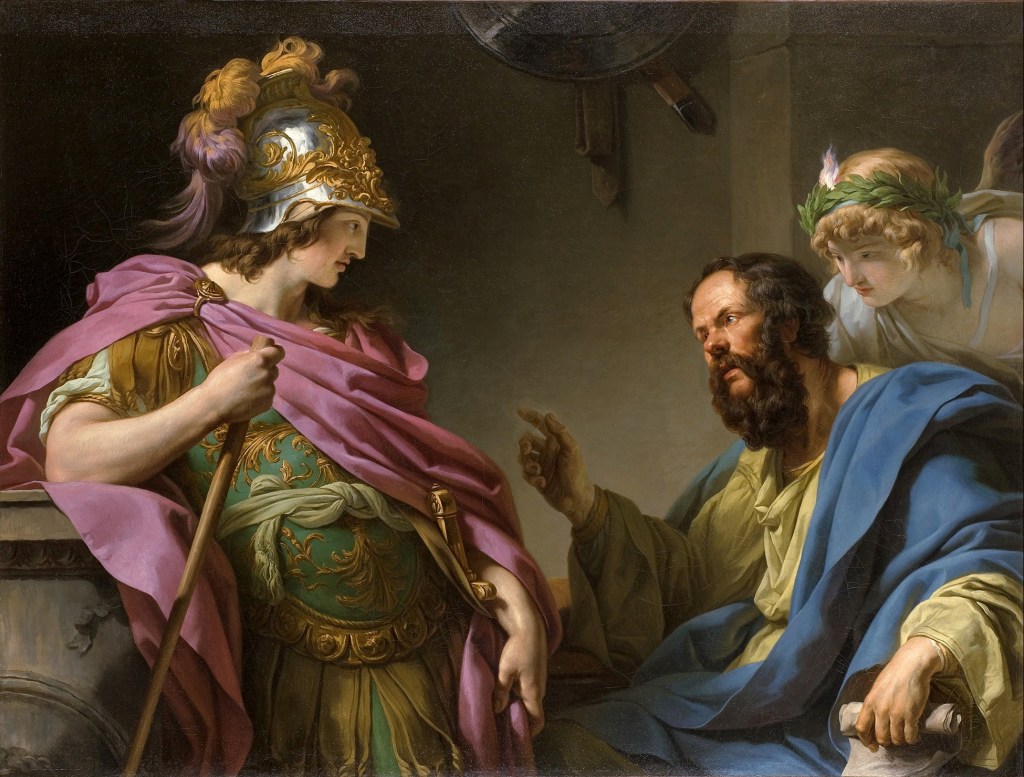
Source: A War Like No Other by Victor Davis Hanson, 2005. Graphic: Alcibiades Being Taught by Socrates, Francois-Andre Vincent, 1776. Musee Fabre, France. Public Domain.

The Sum of All Fears–Real and Imagined

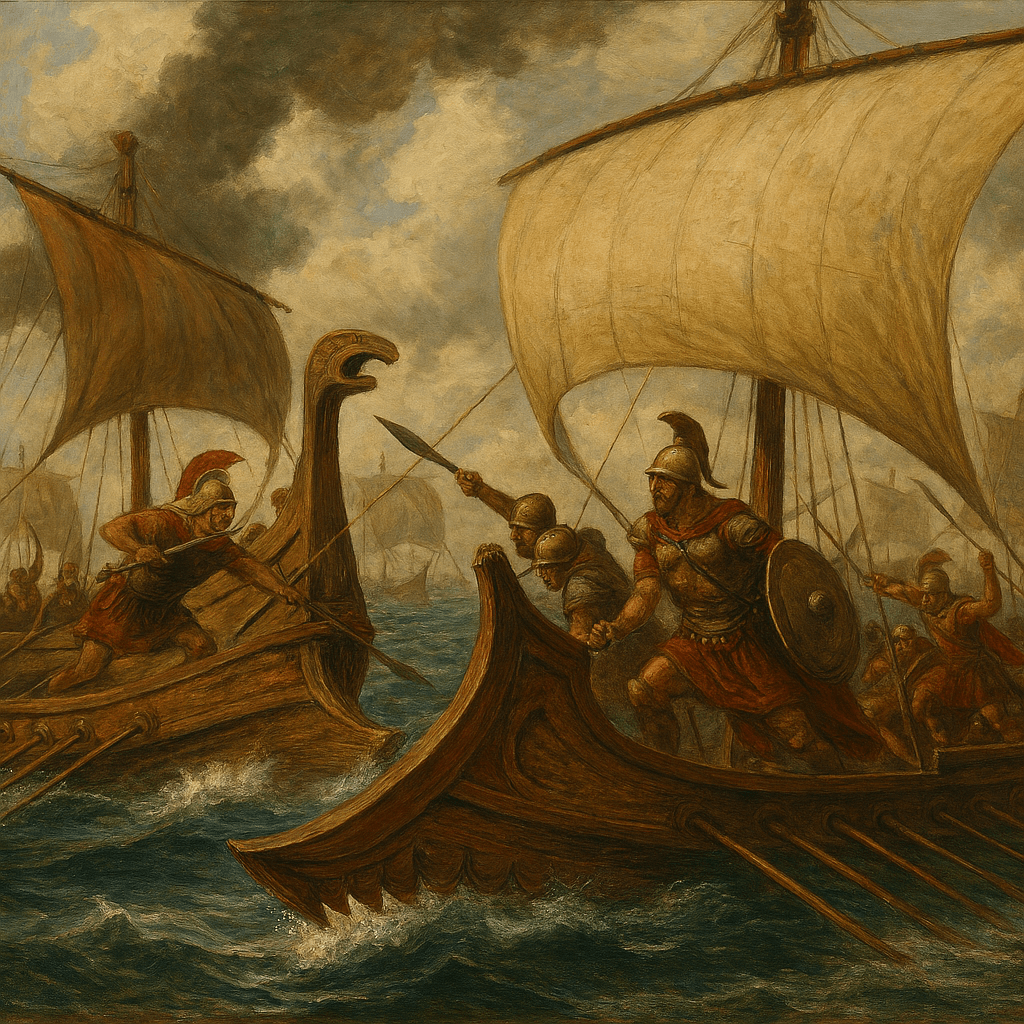
The Peloponnesian War, fought over 27 years (431-404 BC), cost the ancient Greek world nearly everything. War deaths alone approached 8-10 percent of their population: up to 200,000 deaths from battle and plague. The conflict engulfed nearly all of Greece, from the mainland to the Aegean islands, Asia Minor and Sicily. Though Sparta and its allies, in the end, claimed a tactical victory, the war left Greece as a shadow of its former self.

The Golden Age of Athens came to an end. Athenian democracy was replaced, briefly, by the Thirty Tyrants. Sparta, unwilling to jettison its insular oligarchy, failed to adapt to imperial governance, naval power, or diplomatic nuance. Within a generation Sparta was a relic of history.  First challenged by former allies in the Corinthian War, then shattered by Thebes, which stripped the martial city-state of its aura of invincibility along with its helot slave labor base: the economic foundation of Sparta. Another generation later, Macedon under Philip II and Alexander the Great finished off Greek dominance of the Mediterranean. After Alexander’s death in 323 BC, Rome gradually absorbed all the fractured pieces. Proving again, building an empire is easier than keeping one.

Thucydides, heir to the world’s first historian: Herodotus, reduced the origins of the Peloponnesian War to a primal emotion: fear. In Book I of his History of the Peloponnesian War he writes: “The growth of the power of Athens, and the alarm which this inspired in Sparta, made war inevitable.” Athens had violated trade terms under the Megarian Decree with a minor Spartan ally but that was pretext, not cause. Sparta did not go to war over market access. It went to war over fear. Fear of what Athens had become and a future that armies and treaties may not contain.

War and fear go together like flame to fuse. Sparta went to war not for fear of a foe, Sparta knew no such people. It was not fear of an unknown warrior, nor fear of battlefields yet to be choregraphed, but fear of an idea: democracy maintained and backed by Athenian power. And perhaps, more hauntingly precise, fear of itself. Not that it feared it was weak but of what it may become. They feared no sword or spear, their discipline reigned supreme against flesh and blood. Yet no formation, no stratagem, no tactic of war could bring down a simple Athenian belief: the rule of the many, an idea anathema, heretical even, to the Spartan way of life.

So, they marched to war, not to defeat an idea but to silence the source. Not to avenge past aggression but to stop a future annexation. They won battles, small and large. They razed cities. But they only destroyed men. The idea survived. It survived in fragments, bits here, bits there, across time and memory. What it did kill, though, was the spirit of Athens, the Golden Age of Athens. But the idea that was Athens lived on across space and time: chiseled into republics that rose from its ashes and ruins.

The radiance of Athens dimmed to shadow. Socrates became inconvenient. Theater became therapy; a palliative smothering of a cultural surrender. And so, civilization moved to Rome.

Source: A War Like No Other by Victor Davis Hanson, 2005. History of the Peloponnesian War by Thucydides, Translated by Richard Crawley, 2021. Graphic: Syracuse vs Athens Naval Battle. CoPilot.

The Many Colors of Slavery

Those who deny freedom to others deserve it not for themselves.”—Abraham Lincoln

Whoever does not have two-thirds of his day for himself, is a slave, whatever he may be: a statesman, a businessman, an official, or a scholar.” — Friedrich Nietzsche

As the great continental glaciers receded at the end of the Pleistocene, fertile land emerged, allowing for the transition from hunting and gathering to agriculture. Farming was labor-intensive, and with the rise of permanent settlements came the demand for constrained and controlled labor. Slavery, likely with first roots in Mesopotamia, though independent manifestation by the Pharaohs in ancient Egypt and other early civilizations, made it ubiquitous, and it has never disappeared.

From the bonded laborers of the Pharaohs to the structured servitude in Greece and Rome, from the transatlantic trade that brutalized African populations to the modern exploitation of migrant workers in sweatshops and the sex trades, slavery has evolved rather than vanished. Each era refines its own form of servitude; forced labor, insurmountable debt, bureaucratic entrapment, or corporate exploitation. It is a practice as ancient as prostitution and taxation, deeply embedded in human society, yet constantly shifting into less visible but equally insidious forms. As long as slavery remains profitable its existence will continue to indelibly stain humanities’ collective soul.

Slavery, and its ultimate contrast, freedom, was a persistent theme in the works of sci-fi author Robert A. Heinlein. With a piercing social awareness, Heinlein, who, in his early years, was described by Isaac Asimov as a ‘flaming liberal’—picked up the theme and horrors of slavery with his 1957 juvenile novel “Citizen of the Galaxy”; bringing the many forms of servitude into the personal history of a precocious kidnapped boy named Thorby. Citizen of the Galaxy is a planet-hopping, spacefaring critique of oppression, class structure, and the nebulous concept of freedom. Heinlein crafts a future where contrasting societies across the galaxy reflect varying degrees of servitude and autonomy, if not necessarily total freedom. Man rarely allows himself complete independence.

Heinlein through the lens of Thorby explores the various shades of slavery, beginning with the brutal, controlling enslavement and continuing to more subtle forms that the individual may not even recognize as confinement. (Partial plot giveaways beyond this point.) Escaping his initial enslavement by the graces of a kindly, strict, but loveable old cripple named Baslim, Thorby moves into a hierarchical, structured existence of spacefaring traders then onto a self-imposed, due to a thirst for justice, straitjacket of a corporate bureaucracy on his birth planet of Terra. A life story of how control can be imposed by others or by ourselves.

As Heinlein’s social perspectives evolved, his libertarian leanings took greater prominence in Citizen of the Galaxy. Through Thorby’s life journey, Heinlein emphasizes personal autonomy, resistance to tyranny, and the moral duty to fight injustice. Baslim, Thorby’s first mentor, symbolizes the idea that one person can stand against oppression and make a difference, even if it takes many miles and years to materialize.

This theme runs through much of Heinlein’s work, but here, it’s especially poignant because Thorby is powerless for much of the novel, making his eventual triumph all the more meaningful. Heinlein’s novels, Farnham’s Freehold, Friday, and Time Enough for Love, explore slavery and control, reinforcing humanity’s inherent need for freedom, or at the very least, breathing space.

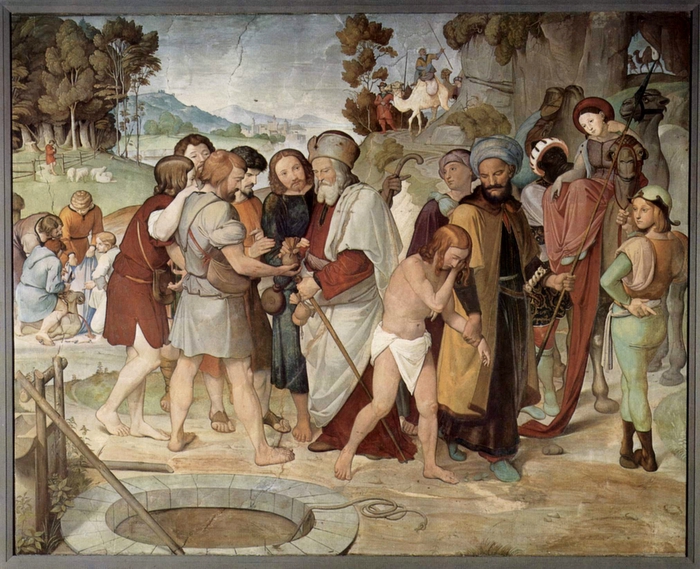
Source: Citizen of the Galaxy by Robert A. Heinlein, 1957. Graphic: Joseph Sold into Slavery by Friedrich Overbeck, 1816. Vanderbilt University. Public Domain.

Divine Right to Rule–Not

Sir Robert Filmer, a mostly forgotten 17th century political theorist, claimed that kings ruled absolutely by divine right, a power he believed was first bestowed upon Adam.

In his First Treatise of Government, John Locke thoroughly shredded and debunked this theory of divine rights of monarchs to do as they pleased. Locke with extensive use of scripture and deductive reasoning demonstrated that ‘jus divinum’ or the divine right to rule led only to tyranny: one master and slavery for the rest, effectively undermining the natural rights of individuals and a just society.

Filmer, active during the late 16th to mid-17th century, argued that the government should resemble a family where the king acts as the divinely appointed patriarch. He erroneously based his theory on the Old Testament and God’s instructions to Adam and Noah. He used patriarchal authority as a metaphor to justify absolute monarchy, arguing that kings can govern without human interference or control. Filmer also despised democracies, viewing monarchies, as did Hobbes, as the only legitimate form of government. He saw democracies as incompatible with God’s will and the natural order.

Locke easily, although in a meticulous, verbose style, attacked and defeated Filmer’s thesis from multiple fronts. Locke starts by accepting a father’s authority over his children, but, in his view, this authority is also shared with the mother, and it certainly does not extend to grandchildren or kings. Locke also refutes Filmer’s assertion that God gave Adam absolute power not only over land and beast but also man. Locke states that God did not give Adam authority over man for if he had, it would mean that all below the king were ultimately slaves. Filmer further states that there should be one king, the rightful heir to Adam. Locke argues that there is no way to resolve who that heir is or how that could be determined. Locke finishes his argument by asserting that since the heir to Adam will be forever hidden, political authority should be based on consent and respect for natural rights, rather than divine inheritance: a logical precursor to his Second Treatise of Government, where Locke profoundly shaped modern political thought by advocating for consent-based governance.

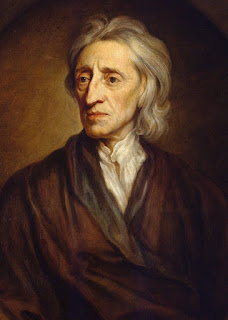
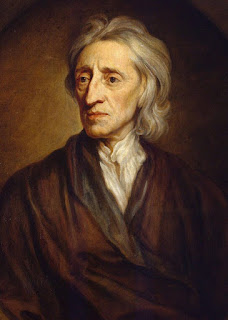
Source: First Treatise of Government by John Locke, 1689. Graphic: John Locke by Godfrey Kneller 1697.  Public Domain.

Black Swans Part II

Last week, we introduced Taleb’s definition of black swans; rare, unpredictable ‘unknown unknowns’ in military terms, with major impacts, exploring historical examples that reshaped society post-event. This week I’m going to introduce a fictional black swan and how to react to them but before that the unpredictable part of Taleb’s definition needs some modifications. True black swans by Taleb definition are not only rare but practically non-existent outside of natural disasters such as earthquakes. To discuss a black swan, I am going to change the definition a bit and say these events are unpredictable to most observers but predictable or at least imaginable to some. Taleb would likely call them grey swans. For instance, Sputnik was known to the Soviets, but an intelligence failure and complete surprise to the rest of the world. Nikola Tesla anticipated the iPhone 81 years ahead of time. 9/11 was known to the perpetrators and was an intelligence failure. Staging a significant part of your naval fleet in Pearl Harbor during a world war and forgetting to surveil the surrounding area is not a black swan, just incompetence.

With that tweak out of the way, we’ll explore in Part II where Taleb discusses strategies to mitigate a black (grey) swan’s major impacts with a fictional example. His strategies can be applied to pre-swan events as well as post-swan. Pre-swan planning in business is called contingency planning, risk management, or, you guessed it, black swan planning. They include prioritizing redundancy, flexibility, robustness, and simplicity, as well as preparing for extremes, fostering experimentation, and embracing antifragility.

Imagine a modern black swan: a relentless AI generated cyberattack cripples the Federal Reserve and banking system, wiping out reserves and assets. Industry and services collapse nationwide and globally as capital evaporates, straining essentials, with recovery decades away if ever. After the shock comes analysis and damage reports, then the rebuilding begins.

The Treasury, with no liquid assets, must renegotiate debt to preserve global trust. Defense capabilities are maintained at a sufficient level, hopefully hardened, to protect national security, while the State Department reimagines the world to effectively bolster domestic production and resource independence while keeping the wolves at bay.

Non-essential programs, from expansive infrastructure projects, research, federal education initiatives, all non-essential services are shelved, shifting priorities and remaining resources to maintaining core social and population safety nets like Social Security and Defense. Emergency measures kick in: targeted taxes on luxury goods and wealth are imposed to boost revenue and redirect resources. Tariffs encourage domestic production and independence.

Federal funding to states and localities is reduced to a trickle. States and municipalities must take ownership of essential public services such as education, water, roads, and public safety. The states are forced to retrench and innovate, turning federal scarcity into local progress.

Looking ahead, resilience becomes the first principle. Diversification takes center stage, with the creation of a sovereign wealth fund based on assets like gold, bitcoin, and commodities, bolstered by states that had stockpiled reserves such as rainy-day funds, ensuring financial stability. Local agriculture, leaner industries and a realigned electrical grid, freed from federal oversight, innovate under pressure, strengthening a recovery. Resilience becomes antifragility, the need to build stronger and better in the face of adversity. And finally, the government must revert to its Lockean and Jeffersonian roots, favoring liberty and growth over control, safety, and stagnation: anti-fragility.

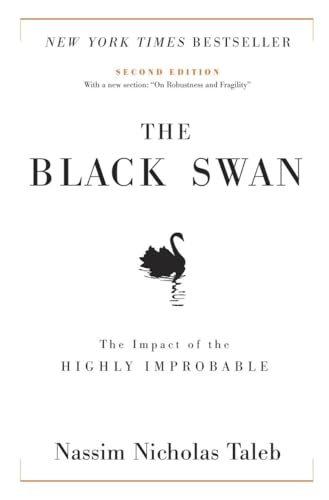
Source: The Black Swan by Nassim Nicholas Taleb, 2007. Graphic: The Black Swan hardback cover.

Natural Law—Point Counterpoint

Version 1.0.0

The notions of right and wrong, justice and injustice, have there no place. Where there is no common power, there is no law; where no law, no injustice.” — Leviathan by Thomas Hobbes

Thomas Hobbes saw human nature as a cauldron of chaos. In his state of nature, life is “nasty, brutish, and short,” a “war of all against all” where self-preservation is the only natural law. Shaped by Thucydides’ tales of strife and Machiavelli’s ruthless pragmatism, Hobbes cast man’s self-interest as a destructive force that casts morality aside. His remedy to avert chaos: a towering sovereign, ideally a monarch, to crush anarchy with an iron fist. The social contract trades liberty for security, forging laws as human tools to bind the beast within. Yet Hobbes stumbled: he failed to grasp power’s seductive pull. He assumed his Leviathan, though human, would rise above the self-interest he despised, wielding authority without buckling to its corruption.

Reason, which is that law, teaches all mankind…that being all equal and independent, no one ought to harm another in his life, health, liberty, or possessions.” — Second Treatise of Government by John Locke

John Locke painted a gentler portrait of man than did Hobbes. He rooted natural law in reason and divine will, granting all people inherent rights to life, liberty, and property. His state of nature is peaceful yet imperfect, marred by the “want of a common judge with authority,” leaving it vulnerable to human bias and external threats. Optimistic, Locke envisioned a social contract built on the consent of the governed, protecting these rights through mutual respect and laying the groundwork for constitutional rule. Where Hobbes saw a void to be filled with control, Locke trusted reason to elevate humanity, crafting government as a shield, not a shackle.

Hobbes and Locke clash at the fault line of power. Hobbes’s sovereign, meant to tame chaos, reflects the rulers’ thirst for dominance, but his naivety about power’s effect cracks his foundation. Locke’s ideals, morality, reason, rights, empower the ruled, who yearn for liberty after security sours. Hobbes missed the flaw: rulers, driven by the same self-interest he feared, bend laws to their will, spawning a dual reality—one code for the governed, another for the governors. Locke’s vision of freedom and limited government inspires their soul, while Hobbes’s call for order fortifies their bones with courts, police, and laws of men. The U.S. Constitution marries both, yet scandals tip the scales: power corrupts, and liberty frays as safeguards buckle under the rulers’ grip.

Hobbes and Locke both accept the imperfection of man but take different paths to mitigate that imperfection with workable safeguards. Hobbes insists on the rule by law but drafted by imperfect man and applied with a Machiavellian indifference with no solution for absolute powers corrupting influence. Locke also chooses to rule by law but guided by morality, God and the will to depose of despots.

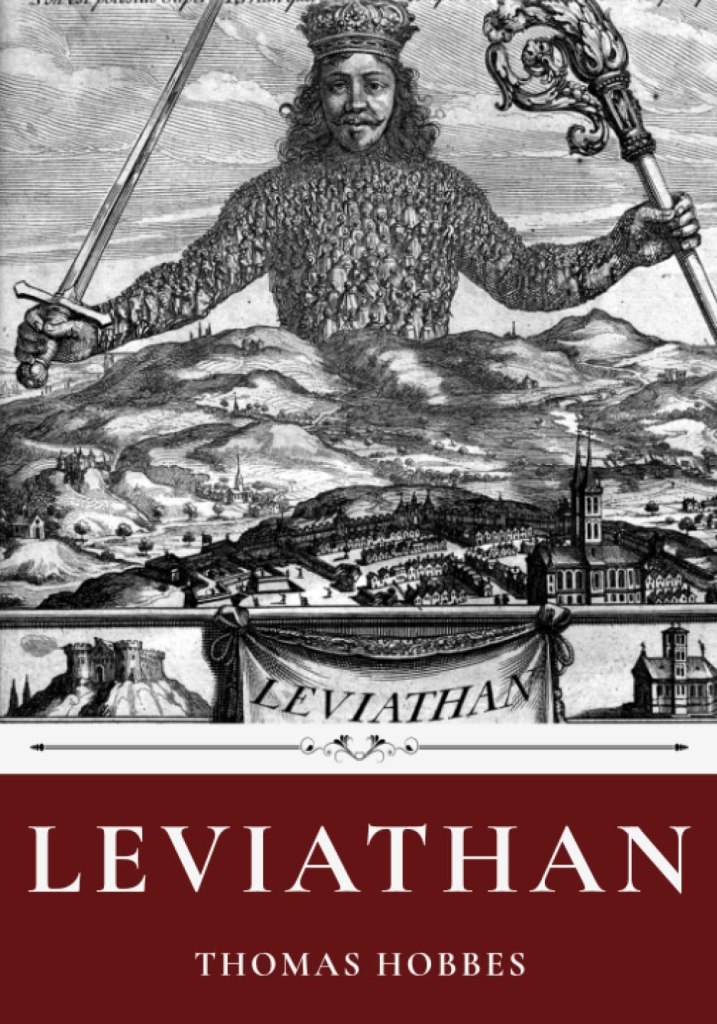
Sources: Leviathan, Thomas Hobbes; Second Treatise of Government, John Locke. Graphic:Original Leviathan frontispiece, a king composed of subjects, designed with Hobbes’s input.

Locke and Jefferson

John Locke’s theory on the social contract is a cornerstone of his political philosophy and western democracies, as outlined in his work “Second Treatise of Government.” According to Locke, the social contract is an agreement among individuals to form a government that will protect their natural rights to life, liberty, and property. The social contract is a compromise between man’s inherent natural rights and the need to preserve and protect those rights.

Thomas Jefferson, in his Declaration of Independence builds on Locke’s concepts, tweak is probably a better word. Locke writes that people have “natural rights” to “life, liberty, and estate” (property), and if a government violates these, it’s “dissolved,” giving people the right to form a new one. Jefferson writes into the Declaration its famous “life, liberty, and the pursuit of happiness”—swapping “property” for a broader, aspirational feel. Locke’s idea that government derives legitimacy from the “consent of the governed” shows up when Jefferson lists grievances against King George III, arguing the king’s abuses justify breaking away. And Locke’s justification for revolution—“when a long train of abuses” threatens these rights, people can resist—mirrors Jefferson’s “whenever any Form of Government becomes destructive of these ends, it is the Right of the People to alter or to abolish it.”

Locke’s key points in his Second Treatise:

  1. State of Nature: Locke believed that in the state of nature, individuals are free and equal, governed by natural law, which dictates that no one should harm another in their life, health, liberty, or possessions. Anarchy with adherence to God’s moral code.
  2. Natural Rights: Locke argued that individuals have inherent rights to life, liberty, and property. These rights are inalienable and must be protected by any legitimate government.
  3. Consent of the Governed: Locke emphasized that government derives its authority from the consent of the governed. People agree to form a government to protect their natural rights, and this consent is the basis of political legitimacy.
  4. Limited Government: Locke’s social contract theory advocates for a government with limited powers, designed to serve the common good and protect individual rights.
  5. Right to Revolution: Locke believed that if a government becomes tyrannical and or violates the social contract, the people have the right to revolt and establish a new government that will better protect their rights.

Source: Second Treaties of Government by John Locke, 1690. Graphic: John Locke by Godfrey Kneller 1697.  Public Domain.

Choose

Movies such as Pakula’s 1982 “Sophie’s Choice” and Eastwood’s 2024 “Juror #2” depict gut-wrenching moral dilemmas, where every decision is flawed and ethically unbearable.

Moral dilemmas arise when all available options are objectionable, involving transgressions against moral principles. Their resolution often revolves around the “Principle of the Lesser of Two Evils,” where one chooses the least harmful option.

In 1944, President Roosevelt’s health was rapidly deteriorating, and many in the Democratic Party believed he wouldn’t finish his term if re-elected. Despite this, Roosevelt ran for a fourth term but was pressured to find a different running mate with better economic and leadership skills. Vice President Henry Wallace was replaced by Harry Truman, a senator from Missouri, on the ticket.

Roosevelt won his fourth term but passed away less than three months into it, making Truman the 33rd President on 12 April 1945. Within four months, Truman faced the dilemma of dropping atomic bombs on Japan to possibly end World War II or continuing a more conventional war.

Although there were no initial estimates of fatalities before the bombings, aftermath estimates suggested that up to a quarter of a million lives were lost at Nagasaki and Hiroshima. In contrast, continuing the war conventionally was estimated to result in 6 to 11 million additional fatalities.

Truman chose the lesser of two evils: sacrificing a quarter of a million souls to save millions.

Source: Lesser Evil Principle by Dougherty, 2020, Encyclopedia of Business and Professional Ethics. Graphic: Grok Generated.

Near Death Experiences

Bruce Greyson in a paper published in the Journal Humanities states that, “Near-death experiences (NDEs) are vivid experiences that often occur in life-threatening conditions, usually characterized by a transcendent tone and clear perceptions of leaving the body and being in a different spatiotemporal dimension.”

NDEs have been reported throughout history and across various cultures, with many interpreting them as proof of life after death or the continuation of existence beyond the death of the physical body.

Dr. Eben Alexander, a neurosurgeon, experienced his own NDE during a week-long coma induced by a brain illness. During this experience, he reported traveling outside his body to another world, where he encountered an angelic being and the maker of the universe. He interpreted his experience not only as evidence that consciousness exists outside the mortal body but also as proof of God and heaven.

Socrates believed that the soul, a concept encompassing not only consciousness but also the whole psyche of a person, was immortal and existed in a realm beyond the physical world. According to the Platonic concept of “anamnesis”, the soul is temporarily housed in the mortal body until the body’s death, at which point it returns to a “spiritual” realm. Socrates firmly believed that because the soul is immortal, it is imperative to live a moral and virtuous life to avoid damaging the soul.

Zeno of Citium and the Stoics, following in Socrates’ footsteps, developed the concept of “pneuma” or spirit, which they viewed as a physical substance that returns to the cosmos after the death of the body. They believed that the universe is a living being, a concept known as “pantheism,” and that pneuma or souls are part of the greater universal whole.

Omniscience–Omnipresence.

Source: The Near-Death Experience by Sabom, JAMA Network, Proof of Heaven by Alexander. Memorabilia by Xenophon. Graphic: Out of Body, istock licensed.